Tag Archives: caribbean

US to Share Vaccine, Biden Offers India Support, More

US to share millions of AstraZeneca vaccine doses with other countries

The Biden administration on Monday announced that it will move to donate millions of doses of the AstraZeneca vaccine to other countries, after pressure from lawmakers and advocates.

The United States has millions of doses of the AstraZeneca vaccine, which is not yet authorized in the US, but is in other countries, and could play a key role amid worsening spikes in cases abroad, particularly in India.

“Given the strong portfolio of vaccines that the United States has already authorized, and that is available in large quantities, including two two-dose vaccines and one one-dose vaccine, and given AstraZeneca is not authorized for use in the United States, we do not need to use AstraZeneca in our fight against COVID over the next few months,” White House Press Secretary Jen Psaki said Monday.

Pressure had been mounting: Reps. Ro Khanna (D-Calif.) and Raja Krishnamoorthi (D-Ill.) had called on the administration to release the doses on Sunday, as had Ashish Jha, dean of the Brown School of Public Health, in a Washington Post op-ed on Saturday.

Still, doses not available right away: Psaki said the doses cannot be released immediately, as they will first have to undergo safety reviews by the Food and Drug Administration. A Baltimore plant that had been producing the vaccine has faced a string of problems and was cited by the FDA for multiple safety failures.

Once the FDA clears the doses, “in the coming weeks,” Psaki said about 10 million doses will be available. An additional 50 million doses are in “various stages of production” and could be available across May and June, she said.

=================================================

Biden speaks with Prime Minister Modi as COVID-19 surges in India

Biden speaks with Prime Minister Modi as COVID-19 surges in India
© Getty Images

President Biden on Monday spoke with Indian Prime Minister Narendra Modi and pledged to provide assistance as the world’s second most populous country grapples with soaring coronavirus infections.

“The two leaders resolved that the United States and India will continue to stand shoulder-to-shoulder in the effort to protect our citizens and the health of our communities,” the White House said in a readout of the call.

The United States is sending India aid to help with depleted oxygen supplies, vaccine materials and therapeutics in an effort to help stem the surge in cases that has strained India’s health care system.

Emily Horne, a spokeswoman for the National Security Council, said in a statement Sunday that the U.S. was “working around the clock to deploy available resources and supplies.” The Biden administration has identified test kits, ventilators and other supplies that would be made available to India, she said.

“Just as India sent assistance to the United States as our hospitals were strained early in the pandemic, the United States is determined to help India in its time of need,” Horne said.

Communications between U.S. and Indian officials come as India faces a mounting crisis of coronavirus cases.

India on Sunday reported roughly 350,000 new cases, setting a single-day record for any country during the COVID-19 pandemic. The New York Times reported that India has vaccinated just under 2 percent of its population, even though the country is producing two shots domestically.

The surge in cases threatens progress around the globe in the fight against the pandemic.

The Biden administration on Monday also announced it is preparing to share millions of doses of the AstraZeneca vaccine with other countries in the latest sign the U.S. is ramping up its vaccine diplomacy efforts to get the virus under control globally.

============================================

Post-pause hesitation? Poll shows few unvaccinated Americans willing to get Johnson & Johnson vaccine

Few Americans who have not been vaccinated against COVID-19 say they are willing to take the Johnson & Johnson vaccine following the temporary pause in its distribution due to rare blood clots.

Just 22 percent of unvaccinated Americans in a Washington Post-ABC News poll conducted before the pause ended said that they would be willing to get the Johnson & Johnson vaccine. Almost three in four — 73 percent — said they were unwilling.

Slightly fewer than half of all the adults surveyed also said they consider the Johnson & Johnson vaccine very or somewhat safe.

Additionally, more than 7 in 10 respondents say they regard each of the other two vaccines that have been approved in the U.S., one by Moderna and another by Pfizer and German partner BioNTech, to be very or somewhat safe.

Background: The CDC and FDA lifted their recommended pause of Johnson & Johnson vaccinations last Friday after analyzing data from less than 20 rare cases of blood clots out of the millions of vaccinations administered.

What this means: Concerns about how the pause would affect vaccine hesitancy may have been justified, although polls from last week indicated the decision wouldn’t affect most people’s willingness to get their COVID-19 shot.

The post US to Share Vaccine, Biden Offers India Support, More appeared first on The St Kitts Nevis Observer.

World View: Biden Optimistic, US Population Slowdown, Iran-US Naval Confrontation, More

March 19, 2021

Alternate text

The Associated Press

Advancing the Power of Facts

The Rundown

I'm an image

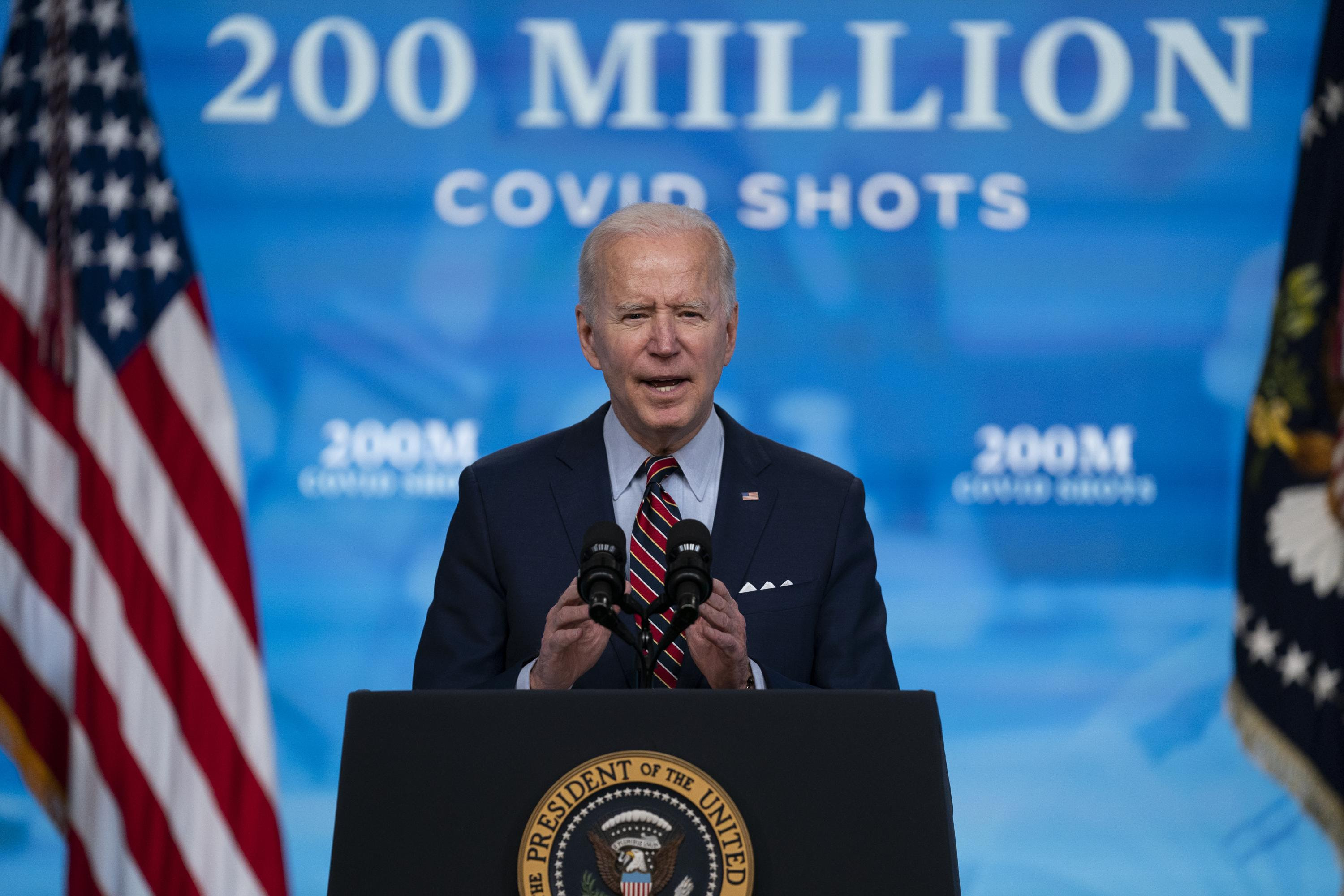
WASHINGTON (AP) — President Joe Biden spent his first 100 days in office encouraging Americans to mask up and stay home to slow the spread of COVID-19. His task for the next 100 days will be to lay out the path back to normal. When he entered office,…Read More

I'm an image

The first batch of once-every-decade data from the U.S. Census Bureau shows a United States that is growing less quickly and but still seeing its population shift to the South and West. The data released Monday was relatively basic — containing natio…Read More

I'm an image

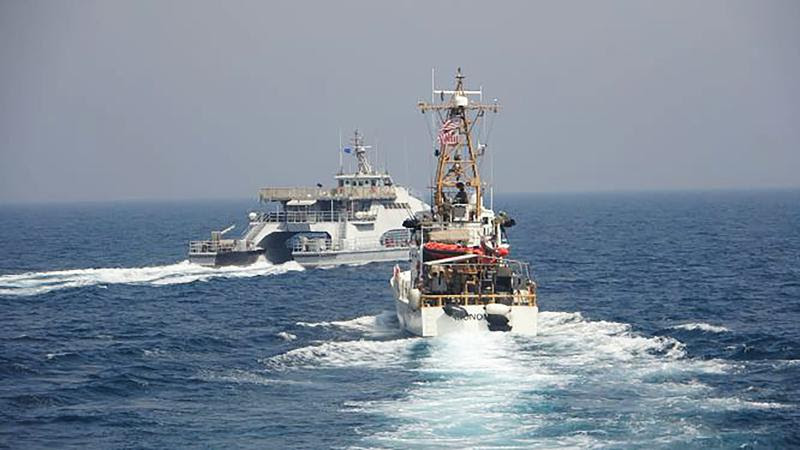
DUBAI, United Arab Emirates (AP) — American and Iranian warships had a tense encounter in the Persian Gulf earlier this month, the first such incident in about a year amid wider turmoil in the region over Tehran’s tattered nuclear deal, the U.S. Navy…Read More

I'm an image

DALLAS (AP) — A Texas court is scheduled to hear arguments Tuesday on overturning the conviction of a former Dallas police officer who was sentenced to prison for fatally shooting her neighbor in his home. An attorney for Amber Guyger and prosecutor…Read More

I'm an image

NEW DELHI (AP) — Since the beginning of the week, Dr. Siddharth Tara, a postgraduate medical student at New Delhi’s government-run Hindu Rao Hospital, has had a fever and persistent headache. He took a COVID-19 test, but the results have been delayed…Read More

OTHER TOP STORIES

WASHINGTON (AP) — U.S. population growth has slowed to the lowest rate since the Great WorldDepression, the Census Bureau said Monday, as Americans continued their march to the S…Read More

JERUSALEM (AP) — One of the world’s best-known human rights groups said Tuesday that Israel is guilty of the international crimes of apartheid and persecution because of dis…Read More

SACRAMENTO, Calif. (AP) — Organizers of the recall effort against California Gov. Gavin Newsom collected enough valid signatures to qualify for the ballot. The California s…Read More

The 93rd annual Academy Awards were always going to be a bit surreal this year. The pandemic changed many of the usual rhythms

The post World View: Biden Optimistic, US Population Slowdown, Iran-US Naval Confrontation, More appeared first on The St Kitts Nevis Observer.

UK Sending Large Naval Strike Force to Asian Waters

Hong Kong (CNN) The largest naval flotilla assembled by Britain in recent years will set sail in May on a months’ long voyage through the Pacific, the country’s Defense Ministry said Monday.

“When our Carrier Strike Group (CSG) sets sail next month, it will be flying the flag for Global Britain — projecting our influence, signaling our power, engaging with our friends and reaffirming our commitment to addressing the security challenges of today and tomorrow,” UK Defense Secretary Ben Wallace said Monday.

“The UK is not stepping back but sailing forth to play an active role in shaping the international system of the 21st century,” Wallace said.

The strike group will be led by the aircraft carrier HMS Queen Elizabeth, marking its maiden deployment. The ship, one of the UK’s two aircraft carriers, is the largest warship the UK has ever sent to sea.

Joining the carrier will be two destroyers, two anti-submarine frigates, a submarine and two auxiliary supply ships, a ministry statement said.

A United States Navy guided-missile destroyer will sail with the group as well as a frigate from the Netherlands that will be tasked with air defense, the ministry said.

Air power within the group will be centered on RAF F-35B stealth fighters and US Marine Corps F-35Bs, all of which will fly from the deck of the 65,000-ton aircraft carrier.

When a version of this carrier strike group sailed together during military exercises off Scotland last fall, the Defense Ministry said it carried “the largest concentration of fighter jets to operate at sea from a Royal Navy carrier since HMS Hermes in 1983.”

It also said it was “the largest air group of fifth generation fighters at sea anywhere in the world.” Fifth-generation fighters are the most advanced warplanes in the air.

The International Institute for Strategic Studies says the UK carrier strike group “will be the most capable flotilla deployed by a single European navy in recent years.”

“While it will not replicate a US Navy carrier strike group, it will probably be closer to it than anything else that is currently deployable” by any other naval force, the IISS said.

Britain in March released a sweeping review of its military and foreign policy, in which it recognized a tilt toward the Indo-Pacific in the coming decade.

In Monday’s carrier strike group announcement, the Defense Ministry said the deployment is aimed toward a deeper UK security role in the region, with exercises planned alongside India, Japan and South Korea as well as US forces in the region.

It will also highlight one of Britain’s oldest security relationships, the Five Powers Defense Agreement among Malaysia, Singapore, Australia, New Zealand and the UK. Exercise Bersama Lima will mark the 50th anniversary of the defense pact, the Defense Ministry said.

As part of the journey to the Pacific, the strike group will visit 40 countries, the UK Defense Ministry said. The voyage, which will see the strike group go through the Mediterranean Sea and Indian Ocean on the way to the Pacific, will cover almost 30,000 miles (48,280 kilometers), the ministry said.

Britain has not released the exact route of the strike group in the Indo-Pacific, but a planned visit to Singapore will put in on the doorstep of the South China Sea and going through the waterway would be the most obvious and direct route to its stops in Japan and South Korea.

China claims almost all of the 1.3 million-square-mile South China Sea as its sovereign territory, and it has denounced the presence of foreign warships there as the root of tensions in the region.

When asked in March about the British deployment as well as French military activity in the South China Sea, China’s Defense Ministry said Beijing “firmly opposes any country interfering in regional affairs under the pretext of ‘freedom of navigation’ and damaging the common interests of regional countries.”

The UK carrier group is also expected to pass to the east of Taiwan, the self-governed island that China also claims as part of its territory and around which Beijing has been increasing its naval and air deployments in recent months.

In its defense review, the British government called out challenges posed by China.

“China’s increasing power and international assertiveness is likely to be the most significant geopolitical factor of the 2020s,” the review said, describing Beijing as “the biggest state-based threat to the UK’s economic security.”

The review said Britain planned to increase its military presence around the world.

Monday’s announcement of the scope of the carrier strike group reinforced that.

“The most significant deployment of its kind for a quarter of a century, it is a visible demonstration of the Royal Navy’s resurgence after decades of contraction,” Commodore Steve Moorhouse, commander of the strike group, said in a statement.

“As our nation redefines its place in the world post-Brexit, it is the natural embodiment of the government’s ‘Global Britain’ agenda. And against a backdrop of growing instability and competition, it reflects the United Kingdom’s continued commitment to global security,” Moorhouse said.

Japan welcomed the UK’s announcement, saying the carrier strike group’s visit will elevate the longstanding relationship between Tokyo and London to a “new level.”

It also said the deployment demonstrates “the UK commitment and Japan-UK collaboration to uphold and reinforce a ‘Free and Open Indo-Pacific’ in the realm of security and defense,” according to a statement from Japan’s Defense Ministry.

The post UK Sending Large Naval Strike Force to Asian Waters appeared first on The St Kitts Nevis Observer.

‘Descent Into Hell’: Kidnapping Explosion Terrorizes Haiti

Sarah Marsh

Reuters

A wave of kidnappings is sweeping Haiti. But even in a country growing inured to horrific abductions, the case of five-year-old Olslina Janneus sparked outrage.

Olslina was snatched off the streets of the capital Port-au-Prince in late January as she was playing. The child’s corpse, bearing signs of strangulation, turned up a week later, according to her mother, Nadege Saint Hilaire, a peanut vendor who said she couldn’t pay the $4,000 ransom. Saint Hilaire’s cries filled the airwaves as she spoke to a few local radio stations seeking help raising funds to cover funeral costs.

Saint Hilaire is now in hiding after receiving death threats, she said, from the same gang that killed her daughter. “I wasn’t supposed to go to the radio to denounce what had happened,” she told Reuters.

Police in her impoverished and crime-ridden neighborhood, Martissant, told Reuters they were investigating the case.

Haiti’s epidemic of kidnappings is the latest crisis to befall this Caribbean island nation of around 11 million people, roiled by deepening political unrest and economic misery. Kidnappings last year tripled to 234 cases compared to 2019, according to official data compiled by the United Nations.

The real figures are likely much higher because many Haitians don’t report abductions, fearing retribution from criminal gangs, according to attorney Gedeon Jean, director of the nonprofit Center for Human Rights Analysis and Research in Port-au-Prince. He said the research center recorded 796 kidnappings last year.

Haiti’s national police force did not respond to a request for comment. President Jovenel Moise has said repeatedly that his government is doing all it can, and has put more resources into anti-kidnapping efforts. Still, he publicly acknowledged on April 14 that “kidnappings have become generalized” and that efforts to combat persistent insecurity have been “ineffective.”

Human rights activists and a new report from Harvard Law School’s International Human Rights Clinic allege that Moise’s government has allied itself with violent criminal gangs to maintain its grip on power and to suppress dissent. Opposition groups have called for Moise to resign and hand power to a transitional government that would delay presidential and legislative elections slated for September until the nation is stable enough to ensure a free and fair contest.

Haiti’s acting Prime Minister Claude Joseph denied those allegations and the report’s findings. He said anti-democratic forces are whipping up violence to destabilize Moise’s administration in an election year. “They are fomenting the gangs to stop there being elections,” Joseph told Reuters.

Criminals have targeted some poor people, like Saint Hilaire, for modest sums. Many more victims come from the ranks of the Haitian middle class – teachers, priests, civil servants, small business owners. Such targets aren’t rich enough to afford bodyguards but have enough assets or connections to scrape up a ransom.

In one of the most high-profile recent cases, five Catholic priests, two nuns and three laymen were kidnapped on April 11 in the commune of Croix-des-Bouquets, northeast of the capital. Four members of the group were subsequently released and six are still missing, according to an April 25 statement by the Society of Priests of St. Jacques, a French missionary society linked to four of the kidnapped priests. An official with that group declined to comment on whether a ransom was paid.

“For some time now, we have been witnessing the descent into hell of Haitian society,” the Roman Catholic Archdiocese of Port-au-Prince said in a statement earlier this month.

‘KILLING THE ECONOMY’

Haiti last experienced a major surge in kidnappings and gang violence after a rebellion toppled then-President Jean-Bertrand Aristide in 2004, prompting the United Nations to send in a peacekeeping force.

The departure of that force in October 2019 was followed by a resurgence in gang crime, according to human-rights activists, who say kidnapping has proven lucrative at a time when Haiti’s economy is teetering.

Rights activists say politics also play a role. They allege Moise’s government has harnessed criminal groups to terrorize neighborhoods known as opposition strongholds and to quell public dissent amid street protests that have rocked the country the past three years.

The report released April 22 by the International Human Rights Clinic at Harvard Law School alleges “high-level government involvement in the planning, execution and cover-up” of three gang-led attacks on poor neighborhoods between 2018 and 2020 that left at least 240 civilians dead. The report relied on investigations of the attacks by Haitian and international human rights experts. It alleges the government provided gangs with money, weapons and vehicles and shielded them from prosecution.

The U.S. Department of the Treasury in December sanctioned reputed Haitian gang leader Jimmy Cherizier and two former Moise administration officials – Fednel Monchery and Joseph Pierre Richard Duplan – for helping orchestrate one of the attacks. All three have denied wrongdoing.

Kidnapping is an outgrowth of impunity for criminal organizations, according to Rosy Auguste Ducena, program manager of the Port-au-Prince-based National Network for the Defense of Human Rights.

“We are talking about a regime that has allied itself with armed gangs,” Ducena said.

Justice Minister Rockefeller Vincent denied any government alliance with gangs. He told Reuters in December that the wave of kidnappings was the work of political enemies seeking to undermine Moise “by creating a sense of chaos.”

The rise in kidnappings has petrified many Haitians. The heads of seven private business associations this month issued a joint statement saying they had reached “a saturation point” with soaring crime. They endorsed a nationwide work stoppage that occurred on April 15 to protest Haiti’s security crisis.

“Kidnapping is killing the economy,” said Haitian economist Etzer Emile. He said the tourism and entertainment sectors have withered.

Moise’s administration says it is working hard to end the terror. Two years ago it revived a commission aimed at disarming gang members and reintegrating them into society. Over the past year, the government has increased the police budget and solicited advice from Colombia, which once battled its own kidnapping epidemic. In March, Haiti created an anti-kidnapping task force to attack the problem with tactics such as tracing laundered ransom money.

Still, four policemen died last month in a gun battle with alleged criminals in a slum where kidnapping victims are often held. The government declared a month-long state of emergency in gang-controlled neighborhoods. Yet abductions continue to mount.

Moise, who has opted not to seek re-election this September, has defied the opposition’s calls for him to step down early. On April 14 he issued a statement saying he aimed to form a government of national unity to better tackle the “pressing problem of insecurity.”

HOODS, GUNS AND TORTURE

Many Haitians remain skeptical – and on edge.

One victim was a 29-year-old doctor. He was kidnapped in his own vehicle last November after leaving the Port-au-Prince hospital where he had just finished an overnight shift. He told Reuters his story on condition of anonymity.

At dawn, four armed assailants hustled him into the back seat, threw a hood over his head and held him at gunpoint as they drove, he said. His captors eventually tossed him into a room with three other abductees – a man and two women – who had been snatched earlier.

The physician said his kidnappers ordered him to phone his family to request $500,000 for his release. The first two people he tried said they couldn’t pay. The kidnappers slapped him and delivered a threat.

“They said that if I called a third person that didn’t give me a satisfying response, they would kill me,” he said.

The doctor’s girlfriend said she and three friends negotiated with the gang. She wouldn’t say how much they paid, fearful of becoming targets for other criminals.

The doctor said he reported his abduction to Haiti’s national anti-kidnapping police unit. That unit did not respond to requests for comment.

The physician does not know the fate of his fellow abductees. He said the kidnappers poured melted Styrofoam on their skin because their families had yet to pay up.

Saint Hilaire, the mother of the young girl who was kidnapped and murdered, said she continues to watch her back after speaking publicly about the abduction.

The kidnappers “told me to make sure I never ran into them, because they would kill me,” she said.

The post ‘Descent Into Hell’: Kidnapping Explosion Terrorizes Haiti appeared first on The St Kitts Nevis Observer.


Latin America’s Vaccine Shortage Hits Economic Revival as Pandemic Rages

Reuters- Latin Americans, hard-hit by the coronavirus pandemic, are struggling to get vaccinated, a threat to the region’s fragile economic recovery as lockdowns tighten amid a dangerous surge of infections and rising death tolls.

The region of some 660 million people has recorded almost 30% of the world’s 3.2 million COVID-19 deaths to date, despite being home to just 8% of the world’s population. While countries in Africa and Asia also lag behind Europe and North America on inoculations, health experts say Latin America’s need for vaccines is the most urgent.

The scarcity comes down to a few factors: high income countries snapped up most of the available doses, and Latin American officials have cited difficulties sealing deals for their own people. A plan to manufacture the AstraZeneca (AZN.L) vaccine locally has been hit by delays, and suppliers like Russia have faced their own hold-ups.

Meanwhile, the global COVAX program to supply vaccines to poorer countries has been bogged down by production glitches, a lack of support from wealthy nations, and a recent move by India, the biggest vaccine manufacturer, to curb exports.

With vaccine roll-outs lagging behind once ambitious plans, coronavirus cases have soared, with intensive care units from Argentina to Colombia filling up and death tolls hitting record highs.

“There is a great sense of helplessness,” said Elkin Gallego, whose wife was waiting for an ICU bed in Colombian capital Bogota, where health authorities say vaccine supplies are running out. “As a human you just can’t do anything.”

Colombia, which has a population of around 50 million, has so far distributed just over 4 million doses of COVID-19 vaccines, with some 1.3 million people fully inoculated.

That is still far from the worst in the region. Honduras, Venezuela and Nicaragua have given at least one dose to less than 1% of their populations, a Reuters tally shows. In Peru and elsewhere the scarcity is driving ‘vaccine tourism’ overseas.

The International Monetary Fund warned this month that the slow vaccine roll-out and resurgence of cases “cast a shadow” on Latin America’s near-term economic recovery prospects.

Regional leaders pushed for more vaccines in an Ibero-American summit last week, while the director of the World Health Organization’s Americas arm, Carissa Etienne, said the regional scarcity posed a global threat.

“Latin America is the region that currently has greatest need for vaccines, this region should be prioritized for distribution of vaccines,” she said. “This is a global epidemic. No one will be safe until we are all safe.”

‘BACK OF THE LINE’

In Paraguay, the scarcity of vaccines has angered locals, especially the perceived slow arrival of doses via the COVAX program, co-led by the WHO, which pulled out its representative in the country this month amid rising criticism.

“I believe neither we nor much of the world is satisfied with the time and the amount of vaccines that we have been receiving,” Paraguayan President Mario Abdo said last week.

According to a Reuters data tracker, Paraguay has administered enough inoculations to give two doses to just 0.6% of its population and at its current speed would take 454 days to vaccinate another 10%.

Peru is slightly ahead at 371 days, while Bolivia would take 150 days to reach the same mark. These compare to some 21 days in the United States, 30 days in the United Kingdom and 89 days in India, which is itself now battling a huge wave of cases.

In Brazil, the region’s largest country and a global epicenter of the virus, the government has been left scrambling to find enough doses and is inoculating at half the speed it had initially predicted.

Argentina has a deal for Russia’s Sputnik V, though has faced delays receiving doses, while its plan to produce the AstraZeneca vaccine with Mexico has been held up by plant issues.

Not all Latin American countries have struggled. Chile and Uruguay, two of the region’s most developed, are outliers. Chile has given at least one shot to over 40% of its population after leveraging its strong trade ties to seal vaccine supplies.

In Peru, President Francisco Sagasti apologized to people having difficulty getting vaccines.

“Peru is at the back of the line in South America,” said Juan Carvajal, a volunteer with Peru’s OpenCovid group of scientists and researchers, lamenting that only one in 50 Peruvians had been vaccinated.

Neighboring Bolivia, meanwhile, tied up a deal for 5.2 million doses of Sputnik V but has so far received only 245,000 doses, leaving it well short of its initial plan to cover everyone over 60 by the end of April.

“I signed up a fortnight ago. Now they tell me that I have to wait all week because the vaccines are finished,” Marisol Valdez, 82, told Reuters in La Paz.

The post Latin America’s Vaccine Shortage Hits Economic Revival as Pandemic Rages appeared first on The St Kitts Nevis Observer.
US Giving $310M Food, Humanitarian Aid to Central America

Reuters- U.S. Vice President Kamala Harris, in a virtual meeting with Guatemalan President Alejandro Giammattei on Monday, announced an additional $310 million in U.S. government support for humanitarian relief and to address food insecurity in Guatemala, Honduras and El Salvador, the White House said.

The two leaders also “agreed to open Migrant Resource Centers in Guatemala to provide services for people seeking lawful pathways of migration as well as those in need of protection, asylum referrals, and refugee resettlement,” the White House said.

President Joe Biden gave Harris the job of leading U.S. efforts with Mexico and Central America’s Northern Triangle countries – Honduras, El Salvador and Guatemala – to stop a growing number of migrants from crossing into the United States.

“We want to work with you … in a way that will bring hope to the people of Guatemala, that there will be an opportunity for them if they stay at home,” Harris said, adding she would visit the region in June.

In a statement, her office said the funds would come from USAID, along with the Departments of State, Defense and Agriculture.

For example, the humanitarian aid includes $125 million to deal with repeated droughts, food shortages and the COVID-19 pandemic, along with $104 million from the U.S. State Department to help with the safety and protection of refugees and asylum seekers.

The U.S. Defense Department will provide $26 million to increase partnership activities in the region aimed at health, education and disaster relief services, according to the vice president’s office.

Back-to-back hurricanes and the economic impact of the pandemic in 2020 have increased the number of people facing hunger this year in Guatemala, Honduras and El Salvador to 7.8 million, according to the World Food Programme.

Following the Harris-Giammattei meeting, Guatemalan Foreign Minister Pedro Brolo told a news conference that Guatemala and the United States agreed “to establish a new joint border protection task force,” including a small number of officials from the U.S. Department of Homeland Security.

He said about 16 DHS officials would initially travel to Guatemala to train local officials in strengthening border infrastructure.

Under former U.S. President Donald Trump, a small group of DHS officials also operated in Guatemala for a time.

Brolo said Harris also spoke of helping build centers for deportees and beefing up security at Guatemala’s ports. Guatemala will send a team to the United States to help reunify unaccompanied Guatemalan minors with their parents, he said

U.S. Vice President Kamala Harris takes notes as she speaks via videoconference with Guatemala’s President Alejandro Giammattei to discuss solutions to an increase in migration as she looks for ways to defuse a migrant crisis at the U.S. border with Mexico, in the Eisenhower Executive Office Building at the White House in Washington, U.S., April 26, 2021. REUTERS/Evelyn Hockstein

In March, Mexico said more than unaccompanied 18,000 Central American children crossed its territory en route to the United States.

Brolo laid some of the blame for increased migration on Biden, saying people smugglers used expectations of “greater benefits” for migrants that emerged with the arrival of the new U.S. administration to persuade more people to travel.

‘VERY HARD ROAD’

Monday’s meeting was Harris’ second conversation with Guatemala’s leader in less than a month – a sign of the best opportunity she has to build a partnership in the region.

Harris has yet to speak with the leaders of Honduras and El Salvador.

Giammattei said Guatemala was looking forward to her visit but wants to reach an agreement on issues before she travels.

“I believe that we should build a road map between governments … so that we can reach an agreement… (and) can work on this very hard road that we have ahead of us,” he said.

Challenges surfaced during their first call, when Giammattei asked Harris about the possibility of purchasing COVID-19 vaccines, officials told Reuters. The question was not included in the U.S. readout of the call.

On April 5, Guatemala said it was purchasing 16 million Russian Sputnik V vaccines to inoculate about half its population.

Harris’ office did not comment on the issue, but an administration official said it was not politically tenable to assure vaccine supplies to other countries before inoculating every American.

Other problems have also emerged. Guatemalan lawmakers recently refused to swear in a corruption-fighting judge, Constitutional Court President Gloria Porras, whom U.S. officials had seen as key to the country’s fight against graft.

Hours before the call with Giammattei, the United States and the UK imposed sanctions on a member of Guatemala’s Congress over alleged corruption.

Harris will participate in a virtual roundtable with representatives from Guatemalan community based-organizations on Tuesday.

The post US Giving $310M Food, Humanitarian Aid to Central America appeared first on The St Kitts Nevis Observer.

St. Lucia’s Own Canista Lubrin Wins Caribbean Poetry Compeition

St. Lucia-born poet Canisia Lubrin is the 2021 winner of the OCM Bocas Prize for Caribbean Literature. Lubrin’s book-length poem The Dyzgraphxst earned her the US$10,000 prize, courtesy One Caribbean Media.

It is the second consecutive year that a poet has won the most prestigious international annual award for Caribbean writing, and the fourth work of poetry to win in the 11-year history of the prize.

Lubrin is the third St. Lucia-born writer to win the overall prize, all for poetry.

Vahni Capildeo, also an outstanding poet from Trinidad and Tobago, winner of the Forward Poetry Prize, and chief judge of this year’s OCM Bocas Prize, made the announcement online via the Bocas Lit Fest website, Facebook, and YouTube in a virtual presentation on Saturday.

Joining her on the final judging panel for the prize were Jamaican poet and academic Opal Palmer Adisa, Trinidadian-American writer and scholar Rosamond S. King, and Malachi McIntosh, editor of the UK-based literary journal Wasafiri.

The Dyzgraphxst, published by Penguin Random House Canada, was chosen by the judges from a shortlist of the three books previously selected as category winners, which included Jamaica-born Maisy Card’s debut novel These Ghosts Are Family — the best book of fiction by a Caribbean writer in 2020 — and Trinidadian Andre Bagoo’s wide-ranging collection of essays The Undiscovered Country — the best non-fiction book of 2020 by a Caribbean author.

Card and Bagoo will receive awards of US$3,000 each.

In her judge’s remarks, Vahni Capildeo said The Dyzgraphxst “is exciting, experimental, and maintains integrity from beginning to end…. Aware of and alive with the impulses and innovations of Aimé Césaire, Dionne Brand, and so many more revolutionary thinkers with whom we have been blessed.”

“These poems take apart our individual personal pronoun, the ‘I’,” said Capildeo, “questioning and finding new ways to feel and think and know what we suppose to be our ‘self’. Some books use language to keep running smoothly. This book shifts what language can be and do. It is thrilling to read it and to relish giving up the illusion of mastery of meaning; to revel in not fully understanding, like swimming beyond the breakers in a sea full of flotsam and jetsam.”

Lubrin is a writer, editor, teacher and critic.

Frequently anthologised, her work has been translated into Spanish and Italian.

She is the author of the awards-nominated poetry collection Voodoo Hypothesis, and The Dyzgraphxst is her latest book. In addition to winning the OCM Bocas Prize, the book was recently shortlisted for Canada’s Griffin Poetry Prize, and in March 2021 Lubrin was also named a winner of a 2021 Windham Campbell Prize.

She teaches at the University of Toronto and is soon to become an editor at Penguin Random House.


The post St. Lucia’s Own Canista Lubrin Wins Caribbean Poetry Compeition appeared first on The St Kitts Nevis Observer.

Caribbean Community and Diaspora Rush to Aid St. Vincent

CNW- As St. Vincent and the Grenadines continue to reel from the aftermath of the eruption caused by the La Soufriere Volcano last week, their Caribbean neighbors and Caribbean diaspora are stepping up to offer their assistance.

Among the groups conducting disaster relief efforts is the Caribbean Consular Corps in Miami, which recently sent a shipment of essential supplies of water and face masks, to victims of the disaster.

At an urgent meeting convened by the Caribbean Consular Corps on April 15, it was agreed they would join in solidarity to support the people of St. Vincent and the Grenadines.

According to a joint statement from the group “We are standing with our brothers and sisters in this time of need. As Caribbean people, we believe it is important that we stand together in solidarity. At any time, any one of our countries could be affected by a natural disaster.”

It was further stated that the consuls general were pleased that the Caribbean diaspora has been responding favorably to the needs of the victims and that they will jointly give these initiatives their wholehearted support.

The initial reports highlighting the devastation included clouds of ash blanketing the island causing water and power outages. Thousands of residents were evacuated as it is expected that explosions could continue for days or weeks causing further damage. The residents, especially the frontline workers, will desperately need all their support at this time, the statement continued.

According to the team of consuls general, it was agreed that each consulate would contribute to the cause by donating basic medical supplies of masks and personal care packages, and also large volumes of water. The consuls general are working to boost the support of their respective governments.

The team included Consuls General Gilbert Boustany of Antigua and Barbuda, Dean of the Consular Corps in Miami; Linda Mackey of The Bahamas, Neval Greenidge of Barbados, Stéphane Gilles of Haiti, R. Oliver Mair of Jamaica, Tassa Jean of St. Lucia, Deputy Consul General Dianne Perrotte of Grenada, and Acting Consul General of Trinidad and Tobago Jean Andria Narinesingh.


The post Caribbean Community and Diaspora Rush to Aid St. Vincent appeared first on The St Kitts Nevis Observer.

World View: Oscars, Pandemic-India, Italy, Biden’s 100 Days. More

April 23, 2021

Alternate text

In today’s Wire Chloé Zhao’s “Nomadland” has won best picture at the 93rd Academy Awards and China-born Zhao has become the first woman of color to win best director.

We also review the Oscars show and take a look at its ending.

India continues to set records for new coronavirus infections. We have a photo gallery of mass funeral pyres that underscores the country’s COVID crisis.

And we reflect on President Joe Biden’s first 100 days in office.

Also this morning:

  • Italy’s re-opening: Too cautious for some, too soon for others.
  • American businesses worry about finding summer workers.
  • Death toll in Baghdad coronavirus hospital climbs to at least 82.

MIKE CORDER

The Associated Press

The Hague, Netherlands

The Rundown

I'm an image

Chloé Zhao’s “Nomadland,” a wistful portrait of itinerant lives on open roads across the American West, won best picture Sunday at the 93rd Academy Awards, where the China-born Zhao became the first woman of color to win best director and a…Read More

I'm an image

NEW DELHI (AP) — Delhi has been cremating so many bodies of COVID-19 victims that authorities are getting requests to start cutting down trees in city parks for kindling, as a record surge of illness is collapsing India’s tattered health ca…Read More

I'm an image

WASHINGTON (AP) — As he rounds out his first 100 days in office, President Joe Biden’s focus on reigning in the coronavirus during the early months of his administration seems to have paid off: He can check off nearly all his campaign promi…Read More

I'm an image

MILAN (AP) — Italy’s gradual reopening on Monday after six months of rotating virus lockdowns is satisfying no one: Too cautious for some, too hasty for others. Allowing outdoor dining comes too little, too late for Italy’s restaurant owne…Read More

I'm an image

The 93rd Academy Awards wasn’t exactly a movie, but it was a show made for people who love learning about movies. And it stubbornly, defiantly wasn’t trying to be anything else. It wasn’t an advertisement for the nominated films that audi…Read More

OTHER TOP STORIES

BOSTON (AP) — The owner of seafood restaurants on Cape Cod has eliminated lunch service and delayed the opening of some locations because his summertime influx of fo…Read More

NEW YORK (AP) — If the nation is in the midst of a historic reckoning on racism, most leaders of the Republican Party are not participating. On the same day last wee…Read More

BAGHDAD (AP) — Iraq’s prime minister fired key hospital officials Sunday hours after a fire broke out in an intensive care unit for coronavirus patients in Baghdad, …Read More

Wait. What? If that’s what you yelled at the TV during the final moments of Sunday’s Oscars, you weren’t alone. In what may have been the most abrupt ending since th…Read More

The post World View: Oscars, Pandemic-India, Italy, Biden’s 100 Days. More appeared first on The St Kitts Nevis Observer.

Brazil: Bolsonaro Cuts Environment Budget a Day After Pledging to Increase It

Brazil’s President Jair Bolsonaro has approved a cut to the environment ministry budget a day after he vowed to boost spending to tackle deforestation.

At a US-led climate summit, he promised to double the money reserved for environmental enforcement and to end illegal deforestation by 2030.

But the budget signed off on Friday did not include his spending pledge, or additional proposals made by Congress.

His government has weakened protections and wants to develop protected areas.

Critics say the president’s promises on Thursday were linked to a controversial deal Brazil is negotiating with the US to receive financial aid in return for protecting the Amazon, the world’s largest rainforest, and other areas.

The 2021 federal budget includes 2.1bn reais (£280m; $380m) for the environment ministry and agencies it oversees. The ministry had a budget of about 3bn reais in 2020.

Late on Friday, Environment Minister Ricardo Salles said he had requested the economy ministry to review the numbers and fulfil the pledge made by President Bolsonaro at the virtual climate summit hosted by US President Joe Biden.

A road runs through a tract of burnt Amazon jungle near Porto Velho, Rondonia State, Brazil, 14 August 2020image copyrightReuters
image captionThe Bolsonaro government has called for protected areas in the Amazon to be developed

The environmental policies of President Bolsonaro, who is supported by powerful agribusiness leaders, have drawn widespread condemnation. The far-right leader has encouraged agriculture and mining in the Amazon, and rolled back environmental legislation.

Last year, deforestation in the Brazilian Amazon surged to a 12-year high. Activists and indigenous groups say environmental enforcement remains underfunded, and denounce the impunity for illegal logging and mining in protected areas.

The president rejects the criticism, saying Brazil remains an example for conservation. But at Thursday’s summit he attempted to strike a more conciliatory tone, and also promised that Brazil would reach zero carbon emissions by 2050, 10 years earlier than previously agreed.

Charred trunks are seen on a tract of Amazon jungle, that was recently burned by loggers and farmers, in Porto Velho, Brazil, on 23 August 2019image copyrightReuters
image captionDeforestation in the Brazilian Amazon surged to a 12-year high in 2020

Brazilian and US officials have been discussing the possibility of collaborating to stop the destruction of the Amazon. Politicians and environmentalists have warned that the Bolsonaro government should show results first before any financial commitment is made.

Earlier this week, a group of 35 US and Brazilian celebrities voiced their opposition to a deal with Brazil, saying it risked legitimising a government that was encouraging environmental destruction.

The document followed another letter in which more than 200 Brazilian groups told President Biden that the Bolsonaro government was an “enemy” of the Amazon and that it did not have legitimacy to represent Brazil.

Last week, the environment minister said the country would need $1bn in foreign aid to support efforts to reduce deforestation in the Amazon by 30% to 40% in a year.

The post Brazil: Bolsonaro Cuts Environment Budget a Day After Pledging to Increase It appeared first on The St Kitts Nevis Observer.