Tag Archives: caribbean

Calls to Address Vaccine Shortage in Less Wealthy Nations

Activists have called for changes to intellectual property laws in an effort to speed the global vaccination project

Guardian UK

A chorus of activists are calling for changes to intellectual property laws in hopes of beginning to boost Covid-19 vaccine manufacturing globally, and addressing the gaping disparity between rich and poor nations’ access to coronavirus vaccines.

The US and a handful of other wealthy vaccine-producing nations are on track to deliver vaccines to all adults who want them in the coming months, while dozens of the world’s poorest countries have not inoculated a single person.

Activists have dubbed the disparity a “vaccine apartheid” and called for the world’s largest pharmaceutical companies to share technical know-how in an effort to speed the global vaccination project.

“The goal of health agencies right now is to manage the pandemic, and that might mean not everyone getting access – and not just this year – in the long-term,” said Peter Maybarduk, director of Public Citizen’s access to medicine program.
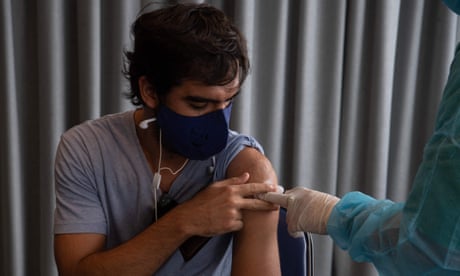
Covid: new vaccines needed globally within a year, say scientists

if we want to change that, if we’re not going to wait until 2024, then it requires more ambitious and a different scale of mobilization of resources,” said Maybarduk. Right now, “it’s not even clear the goal is to vaccinate the world”.

The pressure to get more vaccines to poor nations has also weighed on the Joe Biden administration, which is now considering whether to repurpose or internationally distribute 70m vaccine doses. After outcry, the US has shared 4m AstraZeneca vaccine doses with Canada and Mexico.

“There’s no question poorer countries are having a hard time affording doses,” said Dr Howard Markel, a pandemic historian at the University of Michigan School of Public Health. “Even if they were at wholesale or cost there are a lot of different markups.”

As it stands, 30 countries have not received a single vaccine dose. Roughly 90m vaccine doses expected to be distributed through Covax, the global alliance to distribute vaccines to poor countries, have been delayed through March and April by a Covid-19 outbreak in India. In Europe, rising Covid-19 cases and a slow vaccination campaign have also prompted vaccine export controls.

Beyond existing vaccine supply, many activists see a bigger fight in patent laws, and are drawing on experience advocating for greater access to antiretroviral drugs for HIV.

“More is possible than we believe,” said Maybarduk. “It was assumed Aids drugs could not be produced for less than $10,000 per person per year, right up until the moment they could, and they were produced for $1 per person per day.”

Similarly, Maybarduk said the technology for Covid-19 vaccines, along with other supplies, should be shared among the countries of the world. Activists have used Moderna as a key example of the leverage the US government might have, if it chose to use it.

Though popular shorthand often refers to it as just the Moderna vaccine, it was developed in partnership with the US National Institute of Allergy and Infectious Disease (NIAID). American taxpayers provided $6bn in late-stage development funds, in return for potential vaccine doses. It was also tested on Americans, who volunteered for research across 99 research sites.

“It is literally the people’s vaccine,” said Maybarduk.

Part of the proposal from activists focuses on a petition to temporarily suspend intellectual property laws governing World Trade Organization member states. Suspending those patent laws could urge companies to share technology, they argue, and better protect the whole world from emerging variants that can blunt vaccine efficacy.

“This is a classic case where you have an industry that has a very direct stake in protecting itself, and there’s very little understanding among the public how much is at issue,” said Dean Baker, an economist and co-founder of the Center for Economic and Policy Research. Activists argue pharmaceutical companies should share production know-how, and be appropriately compensated.

One part of this fight centers on a provision of international trade law called the Trips agreement, or more formally, the agreement on trade-related aspects of intellectual property rights. Put in force in 1995, Trips requires all member states to recognize 20-year monopoly patents for pharmaceuticals, including vaccines.

“What Trips was about was imposing US-European style copyright on the whole world,” said Baker. “Most developing countries had very little idea what they were dealing with.”

In October 2020, South Africa and India introduced a petition to suspend the Trips agreement through the pandemic. India is home to one of the largest generic drug manufacturing industries in the world. South Africa has the largest HIV epidemic in the world, and is part of a group of sub Saharan African countries which were priced out of antiretroviral therapies in the 1990s.

“Even if we say, ‘OK, this is highly specialized knowledge’ … the idea it wouldn’t benefit everyone to share that knowledge is kind of crazy,” Baker said. “The industry’s argument – we’re just stuck – that makes zero sense.”

However, some vaccine researchers counter that the lack of vaccine access is far more complicated than lifting patent restrictions, because there is so little manufacturing outside of the US and Europe.

“In my experience from working on vaccines for the last few decades, the patents are not the biggest problem [and] the intellectual property is not the biggest problem,” said Dr Peter Hotez, a vaccine researcher and dean of the National School of Tropical Medicine at Baylor College of Medicine in Texas.

Hotez is currently working to develop a low-cost, easily manufactured vaccine that can be distributed in low- and middle-income countries. “The problem with vaccines is having the infrastructure and the human capital to know how to make vaccines,” Hotez said.

Reliance on these major pharmaceutical companies, Hotez said, has resulted in a dearth of vaccine candidates designed for regional Covid-19 variants and suited for local administration. “We’ve still not fixed a broken financial model for how to get vaccines for the poor,” Hotez said.

On this, both camps agree.

“There should be major facilities in Africa and Asia and Latin America, as well as North America, that help respond to future pandemics,” said Maybarduk. “What is not agreed on is what the political economy of that looks like: who controls those facilities, will the technology be openly available, will they be publicly accountable.”

The fight also comes at a time when annual or booster Covid-19 shots appear increasingly likely – in part driven by the possibility variants could emerge in populations without vaccine access – and as pharmaceutical companies eye future profits.

“The big players are Astrazeneca, Moderna, BioNtech – these are not really vaccine companies,” said Hotez. They are involved because technological advances will, “provide a glidepath so they can accelerate their technology to down the line make actual money making products”, such as vaccines to treat cancer and neurodegenerative disorders.

The Trips agreement is expected to be discussed again in April, though it is unclear whether the coalition of more than 80 poorer nations will succeed. Opposition to the Trips petition has come from wealthy countries, including the US, which for the last four decades has traditionally argued for enhanced patent protections. It is unclear how the recently confirmed US trade representative, Katherine Tai, might handle the talks.

“Here you’ve got the equivalent of a blockbuster vaccine, because everybody needs it,” said Markel. “If you need it every year, boy, what a boon.”

The post Calls to Address Vaccine Shortage in Less Wealthy Nations appeared first on The St Kitts Nevis Observer.

US Puzzle-More Vaccinations, Yet More Cases of Corona

Another 948 Americans died of COVID-19  Tuesday,  23 percent lower than two weeks ago, according to The New York Times COVID-19 map and case count.   Yet Deaths are rising in 8 states, Kentucky, New York, Missouri, Tennessee, Nebraska, Michigan, Montana and Hawaii, as well as Washington, DC.

On Tuesfday 62,045 more Americans were confirmed as infected, 20 percent more than two weeks ago.

The Times reports that over the past week, there has been an average of 66,064 new cases per day, 20 percent higher than two weeks ago.

In the past week, cases were higher in 34 states, the Virgin Islands, D.C., and Puerto Rico.

New infections have plateaued in 16 states, Guam, and the Northern Mariana Islands.

Cases are not declining anywhere in the United States.

HOSPITALIZATIONS: There are 40,317 people hospitalized with the virus, a drop of 3 percent over the past two weeks.

VACCINATIONS: The CDC reported yesterday that about 29 percent of US adults have received at least one dose of a vaccine, and 16 percent are fully vaccinated. About 2.77 million doses are being administered per day. Experts say anywhere from 70 to 90 percent of the population has to acquire antibodies to the virus, either by infection or vaccine, in order to achieve herd immunity.


What are we doing, people???

We’re vaccinating people at a remarkable rate, and yet cases are rising again — up a disgraceful 20 percent over the past two weeks — and infectious disease experts are very worried that the trend will continue and develop into yet another surge.

Why? Because as great as our vaccination rate is, it can’t outpace the political calculations of governors ending mask mandates and distancing guidelines, and the selfishness of people who simply don’t care how many people are infected and how many health care workers are forced to put their health and lives on the line treating the sick.

Sorry, let me correct that: Those people will suddenly care when they or someone they know gets really, really sick, and then they’ll show up on TV crying and whining and begging others not to be as stupid as they were. Spare me.

There are so many truths being revealed about so many Americans during this crisis: What an aggressively selfish people so many of us are, how proud too many of us are of our deliberate science ignorance, how callous so many of us are to the suffering of people we don’t know.

And the proclivity of so many gullible simpletons to fall for wild conspiracy theories is on a whole other level, including that the vaccine shots implant a microchip controlled by Bill and Melinda Gates so they can control us.

As one Twitter wag put it: “Second chip successfully implanted. All I need now is a space laser and I’ll be ready for Passover!”

Others are tweeting that their chip is sour cream and onion, or that it’s picking up all sorts of TV stations they don’t have to pay for, or that they hope it will enable them to time travel. 😉


The post US Puzzle-More Vaccinations, Yet More Cases of Corona appeared first on The St Kitts Nevis Observer.

India is Offering Nevisians a Chance at a College Education

 Nevis- Want to go to college? Here’s your chance. The Government of India is offering scholarships under the Commonwealth Scholarship Plan through the NIA.

Students interested in pursuing undergraduate, post-graduate or post-doctoral research studies are encouraged to apply. The benefits of the scholarship include tuition fees, stipend, contingent grant, accommodation expenses, thesis and dissertation expenses.

Applicants are required to print and sign a copy of their online application along with copies of all uploaded documents. This information must be forwarded to the Ministry of Human Resources by Thursday, 15 April, 2021.

For information relative to application guidelines, available universities, eligibility criteria and other pertinent information, please utilize the links below or contact the listed individuals:

http://a2ascholarships.iccr.gov.in/assets/site/docs/Policy%20Guidelines.pdf.

http://a2ascholarships.iccr.gov.in/home/register.


The post India is Offering Nevisians a Chance at a College Education appeared first on The St Kitts Nevis Observer.

Pedestrian injured in Cayon Street Accident

Vehicular traffic was briefly interrupted on Cayon Street Tuesday morning when a pedestrian was injured after colliding with a vehicle near the Victoria road junction.

injured in the incident was Albert Wyatt of Parson Village who was attempting to cross the road when he was struck.

Police officials said they are investigating the traffic accident ithat occurred along Cayon Street in the vicinity of the intersection at Fort Street and Victoria Road sometime after 10 a.m. on Tuesday, March 30, 2021. Motor SUV PB 4966, which is owned and was being driven by Michael Bartlett of Shear Lane, Basseterre and pedestrian  Wyatt.

Police said the circumstances are that Wyatt was walking along the pedestrian crossing from Fort Street towards Victoria Road when the driver of motor SUV PB 4966, which was in the stop on Victoria Road, proceeded to turn left on Cayon Street after the traffic light turned green and struck the pedestrian.

The incident drew dozens of onlookers who gathered quickly to get a peep at how serious the accident was to the victim.

Wyatt suffered lacerations to the head and was transported to J.N.F. General Hospital via the Emergency Medical Service where he is warded in a stable condition. Investigations into the matter are ongoing.


The post Pedestrian injured in Cayon Street Accident appeared first on The St Kitts Nevis Observer.

Caribbean Flexes Its Muscles with Vaccine Diplomacy

For the small island states of the Caribbean, vaccine diplomacy is crucial to managing the Covid-19 pandemic. Even if their population is barely that of a district of São Paulo, countries like Grenada and Antigua & Barbuda are sovereign states, and as such they have a seat and vote at the United Nations – just like Brazil or Mexico.

The 15 states in the Caribbean Community  (CARICOM) together have more voting power than the whole of South America. And the current crisis shows how this sovereignty can be converted into a supply of vaccines that larger states can only dream of.

Take, for example, Dominica (not to be confused with the far larger Dominican Republic)With its 70,000 inhabitants, the island had already received 70,000 vaccine doses from India at the beginning of February – not just promised or planned, but actually there on the island, ready to be used.

In the meantime, China has stepped forward and flown in more vaccine doses. Dominica has the epidemic under control like no one else: so far, there’s not a single death on the island. The number of infected people is 161 – not per week, as on the neighbouring islands of Guadeloupe and Martinique belonging to France, but in total.

Not all Caribbean island nations have record as spectacular as Dominica. But many are benefiting from the international competition of vaccine diplomacy. Barbados has received 100,000 doses from India as a donation; 40,000 vaccine doses went to Antigua & Barbuda; and additional doses have been sent to other CARICOM states.

For a country like India these are not huge quantities; in these small island states, on the other hand, they cover a substantial portion of the adult population. Barbados has already vaccinated over 20 per cent of its population, and they intend to cover the entire population by the beginning of May. They are already beginning to offer ‘vaccination vacation’ packages to the tourist trade.

Walking a tight rope between Taiwan and China

Many Caribbean nations have long played Taiwan and China off against each other, to their own advantage. Five of the 15 states worldwide that officially recognise Taiwan diplomatically are in the Caribbean – namely, Belize, Haiti, St. Lucia, St. Kitts & Nevis, and St. Vincent & the Grenadines. In return, they can count on loans and WiFi expansion, public works, and study-in-Taiwan programmes. With the onset of the Covid-19 crisis, they also received masks, rapid tests and ventilators with ‘Taiwan helps’ s

Likewise, the other non-sovereign territories of the Caribbean also have little opportunity for active vaccination diplomacy.

For vaccines, however, Taiwan itself is dependent on imports. To make up for it, the country has made generous promises in the form of post-Covid economic recovery programmes. Since 2016, Panama, the Dominican Republic and El Salvador have switches sides. Taiwan is willing pay significant sums to prevent a chain reaction.

With regard to vaccine deliveries, China is playing is playing its cards right. For example, the Dominican Republic cut ties with Taiwan three years ago. Accordingly, on 17 March, a Chinese plane landed in Santo Domingo with one million doses on board. The arrival at the airport included photo ops with Chinese flags as the cargo was unloaded, and speeches invoking friendship and solidarity.

Or take the case of Guyana. When the country recently allowed Taiwan to open a trade office, Beijing made no secret of its disapproval. So when Guyana’s President Irfaan Ali ‘corrected’ this mistake a few weeks ago, Xi Jingping personally called to assure him of 20,000 doses of Sinopharm vaccine.

The insignificance of COVAX

Almost at the same time that the Chinese delivered a million doses to the Dominican Republic, the first delivery of the multilateral COVAX initiative, in which the EU plays a major role, also reached the Caribbean. Its 14,000 vaccine doses reached Jamaica on 15 March. Over time, COVAX may have a significant impact; at the moment, however, it’s a matter of ‘too little, too late’.

The US also joined the COVAX initiative under President Biden, but otherwise US vaccines have thus far played hardly any role in the Caribbean. However, to the extent that the rapid vaccination campaign is progressing in the US itself, this may change in just a few months when the States become an exporter of surplus vaccines.

For now, the course of the vaccination campaign in Puerto Rico and U.S Virgin Islands also demonstrates the peripheral status of US-owned Caribbean territories: Their vaccination rate is still below that of Georgia, which itself is the lowest of the 50 US states.

Likewise, the other non-sovereign territories of the Caribbean also have little opportunity for active vaccination diplomacy. Europe’s vaccine shortage affects the Netherlands Antilles and the French overseas departments. While in other respects, the connection to the mother countries promises access to superior social and health services of the ‘First World’, the islands find themselves in the unfamiliar role of looking enviously at the often significantly better vaccine situation of their independent neighbours.#

Many Caribbean island nations have achieved remarkable success with skilful vaccine diplomacy.

While vaccines from Russia are also used in Argentina, Bolivia and Mexico, they have not yet played a role in the Caribbean – even though St. Vincent & the Grenadines was the first country in the region to approve the Sputnik V vaccine.

Cuba’s own vaccine

The major exception in Caribbean vaccination diplomacy is Cuba. The socialist government has not imported any vaccine – even though it certainly could have obtained one from China or Russia. Instead, Havana is relying entirely on self-sufficiency.

Despite the economic crisis, medicine and biotechnology are still powerful and up-to-date sectors. The government is proud that Cuba is the only country in Latin America to develop its own vaccines. The most advanced (‘Soberana 2’) is currently in Phase 3 testing with 44,000 people in Cuba and another test group in Iran. If these prove successful, the nationwide vaccination campaign could begin in the second quarter.

Cuba hopes that its vaccine will become a major export and a source of foreign currency. According to the announcement, 100 million doses are supposed to be produced by the end of the year. A video has already been shot inviting foreigners to vacation in Cuba ‘with sun, beach and vaccination’. Of course, they also want to help other countries in solidarity with Latin America, Africa and Asia by providing free vaccine deliveries.

Cuba had very low infection rates throughout 2020. But since January the spread of the virus has skyrocketed. In addition to the precarious supply situation, there is also a tense epidemiological situation. Relying entirely on in-house development – and thus forgoing any importation of vaccines – is a high-risk strategy with many unknowns. How effective will the vaccine be, and how safe? When will it be available in sufficient numbers? After all, there is a formidable challenge not only in development, but mass production as well, not to mention international certification.

The Caribbean is the most tourism-dependent region in the world. The collapse of air traffic has plunged the entire region into a deep economic crisis. However, the Covid-19 pandemic seems to be leading less to a rethinking of the development strategy than to these countries’ ability to market themselves again as quickly as possible – as both safe tourist destinations and a source of vaccinations.

Many Caribbean island nations have achieved remarkable success with skilful vaccine diplomacy. The US and the EU are merely playing a secondary role. The help coming from new friends in Asia may not be entirely altruistic, but rather a quid pro quo in return for relevant voting behaviour or other gestures of solidarity. However, this will cause little concern in the Caribbean in the current crisis, but is rather seen as ‘diversifying relationships of dependence’.

The post Caribbean Flexes Its Muscles with Vaccine Diplomacy appeared first on The St Kitts Nevis Observer.

Mexico Claims 120,000 Excess Deaths Indirectly Caused By COVID

MEXICO CITY (AP) — Many of the over 120,000 excess deaths Mexico suffered so far during the pandemic may have been indirectly caused by the coronavirus, even if those people didn’t die of COVID-19, Mexican officials said Tuesday.

Not including the indirect deaths, officials list 322,263 deaths directly caused by COVID-19.

A “very significant part” of those deaths were people who were suffering heart problems but were too afraid to go the hospital for fear of getting infected, said Dr. Ruy López Ridaura, the country’s director of disease prevention and control.

“Clearly, even those cases that aren’t directly associated with (coronavirus) infection … in some way are associated with the pandemic, right, because they were associated with the burden on hospitals, the fear that people had,” López Ridaura said.

“It is not unreasonable to think that a very significant part is due to people not seeking medical attention,” he said. “They were in a certain way afraid to go to a system that was caring for a lot of COVID patients, for fear of getting infected.”

The number of deaths from heart disease and diabetes skyrocketed during 2020. For example, deaths from cardiac ailments increased 36% last year, as compared to 2019, and deaths from complications of diabetes were up 46%.

Fear may not have been the only factor. Many hospitals in Mexico simply did not have room for non-COVID-19 patients, or treatment may have been delayed because ambulances were tied up during the pandemic, or because some hospitals would not treat emergency patients until they had been tested for the coronavirus.

While case numbers have been declining, Mexico recorded 807 test-confirmed deaths Tuesday, a relatively high number compared to recent weeks.

Mexico’s toll rivals that of Brazil, which currently has the world’s second-highest number of deaths after the United States. But Mexico’s population of 126 million is considerably less than either of those countries.

The post Mexico Claims 120,000 Excess Deaths Indirectly Caused By COVID appeared first on The St Kitts Nevis Observer.

Associated Press World View: Shocking Floyd Testimony, G. Gordon Loddy Dies, Reporters See Bursting Border Detention Camps

March 31, 202

A firefighter who was blocked from helping George Floyd will be back on the stand in the trial of the police officer charged in Floyd’s death.

G. Gordon Liddy, a mastermind of the Watergate burglary, has died at 90.

And the Biden administration for the first time allowed journalists inside its main border detention facility for migrant children, revealing severe overcrowding.

Also this morning:

  • Gonzaga’s bid for a perfect season moves on to Final Four.
  • Volkswagen pulls early April Fool’s Day hoax with fake news release announcing ‘Voltswagen’ name change.
  • Japan’s famed cherry blossoms bloom early as climate warms.

VANESSA GERA

The Associated Press

Warsaw, Poland

The Rundown

I'm an image

MINNEAPOLIS (AP) — A Minneapolis firefighter who voiced frustration at being prevented from using her EMT training to help George Floyd will be back on the stand Wednesday in the trial of the……Read More

I'm an image

DONNA, Texas (AP) — The Biden administration for the first time Tuesday allowed journalists inside its main border detention facility for migrant children, revealing a severely overcrowded tent….Read More

I'm an image

WASHINGTON (AP) — G. Gordon Liddy, a mastermind of the Watergate burglary and a radio talk show host after emerging from prison, died Tuesday at age 90 at his daughter’s home in Virginia…. …Read More

I'm an image

WASHINGTON (AP) — President Joe Biden is aiming for summer passage of an infrastructure plan that is expected to cost more than $3 trillion, and the White House hopes to take a more deliberate a…Read More

I'm an image

TOKYO (AP) — Japan’s famous cherry blossoms have reached their flowery peak in many places earlier this year than at any time since formal records started being kept nearly 70 years ago, with……Read More

OTHER TOP STORIES

LONDON (AP) — The cobblestones are deserted at the Tower of London. A biting wind blows and there is no sign of life. Even the storied ravens are nowhere to be seen. England’…Read More

INDIANAPOLIS (AP) — Gonzaga’s countdown to perfection has ticked to two. The Bulldogs are back in the Final Four, two wins from becoming the first undefeated team since the 1…Read More

WASHINGTON (AP) — Republican Rep. Matt Gaetz, a prominent conservative in Congress and a close ally of former President Donald Trump, said Tuesday he is being investigated by…Read More

NEW YORK (AP) — Journalists are used to being wary about odd pranksters pulling April Fool’s Day hoaxes at this time of year. Few expect it from a multi-billion dollar… …Read More

The post Associated Press World View: Shocking Floyd Testimony, G. Gordon Loddy Dies, Reporters See Bursting Border Detention Camps appeared first on The St Kitts Nevis Observer.

Bermuda COVID Cases Soar, as Testing Centres Overwhelmed

Bermuda Health Minister Kim Wilson disclosed that island’ testing centres are being overwhelmed, after it recorded a further 108 cases of COVID-19, bringing the number of active cases to 396.

The numbers came from a batch of 3,038 test results, producing the highest single-daily total since records began a year ago.

Just one of the new cases was imported – by a passenger arriving on a JetBlue flight from New York last Friday.

A further 35 cases are classified as local transmission, while 72 are under investigation.

One of the currently active cases is in hospital, while six carriers have recovered from the condition since the last update on Saturday.

Active cases have skyrocketed in the last 10 days, with the island recording more than 200 new cases last week alone.

In a statement on Monday night announcing the latest figures, Wilson said that testing centres were now overwhelmed by demand and that many of the current crop of cases were under investigation.

Premier David Burt has said some seniors in rest homes have yet to be vaccinated because their children have refused to give consent.

Burt said in an online conversation about the pandemic that he was saddened by the number of people who have failed to give consent for their parents to be vaccinated.

He said: “No one can force it – it is not for us to force – but it is very concerning for our most vulnerable population there are children who will not consent for their parents to be vaccinated. In a setting like that if there is one seeding of a contagious virus it can have an impact, an outbreak.

“The truth is we don’t have all of our seniors in rest homes vaccinated and the way this new strain is spreading it is likely that, just as there are cases in the prison, there will be cases in rest homes,” he added.

Burt also confirmed online that an outbreak of the contagious UK variant of the virus had made its way into Westgate, the island’s maximum-security prison at Dockyard.

The number of cases was not confirmed but TNN News reported five infections among inmates, causing all prisoners to need testing.

Bermuda has so far recorded a total of 1,136 COVID-19 cases. Twelve people have died, including three in rest homes.

The post Bermuda COVID Cases Soar, as Testing Centres Overwhelmed appeared first on The St Kitts Nevis Observer.

A&B Labour Party Booted from Barbuda in Local Polls

The Antigua and Barbuda Labour Party has suffered a local election whitewash in Barbuda.

“It sends a clear message that Labour is no more. We don’t want no more (Antigua and Barbuda) Labour Party in Barbuda; the people have spoken and I think that is a message to be sent.”

Those were the words of Nico Antonio shortly after midnight on Tuesday, moments after it was confirmed that she was among the five Barbuda People’s Movement (BPM) candidates who took a clean sweep of the Barbuda Council elections.

The five BPM winning candidates were Antonio, Mackenzie Frank, Melanie Beazer, Wayde Burton, and Nadia John.

The retired litter warden told Observer she is embracing her new role on the local government body.

“I just want to thank almighty God as it would not have been possible without him…and to thank the people of Barbuda for bringing us through,” she said.

“It was a bit tense but I knew I was going to come through…my pastor told me this is what God said and it has come to pass,” Antonio added.

Final election results

The BPM already held the four other elected seats through Sharima Deazle, Jackie Frank, Devon Warner and Calsey Beazer-Joseph.

The BPM also holds the two appointed seats on the 11-member council through Barbuda MP Trevor Walker and Senator Fabian Jones. It means all nine elected and the two appointed seats on the Barbuda Council are now all held by members of the Barbuda People’s Movement.

The ABLP’s Alvin Tyrone Beazer, Wesley Beazer, Hesketh Daniel, Mackiesha Desouza, and Kelcina George contested the election for the ABLP, while Odrick Samuel ran as an independent.

Former nurse Nadia John, who won her seat, said it is evident that the Barbuda people are in support of the BPM party.

“They are hoping that we carry on the fight against the government and all that they are trying to do to us here in Barbuda,” John said.

“The task ahead is going to be a tough one given the Covid pandemic and our financial constraints,” she added.

Another victorious candidate, retired teacher Melanie Beazer, said her priority is now striving to get council workers up to date with their wages which are weeks in arrears.

“(My priority is) for people to get paid number one. Going all those weeks without money, we have to really look into paying the people,” said Beazer.

Mackenzie Frank said the council is keen to work with the ABLP-run central government.

“What has been done today is indeed historic. There was a time before in the late 70s when there was an all BPM council and at that time our great fight was to separate from Antigua, but now our greatest task is to rebuild the economy of the island and we are looking at the central government to come and sit around the table,” said Frank.

Ahead of the election the parties have clashed on several issues, including unpaid council wages dating back several weeks, issues over land, and different views on how the enormous Peace, Love and Happiness project should proceed.

The campaign however had a low-key nature with Covid restrictions preventing any mass rallies or events.

Chairman of the Free and Fair Elections League Elouise Roberts said one concern had been noted about influencing which the group was not prepared to speak on yet, but which would be included in its final report.

Meanwhile, the BPM was congratulated on its success by leaders of the opposition United Progressive Party (UPP).

Political Leader Harold Lovell said, “The results of the council elections demonstrate resounding confidence in the BPM and an absolute rejection of Prime Minister Gaston Browne and the Antigua Labour Party.

“It is clear that the support previously enjoyed by his administration has drastically diminished, as the people have become tired of his abusive, base and insensitive leadership,” he added.

Opposition Leader Jamale Pringle said, “Barbuda today; Antigua tomorrow.”

Prime Minister Gaston Browne was also asked for his comments.

“I have accepted that development and political gain are incongruent in Barbuda,” he told Observer.

“When the investments mature and they start to benefit significantly, they will thank us in the future for prioritising development over political gain,” the PM added.

A total of 3,645 votes were counted, indicating a turnout of almost one in three of the sister island’s population.

The post A&B Labour Party Booted from Barbuda in Local Polls appeared first on The St Kitts Nevis Observer.