Tag Archives: caribbean

Royal Caribbean Ready to Cruise Again

MONTEGO BAY, St James — Chief executive officer (CEO) of Royal Caribbean Group, Richard Fain, says a number of test cruises carried out during the novel coronavirus pandemic and also prior to the start of vaccination programmes by countries have shown that ships are ready to start sailing again.

Fain, in a video message to travel advisors on March 22, said that the sector is now equipped with all the health protocols to safely resume operations.

He indicated that Royal Caribbean Group has carried more than 100,000 guests on over 150 cruises, with only 10 positive COVID-19 cases.

He noted that all of the positive cases “have been handled smoothly and without undue disruption of other guests and without undue burden on the communities and the governments involved”.

Fain said that the company’s experience with the 100,000 cruise passengers demonstrates that the process indeed works.

He noted that the experience was not unique to Royal Caribbean, adding that the industry, as a whole, has transported more than 350,000 passengers “with very few cases and minimal disruption. This is precisely what we thought would be the case”.

“It is important to note that most of these sailings took place before the vaccines were out,” he added.

“Everybody knows that the vaccines are a game changer, but they’re not the only protection we have,” he said, noting that contact tracing is able to be done effectively on the ships.

Fain said that the success of the test cruises “is enabling us to restart cruises in more and more places around the world”.

He said that the response to Royal Caribbean’s decision to begin sailing from the selected ports “has been exceptional” and indicates that there is an enormous amount of pent-up demand to cruise again.

“I expect that we will soon be announcing more such itineraries,” he noted.

He pointed out that Royal Caribbean expects to sail out of The Bahamas and St Maarten with vaccinated adult guests in June, and signalled that there might be other home-porting opportunities for consideration in the region.

This is good news for Jamaica, which is in talks with cruise line executives, including Royal Caribbean, for the island to be considered a major home-porting destination.


The post Royal Caribbean Ready to Cruise Again appeared first on The St Kitts Nevis Observer.

George Floyd: Teenage Witness ‘Apologising for Not Doing More’

The teenager whose film of George Floyd’s death sparked global protests said she “stays up apologising” to him for “not doing more”.

Darnella, now 18, was one of four young witnesses to take the stand on the second day of Derek Chauvin’s trial.

She told the court of seeing Mr Floyd “begging for his life”, comparing him to her dad, brother, cousins and uncles “because they are all black”.

Issues of racial equality and policing lay at the centre of the case.

On Monday, the opening session of the trial heard Mr Chauvin, an ex-police officer, knelt on Mr Floyd’s neck for over nine minutes while arresting him in Minneapolis in May 2020. Prosecutors say this was a “major cause” in his death.

Defence lawyers have indicated they will argue that 46-year-old Mr Floyd died of an overdose. Mr Chauvin, 45, denies charges of murder and manslaughter.

Three other officers who were present – Tou Thao, J Alexander Keung and Thomas Lane – will go on trial later in the year.

What did the trial hear on the second day?

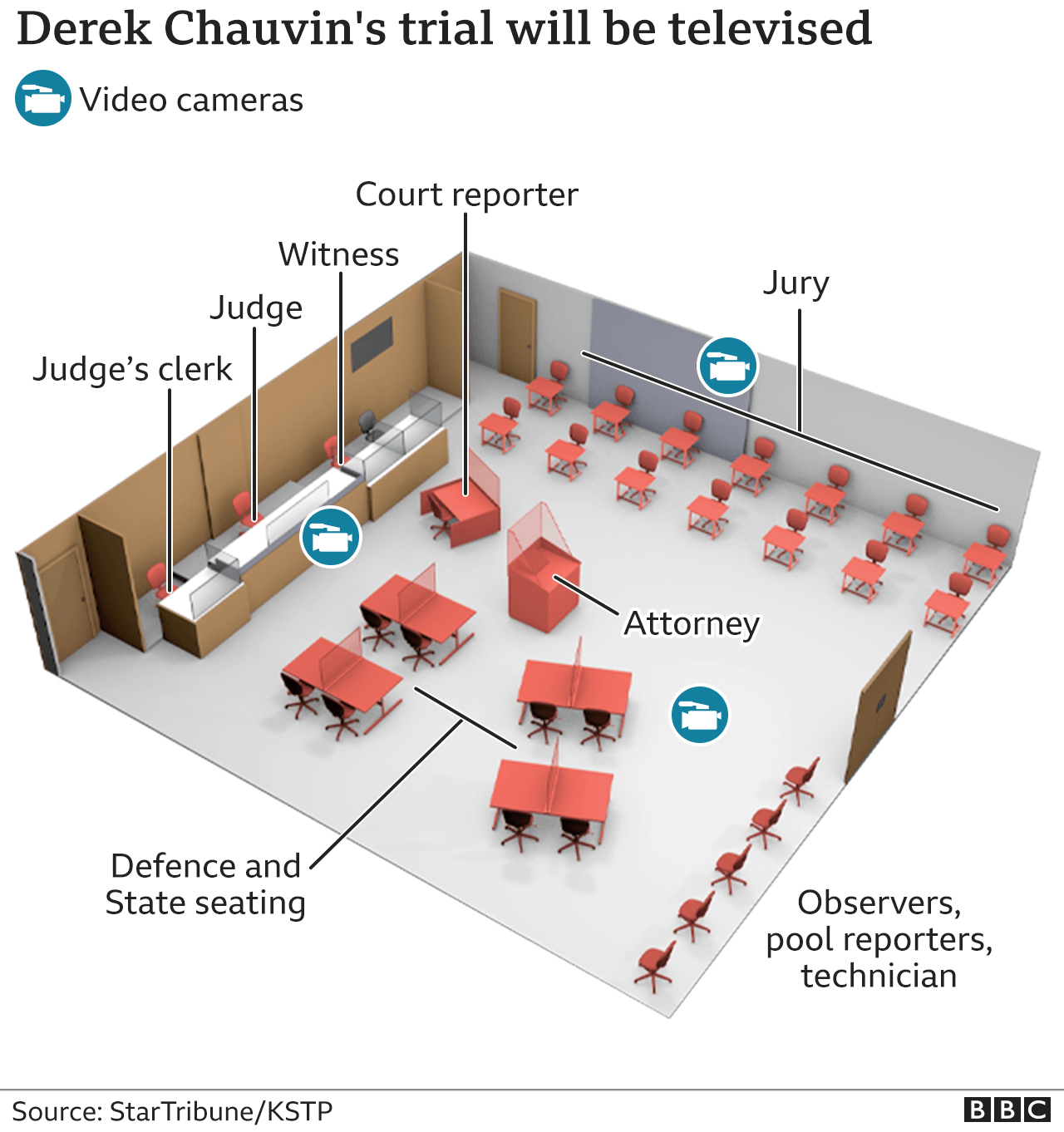
Four children who were all under 18 at the time of the incident gave evidence to the court, but the cameras were switched off so the jurors could not see them and they were identified only by their first names.

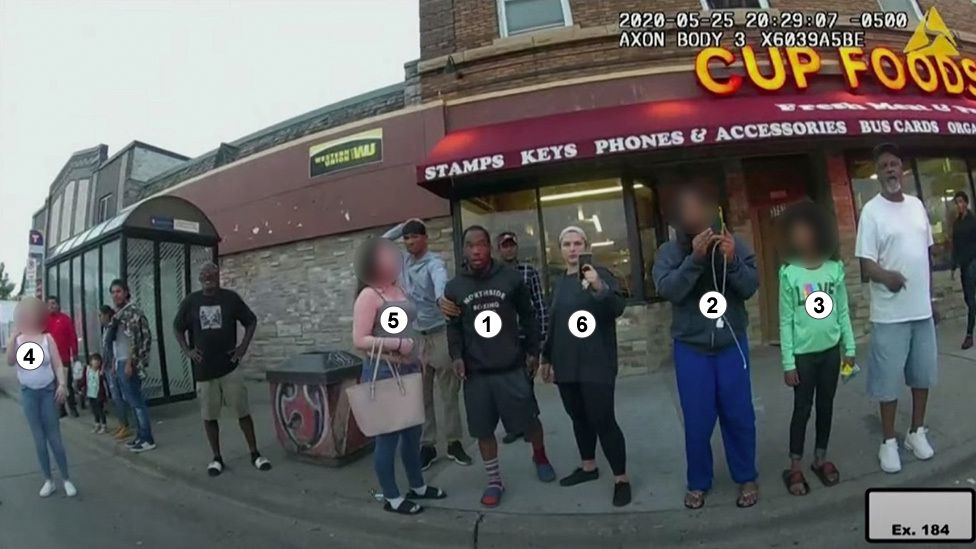
Bystanders watching the incident unfold on 25 May 2020image copyrightCourt TV
image captionWitnesses: 1. Donald Williams. 2. Darnella. 3. Darnella’s cousin. 4. Alissa. 5. Kalen. 6. Genevieve Hansen

Darnella, then 17 years old, was walking to the Cup Foods shop with her nine-year-old cousin when they came across the arrest on the street outside.

She told the court she started filming on her phone because “I saw a man terrified, begging for his life. It wasn’t right – he was in pain.”

She described hearing Mr Floyd “saying ‘I can’t breathe’. He was terrified, he was calling for his mom.”

Darnella said witnessing his death had changed her life.

“When I look at George Floyd I look at my dad, I look at my brother, my cousins, my uncles – because they are all black,” she said, audibly crying. “And I look at how that could have been one of them.”

“I stay up apologising to George Floyd for not doing more.”

Her young cousin also gave evidence and said she felt “sad and kind of mad” by what she saw. “It sounded like he was hurting”.

Two friends, Alissa, 18, and Kalen, 17, had driven up to the store when they came across the arrest. Both described feeling helpless as they watched Mr Floyd’s last moments before “he was just laying there, no longer fighting or resisting”.

The last witness of the day was Genevieve Hansen, an off-duty firefighter, who said the officers prevented her from administering medical help that would have saved Mr Floyd’s life. She was rebuked by the judge for her testy responses to defence questioning.

What else has the trial heard so far?

One witness, Donald Williams II, who is trained in mixed martial arts, was questioned for over an hour by the prosecution and defence on Monday and again on Tuesday.

He told the court Mr Chauvin had used a dangerous technique called a “blood choke” and was moving his knee back and forth to increase the pressure on Mr Floyd’s back and neck.

Courtroom graphic
1px transparent line

He rejected defence suggestions that he and other bystanders’ interactions with police had been threatening to the officers there.

In opening statements on Monday, Prosecutor Jerry Blackwell told the jury that Mr Chauvin had “betrayed his badge” by kneeling on Mr Floyd’s neck, and using “excessive and unreasonable force” to detain him.

Meanwhile, Mr Chauvin’s lawyer Eric Nelson said the case was about the evidence, not about a “political or social cause”. He said Mr Floyd had ingested drugs at the time of his arrest “in an effort to conceal them to police”, and suggested this contributed to his death.

Mr Chauvin has been silent but remained engaged during the proceedings, taking almost constant notes on a yellow legal pad while listening to the evidence.

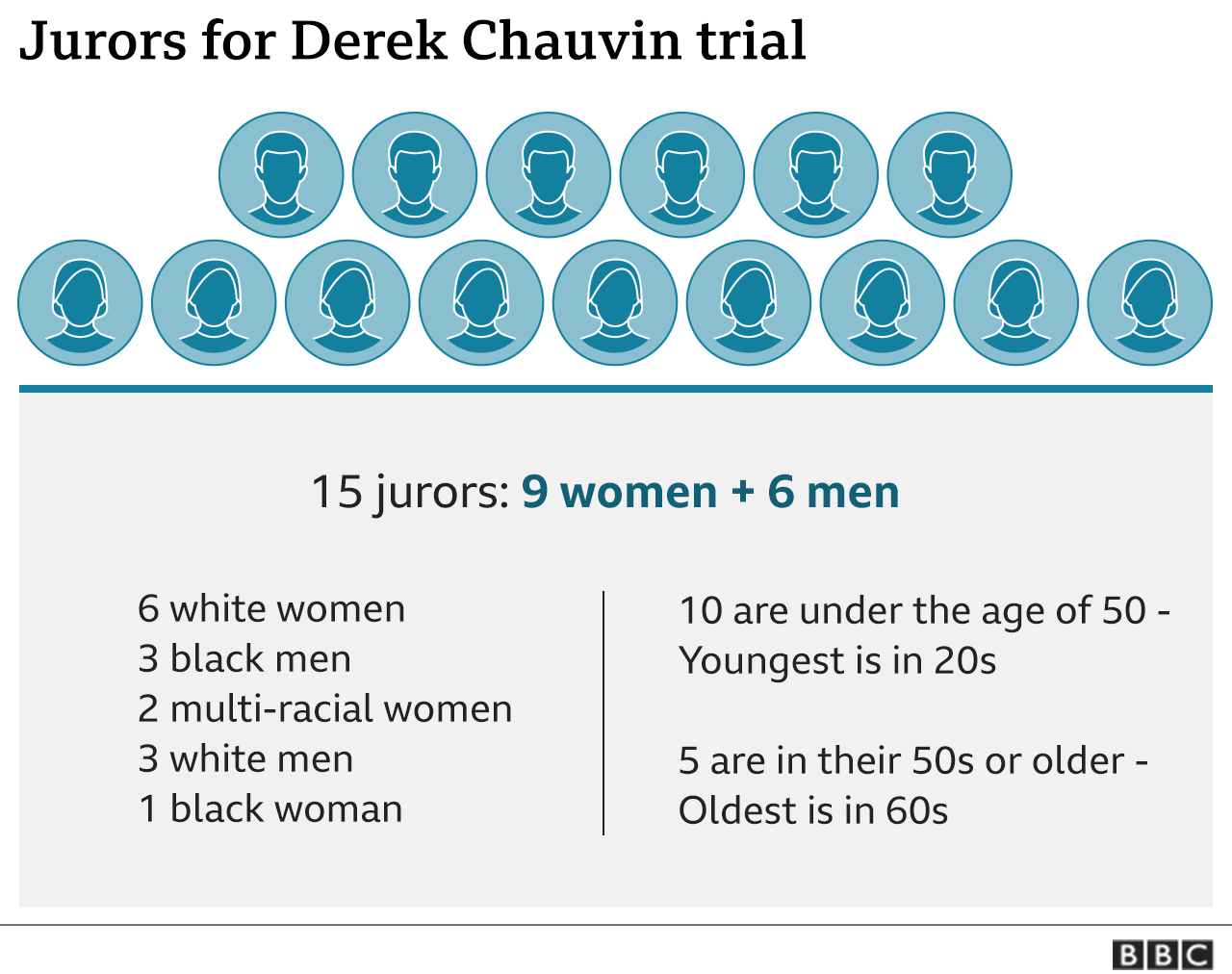
A graphic showing the breakdown of jurors in the Derek Chauvin trial
1px transparent line

Why is this such a high-profile case?

Darnella’s video footage of Derek Chauvin kneeling on George Floyd’s neck was replayed the world over and sparked mass protests and a racial reckoning in the US.

To many, Floyd’s death while in police custody became a vivid symbol of police brutality – particularly against people of colour – and it sparked worldwide demonstrations for racial justice.

But despite the global outcry this is not an open and shut case. In the US, police are rarely convicted for deaths that occur while they are on duty, if they are charged at all.

The verdict in this case will be widely seen as an indication of how the US legal system treats deaths that occur while in police custody.

The post George Floyd: Teenage Witness ‘Apologising for Not Doing More’ appeared first on The St Kitts Nevis Observer.

Brazil’s Military Leaders Resign Amidst Bolsonaro’s Shake-UP

RIO DE JANEIRO (AP) — The leaders of all three branches of Brazil’s armed forces jointly resigned Tuesday following President Jair Bolsonaro’s replacement of the defense minister, causing widespread apprehension of a military shakeup to serve the president’s political interests.

The Defense Ministry reported the resignations — apparently unprecedented since at least the end of military rule 36 years ago — in a statement released without giving reasons. Replacements were not named. But analysts expressed fears the president, increasingly under pressure, was moving to assert greater control over the military.

“Since 1985, we haven’t had news of such clear intervention of the president with regard to the armed forces,” said Carlos Melo, a political science professor at Insper University in Sao Paulo.

Bolsonaro, a conservative former army captain who has often praised Brazil’s former period of military dictatorship, has relied heavily on current and former soldiers to staff key Cabinet positions since taking office in January 2019, but Melo said the military itself has so far refrained from politics.

“Will this resistance continue? That’s the question,” Melo said.

The announcement came after the heads of the army, navy and air force met with the new defense minister, Gen. Walter Souza Braga Netto, on Tuesday morning.

Braga Netto’s first statement on the new job showed he is aligned with Bolsonaro’s views for the armed forces. The incoming defense minister, unlike his predecessor, celebrated the 1964-1985 military dictatorship that killed and tortured thousands of Brazilians.

“The armed forces ended up assuming the responsibility for pacifying the country, facing the challenges to reorganize it and secure the democratic liberties that today we enjoy,” said Braga Netto, who did not discuss the departure of the military chiefs. “The 1964 movement is part of Brazil’s historic trajectory. And as such the events of that March 31st must be understood and celebrated.”

A retired army general who has a relationship with the three commanders as well as with Braga Netto told The Associated Press that “there was an embarrassing circumstance so they all resigned.” He agreed to discuss the matter only if not quoted by name, expressing fear of retribution.

Bolsonaro on Monday carried out a shake-up of top Cabinet positions that was initially seen as a response to demands for a course correction by lawmakers, diplomats and economists, particularly over his handling of the pandemic that has caused more than 300,000 deaths in Brazil.

That included the replacement of Defense Minister Fernando Azevedo e Silva, who said in his resignation letter that he had “preserved the armed forces as state institutions,” a nod at his effort to keep generals out of politics.

Bolsonaro has often bristled at the checks and balances imposed by other branches of government and has attended protests targeting the Supreme Court and Congress.

He has also criticized the Supreme Court for upholding local governments’ rights to adopt pandemic restrictions that he adamantly opposes, arguing that the economic effects are worse than the disease itself.

His recent slide in popularity, and the sudden likelihood that he will face leftist former President Luiz Inácio Lula da Silva in the 2022 presidential election, has analysts saying he is looking to the armed forces for support.

Retired Gen. Carlos Alberto Santos Cruz, who previously served as Bolsonaro’s government secretary, appeared to refer to such concerns when he responded to early rumors of military resignations with a tweet saying, “THE ARMED FORCES WON’T GO ON AN ADVENTURE.”

Since Brazil’s return to democracy in 1985, the armed forces have tried to keep a distance from partisan political quarrels.

“The government has to give explanations to the population about the change in the Defense Ministry,” Santos Cruz added.

Sen. Kátia Abreu, who heads the Senate’s foreign relations commission, said it would be “prudent” that the new defense minister speak to “calm the nation down about the impossibility of a military intervention.”

“I have a conviction that we built a strong democracy. The armed forces are part of the Brazilian state and they have the confidence of all of us,” said Abreu, a right-leaning Bolsonaro critic.

Earlier this month, Bolsonaro began mentioning the armed forces in connection with his dispute with state governors and mayors over restrictive measures meant to slow the spread of the coronavirus in Latin America’s largest nation.

“My army doesn’t go to the street to force people to stay at home,” Bolsonaro told reporters March 19.

Thomas Traumann, an independent political analyst, told AP that it was the first time in living memory that all leaders of the armed forces had quit simultaneously.

“He wants people who will do whatever he wants, and so it is extremely risky,” Traumann said. “He can put the army out to allow people to go to work. So the army would be in his hands, and not in the hands of the generals.”

Speaking to supporters outside the presidential palace Tuesday night, Bolsonaro did not discuss the three commanders. When asked about the pandemic restrictions imposed by governors and mayors, the president said he respects the constitution, though he added: “But it has been some time that some authorities are not playing within the limits of the constitution.”

Bolsonaro saw his popularity rise last year, thanks to a generous pandemic welfare aid program. That popularity has dropped since the program ended in December, and there have been renewed protests against him as the nation’s daily death toll surged to the highest in the world.

Further clouding the outlook for Bolsonaro is the reemergence of da Silva after a Supreme Court justice annulled two corruption convictions and restored his political rights. Early polls indicate he would be a formidable challenger in next year’s election.

In other Cabinet changes, Bolsonaro replaced Foreign Minister Ernesto Araújo, who was accused by some of impeding the supply of vaccines by making comments seen as insulting to the Chinese and by not aggressively seeking sources.

Earlier this month, Bolsonaro also replaced his health minister, active-duty army Gen. Eduardo Pazuello, the third health minister to leave office since the beginning of the pandemic. Pazuello’s tenure coincided with most of Brazil’s 317,000 COVID-19 deaths.

On Tuesday, Brazil’s health ministry said a new daily high of 3,780 deaths related to COVID-19 had been registered in the previous 24 hours. The previous high of 3,650 deaths was recorded Friday.

___

Associated Press writer Mauricio Savarese in Sao Paulo contributed to this report.

The post Brazil’s Military Leaders Resign Amidst Bolsonaro’s Shake-UP appeared first on The St Kitts Nevis Observer.

US, 13 Countries Not Totally Happy with Data in WHO Virus Origin Report


By Peter Sullivan

The U.S. and 13 other countries on Tuesday released a statement raising “concerns” with a report from a World Health Organization (WHO)-convened team into the origins of coronavirus, saying it lacked full access to the information it needed.

“We voice our shared concerns that the international expert study on the source of the SARS-CoV-2 virus was significantly delayed and lacked access to complete, original data and samples,” the countries said in a joint statement.

There have long been questions raised about the independence of the WHO-convened team of experts, working jointly with Chinese scientists, and whether the Chinese government was providing full access to needed information on the origins of the virus.

Asked on Tuesday at a White House press briefing if China had cooperated enough with the report, press secretary Jen Psaki said: “They have not been transparent, they have not provided underlying data, that certainly doesn’t qualify as cooperation.”

“We don’t believe that in our review to date that it meets the moment,” Psaki added of the report.

The joint statement was the first reaction after the official release of the report earlier Tuesday. The report did not reach a definitive conclusion, but found the virus likely jumped from animals to humans, and was unlikely to be the result of a lab leak.

“Scientific missions like these should be able to do their work under conditions that produce independent and objective recommendations and findings,” the 14 countries said.

The WHO said Tuesday in reaction to the report that research is continuing and that it is not ruling out any hypotheses at the moment.

“Going forward, there must now be a renewed commitment by WHO and all Member States to access, transparency, and timeliness,” the statement from the 14 countries added.

Along with the U.S., the statement was joined by Australia, Canada, Czechia, Denmark, Estonia, Israel, Japan, Latvia, Lithuania, Norway, South Korea, Slovenia and the United Kingdom.

Secretary of State Antony Blinken called out China more pointedly in comments on CNN on Sunday.

“We’ve got real concerns about the methodology and the process that went into that report, including the fact that the government in Beijing apparently helped to write it,” Blinken said then.


The post US, 13 Countries Not Totally Happy with Data in WHO Virus Origin Report appeared first on The St Kitts Nevis Observer.

Even With Vaccines, COVID-19’s 4th Wave Hitting US Hard, World Stats

By Reid Wilson

A fourth wave of coronavirus infections is beginning to mount in states across the nation as health experts and officials beg pandemic-exhausted Americans to stay vigilant.

The United States has reported an average of 65,000 new cases in the last seven days, according to data from the Centers for Disease Control and Prevention (CDC), up about 10,000 cases per day since the most recent nadir two weeks ago.

Those figures are well below the January apex of the third wave of infections, when a quarter-million people a day were testing positive for the virus.

But while millions of Americans are receiving vaccinations, progress toward herd immunity has not kept pace with the new spike. Cases are rising in about half the states, led by big spikes in New York and especially New York City, Michigan, New Jersey, Connecticut and Pennsylvania.

“Our work is far from over. The war against COVID-19 is far from won. This is deadly serious,” President Biden said Monday at the White House, hours after CDC Director Rochelle Walensky pleaded for the public to keep up mitigation strategies. “If we let our guard down now, we could see a virus getting worse, not better.”

Scientists say the new spike is being driven by the emergence of variants of the coronavirus, most notably a more readily transmissible and virulent strain known as B.1.1.7, first identified in the United Kingdom. CDC data shows that strain is responsible for an estimated 13 percent of new cases in Florida and 9 percent of cases in New Jersey.

But the number of cases is also being spurred by behavior changes as weary Americans increasingly participate in nonessential activities. States have loosened restrictions, in some cases altogether, and several states have dropped or are planning to scrap mask mandates.

“There is more indoor crowding. If I walk out in the street in Boston I see indoor crowding in restaurants and shopping,” said Abraar Karan, an internal medicine specialist at Brigham and Women’s Hospital and the Harvard Medical School. “We knew that when you start to reopen there will be more social and physical interactions.”

After a year of errors and missteps in handling the pandemic, the vaccination campaign stands out as a distinct bright spot.

The number of Americans who have received a vaccine against the coronavirus is growing by more than 2 million a day, according to CDC data. The United States is vaccinating a larger share of its population than any nation other than Israel, the United Arab Emirates, Chile and the United Kingdom.

More than 17 million doses have been administered in California, and more than 11 million have been given in Texas. More than a third of residents of smaller states like New Mexico, Connecticut, South Dakota, Alaska and Maine have received at least one dose.

Vaccine administration rates are highest among the elderly, who received top priority as early rounds of vaccines were rolled out over the last several months. But millions more must be vaccinated before the United States reaches some form of herd immunity.

“It’ll be at least another six to eight weeks before we get that kind of coverage,” said Celine Gounder, an infectious diseases specialist at New York University’s Grossman School of Medicine and a member of the Biden administration’s COVID-19 advisory board. “We’re almost there, it’s just not the time to give up.”

The high number of older Americans who have been vaccinated coupled with improved clinical care practices are reducing the number of deaths caused by COVID-19. Fewer than 1,000 people a day have died of the virus over the last week for the first time since November. The number of Americans being treated in hospitals is around 40,000, less than a third of the number of patients in January.

“I’m hopeful that even if we do have another surge, we’ll deal with it better this time. But the surge was avoidable,” Karan said. “Now that the train has been set in motion, infections that are happening today you’ll see in the next couple of weeks.”

Even with the progress, health care workers and experts have been left exhausted by the pandemic that has killed more than 550,000 Americans. Amy Arlund, an intensive care unit nurse at Kaiser Fresno Medical Center, said her hospital went through a period in which every person admitted to the ICU died.

“I just had to stop counting the body count. After 100 people dying in my ICU, the numbers just became overwhelming,” Arlund said. “It’s hit me that I’m not so sure I want to do this anymore.”

========================================================

World Stats

Coronavirus Cases:

128,821,818

Deaths:

2,816,470

Recovered:

103,951,138
ACTIVE CASES
22,054,210
Highlighted in green
= all cases have recovered from the infection
Highlighted in grey
= all cases have had an outcome (there are no active cases)

[back to top ↑]

Latest News

March 31 (GMT)

Updates

  • 5,068 new cases and 807 new deaths in Mexico [source]

Archived

The post Even With Vaccines, COVID-19’s 4th Wave Hitting US Hard, World Stats appeared first on The St Kitts Nevis Observer.

Development Bank Partners with SKN Strongest Man, Fittest Woman Competition Organisers

 BASSETERRE, ST. KITTS, March 30, 2021 (DBSKN) — A firm believer in the adage ‘a healthy nation is a wealthy nation’, the Development Bank of St. Kitts and Nevis is partnering with the organisers of SKN Strongest Man & SKN Fittest Woman Competition in staging the event whose first round, Bench Press, will be held on Sunday April 4.

According to the main organiser, Romaine Belgrove, the competition was first held in 2019 at the Vibes Beach Bar on The Strip in Frigate Bay but could not be held last year due to the coronavirus pandemic. It will be held at the same venue from 1:30 pm on Sunday.

“The Development Bank of St. Kitts and Nevis was one of my sponsors in 2019, and have this year graciously come back on board to partner with us in hosting this competition for which I thank them,” said Belgrove. “I have a good working relationship with the Development Bank as my business, ‘Quality and experience tyre repairs and services’ in West Basseterre, benefitted from the institution’s Fresh Start loans.

Belgrove made the remarks last week when he received the sponsorship cheque from the Marketing and Product Development Officer at the Development Bank of St. Kitts and Nevis, Chantelle Rochester.

“Non-communicable diseases (NCDs) are common in most of our Caribbean countries, and health experts have all along been saying that exercises are one of the most effective methods of keeping the NCDs at bay,” said Rochester. “SKN Strongest Man & SKN Fittest Woman Competition is one event that encourages people to exercise and we at the Development Bank of St. Kitts and Nevis support the organisers of the event.”

 Belgrove who is in partnership with Mr Troy ‘Spuddy’ Hendrickson, CEO of Vibes Beach Bar, said that women shied off in 2019 but several have shown interest this year. Apart from the defending champion, the organiser has stated that some of those who took part in the 2019 competition have confirmed that they will take part.

Others in the organising team are Althus Herbert, Team Member;  Judith Isles, Team Member; and Dr. Garfield Alexander, Team Member/Doctor.

“The winner in 2019 was Vernard Woodley who won some prize money, a championship belt and a rotating trophy that he kept for almost a year,” said Belgrove. “His name was put on the rotating trophy as the first winner. The championship belt and rotating trophy are now back in my possession so once we have the competition again they will be turned over to the next winner going forward.”

While the first SKN Strongest Man & SKN Fittest Woman Competition in 2019 ended in December Belgrove is hopeful that they will be able to get through with the competition events by September and have the awarding of trophies done by Independence Day.

Several activities, starting with Bench Press Competition on Sunday, will take place in the remaining days leading to September. The organiser noted that some of the events they had time included vehicle pull, lift weights put together and walk with them a certain distance and come back, the fireman carry, kettle ball throw and stone carry for men.

“Women will do the tire flip,” explained Belgrove. “They would do more of the cardio stuff – not too much of the lifting, but will do things like push-ups and sit-ups. Women events will take place this year as a number have so far indicated that they will take part.”


.


The post Development Bank Partners with SKN Strongest Man, Fittest Woman Competition Organisers appeared first on The St Kitts Nevis Observer.

Kite making workshop kicks off

By Monique Washington


More than a dozen children, from Nevis, began learning the traditional art form of making kites, an experience the Junior Minister of Education  Troy Liburd said, he hopes they will be able to pass on to others in the future.

On Monday the Ministry of Education hosted the opening ceremony for its first three-day kite making workshop at the Elizabeth Pemberton Primary School. The workshop is being facilitated by Author “Cabbage” Farrell,  Keshawn Merchant, Keshawn Reid.

Junior Minister Liburd said that the art of kite making has been a tradition on the island of Nevis. Liburd who has been participating in kite flying competition said that it is now part of his DNA and he wants it to become a part of the participants DNA as well.

“Kite flying is part of my DNA and hopefully after this experience, it would be a part of the DNA of the youngsters that will be a part of the workshop over the next three days. I hope that your experience over the next three days will be an enjoyable experience.

“I hope that the things that you learn you will take with you and you would share them with your other classmates and friends and family members. And In the future you will be the one teaching and carrying on the tradition for those that come after you,” he said.

Liburd also took the opportunity to thank the sponsors of the event, Hamilton Reserve Bank.

“Let me say a big thank you to Hamilton Reserve Bank for coming forward to provide the finances so that we can facilitate this workshop ….to teach some of our young people’s on the island of Nevis the art of kite making,” he said.


The post Kite making workshop kicks off appeared first on The St Kitts Nevis Observer.

Tourism to A & B Is Skyrocketing COVID-19

Officials contend the problem isn’t resort-goers. But locals aren’t so sure. 

Pre-pandemic, Gregory estimates his taxi brought in $1,110 a month, shuttling visitors from resorts to restaurants and beaches during peak tourist season on the Caribbean island. Now, with few of those visitors in sight, he’s barely averaging $110.

In the twin-island nation of Antigua and Barbuda, tourism is responsible for up to 60% of the GDP, making Gregory one of many locals living on a fraction of their typical income. According to Prime Minister Gaston Browne, the pandemic resulted in an 18% loss to the country’s GDP in 2020, and sent unemployment from single digits to more than 30%.

And while Browne reopened international borders in June, it took until the end of 2020—when a rash of bookings offered the first meaningful glimpse of tourism recovery—for the consequences to crystallize.

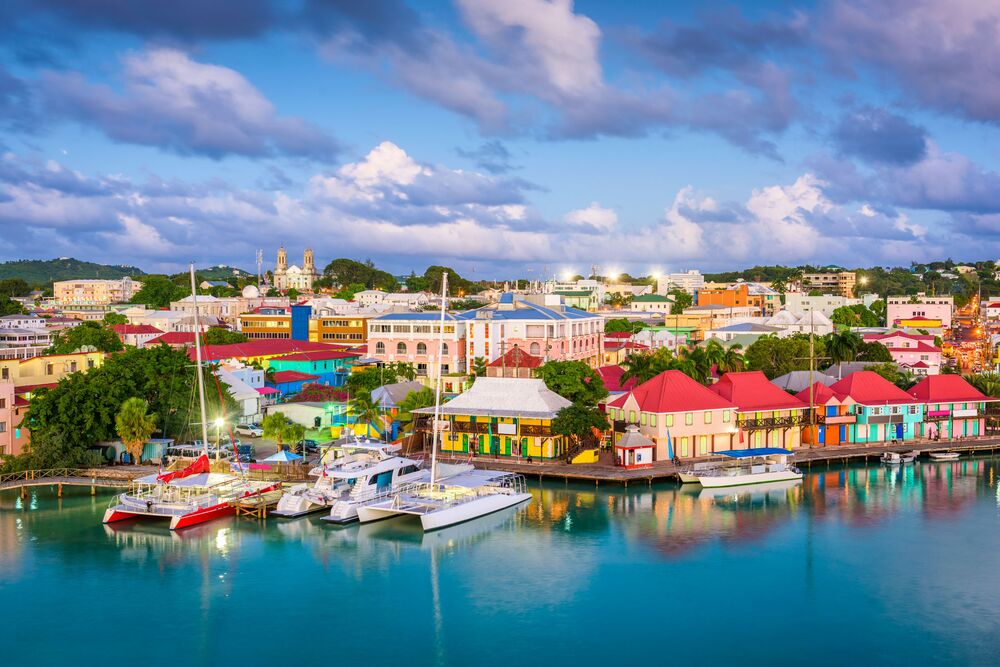
St. John's, Antigua and Barbuda
Redcliffe Quay, in St. John’s, Antigua and Barbuda.
Photographer: Sean Pavone/iStockphoto

Throughout 2020, Antigua and Barbuda’s population of 100,000 saw just 159 confirmed cases of Covid-19 and five related deaths, giving the islands of 365 beaches the appearance of a save haven. Those numbers meant that only 1 out of every 629 residents ever developed the infection in 2020; during the peak of the second wave in July, it would have taken Miami just three days to achieve roughly the same levels of virality across its population of six million.

As a result, nearly 15,000 travelers flew or boated to Antigua and Barbuda in December, more than doubling numbers from the month before. (Antigua is a convenient haven for east coast Americans, many of whom can get there via direct flights.) That began a wave of sustained tourism larger than any other throughout the pandemic.

But as more visitors arrived, so did the cases of Covid-19. Confirmed positives multiplied nearly sevenfold in 2021, reaching 1,103 as of March 25. Deaths rose to 28. As a result, the U.S. Centers for Disease Control and Prevention increased its risk assessment for the country from Level 2 (moderate) to Level 4 (very high) at the beginning of March.

That’s forced Browne and his government to reckon with how closely connected international travel has been to the public health crisis—and to uncover that not all forms of travel are equally problematic.  Their findings could take on new urgency as travel professionals are recommending Caribbean trips to clients—newly vaccinated and otherwise—not just for the remainder of the spring season, but even into the typically low-season summer months.

A Tale of Two Policies

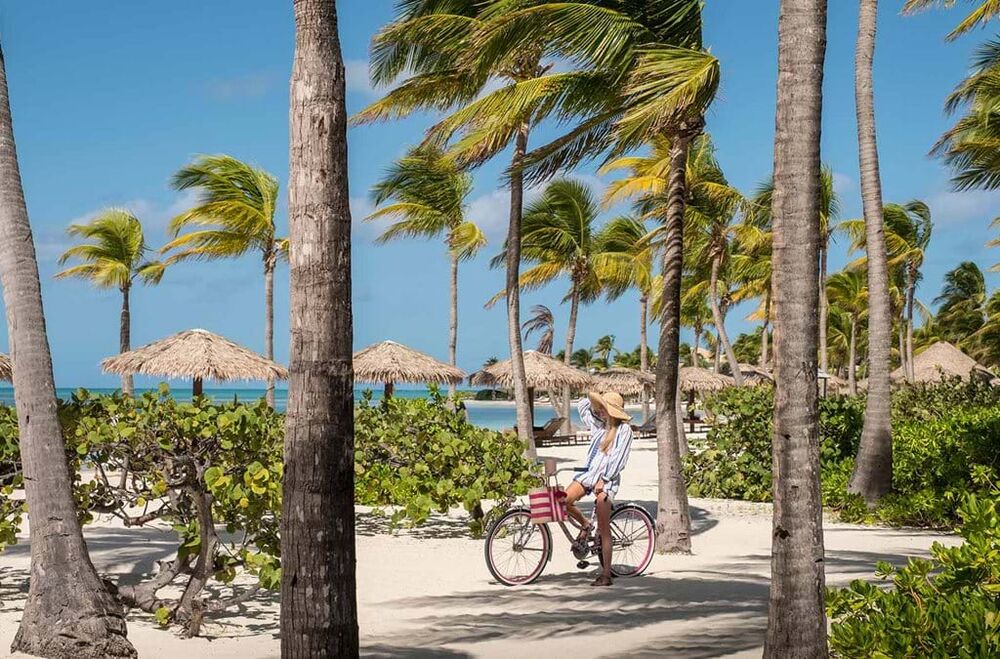
relates to Tourism in Antigua and Barbuda Is Sending Covid Skyrocketing
Jumby Bay, a bubble-like private island resort off the coast of Antigua.
Source: Oetker Collection

When foreign travelers arrive in Antigua and Barbuda, they’re allowed a certain level of “controlled flexibility.” All visitors must present a negative PCR test taken within seven days of arrival, wear masks, social distance, and obey a curfew currently set from 8 p.m. to 5 a.m.

Snorkeling with sting rays and exploring offshore islands is allowed, but only via certified, Covid-compliant vendors. Even hotels must be on a Covid-compliant list, like the luxury private island Jumby Bay or Auberge’s Malliouhana, where extensive public health protocol are followed to the letter.

Returning nationals—any citizen living abroad returning to Antigua and Barbuda—and other visitors not planning to stay at certified accommodations have it harder. They must quarantine for 14 days at a government-designated facility, such as the three-star Jolly Beach Resort, on their own dime.

For some locals, the double-standard is perceived as disproportionately affecting citizens, while allowing high-paying tourists to run free. And after videos and photos spread across social media in February showing people drinking, socializing, and dancing in close proximity at a resort on Valentine’s Day—allegedly including American celebrities—that debate kicked into fourth gear. (The links to the videos were quickly taken down, making them difficult to verify.)

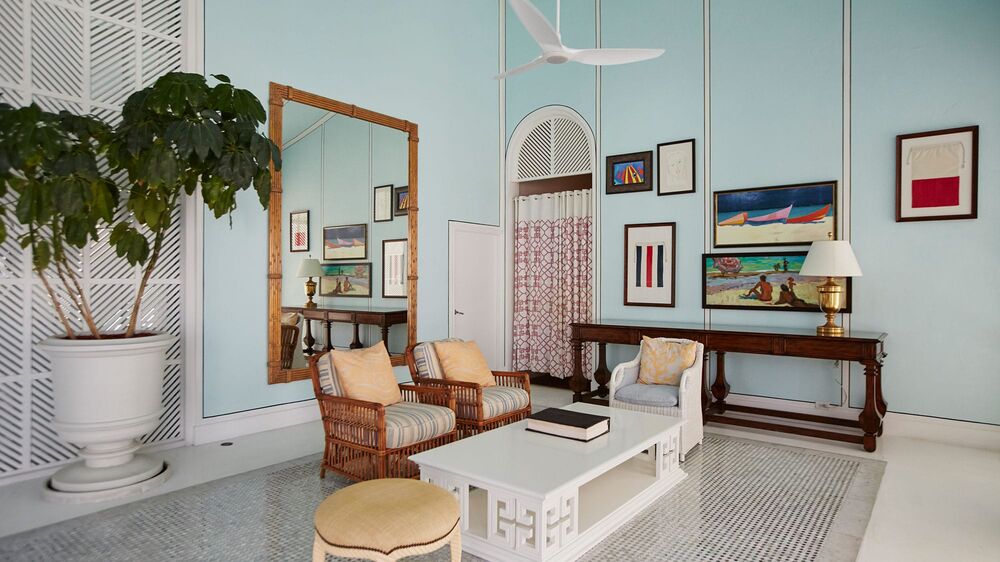
relates to Tourism in Antigua and Barbuda Is Sending Covid Skyrocketing
Malliouhana, an Auberge resort in Antigua.
Source: Auberge  Resorts Collection

On radio shows and across social media, locals have also voiced frustration that they get fined for breaking rules, but bad behaving tourists barely get a slap on the wrist; one Antiguan who broke curfew, for instance, was fined $500. That growing resentment feeds the suspicion among some Antiguans and Barbudans that party-going Americans and other tourists may be to blame for their growing public health crisis.

Browne and members of his government disagree and point to returning nationals as the problem.

“Tourists are managed from the time they leave the plane to the time they [get back on the] plane,” says Minister of Tourism Charles Fernandez, adding that every person  a tourist comes in contact with—from taxi driver to tour operator—is trained in safety protocols. He says fewer than 10 people traveling solely as tourists have tested positive since the U.S. and U.K. mandated PCR testing before re-entry in January, and there’s no evidence of transmission in the hotel industry.

Both Fernandez and Browne say it was 1,500 expats who returned for the holidays—making up 7% of inbound arrivals throughout the festive season—that were flouting the rules when they briefly extended an opportunity for at-home quarantines. Compliance was so bad, the country at one point considered mandating ankle monitors. But it instead nixed at-home quarantine options in mid-January, sending Covid-19 cases back down.

This evidence has “proven conclusively that the problem is not tourists,” says Browne, though complaints of foreigners’ behavior are still circling social media.

A Caribbean Dilemma

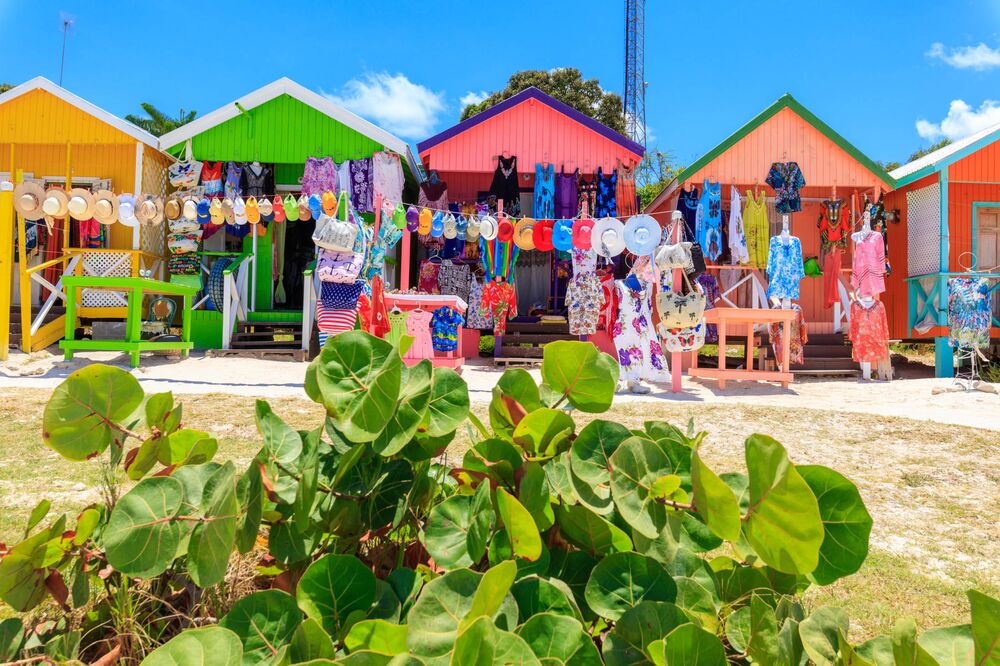
Multi colored wood cottages and tourist souvenir shops, Long Bay Beach, Antigua
Souvenir shops typically frequented by cruisers in Long Bay Beach, Antigua.
Photographer: Roberto Moiola / Sysaworld/Moment RF

Antigua and Barbuda isn’t the only Caribbean island struggling to bring tourism back safely amid the pandemic.

Barbados recorded 400 cases in all of 2020—only to see 3,071 positives in the past three months, following a year-end tourism spike. Expats returning to Cuba, and the ensuing family reunions, were behind the country’s ballooning cases in early 2021, according to Cuban head of epidemiology Francisco Duran. (Cases in February 2021 accounted for roughly one-third of the 70,000 total Covid positives the country has recorded throughout the pandemic.) And in Jamaica, a seven-day average high of 176 daily cases in September 2020 has more than tripled into 618 daily cases as of March 23, triggering the government to tighten its window for mandatory PCR testing from 10 days pre-arrival to three.

Caribbean islands with the strictest travel protocols—or the smallest tourism footprints—are faring better.

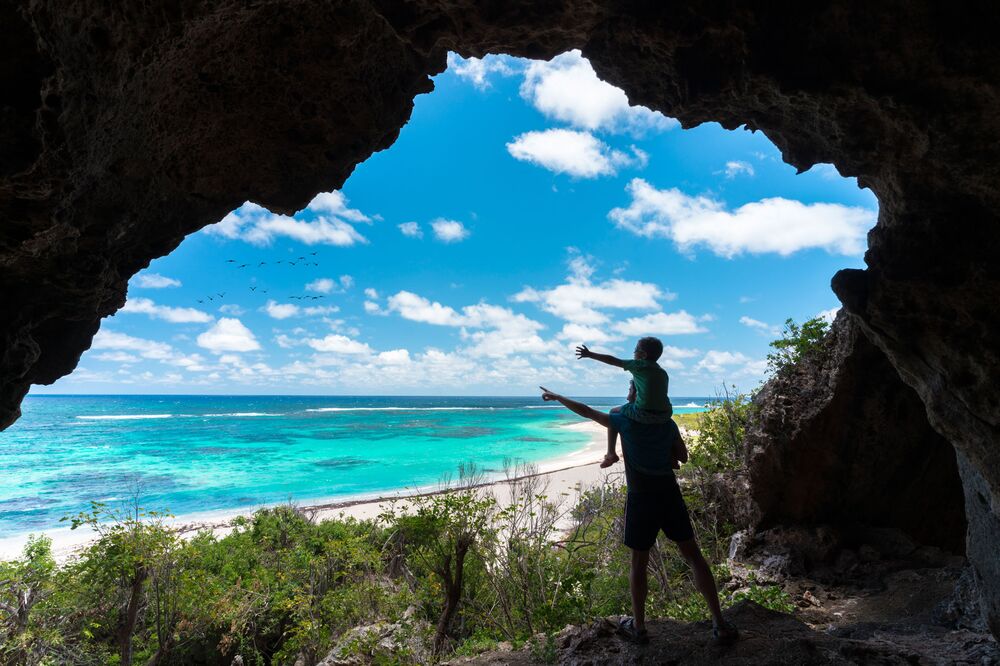
Father and child in sea cave, Two Foot Bay, Barbuda, Caribbean
Two Foot Bay cave in Barbuda.
Photographer: Roberto Moiola / Sysaworld/Moment RF

“Basically life seems normal in Anguilla,” says Haydn Hughes, tourism minister for the island of over 18,000, where only 21 cases have been reported since the pandemic’s start. Locals there interact without masks or distancing, but all visitors must be pre-approved for travel thorough a registration process, get tested on arrival, and provide proof of a negative test between three to five days of their trip, after which they can only participate in certified activities like snorkeling and spelunking while following protocols. Returning nationals to Anguilla are constantly monitored during a 14-day quarantine. Unlike Antigua and Barbuda, it has not relaxed how quarantine periods for returning nationals are handled.

Barbuda, with a population of about 1,500 and only three hotels, has recorded only seven cases and no deaths, according to resident doctor Jeremy Deazle, who credits a strict and early adherence to Covid protocols.

But restricting tourism further in Antigua would lead to more economic loss, says Fernadez. Instead, the island has shut down bars, extended the curfew, and curtailed indoor dining.

“Our Prime Minister is very realistic,” says Eli Fuller, owner of the boat tour company Adventure Antigua, who briefly considered shutting down operations again as cases rose in February. “If we don’t have tourism here, we’re going to starve,” he explains.

Vaccine Access

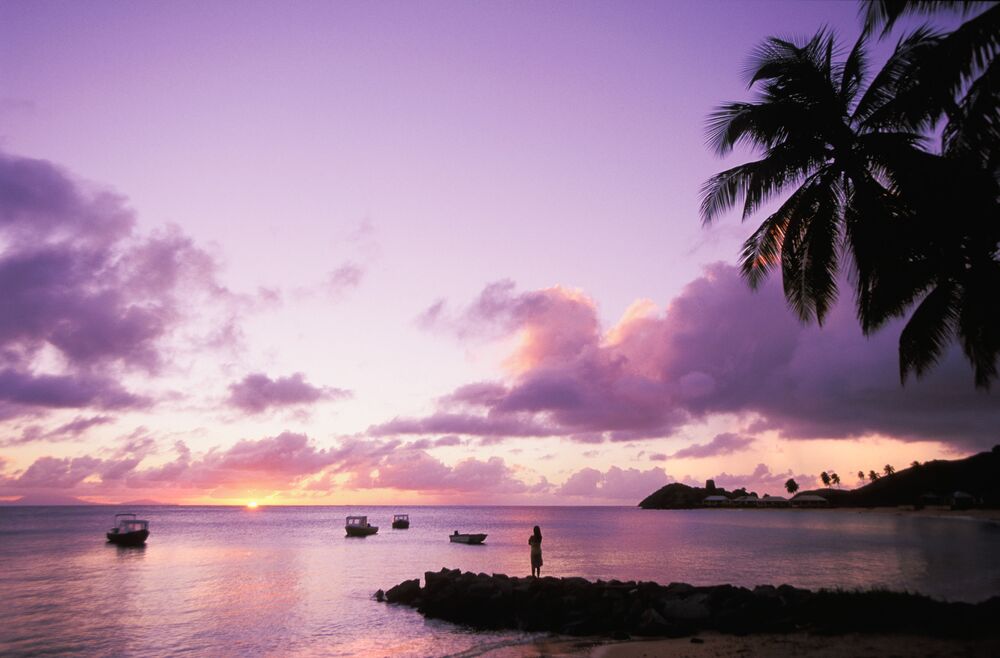
Curtain Bluff Beach at Sunset
Sunset at Curtain Bluff resort, a luxury hotel in southern Antigua.
Photographer: nik wheeler/Corbis Documentary RF

In Antigua, the cruise ship terminal, usually bustling with activity, has been empty since April, absent of the more than 600,000 cruise ship passengers who arrived  from March 2019 to February 2020. That may soon change, as major cruise lines begin plotting their return to the Caribbean starting in June. Only inoculated adults will be welcome on the ships.

But Antiguans and Barbudans themselves have no clear timeline as to when they, too, will join the double-jabbed masses. Herd immunity could be achieved across the Caribbean with just 300,000 to 400,000 doses, says Browne, but vaccines have been difficult for island nations to procure, with wealthy nations buying up the supply.

The post Tourism to A & B Is Skyrocketing COVID-19 appeared first on The St Kitts Nevis Observer.

Amidst the Chaos, Haitians Fear Their Democracy is Dying

,

PORT-AU-PRINCE (Reuters) – Haiti emerged from the brutal and dynastic Duvalier dictatorship to democracy 35 years ago. Now, many Haitians fear a return to autocracy as President Jovenel Moise has been steadily amassing power.

The banana exporter-turned-politician has been governing by decree for more than a year since the Caribbean nation failed to hold elections in late 2019 due to political gridlock and violent unrest.

In this time, Moise has passed dozens of decrees, some of which implemented reforms considered long overdue, like an update to the penal code. Others, though, are deeply controversial – including an order designating certain types of street protests as terrorism, and the creation of an intelligence agency accountable only to the president.

“I don’t see how there is anyone, after God, who has more power than me in the country,” Moise said in a speech last year.

Now Moise hopes a referendum in June will approve a new constitution that would strengthen the power of the executive.

Moise says he wants to end the political instability that has plagued Haiti, hampering development in the poorest country in the Americas. He has vowed not to benefit from the changes, and says he will not stand for a second term at presidential elections set for September.

But the opposition, rights experts and many Haitians say they fear Moise is paving the way for his political camp – the Tet Kale party and its allies – to retain power indefinitely.

Thousands have been taking to the streets nationwide in a new wave of anti-government protests, chanting ‘No to dictatorship! and calling for Moise’s immediate resignation and a transition government.

The protests have shut down schools and businesses, exacerbating a humanitarian crisis in a country where two-thirds of the population make less than $2 per day and gang violence has surged lately.

“This country cannot live any more in dictatorship, murders and repression,” said Kelly Bastien, a former opposition senator, taking part in a protest. “Respect for the constitution! Down with dictatorship! Down with decrees!”

Moise’s critics say his administration are using gangs to intimidate citizens, pointing to massacres in opposition-dominated neighborhoods.

Moise denies those charges. His supporters emphasize that he was democratically elected and accuse the opposition of deliberately stirring up unrest and using gang violence themselves to create chaos.

Neighboring countries have warned the situation could worsen as the referendum and presidential election approach, threatening the stability of the Caribbean.

The Dominican Republic, which shares the island of Hispaniola with Haiti but has a gross domestic product per capita six times greater, said last month it would build a wall to keep out trouble.

And, with Haitian Americans making up a large diaspora in the United States and Haiti just 700 miles (1,125 km) off Florida, the issue is attracting scrutiny in Washington.

“It’s something that we are very actively looking at,” Secretary of State Antony Blinken told a congressional hearing this month, adding that he shared concerns over “some of the authoritarian and undemocratic actions that we’ve seen.”

DEMOCRATIC MANDATE

Haiti became the first independent state of Latin America and the Caribbean in the early 19th century and first Black-led Republic when it threw off French colonial rule. It should be a beacon of freedom, historians say.

Instead, the toll of the war for independence and successive foreign interventions, as well as natural catastrophes like a major 2010 earthquake have contributed to instability, weak institutions and a blighted economy dependent on aid.

Nearly half of Haitians will need emergency humanitarian assistance this year, similar to the needs in war-torn African countries, according to the United Nations.

Fresh political turmoil erupted last month with a dispute over when Moise’s term ended that resulted in the president denouncing a coup attempt and replacing three Supreme Court judges.

Moise told the UN Security council that the opposition’s “policy of chaos” had forced the government to “take off the gloves.”

The United Nations has denounced the erosion of the separation of powers under Moise. The UN, Haiti’s Western donors, and Caribbean neighbors have urged Moise to fulfill his promise of holding legislative and presidential elections this year.

The opposition in Haiti accuses the United States – Haiti’s top foreign donor – of being lenient towards Moise, given his support for its foreign policy. His administration broke ranks with the Caribbean community (Caricom) to oppose Venezuelan President Nicolas Maduro.

But Haitian officials and several Western diplomats told Reuters the situation was complex.

Moise won his mandate with 56% of the vote in 2016.

Members of the fractured opposition knew they could not win elections so sought to weaponize civil society discontent and foment unrest to gain power, they said. Opposition leaders have refused dialogue unless Moise offers to resign.

Fears of a return to dictatorship were overblown, the diplomats said.

“He’s made some worrying moves but there’s still freedom of press, with people accusing Moise of all sorts on the airwaves, and dozens of political parties with different views,” said one diplomat.

HOW TO FIX HAITI?

Haitians across the political spectrum agree the country needs an overhaul, including an update of the 1987 constitution that many say contains too many checks and balances in reaction to the Duvalier dictatorship.

Moise’s reform would allow the president to serve two consecutive terms, eliminate the role of prime minister and the senate, lower the age limit for electoral office, streamline the election cycle and allow the large diaspora to vote.

Western diplomats said these changes would help improve governability and broaden political participation.

Critics, including opposition and civil society leaders who say they were not consulted by the government, argue that the reform goes too far and is being conducted without broad input.

“A constitution is too important to be changed in the middle of a crisis by a criticized government,” said activist Emmanuela Douyon of the Nou Pap Domi (We Aren’t Sleeping) anti-corruption civil society group.

She said the legitimacy of the referendum was threatened by a patchy roll-out of new biometric ID cards, needed for voting, and the ongoing insecurity, which could hamper turnout.

Elections Minister Mathias Pierre said the opposition had a habit of trying to delegitimize elections and the more democratic way forward would be to engage in the process.

Pierre said Moise was taking measures to ensure elections could be held safely, like declaring a state of emergency in the most gang-ridden neighborhoods, and had invited the Organization of American States to send electoral observers.

While the political battle rages, ordinary Haitians are struggling to survive. Mimose, 42, who declined to give her last name for fear of retaliation, is one of many street vendors whose work has been disrupted by the unrest.

“The authorities need to unite to allow the population to survive,” said the mother-of-four. “As long as we are in this crisis, nothing will work.”

Reporting by Andre Paultre in Port-au-Prince and Sarah Marsh in Havana; Editing by Daniel Flynn and Rosalba O’Brien
The post Amidst the Chaos, Haitians Fear Their Democracy is Dying appeared first on The St Kitts Nevis Observer.

Italian Mobster Caught Lying Low for 7 Years in DR

A suspected Italian gangster has been caught in the Dominican Republic after seven years on the run, thanks to law-enforcement officers recognizing his tattoos on a YouTube cooking channel he and his wife started, the BBC reported.
Marc Feren Claude Biart, 53, went on the lam in 2014 when he was accused of trafficking cocaine into the Netherlands on behalf of the Cacciola clan of the ‘Ndrangheta mafia, according to Agence France-Presse.
The ‘Ndrangheta is described by AFP as Italy’s biggest mafia organization, which controls most of the cocaine entering Europe.
The police said they caught Biart after recognizing him in Italian cooking videos he and his wife had posted to YouTube. Though Biart never showed his face, his tattoos were visible, and police were able to identify him that way, the BBC reported.
Officials said Biart was laying low in the Dominican Republic when he and his wife started making the videos. He was taken into custody by Interpol agents in the Caribbean country on March 24.
Biart was arrested on March 24 and extradited back to Italy.
According to Calabria News, Biart initially fled to Costa Rica when an arrest warrant was issued in 2014, but eventually settled in Boca Chica, in the Dominican Republic, where there is a large Italian expat community.
La Repubblica reported that Biart lived humbly, so as to avoid attention.
Biart’s arrest is part of a new Interpol initiative aimed at taking down the ‘Ndrangheta mafia, called I-CAN — Interpol Cooperation Against ‘Ndrangheta, according to Calabria News. Italian police forces are working with 10 countries around the world to help combat the mafia.

The post Italian Mobster Caught Lying Low for 7 Years in DR appeared first on The St Kitts Nevis Observer.