Tag Archives: caribbean

PAHO Warns About Lowering COVID Safeguards

PAN American Health Organization (PAHO) director Dr Carissa Etienne is urging member countries to maintain coronavirus (COVID-19) protocols and safeguards, even as vaccinations get under way in a number of territories.

Speaking during PAHO’s recent COVID-19 digital briefing, Dr Etienne said that maintaining the measures is imperative, particularly against the background of increases in infections and deaths in several countries and especially in light of the upcoming Easter holidays, traditionally marked by heightened activities.


While acknowledging that cases were plateauing and declining in some regional states, Dr Etienne voiced concern that they were spiralling in others.


She described the latter scenario as an “active public health emergency” which indicates that “the COVID-19 virus is not receding, nor is the pandemic starting to go away”.


The director said that while the deployment of vaccines through the World Health Organization (WHO) COVID-19 Vaccine Global Access (COVAX) facility is under way, and all participating countries in Latin America and the Caribbean are expected to receive their first shipments by early April, those allocations are not adequate to protect the vulnerable groups being initially targeted.


“Some countries… have received zero doses of vaccines through COVAX, thus far [while] other countries are getting enough to vaccinate a mere 20 per cent of their populations,” the director pointed out.


As such, Dr Etienne said the region remains “a very long way” from achieving the 70 per cent of countries’ populations being targeted for vaccination to control transmissions and attain herd immunity.


You May Like

This Aston Martin Vantage Coupé Could Be YoursOmaze

“Until we get more than 70 per cent of our populations vaccinated, we must endeavour to continue and practise the smart, effective and targeted public health measures and do what works … like the wearing of masks, frequent handwashing and sanitising, avoiding crowded places, physical distancing, and covering of our sneeze or coughs,” she emphasised.


The director urged member countries’ governments to ensure that these measures are effected and to be “cautious about lifting restrictions” as this could spur new increases and hospitalisations.


“Vaccines are coming, but they are still several months away for most people in our region. Until they arrive, we need to continue the course, not let our guards down, and follow the guidance of [our] local health authorities,” Dr Etienne added.


The post PAHO Warns About Lowering COVID Safeguards appeared first on The St Kitts Nevis Observer.

Child Trafficking at Haitian-Dominican Border

BY KATYA BLESZYNSKA
Children from Haiti are being trafficked to the Dominican Republic in large numbers, with girls mainly exploited for sex and boys forced to work, according to media reports.

On March 24, a Haitian national accused of trafficking and sexually abusing teenage girls was arrested in the Dominican beach town of Puerto Plata, a popular tourist destination, El Nuevo Diario reported. The 40-year-old man had a warrant out for his arrest in Haiti for recruiting girls and forcing them into prostitution. Two of the victims – ages 13 and 16 – said that they were taken against their will and forced to have sex with foreigners.

Spanish news outlet El País also recently detailed how Haitian children are smuggled across the border and then forced to work, shining shoes, cleaning car windows, and begging in the streets — only to have their proceeds taken from them. In illegal gambling rings, young boys are pitted against each other in dangerous street fights, El País reported.

According to Haitian child protection legislation, anyone below the age of 18 can be considered a victim of child trafficking.

“There is no migration control, no possibility or intention to combat child trafficking or any form of trafficking,” said Sylvestre Fils, director of the Observatory of Migration and Transfrontier Trafficking, a non-governmental organization based in the Haitian border city of Ouanaminthe.

Dominican troops at border crossings accept bribes of 500 to 2,000 pesos (about $9 to $35) to turn a blind eye to the smuggling of contraband and people, he told El País.

In an attempt to crack down on illicit cross-border activity, including human smuggling, Dominican Republic President Luis Abinader announced that the country will begin building a 400-kilometer wall across the entirety of its shared border with Haiti later this year. It will be equipped with facial recognition camera and radars, he said.

Though child trafficking from Haiti to the Dominican Republic has long been an issue, trafficking rings appear to be taking advantage of the coronavirus pandemic, which has worsened poverty and hunger in Haiti, to target more children.

The post Child Trafficking at Haitian-Dominican Border appeared first on The St Kitts Nevis Observer.

Associated Press WorldView: Biden Warns, Pence Hopes, Geo. Floyd, Suez Blockage, More

March 30, 2021

Alternate text


President Joe Biden and a top health official have warned that too many Americans are declaring victory over the coronavirus too soon.

At the trial of an ex-police officer charged in the death of George Floyd, an onlooker described seeing Floyd “slowly fade away.” The AP also explains the key role video will play in the trial.

And authorities are asking what went wrong on the giant ship that got stuck in the Suez Canal.

Also this morning:

  • Around the world, garbage scavengers struggle to get COVID shots.
  • Spain’s capital has turned into a party hot spot amid European lockdowns.
  • Singaporeans give migrant workers tickets to ride giant Ferris wheel.

MIKE CORDER

The Associated Press

The Hague, Netherlands

The Rundown

I'm an image

WASHINGTON (AP) — President Joe Biden and a top health official warned that too many Americans are declaring virus victory too quickly, appealing for mask requirements and other restrictions to be……Read More

I'm an image

MINNEAPOLIS (AP) — A man who was among onlookers shouting at a Minneapolis police officer to get off George Floyd last May was to continue testifying Tuesday, a day after he described seeing Floyd……Read More

I'm an image

CHICAGO (AP) — It’s clear video will be the central focus at the trial that began Monday for a white former Minneapolis police officer charged with killing George Floyd — and not just the widely… …Read More

I'm an image

WASHINGTON (AP) — When former President Donald Trump was asked to list those he considers the future leaders of the Republican Party, he quickly rattled off a list of names, including Florida Gov…….Read More

I'm an image

SUEZ, Egypt (AP) — Experts on Tuesday boarded a colossal container ship that had been stuck for nearly a week in the Suez Canal before it was freed as questions swirled about the grounding that… …Read More

OTHER TOP STORIES

NEW DELHI (AP) — The scavengers wait patiently for a dump truck to tip the trash on the summit of the landfill outside New Delhi. Armed with plastic bags, they plunge thei…Read More

BEIJING (AP) — China’s top legislature approved amendments to Hong Kong’s constitution on Tuesday that will give Beijing more control over the make-up of the city’s legisl…Read More

MADRID (AP) — In Madrid, the real party starts at 11 p.m. after the bars close — and curfew kicks in. That’s when young, polyglot groups of revelers from Italy, the Nether…Read More

SINGAPORE (AP) — The capsules of the Ferris wheel in Singapore were peppered with rain. Not great for a bird’s eye view of the city. But the migrant workers riding the Si…Read More

The post Associated Press WorldView: Biden Warns, Pence Hopes, Geo. Floyd, Suez Blockage, More appeared first on The St Kitts Nevis Observer.

World Leaders Call for International Pandemic Treaty

(CNN) Global leaders have called for a new treaty to help the world prepare for future pandemics, in a warning against rising vaccine nationalism.

More than 20 national leaders, including France’s Emmanuel Macron, Britain’s Boris Johnson and Germany’s Angela Merkel, wrote a piece published in several media outlets on Tuesday warning that it is a question of “not if, but when” the next health crisis strikes.

The piece calls for greater international co-operation and says countries should avoid isolationism and nationalism.

“There will be other pandemics and other major health emergencies. No single government or multilateral agency can address this threat alone. The question is not if, but when,” the article states.

Coronavirus likely came from animal, not a lab, WHO draft report finds

The stark warning comes as countries and trade blocs continue to clash over vaccine supply. Some of those who signed the letter have been involved in recent sniping over vaccine shipments.

The European Union and the UK are in a long-running war of words over drugmaker AstraZeneca’s contracts to supply its shot, while some EU member states have repeatedly expressed their frustration with the bloc’s stuttering vaccine rollout.

But the group which signed Tuesday’s article struck a markedly different tone, stressing that unity and co-ordination was key for future pandemics.

Among its authors is World Health Organization (WHO) chief Tedros Adhanom Ghebreyesus, who has previously warned against vaccine nationalism and a “me first’ approach to inoculation.

The world leaders wrote that they are “committed to ensuring universal and equitable access to safe, efficacious and affordable vaccines, medicines and diagnostics for this and future pandemics.”

“We believe that nations should work together towards a new international treaty for pandemic preparedness and response,” they added.

To date, more than 127 million coronavirus cases have been officially recorded worldwide, according to Johns Hopkins University’s tally. The virus has killed more than 2.7 million people and has brought parts of the world to a near standstill over the past year.

The joint article comes as Europe grapples with a third wave of the pandemic and cases surge in Brazil and India.

The post World Leaders Call for International Pandemic Treaty appeared first on The St Kitts Nevis Observer.

Brazil: Under Fire, Bolsonaro Shakes-Up Cabinet as COVID Hits Young People

RIO DE JANEIRO (AP) — Amid a slide in his popularity, President Jair Bolsonaro has shaken up the Cabinet, including replacing Brazil’s foreign minister who was widely criticized for an anti-globalism stance and accused by some of aggravating the pandemic by alienating vaccine suppliers.

Bolsonaro tweeted Monday that he was shifting three other Cabinet ministers to new posts — chief of staff, defense minister and attorney general — and naming a new justice and public security minister and a new government secretary.

But the biggest change was moving Ernesto Araújo out as foreign minister. Araújo had most recently been under fire for comments and actions that critics said impeded faster access to coronavirus vaccines as the coronavirus batters Brazil.

It was just the latest Cabinet turmoil for the embattled Bolsonaro. The president in mid-March replaced the health minister, whose tenure coincided with most of Brazil’s 314,000 COVID-19 deaths and became the target of fierce criticism. In February, Bolsonaro tapped a retired army general to take over state-run oil behemoth Petrobras, seeking to appeal to his constituency of truck drivers who had threatened to strike over fuel price increases.

Aráujo was subjected to a nearly five-hour Senate hearing last week to defend his ministry’s actions during the pandemic. Center-right Sen. Tasso Jereissati told the minister that he no longer had the standing to remain in the post and that his exit would end the help end the crisis.

Maurício Santoro, professor of political science and international relations at the University of the State of Rio de Janeiro, said the Senate attacks on Araújo became too overpowering for Bolsonaro to withstand.

“The vaccine issue was the spark that lit the fire,″ Santoro said. ″The general context is Araújo failed in all the most important tasks he had to do as a minister. Brazil is facing bad political dialogue with its biggest trade partners — China, the U.S., the EU and Argeninta — all for different reasons.

The new foreign minister is Carlos França, who like Araújo is a career diplomat. But unlike Araújo, França isn’t a follower of far-right ideologue Olavo de Carvalho, the newspaper O Globo reported. He is an adviser to Bolsonaro and former ceremonial chief at the presidential palace and is considered to be pragmatic rather than ideological.

Araújo has denied climate change, which he calls a leftist dogma, and he made comments perceived as critical of China, Brazil’s biggest trading partner. In just over two years as foreign minister, he repeatedly dismayed foreign policy veterans by breaking with Brazil’s tradition of multilateralism and adopting policy based on ideology, particularly aligning with the U.S. during the Trump administration.

On Saturday, a group of 300 diplomats published a letter saying Araújo had tarnished Brazil’s image abroad and demanded his removal, according to the newspaper Folha de S.Paulo.

“Don’t let globalism kill your soul in the name of competitiveness,″ Araújo said at his swearing-in ceremony in a speech that was seen as a rallying cry for nationalism. ″Don’t believe globalism when it says having economic efficiency means suffocating the country’s soul and not loving the country.″

Brazil was also one of the last countries in the world to recognize U.S. President Joe Biden’s election victory, and Araújo declined to attend his inauguration. Instead, he took a vacation.

Santoro, the professor, said Araújo’s climate change position was an impediment to Brazil dealing with the U.S. and Europe on curbing Amazon deforestation. That issue has been the focus of European governments and many foreign investors, and Biden has said he intends to prioritize the issue.

Early in the pandemic, Araújo wrote on a personal blog that globalists were seeking to use the coronavirus as a means to subvert liberal democracy and market economics in order to install communism and enslave humans. He made other comments that angered China.

Clamor for the minister’s resignation grew as Brazil’s COVID-19 death toll surged this year and the nation suffered delays in getting active ingredients needed to bottle vaccines, mostly from China. Slow arrival was widely speculated to be political retribution by the Asian power, although both Araújo and Chinese authorities in Brazil claimed technical reasons.

“When the country needed Araújo and the foreign relations ministry to operate to guarantee what we needed to vaccinate people, they kept playing at highly ideological foreign policy,″ said Hussein Kalout, formerly Brazil’s special secretary for strategic affairs and now a research scholar at Harvard University.

=====================================================

COVID 19 Rising Among Brazil’s Young

Sao Paulo (CNN)  Covid-19 cases are on the rise among Brazil’s younger population, a Brazilian research institute has found, as the country grapples with a deadly resurgence of the virus.

“The country is in a situation of collapse of the health system. At the same time, the pandemic has been gaining new characteristics affecting younger age groups: 30 to 39 years, 40 to 49 years and 50 to 59 years,” reads the report published Friday by Brazil’s Oswaldo Cruz Foundation (Fiocruz).

During the first part of Brazil’s struggle with the coronavirus, it was the elderly who made up the majority of those who were getting sick from Covid-19.

But since the beginning of the country’s second wave of Covid-19 on November 2020, demand has increased for health services by symptomatic young patients in Brazil, Fiocruz researchers said.

The new report analyzed weekly data from the country’s Health Ministry from January 1 to March 13, 2021. It found an increase of more than 500% in infections among people aged 30 to 39. There was a more than 600% increase among people 40 to 49 and more than 500% among people 50 to 59 in the same period.

Meanwhile, the total number of coronavirus cases nationwide among all age groups grew by 319% during that same window of time, the report found.

Although increasing numbers of younger people are becoming infected with the virus, Covid-19 deaths are still more common among older people, the report noted.

Why are more young people getting sick with Covid-19 in Brazil?

The new analysis comes as the country struggles to contain the pandemic, and as local coronavirus variant P.1 rips through the country. On Monday, Brazil’s President Jair Bolsonaro changed six top ministers, including officials charged with defense and foreign affairs, after officially ousting the country’s health minister last week.

More than 12,573,615 cases have been confirmed since the pandemic began, and 313,866 Covid-related deaths have been confirmed.

On Thursday last week, Brazil’s Health Ministry announced that more than 100,000 new Covid-19 cases had been confirmed in that day alone — the country’s highest such figure since the pandemic began.

The post Brazil: Under Fire, Bolsonaro Shakes-Up Cabinet as COVID Hits Young People appeared first on The St Kitts Nevis Observer.

Mexico: Outrage Over Police Murder of Salvadorean Woman

MEXICO CITY (AP) — Outrage grew in Mexico and El Salvador as Mexican authorities said Monday that an autopsy of a Salvadoran woman who died in police custody confirmed that police broke her neck.

President Andrés Manuel López Obrador flatly said that Victoria Esperanza Salazar was murdered by police in the Caribbean resort of Tulum.

Victoria Esperanza Salazar let out a scream Saturday afternoon as a female police officer knelt on her back to cuff her hands behind her. Salazar was face down on the street and barefoot. Her feet flailed. A couple people passed slowly by on a bicycle. There were food stands a few yards away.

Clips of video cobbled together give no sense of how much time elapsed. Then three other officers are seen standing around her motionless body still facedown, chatting casually. Later, three officers lift her still handcuffed body into the back of a police pickup truck and drive away.

Video circulating on social media does not show events before Salazar was face down on the street with the officer on top of her.

An autopsy concluded that Salazar died from a broken neck. The examination found, “a fracture of part of the upper spinal column produced by the rupture of the first and second vertebra which caused the loss of the victim,” Quintana Roo State Prosecutor Oscar Montes de Oca said in a video.

The injuries were “compatible y coincide with submission maneuvers applied to the victim during her detention” and demonstrate a “disproportionate” use of force. He said his office was preparing femicide charges against the four police officers.

Salazar had been living in Mexico for some years on a “humanitarian visa,” El Salvador President Nayib Bukele said. “She was brutally murdered by Tulum police officers in Quintana Roo, Mexico,” the president wrote. He said the government would support Salazar’s two daughters.

“I see thousands of outraged Mexicans, demanding justice for our compatriot,” Bukele said. “They are as outraged as we are. Let us not forget that it was not the Mexican people who committed this crime, but rather some criminals in the Tulum police.”

López Obrador swore Monday that those responsible would be punished.

“She was brutally treated and murdered,” López Obrador said. “It is an event that fills us with pain and shame.”

On Monday, a small potted plant and a couple candles sat outside the convenience store where Salazar was killed. Someone wrote “Here they killed Victoria” in large purple letters on the pavement.

Salazar left Sonsonate, about an hour west of San Salvador, five years ago to look for better opportunities and escape the area’s street violence, said her mother Rosibel Emerita Arriaza. She was a single mother of two daughters.

She left her daughters with her family and made her way to Mexico. In the southern Mexico city of Tapachula, near the Guatemala border, Salazar requested and received refugee status. Mexico’s National Immigration Institute confirmed that Monday.

Once she had legal status she moved to the beach resort town of Tulum on Mexico’s Caribbean coast. A more relaxed alternative to Cancun and Playa del Carmen, Tulum had drawn crowds and was struggling with rapid growth. Salazar found work cleaning in hotels and brought her daughters, ages 16 and 15, to be with her.

On Monday, Arriaza was working with Salvadoran authorities on getting her daughter’s body repatriated. She also planned to travel to Mexico to be reunited with her granddaughters

“I want justice for my daughter, because it isn’t fair what they did to her,” Arriaza said. “She was a woman who wasn’t armed, just for being a woman and I don’t know what happened.”

Following the autopsy results, Quintana Roo state security chief Lucio Hernández Gutiérrez said that in addition to the four police officers involved in the events, Tulum’s police chief was also fired Monday.

He called the video of the killing “shameful and conclusive.”

Tulum Mayor Victor Mas Tah said “I understand and share the outrage and pain of all of society.” He said the former police officers would be jailed in the coming hours.

Manuel Barradas, owner of a small convenience store, said Salazar appeared “off” to him so when she approached his store he barred her entry. Authorities made no mention of Salazar being under the influence of anything in discussing the autopsy. Police detained her a short time later.

Protest marches were scheduled for later Monday in Tulum, Mexico City and San Salvador.

The scenes were reminiscent of the death of George Floyd in Minneapolis in 2020. Floyd was declared dead after a white police officer pressed his knee against the Black man’s neck for about nine minutes, holding his position even after Floyd went limp.

Floyd’s death was captured on widely seen bystander video and sparked sometimes violent protests in Minneapolis and beyond, leading to a nationwide reckoning on race. The trial for that officer began Monday in Minneapolis.

The Quintana Roo prosecutor’s office said four Tulum police officers — three men and one woman — were under investigation for their probable involvement in the Saturday evening incident. They said fingerprints and forensic evidence were being examined in the case.

The post Mexico: Outrage Over Police Murder of Salvadorean Woman appeared first on The St Kitts Nevis Observer.

New Vaccines Needed In a Year for COVID Variants

The planet could have a year or less before first-generation Covid-19 vaccines are ineffective and modified formulations are needed, according to a survey of epidemiologists, virologists and infectious disease specialists.

Scientists have long stressed that a global vaccination effort is needed to satisfactorily neutralise the threat of Covid-19. This is due to the threat of variations of the virus – some more transmissible, deadly and less susceptible to vaccines – that are emerging and percolating.

The grim forecast of a year or less comes from two-thirds of respondents, according to the People’s Vaccine Alliance, a coalition of organisations including Amnesty International, Oxfam, and UNAIDS, who carried out the survey of 77 scientists from 28 countries. Nearly one-third of the respondents indicated that the time-frame was likely nine months or less.

Persistent low vaccine coverage in many countries would make it more likely for vaccine-resistant mutations to appear, said 88% of the respondents, who work across illustrious institutions such as Johns Hopkins, Yale, Imperial College, London School of Hygiene & Tropical Medicine and the University of Edinburgh.

“New mutations arise every day. Sometimes they find a niche that makes them more fit than their predecessors. These lucky variants could transmit more efficiently and potentially evade immune responses to previous strains,” said Gregg Gonsalves, associate professor of epidemiology at Yale University, in a statement.

“Unless we vaccinate the world, we leave the playing field open to more and more mutations, which could churn out variants that could evade our current vaccines and require booster shots to deal with them.”

The current crop of vaccines that have received emergency authorisations in different parts of the world is a mix of old and fresh technologies.

Of particular interest is the mRNA approach, employed by the companies Pfizer/BioNTech and Moderna, which can be tweaked at speed (within weeks or months) to accommodate new variants – however, manufacturing hiccups are always a potential problem.

But crucially, they are unlikely within reach of poorer countries, given that this set of vaccines are far more expensive and have comparatively onerous temperature storage requirements.

Meanwhile, resource-rich countries like the UK and US have administered at least one vaccine dose to more than a quarter of their populations and have secured hundreds of millions of supplies. In contrast, nations such as South Africa and Thailand haven’t even managed to get shots in the arms of 1% of their populations. Some countries are yet to administer their first dose.

Covax – the global vaccine initiative coalition aimed at countering so-called vaccine nationalism – hopes to be able to supply at least 27% of the population of lower-income countries with vaccines in 2021.

“The urgency we see in rich nations to vaccinate their populations, aiming for all adults by the summer, is simply not reflected globally. Instead, we have Covax aiming for perhaps 27% by the end of the year if we possibly can manage it – that is simply not good enough,” said Max Lawson, head of inequality policy at Oxfam and the chair of the People’s Vaccine Alliance, which is calling Covid-19 vaccine developers to openly share their technology and intellectual property to boost production.

“Where is the ambitious global goal? A goal that the science tells us is needed?’ I think that’s the key point – we just don’t see the ambition that would go along with it, widespread recognition that limited vaccination is quite dangerous.”


The post New Vaccines Needed In a Year for COVID Variants appeared first on The St Kitts Nevis Observer.

Geo. Floyd: Main Points in Day 1 of Chauvin Trial

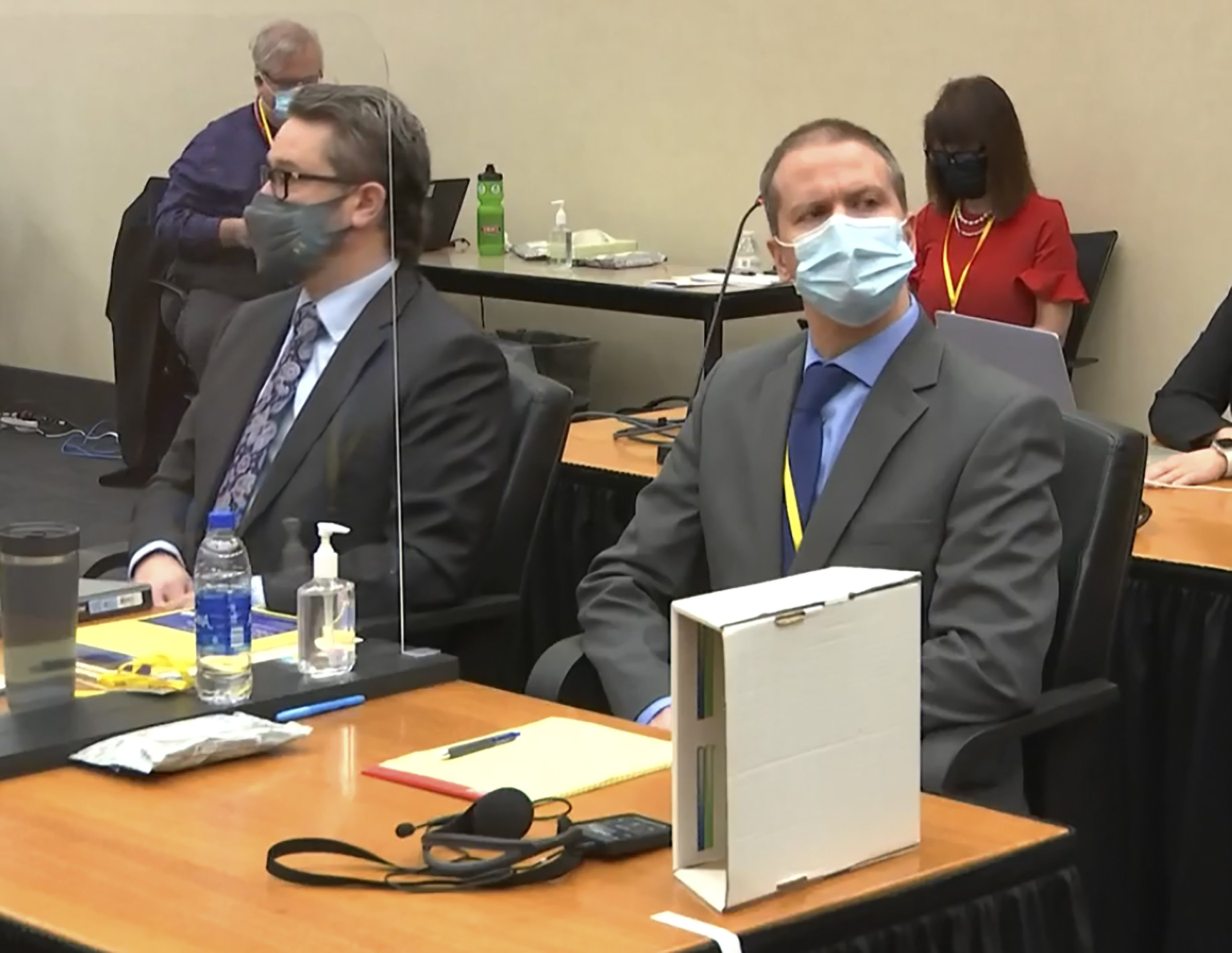
The murder trial of Derek Chauvin, the former Minneapolis police officer who faces three criminal counts for the death of George Floyd, began Monday in downtown Minneapolis with the replaying of the harrowing last moments of Floyd’s life.

Graphic cellphone footage showing Chauvin kneeling on Floyd’s neck for roughly nine minutes was carried live on cable television on the first day of the highest-profile criminal case in recent memory.

Floyd could be heard pleading with Chauvin multiple times, saying that he couldn’t breath. Chauvin’s knee remained even after Floyd became unresponsive. Floyd was ultimately pronounced dead at an area hospital at the age of 46.

The death and the video became the catalyst for a summer dominated by unrest and nationwide Black Lives Matter protests demanding the end to police brutality and systemic racism. It opened a trial that is expected to last up to a month. Chauvin faces three criminal counts: second-degree murder, third-degree murder and second-degree manslaughter.

Here are the five key takeaways from the trial’s first day.

Harrowing video is first day’s most compelling moment

The prosecution’s opening argument was given by Jerry Blackwell, a Minneapolis-based lawyer who was brought onto the case by Minnesota Attorney General Keith Ellison (D) and is working the case pro bono.

“You will learn that on May 25, 2020, Mr. Derek Chauvin betrayed this badge when he used excessive and unreasonable force upon the body of Mr. George Floyd,” Blackwell told the jury. “That he put his knee upon his neck and his back, grinding and crushing him until the very breath … until the very life was squeezed out of him.”

“I will tell you that you can believe your eyes,” Blackwell continued. “That it’s a homicide.”

During his hourlong opening, Blackwell played the graphic cellphone video footage.

ADVERTISEMENT

The video of Chauvin kneeling on Floyd’s neck lasted nine minutes and 29 seconds; Blackwell called the length of time the “three most important numbers in the case.”

Cause of death emerges as pivotal point

How Floyd died will be central to how the case plays out. Blackwell highlighted the cause of death stated by the Hennepin County Medical Examiner’s Office in its autopsy report of Floyd: “cardiopulmonary arrest [the stopping of both the heart and lungs] complicating law enforcement subdual, restraint, and neck compression.”

“You will learn that he did not die from a drug overdose. He did not die from an opioid overdose,” Blackwell told the jury.

It is known that Floyd struggled with opioid addiction; trace amounts of fentanyl and methamphetamine were found in Floyd but were not listed as a cause of death.

The defense pushed back against this, with Chauvin defense attorney Eric Nelson telling the jury in his opening argument that Floyd died from “a cardiac arrhythmia that occurred as a result of hypertension, coronary disease ingestion of methamphetamine and fentanyl, and the adrenaline throwing, flowing through his body, all of which acted to further compromise an already compromised heart.”

Nelson added that despite the stated cause of death, Hennepin County Medical Examiner Andrew Baker noted no “telltale signs of asphyxiation” when sharing his findings with law enforcement following his autopsy.

911 dispatcher is first day’s big witness

Jena Lee Scurry, the 911 dispatcher, was the first witness of the trial called by the prosecution.

Scurry, who has worked as a dispatcher for seven years, told the court that she initially thought her feed for the fatal incident was frozen because Chauvin had knelt on Floyd’s neck for a long time.

“Something was not right. It was an extended period of time,” Scurry told the court. “It was a gut instinct.”

Scurry acknowledged that she was not a police officer and was not trained in the Minneapolis Police Department’s use of force standards. Nonetheless, what Scurry saw led her to call a supervising sergeant to report the incident, though by this time, Floyd was already being transported to an area hospital.

“I don’t know. You can call me a snitch if you want to, but we have the cameras up for [squad] 320’s call. … I don’t know if they had to use force or not, but they got something out of the back of the squad, and all of them sat on this man,” Scurry said in the call replayed in for the court. “So I don’t know if they needed you or not, but they haven’t said anything to me yet.”

Also testifying Monday was 23-year-old Alisha Oyler — who worked at the gas station across the street from the scene and captured moments of the situation on her phone — and 33-year-old Donald Williams, who was present at the scene as well.

Defense focuses on ‘common sense’

Defense lawyer Eric Nelson centered his defense on the claim that common sense is on Chauvin’s side.

“When you review the actual evidence, and when you hear the law and apply reason and common sense, there will only be one just verdict, and that is to find Mr. Chauvin not guilty,” Nelson told the jury during his opening.

Nelson countered the prosecution’s opening, saying that the trial is “clearly more than about nine minutes and 29 seconds.”

Chauvin, Nelson further argued, followed the Minnesota Police Department’s use of force policy.

“You will learn that Derek Chauvin did exactly what he had been trained to do for the course of his 19-year career,” Nelson said.

Chauvin and the three other officers on the scene were fired from the force the day after Floyd’s death.

Burden of proof

All of the charges against Chauvin require the prosecution to prove the former police officer’s culpability beyond a reasonable doubt.

The number of charges helps the prosecutors, as it raises the chances of getting a conviction.

Chauvin’s third-degree murder charge is somewhat unique, as Minnesota is one of a few states in the country to have such a charge.

The standard of proof for third-degree murder is less than it is for second-degree murder, but it still carries a hefty maximum sentence of 25 years.

For Chauvin to be convicted by the jury of murder in the third degree, the prosecution would need to prove that Chauvin acted without the intent to kill Floyd but in a “eminently dangerous” way “evincing a depraved mind, without regard for human life.”

Securing a second-degree murder conviction is a more strenuous task.

Second-degree murder in Minnesota can be classified as either intentional or unintentional; Chauvin’s second-degree charge is the latter.

Prosecutors would need to prove without a reasonable doubt that Chauvin killed Floyd unintentionally while kneeling on his neck. As part of this, they would need to show that Chauvin had intent to commit aggravated assault and battery against Floyd.

For the manslaughter charge to stick, the prosecution will need to prove that Chauvin “consciously” acted in a manner that had the chance of causing “death or great bodily harm” to Floyd.

The post Geo. Floyd: Main Points in Day 1 of Chauvin Trial appeared first on The St Kitts Nevis Observer.

Biden Wants Restrictions to Remain, Top Doc Has ‘Feeling of Doom’ as Cases Rise

President Biden on Monday urged state and local officials to reconsider lifting their coronavirus restrictions and to reinstate mask mandates that have lapsed as the U.S. faces an increase in cases.

Dr. Rochelle Walensky, director of the Centers for Disease Control and Prevention, testifies during a Senate Health, Education, Labor and Pensions Committee hearing on March 18, in Washington, DC. Susan Walsh/Pool/Getty Images
President of the United States of America Joe Biden

His request comes as Dr. Rochelle Walensky, director of the Centers for Disease Control and Prevention, said in a virtual White House briefing on Monday she had a feeling of “impending doom,” saying that “right now, I’m scared.”

Biden said, “I’m reiterating my call for every governor, mayor and local leader to maintain and reinstate the mask mandate,” Biden said at an event intended to highlight the rapid increase in vaccine eligibility. “Please, this is not politics. Reinstate the mandate if you let it down.

Asked later if some states should pause reopening efforts, Biden said “yes.”

Upon taking office, he issued a call for Americans to mask up for the first 100 days of his administration, arguing that doing so would help curb COVID-19 cases while the country ramped up vaccinations.

States have aggressively started lifting mask mandates and easing restrictions on businesses and events in recent weeks as vaccine availability steadily increases, prompting concern from some in the federal government.

Dr. Walensky, said, “Now is one of those times when I have to share the truth, and I have to hope and trust you will listen. I’m going to pause here. I’m going to lose the script, and I’m going to reflect on the recurring feeling I have of impending doom,” Walensky said, appearing to tear up.

“We have so much to look forward to, so much promise and potential of where we are and so much reason for hope. But right now, I’m scared,” Walensky said.

“I know what it’s like as a physician to stand in that patient room — gowned, gloved, masked, shielded — and to be the last person to touch someone else’s loved one, because they are not able to be there,” she continued.

Walensky said that the United States has come “such a long way” with three authorized vaccines and pleaded with the nation to keep following mitigation measures and “just please hold on a little while longer.”

She went on to further explain why she worries about “impending doom,” referencing how the country has seen a steady increase of coronavirus infections.

“What we’ve seen over the last week or so is a steady rise of cases,” Walensky said. “I know that travel is up, and I just worry that we will see the surges that we saw over the summer and over the winter again.”

According to Walensky, the seven day average of new cases is around 60,000 cases per day, a 10 percent increase over the past week. The numbers are still a far cry from the peak in January, but the rise comes after a sustained period of stagnation.

“When we see that uptick in cases, what we have seen before is that things really have a tendency to surge, and surge big,” Walensky said.

Walensky said hospitalizations have also increased over the past week, as the most recent seven day average is about 4,800 admissions per day, up from 4,600 admissions per day in the prior seven days.

She said that the country has come “such a long way” with three authorized vaccines and pleaded with the nation to keep following mitigation measures and “just please hold on a little while longer.”

The U.S. trends are mirroring what’s happening in Europe, where nations are once again locking down amid a rapid increase in cases that is straining health care systems.

======================================================


The post Biden Wants Restrictions to Remain, Top Doc Has ‘Feeling of Doom’ as Cases Rise appeared first on The St Kitts Nevis Observer.

Ill guest not body removed from guest house

Police in St Kitts and Nevis are denying reports of a body being found in a guest house in Basseterre following reports of such being posted on Social Media.

Police however indicated that a lady who was staying at a guest house in Basseterre took ill and the Emergency Medical Service was called. When they arrived she was unresponsive.
Reports indicate the female checked in at the establishment Friday, was seen Saturday and not heard from again. the room was checked by staff and the unresponsive female was discovered.
She was eventually removed by EMS and taken to JNF Hospital.

The post Ill guest not body removed from guest house appeared first on The St Kitts Nevis Observer.