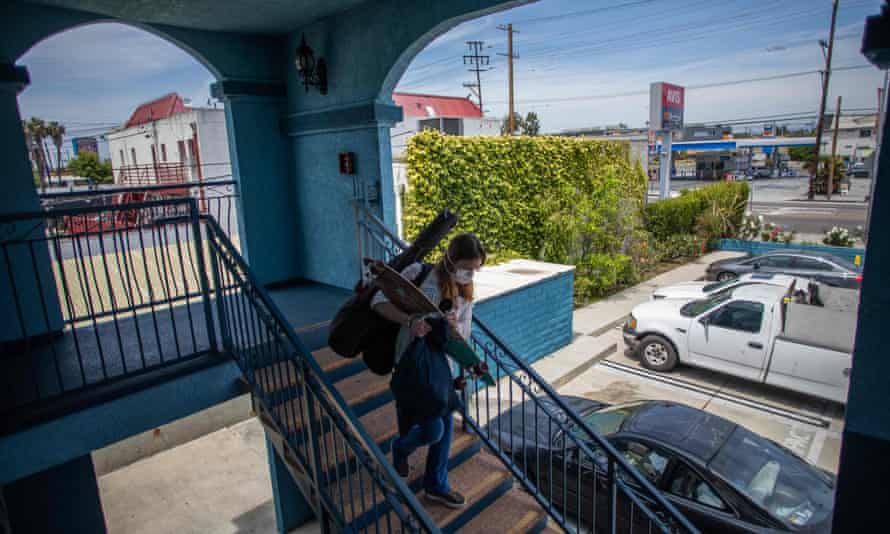
RIO DE JANEIRO (AP) — Authorities in Sao Paulo and Rio de Janeiro begged the population to stay home, but thousands of Brazilians are traveling to coastal cities and ignoring recommendations on the first weekend of a 10-day holiday period decreed to contain the increase in COVID-19 infections in the country.
Some residents are clearing out and taking advantage of the holidays, despite warnings from authorities. Brazil’s two biggest cities, Rio and Sao Paulo, have imposed extensive restrictions on nonessential activities. Their state authorities brought forward holidays to create a 10-day break period, which started Friday.
Many scenes in Brazilian cities show the difficulty that authorities are facing in enlisting the cooperation of the population to contain the spread of the virus.
In Sao Sebastiao, a city of more than 80,000 inhabitants on the Sao Paulo coast, tourists destroyed barriers installed at the access to beaches to avoid crowds, according to local reports. The city is one of those that suffered an invasion of tourists who took advantage of the holidays decreed by the state government.
“Don’t come to the coast. We depend on tourism, but right now we depend on health. We need to avoid an even bigger collapse,” said the city’s mayor, Felipe Augusto, angered by the acts of vandalism.
In Ubatuba, another of the main cities on the Sao Paulo coast, residents burned tires on a road to try to prevent an influx of visitors.
Restrictions on activity implemented last year were half-hearted and sabotaged by President Jair Bolsonaro, who sought to stave off economic doom. He remains unconvinced of any need for clampdown, fearful that the damage to the economy could generate more unemployment and social chaos.
Brazil currently accounts for one-quarter of the entire world’s daily COVID-19 deaths, far more than any other single nation, and health experts are warning that the nation is on the verge of even greater calamity. The nation’s seven-day average of 2,500 deaths stands to reach to 3,000 within weeks, experts told the Associated Press.
The health system is already buckling, with almost all states’ intensive care units near or at capacity. On Sunday 92.6% of ICU beds were occupied in Sao Paulo, while Rio state had an occupancy of 92%.
Rio city authorities closed 19 stores and fined 60 bars, restaurants and street vendors on Saturday for breaking rules that prohibited their operation, the mayor’s press office confirmed to The Associated Press. On the city beaches, some people ignored the new rules and stayed on the sand.
MEXICO CITY (AP) — Small-particle pollution spiked in Mexico City to almost six times acceptable limits Sunday, a level not seen for years in the Mexican capital.
Levels of small particles, known as PM10, reached 581 points in the city’s Iztapalapa borough, on a scale where 100 is considered the highest acceptable level.
No formal pollution alert was declared, but the levels were enough to earn a rare “extremely bad” rating from the city’s air-quality monitoring network.
Alerts, which can force some vehicles to stay off the road, are normally declared when pollution reaches between 1.5 and 2 times acceptable limits.
PM10 particles are often from dust or soil kicked into the air, and the network warned that high winds were likely to cause an increase in particle levels.
Ozone and extremely small particles, known as PM2.5, are often triggered by vehicle emissions and are traditionally more of a problem in Mexico City. But they did not appear to play as much of a role in Sunday’s pollution spike.
Spring is dry season in central Mexico and it is also a time when farmers on Mexico City’s outskirts traditionally burn grass and weeds to prepare fields for planting.
Deep job losses and benefits lags have meant an increase in homeless Americans, and shelters have struggled to keep up
A motel provided to homeless people in Venice, California. A report in January warned homelessness could increase by twice as much as during the 2008 recession. Photograph: Apu Gomes/AFP via Getty Images
Michael Sainato
Rick Temple and his 15-year-old son were living in a room in his work office in Bakersfield, California, before the coronavirus hit in March last year, where Temple, 51, worked as an independent contractor as a dispatcher for freight cargo. But he quickly lost his job and the room, and has relied on unemployment benefits ever since.
When he first applied for unemployment, it took a couple of months before his benefits started, and from November to January he experienced a lag in benefits as well due to a fraud hold which meant he needed to submit new paperwork before his benefits resumed.
While relying on unemployment, Temple and his son have struggled with homelessness, living out of their car and renting motel rooms when they can afford to do so. His son has attended school virtually since the pandemic began.
“Being poor and homeless is very expensive. My credit score is trash now. Being unemployed, I can’t pay for much of anything, let alone three months’ worth of rent to get an apartment,” said Temple. “I have to live in the car and scrounge by, doing whatever I can to eat. I’ll get a $3 Whopper off a coupon app, have the one meal and go as long as I can.”
Homelessness has been a significant problem in America during the pandemic. Homeless people are at significant risk for coronavirus, and these populations have almost certainly grown amid mass job losses. After the 2008 economic recession, US cities experienced significant increases in homeless populations, estimated at 3% between 2008 and 2009.
According to a report this month provided to Congress by the US housing department, 580,466 Americans experienced homelessness on any given night in 2020, a 2.2% increase from 2019. Rates of unsheltered individuals increased by 7% and chronic homelessness increased by 15%, based on surveys conducted before the pandemic in January 2020.
A report in January by non-profit research organization Economic Roundtable warned homeless population increases would be twice as high as the increases experienced after the 2008 recession.
“Most jurisdictions feel that unsheltered homelessness has gone up,” said Nan Roman, president of the National Alliance to End Homelessness. “It could be that they’re just more visible, but the sense is that it’s growing.”
When the pandemic began, Temple struggled to find a parking lot where he could sleep in his car, often switching between parks and parking lots at Home Depot and Walmart, before getting kicked out by police or security. A church found him and his son and gave them permission to sleep in the church parking lot. They have avoided the local homeless shelter because of coronavirus concerns; it is held in a warehouse, and Temple has spent years without health insurance or being able to afford to see a doctor.
“One of the things that I don’t like is, especially during the pandemic, the choices they gave us,” Temple added. “I’m not sure where we go from here.”
When the pandemic began, Temple struggled to find a parking lot where he could sleep in his car
Based on community surveys from the National Alliance to End Homelessness, homeless systems are continuing to experience staffing shortages, shortages of hotel or motel spaces, and shortages of permanent housing to meet the needs of homeless people. Community leaders expressed concerns about anticipated increases in unsheltered homelessness of Americans without new funding for homeless resources.
Coronavirus outbreaks overwhelmed homeless shelters in places like Los Angeles, and other cities have continued sweeps of homeless encampments despite CDC guidance not to do so unless housing units are available for the homeless.
In Dallas, a woman who requested to remain anonymous has lived in her car since November after escaping domestic violence at home. A significant portion of US homeless people identify as domestic violence survivors.
She says she spends the majority of her time trying to find day passes for local gyms to be able to shower, or going to a local library to charge her phone and use the internet. If she can’t find free food, she relies solely on fast-food dollar menus, and buys a $1 large soda from McDonald’s every day to have a cup to use to pee in.
“It’s like solitary confinement with windows,” she said. “Most people have a support system. I have no one. Everyone thinks everyone has someone, but some people have no one.”
Although a federal eviction moratorium has been in place since 4 September, holes in the moratorium and a nearly six-month delay in enacting one have meant that thousands of evictions have been carried out during the pandemic, and homeless shelters have struggled to keep up with increases in demand while trying to mitigate Covid outbreaks. The ban is currently set to expire on 31 March.
According to Princeton’s Eviction Lab, over 260,000 evictions have been filed during the pandemic in the five states (Connecticut, Delaware, Missouri, Indiana and Minnesota) and 27 cities tracked by the lab.
Austin Valentine, 19, was attending East Tennessee State University as a freshman undergraduate student this year, but recently became homeless because he was unable to pay his tuition and room and board fees after student loans, because he lost his food-service job. He’s now living in a motel in Pigeon Forge, Tennessee.
“I got kicked out on 12 February,” said Valentine. “Now I’m living in a $200-a-week motel room that’s covered with bedbugs and cockroaches, and no electricity, little heat, and just cold water.”
He’s currently looking for a second job, as the recent restaurant job he started doesn’t provide enough hours. His search has been difficult because the hospitality and tourism industry in eastern Tennessee has been hit hard. He started a GoFundMe campaign to try to raise funds to move into an apartment.
“No one’s really hiring at the moment,” added Valentine. “I’ve been working, [and] trying to save up as much money as I can so I can get out of this situation.”
East Tennessee State University declined to comment on Valentine’s situation, citing the Family Educational Rights and Privacy Act. But it said it provides payment plans and counseling to connect students facing financial hardship with local resources and support.
ARAUQUITA, Colombia (AP) — Clashes that began over the weekend between Venezuela’s military and a Colombian armed group in a community along the nations’ shared border have continued, prompting more Venezuelans to seek refuge in a nearby Colombian community, international monitoring groups said Thursday.
Colombian officials said more than 3,900 people have now moved from Venezuela to northeast Colombia, about 800 more than Wednesday. The children and adults are in eight shelters set up to host them.
“It was reported that families continue to flee across the border in search of safety as the violence in the area has not completely stopped,” said Dominika Arseniuk, the Norwegian Refugee Council’s Country Director in Colombia. “People we have spoken with are terrified and fear for their lives.”
Venezuelan Defense Minister Gen. Vladimir Padrino López confirmed on Monday in a statement that the clashes began Sunday. He said they resulted in the arrests of 32 people, the destruction of six camps and the seizure of weapons, but he did not name the Colombian armed group involved.
Human Rights Watch told The Associated Press the armed group involved is the 10th Front, which is made up of dissidents of the Revolutionary Armed Forces of Colombia, known by its Spanish acronym FARC. The fighting is taking place in in the border state of Apure, Venezuela.
“We have received credible complaints of abuses by the Venezuelan security forces against the population in Apure, including violent raids without a warrant, possible arbitrary detentions and theft of property from the population,” said José Miguel Vivanco, the organization’s director for the Americas.
A peace deal between the Colombian government and the FARC in 2016 ended five decades of war. But the group has suffered deep divisions, with some of its members joining mainstream leftist movements and others giving up on the peace process and returning to arms.
In the Colombian municipality of Arauquita, where the displaced people have taken refuge, a humanitarian crisis has developed, according to local and national officials. One shelter is hosting about 400 people, but despite the addition of 13 tents, some families have had to sleep on small mattresses set up on the ground and on the stands of a space normally used for sporting events.
Marta Orozco, a Venezuelan, said she fled her home in Apure because houses were being looted.
“The one that is entering (the homes) is the government. It is looting and beating people … the government of Venezuela,” Orozco, 38, said.
The Colombian government has repeatedly accused Venezuela of harboring members of the National Liberation Army as well as FARC dissidents. Colombia’s Ministry of Foreign Affairs expressed its concern for the civilian population and called on the international community “to join in assisting in the face of this humanitarian crisis.”
Colombia and Venezuela share about 1,370 miles (2,200 kilometers) of border but have not had diplomatic relations since February 2019 following the decision of President Nicolás Maduro to expel Colombian diplomats. Colombia President Iván Duque does not recognize Maduro as Venezuela’s legitimate president and instead supports opposition leader Juan Guaidó.
The Colombian government on Wednesday reinforced the military presence on the border with Venezuela in the Arauca area with about 2,000 soldiers, according to the Defense Ministry.
Suárez reported from Bucaramanga. Associated Press writer Jorge Rueda in Caracas, Venezuela
The Hill -Recall the desperate early days of the COVID-19 pandemic in early Spring 2020. Researchers worried that the Spanish flu of 1918 that cost millions of American lives could be a possible model.
The Imperial College of London released a projection of over 2 million deaths in the U.S. alone if the government failed to take action. The government’s top advisor, Anthony Fauci, recommended a strategy of non-pharmaceutical interventions (NPI) to “bend the curve.” However, the highly infectious nature of the disease meant that they could offer only a temporary respite.
Adding to the gloom was the scientific community’s pessimism concerning the prospects for an early vaccine. Past history suggested that vaccines required years to get through regulatory approval — and then an additional year or more to scale-up for the millions of doses needed. Four months into the pandemic in the Spring of 2020, the most optimistic observers projected that we were well more than a year away from a viable vaccination program.
Contrary to earlier expectations, two vaccines (Pfizer and Moderna) were approved in December 2020, and the first doses were administered less than a week later. These advances occurred under the auspices of Operation Warp Speed, a joint government, business, and military venture. Its unique feature was to guarantee purchases of experimental vaccines as they proceeded through regulatory approval in order to scale-up quickly the successful ones.
To date, more than 89 million Americans have received at least one vaccination dose — 27 percent of the population. For the high-risk 65 and over age group, more than 38 million (71 percent) have received at least one dose. Although some small risk of COVID infection remains, the vaccines appear to have rendered symptoms milder, and deaths exceedingly rare. The CDC and FDA conclude that a review of available clinical information — including death certificates, autopsy, and medical records — revealed no evidence that vaccination contributed to patient deaths.
The primary reason to fear COVID-19 has been its lethality. It has killed over a half million — largely the elderly — in the United States. With the vaccines being widely administered, we can now introduce a more benign statistic; namely, “deaths averted” by vaccination. Here is a possible approach:
In my back-of-the-envelope calculation, I consider only the 65 and over. The lethality rates for those under 65 are low and would not add much to the outcome. Of those over 65, 38 million have received at least one dose. My data are primarily from CDC sources: here, here, here, and here.
In the absence of Warp Speed there would be, as of today’s date, no vaccinations. We therefore proceed to follow these vaccinated elders in their hypothetical world of no vaccine. As time passes, some will contract COVID-19, and some of them will die. How many? Erring on the very conservative side, we assume that they would be subject to the current mortality risk (COVID deaths divided by population) of the 65 and older group, which stands at approximately 8 tenths of 1 percent (.008 percent). Applying this rate to the 38 million who would not have been vaccinated in the absence of Warp Speed, we get 295,000 deaths averted as a result of vaccination.
That figure is likely an underestimate because we use the latest mortality rate (which has dropped considerably). On the other hand, one third currently lack the second dose, but we have few if any cases of deaths attributable to COVID-19 after the first dose.
As time passes, scientists can produce complex models of “averted deaths” due to vaccination, but for now this simple back-of-the-envelope calculation provides a rough order of magnitude.
Operation Warp Speed is a rare example of a successful government-business-military endeavor. It is reminiscent, in my view, of the Manhattan Project that produced the first atomic bomb. Both worked because of the extreme importance of the undertaking, as all participants realized we could solve this problem only one shot at a time.
‘Lack of perspective’: why Ursula von der Leyen’s EU vaccine strategy is failing
European commission president accused of focusing too much on UK and domestic German image
Von der Leyen speaking in Brussels. ‘Fundamentally she seems to be struggling with her basic narrative,’ said one commentator. Photograph: Anadolu Agency/Getty Images
When Jean-Claude Juncker, her predecessor in the commission’s Berlaymont headquarters, took aim at the EU’s error-strewn vaccine strategy last week, it prompted a tweet of appreciation from Dominic Cummings, former chief adviser to Boris Johnson and key architect of Brexit.
“Juncker no dummy, he right,” the ex-Vote Leave strategist wrote. “& if Commission, now melting down, don’t listen, UK shd NOT tit-for-tat but shd make generous offer over heads of EU leaders to EUR peoples – will bring years of goodwill, good policy & politics, & Cmsn will cave shortly after.”
Von der Leyen is unlikely to lose sleep over the barb. As for Juncker’s intervention, sources close to the ex-president say his target was not Von der Leyen but instead the EU’s member states.
Between calling on his successor to drop the “stupid vaccine war” with Britain and criticising an overly cautious and budget-conscious approach to vaccine procurement, he dismissed calls for her resignation. “These are not failures of the commission. These are failures of the member states in total and so I don’t think that the getting rid of Mrs Von der Leyen would be helpful,” he told the BBC’s HARDtalk programme.
But critics within the commission describe Juncker’s broadside as “unprecedented”. It has been seen by many in Brussels as a reflection of the growing exasperation, both within the institution and the governments, of some of the member states at Von der Leyen’s performance.
The European commission was always likely to have a difficult pandemic, without the fiscal firepower and autonomy of action of a nation state. “We’re tired of being the scapegoat,” Von der Leyen said in a recent interview. But since January, she has been engaged in a bitter row with the Anglo-Swedish pharmaceutical company AstraZeneca, and in turn the British government, over a shortfall in EU vaccine supplies, culminating last week in a broadening of the bloc’s powers to block exports.
EU leaders back ‘global value chains’ instead of vaccine export bans
Her aides point to the necessity of challenging a company that has fallen dramatically short on its promise of 120m doses of vaccine this quarter – just 30m are expected – and the need to confront Britain over its refusal to export any of those being made in the firm’s plants in Oxford and Staffordshire.
Others, however, question the tone of the commission’s communications and the subsequent focus on the UK’s lack of exports, a country with a population a seventh the size of the EU and with a small and stuttering vaccine production line. AstraZeneca has only delivered a third of expected deliveries to the UK in the first quarter of the year.
Diplomats complain Von der Leyen may be overly concerned about sating her critics in the CDU, the centre-right political party of which she and the German chancellor, Angela Merkel, are members, ahead of September’s federal election, where the slow progress of vaccination is being seen as a vote-decider. Britain’s success has heavily featured in the German media as a point of comparison.
Officials who have worked alongside Von der Leyen, who has chosen to live in an apartment on the 13th floor of the commission HQ in Brussels, add that she is overly insular, trusting and confiding in a small group, namely her head of cabinet Björn Seibert and communications adviser, Jens Flosdorff, both Germans. “Sleeping in the office doesn’t make for good decisions – rather a lack of perspective and political feel,” said one.
Last week’s events were a fresh cause of irritation for some. On Wednesday, the commission published a revised regulation to allow the EU to block vaccine export requests to countries with better vaccination coverage or where, through contracts or law, exports or raw materials are being blocked from being sent to the bloc’s 27 member states.
The revised regulation had not been shared with a number of capitals, coming as a fait accompli just 24 hours before a summit of leaders. The prime ministers of Belgium and the Netherlands, Alexander De Croo and Mark Rutte, insisted on additional commitments to open supply chains in the Thursday night summit communiqué.
That development follows the debacle of the aborted attempt to draw an export border on the island of Ireland at the time of the announcement of the original export authorisation regulation. “It has been noticed that the commission has a habit of landing things on the member states and a number of us have raised our concerns,” said a senior diplomat.
Jacob Funk Kirkegaard, a senior fellow at the German Marshall Fund thinktank in Brussels, believes Von der Leyen’s gravest mistake is missing an opportunity to tell a “fantastic story” about EU openness.
“I think fundamentally she seems to be struggling with her basic narrative,” he said. “She tries to either be this sort of vaccine nationalist that is going to block exports of Pfizer even though they are in full compliance – a sort of sawn-off-shotgun approach, where you can fire it but you never know what you will hit; and on the other hand, the really good story of the EU basically at cost to itself in the short run helping supply the world.” About 77m doses of vaccine have been exported from plants located in EU member states to 33 countries.
Kirkegaard said the enormous scale-up by Pfizer and other suppliers, with a further 360m doses by June set to join the 100m delivered this quarter, had only been possible due to the policy of keeping the EU open. The bloc will also be best placed to respond to new Covid-19 variants. “A leader that was a leader would have told that story,” he said. “She is the German commissioner, it is the biggest country, she has a special role in ‘keeping Germany happy’, so there is a lot of pressure coming from there. You look at the polls and there [are] a lot people in the CDU who are going to lose their jobs. They are looking for a scapegoat and she is in the firing line.”
But, Kirkegaard said, the battle over exports had been “nonsense”. Von der Leyen, he suggests, may have been guilty of letting Boris Johnson get under her skin.
“The UK is a tiny, tiny vaccine producer and will always be that. One of the biggest communication mistakes they made was that AstraZeneca supplies were down in the EU because they were up in the UK, which is absurd,” he said.
“They think of the UK [as] much more of an equal than it is. In vaccine production it is a mouse and the EU will very soon by far be the largest producer in the world … I think they should stop reading the Daily Mail.”
Mexico’s government acknowledged Saturday that the country’s true death toll from the coronavirus pandemic now stands above 321,000, almost 60% more than the official test-confirmed number of 201,429.
Mexico does little testing, and because hospitals were overwhelmed, many Mexicans died at home without getting a test. The only way to get a clear picture is to review “excess deaths” and review death certificates.
On Saturday, the government quietly published such a report, which found there were 294,287 deaths linked to COVID-19 from the start of the pandemic through Feb. 14. Since Feb. 15 there have been an additional 26,772 test-confirmed deaths.
The higher toll would rival that of Brazil, which currently has the world’s second-highest number of deaths after the United States. But Mexico’s population of 126 million is far smaller than either of those countries.
The new report also confirms just how deadly Mexico’s second wave in January was. As of the end of December, excess death estimates suggested a total of about 220,000 deaths related to COVID-19 in Mexico. That number jumped by around 75,000 in just a month and a half.
Also suggestive were the overall number of “excess deaths” since the pandemic began, around 417,000. Excess deaths are determined by comparing the deaths in a given year to those that would be expected based on data from previous years.
A review of death certificates found about 70.5% of the excess deaths were COVID-19 related, often because it was listed on the certificates as a suspected or contributing cause of death. But some experts say COVID-19 may have contributed to many of the other excess deaths because many people couldn’t get treatment for other diseases because hospitals were overwhelmed.
Former President Felipe Calderón wrote in his Twitter account Saturday that “more than 400,000 Mexicans have died, above the average for previous years … probably the highest figure in the worl
NIA CHARLESTOWN NEVIS (March 22, 2021) – – Hon. Premier Mark Brantley, Minister of Foreign Affairs for St. Kitts and Nevis, has made intervention to its ally the United States of America for the provision of COVID-19 vaccines for the federation and the rest of the Caribbean region.
Hon. Brantley, through recent correspondence to the US Ambassador to the Eastern Caribbean, the OECS and Barbados, Linda Taglialatela, implored the US government to make vaccines available to the small island developing states with some urgency.
“We in the Caribbean continue to make the passionate plea that vaccines be made available to us with some alacrity…
“We are aware from reports in the New York Times just yesterday that the great United States of America has made vaccines available to Mexico and Canada.
“I have myself indicated to the United States that…having benefitted the other two borders Mexico and Canada, that it would perhaps be useful for them to think of their third border, the Caribbean, and to make vaccines available to us in the region as well,” he said.
The Premier made the disclosure during his presentation at a virtual forum hosted by the Organisation of American States (OAS) on “Legal challenges faced by the Caribbean in the context of the COVID-19 pandemic”, held March19, 2021.
The Foreign Minister noted that St. Kitts and Nevis and the wider Caribbean region, including Latin America, have been experiencing some challenges accessing COVID-19 vaccines.
He urged the OAS General Secretary for assistance in this regard.
“The difficulty of course, is that we have not been able to access sufficient vaccines to satisfy our populations…The other issue of course has to do with the equality of vaccine access and that has proven problematic, because naturally some countries are in a better financial position than others, some countries are themselves producers of vaccines.
“And I’m happy Secretary General that you are here because I think through your office we can assist each other in saying that there has to be a human right to the equitable access of
vaccines, because as we have said and continue to maintain, none of us is safe until all of us are safe.
“And so Secretary General I would urge the OAS to be a voice and an advocate for us in that regard…I feel that we have vested interest in insisting that vaccines be made available to our people on an equitable basis,” he said.
Mr. Luis Amalgro, OAS Secretary General, who was also a participant in the important forum, said he was in agreement with Minister Brantley’s position on equitable access to the vaccine for the region.
Mr. Luis Amalgro, Secretary General of the Organisation of American States
“I completely agree with you. I have assumed the challenge you have put on us and I think we should work very hard in relation to this matter. Most of us agree that the COVID-19 vaccine should be distributed fairly worldwide because we believe in the principle of fairness…
Mr. Luis Amalgro, Secretary General of the Organisation of American States
“The global pandemic requires a response based on unity, solidarity and multi-lateral cooperation to ensure that all states have access to vaccines,” he said.
The OAS Secretary General said he too joins the call for equal access to and equitable distribution of COVID-19 vaccines.
Basseterre, St. Kitts, March 22, 2021 (SKNIS): As St. Kitts and Nevis celebrates World Water Day on March 22, consumers are called upon to take greater action to protect against water wastage, and to implement water conservation practices, that will promote the sustainability of the critical natural resource.
Deputy Prime Minister and Minister responsible for the Water Services Department, the Honourable Shawn Richards, emphasized the importance of these measures during a national radio and television address on Saturday (March 20).
“We all have a role to play in water management as private citizens of this Federation,” he stated during the address. “Personal responsibility is part of our “shared” responsibility; I urge you to become actively involved. Do not use water wastefully; implement water conservation practices in your household, repair leaky taps and toilets, report incidents of abuse or misuse of water, report any visible leaks from pipelines or standpipes, catch rainwater to irrigate your gardens or wash your cars, pay attention to your waste disposal practices, and respect signage and rules established by the Water Services Department.”
World Water Day is observed annually by countries around the world. This year’s global theme is: “Valuing Water.”
“The value of water is about much more than its price – water has enormous and complex value for our households, food, culture, health, education, economics, and the integrity of our natural environment,” Honourable Richards indicated. “If we overlook any of these values, we risk mismanaging this finite, irreplaceable resource. Sustainable Development Goal #6 (SDG 6) is to ensure water and sanitation for all by 2030. Without a comprehensive understanding of water’s true, multidimensional value, we will be unable to safeguard this critical resource for the benefit of everyone.”
The deputy prime minister added that all segments of society including, individuals, businesses, and civil society must embrace their role in conserving and respecting water.
He stated, “Whether you are a farmer, a household user, a business or commercial user, on the occasion of World Water Day 2021 and indeed every day, I implore you to take this year’s theme to heart and let us start “Valuing Water.”
Basseterre, St. Kitts, March 25, 2021 (SKNIS): The Ministry of Health is aiming to vaccinate 10,000 persons on or before April 16, 2021, says Chief Medical Officer (CMO), Dr. Hazel Laws, during the National Emergency Operations Centre (NEOC) Press Briefing on March 24.
The Federation has in its possession 20,000 doses of the Oxford-AstraZeneca COVID-19 Vaccine. As the vaccine is given in two doses, 10,000 persons are the target. As of March 24, 8,123 persons have received the vaccine so far. This means 24.6 percent of the target population has been vaccinated.
Dr. Laws stated that the COVAX Facility has allotted 21,600 doses to the Federation. This means an additional 10,800 persons can be vaccinated.
“Based on information coming out of the facility, we hope to receive 7,200 doses in March of this year, 7,200 doses in April, and 7,200 doses in May,” she said. “So, between now and May we can cover an additional 10,800 persons.”
The Chief Medical Officer said that the Federation is aiming to provide coverage for 70 percent of its adult population. She added that to achieve this goal, 25,000 more doses are needed.
“The Ministry of Health, our Cabinet, and the leadership of the Federation, we are doing all we can to access these additional 25,000 doses,” she said. “Access to the COVID-19 vaccine is crucial to curbing the spread of the COVID-19 infections.”
The Federation is also aiming to reach the herd immunity threshold by June or July of 2021, said Dr. Laws.
“The quicker we get there, the better it is for our health system and for the socio-economic context of our Federation,” she said. “It’s an all of society approach and we are appealing to everyone in the Federation. We want to thank those who have already come on board and said yes and consented to take their first dose. We are now reaching out to the others in terms of empowering yourself with the information and we are asking you to make an informed decision, come on board and help us attain this goal of reaching our herd immunity threshold.”
Dr. Laws noted that once herd immunity is achieved when the Federation accepts inbound passengers by air or sea, the risk of clusters developing will be reduced.
“The risk of our going into community transmission will be considerably reduced because the herd immunity provides indirect protection to the vulnerable and to those who cannot be vaccinated,” she said. “That’s why we are imploring our people to come on board.”
Basseterre: St. Kitts, March 25, 2021: Results are in from the first ever essay and jingle competition hosted by the Department of Consumers Affairs held on March 18 -19 at Nagico’s Conference room.
The 25 participants represented primary schools including; Maurice Hillier Memorial Junior School, Beach Allen, Dr. William Connor, Dieppe Bay, Sandy Point and the Saddlers. Each representative presented on the topic “Tackling Plastic Pollution”.
Director at the Department of Consumer Affairs, Mr. Paul Queeley stated that the topic chosen was the theme under which World Consumer Rights Day was celebrated on Monday March 15 2021.
“Plastic pollution is a major problem across the globe…students generate a lot of plastic waste in schools, so we [Consumer Affairs Department] saw it fitting to involve them in this activity to sensitize them on how to reduce plastic pollution,” said Mr. Queeley.
The sole representative from the Dieppe Bay Primary School, Khalaylah Maccabbee, was awarded the first place. Second and third place went to J’Ovheal Whattley and Camira Williams respectively, both representing the Maurice Hillier.
Vitoria, Elliott representing the Doctor William Connor Primary School, Ciara Hobson, representing the Beach Allen Primary School and Chadeisha Francis representing the Maurice Hillier were awarded a Special Award for presenting essays that were good which did not reach the length requirement.
Special Recognition Awards were given to those participants who displayed unique abilities throughout the delivery of their speech. Recipients of this award were Mia Romney representing the Dr William Connor Primary School, Kim-David Collins and Jequan Stevens both representing the Maurice Hillier Memorial Junior School.
Dr. William Connor primary school won the jingle competition, with Maurice Hillier Memorial Junior School being awarded second place.
Head Judge Noah Mills, congratulated the participants and commended the teachers, parents and students for their hard work. The Department of Consumer Affairs was also lauded for “conceptualizing and implementing the essay and jingle competition”.
BASSETERRE, St. Kitts, March 25, 2021 (Press Unit in the Office of the Prime Minister) – After its successful readings in the National Assembly on Thursday, March 25, the Companies (Amendment) Bill, 2021 was unanimously passed, bringing St. Kitts and Nevis even more in line with best practices within the international financial services sector.
The Bill was moved through the House by Prime Minister and Minister of Finance, Dr. the Honourable Timothy Harris.
In his presentation, Prime Minister Harris said it was necessary for his Government to re-examine the nature of the Companies legislation and seek ways in which it could reasonably and sustainably adjust to the imperatives and complexities of doing business within the global sphere.
He said, “This Bill therefore seeks to introduce a new feature in our Companies Act which it is anticipated would provide attractive business and investment opportunities within our jurisdiction while at the same time satisfying the international standards on taxation. Mr. Speaker, the Bill therefore seeks to remove the tax exemption elements from the Companies Act. In short, the term ‘exempt company’ would no longer be valid after June 20, 2021.”
Anew product, referred to as an international company was introduced as part of the Bill in order to keep the Federation competitive. An international company is defined as a body corporate which is incorporated in Saint Christopher, but whose mind and management are outside of the Federation.
The prime minister said, “This kind of company Mr. Speaker, would have no permanent establishment here. If approved by this Honorable House, this proposed new product would be more in line with the requirements of the OECD [Organization for Economic Co-operation and Development] and the EU [European Union], since the tax exemption features would have been completely excised from the legislation,” the prime minister said.
Prime Minister Harris further noted that the legislation outlines the different options that are now available to those persons who formerly had exempt companies in St. Kitts but would now be required to deal with them before the June 20 deadline.
“In that regard Mr. Speaker, Clause 10 of the Bill makes provision for exempt companies to be converted to an ordinary company. Mr. Speaker it would be proposed at Committee stage to also clearly include the option of conversion to an international company. In other words, there will now be two options introduced to take care of the removal of the exempt companies provision in the Act – a term or terminology which the international marketplace at the level of the regulatory arm has found to be offensive,” the prime minister said.
Prime Minister Harris stated that allowing exempt companies to convert to international companies is aimed at providing a reasonable measure to make the process less onerous and costly for those involved.