Tag Archives: caribbean

T&T Police Service’s Marine Unit Almost Ready to Roll

The Trinidad and Tobago Police Service’s (TTPS) Marine Unit will begin its operations in a few weeks.

This according to Police Commissioner Gary Griffith who said the unit has five vessels, about 30 officers and will be used to patrol from the shoreline to two miles out to sea in an effort to stem the illegal import of drugs, guns and human trafficking.

Speaking to the media after a consultation with taxi drivers at the Ministry of Works and Transport yesterday, Griffith said the officers have been undergoing intense training for the past several months.

He said the TTPS was embracing its mandate to patrol land, air and sea.

“We saw the importance of the Trinidad and Tobago Police Service not only being instrumental to deal with law enforcement on land- it is not just Coast Guard business we have a part to play on land, sea and air- very soon you are going to see drones being implemented in the Trinidad and Tobago Police Service to assist us in that type of operation,” Griffith said.

He said the Marine Unit will patrol ‘Tier 1’ of the coastline- from the shoreline to two miles out at sea, allowing the Trinidad and Tobago Coast Guard to focus on Tier 2 and 3.

“There would be patrols specifically to deal with the illegal entry of weapons, drugs and human trafficking, we will have the patrols in specific areas.”

Griffith said the patrols will be focused on the North Coast, the Gulf of Paria and the SouthWestern peninsula.

“This is a pilot project, we intend to be much more effective, we will be looking to acquire interceptors and other types of vessels to assist us in the patrols and this here will work in tandem with the Trinidad and Tobago Coast Guard, this is not the Trinidad and Tobago Police Service doing our own thing.”

He said the Unit will be launched when the TTPS officially opens the Carenage Police Station. He promised to give more details on the Unit and its operation at that time.

The post T&T Police Service’s Marine Unit Almost Ready to Roll appeared first on The St Kitts Nevis Observer.

US: Pres. Biden Already Planning a Second Term

President Joe Biden says he expects to run for reelection in 2024 as speculation swirls about whether the 78-year-old president intends to only serve one term.

“My plan is to run for reelection, that’s my expectation,” Biden said.

Biden has in the past described himself as a “bridge” to a “new generation of leaders.”
The president was asked at his first press conference on Thursday about his future plans, with a reporter noting that by this time in his presidency, former President Trump had already launched a reelection campaign.
Biden laughed at the remark.
“My predecessor needed to,” Biden responded. “My predecessor, oh God I miss him.”

President Biden: “My plan is to run for reelection. That’s my expectation.”

Full video here: https://t.co/mLPUf2rodZ pic.twitter.com/auENrcNmZu

Biden later appeared frustrated by a follow-up question about his election plans.

“I said that’s my expectation,” he said. “Look, I don’t understand where you guys come from. … I’m a great respecter of fate, I’m not going to be able to plan 3 1/2 years ahead for certain.”

But he said that if he does run again, he expects Vice President Harris will be his running mate.

“I fully expect that to be the case,” Biden said. “She’s a great partner

Here are five takeaways from the press conference.

The presser was dominated by the border

Biden received more questions about the swell of child migrants at the southern border than any other issue, underscoring the extent of the humanitarian crisis and the vexing political problem Biden faces only 65 days into office.

The president at times vented frustration under hostile questioning from reporters asking if his policies were responsible for the surge and if the conditions children are being kept in at Customs and Border Protection (CBP) facilities are “acceptable” to him.

“That’s a serious question?” Biden said to ABC’s Cecilia Marcellina Vega. “Is it acceptable to me? Come on … it’s totally unacceptable.”

The U.S. is in custody of 15,000 unaccompanied minors who have made the dangerous journey from Mexico or Central America.

Many thousands are being kept in overflow CBP cells for longer than the 72 hours that is legally allowed. The Biden administration is scrambling to move children into the care of Health and Human Services or foster homes, but border officials are overwhelmed.

Pictures emerged for the first time this week of the crowded CBP facilities, showing children packed into pods and lying on hard floors beneath space blankets. The Biden administration is limiting press access to the facilities, and the president suggested that policy would continue.

Biden on Thursday repeatedly blamed former President Trump for the border crisis, accusing his predecessor of “dismantling” the immigration system and leaving the current administration with too few beds and too little housing to deal with the swell of migrants.

The president denied that his own policies had anything to do with the border surge, dismissing allegations that people were sending their children on the dangerous journey believing Biden would accept those who arrive because he’s a “nice guy.”

Biden argued that progress is being made in propping up new housing facilities for the child migrants who will be allowed to stay in the country as their immigration and asylum claims are processed.

The president said he spoke to the Defense secretary on Thursday about opening up Fort Bliss, which could house some 5,000 unaccompanied minors.

“We’re providing for the space to get kids out of CBP facilities that no child should be in longer than 72 hours,” Biden said.

Biden’s patience wearing thin on filibuster

Biden made news last week when said he’d back a return to the talking filibuster in the Senate, and the president took it a step further Thursday when he said he had an “open mind” to making further changes if the GOP continued to put up roadblocks to legislation on voting rights.

“We’re going to get a lot done, and if we have to, if there’s complete lockdown and chaos as a consequence of the filibuster, then we’ll have to go beyond what I’m talking about,” Biden said.

Biden did not directly respond to questions about whether he’d support abolishing the filibuster, but he agreed with former President Obama’s assessment that the Senate rule is a relic of the Jim Crow era.

His comments were a warning shot that he may be willing to back major changes or eliminate the filibuster entirely if Republicans aren’t willing to come to the table on voting rights, immigration, gun control and other key agenda items.

He doesn’t see himself as a one-termer

One of the lingering questions hanging over the Biden administration is whether the 78-year-old president would run for reelection in 2024.

Biden answered on Thursday that he planned to seek a second term.

“Yes, my plan is to run for reelection, that’s my expectation,” Biden said.

When he was running against more than a dozen candidates in the Democratic primary — some of whom are younger than he is by decades — Biden went out of his way to cast himself as a “bridge” candidate who could defeat Trump in 2020 before handing over the mantle to the next generation.

But riding high with a strong favorability rating and with COVID-19 stimulus package under his belt, Biden on Thursday indicated he’d be in for the long haul, as long as “fate” doesn’t intervene with different plans.

“I’m a great respecter of fate, I’m not going to be able to plan three-and-a-half years ahead for certain,” he said.

Trump famously declared his reelection bid on his first day in office as president, so Biden’s relative coyness on the issue had raised speculation about his future plans.

“My predecessor needed to,” Biden joked. “My predecessor, oh God I miss him.”

The president also said that he expects Vice President Harris to be his running mate when he seeks a second term.

“I fully expect that to be the case,” Biden said. “She’s a great partner.”

Many viewed Harris as Biden’s likely successor if he declined to run again.

The Hill reported Wednesday that Biden did not see himself as a one-term president, and that he did not want people to assume he would not seek another term.

GOP’s proposed voting restrictions irk Biden

Biden appeared particularly incensed over the push among GOP legislatures across the country to restrict voting access, decrying it as “un-American.”

“The Republican voters I know find this despicable,” Biden said, raising his voice in one of the more charged moments of the hour-long press conference. “I’m not talking about the elected officials. I’m talking about voters… This makes Jim Crow look like Jim Eagle. This is gigantic what they are trying to do & it cannot be sustained.”

Republican-run states have moved quickly to restrict ballot access after the 2020 election saw record turnout and a surge in mail-in voting amid the pandemic. Overall, more than 250 bills have been introduced in 43 states that would restrict access to the ballot box.

Biden would not elaborate on Friday on what measures he might take to ensure access to the ballot, and elections are state run so his executive power is limited. But some allies, including House Majority Whip James Clyburn (D-S.C.), have backed an exception to the Senate filibuster rule for civil rights legislation, including bills that would strengthen ballot access.

No major gaffes in first press conference

Biden, who has admitted to being prone to gaffes, delivered a composed performance in the East Room of the White House even as he faced pointed questions on his response to the situation at the border and his position on the filibuster.

Biden called on 10 journalists in total of the 25 in the room, notably skipping over Fox News correspondent Peter Doocy, and read from prepared notes at points during the press conference.

Biden did have some slightly heated exchanges with reporters pressing him on the treatment of migrants at the border and some of his answers rambled on, particularly as he responded to a question about his plans for executive action or legislation on guns.


The post US: Pres. Biden Already Planning a Second Term appeared first on The St Kitts Nevis Observer.

Dominica Offering Extended Stay Work Visas

In a new scheme, Dominica is welcoming digital nomads and remote workers to apply for its newly-launched Work in Nature (WIN) extended-stay visa.

This WIN visa will be valid for up to 18 months and visitors can expect to be surrounded by lush rain forests, volcanoes, waterfalls and lovely sandy beaches.

Dominica is also home to natural hot springs as well as the Caribbean’s first long-distance hiking trail.

Dominica's colourful capital of Roseau (Getty)

Dominica’s colourful capital of Roseau (Getty)

The visa is open to both individuals and families, and Dominica is offering a “family bundle program” which encourages children to attend the private and state schools on the island.

To be considered for the visa, applicants must show that they earn a salary greater than

The cost of the visa starts at $800 (£583) for singles and $1,200 (£875) for families and there’s a $100 (£72) non-refundable application fee as well.

Once the visa is confirmed, you will need to relocate within three months for it to be valid.

The visa website says benefits of the visa include an income tax waiver, duty-free concession when you import your things, the ability to apply for an annual driver’s license and free travel during the period of the visa – although it’s not clear what is included as ‘free’.

To apply, you need to submit a visa application form (with accompanying documentation) as well as your non-refundable deposit.


The post Dominica Offering Extended Stay Work Visas appeared first on The St Kitts Nevis Observer.

US Health Officials Challenge-Vaccinate Trump’s Conservative Base

By Nathaniel Weixel and Reid Wilson


Top US public health experts and officials are developing new strategies to reach out to the conservatives most skeptical of or hesitant about receiving a coronavirus vaccine.

The efforts are targeting supporters of former President Trump, who have emerged as the most significant hurdle to widespread vaccination.

The officials and experts are making appearances on Fox News and Newsmax and taking part on panels with prominent conservative politicians to reach out to vaccine skeptics on the right.

And the public health experts are not taking an antagonistic approach either. They say many conservatives have legitimate questions about COVID-19 vaccinations that are worth listening to and answering.

“These are folks who really feel disrespected. They feel that COVID and the vaccines and the response has been politicized and weaponized, in their words,” said Tom Frieden, the former director of the Centers for Disease Control and Prevention under President Obama. “They feel deeply alienated from the government.”

Up to now, the main problem with increasing vaccinations has been one of supply and demand, but administration officials expect that to change shortly.

“We are approaching the point where we will have a sufficient supply of vaccines for everybody in the United States to have the chance to get immunized by the end of May,” Francis Collins, director of the National Institutes of Health (NIH), said in an interview with The Hill on Wednesday.

At that point, convincing skeptical conservatives to get a shot could mean the difference between the U.S. achieving herd immunity and resuming normal life or variants of COVID-19 getting second and third winds, leading to new lockdowns or restrictions on life.

As Collins puts it, “the hesitancy will begin to become the defining factor on whether we reach herd immunity or not.”

“I think that means this has to be the moment where we really pull into this conversation all of the trustworthy voices,” he added.

A recent CBS poll found a third of Republicans said they would not be vaccinated, compared to 10 percent of Democrats. A “PBS NewsHour” poll showed similar results: Nearly half of U.S. men who identify as Republicans said they have no plans to get vaccinated.

The underlying mistrust comes after a year in which Trump and his allies played down the severity of a virus that has killed more than half a million Americans already.

Circumstances have conspired to allow that skepticism to grow: The coronavirus arrived later in more rural, conservative enclaves than it did in liberal metropolitan areas like Seattle, New York and Detroit, giving some the sense that they had been locked out of the economy to protect against a virus that was not yet present in their community.

Julie Morita, executive vice president of the Robert Wood Johnson Foundation, who advised the Biden transition team on COVID-19 issues, said she has been surprised to see how political vaccine hesitancy has become.

In the past, Morita said, public health officials have focused on race and ethnicity. “We didn’t really look at politics or political affiliation,” she said.

Morita said her message remains the same, but that she has had to focus on where to deliver it. She recently co-wrote a Fox News op-ed answering some of the common questions about the available COVID-19 vaccines and urging people to get the shots when they’re available.

“Whether you’re a community of color, or whether you’re a conservative, these are the questions that people ask and want to have the answers to before they get vaccinated,” Morita said. “I don’t feel like that’s a shifted message as much as maybe we’re just able to get it into a more conservative news outlet.”

Convincing a group of people who did not vote for the president presents a challenge to a Democratic administration. So President Biden has been outsourcing the message.

Appearing on Hugh Hewitt’s radio show this week, Anthony Fauci, the director of the National Institute for Allergy and Infectious Diseases, said he doesn’t shy away from conservative outlets that may not be friendly.

“I say yes to a wide variety of requests. I’ve been on Fox multiple times, so I don’t shy away from that, no,” Fauci said.

Health officials are increasingly convinced that successful messaging is not going to come from politicians or government officials but from doctors, clergy and trusted community leaders.

Last month, Frieden participated in focus groups with vaccine-hesitant Republican voters led by veteran GOP pollster Frank Luntz.

The groups, first reported by The Washington Post, showed vaccine-hesitant conservatives were not swayed by Republican politicians like House Minority Leader Kevin McCarthy (Calif.) or former New Jersey Gov. Chris Christie — or even by Trump himself.

Instead, Frieden said, the message that moved the hesitant to the accepting hit closer to home: Their doctors took the vaccine when it was offered.

“You listen to the audience, you understand where they are and you address their concerns. And that’s the same thing we have to do for Trump voters who are reluctant to get vaccinated or African Americans or Latinx or vegans who don’t want to get vaccinated,” Frieden said.

Morita said she thinks the same efforts and resources that go into convincing communities of color should also be directed at conservatives.

“High-level government officials espousing the importance of vaccines and sharing their experiences with it is really important but it’s not sufficient,” Morita said.

Support for Trump and a distrust of the government is not the only reason conservatives might be reluctant to accept the vaccine. Many are concerned about how quickly the vaccines were developed.

Still others object on religious grounds, which is where Collins, the NIH director, comes in.

A devout Christian who is open about his faith, Collins has become an ambassador to the faith community. He spends hours a day talking to faith leaders, assuring them of the vaccine’s soundness and science.

Collins told The Hill he frames the decision to get vaccinated in religious terms.

“Is this a love your neighbor moment? Yes, it is,” Collins said. “And whatever faith you are, the Golden Rule seems to apply, and the Golden Rule would say, for your neighbor or for your family, for your neighbors down the street who may be vulnerable, this is something you can do for them.”

The post US Health Officials Challenge-Vaccinate Trump’s Conservative Base appeared first on The St Kitts Nevis Observer.

Haiti: An UnLoved Leader Prepares for Revolutionary Changes

New York Times

Haiti’s president knows he has a problem: Governing a country that at times seems to verge on the ungovernable is hard enough when you have a lot of support.

Jovenel Moïse clearly does not.

In a recent interview, the Haitian leader lamented that he has the confidence of only a small sliver of his people.

But,  in an address to the nations, he said,  “Let’s not remain prisoners of the divisions that divide and limit the responsibilities entrusted to us. Let’s work for national unity around this desire to want to reach the other side, in search of those who are far away and scattered.

“We cannot deny the tensions and the differences, they exist. The important thing is to know how to manage them, look them in the face and assume them. In unity, in an honest and sincere dialogue.

We must, whatever happens, stand united and in solidarity and not give in to the poison of division. This period is difficult precisely because it tests our resilience and our unity… But I have confidence in us, in you. We must hold on.

The Haitian people, in their vast silent majority, are united on the major issues of the day and the country’s security priorities. National unity must be expressed by a policy, by acts in accordance with this will of the Nation considered as a whole.”

Mose won the 2016 elections with just under 600,000 votes in a country of 11 million. And now many are angry over his refusal to leave office in February, amid a dispute over whether his term ended then or should extend for one more year.

Yet Mr. Moïse, 52, has chosen this moment to embark on the biggest shake-up Haiti’s politics has seen in decades, overseeing the drafting of a new Constitution that will restructure government and give the presidency greater powers.

The need for a new Constitution is a rare point of agreement between Mr. Moïse and his many detractors. What concerns some observers is the president’s unilateral approach to writing one. Others just don’t trust him.

Mr. Moïse, critics charge, has become increasingly autocratic and is relying on a small circle of confidants to write a document that, among other changes, will give the president greater power over the armed forces as well as the ability to run for two consecutive terms. It would also grant Haiti’s leader immunity for any actions taken in office.

ImageA protest againt Mr. Moïse.
Credit…Valerie Baeriswyl/Agence France-Presse — Getty Images 

Mr. Moïse says the broader powers are necessary.

“We need a system that works,” he said in the telephone interview. “The system now doesn’t work. The president cannot work to deliver.”

Haiti won its independence in 1804, after Haitians rose up against colonial France, but it was not until 1990 that it had its first election widely regarded as free and fair. Even then, in a country with a long history of dictatorships and coups, democracy has never fully taken root.

Many Haitians say a new Constitution is needed. The current one has created two competing power centers in the country — the president and prime minister — which often leads to friction and a fractured government.

The draft Constitution would abolish the Senate, leaving in place a single legislative body elected every five years, and replace the post of prime minister with a vice president that answers to the president, in a bid to streamline government.

Haitians will vote on the new Constitution in June, ahead of national elections slated for September.

But some take little reassurance from the ballot casting ahead.

“People need to realize that elections are not inherently equivalent to democracy,” said Jake Johnston, a research associate for the Center for Economic and Policy Research in Washington.

Every time there is a political crisis in Haiti, he said, the international community tends to call for elections. That leaves the country limping from one paralyzed government to another, instead of trying to reform the electoral process and work to engage voter participation.

“When an election actually ceases to represent the will of the people, what kind of government do they expect that to produce?” Mr. Johnston asked.

Since 1986, after nearly 30 years of dictatorship, voter turnout has steadily declined in Haiti. Only 18 percent of all eligible Haitians participated in the 2016 election that brought Mr. Moïse to power.

Now, the country’s deep economic and social morass may only encourage more Haitians to stay at home when it is time to vote on the new Constitution and then for a new president.

Unemployment is rampant and desperation is at an all-time high. Many Haitians are unable to step onto the street to run basic errands without worrying about being kidnapped for ransom.

Image

A market in Port-au-Prince. Many Haitians are unable to run basic errands without worrying about crime, including being kidnapped.
Credit…Chery Dieu-Nalio for The New York Times

Mr. Moïse says he, too, is concerned about voter participation.

“There is a silent majority,” he said. “Many Haitians don’t want to participate in something they think will be violent. We need peace and stability to encourage people to vote.”

As the June referendum on the Constitution approaches, the government is trying to register five million voters, Mr. Moïse said. His goal, he said, is to inject the process with more legitimacy than his presidency had.

According to the United Nations, there are at least 6.7 million potential voters in Haiti. Others say that number is an undercount, since many Haitians are undocumented, their births never registered with the government.

In an effort to placate critics, and ease concerns that he is positioning himself to benefit from the new Constitution, Mr. Moïse has promised not to run in the next election.

But to fix the country before he steps down, he says, he needs to accumulate enough power to take on an oligarchy he says has paralyzed Haiti to profit off a government too weak to regulate or tax their businesses.

“We are suffering today from state capture — it is the biggest problem we face today,” Mr. Moïse said.

Some view with deep skepticism Mr. Moïse’s claims that he has made an enemy out of big businesses by trying to regulate them. They say the president is simply trying to stoke populist sentiment to deflect from the failures of his own government and sideline political opponents.

Image

Police officers clashing with protesters demanding the resignation of Mr. Moïse.
Credit…Valerie Baeriswyl/Agence France-Presse — Getty Images

Others are willing to be more charitable, but say he has not done enough to build support.

“The problem is that the way that Moïse has gone about it,” said Alexandra Filippova, a senior staff attorney with the Institute for Justice & Democracy in Haiti, an organization that provides legal representation for victims of human rights abuses. “He is unilaterally pushing it forward.”

The draft Constitution, for example, released last month, is available only in French — which the vast majority of Haitians do not read — instead of Creole.

And no members of civil society were invited to take part as the document was drafted. Mr. Moïse instead appointed a special commission to do that. That, critics say, dims the chances for real progress.

“Constitutional change is supposed to reflect a social consensus of some sort,” Ms. Filippova said.

The post Haiti: An UnLoved Leader Prepares for Revolutionary Changes appeared first on The St Kitts Nevis Observer.

US$383million replenishment for CDB fund to reduce poverty and inequality in the Caribbean

March 25, 2021, BRIDGETOWN, Barbados – The Caribbean Development Bank’s (CDB) Board of Directors today endorsed a US$383 million programme for the 10th cycle of the Bank’s Special Development Fund (SDF), the programme devised to reduce poverty and inequality and transform the lives of citizens in its Borrowing Member Countries (BMCs).

The SDF represents the principal pool of concessional resources available to the Bank to assist BMCs in addressing poverty, sustainable development, governance, capacity development, gender inequalities, environmental sustainability, climate change, disaster risk management, and regional cooperation and integration. Established in 1970, the Fund is a unique partnership among the Bank’s stakeholders with both borrowing and non-borrowing members contributing to its resources.

With support from CDB and other development partners, the BMCs have been making consistent efforts over the past two decades to reduce poverty and inequality. However, pressing development challenges persist and the ongoing Covid-19 pandemic has undermined some of the socio-economic gains achieved.

“A key concern for the Special Development Fund over this cycle will be the need to respond meaningfully to the challenges of poor and vulnerable groups whose conditions have been made worse by the Covid-19 pandemic. The priority will be a focus on developing social resilience by building the capacity of individuals, communities and countries so that they are prepared for shocks, and can cope when they do occur,” CDB President Dr Wm Warren Smith said.

Member countries have pledged to contribute US$188.2 million to the SDF for the period 2020-2024 while the Bank has allocated US$162.8 million from internal resources, such as loan repayments. The remaining gap in the programme funding of US$32 million is expected to be provided by existing and prospective contributors. About two-thirds of the Fund will be used for concessional loans to BMCs with the remainder allocated to grants.

The top five contributors to SDF 10 are: Canada (C$81.4 million / US$59.6 million), United Kingdom (£21 million / US$26.5 million), Germany (€12.4 million / US$13.7 million), Jamaica (US$13 million) and Trinidad and Tobago (US$11.3 million).

“The impact of Covid-19 has put tremendous stress on social protection systems that were already challenged to respond to the needs of the poor and vulnerable. The Bank welcomes the sustained commitment of the Contributors to the Special Development Fund. Through this solid partnership, CDB can continue to lift people out of poverty and support countries in the recovery phase,”Smith said. To tackle the fall-out of the pandemic and make further development gains, the overarching goal of SDF 10 is to assist BMCs to reduce poverty and inequality, and to transform the lives of BMC citizens consistent with the Sustainable Development Goals. The strategic direction of the Fund is built on three pillars, namely:

  •  social resilience and leaving no-one behind, which includes social infrastructure, education and training, initiatives geared toward capacity-building, youth development, agriculture, rural development, water, and sanitation;
  •  economic resilience for inclusive growth, which encourages the expansion of climate-resilient economic infrastructure; private sector development, including micro, small and medium-sized enterprises, and blue economy initiatives, and;
  •  environmental resilience, which encompasses environmental management, climate adaptation and mitigation, disaster risk management and promoting sustainable energy solutions.

Four cross-cutting themes, namely gender equality, good governance, digitalisation, and regional cooperation and integration run through these pillars.

###
Contact: Lothar Mikulla, Communications Officer,+1 (246) 539-3412, mi******@******nk.org
About the Caribbean Development Bank

The Caribbean Development Bank is a regional financial institution established in 1970 for the purpose of contributing to the harmonious economic growth and development of its Borrowing Member Countries (BMCs). In addition to the 19 BMCs, CDB’s membership includes four regional, non-borrowing members (Brazil, Colombia, Mexico and Venezuela) and five non-regional, non-borrowing members (Canada, China, Germany, Italy, and the United Kingdom). CDB’s total assets as at December 31, 2019 stood at US$3.59 billion (bn). These include US$2.10 bn of Ordinary Capital Resources and US$1.49 bn of Special Funds Resources. The Bank is rated Aa1 Stable by Moody’s, AA+ Stable by Standard & Poor’s, and AA+ Negative by Fitch Ratings. Read more at caribank.org

The post US$383million replenishment for CDB fund to reduce poverty and inequality in the Caribbean appeared first on The St Kitts Nevis Observer.

Egypt: Giant Grounded Container Ship Keeps Canal Closed

ISMAILIA, Egypt (Reuters) – A container ship blocking the Suez Canal like a “beached whale” sent new shockwaves through global trade on Thursday as officials stopped all ships entering the channel and the salvage company said it may take weeks to free.

The 400 m (430 yard) Ever Given, almost as long as the Empire State Building is high, is blocking transit in both directions through one of the world’s busiest shipping channels for oil and grain and other trade linking Asia and Europe.

The Suez Canal Authority (SCA) said eight tugs were working to move the vessel, which got stuck diagonally across the single-lane southern stretch of the canal on Tuesday morning amid high winds and a dust storm.

“We can’t exclude it might take weeks, depending on the situation,” Peter Berdowski, CEO of Dutch company Boskalis which is trying to free the ship, told the Dutch television programme “Nieuwsuur”.

Several dozen vessels, including other large container ships, tankers carrying oil and gas, and bulk vessels hauling grain have backed up at either end of the canal to create one of the worst shipping jams seen for years.

The SCA, which had allowed some vessels to enter the canal in the hope the blockage could be cleared, said it had temporarily suspended all traffic on Thursday.

Thirteen vessels that sailed south from Port Said in a convoy on Wednesday had dropped anchor in the Bitter Lakes waiting area until navigation could be resumed, it said.

Berdowski said the ship’s bow and stern had been lifted up against either side of the canal.

“It is like an enormous beached whale. It’s an enormous weight on the sand. We might have to work with a combination of reducing the weight by removing containers, oil and water from the ship, tug boats and dredging of sand.”

Ship-tracking data reveals a huge traffic jam of ships building on either side of the Ever Given: https://fingfx.thomsonreuters.com/gfx/ce/azgvodygepd/ShippingJamMarch25.png

Roughly 30% of the world’s shipping container volume transits through the 193 km (120 miles) Suez Canal daily, and about 12% of total global trade of all goods.

Shipping experts say that if the blockage is unlikely to be cleared in the coming days, some shipping firms may re-route vessels around the southern tip of Africa, which would add roughly a week to the journey.

Consultancy Wood Mackenzie said the biggest impact was on container shipping, but there were also a total of 16 laden crude and product oil tankers due to sail through the canal and now delayed by the incident.

The load of the tankers amounted to 870,000 tonnes of crude and 670,000 tonnes of clean oil products such as gasoline, naphtha and diesel, it said.

According to oil analytics firm Vortexa, Russia and Saudi Arabia are the top two exporters of oil through the canal, while India and China are the main importers.

Top importers of crude and products via Suez Canal: https://graphics.reuters.com/GLOBAL-OIL/nmovarbyopa/chart.png

Bernhard Schulte Shipmanagement (BSM), the technical manager of Ever Given, said dredgers were working to clear sand and mud from around the blocked vessel while tugboats in conjunction with Ever Given’s winches work to shift it.

Marine services firm GAC issued a note to clients overnight saying efforts to free the vessel using tug boats continued, but that wind conditions and the sheer size of the vessel “were hindering the operation”.

Japanese shipowner Shoei Kisen apologised for the incident and said work on freeing the ship, which was heading to Europe from China, “has been extremely difficult” and it was not clear when the vessel would float again.

The ship’s GPS signal shows only minor changes to its position over the past 24 hours.

(Reporting by Yusri Mohamed in Isamilia, Gavin Maguire and Florence Tan in Singapore; additional reporting by Bart Meijer in Amsterdam and Yuka Obayashi in Tokyo; editing by Robert Birsel, Aidan Lewis and Philippa Fletcher)

The post Egypt: Giant Grounded Container Ship Keeps Canal Closed appeared first on The St Kitts Nevis Observer.

New EC$5 Polymer Banknotes Now in Federation

The Eastern Caribbean Central Bank (ECCB) says the new EC$5 polymer banknotes are now in St Kitts and Nevis.

The ECCB says it was issued to CIBC FirstCaribbean International Bank (Barbados) Ltd, Republic Bank (EC) Limited, Royal Bank of Canada, and the St Kitts-Nevis-Anguilla National Bank.

The new note will be issued to other banks operating in the Eastern Caribbean Currency Union on a needs basis.

The ECCB launched its family of polymer notes in May 2019, with the new $50 note which features former Governor of the ECCB, the late Sir K Dwight Venner. The $100, $20 and $10 were issued subsequently based on stock levels at the commercial banks in the ECCB member countries.

The EC polymer notes are made from a thin, flexible and transparent plastic film. The notes are cleaner as they are more resistant to dirt and moisture; more secure as they are more difficult to counterfeit because polymer allows for the inclusion of advanced security features.

The notes are also stronger because they are much more durable than paper and are difficult to tear.

The EC polymer and paper notes are co-circulating. Therefore, in conducting business, persons may receive both the EC polymer and paper banknotes.

The post New EC$5 Polymer Banknotes Now in Federation appeared first on The St Kitts Nevis Observer.
TRAVEL ADVISORY EXTENDED FOR TRAVELLERS FROM BRAZIL, THE UNITED KINGDOM AND SOUTH AFRICA

Acting upon the advice of the Federal Ministry of Health, the Government of
St. Kitts and Nevis – through the National Covid-19 Task Force – hereby
advises that the travel advisory originally issued on February 7, 2021 has been
extended for an additional 30 days, and has been effective as of March 8, 2021.
This advisory is intended for travellers from Brazil, the United Kingdom (UK)
and South Africa.
The decision to extend the travel advisory comes as a result of the
Government’s interest in continuing to protect our borders and the health and
wellness of our citizens and residents in response to the three new variants of
the Covid-19 virus that have originated in Brazil, South Africa and the UK. The
UK variant of the virus had been identified in a number of CARICOM territories
by early February. This is continuing cause for concern for the Government of
St. Kitts and Nevis, particularly as this UK mutation of the original virus is
deemed to be far more transmissible and has a higher likelihood of death from
the symptoms of Covid-19.

In light of these developments the Federal Government of St. Kitts and Nevis
announces the following:
1) Travel advisories have now been extended for the United Kingdom (UK),
South Africa and Brazil.
2) Persons intending to travel from these aforementioned destinations are
again advised not to travel to St. Kitts and Nevis at this time. Moreover,
such persons are reminded that travel into the Federation is controlled
by the National Covid-19 Task Force and must be approved by the
Ministry of National Security, following the process stipulated on the
online platform www.knatravelform.kn.
3) The Federal Government again advises all citizens and legal residents
returning from any of the aforementioned countries will not be denied reentry into the Country but must also process their travel requests
through the online platform www.knatravelform.kn.
4) The travel advisories for the United Kingdom (UK), Brazil and South
Africa remain in effect for an additional 30 days, and commenced on
Monday, March 8, 2021.
The Government of St. Kitts and Nevis is committed to keeping its citizens and
residents safe and well-informed as it continues to manage this ongoing global
public health emergency and minimize its impact on our people.

NATIONAL COVID-19 TASK FORCE
March 19th, 2021

The post TRAVEL ADVISORY EXTENDED FOR TRAVELLERS FROM BRAZIL, THE UNITED KINGDOM AND SOUTH AFRICA appeared first on The St Kitts Nevis Observer.
US: More Haitians Deported in Past 2 Months than All Last Year

There have been more ‘Title 42’ expulsions in the space of a few weeks than during an entire year of Trump’s administration, report says
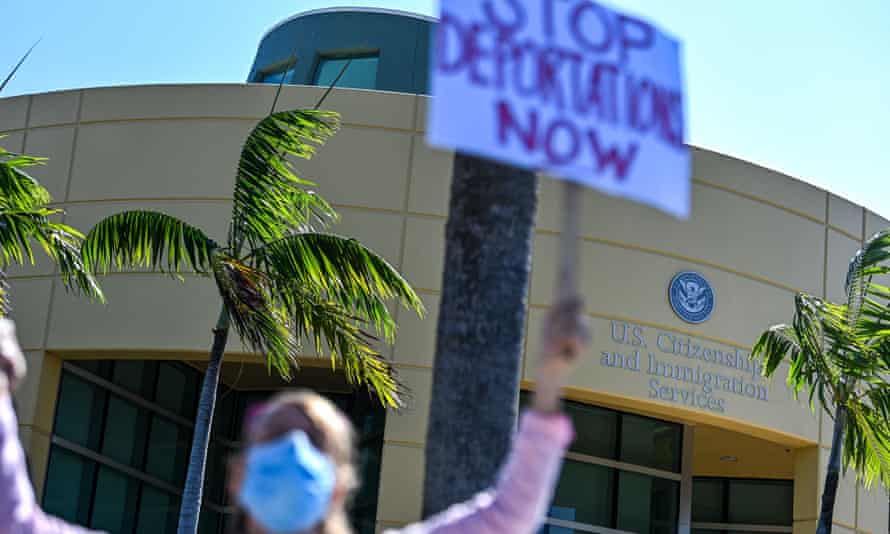
Demonstrators protest outside the US Citizenship and Immigration Service office in Miami, on February 20, 2021, demanding that the administration of US President Joe Biden cease deporting Haitian immigrants back to Haiti.
The rise in Haiti expulsions mirrors an increase in arrivals of Haitians at the border, misled by rumours and deliberate disinformation. Photograph: Chandan Khanna/AFP/Getty Images
in Washington

Guardian (UK) The Biden administration has so far deported more Haitians in a few weeks than the Trump administration did in a whole year, with the use of a highly controversial Trump-era public health order denying asylum seekers basic legal rights, according to a new report.

The report, The Invisible Wall, due to be published on Thursday by a coalition of immigrant rights groups, focuses on Title 42, part of the 1944 Public Health Service Act invoked a year ago by the Trump administration as grounds for summary expulsion of migrants because of the supposed health risk they posed during the Covid pandemic.

The Biden team has sought to place a moratorium on deportations of immigrants already in the country (though that moratorium has been blocked by a court order), but it has not stopped Title 42 expulsions of newly arrived migrants. The report found the pace of deportation flights to Haiti in particular had increased dramatically.

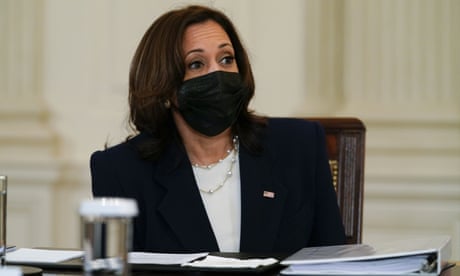
Biden charges Harris with stemming migrant numbers at US-Mexico border

“More Haitians have been removed to Haiti in the weeks since President Joe Biden and Vice President Kamala Harris took office than during all of fiscal year 2020,” according to the Invisible Wall report, published by the Haitian Bridge Alliance, the Quixote Center, and the UndocuBlack Network.

In part at least, the rise in expulsions mirrors an increase in arrivals of Haitians at the border, misled by rumours and deliberate disinformation from people smugglers, that the Biden administration had relaxed the regime at the border. Most of the new arrivals have been waiting in Mexico for months hoping for a change in the rules affecting Haitians. Some of the deportees may also have been held in detention centres in the US.

The department of homeland security did not respond to a request for comment on Wednesday. The new administration has said it will take time to repair the Trump-era degradation of infrastructure for holding immigrants pending asylum requests.

It has ended Trump’s “Remain in Mexico” policy, (known formally as the Migrant Protection Protocols, or MPP) which required asylum seekers to stay south of the border while their cases were processed. The change applies to Latin American migrants, but reports from the border suggest that Haitian asylum seekers in Mexico heard about the change and hoped it would make it easier for them to ask for asylum.

“[T]he partial opening of the border has caused confusion and misinformation in Haitian communities stuck in Mexico under the Title 42 policy,” the report said.

“Marginalized and isolated in Mexico by race, culture and language, Haitian migrants generally do not understand that MPP does not apply to them. Often misled by misinformation within the community or false rumors from ‘coyotes’ [smugglers or guides], Haitian migrants optimistically hope with MPP they can now seek protection if they enter the United States outside of a port of entry.”

The new administration has sought to combat those perceptions in the hope of forestalling a wave of new immigration from Haiti. On Wednesday the US embassy in Port-au-Prince put out a message from Biden in Creole on its Twitter account, saying “Mwen ka di sa byen klé: pa vini” (“I can say quite clearly, don’t come over.”)

The report points out that the Title 42 policy was forced on a reluctant Centers for Disease Control and Prevention by the Trump White House, ordered by Vice President Mike Pence and driven by the hardline anti-immigrant presidential adviser at the time, Stephen Miller.

As the policy requires the deportees to be crammed together in detention centres and then deported on flights, the public health justification for Title 42 rings hollow, the report argues.

“As ICE’s [Immigration and Customs Enforcement agency] detention system became a massive Covid-19 hotspot in 2020, removals posed a significant danger due to the potential spread of the virus both within immigration detention facilities and to receiving countries like Haiti,” the Invisible Wall report states.

“Despite the danger, Ice failed to take adequate steps to prevent, treat or test for Covid-19,” it added.

In June 2020, Ice reported that only 30% of detainees had been tested for Covid-19, and, of those tested, about 30% tested positive for the virus.

Furthermore, even refugees who have been in quarantine and tested negative for Covid have still been expelled on the same health pretext.

Migrant advocacy groups argue Title 42 is a violation of US obligations under international law to offer asylum seekers due process. Those expelled under the policy are routinely denied access to a lawyer or the opportunity to claim a “credible fear” of what would happen to them in Haiti.

In theory they can request a screening under the Convention Against Torture (CAT), and make a credible fear claim to an immigration official. But unlike asylum seekers, they cannot have an attorney present, or appeal against the decision of the official.

“The CAT screenings appear to be a mere formality,” the report states. “In conversations with multiple attorneys, no one had heard of a single person detained under the Title 42 policy who had passed the CAT screening.”

The post US: More Haitians Deported in Past 2 Months than All Last Year appeared first on The St Kitts Nevis Observer.