Tag Archives: caribbean

Haiti needs vigilance by the International Community

By Sir Ronald Sanders  

At a meeting of the Permanent Council of the Organization of American States (OAS) on March 17, I said that “no resolution is perfect, and no resolution satisfies every country, but we cannot sacrifice achieving good on the altar of desiring perfection”.

The resolution concerned the current constitutional, political and humanitarian situation in Haiti which is very grave and shows every sign of worsening.  The delegation of Antigua and Barbuda was the architect of the original resolution which sought to cause the member states of the OAS to express concern about Haiti and to offer to facilitate a meaningful dialogue between President Jovenel Moïse and all other stakeholders.

It was a matter of regret that, despite the strong statement of CARICOM Heads of Government, concerning Haiti, on February 11, CARICOM delegations at the OAS were again divided.  CARICOM Heads were clear that they wanted “all parties in Haiti to engage in meaningful dialogue in the interest of peace and stability”.  The Heads also said that they looked forward “to the conduct of free and fair Presidential elections in accordance with the Constitution of Haiti”.   Eight CARICOM countries – Barbados, Belize, Grenada, Guyana, St Kitts-Nevis, St Lucia, Suriname and Trinidad and Tobago backed Antigua and Barbuda’s draft resolution.

In the end, through a process of two weeks of negotiations, countries with important concerns about Haiti – Brazil, Canada, Chile, the Dominican Republic, and the United States joined the nine Caribbean countries in settling a draft resolution that was then negotiated with the Haitian delegation.

By the nature of negotiations, concessions had to be made. Hence, it was not a perfect resolution and not every paragraph of it satisfied everyone.   But it was enough to allow the Permanent Council of the OAS to adopt it by consensus.

Essentially, it offered “good offices of the OAS, under the authority of the Permanent Council, to facilitate a dialogue that would lead to free and fair elections” and asked the President of Haiti “to consider inviting the Permanent Council to do so”.

This was done against a background that since January 2020, there has been no legislature and no government in Haiti, and President Moïse has been ruling by decree.  Further, marauding gangs have been raping women, including young girls, kidnapping people (rich and poor) and demanding huge ransoms.  Violence has exploded in the country, particularly as hundreds of thousands of people have been protesting against President Moïse and deadly force has been used against them by a police force that is allegedly highly politicised.

The UN High Commission for Human Rights has stated its “concerns about judicial independence” which it says “has further eroded the separation of powers” in Haiti.

Time is fast running out to avoid further worsening of the situation in Haiti.   The OAS resolution, offering to facilitate dialogue, has come only after deep polarization and distrust in the country.  The OAS should have acted much earlier.  If President Moïse does not respond positively and swiftly to the offer by the OAS, no dialogue between the stakeholders might be possible.  A stand-off between them will occur with further confrontations.  Many Haitians have already stated publicly that “no dialogue is possible with Moïse”, and he has not sought a meaningful dialogue either.

Instead, he is persisting with plans to hold a referendum in June on altering the Constitution. But there has been no consultation with major Haitian players who say he has no authority to hold such a referendum.   What is clear is that, in 2015, Haiti had more than 6.5 million people registered to vote.  Moïse has now issued new identity cards which his OAS Ambassador says has been distributed to 4 million people.  Human rights groups in Haiti dispute that figure, putting it closer to 2 million.   Either way more than 2.5 million persons are currently disenfranchised. No referendum or election held in these conditions would be credible or acceptable.

Still worse, the current Provisional Electoral Council, to manage a referendum and elections, comprises persons appointed solely by Moïse.  They are known to have close links to him.   Similarly, the draft Constitution has been written by persons he has hand-picked.  None of this is “in accordance with the Constitution of Haiti”, and, for the opposition parties, are red rags to a bull.

On March 29, Haiti will mark the anniversary of its 1987 Constitution the very thing that the President is seeking to alter.   Stakeholders are pledging to put more than 2 million people on the streets in its defence on March 28 and 29.

The Charter of the OAS strictly forbids interference in the internal affairs of States.  And, while there have been various artifices by some OAS member states to circumvent that prohibition, the majority of countries adhere to that principle generally.  Consequently, the OAS cannot insist that President Moïse accepts its offer to play a good offices role.  It must await an invitation from him to do so.

In this context, member states of the Organization should work behind the scenes with Moïse and other stakeholders to urge them to talk and, in so doing, to take the idea of a referendum on the Constitution off anyone’s agenda; to ensure that independent election machinery is established by agreement of all parties and that Presidential, legislative and local elections are held at the earliest possible date, and until then Presidential decrees should be suspended on anything except that on which major players decide.

While this diplomatic work takes place – and CARICOM should be a part of it – the OAS should continue to be vigilant about developments in Haiti and ready to speak out against any further deterioration in the constitutional, political and humanitarian situation.

The people of Haiti need and deserve objective and constructive support in their collective interest, and not for the benefit of any political elite.

Responses and previous commentaries: www.sirronaldsanders.com   

The post Haiti needs vigilance by the International Community appeared first on The St Kitts Nevis Observer.


Associated Press World View: Biden-Harris console Asians, US-Russia Spat, EU Vaccines, More

Alternate text

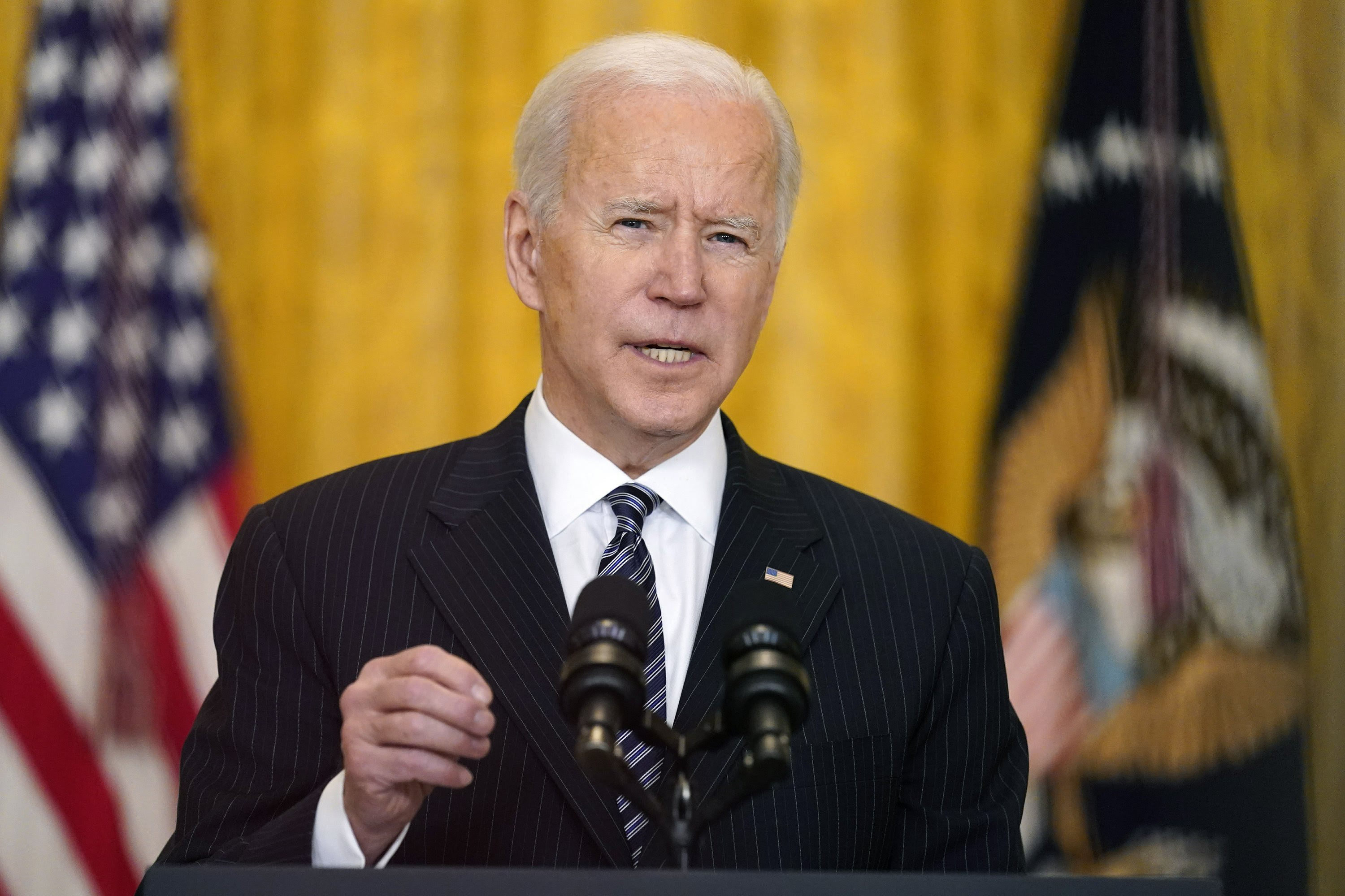
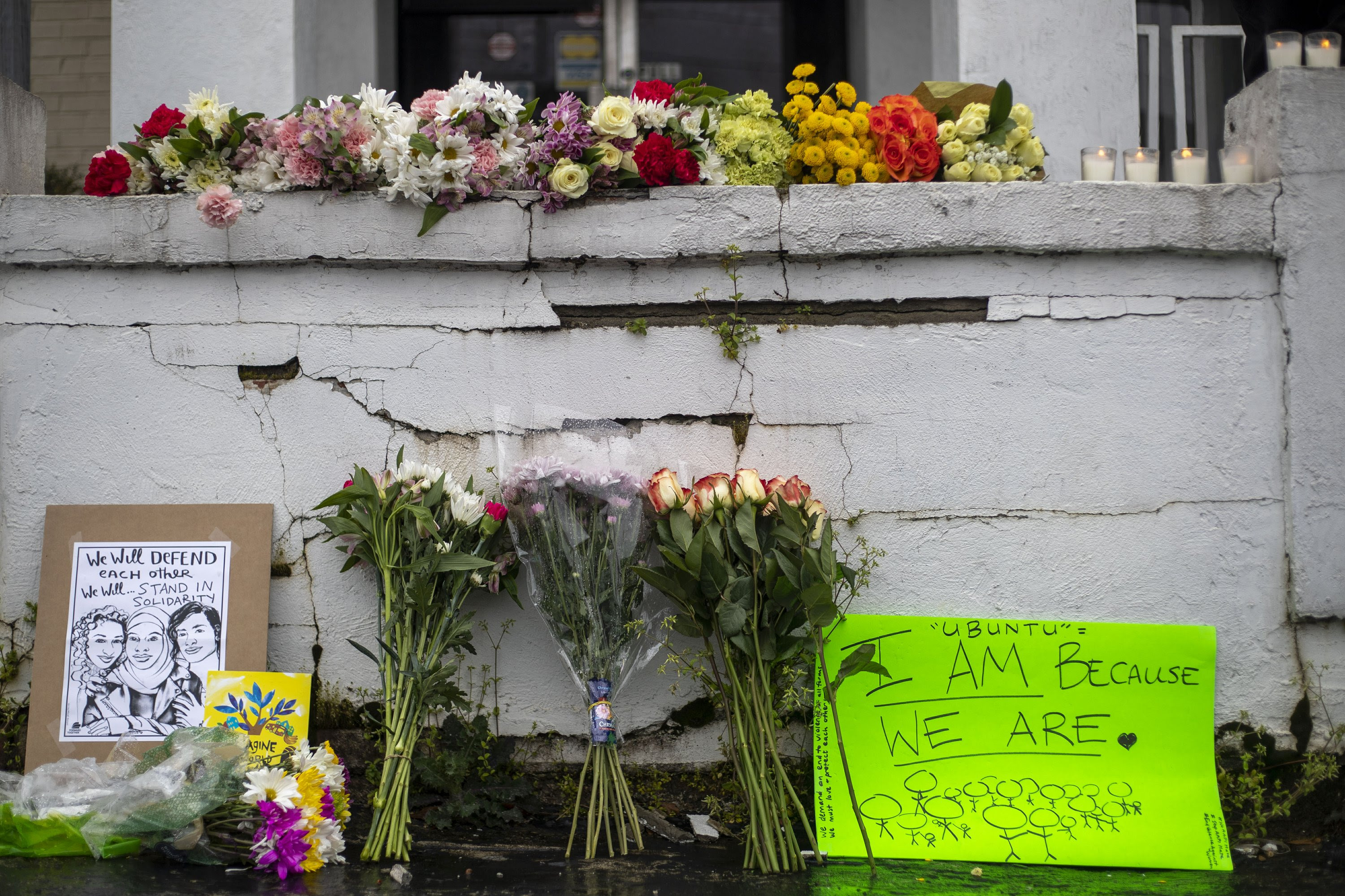
President Joe Biden and Vice President Kamala Harris visit Atlanta to offer solace to Asian Americans after the mass killing at metro-area massage businesses.

The president says the U.S. is hitting his 100 million coronavirus vaccines goal ahead of schedule and is now able to help supply Canada and Mexico with shots.

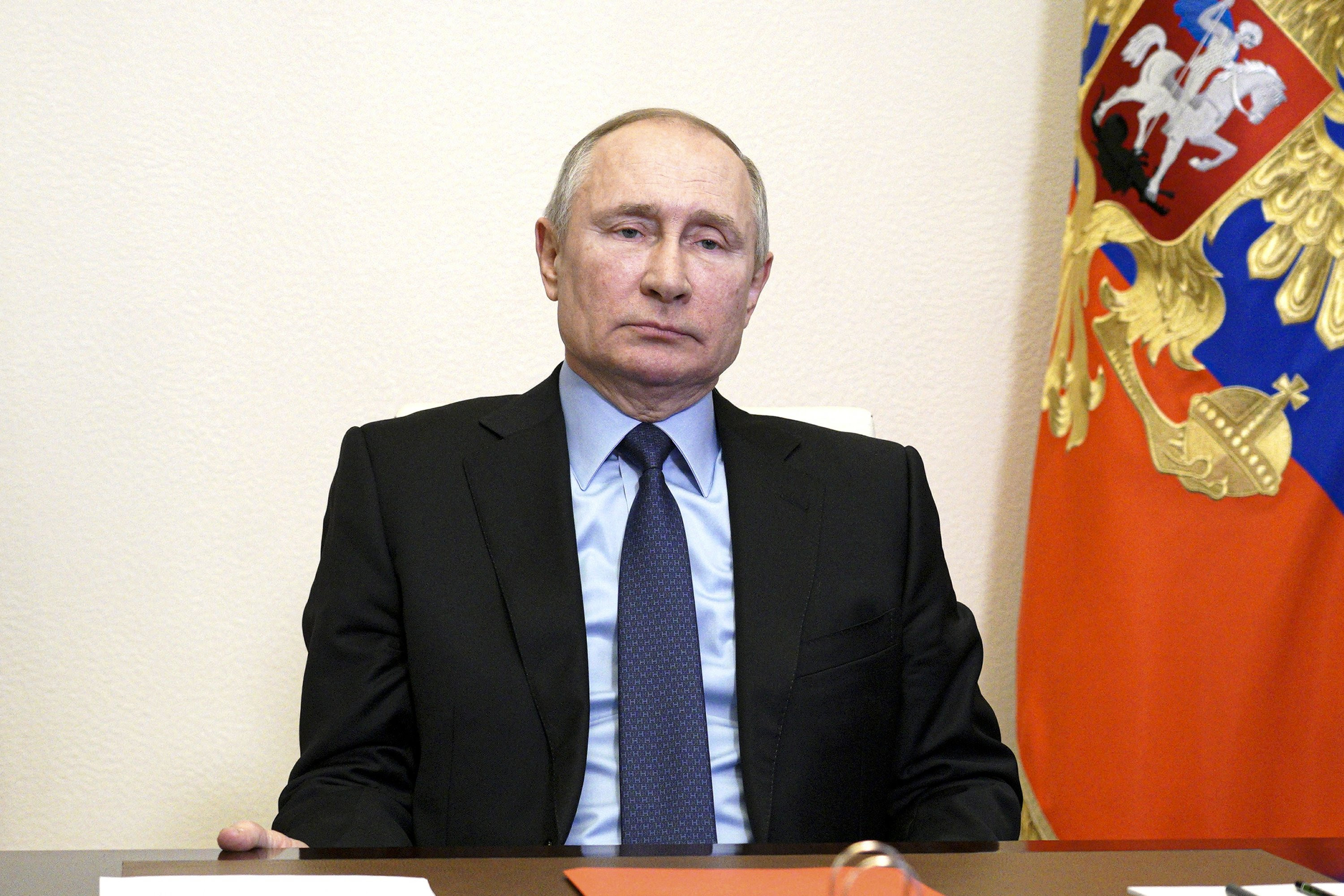
Fraught U.S.-Russia ties hit another low in a tit-for-tat between Biden and Russian President Vladimir Putin.

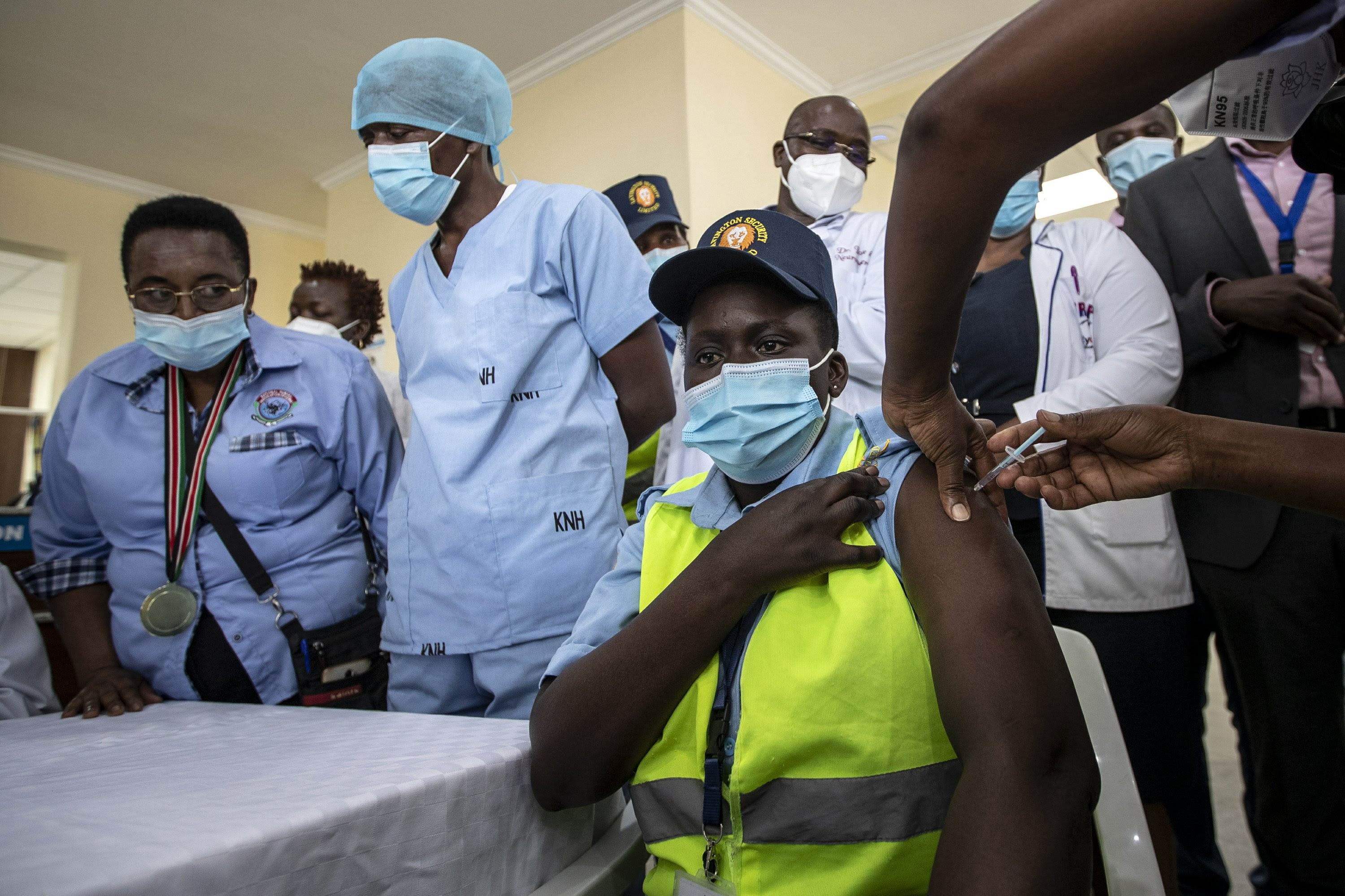
After Europe’s drug regulator says AstraZeneca’s COVID-19 vaccine is safe, Germany resumes vaccinations with the shot. Yet the recent pause in using AstraZeneca shots by Germany and other European nations sends ripples of doubt around the world.


Also this morning:

  • A new mom and an Army vet are among the eight people killed in the Georgia spa shootings
  • In Pope’s homeland of Argentina, an ex-priest leaves the church over the Vatican’s gay unions ruling
  • Some zoos administer coronavirus vaccines to gorillas and other animals


VANESSA GERA

The Associated Press

Warsaw, Poland

The Rundown

I'm an image

ATLANTA (AP) — For Asian Americans, 2020 was a year of political success and newfound influence. But it was also a time of vulnerability to racist assaults. That painful dichotomy will be……Read More

I'm an image

WASHINGTON (AP) — With the U.S. closing in on President Joe Biden’s goal of injecting 100 million coronavirus vaccinations weeks ahead of his target date, the White House said the nation is n…Read More

I'm an image

One was new mother taking a rare break from caring for her baby girl. Another was an Army veteran who installed security systems in the Atlanta area. They were among eight people killed… …Read More

I'm an image

MOSCOW (AP) — President Vladimir Putin responded Thursday to U.S. President Joe Biden’s description of the Russian leader as a killer by citing America’s past and present troubles, from slave…Read More

I'm an image

KAMPALA, Uganda (AP) — The suspension of the AstraZeneca vaccine in several European countries over the past week could fuel skepticism about the shot far beyond their shores, potentially… …Read More

OTHER TOP STORIES

BERLIN (AP) — Germany is resuming vaccinations with the coronavirus vaccine made by AstraZeneca, following a recommendation by European regulators that the benefits of th…Read More

BUENOS AIRES, Argentina (AP) — A former priest and LGBTQ activist who has blessed same-sex unions in Pope Francis’ home country, Argentina, is leaving the Roman Catholic …Read More

SAN DIEGO (AP) — The coughing among the western lowland gorillas at the San Diego Zoo Safari Park in January was the first warning sign. Soon the fears were confirmed: A …Read More

Who are we kidding? “First Four” still sounds more like an educational toy than the prelude to three of the best weeks in sport. But because of the pandemic, it’s been 7…Read More

The post Associated Press World View: Biden-Harris console Asians, US-Russia Spat, EU Vaccines, More appeared first on The St Kitts Nevis Observer.
BBC Walks Back Claim of Variant Linked to Antigua & Barbuda

The British Broadcasting Corporation (BBC) has corrected an article that linked a variant of Covid-19 to Antigua and Barbuda.

Antigua and Barbuda diplomat Sir Ronald Sanders, who spoke to our newsroom on Wednesday, said the information had remained uncorrected despite British health officials walking back claims that a new Covid-19 variant originated here.

Sir Ronald accused the BBC of damaging the country’s tourism industry.

On the BBC’s website, in an article updated Thursday morning, the company wrote that the story has now been updated to reflect new information on UK variants on the Public Health England (PHE) website.

The broadcast company says PHE previously reported two cases of the VUI-2021-03-01 variant had been found in the south-east of England in individuals who had recently been to Antigua.

PHE now says that despite the travel history of these cases, there is no scientific evidence to determine where this variant first emerged.

Observer reached out to the BBC’s Press Office for a comment but has not yet received a response.

Prime Minister Gaston Browne has already written to UK Prime Minister Boris Johnson requesting 100,000 vaccine doses in restitution.

The post BBC Walks Back Claim of Variant Linked to Antigua & Barbuda appeared first on The St Kitts Nevis Observer.

Nevis Investigating Alleged Tourist COVID-19 Breaches

The travelers were placed in a government isolation site in accordance with Nevis’ COVID-19 procedures. Two guests left the resort without authorization for approximately two hours on March 11. On March 13, another six guests left the resort’s compound.

“This past weekend, guests of a group visiting Four Seasons Resort Nevis violated Vacation in Place guidelines and in accordance with local protocols were placed in a government isolation site,” said resort officials in a statement. “Additionally, the government suspended the ‘Vacation in Place’ designation for the remainder of the group.

“The Resort has been in full cooperation with local authorities from the time we were made aware of the violations,” the statement adds. “We take all government-issued Covid-19 regulations seriously and actively communicate all relevant information to guests both prior to and upon arrival to ensure they are aware of local regulations. The health and safety of our guests, residents, employees, and community remain our top priority.”

The post Nevis Investigating Alleged Tourist COVID-19 Breaches appeared first on The St Kitts Nevis Observer.

Claim: China Sending Muslim Kids to Orphanages

China has forcibly separated Uighur families by taking young children into state orphanages, according to human rights group Amnesty International.

In a new report, Amnesty has called on China to release all Uighur children being held in orphanages without the consent of their families.

The charity spoke to parents who left children with relatives in China when they were forced to flee the country.

Rights groups say China has detained more than a million Uighurs.

The Chinese government has also faced allegations of a wide range of human rights abuses against the Uighur people and other Muslim minorities, including forced labour, forced sterilisation, sexual abuse and rape.

The government denies it is holding Uighurs in detention camps in the Xinjiang region in north-western China. It says the camps are “re-education” facilities being used to combat terrorism.

Because access to Xinjiang is heavily restricted by the Chinese, Amnesty spoke to Uighurs who were able to flee Xinjiang before the repression of the Uighur people intensified in 2017.

Mihriban Kader and Ablikim Memtinin fled from Xinjiang to Italy in 2016 after being harassed by police and pressured to give up their passports, Amnesty said. They left four children in the temporary care of grandparents, but the grandmother was taken to a detention camp while the grandfather was interrogated by police, the charity said.

“Our other relatives didn’t dare to look after my children after what had happened to my parents,” Mihriban told Amnesty. “They were afraid that they would be sent to camps, too.”

In November 2019, Mihriban and Ablikim received a permit from the Italian government to bring their children to join them, but the children were seized by Chinese police on the way and sent to a state-run orphanage, Amnesty said.

“Now my children are in the hands of the Chinese government and I am not sure I will be able to meet them again in my lifetime,” Mihriban said.

BBC
BBC

Omer and Meryem Faruh, who fled to Turkey in late 2016, left their two youngest children, aged five and six, with grandparents because they did not yet have their own travel documents, Amnesty said. They found out later that the grandparents had been arrested and sent to a camp and have not heard from their children since.

Amnesty’s report calls on China to provide full and unrestricted access to Xinjiang for UN human rights experts, independent researchers and journalists, and for all children held without their parents consent to be released to family.

“China’s ruthless mass detention campaign in Xinjiang has put separated families in an impossible situation: children are not allowed to leave, but their parents face persecution and arbitrary detention if they attempt to return home to care for them,” said Alkan Akad, Amnesty International’s China researcher.

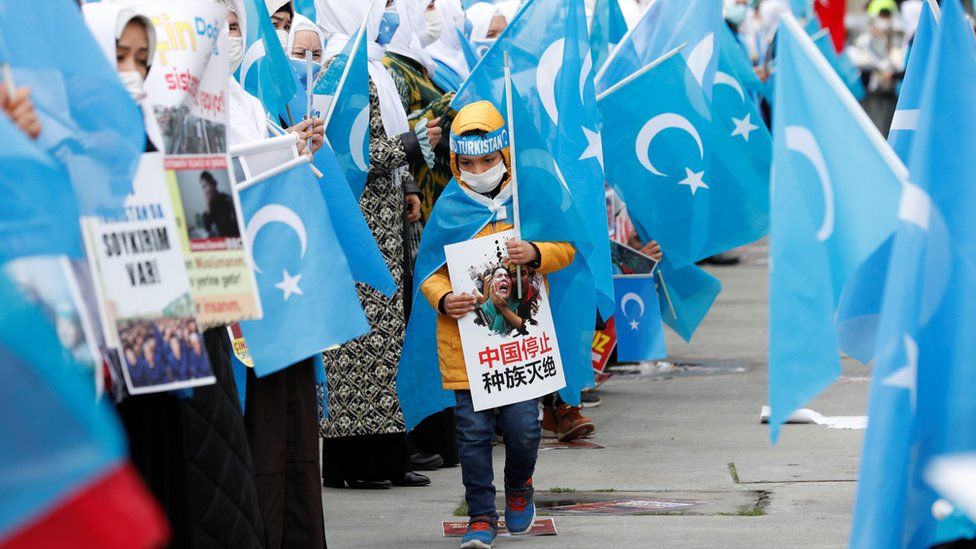
Ethnic Uighur demonstrators wave East Turkestan flags during a gathering on the occasion of International Women"s Day to protest China"s treatment of Uighurs, in Istanbul, Turkey March 8, 2021.image copyrightReuters
image captionA protest in Istanbul earlier this month against China’s treatment of the Uighur people

The Chinese state has created a vast and secretive network of camps in Xinjiang and is estimated to have detained more than a million Uighurs and people from other Muslim minority groups.

Reports have emerged in recent years of appalling human rights abuses, from forced sterilisation of Uighur women to torture and systematic rape inside camps.

China denies there are any human rights abuses taking place, and has called former camp detainees in exile liars and actors. China is also accused of intimidating and smearing witnesses who have spoken up, and of using witnesses’s relatives in Xinjiang as leverage against them.

The US, Canada, and the Netherlands have declared that China is committing a genocide against the Uighur people. A similar bill was rejected by the UK parliament.

The post Claim: China Sending Muslim Kids to Orphanages appeared first on The St Kitts Nevis Observer.

As Pandemic Rages, Brazil’s President Claims There’s a War Against Him

Sao Paulo (CNN) More than 45,000 people have been killed in Brazil by the pandemic in the past month, but Brazilian President Jair Bolsonaro says there’s a “war” against him personally.

In the coastal city of Rio de Janeiro, intensive care units are 95% full. Fifteen other state capitals are similarly verging on collapse, with ICU occupancy over 90% — a deluge of hospitalizations that has accompanied a sharp rise in Covid-19 cases in the country.

While Covid-19 cases are beginning to plateau or decline in many countries, Brazil is reporting record daily numbers. Just on Wednesday the country saw its largest daily jump in cases since the start of the pandemic — 90,303 new cases.

“Here it became a war against the President. It seems that people only die of Covid,” Bolsonaro, who wasn’t wearing a mask, told supporters outside the presidential palace on Thursday.

“The hospitals are 90% occupied. But we need to find out how many are from Covid and how many are from other illnesses,” he said.

Many state health departments in Brazil do show data for both ICU capacity dedicated to Covid-19 and to other illnesses.

On Thursday, Brazil’s health ministry reported 2,724 more people had died from the virus that day, bringing the total to 287,499. Those numbers make Brazil the second worst-affected country in the world in terms of case and deaths numbers, after the United States.

Bolsonaro, who has long downplayed the gravity of the pandemic, also said Thursday he regrets the country’s deaths, but questioned the efficiency of lockdown measures, which he has resisted imposing.

“Of course, we want a solution and regret any death, but why did the lockdown exist? You are seeing the population suffering from unemployment. Introduce me to a country where the fight against the Covid is working,” Bolsonaro said.

As cases surge, the Brazilian President is facing fierce criticism from citizens, potential political rivals, and local officials across the country, many of whom have demanded that Bolsonaro step up federal action.

Former President Luiz Inacio Lula da Silva, who has not ruled out running for office again in 2022, has slammed the current administration’s response to the pandemic, saying Thursday that “there is no control in Brazil.”

Over the weekend, a joint letter by the country’s governors called on the President to restrict the operation of airports, ports, highways, and railways in the country, among other measures. Many have already imposed local lockdown measures

The National Front of Mayors (FNP) also sent a letter to the president and the health ministry Thursday asking for “immediate measures” to address critical shortages in supplies and medicines, including oxygen and sedatives.

“It is unreasonable for people, Brazilian citizens, to be driven to such desperate deaths by ‘drowning in the dry’ or to have to be tied up and maintain consciousness during the delicate and painful process of intubation and throughout the period people are kept intubated,” the letter says.

Brazil’s Federal Pharmacy Council (CFF) says the current flood of Covid-19 cases raises “extreme concern” as there is also evidence of shortages of neuromuscular blockers, and other drugs used in intensive care, like Midazolam, essential for humane and safe intubation.

The Council for Health Secretaries has confirmed to CNN that those medications are at a critical level and could run out within 20 days.

Journalist Marcia Reverdosa reported from Sao Paulo and CNN’s Radina Gigova from Atlanta. Rodrigo Pedroso and Caitlin Hu contributed to this story.

The post As Pandemic Rages, Brazil’s President Claims There’s a War Against Him appeared first on The St Kitts Nevis Observer.

Mexico in New Major Oil Field Find

MEXICO CITY (AP) — Mexican officials said Thursday they have found an oil field with possible reserves of 500 million to 600 million barrels, but President Andrés Manuel López Obrador vowed not to pump more than 2 million barrels per day nationwide, the amount he says is needed to supply domestic demand.

“This new policy means not pumping more oil than is needed to cover domestic demand for fuels,” López Obrador said. “In quantitative terms, this means that during our administration we will not pump out of the ground more than two million barrels per day.”

In part, that is wishful thinking. The state-owned oil company Petroleos Mexicanos, or Pemex, currently produces only about 1.75 million barrels per day.

But Pemex Director Octavio Romero said the newly identified onshore Dzimpona 1 deposit, located in the Gulf coast state of Tabasco, should help the company boost daily production to 2 million barrels by the end of this year.

He said Mexico’s proven total reserves, which had fallen from 16 billion barrels in 2006 to 7 billion when López Obrador took office Dec. 1, 2018, have slowly recovered to about 7.4 billion barrels and should reach 7.8 billion by the end ofg 2021.

Romero also revealed Pemex has been widely delaying payments to its suppliers and contractors. He acknowledged the problem has become so bad that some suppliers have turned to bribing officials or turning to hiring middlemen to try to get paid for work they have done.

He said that with the coronavirus pandemic and drop in demand, “Pemex’s finances were highly affected.”

Romero urged business owners to have confidence that Pemex will eventually pay its debts, and announced a public website of payments, to stem a flood of public information requests from people waiting to get paid.

“Businessmen, have absolute confidence that Pemex will fully honor its commitment and pay all its debts,” Romero said.

The post Mexico in New Major Oil Field Find appeared first on The St Kitts Nevis Observer.

Nicaragua’s Indigenous People Tell OAS of Killings, Land Takeover

MANAGUA, Nicaragua (AP) — Nicaragua’s Indigenous groups complained Thursday to the InterAmerican Commission on Human Rights about land takeovers and killings that have hit the Miskito and Mayangna communities on the country’s Caribbean coast.

The commission, which is part of the Organization of American States, held the hearing by internet link due to the coronavirus pandemic.

Indigenous activists and rights groups said there were 13 killings, eight people wounded and the forced displacement of one community in 2020 linked to land takeovers by non-Indigenous settlers.

The activists said the government of President Daniel Ortega has not done enough to address the problems on the jungle-clad coast, something his administration denied.

Activists told the commission that many of the “settlers” moving into lands taken from them were ex-soldiers linked to timber and illegal logging interests. Residents of some communities have been forced to leave because of the continued violence.

“The displacement of communities under siege to larger towns like Puerto Cabezas, Waspam or Honduras has created a very serious situation, because they do not have access to food or health services,” said Lottie Cunningham, who leads the Center for Human Rights and Justice of the Atlantic Coast of Nicaragua.

“They live in terrible conditions,” she added.

Part of the land takeovers have occurred in the Bosawas nature reserve, which has been hit by illegal mining and logging despite its status as a protected area.

“The settlers have violently stolen our land and the authorities have allowed that,” said Juan Carlos Ocampo, an activist with the Prilaka Community Foundation.

He said residents temporarily left the hamlet of Sangni Laya after settlers chopped down coconut trees and destroyed crops, leading to what he called “a food crisis” for the inhabitants.

One of the worst attacks came in January 2020, when settlers burned 16 houses in the Indigenous community of Alal and killed at least four inhabitants. As recently as March 4, an attack on the Mayangna community of Kimak Was left one person wounded and another missing.

Nicaragua’s attorney general, Wendy Morales, cited a list of laws that she said have benefitted indigenous groups. She denied the government had tolerated human rights violations and said investigations had been opened into 18 complaints of land takeovers.

The post Nicaragua’s Indigenous People Tell OAS of Killings, Land Takeover appeared first on The St Kitts Nevis Observer.

Drug War: Gunmen Ambush Police Convoy Near Mexico City, Killing 13

MEXICO CITY (AP) — Gunmen apparently from a drug gang ambushed a police convoy Thursday in central Mexico, killing eight state police officers and five prosecution investigators in a hail of gunfire, authorities said.

The massacre of the 13 law enforcement officers in the State of Mexico was the country’s single biggest slaying of law enforcement since October 2019, when cartel gunmen ambushed and killed 14 state police officers in the neighboring state of Michoacan.

The Thursday ambush sparked a huge search for the killers in a rural, gang-plagued area southwest of Mexico City, which is surrounded on three sides by Mexico State. The dead law enforcement officers worked for the state.

While Mexico State contains suburbs of the capital, it also includes lawless mountain and scrub lands like the one where the attack occurred.

Rodrigo Martínez Celis, the head of the state Public Safety Department, said soldiers, marines and National Guard troops were combing the area by land and from the air looking for the killers.

“The convoy was carrying out patrols in the region, precisely to fight the criminal groups that operate in the area,” Martínez Celis said. “This aggression is an attack on the Mexican government.

“We will respond with all force,” he added.

There was no immediate indication as to what gang or cartel the gunmen might have belonged to. Several operate in the area around Coatepec Harinas, where the attack occurred.

The town is near a hot springs resort known as Ixtapan de la Sal, which is popular among Mexico City residents as a weekend getaway. But it also relatively close to cities like Taxco, where authorities have reported activities by the Guerreros Unidos gang apparently allied with the Jalisco cartel and by the Arcelia gang, dominated by the Familia Michoacán crime organization.

The attack appears to present a challenge for President Andrés Manuel López Obrador, who has pursued a strategy of not directly confronting drug cartels in an effort to avoid violence.

The post Drug War: Gunmen Ambush Police Convoy Near Mexico City, Killing 13 appeared first on The St Kitts Nevis Observer.