Tag Archives: caribbean

COVID Latest: US-More than 500,000 Dead in Year, Worse to Come- UK Opening Times

Guardian(UK) More than 500,000 people have now died from Covid-19 in the US, just over a year after the country detected its first cases of a virus that has wrought almost unprecedented loss. Yet, 616,000 is being predicted by June.

Deaths breached half a million on Monday, according to data from Johns Hopkins University, bringing the total to 500,071 . More than 28 million people have also tested positive for coronavirus in the US.

Both numbers are the worst in the world and the pandemic has thrown a harsh spotlight on the country’s ability to cope with such a disaster, especially during the tumultuous tenure of Donald Trump, whose administration botched the government response.

In a primetime address on Monday night, Joe Biden spoke to the gravity of the milestone.

“As a nation, we can’t accept such a cruel fate,” the president said in a speech, which was followed by a moment of silence and candle lighting ceremony at the White House. “While we’ve been fighting this pandemic for so long, we have to resist becoming numb to the sorrow. We have to resist viewing each life as a statistic.”

After a devastating winter surge in cases, for the first time in months, the average number of daily new coronavirus cases in the US fell below 100,000 on 12 February. Even with the decrease in cases, the US is still experiencing 1,500 to 3,500 deaths a day and public health officials have warned recent progress could easily reverse.

Perhaps the biggest threat is the new variants of the virus, which appear to spread more quickly and easily. Scientists are working to understand how these variants could change the effectiveness of vaccines as the US attempts to ramp up the scale of its inoculation distribution.

About 13% of the US population, or 43 million people, have received their first dose of the vaccine, according to the Washington Post. Biden pledged this month to make 600m doses of the vaccine available by the end of July.

To avoid another spike in cases, the director of the Centers for Disease Control and Prevention (CDC), Rochelle Walensky, said mask-wearing guidelines must remain in place and people must continue to use physical distancing to stop the virus’s spread.

A year on from the first known Covid infections in the US, Joe Biden’s administration has made the health and economic response to the pandemic a White House priority, after Donald Trump spent most of 2020 minimizing and dismissing its grim toll.

In the first year of the pandemic, more people died from Covid-19 than those who die from respiratory diseases, guns and car crashes in the US in an average year.
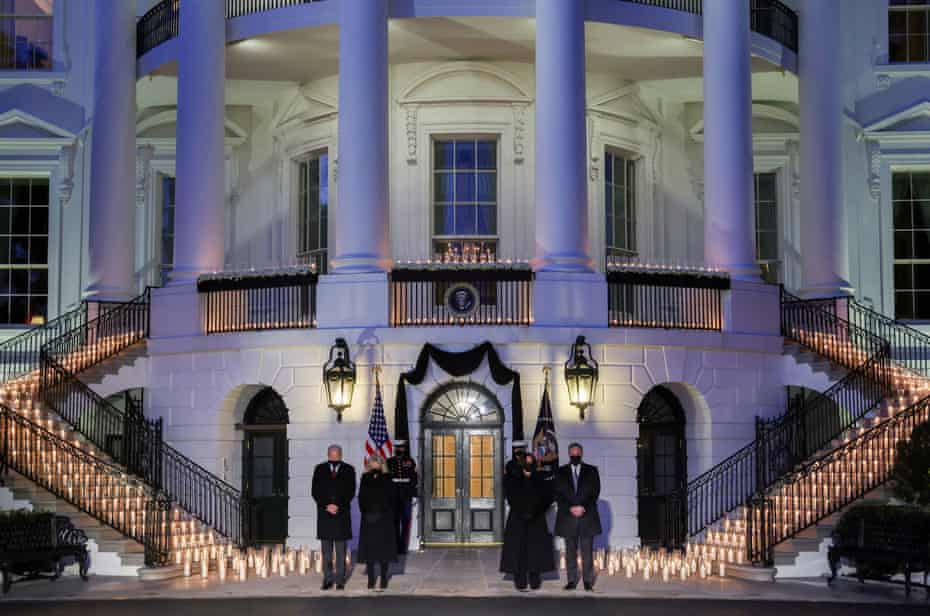
Joe Biden, Jill Biden, Kamala Harris and Doug Emhoff attend a moment of silence and candle lighting ceremony at the White House.
Joe Biden, Jill Biden, Kamala Harris and Doug Emhoff attend a moment of silence and candle lighting ceremony at the White House. Photograph: Jonathan Ernst/Reuters

Earlier this month, a Lancet commission said the US could have averted 40% of the deaths from Covid-19, had the country’s death rates corresponded with the rates in other high-income G7 countries.

Trump’s administration reacted slowly at the start of the pandemic and then frequently sought to undermine the science around the virus, including spreading unfounded conspiracy theories and unverified treatments. Trump, who was eventually infected himself, especially inflamed racial tensions by blaming China and also flouting widely accepted practices, such as mask-wearing.

Dr Anthony Fauci, the nation’s top infectious disease expert, said political divisiveness – which helped transform mask wearing from a public health measure to a political statement – has contributed significantly to the “stunning” Covid death toll.

Meanwhile the emergence of more contagious variants of the coronavirus – especially those from South Africa and Brazil, which have been shown to reduce the immunity from natural infections and vaccines – have made it challenging to predict when the US will be able to put the pandemic behind it, Fauci told Reuters in an interview Monday.

Fauci and Biden have said the United States should return to something approaching pre-pandemic normal life around Christmas. But that could change, Fauci cautioned.

Covid-19 deaths, hospitalizations and cases have disproportionately affected Black, Latino and Indigenous people. American Indian or Alaska Native people have died at 2.4 times the rate of white people, Black people at 1.9 times the rate and Latino people at 2.3 times the rate, according to the CDC.

It’s been just over a year since the first known US death from Covid-19 on 6 February 2020, though the death wasn’t reported until April of that year. In early February 2020, the country’s first confirmed cases were detected in people returning from abroad, though it is now believed the virus had been spreading in the country for months before.

It was in Seattle in late February 2020 that the quick spread of the illness became evident to the US, as the virus swept through a long-term care facility, leading to the deaths of at least 46 people.

Local lockdowns were soon implemented in many parts of the country, and by early April, New York City had become the center of the global outbreak.

In October, scientists at the University of Washington warned the US death toll could reach half a million people by the end of February. The University’s Institute for Health Metrics and Evaluation now projects the death toll will be 616,000 by 1 June.

The scientists said the trajectory of the next four months will be determined by vaccine distribution, declining virus transmission in warmer months, new variants and individual adherence to mask-wearing and other public health guidelines.

Lois Beckett and agencies contributed reporting

==============================================

Italy ‘misled WHO on pandemic readiness’ weeks before Covid outbreak

Preparations not reviewed since 2006 but self-reporting in February 2020 claimed they were at highest level
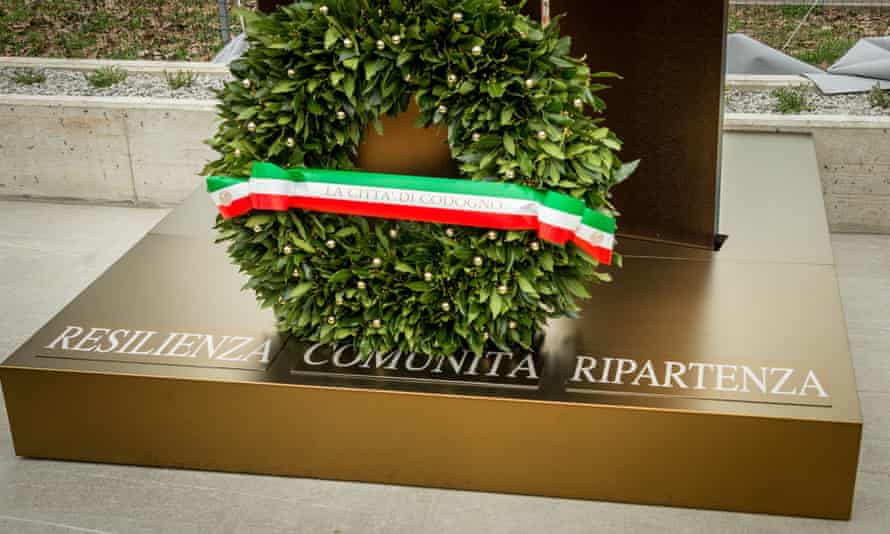
A memorial dedicated to the victims of the coronavirus pandemic in Codogno, Lombardy
A memorial dedicated to the victims of the coronavirus pandemic unveiled on 21 February in Codogno, Lombardy, one year after the first local transmission took place there. Photograph: Carlo Cozzoli/Rex/Shutterstock


Guardian (UK) Italy allegedly misled the World Health Organization (WHO) on its readiness to face a pandemic less than three weeks before the country’s first locally transmitted coronavirus case was confirmed.

Each year, countries bound by the International Health Regulations (IHR) – an international treaty to combat the global spread of disease – are required to file a self-assessment report to the WHO on the status of their preparedness for a health emergency.

Italy undertook its last self-assessment report on 4 February 2020. In section C8 of the report, seen by the Guardian, where countries have to evaluate their overall readiness to respond to a public health emergency, the author marks Italy in ‘level 5’, which is the highest status of preparedness.

The category states that a country’s “health sector emergency response coordination mechanism and incident management system linked with a national emergency operation centre have been tested and updated regularly”.

However, it emerged last year that Italy had not updated its national pandemic plan since 2006, a factor that may have contributed to at least 10,000 Covid-19 deaths during the first wave and which is a key element in an investigation into alleged errors by authorities being carried out by prosecutors in Bergamo, the Lombardy province that was severely affected in the pandemic’s early stage.

The self-assessment document has been given to the Bergamo prosecutors as additional evidence towards a civil lawsuit filed by the families of Covid-19 victims in December against leading politicians for alleged criminal negligence over their handling of the pandemic.

Italy’s first local coronavirus transmission was confirmed on 21 February in the Lombardy town of Codogno, and two days later an outbreak occurred in the hospital of the Bergamo town of Alzano Lombardo. But unlike Codogno, which was immediately quarantined along with nine other towns in Lombardy and one in Veneto, the Alzano Lombardo hospital was reopened a few hours after the outbreak while Bergamo province only went into lockdown with the entire Lombardy region two weeks later.

Bergamo prosecutors last year questioned Giuseppe Conte, who until earlier this month was prime minister; Roberto Speranza, the health minister; Luciana Lamorgese, the interior minister; and Attilio Fontana, president of the Lombardy region, as part of their investigations. They also questioned Giuseppe Ruocco, current general secretary for the health ministry and a general director of preventive health from 2012-2014, in January.

Conte, who was questioned by prosecutors last June, told the Guardian in an interview in October that, if summoned, he would be willing to be questioned again, but that he did everything he possibly could do manage a really difficult situation. Speranza, who was questioned last June and again in January, has not commented publicly on the investigation, neither have Lamorgese, Fontana or Ruocco.

Ruocco reportedly contradicted Italy’s self-assessment report of February 2020 by confirming to prosecutors that the pandemic plan was last drafted in 2006, despite the country being obliged to update the plan according to WHO guidelines in 2013 and 2018.

In an analysis of the self-assessment document compiled by Pier Paolo Lunelli, a retired army general, 60 out of 70 answers provided by Italy were judged to be “groundless”. Lunelli wrote in his analysis, which has been given to prosecutors, that the document “constitutes a castle of evidence which certifies the [level of] unpreparedness we approached the coronavirus emergency with”.

“We lied to the Italian citizens claiming we were ready,” added Lunelli. “Worse, we tried to deceive even the WHO, the EU and the ‘provident’ European countries, declaring to have capabilities which, in the light of the facts, we did not have.”

Italy, which was the first European country to be hit by the pandemic, had registered 95,992 coronavirus-related deaths as of Monday – the highest toll in Europe after the UK.

Consuelo Locati, the lawyer representing the families behind the civil lawsuit, said the self-assessment report could represent “resounding evidence of all the premises for false representation”.

Locati is preparing to write to Italy’s new prime minister, Mario Draghi, to ask for a compensation law for the relatives of coronavirus victims.

Locati claimed that not only was Italy’s pandemic plan severely outdated, but that it had never been tested to establish if it worked.

=========================================


Step by step: how England’s Covid lockdown will be lifted

Boris Johnson has set out a plan for reopening in four stages, with a minimum of five weeks between each
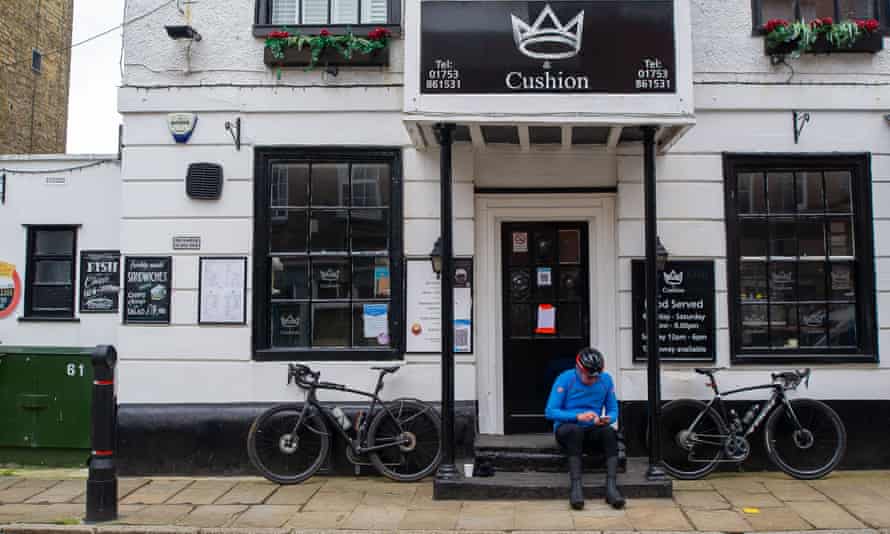
A man sits outside a closed pub in Eton, Berkshire
A man sits outside a closed pub in Eton, Berkshire. Most outdoor venues including pubs and restaurants will be allowed to open during step 2. Photograph: Maureen McLean/Rex/Shutterstock
Political correspondent


Boris Johnson has announced detailed plans for the unlocking of England amid the coronavirus vaccination programme. Here is the proposed timetable, in four stages, and other initiatives announced by Downing Street.

No 10 is stressing that after the first step the subsequent stages of reopening could be subject to delay and that the programme would be guided by “data rather than dates”.
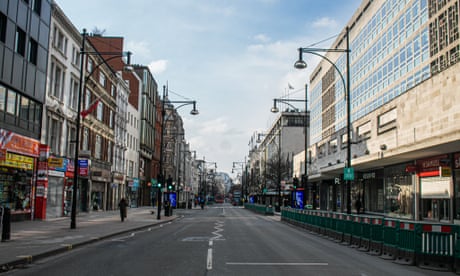
 

There is a minimum of five weeks between each stage – four weeks to collect and assess data and then a week for people and businesses to prepare for the next step.

All the changes will be England-wide with no return to regional tiers. The only exception could be localised efforts if a new variant of the virus is detected, for example additional testing.

Step 1, part 1 – 8 March

  • All pupils and college students return fully, with before- and after-school clubs opened. For a period, secondary school pupils and older will wear masks in classes.
  • People can meet one other person outside for, say, a coffee or picnic, not just for exercise. Children will still count towards this.
  • Care home residents can receive one regular, named visitor.
  • The “stay at home” order will otherwise stay in place.

Step 1, part 2 – 29 March

  • Outdoor gatherings allowed of up to six people, or two households if this is larger, not just in parks but also gardens.
  • Outdoor sport for children and adults will be allowed including outdoor swimming pools.
  • The official stay at home order will end, but people will be encouraged to stay local – the definition of local will largely be left to people’s discretion.
  • People will still be asked to work from home where possible, with no overseas travel allowed beyond the current small number of exceptions.

Step 2 – no earlier than 12 April

  • Reopening of non-essential retail, hair and nail salons, and public buildings such as libraries.
  • Most outdoor venues open, including pubs and restaurants but only for outdoor tables and beer gardens. Customers will have to be seated but there will be no need to have a meal with alcohol.
  • Also reopening will be settings such as zoos and theme parks. However, social contact rules will apply here, so no indoor mixing between households and limits on outdoor mixing.
  • Indoor leisure facilities such as gyms and pools can also open but again people can only go alone or with their own household.
  • Reopening of holiday lets with no shared facilities, but only for one household.
  • Funerals can have up to 30 attendees, while weddings, receptions and wakes can have 15.
  • While it is not part of step 2, this is the earliest point after which the bulk of university students could know about the resumption of face-to-face classes. A review of this will take place at the end of the Easter holidays.

Step 3 – no earlier than 17 May

  • Most mixing rules lifted outdoors, with a limit of 30 people meeting in parks or gardens.
  • Indoor mixing will be allowed, up to six people or, if it is more people, two households.
  • Indoor venues such as the inside of pubs and restaurants, hotels and B&Bs, play centres, cinemas, museums and group exercise classes will reopen. The new indoor and outdoor mixing limits will remain for pubs and other hospitality venues.
  • This will be the earliest date at which international holidays could resume, subject to a review – see the list of reviews below.
  • For sport, indoor venues can have up to 1,000 spectators or half capacity, whichever is lower; outdoors the limit will be 4,000 people or half capacity, whichever is lower. Very large outdoor seated venues, such as big football stadiums, where crowds can be spread out, will have a limit of 10,000 people, or a quarter full, whichever is fewer.
  • Weddings will be allowed a limit of 30 people, with other events such as christenings and barmitzvahs also permitted.

Step 4 – no earlier than 21 June

  • All legal limits removed on mixing will be removed and the last sectors to remain closed, such as nightclubs, will reopen. Large events can take place.
  • There are likely to be changes to wider social distancing measures but this will be decided in a separate review – also see below.

Four reviews taking place within the unlocking process

  • On whether “Covid status certificates” – ie vaccine or test passports – could be used to help reopen the economy and/or reduce restrictions on contact. This will be set out ahead of step 4. Officials say it is not a foregone conclusion that these will be used.
  • An “events research programme”, with pilots to test the effects of larger crowds and/or reduced social distancing. This will start in April.
  • A Department for Transport review into how to allow more inbound and outbound travel as soon as possible, given worries over new variants of Covid. It will report on 12 April, but international travel will not resume before 17 May at the earliest.
  • A review of social distancing, for example the 1 metre-plus rule, and on masks and working from home. This will conclude before step 4.

Commons scrutiny and votes

  • For most of the rules the government will lay a statutory instrument, a form of legislation, before 8 March and it will be debated and voted on before the Easter recess.
  • Before this there will be a much more limited measure to allow one-to-one outdoor meetings and the reopening of venues such as after-school clubs.

The post COVID Latest: US-More than 500,000 Dead in Year, Worse to Come- UK Opening Times appeared first on The St Kitts Nevis Observer.

NEVLEC’s Chairman of the Board introduces new general manager

CHARLESTOWN, Nevis — Stedmond Tross, Chairman of the Nevis Electricity Company Limited (NEVLEC) Board of Directors introduced the new general manager of the company on February 22, at a ceremony at the company’s board room.

“We are here this morning to introduce to the general public Albert Gordon, our new manager of NEVLEC,” said Tross. “Gordon is Jamaican by birth. He is a mechanical engineer and has served in various management roles in the region. In fact, he comes to us after completing his latest contract as the general manager or CEO of Guyana Power and Light.

“Gordon has contracted to us for two years starting on February 1,” he said. “It is our hope that by the end of his tenure some local person will have demonstrated the requisite management skills to take up the reins of leadership.

“NEVLEC continues to do all it can with limited resources to ensure that it provides a constant, reliable service to the people of Nevis,” said Tross. Gordon is taking leadership of the company at a time when it is ready to take off, as it adapts to a changing environment.”

In welcoming the new general manager, Tross urged the people of Nevis to embrace Gordon.

“On behalf of the Board I want to wish him well because if he does well, Nevis will do well and I ask the people to receive him and to work with him,” said Tross.

Gilroy Pultie, former general manager of the Nevis Electricity Company Limited.

Tross thanked Gilroy Pultie, of St. Lucia, who served as the general manager of NEVLEC for the past two years.

“Pultie did an outstanding job while he was here to bring us to where we are today,” explained Tross. “We wish Pultie well in his new endeavor. We thank him because although he is not with us, we have continued to get his advice and expertise in some instances.”

Tross also thanked Elford Felix, Generation Management Consultant who was the interim general manager.

“We say goodbye and so long to Felix,” said Tross. “Nevis owes him a debt of gratitude for resuscitating our power plant and getting engines that were virtually dead to come to life again. When our largest generator was down for maintenance for several weeks, we were still able to supply electricity to the people of Nevis. So, we say a big thank you to him, and the hardworking staff at NEVLEC.”

Tross said that Felix came to work with the company for three months initially. He stayed for two years to ensure that NEVLEC’s generating capacity was enhanced. Tross wished him well and best wishes in his future endeavours.

The post NEVLEC’s Chairman of the Board introduces new general manager appeared first on The St Kitts Nevis Observer.

Taking COVID-19 vaccine doesn’t mean you should let your guard down

BASSETERRE, St. Kitts — St. Kitts and Nevis implemented its vaccine rollout plan on February 22, at the Newtown Dental Clinic during a brief ceremony held as part of the Government’s National COVID-19 Vaccination Rollout and Awareness Campaign Launch.

Prime Minister Dr. the Honourable Timothy Harris, one of the first persons to take the AstraZeneca/Oxford University vaccine against the deadly Novel Coronavirus (COVID-19), said that although a vaccine is available, persons should not let their guard down as the virus is still active.

“We are proud of the accomplishments to date, and even as we rejoice at this significant watershed moment, the country at large must be reminded it is not over,” said the Hon. Dr. Harris. “It is not over until we achieve herd immunity; it is not over until our neighbours achieve herd immunity. “Therefore, we must all continue to take the prescriptions given: wearing our masks, hand hygiene, physical and social distancing. We must take them to heart and abide by them even as we buildout.”

Prime Minister Harris encouraged everyone to get vaccinated.

“We want everyone to come forward in his or her self-interest and be vaccinated,” said Dr. Harris. “That way you not only save your life, you make an effort to save the lives of your loved ones. I want to invite everyone, adding that the vaccine is being offered for free.

Other Federal Cabinet ministers, including Deputy Prime Minister the Honourable Shawn Richards, and the Minister of Health et al, the Honourable Akilah Byron-Nisbett, were among the more-than-50 persons to take the COVID-19 vaccine today. Additionally, frontline workers, the Commissioner of Police, Hilroy Brandy, and members of the National COVID-19 Taskforce were also vaccinated.

The post Taking COVID-19 vaccine doesn’t mean you should let your guard down appeared first on The St Kitts Nevis Observer.

Electronic Communications Bill, 2021 to preserve NTRC, protect consumers

BASSERERRE, St. Kitts — With the increasing use of technology among the population of St. Kitts and Nevis, the Honourable Vincent Byron, Attorney General and Minister of Justice and Legal Affairs, said it was time to reform the Telecommunications Act of 2020 to preserve the National Telecommunications Regulatory Commission (NTRC) and protect consumers.

During the sitting of the Federal Parliament, on February 18, Attorney General Byron outlined the scope of the reform and noted that the NTRC, established in 2020 under the previous Act, will be preserved and strengthened, as its powers will be expanded under the Electronic Communications Bill, 2021.

“What we say… it is time to reform the existing telecoms legislative framework. The new Bill will preserve the NTRC…the NTRC will have more umph,” said Minister Byron, adding that the NTRC will have a statutory body that will enable it to pursue legal matters against telecommunication companies, issue and regulate licenses, as well as protect the rights of consumers.

Minister Byron commented that too often the existing telecommunication service providers may disadvantage customers and leave them dissatisfied. He said that the Electronics Communications Bill, 2021, is expected to protect the welfare of the consumer.

“Many of our public are dissatisfied with the services often provided by the service providers…the Bill gives more teeth in protecting consumers and getting redress from service providers,” he stated.

Minister Byron further stated that in some member countries, competition and consumer choice are staunch as companies “collude” with each other to monopolize the communications industry. Such actions infringe on the right of the consumer to choose and by extension may place the country at an economic disadvantage. He said that under this reformed Bill the telecommunication companies operating within the Federation will be hindered from engaging in such activities.

“The new Bill allows for there to be more structure, more negotiations and for your jurisdiction to get involved and protect consumers,” he added

The Electronic Communications Bill, 2021, which was successfully passed in the Federal Parliament on Thursday, February 18, 2021, will enable the government to meet its mandate of moving the country towards becoming a productive digital state.

The post Electronic Communications Bill, 2021 to preserve NTRC, protect consumers appeared first on The St Kitts Nevis Observer.

Prime Minister Dr. Harris, among the first in the Federation to take COVID-19 vaccine

BASSETERRE, St. Kitts — Prime Minister Dr. the Honourable Timothy Harris rolled up his sleeve today February 22 as he accepted the AstraZeneca/Oxford University vaccine against the deadly Novel Coronavirus (COVID-19), setting a strong example for all citizens and residents of St. Kitts and Nevis to follow.

The first batch of vaccines was administered during a brief ceremony held as part of the Government’s National COVID-19 Vaccination Rollout and Awareness Campaign Launch.

Prime Minister Harris was the second recipient of the COVID-19 vaccine. The first recipient was the Medical Chief of Staff of the JNF General Hospital, Dr. Cameron Wilkinson.

Prime Minister Harris said St. Kitts and Nevis has managed the COVID-19 pandemic remarkably well, adding that he is particularly pleased the Federation has now reached the stage of vaccination without recording a single death or major hospitalization as a result of the deadly disease.

“We are now at a watershed moment, the moment of vaccination,” said Dr. Harris. “We had always hoped that we would be able to begin our vaccination programme before there was any hint of community spread in our Federation. Thank God for He has brought us this far and we are able to accomplish this goal.”

Other ministers of the Federal Cabinet, including Deputy Prime Minister the Honourable Shawn Richards and Minister of Health et al, the Honourable Akilah Byron-Nisbett were among more than 50 persons to take the COVID-19 vaccine.

Prime Minister Harris said it was important for them as government leaders to be among the first to accept the vaccine.

“The Cabinet has come today to be part of the initial rollout because leadership matters and in this particular case, particularly in the context of disinformation with respect to vaccines, we want to signal to our people that it is safe and the results so far have been efficacious,” Dr. Harris said.

Along with frontline workers, the vaccine was also presented to the Commissioner of Police, Hilroy Brandy, and members of the National COVID-19 Taskforce.

The post Prime Minister Dr. Harris, among the first in the Federation to take COVID-19 vaccine appeared first on The St Kitts Nevis Observer.

Acting Academy launched on Nevis for aspiring actors

CHARLESTOWN, Nevis — An Acting Academy to train aspiring actors in the Federation to prepare them for potential roles in the ‘One Year Off’ on Nevis film has been launched by MSR Media International.

The Acting Academy commences February 22, under the guidance of MSR Media Chief, Producer, and Director, Philippe Martinez, assisted by Acting Coach, Winston Crooke.

According to Martinez the training will help locals interested in acting to gain experience that will increase their marketability for future films.

“The Acting Academy will provide training and support for its attendees, giving them the skills required to become part of the talent pool for roles in our future films,” said Martinez. “We have offered six positions and are very excited to be able to offer 16 more opportunities to local residents.”

Guest actors will also visit to offer advice and support along with the regular classes.

“Local residents are encouraged to attend to prepare for paid film roles as the Nevis Island Administration diversifies its economy with the establishment of a film industry for the island. These professional acting classes are being offered for free.

“Successful applicants will have the opportunity to be cast in speaking roles in the upcoming productions,” he said.

Acting Academy classes will be held on Mondays and Wednesdays, 6 p.m. to 9 p.m. at the Nevis Performing Arts Centre (NEPAC).

Applicants must be 18-years or older and do not need to have prior acting experience.

Interested persons are asked to submit a 15 to 20 second introductory phone video, including name, age, contact information and interests via WhatsApp to Winston Crooke at 869-669-6350 by March 2.

In person auditions will be held by invitation only at NEPAC at 11am on Saturday, March 6.

MSR Media will begin filming ‘One Year Off’ on February 25. A second film is planned later this year as part of a two-film production deal.

The post Acting Academy launched on Nevis for aspiring actors appeared first on The St Kitts Nevis Observer.

Nevis Ministry of Tourism upgrading Fort Charles, other heritage sites

CHARLESTOWN, Nevis — Nevisians are being encouraged to understand the value of Nevis’ heritage by John Hanley, Permanent Secretary in the Ministry of Tourism in the Nevis Island Administration (NIA).

“I want to encourage everyone to value the immense heritage treasure that we have here on the island of Nevis,” said Hanley. “I have travelled to many Caribbean nations, and what we have here on Nevis far exceeds what I have seen on a lot of islands. We have gotten to the point where we are doing something to preserve and showcase these sites.”

Hanley was visiting Fort Charles, one of seven heritage sites under the care of the ministry. He described upgrade work the Ministry of Tourism has been doing in the area, located on the southern outskirts of Charlestown along New River in Gingerland. He asked the public to be patient during the process.

Sylvester Meade is responsible for the well-kept and maintained lawns amid the historic ruins of Fort Charles Heritage Site.

“The Ministry of Tourism is going to upgrade the landscaping and the curb appeal of the site in the next few weeks,” explained Hanley. “Our upgrades are not only specific to Fort Charles, but also to New River. We will fence that property soon, because it is important for us to restrict access to keep animals out, and to make the area secure.

“We have had the plan in place for some time,” he said. “We look forward to completing these upgrades. So far, the Ministry of Tourism’s Heritage Team has covered much ground in the process and outlined the work already completed at Fort Charles.

“If you come and visit, there is a lovely lawn in the fort area, which is well tended to by our Jamie Parry,” said Hanley. “The area in front of the fort is being landscaped. We started off with the fort itself and will soon be working on the adjacent areas.

“Then we are also going to have a parking area to accommodate visitors and avoid vehicles being driven onto the premises.”

Hanley said the Heritage Team carried out exemplary in upgrading the heritage sites.

The Ministry of Tourism maintains Cottle Church, Bath Hotel, New River Estate, Eden Brown, Fort Charles, Fothergills Heritage Village and Saddle Hill.

“I thank the Heritage Team at the Ministry of Tourism, headed by Sylvester Meade, for their exemplary work,” said Hanley. “I have a lot of respect for Meade, who was very passionate about raising our heritage sites to another level.

“I thank the workers at other sites. Here at Fort Charles; Jamie Parry; at New River Heritage [Site] and Eden Brown; and the other workers. I want to thank each and every one of them for the tremendous work that they have done in helping to improve and upgrade our heritage sites.”

The post Nevis Ministry of Tourism upgrading Fort Charles, other heritage sites appeared first on The St Kitts Nevis Observer.

Prime Minister Harris applauds church’s guidance in bringing up disciplined children

BASSETERRE, St. Kitts — Prime Minister Dr the Hon Timothy Harris is applauding the church community in the Federation of St. Kitts and Nevis for the important role it plays in not only educating but assisting parents on how to bring up their children in faith and being well-disciplined in their day-to-day life.

Pastor Roysdean Richards delivering the message at the Good News Baptist Church in Lime Kiln, West Basseterre. Prime Minister Dr the Hon Timothy Harris is seated on the front row, middle section.

“We have heard the words of encouragement from Pastor Roysdean Richards, who is also a guidance counsellor at one of our high schools, as he recommended young parents on how they should bring up their beautiful daughter, and not to rely on the community to help them raise their child,” said Prime Minister Harris on Sunday February 21 after a dedication service for a baby.

The Honourable Dr. Harris was among family and friends who attended the worship service, held at the Good News Baptist Church in Lime Kiln, West Basseterre. Pastor Roysdean Richards dedicated Baby Amalia Whyte, who was supported by her parents Ms. Patricesia Brown, and Amal Whyte, and godparents.

“As a nation founded under God, we are ceaselessly thankful that the church is playing a crucial role in ensuring that our people recognise that there is place for God in our lives, our children included,” explained Dr. Harris. “This is something that I encourage, and the reason my government affirmed its support for the church by creating the Ministry of Ecclesiastical Affairs when we first came into office in 2015.”

Pastor Roysdean Richards presenting a miniature New Testament to Baby Amalia during the dedication service. She is supported by her parents and godparents.

Dr. Harris thanked the young couple for developing the moral compass of putting the interests of their daughter first, and using the church as a platform to give the child a strong foundation that will make her a model citizen. With the country’s young people showing their children godliness, the church and the Sunday school, the country’s future looks great.

“As we come to dedicate, this is like the honeymoon,” said Pastor Richards to the parents and godparents of Baby Amalia. “When it comes to the responsibility of child-raising that is the part where many parents have dropped the ball. It is all good to have the honeymoon and everything is good now because, look at that little bundle of joy, but remember, there is the responsibility of raising that child.”

The parents were advised that God will hold them accountable for raising the child, and they should not depend on the community. He added: “Yes, we are grateful when the community can help, but the responsibility is yours.”

Prime Minister Dr the Hon Timothy Harris (right) pictured with Pastor Roysdean Richards and his wife Mrs Jamie Richards.

Pastor Richards told the new parents that the training they will give their daughter involves discipline. He implored them not to be afraid to discipline, and not to bother with the neighbours when they tell them anything different.

“It is your child,” said Pastor Richards. “I am not saying abuse, but you are responsible for disciplining that child. The Bible still holds strong and true when it says ‘spare the rod… boy, some of the parents say that they wish that they used the rod… spoil that child’. God is going to hold both of you accountable for raising of this child.”

Baby Amalia was presented with a miniature New Testament by Pastor Richards who told the parents: “It belongs to her, let her keep it by her side. Let her go to sleep with it next to her, and as she gets to the place where she can read it, let her begin to read the word of God. I am telling you, you will have no regrets. It will always lead her in the right path.”

“I wish to give thanks to the Prime Minister Dr. Harris for coming and showing his support, on this our baby’s dedication,” said Amal Whyte after the dedication service. “I will take good care of Amalia, I have been doing that, I will continue with the help of God.”

The post Prime Minister Harris applauds church’s guidance in bringing up disciplined children appeared first on The St Kitts Nevis Observer.

DR Aims To Be Safest Destination In The Caribbean, Free Med Insurance Offer

With an aggressive vaccination plan, the Dominican Republic is aiming to be the safest destination in the Caribbean according to the Ministry of Tourism.

Tourism Minister David Collado said the goal is to have 70 percent of Dominicans over the age of 18 vaccinated before the end of the year. That accounts for 7.8 million Dominican residents being vaccinated which will help boost the confidence of international tourists traveling to the island.

“As we achieve collective immunity, the confidence of international visitors will be strengthened with the guarantees that the Dominican Republic will be positioned as the safest destination in the Caribbean to those who visit us,” said Collado.

110 Kilograms of vaccines arrived in the Dominican Republic on February 15 which is part of a 3 phase plan to vaccinate the population. The Caribbean island has already purchased 21 million vaccines which will be enough to inoculate every resident.

The Tourism Minister highlighted that the Dominican Republic has already been a tourism success story. Along with Mexico, it’s one of the only countries in the world that allows travelers to enter without testing or quarantines. Even with an open door policy for tourists, the Dominican Republic has seen its daily cases of Covid-19 declining.

Dominican Republic Clear Water Parasailing

Free Medical Insurance For Tourists

The Dominican Republic is currently offering free medical insurance for all tourists who visit the island until April 30. The program has already been extended once and it’s likely to be extended again with the success of the tourism restart. 

The free travel insurance covers:

  • Emergencies
  • Covid-19 treatment
  • Ambulatory care
  • Hospitalizations
  • Medicine
  • Lodging for extended stays due to an infection
  • Flight changes due to an infection 
Dominican Republic Tourists walking on beach

How To Enroll For The Free Insurance

All tourists are automatically covered once they check into their hotel. There is no action required by the traveler to activate the insurance which is fully covered by the Dominican Republic government. 

“The free assistance plan has been a success, as it contributes to position ourselves worldwide as a safe tourist destination, where all kinds of experiences can be enjoyed with the peace of mind that there is a perfectly prepared medical system to attend to visitors in in case of any eventuality and at no cost to them,” David Collado added.

Here are some of the hotel brands and chains offering testing.

The post DR Aims To Be Safest Destination In The Caribbean, Free Med Insurance Offer appeared first on The St Kitts Nevis Observer.

COVID-19 vaccination launch today!

The vaccination programme for COVID-19 is set to begin today at the Newtown Health Centre where the first doses will be given to people here in St. Kitts and Nevis.

Minister of Health Akilah Byron-Nisbett in an address on Sunday noted that the vaccine rolls out with a launch this afternoon.

“To initiate our vaccination rollout and awareness of the campaign, the general public should kindly note that at 1 pm, on Monday 22 February, the ministry of health will launch the national roll-out of its AstraZeneca Oxford Vaccine at the Newtown Health Centre, Ponds Pasture St. Kitts.”

Last week Prime Minister Dr Timothy Harris said his cabinet colleagues would lead on the matter and will be the first to take the vaccine.

Byron Nisbett said the Federation continues to be proactive in its efforts to manage COVID-19 as the pandemic reeks devastating returns on communities globally.

She said the vaccines are ready to be rolled out.

“The fact that they are safe and efficacious vaccines is indeed indicative of one of the greatest public health achievements in human history. The vaccine plan will be rolled out under the auspices of the National Immunization Committee of the Ministry of Health who relied on the well-established vaccine programme with its best practice measures with relevant input from regional and international partners such as PAHO and WHO and the strategic advisory group of experts on immunization.”

The health minister said the plan will be executed utilizing a three-phased approach with the main goals being to mitigate against death and serious disease, promote maximum functioning of society and reduce the burden of COVID-19 on vulnerable persons

“The overall aim of our country’s plan is to ultimately access adequate amounts of COVID-19 vaccines to consequently vaccinate 70% of our population to achieve appropriate herd immunity threshold.”

Addressing the vaccine plan, Byron Nisbett said it would be administered to people 18 to 80 years of age while people over 80 will be required to be evaluated by their physicians before receiving the vaccine

“Administration will be based on an appointment system and those interested in being vaccinated may call the health hotline 311 or visit the nearest health centre to make an appointment. Once the first dose of the vaccine is given persons will be issued with a COVID-19 vaccination card and an appointment to return in 10 weeks for the second dose.”

She said phase one will be rolled out in Basseterre, Sandy Point and Tabernacle health centres in St. Kitts. In Nevis Charlestown, Gingerland and Combermere health centres.

Byron Nisbett said during the subsequent phases all 11 health centres in St. Kitts and six in Nevis will be utilized.

She said during the launch persons representing a cross-section of stage one including members of parliament will be inoculated with the vaccine.

“I urge you to come forward to demonstrate your love of self and country and facilitate the sense and state of normalcy by being vaccinated.”

She urged the public to take the vaccine noting it was the safest method to combat the virus.

“I submit this is the best and safest way to combat the virus and mitigate against the dire consequences of impact and transmission. Our individual and collective action will certainly alleviate the pressure exerted on our Healthcare and frontline workers relative to the virus.”


The post COVID-19 vaccination launch today! appeared first on The St Kitts Nevis Observer.