The man’s conviction was quashed, now he’s trying to return from India to see his child.
Tag Archives: oceania
Sovereign citizen Megan Gordon fined $1500 for offending linked to her driving through police checkpoint
Judge says it was a shame Megan Gordon was injured during arrest but it was no surprise.
Amazing Grace: Artist preserves her cultural heritage through sculptures
16 artists from across the motu will take place in the event in support of a local kura.
National swimming champs: Hawke’s Bay’s Emma Godwin out for good win, with Paris Olympic dream on the line
Swimming nationals and Olympics trials will bring NZ’s best to Hastings this week.
How to watch tonight’s total solar eclipse in Australia
In the very early hours of tomorrow morning, sky-gazers will get to glimpse a rare total solar eclipse.
There's just one problem: as it'll still be nighttime here in Australia, viewers won't be able to see anything in our skies – instead, the phenomenon will be visible only in North America, in certain parts of Mexico, the United States and Canada.
That said, you'll still be able to watch the event from the comfort of your own home.
Here's how, and everything else you need to know about the total solar eclipse.
READ MORE: 'Dark secrets' sought in biggest-ever map of the universe
What actually is a total solar eclipse?
A total solar eclipse occurs when the moon is perfectly positioned between the Earth and the sun, blocking out the light from the latter and casting a huge shadow onto our planet.
These are slightly different from a partial solar eclipse – when the moon only obscures part of the sun.
Eclipses can be quite dangerous to view – special glasses are crucial for safely observing the sun as the moon marches across the sky.
During "totality" when the sun is completely shrouded, it's fine to remove your glasses and look with your naked eyes. But before and after, certified eclipse glasses are essential to avoid eye damage, as are solar filters for cameras, binoculars and telescopes.
READ MORE: Rental market to cool as household budgets hit limit
When will the total solar eclipse take place?
This year's total solar eclipse will begin at about 2:38am (AEST) but won't be visible from mainland North America until about 4:07am when totality hits Mexico's western coast, according to NASA.
It'll then continue on a north-east path across the continent for more than an hour and a half, until it exits Canada at about 5:46am.
READ MORE: Qantas announces revamp of frequent flier program
Where will the total solar eclipse be visible?
The "path of totality" – the area where the total eclipse is forecast to be visible – stretches from Mexico's Pacific coast, passing through the likes of Dallas, Cleveland and Niagara Falls (which is expecting so many tourists that it's declared a state of emergency), all the way up to Newfoundland in Canada's east.
Totality will be visible for about five minutes from any one area on the ground. That's quite a long time and is due to just how close the moon is to us at the moment.
It will be 360,000 kilometres from Earth away on eclipse day and will appear slightly bigger in the sky thanks to that proximity, resulting in an especially long period of sun-blocked darkness.
While the total eclipse will only be visible from that narrow stretch of land, pretty much the entire North American continent will be able to view at least a partial eclipse.
READ MORE: Mount Etna blows spectacular 'smoke rings' into the sky
How can you watch the total solar eclipse in Australia?
Unlike last year's total eclipse that was visible from Exmouth in Western Australia, this one won't be visible in Australian skies, so your best bet to watch is online.
NASA will be livestreaming it from 3am (AEST) from this link, while Associated Press will begin broadcasting at midnight.
READ MORE: Decades-old, family-owned brewery goes into administration
When is the next total eclipse, and will that one be visible in Australia?
The next total solar eclipse won't take place until 2026. That one also won't be visible Down Under, instead showing up in the skies of Greenland, Iceland and Spain.
We'll have to wait until 2028 for our turn, when a total eclipse will pass over much of Australia, stretching from Western Australia's Kimberley region all the way down to Sydney.
– With Associated Press
Rwanda commemorates the 1994 genocide with lingering scars
Rwandan President Paul Kagame blamed the inaction of the international community for allowing the 1994 genocide to happen as Rwandans on Sunday commemorated 30 years since an estimated 800,000 people were killed by government-backed extremists.
Rwanda has shown strong recovery and economic growth in the years since, but scars remain and there are questions about whether genuine reconciliation has been achieved under the long rule of Kagame, whose rebel movement stopped the genocide and seized power.
He has been praised by many for bringing relative stability but vilified by others for his intolerance of dissent.
READ MORE: Two arrested after woman's body found near Victorian road

Kagame led sombre commemoration events in the capital, Kigali. Foreign visitors included a delegation led by Bill Clinton, the US president during the genocide, and Israeli President Isaac Herzog.
The killings were ignited when a plane carrying then-President Juvénal Habyarimana, a Hutu, was shot down over Kigali.
The Tutsis were blamed for downing the plane and killing the president and became targets in massacres led by Hutu extremists that lasted over 100 days. Some moderate Hutus who tried to protect members of the Tutsi minority were also killed.
Rwandan authorities have long blamed the international community for ignoring warnings about the killings, and some Western leaders have expressed regret.
Clinton, after leaving office, cited the Rwandan genocide as a failure of his administration.
READ MORE: Child's dog mauled to death by two large mastiffs

French President Emmanuel Macron, in a prerecorded video ahead of Sunday’s ceremonies, said that France and its allies could have stopped the genocide but lacked the will to do so. Macron’s declaration came three years after he acknowledged the “overwhelming responsibility” of France – Rwanda’s closest European ally in 1994 – for failing to stop Rwanda’s slide into the slaughter.
“It was the international community which failed all of us, whether from contempt or cowardice,” Kagame said in a speech after lighting a flame of remembrance and laying a wreath at a memorial site holding the remains of 250,000 genocide victims in Kigali.
He also shared the story of a cousin whose family he tried to save with the help of UN peacekeepers. She did not survive.
“We will never forget the horrors of those 100 days, the pain and loss suffered by the people of Rwanda, or the shared humanity that connects us all, which hate can never overcome,” US President Joe Biden said in a statement.
Rwanda’s ethnic composition remains largely unchanged since 1994, with a Hutu majority. The Tutsis account for 14 per cent and the Twa just 1 per cent of Rwanda's 14 million people.
READ MORE: Grieving family of cyclist killed in alleged hit and run targeted by scammers

Kagame’s Tutsi-dominated government has outlawed any form of organization along ethnic lines, as part of efforts to build a uniform Rwandan identity.
National ID cards no longer identify citizens by ethnic group, and authorities imposed a tough penal code to prosecute those suspected of denying the genocide or the "ideology” behind it. Some observers say the law has been used to silence critics who question the government’s policies.
Rights groups have accused Kagame’s soldiers of carrying out some killings during and after the genocide in apparent revenge, but Rwandan authorities see the allegations as an attempt to rewrite history. Kagame has previously said that his forces showed restraint in the face of genocide.
Kagame said Sunday that Rwandans are disgusted by critics who have “questioned and revised” the history of the genocide.

"Rwandans will always challenge it," he said, adding that preventing another genocide requires political measures such as those now in place.
"Our journey has been long and tough," he said. "Rwanda was completely humbled by the magnitude of our loss, and the lessons we learned are engraved in blood. But the tremendous progress of our country is plain to see and it is the result of the choice we made together to resurrect our nation.”
He added, "The foundation of everything is unity. That was the first choice – to believe in the idea of a united Rwanda and live accordingly."
A night vigil will be held later on Sunday as part of a week of remembrance activities.
Naphtal Ahishakiye, the head of Ibuka, a prominent group of survivors, told The Associated Press that keeping the memory of the genocide alive helps fight the mentality that allowed neighbours to turn on each other, killing even children.
Mass graves are still being discovered across Rwanda 30 years later, a reminder of the scale of the killings.

-"It’s a time to learn what happened, why it happened, what are the consequences of genocide to us as genocide survivors, to our country, and to the international community," said Ahishakiye.
He said his country has come a long way since the 1990s, when only survivors and government officials participated in commemoration events.
"But today even those who are family members of perpetrators come to participate."
Kagame, who grew up a refugee in neighbouring Uganda, has been Rwanda’s de facto ruler, first as vice president from 1994 to 2000, then as acting president.
He was voted into office in 2003 and has since been reelected multiple times. A candidate for elections set for July, he won the last election with nearly 99 per cent of the vote.
Rights activists and others say the authoritarian Kagame has created a climate of fear that discourages open and free discussion of national issues. Critics have accused the government of forcing opponents to flee, jailing or making them disappear while some are killed under mysterious circumstances. Kagame’s most serious political rivals are his Tutsi ex-comrades now living in exile.
Though mostly peaceful, Rwanda also has had troubled relations with its neighbours.
Recently, tensions have flared with Congo, with the two countries’ leaders accusing one another of supporting armed groups. Relations have been tense with Burundi as well over allegations that Kigali is backing a rebel group attacking Burundi. And relations with Uganda are yet to fully normalize after a period of tensions stemming from Rwandan allegations that Uganda was backing rebels opposed to Kagame.
Motorsport legend’s iconic Commodore for sale
One lucky bidder will get the chance to sit behind the same wheel as the great King of the Mountain.
‘Dark secrets’ sought in biggest-ever map of the universe
An international team of researchers have created the largest and most detailed 3D map of the universe ever.
The map allows scientists to track the expansion of the cosmos through the 11 billion years since the Big Bang.
"This is like going from a hand-drawn map of the universe to a satellite image," Swinburne University of Technology's Dr Ryan Turner said.
READ MORE: Nigerian men charged after Australian boy takes his own life over alleged sextortion attempt
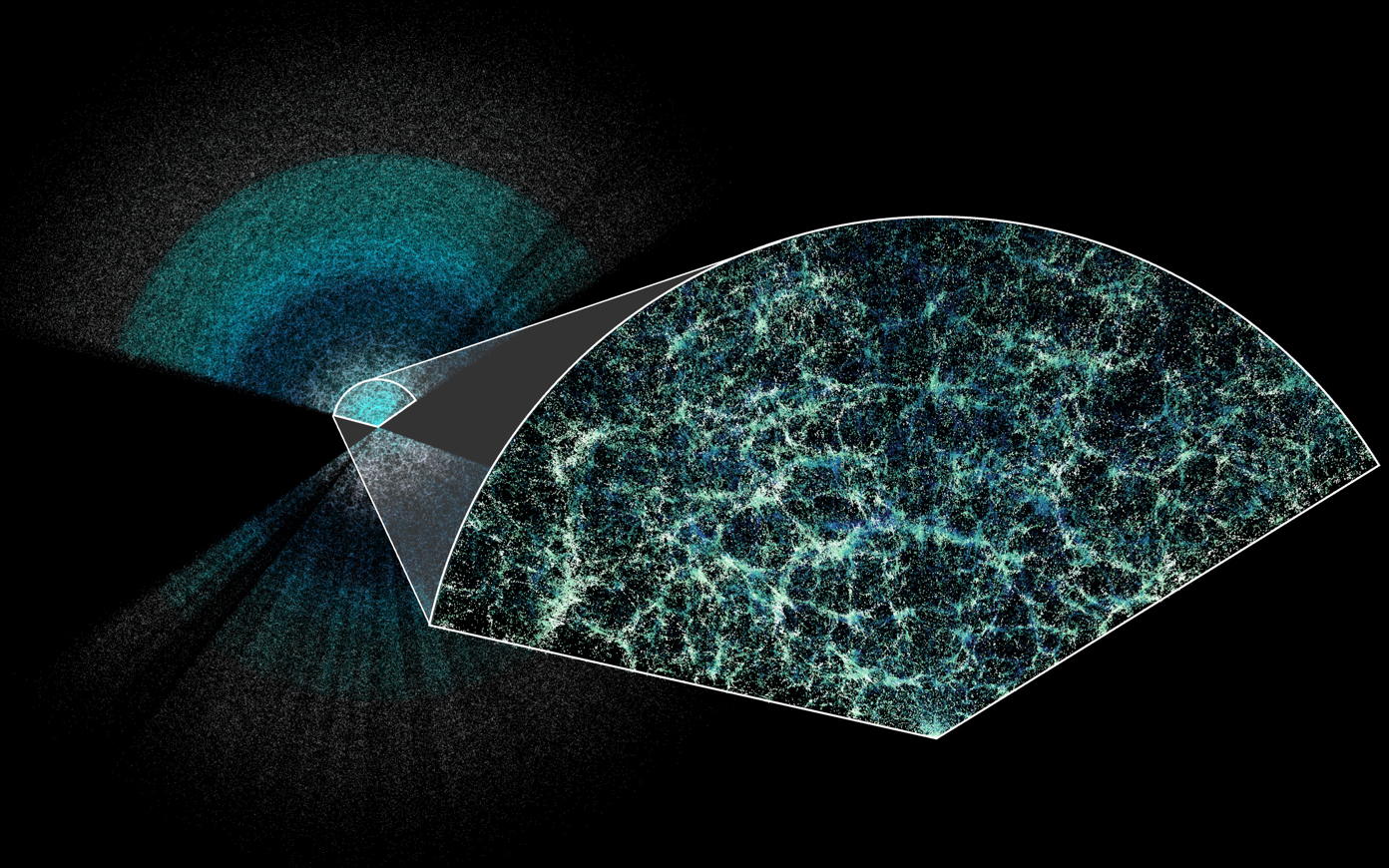
"With our much more detailed map, we can picture a larger area and now have significantly more detail in those farther away places and a much more detailed understanding of the structure in our patch of the universe."
As well as researchers from Swinburne, scientists at the University of Queensland developed crucial software for the project.
"The software models the size and shape of the Baryon Acoustic Oscillation (BAO) feature, a remnant of sound waves from the early universe," UQ's Dr Cullan Howlett said.
"The BAO's size acts as a standard ruler, and by comparing its size at different distances from earth to how big it should have been in the early universe, we can measure the expansion rate of the universe.
READ MORE: Call for hefty fines on supermarkets
"This information allows us to peer 11 billion years into the past and study how the universe has evolved over time and measure the effects of matter and dark energy."
Dr Turner said there were also plenty of cosmic surprises to come.
"As the 3D map evolves with more data, we anticipate our understanding of cosmic structures, dark energy, and the fundamental laws governing our universe will continue to refine," he said.
"But for now, we'll continue to explore this map in search of more universal dark secrets."
Family of eccentric artist stunned by what they found in his apartment
His secret artistic wonderland created in a rented unit has now been given protected status.
Mount Etna blows spectacular ‘smoke rings’ into the sky
Mount Etna in Sicily, the largest active volcano in Europe, has been blowing spectacular "smoke rings" into the sky since last week.
The "volcanic vortex rings", a rare phenomenon generated by the combination of rapid gas release and the vent shape, spewed out of a new crater that opened on Tuesday on Etna's summit.
Boris Behncke, volcanologist at the National Institute of Geophysics and Volcanology in Catania Boris, explained in a Facebook post that "no volcano on Earth produces as many vapour rings ('volcanic vortex rings') as Etna".
READ MORE: Sydney man arrested and charged for stalking rugby league legend
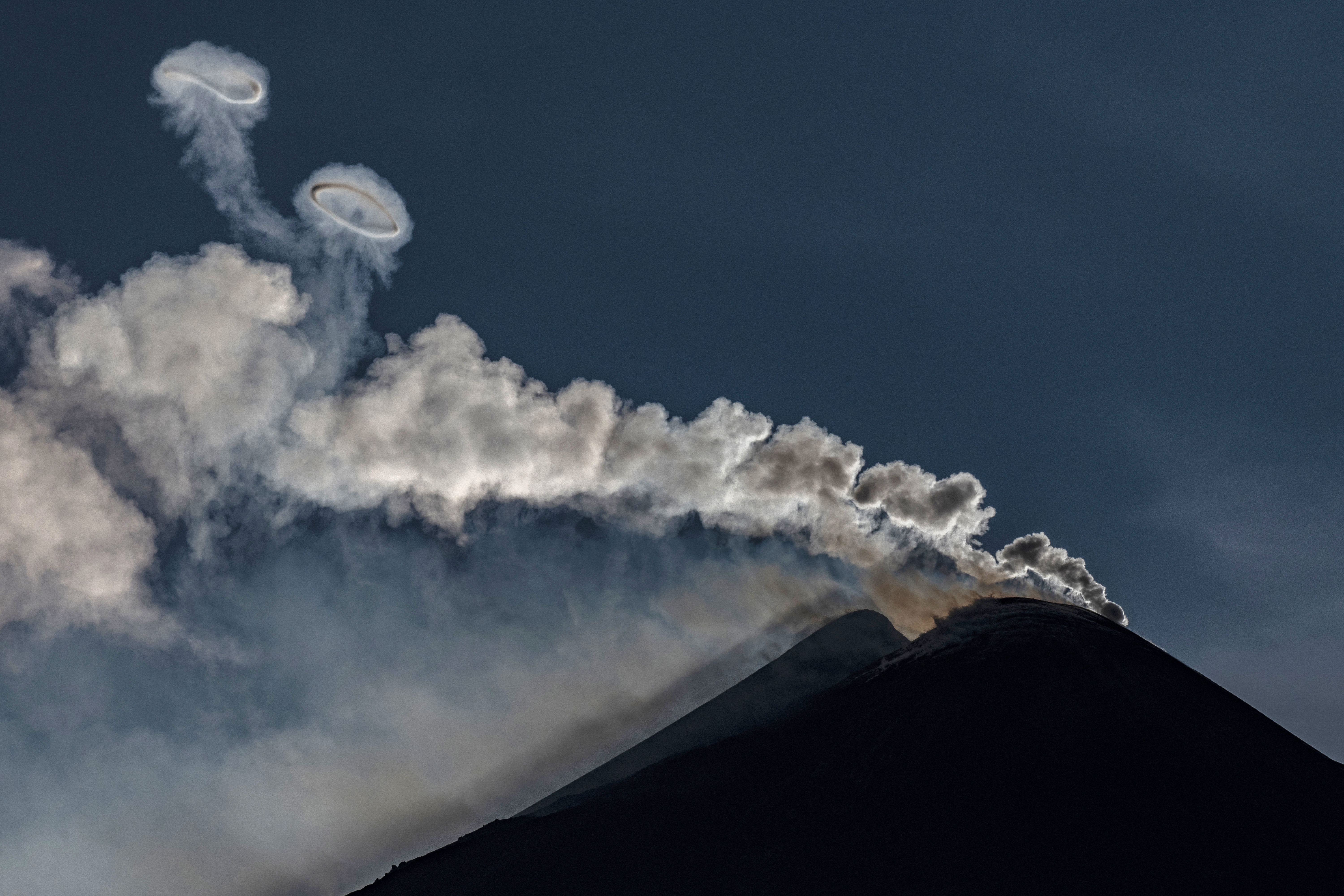
Etna is breaking all previous records, Behncke wrote.
"In the late afternoon of 2 April 2024, a small mouth opened on the north-eastern rim of the South-East Crater, producing puffs of glowing gas," he added.
READ MORE: New Zealand tightens visa rules in response to 'unsustainable' migration
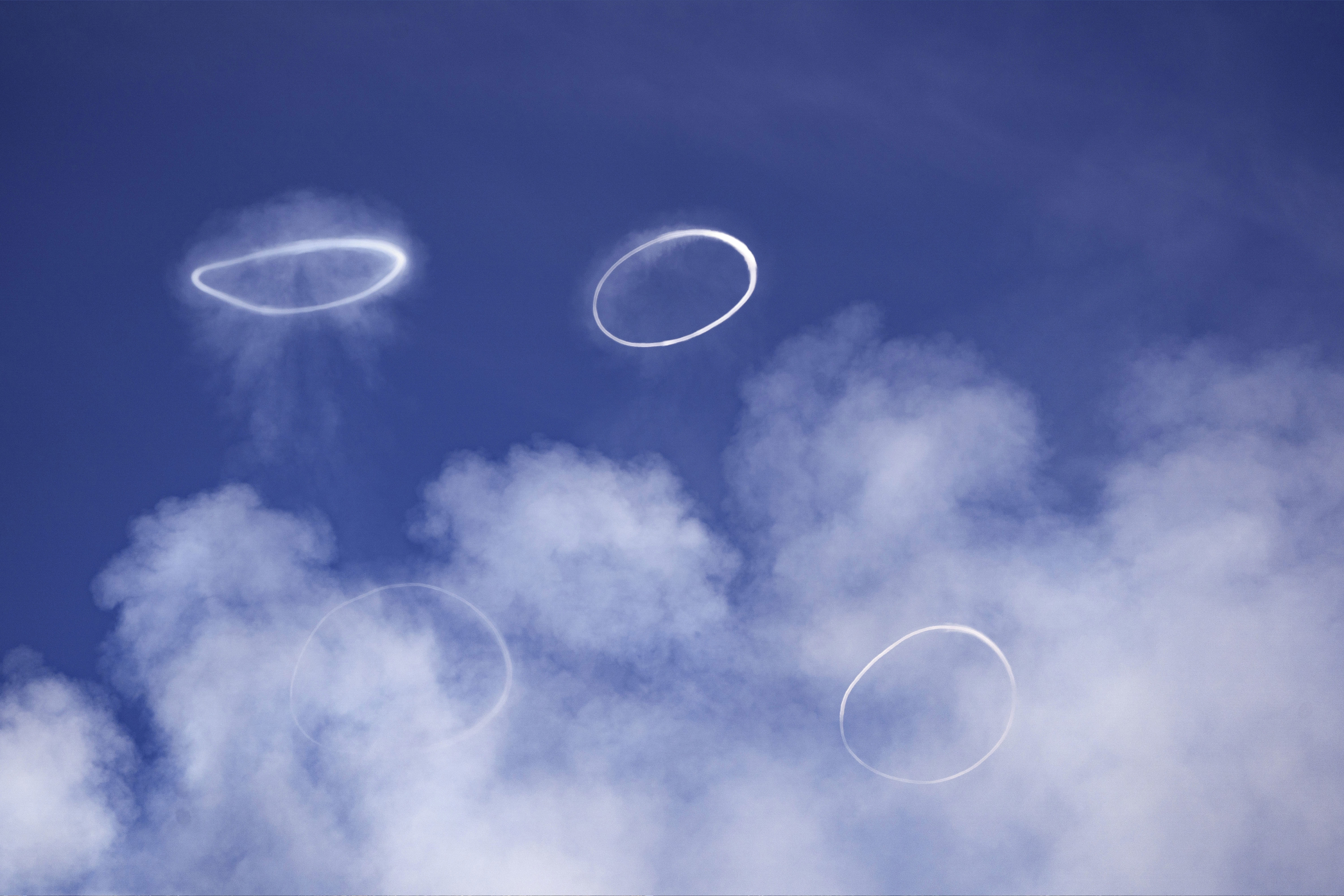
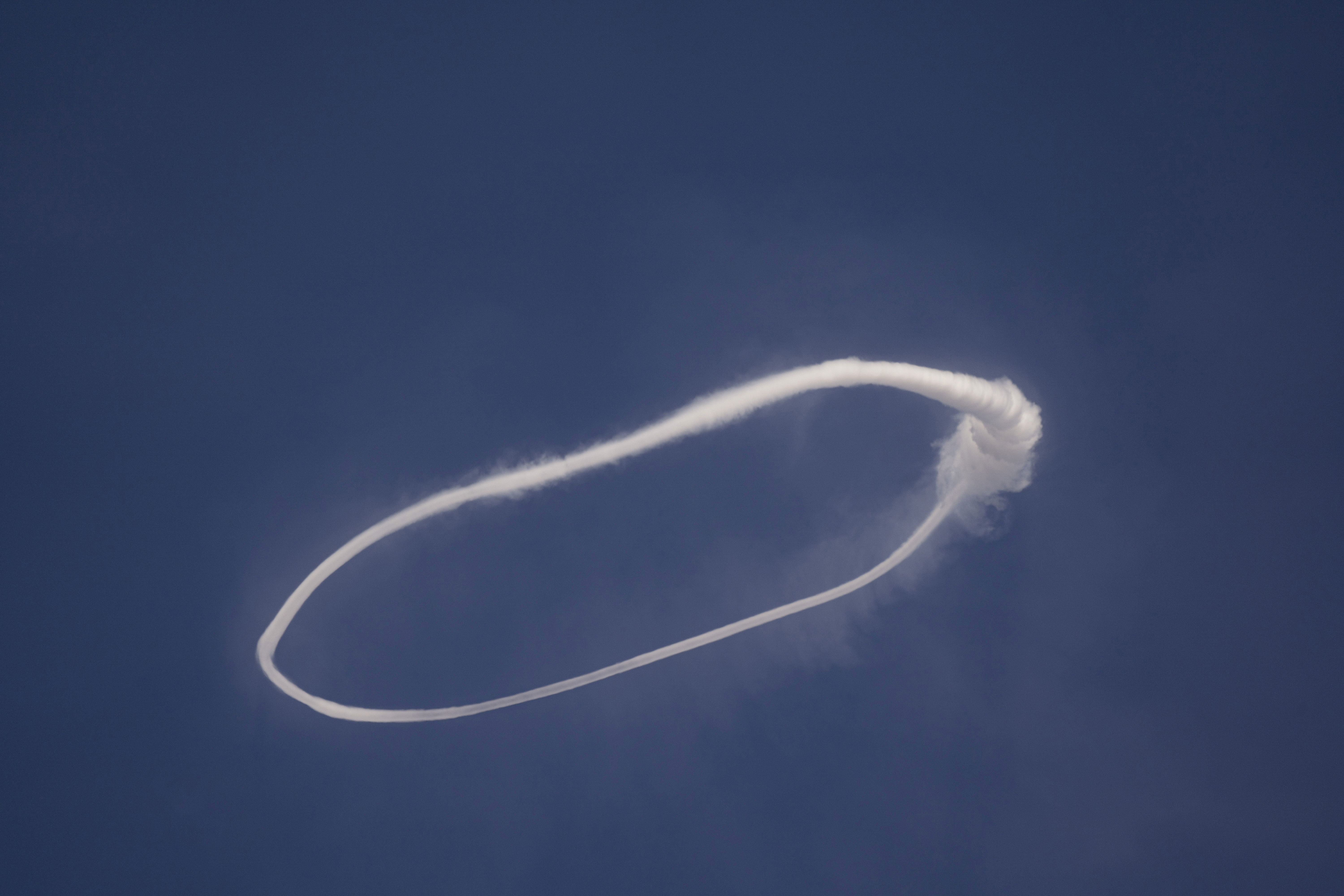
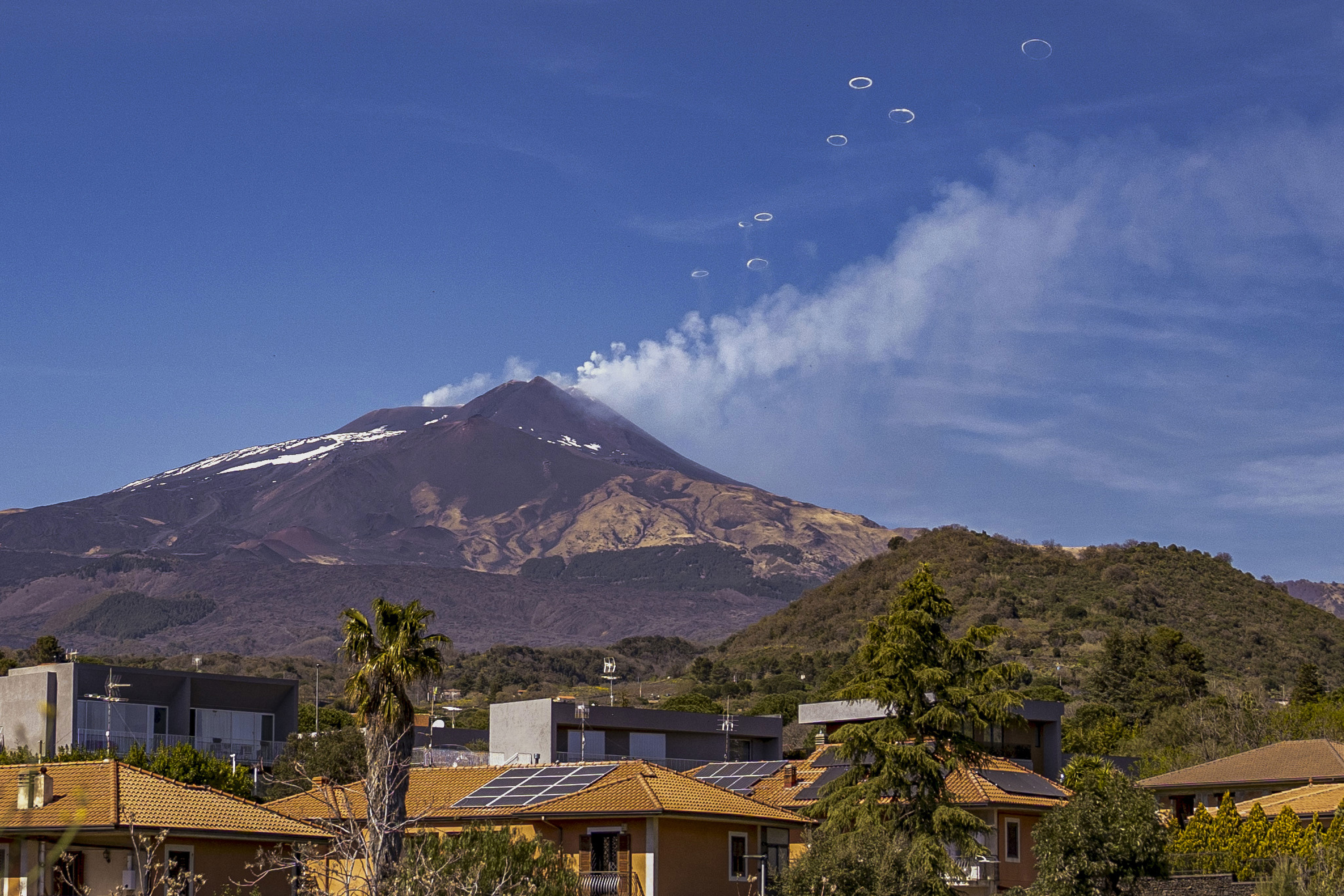
"By the next morning it was evident that these puffs were producing an impressive amount of steam rings, and this activity has been going on ever since, having already emitted hundreds if not thousands of these pretty rings."
There were no reports of particular disruptions in the surrounding villages or at Catania airport, which often closes in the case of major eruptions.
Mount Etna has been in an almost constant state of activity for the last decade.
In 2021, Etna emitted so much volcanic material over six months that it grew in height by almost 30 metres.
At 3357 metres, Etna is the highest peak in southern Italy.
The summit area consists of five main craters, and most eruptions take place from one of these craters.
While often violent and spectacular, the crater eruptions rarely threaten nearby human communities.