Tag Archives: oceania

Hamas posted video of mock attack weeks before Israel assault

Less than a month before Hamas fighters blew through Israel’s high-tech "Iron Wall" and launched an attack that would leave more than 1200 Israelis dead, they practised in a very public dress rehearsal.

A slickly produced two-minute propaganda video posted to social media by Hamas on September 12 shows fighters using explosives to blast through a replica of the border gate, sweep in on pickup trucks and then move building by building through a full-scale reconstruction of an Israeli town, firing automatic weapons at human-silhouetted paper targets.

The Islamic militant group’s live-fire exercise dubbed operation “Strong Pillar” also had militants in body armour and combat fatigues carrying out operations that included the destruction of mock-ups of the wall’s concrete towers and a communications antenna, just as they would do for real in the deadly attack last Saturday.

READ MORE: Defiant protesters take to Paris streets as France bans pro-Palestine marches

'Warnings should have been picked up'

While Israel’s highly regarded security and intelligence services were clearly caught flatfooted by Hamas’ ability to breach its Gaza defences, the group appears to have hidden its extensive preparations for the deadly assault in plain sight.

"There clearly were warnings and indications that should have been picked up," Bradley Bowman, a former US Army officer who is now senior director of the Centre on Military and Political Power at the Foundation for Defense of Democracies, a Washington research institute, said.

"Or maybe they were picked up, but they didn’t spark necessary preparations to prevent these horrific terrorist acts from happening."

The Associated Press reviewed and verified key details from dozens of videos Hamas released over the last year, primarily through the social media app Telegram.

Using satellite imagery, the AP matched the location of the mocked-up town to a patch of desert outside Al-Mawasi, a Palestinian town on the southern coast of the Gaza Strip.

A large sign in Hebrew and Arabic at the gate says "Horesh Yaron" – the name of a controversial Israeli settlement in the occupied Palestinian West Bank.

Bowman said there are indications that Hamas intentionally led Israeli officials to believe it was preparing to carry out raids in the West Bank, rather than Gaza.

It was also potentially significant that the exercise has been held annually since 2020 in December, but was moved up by nearly four months this year to coincide with the anniversary of Israel's 2005 withdrawal from Gaza.

READ MORE: 'Enemy of civilisation': US and Israel compare Hamas to ISIS

Hamas built mock Israeli base to practice attack

In a separate video posted to Telegram from last year's Strong Pillar exercise on December 28, Hamas fighters are shown storming what appears to be a mockup Israeli military base, complete with a full-size model of a tank with an Israeli flag flying from its turret.

The gunmen move through the cinderblock buildings, seizing other men playing the roles of Israeli soldiers as hostages.

Michael Milshtein, a retired Israeli colonel who previously led the military intelligence department overseeing the Palestinian territories, said he was aware of the Hamas videos, but he was still caught off guard by the ambition and scale of Saturday’s attack.

“We knew about the drones, we knew about booby traps, we knew about cyberattacks and the marine forces… The surprise was the coordination between all those systems,” Milshtein said.

The seeds of Israel’s failure to anticipate and stop Saturday’s attack go back at least a decade. Faced with recurring attacks from Hamas militants tunnelling under Israel’s border fence, Prime Minister Benjamin Netanyahu proposed a very concrete solution — build a bigger wall.

With financial help from US taxpayers, Israel completed construction of a $US1.1 billion project to fortify its existing defences along its 65-kilometre land border with Gaza in 2021.

The new, upgraded barrier includes a “smart fence” up to six metres high, festooned with cameras that can see in the dark, razor wire and seismic sensors capable of detecting the digging of tunnels more than 200 feet below.

Manned guard posts were replaced with concrete towers topped with remote-controlled machine guns.

“In our neighbourhood, we need to protect ourselves from wild beasts,” Netanyahu said in 2016, referring to Palestinians and neighbouring Arab states.

"At the end of the day as I see it, there will be a fence like this one surrounding Israel in its entirety.”

READ MORE: Palestinians rush to buy food as Israel readies possible invasion

Attacking on the cheap

Shortly after dawn on Saturday, Hamas fighters pushed through Netanyahu’s wall in a matter of minutes.

And they did it on the relative cheap, using explosive charges to blow holes in the barrier and then sending in bulldozers to widen the breaches as fighters streamed through on motorcycles and in pick-up trucks.

Cameras and communications gear were bombarded by off-the-shelf commercial drones adapted to drop hand grenades and mortar shells — a tactic borrowed directly from the battlefields of Ukraine.

Snipers took out Israel’s sophisticated roboguns by targeting their exposed ammunition boxes, causing them to explode.

Militants armed with assault rifles sailed over the Israeli defences slung under paragliders, providing Hamas airborne troops despite lacking aeroplanes.

Increasingly sophisticated homemade rockets, capable of striking Israel’s capital of Tel Aviv, substituted for a lack of heavy artillery.

Satellite images analysed by the AP show the massive extent of the damage done at the heavily fortified Erez border crossing between Gaza and Israel.

The images taken on Sunday and analysed on Tuesday showed gaping holes in three sections of the border wall, the largest more than 70 metres wide.

Once the wall was breached, Hamas fighters streamed through by the hundreds.

A video showed a lone Israeli battle tank rushing to the site of the attack, only to be attacked and quickly destroyed in a ball of flame.

Hamas then disabled radio towers and radar sites, likely impeding the ability of the Israeli commanders to see and understand the extent of the attack.

Hamas forces also struck a nearby army base near Zikim, engaging in an intense firefight with Israeli troops before overrunning the post.

Videos posted by Hamas show graphic scenes with dozens of dead Israeli soldiers.

They then fanned out across the countryside of Southern Israel, attacking kibbutzes and a music festival.

On the bodies of some of the Hamas militants killed during the invasion were detailed maps showing planned zones and routes of attack, according to images posted by Israeli first responders who recovered some of the corpses.

Israeli authorities announced Wednesday they had recovered the bodies of about 1500 Islamic fighters, though no details were provided about where they were found or how they died.

READ MORE: What we know about those kidnapped or killed in Israel-Hamas conflict

Did Hamas really act alone?

Military experts told the AP the attack showed a level of sophistication not previously exhibited by Hamas, likely suggesting they had external help.

“I just was impressed with Hamas’s ability to use basics and fundamentals to be able to penetrate the wall,” retired US Army Lieutenant Colonel Stephen Danner, a combat engineer trained to build and breach defences.

"They seemed to be able to find those weak spots and penetrate quickly and then exploit that breach.”

Ali Barakeh, a Beirut-based senior Hamas official, acknowledged that over the years the group had received supplies, financial support, military expertise and training from its allies abroad, including Iran and Hezbollah in Lebanon.

But he insisted the recent operation to breach Israel’s border defences was homegrown, with the exact date and time for the attack known only to a handful of commanders within Hamas.

Details of the operation were kept so tight that some Hamas fighters who took part in the assault Saturday believed they were heading to just another drill, showing up in street clothes rather than their uniforms, Barakeh said.

Last weekend’s devastating surprise attack has shaken political support for Netanyahu within Israel, who pushed ahead with spending big to build walls despite some within his own cabinet and military warning that it probably wouldn’t work.

In the days since Hamas struck, senior Israeli officials have largely deflected questions about the wall and the apparent intelligence failure.

Rear Admiral Daniel Hagari, the chief spokesman for the Israel Defence Forces, acknowledged the military owes the public an explanation, but said now is not the time.

“First, we fight, then we investigate,” he said.

In his push to build border walls, Netanyahu found an enthusiastic partner in then-president Donald Trump, who praised Netanyahu’s Iron Wall as a potential model for the expanded barrier he planned for the US Southern border with Mexico.

Under Trump, the US expanded a joint initiative with Israel started under the Obama Administration to develop technologies for detecting underground tunnels along the Gaza border defences.

Since 2016, Congress has appropriated $US320 million toward the project.

But even with all its high-tech gadgets, the Iron Wall was still largely just a physical barrier that could be breached, said Victor Tricaud, a senior analyst with the London-based consulting firm Control Risks.

“The fence, no matter how many sensors… no matter how deep the underground obstacles go, at the end of the day, it’s effectively a metal fence,” he said.

“Explosives, bulldozers can eventually get through it. What was remarkable was Hamas’s capability to keep all the preparations under wraps.”

Israel wants 1.1 million Gazans to move in next 24 hours

Israel's military directed the evacuation of northern Gaza, a region that is home to 1.1 million people, within 24 hours on Friday, a UN spokesman said, as Israel seeks to eradicate the Hamas militant group after its deadly attack.

The order could signal an impending ground offensive, though the Israeli military has not yet confirmed such a plan.

It said that while it was preparing, no decision has been made.

READ MORE: Tanks edge closer as threat of full-scale ground invasion looms

The order, delivered to the UN, comes as Israel presses an offensive against Hamas militants.

UN spokesman Stéphane Dujarric called the order “impossible” without “devastating humanitarian consequences.”

A UN official says that the United Nation is trying to get clarity from Israeli officials at the senior most political level.

"It's completely unprecedented, the official said, speaking on condition of anonymity because he was not authorised to speak publicly.

Panicked rumours of an evacuation had begun to spread in north Gaza, home to almost half the population of the territory, in the early morning on Friday.

READ MORE: Trump lashes out at Netanyahu, calls Hezbollah 'very smart'

A ground offensive in Gaza, which is ruled by Hamas and where the population is densely packed into a sliver of land only 40 kilometers long, would likely bring even higher casualties on both sides in brutal house-to-house fighting.

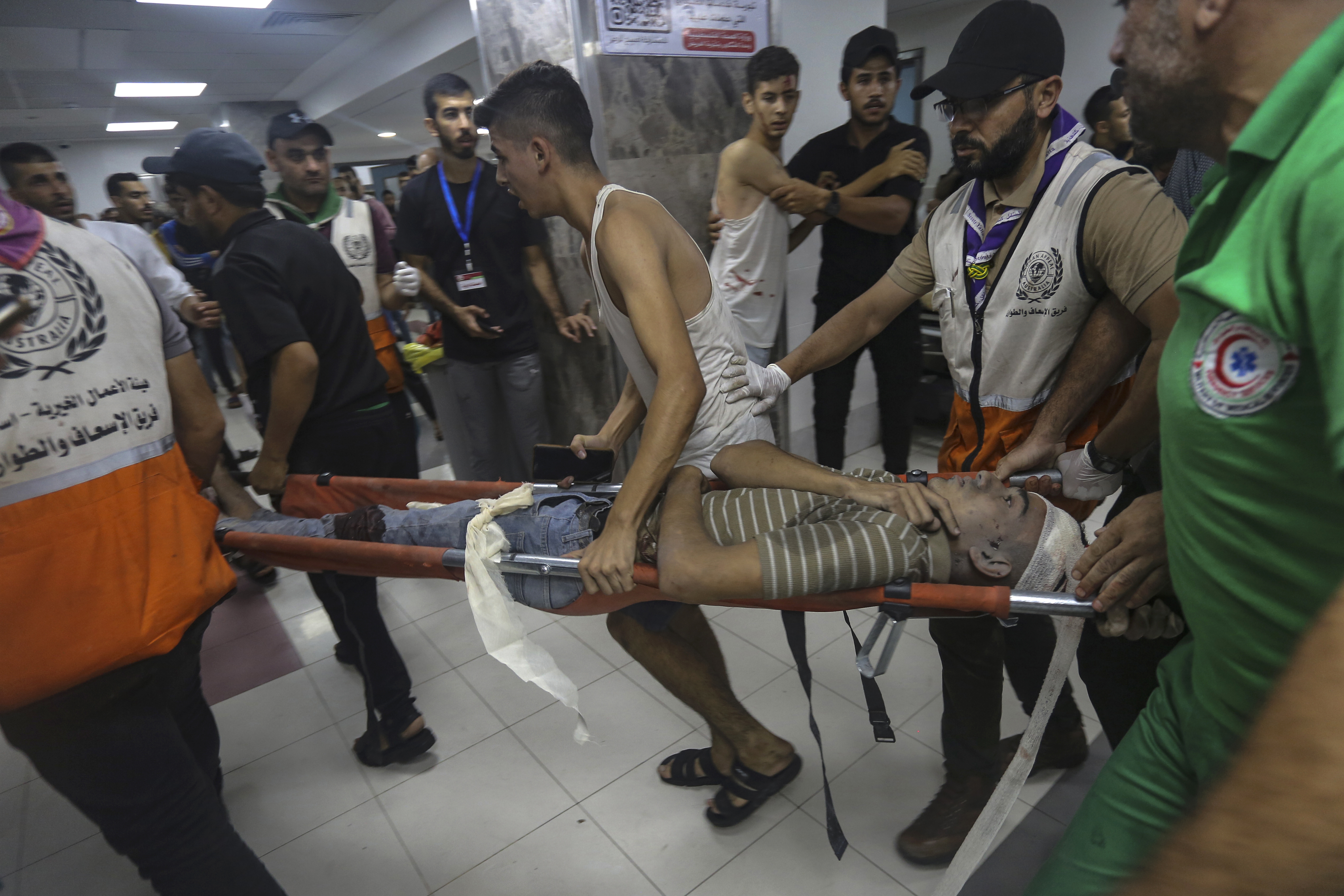
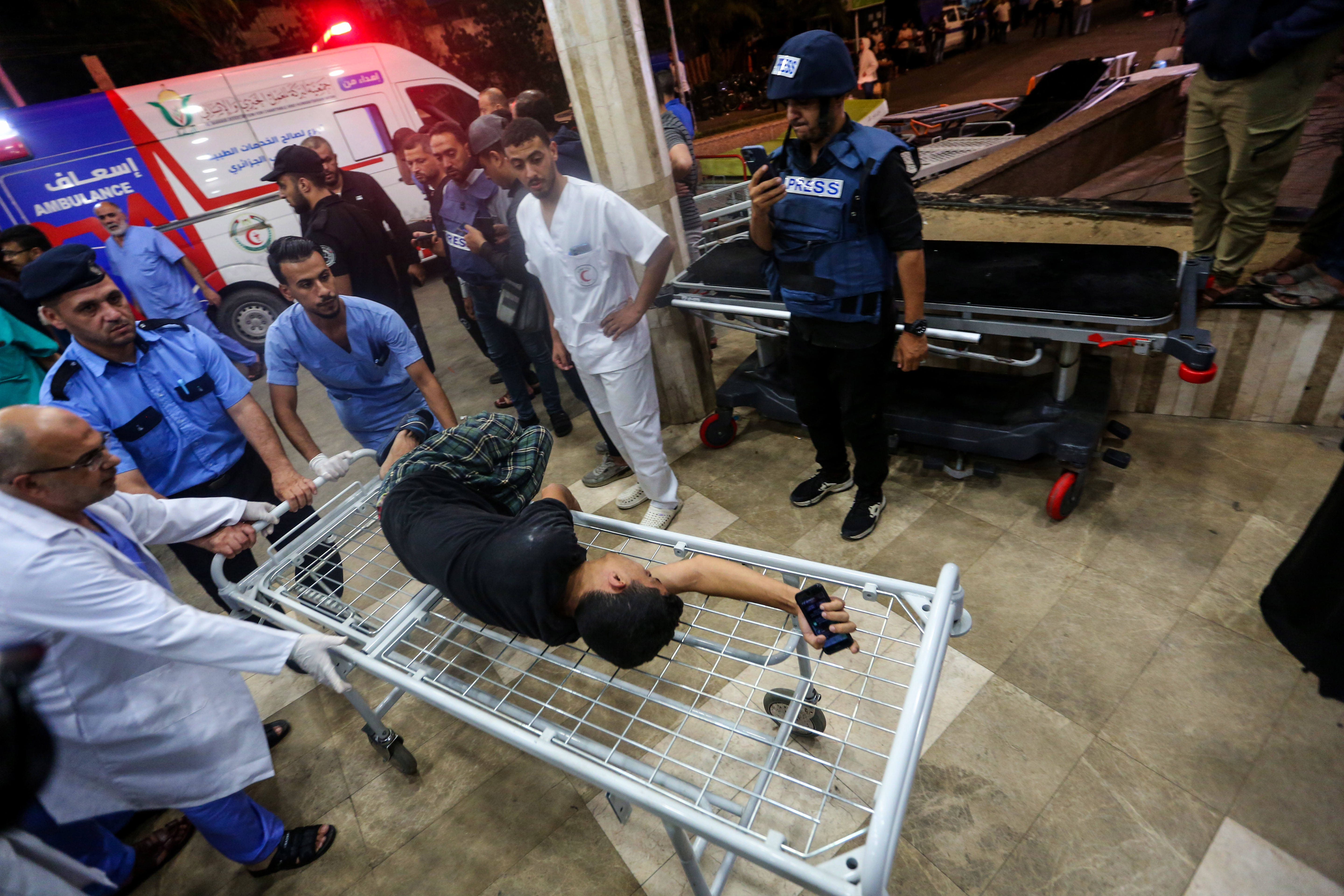
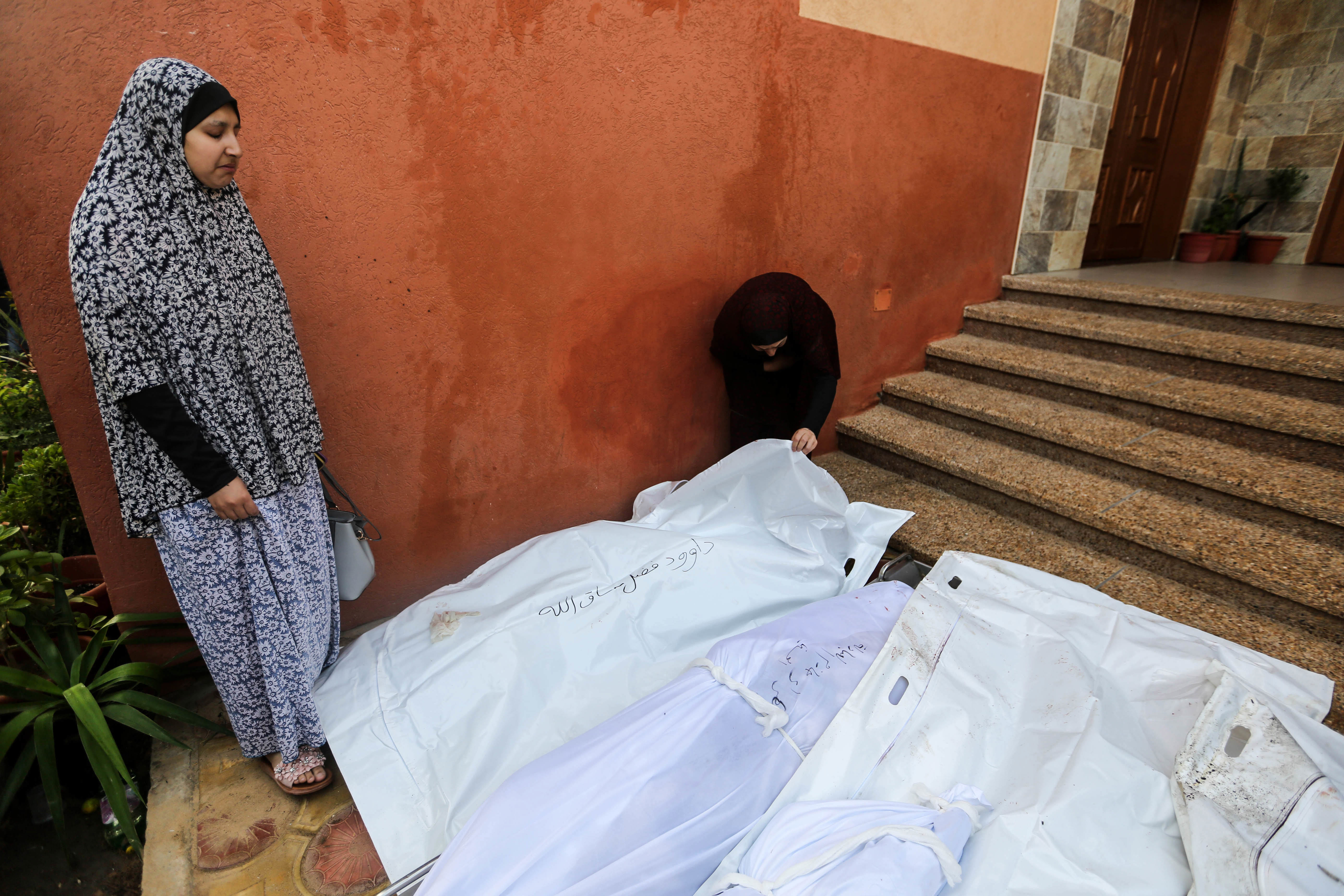
Hamas’ assault on Saturday and smaller attacks since have killed more than 1,300 people in Israel, including 247 soldiers — a toll unseen in Israel for decades — and the ensuing Israeli bombardment has killed more than 1,530 people in Gaza, according to authorities on both sides.

Israel says roughly 1,500 Hamas militants were killed inside Israel, and that hundreds of the dead in Gaza are Hamas members. Thousands have been wounded on both sides.

As Israel pounds Gaza from the air, Hamas militants have fired thousands of rockets into Israel.

Amid concerns that the fighting could spread in the region, Syrian state media reported that Israeli airstrikes on Thursday put two Syrian international airports out of service.

READ MORE: 'Enemy of civilisation': US and Israel compare Hamas to ISIS

Israeli Prime Minister Benjamin Netanyahu vowed to “crush” Hamas after the militants stormed into the country’s south on Saturday and massacred hundreds of people, including killings of children in their homes and young people at a music festival.

Amid grief and demands for vengeance among the Israeli public, the government is under intense pressure to topple Hamas rather than continuing to try to bottle it up in Gaza.

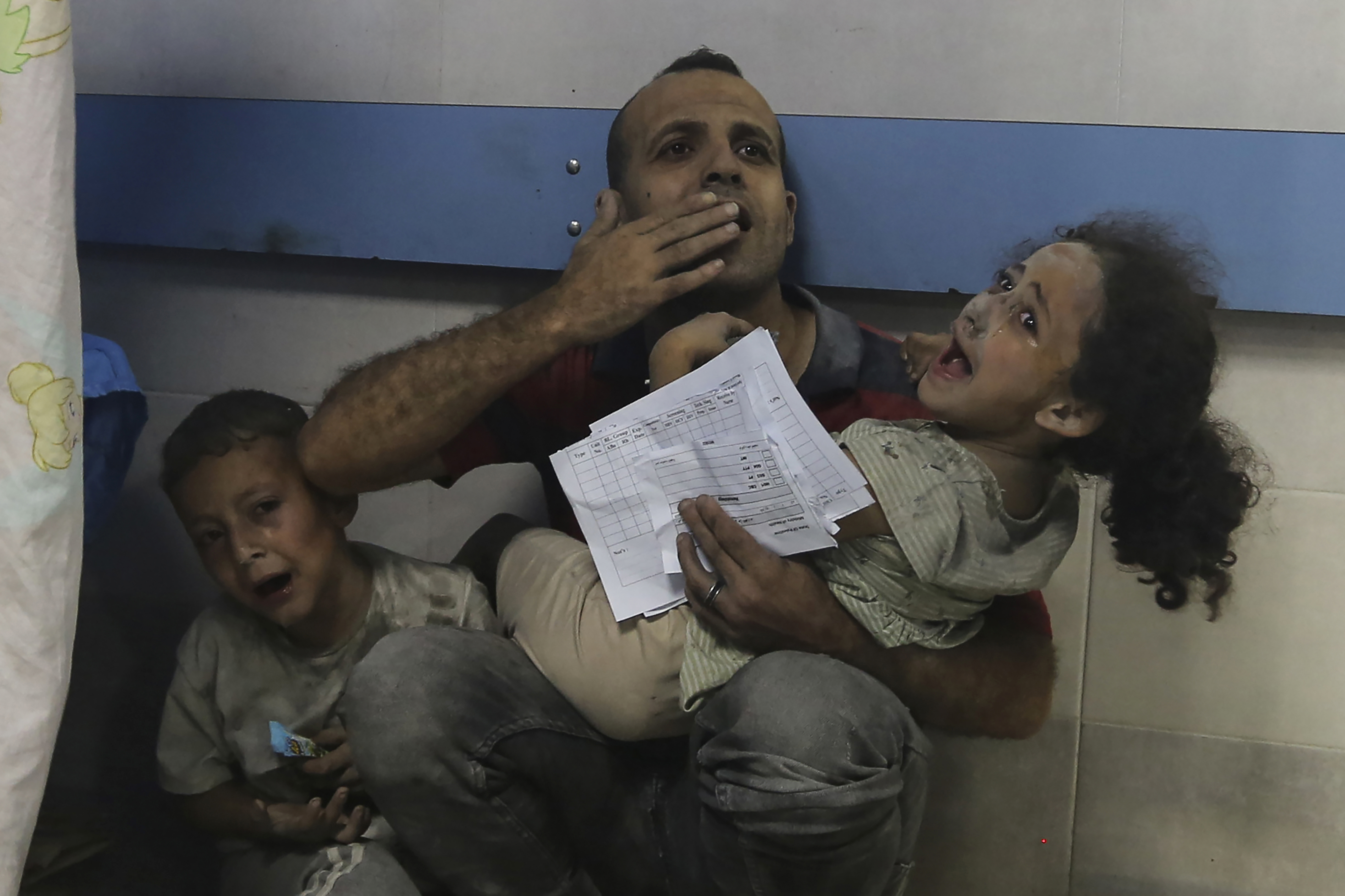
The number of people forced from their homes by Israel's airstrikes soared 25% in a day, reaching 423,000 out of a population of 2.3 million, the UN said Thursday. Most crowded into UN-run schools.

Earlier, the Israeli military pulverised the Gaza Strip with airstrikes, prepared for a possible ground invasion and said its complete siege of the territory — which has left Palestinians desperate for food, fuel and medicine — would remain in place until Hamas militants free some 150 hostages taken during their grisly weekend incursion.

READ MORE: Palestinians rush to buy food as Israel readies possible invasion

A visit by Secretary of State Antony Blinken, along with shipments of US weapons, offered a powerful green light to Israel to drive ahead with its retaliation in Gaza after Hamas' deadly attack on civilians and soldiers, even as international aid groups warned of a worsening humanitarian crisis.

Israel has halted deliveries of basic necessities and electricity to Gaza's 2.3 million people and prevented entry of supplies from Egypt.

"Not a single electricity switch will be flipped on, not a single faucet will be turned on and not a single fuel truck will enter until the Israeli hostages are returned home," Israeli Energy Minister Israel Katz said on social media.

Lt. Col. Richard Hecht, an Israeli military spokesman, told reporters Thursday that forces "are preparing for a ground manoeuvre" should political leaders order one.

Vanessa Amorosi denies house pact was made with her mum

Singer-songwriter Vanessa Amorosi has emphatically denied she ever agreed to hand over full ownership of a Melbourne home to her mother.

The Narre Warren property is central to the 42-year-old's legal case against her mother Joyleen Robinson, which has gone to trial in the Victorian Supreme Court.

Amorosi claims the $650,000 used to purchase the home in 2001 came from a trust account set up to receive all of her earnings as a singer-songwriter.

READ MORE: Perth-bound passenger plane forced back to Singapore after bomb threat, Australian man arrested

Vanessa Amorosi leaves the Supreme Court of Victoria in Melbourne, Thursday, October 12, 2023. Singer Vanessa Amorosi is suing her mother for ownership of two properties bought as a result of her success. (AAP Image/Aaron Francis) NO ARCHIVING

She is seeking full ownership of the property, which currently has her and her mother listed as joint-owners.

Robinson claims in early 2001, Amorosi agreed to hand over full ownership of the Narre Warren home if her mother paid her $650,000 when she asked.

The mother said she gave Amorosi $710,000 for the loan to her current American home and therefore the ownership of the Narre Warren property should only be under her name.

READ MORE: Hundreds of public servant roles to be cut in Victoria

During cross-examination, Amorosi repeatedly denied any agreement was made.

But Robinson's barrister Daniel Harrison suggested to Amorosi she did not have a good memory and the agreement did take place.

He also put to her that she bought the Narre Warren home for her mother and she never considered it her own property.

Amorosi denied that assertion, saying it was the first home she bought for herself and she always thought of it as hers.

"My mum wanted that property from day one, no matter what," Amorosi told the court.

"She made it very clear it was her dream property."

READ MORE: How Israel's Iron Dome works

Vanessa Amorosi in the video clip for her hit song 'Absolutely Everybody'.

Harrison also suggested Amorosi had launched the legal proceedings because she was in a difficult financial situation, which Amorosi denied.

The barrister told Justice Steven Moore that Amorosi's recollections were unreliable, not from malice but simply because she had a poor memory.

Harrison said it ultimately came down to two people with very different accounts of what did or didn't happen.

Moore should see that Robinson's recollection was the only sensible one, Harrison said.

Robinson is due to give evidence in the trial on Friday afternoon.