Hail, tornadoes, flash flooding and strong winds are all possible.
Tag Archives: oceania
Emily's parents thought she was car sick. The reality was tragic
Heather So thought her daughter Emily was suffering from a bout of car sickness when she complained about feeling unwell.
But when she took her four-year-old for a scan, it revealed she had a deadly form of cancer.
Emily was diagnosed with a fatal paediatric brain cancer called diffuse intrinsic pontine glioma (DIPG).
READ MORE: Nine-year-old started 'seeing double' before life-changing diagnosis
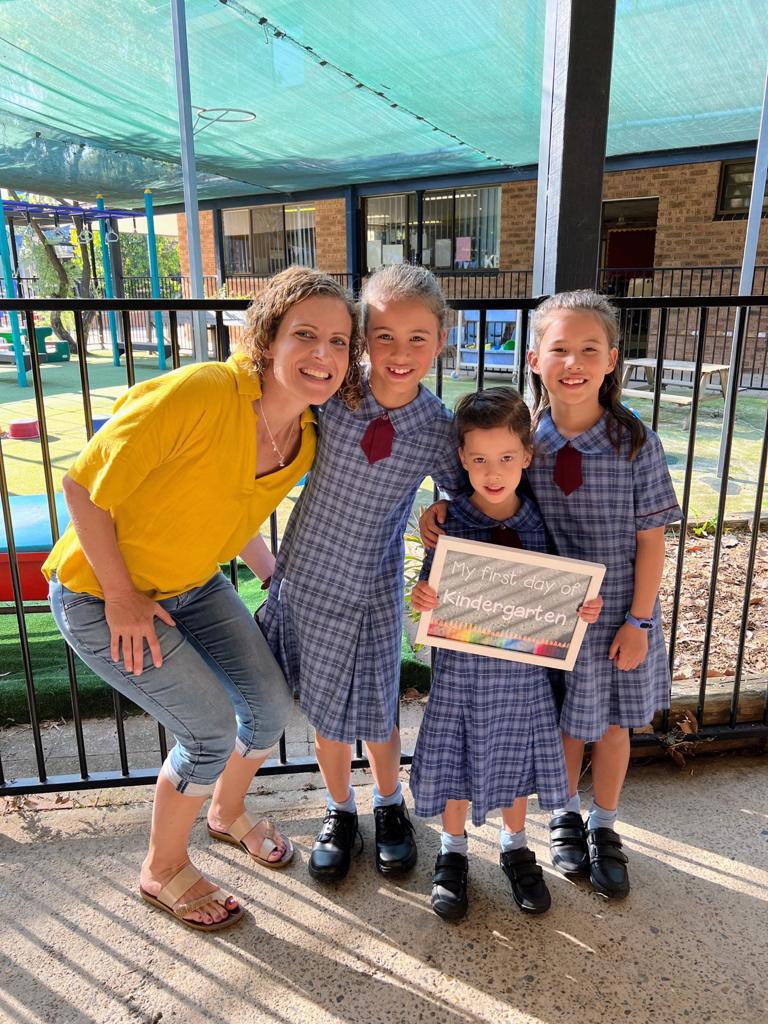
Her father, BJ, a doctor, said the period "felt like a nightmare slowly unfolding in front of us".
"At the start, the tumour robbed Emily of her smile, which was heartbreaking to see," he said.
"Eventually, it also took her ability to walk, speak, hear and even swallow."
Life started to change for their "funny, quirky, gentle and brave little girl".
The preschooler endured six weeks of daily radiotherapy, with each session requiring a general anesthetic to help her lie still for the procedure.
"Emily endured the only available treatment for children with DIPG – one round of palliative radiotherapy," Mrs So said.
"And then we waited, enjoying what time we could making special memories together."
READ MORE: New trial aims to give fresh hope to children with fatal brain cancer
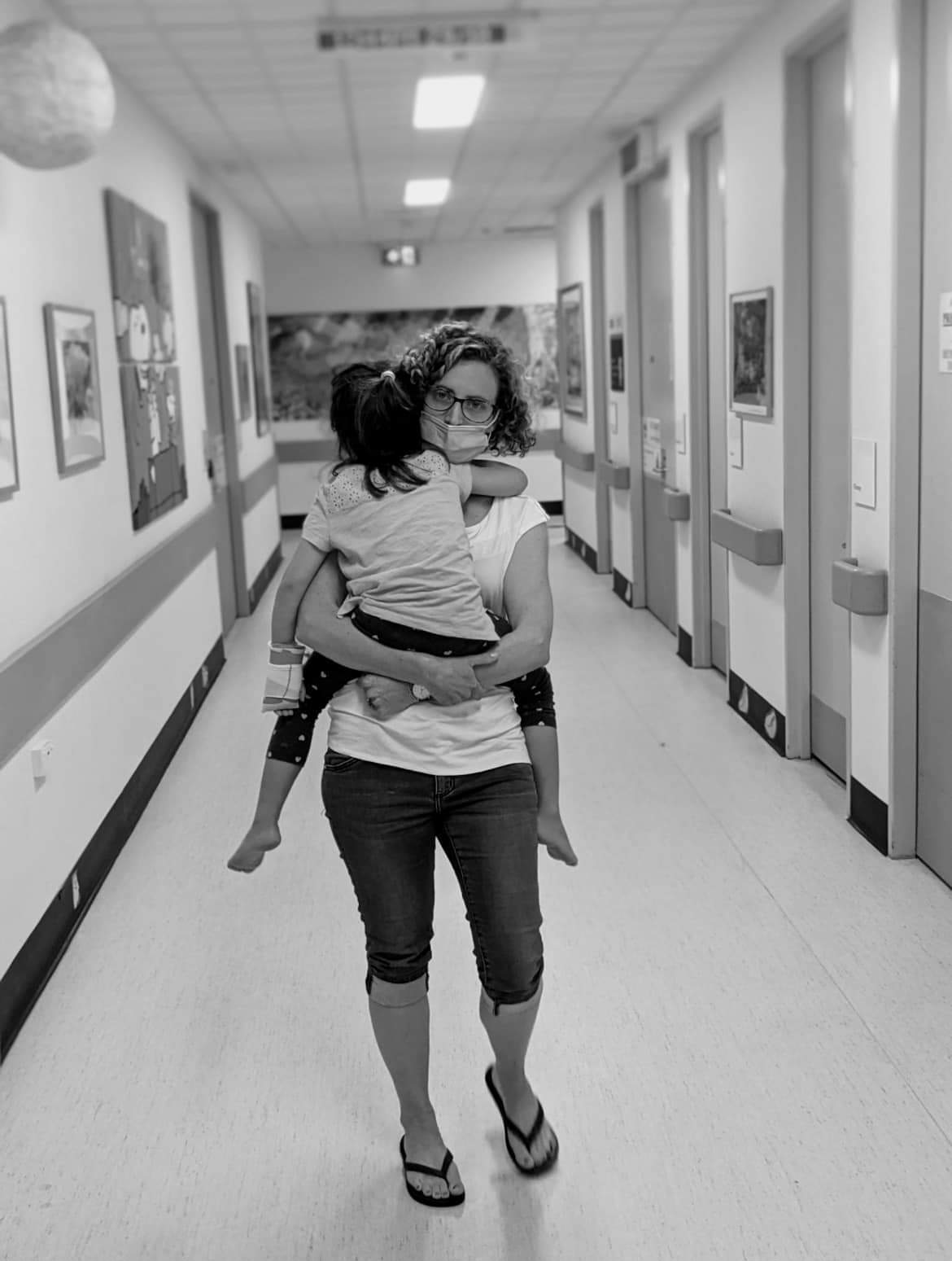
During Emily's final months, the family tried to treasure each moment with their daughter.
"One of Emily's bucket list items was to visit a lighthouse and go to the top, which we were able to make happen," Mrs So said.
Seven months after her diagnosis, Emily died at home at the age of five.
She left behind her parents, her 10-year-old sister Caitlin and her nine-year-old sister Annabelle.
"Words cannot fully describe the pain that comes with losing your own child," Dr So said.
"It is a deep and harrowing grief that no parent should ever have to endure.
"Everywhere she went, she took her favourite toy elephant, Ellie, with her.
"And to this day, we still carry Ellie with us on every family holiday in memory of Emily."
READ MORE: Nine-year-old started 'seeing double' before life-changing diagnosis
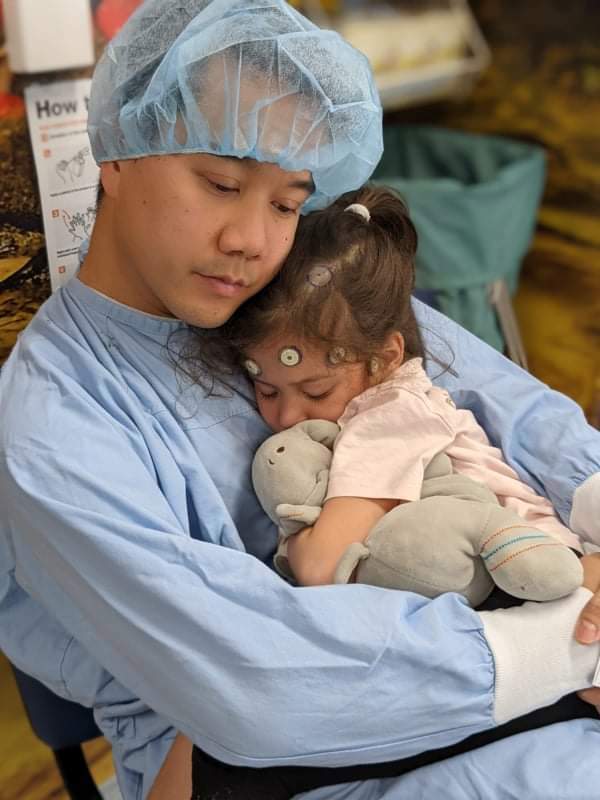
DIPG is 100 per cent fatal and funding for research into the disease is limited, often leaving families to fundraise themselves.
The couple is now doing everything in their power to make sure no parent ever has to endure a devastating loss like their own.
In honour of Emily, 11 cyclists will travel almost 500 kilometres over six days from Mount Kosciuszko to Wollongong.
All funds raised will go towards an Australian-first clinical trial called Levi's Catch, which aims to provide the first effective treatment for children with the disease.
READ MORE: Boy's legacy bringing hope to kids battling rare brain tumour

The research, launched for the first time outside of the US, is being conducted by doctors at Sydney Children's Hospital in Randwick and will use a child's own immune system to specifically target DIPG.
The process involves CAR-T cells – a type of white blood cell – being taken out of the patient's body in a laboratory, then genetically engineering them to target and attack the deadly cancer.
The immune cells are then infused back into the child, scanning and destroying the harmful cancer cells.
The family has also met with NSW Health Minister Ryan Park to discuss the lack of treatment options available and the potential support the government could provide.
"Despite DIPG being such a deadly and aggressive tumour, the medical treatment for children hasn't changed in more than half a century – since before man walked on the moon," Mrs So said.
"We can't change what's happened to our family, but we can do everything we can to make a difference to other children diagnosed with DIPG."
New South Wales parents Charles and Bridget Poolman are also raising awareness of the disease after they lost their nine-year-old daughter Evie in October 2020.
"We can't just accept that when you're diagnosed with this you're going to die," the couple told Sydney radio station 2GB.
"We need to create solutions and options."
‘Like snow’: Hailstorm on State Highway 33 in Okere Falls stops traffic in ‘intense’ conditions
A sunny day quickly turned into a driving hailstorm in the Bay of Plenty.
Hawke’s Bay First Division Lotto winner wants compensation after $125,000-winning ticket sat at supermarket for three weeks
Shirley says those responsible for the delay should pay for her lost earnings and anxiety.
Cyclone Gabrielle: ‘Hero’ chef Neela Neela makes last free meals before break
Neela Neela will take a well-earned holiday, but doesn’t plan to stop helping others.
Covid-19: Still no sign of ‘Pirola’ surge in NZ, latest monitoring shows
There’s still no sign a new mutant coronavirus subvariant is making a splash in NZ.
Election 2023: Winston Peters rails against National Party ads and news media at Masterton campaign meeting
NZ First leader also mocked the campaign coverage of Labour and National.
Hawke’s Bay Magpies clinch local derby for semifinal berth
Magpies win in Bay of Plenty.
'Dark 24 hours': Aussie actor caught up violence in Israel
Actor Hugh Sheridan is among the many Australian residents who have been forced to take shelter after Gaza's militant Hamas rulers attacked Israel by air, land and sea.
The Aussie actor took to social media to share that he was seeking refuge on a stairwell during the "brutal" attack.
Prime Minister Anthony Albanese confirmed this morning no Australians had been injured or killed in the unfolding situation, but noted that could change as the situation unfolds.
READ MORE: Death toll rises after Hamas launches surprise air and ground attack from Gaza
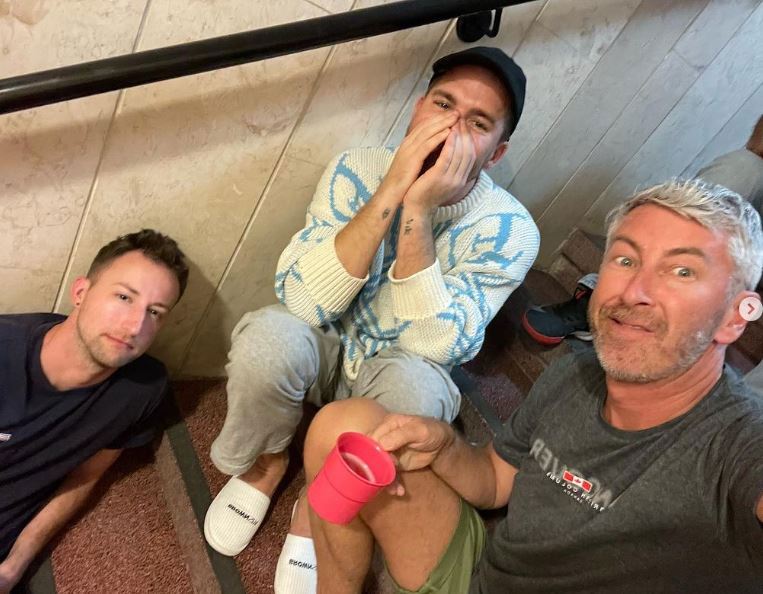
At least 300 people have died and thousands of others are wounded in Israel, according to officials after fighting carried through the day.
Sheridan, who is staying in Tel Aviv, said everyone had been living life completely as normal just hours before the first attack.
"Life (was) completely normal in Israel. It was a big Jewish holiday yesterday, one week after new year," he said via Instagram.
"I met a family who had 150 fly in for their wedding tomorrow. We were at a BBQ yesterday with young people who at this very minute are on their way to Gaza to fight.
"A few hours later, this country is at war. Their lives have completely changed in an instant."
Sheridan said it was "unbelievable how quickly" the attack unfolded.
"My heart breaks. I'm in the stairwell so safe for now," he said.
READ MORE: 'No hope for us': Israelis shaken after shocking Hamas attack
https://twitter.com/AlboMP/status/1710737658362876219
Albanese has described the surprise attack by the militant group as an "abhorrent attack on Israel".
"This is indiscriminate. Civilians being targeted, killed and murdered, and as well, many of them being taken as hostages," he told ABC's Insiders program.
"Of course, people are worried about escalation, but Israel has a right to defend itself and it will be doing so.
"This has been a very dark 24 hours."
Smart Traveller advises against any travel to Gaza, and for people to reconsider travel near the Israel border.
"There's ongoing armed conflict in Southern Israel and Gaza. Rockets have been fired at Israel from Gaza," the alert says.
"There have been separate terror attacks on civilians."
5 things to know about the Hamas attack on Israel
Without warning on Saturday, Gaza's militant Hamas rulers attacked Israel by air, land and sea.
Millions of Israelis in the country's south awoke to the searing sound of incoming rockets and the inevitable thud of impact.
Air raid sirens wailed as far north as Tel Aviv. Israel's anti-rocket interceptors thundered in Jerusalem.
In an unprecedented escalation, armed Hamas fighters blew up parts of Israel's highly fortified separation fence and strode into Israeli communities along the Gaza frontier, terrorising residents and trading fire with Israeli soldiers.
READ MORE: Hundreds dead, hostages held after deadly Hamas attack
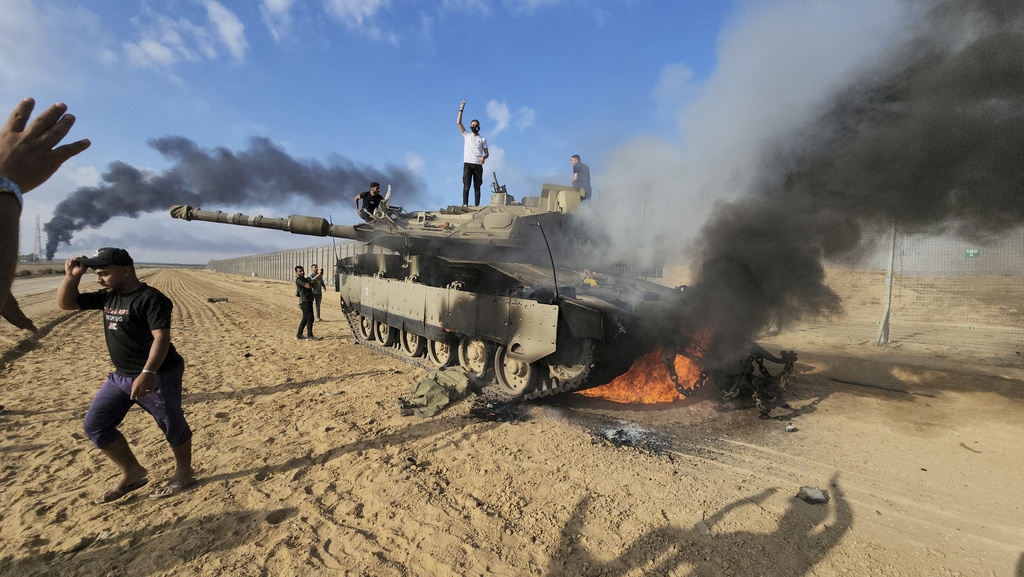
Israeli Prime Minister Benjamin Netanyahu and his far-right allies were scrambling to respond to the rapidly changing events.
As the day wore on, the casualties quickly mounted. Rescue Service Zaka, an Israeli group, said at least 200 people died in southern Israel and an additional 1100 people were wounded.
At least 198 people in the Gaza Strip were killed and at least 1610 wounded amid Israel's retaliation.
Here are some key takeaways from the multi-pronged attack that has suddenly plunged Israel and Gaza into battle.
READ MORE: Biden pledges to ensure 'Israel has what it needs' after attack
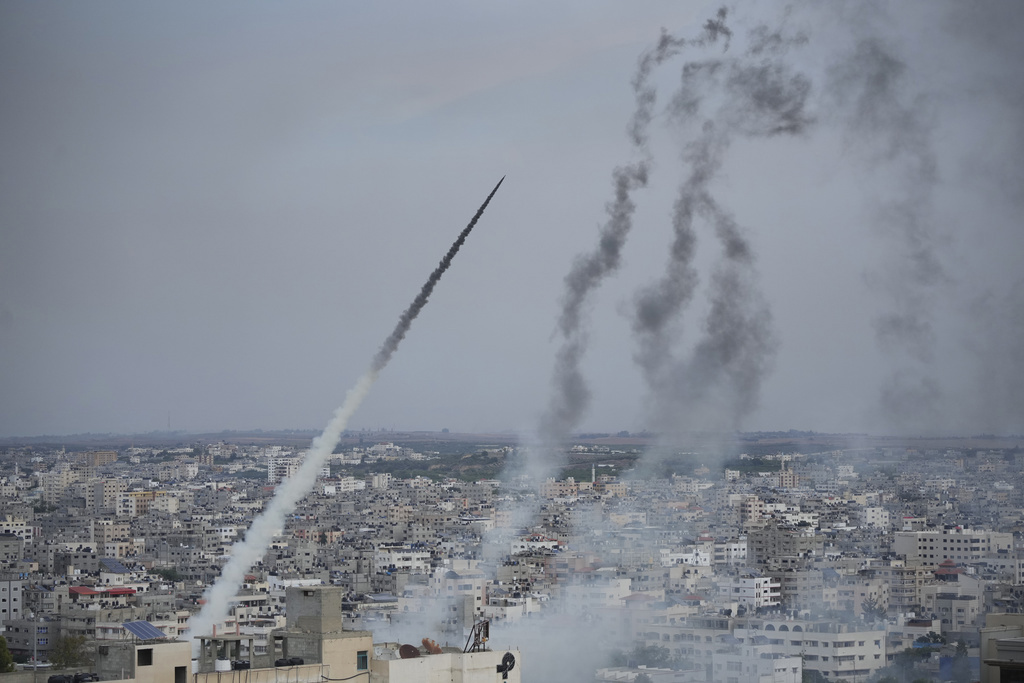
Did Israelis detect the attack ahead of time?
The shock that Israelis felt on Saturday morning — on Simchat Torah, one of the most joyous days of the Jewish calendar — recalled the surprise of the 1973 Mideast war.
Practically 50 years earlier to the day, a full-scale Egyptian-Syrian attack on a Jewish holiday quickly turned into a disaster for an unprepared Israeli military.
Then, as now, Israelis had assumed that their intelligence services would be able to alert the army to any major attack or invasion well in advance. That colossal failure still haunts the legacy of then-Prime Minister Golda Meir and helped bring down the lengthy rule of the once-dominant Labor Party.
Now, the question of how the militants were able to stage such a huge and coordinated attack — which has already killed more Israelis than any single assault since the second Palestinian uprising two decades ago — without triggering Israeli intelligence concerns has already presented a major challenge to Netanyahu's ultranationalist government.
The government's supporters had expected Netanyahu and hard-line ministers with a history of anti-Arab rhetoric like National Security Minister Itamar Ben-Gvir to take a particularly belligerent stance against the Palestinians and respond more forcefully to threats from militants in Gaza.
As political analysts lambast Netanyahu over the failure, and the casualty count climbs, Netanyahu risks losing control of both his government and the country.
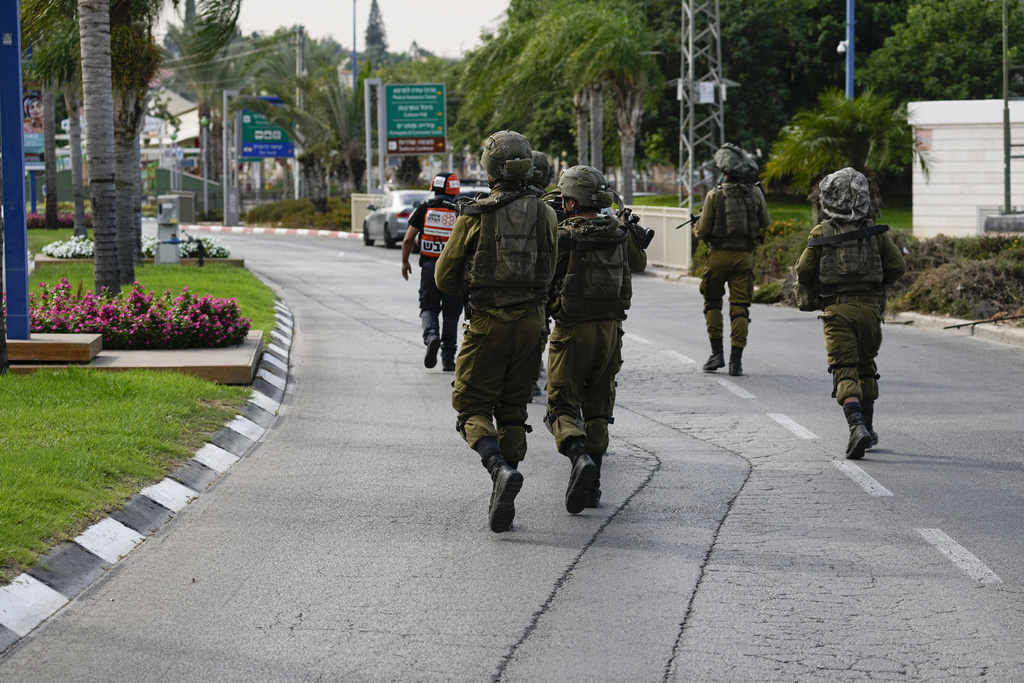
How was Hamas able to carry out the assault?
Hamas claimed its fighters took several Israelis captive in the enclave, releasing gruesome videos of militants dragging bloodied soldiers across the ground and standing over dead bodies, some of them stripped to their underwear. It said senior Israeli military officers were among the captives.
The videos could not immediately be verified but matched geographic features of the area. Fears that Israelis had been kidnapped evoked the 2006 capture of soldier Gilad Shalit, whom Hamas-linked militants seized in a cross-border raid. Hamas held Shalit for five years until he was exchanged for over 1000 Palestinian prisoners held by Israel.
In a dramatic escalation unseen in decades, Hamas also sent paragliders flying into Israel, the Israeli military said. The brazen attack recalled a famous assault in the late 1980s when Palestinian militants crossed from Lebanon into northern Israel on hang-gliders and killed six Israeli soldiers.
The Israeli army belatedly confirmed that soldiers and civilians were taken hostage in Gaza, but refused to provide further details.
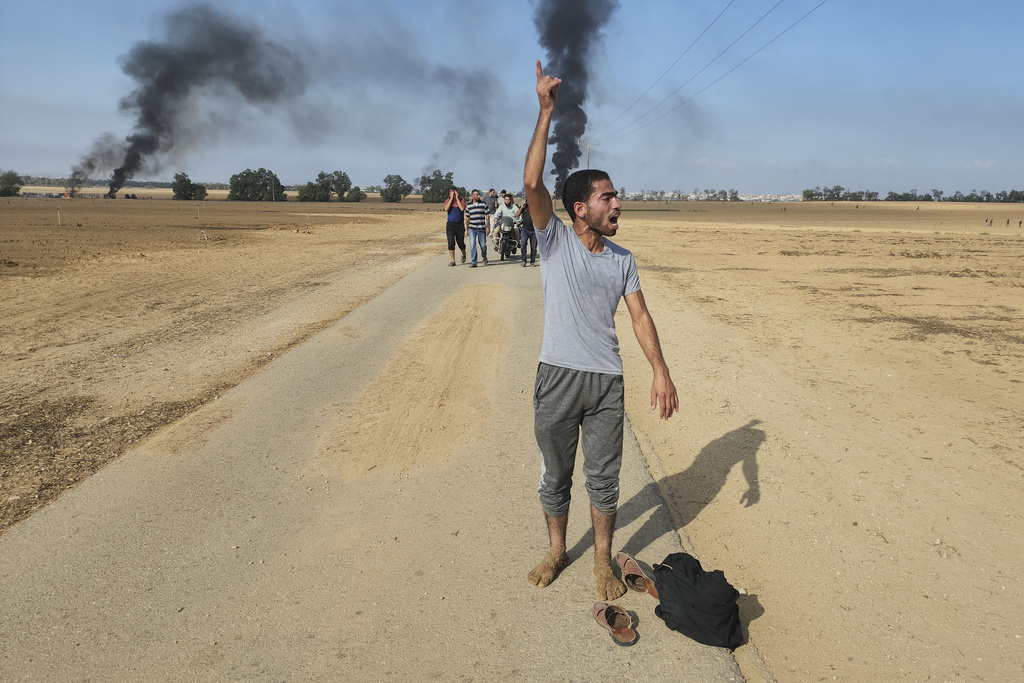
What prompted the attack?
Hamas officials cited long-simmering sources of tension between Israel and the Palestinians, including the dispute around the sensitive Al-Aqsa Mosque compound, which is sacred to both Muslims and Jews and remains at the emotional heart of the Israeli-Palestinian conflict.
Competing claims over the site, known to Jews as the Temple Mount, have spilled into violence before, including a bloody 11-day war between Israel and Hamas in 2021.
In recent years, Israeli religious nationalists — such as Ben-Gvir, the national security minister — have increased their visits to the compound. Last week, during the Jewish harvest festival of Sukkot, hundreds of ultra-Orthodox Jews and Israeli activists visited the site, prompting condemnation from Hamas and accusations that Jews were praying there in violation of the status quo agreement.
Hamas statements have also cited the expansion of Jewish settlements on lands that the Palestinians claim for a future state and Ben-Gvir's efforts to toughen restrictions on Palestinian prisoners in Israeli jails.
More recently, tensions have escalated with violent Palestinian protests along the Gaza frontier. In negotiations with Qatar, Egypt and the United Nations, Hamas has pushed for Israeli concessions that could loosen the 17-year blockade on the enclave and help halt a worsening financial crisis that has sharpened public criticism of its rule.
Some political analysts have linked Hamas' attack to current U.S.-brokered talks on normalsation of ties between Israel and Saudi Arabia. So far, reports of possible concessions to Palestinians in the negotiations have involved Palestinians in the occupied West Bank, not Gaza.
"We have always said that normalisation will not achieve security, stability, or calm," Bassem Naim, a senior Hamas official, told the AP.
READ MORE: 'No hope for us': Israelis shaken after shocking Hamas attack
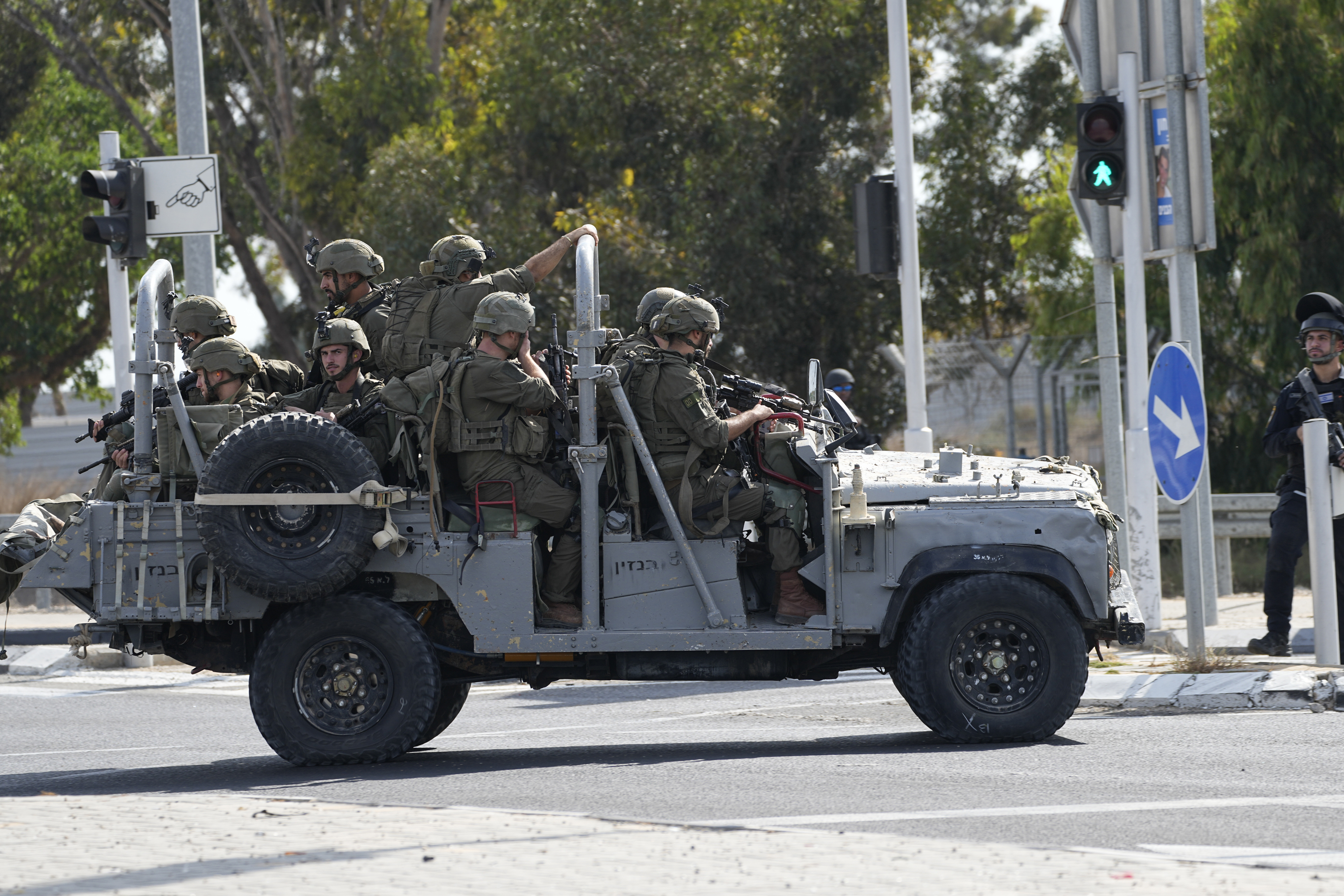
Attack comes when Israeli society is divided
The eruption of violence comes at a difficult time for Israel, which is facing the biggest protests in its history over Netanyahu's proposal to weaken the Supreme Court while he is on trial for corruption.
The protest movement, which accuses Netanyahu of making a power grab, has bitterly divided Israeli society and unleashed turmoil within the Israeli military. Hundreds of reservists have threatened to stop volunteering to report for duty in protest at the judicial overhaul.
Reservists are the backbone of the country's army, and protests within the army ranks have raised concerns about the military's cohesion, operational readiness and power of deterrence as it confronts threats on multiple fronts. Netanyahu on Saturday called up "an extensive mobilisation of reserve forces."
READ MORE: Two earthquakes kill dozens and injure many more in Afghanistan
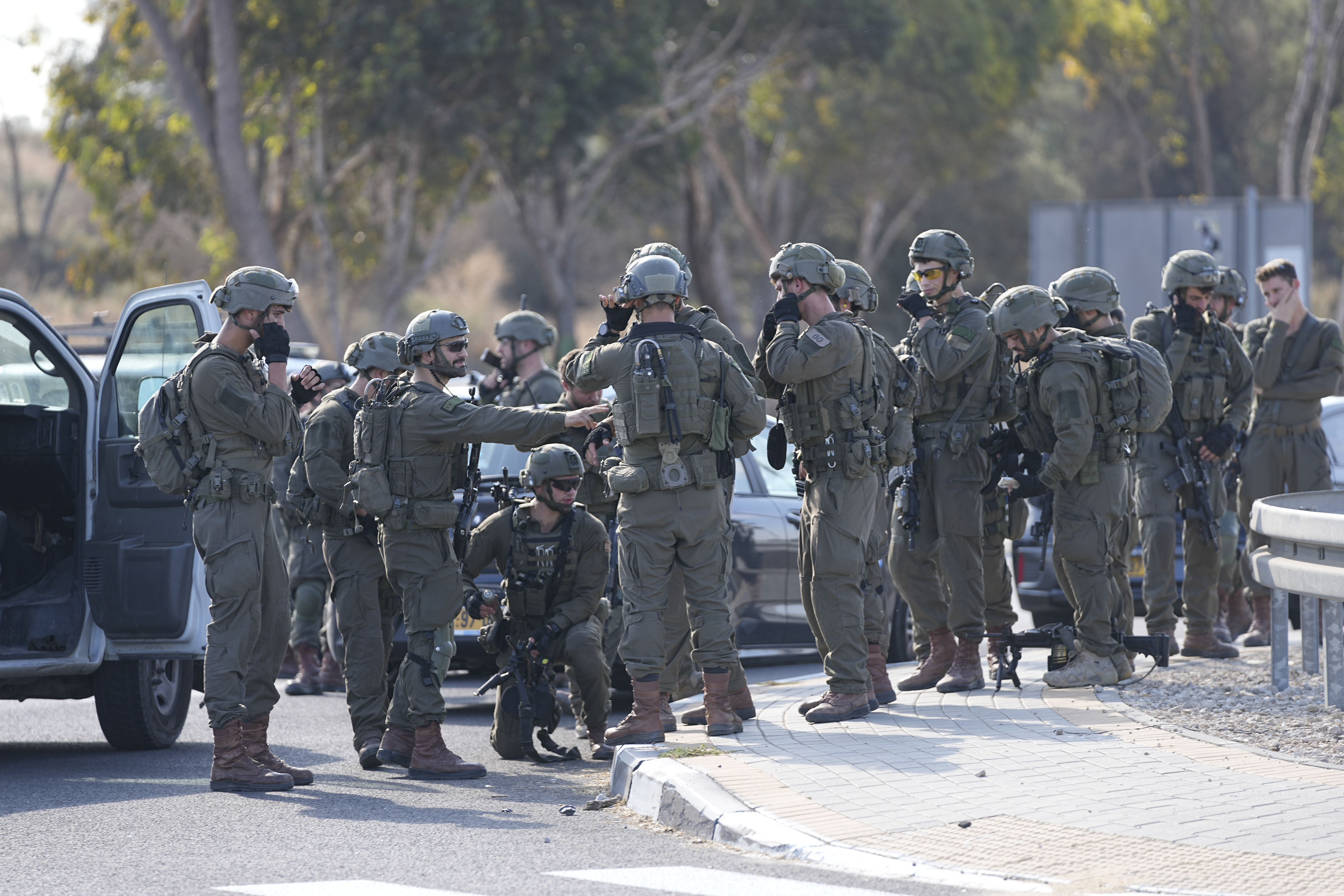
What kind of cease-fire or resolution can be expected?
Israel and Hamas have fought four wars and exchanged fire numerous times since the Islamic militant group seized control of Gaza from forces loyal to the Palestinian Authority in 2007.
Cease-fires have stopped major fighting in past rounds of conflict but have always proven shaky.
Each agreement in the past has offered a period of calm, but the deeper, underlying issues of the conflict are rarely addressed and set the stage for the next round of airstrikes and rockets.
With its increased leverage in this round, Hamas is likely to push harder for concessions on key issues, such as easing the blockade and winning the release of prisoners held by Israel.