Tag Archives: oceania

Man charged with murder after incident at Adelaide apartment block

A man has been charged with murder after allegedly fatally injuring another man in South Australia.

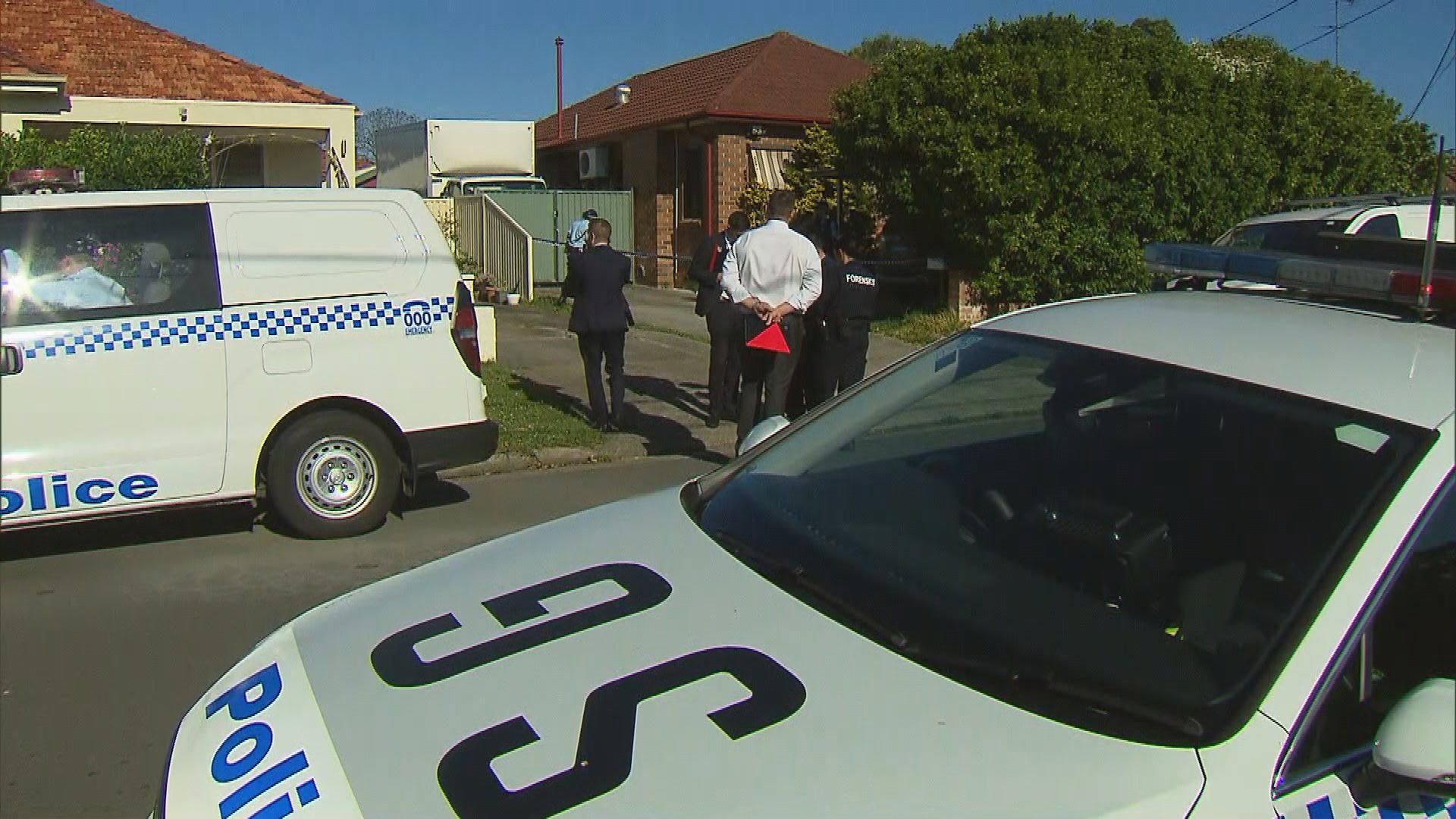
Police found a 65-year-old man with serious injuries at an apartment complex in Bond Street, Mount Gambier, five hours southeast of Adelaide, after reports of a "disturbance" at 3pm yesterday.

He was taken to hospital and died a short time later. 

READ MORE: Former Qantas boss Alan Joyce to skip Senate aviation inquiry

A 65-year-old man was arrested at the scene.

Police believe the two men were known to each other.

The man, who has no fixed address, was charged with murder and will appear in Gambier Magistrates Court today.

Police are not searching for other suspects in relation to the alleged crime. 

After KFC store went cashless, what are the other fast food giants planning?

KFC are the first and only major fast food chain to go cashless in Australia, as other franchises told 9News they will not be moving to card-only payments.

Franchise partners of the fried chicken brand have moved to a cashless payment system in a small number of stores across New South Wales, including a Morisset store.

We asked competitors Macca's, Hungry Jack's, Domino's and Red Rooster if they would be moving in a similar direction.

READ MORE: 'Supercontinent' could wipe out humans

A spokesperson from McDonald's told 9News that the global burger brand had "no plans to go cashless at this stage".

Competing chicken brand Red Rooster said they had "no intention of going cashless in the near future," despite the move by KFC.

Domino's told 9News that going cashless was "not currently something we are looking at doing".

Home of the Whopper, Hungry Jack's confirmed that all stories currently accept both cash and card, but did not comment on whether the brand would move towards a cashless payment system in the near future.

READ MORE: Charles' debut on Aussie money coming soon

While switching to a card-only payment option may be inconvenient for some, it's not illegal.

Stores hold the right to refuse cash as long as they state so clearly to customers, according to the Australian Consumer and Competition Commission.

Signage must indicate the customer's payment options.

KFC previously told 9News that the choice to go cashless was "at the discretion of our franchise partners and is in line with legal requirements".

COVID-19 was the third leading cause of death in Australia in 2022, data shows

COVID-19 has become the first infectious disease to crack the top five causes of death in Australia since 1970.

This virus was the third leading cause of death in 2022 in a holistic overview, accounting for more than one in 20 deaths over the year or 9859 out of 190,939 deaths, according to the Australian Bureau of Statistics (ABS).

It was also among the top ten leading causes of death in a state and territory breakdown, coming in third in New South Wales, Victoria, South Australia and the Australian Capital Territory and ninth in the Northern Territory.

READ MORE: Trump committed fraud for years, judge rules

The virus was the sixth leading cause of death in Queensland, Western Australia and Tasmania.

"This marks the first time an infectious disease has appeared in the top five leading causes since 1970, when influenza and pneumonia was ranked fifth," Lauren Moran, ABS head of morality statistics, said.

READ MORE: What is HMPV, the little-known virus with cases spreading through NSW?

"Broken down by sex, we saw that COVID-19 was the third-ranked cause of death for males (5484) and the fourth-ranked cause of death for females (4375).

"Those who died from COVID-19 had a high median age at death of 85.8 years."

Dementia – including Alzheimer's – was the leading cause of death for females and the second leading cause for males.

"The top five causes of death in 2022 were ischaemic heart disease, dementia (including Alzheimer's disease), COVID-19, cerebrovascular diseases (strokes) and lung cancer, which when combined, accounted for more than a third of all deaths," Moran said.

There were 20,000 more deaths in 2022 than in 2021.

READ MORE: Charles' debut on Aussie money coming soon

Ischaemic heart disease, diabetes, chronic lung diseases, lung cancer and suicide were the top five causes of death among Indigenous and Torres Strait Islander peoples in 2022, with COVID-19 the ninth leading cause of death.

In 2022, 3249 people died by suicide, at a rate of 12.5 per 100,000 people.

Men accounted for three-quarters of these deaths.

Readers seeking support can contact Lifeline on 13 11 14 or beyond blue on 1300 22 4636.

More daylight, less darkness after Aussie equinox

It is not yet officially summer, but Australia's days are going to keep getting longer for the rest of the year after overtaking nights on the weekend.

Saturday saw the sun positioned directly over the equator, marking the spring equinox for the southern hemisphere.

That means from now until March next year, days in Australia will be longer than the nights, peaking at the summer solstice in late December.

READ MORE: King Charles coins to circulate in Australia by end of 2023

equinox

The solstice is the day that has the most – or fewest, for the winter solstice – daylight hours in the year.

After the summer solstice, days will grow shorter again, before the balance flips to longer nights in March 2024 after the autumn equinox.

The winter solstice takes place in June.

'Nothing stuck to Teflon Dan during his reign of spin and sniping'

OPINION

Daniel Andrews changed Victoria enormously in his time as premier. It is to be hoped it changes back now he is leaving.

Victoria has become a state where ideology outweighs logic, where retribution is a political weapon, and where accountability and transparency may as well be badly named racehorses.

At times, our departing premier has seemed more trouble magnet than a steady and considered leader.

READ MORE: Andrews to step down in hours as leadership uncertainty looms

https://omny.fm/shows/mornings-with-neil-mitchell/insult-to-victorians-neil-mitchells-view-on-the-le/embed?style=cover

There were always questions and suspicions.

Police failed to meet critical standards in the investigation of a 2013 car crash when he said his wife was driving his government car. He explained, and many did not believe him.

A few years later he fell down stairs when on holiday, and had to take three months off. His explanation was one of a simple accident. Many did not believe him.

Such was the climate of spin and lack of transparency through his government that when the premier said something happened many looked for the real story.

Even as he resigned yesterday, some asked what dirt was about to hit which fan. Some disbelieved his public reasoning.

He was Chairman Dan, and Teflon Dan.

During the appalling "red shirts rort" public money was misused to help an election campaign.

Junior staff were arrested and questioned by police. The ministers in charge of them were not, and refused to co-operate when asked.That in itself was an outrage.

Almost half the Cabinet refused to cooperate with a police inquiry into misuse of public money. Teflon won.

He cancelled the building of the East West Link, which he said would not cost any money in compensation. It cost over $1 billion not to build the road. Nothing stuck.

Various integrity officers in various ways questioned his methods, including contracts for union mates. Nobody seemed to care.

Through it all Telfon Dan blustered, threatened, sniped and spun. And nothing stuck.

READ MORE: Long list awaits Daniel Andrews' replacement

But the truly disturbing sight for anybody who believes in democracy was Chairman Dan at work during the dark days of the pandemic.

World record lockdowns were ugly power overreach, but the worst was the deaths of 801 people, lost to COVID because of appalling government bungling of hotel quarantine.

That must sit painfully on the conscience of Dan Andrews and anybody involved. Hotel quarantine worked across the rest of the country and was far better managed. Most of those people need not have died.

The COVID crisis showed a government dominated by spin and verbal trickery. Kids were banned from playgrounds. Police were blamed for requesting policies they did not request.

Andrews mocked NSW for having softer COVID restrictions, but in the end more Victorians died from the pandemic than NSW, which has a larger population.

Even today some Victorians see him as the hero of the pandemic. He wasn't, he was power-hungry and autocratic. Democratic government ceased and the Cabinet was ostracised. And he has dodged accountability, aided by his mate the PM, ever since.

Through the years enemies were ostracised, as I can personally illustrate.

For six years I was in "Dan's freezer". He refused to talk to me or more importantly my audience. Then my ABC counterpart was sent to sit in the cold with me, and even Melbourne's Lord Mayor councillor Sally Capp was ostracised for some perceived "offence".

READ MORE: 'The body language was there': Reactions to Daniel Andrews' exit

For six years I was in "Dan's freezer". He refused to talk to me or more importantly my audience.

His daily style has been to intimidate the media, seduce them, or ban them. He has campaigned powerfully through social media, presenting slogans instead of policy detail. That after all, meant fewer difficult questions.

He has belittled opponents and threatened critics. He created a culture of fear amongst many of the so-called leading citizens that they became afraid to cross him.

He kowtowed to the Chinese government and woe betide anybody who asked why.

He ran down hospitals and denied the blood-splattered reality.

He shed dodgy ministers and factional enemies at an alarming rate.

But he won three elections. That qualifies him as a clever politician. It does not make him a great leader. Yes, he did some worthwhile things. Nobody could question his work ethic.

He created a climate where sensible euthanasia laws could be introduced. He eradicated dangerous level crossings, albeit by bullying residents into accepting "sky rail", elevated train lines going past bedroom windows, and he identified the need for significant infrastructure works.

READ MORE: Daniel Andrews' journey to bronze-statue Victorian premier

Tunnels were dug or half-dug. Roads were built. The work was needed but the management was appalling. Cost blowouts and delays have been obscene. As the projects staggered on basic roads became riddled by potholes, as the maintenance budget was cut.

Debt levels have become frightening. Andrews leaves Victoria with debt predicted to pass $200 billion, more than NSW, Queensland and Tasmania combined. He also leaves with several corruption probes pending, one on politicization of the public service.

Now, whoever replaces Daniel Andrews may well find themselves herding cats. Typically, when a dictatorial and dominant leader steps down the underlings struggle to reassert themselves.

The power vacuum can be destructive. The new premier is likely to be Jacinta Allen, his deputy. She is a different style of leader, and once was more balanced and accountable.

She must not follow the Andrews template. Victoria needs to return to an era of decent government. A government where integrity is expected not dodged.

A government where transparency is the expectation, not an irritation. Where questions are answered and critics debated not decapitated.

We've had enough of the bullying, the spin and the intimidation.

What Victoria needs is honesty, openness and accountability. What Victoria needs is a re-set, new start, a symbolic rejuvenation.

First Labor will wallow in glowing and inaccurate tributes.

Then they must forget Andrews and his style, dump some of his bloody-minded madness, and govern with decency, common sense and fairness.

Do that, and Victoria has new hope. After nine years of Andrews it is the least the people deserve.

Neil Mitchell broadcasts from 8.30am weekdays on 3AW.

'Supercontinent' could wipe out humans and make Earth uninhabitable

The formation of a new "supercontinent" could wipe out humans and all other mammals still alive in 250 million years, researchers have predicted.

Using the first-ever supercomputer climate models of the distant future, scientists from the University of Bristol in the United Kingdom predicted how climate extremes would intensify after the world's continents merge to form one supercontinent, Pangea Ultima, in around 250 million years.

They found it would be extremely hot, dry and virtually uninhabitable for humans and mammals, who are not evolved to cope with prolonged exposure to excessive heat.

READ MORE: US bank settles massive Epstein lawsuit

Researchers simulated temperature, wind, rain and humidity trends for the supercontinent and used models of tectonic plate movement, ocean chemistry and biology to calculate carbon dioxide levels.

They found that not only would the formation of Pangea Ultima lead to more regular volcanic eruptions, spewing carbon dioxide into the atmosphere and warming the planet, but the sun would also become brighter, emitting more energy and warming the Earth further, experts noted in the paper, published Monday in the journal Nature Geoscience.

"The newly-emerged supercontinent would effectively create a triple whammy comprising the continentality effect, hotter sun and more CO2 in the atmosphere," Alexander Farnsworth, senior research associate at the University of Bristol and lead author of the paper, said in a release on Monday.

"Widespread temperatures of between 40 to 50 degrees and even greater daily extremes, compounded by high levels of humidity would ultimately seal our fate," he said.

"Humans – along with many other species – would expire due to their inability to shed this heat through sweat, cooling their bodies," Farnsworth added.

The increased heat, Farnsworth noted, would create an environment without food or water sources for mammals.

READ MORE: Trashed cars, a body, and a naked man on a boat

While there are large uncertainties when making predictions so far into the future, the scientists said that the picture appears "very bleak," with only around 8% to 16% of land on the supercontinent habitable for mammals.

Carbon dioxide could be double current levels, according to the report, although that calculation was made on the assumption that humans stop burning fossil fuels now, "otherwise we will see those numbers much, much sooner", Benjamin Mills, a professor of Earth system evolution at the University of Leeds and a report co-author, said in the release.

This grim outlook is no excuse for complacency when it comes to tackling today's climate crisis, the report authors warned.

Human-caused climate change is already resulting in millions of deaths around the world every year.

READ MORE: Taxi used to transfer gran between hospitals

"It is vitally important not to lose sight of our current climate crisis, which is a result of human emissions of greenhouse gases," co-author Eunice Lo, research fellow in climate change and health at the University of Bristol, said in the release.

"While we are predicting an uninhabitable planet in 250 million years, today we are already experiencing extreme heat that is detrimental to human health.

"This is why it is crucial to reach net-zero emissions as soon as possible."

Climate change is on course to transform life on Earth, with billions of people and other species due to reach points where they can no longer adapt unless global warming is dramatically slowed, according to a major UN-backed report published last year.

Scientists have warned for decades warming needs to stay below 1.5 degrees above pre-industrial levels, with the window to cut our reliance on fossil fuels and avoid catastrophic changes that would transform life as we know it rapidly closing.

The last mass extinction occurred some 66 million years ago, when an asteroid slammed into Earth and killed off the dinosaurs and most life on the planet.

Nelson Mandela's granddaughter Zoleka Mandela dies aged 43

Nelson Mandela's granddaughter Zoleka Mandela has died of cancer at the age of 43, a family spokesperson has said in a statement.

"Zoleka passed away on the evening of Monday, September 25th, surrounded by friends and family," the statement, shared on her official Instagram account on Tuesday, said.

She documented her battle with cancer on the account.

READ MORE: US bank settles massive Epstein lawsuit

"What do I tell my children? How do I tell them that this time around, I may not get to live my life as a survivor? How do I tell them everything will be okay when it's not? I'm dying … I don't want to die," she wrote, on August 23.

The Nelson Mandela Foundation also issued a statement on Tuesday, saying it "extends its heartfelt condolences to the Mandela family on the passing of Zoleka Mandela, tragically last night."

"We mourn the loss of a beloved grandchild of Mum Winnie and Madiba and a friend of the foundation," the foundation said.

READ MORE: Trashed cars, a body, and a naked man on a boat

The foundation described her as "a tireless activist for healthcare and justice."

"Her work in raising awareness about cancer prevention and her unwavering commitment to breaking down the stigma surrounding the disease will continue to inspire us all," it said.

Her activism also included road safety campaigns after her 13-year-old daughter, Zenani, was killed in a car crash in 2010.

Adelaide grandmother with broken pelvis transferred between hospitals in a taxi

The family of an elderly woman who broke her pelvis 12 days ago have raised questions about her care after she was transported between hospitals in a taxi.

When Helen Watson was first injured she spent more than two hours stuck in an ambulance ramping at the Royal Adelaide Hospital (RAH), waiting for a bed.

"That's a really long time when you are in a lot of pain, you don't know what's going on and you know, being her age, she's confused by those sorts of things," her granddaughter Melanie Lavis told 9News.

READ MORE: Daniel Andrews resigns as Victoria's premier

Helen Watson broke her pelvis in two places and was transferred between hospitals in a taxi.

Lavis said her 94-year-old grandmother was well cared for at the RAH, but then yesterday she received a phone call from her dad.

"Dad called me at about five o'clock yesterday and said that they had moved Grandma to Modbury Hospital and that they had done that in a taxi," she said.

The journey was half an hour long, and Watson had to sit upright, without a nurse for the entire cab ride.

"In a cab, without a nurse in there, in pain … it just doesn't sit right," her granddaughter said.

Today the health minister looked at the case, and later told 9News Watson was not transported in an ambulance because staff didn't deem it necessary.

READ MORE: Customers furious as some KFC stores go cashless

Her granddaughter Melanie Lavis said when was first injured she spent over two hours stuck on a ramp at the Royal Adelaide Hospital.

"The report that I've had from SA Health at this stage is that that was a decision made by the clinicians, by the doctors and nurses based on their assessment of the patient," Chris Picton said.

However Lavis disagreed, saying the staff were well aware of the pain her grandmother was in, and she doesn't believe they would have sent her off in a taxi if more ambulances were available.

"The first time they tried to sit her up a week ago she passed out from the pain," Lavis said.

"Obviously, the resources are just so tight that they're making decisions that are wrong.

"I think it's horrible something has to change."

The opposition said the incident was a result of the worsening ramping crisis.

"South Australians are sick and tired of the excuses," Ashton Hurn said.

"They want the government to roll up their sleeves and fix what they promised."