Insurance provider AAMI has revealed the most dangerous roads in each capital city.
Tag Archives: oceania
Attempts to free grounded cruise ship with Aussies aboard fail
Attempts by a fishing vessel to pull free a luxury cruise ship carrying 206 people — including about 90 Australians — in a remote region of Greenland have failed.
The fishing trawler owned by Greenland's government used a high tide to try to release the Bahamas-flagged Ocean Explorer that ran aground in the world's northernmost national park, on Wednesday (Thursday AEST).
The Danish military's Joint Arctic Command (JAC) confirmed after an inspection of the stranded vessel attempts to free it were successful.
READ MORE: The flood death toll in eastern Libya's city of Derna has surpassed 5100

"The crew and passengers are in a difficult situation, but after the circumstances, the atmosphere on the ship is good and everyone on board is fine," the JAC said in a statement.
The priority now was getting the Danish navy's Knud Rasmussen inspection vessel to the site.
The JAC said it was expected to arrive by Friday afternoon local time.
The cruise ship ran aground above the Arctic Circle on Monday in Alpefjord, which is in the Northeast Greenland National Park.
Australian cruise operator Aurora Expeditions told 9news.com.au about 90 Australians were on board the Ocean Explorer.
Liz, from Wodonga in Victoria, was one of them and told Today this morning about the lead-up to the cruise ship running aground.

"We were standing on our balcony because we had just taken off from the glacier and we realised very quickly that we were about to get stuck in the mud," she said.
"So having been a bit of a boatie myself, you could feel the pull of the boat as we pulled up and realised we were in trouble straight away."
The Northeast Greenland National Park covers 972,000 square kilometres, almost as much land as France and Spain combined, and approximately 80 per cent is permanently covered by an ice sheet, according to the Visit Greenland tourism board.
Alpefjord sits in a remote corner of Greenland, some 240 kilometres away from the closest settlement, Ittoqqortoormiit, which itself is nearly 1,400 kilometres from the country's capital, Nuuk.
The Ocean Explorer's crew made two failed attempts to get the ship to float free on its own during high tide.
READ MORE: Dog mauls man and woman while toddler hides in bathroom

Aurora Expeditions said on Wednesday the passengers and crew members were safe and well and that there was "no immediate danger to themselves, the vessel, or the surrounding environment".
"We are actively engaged in efforts to free the MV Ocean Explorer from its grounding. Our foremost commitment is to ensure the vessel's recovery without compromising safety," the statement said.
Aurora Expeditions has been contacted about reported cases of COVID-19 aboard the ship.
Sydney couple Steven Fraser — who has come down with COVID-19 — and Gina Hill said the expedition crew was occupying passengers with talks and the restaurant was still operating.
"Everyone's in good spirits," Fraser told the Sydney Morning Herald.
"It's a little bit frustrating, but we are in a beautiful part of the world.
"We're sitting right near the glacier when we open our window."
READ MORE: Danelo Cavalcante: Escaped murderer captured after search, police say

Dozens of cruise ships sail along Greenland's coast every year so passengers can admire the picturesque mountainous landscape with fjords, musk oxen, and the waterways packed with icebergs of different sizes and glaciers jutting out into the sea.
The JAC said the passengers on the Ocean Explorer were "a mix" of tourists from Australia, New Zealand, Britain, the United States and South Korea.
The Ocean Explorer was built in 2021 and is owned by Copenhagen SunStone Ships, which is part of Denmark's SunStone Group. It has an inverted bow, shaped like the one on a submarine. It has 77 cabins, 151 passenger beds and 99 beds for crew, and several restaurants, according to the Sunstone Group website.
The JAC said there were other ships in the vicinity of the stranded cruise liner and "if the need arises, personnel from the Sirius Dog Sled Patrol can be at the accident site within an hour and a half".

On Tuesday, members of the Sirius Dog Sled Patrol, a Danish naval unit that conducts long-range reconnaissance and enforces Danish sovereignty in the Arctic wilderness, visited the passengers and explained the situation, "which calmed them down as some were anxious", Madsen, who was the on-duty officer for the Joint Arctic Command, said.
The command, which was coordinating the operation to free the cruise ship, said the nearest Danish navy ship was more than 2,000 kilometres away. It was heading to the site and could be expected to reach the grounded ship as soon as Friday.
The primary mission of the Joint Arctic Command is to ensure Danish sovereignty by monitoring the area around the Faeroe Islands and Greenland, including the Arctic Ocean in the north.
Aussie bank worker loses life savings in 'pig butchering' scam
Sydney single woman Sarah* was looking for love and thought she might have met "the one" on the dating platform Tinder.
But, within the space of two weeks, the 44-year-old bank worker had fallen head-over-heels, not only for a man who wasn't real, but a scam that swindled her out of $157,000 – her entire life savings and then some.
Sarah, who works for one of Australia's biggest banks, said the fallout from the scam had been emotionally and financially devastating.
"It's been humiliation, heaped upon humiliation," she said.
"I realise how idiotic I am now. I'm still trying to reconcile that I've actually done this to myself."
READ MORE: Popular cold and flu medication 'useless'

The type of scam Sarah fell victim to is known for its remorselessness and goes by the aptly brutal term "pig butchering".
Pig butchering is a cross between a romance and cryptocurrency scam and alludes to the idea of victims being "fattened up for the slaughter" with the belief they are falling in love.
Global law enforcement and cybersecurity experts warn it's now a crime that's on the rise in Western countries, after originating in China.
'It was so good'
The nightmare all started for Sarah last month when she was matched with a man called John* on Tinder.
The man had a "verified" Tinder profile and appeared to live just 16 kilometres away from Sarah in Sydney's inner west.
According to Tinder, users are required to submit a "video selfie" which is compared to their profile photo using facial recognition technology in order to gain verification.
On its website, Tinder states that "while the blue check mark can be a signal that someone is who they claim based on the photos they have provided to Tinder, it is not a guarantee of authenticity".
A spokesperson for Tinder told 9news.com.au the platform started using video selfies to verify accounts in April in order to strengthen its processes.
Tinder declined to say whether the user who approached Sarah used a video selfie to authenticate their account.
John's photos on Tinder showed a man, pictured with a pet husky.
Do you have a story? Contact reporter Emily McPherson at has also issued recent warnings about pig butchering scams.
Australian cybercrime expert Simon Smith, from the Online Crime Action Centre, told 9news.com.au in December he had worked with many local victims of pig butchering scams, with some losing up to $850,000.
"They are very elaborate and relentless, the scammers keep going until they have taken their victim's last cent, and then some," Smith said.
What do I do now?
After learning she had been scammed, Sarah contacted ReportCyber, run by the government's Australian Cyber Security Centre and lodged a report.
In response to her report, NSW ReportCyber told Sarah in an email that the scam appeared to have been orchestrated by a person overseas – outside the jurisdiction of NSW Police.
Further investigation was also "unlikely to result in a successful prosecution of the party responsible" because of the unregulated nature of cryptocurrency, NSW ReportCyber said.
Unhappy with the response, Sarah said she made a statement at her local police station, but police were yet to follow up the matter.
"It's quite clear that they've got no bloody idea what to do," Sarah said.
"If someone broke into my house and stole everything that would be a different story."
"I have no idea where to go now," she said.
Sarah said her priority was to apply for an increased loan on her mortgage, in order to repay her friend.
"I'm just terrified now. I was in a really good financial position, for my age, and now I'm not," she said.
"I didn't lose everything as I still have my property and I still have my super. But, with $157,000 gone, I won't come back from this for years.
"It's been bad on all fronts. I feel like I lost him, I lost my money, and I lost myself a bit.
"I'm the kind of person who's never done anything wrong in their life. I'm a rule follower and I've done this one thing and it's ruined everything."
* Names have been changed.
'Bingo, the big fella hit him': Knife-wielding man taken down with tackle
A father and son teamed up to take down an allegedly knife-wielding man in a New South Wales shopping centre with an NRL-quality tackle.
Blake and his father Darryl were grabbing a bite to eat at Dubbo Centro earlier this week when a man started shouting that he had a knife and threatened to stab somebody, Darryl told 2GB's Ben Fordham.
Darryl picked up a high chair and approached the man, trying to speak with him and calm him down.
READ MORE: Government cracks down on ADF veterans training foreign militaries
https://omny.fm/shows/ben-fordham-full-show/the-big-fella-hit-him-dad-and-son-detail-tackle-on/embed
"And then, bingo, the big fella hit him," he said.
Blake told 2GB he was worried about the potential danger to his dad.
"A couple years of practice certainly paid off, that's for sure," he said.
The North Queensland Cowboys fan said while he used to play footy on the NSW South Coast, he hadn't pulled on a boot for a couple of years now.
READ MORE: Smoke haze to clear for Sydney Marathon, firies say

He credited his dad with teaching him his tackling skills.
"I was just amazed with the commitment he showed to bring that lad down," Darryl said.
Blake said he had stood up with his dad but then circled away to try to find a spot to run in.
"I thought of the quickest way possible to resolve the situation, so that's when I came in with the left shoulder," he said.
READ MORE: Australia is bracing for another fire season. This is what you need to know
"As soon as he had his back to me, that's when I just lined him up from from the side and came in and tackled him to the ground."
Blake said he had been worried for the man in case his head had been injured, but "thankfully, that didn't happen".
"I said to dad, that's actually my left shoulder. I hit better with my right," he said.
Fordham congratulated the pair and pledged to line up tickets to the NRL finals for them.
Government cracks down on ADF veterans training foreign militaries
Former Australian Defence Force personnel who carry out unauthorised military training to foreign troops will face up to 20 years in prison under new laws.
The legislation comes amid concerns Australian pilots are being recruited to train China's air force. It will be introduced into federal parliament today by the government, the Sydney Morning Herald reports.
Defence Minister Richard Marles wants to strengthen existing legislation to protect national security.
READ MORE: Kim Jong-un vows full support for Vladimir Putin after summit
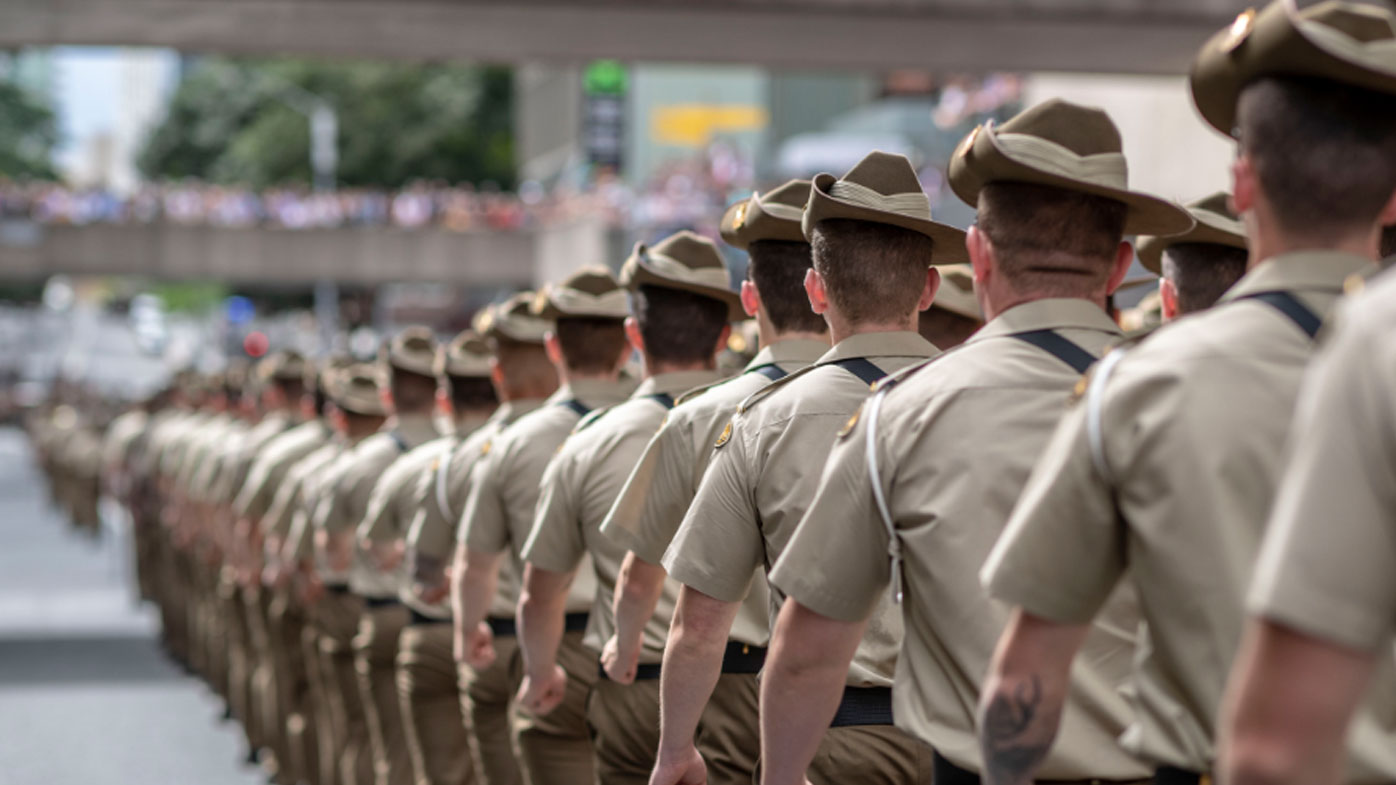
Former servicemen and women as well as ex-public servants will be required to gain the approval of the defence minister if they want to work for a foreign military or government.
The work they performed in Australia and information they had access to will be considered by the minister before he gives the go-ahead.
But Australians seeking work with Australia's partners in the Five Eyes intelligence grouping – New Zealand, the US, Canada and the UK – would be exempted from the new laws.
The overhaul aims to reassure Australia's partners in the AUKUS nuclear-powered submarines agreement – the US and Britain – about the sharing of classified military technology.
Australia citizen Daniel Duggan, a former American military pilot, has been in custody since last October over US allegations he trained Chinese aviators.
He is fighting the US extradition efforts and insists the training was for civilian pilots.
What you need to know as Australia braces for another fire season
Australia is set to go through its worst bushfire season in four years this spring and summer, as three years of wet give way to below-average rainfall and above-average temperatures.
The first two weeks of spring have already seen hazard reduction burns blanket Sydney in smoke, and warnings issued over fires in Queensland and the Northern Territory.
With conditions set to intensify over the coming months, there are plenty of questions about what the bushfire season will look like. Here's the answer to some of them.
READ MORE: 'Time to plan': Map highlights bushfire risk in multiple states
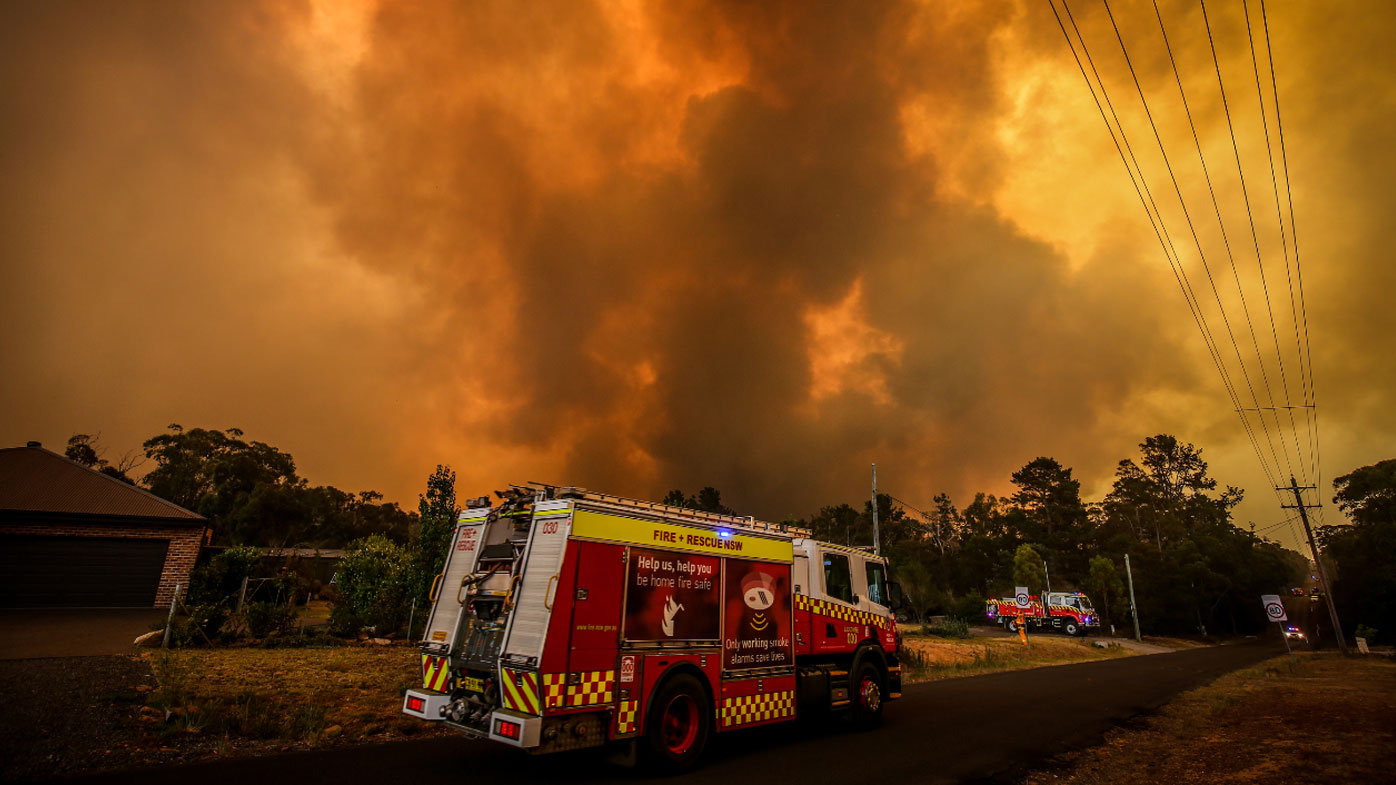
Hang on, it's been raining for the last three years. Shouldn't that mean we aren't at risk of bad fires?
Unfortunately, it's not quite as simple as that.
It's true that the excessive rainfall brought about by three successive La Niñas means Australia's soil moisture levels aren't as low as they were in 2019-20, when they contributed to the catastrophic Black Summer fires.
However, the wet conditions have led to vegetation growth, providing more fuel for any blazes that start.
"Higher rainfall over the past two years means there is above-average growth of grassy fuels," the Bureau of Meteorology said.
"This, combined with drying caused by below-average winter rainfall over large parts of western, central and southern Australia, indicates a seasonal bushfire outlook that is above normal for large parts of southern Australia."
READ MORE: Victorian bushfires 'shockingly more frequent'
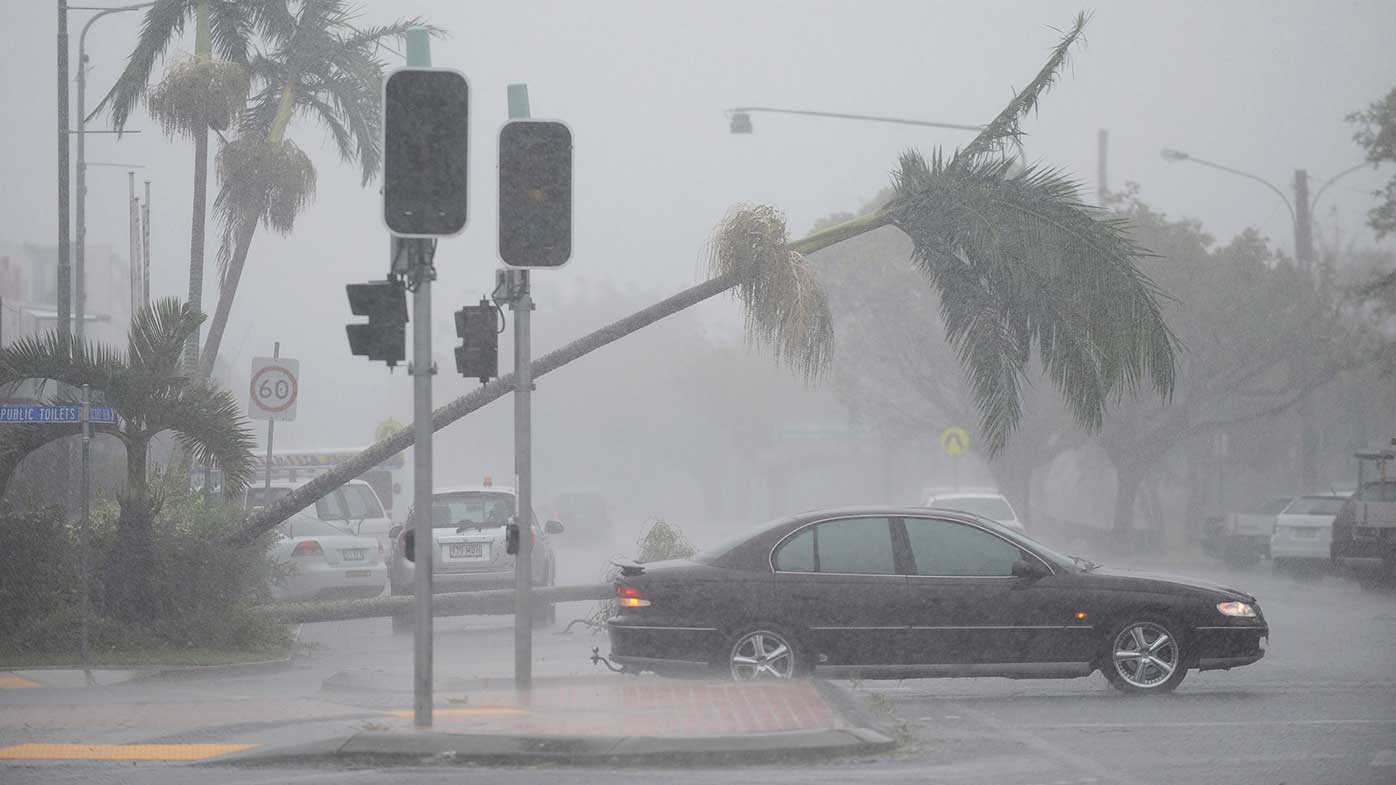
What's the difference between backburning and hazard reduction burns?
While the two terms are sometimes used interchangeably, backburning and hazard reduction burns are very different things.
Hazard reduction burns – also sometimes called prescribed, planned, controlled or fuel-reduction burns – are the operations carried out when fires aren't burning, often out of season, to reduce the amount of fuel in bushfire-prone areas that could help fuel bigger blazes.
Backburning is a firefighting tool employed by crews to reduce fuel in the path of already-burning fires, helping them create containment lines and try to get a blaze under control.
READ MORE: The device that could protect millions of lives come summer

What impact is climate change having on bushfires?
In Australia and around the rest of the world, experts say climate change is making bushfires more severe and frequent.
The BoM has been registering more extreme weather in eastern and southern Australia over summer, as well as bushfire seasons beginning earlier than they used to.
"These trends towards more dangerous bushfire conditions are at least partly attributable to human-caused climate change, including through increased temperatures," it says.
"Northern Australia, which sees significant fire activity during the dry season, has experienced increases in monsoonal rainfall that have increased fuel growth in recent decades, as a key factor influencing fire danger in that region."
Concerningly, this is set to worsen even further in the coming years.
"Bushfire weather conditions in future years are projected to increase in severity for many regions of Australasia, including due to more extreme heat events, with the rate and magnitude of change increasing with greenhouse gas concentrations (and emissions)," the BoM says.
READ MORE: 'Uncharted territory': Grim warning issued ahead of summer

Are bushfires only started by arsonists?
While arson is the cause of some bushfires, the majority are sparked by natural causes.
According to Geoscience Australia, about half of all blazes begin thanks to lightning strikes.
"Bushfires can originate from both human activity and natural causes with lightning the predominant natural source, accounting for about half of all ignitions in Australia," it says.
"Fires of human origin currently account for the remainder and are classified as accidental or deliberate.
"Fires lit deliberately can be the result of arson or might be designed to achieve a beneficial outcome but conditions have changed, resulting in uncontrollable spread."
Do bushfires only happen where the government wants to build train lines?
No.
This is a conspiracy theory that reared its head during the 2019-20 bushfire season in Australia, as well as the 2018 Californian wildfires.
Something similar even found its way onto social media during the devastating blaze on Maui, Hawaii, earlier this year.
According to the theory, the fires aren't started naturally.
Instead, they're set off by the government – or, depending on who you ask, energy and gas companies, other corporations or even the United Nations – which uses lasers or smart electricity meters lasers to spark the blazes.
The reason for this, the conspiracy claims, is to clear room for high-speed rail projects.
Given Australia's east coast has remained stubbornly bereft of a high-speed rail network since the summer of 2019-20, it'll come as no surprise that there is absolutely no evidence to back up the theory.
Flood death toll in Libyan city of Derna surpasses 5100
The death toll from flooding that hit the eastern Libyan city of Derna has reached more than 5000 and was expected to rise further, a local health official said, as authorities struggled to get aid to the coastal city where thousands remained missing and tens of thousands were homeless.
Aid workers who managed to reach the city, which was cut off Sunday night when flash floods washed away most of the access roads, described devastation in the city's centre, where search and rescue teams combed shattered apartment buildings for bodies and retrieved floating bodies offshore.
"Bodies are everywhere, inside houses, in the streets, at sea. Wherever you go, you find dead men, women, and children," Emad al-Falah, an aid worker from Benghazi, said over the phone from Derna. "Entire families were lost."
READ MORE: Qantas sorry for sacking 1700 workers illegally

Mediterranean storm Daniel caused deadly flooding in many towns of eastern Libya, but the worst-hit was Derna. As the storm pounded the coast Sunday, residents said they heard loud explosions when the dams outside the city collapsed. Floodwaters washed down Wadi Derna, a river running from the mountains through the city and into the sea.
"The city of Derna was submerged by waves 7 metres high that destroyed everything in their path," Yann Fridez, head of the delegation of the International Committee of the Red Cross in Libya, told broadcaster France24. "The human toll is enormous."
Derna lies on a narrow coastal plain on the Mediterranean under steep mountains running along the coast. Only two roads from the south remain usable, and they involve a long, winding route through the mountains.
Aid teams with some supplies managed to get in that way, but local emergency workers otherwise were relying on whatever equipment they already had on hand. Collapsed bridges split the city centre, further hampering movements.
Ossama Ali, a spokesman for the Ambulance and Emergency Center in eastern Libya, said at least 5100 deaths were recorded in Derna, along with around 100 others elsewhere in eastern Libya. More than 7000 people were injured in the city, most receiving treatment in field hospitals that authorities and aid agencies set up, he told The Associated Press by phone on Wednesday.
READ MORE: Millionaire developer says unemployment needs to be much higher

The number of deaths is likely to increase since search and rescue teams are still collecting bodies from the streets, buildings and the sea, he said.
At least 30,000 people in Derna were displaced by the flooding, the UN migration agency said. The damage is so extensive that the city is almost inaccessible for humanitarian aid workers, the International Organisation for Migration said.
The startling devastation pointed to the storm's intensity, but also Libya's vulnerability. The country is divided by rival governments, one in the east, the other in the west, and the result has been neglect of infrastructure in many areas.
"This is a disaster of every sense of the word," a wailing survivor who lost 11 members of his family told a local television station as a group of rescuers tried to calm him. The television station did not identify the survivor.
Ahmed Abdalla, a survivor who joined the search and rescue effort, said they were putting bodies in the yard of a local hospital before taking them for burial in mass graves at the city's sole intact cemetery.
"The situation is indescribable. Entire families dead in this disaster. Some were washed away to the sea," Abdalla said by phone from Derna.
Bulldozers worked over the past two days to fix and clear roads to allow the delivery of humanitarian aid and heavy equipment urgently needed for the search and rescue operations. Derna is 250 kilometres east of Benghazi, where international aid started to arrive on Tuesday.

Libya's neighbours, Egypt, Algeria and Tunisia, as well as Turkey and the United Arab Emirates, have sent rescue teams and humanitarian aid. President Joe Biden also said the United States is sending emergency funds to relief organisations and coordinating with the Libyan authorities and the UN to provide additional support.
Mohammed Abu-Lamousha, a spokesman for the eastern Libyan interior ministry, on Tuesday put the death tally in Derna at more than 5300, according to the state-run news agency. Dozens of others were reported dead in other towns in eastern Libya, he said.
Authorities have transferred hundreds of bodies to morgues in nearby towns. In the city of Tobruk, 169 kilometres east of Derna, the Medical Center of Tobruk's morgue received more than 300 bodies for people killed in the Derna flooding. Among them were 84 Egyptians, according to a list of dead obtained by The Associated Press.
Dozens of bodies of Egyptians killed in the floods were returned to their home country. Most of the dead are from one village, el-Sharif, in the southern province of Beni Suef. They were buried Wednesday morning following a mass funeral attended by hundreds of villagers. Four of the dead were buried at another funeral in the Nile Delta province of Beheira.
Among the dead was the family of Saleh Sariyeh, 60, a Palestinian from the refugee camp of Ein el-Hilweh in Lebanon, whose home was washed away in the floods, his nephew Mohammed Sariyeh told The Associated Press.

Mohammed Sariyeh said his uncle had been living for decades in Derna with his wife, Sanaa Jammal, and two daughters, Walaa, 27, and Hoda, 25, and were all killed on Monday. He added that friends called them from Libya telling the family that his uncle's apartment was in a building in the city center that was washed away during the storm.
The four were buried in Derna, Mohammed Sariyeh said adding that because of the ongoing fighting in Ein el-Hilweh, the family in Lebanon will not be receiving condolences in the camp.
At least 10,000 people were still missing in the city, according to Tamer Ramadan, Libya envoy for the International Federation of Red Cross and Red Crescent Societies. He said 40,000 people have been displaced in Derna and other towns affected by the floods in eastern Libya.
Known for its white-painted houses and palm gardens, Derna is about 900 kilometres east of the capital, Tripoli. It is controlled by the forces of powerful military commander Khalifa Hifter, who is allied with the eastern Libyan government. The rival government in western Libya, based in Tripoli, is allied with other armed groups.
Much of Derna was built by Italy when Libya was under Italian occupation in the first half of the 20th century. The city was once a hub for extremist groups in the years of chaos that followed the NATO-backed uprising that toppled and killed longtime dictator Moammar Gadhafi in 2011.
Qantas chair under pressure after outsourcing of almost 1700 jobs found illegal
Qantas has been found to have illegally sacked almost 1700 workers during the COVID-19 pandemic, leading to calls for the company's chairman and board to step aside.
The High Court judgment handed down on Wednesday upheld two rulings made by the Federal Court, which found the outsourcing of baggage handlers, cleaners and ground staff was unlawful.
Justices Kiefel, Gageler, Gleeson and Jagot said in the judgment anyone who took "adverse action against another person for a substantial and operative reason of preventing the exercise of a workplace right by the other person contravenes (part of section 340 of the Fair Work Act) … regardless of whether that other person has the relevant workplace right at the time the adverse action is taken".
READ MORE: Qantas passengers stranded on Melbourne tarmac for six hours

"Qantas did not avoid the operation of (the section) in relation to its adverse action by taking the action prior to the existence of the workplace rights the exercise of which Qantas sought to thwart."
The Transport Workers Union (TWU), which brought the legal action, said the Qantas board required an overhaul following the ruling, including the departure of chairman Richard Goyder.
"The airline cannot achieve the reset necessary for its survival under the same board that resided over the largest case of illegal sackings in Australian corporate history," TWU national secretary Michael Kaine said.
"Richard Goyder cannot make it through another day as chair.
"Qantas needs a fresh start. A worker voice on the board would make a significant difference and send the right signal that Qantas is serious about getting back on track."
The comments echo those of Labor Senator Tony Sheldon, who called on Goyder to follow former CEO Alan Joyce out the door last week.
READ MORE: Qantas' reputation is in the bin. What can the new CEO do to retrieve it?

Sacked workers inside the courtroom pumped their fists in victory upon hearing the High Court's decision.
Australian Council of Trade Unions secretary Sally McManus, who attended the judgment, posted a celebratory photo on social media saying: "The workers win against Qantas in the High Court. We will always have the backs of workers."
Qantas was found in the Federal Court to have breached the Fair Work Act in outsourcing its ground operations to avoid enterprise bargaining rights, after the TWU took legal action against the carrier.
The airline, which retrenched workers in 2020, lost billions of dollars due to the pandemic, which decimated the aviation sector.
Justin Gleeson SC for Qantas, told the High Court in May the airline's revenue stream had been shattered by the pandemic which left it "bleeding cash".
The airline has since posted an underlying profit of almost $2.5 billion in the past financial year.
Qantas argued it could not have breached the workplace rights of the employees, as they did not have the right to take protected industrial action at the time of the decision to outsource.
In a statement, Qantas apologised for the "personal impact" of the decision to sack the workers.
"Qantas acknowledges and accepts the High Court's decision to uphold two prior rulings by the Federal Court regarding the legality of outsourcing the remainder of the airline's ground handling function in 2020," the airline said.
"The Federal Court originally found that while there were valid and lawful commercial reasons for the outsourcing, it could not rule out that Qantas also had an unlawful reason – namely, avoiding future industrial action.
"The High Court has now effectively upheld this interpretation.
"The decision to outsource the remainder of the airline's ground handling function was made in August 2020, when borders were closed, lockdowns were in place and no COVID vaccine existed.
"The likelihood of a years' long crisis led Qantas to restructure its business to improve its ability to survive and ultimately recover.
"As we have said from the beginning, we deeply regret the personal impact the outsourcing decision had on all those affected and we sincerely apologise for that.
"A prior decision by the Federal Court has ruled out reinstatement of workers but it will now consider penalties for the breach and compensation for relevant employees, which will factor in redundancy payments already made by Qantas."
Converting commercial buildings could solve the housing crisis, experts say
Turning abandoned office buildings into residential apartments could be a solution to Australia's housing crisis, experts say.
A $125-million renovation has turned the old Australian Unity Insurance headquarters in Melbourne into a 15-story retirement village, inspiring builders in Melbourne and Sydney to replicate the idea.
Each two-bedroom assisted living apartment in the former office building is expected to fetch between $615,000 to $2 million.
READ MORE: Apple announces radical changes for iPhone 15

Kath Evens from Property Council Australia said the development would get builders and local councils in other states to think outside of the box.
"There's definitely going to be interest from current owners of those properties to think about how they can be used for other purposes," she said.
"This presents a real opportunity, and will enable us to solve a whole lot of problems."
There are a number of office buildings in Melbourne, Sydney and Queensland that have the potential to be turned into residential properties.
Almost 600 new apartments and 158 hotel rooms are expected to be green-lit at 338 Pitt Street, Sydney, bringing more residential properties to the city.
The build is expected to cost around $6300 per square metre.
In comparison, tearing the building down and starting from scratch would cost $6800 per square metre.
READ MORE: Melbourne teen shot as he slept in his bed

There is also plenty of scope for more offices to be turned into homes outside of the CBD, with commercial vacancy rates the highest in Crows Nest, St Leonards, North Sydney and Parramatta.
"Bringing back residential uses and injecting that mixed vibrancy into our cities can only be a good thing," architect Jessica Lee told 9News.
Brisbane's office vacancy rates are at 11.6 per cent in the CBD.
But the Queensland government's framework amendments to address the housing supply crisis could make it slightly more difficult for developers to convert commercial buildings to residential properties.
"Ensuring that it does meet the zoning requirement that can be quite a costly and time-consuming process also," Antonia Mercorella from the Real Estate Institute of Queensland said.
Some commercial buildings have already been converted to living apartments in Teneriffe, Brisbane.
Tributes flow for philanthropist killed in Bourke Street tragedy
Tributes are flowing for a beloved father, grandfather and philanthropist who died in a car crash on Melbourne's Bourke Street on Friday night.
John Haasz from Brunswick East was behind the wheel of his Hyundai when a car crashed through the intersection of Russell and Bourke streets into pedestrians and two other vehicles.
The 76-year-old died at the scene, while five other people were rushed to hospital.

Haasz has since been remembered for his work in the academic field along with his prominent role within the University of Melbourne's Faculty of Science.
The university remembered the academic as a "generous and fiercely intelligent man" who valued knowledge and people.
The celebrated philanthropist was a contributor to the university since 2007, and was a passionate advocate for women in science, most recently contributing to the Women In Science Emerging Researcher program.
READ MORE: 'Strong police presence' across Melbourne after Bourke Street crash

Dean of Science Professor Moira O'Byran reflected on the broad impact Haasz had within the community.
"John's passion for Physics and STEM more broadly was a gift to the community and we are deeply saddened by his loss," she said.
"The impact his initiatives have had on academic careers over decades cannot be understated and we send our care to his family.
"He will be missed by his friends and colleagues here at the University."
A 26-year-old Melton West man was charged on Saturday night with one count of murder, three counts of attempted murder, three counts of intentionally causing serious injury and two counts of conduct endangering life over the crash.