Tag Archives: oceania

Man goes on alleged rampage at pizza restaurant in Adelaide

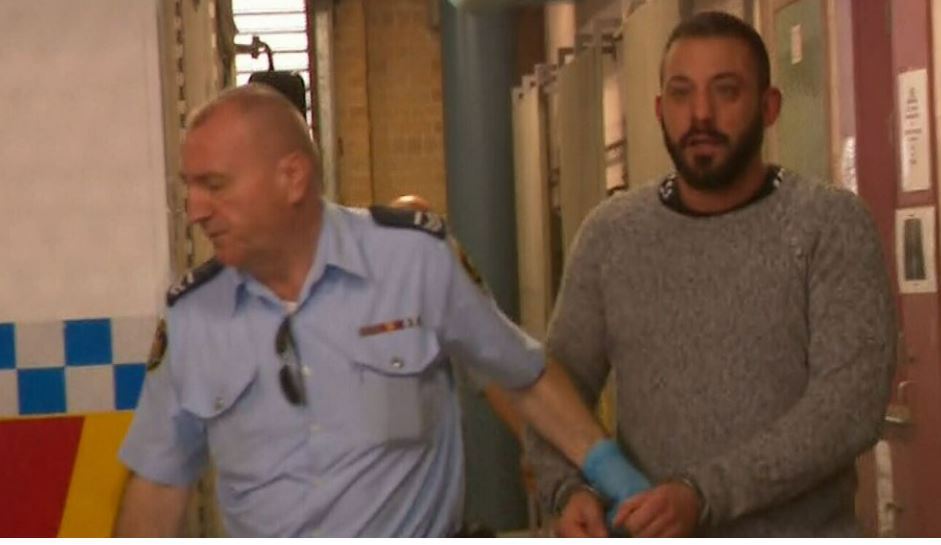
A man has been arrested after going on an alleged rampage outside a pizza shop in Adelaide.

The man, 33, allegedly ripped the cash register off the counter of Fat Jessy's Pizza Bar in Salisbury at 7pm on Wednesday after throwing a call bell at staff.

He then allegedly threw the cash register at four cars outside the restaurant, including a police car, causing significant damage to multiple vehicles.

READ MORE: Circulation of mushroom cook's statement 'unhelpful', police say

"We just didn't want to run over him so when we saw him come towards the car we stopped and shattered the windscreen, my dog was in the back," victim Nadia said.

Witnesses say the 33-year-old "lost it" after a Fat Jessy's worker asked what he wanted on his pizza. 

No one was injured during the incident.

The man has been charged with five counts of property damage, theft and spitting on police.

'Low level radioactive isotopes' found in Sydney home after raid

Authorities have confirmed they found "low-level radioactive isotopes" after blocking off a street and raiding a home over several hours in Sydney's south.

Australian Border Force (ABF) officers and hazmat teams raided the unit in Arncliffe about 9am and left the scene with tape declaring it a "contaminated hot zone".

Fire and Rescue NSW (FRNSW) has confirmed it found the radioactive material, which is commonly used in several industries, at the location.

READ MORE: Embryos contaminated with bacteria at Sydney hospital's IVF lab

Investigations into reported nuclear material underway at unit in Arncliffe.

"The material was found in suitable and effective containers, with no release of radiation," FRNSW said in a statement.

"FRNSW established a 10-metre exclusion zone around the property as firefighters, in protective clothing, used special detectors to inspect the site.

"They were able to further seal the material without incident."

FRNSW said three people who lived at the address were taken to hospital for observation.

"There was no evidence of exposure… other residents nearby, evacuated as a precaution, have since safely returned to their homes."

READ MORE: Tens of thousands of Aussies to get help buying a home under $329m plan

Authorities yet to confirm if they found nuclear isotopes in home.

Environment Protection Authority (EPA), Australian Nuclear Science and Technology Organisation (ANSTO) and AFB testing confirmed they recorded regular readings and declared the area safe.

The raid saw Kelsey Street blocked off at either end, with residents unable to access the street for most of the day.

Earlier a resident told 9News she was worried about the raid.

"It is a very quiet neighbourhood and it sort of stuff is ridiculous anywhere but you don't expect it to happen right down the street from you," the resident told 9News.

NSW Police, as well as officers in hazmat suits, and Fire and Rescue NSW were on scene investigating the home.

"People in the vicinity of the location are urged to follow all directions from emergency services," AFB said in a statement.

"All appropriate safety measures are being implemented."

Investigations are ongoing.

'Disturbing' poaching device found inside dead crocodile

Wildlife officials are investigating a "disgraceful act" of animal cruelty after a crocodile was found dead in the Ross River mangroves.

The crocodile was found near the Barnacle Street boat ramp in Townsville on August 15 and is believed to have suffered a "slow, agonising death".

A poaching contraption made from a four-metre wired rope, hook and stone was found hanging from its mouth.

READ MORE: Circulation of mushroom cook's statement 'unhelpful', police say

Wildlife officials are investigating after a crocodile was found dead in the Ross River mangroves.

"When wildlife officers attended the scene, they discovered the 2.6m crocodile entangled in the mangroves," DES Senior Wildlife Officer, Tony Frisby said.

"Disturbingly, wildlife officers found a large hook attached to the wired rope, and they believe the hook was baited in a deliberate attempt to target and kill the crocodile."

"This is a disgraceful act."

Wildlife officers are sweeping the area for similar baits and lures, which resemble the equipment used by poachers.

READ MORE: Tens of thousands of Aussies to get help buying a home under $329m plan

Wildlife officials are investigating after a crocodile was found dead in the Ross River mangroves.

Crocodiles are a protected species in Queensland under the 1992 Nature Conservation Act.

The maximum fine for the deliberate killing of a crocodile is $32,243.

Anyone with any information has been urged to come forward.

Germany's Cabinet approves a plan to liberalise rules on cannabis

Germany's Cabinet on Wednesday approved a plan to liberalise rules on cannabis, setting the scene for the European Union's most populous nation to decriminalise possession of limited amounts and allow members of "cannabis clubs" to buy the substance for recreational purposes.

The legislation is billed as the first step in a two-part plan and still needs approval by parliament.

But the government's approval is a stride forward for a prominent reform project of Chancellor Olaf Scholz's socially liberal coalition, though significantly short of its original ambitions.

READ MORE: Circulation of mushroom cook's statement 'unhelpful', police say

Germany's Cabinet is set to approve a plan to liberalise rules on cannabis, setting the scene for the European Union's most populous member to decriminalise possession of limited amounts and allow members of "cannabis clubs" to buy the substance for recreational purposes.

The bill, which the government hopes will take effect at the end of this year, foresees legalising possession of up to 25 grams (nearly 1 ounce) of cannabis for recreational purposes and allowing individuals to grow up to three plants on their own.

German residents who are 18 and older would be allowed to join nonprofit "cannabis clubs" with a maximum 500 members each.

The clubs would be allowed to grow cannabis for members' personal consumption.

Individuals would be allowed to buy up to 25 grams per day, or a maximum 50 grams per month — a figure limited to 30 grams for under-21s.

Membership in multiple clubs would not be allowed.

The clubs' costs would be covered by membership fees, which would be staggered according to how much cannabis members use.

The government plans a ban on advertising or sponsoring cannabis, and the clubs and consumption won't be allowed within 200 meters of schools, playgrounds and sports facilities, or near cannabis club premises.

Officials hope their plan will help protect consumers against contaminated products and reduce drug-related crime.

Health Minister Karl Lauterbach said he expects the system to produce "very competitive" prices, "so we think that we can push back the black market well with these rules."

READ MORE: Huge snakes wrestle on Aussie beach as experts sound alarm

At present, "we have rising consumption, problematic consumption," Lauterbach told reporters. "It simply couldn't have carried on like this."

The centre-right opposition argues the government is pressing ahead with legalising a risky drug despite European legal obstacles and expert opinion.

An organisation representing German judges says the plan is likely to increase rather than decrease the burden on the judicial system and could even increase demand for black-market cannabis.

Some advocates of legalisation aren't happy either.

"What we're getting from the health minister is overregulation, a continued stigmatisation of cannabis users and a much too tight regulatory corset, which simply makes it impossible for many, many (cannabis clubs) to work," said Oliver Waack-Jürgensen, who heads the Berlin-based High Ground "cannabis social club" founded last year.

He is also on the board of a national association representing such clubs.

Lauterbach rejected the objections.

"The fact that it's being attacked from both sides is a good sign," the minister said.

He added that "approval with much more liberalisation, like for example in Holland or some American states, would have led to consumption expanding," and that those who oppose any legalisation "have no answer" to rising consumption and crime, and a burgeoning black market.

READ MORE: Tens of thousands of Aussies to get help buying a home under $329m plan

The legislation is to be accompanied by a campaign meant to sensitise young people to the risks of consuming cannabis.

The government says it plans to follow the new legislation by mapping out a second step — five-year tests of regulated commercial supply chains in select regions, which would then be scientifically evaluated.

That's far short of its original plan last year, which foresaw allowing the sale of cannabis to adults across the country at licensed outlets. It was scaled back following talks with the EU's executive commission.

Approaches elsewhere in Europe vary.

The Netherlands combines decriminalisation with little market regulation.

Dutch authorities tolerate the sale and consumption of small amounts of the substance at so-called coffeeshops but producing and selling large amounts of it, necessary to keep the coffeeshops supplied, remains illegal.

Amsterdam, long a magnet for tourists wanting to smoke weed, has been cracking down on coffee shops.

The Dutch government, meanwhile, has launched an experiment it says aims to "determine whether and how controlled cannabis can be legally supplied to coffeeshops and what the effects of this would be."

In Switzerland, authorities last year cleared the way for a pilot project allowing a few hundred people in Basel to buy cannabis from pharmacies for recreational purposes.

The Czech government has been working on a plan similar to Germany's to allow sales and recreational use of cannabis, which isn't finalised.

Denmark's capital, Copenhagen, has proposed legalising weed but has been turned down by parliament. France has no plans to liberalise its strict cannabis rules.

How a short course helped save toddler's life

The parents of a baby girl suffering from Croup have praised an online first-aid organisation for helping save their one-year-old's life.

Brad and Samantha Hill first knew something was wrong with little Harriet when she showed difficulties breathing.

The one-year-old was rushed to hospital and appeared to be improving the following day, when doctors said she could go home.

But Samantha wasn't convinced and just 30 minutes later Harriet took a massive turn for the worse. 

"My child was turning blue," Samantha told 9News.

READ MORE: Man charged with murder after discovery of woman's body in Melbourne

"She's not breathing. I don't know what to do.

"Within seconds, there was a whole medical team and they put her in an induced coma, just to put a breathing tube down her throat.

"She just could no longer breathe on her own. Her airways had completely shut."

READ MORE: Australia has a growing number of female billionaires. Where do we rank?

Samantha said waiting that 30 minutes as she was concerned Harriet was still not alright likely saved the little girl.

She learned the signs to look out for from an online first aid course run by Tiny Hearts and has thanked them for educating her.

"We teach them about choking, we teach them about CPR, we teach them about lots of different things that are commonly faced by little ones and emergencies in the home," Tiny Hearts Co-founder and chief executive Nikki Jurcutz said.

"As parents, we know our children best and when we are assessing little ones, it actually can be really difficult for us as parents, but also medical professionals can miss things."

Harriet spent three days in an induced coma and was diagnosed with Croup – a condition caused by a viral infection that leads to swelling of the voice box and windpipe.

She has since recovered and is happy and healthy back at home.