Tag Archives: oceania

Iconic Mainland Cheese ads actor Terry Procter dies aged 84

He spent years telling viewers that good things take time, but iconic "southern man" of New Zealand advertising, Terry Procter, has died, aged 84.

Procter featured in the famous Mainland Cheese commercials alongside Kevin Corcoran for more than a decade, through a number of campaigns, including "time poor", "time to check the cheese" and famously, "good things take time".

His son Charlie Procter confirmed to Stuff he died on Monday night.

READ MORE: Philip Lowe replaced as RBA boss

He spent years telling New Zealand that good things take time, but iconic "southern man" of New Zealand advertising, Terry Procter, has died, aged 84.

He remembers his father as a hard-working family man, keen beer drinker, and a "good, hard bloke" who was known and loved by his Picton community as "the cheese man".

"Those ads took them far, but they always gave their money away to people that needed it … they both did a lot for charity, and just wanted better for other people," Charlie told Stuff.

"He was just one of those typical Kiwi blokes working the hard yards – he never thought he'd get to the point where he was in advertisements."

Before taking the role of southern men patiently waiting for cheese to mature, neither Procter nor Corcoran had any acting experience.

Procter came into the role by chance – a man who loved to laugh, he had been out with friends on a fishing trip, and after sinking a few beers his jokes caught the attention of a talent scout.

READ MORE: 'Banished' swimming costume makes 'surprising' return

Terry Procter's son Charlie remembers his father as a hard-working family man, keen beer drinker, and a "good, hard bloke" who was beloved by his Picton community as the "cheese man".

"They were looking for a good sort of southern bloke to do these ads, but he wasn't too keen at all," Charlie said.

"It was my mother that pushed him, and he turned up in a pair of gumboots, a singlet, and a pair of glasses tied around a bit of string.

"He didn't really want for much, but they took to him straight away."

Though Procter and Corcoran hadn't met before becoming the faces of Mainland cheese together, the two struck up a close friendship that would last for the rest of their lives.

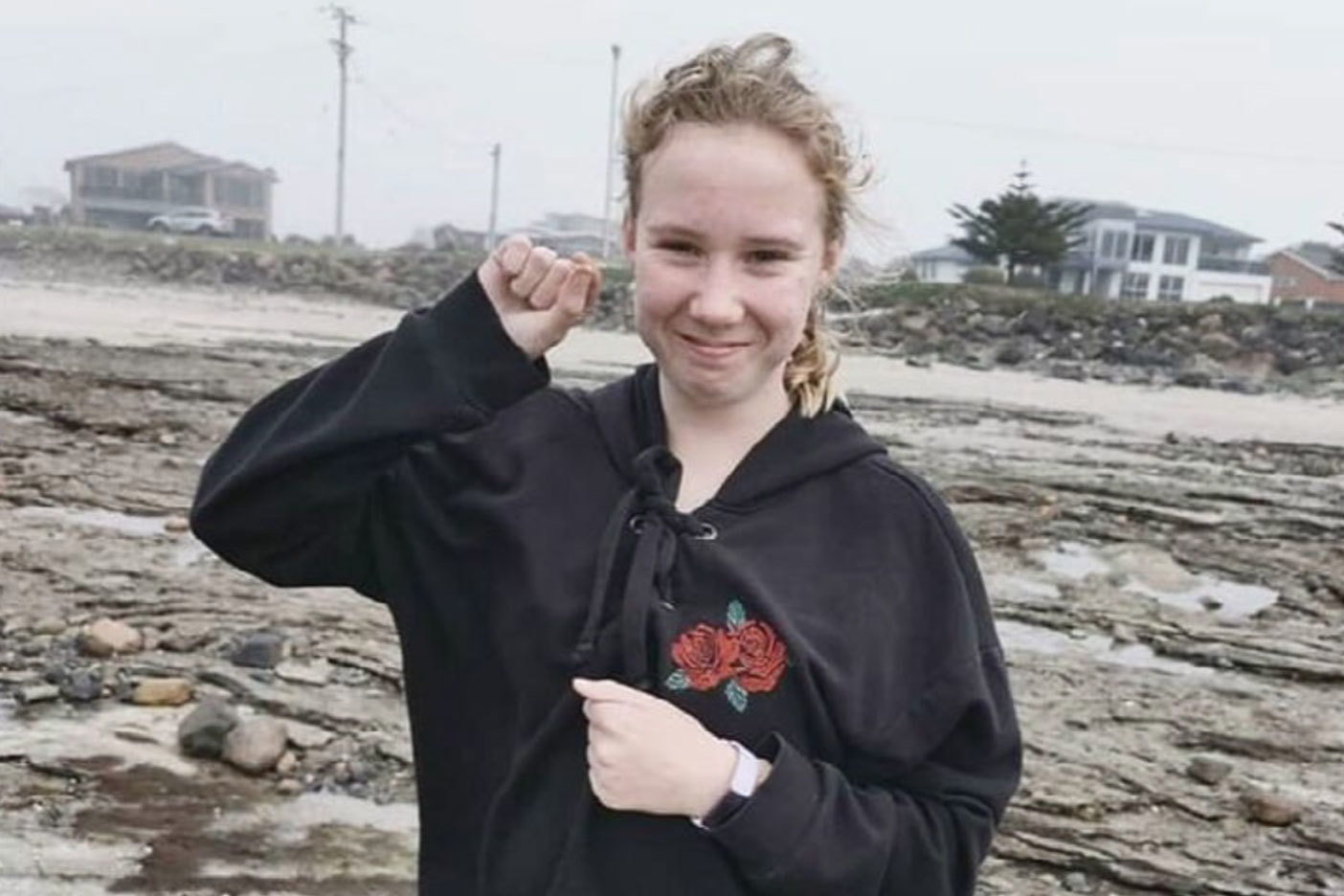
READ MORE: 'One of a kind' teen girl killed in alleged stolen car crash

When Corcoran died in Cromwell in 2012, aged 78, his death "broke [Procter's] heart quite a bit", Charlie said.

Those adverts followed the pair, who became synonymous with the catchphrase, "Good things take time" until 2010, when Procter and Corcoran were replaced by a new on-screen partnership – a grandfather and son.

When Corcoran died in Cromwell in 2012, aged 78, his death "broke (Procter's) heart quite a bit", Charlie said.

"In the end, they weren't really bothered with the money. They just liked getting together, and with the other people who created these adverts," Charlie said.

The duo's legacy was strong across the south, where shop owners loved to take photos with Procter when he paid a visit.

Charlie once found himself in a pub sitting across from a photo of his father plastered on the wall.

His father's resilience, passion, and words of wisdom will always stay with Charlie.

"I'm adopted into my family, and that's the kind of person he was – there aren't many men that'll take on someone else's kid. He was the type that was always there," Charlie said.

"He always said to me, 'Don't let life consume you too much, just enjoy what you can actually hang onto'. I've never forgotten that."

This article originally appeared on Stuff and is republished here with permission. 

Sign up here to receive our daily newsletters and breaking news alerts, sent straight to your inbox.
Group 'hunted down' 18-year-old before revenge killing

Twenty minutes after being told her son was injured and in hospital, Karen Henry received a call back from police.

Her loving son, Nicholas, had died after being hunted down and stabbed.

"I never got the chance to say goodbye, he was taken from me so quickly," Henry said, in an emotional statement to Victoria's Supreme Court.

READ MORE: Reserve Bank Governor Philip Lowe to be replaced

Nicholas Henry had died after being hunted down and stabbed in February 2021.

Henry's traumatised family attended court on Friday, as the three young men who admitted killing him faced a pre-sentence hearing.

Brothers Corey and Brayden Smart, and Abraham Abas, chased Henry down across Morwell, in Victoria's south-east, in February 2021, before corralling him off the road and surrounding him.

All three have pleaded guilty to manslaughter.

Justice Jane Dixon said Henry was "hunted down" by the men and had very little chance of getting away from them.

Corey Smart believed Henry had broken into his girlfriend's car earlier that night, on February 20, outside an RSL.

READ MORE: Man caught allegedly selling fake gold on Sunshine Coast

He gathered Abas and his brother and drove them, following Henry's van and forcing it off the road.

The van mounted a gutter and crashed into a fence.

"You dog, you rat," a neighbour heard one of the three offenders yell.

Henry got out of the van and tried to run away but the three men chased after him and began assaulting him as he laid "completely defenceless on the ground", prosecutor David Glynn said.

"It's motivated by revenge and, to an extent, taking the law into their own hands," he said.

The group bashed Henry while he lay on the ground, pulled out a knife and stabbed him eight times across his back and bottom.

READ MORE: Neighbours save elderly couple from house fire

"He was not in a position to defend himself, he was utterly helpless," Glynn said.

Henry was taken to hospital, alive but bleeding heavily.

He died at 2.30am on February 21.

His mother said her son's death had shattered her world and their family had not been the same since.

"I can't believe I will not hear Nicholas' voice again, see his cheeky smile and most of all hear his laugh," she said in a statement.

"All I ask is that my boy and our family receive justice for Nicholas."

His sister Taylor Henry said she fell to the ground "screaming no" when her mother told her the tragic news.

"Our family will never be the same," she said.

The three men are each facing up to 25 years in prison.

Corey's barrister Julian McMahon SC said his client suffered from neurological issues after being involved in a car accident and asked the judge not to hand him a harsher sentence than the other two.

Colin Mandy SC said Brayden Smart had acted out of a sense of loyalty for his brother, while Abas' barrister David Cronin said his client, who is a refugee, faced the prospect of being deported.

Dixon will sentence the Smart brothers and Abas at a later date.

Sign up here to receive our daily newsletters and breaking news alerts, sent straight to your inbox.
Legal documents from Victorian government published on dark web

Legal documents from the Victorian Government have been released to cyber criminals on the dark web after an affiliated law firm was hacked.

The state's Chief Information Security Officer said after the major cyber breach of HWL Ebsworth in April this year the data leaked about government departments and agencies has been published to the dark web.

HWL Ebsworth was the subject of a cyber attack by threat actor "ALPHV/BlackCat".

READ MORE: Reserve Bank Governor Philip Lowe to be replaced

The firm became aware of the attacker after a post was made on a dark web forum with the perpetrator claiming to have "exfiltrated data".

"The investigation indicates the threat actor had accessed and exfiltrated certain information on a confined part of the firm's system, but not on our core document management system," the firm said.

But last month HWL Ebsworth found out the information that had been stolen was published on the dark web.

The Chief Information Security Officer said the government is taking this breach extremely seriously.

"We are taking this matter extremely seriously, and are working in partnership with the Commonwealth Government, and can confirm that there has been no direct breach of Victorian Government IT systems," the officer said.

"HWL Ebsworth is in direct contact with impacted departments and agencies to provide advice on the specific information that has been exposed."

READ MORE: Man caught allegedly selling fake gold on Sunshine Coast

The Chief Information Security Officer confirmed if the information exposed on the dark web impacts Victorians, they will be notified by the relevant department or agency.

"Departments and agencies will make direct contact with those impacted as soon possible to provide tailored advice and support because we know data breaches can be distressing, especially when personal information is involved," the officer said.

"Supporting impacted Victorians and their wellbeing, remains a top priority."

HWL Ebsworth is working with Australia's national identity and cyber support community service IDCARE to support impacted people.

"These services are available at no cost to affected individuals," the government said.

READ MORE: Neighbours save elderly couple from house fire

The Chief Information Security Officer added any services assisting the Victorian Government are expected to maintain "strong cyber security measures" to protect data.

"We have sought assurances from HWL Ebsworth on the cyber security protections applied to Victorian Government data," the officer said.

Sign up here to receive our daily newsletters and breaking news alerts, sent straight to your inbox.
Lowest-paid workers at big four bank to get hefty pay rise

The lowest-paid workers at NAB will get a hefty raise over the course of three years under a new pay deal – and the Finance Sector Union (FSU) believes two of the other big four banks will soon follow suit.

Under the new enterprise agremeement, which comes on the back of 16 months of negotiations between the big four bank and the and the union, low-earning employees will get a 17.5 per cent pay increase between this year and 2026.

All workers under the high income threshold – that's more than four out of every five employees at the bank – have also been guaranteed raises.

READ MORE: Philip Lowe's replacement as RBA governor named

According to NAB, more than 32,000 people are employed by the bank.

"Union members, acting collectively gave the NAB a clear message that they deserved better pay rises than the bank was prepared to pay them and by standing their ground, they have achieved a much fairer outcome," FSU National Secretary Julia Angrisano said. 

"More than 80 per cent of NAB staff have now secured guaranteed fixed salary increases instead of relying on NAB's market-based model which eroded our members' standard of living."

FSU members who work at Commonwealth Bank and ANZ are expecting those banks to make offers matching that of NAB, she added.

READ MORE: Single-income homeowners struggle to afford mortgage repayments

NAB and Commonwealth bank.

NAB described the in-principle deal as an "important milestone".

"We've reached an important milestone in negotiations for our proposed Enterprise Agreement (EA) with in-principle agreement from the FSU and NAB individual representatives on a package to put to colleagues," a spokesperson said.

"This is significant progress and the result of us listening to and acting on feedback. With negotiations now complete, we are focused on ensuring colleagues are well informed before putting the proposed EA to a vote."

A previous offer by NAB had been rejected by the FSU last November, but while the union is now advising its members to vote in favour of the new deal, Angrisano said more needed to be done to improve conditions for workers.

"While some improvements have been made to address the hours of work crisis at NAB that is putting immense strain on employees' physical and emotional wellbeing, more needs to be done," she said.

"The union is continuing to pursue NAB through its Federal Court action to achieve recognition of these harmful work practices."

In addition to the guaranteed pay increases, the enterprise agreement includes:

• Transparency of annual salary increase budgets
• A right of dispute regarding pay increases for those earning more than the high-income threshold
• Working from home rights
• Increases to parental leave including access to both parents
• Measures to address the gender pay gap including superannuation paid on all periods of paternity leave
• Aboriginal and Torres Strait Islander leave
• Recognition of mental health and menopause/menstruation
• An ongoing consultative committee to address job security amidst the changing nature of the bank/industry.

Sign up here to receive our daily newsletters and breaking news alerts, sent straight to your inbox.
Single-income homeowners struggle to afford mortgage repayments

Single Aussie homeowners need almost four weeks' worth of pay to afford montly mortgage repayments as consistent interest rate rises and cost of living pressures bite budgets.

Canstar research showed for the average Aussie with a loan of $584,836 on a $72,000 salary, they need to work 135 hours per month to afford a repayment of $3883.

This basically equates to 3.6 weeks of work just to afford the basic repayment on a home loan.

READ MORE: Reserve Bank Governor Philip Lowe to be replaced

A real estate sign is seen at a property in Croydon Park in Sydney, Australia

It is better news for Aussies with a dual income which reduces the burden down to 67 working hours or less than two weeks of work per person to cover the same amount.

The research shows the impact of interest rate rises by the Reserve Bank of Australia up to 4.1 per cent is hitting single homeowners the hardest.

"It goes to show it's near impossible to service the average-sized loan in today's climate with only one income," Canstar's Editor-at-Large Effie Zahos said.

It isn't just mortgage repayments hitting single-income homes hard, Zahos said the average monthly grocery shop of $659 means the person would need to work three days in the month to cover the cost.

It is a similar story for other necessities like electricity bills where a single-income homeowner would need to work nearly 6 hours each other to afford a $162 bill.

READ MORE: Man caught allegedly selling fake gold on Sunshine Coast

The impact is even greater depending on which state you live in with average loan sizes and incomes differing across borders.

In New South Wales, on a home loan of $720,458 and a before-tax income of $75,000. mortgage holders will need to work 21 days in a month to afford their $4784 repayments.

In South Australia, the average income is $65,000 and the average home loan is $467,471 then mortgage holders will have to work 15 days in the month to cover the $3104 repayments.

In Victoria, mortgage holders need to work at least 18 days in the month to cover a repayment of $3980 on a loan of $599,398 and average income of $72,000.

For Queensland mortgage holders it's about 16 days per month if they earn around $69,000 and need to make a $3468 monthly mortgage repayment.

In Western Australia, homeowners need to work 13 days per month on a $78,000 income to afford the $3135 repayments.

READ MORE: Neighbours save elderly couple from house fire

Suburbs vulnerable mortgage cost of living crisis explainer

The costs are adding up for Aussies needing to cover their household bills.

"Borrowers paying off an average-sized loan on their own need to work about 135 hours or close to a full month to cover their mortgage repayment," Zahos said.

"That means 82 per cent of their monthly working hours go towards their mortgage which doesn't leave much for other household bills and expenses."

When you throw electricity bills, groceries, home and contents insurance, car insurance on top of the mortgage – a single income earner barely has enough working hours in the day to cover the costs.

Zahos said if you add all these costs up then a single income earning is 11 working hours behind to afford the bills.

Sign up here to receive our daily newsletters and breaking news alerts, sent straight to your inbox.

The information provided on this website is general in nature only and does not constitute personal financial advice. The information has been prepared without taking into account your personal objectives, financial situation or needs. Before acting on any information on this website you should consider the appropriateness of the information having regard to your objectives, financial situation and needs.

Beachgoers watch out, this controversial swimwear is back

After decades of banishment from mainstream wardrobes, one of fashion's most divisive garments – the men's swimming brief – is making a tentative return across the globe.

Some would argue the garment has never gone away.

Beaches and pools in Europe (in France in particular) have long been a safe space for fans of the Speedo style, ditto Brazil.

Racing briefs are also de rigeur for swimmers, water polo players and divers, and widely embraced by the gay community.

READ MORE: Reserve Bank Governor Philip Lowe to be replaced

But could budgie smugglers be back in favour with board short-loving men too?

Speedo – the original purveyors of the much-maligned piece of skimpy swimwear — argue yes, reporting that in 2023, sales and orders across Europe, the Middle East and Africa are up by over 200 per cent compared with 2022.

Meanwhile in the US, the brand reports a 54 per cent sales increase from 2020 to 2021 and are expecting to exceed this for 2023 (the brand say data for 2022 isn't accurate due to logistical changes that year).

The garment's resurgence could be down to a wider movement towards shorter short proportions in men's fashion more broadly said Stephen Doig, Men's Style Editor at British newspaper The Telegraph.

"The rise of the short short has been seen at Prada and Dior — so perhaps micro swim shorts are a natural progression," he said, adding that men's swimwear is a "booming" market.

"There's a huge variety of choice and design nous with regards to men's trunks now," Doig said, which "makes it surprising to see a return of this throwback."

In an email interview with CNN, Kirsty Saddler, Speedo's Vice President of Global Brand Marketing, deemed the Speedo brief "classic, iconic, and known around the world," and added, "they're also very practical and the lightest and most comfortable item to wear when swimming".

Other commentators put the renewed interest in the look down to the ongoing prevalence of ironic style – see moustaches, Crocs, mullet hairstyles, socks with sandals.

In recent years, the swimwear's cultural cache has been raised by a roster of celebrity fans.

Daniel Craig as James Bond in "Casino Royale" (2006).

Olympic diver Tom Daley and soccer stars David Beckham and Cristiano Ronaldo.

READ MORE: Man caught allegedly selling fake gold on Sunshine Coast

Actor Luke Evans wears them on the beach, as does singer Ricky Martin and fashion designer Giorgio Armani.

Actor Zac Efron showed off a stars and stripes "freedom" pair during a commercial in the 2017 Superbowl and movie star Arnold Schwarzenegger has been a devotee for multiple decades.

Speedo's swimming brief – so famous it has become the byword to describe all pieces in the style – was the most famous creation of Australian artist and designer Peter Travis, who also worked as a potter, kite-maker and lecturer in ceramics.

Travis joined Speedo in 1959, at a time when men wore shorts on the beach – or perhaps a cabana suit: boxer shorts with a matching shirt. Longer-length Hawaiian-style swimming trunks were becoming fashionable, and the company wanted Travis to create something similar for them.

But Travis had much smaller idea.

His swimming briefs were, well, brief – available in 17.5cm, 12.5cm and 7.5cm widths — the greater the width, the more 'modest' the garment said Australian newspaper the Sydney Morning Herald.

Initially, the paper reports, men tended to buy the larger width, but the second year saw buyers opt for a medium width, with the skimpier 7.5cm style dominating three years after their inception.

Travis said his briefs weren't designed to titillate or make a fashion statement (their racy perception was simply, he said, "a bonus").

As an avid surfer, Travis said the garment was simply a functional piece of kit to make movement easier for those in the water.

Not everyone was happy.

Australia has a long history of authorities trying to control what bathers wore on the beach: in 1907 a proposal that men should legally wear full body suits with modesty skirts was fiercely protested and ultimately dismissed.

Women were especially penalised for their choice of swimwear.

For decades afterwards, tape-measure wielding inspectors patrolled beaches on the lookout for anyone wearing risqué swimsuits —­ and similar scenes played out on some US beaches too, particularly throughout the 1920s.

In 1961, when Speedos were first worn on Sydney's Bondi Beach, their scantiness raised eyebrows, dropped jaws and even saw some arrested by police for indecent exposure (the charges were ultimately dropped as the briefs did not reveal pubic hair).

The entire episode was free publicity for Speedo.

Sales exploded globally.

Briefs were embraced across all demographics from older men to Olympic Athletes.

At the 1968 Mexico Olympics, 27 of the 29 gold medallists in the pool wore Speedo swimwear, many of which were the brand's small briefs style.

Briefs reigned supreme throughout the heady days of the 1970s and 80s, but by the 90s and the advent of grunge, baggy board shorts ruled on the beach.

Speedos became comic – a fancy dress costume, a relic, a joke.

It's a perception Speedo claim is not universal.

"In Australia for example, the brief is one of our bestselling styles," Saddler said, arguing their resurgence could be down to the fact they're a versatile style which works for all ages.

"A classic black brief works well on the mature man in St Tropez, while a neon print brief works to party on the beach in Ibiza," she added.

And while Fastskin-style suits may now be standard for high-level swimming competitions, "many elite and club swimmers opt to wear briefs during training sessions as they're incredibly comfortable," Saddler said, citing the likes of Olympic champions Caeleb Dressel of the USA and Britain's Adam Peaty.

"There is a simplicity in just opting for a basic pair of briefs instead of fancier varieties of swimwear," said Doig.

"I don't think it's necessarily about having a body beautiful; there's a certain machismo majesty to the garment (even when worn by a fuller figured guy). But if you're going to wear them, you have to really own it."

Sign up here to receive our daily newsletters and breaking news alerts, sent straight to your inbox.
Who is Michele Bullock, Australia's next Reserve Bank governor?

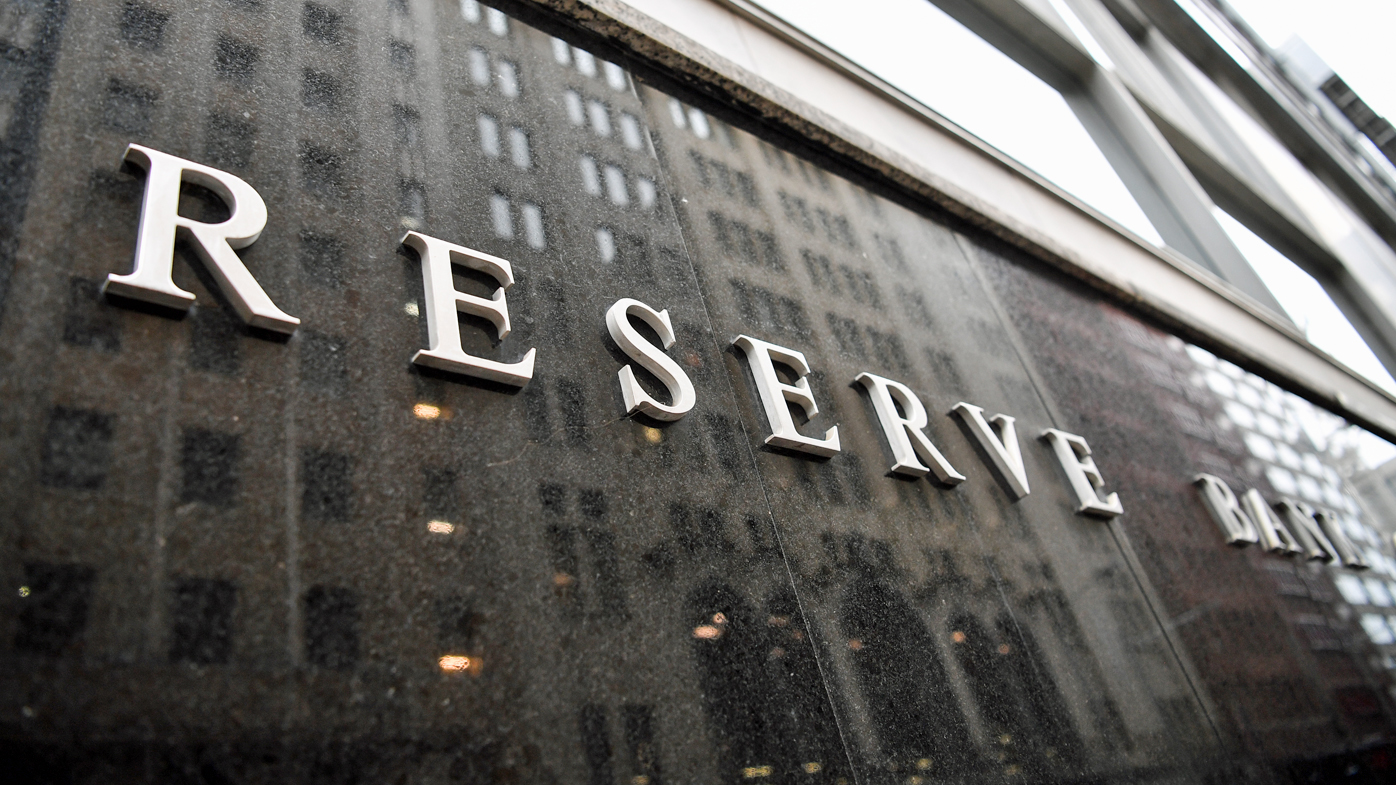
Michele Bullock has been named as the next governor of the Reserve Bank of Australia (RBA), to replace outgoing chief Philip Lowe when his term ends on September 17.

Bullock's rise to the top job comes after more than 12 months in her current role as the deputy governor, to which she was appointed on April 2, 2022.

Bullock joined the central bank in 1985, where she worked across a number of positions in the RBA's economic and international departments.

READ MORE: Philip Lowe's term as RBA Governor ends

In 2007 she was appointed chief manager of the Payments Policy Department and three years later in 2010 she became one of the RBA's assistant governors, working in currency before covering general business services and finally the financial system.

Bullock is the ninth governor of the RBA and the first woman to lead the bank in its 63-year history.

"I am deeply honoured to have been appointed to this important position," Bullock said following her appointment.

"It is a challenging time to be coming into this role, but I will be supported by a strong executive team and boards.

"I am committed to ensuring that the Reserve Bank delivers on its policy and operational objectives for the benefit of the Australian people."

READ MORE: RBA to meet eight times a year to set interest rates under sweeping changes

A proud 'country girl'

Bullock was born in Melbourne but moved to Armidale in NSW when she was a young girl, attending Armidale High School before completing a bachelor of economics with honours at the University of New England (UNE).

Five years later, she completed her master's at the London School of Economics in 1989.

In an interview with UNE, Bullock described herself as a "country girl" and credited her regional upbringing with giving her perspective at the RBA.

READ MORE: Senator defends RBA boss amid mounting calls for his replacement

"Growing up in the country and going to UNE was a real leveller for me. There were country kids up there, some went to private schools in Sydney, a lot of them didn't and went to public schools like me in country areas," she told the university.

"It wasn't about where you came from or who you were, it was about what you were contributing, like to the sporting teams you were playing in. It was a really welcoming environment.

"That's what I try to bring to what I do. I want to be inclusive, welcoming and make a level playing field upon which everyone can contribute.

"And I think I bring that from my country upbringing."

Sign up here to receive our daily newsletters and breaking news alerts, sent straight to your inbox.