Tag Archives: oceania

Accused 'at risk' of committing revenge attack after gangland killing

A man accused of leaving a gang member a quadriplegic in a targeted shooting could also get revenge after a criminal colleague was gunned down in Sydney last month, a court has heard.

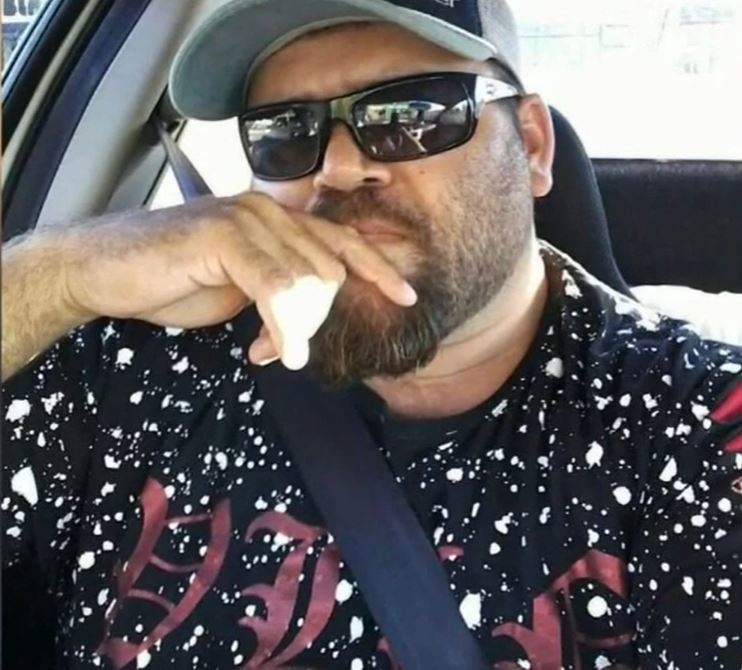
Luke John Sparos allegedly shot Samer Marcus, who was associated with Assyrian street gang DLASTHR or "The Last Hour", in the face and back on the night of November 6, 2020.

The crown argues the shooting was a revenge attack after Marcus allegedly assaulted Sparos with a makeshift weapon while the pair were in jail.

READ MORE: Jack Russell dies after shock Sydney mauling

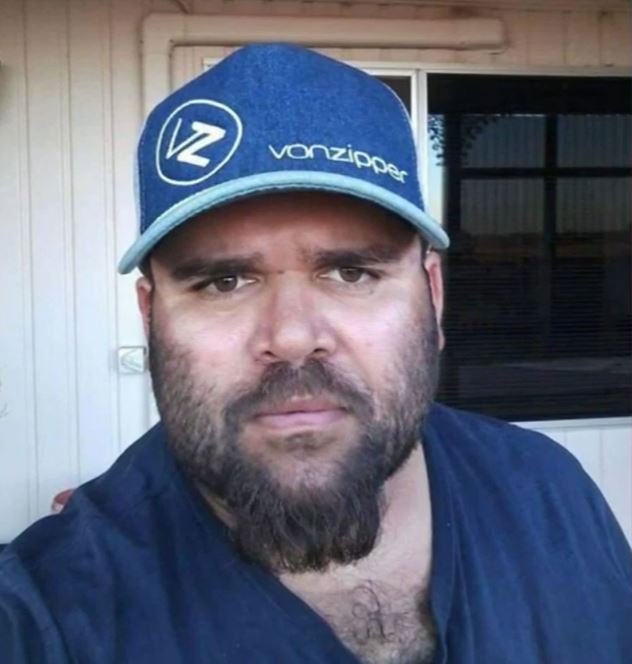
Luke John Sparos, who's accused of a gang shooting, is seeking to change his bail conditions.

On Tuesday, the 42-year-old applied to vary his bail conditions after being allowed to walk free from prison in September last year ahead of his trial.

Currently residing at a waterfront home in Yowie Bay with businessman Leo Leuwin, Sparos is under a curfew and electronic monitoring by police and is required to inform officers of his movements 24 hours in advance.

He has applied to vary his residence to a $2600 per week rental unit in Haymarket after being offered a $95,000 job with Unique Wedding Cars.

His barrister David Edwardson KC told the NSW Supreme Court that as well as a change in address, his client needed the reporting condition to be relaxed so he could transport vehicles around Sydney for his job.

Edwardson rejected suggestions by crown prosecutors that Sparos could get revenge after his acquaintance Alen Moradian was executed in a Bondi Junction car park on June 27.

Sparos and Moradian were convicted of importing a commercial quantity of a border controlled drug in 2011, with Sparos being released on parole on June 10, 2020.

Edwardson told Justice Nicholas Chen that there was no evidence the pair had been working "hand in glove" in any criminal activity prior to Moradian's death.

"There is no actual intelligence or basis to think that there is any likelihood of a retribution attack," he told the court.

Prosecutor Emma Blizard argued the risk of retribution was real given the Yowie Bay man had been charged with the revenge shooting of Marcus.

READ MORE: Disgraced sports doctor stabbed by another inmate in prison

Former DLASTHR gang member Samer Marcus was left a quadriplegic by the November 6 shooting

Chen was also told about issues which weakened the crown's case against Sparos, with Edwardson saying the identity of another potential shooter had emerged.

Sparos, who is accused of either shooting Marcus or being present at the time, has denied any involvement with the incident.

With his trial date recently vacated and a new trial not due to be set until the last half of 2024, Sparos had to be allowed to work, Edwardson said.

A readiness hearing has been scheduled at Downing Centre District Court on August 31 when Sparos faces one charge of shooting with intent to murder.

READ MORE: The sad reason calls from public pay phones have surged

He is also facing a separate charge of perverting the course of justice after allegedly smashing his phone at Surry Hills police station after his arrest.

The 42-year-old is trying to remove the electronic monitoring condition, saying this cost him $600 a week, but acknowledged that this requirement could remain in place if necessary.

He is also seeking to change his restrictions on who he can leave home with, extending this from Leuwin to his father and partner as well.

Blizard argued any relaxation in the bail conditions would pose an increased risk.

"The only way to manage the risk that Mr Sparos poses moving forward to the community, to witnesses and the risk of reoffending, is for the authorities to have the ability to monitor his movements and that is allowed for by the existing bail conditions," she said.

Chen reserved his decision.

Sign up here to receive our daily newsletters and breaking news alerts, sent straight to your inbox.
Threads passes 100 million users in five days – but is the platform without drawbacks?

Meta's new social media platform Threads has taken off like wildfire, with upwards of 100 million users joining within just five days of its launch.

Designed to compete with rival Twitter, the app attracted on average one million users to the platform every four hours; making it the world's most downloaded at the time.

"That's mostly organic demand and we haven't even turned on many promotions yet," Meta CEO Mark Zuckerberg said.

The app's explosive growth has given rise to questions about where this tectonic shift in the digital landscape could lead, particularly around data privacy and an algorithm-driven feed designed to promote engagement.

READ MORE: Jack Russell dies after shock Sydney mauling

The early numbers look good for Meta, however Threads has a long way to go before it catches up to the 2.9 billion monthly users on Facebook, 2.3 billion Instagram users and the approximately 400 million people its direct competitor Twitter logs each month.

One feature which helped attract early adopters was how easily people can create a Threads account from their existing social media. 

Users have the choice to follow everyone they know on Instagram when they sign up for the first time.

This means new accounts are already able to interact with friends and followers.

But there could be some major downsides to the platform.

READ MORE: Twitter threatens lawsuit over new rival Threads

Threads privacy policy user data

Threads collect a lot of data from its users, including location, purchase history, health information, and advertiser information. 

The app has many features that appear to mimic Twitter, which may already have opened the platform up to costly legal action.

It does away with the real-time feed that helped Twitter to flourish as posts will not be chronologically ordered.

Threads will not prioritise political or "hard news" over any other content, instead promoting sports, music, fashion, beauty, and entertainment to bolster engagement.

Head of Instagram Adam Mosseri said focusing on news would invite a level of "scrutiny, negativity, and integrity risk" not worth the revenue it would bring.

READ MORE: Elon Musk and Mark Zuckerberg say they're ready for a cage fight

Instagram Head Adam Mosseri

Threads' massive growth could be a sign that people are looking for Twitter alternatives.

While Threads has been seeing astronomical increases, multiple internet traffic analysts reported noticeable declines in Twitter usage in just the past few days. 

"We've been reporting for a while that Twitter is down compared with last year – June traffic was down 4 per cent – but Threads seems to be taking a bigger bite out of it," David Carr, a spokesman for internet analysts Similarweb said.

Elon Musk bought Twitter for $44 billion in 2022, and the site has undergone several unpopular changes since then, the latest being daily limits on the number of tweets people can view to try to stop unauthorised scraping of potentially valuable data.

Complaints of "hate speech" on the platform have surged, but Musk has defended the platform's support of "free speech". 

Last week, Australian authorities issued a legal notice to Twitter demanding the social media giant explain how it is tackling online hate, with the threat of fines looming.

Sign up here to receive our daily newsletters and breaking news alerts, sent straight to your inbox.
Ben Roberts-Smith appeals defamation loss

War veteran Ben Roberts-Smith is appealing the loss of his defamation lawsuits after a judge found reports he committed war crimes were substantially true.

Court findings that Ben Roberts-Smith committed war crimes while in Afghanistan could be under threat in a legal appeal by the Victoria Cross recipient.

In June, Roberts-Smith suffered a massive defeat after the Federal Court dismissed his defamation cases over reports he was involved in a number of unlawful actions as an SAS corporal, including the murder of four unarmed prisoners.

READ MORE: Clare Nowland's family sues NSW government over Taser death

On Tuesday, he filed his appeals of these findings seeking to revive claims that Nine-owned publishers The Age and The Sydney Morning Herald plus The Canberra Times defamed him in their reports.

The articles, published in 2018, included claims Roberts-Smith kicked a handcuffed man off a cliff and ordered his execution, and machine-gunned another prisoner, taking his prosthetic leg home as a souvenir drinking vessel.

The three media firms hailed the dismissal of the cases as a significant win and are now seeking their legal costs from the former soldier as well as from the Seven Network and Kerry Stokes' private firm Australian Capital Equity which financially supported the lawsuits.

READ MORE: NSW residents set to benefit from state's first-ever rental commissioner

In November 2020, a report into alleged war crimes by special forces in Afghanistan was released finding credible evidence 39 civilians and prisoners were unlawfully killed by Australian troops while two others were subject to cruelty from 2007 to 2013.

Two years later, more than 40 alleged offences were under investigation.

Roberts-Smith has not been charged and maintains his innocence.

If you are a current or former ADF member, or a relative, and need counselling or support, you can contact the Defence All-Hours Support Line on 1800 628 036 or Open Arms on 1800 011 046.

Nine, the publisher of this website, is also the publisher of The Sydney Morning Herald and The Age.

Rex wants to become Australia's Antarctic flier

Australian regional airline Rex is aiming for a surprise new gig helping some of our country's top scientists carry out research in snowbound Antarctica.

Rex revealed in a media release it had responded to a request for information from the Australian Antarctic Division over the airline's "intention" to become the next aerial operator of the Australian Antarctic Program.

The Division, based in Kingston, Tasmania, operates the Program in Antarctica with aims of scientific discovery, international cooperation, and strategic strength.

READ MORE: Jack Russell dies after shock Sydney mauling

Rex Airlines

As well as maintaining a flagship, the icebreaker RSV Nuyina, the Program also makes use of air transport.

Now, it's looking to bring all its aerial operations under one operator.

Rex said the new plan called for "significantly expanded capabilities" including one large intercontinental passenger jet, four intracontinental turbo-prop aircraft able to operate on skis, and four twin-engine helicopters which can operate both on land and on the Division's flagship the RSV Nuyina.

READ MORE: Disgraced sports doctor stabbed by another inmate in prison

Antarctica

The new operator will also have to provide a "significant scaling up" of uncrewed drone capability for operations during the "summer" months of October to March.

"This ambitious and challenging Program requires an operator that has deep knowledge of aviation across a whole range of platforms as well as proven organisational excellence in operating special missions," Rex Antarctic project manager Craig Martin said.

He said Rex had expertise from operating a fleet of 150 aircraft in every Australian state.

"We also have deep knowledge of special mission work, having carried out tactical flying for the Department of Defence for 20 years as well as specialised aeromedical services for over 12 years as the selected air ambulance operator for both the state governments of New South Wales and Victoria, with another 10 years running on both contracts," he said.

READ MORE: The sad reason calls from public pay phones have surged

Rex is preparing ahead of an expected request for tender in November this year.

Australia operates three year-round research stations: Casey, Davis, and Mawson on the Antarctica mainland.

It also has a base on sub-Antarctic Macquarie Island.

Each station has up to 100 residents in the summer – including scientists, doctors, tradies, and chefs – declining to 15 to 20 in the winter.

Sign up here to receive our daily newsletters and breaking news alerts, sent straight to your inbox.
Gym, spa, beauty facilities: Hidden details of Putin's 'ghost' train

August 5, 2022 was a day like many others in Ukraine.

First light revealed the devastation from a night of Russian bombing.

Russian attacks on a residential neighbourhood of Mykolaiv that morning brought "significant destruction," the governor of the region said at the time, injuring at least 10.

READ MORE: Kremlin says Putin met with Russian mercenary leader Yevgeny Prigozhin days after abortive mutiny

On that same day, in Moscow, bureaucrats in President Vladimir Putin's office were preoccupied by an issue far removed from the brutal war in Ukraine.

"The Transportation Administration has received an appeal," a Kremlin official wrote, "about the need to install gym equipment Hoist HD-3800 and Hoist HD-3200 instead of Abductor-Standard and Abductor-Technogym in the sports-health wagon No 021-78630".

Recently leaked documents suggest that the "sports-health wagon" is used by none other than Putin himself.

Remarkably little is known about Putin's private life. His public image is carefully manicured, as has been evident in the days since Yevgeny Prigozhin's short-lived mutiny.

But a trove of paperwork and photographs obtained exclusively by the London-based Russian investigations group the Dossier Centre, and shared with CNN, Süddeutsche Zeitung, and German public broadcaster NDR and WDR, reveals details the Kremlin shrouds from public view, and the extent to which Putin's paranoia has created a cloistered existence.

The Dossier Centre is backed by Mikhail Khodorkovsky, an exiled former Russian oil tycoon turned Kremlin critic.

The fact that Putin uses a train is well known.

The Kremlin itself has released images of meetings held on board, in an ornately decorated boardroom. The contents of the train's other 20-odd cars, however, have been a closely guarded state secret.

The Dossier Centre says the leaked documents came from an insider at Zircon Service, a Russian company tasked by Russian Railways, the state-owned rail operator, with outfitting the cars intended for the office of the Russian president.

Among the parts of the train detailed is car number 021-78630. A glossy brochure made by Zircon itself shows a luxurious gym and spa on wheels designed for Putin, the Dossier Centre says.

The car was completed in 2018. At the time the photos were taken, it was outfitted with Italian-made Technogym weights and resistance equipment – later to be replaced, it would seem, by Hoist machines made by a US-based company.

Through the door, further down the car, a full cosmetology centre is furnished with a massage table and all manner of high-end beauty equipment – including, according to a leaked document, a radio-frequency machine used to enhance the tautness of skin. The room itself, documents from the Dossier Centre suggest, is outfitted to help prevent the use of listening devices.

Finally, a tiled bathroom features a full Turkish steam bath and shower.

Among the documents obtained by the Dossier Centre are letters tying the outfitting of the rail cars, including the gym car, directly to officials at the highest levels of Putin's administration.

READ MORE: Ukrainian official appears to claim responsibility for Crimea bridge explosion

The Kremlin flatly denies the Dossier Centre's findings, telling CNN: "President Putin does not have such a car in his use or in his ownership."

CNN also reached out to Zircon Service and Russian Railways for comment but has not heard back.

On November 2, 2018, a meeting was held to assess the work remaining to be done on the gym car, number 021-78630. The minutes of that meeting, also obtained by the Dossier Centre, show that in addition to executives from Zircon Service and Russian Railways, there were 10 officials in attendance from the Federal Security Service (FSO), the organisation tasked with protecting the Russian president.

Dozens of maintenance contracts leaked to the Dossier Centre, some of which list the gym car number 021-78630, say that any work on the train cars must be coordinated with the FSO.

In 2020, a top official at Russian Railways, Dmitry Pegov, wrote to the deputy director of the FSO, Oleg Klimentiev, pleading with him to review proposals he had sent for living quarters to be constructed on two rail cars.

"To date, the approval of any of the options has not been received from the FSO, which does not allow us to start the procedure for concluding a contract and begin the construction of wagons," Pegov wrote. "I ask you, dear Oleg Ateistovich, to review the proposed concepts and inform us about the decision made."

CNN's attempts to reach Pegov and Klimentiev for comment were unsuccessful.

According to a former engineer and captain in the FSO, Gleb Karakulov, who defected from the country last year and was interviewed by the Dossier Centre under extreme secrecy, Putin has increasingly turned to train travel as a way to avoid being tracked.

"The plane, as soon as it takes off, it immediately crosses flight radar," Karakulov said in the interview, which was recorded last December. "The train, it is used in order to somehow hide these movements."

Karakulov said that he first began working on the train, installing communications equipment, around 2014. It came into much more frequent use, according to his account, in the second half of 2021, as Russia was gearing up for its full-scale invasion of Ukraine.

According to Karakulov, Putin's train has since the beginning of the war spent considerable time parked near Valdai, a remote Russian region between Moscow and St. Petersburg. Putin maintains a large residence in the area, known for its bucolic lake and forests.

"Our employees were in quarantine specifically for this special train," Karakulov told the Dossier Centre. "Since the beginning of the war, guys said that they left to somewhere in the direction of Valdai for 40 or even 45 days.

"Maybe there will be no train departure on a particular watch, but people are always ready."

Privacy, though, has not been total. The vulnerability has come in the form of amateur trainspotters.

"There is a ghost train on the railways of our country," one trainspotter wrote alongside an image of what appears to be Putin's train he posted on rutrain.com. "It is not in the timetables or in the Russian Railways systems."

They are able to identify the train in part through its use of two locomotives, and in part by a feature identified in the brochure made by Zircon Service. A characteristic white dome, said by the Dossier Centre to contain advanced communications antennae, is plain to see on one of the carriages.

The domes do not appear on ordinary Russian trains. But they were visible in an official video released by the Kremlin in 2019, on one carriage of a specially-chartered Russian Railways train, as Putin rode along over the newly constructed Kerch Bridge between mainland Russia and occupied Crimea.

It is through the image of those domes that we know that Putin's train carries the ordinary external markings of a Russian train. It has been spotted – and photographed – repeatedly over the years by amateur trainspotters.

Trying to understand Putin's mindset is an inherently speculative affair. The best one can do is turn to those who have spent time with him.

Abbas Gallyamov is among them, having for years served as one of Putin's speechwriters.

"His feeling of political insecurity I think led to him start feeling more and more physically insecure," Gallyamov said from Israel, where he now lives. "There are a lot of people who are very close to him and who are choosing this insecurity for their own advantage, by him, look, there is a threat here, threat here, threat here."

The "paranoia," as Gallyamov describes it, has caused the Russian leader to build more and more walls around himself.

"He is losing the war, he is losing in politics, he is losing in popularity," Gallyamov says. "He is getting more and more enemies, committing more and more crimes. He feels this that he is surrounded by enemies. And psychologically he wants to feel protected against all these things."

The distance created by those protections, Gallyamov speculates, may be among Putin's most immediate problems. And, ironically, might be a reason for the extreme comforts built for his train.

"He is traveling very little," Gallyamov said. "He is losing touch with the country. People in his administration, they worry about this."

"They (officials in the Kremlin) understand that this is one of the problems which leads to a decline in his popularity. So, they are probably trying to make (things) for to him to be able to leave his residence and travel somewhere as comfortably as possible."

That approach of near-seclusion was shaken up by the short-lived Wagner mutiny. In the days following the rebellion, Putin attended an unusually high number of meetings and was even seen greeting members of the public.

It's not known whether he used his special train to get around – but the turmoil is likely to have done little to ease his reported "paranoia."

Sign up here to receive our daily newsletters and breaking news alerts, sent straight to your inbox.
Sydney dad lands on home soil after years unlawfully jailed in Vietnam

A Sydney man has returned home after he was illegally detained in an overseas prison for years.

Chau Van Kham, a retired baker, was arrested in 2019 when he travelled to Vietnam.

The pro-democracy activist and father of two was accused of terrorism and sentenced to 12 years' jail.

READ MORE: Jack Russell dies after shock Sydney mauling

Chau Van Kham with his wife, Quynh Trang Truong, both centre, and Kham's lawyer (right) and MP Chis Bowen (left).

Last June, the UN ruled that his jailing was unlawful and demanded his immediate release.

Today, Kham's lawyers at DPN Company issued a statement confirming he was back on home soil.

"We share this happy news that Mr Chau Van Kham is well and has returned to his family today," they said in a statement.

READ MORE: Disgraced sports doctor stabbed by another inmate in prison

"We thank all well wishers, however, the family asks for privacy at this emotional time of reunion."

Kham's representatives thanked efforts from the Australian government, his extended legal team, and "many organisations and individuals in Australia and all over the world" for their efforts in lobbying for his release.

Sign up here to receive our daily newsletters and breaking news alerts, sent straight to your inbox.
The sad reason calls from public pay phones have surged

When Michael O'Brien was on a road trip recently in Victoria's south Gippsland, he came across an arresting sight.

Tucked away in the bushes and off the beaten track in Port Welshpool was a Telstra public payphone.

"The windows were gone and the fluoro was flickering," O'Brien told 9news.com.au.

"It had a dial tone but I didn't try to call anyone."

The Telstra payphone Michael O'Brien came across, nestled in the bush in Victoria's South Gippsland.

O'Brien couldn't resist, however, snapping a photo of what appeared to be a cultural relic of a bygone era in the unlikeliest of settings.

For many of us who haven't used a public payphone in decades, they've become an item of nostalgia and fascination. 

Tapping into the zeitgeist, O'Brien posted his find on a popular Facebook page dedicated to abandoned Australian houses, where it drew an appreciative audience of thousands.

Many of the comments referred to how "spooky" and "creepy" the payphone appeared, standing alone in the bush.

But there's a twist in the tale of the public payphone in Australia, which is this – most of them are far from abandoned.

In fact, new usage figures show the number of calls made from public phones in Australia have increased dramatically over the last few years.

Thinking it apt, Michael O'Brien posted a photo to an abandoned Australian houses Facebook page.

In the past 12 months, around 23 million payphone calls were made from Telstra's network of 14,500 public payphones, according to data provided by the telco to 9news.com.au. 

It's an increase of 4 million on the previous year, which had already seen a massive surge after Telstra made all calls from payphones free in 2021.

Telstra is paid to maintain the country's payphones by the government because of the role they play in connecting vulnerable people and communities, especially in regional areas.

In the past year, almost a quarter of a million calls were made from payphones to critical services like triple zero and Lifeline.

The most popular payphone in the country, from which almost 33,000 calls were made in the last year, is near Melbourne's CBD, located on Queens Road near community housing and shelters for people experiencing homelessness.

The second-most popular payphone is at a Northern Territory bus depot in Palmerston, south of Darwin.

Contact reporter Emily McPherson at Sign up here to receive our daily newsletters and breaking news alerts, sent straight to your inbox.
Bus bursts into flames on Melbourne's West Gate Bridge

The cause of a bus fire that closed Melbourne's West Gate Bridge, playing havoc with rush hour traffic, is yet to be determined.

Police said the bus caught fire on the freeway about 5.45pm on Monday, forcing all lanes to be closed.

Two lanes re-opened just before 7pm but emergency services remained on the bridge amid continuing delays.

READ MORE: Parents call for end to knife crime after horrific machete attack

By midnight, the incident was no longer listed on the VicRoads traffic website.

A Victoria Police spokesperson said no one was injured and the fire was not being treated as suspicious.

Fire Rescue Victoria said crews extinguished the fire by 6.20pm, within 20 minutes of arrival.

The cause of the fire has not yet been determined.

Sign up here to receive our daily newsletters and breaking news alerts, sent straight to your inbox.
Australia joins G7-backed 'climate club' and promises to cut emissions

Australia is joining the "climate club" backed by the Group of Seven major economies to take more ambitious action in tackling global warming, Prime Minister Anthony Albanese has announced.

The club was first proposed by Nobel Prize winner William Nordhaus as a way of getting countries to voluntarily set high targets for curbing climate change and then require trading partners to meet those same standards.

Such moves are opposed by major emerging economies like China, the world's biggest emitter of greenhouse gas.

READ MORE: Aussie man's shock as private investigator knocks on door

"We're very pleased to join the climate club because we are ambitious and we also see that this isn't just the right thing to do by the environment, but this is also the right thing to do by jobs and by our economy," Albanese said at a news conference in Berlin after meeting German Chancellor Olaf Scholz, who made the idea a key pillar of his G7 presidency last year.

"One thing we can do is to cooperate and learn off each other, because you can't address climate change as just a national issue. It has to be by definition, a global response," Albanese said.

The Albanese government committed last year to cut greenhouse gas emissions by 43 per cent by the end of the decade — almost double the previous target.

In March, parliament passed a law requiring Australia's biggest greenhouse gas polluters reduce their emissions or pay for carbon credits.

Other countries that have joined the climate club include Argentina, Chile, Denmark, Indonesia, Colombia, Luxembourg, the Netherlands, Switzerland, Singapore and Uruguay.

READ MORE: Two charged after teen rode baggage carousel into restricted area

READ MORE: Popular pub demolished for no reason

Sign up here to receive our daily newsletters and breaking news alerts, sent straight to your inbox.