Emergency services staff are being treated for smoke inhalation.
Tag Archives: oceania
Ex-British politician's wedding targeted by climate change protesters
The wedding of a former politician in the UK has been targeted by climate protesters.
Just Stop Oil activists turned up at the wedding of former Chancellor George Osborne to his former aide Thea Rodgers in Somerset in England.
A woman threw orange confetti over the couple as they emerged from the church after the ceremony which was attended by multiple former prime ministers and other UK politicians.
READ MORE: Record-breaking global temps highest in 'at least 100,000 years'

The couple look confused, and the woman was then ushered away.
Just Stop Oil tweeted footage of the incident, saying "you look good in orange- congratulations to the newlyweds."
A protester in an orange animal suit was also photographed outside the gates of the church.

Former Prime Minister David Cameron and his wife, Samantha were among the guests, alongside William Hague and wife Ffion.
Protesters also targeted Wimbledon, interrupting a match being played by Australia's Daria Saville, and The Ashes last week.
Playoffs alive: Hawks pull off massive upset victory against Auckland Tuatara
Hawks stun Tuatara.
Winds over 100km/hour blast NSW as severe weather hits south east
Severe warnings are in place across multiple jurisdictions as a cold front sweeps across southeast Australia, bringing damaging winds, showers, storms and alpine snow.
The Bureau of Meteorology (BOM) issued severe weather warnings for parts of Victoria, NSW, the ACT and Tasmania on Sunday, as the "vigorous westerly flow", which began yesterday morning, moves down to Tasmania.
Broad areas of SA, VIC, NSW, ACT and Tasmania are seeing gusts in excess of 90km/h, according to Weatherzone.
NSW recorded gusts over and around 100km/hour in Nowra at 103 km/h, Albion Park which saw a gust of 98 km/h and Port Kembla, which was battered by a 93 km/h gust.
READ MORE: Woman dies after being struck by two cars in hit-run crash on NSW's Central Coast
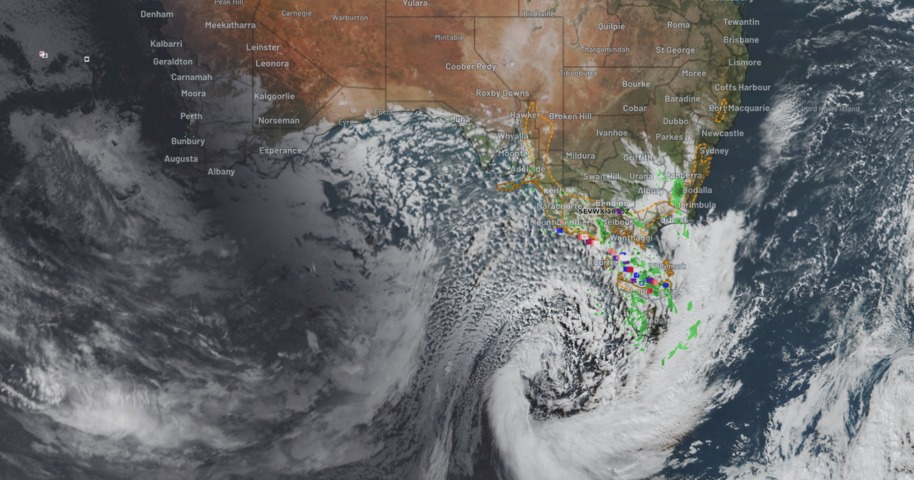
People in Illawarra, South Coast, Snowy Mountains, the ACT are being warned that damaging winds with peak gusts of 90 to 110 km/h are likely to continue over parts of the Snowy Mountains throughout Sunday.
A strong wind warning continues for tomorrow for the Illawarra and Eden coasts, south of Sydney.
Blizzard conditions are also hitting areas above 1300 metres, with the NSW National Parks and Wildlife Service recommending backcountry travel be postponed until conditions improve.
https://twitter.com/BOM_au/status/1677506141322985472
In Victoria, a severe weather warning is in place for parts of Central, East Gippsland, North Central, North East and West and South Gippsland
A separate severe warning for damaging surf is in place in the south west and west Gippsland districts.
Down in Tasmania, the BOM is warning that damaging winds averaging 60 to 70 km/h with peak gusts of around 100 km/h are possible over King Island and much of western, central and southern Tasmania.
Weatherzone has forecast that another weaker cold front will skim the southern parts of southeast Australia on Monday, maintaining some gusty winds and further alpine snow showers of another few centimetres, before conditions ease by Tuesday.
Sign up here to receive our daily newsletters and breaking news alerts, sent straight to your inbox.
Thousands of Auckland bus users to be hit by drivers’ strike tomorrow
Over 700 bus trips are expected to be affected by the strike.
Election 2023: Green Party lays out key policies in manifesto focused on ‘people, nature and climate’
Many of the promises hinge on the party’s wealth tax proposal.
Weather: Rain easing this week in many parts of the country
It will be a good time to get the kids outside as we enter week 2 of the school holidays.
Three yachties en route to Tonga rescued off Poor Knights Islands
The yacht is now adrift after the three men on board were rescued this morning.
Football: Napier City Rovers beaten 3-0 in heartbreaking home Chatham Cup loss
Waterside Karori have knocked Rovers out of the prestigious competition.
Record-breaking global temps highest in 'at least 100,000 years'
The planet's temperature soared again on Thursday to levels not seen in the modern record-keeping era, marking the fourth straight day of record temperatures.
These alarming new records are likely the highest temperatures in "at least 100,000 years," one scientist told CNN.
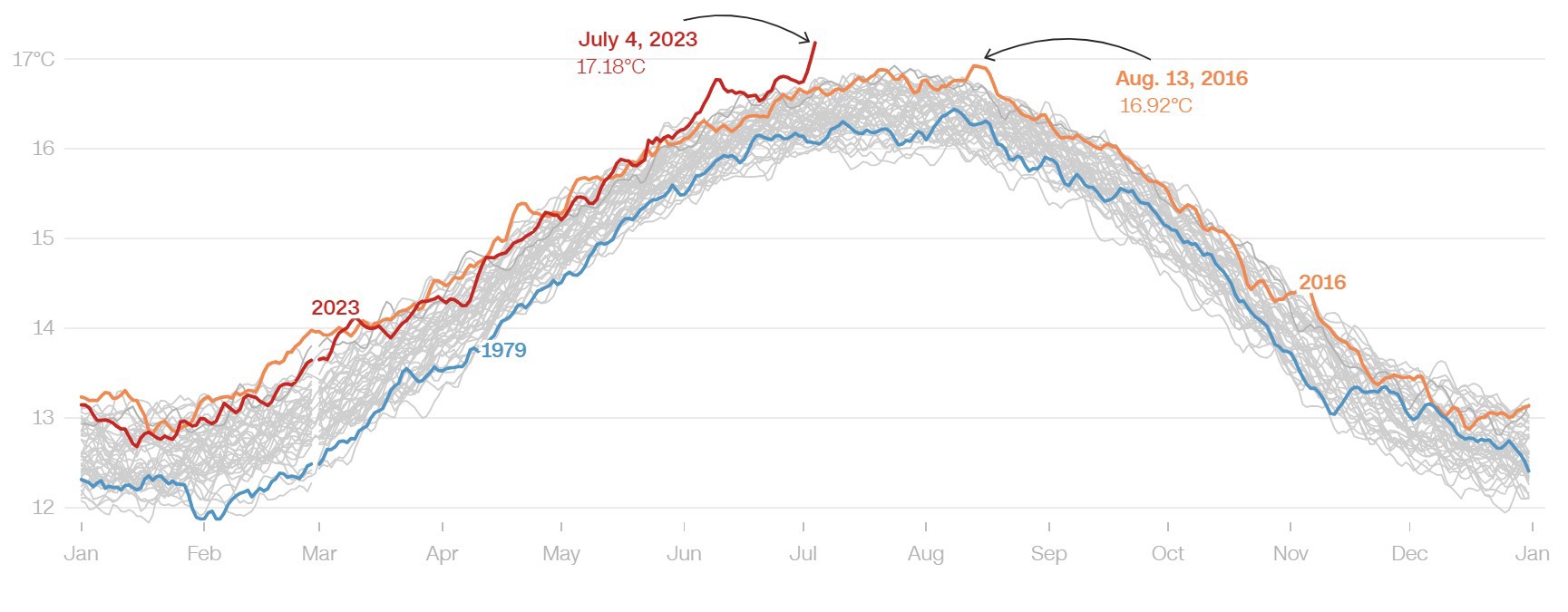
The global average daily temperature climbed to 17.23 degrees C on Thursday, according to the University of Maine's Climate Reanalyzer, which uses data from the US National Centers for Environmental Prediction.
READ MORE: Cold front causes severe weather warnings across multiple states

It's been a week of record-breaking temperatures. On Monday, the average global temperature reached 17.01C, the highest in the NCEP's data, which goes back to 1979.
On Tuesday it climbed to 17.18C, where it remained on Wednesday.
Before this week, the record in NCEP's data was 16.92C and was set in August 2016.
Though this week's records are not yet official, another global climate tracking agency confirmed several in its own data.
The European Union's Copernicus Climate Change Service said Monday's and Tuesday's global temperatures were also records in its data, which dates back to 1940.
READ MORE: Man charged after two women's bodies found in different storage units
While the records are based on observational data sets that only go back to the mid-20th century, they are "almost certainly" the warmest temperatures the planet has seen over a much longer time period, according to Jennifer Francis, a senior scientist at Woodwell Climate Research Centre.
Francis estimated that this week's temperatures are the warmest "probably going back at least 100,000 years," calling the records "a huge thing."
Scientists know this because of the many millennia of climate data extracted from proxies like tree rings, ice cores and coral reefs – data that is a cornerstone to their understanding of the climate system and how humans have contributed to rapid global warming since the industrial revolution.
Robert Rohde, a lead scientist at Berkeley Earth who was one of the first to share that global temperatures were soaring this week, told CNN it's very likely that "we're going to keep seeing more of these records fall".
READ MORE: Vaping sends six young people to emergency departments in eight days

July is typically the planet's hottest month, but temperatures are already in overdrive because of the combination of El Niño – a natural climate phenomenon in the Pacific Ocean – and the human-caused climate crisis, which is driving global temperatures steadily higher.
"It's not a record to celebrate and it won't be a record for long, with northern hemisphere summer still mostly ahead and El Niño developing," Friederike Otto, senior lecturer in climate science at the Grantham Institute for Climate Change and the Environment in the UK, said earlier this week.
"It just shows we have to stop burning fossil fuels, not in decades, now," Otto said. Temperature records aren't just numbers, "but for many people and ecosystems it's a loss of life and livelihood."
Sign up here to receive our daily newsletters and breaking news alerts, sent straight to your inbox.