Warmer homes would make people less reliant on the healthcare system.
Tag Archives: oceania
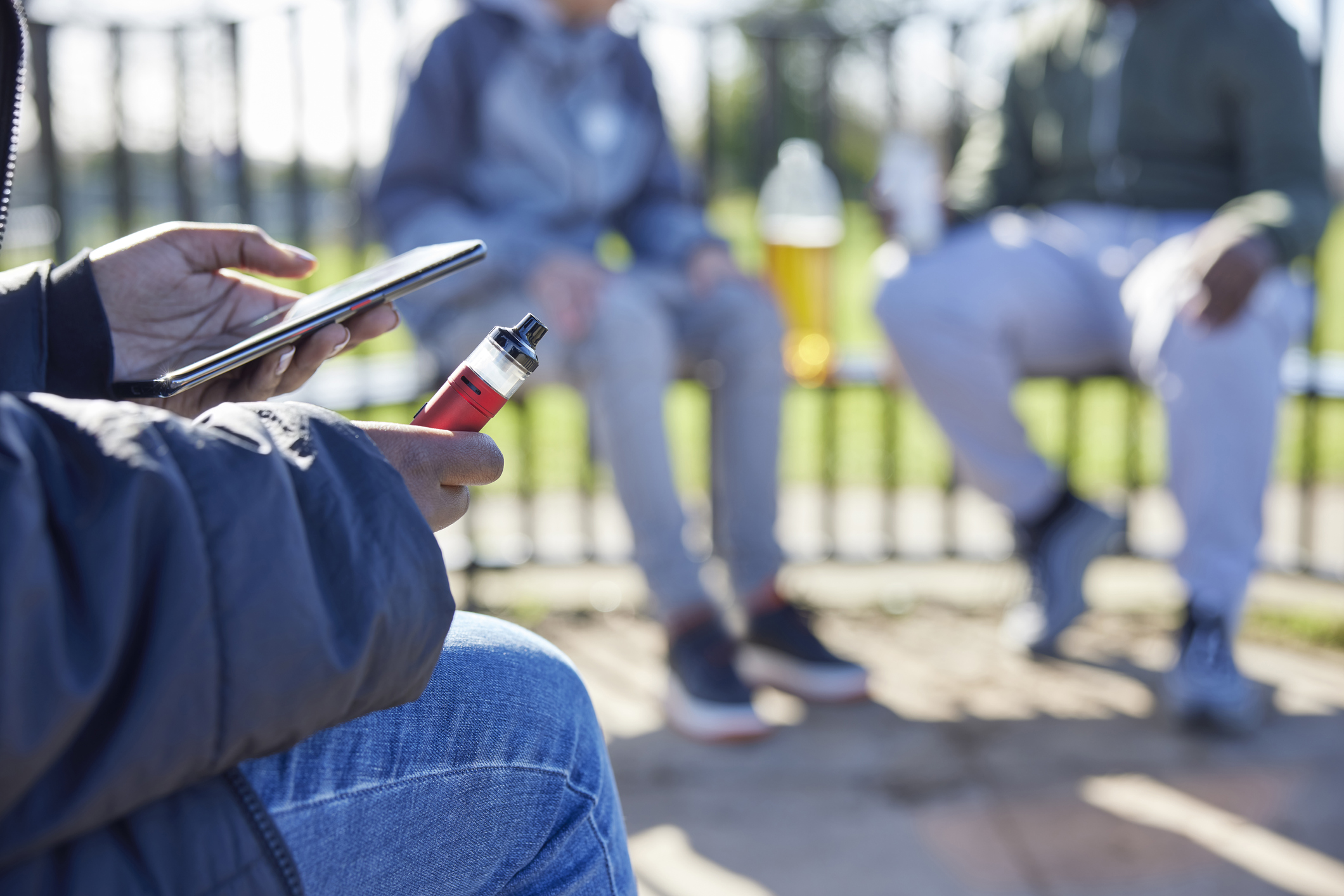
EastPack’s sacking of a manager who refused to undergo a drug test upheld by the ERA
She was asked to do the test but left site immediately. The next day she just refused.
Commonwealth Bank services 'recovering' after intermittent issues
Commonwealth Bank services are "recovering" after the bank reported issues for customers accessing their online banking.
Users were unable to transfer funds within the app and in many cases were unable to use their cards at checkouts.
"We can confirm we have identified the cause of the issue and services are being restored," CommBank said in an update on its website at 4pm.
READ MORE: 'Cracks' in Putin's rule after aborted uprising, US official says
The bank apologised to customers who were impacted by the outage.
"We know how much customers depend on us and sincerely apologise to those who have been impacted today," the bank said.
"Please note there may be delays in some payments as we continue to bring services back online."
The problem started around sunrise when customers couldn't log into their online banking services and by midday the bank confirmed "multiple services" had been impacted.
READ MORE: Toddler killed by reversing car on driveway
https://twitter.com/CommBank/status/1673213285880193024
Some customers reported on social media seeing account balances of $0 while others customers were unable to use EFTPOS services.
CommBank said the interruption to services caused a high volume of demand at call centres and branches as customers faced issues accessing their accounts.
More than 7 million people use the Commonwealth Bank app.
Sign up here to receive our daily newsletters and breaking news alerts, sent straight to your inbox.

Friends, family farewell Hunter Valley bus crash victim Angus Craig
Friends and family gathered to farewell adventure-loving Angus Craig, who died in the Hunter Valley wedding bus crash, at a funeral on the New South Wales south coast.
The 28-year-old engineer was killed along with nine others in a bus crash following a wedding reception at the Wandin Valley Estate in the Hunter Valley.
The funeral for Craig is the first of the formal goodbyes for the victims of the bus crash tragedy which was one of the worst NSW road accidents in recent history.
READ MORE: 'Cracks' in Putin's rule after aborted uprising, US official says
The funeral service included a surf board near Craig's coffin and a slide show of his life as his friends and family remembered him as a kind-hearted adventurer.
"How cruel is this loss," his older sister Georgia said.
"He is with us in the evening when we say good night to him and he is with us when we tell him that we love him."
His long-time friend Sean Cunningham expressed his grief at saying goodbye to the young mechanical engineer.
"As a kid I hated when you went away on holidays without me, I would always miss you but I would love when you returned," he said.
READ MORE: Tax warning issued for millions of Aussies
"You have now gone on a final holiday on which you won't be returning."
Craig's partner, Bella Liddy, was one of the guests on the bus who survived the crash.
"It breaks my heart that our time together was cut short," she said.
"I know that I am forever a better person for having loved and been loved by you Angus."
Attendees at Craig's funeral were asked to make a donation to a cancer charity in lieu of flowers.
Many of the mourners at the funeral were celebrating the wedding of Mitchell and Maddy Gaffney two weeks ago when the horror crash occurred.
READ MORE: What the Titanic sub saga and Greek migrant shipwreck say about us
The pair were present for the service this morning along with dozens of other grieving family and friends.
Mitchell and Craig were once housemates in Singleton in the state's Hunter region.
Memorials for the nine other victims are expected to be held over the coming weeks.
Sign up here to receive our daily newsletters and breaking news alerts, sent straight to your inbox.
Mum of teen who perished on Titanic sub planned Rubik's cube world record at wreck
The mother of teenager Suleman Dawood, who died in the Titan submersible as it was on its way to see the wreckage of the Titanic, said her son loved solving his Rubik's cube and even took it on board with him.
The 19-year-old could solve the puzzle in 12 seconds and planned to attempt a world Rubik's cube record during his journey on the vessel, mum Christine Dawood told the BBC.
"He said, 'I'm going to solve the Rubik's Cube 3700 metres below sea at the Titanic'," she said, adding that her husband, Shazada – who also died when the submersible imploded – had brought a camera along to film the feat for the Guinness World Records.
READ MORE: What's next in the search for the imploded submersible?
Suleman has been studying at the University of Strathclyde in Glasgow.
His father, who was British, came from one of Pakistan's richest families.
Billionaire British businessman Hamish Harding, former French navy diver and renowned explorer Paul-Henry Nargeolet and Stockton Rush, the 61-year-old CEO of OceanGate which owned the Titan, also perished alongside the father and son.
Christine Dawood told the BBC she originally planned to take the trip with her husband to see the Titanic wreckage but the trip was cancelled during the pandemic.
She then decided to let her son go instead because he really wanted to go, she said.
READ MORE: Tax warning for millions of Aussies
Christine said she and her 17-year-old daughter Alina bid farewell to Sulemon and Shazada on the Titan's support vessel, the Polar Prince, as the family shared some laughs and jokes.
"I was really happy for them because both of them, they really wanted to do that for a very long time," she said.
She and Alina were on board the Polar Prince when news broke that communication had been lost with the Titan.
"I didn't comprehend at that moment what it meant – and then it just went downhill from there," she said.
Christine said she missed her husband and son deeply and she was not sure if any of the current investigations would bring closure.
"Is there such a thing? I don't know," she said.
Sign up here to receive our daily newsletters and breaking news alerts, sent straight to your inbox.
The secret stash worth billions hiding in Aussie homes
Aussies are sitting on a smartphone stash estimated to be worth $5.7 billion in cash, at a time when cost of living pressures are at a record high, a new survey shows.
The average person has 1.5 unused smart devices tucked away at home and each has been estimated to be worth about $186, according to the survey of 1000 Australians by Pure Profile for phone company OPPO.
For the one in three people who had three older phones, or the extreme cases of users with up to 10 unused devices, a clean-out could yield even more cash.
READ MORE: Aussie families left with just $73 a week as cost of living crisis grows
Research from the latest Anglicare Australia's Living Costs Index shows many Australians are in need of spare cash more than ever.
The new analysis revealed a full-time worker earning the minimum wage has just $57 left after essential weekly expenses, while a family-of-four on the same rate has only $73 remaining.
Meanwhile, a single parent on the minimum wage will find themselves $180 short of what they actually need to get by each week.
The research takes into account a 5.75 increase to the minimum wage announced by the Fair Work Commission earlier this month.
Housing is the most expensive cost for households, with average rents rising by more than 30 per cent over the last three years.
READ MORE: Toni works three jobs but still sits in the cold and goes hungry
How can I cash in on my old phones?
Licensed financial advisor Queenie Tan said there are a few ways you can get rid of your old phone, and some can get you paid.
"There's a huge opportunity to either sell these old phones to make some quick cash or trade in the old tech for a new phone with massive savings," the TikTok influencer said.
"Selling old items is one of my favourite side hustles. Sites like eBay make it super simple to sell old phones.
"My tip is to take great pictures and craft your copy with some personality with the detail – turning listings from drab to fab."
Tan said it is also worth considering trading in old phones and at some places "the old phone can be any brand and it doesn't even need to work".
Bigger tech brands and smaller niche companies accept phone trade-ins – but always make sure you delete the data on the phone before giving it away.
If you weren't looking for a pay day, there are services you can donate phones to so they can be given to those in need.
Sign up here to receive our daily newsletters and breaking news alerts, sent straight to your inbox.
Taylor Swift fans grab first Aussie tickets amid presale site crashes
Australian tickets for Taylor Swift's eras tour have officially gone on sale, and Ticketek says "demand for tickets will be far greater than what is available".
Amid website outages during the American Express presale, Ticketek remained confident that their system would be able to handle the rush of traffic during the presale on Wednesday, and general sale on Friday.
Ticketek said that the delay was caused by a outages on the American Express website, which was preventing fans from accessing the sale through Ticketek.
READ MORE: You can get your hands on Taylor Swift tickets in Australia today
In a statement on Monday morning, Ticketek apologised to fans for the outage, and said "the Ticketek site is working as expected, however there is currently a problem with the AMEX site".
Within two hours of the outage, American Express was able to restore their website.
"Following some technical difficulties this morning as a result of high demand, we are pleased to report that the website link is now back up and running," an American Express spokesperson told 9News.com.au.
Ticketmaster and LiveNation, the unrelated companies which sold tickets for Swift's US tour, apologised to Swift and her fans in January, after their system was overwhelmed by demand for her Eras Tour.
Hoping to avoid a similar fiasco, Ticketek Australia said "Our systems are designed to manage these high demand events."
"We do this every day, we're prepared," A spokesperson said.
Nevertheless, some fans may be left empty handed after the sale, simply due to the supply:
"There are more fans than there are tickets, so there are going to be many disappointed fans"
Ticketek shared their general tips for securing tickets, which included creating an account in advance, having presale codes ready and not closing or refreshing the browser while waiting.
"There is no doubt that there are going to be many disappointed fans given the demand for tickets," Ticketek said.
The company encouraged all fans to follow their tips to secure tickets, and to steer clear of unauthorised resellers.
Sign up here to receive our daily newsletters and breaking news alerts, sent straight to your inbox.
Mahalia was fit and healthy before she fell ill with a common but little-known disorder
It's been described by medical experts as the most common disorder you've never heard of.
The Sydney family of 11-year-old Mahalia Zammit certainly knew nothing of functional neurological disorder (FND) when she suddenly developed strange and devastating symptoms last November.
The day Mahalia fell ill was like any other, her mother, Brooke Zammit, told 9news.com.au, except that she had attended a football gala day at school.
READ MORE: Australian cities leap up rankings of world's most liveable
"She has always been very athletic and she just loves all sports, so she actually had the best day that day," Zammit said.
When Mahalia came home from school she told her mum she had a headache.
"She didn't look well and had a red face. I thought she might have had a bit of heatstroke, maybe," Zammit said.
"The next day she still had a headache, and that's how it started."
Over the next few weeks, Mahalia slowly lost the use of her legs.
By Christmas, she could no longer walk, or sit upright.
In January, Mahalia had to have a nasal gastric tube inserted after she lost the ability to eat on her own.
Last month, she was robbed of her ability to swallow.
"I watched my baby take her first steps – now I've been forced to see her take her last," Zammit said.
What is functional neurological disorder?
FND is a neurological condition which occurs when there is a disconnect between the brain receiving and sending information to the rest of the body.
Officially, it affects roughly four-12 people per 100,000 in Australia – however, the real number of Australians with FND is believed to be far higher because the disorder is so poorly recognised.
"If you look at numbers across the world's neurology inpatient admissions, probably 10 -15 per cent of patients at any given time are because of FND," Brisbane neurologist Dr Alexander Lehn said.
READ MORE: Cruel disorder robs teen of almost all movement – except when she is asleep
Lehn, who specialises in neurological movement disorders at the Princess Alexandra Hospital and Mater Hospital, said many patients with FND were going undiagnosed, or being misdiagnosed with conditions such as epilepsy.
"It's only once you start looking that you realise, oh my God, this is FND and this is FND as well, and this is FND," he said.
It's believed genetic, psychological and social factors usually combine to play a role in people developing FND.
However, there is often a trigger which sets off the disorder – and it can be fairly innocuous, Lehn said.
"It might be a pulled back, or a minor injury. It could be an illness like a cold or flu," he said.
Zammit said doctors were not sure what triggered her daughter's FND, however it could have been dehydration after a long day playing sport in the sun.
Mahalia had never showed any signs of the commonly cited risk factors for FND, such as autism, anxiety or past trauma, Zammit said.
"There were no red flags," she said.
"Even talking to psychologists and the school, there was nothing."
Earlier this month, 9news.com.au reported on the case of Sydney teenager Chelsea Speirs, who developed FND after coming down with a case of gastro last year.
Despite being previously healthy, Chelsea is now unable to talk, and cannot walk or use her arms and legs – yet she moves freely in her sleep.
Both Mahalia and Chelsea have spent several months in hospital since developing FND, getting treatment from teams of psychologists and physiotherapists, however neither has shown any signs of improvement.
In between hospital stays, their families have been attempting to care for them at home.
It's a situation that has been made extraordinarily difficult because – like the majority of people in Australia with FND – they have been unable to get any funding through the National Disability Insurance Scheme (NDIS) for the support they need.
Patients left 'suicidal' in NDIS battle
A report commissioned by the National Mental Health Commission in 2019 found just 10 per cent of NDIS applications from people with FND were successful, with 20 per cent of survey respondents saying they had been rejected.
The main reason people were knocked back was difficulty determining whether or not FND was a permanent condition.
Zammit said her daughter's application for NDIS funding – which included letters of support from Mahalia's school and specialist – was rejected because it failed to show she had "substantially reduced functional capacity".
"Mahalia is in a wheelchair. She can't walk or sit on her own, and they are telling me that's not significant enough," Zammit said.
"If it wasn't so heartbreaking it would be funny that they actually wrote that."
Zammit, who is currently renting a wheelchair for her daughter, said she desperately needed help from the NDIS.
"At my house, her wheelchair doesn't fit in my bathroom at all. It's not equipped for her, I have to carry her," she said.
"I've actually had two falls holding her in the shower.
"In the car, she can't actually sit up so I'm worried that it's not safe.
"She falls now because she can't maintain an upright position in the backseat.
"But who do you go to for help with that if you don't have NDIS funding?
"I've been left to manage a severely disabled child completely unsupported."
A spokesperson for the National Disability Insurance Agency (NDIA), which implements the NDIS, said the agency's priority was ensuring participants and their families received the disability-related supports they needed.
"Access to the NDIS is based on a person's functional impairment, not on their condition or diagnosis. This means no condition is, or will be, automatically excluded from the NDIS, including FND," the spokesperson said.
"The NDIS is designed to complement, not replace mainstream services the states and territories provide such as the health system, which is generally responsible for services such as treatment and rehabilitation."
Lehn said he saw many FND patients being rejected for NDIS funding either because their condition was not judged to be permanent, or because they were viewed to not have exhausted all possible treatment options.
"I do have patients who successfully have gotten access to NDIS and – for some of them – it's an absolute godsend," Lehn said.
"But the majority find it near impossible to get access and then it's actually a really scarring and harmful experience for patients because they fight all those battles, spend all that energy and all their money, that they usually don't have, to actually try to get access to it – usually unsuccessfully.
"I think it's a disgrace how we manage and treat and deal with patients with FND in this country."
With good treatment, roughly one-third of patients with FND generally saw a full recovery from the disorder, Lehn said.
Another third noticed some improvement, while the remaining patients were left with permanent and often profound disabilities, he said.
Medical researcher Kate Gill is the founder of patient support group FND Australia Support Services.
Gill, who herself has FND, said the bulk of her role was spent helping people with FND apply for NDIS funding and was overrun.
"We have 3500 people just in our support group, and referrals to the group are going up in an exponential range," she said.
"So many people with FND are struggling to access the NDIS when they really meet the eligibility criteria.
"The stress this is causing is unbelievable … I've got people who are literally suicidal over the NDIS," Gill said.
Zammit is currently challenging the NDIA's decision regarding Mahalia's case at the Administrative Appeals Tribunal.
Contact reporter Emily McPherson at Sign up here to receive our daily newsletters and breaking news alerts, sent straight to your inbox.
What the Titanic sub saga and Greek migrant shipwreck say about us
Across the span of nearly a week, the saga of a lost submersible that had gone into the depths of the ocean to see the Titanic wreckage rippled across the global conversation — culminating in news that the craft had imploded and its five occupants were dead.
But a far bigger disaster days earlier, the wrecking of a ship off Greece filled with migrants that killed at least 80 people and left a horrifying 500 missing, did not become a moment-by-moment worldwide focus in anywhere near the same way.
One grabbed unrelenting, moment-to-moment attention. One was watched and discussed as another sad, but routine, news story.
READ MORE: What's next in the search for the imploded submersible?
What makes these two events at sea different in how they were received? Viewed next to each other, what do they say about human reactions to tragic news? And why did the saga of the submersible grab so much attention?
There was an unknown outcome and (we thought) a ticking clock
By the time the world learned about the Greek shipwreck, the event had already taken place and, to some extent, the outcome was already known. All that was left was the aftermath.
Conversely, the Titan (the world thought) was an event in the process of happening — something that unfolded in real time with a deadline attached. As with any narrative, a ticking clock increases tension and attention.
The fact that no one could communicate with the submersible — or learn anything about what the people inside were experiencing — only added to the potential for close attention.
And the possibility of a happy ending — at least for a while — also helped sustain attention, said Jennifer Talarico, a psychology professor at Lafayette College in Pennsylvania who studies how people form personal memories of public events.
READ MORE: Canada investigating why Titanic-bound submersible imploded
A renowned historical tragedy was back in the news
Before anything even went awry, the Titan was already venturing into a realm of existing high interest — the wreck of the Titanic, itself the archetype of modern disasters long before James Cameron's popular 1997 film. So there was an interest already baked in that had nothing to do with the submersible itself.
Cameron's reaction to the Titan disaster only intensified that connection.
He told the BBC in an interview broadcast on Friday that he "felt in my bones" that the Titan submersible had been lost soon after he heard it had lost contact with the surface during its descent to the wreckage of the ocean liner at the bottom of the Atlantic Ocean.
He said focus in the media over the next few days about the submersible having 96 hours of oxygen supply — and that banging noises had been heard — was a "prolonged and nightmarish charade".
READ MORE: OceanGate's vessel used materials that 'simply didn't work': expert
Class and race played a role
Many reactions and memes this week centred around the notion — fair or not — that one event involved rich people using the ocean as a playground, while the other was a sadly frequent recurrence of misfortune befalling people who lack status, resources or even a voice in the modern marketplace of ideas.
Apryl Alexander, a public health professor at University of North Carolina-Charlotte who has studied trauma and survivors, said the migrants on the ship in Greece didn't seem to engender the same interest from the public as did the wealthy individuals who paid $US250,000 ($374,000) apiece to explore the Titanic.
That reminded Alexander of the differences in news coverage of crime in the United States. Crimes get more attention when the victim is white and wealthy compared to a person of colour in poverty, Alexander said.
READ MORE: Teen was 'terrified' in lead up to doomed Titanic sub trip
A small group of people had the media's ear
Tim Recuber, an assistant professor of sociology at Smith College who studies mass media, digital culture and emotions, said people tend to be drawn to stories that allow them to empathise with the suffering of others — and that it's easier to empathise when there are smaller numbers of people involved.
"I think some people are calling out this time around the sort of inequalities that are baked into it around class," Recuber said.
"We are able to learn who the people on the sub are because of who they are. They're wealthy and they have access to the press.
"Divisions of race and national identity matter in terms of who gets empathised with."
The public lives vicariously through the risks others take
Individuals who choose their risks have grabbed headlines almost since there have been headlines. So the public was likely enthralled about others cheating death by doing something dangerous, said Daryl Van Tongeren, a psychology professor at Hope College in Michigan who has studied the meaning around big events and their effect on people.
In other words, he said, readers and viewers can feel alive by living vicariously through others who are taking risks.
"There's this fascination with people who engage in these high-risk experiences," Van Tongeren said.
"Even though we know that death is the only certainty in life, we invest in these activities where we get close to death but overcome it. We want to demonstrate our mastery over death," he said.
Disaster fatigue is a factor, too
The pandemic. Mass shootings. Economic problems. War. Climate change. It can be hard for another piece of bad news to punch through.
"People are starting to tune out," Alexander said.
In the end, she said, she'd like to see the same level of societal interest in human tragedies regardless of race, religion, demographics, or other factors.
"For all of us, we hope that if any of our loved ones go missing that the media and the public would pay the same attention to all stories," she said.
Sign up here to receive our daily newsletters and breaking news alerts, sent straight to your inbox.
Mystery surrounds critically injured man in Greytown, police plead for help
The incident closed SH2 for a period today.