Three firearms, ammunition, a Taser, cash, methamphetamine and GHB found.
Tag Archives: oceania
National says He Waka Eke Noa climate change farming emissions group is ‘dead’
Time runs low on getting pricing scheme up before election.
Why El Niño is now more likely for Australia
An El Niño event is looking more probable than ever after the Bureau of Meteorology upgraded its status from "El Niño watch" to "El Niño alert" this afternoon.
This means there is about a 70 per cent chance of the weather event developing this year.
BoM Senior meteorologist Dean Narramore said Pacific Ocean sea surface temperatures had met El Niño thresholds, but the atmosphere had not.
READ MORE: RBA delivers shock rate hike

He said the atmospheric change would need to couple with the sea change for "a sustained period over weeks and months" before an El Niño could be confirmed."
"It's been a while since we've had one," Narramore said.
El Niño describes changes in the tropical Pacific Ocean that affect global weather and it occurs on average every three to five years.
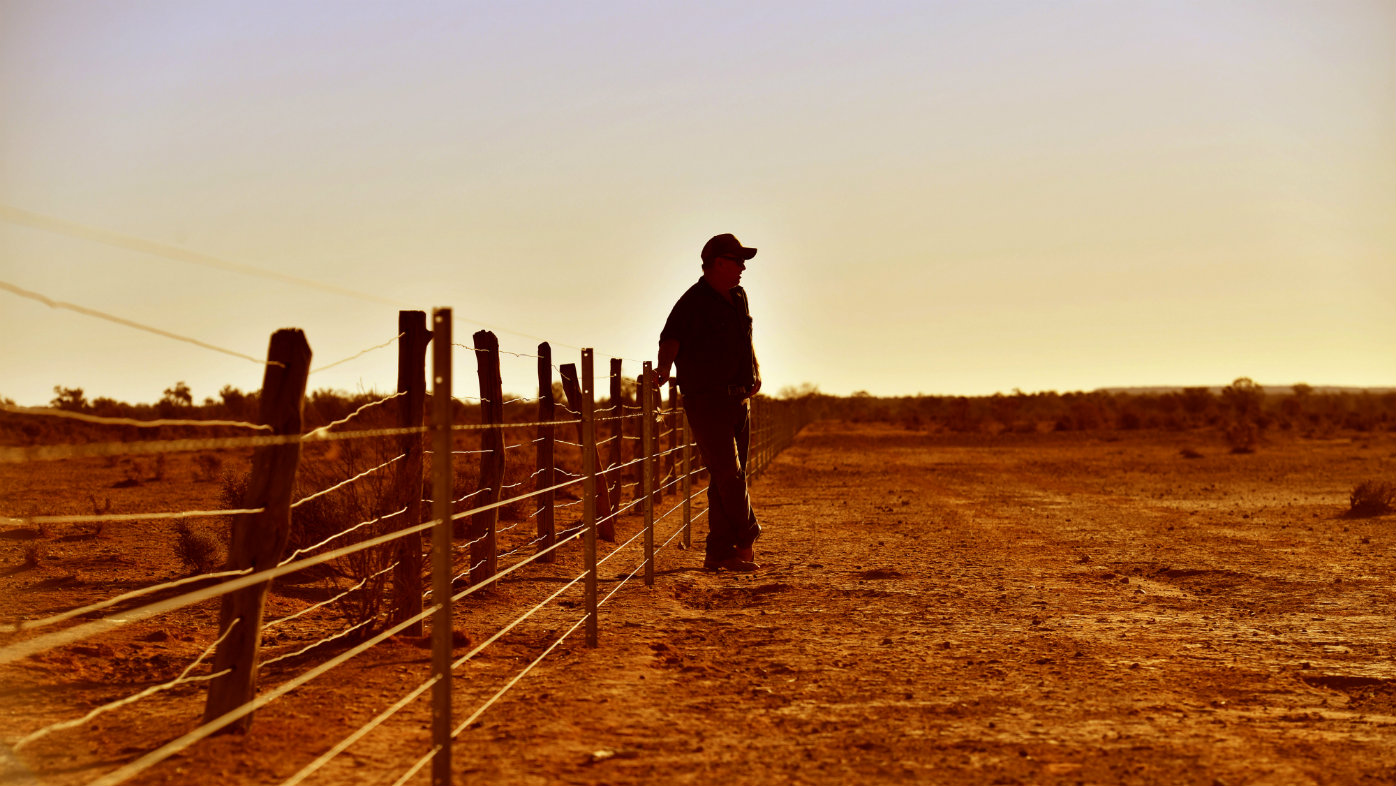
During El Niño, there is a higher chance of drier weather in eastern Australia and it's more likely to be warmer than usual for the southern two-thirds of Australia.
READ MORE: Pizza, Kahlua and coke: Folbigg savours first night of freedom

But that doesn't mean there won't be rain, snow, or cold days – just that on average things are likely to be different.
For example, he said, a "warmer" winter day could reach 14 degrees instead of 13.
El Niño effects are likely to last through later winter and spring and potentially through summer, before breaking down in autumn and winter next year.
"The Bureau's long-range winter forecast is for drier and warmer conditions across almost all of Australia and the climate conditions in the Pacific Ocean are already factored into our forecasts," BoM senior climatologist Catherine Ganter said.
READ MORE: Wild brawl erupts at New South Wales supermarket
"The long-range forecast for winter also shows an increased chance of below average rainfall for almost all of Australia and the move to El Niño alert does not change this forecast."
In Australia, changes during El Niño could include reduced rainfall in the east, warmer temperatures for the southern two thirds of the country, increased risk of extreme heat, increased bushfire danger in the south-east, increased frost risk due to clear night skies, decreased alpine snow depths, a later start to the northern wet season, and reduced tropical cyclone numbers.
But Western Australia was likely to remain largely unaffected, with the weather in that part of the country dictated more by events in the Indian Ocean.
And El Niño effects would be delayed in the tropical north as well, where winter is traditionally the dry period.
It's not yet known what effect an El Niño might have on bushfires during summer, with the BoM's long-term weather forecasting only extending three months ahead.
What is El Niño and how is it different to La Niña?
The cycle of La Niña and El Niño – known as ENSO, or the El Niño-Southern Oscillation index – works a bit like a pendulum.
La Niña occurs when water in the eastern tropical region of the Pacific Ocean is cooler than average as the "trade winds" – the planet's prevailing east-to-west winds – strengthen, creating warmer-than-normal water around Indonesia and Australia's east coast.
This leads to increased rainfall and brings the risk of heavy flooding in Australia.
However, when those conditions are reversed – trade winds are weaker, and water is warmer than average in the eastern tropical Pacific but cooler close to Australia – an El Niño is declared, and our continent will experience hot, dry conditions and come under the threat of drought.
When the "pendulum" sits in the middle and ocean temperatures are closer to average, it is referred to as "neutral" ENSO conditions – and it is more likely to bring less extreme weather conditions.
And, if you're wondering what the two terms actually mean, "La Niña" is Spanish for "the girl" or "little girl", while "El Niño" translates to "the boy" or "little boy".
Sign up here to receive our daily newsletters and breaking news alerts, sent straight to your inbox.
Kaikohe Homicide: Man, 52, arrested and charged over Linda Woods death, due in court tomorrow
A Kaikohe property on the same street the victim lived has been raided.
Michael Wood’s wife Auckland councillor Julie Fairey forced to correct statement about airport shareholding
Julie Fairey says she was not aware of her beneficial role until today.
RBA delivers shock rate hike as mortgage costs spiral
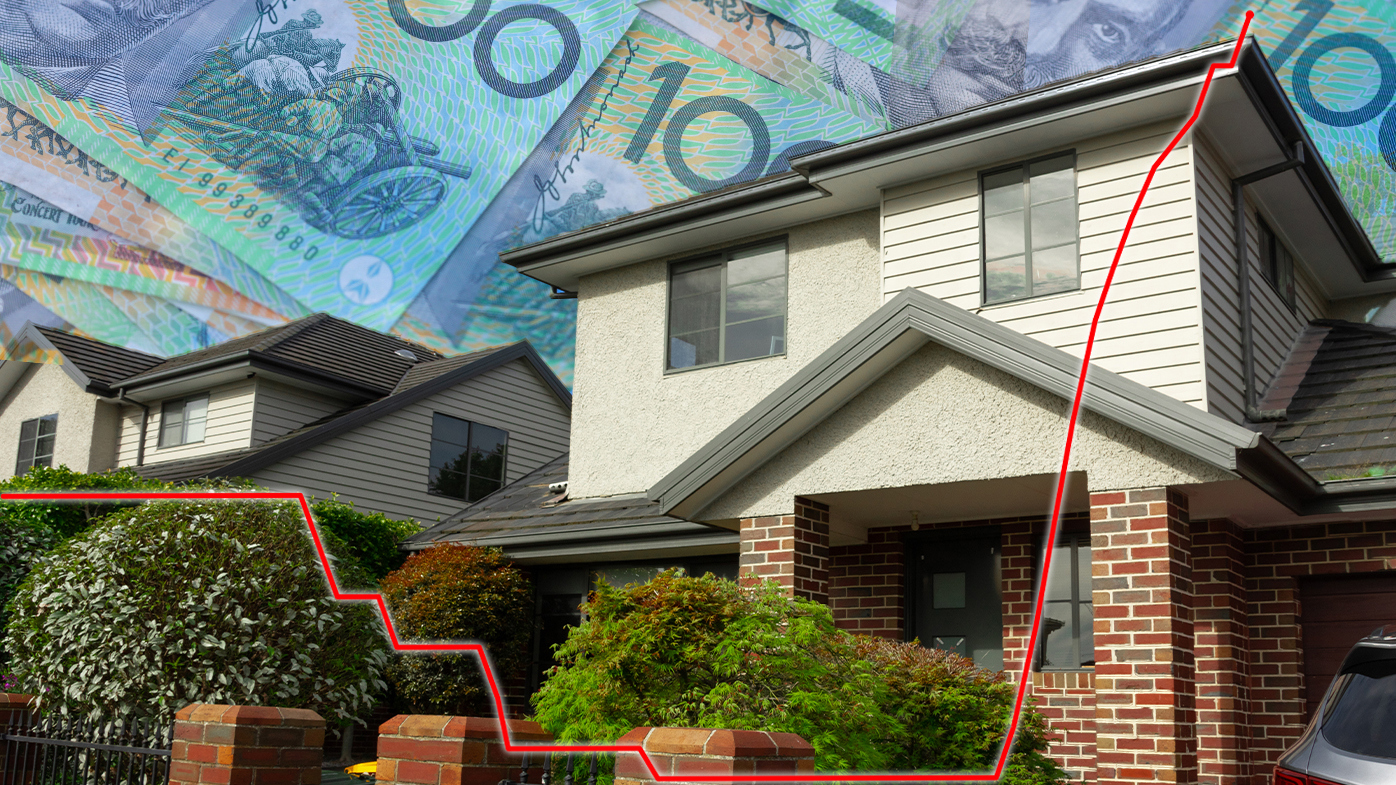
The Reserve Bank of Australia has delivered a shock 12th rate hike since May last year, deciding to lift interest rates in a bid to tackle persistently high inflation.
The central bank chose to lift the cash rate target by 25 basis points to 4.10 per cent, surprising the financial markets and the majority of economists who predicted a pause on rate hikes in June.
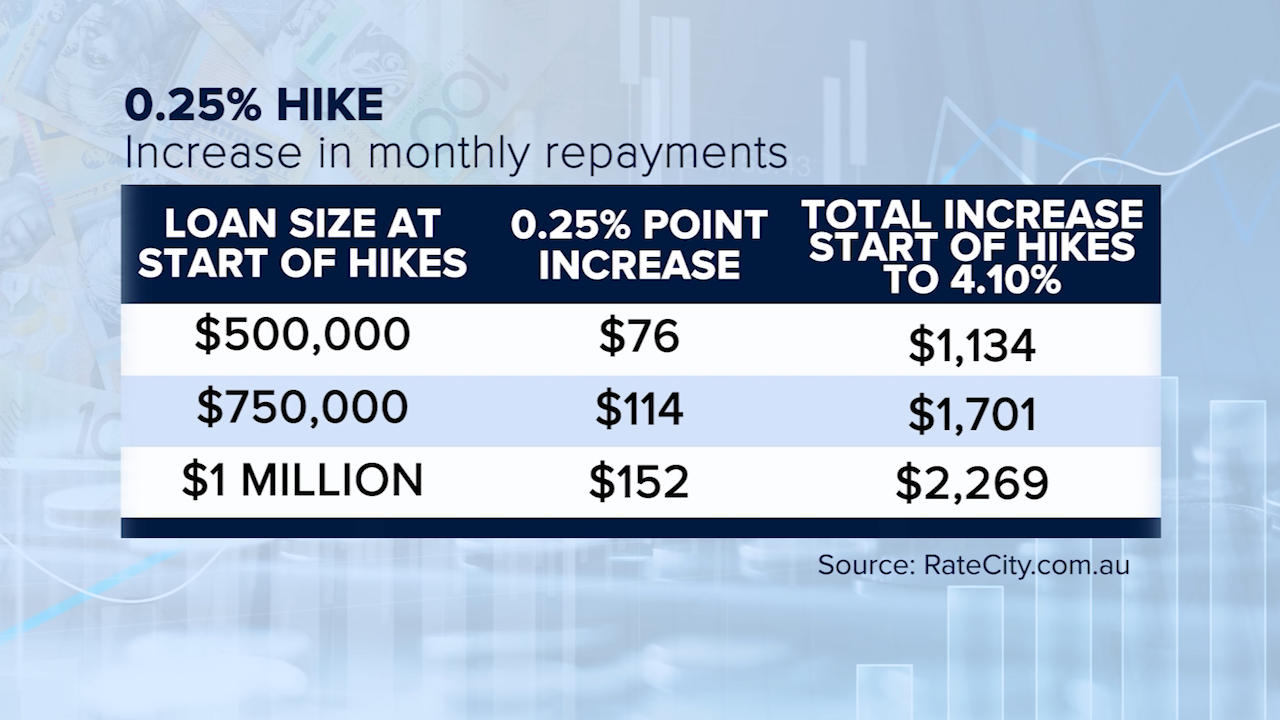
For the average Australian mortgage, today's rate hike represents an additional $1,264 in mortgage repayments since the cash rate was 0.10 per cent in April 2022.
READ MORE: Australians bracing for another rate rise as mortgage arrears spike
Australia's base interest rate level is now at it's highest point since April 2012.
In his monetary statement RBA Governor Philip Lowe said today's increase was a necessary step to contain inflation.
"Inflation in Australia has passed its peak, but at 7 per cent is still too high and it will be some time yet before it is back in the target range," Lowe said.
"This further increase in interest rates is to provide greater confidence that inflation will return to target within a reasonable timeframe."
Lowe said there were signs that the economy was slowing, but inflation was still a way off the central bank's target band of between 2 and 3 per cent.
"The combination of higher interest rates and cost-of-living pressures is leading to a substantial slowing in household spending," he said.
"Housing prices are rising again and some households have substantial savings buffers, although others are experiencing a painful squeeze on their finances."
READ MORE: National 'misery index' up 220 per cent as Aussies struggle
He said the RBA remains "resolute" in bringing down inflation, forecasting that further hikes may be needed.
"Some further tightening of monetary policy may be required to ensure that inflation returns to target in a reasonable timeframe, but that will depend upon how the economy and inflation evolve," he said.
"The Board will continue to pay close attention to developments in the global economy, trends in household spending, and the outlook for inflation and the labour market.
"The Board remains resolute in its determination to return inflation to target and will do what is necessary to achieve that."
Treasurer Jim Chalmers said today's decision would be hard to hear for millions of Australians, but said the it was not right to blame Australians for inflation-adding decision such as asking for pay rises or buying property.
"This will make life much harder for people with a mortgage," he said.
"I do expect that there will be a lot of Australians who find this decision difficult to understand and difficult to cop.
"Ordinary working Australians are already bearing the brunt of these interest rate rises, they shouldn't bear the blame too."
READ MORE: Aussie bank's grim prediction for millions of borrowers
Graham Cooke, head of consumer research at Finder, said the decision came as a shock to many.
"The RBA continues to operate in the dark, as our panel of economists are split on the bank's intentions," he said.
"Aussies with an average loan size of $577k will be spending over $15k more per year on their mortgage compared to what they were in April last year.
"That's an additional $1,200 every month – a huge amount of extra money to be forking out on your mortgage."
READ MORE: Free car rego for Victorian apprentices
RateCity.com.au research director Sally Tindall said many Australian households are facing a financial reality few could have forecast when rates were at the historic low of 0.10 per cent in 2022.
"Australia's twelfth hike in 14 months puts many borrowers into financial territory they never thought they'd see in the life of their loan, let alone in just over a year," she said.
"The RBA is increasingly starting to look like Fred Flintstone and Barney Rubble. It's doing what it can with a very blunt instrument.
"Some borrowers are well into the red with limited avenues out. Others are either splashing the cash or squirreling it away in the bank. At what point should the government reassess the instrument rather than the Board using it?
"In less than two weeks' time, the majority of borrowers will be charged a higher interest rate as a result of this RBA decision, yet, in many cases, the extra money won't come out of their bank accounts for another three months – depending on their bank."
Sign up here to receive our daily newsletters and breaking news alerts, sent straight to your inbox.
Victim's brother has 'no sympathy' for cold case killer
A man who admitted the 1988 killing of American mathematician Scott Johnson at a Sydney gay beat deserves no leniency and should face the longest time in jail, the dead man's brother has told a court.
Scott Phillip White, 52, faced the family's wrath in court on Tuesday after successfully overturning a prior guilty plea to the murder of Johnson in Manly and later pleading guilty to the lesser charge of manslaughter.
White surprised his own legal team by making an early plea of guilty to murder in what Steve Johnson said looked like a show of remorse.
READ MORE: Rapist jailed for 20 years after 'terrifying' attack at Merri Creek

"My sister Rosemary and I all felt some compassion because of his generous plea. Today I have no sympathy," he said in a victim impact statement read out to the NSW Supreme Court.
Any gratitude the family felt was undone after White's conviction and jail sentence were overturned on appeal, he told reporters after the hearing.
"So I am hoping the judge will give him the stiffest sentence he possibly can."
White's cowardly decision to flee the scene without calling the police had prolonged the family's grief and loss for decades, Johnson said.
"He didn't check on Scott, he didn't call for help, he notified no one. He simply let Scott die."
In her own statement, Rosemary Johnson had some heartfelt words for her sweet, kind and gentle brother-in-law.
"You are loved, you are missed, your life mattered, and you have not been forgotten," she said.
READ MORE: Man dies in hospital after alleged assault in Victorian town

Sign up here to receive our daily newsletters and breaking news alerts, sent straight to your inbox.
In the heat of an argument on December 10, 1988, White threw a punch at Johnson causing the 27-year-old to stagger backwards and fall to his death over a cliff at North Head, which was known at the time to be a gay beat.
Originally deemed a suicide, NSW Police opened an investigation into what they thought was a gay hate crime almost three decades after the death.
In her now overturned judgment on the murder conviction, Justice Helen Wilson found there was not enough evidence to show the attack was motivated because of Johnson's sexuality.
Crown prosecutor Brett Hatfield conceded that on Tuesday that Justice Robert Beech-Jones, the judge overseeing the new sentence, could also make this finding.
READ MORE: Kathleen Folbigg speaks for the first time since being pardoned
However, he still sought a higher jail sentence, saying it was an unprovoked attack on a vulnerable individual who was naked in a remote location.
"It's a serious example of manslaughter entailing a significant degree of criminality," Hatfield said.
White's barrister Tim Game SC urged the court for leniency because of his client's cognitive difficulties at the time of the crime as well as his dysfunctional background.
"He had just become an adult and his life was chaotic and a terrible mess," the barrister said.
Justice Beech-Jones will hand down his sentence for White on Thursday.
Counselling and referral services for LGBTIQ+ individuals are available through QLife on 1800 184 527 or online.
If you need help in a crisis, call Lifeline on 13 11 14. For further information about depression, contact beyondblue on 1300224636 or talk to your GP, local health professional or someone you trust.
Kathleen Folbigg speaks for the first time since being pardoned
Kathleen Folbigg says she is grateful for being pardoned, after being released from jail where she served 20 years over the deaths of her four children.
Folbigg, 55, was convicted of killing her three children Patrick, Sarah and Laura and the manslaughter of her firstborn, Caleb, between 1989 and 1999, when the kids were aged between 19 days and 19 months.
Speaking in a video, Folbigg said she was "extremely humbled and extremely grateful for being pardoned and being released from prison".
READ MORE: Pizza, Kahlua and coke – Folbigg savours first night of freedom

"My eternal gratitude goes to my friends and family, especially Tracy (Chapman) and her family.
"I would not have survived this whole ordeal without them.
"Today is a victory for science and especially truth.
"And for the last 20 years I have been in prison I have forever and will always think of my children, grieve for my children and miss them or love them terribly."
READ MORE: Kathleen Folbigg speaks following pardon after 20 years in jail

After new scientific evidence raised doubts over the guilty verdict, NSW Attorney General Michael Daley on Monday announced Folbigg had been pardoned and would be released immediately.
The convictions, which resulted in her being jailed for 20 years, have not been quashed as that can only be done through the Court of Criminal Appeal.
Sign up here to receive our daily newsletters and breaking news alerts, sent straight to your inbox.
Revealed: Worst 10 suburbs for mortgage arrears across Australia
Mortgage arrears are slowly climbing across the country as borrowers continue to be hit with consecutive interest rate rises on top of skyrocketing cost of living pressures.
Accused Kyrgios carjacker pleads not guilty to aggravated robbery
The man accused of stealing Nick Kyrgios's car from the tennis star's mother at gunpoint has pleaded not guilty over the incident.
The man, who is not being named for legal reasons, entered a not-guilty plea to five charges: aggravated robbery, driving a vehicle without consent, failing to stop for police, resisting a public official and driving while suspended.
The 32-year-old accused robber appeared in ACT Magistrates Court from custody via phone link.
READ MORE: Pizza, Kahlua and coke: Folbigg savours first night of freedom

It's alleged he threatened Kyrgios's mum with a gun, and demanded she hand over the keys to the Wimbledon finalist's green Tesla which was parked outside, and then show him how to drive it.
Kyrgios then called triple zero and used a smartphone app to track the car's location, and giving the information to police.
The app was also used to limit the car's speed to 80km/h.
Police tried to arrest the driver after tracking him down, but the man allegedly sped off, with police having to end the pursuit after the car entered a school zone.
Officers then used the car's location on the app to find it again and arrested the man, alleging he resisted.
Magistrate Glenn Theakston set down a pre-trial hearing for July 18.
READ MORE: Apple creates new kind of virtual reality headset
Sign up here to receive our daily newsletters and breaking news alerts, sent straight to your inbox.