Tag Archives: oceania

'Absolutely lacking': Calls to overhaul Australia's aviation compensation scheme

After flying up to Queensland for a family funeral, all Annabel Selby-Jones wanted was to get back to the comforts of her Sydney home at the end of a long and emotional day.

But Jetstar scuppered those plans with a last-minute decision to cancel its final Brisbane-Sydney flight of the day, stranding Selby-Jones, and leaving her upset and doling out cash for a variety of expenses suddenly thrust upon her.

One month on, the saga still brings up a lot of anger for Selby-Jones, particularly the way she claims Jetstar staff managed the lead-up to the cancellation and the litany of problems that followed.

Sydney woman Annabel Selby-Jones is unhappy with the way Jetstar managed the impact of her cancelled flight.

READ MORE: Looming change will forever alter how we fly around the world

"We left the (funeral) wake early to get to the flight on time," Selby-Jones said.

"We could have stayed with our family."

Instead, her dinner that night was a meal of nuts from a minibar and the "degrading" experience of staying overnight in a hotel with no toiletries, personal hygiene items, fresh clothes or underwear to fly home the next day.

The 49-year-old communications executive said her ordeal, including Uber and overnight airport car parking costs, shows how Australia's aviation passenger compensation scheme is "absolutely lacking", and leaves passengers unfairly at the mercy of airlines.

Selby-Jones said a beefed-up system with specific levels of compensation, like that which protects passengers flying in the European Union, would reduce cancellations and delays.

"It will cost (airlines) financially," Selby-Jones said, if clear tiers of compensation must be paid to passengers who suffer inconvenient cancellations and delays within an airline's control.

"Right now it's costing (airlines) from a reputation point of view, but it doesn't seem that matters to them."

Urged on by various consumer advocate groups, including the Australian Competition and Consumer Commission, the federal government is currently considering its options in a white paper that could mandate commercial carriers into a much more clearly defined passenger compensation process.

Selby-Jones is keen for this to happen, saying a new scheme would "encourage the airlines to do better in the first place".

After the cancellation and a confusing wait at the terminal which dragged on for hours, with "one (Jetstar) man kind of roving around with about 20 people in a queue following him", a bus eventually arrived to take the marooned group to a hotel, Selby-Jones said.

Jetstar gave Selby-Jones and each passenger a $30 food voucher to use at the hotel but by the time they arrived at 11pm, room service had closed, rendering the coupons worthless.

Instead, Selby-Jones sat in her room eating nuts from the minibar.

Making matters worse, she had travelled with no baggage on what should have been a straightforward same-day trip.

Selby-Jones had to use hotel body soap to remove her make-up, and the next morning she "had nothing to put on my face, no deodorant, couldn't brush my teeth".

Do you have a travel story that caused major inconvenience and costs? Email ************@******om.au” target=”” >Sign up here to receive our daily newsletters and breaking news alerts, sent straight to your inbox.

'If it rains any more, it'll be tragic': Crews work to reach cut-off Italian towns

Rescue crews worked on Thursday to reach towns and villages in northern Italy still isolated by heavy rains and flooding, as the death toll rose to 13 and authorities began mapping out cleanup and reconstruction plans.

The extreme weather behind this week's disaster — a prolonged drought punctuated by 36 hours of intense rainfall, two weeks after another downpour — led to two dozen rivers and tributaries bursting their banks.

The force of water sent torrents of mud tearing through entire towns in Emilia-Romagna, flooding storefronts and basements.

READ MORE: Exceptional rains in drought-struck northern Italy cause deadly flooding

Local mayors warned that some remote villages were still completely cut off because landslides had made roads impassable and phone service remained severed. That has prevented rescue teams from reaching residents and authorities from understanding the full scope of their needs, said Mercato Seraceno Mayor Monica Rossi.

"If it rains any more, the situation will be tragic," Rossi warned on Sky TG24, standing on a road with a chunk missing from a landslide.

The death toll rose to 13 after more bodies were discovered on Thursday in the hard-hit province of Ravenna, state-run RAI television reported, citing the Ravenna prefecture. Among them: a couple in their 70s found dead in their flooded apartment in Russi after their son sounded the alarm that he had lost contact with them.

By Thursday morning, some parts of the city of Faenza were still underwater, with cars submerged and basements swamped by thick, gooey mud. One family standing on their balcony said they didn't have electricity, gas or food. Other residents took shelter at a local gymnasium, where soldiers set up cots on the basketball court for new arrivals.

"At some point they told us all to leave the area, and about one hour later we heard a loud boom," 29-year-old Faenza resident Claudia said on Thursday, recalling the moment early Wednesday that the nearby Lamone river burst its banks. "The water just flooded all over."

More than 10,000 people fled their homes, some plucked from rooftops or balconies by rescue helicopters and others ferried out on dinghies. One family with a 20-day-old baby was rescued on Thursday morning, said Cesena Mayor Enzo Lattuca. Another packed their belongings into an inflatable pool which they floated down the thigh-high river of mud that was previously a street.

READ MORE: NSW venues must remove all 'VIP Lounge' signage from game rooms

But residents in other towns, such as Castel Bolognese, started cleaning up as the waters receded, with residents shovelling out mud-filled basements and storefronts.

The drought-parched region had already estimated some 1 billion euros in losses from heavy rains earlier this month, but the regional president, Stefano Bonaccini, said the losses now reached multiple billions given the widespread damage to farmland, storefronts and infrastructure.

Italian farm lobby Coldiretti said more than 5000 farms with greenhouses, nurseries and stables had been flooded, covering thousands of acres of vineyards, fruit groves, vegetables farms and grain fields. It said the damage was "incalculable," because not only current harvests but future ones could be affected, given the permanent damage to roots from the "suffocating" mud of the runoff.

Bonaccini has called for the national government to declare a state of emergency, something that is likely when the Cabinet meets next week following Premier Giorgia Meloni's return from the Group of Seven summit in Japan. Already, the region has said it is looking to reconstruction efforts and restoration of vital infrastructure.

"It will take gigantic work" to recover, Bonaccini told a daily briefing.

The Superior Institute for Environmental Protection and Research has identified Emilia-Romagna as one of the most at-risk Italian regions for flooding, where both territory and populations face a greater danger of "hazard scenarios" than the rest of the country.

The hardest-hit eastern part of the region, sandwiched between the Apennine mountain chain and the Adriatic Sea, was first hit by intense rain earlier in May. The second downpour tested the ability of drought-parched soil to absorb water, the institute said, adding that high sea elevations and bora winds against the coast may have contributed to the flooding of rivers and tributaries.

Italy wasn't alone in coping with heavy rainfall, as parts of Slovenia, Croatia and Bosnia also reported flooding and landslides that required evacuations.

A total of 600 firefighters have been deployed from across Italy to assist with evacuations in the region after Italy's longest river, the Po, broke its banks, the Italian Department for Civil Protection said in a tweet.

Residents in numerous areas across the region, including in the city of Bologna, were asked not to leave their homes.

'Worst night in history'

Pope Francis has expressed "heartfelt sympathy" to the families of victims of the floods, calling it a "staggering disaster." The Pontiff sent a message of condolence to Cardinal Matteo Zuppi, the Archbishop of Bologna, on Thursday.

Francis thanked rescue workers and "all those who in these hours of particular difficulty are working to bring relief and alleviate all suffering."

The city of Ravenna has also been heavily affected. "It's probably been the worst night in the history of Romagna," Ravenna Mayor Michele de Pascale told RAI public radio according to Reuters, saying that 5,000 people had been evacuated from his city alone overnight.

"Ravenna is unrecognisable for the damage it has suffered," he added.

Tweeting on Tuesday evening, Italian Prime Minister Giorgia Meloni extended her "total sympathy" to those affected by the flooding, adding that the government stands "ready to intervene with the necessary aid."

This pledge was echoed by Deputy Prime Minister Antonio Tajani in a tweet Wednesday morning, saying that the "government will do everything necessary to help" everyone from "evacuees to those who have lost crops" due to the flooding.

In the neighbouring eastern region of Le Marche, also severely hit by flooding, 200 firefighters have been mobilised for rescue efforts in the past 24 hours, according to the Vigili del Fuoco fire service.

Water disasters linked to climate crisis

The torrential rains come after months of drought that dried out the land – which meteorologists say has reduced its capacity to absorb water, worsening the floods, according to Reuters.

Water levels on northern Italy's Lake Garda fell to record lows in February, with Venice experiencing unusually low tides.

From lengthy droughts to severe flooding, the intensity of water-related disasters around the world has increased over the last two decades as global temperatures climbed to record levels, according to recent research.

The study from NASA scientists published in March in the journal Nature Water found that increasingly frequent, widespread and intense droughts and floods were linked more strongly to higher global temperatures than to naturally changing weather patterns, like El Niño and La Niña. This suggests these intense events will increase as the climate crisis accelerates, the study says.

Formula 1 race cancelled

Formula 1 has announced the cancellation of this weekend's Emilia Romagna Grand Prix because of heavy flooding in the region, citing safety concerns.

In a statement shared on Twitter, it said, "It would not be right to put further pressure on the local authorities and emergency services at this difficult time."

On Tuesday, Formula 1 staff were asked to leave the site of the race as a precautionary measure, an F1 source told CNN.

The Emilia Romagna Grand Prix is the first event of the Formula 1 season in Europe and was scheduled to take place this weekend.

A moment of silence was held ahead of Thursday's games at the Italian Open tennis tournament, which is taking place in Rome.

Sign up here to receive our daily newsletters and breaking news alerts, sent straight to your inbox.

Bad news for Aussie skiers and boarders days out from winter

Skiers and boarders may be in for a disappointing Australian season this year as two major climate drivers collide, potentially resulting in poor or lower-than-average snowfall.

Meteorologists at Weatherzone said that though it's not guaranteed, if the "unfavourable combination" of El Niño and a positive Indian Ocean Diopole (IOD) comes to fruition, "the Australian alps may have a poor snow season by historic standards".

"Unlike the atmosphere, which changes a lot from week to week, the ocean takes a long time to warm up and cool down. This makes ocean temperatures more predictable weeks to months in advance," the weather authority explained.

READ MORE: Warm or cold, snow or no: What can Australians expect this winter?

Perisher has seen November snowfall amid an 'unseasonable' cold snap.

This means that ocean temperatures may give an indication of how much snowfall we can expect on Australian alps.

According to a Bureau of Meteorology study, snow depth has been found to be up to 20 per cent lower during El Niño years than it is when the Pacific Ocean is in a neutral state.

The "worst combination of Pacific and Indian Ocean climate drivers" for Aussie peak snow depth is "El Niño and positive IOD".

"While this combination has only happened eight times since 1960, it was responsible for the only two years that saw less than 100 cm of snow at Spencers Creek (1982 and 2006)," Weatherzone said.

READ MORE: El Niño may form during winter, Bureau of Meteorology warns


"Unfortunately for Australian snow-lovers and industries that rely on the winter snowpack, both El Niño and a positive IOD are predicted to occur in 2023.

"If they do materialise, the Australian alps may have a poor snow season.

"However, it is important to reiterate that while El Niño and a positive IOD increase the likelihood of a below-average snow season, they don't guarantee it."

The news comes as officials prepare to officially announce an El Niño event – set to bring dyer, warmer conditions throughout winter – which has all but been guaranteed by meteorologists, who say it's "likely to very likely".

Though that may mean above-average temperatures in the pipeline, Aussies have shivered through a cold-snap this week, with Friday bearing no exception.

Across the capital cities today, Sydney will see blue skies and reach a top of 17 degrees with a low of seven, in Melbourne it'll be rainy with a top of just 14 and lows of seven.

In the nation's capital it'll reach 13 degrees with Canberrans shivering through a low of -3, tops of 16 in Adelaide with scattered showers, while in Brisbane, it'll be 22 and sunny.

In the country's west, Perth will reach 25 degrees today with partly cloudy conditions. 

Sign up here to receive our daily newsletters and breaking news alerts, sent straight to your inbox.

China, Ukraine top of agenda when Albanese lands in Japan for G7

Prime Minister Anthony Albanese will touch down in Japan today as a guest at the Group of Seven (G7) summit in Hiroshima, a meeting of the leaders of seven of the world's most powerful democracies.

Following the cancellation of the Quad meeting in Sydney next week, it's a crucial chance for Albanese to speak with some of Australia's closest allies.

From the emergence of crucial developing countries to security worries, including growing aggression from China, North Korea and Russia, here's a look at the G7, who will attend and some of the key issues.

READ MORE: Queen Elizabeth II's funeral cost UK government over $300 million

What is the G7 summit?

The Group of Seven is an informal group of leading industrialised nations. It consists of Canada, France, Germany, Italy, Japan, the United Kingdom and the US.

This year is Japan's turn to host, but the presidency of G7 summits revolves among the seven members. Two representatives of the European Union also join.

As is customary in recent years, leaders from some non-G7 countries, including Albanese, and international organisations will also participate in some sessions.

The leaders discuss a wide range of issues, including economic policy, security, climate change, energy and gender.

The first summit was in 1975, when France hosted what was then a Group of Six meeting to discuss tackling a recession that followed an Arab oil embargo. Canada became the seventh member a year later. Russia joined to form the G-8 in 1998 but was expelled after Moscow's 2014 annexation of Crimea.

Sign up here to receive our daily newsletters and breaking news alerts, sent straight to your inbox.

Who else is coming?

This year, the leaders of Australia, Brazil, Comoros, Cook Islands, India, Indonesia, South Korea and Vietnam are invited, as Japanese Prime Minister Fumio Kishida stresses the importance of reaching out to developing countries in the so-called Global South and US allies and partners.

The invitations to leaders outside the G7 are meant to extend cooperation to a broader range of countries.

The G7 countries' share of global economic activity has shrunk to about 30 per cent from roughly 50 per cent four decades ago.

READ MORE: Nadal pulls out of Roland-Garros, foreshadows 'last year' of career

Developing economies such as China, India and Brazil have made huge gains, raising questions about the G7′s relevance and its role in leading a world economy that's increasingly reliant on growth in less wealthy nations.

Leaders of the United Nations, the International Energy Agency, the International Monetary Fund, the Organisation for Economic Cooperation and Development, the World Bank, the World Health Organisation and the World Trade Organisation are also invited.

Why Hiroshima?

Hiroshima is Kishida's hometown. His choice of venue underscores a determination to put nuclear disarmament and non-proliferation at the top of the agenda of this year's summit.

A path to nuclear disarmament has appeared more difficult with Russia's recent nuclear weapon threats in Ukraine, as well as nuclear and missile development by China and North Korea.

Japan, which is protected by the US nuclear umbrella, has also faced criticism that its nuclear disarmament pledge is an empty promise. Kishida is trying to forge a realistic roadmap between the current harsh reality and the ideal of a world without nuclear weapons.

READ MORE: Australia to provide surveillance drones to Philippines

Kishida on Friday will welcome arriving leaders at the Hiroshima Peace Park. He also plans to escort the leaders to the A-bomb museum, in the first group visit by heads of nuclear states. There might also be a meeting with atomic bomb survivors.

"I believe the first step toward any nuclear disarmament effort is to provide a first-hand experience of the consequences of the atomic bombing and to firmly convey the reality," Kishida said during a recent visit to Hiroshima to observe summit preparations.

What are the top issues?

G7 leaders are expected to strongly condemn Russia's war on Ukraine while pledging their continuing support for Ukraine. Ukrainian President Volodymyr Zelenskyy will join the session via the internet.

There will also be a focus on Beijing's escalating threats against Taiwan, the self-governing democratic island Beijing claims as its own, and ways to reduce Western democracies' economic and supply chain dependency on China.

To address the rise of Global South nations, including many former colonies of Western powers with varied views on and ties to Russia and China, the G7 will offer these countries more support in health, food security and infrastructure to develop closer ties.

What else is happening?

In a closely watched event on the sidelines of the summit, Kishida will meet together with President Joe Biden and South Korean President Yoon Suk Yeol to discuss closer security cooperation, possibly including stronger nuclear deterrence.

Kishida and Yoon will pay their respects together at a Hiroshima memorial for Korean atomic bomb victims in a trust-building gesture as the two countries repair ties strained by disputes stemming from Japan's 1910-1945 colonial rule of the Korean Peninsula.

Queen Elizabeth II's funeral cost UK government over $300 million

Queen Elizabeth II's funeral and lying-in-state last year cost Britain's government an estimated £162 million (approx. $304 million), the treasury revealed on Thursday.

The state funeral for the late monarch, held on September 19, was the first in the UK since that of former Prime Minister Winston Churchill in 1965.

The occasion, attended by world leaders and dignitaries, followed 10 days of national mourning after the Queen died at age 96 on September 8 after 70 years on the throne.

READ MORE: US Supreme Court shields Twitter from liability for terror-related content

Hundreds of thousands of people were drawn to London's Westminster Hall to see the United Kingdom's longest-serving monarch lying in state.

The costs were published on Thursday as part of a written statement to Parliament.

"The government's priorities were that these events ran smoothly and with the appropriate level of dignity, while at all times ensuring the safety and security of the public," said John Glen, chief secretary to the treasury, in a statement.

READ MORE: Nadal pulls out of Roland-Garros, foreshadows 'last year' of career

Elizabeth and her husband, Prince Philip, were both interred at St. George's Chapel in Windsor Castle.

Philip, who died in 2021 at 99 years old, chose not to lie in state and his funeral was a muted affair, because it was held under strict social distancing rules during the COVID-19 pandemic.

The last royal funeral before that was for Elizabeth's mother, known as the Queen Mother, in 2002.

She lay in state for three days, and her funeral costs were estimated to be around £5.4 million.

Sign up here to receive our daily newsletters and breaking news alerts, sent straight to your inbox.

Chinese envoy asks Australia to increase search for capsize survivors

A Chinese envoy has asked Australian authorities to increase efforts to find survivors in an Indian Ocean search for 39 crew members missing from a capsized Chinese fishing boat.

Ambassador to Australia Xiao Qian said the Australian authority had already sent four planes and three ships to the search area, which is in the centre of the Indian Ocean.

No survivors or life rafts have been spotted.

READ MORE: 'Incredibly difficult time': First bodies retrieved after Wellington hostel fire

China's Ambassador to Australia Xiao Qian

Xiao said China wanted to coordinate with “friendly countries", including Australia, Indonesia, Sri Lanka and the Maldives, on the search and rescue effort following the capsizing on Tuesday.

The Australian Maritime Safety Authority, the search coordinator, said the upturned hull was spotted Tuesday from a cargo ship 5000 kilometres northwest of Perth.

Chinese authorities say the missing crew includes 17 from China, 17 from Indonesia and five from the Philippines.

READ MORE: Jenny Craig Australia nearing sale to secure business's future

“We wish that they could send more — more aircraft, more ships and more staff,” Xiao told reporters, referring to Australian authorities.

“We wish that our Australian colleagues would coordinate with other international or foreign vessels or ships near that area … to help the search and rescue to save as many lives as possible."

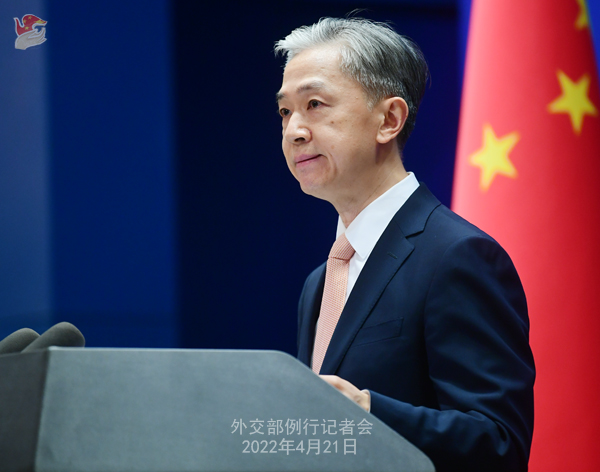
Xiao's came after Chinese foreign ministry spokesperson Wang Wenbin thanked Australian authorities for their efforts in the search.

"Chinese and foreign vessels have arrived at relevant waters and the search and rescue operation is intensively underway," Wang said on Wednesday.

READ MORE: Man arrested after three kids knocked down by car in Sydney's north

"More help is on the way. We will continue to work together with relevant sides to do everything possible to find those who have gone missing.

"We would like to thank the Australian maritime search and rescue department for sending an aircraft and coordinating foreign vessels passing by to help with the search and rescue efforts.

"We hope countries nearby will continue to join our search and rescue efforts. We will not give up as long as there is still hope for saving lives."

READ MORE: Truck driver 'shattered' after horror bus crash, his father says

On Wednesday, Chinese President Xi Jinping and Prime Minister Li Qiang ordered Chinese diplomats, as well as the agriculture and transportation ministries, to assist in the search for survivors.

Australia, Indonesia and the Philippines have also expressed their willingness to join in the search, and merchant and fishing vessels in the area searched for survivors Wednesday.

The search authority said the multinational search effort was continuing Thursday over an area of 12,000 square kilometres south of where the upturned hull was found.

An Australian military P-8A Poseidon aircraft and a chartered aircraft based in Perth would rejoin the search after spending the night in the Maldives, the authority said in a statement. Australia was liaising with the Chinese Maritime Rescue Coordination Centre, with three Chinese naval ships continuing the search.

“A number of merchant ships and other vessels have been assisting with the search and will continue to do so today,” the statement said.

The authority would not reveal how many ships and aircraft were involved in the search.

“We are not supplying that level of detail at this stage,” the authority said in an email.

READ MORE: Mother accused of abducting daughter six years ago turns herself in

Transport Minister Catherine King, who is responsible for the search authority, was travelling overseas and was not available for comment, her office said.

No word was given on the cause of the capsizing.

The capsized boat, Lu Peng Yuan Yu 028, was based in the eastern coastal province of Shandong, operated by the Penglai Jinglu Fishery Co. Ltd., according to reports.

Another Chinese vessel, Lu Peng Yuan Yu 018, is operating near the upturned hull and has been asked to conduct a grid search for survivors, according to Indonesian authorities.

Sign up here to receive our daily newsletters and breaking news alerts, sent straight to your inbox.