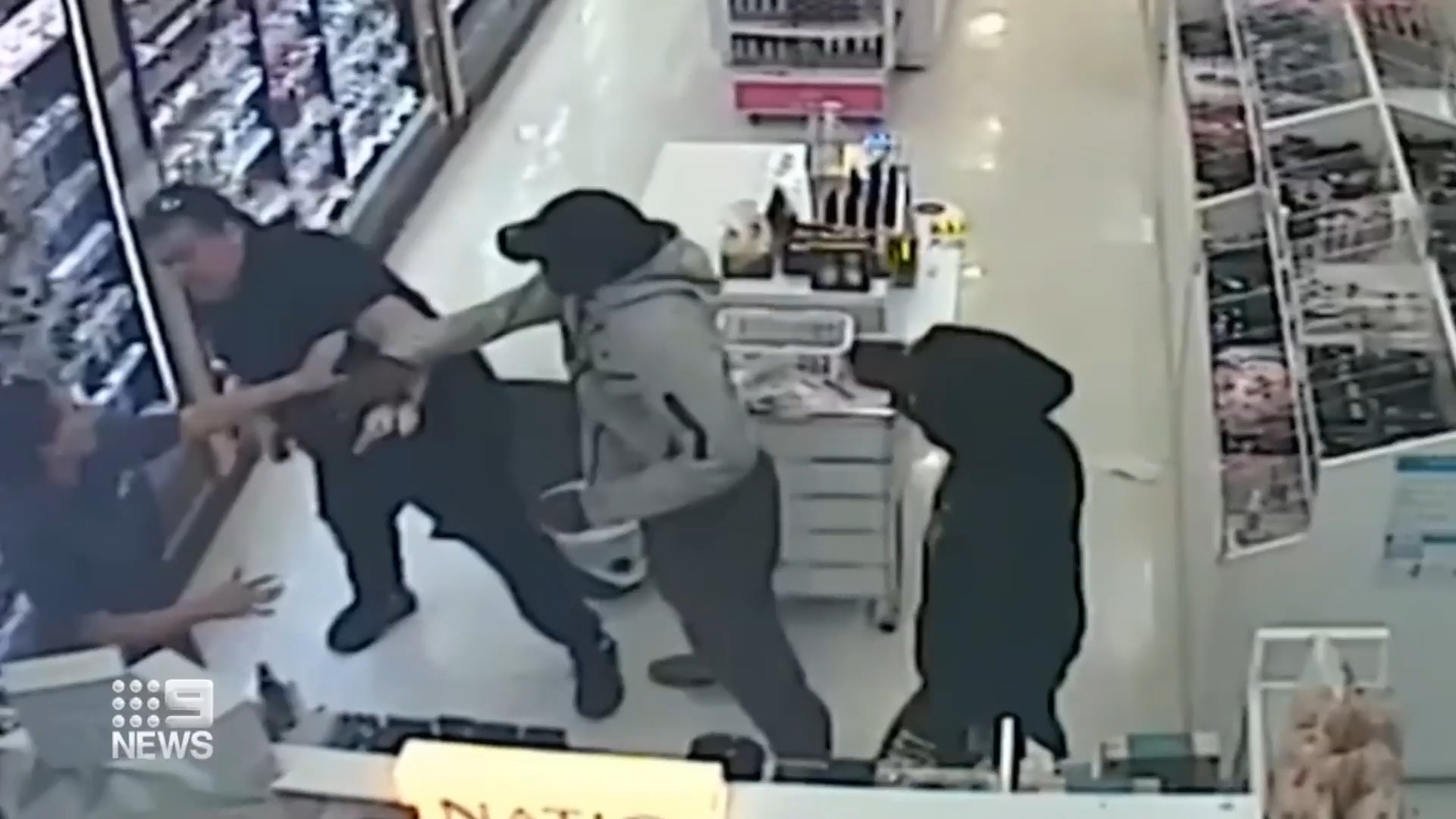
National MP Nicola Willis called the robbery “ugly stuff”.
Tag Archives: oceania
Rotorua Marathon results: Hicks and Mason claim their slice of marathon history
A memorable 59th year of the historic Red Stag Timber Rotorua Marathon.
NSW authorities issue warning after discovering contaminated opioid
Health authorities have issued a warning about a contaminated opioid detected in drugs that may cause an unexpected overdose or death in New South Wales.
NSW Health issued the warning for drugs "in a yellow power form" from the Central Coast, as it believes the substance could be related to a number of recent deaths that are currently under investigation.
The medical director of the NSW Poisons Information Centre, Darren Roberts, said drugs containing a potent opioid such as isotonitazene can cause unexpected and severe overdose or death.
READ MORE: Everything you need to know about King Charles' coronation
"Nitazenes can be as strong, or stronger than fentanyl and may be more likely to affect breathing than other opioids," he said.
"It's important people recognise the signs of an opioid overdose early and know how to respond."
Overdose symptoms can include pin-point pupils, drowsiness, loss of consciousness, slow breathing, snoring and skin turning blue or grey.
NSW Health said Naloxone is an important life-saving medication that reverses the effects of opioids.
READ MORE: What we can expect from the reign of King Charles III
"It does not require a prescription and is free for anyone at risk of opioid overdose in NSW," NSW Health said in a statement.
"You won't get into trouble for seeking medical care. If you feel unwell, or if your friend feels unwell, do something about it."
For more information see the public drug warnings published here or call the NSW Poisons Information Centre on 13 11 26.
Sign up here to receive our daily newsletters and breaking news alerts, sent straight to your inbox.
Mum claims $1 million lotto prize nearly two years after win
A New South Wales mother has claimed a $1 million prize nearly two years after the lottery was drawn.
The Lake Macquarie resident came forward to claim her win yesterday morning for the division one winning entry, which was drawn nationally on July 12, 2021.
The ticket was unregistered, meaning officials had not way of contacting the Mount Hutton woman.
READ MORE: Everything you need to know about King Charles' coronation
She said she had held onto the ticket this entire time.
"I thought I'd check it on Monday, and I was blown away," the mystery winner said.
"I can't wait to help my family, and most importantly, my kids," she said.
"It's very exciting, the prize will truly go a long way."
The Lott said there were currently 22 unclaimed division one and major lottery prizes across Australia worth $16,270,374.35.
Twelve are unclaimed prizes in New South Wales, nine in Queensland and one in Victoria.
READ MORE: What we can expect from the reign of King Charles III
Each state has different laws surrounding the time prizes are permitted to be claimed.
In NSW ticket holders have six years to claim their prize but in Victoria winners only have six months.
The Lott spokesperson Anna Hobdell encouraged all Aussies to check old tickets, or any places that might have tickets lying around, hiding in the car glovebox or in old shopping bags.
READ MORE: The legendary Stone of Destiny and King Charles' coronation
"These winning tickets were not registered to a player card or an online account, so we have no way of identifying or contacting the mystery winners to unite them with their prize," Hobdell said.
"It's an important reminder to always register tickets to an online account or players club card, so if you do happen to win division one, we can reveal the life-changing news straight after the draw."
Sign up here to receive our daily newsletters and breaking news alerts, sent straight to your inbox.
One city could have its coldest May weekend in 23 years
A cold front is sweeping the southeastern corner of the country, with Melbourne predicted to have its coldest May weekend in 23 years.
Some places are only expected to see maximum temperatures of 5 to 8 degrees, as Adelaide, Melbourne, Hobart and Sydney experience the cold snap.
If Melbourne stays at or below the forecasted temperature of 13 degrees on both Saturday and Sunday it will be the city's coldest weekend since August 2021 and the coldest May weekend in 23 years, according to Weatherzone.
LIVE UPDATES: King Charles' coronation
READ MORE: Everything you need to know about King Charles' coronation
"A strong cold front will drag a polar air mass across south eastern Australia this weekend, causing temperature to plummet and delivering a mix of rain, hail, snow, blustery winds and thunderstorms," Weatherzone said.
Showers are likely in parts of South Australia, Tasmania, Victoria, New South Wales and the Australian Capital Territory.
There will be the first snow of the season for some areas.
READ MORE: Snow blanketing Australian Alps offers ski season preview
"The air should be cold enough for snow to reach around 500m elevation in Tasmania, 700-800m in Victoria, 800-900m in southern NSW and the ACT, and around 900-1000m in central NSW," Weatherzone said.
The maximum temperatures for the capitals are Sydney 22, Melbourne 13, Brisbane 26, Perth 19, Adelaide 15, Hobart 13, Canberra 16 and Darwin 33 degrees.
Tomorrow the maximum temperatures for the capitals are Sydney 18, Melbourne 13, Brisbane 26, Perth 24, Adelaide 16, Hobart 12, Canberra 9 and Darwin 34.
Watch 9News' special coverage of King Charles' coronation for free on 9Now.
Sign up here to receive our daily newsletters and breaking news alerts, sent straight to your inbox.
What the budget's changes to Australia's tax system mean for you
This federal budget, Treasurer Jim Chalmers is faced with the task of balancing the need to provide support to Australians struggling in the cost of living crisis with showing restraint amid tough economic conditions.
In the midst of this balancing act are two tax policies: the low and middle-income tax offset (LMITO, or sometimes colloquially known as the "lamington"), which will end this year, and the stage three tax cuts, which are due to come into effect in 2024.
You've probably seen some headlines thrown around about both – from the cost of the stage three cut to the end of the LMITO being one of the biggest-ever tax hikes for millions of Australians – but this is what they actually mean for you.
READ MORE: What we know so far about the May 9 federal budget
How much will the end of the low and middle-income tax offset cost you?
The end of the LMITO was the first significant bit of budget news we had this year.
It was reported in April by Nine newspapers that the federal government will allow the offset to expire in the budget.
The temporary LMITO was introduced in the 2018-19 budget, extended during the pandemic, and then increased by the Morrison government (and supported by the then-opposition) during its pre-election March 2022 budget for a single year.
Neither Labor nor the Coalition had ever planned for it to be retained for 2022-23 or beyond.
That increase meant that, for the 2021-22 financial year, Australians earning $126,000 a year or less were given a tax cut of up to $1500, depending on how much they earned – the biggest benefit was for those earning between $48,000 and $90,000.
| Income | Size of offset |
| Up to $37,000 | $675 |
| $37,001 – $48,000 | $675, plus an additional 7.5 cents for every dollar above $37,000, up to a maximum of $1500 |
| $48,001 – $90,000 | $1500 |
| $90,001 – $126,000 | $1500 minus 3 cents for every dollar above $90,000 |
So for many Australians (according to the ATO, more than 10 million people claimed the LMITO in 2019-20), their tax bill will increase by up to $1500 next year.
The flipside, of course, is that cutting the offset will save the government money – $4.1 billion, according to 2022-23 budget papers.
And while the LMITO is ending, the stage three tax cuts will come into effect in July 2024.
But they won't necessarily leave taxpayers affected by the end of the LMITO better off.
READ MORE: Controversial ParentsNext program scrapped in upcoming federal budget
How much will stage three tax cuts save you?
Labor has consistently said it will retain the former government's stage three tax cuts policy – although there is some speculation the cuts could be adjusted before they come into effect in 2024.
The cuts, which will cost hundreds of billions of dollars, were proposed by the Morrison government in 2018 and legislated with Labor's support following the 2019 election – well before the economic turmoil brought about by the pandemic and Russia's invasion of Ukraine.
Rather than a lump-sum offset like the LMITO, the stage three cuts work differently – and are a fair bit more complicated.
READ MORE: What does the new crackdown on vaping mean for Australians?
Currently, Australia has five tax brackets:
- The first $18,200 someone earns is tax-free.
- The next $26,800 (so the income between $18,201 and $45,000) is taxed at 19 per cent, and the $75,000 after that (up to $120,000) at 32.5 per cent.
- The two highest brackets see income between $120,001 and $180,000 taxed at 37 per cent, and any income of $180,001 and above attract a rate of 45 per cent.
Under the stage three cuts, the lowest earners will not be affected, as there's no change to how income of $45,000 or less is taxed.
However, the $120,001-$180,000 bracket will be abolished, and the 32.5 per cent bracket will instead be taxed at 30 per cent.
In addition to this, the threshold for the highest tax bracket will be raised from $180,001 to $200,001.
This means all income between $45,001 and $200,000 will be taxed at the same 30 per cent rate.
| Income | Tax rate before stage three cuts | Tax rate after stage three cuts |
| $18,200 or less | 0 per cent | 0 per cent |
| $18,201 – $45,000 | 19 per cent | 19 per cent |
| $45,001 – $120,000 | 32.5 per cent | 30 per cent |
| $120,001 – $180,000 | 37 per cent | 30 per cent |
| $180,001 – $200,000 | 45 per cent | 30 per cent |
| $200,001+ | 45 per cent | 45 per cent |
The real-world effect of this means Australians earning $45,000 don't get a tax cut, while those earning, say, $80,000 will get an $875 cut (still less than what LMITO provides), while someone taking home $180,000 will benefit to the tune of $6075.
The maximum saving under stage three cuts of $9075 will only be enjoyed by those earning more than $200,000.
The cost of stage three tax cuts is far greater than that of the LMITO.
The Parliamentary Budget Office estimated they will cost the budget $61.2 billion over the first three years, and $243.5 billion over the first nine.
READ MORE: Treasurer pours cold water on calls to pause beer tax
So after all these changes, will you be better or worse off?
The answer to that question depends on how much you earn:
| Income | Tax increase from loss of LMITO | Tax cut from stage three cuts | Total impact |
| $37,000 | $675 | $0 | -$675 |
| $45,000 | $1275 | $0 | -$1275 |
| $60,000 | $1500 | $375 | -$1125 |
| $80,000 | $1500 | $875 | -$625 |
| $100,000 | $1200 | $1375 | +$175 |
| $120,000 | $600 | $1875 | +$1275 |
| $150,000 | $0 | $3975 | +$3975 |
| $180,000 | $0 | $6075 | +$6075 |
| $200,000 | $0 | $9075 | +$9075 |
There is still every chance the stage three tax cuts will be changed before they come into effect.
But as they currently stand, their introduction, coupled with the end of the LMITO, will leave higher earners with more in their pockets and lower earners worse off.
Sign up here to receive our daily newsletters and breaking news alerts, sent straight to your inbox.
What you need to know ahead of the Federal Budget
Budget time is here again, and if you're thinking 'we just had a budget', you're absolutely correct.
The last budget in October was the Albanese government's way of establishing a new direction, and a formal method of delivering on its election commitments.
Budgets are usually handed down in May so this is actually a return to regular programming. But what does the budget actually do?
READ MORE: What we know so far about the budget
In simple terms, it sets out the government's priorities for the years ahead, it outlines revenues and expenses, and it makes forecasts about the economy over the next four financial years, often referred to as the 'forward estimates' or 'forwards' for short.
One of the most important things about the budget is its bottom line.
A balance of 'revenue' or money coming in and 'expenses' going out.
If the government earns more than it spends the budget is in 'surplus'.
If it spends more than it earns the budget is in 'deficit'.
Any deficit would add to the nation's 'debt' which is currently sitting at roughly $895 billion.
The October budget forecast a deficit of $36.9 billion this year.
READ MORE: Controversial ParentsNext program scrapped
But some say a surplus is now possible for the first time since 2007 and the Opposition argues this is what the Treasurer should deliver.
The bulk of the budget is kept secret until Tuesday night. Inevitably, though, some of the detail is leaked.
Among the things we know so far:
-
There'll be a $3 billion power price relief package
-
$2.2 billion will be spent on the health system to take pressure off the country's emergency departments.
-
Following the Defence Strategic Review more than 30 defence projects will be scaled back, or scrapped to help fund a $19 billion increase in defence spending.
-
The National Disability Insurance Scheme's growth rate will be cut from 13.8 per cent per year, to 8 per cent by 2026 to save more than $60 billion over 10 years.
Overall, cost of living will be the big budget issue. Cost of living is being driven by inflation and the Treasurer will have to provide relief without adding to the problem by putting too much money in people's pockets.
Wānaka stomping attacker released from prison three years early
Ahu Stanley Taylor was sentenced to 10 years and eight months’ jail for the attack.
Auckland measles outbreak: Pop-up testing centre for staff set up, Albany school contacts should isolate
All 900 students and 100 staff were considered close contacts.
Witness describes moment Service NSW worker stabbed in 'unprovoked attack'
A customer has described the moments that led up to a Service NSW employee being stabbed multiple times in an alleged unprovoked attack in Sydney's CBD.
Daniel Horta was in the Haymarket branch when the 55-year-old worker was knifed multiple times in the lower back, chest and shoulder at about 9.20am today.
Horta alleged the man raised his voice with an employee after he was told he didn't have enough documents.
READ MORE: Official punched in the face during meeting
"Then he started to shout and punch the server, who was an older guy," Horta said.
"Usually I'm not the type of guy that would react in these types of situations but I was the closest male guy so I had to do something."
A 37-year-old man "well known to police" was arrested and has been charged with wounding with intent over the alleged attack.
READ MORE: A routine operation left Rebecca in unending agony
His alleged victim was in a serious condition when he was rushed to St Vincent's Hospital.
He has since undergone surgery and is with family in the intensive care unit in a stable condition.
Service NSW said the Haymarket branch will remain closed today and tomorrow as staff work with NSW Police investigating the incident.
"After a short conversation with a male employee, a 37-year-old male has produced a bladed knife in an unprovoked attack and has stabbed a male employee a number of times in the torso," Detective Superintendent Martin Fileman said.
"The 37-year-old male was immediately detained by Service NSW staff and customers."
READ MORE: Macca's worker shot dead inside restaurant
Fileman said the man was facing a "substantial custodial sentence".
"We take knife crime very very seriously and this is no exception," he said.
NSW Premier Chris Minns said it was "horrifying" in a tweet.
"The thoughts of our government and our state are with this worker and their family at what is no doubt a very difficult time," Minns said.
"To all the staff at Service NSW and those first responders on the scene – thank you."
https://twitter.com/ChrisMinnsMP/status/1654335299567198212
Secretary of NSW Department of Customer Service Emma Hogan said the incident was "awful and upsetting".
"Our thoughts are with our injured teammate and his family as well as our colleagues who were present and witnessed the incident," Hogan said.
"His family are with him and we are in touch with them and we are offering our full support."
READ MORE: One-in-five NAB customers trapped in 'mortgage prison'
She thanked everyone who assisted at the scene.
"Our frontline staff come to work every day to help our customers and those same staff deserve to come home safely," Hogan said.
"The safety and welfare of our teams is the most important thing to us and we are all devastated by this morning's event.
"Our team members who witnessed it have all been offered the appropriate support and are now safely at home with loved ones."
The man's bail has been refused and he will appear in court today.
Sign up here to receive our daily newsletters and breaking news alerts, sent straight to your inbox.