Financial difficulties led a man back to crime after years of going straight.
Tag Archives: oceania
World War I Māori Pioneer Battalion honoured by French delegation visit to Rotorua
The 19km tunnel network sheltered 24,000 soldiers 20m under the streets of Arras.
Juicy Fest 2024 will not return to Te Tai Tokerau despite immense popularity
Chosen locations for 2024 are Christchurch, Wellington, Tauranga and Auckland.
RSA national president Sir Wayne ‘Buck’ Shelford calls for extra day to recognise all war veterans
RSA calls for extra day to recognise all war veterans, one week out from Anzac Day.
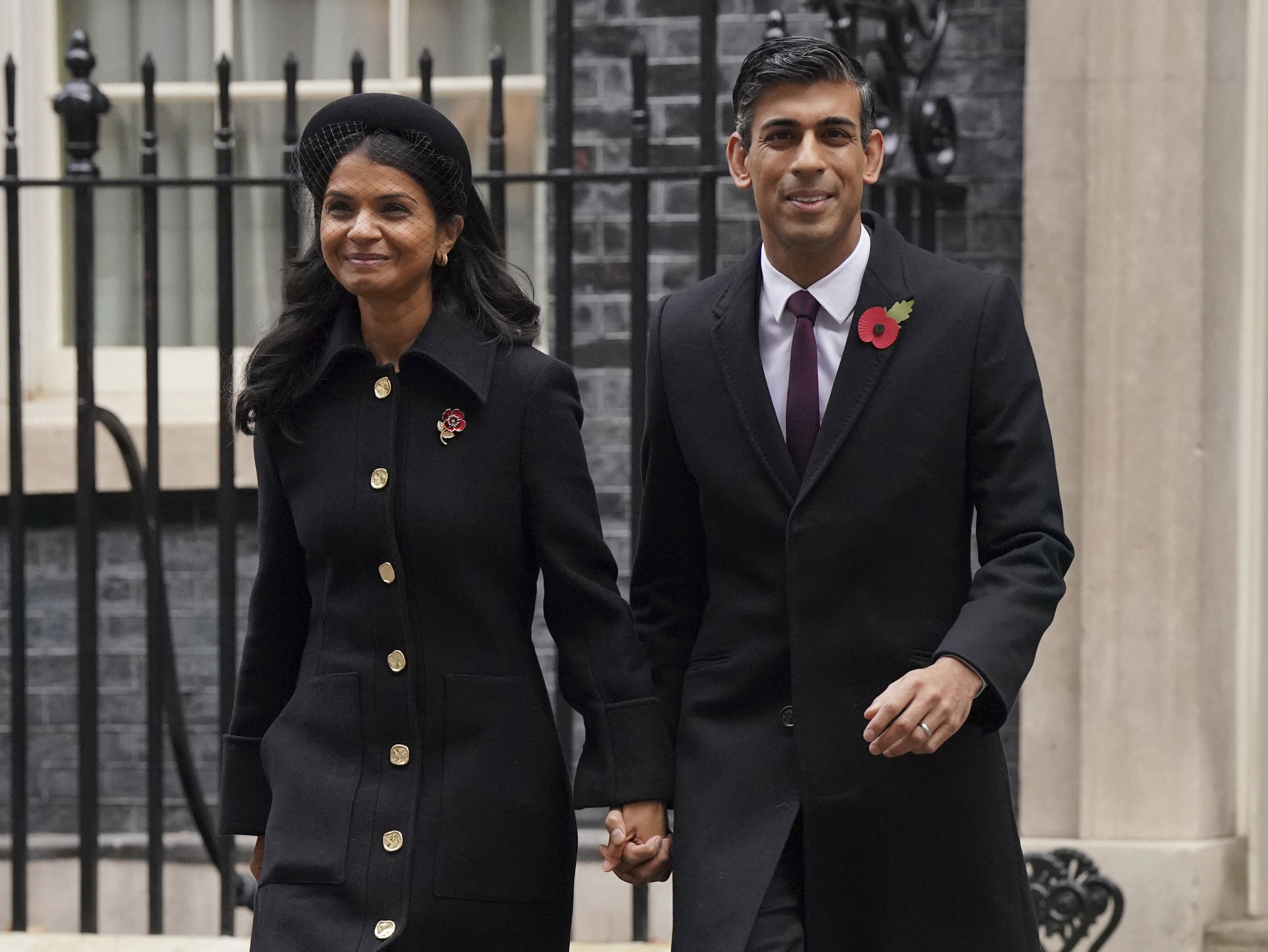
Wife of UK Prime Minister Rishi Sunak loses $91 million in single day
UK Prime Minister Rishi Sunak's wife, Akshata Murty, lost about $91 million on Monday (Tuesday AEDT) after shares in the Indian technology company founded by her father fell sharply.
She has a 0.93 per cent stake in the software company, Infosys, worth approximately $1 billion.
Murthy is the daughter of N. R. Narayana Murthy, one of India's richest people.
READ MORE: 'Secret Chinese police station' uncovered in New York City

Infosys shares tumbled after a downgraded outlook for the Indian tech sector, the Australian Financial Review reports.
They closed down 9.4 per cent, the biggest drop since March 2020.
Meanwhile, Sunak is under investigation over allegations he failed to disclose shares Murty owns in a childcare business that stands to benefit from his government's budget, a parliamentary watchdog disclosed.
Parliamentary Commissioner for Standards Daniel Greenberg opened an inquiry last week for possible violations of the code of conduct that calls on members to be "open and frank" in declaring relevant financial interests, according to an update given to British MPs who returned on Monday from Easter break.
Parliament requires members to disclose financial interests within four weeks of something they said or actions they took that may have been influenced by a financial interest.
READ MORE: Akshata Murty: Rishi Sunak's wife is richer than royalty

A Sunak spokesperson says he did not make a declaration as a member of parliament but had recorded a "ministerial interest", the equivalent disclosure for government ministers.
The government's budget announced last month includes a massive expansion of free childcare for working families with children from nine months to four years old.
The plan included financial incentives to people who joined the childcare profession and doubled the incentive if it was done through a private agency.
Murty has shares in Koru Kids, which is listed on a government website as one of six such agencies.
The organisation praised the new incentives in the budget as "great".
READ MORE: Fears Australia will enter a consumer recession after forecast
Sunak was asked to "come clean" about his family's financial interests last month after being grilled by members of parliament over why the childcare policy favoured private agencies.
When asked if he had any interests to declare, Sunak did not mention his wife's shares.
"No, all my disclosures are declared in the normal way," he said.
At the time, Sunak's press secretary said his interests would be included in an update of ministers' interests in May.
Sunak promised "integrity, professionalism and accountability at every level" when he took office in October.
Sign up here to receive our daily newsletters and breaking news alerts, sent straight to your inbox.
Teenage girl bitten by police dogcharged after 'stolen car' crashed
A 17-year-old girl bitten by a police dog in a police pursuit has been charged after allegedly crashing a stolen car and fleeing into bushland in Sydney's west
Police initiated a chase after allegedly seeing the stolen Toyota Kluger SUV driving at high speeds on the Great Western Highway Eastern Creek just before midnight yesterday.
The 17-year-old driver allegedly failed to stop and crashed into a semi-trailer at the M7 off-ramp intersection with four other teenage girls inside.
READ MORE: WA town prepping for once-in-a-lifetime total solar eclipse
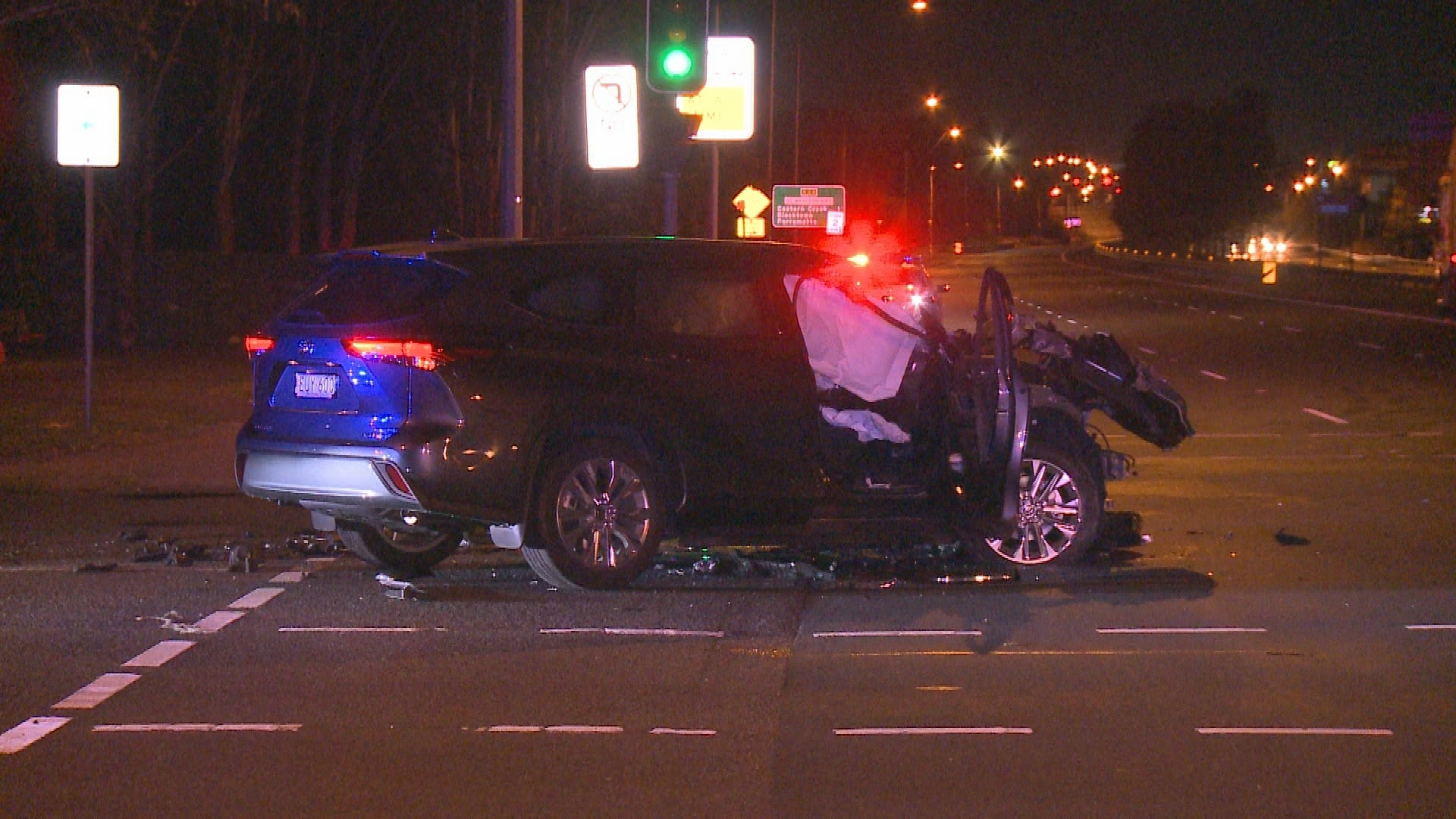
The group – aged between 13 and 17 – then ran into nearby bushland, where a police dog bit the alleged driver.
The group were arrested and taken into custody at Mount Druitt police station.
Four girls – aged 13, 14 and two 15-year-olds – were released after being issued a youth caution.
The 17-year-old was treated by paramedics for the dog bite and taken to Westmead Hospital.
She remains under police guard and has been charged with failing to stop in a police pursuit, driving recklessly, taking a car without consent, driving without a licence and breaching bail.
The girl has been refused bail and will face a bedside hearing today.
Sign up here to receive our daily newsletters and breaking news alerts, sent straight to your inbox.
How to watch the eclipse
Western Australia will be graced by a rare total solar eclipse in just days, a stellar occurrence the state hasn't seen since the '70s.
The sun will completely disappear behind the moon over Ningaloo, 1200 kilometres north of Perth, on April 20 at 11:29am AWST – making it the first for Western Australia since 1974.
All other states across the country will experience a partial eclipse at 1:29pm (AEST), with the next full solar eclipse for Australia's eastern states coming up in 2028.
WATCH LIVE: We will livestream the total solar eclipse from 1pm AEST at 9news.com.au on Thursday
READ MORE: Is Australia facing another COVID-19 winter wave?

How to watch the solar eclipse
Looking directly into the sun, even during a solar eclipse, is dangerous and can lead to permanent eye damage.
"Staying safe is critical when observing a solar eclipse," Dr Andrew Cameron from Swinburne University of Technology said.
"The number one rule is to never look directly at the sun with the naked eye, as even a brief glimpse can permanently damage your eyesight."
The Astronomical Society of Australia suggests watching the eclipse and partial eclipse in two safe ways:
- Using special-purpose 'eclipse glasses' or hand-held solar viewers with solar filters that meet the international standard
- Using pinhole projection through a large card with a two-millimetre hole in the centre to project an image of the Sun onto another surface held about a metre away.
Cameron says the pinhole viewer method is best, and cautions that safety glasses need to be used carefully.
"Protective eclipse glasses are another solution," he said.
"But extreme care should be taken to ensure that they are both properly rated for solar viewing and are completely undamaged, as even a small scratch can allow enough light through to cause injury."
You can purchase solar-safe glasses online. They must meet the international ISO 12312 2 standard requirements to be considered safe.
You can find out more about the requirements here
READ MORE: Anzac Day trading hours: What will and won't be open
Where can you watch the eclipse?
Not everyone will get a good view of the eclipse, and only sungazers (but again, please don't actually gaze right at the sun) in some parts of Western Australia will be able to enjoy the total eclipse at 11:29am (local time).
Viewed from the North West Cape peninsula in Western Australia, the moon will completely hide the sun," Professor Michael Wheatland, an expert in solar astrophysics at the University of Sydney, said.
"Here, the path of totality will just cross the coast, including the towns of Exmouth and Learmonth."
The rest of the country isn't quite so lucky though.
"For most of Australia, the eclipse will be partial – the moon will only partly block the sun," Wheatland said.
"In Sydney there will be, at most, about a 19 per cent coverage by area of the sun (starting from 1:37pm).
"This eclipse is somewhat unusual, in that it is a hybrid eclipse – which means that it changes from an annular eclipse (where the Moon is smaller than the Sun on the sky) to a total eclipse, and then back to an annular eclipse, along the path of the shadow on the Earth."
READ MORE: When should you get your influenza vaccine ahead of flu season?
What is an eclipse?
A solar eclipse happens when the moon's orbit passes between the sun and the earth at the same time, creating a shadow on the Earth that partially or fully blocks the sun's face.
"Solar eclipses are spectacular," The President of the Astronomical Society of Australia John Lattanzio said.
"Australia really is the lucky country with five total eclipses visible in various parts of the country over the next 15 years."
READ MORE: Mystery Aussie winner takes home $30 million

Total solar eclipses are a rare occurrence, usually only gracing one location every couple hundred years, but they're not quite as rare as popular theory would have you believe.
"Total solar eclipses are special events, but not as rare as people think," Professor Steven Tingay, the executive director of the Curtin Institute of Radio Astronomy, said.
"On average, there is a total solar eclipse every 18 months or so. However, any given eclipse does not last very long, or cover a very large area on the surface of the earth.
"Total solar eclipses are visible from a given location on the earth every 300 to 400 years, which is why most people think of them as rare."
The last total eclipse was seen in Australia more than 10 years ago.
"Our last total solar eclipse was in November 2012, with Cairns right in the path of totality," amateur astronomer and eclipse chaser Terry Cuttle said.
Sign up here to receive our daily newsletters and breaking news alerts, sent straight to your inbox.
US health experts call for end to COVID-19 mask mandate for hospitals
A group of health experts from a number of US institutions have called for an end to mask mandates in healthcare settings.
Their commentary, published in Annals of Internal Medicine, cited the advancements in prevention and management of COVID-19 since it was identified in 2019.
The authors said that throughout the pandemic, widespread use of universal masking in healthcare settings was justifiable for reducing the risk of transmission between health care staff, patients, and visitors.
READ MORE: Economic catastrophe not seen for 30 years headed for Australia

It also helped preserve the healthcare workforce to maintain operations during surges.
But now, they say, the "burden" of COVID-19 has been mitigated through wider access to testing, the increase of population immunity, the emergence of less dangerous variants, and the widespread availability and take-up of vaccinations.
They say COVID-19 should now be managed in the same fashion of other "endemic respiratory viruses".
READ MORE: Artist refuses major award for AI image
This would entail only wearing masks in health settings under normal rules, or for patients, when symptoms are present.
In Australia, the states and territories make the decisions on mask mandates, which have been all but eliminated.
However, they are still present in healthcare and aged care settings, while some institutions and venues, such as childcare, can also set down mask rules.
And people are still recommended to mask up if they are symptomatic and unable to socially distance.
Sign up here to receive our daily newsletters and breaking news alerts, sent straight to your inbox.
US man charged after Black teen shot going to wrong house
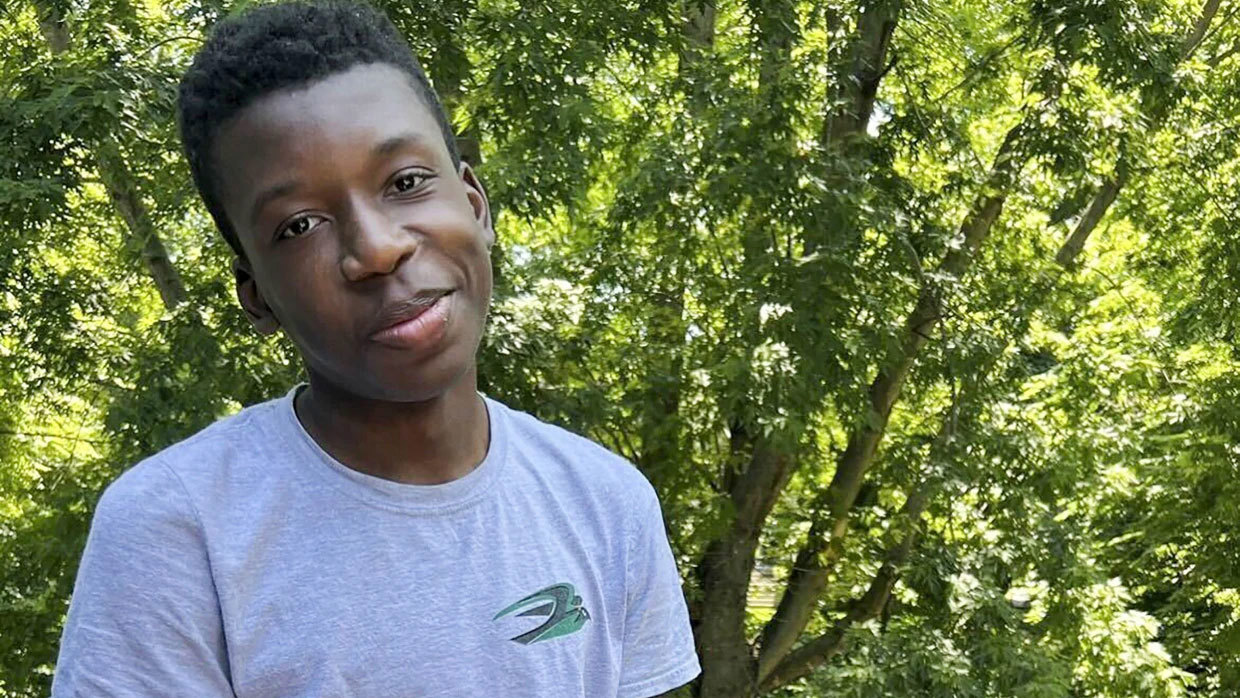
An 84-year-old white man in Kansas City, Missouri, US has been charged with first-degree assault for shooting a Black teen who mistakenly went to the man's home to pick up his younger brothers.
Prosecuting attorney Zachary Thompson said at a news conference that there was a "racial component" Thursday night when Andrew Lester twice shot 16-year-old Ralph Yarl, who is recovering at home after being released from the hospital.
But nothing in the charging documents says the shooting was racially motivated, Thompson clarified.
READ MORE: Secret Chinese police outpost revealed in New York, two men arrested
"We understand how frustrating this has been but I can assure you the criminal justice system is working and will continue to work," Thompson said.
The shooting outraged many in Kansas City and across the country.
Civic and political leaders — including President Joe Biden — demanded justice.
Some, including lawyers for Yarl, pressed the racial dimension of the case.
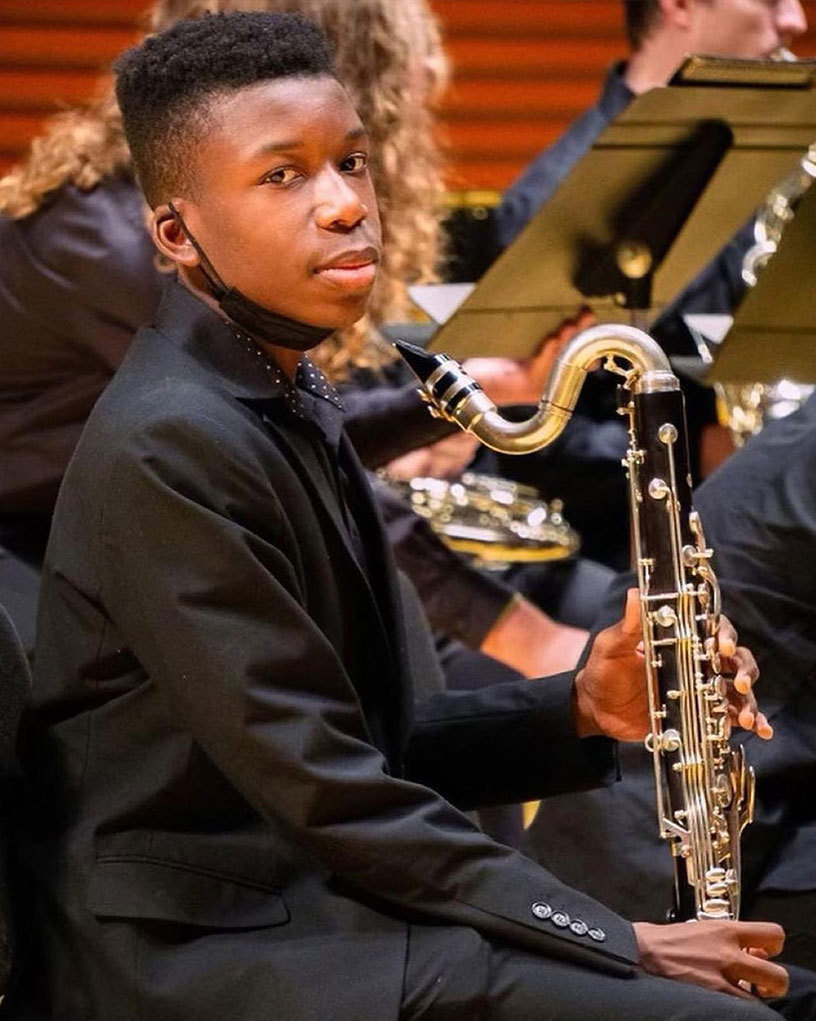
Yarl, an honour student and all-state band member, was supposed to pick up his two younger brothers when he approached the wrong house at roughly 10pm local time.
Lester came to the door and shot Yarl in the forehead — then shot him again, in the right forearm.
https://twitter.com/jekearsley/status/1648112320248451073
No words were exchanged before the shooting, the probable cause statement said.
But afterward, as Yarl got up to run, he heard Lester yell, "Don't come around here," the statement said.
Yarl ran to "multiple" homes asking for help before finding someone who would call the police, the statement said.
Reverend Vernon Howard, president of the Southern Christian Leadership Conference of Greater Kansas City, called the shooting a "heinous and hate-filled crime."
Vice President Kamala Harris wrote on Twitter that "No child should ever live in fear of being shot for ringing the wrong doorbell."
The Missouri Senate held a moment of silence for Yarl on Monday.
The civil rights attorneys for Yarl's family, Ben Crump and Lee Merritt, said in a statement that Biden called Yarl's family and offered "prayers for Ralph's health and for justice."
https://twitter.com/jekearsley/status/1648137753585147905
"Gun violence against unarmed Black individuals must stop," the lawyers' statement read.
"Our children should feel safe, not as though they are being hunted."
Yarl's supporters plan to hold a rally Tuesday evening in Kansas City.
The assault charge carries a penalty of up to life in prison. Lester also was charged with armed criminal action, which has a penalty range of three to 15 years in prison.
Lester was not charged with a hate crime. Thompson said Missouri's statute is considered a lesser felony than first-degree assault, and carries a less severe penalty.
Missouri is among roughly 30 states with "Stand Your Ground" laws, which allow for the use of deadly force in self-defence, but the prosecutor determined the shooting was not in self-defence.
READ MORE: Fears Australia will enter a consumer recession

An arrest warrant was issued but Lester was not yet in custody, Thompson said.
Lester told police that he lives alone and had just gone to bed when he heard his doorbell, according to the probable cause statement. He said he picked up his gun and went to the door, where he saw a Black male pulling on the exterior storm door handle and thought someone was breaking in.
A number for Lester was not in service on Monday evening and it was not immediately clear whether he had an attorney to speak on his behalf.
Wounded teen returns home
Ralph was released from the hospital on Sunday, according to a report from The Kansas City Star, citing an interview with the teen's father.
"He continues to improve. He's responsive and he's making good progress," Paul Yarl told the newspaper.
After spending three nights in the hospital, Ralph is recovering at home, being cared for by his mother who is a nurse, the newspaper reported.
At a weekend rally, community and family members marched and demonstrated, calling for charges to be filed.
Protesters marched as they chanted, "justice for Ralph" and "Black lives matter," and carried signs reading, "Ringing a doorbell is not a crime" and "The shooter should do the time," footage from CNN affiliate KMBC shows.
The teen's father said at the time, "We want charges. That's what we want."
Family seeking 'swift action'
Police learned the teenager's parents had asked him to pick up his siblings at an address on 115th Terrace, but he accidentally went to a home on 115th Street, where he was shot.
Lawyers for Ralph's family also say the youth was shot after he went to the wrong house.
"Ralph Yarl was picking up his younger brothers when he mistakenly rang the doorbell at the wrong house. A man shot Ralph twice and now he's in critical condition. His family needs support during this tragedy," Crump tweeted.
Attorneys for the wounded youth's family issued a statement demanding "swift action from Clay County prosecutors and law enforcement to identify, arrest and prosecute to the full extent of the law the man responsible for this horrendous and unjustifiable shooting".
In a Monday interview with CNN, Crump said the shooting "hearkens back to Trayvon Martin and Ahmaud Arbery and so many of these other tragedies where you had citizens profile and shoot our Black children and the police then let them go home and sleep in their beds at night. Unacceptable."
Asked whether the shooting may have been racially motivated, the police chief said, "the information that we have now, it does not say that that is racially motivated. That's still an active investigation. But as a chief of police, I do recognise the racial components of this case."
Graves sought to assure the Kansas City community Sunday the police department is committed to the case.
"We recognise the frustration this can cause in the entire criminal justice process. The women and men of the Kansas City Police Department are working as expeditiously and as thoroughly as we can, to ensure the criminal justice process continues to advance as quickly as all involved and our community deserve," Graves said.
Kansas City Mayor Quinton Lucas said there will be a thorough investigation and review by the prosecutor's office.
"As a parent, I certainly feel for the mother of the victim and others in the family. My heart goes out to them," the mayor added.
Youth was a band section leader
A crowdfunding page started by Faith Spoonmore, who identified herself as Ralph's aunt, to help the family raise money for medical expenses had garnered more than $2.2 million in donations by Monday afternoon.
Ralph had been looking forward to graduating from high school and visiting West Africa before starting college, his aunt wrote in the fundraiser.
The teen is a section leader in a marching band and could often be found with a musical instrument in hand, Spoonmore wrote.
Most recently, Ralph earned Missouri All-State Band honourable mention for playing the bass clarinet, according to a North Kansas City Schools' newsletter in February.
He also plays multiple instruments in the metropolitan youth orchestra, his aunt wrote.
He is a member of his school's Technology Student Association and Science Olympiad Team and is a 2022 Missouri Scholars Academy alumni, she wrote.
"Last summer, Ralph attended Missouri Scholar's Academy, where he got a full college life experience," Spoonmore wrote. "His goal is to attend Texas A&M to major in chemical Engineering. When asked how he plans to get into this university, he said, 'Well, if they have a scholarship for music or academics, I know I can get it.' "
"Life looks a lot different right now. Even though he is doing well physically, he has a long road ahead mentally and emotionally. The trauma that he has to endure and survive is unimaginable," the post reads.
Dan Clemens, superintendent of North Kansas City Schools, released a statement saying Ralph is "an excellent student and talented musician".
"We are devastated to learn one of our students was involved in a horrific incident last week," Clemens wrote.
"Our thoughts are with the Yarl family, and I know I speak for all of us when we wish him a full and quick recovery. Ralph is an excellent student and talented musician.
"He maintains a stellar GPA while taking mostly college-level courses.
"While he loves science and hopes to pursue that career path, his passion is music. Thankfully, we know he is now recovering alongside family."
Neighbour says she called 911
Emerging details of the incident illustrate the strength and bravery shown by the high school junior after he was shot.
A neighbour, who asked not to be identified, tells CNN she called 911 after Ralph came to her door, bleeding.
She was directed to stay inside her home by the emergency operator, for her safety as the shooter's location was unknown.
"I wanted to help him, but they kept saying that we don't know where the shooter is at," the woman said.
She complied initially, then went outside with towels to help suppress the bleeding.
"I kneeled down next to him, and I said what's your name … Who shot you?"
She said Ralph explained he "was supposed to pick up my brothers".
"We figured out then he went to the wrong street, which is no excuse for what happened," she said.
"This is somebody's child. I had to clean blood off of my door, off of my railing. That was someone's child's blood. I'm a mum … this is not OK."
While awaiting the ambulance, bleeding from injuries to the left side of his head and his right arm, the neighbour said Ralph told her he runs on the high school track team and plays the bass clarinet in band.
"He was very alert," she said.
"He is a very strong man. Very brave."
Sign up here to receive our daily newsletters and breaking news alerts, sent straight to your inbox.
'Permanent' coastal ecosystem is thriving on Great Pacific Garbage Patch
Scientists have found thriving communities of coastal creatures, including tiny crabs and anemones, living thousands of miles from their original home on plastic debris in the Great Pacific Garbage Patch, a 1.6 million square kilometre swirl of trash in the ocean between California and Hawaii.
In a new study published in the Nature Ecology & Evolution journal on Monday, a team of researchers revealed that dozens of species of coastal invertebrate organisms have been able to survive and reproduce on plastic garbage that's been floating in the ocean for years.
The scientists said that the findings suggest plastic pollution in the ocean might be enabling the creation of new floating ecosystems of species that are not normally able to survive in the open ocean.
READ MORE: 'Secret Chinese police station' uncovered in New York City
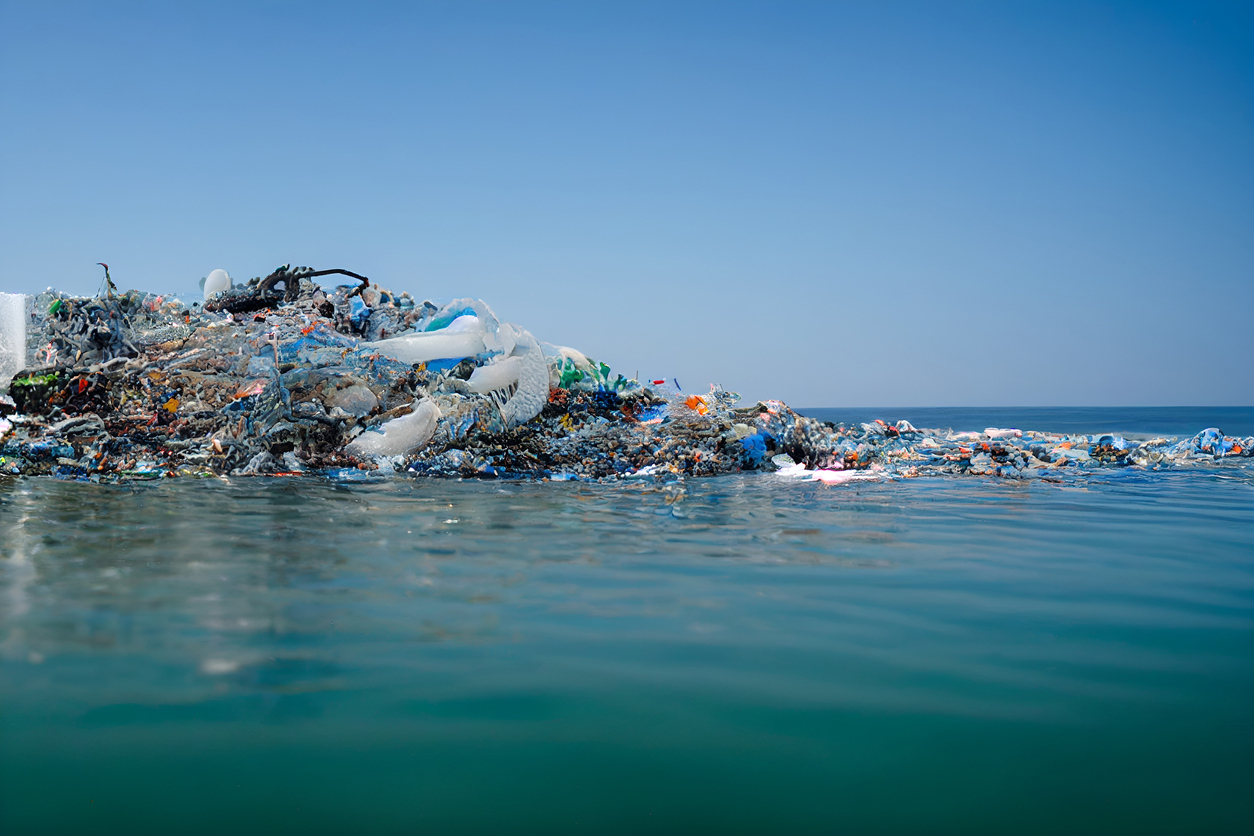
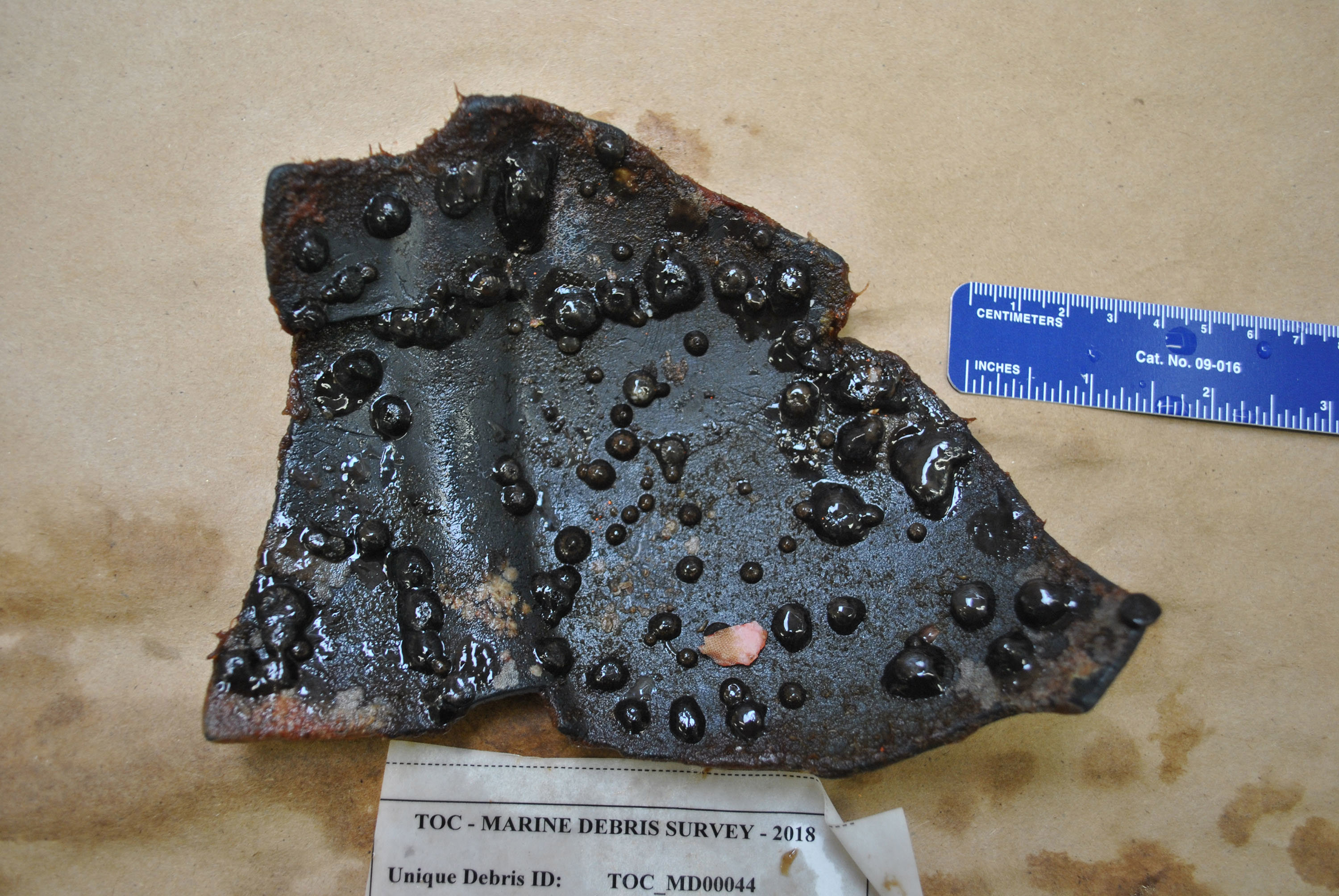
Unlike organic material that decomposes and sinks within months or, at most, a few years, plastic debris can float in the oceans for a much longer time, giving creatures the opportunity to survive and reproduce in the open ocean for years.
"It was surprising to see how frequent the coastal species were. They were on 70 per cent of the debris that we found," Linsey Haram, a science fellow at the National Institute of Food and Agriculture and the study's lead author, told CNN.
Haram and her colleagues examined 105 items of plastic fished out of the Great Pacific Garbage Patch between November 2018 and January 2019.
They identified 484 marine invertebrate organisms on the debris, accounting for 46 different species, of which 80 per cent were normally found in coastal habitats.
"Quite a large percentage of the diversity that we found were coastal species and not the the native pelagic open ocean species that we were largely expecting to find," Haram said.
They did still find a lot of open ocean species, Haram added.
"On two thirds of the debris, we found both communities together … competing for space, but very likely interacting in other ways."
READ MORE: The two colours that shouldn't have been found in Antarctica

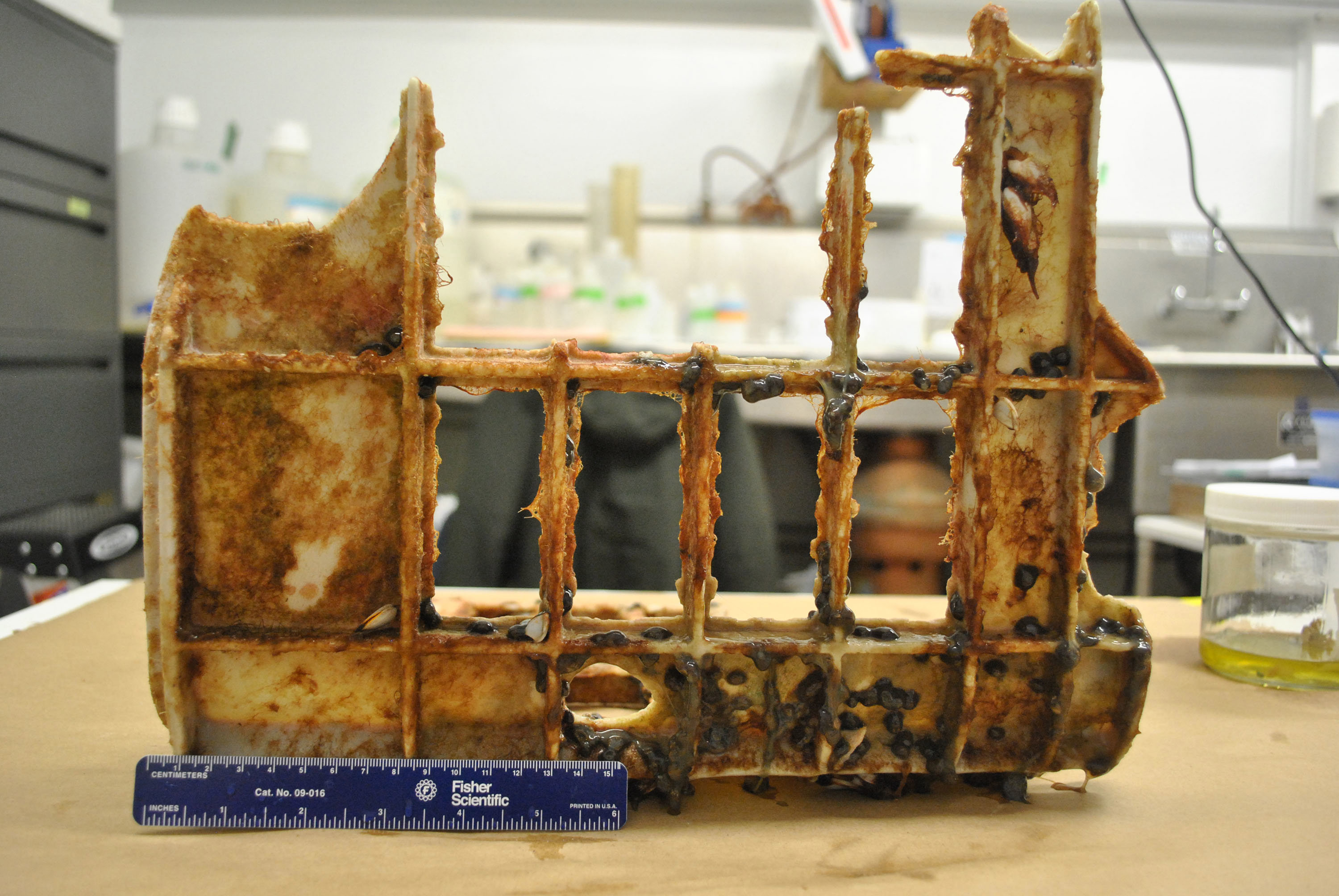
Haram said that the consequences of the introduction of new species into the remote areas of the ocean are not yet fully understood.
"There's likely competition for space, because space is at a premium in the open ocean, there's likely competition for food resources — but they may also be eating each other," Haram said.
"It's hard to know exactly what's going on, but we have seen evidence of some of the coastal anemones eating open ocean species, so we know there is some predation going on between the two communities."
How exactly the creatures get to the open ocean and how they survive there remains unclear.
Whether, for example, they were just hitching a ride on a piece of plastic they attached themselves to by the coast, or whether they were able to colonise new objects once they were in the open ocean, is unknown.
READ MORE: Fears Australia will enter a consumer recession
Oceans of plastic
The Great Pacific Garbage Patch, which is twice the size of Texas, is the largest accumulation of ocean plastic in the world.
The patch is bounded by an enormous gyre — the biggest of five huge, spinning circular currents in the world's oceans that pull trash towards the center and trap it there, creating a garbage vortex.
It's a mistake to think of the Great Pacific Garbage Patch as an island of trash, though, Matthias Egger, the head of environmental and social affairs at The Ocean Cleanup, a non-profit developing technologies to rid the oceans of plastic, told CNN.
"If you're out there, what you see is just pristine blue ocean," said Egger, who helped Haram's research by collecting the samples in the patch, fishing them out with a net.
"You can think of it like the night sky. If you look up at night, you see all those white dots, that's essentially what you see in the garbage patch. It's not that dense, but there are a lot of them … out there, you start seeing more and more plastic the longer you look," he said.
The Ocean Cleanup initiative estimates there are about 1.8 trillion pieces of plastic in the patch that weigh an estimated 80,000 tonnes.
The majority of the plastic found in the patch comes from the fishing industry, while between 10 per cent and 20 per cent of the total volume can be traced back to the 2011 Japanese tsunami.
READ MORE: The big change coming to Woolworths

According to the United Nations Environment Programme (UNEP), the world produces around 460 million tons of plastic a year, a figure that — without urgent action — will triple by 2060.
Globally, only around 9 per cent of plastic waste is recycled, according to UNEP.
As much as 22 per cent of all plastic waste is mismanaged and ends up as litter, with large amounts eventually making it into the oceans.
Scientists have warned there has been a "rapid and unprecedented" increase in ocean plastic pollution since 2005.
"The problem is getting bigger and bigger by the minute," Egger said.
"We see turtles that are entangled in ghost fishing nets. Sometimes it's even just turtle carcasses. We see ingestion of plastic fragments. Then there's also the pollutants — chemicals."
READ MORE: How to see the rare solar eclipse on April 20
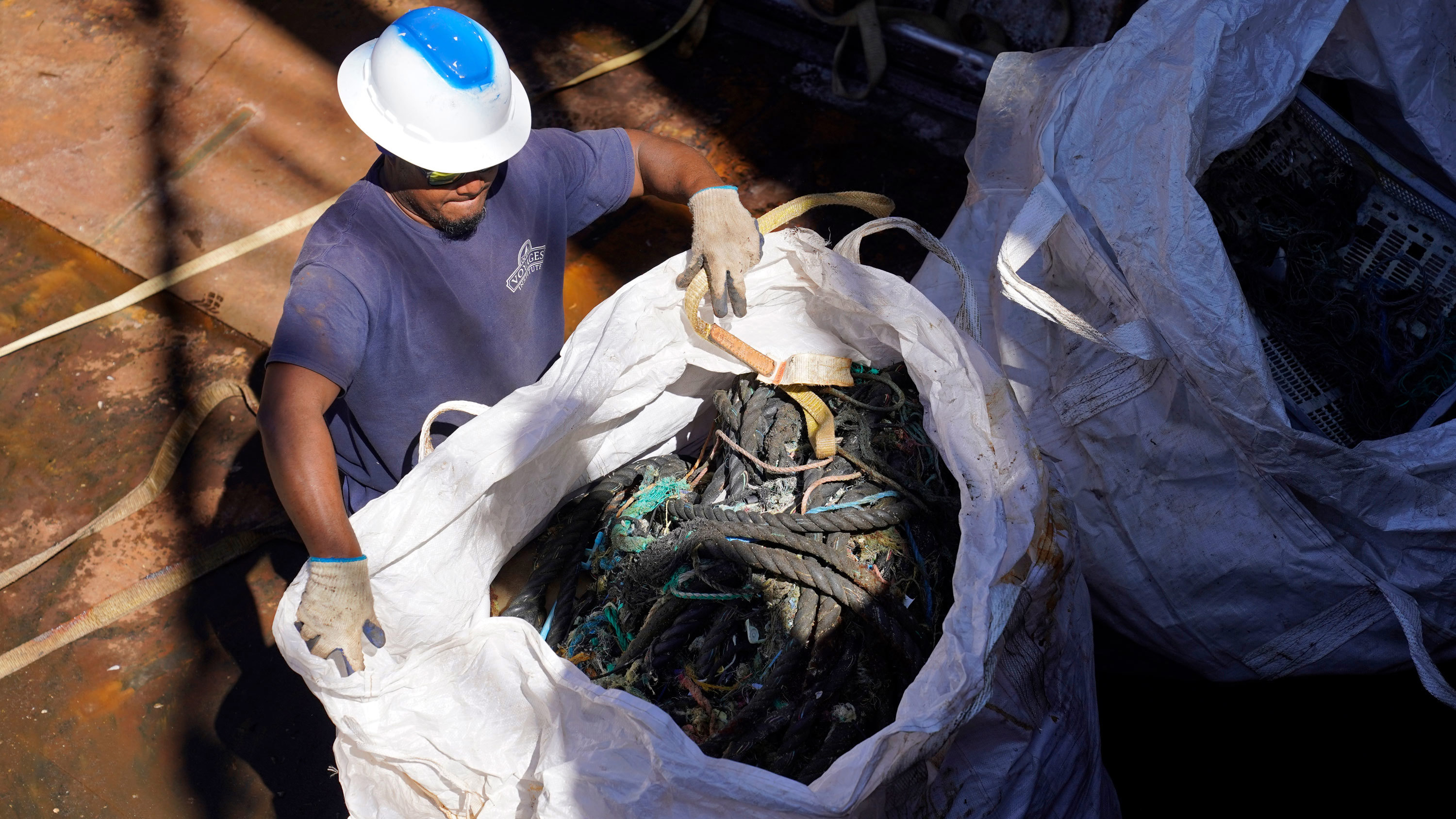
The Ocean Cleanup has built a huge trash-collecting system, a U-shaped barrier with a net-like skirt that hangs below the surface of the water. It moves with the current and collects faster-moving plastics as they float by.
"We want to look into what's the impact on marine life. And once we know for sure that it's safe and it benefits the environment, then we want to scale up," Egger said.
But cleanup is only part of the solution.
A study published last month said that without urgent policy action, the rate at which plastics enter the oceans could increase by around 2.6 times between now and 2040.
The UN Environment Assembly passed a historic resolution last year to end plastic pollution and create the world's first global plastic pollution treaty by 2024 — a legally binding agreement that would address the full life cycle of plastic, from its production and design to its disposal.
Sign up here to receive our daily newsletters and breaking news alerts, sent straight to your inbox.