The irony wasn't lost on anyone.
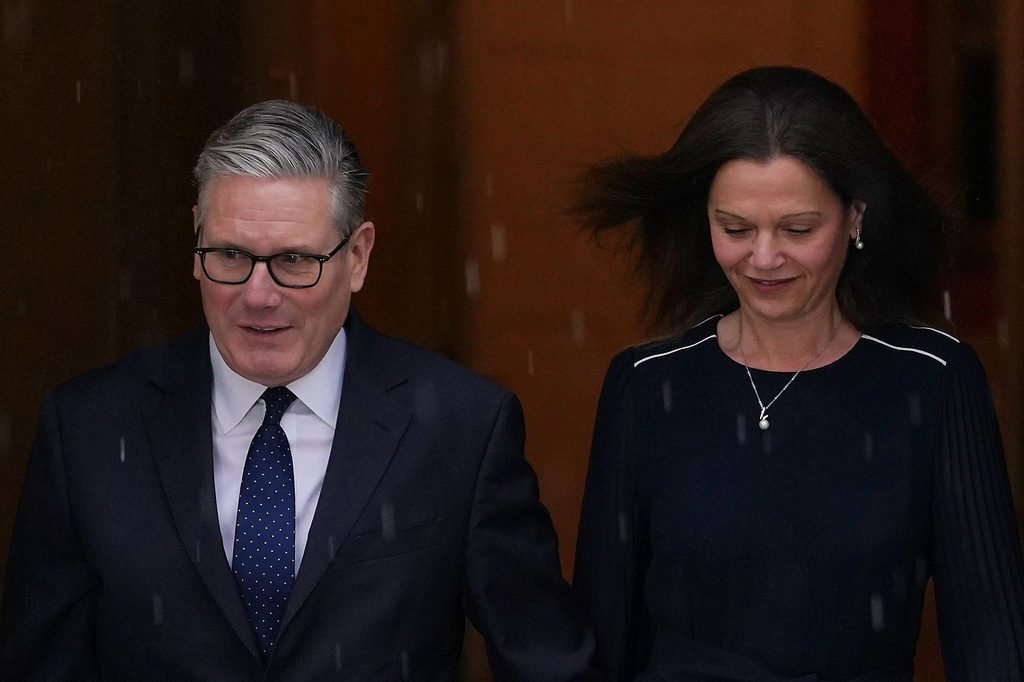
On a day when the British government's legislative plans were presented by no less than King Charles III himself, Prime Minister Keir Starmer was fighting to remain in power following rising discontent within his Labour Party.
The traditional pomp and pageantry associated with the state opening of Parliament was overshadowed by the political intrigue, specifically the mounting speculation that Health Secretary Wes Streeting was planning to quit Starmer's government and launch a leadership bid as soon as Thursday.
The embattled prime minister has been urged to set a timetable for his departure by more than a fifth of the Labour Party's lawmakers in the House of Commons. Some junior ministers have quit the government in protest, but no one has yet challenged Starmer directly.
"It is absolutely preposterous that the government is here laying out a program as its ministers are resigning and a large proportion of the party is saying that the prime minister needs to go," Kemi Badenoch, leader of the main opposition Conservative Party, told lawmakers as they began a debate over the government's agenda.
On the ropes
Starmer's premiership has been imperilled by the huge losses Labour suffered in local and regional elections last week. If those results were repeated in a national election that has to be held by 2029, the party would be overwhelmingly ejected from power.
Labour was squeezed from the right and the left, losing votes to both anti-immigrant Reform UK and the Green Party, as well as nationalist parties in Scotland and Wales.
Labour secured a landslide election victory in 2024, driving the Conservatives from power after 14 years, but since then the party's popularity has plunged and Starmer is getting much of the blame.
The reasons include a series of policy missteps, a struggling British economy, a perceived lack of vision on the prime minister's part and questions over his judgment. Starmer's choice of Peter Mandelson as UK ambassador to Washington despite ties to the convicted sex offender Jeffrey Epstein has continued to haunt him.
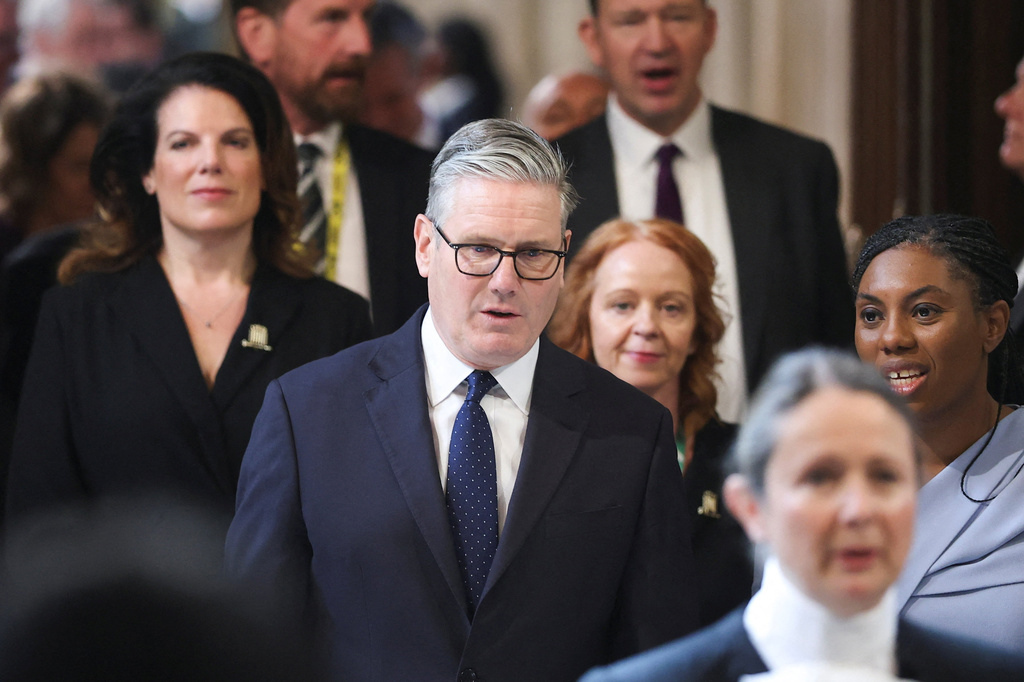
Streeting is expected to launch a leadership bid as early as Thursday, according to some media reports. Streeting, who has long been known to harbour ambitions to become prime minister, met with Starmer on Wednesday for less than 20 minutes. Neither have discussed what was said, but Starmer's office insisted that the health secretary retains the prime minister's full support.
Starmer, who says he has no intention to stand down, has his supporters within the party. More than 100 lawmakers have signed a letter saying it's "no time" for a leadership contest.
"We should let him get on with doing his job, because he is a serious politician and these are very, very serious times," Northern Ireland Secretary Hilary Benn told Sky News.
King offers Starmer some respite
In a speech to lawmakers outlining the government's legislative program for the coming year or so that was written by the government itself, the king said that the UK's economic, energy and national security would be tested as it deals with the fallout from the wars in Iran and Ukraine.
Planned measures include controlling the cost of living, strengthening ties with the European Union and making it easier to build new energy infrastructure.
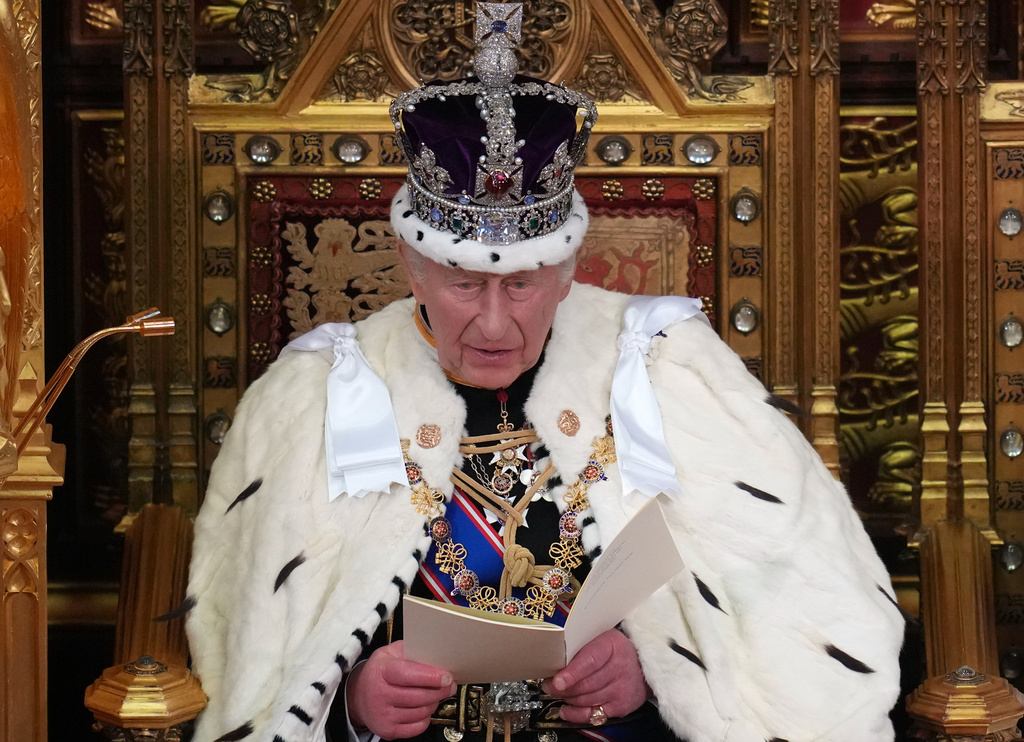
And pledging action on antisemitism following a run of attacks on the Jewish community in recent months, Charles said that the government would "defend the British values" of decency and tolerance.
The monarch, who made the short journey from Buckingham Palace to the Houses of Parliament in a horse-drawn carriage, also said the government will "defend the British values of decency, tolerance and respect for difference under our common flag", and said that urgent action would be taken to tackle antisemitism.
The real question is whether Starmer will be around to implement the measures in the speech and, even if he remains in office, whether he will have the authority to push his proposals through.
In his speech advocating his policy agenda, Starmer gave no indication that he wouldn't be around to push the planned bills through.
"This King's Speech sets a different course, a more hopeful course, a course that sees the conflict in Iran, a war on two fronts, not as something to wring our hands about, but as an opportunity we must take to shape our country's future, to end the status quo that has failed working people, to build a stronger, fairer Britain," he said.
Historic power collides with modern reality
The King's Speech merges the historic power and grandeur of Britain with the reality of the modern United Kingdom, a mid-sized country with an underfunded military, rising debt and waning international influence.
The speech is the focal point of a day of ceremony and tradition that has been followed since 1852, with elements of the program dating to the 16th century.
The state opening of Parliament uses carefully choreographed pageantry to showcase Britain's evolution from an absolute monarchy to a parliamentary democracy where real power is vested in the elected House of Commons.
The royal paraphernalia
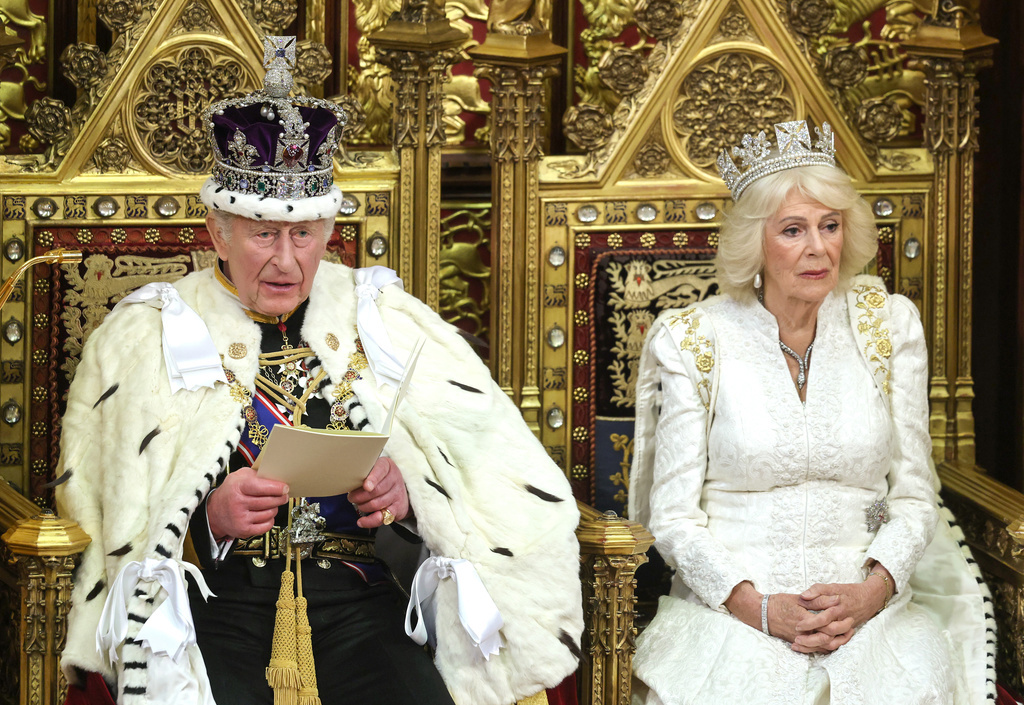
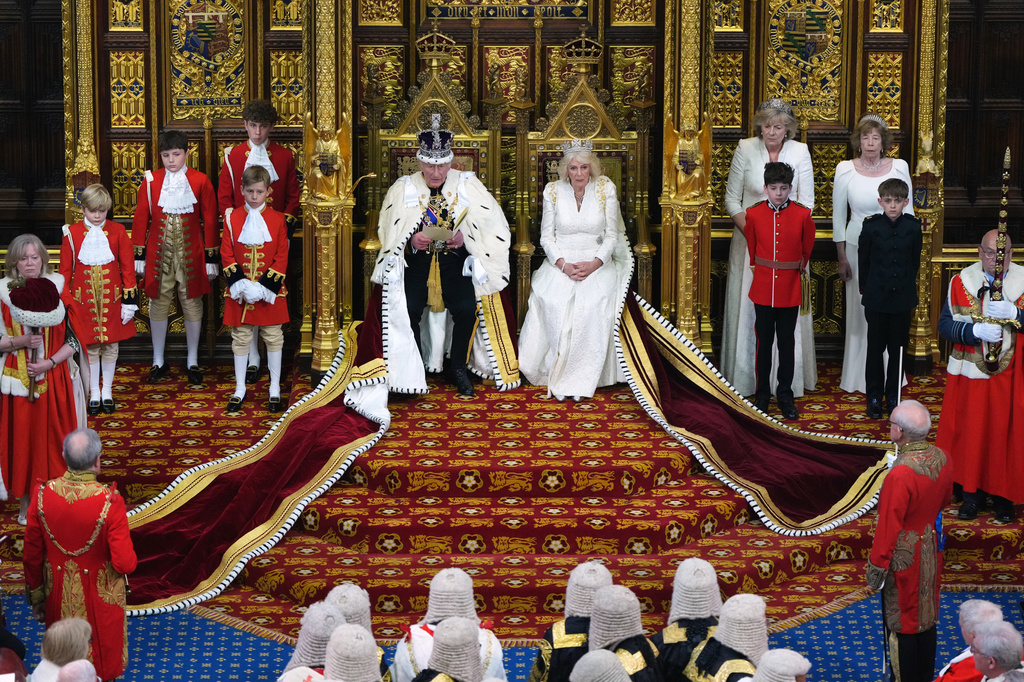
During his speech, which he delivered seated next to Queen Camilla, the king donned the Imperial State Crown and robe of state.
Once they were seated, a Lords official called Black Rod, named for the ebony rod he or she carries, went to the House of Commons to summon the chamber's members.
The doors to the Commons chamber were slammed in Black Rod's face to symbolise the chamber's independence from the monarchy, and they aren't opened until Black Rod strikes the doors three times.
Once members of the Commons crowded into the Lords chamber, the king delivered the speech.
After the speech was read, the royal couple left and the two houses of Parliament began several days of debate on its contents.
NEVER MISS A STORY: Get your breaking news and exclusive stories first by following us across all platforms.
- Download the 9NEWS App here via Apple and Google Play
- Make 9News your preferred source on Google by ticking this box here
- Sign up to our breaking newsletter here