Tag Archives: oceania

Dairy-free yoghurt recalled after milk found in product

A dairy-free yoghurt made in Queensland is being recalled after it was found to be not so dairy free.

Manufacturer Noosa Hinterland is recalling their Nakula Plant Based Probiotic Coconut Yoghurt Natural 500g product after milk was found.

The product was sold in Coles and Woolworths stores across New South Wales, Queensland, Victoria, South Australia and Western Australia.

READ MORE: Couples scramble after wedding planners close without warning

Nakula dairy-free yoghurt recalled after milk found in product.

The NSW Food Authority is warning anyone who has a milk allergy or intolerance may have a reaction if they eat the yoghurt.

"Consumers who have a milk allergy or intolerance should not consume this product and should return the product to the place of purchase for a full refund," the NSW Food Authority said.

Batch number T2F282 contains the recalled yoghurt.

Sign up here to receive our daily newsletters and breaking news alerts, sent straight to your inbox.

Call for change after teen's accidental 'chroming' death

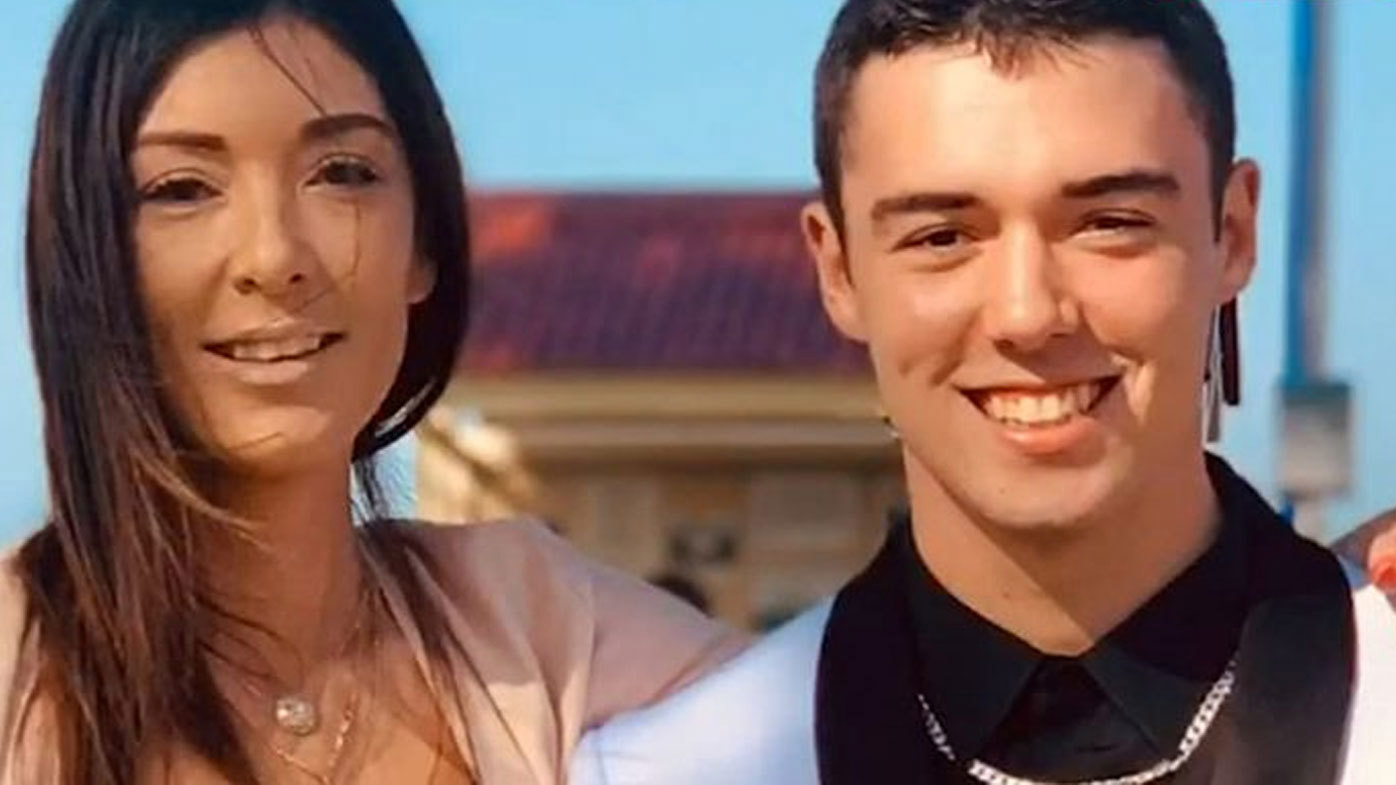
When NSW teenager Bradley Hope died after inhaling from an aerosol, his mother was determined his death would not be in vain.

"We as a society can't afford to lose one more young life in this way… there must be answers or solutions to prevent this," Corinne Mair told an inquest into her 16-year-old son's accidental death.

Hope, described as a kind and loyal young man, died in the early hours of December 8, 2019, after using an inhalant with friends during a sleepover in Tweed Heads, on the NSW North Coast.

READ MORE: Couples scramble after wedding planners close without warning

Bradley Hope was at a sleepover at his friend's house when they made the deadly decision to 'chrome' deodorant.

In the first inquest of its kind, NSW State Coroner Teresa O'Sullivan on Friday handed down lengthy and urgent recommendations to address the trend of inhalant use, known as "volatile substance misuse".

O'Sullivan recommended NSW Health hold a roundtable with police, the education department, paramedics, manufacturers, retailers and youth and community services.

The roundtable should consider a public health campaign, education programs for children and parents, potential legislation relating to the sale of inhalants, and greater training for police and paramedics.

"The heartache of Bradley's loss continues to be felt daily by his family," O'Sullivan said in her findings, handed down at Byron Bay Court.

"It is hoped that from this inquest process, some small measure of solace can be taken by the family, given that these proceedings are a step towards reform to prevent the occurrence of another similar tragedy."

READ MORE: New rental ban headed for one Aussie state

O'Sullivan also recommended the Aerosol Association of Australia look at the effectiveness of warning labels on containers, while manufacturers should continue research into new, safer products.

The inquest heard Bradley stopped breathing and turned pale late on December 7.

His friends and one of their mothers, who was a nurse, repeatedly tried to revive him, an act O'Sullivan described as courageous.

Paramedics also tried to resuscitate him before he was treated at the Tweed Hospital, where he died of heart failure, a complication of inhaling the aerosol.

Experts told the inquest there was no effective data about the prevalence of inhalant use, but one study found there were 164 deaths between 2000 and 2021, most of them male.

Inhaling aerosols can have a "paint stripping" effect on the brain and disturb heart rhythms, with possible chronic effects like nerve and organ damage and dementia, the inquest heard.

O'Sullivan offered sympathies to Bradley's family, saying their grace and dignity was remarkable.

"It is very clear how much they loved him and how much they miss him."

Sign up here to receive our daily newsletters and breaking news alerts, sent straight to your inbox.

Drug kingpin Tony Mokbel taken to hospital after being rushed out of prison

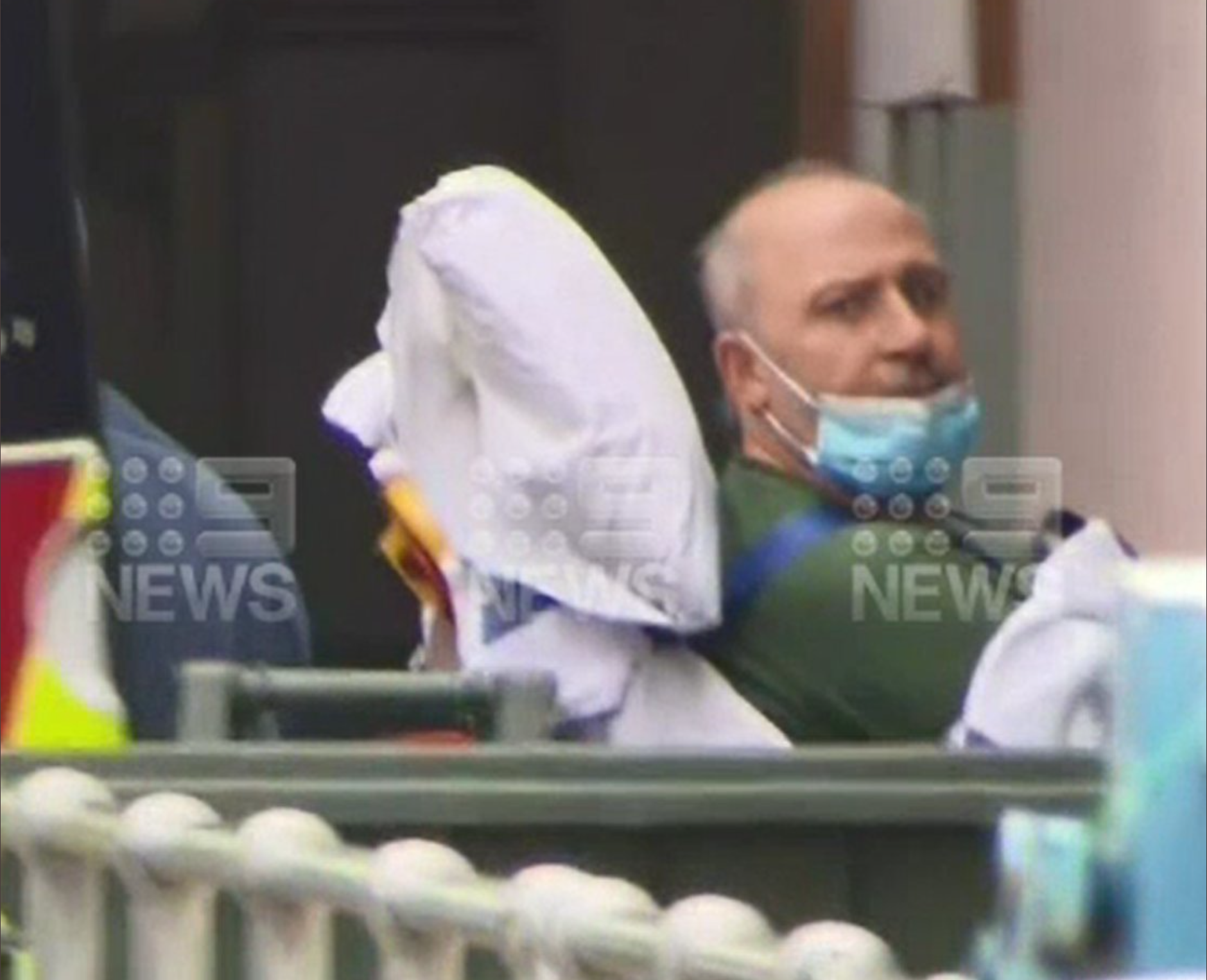
Drug kingpin Tony Mokbel has been transferred to a Melbourne hospital after he was rushed out of Barwon Prison with a suspected blood clot.

Mokbel was taken from the prison to Geelong Hospital under heavy security about 8pm on Thursday.

It's believed the convicted drug trafficker had suffered chest pains, likely due to a blood clot.

READ MORE: Wong calls for China to help end Ukraine war in G20 meeting

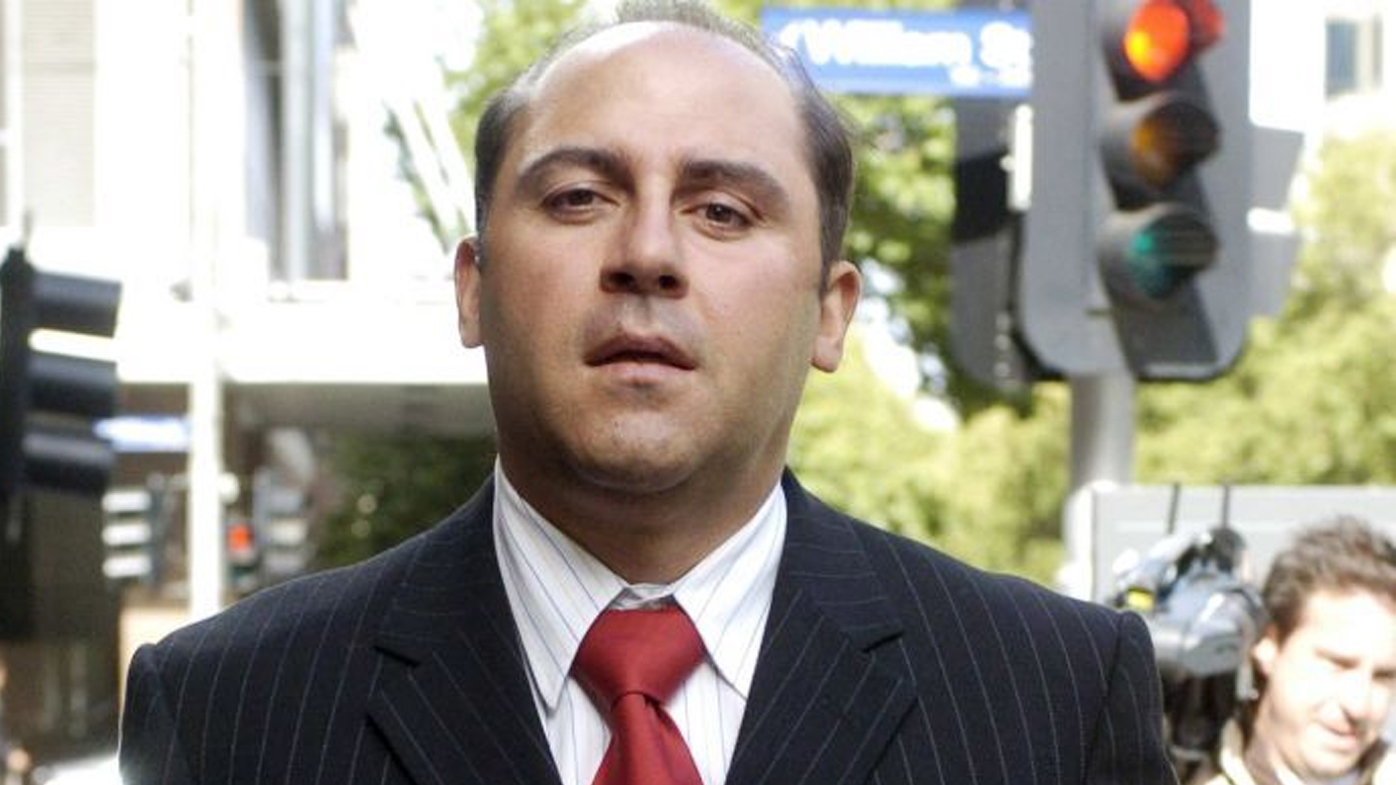
Tony Mokbel

He was seen being transferred from Geelong Hospital to a Melbourne hospital in an ambulance with an armoured vehicle in tow on Friday.

Mokbel, who is serving a 30-year sentence for drug trafficking, has had several health issues during his sentence.

He was taken to hospital last April after he reported chest pains.

Prior to that, he went into cardiac arrest after being assaulted stabbed with a makeshift shiv by two other inmates in 2019. 

In 2012, he suffered a heart attack.

READ MORE: China primed for huge tech lead over US in 'wake-up call' for West

Mokbel fled Australia in 2006 while facing multiple drug charges, and was charged in absentia with murder, for which he was ultimately acquitted.

He was arrested as a fugitive in Greece in 2007 and returned to Australia in 2008, where he began serving time in jail on a previous sentence, which has since been quashed.

He was convicted in 2012 while already behind bars, and sentenced to a 30-year term.

The high-profile criminal has been in isolation since he was attacked in 2019.

Sign up here to receive our daily newsletters and breaking news alerts, sent straight to your inbox.

Couples scramble after wedding planner closes amid legal dispute

A group of angry brides claim they have been left jilted at the altar – not by their partners, but by the company they hired to organise and carry out their weddings.

When Bribie Island Pop Up Weddings, an award-winning local business in Queensland's Moreton Bay, abruptly shut up shop in November last year, it left stressed out couples having to hastily throw together their own weddings, some with just days or weeks to spare.

Months on, customers whose weddings did not go ahead as a result of the company's closure claim they are owed their deposits, which could total up to $30,000.

 READ MORE: Aussies stranded after Jetstar flight 'cancelled'

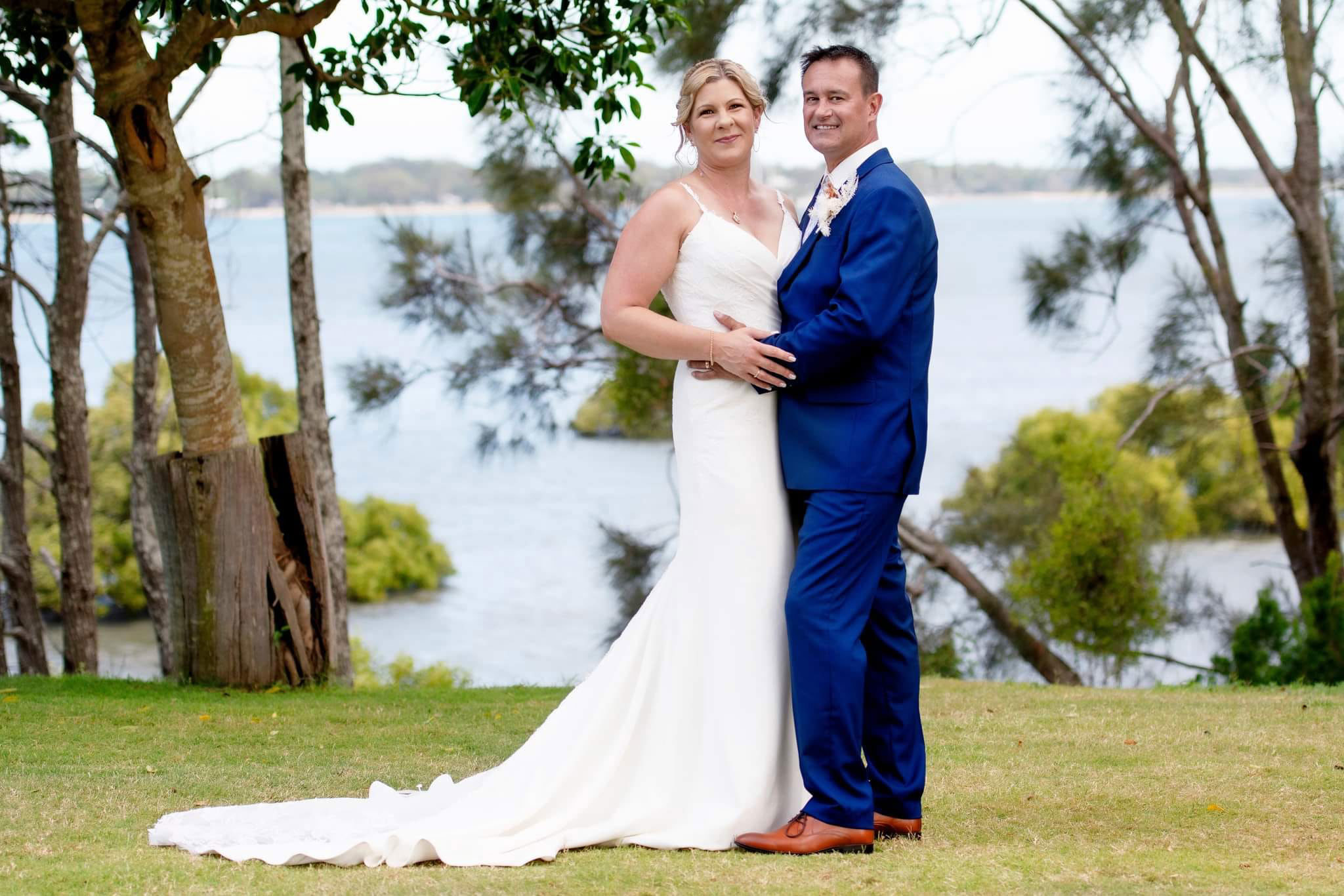
Amanda and Paul Mackay, pictured on their wedding day in November last year.

Brisbane mum Amanda Mackay thought everything was set to go for the intimate wedding she had booked with her partner of eight years, Paul, on Bribie Island. 

But, three weeks out from their special day, Mackay was told the business was closing down and all weddings, including her own on November 14, would be cancelled.

"I was thinking, 'What the hell.' I was freaking out, knowing I would have to suddenly try to re-book everything myself," Mackay said.

Mackay said she and her partner thankfully managed to pull off their last-minute ceremony without a hitch – due in part to the kindness of several vendors – but she claims they were still owed a $3500 deposit by Bribie Island Pop Up Weddings, for which they had been demanding a refund ever since.

Contact reporter Emily McPherson at Sign up here to receive our daily newsletters and breaking news alerts, sent straight to your inbox.

Man jailed after shaking baby to death

A NSW man who shook a baby to death has been jailed for a minimum of six years.

A court heard Tre Rudolph shook the three-month-old "out of frustration" near Newcastle in 2020.

Rudolph was initially charged with murder but later pleaded guilty to the alternate charge of manslaughter. 

READ MORE: Deputy Prime Minister struggles to clarify details of new tax hike

Tre Rudolph has been sentenced to a minimum six years behind bars after he shook a baby to death near Newcastle.https://twitter.com/TysonCottrill/status/1631469269342117889?ref_src=twsrc%5Etfw

With time already served, Rudolph will be eligible for parole in 2026.

More to come.

The world's first shark breeding program is 'nibbling' success

Nestled deep amongst Sydney's soaring blue and grey glass skyscrapers next to the roaring Western Distributor, hundreds of shark eggs are being laid.

These conical-shaped parcels are part of the world's first shark re-wilding program, which is aiming to recover an endangered species to the tropical waters of Raja Ampat, in West Papua, Indonesia.

9news.com.au went behind the scenes of Sea Life Sydney Aquarium, the first Australian institution involved in the project, to learn about the "nibbling" business of shark breeding.

READ MORE: Why Aussie waters are ideal hunting grounds for two shark species
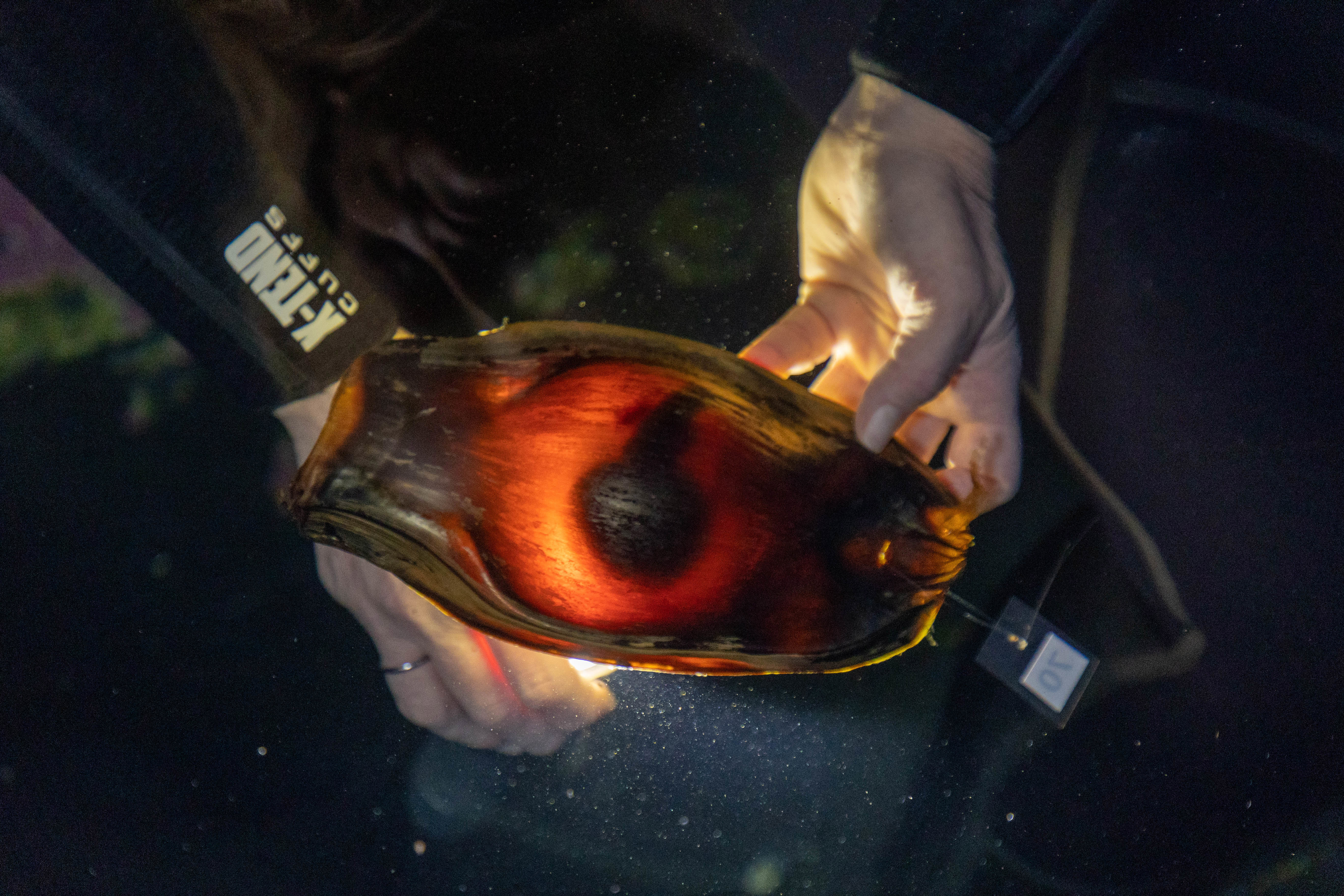
A zebra shark embryo is seen inside one of the eggs laid in the conservation initiative – called the 'StAR Project'  (Stegostoma tigrinum Augmenation Recovery Project).

The nibbling business of shark breeding

In an observation pool within a 1.3 million-litre tank, "Kaya", a two-metre zebra shark, also known as the Indo-Pacific leopard shark, rests.

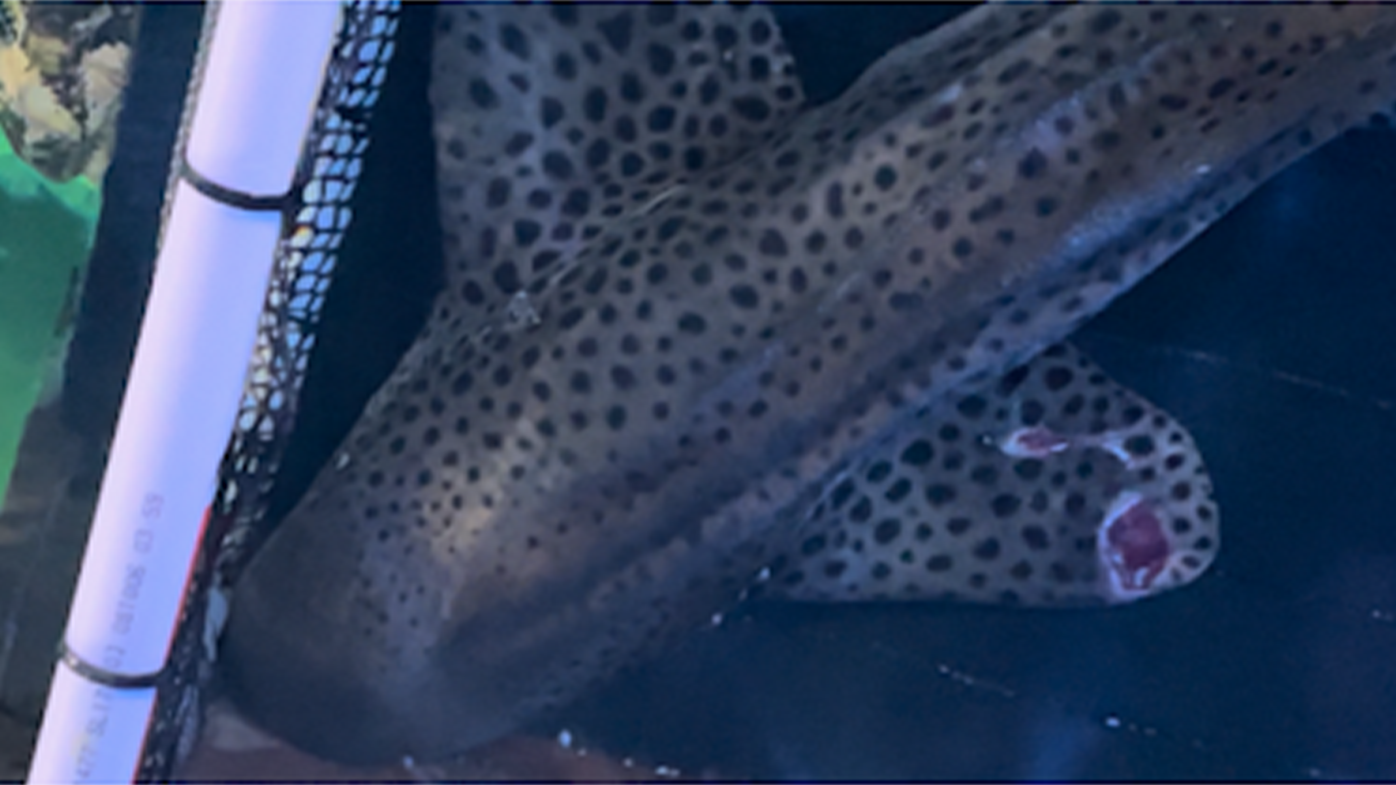
On both of her pectoral fins are two perfectly round "nibble marks".

"That's Kaya, she's just had a vet check and bloods taken," Laura Simmons, Regional Curator for Sea Life Australia and New Zealand, told 9news.com.au.

"It's her breeding season. Those nibble marks, they're made by Gohan, our male, as part of their courtship.

"When the sharks are ready to breed, the males start to nibble and suck on the fins of the female, who will occasionally even flip into 'tonic immobility', a rest state.

"The biting and sucking on the fins is a critical part of courtship for this, and many, shark species. It's important for the male to be able to get into position to mate.

"It could also help stimulate the female's interest."

READ MORE: Infamous 'serial killer' orcas have made biggest kill to date
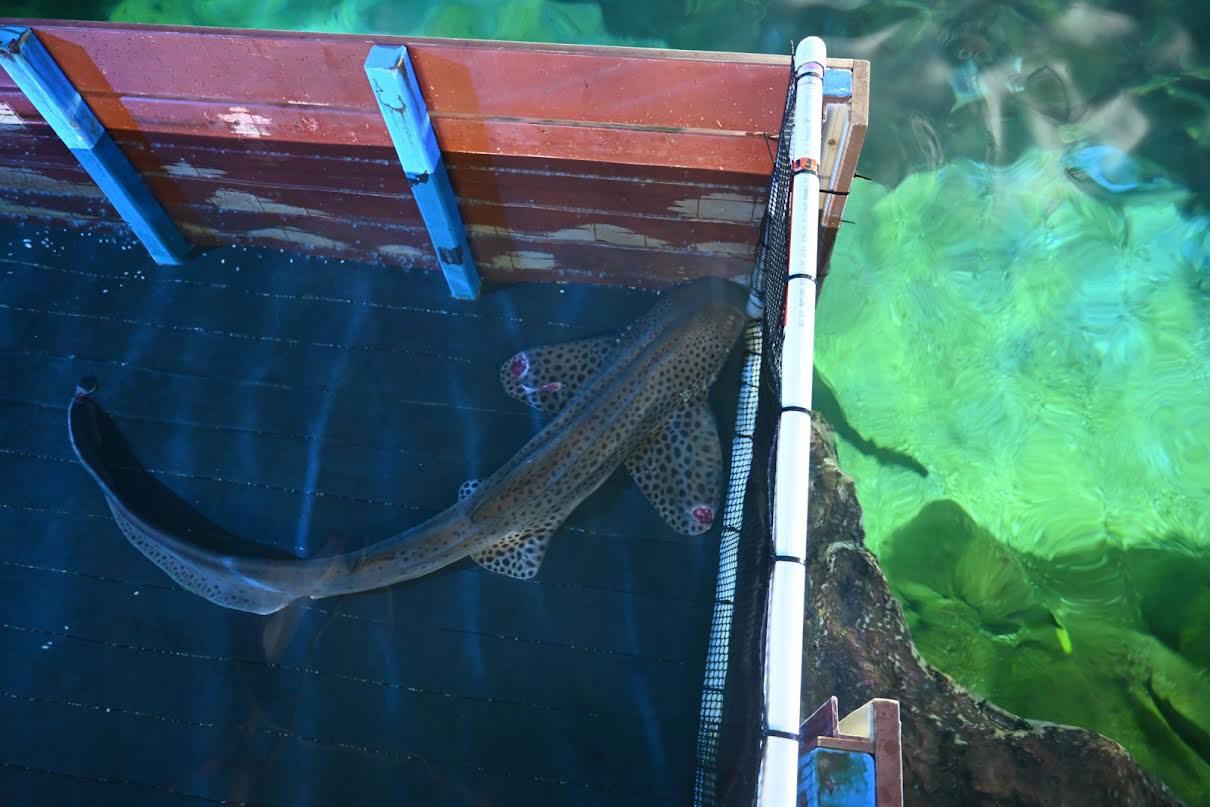
"Kiah" a zebra shark rests after having her bloods taken. On the zebra marks fins, "nibble marks" can be seen from her mating partner.

It may sound like brutal business, but Simmons said female sharks are resilient animals "with thick skins".

Sea Life Sydney Aquarium is playing a pivotal role in the conservation initiative, formally known as the Stegostoma tigrinum Augmentation and Recovery Project, or "StAR Project".

Its current population of three adult zebra sharks – which includes, one male called Gohan and two females, Kaya and Zimba – were identified as genetically suitable to support the breed-for-release program.

Simmons explained shark breeding is seasonal and has to be timed exactly, as each of the females "comes on" during different times of the year.

READ MORE: 'Down within 20 minutes': Pet owner's warning after dog's collapse
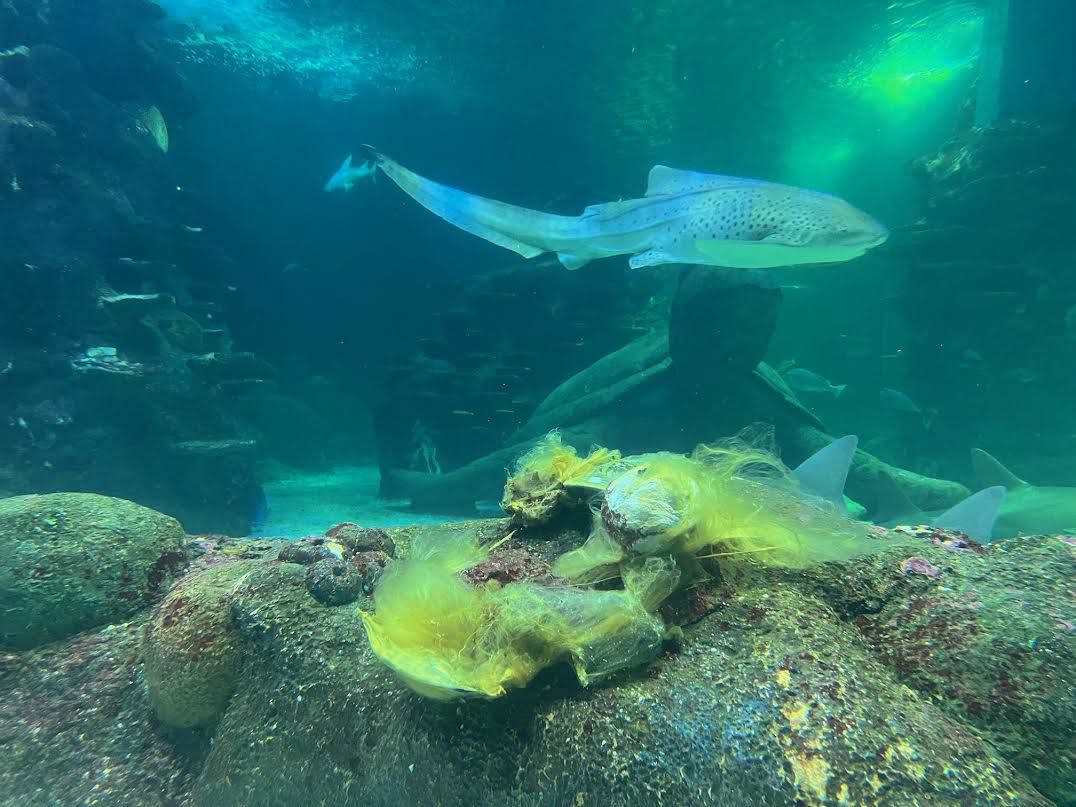
Zimba is seen inspecting a clutch of recently laid eggs at Sea Life Sydney Aquarium.

"Kaya's egg-laying season is approaching, whereas Zimba started her season August-September.

"She's on around egg 150, which is a good result as zebra sharks can lay hundreds of eggs each season.

"All those eggs you see are Zimba's," Simmons added, indicating to a row of blue, black and white milk cartons.

READ MORE: Three new spider species discovered in Australian Alps
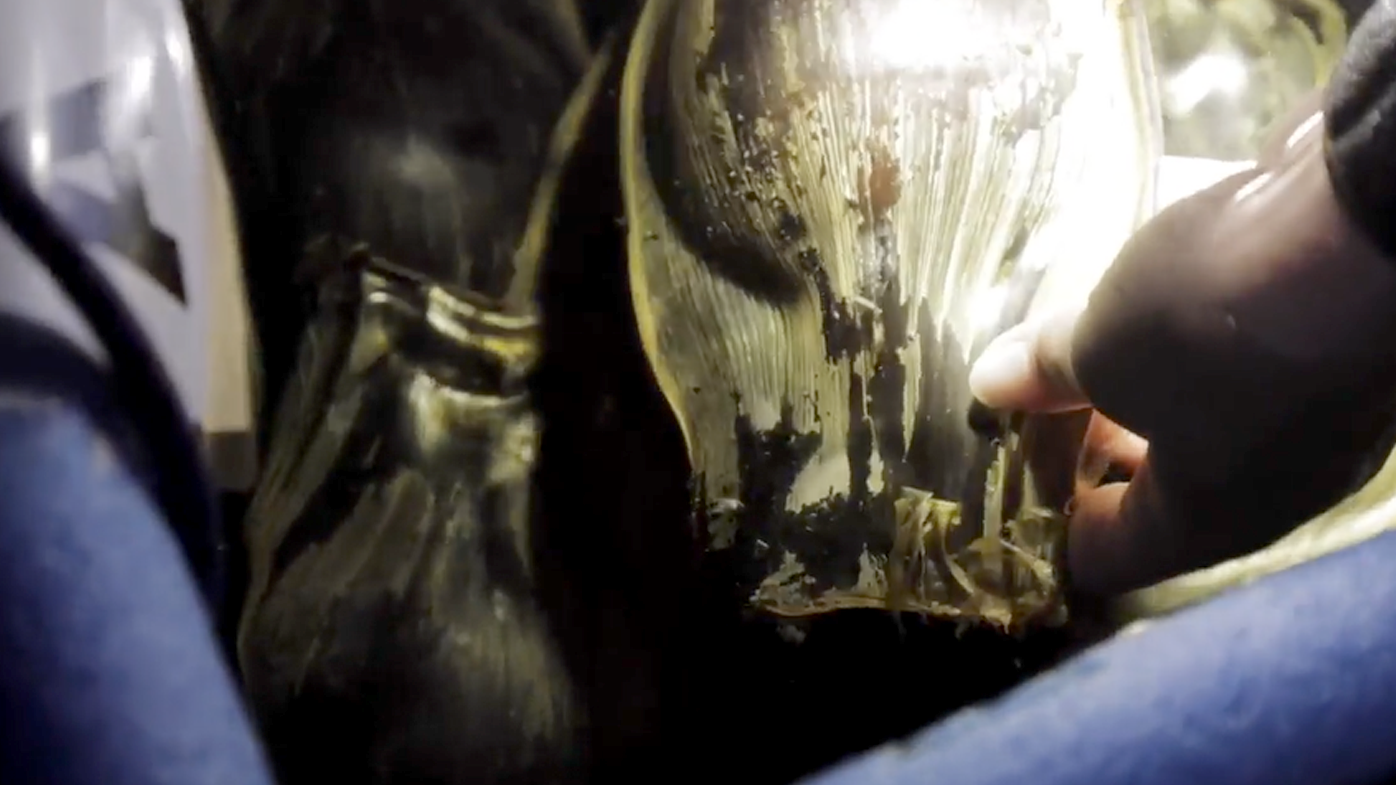
The zebra sharks lay their eggs on the display. These are then collected and monitored closely.

Wandering over Simmons inspects the conical-shaped pouches.

The hard work begins the moment the eggs are laid.

Staff have to monitor each one closely, to determine if the pouch has been fertilised and to track yolk development.

Detailed records are kept as to who lay the eggs, where they were laid, the date, and condition of the egg at the time.

READ MORE: Countries that recorded most unprovoked shark attacks in 2022
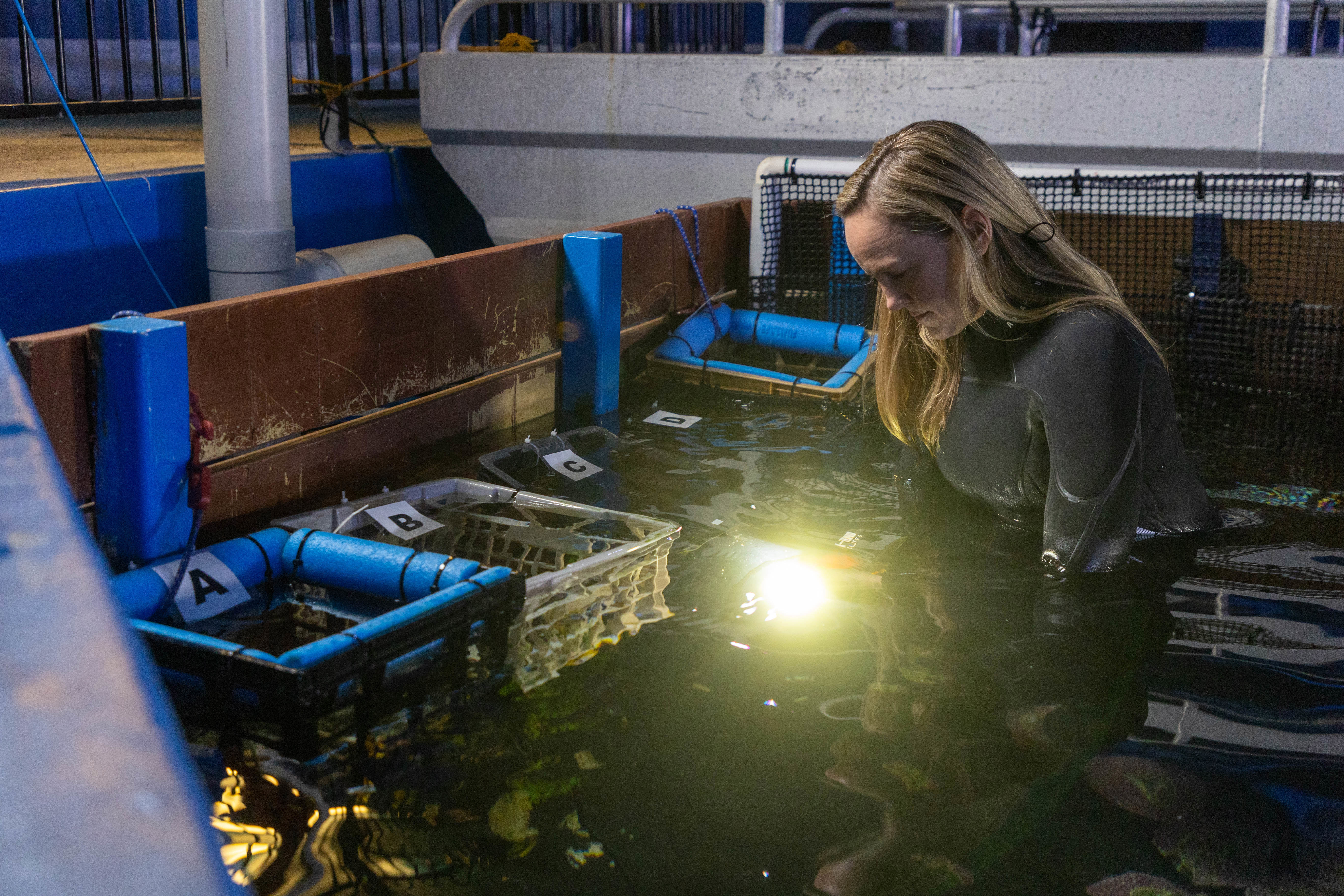
Laura Simmons inspects a clutch of zebra shark eggs at Sea Life Sydney Aquarium.

"Incubation takes around 130 days to as many as 150," Simmons said. 

"And if, say, 20 per cent of those eggs have a yolk and are fertilised, only a small per cent of those will develop fully to hatch.

"In the first 30 days we will know if it's possibly viable, and then it will get shipped once it has reached 10-15 weeks of development.

"It's a long process with specific timing."

The StAR Project is a multi-national, collaborative initiative led by ReShark.

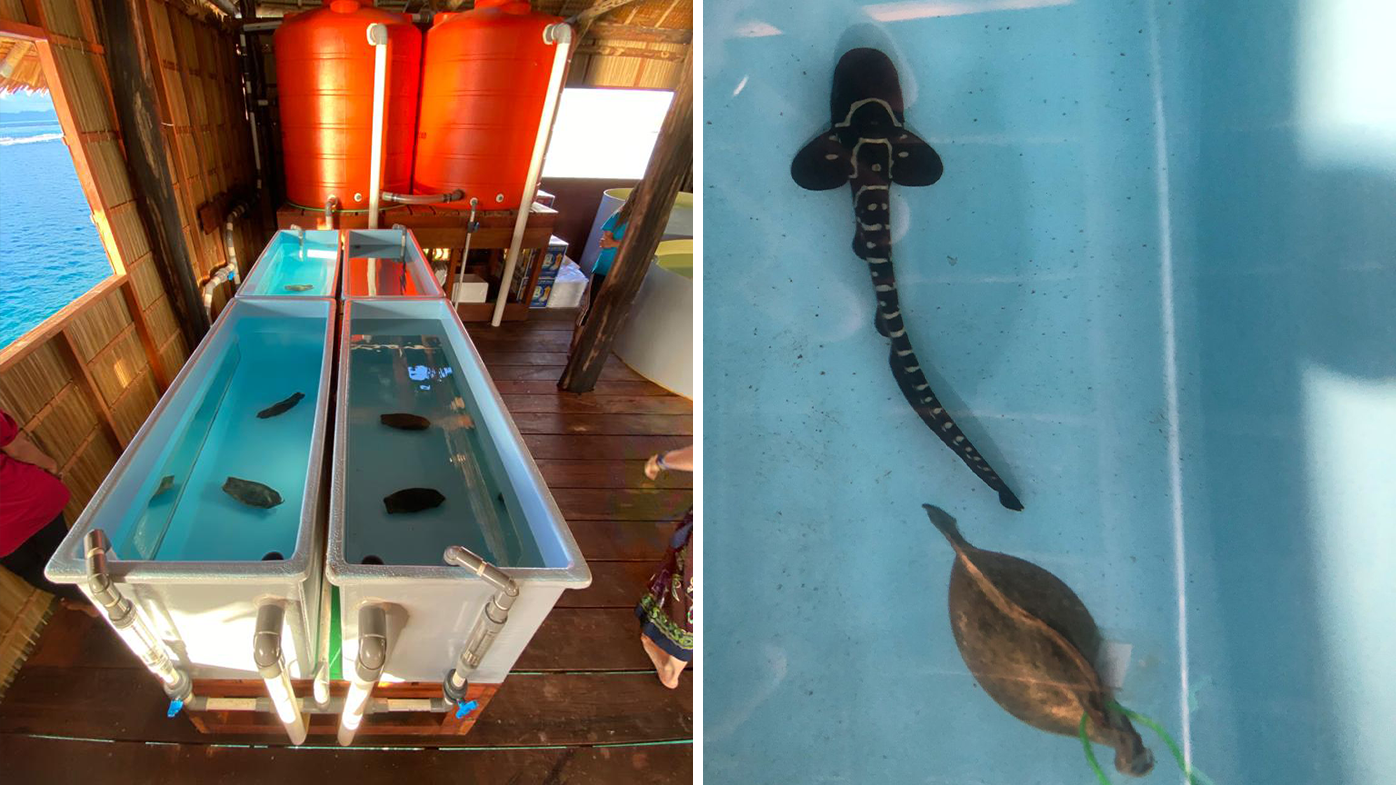
Since the program's launch in August 2022, five pups have hatched from the eggs shipped up to the StAR hatcheries in the protected waters within Raja Ampat, a "booming hub for marine diversity."

Of these, four came from Sea Life Sydney Aquarium's breeding program.
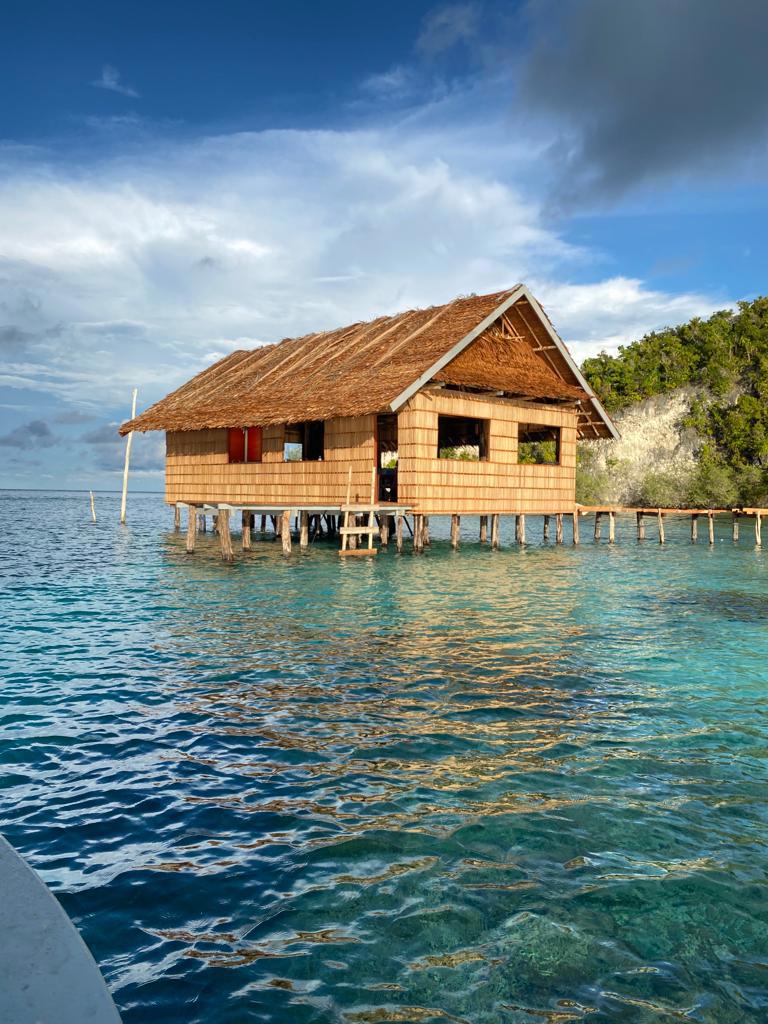
Raja Ampat Research and Conservation Centre (RARCC) facility on Kri Island.Left: Eggs in holding at Kri Island hatchery. Right: The first Sydney-bred zebra shark 'Audrey'.

Why now, and why zebra sharks?

Zebra sharks are an endangered species that have been pushed to the brink of extinction through illegal and unregulated fishing.

The sharks, which reach lengths between 2 – 2.2 metres in the wild, have long fins which are highly-desirable for shark fin soup. Additionally, they are often caught as by-catch in nets.

This endangered listing, along with two other factors, make the species an ideal candidate for the program.

"With the zebra shark, it was a perfect match, so to speak," Simmons said.

"Basically, it is a species that does need help, a species we have lots of hands-on experience with in public aquariums and also breeds successfully in them, but the clincher is they are egg-layers.

"Being able to move eggs around is much less difficult than packing an adult shark to transport safely to Indonesia.

"Logistically, that is very complicated."

Simmons added that "a lot has gone into" making sure the StAR Project has long-term viability.

The program is subject to strict International Union for Conservation of Nature (IUCN) guidelines to ensure the genetics of the population being released is "correct", and the wider ecosystem wont be jeopardised.

"We don't just want to do this for the sake of the sharks, we have to do it the right way for the wild environment," Simmons said.

"Also for this project to work, there had to be established marine-protected areas. So, when we release the pups we know they are going into an area that doesn't have the same fishing pressures and other threats.

"I think that's what touches me the most, it's not just that we're seeing the recovery of a big shark species, but that we are giving back to an entire community of people a species that belongs in their waters – especially such a beautiful species."

Sign up here to receive our daily newsletters and breaking news alerts, sent straight to your inbox.

Landmark Hong Kong skyscraper site goes up in flames

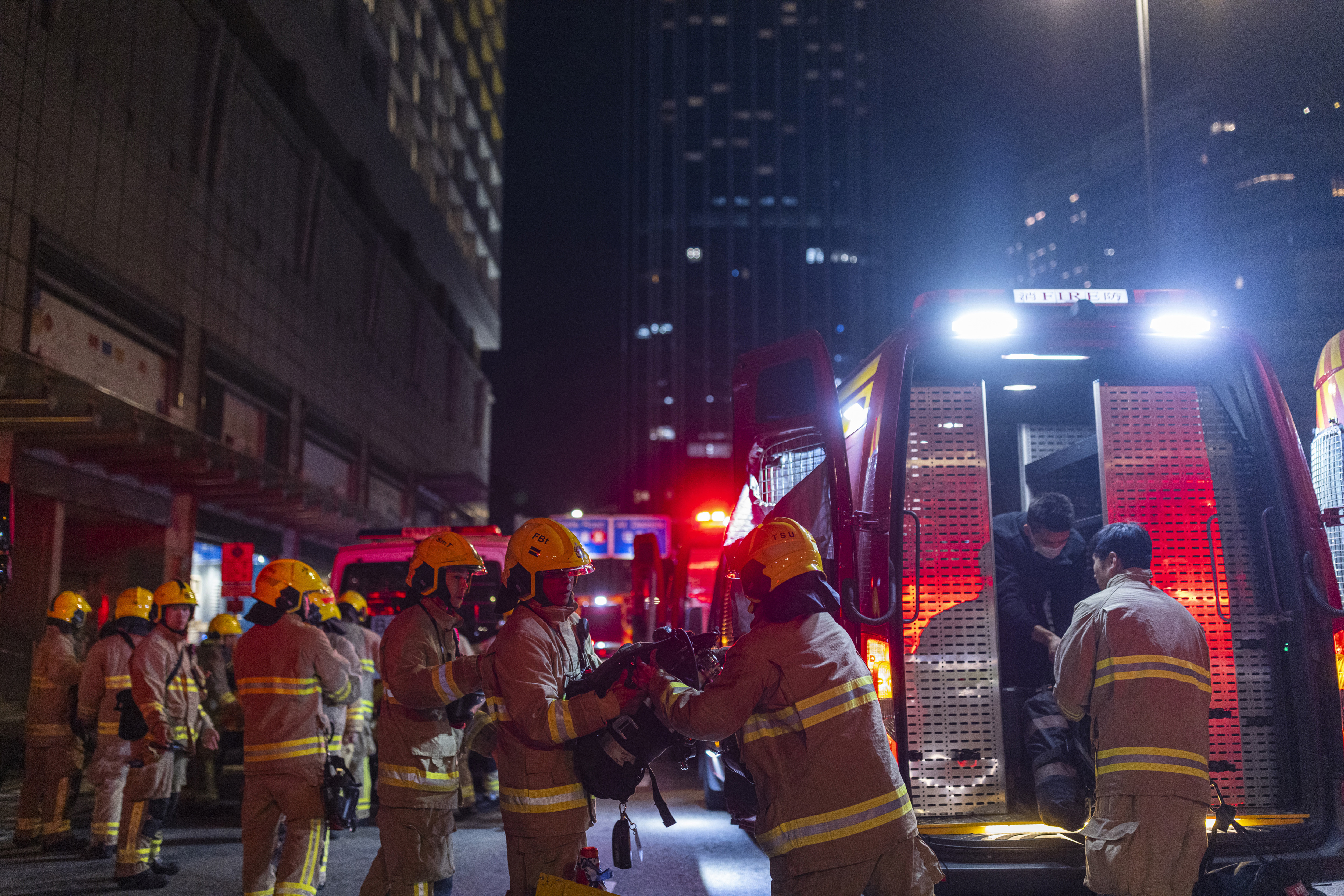
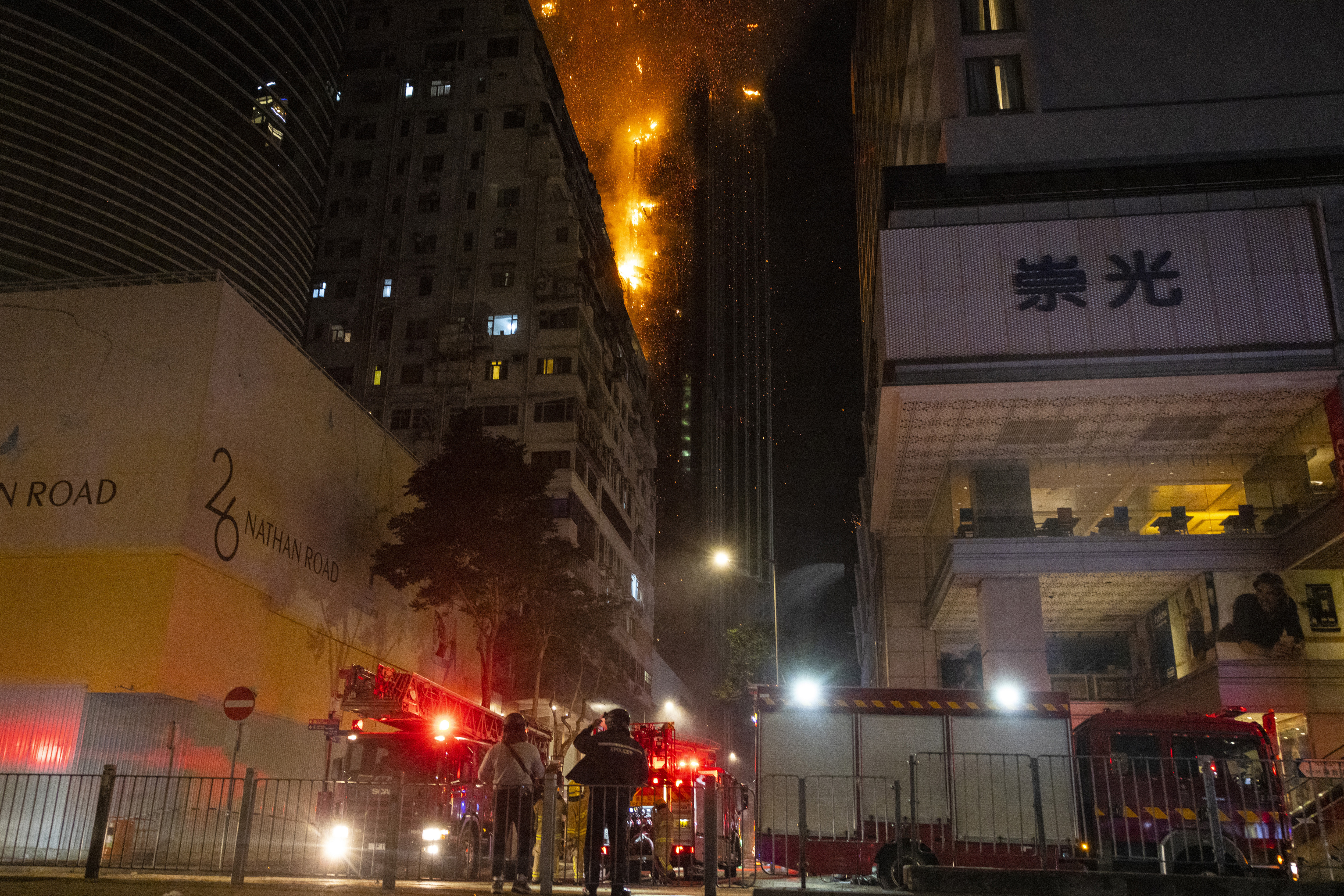
Hong Kong firefighters battled a blaze on Friday that broke out overnight at a construction site in a popular shopping district and forced about 130 people in nearby buildings to evacuate.

No casualties have been reported after the fire erupted at the Mariners' Club redevelopment project in the densely populated Tsim Sha Tsui district at about 11pm. Thursday.

Multiple floors of the structure – including scaffolding – were on fire, and burning debris floated in the air.

READ MORE: Single mystery Aussie wins entire $40m jackpot

The Empire Group's redevelopment plan was to build a 42-storey architectural landmark to house the historic Mariners' Club and a new hotel, the firm's website said.

The site is surrounded by a shopping centre, several hotels and some residential and commercial buildings. Earlier in the night, crowds of onlookers gathered on the street to watch the firefighting operation.

As dawn broke, the fire was less serious than it had been hours earlier, although flames could still be seen on multiple floors. The structure's exterior walls were blackened and parts of its scaffolding appeared shaky.

READ MORE: China primed for huge tech lead over US

The government said the fire was largely put out at 8.30am on Friday.

People staying in three buildings close to the scene had to be evacuated, police said.

Police said six adjacent buildings, including the three where the evacuation took place and the Sheraton Hong Kong Hotel & Towers, also caught on fire, but those blazes were extinguished.

Tsim Sha Tsui is a tourist and shopping area in Kowloon, and is famous for its skyscrapers and an iconic view of the city's Victoria Harbour.

Sign up here to receive our daily newsletters and breaking news alerts, sent straight to your inbox.
Can telcos increase my phone prices mid-contract?

Every week we will break down, debunk and demystify your rights as a shopper in Australia. This week we are looking at mobile phone contracts, and what telecommunications companies can and can't do with their prices.

We all know life is getting more expensive than ever before. It is more important than ever to stretch every dollar you make.

That's why each week we'll answer a question surrounding what shoppers are – and aren't – entitled to when dealing with retailers and manufacturers.

MONEY MATTERS: Bizarre rule that makes Aussie coins no longer 'legal tender'

Can they do this?

Hi Stu,

I recently received an email from my phone provider Vodafone that informed me the price of my plan was going up by $5.

I thought I signed a contract on this?

Surely they can't increase the price without making me sign a new contract, can they?

Hi there – I'm afraid it very much depends on your contract.

There may be a clause there that says prices may change if customers are given due notice, hence the email.

Fundamentally customers must abide by the contracts they sign with major companies, although that doesn't mean companies can offer contracts with unfair terms.

MONEY MATTERS: The real reason why ATMs are disappearing

There are some rules in place.

According to the Australian Communications and Media Authority (ACMA), a telco must tell you before they make any changes to the contract, and the changes must not have a negative effect on you.

These changes may relate to ending a contract early or paying a minimum amount.

If you want to end your contract early, you have to be careful as there may be a fixed fee for you to pay – this is also legal, and will depend on the terms of your contract.

MONEY MATTERS: Is the customer always right in Australia?

Of course, there are limits to what is considered "fair" and "unfair".

If you think the contract you're on is fundamentally unfair, you can complain directly to your provider.

If that doesn't resolve things, you can also complain direct to the telecommunications ombudsman as a last resort.

Contracts in Australia can't be fundamentally unfair. But like all things, caveat emptor exists – buyer beware.

Do you have a Money Matters question that you would like Stu to answer? You can contact him via email at sm****@******om.au.

The information provided on this website is general in nature only and does not constitute personal financial advice. The information has been prepared without taking into account your personal objectives, financial situation or needs. Before acting on any information on this website you should consider the appropriateness of the information having regard to your objectives, financial situation and needs.

'Absolute crisis' facing vital Aussie industry

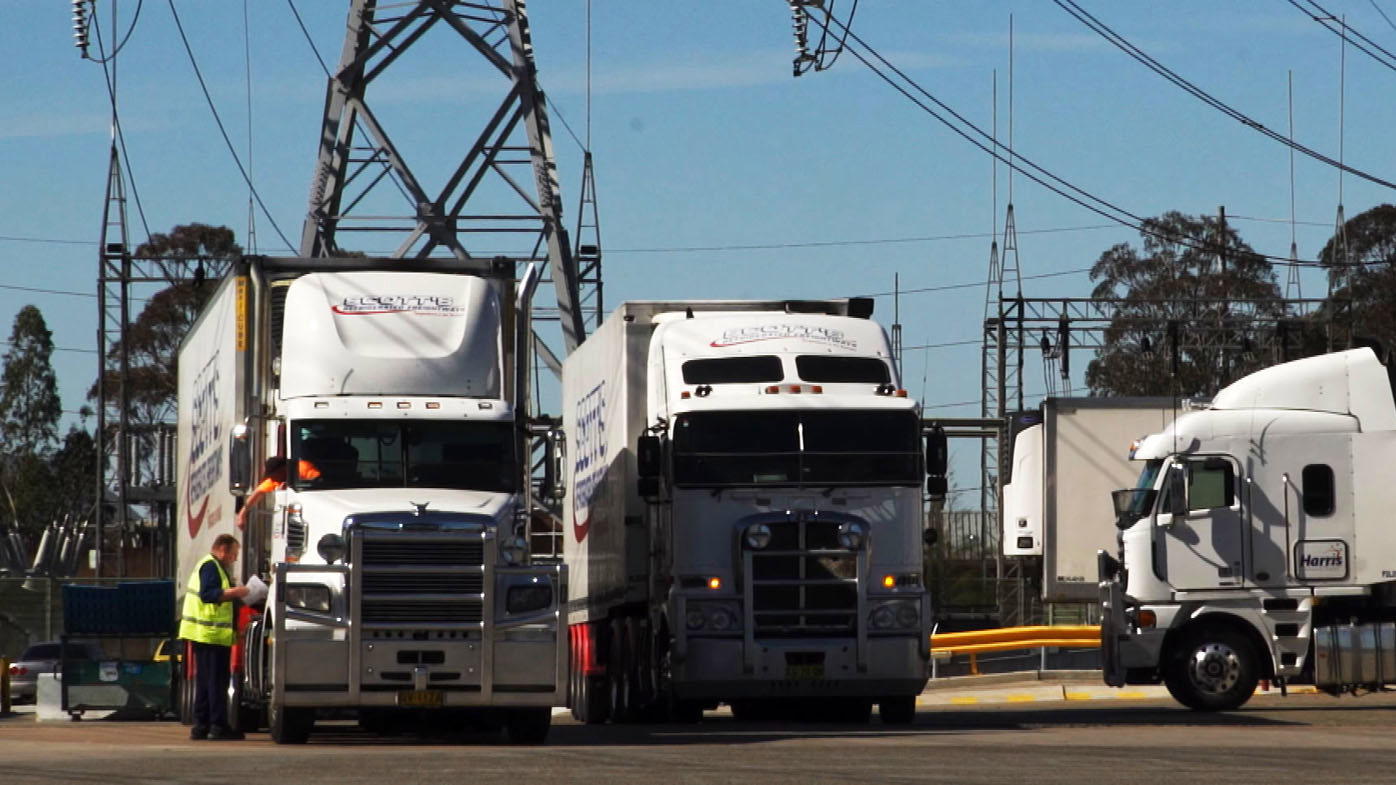
Had you told Australian Trucking Association CEO David Smith five years ago that he'd be parking his own trucks because of a lack of quality drivers, he admits he'd have laughed.

Now?

"I've been parking trucks," he said.

READ MORE: Deputy Prime Minister struggles to clarify details of new tax hike

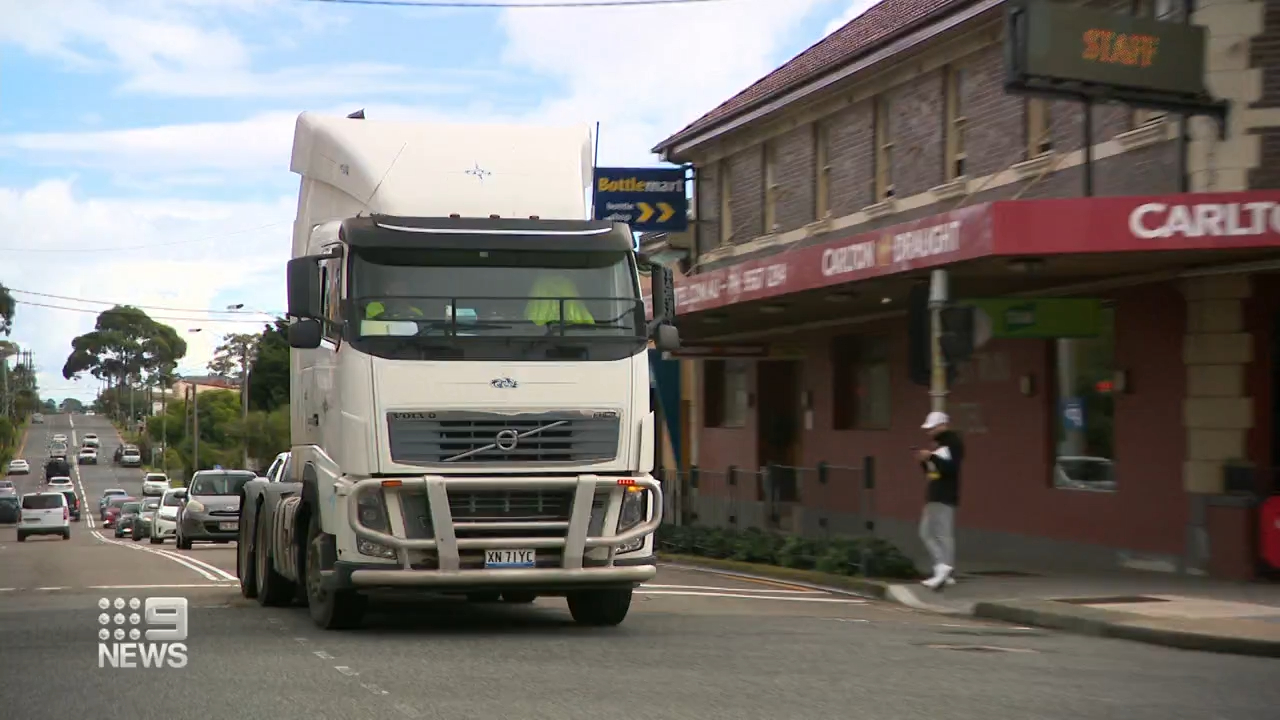
truck

The industry is facing heavy pressures, as highlighted by one of Australia's largest trucking companies, Scott's Refrigerated Logistics, going into receivership earlier this week

According to the Transport Workers Union, almost 200 companies in the transport industry became insolvent in 2022 alone.

And while there's plenty of good work still to be found in the industry beyond the "doom and gloom" generated by examples like Scott's, Smith said things were getting tougher.

As with the rest of Australia, truck drivers have been hit hard by rising fuel prices.

READ MORE: Mistaken identity possible cause of Sydney shooting

But for truck operators, fuel is their biggest seed cost when it comes to running a business, amplifying the importance of the ongoing increase.

"It's beyond our control, and it's gone through the roof," Smith said.

Additionally, many truck businesses are unable to pass those higher costs on, being locked into contracts or agreements that leave them footing the bigger bills and essentially getting less reimbursement for the same service.

Sign up here to receive our daily newsletters and breaking news alerts, sent straight to your inbox.
Workers in 'absolute crisis'

Coupled with this ever-heavier burden is an ever-shrinking staff pool – hence Smith taking to parking his own trucks.

But it's not just drivers the industry's short of.

"Mechanics, admin staff – it's right across the board," Smith said.

TWU National Secretary Michael Kaine said workers across the industry were in an "absolute crisis".

READ MORE: Single mystery Aussie wins entire $40m jackpot

An inquiry has heard a plea for toll charges to be slashed overnight in a bid to keep trucks off Sydney's suburban streets.

"The collapse of Scott's is a distressing reminder that drivers and operators are being attacked on all sides," Kaine said.

"Wealthy companies are squeezing contracts from the top, putting pressure on operators in their supply chains to cut corners in safety to make ends meet."

While there are new people joining the industry, they're coming through at too slow a clip to replace the trained, quality workers who are leaving.

Smith said the issue was "absolutely" an exodus.

"People have had enough," he said.

"There's just been this continued pressure to supply the service, through floods, through COVID, and it amounts to too much."

He said businesses were still faced with too much red tape while also dealing with greater difficulties meeting demand.

A seat at the table

But Smith believes there is a way to turn things around.

"The main thing we're asking for is a seat at the table for government-level talks," he said.

"We're trying to encourage meaning discussion with (federal and state) governments."

Too often, he said, industry had been excluded from such talks, leading to misunderstandings.

READ MORE: This country just found 7000 islands it didn't know it had

One issue he suggested could be addressed would be increased accessibility nation-wide for "higher production vehicles" — trucks with multiple trailers.

"There's a lack of understanding about what that means," he said.

"It means less trucks on the road, less emissions, less drivers needed."

It even would have an economic knock-on benefit, Smith said – if the trucking industry could do things more efficiently, "everybody is better off".

Kaine said for the past decade, the federal government had overseen worsening supply chain pressures and been "hopelessly inactive".

"There is currently no federal system to hold wealthy retailers, manufacturers and oil companies to account for the squeeze on transport," he said.

"Without the backing of legislation, operators and workers consistently bear the brunt of increased costs like fuel, the threat of unfair competition from gig models and deadly pressures to work harder, faster and longer to make ends meet."

He urged the government to pass "life-saving" standards enforcement legislation to make the industry fairer and more sustainable.

Smith is confident Australia's truckers will see their industry into better times.

"It's an important industry, a great industry," Smith said.

And while he doesn't want to claim a need for special treatment, the trucking world's value to Australia was amply demonstrated during the pandemic, keeping shelves stocked and people fed.

"We got a lot of respect, I think, during COVID … that seems to have been quickly forgotten," he said.

"There's nothing manufactured in this country that doesn't go on a truck."

Sign up here to receive our daily newsletters and breaking news alerts, sent straight to your inbox.