Tag Archives: oceania

New asteroid photobombs Webb telescope

The James Webb Space Telescope has observed its smallest cosmic object to date — a previously unknown asteroid about the size of the Colosseum in Rome.

A team of European astronomers made the detection of the space rock, which is between 100 to 200 metres long, and located in the main asteroid belt between Mars and Jupiter.

The doughnut-shaped belt is home to most of the asteroids in the solar system.

READ MORE: Survivors 'screaming' under rubble as Turkey quake kills thousands

A previously unknown 100200-metre asteroid  roughly the size of Romes Colosseum has been detected by an international team of European astronomers using the NASA/ESA/CSA James Webb Space Telescope.

The main asteroid belt is in close alignment with the ecliptic plane or the same plane that includes Earth's orbit around the sun.

The asteroid may be one of the smallest ever found in the main belt.

Such small, dark cosmic objects are incredibly hard to observe, but astronomers can use Webb to look for more asteroids of this size in the future.

Further observations will help astronomers learn more about the asteroid in the future and confirm that it is truly a newly discovered object.

READ MORE: Ninth consecutive interest rate hike looms for mortgage holders

This photo provided by NASA, the James Webb Space Telescope is separated in space on Saturday, Dec. 25, 2021.  NASA's James Webb Space Telescope soared from French Guiana on South Americas northeastern coast, riding a European Ariane rocket into the Christmas morning sky.  The $10 billion infrared observatory is intended as the successor to the aging Hubble Space Telescope. (NASA via AP)

The detection of the asteroid was made by chance when the Webb research team focused the telescope's Mid-InfraRed Instrument, or MIRI, on the main belt asteroid (10920) 1998 BC1, originally discovered in 1998, to take calibration images.

"We — completely unexpectedly — detected a small asteroid in publicly available MIRI calibration observations," Thomas Müller, an astronomer at the Max Planck Institute for Extraterrestrial Physics in Germany, said in a statement.

"The measurements are some of the first MIRI measurements targeting the ecliptic plane and our work suggests that many new objects will be detected with this instrument."

READ MORE: Family shocked to find snake on 'bread rolls'

Asteroids are the leftover remnants from the formation of the solar system, and astronomers have determined the location of more than 1.1 million of them.

Many asteroids still remain unknown — and Webb's find hints that the powerful infrared telescope may uncover plenty more small, rocky objects that have otherwise escaped detection before.

A 'failed' observation's silver lining

The calibration images the Webb research team took in their attempt to observe asteroid (10920) 1998 BC1 didn't turn out as expected and were considered a technical failure because the object appeared so bright.

The astronomers were still able to use the data to test a new technique for determining an asteroid's orbit and size.

The observations of (10920) 1998 BC1 were combined with data from the European Space Agency's Gaia mission and ground-based telescopes.

While analysing the data, the researchers spotted an "interloper" in their observations — the new asteroid making its first appearance.

READ MORE: Woman charged with murder after toddler's body found

"Our results show that even 'failed' Webb observations can be scientifically useful, if you have the right mindset and a little bit of luck," Müller said.

"Our detection lies in the main asteroid belt, but Webb's incredible sensitivity made it possible to see this roughly 100-metre object at a distance of more than 100 million kilometres."

And astronomers won't be surprised if other unknown space rocks photobomb future Webb images.

"This is a fantastic result which highlights the capabilities of MIRI to serendipitously detect a previously undetectable size of asteroid in the main belt," Bryan Holler, Webb support scientist at the Space Telescope Science Institute in Baltimore, said in a statement.

"Repeats of these observations are in the process of being scheduled, and we are fully expecting new asteroid interlopers in those images!"
Countries that recorded most unprovoked shark attacks in 2022

The US and Australia recorded the most unprovoked shark attacks around the globe in 2022, according to an international report on bites published this morning.

The International Shark Attack File, from the Florida Museum of Natural History, said there were 57 unprovoked shark attacks around the world in the past 12 months.

Unprovoked shark attacks are defined as when there was no human provocation of the animal.

READ MORE: 'Vibrant and happy': Parents' shock as teen killed by shark

Great White Shark Babies

Sign up here to receive our daily newsletters and breaking news alerts, sent straight to your inbox.

This is down from 73 in 2021, and ties with 2020 for the fewest number of reported incidents in the last 10 years.

But an Australian marine biologist has flagged the shark "hotspots" off the coast.

Researchers at the Florida Museum of Natural History suggest the decline in unprovoked bites could point towards "the documented global decline of shark populations."

The claim comes less than a month after a separate study, published in Nature Communications, found almost 60 per cent of coral reef shark and ray species globally are at risk of dying out.

READ MORE: Endangered shark meat being sold as fish and chips in South Australia

Tiger Shark Swimming underwater at Tiger Beach, Bahamas

However, Dr Leonardo Guida, a shark scientist and conservationist at the Australian Marine Conservation Society, said there's not enough data to draw that conclusion for all shark species.

"There's no evidence to suggest shark numbers are necessarily correlated with the number of sharks bites," he told 9news.com.au.

If it does prove true, Guida said the loss of sharks would be catastrophic for the ocean.

"Sharks are incredibly important to marine ecosystems. Generally they're at the top of the food web and they keep everything in balance," he said.

"If you remove too many, that food web could become unstable and potentially collapse.

"The fact remains a healthy ocean, and everything in it, depends on a healthy number of sharks."

Guida listed several factors that could work to explain the decline in unprovoked bites over 2022.

READ MORE: Why Aussie waters are ideal hunting grounds for sharks

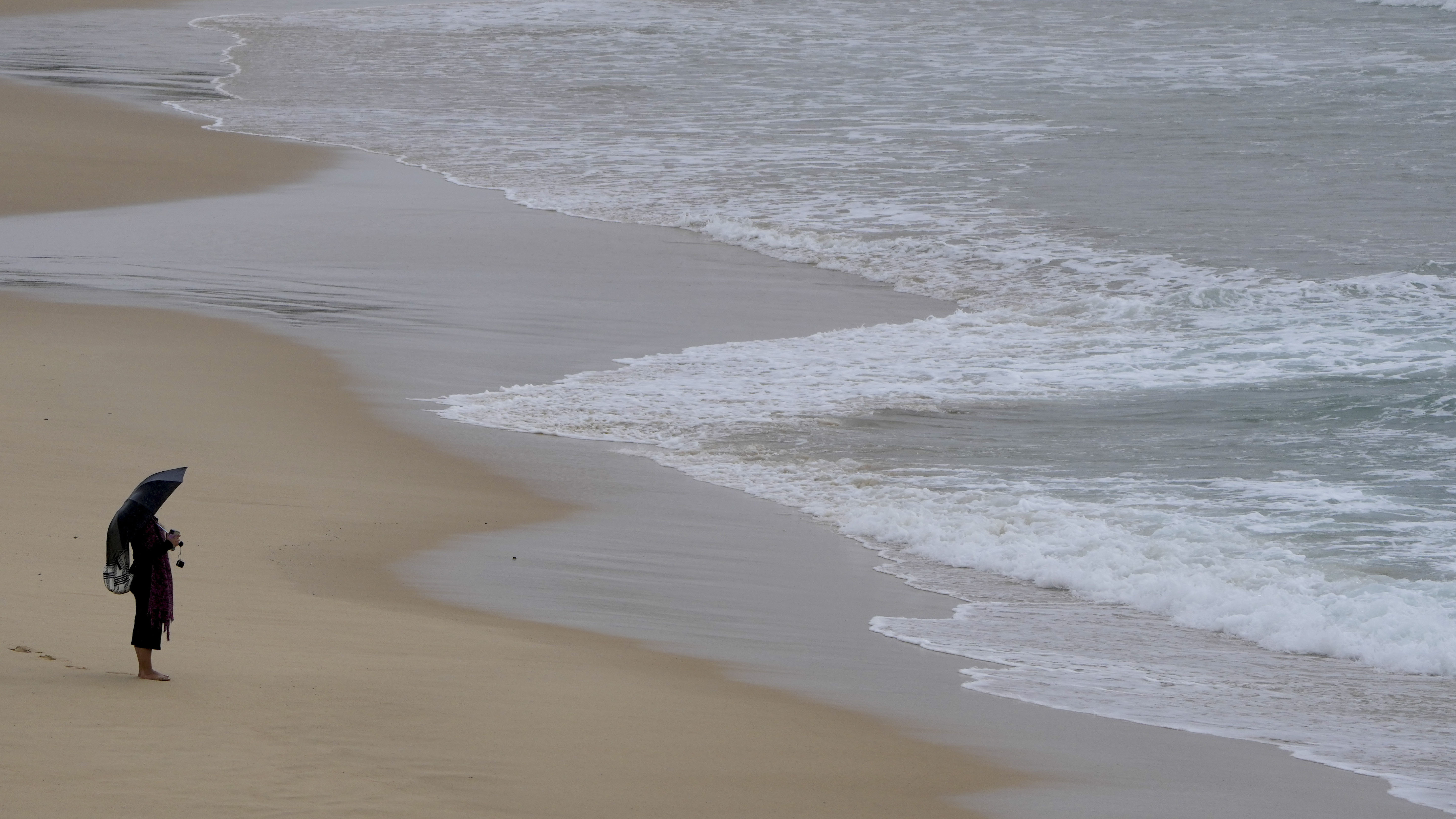
A woman stands under her umbrella as she watches large swells at Bondi Beach in Sydney.

"The fact remains a healthy ocean, and everything in it, depends on a healthy number of sharks."

"There are a lot of things that can influence how much time we spend in the water, and where," he said.

"Heavy rainfall, storms, La Niña events, heatwaves, and COVID-19 – how that may have restricted access to the beach – depending on where they live; there are a range of factors.

"If we're going to look at the patterns of shark bites, and fatal bites, we should really be looking at 10-year scales to capture that high variability."

Breaking down numbers: Where, and how many, attacks

The US led the way for unprovoked shark attacks in 2022, recording 41 of the 57 reported bites.

The majority of these attacks occurred in Florida.

Australia came second with nine unprovoked bites, down from 12 in 2021.

There were five fatal unprovoked shark attacks worldwide; one in the USA off Hawaii, two in Egypt, and another two in South Africa.

The report doesn't name the species responsible for attacks.

A spokesperson for the Florida Museum of Natural History told 9news.com.au the death of Simon Nellist off Sydney last February was not considered an unprovoked attack.

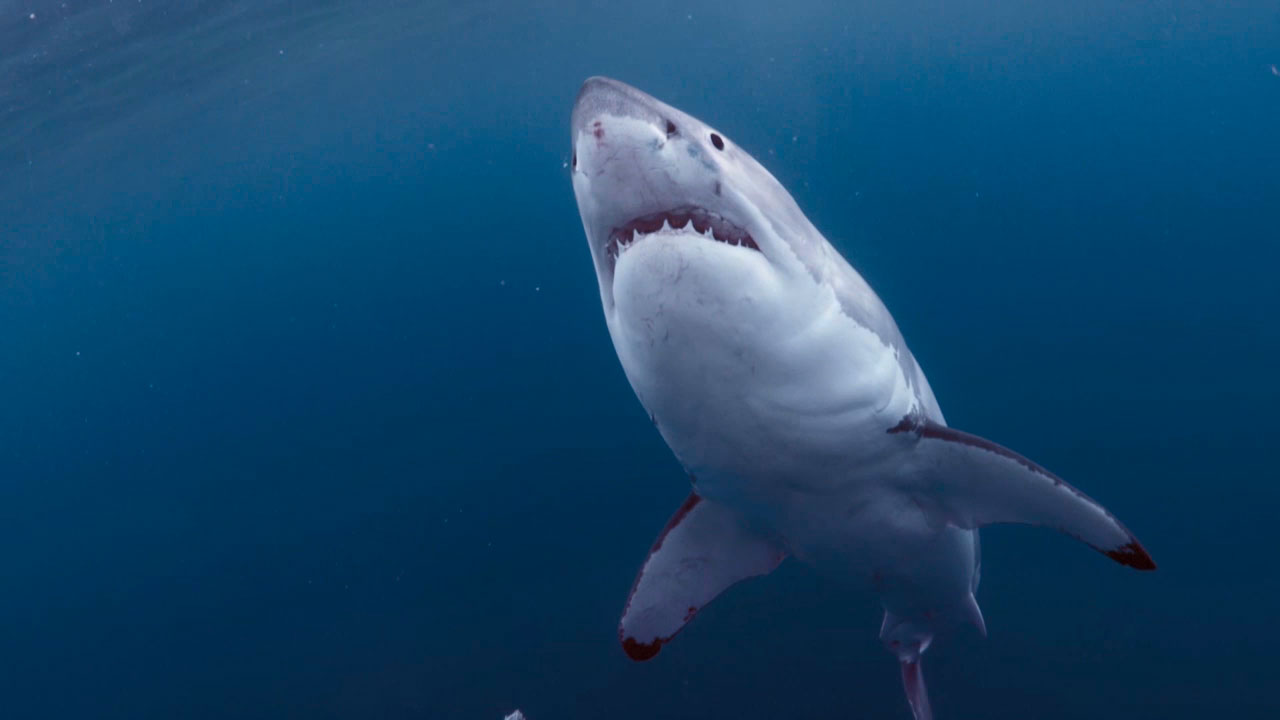
The 35-year-old diving instructor was swimming off Little Bay Beach in the eastern suburbs when he was mauled by a great white shark "at least three-metres" in length.

It was the city's first fatal attack in nearly six decades, and unfolded in front of shocked fishermen and onlookers.

"We report five unprovoked fatalities due to shark attacks last year, but there were an additional four fatalities that we deem to have been provoked due to mitigating circumstances, which includes the Sydney fatality," the spokesperson said.

"In the latter case, the individual (Nellist) was swimming in the near vicinity of one or more anglers.

"We consider bites to have been unintentionally provoked anytime they occur near fishing lines, as congregating fish can attract sharks."

Last weekend Stella Berry, a 16-year old Year 11 student, was killed in Perth's Swan River after a suspected bull shark attack.

Berry's death is the country's first shark fatality of 2023.

Year 11 student Stella Berry, 16, had been riding a jet ski at Fremantle when she jumped in the water and was mauled by what is suspected to be a bull shark on Saturday.

What we know about sharks in Australian waters

Guida said more research is needed for Australians to get a better understanding of shark species and their numbers, in both the ocean and riverways.

"(We need this) so we can get a sense of where they are, how they move, and where they move" he said.

"That informs our likelihood of interaction of them.

"It's crucially important."

Three species of shark are responsible for the most serious attacks on humans; great whites, bull sharks, and tiger sharks.

CSIRO, Australia's leading scientific research body, has identified two great white populations in Australia – an eastern population and a southern-western population.

READ MORE: Great white spotted 'cruising' close to family beach on NSW South Coast

Great White Shark spotted off New South Wales south coast

The eastern population is estimated at 5460, but CSIRO has admitted there could be more than 12,802 great white cruising the waters.

The size of the south-western population is "not yet determined", but estimates suggest there are about 1460 adults cruising the waters from western Victoria to north-west Western Australia.

"In terms of the big three, bull sharks we don't really have a number on them," Guida said.

"Great white sharks are a threatened species, but the latest signs suggest at least since their protection in the 90s, their numbers have stabilised.

"There's a chance in the next couple of years we see more juveniles come through, because for great white sharks they take about 20-years before they give birth – there's a time lag."

READ MORE: Shark sightings expected to increase at Aussie tourist hotspot

Writing on his Facebook page, crab.e.cam, Andy Burnell said the shark had a 'cute little smile'.

Guida then referenced two known great white nurseries – one located at Corner Inlet, off eastern Victoria – and the other off Port Stephens, in NSW.

"On the west coast, whilst we haven't identified any nurseries there of such, we seem to find a lot of the bigger individuals," he added.

"Another really famous hotspot for great white sharks is Port Lincoln, and around the Neptune Islands, off South Australia.

"The short of it is, we need a better understanding of shark numbers. This can inform mitigation strategies at the beach."

To reduce the risk of shark attack, Guida said humans should follow three steps.

"There are a few little tips and tricks," he said.

"The typical is, don't swim at dusk and dawn, and try not to wear anything shiny that may seem like a fish."

This coastal carpet python is not guarding bread rolls

You'd be forgiven for thinking this coastal carpet python is guarding bread rolls.

But Queensland snake catcher Daniel Busstra has revealed not all is as it seems in this photo.

The licensed professional was removing a python at a home on the Sunshine Coast recently when the owner tipped him off about the apparent carb-loving reptile next door.

Busstra visited the neighbour's home and discovered the mother snake guarding her eggs.

READ MORE: Mystery remains over mum who took her dog out and never returned

You'd be forgiven for thinking this coastal carpet python is guarding bread rolls.

While the eggs are not a rare find, he said the "majority will look white".

"The reason why these are darker is because they've been exposed to the elements," the snake catcher explained.

After speaking to the owner of the property, it was decided the eggs would be left to hatch.

"I was just absolutely rapt they were happy to leave the python," he said.

"I will always try and avoid taking them.

"If you remove a snake with eggs, she won't go back to their eggs, they will have to be taken into an incubator."

He posted a photo of the eggs online, where many pointed out the resemblance to baked goods.

"I thought she was guarding a damper pull-apart from Woolworths," one person said.

"I thought she was sitting on a cob loaf," another person said.

Busstra has since shared the good news that the bread roll eggs have hatched.

READ MORE: The man who free-dives with bull sharks

Busstra has since shared the good news that the bread roll eggs have hatched.

The baby snakes will now venture out on their own.

"The mother will defend the eggs but once they hatch, see you later," he said.

This has prompted a reminder from the snake catcher as hatching season gets underway.

"They're getting inside (people's homes) because they can fit into small gaps," he said.

"If you come across a snake, the best option is to get a photo of it from a distance.

"Treat a snake as highly venomous and don't think because it's smaller it's safer."

If you find a snake in your home, always call a licensed snake catcher to remove it.

READ MORE: What to know about the big quake that hit Turkey and Syria

Sign up here to receive our daily newsletters and breaking news alerts, sent straight to your inbox.

Aussie mum reveals her tips for getting a 'dream' travel deal

An international holiday turned Adelaide mum Adele Eliseo into a frequent flyer fanatic.

Eliseo took her family on an around-the-world trip to Hong Kong, Tokyo and Italy six years ago.

The entire trip was in business class and was mainly paid for with Qantas points.

READ MORE: Parents speak out after schoolgirl killed by bull shark

Eliseo took her family on an around-the-world trip to Hong Kong, Tokyo and Italy six years ago.

For Eliseo, it was such a "dream deal" she felt obliged to bring others along for the ride.

"It was quite a complex itinerary to put together," she told 9News.

"I decided to blog about it as a way to educate friends and family as to how they could do the same."

From her loungeroom, Eliseo turned her then-small website into a booming business.

The Champagne Mile now teaches thousands of Australians how to earn more frequent flyer points, even if they're not frequent flyers.

READ MORE: Mum took her dog for a walk in England and 'vanished into thin air'

The entire trip was in business class and was mainly paid for with Qantas points.

Traveller Julia Phillis decided to sign up for one of the credit cards from the website.

"All I had to do was use the card, which I was doing anyway," she said.

Eliseo said choosing the right credit card is crucial and as long as you're able to pay them off in full each month, they can be an effective way to earn points.

"Some cards might earn you one point per dollar on everyday spend and other cards might only earn you half a point," she said.

She said travellers can also top up their balance by signing up for supermarket loyalty programs, certain insurance policies, ridesharing apps and even online wine offers.

READ MORE: China's threat after 'spy balloon' dramatically shot down

An increasing number of Australians are now embarking on what's being called revenge travel

An increasing number of Australians are now embarking on what's being called revenge travel – a way to make for time and experiences lost to the pandemic.

However, with the extra demand comes higher prices and points are unlikely to take travellers as far.

That is why Eliseo said it is more important than ever to shop around.

"Instead of looking at a popular route like Sydney to London for example you could potentially look at going via Asia and into a city like Paris or Helsinki," she said.

When using the Qantas website, she said reward seats offer more value than using points and pay.

While the national carrier has the most popular frequent flyer scheme, it can also be worth exploring other airlines, which are often more likely to have space at the front of the plane.

"I think that's a really good use of the points. I don't think anyone pays for business class – unless their work is paying for it," Phillis said.

Sign up here to receive our daily newsletters and breaking news alerts, sent straight to your inbox.

The information provided on this website is general in nature only and does not constitute personal financial advice. The information has been prepared without taking into account your personal objectives, financial situation or needs. Before acting on any information on this website you should consider the appropriateness of the information having regard to your objectives, financial situation and needs.

Greens pledge support for Voice to Parliament after senator quits

The Greens have confirmed they will support the Voice to Parliament referendum, hours after Senator Lidia Thorpe quit the party over the issue.

The federal party room tonight agreed to support legislation enabling the referendum and to campaign for the "yes" vote, it announced in a statement.

"The Greens were the first party to support all elements of the Uluru Statement from the Heart and today we reaffirm that commitment," Greens Leader Adam Bandt said in a statement.

Greens leader Adam Bandt addresses Lidia Thorpe's resignation from the party.

"Following months of discussion with Labor which resulted in funding for truth and treaty and guarantees that First Nations Sovereignty will not be ceded, and after discussion with our party and our own Blak Greens network, the Greens will support the Voice referendum.

"We want the referendum to succeed, we want first Nations justice and we want truth and treaty as well as a Voice."

Thorpe earlier today quit the party to pursue the "Black sovereignty movement" as an independent.

Senator Lidia Thorpe quits the Greens Party to continue the Black sovereign movement.

The DjabWurrung Gunnai Gunditjmara had earlier questioned the Voice to parliament, which the Albanese Labor government is pushing to succeed at a referendum this year.

"This country has a strong grassroots Black sovereign movement full of staunch and committed warriors and I want to represent that movement fully in this parliament," Thorpe said today.

"It has become clear to me I can't do that from within the Greens.

"Now I will be able to speak freely on all issues from a sovereign perspective without being constrained from portfolios and agreed party positions."

Young woman dies after found unresponsive, police investigate

Police are investigating the death of a young woman who "collapsed" in Ipswich over the weekend.

Emergency services found the 19-year-old woman unresponsive in Bundamba about 9.30pm on Saturday.

The young woman was taken to Princess Alexandra Hospital in Brisbane, where she died on Sunday night.

READ MORE: Fears family ashes are lost forever after Melbourne temple blaze

Police are investigating the circumstances surrounding her death.

Investigators have not said who called emergency services but said it had been reported she "collapsed".

"No further information is available at this time," Queensland Police said.

Sign up here to receive our daily newsletters and breaking news alerts, sent straight to your inbox.

Court told embattled former TV host on 'bender' before assault

Embattled television personality Andrew O'Keefe has had a number of charges over an alleged altercation at a Sydney CBD apartment withdrawn as he faces a court hearing.

O'Keefe, 51, appeared in Sydney's Downing Centre Local Court on Monday, where he had some assault charges dropped after the alleged victim left the country.

Police had alleged O'Keefe choked a 38-year-old woman before he punched and kicked her in his Sydney CBD unit in January 2022.

READ MORE: 'Key patterns' emerging after spate of horror drownings

O'Keefe, a former lawyer and son of former NSW Supreme Court judge Barry O'Keefe, argued he acted in self-defence.

Police prosecutor Michael Cleaver withdrew charges of intentionally choke person without consent, common assault and assault occasioning actual bodily harm on Monday.

"The prosecution case relies significantly on one single civilian witness who has left the country," Sergeant Cleaver told the court.

O'Keefe still faces resist police, drug possession, and domestic violence-related assault charges.

The court was shown body-worn camera footage from police responding to an incident in Sydney's east in September 2021.

READ MORE: Parents speak out after schoolgirl killed by bull shark

Constable Elissa Major can be heard asking a woman if "he did that" to her arm, before she tearfully responds "yes".

In an off-the-record conversation the woman told her O'Keefe had been on "a bender" and not slept, Major said.

In another video from the back of an ambulance at St Vincent's Hospital, O'Keefe asks if police had seen photos of the woman's injuries.

Major said she did not tell O'Keefe about any injuries or see any other police do so prior to his comment.

Richard Pontello SC, representing O'Keefe, said his client knew about the abrasions to the woman's wrist because he had told police they were self-inflicted.

O'Keefe asked police to turn their body-worn cameras back on before making the comment, Pontello said.

Major said she could not recall O'Keefe asking for cameras to be reactivated and only generally mentioned the woman's injuries being self-inflicted, as she included in her statement.

"I can't recall any conversation after I deactivated my body-worn camera," Major told the court.

Pontello on Monday indicated O'Keefe will plead guilty to one count of contravening an apprehended violence order and one count of possessing a prohibited drug.

O'Keefe previously avoided a domestic violence conviction in June 2021 after charges were dealt with under the NSW Mental Health Act.

He was granted conditional release in May 2022 to attend a rehabilitation centre for up to 12 months to combat his cocaine, ice and cannabis abuse.

The hearing continues before magistrate Alison Viney.

National Domestic Violence Service: 1800 RESPECT (1800 737 732).

If you are in immediate danger call triple zero (000).

Sign up here to receive our daily newsletters and breaking news alerts, sent straight to your inbox.

Alcohol bans reintroduced in central Australia in the wake of crime spike

Alcohol bans have been reintroduced in Alice Springs and Central Australia in the wake of a spike in crime in remote communities.

Northern Territory Chief Minister Natasha Fyles said the territory government will bring forward legislation to "strengthen alcohol restrictions" in central Australia.

The government has announced temporary dry zones across 96 Aboriginal communities in Central Australia until legislation is passed.

READ MORE: 'Key patterns' emerging after spate of horror drownings

Chief Minister Natasha Fyles announces new alcohol bans in central Australia.

Out of the 96 communities, 88 already have alcohol bans in place.

The new legislation means town camps and communities will revert to dry zones but individual communities can develop an alcohol management plan.

It will be up to local areas to choose to remain dry or choose tailored restrictions.

But under the new legislation, 60 per cent of a community's population must agree to oppose or make changes to the management plan for it to be changed.

The director of liquor licensing will also sign off on each plan.

"A large number of communities remain unaffected by the plans as they reverted back to dry communities under Territory legislation," Fyles said.

"This will now define the process for future changes."

READ MORE: Parents speak out after schoolgirl killed by bull shark

https://twitter.com/kathleengazzola/status/1622434775230472193

Fyles will table the legislation in parliament immediately when it meets next week.

"While we acknowledge alcohol causes harm in our community, it is a legal product and we need to manage the complexities," she said.

"Alcohol restrictions alone won't address the underlying complex issues in the Northern Territory.

"They are complex and have been developed over decades."

The territory and federal government also announced a $250 million support package for Alice Springs and Central Australia.

The funding will go towards the Better, Safe Future for Central Australia plan, which aims to improve community safety and cohesion through youth engagement and diversion programs.

https://twitter.com/kathleengazzola/status/1622435256409415682

It will aim to create more jobs, improve health services in Alice Springs and surrounding communities, better support elders and parents, boost domestic violence services and improve school attendance and on-Country learning.

"(The funding) acknowledges decades of ill-fitting policy," Fyles said.

"For far too long, decisions about Alice Springs and the Northern Territory have been made in Canberra with little to no consultation with the people that the decisions impact upon.

"Today, this changes."

READ MORE: Mum took her dog for a walk in England and 'vanished into thin air'

Interim alcohol bans will return to Alice Springs and other communities in Central Australia.

Fyles said the $250 million boost will put the needs of Northern Territory residents first.

It comes as the federal government continues to consider a report on the NT government on the Alice Springs crime crisis.

A response is expected this week.

The alcohol restrictions come after a rise in crime, with residents at their wits' end after a surge of break-ins, vandalism and alcohol-related assaults.

The latest data released by NT Police showed alcohol-related assault jumped 55 per cent in the last year to November, while domestic and common assault both increased by 43 per cent and 54 per cent, respectively.

Commercial break-ins were up 56 per cent and reports of property damage climbed by almost 60 per cent.

Sign up here to receive our daily newsletters and breaking news alerts, sent straight to your inbox.

Almost 200 dead in Turkey and Syria after earthquake, toll to rise

A powerful 7.8 magnitude earthquake hit south-east Turkey and Syria early on Monday, toppling buildings and sending panicked residents pouring outside on a cold winter night.

At least 195 people were killed in both countries, hundreds were injured and the toll was expected to rise.

Rescue workers and residents frantically searched for survivors under the rubble of crushed buildings in multiple cities on both sides of the border.

READ MORE: Putin 'promised' to not kill Zelenskyy at start of war

In one quake-struck Turkish city, dozens pulled away chunks of concrete and twisted metal.

People on the street shouted up to others inside a partially toppled apartment building, leaning dangerously.

The quake, felt as far away as Cairo, was centred north of the city of Gaziantep in an area about 90 kilometres from the Syrian border.

On the Syrian side of the border, the quake smashed opposition-held regions that are packed with some four million Syrians displaced from other parts of the country by the long civil war.

Many of them live in decrepit conditions with little health care.

At least 11 were killed in one town, Atmeh, and many more were buried in the rubble, a doctor in the town, Muheeb Qaddour, told The Associated Press by telephone.

"We fear that the deaths are in the hundreds," Qaddour said, referring to the rebel-held north-west.

"We are under extreme pressure."

On the Turkish side, the area has several large cities and is home to millions of Syrian refugees.

Turkish President Recep Tayyip Erdogan said on Twitter that "search and rescue teams were immediately dispatched" to the areas hit by the quake.

"We hope that we will get through this disaster together as soon as possible and with the least damage," he wrote.

There were at least six aftershocks, and Interior Minister Suleyman Soylu urged people not to enter damaged buildings due to the risks.

"Our priority is to bring out people trapped under ruined buildings and to transfer them to hospitals," he said.

Initially, Turkey's Disaster and Emergency Management agency said at least 76 people in seven Turkish provinces had died.

The agency said 440 people were injured.

The death toll in government-held areas of Syria from Monday's quake climbed to 99, according to Syrian state media citing the Health Ministry.

In addition, at least 334 people were injured in Syria.

Earlier, 20 people were reported killed in rebel-held areas of the war-torn country.

READ MORE: NSW fisherman's staggering $500 petrol mistake

At least 130 buildings tumbled down in Turkey's Malatya province, neighbouring the epicentre, Governor Hulusi Sahin said.

In the Turkish city of Diyarbakir, at least 15 buildings collapsed.

Rescue teams called for silence as they listed for survivors in a toppled 11-storey building.

In north-west Syria, the opposition's Syrian Civil Defence described the situation in the rebel-held region as "disastrous" adding that entire buildings have collapsed and people are trapped under the rubble.

The civil defence urged people to evacuate buildings to gather in open areas.

Emergency rooms were full of injured, Amjad Rass, president of the Syrian American Medical Society, said.

The US Geological Survey said the quake was centred about 33 kilometres from Gaziantep, a major city and provincial capital.

It was centred 18 kilometres deep, and a strong 6.7 aftershock rumbled about 10 minutes later.

Syria's state media reported that some buildings collapsed in the northern city of Aleppo and the central city of Hama.

In Damascus, buildings shook and many people went down to the streets in fear.

The quake jolted residents in Lebanon from beds, shaking buildings for about 40 seconds.

Many residents of Beirut left their homes and took to the streets or drove in their cars away from buildings.

The earthquake came as the Middle East is experiencing a snowstorm that is expected to continue until Thursday.

Turkey sits on top of major fault lines and is frequently shaken by earthquakes.

Some 18,000 were killed in powerful earthquakes that hit north-west Turkey in 1999.

Sign up here to receive our daily newsletters and breaking news alerts, sent straight to your inbox.