Tag Archives: oceania

Police treating deaths of mother and baby daughter as suspicious

A mother and her baby daughter have been found dead inside a home south of Brisbane after a man was hit by a car in front of a nearby supermarket.

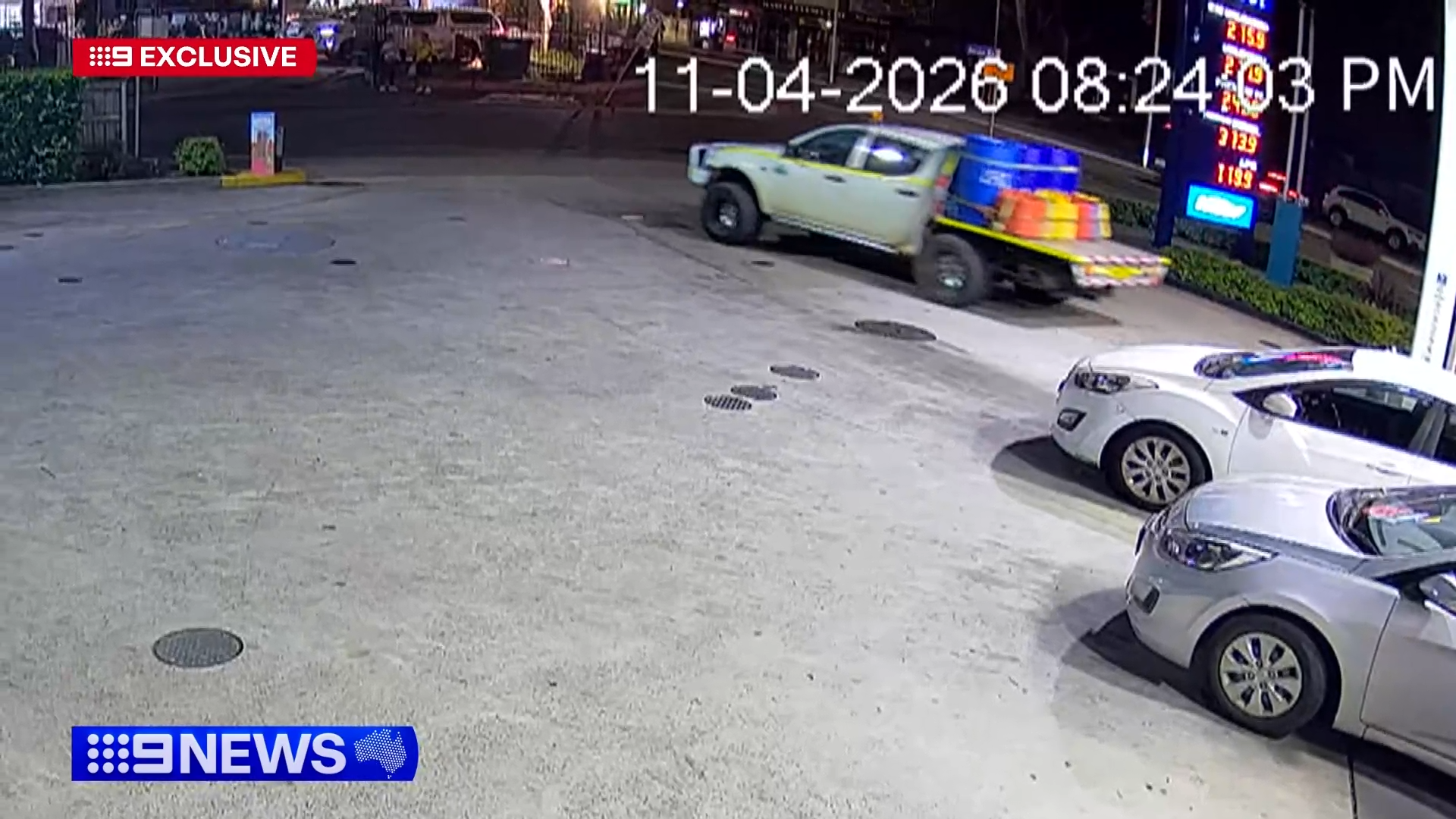
Police were called to Beaudesert Beenleigh Road at Bannockburn in Logan at 7.30am today after the man was struck by the vehicle.

He was taken to Princess Alexandra Hospital with serious injuries under police guard.

READ MORE: All big four banks now tip triple-dip rate hike pain for borrowers

Queensland Police detective superintendent Chris Ahern.

This led police to a home on Belivah Road in Belivah, where officers found the bodies of a 38-year-old woman and a one-year-old child.

Crime scenes were established at the home and the scene of the crash.

Forensic investigations are under way at both scenes.

Queensland Police detective superintendent Chris Ahern said police were treating the deaths as suspicious and working to confirm the relationship between the three.

"Our investigations are focusing heavily on the nature of their relationship and those living arrangements at that house," Ahern said.

"Our minds are open as to what's gone on here."

Police are working to determine how the woman and her baby died.

"What I indicate is, on cursory look, it looks like the injuries are consistent with an edged weapon," Ahern said.

Police are also working to determine if the man had any injuries prior to the car crash.

Ahern encouraged members of the public with dashcam or phone vision in the vicinity of the home or outside of the supermarket between 7am and 8.30am today to contact police

"We'd like to hear from them, they may be able to assist us with our investigation," he said.

Support is available from the National Sexual Assault, Domestic and Family Violence Counselling Service at 1800RESPECT (1800 737 732)

All big four banks now tip triple-dip rate hike pain for borrowers

ANZ has followed the other big four banks in predicting triple rate hike pain for Aussie borrowers.

CBA, Westpac and NAB yesterday shifted their cash rate predictions due to inflation running too hot, a stretched labour market, and the war in the Middle East – which is likely to add to inflation.

All four big banks now anticipate the Reserve Bank will increase the cash rate 25 basis points when it meets next Tuesday, and by the same margin at the following meeting in May.

READ MORE: Aussies could pay more for groceries as farmers hit by dual fertiliser and fuel hike due to Iran war

Debit cards from the big four banks - Commonwealth Bank, NAB, Westpac, ANZ

The RBA increased the interest rate by 0.25 per cent at its most recent meeting on February 3, to 3.85 per cent.

A triple hike would bring the cash rate to 4.35 per cent.

Across three prospective hikes in February, March and May, a borrower with a million-dollar mortgage would pay an extra $453 every month.

The major banks cited high inflation and the instability brought on by the conflict in Iran as the reasons why they were now forecasting what would end up being three consecutive rate hikes.

"With inflation above target and the labour market tight, the inflation risks are likely to be more central for the board than risks around activity," ANZ's economic team said.

"The increased inflation risks will exacerbate those concerns, creating more urgency to move quickly to contain inflation expectations."

READ MORE: Aussie software giant Atlassian cuts 1600 jobs in push to AI

Impact of a March rate hike on borrowers

NAB and Westpac yesterday said the RBA's decision would rely on developments in the war in the Middle East and its impact on oil prices and the wider market.

"Much will depend on the trajectory of oil prices and the domestic data flow, and we see two-sided risks around our new central case for a 4.35 per cent peak," NAB said in a statement yesterday.

Westpac chief economist Luci Ellis said a swift resolution to the war, and subsequent fall in oil prices "would mean that the expected March hike would not be followed up in May".

"Again, this is not our base case, but we will keep the possibility under review," Ellis said.

Westpac said the effect of higher oil prices on inflation was "large but temporary" but believes the RBA will "nevertheless feel compelled to react".

Canstar Data Insights Director Sally Tindall said war in the Middle East "has cast a huge cloud of uncertainty over the [rates] decision".

"While the short-term impact of the conflict will push up prices, particularly fuel, the longer-term damage to the economy and jobs market is not yet clear," she said.

"If the Westpac and NAB forecasts prove accurate, the RBA would deliver three back-to-back rate hikes across February, March and May – a scenario that would add further pressure to already stretched household budgets."

NEVER MISS A STORY: Get your breaking news and exclusive stories first by following us across all platforms.

Oil price could fly past unheard-of milestone, major bank warns

Oil prices could skyrocket past $US150 a barrel due to disruption caused by the Middle East conflict, Australia's largest bank has warned.

Commonwealth Bank economists said the global benchmark Brent oil could surge to between $US120 and $US150 per barrel ($168 to $210), which would discourage demand for the crucial resource in developing economies once there is a local shortage.

However, the report said the price could rise beyond $US150 if advanced economies need to set a higher price to weaken demand.

LIVE: Wong tells Aussie expats in the Middle East to get out now

READ MORE: Trump denies knowledge of report blaming US for school bombing

The war in Iran has all but closed the Strait of Hormuz, a critical energy-shipping route between the Persian Gulf and the Gulf of Oman, where around 19 per cent of global oil supply passes.

This morning, Brent crude oil jumped above $US100 a barrel.

CBA said that, while some oil can be exported from Gulf states through alternate routes, the majority of it cannot.

"Oil is the only energy commodity that has potential to bypass the Strait of Hormuz," CBA commodities strategist Vivek Dhar wrote.

"We estimate that only three to five per cent of global supply can bypass the Strait of Hormuz.

READ MORE: Joe Rogan pans Donald Trump's 'insane' actions in Iran

"That means the effective disruption to global oil markets amounts to 14 to 16 per cent of global supply."

CBA economists believe the war will last for months rather than weeks, which it said hadn't been taken into account by global energy markets.

"Our view that energy markets are not fully pricing in the disruption posed by the Middle East conflict ultimately comes down to the expected length of the current disruption," Dhar said.

"Our expectation that this crisis could last for months instead of weeks likely means that markets are underestimating the disruption to global energy markets."

READ MORE: Treasurer confronted over fuel shortage, price rise

He added that, if the war isn't ended soon, "oil and refined product prices are at risk of rising to levels not seen in history".

"This would seem to make it intolerable for the world to remain unmoved. This helps explain why energy markets are so reluctant to fully price an extended closure of the Strait of Hormuz," he wrote in his report.

"On the other hand, the US will not want to leave without achieving its strategic goals and risk emboldening Iran and its proxies.

"This is yet another example of geopolitics clashing with economics in this new era.

"This adds a wildcard element to the outlook."

NEVER MISS A STORY: Get your breaking news and exclusive stories first by following us across all platforms.

Sydney’s highly infectious disease outbreak linked to Asia

An outbreak of measles in Sydney has been predominantly linked to return travellers from Southeast Asia.

A report from NSW Health said of the 60 cases of the highly infectious disease seen in the state since the start of last year, over half had come from people who had travelled in the region.

While Australia has officially been measles-free since 2014, it is common in several Southeast Asian countries, including Indonesia, which is a popular tourist destination for Australians.

LIVE UPDATES: Fireball after drones hit oil facilities in Oman

It comes as Sydney battles a growing outbreak of measles, with two more cases confirmed late yesterday, taking the current tally of people infected with the disease since January 1 to 26.

An alert said one of the cases was acquired locally, but the source of the other infection was unknown.

JUST IN: Aussies face surging grocery prices as farmers hit by Iran war double-whammy

Measles viral disease, human skin covered with measles rash, vaccination concept

"It is likely measles is currently circulating within the community, and other people may have been unknowingly exposed to measles," NSW Health said in a statement.

Several new exposure sites have been revealed, including restaurants and healthcare centres on the Northern Beaches and north shore, as well as in Sydney's Eastern Suburbs.

People who were at the Summer Dance Festival at Liberty Hall Courts in Moore Park on Saturday, March 7th have been told to monitor for symptoms of measles until March 25, with the disease sometimes taking 18 days before it shows itself.

"Symptoms to watch out for include fever, sore eyes, runny nose and a cough, usually followed three or four days later by a red, blotchy rash that spreads from the head and face to the rest of the body," Dr Christine Selvey from NSW Health said.

WORLD: Joe Rogan pans Donald Trump's 'insane' actions in Iran

Measles morbillivirus structure - 3d rendered image. Abstract background.

Health officials say vaccination is the quickest and safest way to protect yourself from contracting measles.

The measles, mumps and rubella (MMR) vaccine is free for anyone in NSW born after 1965, and is given to babies when they are 12 months and 18 months old.

Selvey said those overseas should be aware of their vaccination status before they travel.

"This is especially important before overseas travel, as measles outbreaks are occurring in several regions of the world at the moment."

You can find a full list of current exposure sites here.

NEVER MISS A STORY: Get your breaking news and exclusive stories first by following us across all platforms.

Dog rescued from croc-infested floodwaters near Katherine

Astonishing vision has captured the moment a dog was pulled from the window of a car surrounded by crocodile-infested rapids in the Northern Territory.

Crews were called to Tony Green Crossing, west of Katherine, yesterday afternoon where a car had become stuck in floodwaters on the crossing.

A passing helicopter dropped a police officer on top of the car, who helped extract the stranded driver and passenger.

READ MORE: Bodies found in search for two missing Chinese backpackers after car located in floodwaters

A police officer rescued the dog from floodwaters west of Katherine.

The chopper then returned to the car, where the police officer hoisted the large dog from the window into the helicopter.

All of the occupants are safe, NT Emergency Service's Katherine Volunteer Unit said.

Parts of the Northern Territory have been inundated by the worst flooding in decades over the past week, causing mass evacuations and school closures.

Darwin residents were ordered to boil their water on Tuesday after heavy rainfall resulted in the Darwin River Dam surging to record levels and overflow.

Parts of the Top End remain on flood watch today as a stubborn tropical low crawls across the state in a south-westerly direction.

READ MORE: Police to continue Gus Lamont search as rain could expose fresh ground

Flooding in Katherine posted by MP Jo Hersey

A major flood warning remains in place for the Lower Daly and Waterhouse rivers, while the Katherine River is under moderate flood watch, according to the BoM.

Heavy rain is expected to continue across the NT into the weekend.

Authorities earlier this week urged locals to stay out of floodwaters in Katherine, partially due to the risk of crocodiles lurking in the water.

"There are crocs absolutely everywhere. Please don't go in the water," NT incident control acting commander, Shaun Gill, said at a press conference on Sunday.

"Don't swim in the water for two reasons: it's because it's a fast-flowing river, and also this is when crocs are most active."

Queensland man allegedly tried to sneak wanted NSW men into Indonesia via aircraft

A Queensland aviation company owner will face court today after allegedly trying to smuggle two wanted men into Indonesia on a "black flight".

It is alleged that the Woolshed man, who owns a central Queensland aviation company, organised a flight to sneak two alleged Australian fugitives to Indonesia and only listed the two co-pilots as people on board the flight.

The 43-year-old was arrested yesterday after Australian Federal Police executed search warrants in south-east Queensland and Rockhampton.

READ MORE: Security scare after Iranian player's change of heart over asylum decision

The flight's certificate of clearance listed only the two co-pilots, one from Australia and one from Indonesia.

It was allegedly found that the two undeclared passengers were wanted by NSW Police for kidnapping and drug charges.

Police said the 34-year-old undeclared passenger was on bail for kidnapping offences and was under strict conditions to not leave the state.

His 35-year-old counterpart allegedly had three outstanding arrest warrants, including for large commercial drug supply and manufacturing.

The Australian co-pilot and the two men have been in Indonesian immigration detention since November 17 last year, and the plane used to fly the men to the nation was seized by Indonesian immigration.

Investigations by the AFP found that the Woolshed man allegedly had coordinated an extensive network of charter flights across multiple planes and companies over a week in an attempt to smuggle the men from NSW to North Queensland to Indonesia.

The first flight with the two fugitives took off from Orange in NSW on November 10 and headed to Cape York, police said.

Over the week, the two men were allegedly transported via helicopters and light aircraft to multiple locations in Far North Queensland.

Police said they caught a charter flight to Port Stewart and then boarded the "black flight", which allegedly did not activate its transponder between Coen and Port Stewart.

Once the plane was over international waters, the transponder was allegedly turned back on.

The Queensland aviation company owner was due to face Ipswich Court today and faces up to 10 years imprisonment after being charged with two counts of people smuggling. 

"Black flights attempting to exploit the remoteness of North Queensland can try to fly under the radar by turning off transponders, but every time they land and take off at a remote airstrip, they attract attention," AFP Detective Superintendent Adrian Telfer said.

NEVER MISS A STORY: Get your breaking news and exclusive stories first by following us across all platforms.