Tag Archives: oceania

'Bad variant' may have led to death of Folbigg's daughters, but not sons

Two genetic experts have told the inquiry into the convictions of Kathleen Folbigg a "bad variant" likely led to the deaths of her two daughters.

However, the variant does not explain the deaths of her two sons, the inquiry heard.

Genetic variants identified in Katherine Folbigg and her daughters Laura and Sarah were not discovered until nine years after she was convicted of killing her four children in 2003.

READ MORE: Christmas tree scam warning over dodgy Facebook sellers

Professors Mette Nyegaard and Michael Toft Overgaard are among authors of a scientific article that partially led to the inquiry, the second in three years, and appeared together at a hearing in Sydney on Tuesday.

The article, known as the Brohus article throughout the inquiry, was published after the 2019 inquiry.

It stops short of saying the identified variants caused the deaths of the two girls.

However, the inquiry under former NSW chief justice Tom Bathurst KC on Tuesday heard it very well could have.

"Would you say if it was 'likely' that the girls died by reason of the variant?" junior counsel assisting the inquiry Julia Roy asked the two Danish scientists.

"We think it is likely this mutation could have caused the death," Overgaard said.

"It looks like a bad variant," Nyegaard agreed.

The girls died long before the genetic variant was discovered.

"Is it inherent then in your conclusion that it is likely to have caused their deaths, the fact that they died?" Ms Roy asked.

READ MORE: Australian-born boy faces deportation because of his condition

"You would perhaps not predict a very early death for this particular impact," Prof Overgaard said.

The pair agreed that their conclusion was based only on their research and the material they had been provided, and no weight was given to the fact the two girls' brothers had also died.

Diaries and journals seized by police were a key factor in Folbigg's conviction and will be re-examined when the inquiry resumes in February.

The genetic variant affects the calcium-binding protein calmodulin, an early building block of life.

"It was regarded in the scientific community up until 2012 that variations in calmodulin were incompatible with life," Overgaard said.

Nyegaard identified variants in a large Swedish family, surprising the scientific community.

"There was a clear pattern … we identified the first variant in calmodulin," Nyegaard said.

She said the discovery was "extremely surprising".

Three different genes in the human genome produce calmodulin.

The variant identified in Folbigg, specifically CALM2 G114R, can affect the electrical activity of the heart.

Overgaard said that variant was recently analysed.

READ MORE: Mum furious after Optus brings back pain of son's death

 Kathleen Folbigg is serving a minimum of 25 years behind bars after being found guilty in 2003 of the murder of three of her babies and the manslaughter of a fourth.

"There's a significant impact on how calmodulin can bind to the (cardiac ion) channel," he said.

Bathurst is being asked to form his own view on whether there is any reasonable doubt about Folbigg's guilt.

The inquiry comes 19 years after she was sentenced for the murder of three of her children and the manslaughter of a fourth.

The children, born separately between 1989 and 1997, were aged between 19 days and 18 months old when they died.

Folbigg was charged in April 2001.

The NSW Governor has ordered the re-examination following a petition from scientists calling for an inquiry due to new evidence.

Folbigg was sentenced to 40 years in prison in 2003, later reduced on appeal to 30 years with a non-parole period of 25.

She is not eligible for parole until 2028.

READ MORE: Tugboat debacle at Aussie ports may cause Christmas chaos

Man says he wrapped woman's body in a chemsuit, plastic and duct tape

After helping hide the body of a murder victim allegedly killed by his ex-partner, a NSWman claims he was punched in the face and threatened with decades in jail.

Days after wrapping the body of Danielle Easey in a chemsuit, plastic and tape and concealing her in a cupboard in August 2019, Justin Kent Dilosa claims his former girlfriend Carol Marie McHenry was aggressive on a car trip to a friend's place.

"She said to me, 'I'll make sure you do 20 years for this,' when I suggested she should take responsibility for what she did," he said in the NSW Supreme Court on Tuesday.

READ MORE: Christmas tree scam warning over dodgy Facebook sellers

Danielle Easey

READ MORE: 'Wall of water' devastating NSW towns in flood crisis

On the return journey, he pressed the issue only to be attacked and told to walk home, the jury heard.

"I said to Carol again, 'Twenty years. You need to take responsibility for what you did,' and Carol stopped the vehicle, punched me in the eye, and told me to get out."

Both Dilosa and McHenry are on trial charged with murdering 29-year-old Easey with a knife and hammer at McHenry's Narara home on the NSW Central Coast on August 17, 2019.

They have denied being involved in the killing, pointing the finger at each other.

Easey's decomposing body was found two weeks after her death in a creek near the M1 motorway at Killingworth.

Dilosa claims he was asleep in his van outside McHenry's home when the murder occurred.

Returning to the house with McHenry and a friend Jeremy Princehorn on August 18, Dilosa said he smoked ice with the two of them before single-handedly wrapping up the body.

He helped place Easey's body in a kitchen cupboard, loaded the cupboard in the back of his van a few days later, and then disposed of the body near a bridge over Cockle Creek, the court heard.

"Why did you do anything with the body at all?" he was asked by his barrister Angus Webb.

"I'd had a long history with Carol. Carol had pled to me that she'd never see the kids again. I loved those children. They'd already lost their father," Dilosa replied.

The jury heard that as well as helping get rid of the body, Dilosa had also thrown the bloodied murder weapons in a bonfire and cleaned up the blood in the back of his van.

During this time, he was "back and forward" about taking responsibility for the murder, he said.

READ MORE: Australian-born boy faces deportation because of his condition

READ MORE: Tugboat debacle at Aussie ports may cause Christmas chaos

"At the time I cleaned the van, there was no self-preservation. I didn't wear gloves because my mindset was I was taking the van, there was nothing to hide."

However, Dilosa said he eventually drew the line at helping her clean up her Narara home, he told the court.

"If I went down … she wipes her hands scot-free of committing a murder," he said.

At one stage, McHenry told him she wanted to burn her house down, he added.

He denied claims he had confessed to the murder or that he had considered dumping the body in a skip bin near his Cardiff home.

He also said he had never argued with Easey in the days before she was killed, and rejected allegations by McHenry to police that he had abused both her and her children while they were in a relationship.

READ MORE: Shocking footage reveals moments after Adelaide shark attack

Earlier on Tuesday, the jury heard that before attending the Narara home, Dilosa had doubts that there was a body at all because McHenry had previously claimed she was to blame for the death of a former partner who overdosed in 2016.

Although this was determined to be an accident or suicide, McHenry still underwent a mental health assessment by medical professionals before being discharged the following day.

The trial in front of Justice Robertson Wright continues.

Readers seeking support and information about suicide prevention can contact Lifeline on 13 11 14.

Moment nurse Jean Herholdt fatally stabbed abusive husband played in court

Confronting audio of the moment a woman fatally stabbed her abusive husband has been played in a Brisbane court.

"You know I'm going to jail for this," Jean Louise Herholdt can be heard saying amid screams on the recordings in Brisbane Supreme Court on Tuesday.

Herholdt, 30, was initially charged with murder after Sean Murray died from a single stab wound to the back at their home north of Brisbane in August 2020.

READ MORE: 'Wall of water' devastating NSW towns in flood crisis

Herholdt had been in a violent relationship with Murray for years and planned to escape, putting money aside in a nest egg hidden at the Murrumba Downs residence, the court heard.

However, Murray discovered the cash and took it, sparking an emotion-charged argument that was captured on the home's CCTV camera audio.

Two five-minute recordings were played after Justice Peter Davis warned the public gallery of its confronting content.

The initial audio features a heated exchange while the second includes the moment Murray is fatally stabbed.

A man can be heard saying "stop it, stop it" before others scream as Herholdt at some stage grabs the knife.

Murray was stabbed in the lungs and died soon afterwards.

The wound was 15cm deep.

READ MORE: Tugboat debacle at Aussie ports may cause Christmas chaos

In between the two recordings Murray had assaulted Herholdt in their front yard and dragged her back inside, the court heard.

Neighbours had witnessed Murray's violence and called police, defence barrister Andrew Hoare said.

Herholdt became enraged as Murray tried to "create a facade of calm" before officers arrived and stabbed her husband, the court heard.

Herholdt – a trained nurse – continues to abuse her husband and demands he return the money in the audio before realising the seriousness of the injury.

READ MORE: Shocking footage reveals moments after Adelaide shark attack

She can be heard asking others to call an ambulance and tells them to apply pressure to the wound, saying "I love you" and "you know I'm going to jail for this".

"Given the emotionally charged state of the situation that is graphically depicted by the recordings I wouldn't be taking lack of remorse from that really," Justice Davis said.

The court heard Herholdt stabbed Murray in anger but did not intend to kill him.

"My client had been subjected to financial constraints for years and isolated from her family and isolated from her friends (by Murray)," Hoare said.

Herholdt pleaded guilty to manslaughter on Tuesday.

Justice Davis reserved his decision and will sentence Herholdt – who has been in custody for 27 months – at a date to be fixed.

Inside a scam: How cybercriminals are shaping Australia's digital future

Cybercrime is the new face of organised crime – except in the online world, you can't see the crooks.

The hackers hide behind their keyboards and phones, wreaking havoc from every corner of the globe.

They're highly sophisticated and have countries like Australia in their sights.

READ MORE: What Medibank customers need to know after cyberattack and ransom threat

Deb Knight at 2GB

Billions of dollars are lost every year to hackers and scammers, the numbers doubling from the year before – and that's just what we know about.

Many more individuals and businesses who fall victim don't report the crimes, out of embarrassment for falling for it in the first place, or the reputational damage from not having the systems in place to keep the scammers at bay.

Optus and Medibank are in the headlines right now, but they aren't the first to be targeted by cybercriminals, and certainly won't be the last.

Three in five people are either scam victims themselves or know someone who is.

So how do you stop the onslaught of cybercrime and scams?

How can you protect yourself as an individual, and what more can businesses do to better protect our personal data and sensitive private details?

I've just launched a new weekly podcast in collaboration with the Commonwealth Bank, called Anatomy of a Scam.

It's eye-opening, frightening at some points, and holds crucial information for all of us.

READ MORE: Melbourne mum thought she'd found love on a dating site. She hadn't

Generic image of Medibank, Bourke Street, Docklands.

In Anatomy of a Scam, we break down some of the more common scams doing the rounds and explore the technology and psychology used by the cyber-crooks.

Understanding how the scammers are targeting us is the first step in stopping them in their tracks.

Authorities admit we can't arrest our way out of this epidemic.

Education is key.

The victims we've spoken to for the podcast bravely reveal how they were conned, and what they've lost is heartbreaking.

Not just the financial damage, but the emotional toll.

We hear from a highly skilled racecourse trainer who was robbed of $100,000 trying to buy a new car after his email was hacked.

I also speak to a respected journalist conned out of close to $40,000 by scammers who somehow piggybacked off legitimate bank phone numbers and text messages.

READ MORE: About 15 million Aussies hit with a scam text or call this year

Image of text message scam impersonating someone's dad.

Knowing what's real and what's fake is in many cases next to impossible, as is getting the money lost back.

We also hear from experts in cybersecurity and law enforcement to find out the ways scammers are being stopped.

The sad reality is, we must question everything.

Be sceptical about every phone call, text message and email you receive, and question the businesses that hold your personal information.

What exactly are they doing to keep your details safe?

The scammers aren't going anywhere, but information and education is key.

Hopefully the Anatomy of a Scam podcast can provide some help in fending off the modern face of crime.

Deborah Knight is a presenter on 2GB and 4BC, hosting Afternoons With Deborah Knight from 12-3pm, Monday to Friday.

Shocking footage reveals moments after Adelaide shark attack

Shocking footage has revealed the chaos at an Adelaide beach after a teenager was attacked by a great white shark.

Screams echo across the water and there are cries for help in the GoPro footage posted to YouTube after 19-year-old Nat Drummond's surf ski was bitten by a great white shark that hurtled from the depths of Seacliff Beach.

The teenager was attacked one kilometre into his surf ski paddler race last month.

READ MORE: Taxi trend that's 'ripping people off'

His fellow competitor, Heath Richards, recalled the terrifying events that unfolded.

"There was a ski completely in half upside down and no one in the water," Richards told 9News.

"It was just pure fear … pure fear and having no control of what was going on.

"I looked over and saw a shark in the air with a ski in its mouth.

"I had no idea who it was and yeah, I thought whoever it was was instantly killed."

Drummond survived after being flung into the air when the shark took a bite from the place he'd been sitting in the surf ski.

READ MORE: Richard Pusey guilty over offensive photos

Footage of Adelaide shark attack during surf ski race.

Richards' footage captured what appeared to be the fin of the shark after it swam off underneath him.

"As I paddled in all I could think about was my kids and getting to them as quick as I can," he said.

Richards said he had felt a "presence nearby" before the race began as none of the group knew of the threat lurking below them.

"It was a very sinister feeling," he said.

Richards has made a documentary about what happened that day and it will be shared on YouTube.

In it, he reveals he'd been nervous even before the attack after having spotted a giant shark in the same area two days earlier.

"It was a big shark, big fish and obviously got pretty scared from it," he said.

READ MORE: Four arrested over alleged suspicious betting on Brownlow Medal

Footage of Adelaide shark attack during surf ski race.

Although three weeks have passed since the attack, Richards said he is still traumatised by what happened.

"I haven't been back in the water since. I've got some counselling to help me out," he said.

COVID-19 cases rising but ATAGI stops short of endorsing fifth vaccine

COVID-19 cases have sharply risen across Australia in the last week but a fifth vaccine dose will not be officially recommended by ATAGI just yet, Health Minister Mark Butler says.

Although the nation is right in the thick of its fourth COVID-19 wave – having seen cases surge nationally by 47 per cent week on week – the current vaccine recommendations will remain in place until next year.

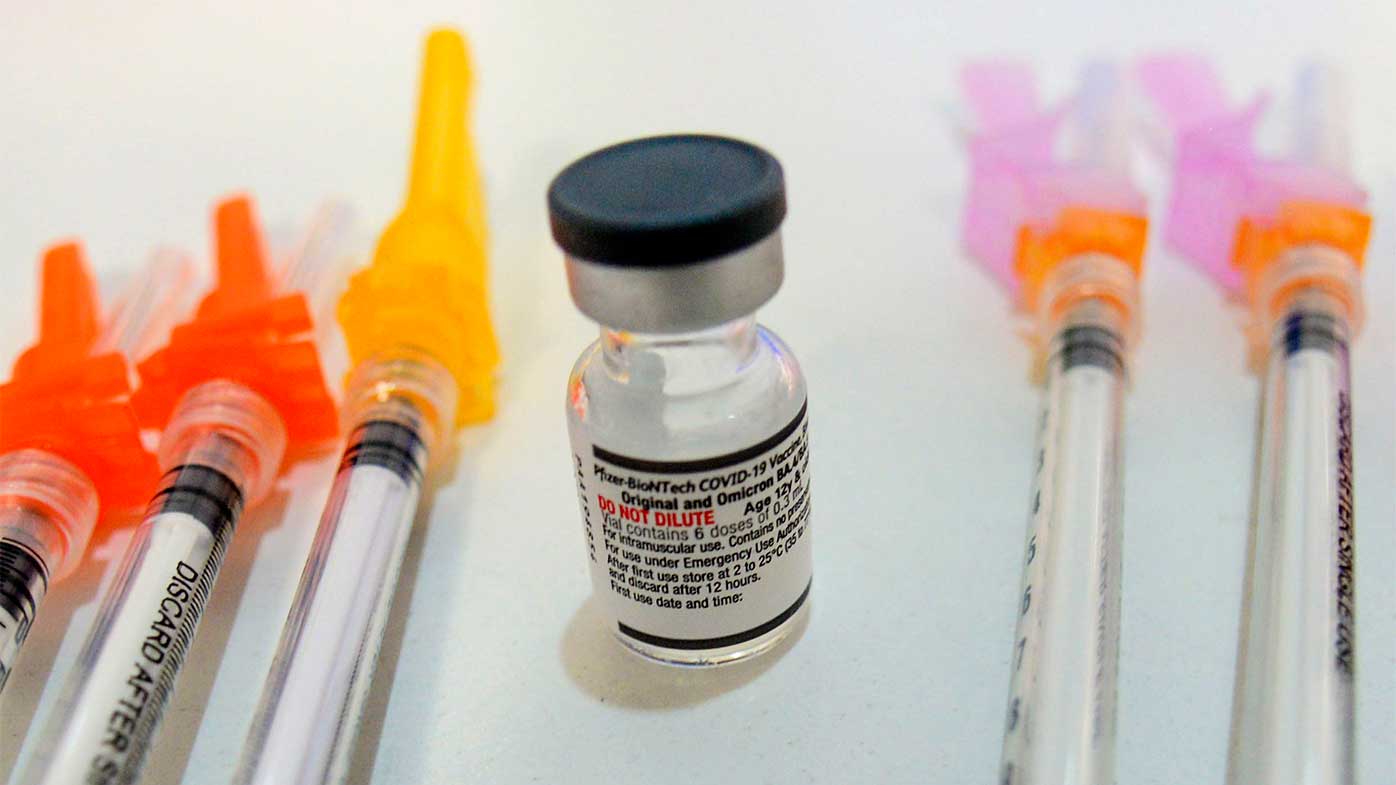
Announcing a number of new changes to Australia's COVID-19 response, Butler said that ATAGI has recommended a next-generation vaccine from Pfizer, targeting the Omicron subvariant, be added to the booster doses available.

READ MORE: 'Wall of water' devastating NSW towns in flood crisis

He said the paediatric vaccine from Pfizer, which is for very young children aged six months to five years of age, also be used alongside the existing Moderna paediatric vaccine.

The updated advice was made based on "considered international evidence as well as the local data around", Butler said.

"At this point in time, (ATAGI) have said they anticipate new booster recommendations being made in early 2023 in preparation for the southern hemisphere winter," he said.

"In making that recommendation, ATAGI, first of all, reiterated that they are continuing to actively review the role of booster doses."

READ MORE: Shocking footage reveals moments after Adelaide shark attack

An Omicron-effective Pfizer vaccine has been approved in Australia.

Chief Medical Officer (CMO) Paul Kelly said Australians should brace for higher rates of transmissions in the coming weeks, and those yet to receive any dose of a booster should consider it now.

"As I put in my CMO statement on November 7, we are in a wave and this wave will probably continue for some weeks and we will probably get higher case numbers," Kelly said.

"Everything I said in that statement has proven to be correct over the last week.

"(We've seen a) 47 per cent increase in the number of cases."

Despite the increase in cases, there are still some five-and-a-half million Australians who have yet to receive a booster shot, Butler said.

"ATAGI strongly reiterated the importance of being up-to-date with current vaccines," Butler said.

"They made the point that there are 5.5 million Australians still eligible for a third dose who have not yet had it.

"And, in many instances, many months overdue for their third dose.

"ATAGI reiterated the importance, particularly as case numbers start to build again.

"They also made the point that there are 3.2 million Australians aged over 50 for whom a fourth dose has been recommended for some time now who have still not had their dose."

READ MORE: Tugboat debacle at Aussie ports may cause Christmas chaos

CMO Professor Paul Kelly with inset of a COVID-19 vaccine dose.

Kelly said he believes the country is about halfway through the current, fourth wave.

"I fully expect that we are nearing the middle of this wave," he said.

"All the indicators we have suggest that, whether that be ambulance callouts, wastewater testing, aged care staff positivity rates … and all the other measures, including the antiviral prescribing.

"If it ends up being similar to Singapore and I believe it will, then it should peak soon and drop quickly."

Kelly said Australians should "go and get whatever vaccine they're eligible for now".

"I can absolutely ensure everyone that we do have plenty of supply," he said.

"As the minister mentioned, they are extremely effective.

"For those that are eligible for those treatments … it's incredibly important to get those treatments as quick as possible."

Mum furious after shock letters bring back the pain of son's death

Exclusive: It was a gut-wrenching one-two punch for New South Wales mum Kim Anesbury.

The first blow hit in 2019, after her son Ricky Court had died suddenly, and Optus rejected her desperate attempts to keep his mobile phone number for sentimental reasons.

The second landed last month, when she got two letters in quick succession from Australia's second-largest mobile provider, both addressed to her dead boy and within days of the third anniversary of his death.

READ MORE: The jobs that killed most Australians in 2021

A memorial photo of Ricky Court.

According to the first Optus letter, a combination of Court's personal information had been exposed in Australia's biggest corporate cyberattack.

Inside the second envelope, and even more jarring, they confirmed the number of his NSW driver's licence was exposed, potentially taken by a hacker.

Anesbury was livid.

Three years earlier, she'd made it explicitly clear to Optus that her son was dead.

That was evident because Anesbury was asking that Optus let her keep paying for her son's account so she might have it transferred into her control.

At the request of Optus, she sent in his death certificate.

That was a sign, Anesbury thought, that things were going to fall in her favour.

But a few days later, Anesbury was left distraught after opening an email from Optus informing her "the number has been moved on".

Have you been affected by the Optus hack? Email ************@******om.au” target=”” >Details of almost 1000 Medibank employees also included in hack

The world will hit a major population milestone today

Today marks the day when the world's population will tick over to 8 billion, according to the United Nations.

The human race has added a billion people in the shortest time ever, growing from seven to eight billion in just 12 years.

This unprecedented growth can be put down to us living longer – thanks to improvements in public health, nutrition, personal hygiene and medicine.

READ MORE: 'Wall of water' devastating NSW towns in flood crisis

Hong Kong is one of the densest urban population centres in the world, with its developed areas reaching skyward to house its nearly 7,000 people per square kilometre in slender high rises along narrow tracts of land across the territory.

There are also some areas of the world, such as Africa, which continue to have high levels of fertility, the UN says. 

The overall growth rate of the global population is slowing, however, and it's expected that it will take another 15 years or so — until 2037 — for the world to reach its next population milestone of 9 billion.

In the meantime, we're getting older. We've gone from having a median age of 27.3 in 2010 to 30.2 in 2022, Australian social research and demographic firm McCrindle Research says.

Since then, we've also welcomed Generation Alpha. With 1.8 billion people born since 2010, Generation Alpha is already the second largest generation in the world, just behind the 1.9 billion Generation Z (born 1995 to 2009). 

What will the world look like in 15 years?

The world's population will look quite different by 2037, demographer Mark McCrindle says.

READ MORE: Workplace death report reveals how 169 Aussies were killed last year

Shoppers crowd in huge numbers at a market area on November 12, 2022 in New Delhi, India. The world's population is slated to reach 8 billion today, according to the UN. India is the world's most populous region, currently standing at some 1.4 billion people, meaning that nearly one fifth of humanity lives in the country.

More than 5.1 billion people will live in Asia, followed by 2 billion in Africa. In Europe, where the population is set to decline by 2 percent, there will be 720 million residents. 

"While this era has been labelled the Asian Century, demographically, we are now in the African Century," McCrindle said.

"Africa currently comprises 22 percent of the global population, is contributing 38 percent of current global births, and will contribute 53 percent of the next billion, to 2037. 

"Currently, Africa's population is growing by the equivalent of one new Australia (26 million) every eight months."

READ MORE: Border closures won't help stem new COVID-19 wave, expert says