Tag Archives: oceania

What do Russian defeats mean for Vladimir Putin's grip on power?

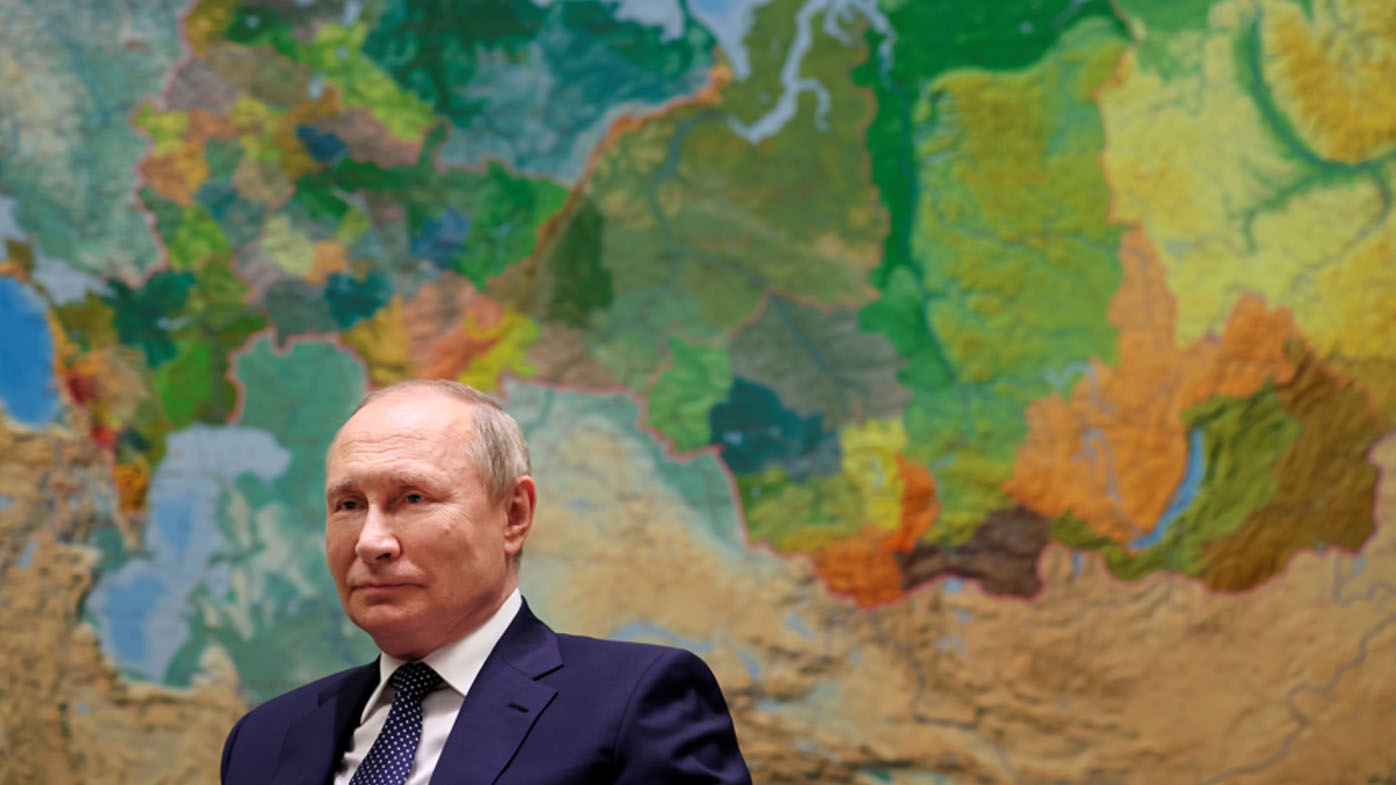
Russian President Vladimir Putin is under pressure like never before following his disastrous decision to invade Ukraine, but how close is he to losing grip on power?

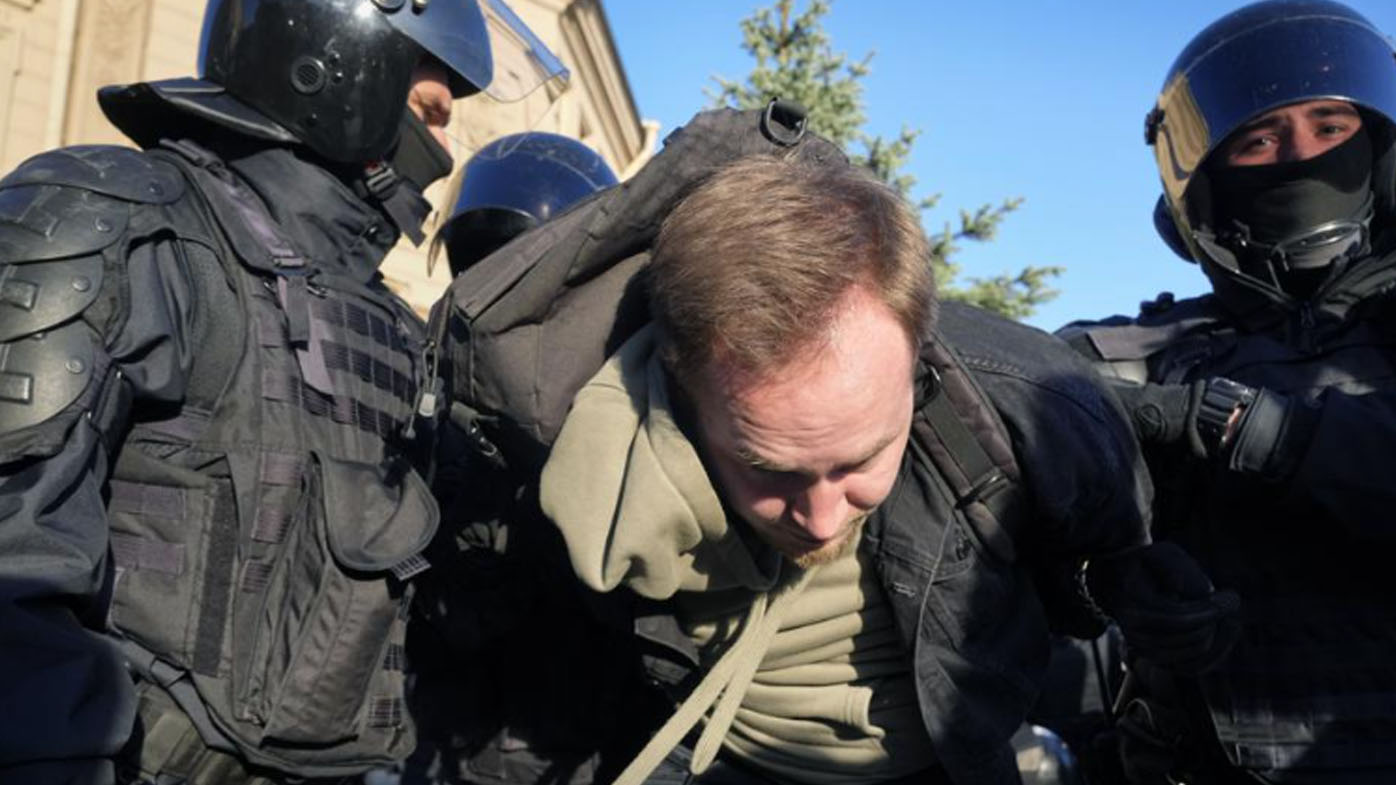
Defeats on the battlefield and a shambolic partial military mobilisation have triggered rare domestic criticism of the war effort and the Kremlin elite.

Despite Putin's bombastic speeches and veiled threats about using nuclear weapons, there is little doubt he's losing the seven-month-old war.

READ MORE: Putin blames Ukrainian 'terrorist act' for attack on Crimea bridge

Here is a look at what is facing Putin and how the war could play out in the coming months.

Will Putin be forced out of power?

Associate Professor Will Partlett, of Melbourne University, says Putin remains secure as Russian president because to date he is keeping key powerbrokers, such as the military high command and oligarchs, onside.

"The Putin regime will remain stable but increasingly ineffective," he told 9news.com.au.

He says the Ukraine war is marking the beginning of the end for Putin "but that beginning could take years" to unfold.

READ MORE: SES receives 1000 calls for help as rivers rise in NSW

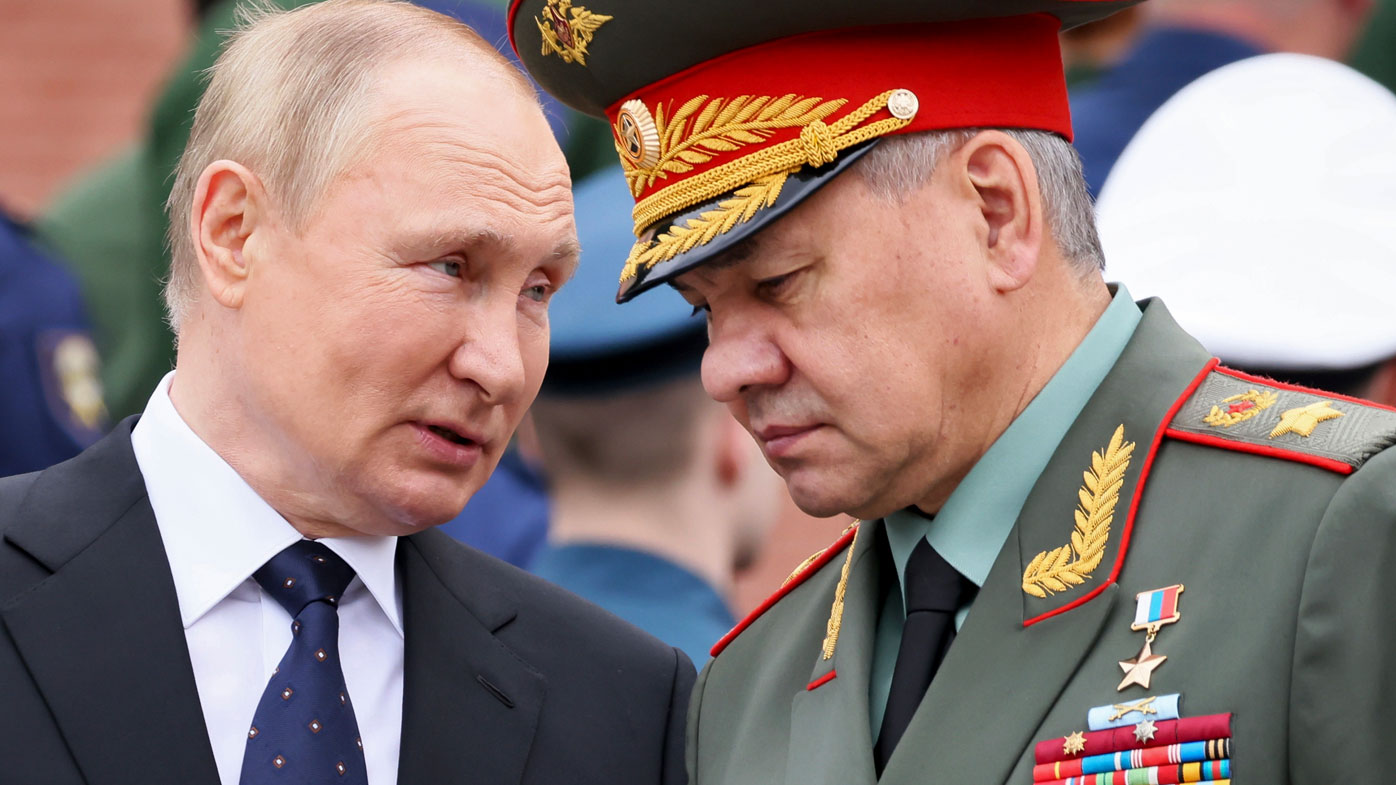
Russian President Vladimir Putin speaks with Russian Defence Minister Sergei Shoigu.

Scapegoats for Putin's blunders 

The coming weeks could see senior Kremlin officials axed from their posts.

"Somebody will be a scapegoat for the failures and setbacks in the war in coming weeks … heads will roll at the top of the Kremlin," Partlett said.

Putin is safe in the top job because of a tradition dating back to the days of the Tsar – the Russian royal ruler – that the leader is always right and policy failures are the fault of subordinates.

One possible scapegoat for Putin is likely to be the much-criticised Defence Minister Sergei Shoigu.

He is a close ally of Putin who has shown intense loyalty to the president, but that is probably not enough to save him.

"Heads will certainly roll – and it looks like Shoigu will go. It might take some of the pressure off," Partlett said.

READ MORE: Vladimir Putin's inner circle: The men behind Russia's war in Ukraine

How have Putin's war aims changed?

The Russian president has abandoned any notion of a decisive victory over Ukraine after his forces suffered major defeats and western military aid continues to flow for the Ukrainian war effort.

Instead Putin is looking to the recent mobilisation of about 300,000 Russian reservists as a way to stabilise the situation on the battlefield.

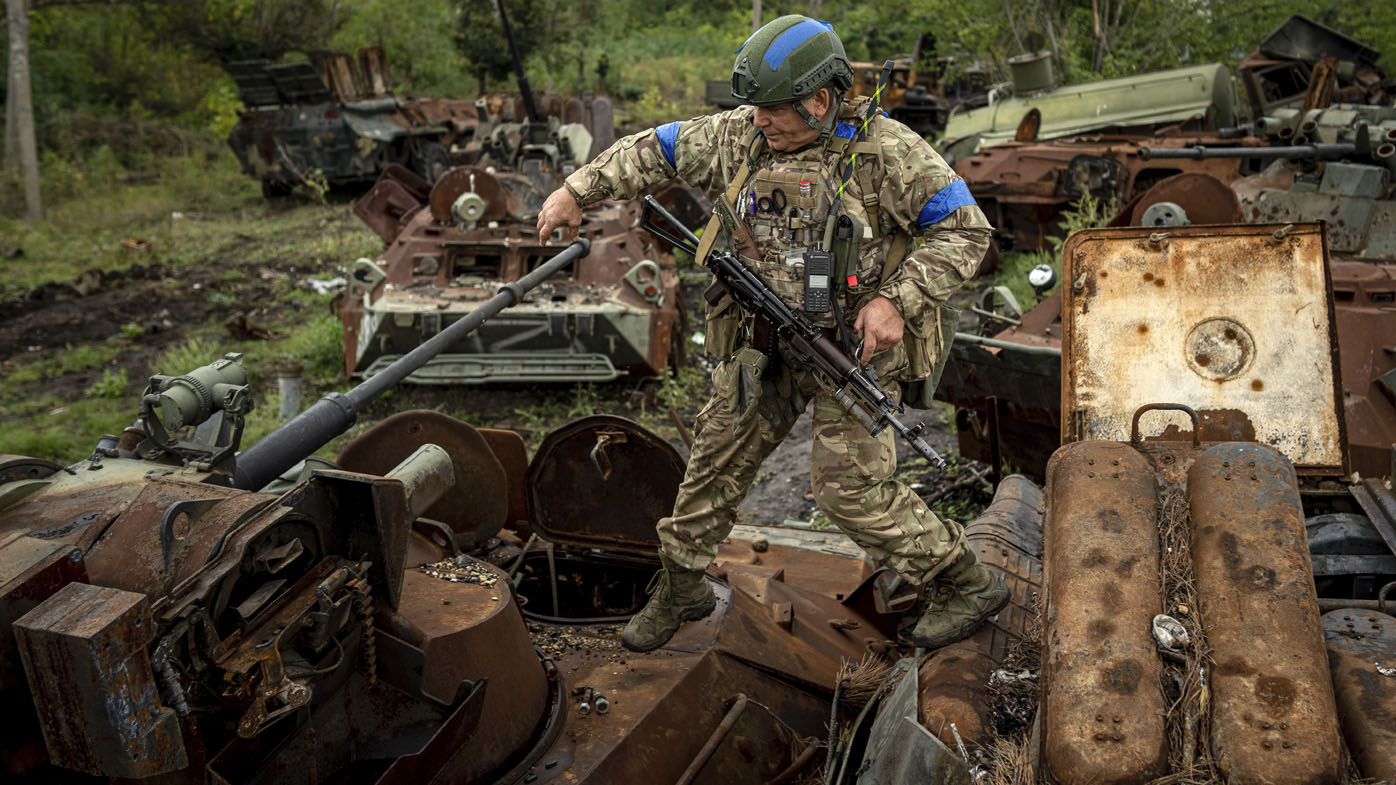
But, critically, the Russian army has suffered a mass loss of equipment – including thousands of tanks and armoured vehicles.

"His best hope is to basically freeze the war to stop Ukraine's momentum… and to drag it out through next year," Partlett said.

"There is no proper peace deal in sight … Putin's best hope is to wait out the West."

READ MORE: Would Russia really use tactical nuclear weapons in Ukraine war?

What's influencing Putin now?

Concerningly, Putin in recent years has moved from a pragmatist – willing to compromise in some cases with the West – to an ideologue influenced by hard-line nationalists.

The failure in Ukraine has now made him more beholden to figures such as the head of the secret service, Nikolai Patrushev, according to Partlett.

He says Putin is now fully in the grip of a conspiratorial ideology the US, Britain and other western nations want to split the Russian nation.

"Patrushev has pushed the line that Ukraine doesn't even exist as a country," Partlett said.

Doctors save arm of Perth man bitten by shark

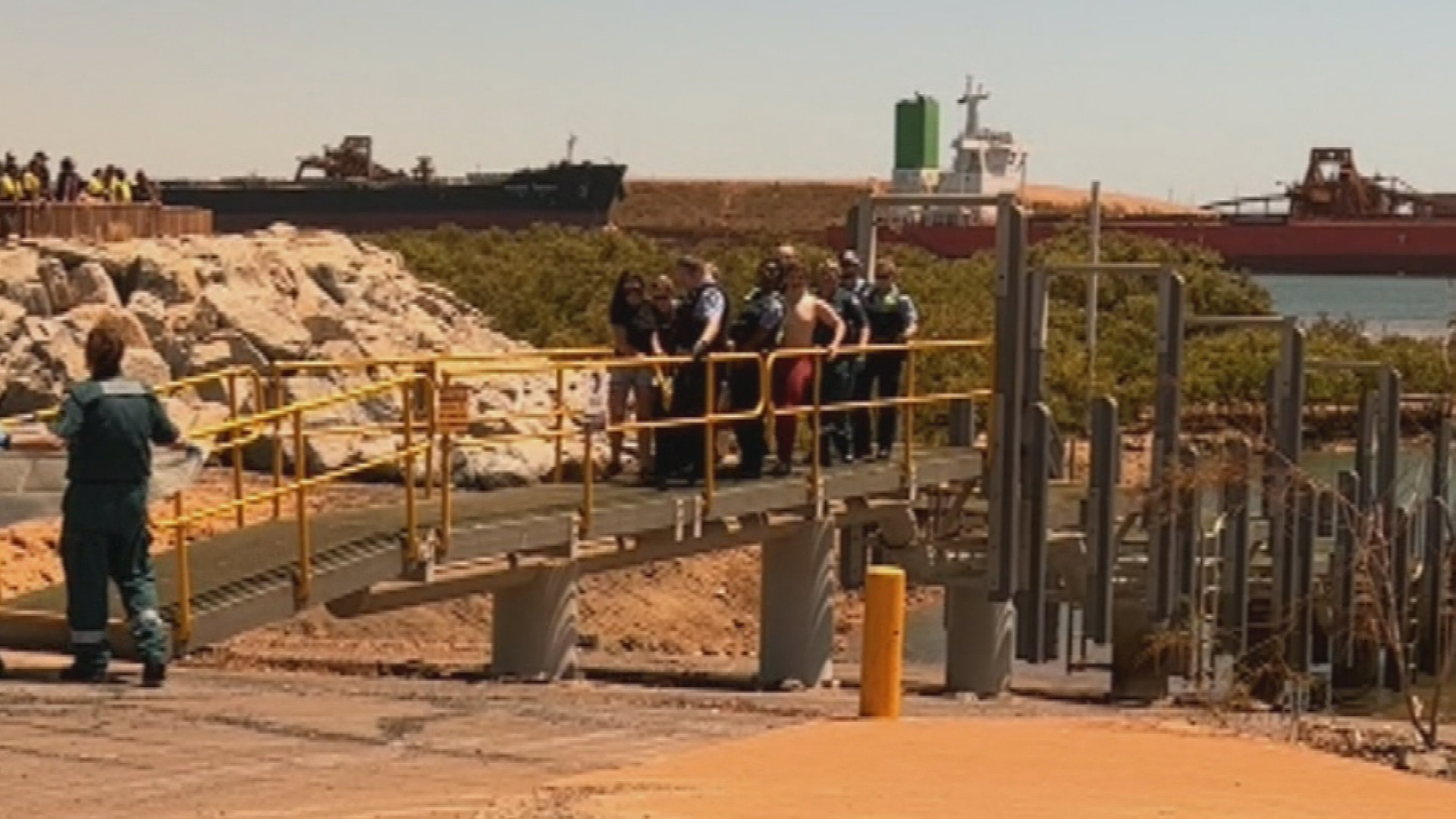
A Perth father who survived a shark attack remains in a stable condition after undergoing surgery at Royal Perth Hospital.

Doctors were able to save Robbie Peck's arm in a delicate operation.

His brother-in-law posted a photo showing the father-of-three from sitting up in his hospital bed, giving a thumbs up and smiling.

READ MORE: Activists glue themselves to Picasso painting

A Perth father who survived a shark attack remains in a stable condition  after undergoing surgery at Royal Perth Hospital.
Doctors were able to save Robbie Peck's arm in a delicate operation.

"Bonded by blood — literally," he wrote.

It was Clive Fondyke who came to Peck's rescue on Friday, using a makeshift tourniquet to stem his rapid bleeding, as they waited for help.

Peck had been spearfishing with friends at Port Hedland when he was savaged by a suspected bull shark.

His family is by his bedside as he faces a long road to recovery.

Your phone can now warn you if you're speeding

A moment's loss of concentration is all it can take for drivers to lose track of their speed and break the road rules.

But now a new tool has been created to help keep that lead foot in check.

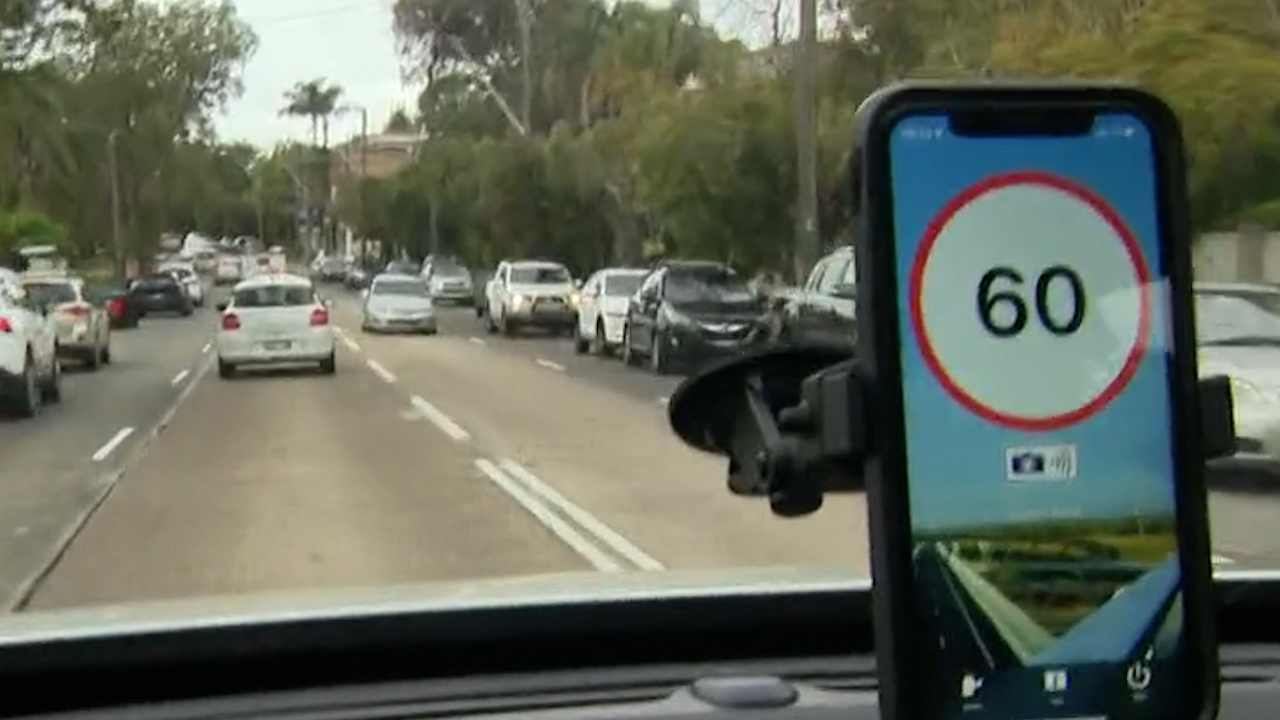
The Speed Adviser app, created by the NSW Government's Centre for Road Safety, can warn drivers if they travel over the speed limit — or if drivers enter a zone where a mobile speed camera may be operating.

READ MORE: 'R Plates' introduced on Australian roads

The Speed Adviser app, created by the NSW Government's Centre for Road Safety, can warn drivers if they travel over the speed limit — or if drivers enter a zone where a mobile speed camera may be operating.

While the app has been around for several years, new verbal warnings have now been added to make it more user friendly.

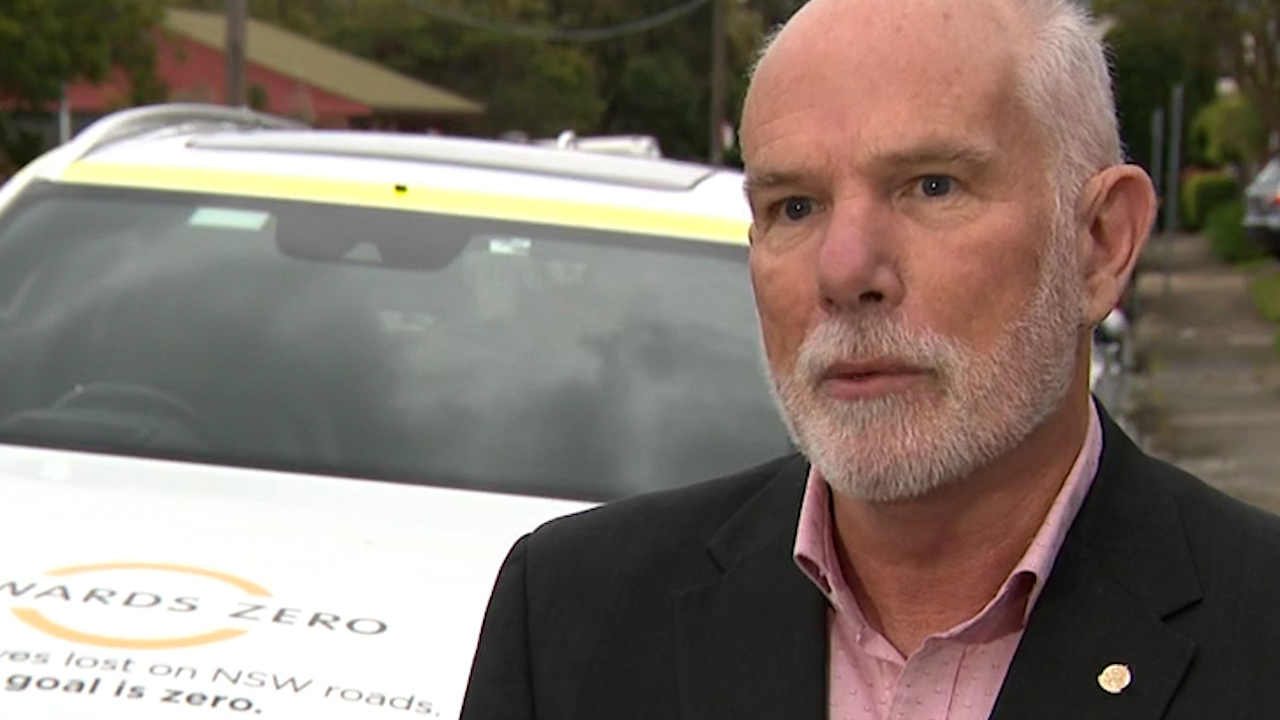
"Perhaps you haven't been out for a while and you're not aware of the area if it's new — we want to alert people and let them know if they're speeding or perhaps need to adjust their behaviour," Roads Minister Natalie Ward said.

The app is available for both Apple and Android devices and will alert drivers verbally even if their phone is being used as a GPS.

The extra warning on the app doubles down on the government's decision to reinstate signage used by police checking driver speeds. 

Its removal last year was met with a fierce public backlash.

However, the decision only includes signage mounted on top of patrol cars and not warning signs placed ahead of areas where speed cameras are operating.

NSW Labor Leader Chris Minns said all warning signs should be returned.

"The best thing they can do is to put these signs back in front of the speed cameras, so we know to slow down and not commit the offence in the first place," Minn said.

The Speed Adviser app, created by the NSW Government's Centre for Road Safety, can warn drivers if they travel over the speed limit — or if drivers enter a zone where a mobile speed camera may be operating.

When signs were posted in advance of speed camera vehicles in 2020, 38,743 fines were issued.

That soared by nearly 10 times to 361,896 in 2021 when warnings were taken away altogether.

So far this year, offences have dropped to just under 200,000 with the return of the top-mounted signs. But numbers are still five times higher than 2020.

Protesters arrested after gluing themselves to Picasso painting

Climate change protesters have been arrested after gluing themselves to a Picasso painting at the National Gallery of Victoria in Melbourne.

They were attached to the priceless artwork — an anti-war painting titled Massacre in Korea — for more than an hour.

READ MORE Covid-19 test results 'will no longer be needed to be reported in Victoria'

Climate change protesters have been arrested after gluing themselves to a Picasso painting at the National Gallery of Victoria in Melbourne.

The surface of the painting is covered with glass, so the glue didn't directly damage it.

Extinction Rebellion has claimed responsibility.

"This painting shows the horrors of war," the organisation posted on Facebook.

"Climate breakdown will mean an increase in conflict around the world."

'Don't be deceived': Flood warning despite end to rain

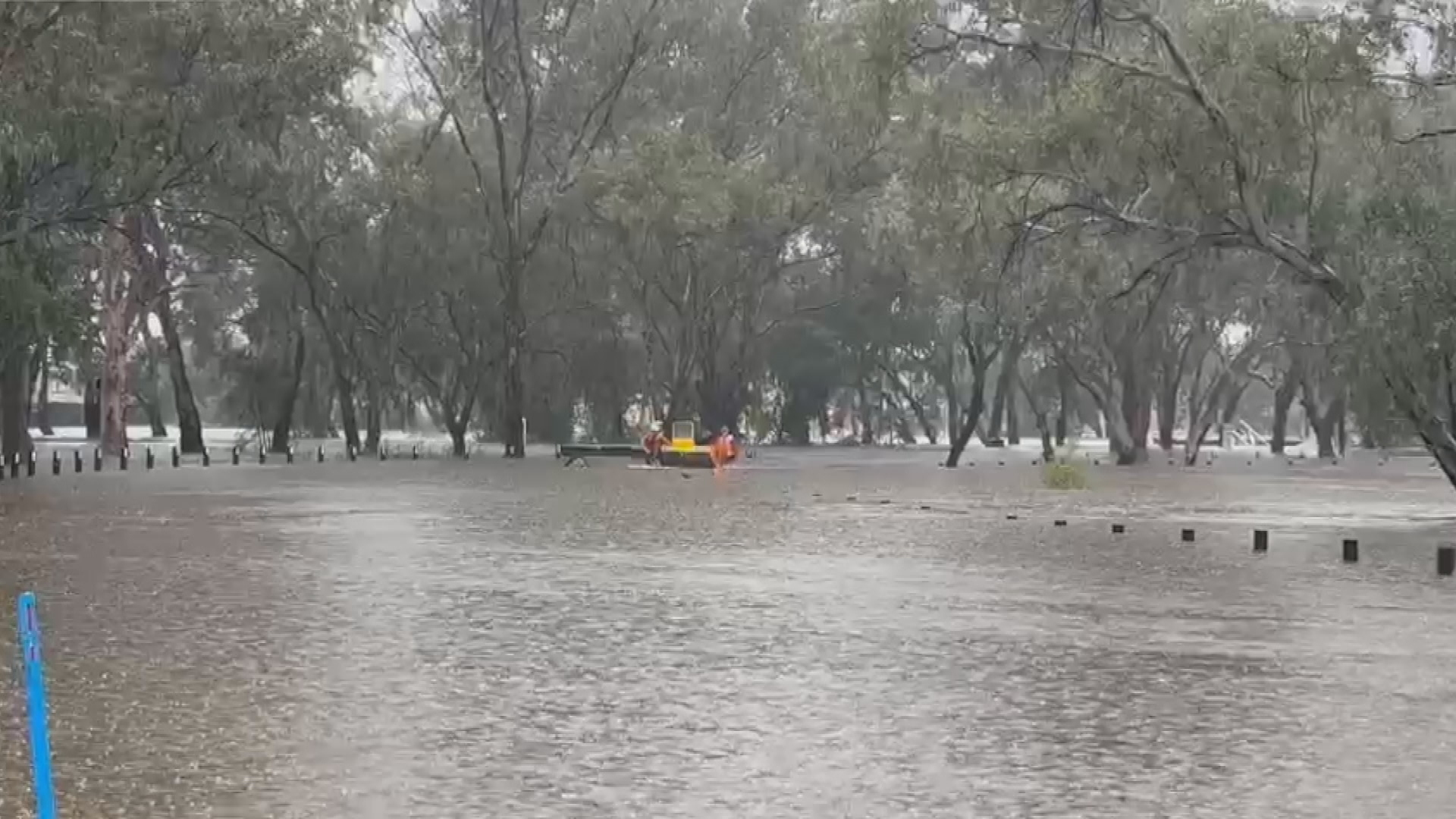
New South Wales residents are being warned not to be fooled by a brief sunny respite over the next few days as flood waters continue to rise.

The mild weather is also likely to be short-lived, with more rain forecast again on Wednesday and Thursday next week, when another system moves across the state.

"My message is please don't be deceived. The sun might be out in various parts of the state, we may be seeing some dry conditions at the present, but our rivers continue to rise and we know that there is another event coming through," NSW Emergency Services minister Steph Cooke said.

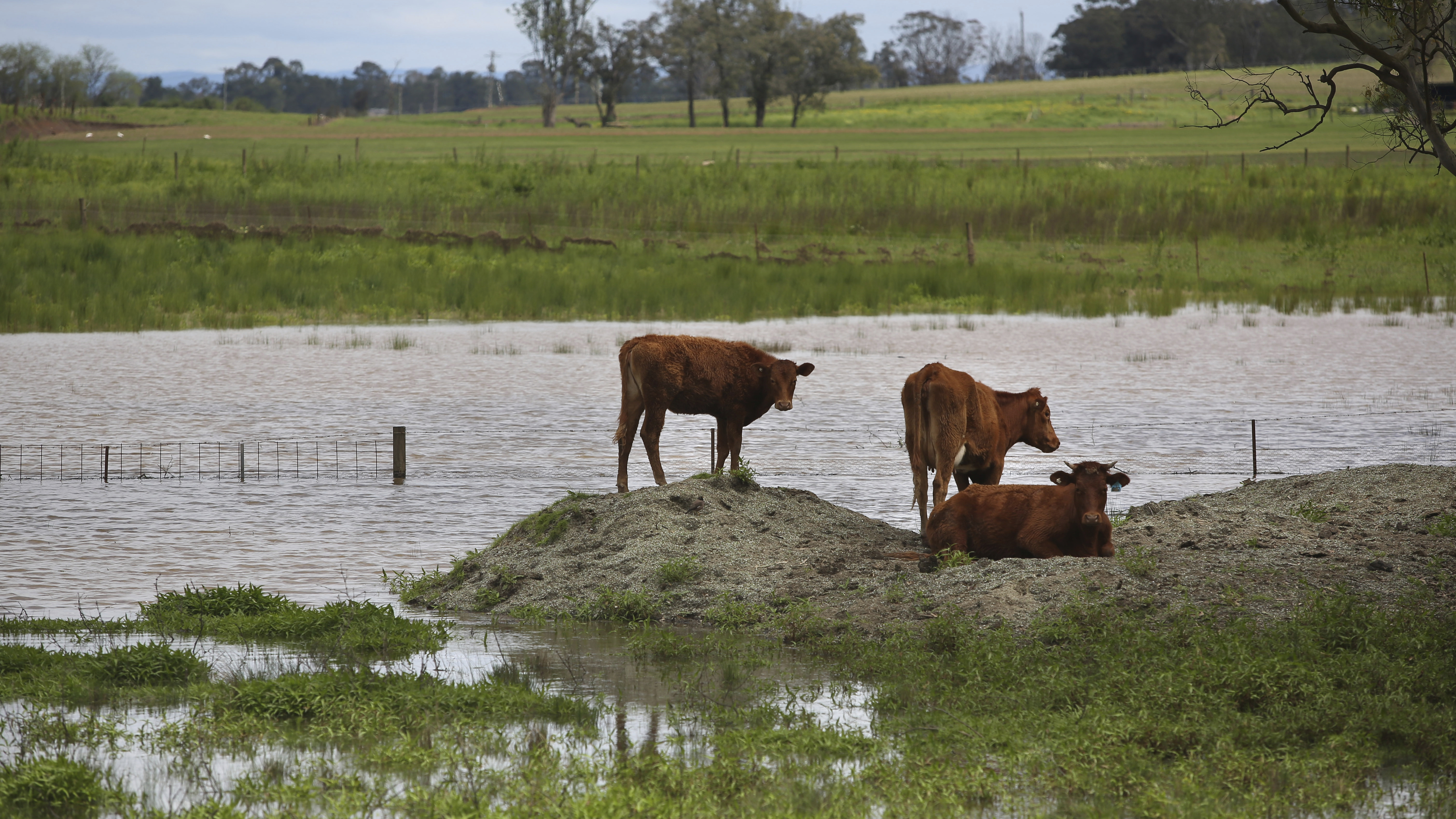
READ MORE: Once drought-ravaged farm in outback NSW now surrounded by water

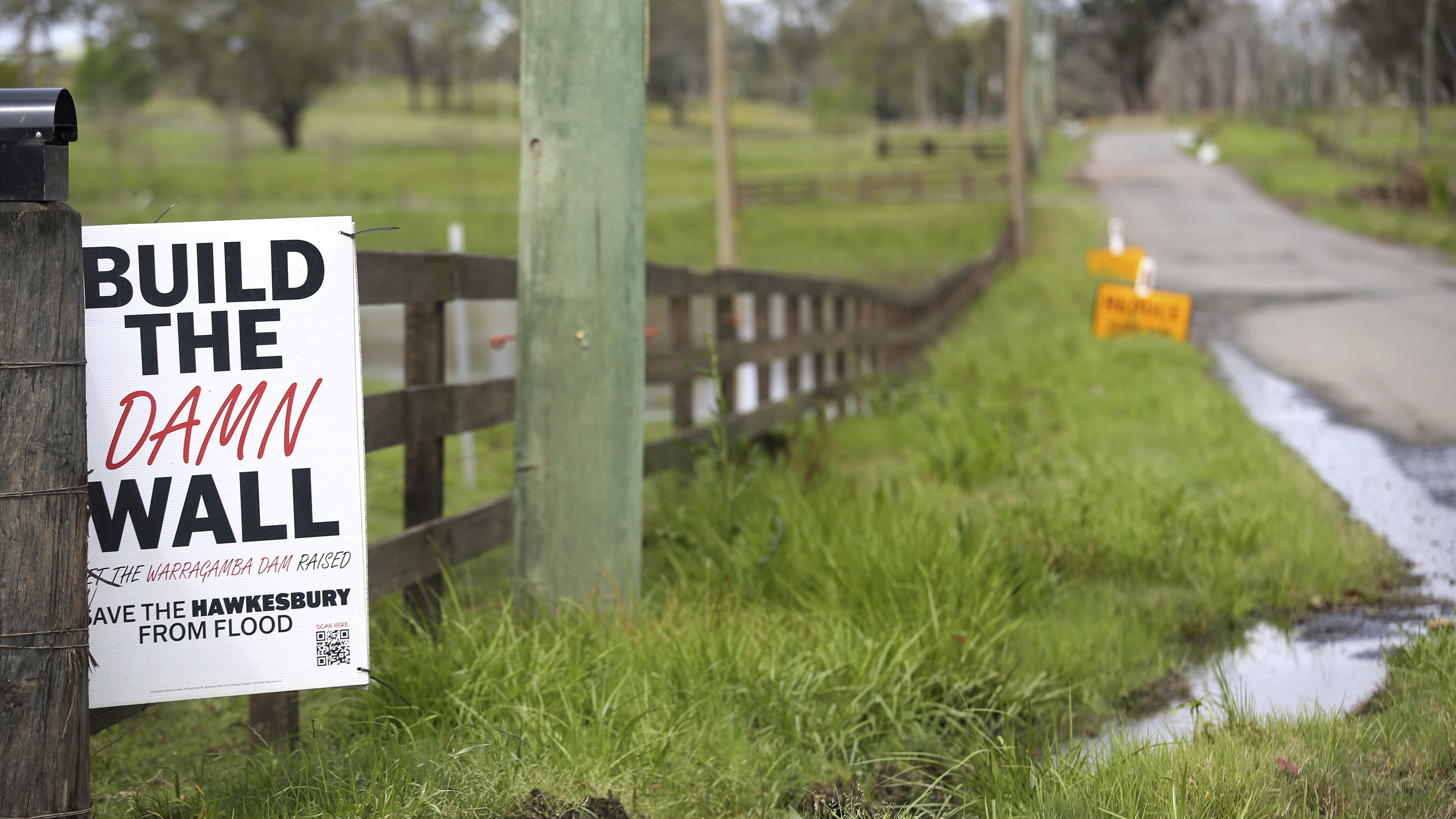
Water rises around Gronos Farm Road in Wilberforce on the plains of the Hawkesbury, north west of Sydney.

Dams at full capacity, with Sydney's Warragamba Dam currently releasing 90 gigalitres a day.

With grounds saturated, any more rain will come with the risk of flash flooding and drivers are being urged to take care on the roads.

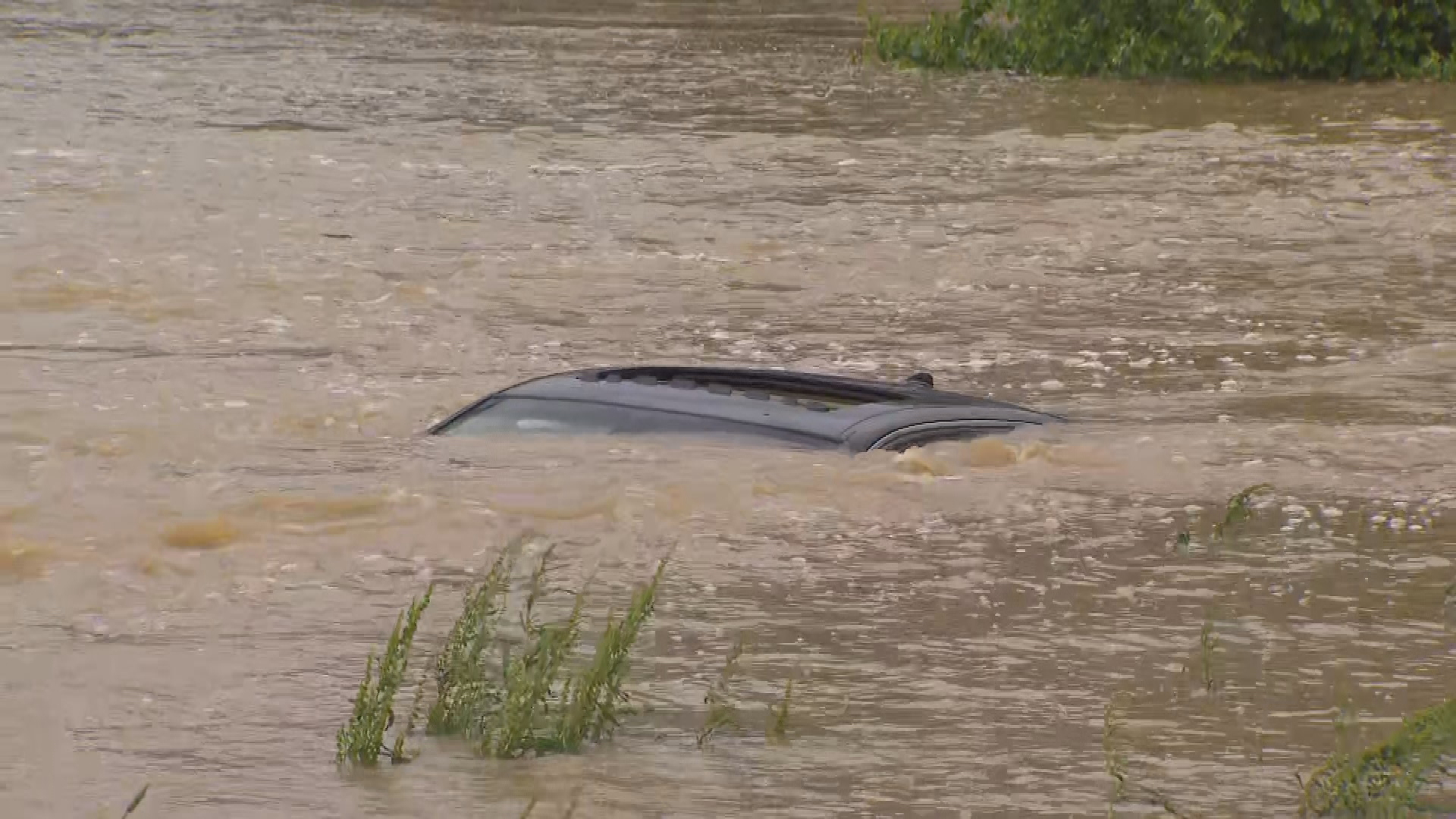
"Please do not drive or enter flood waters under any circumstances, it places you at risk, it places your family or passengers at risk and it places at risk the lives of the emergency services volunteers who continue to turn up day in, day out to help where required," Cooke said.

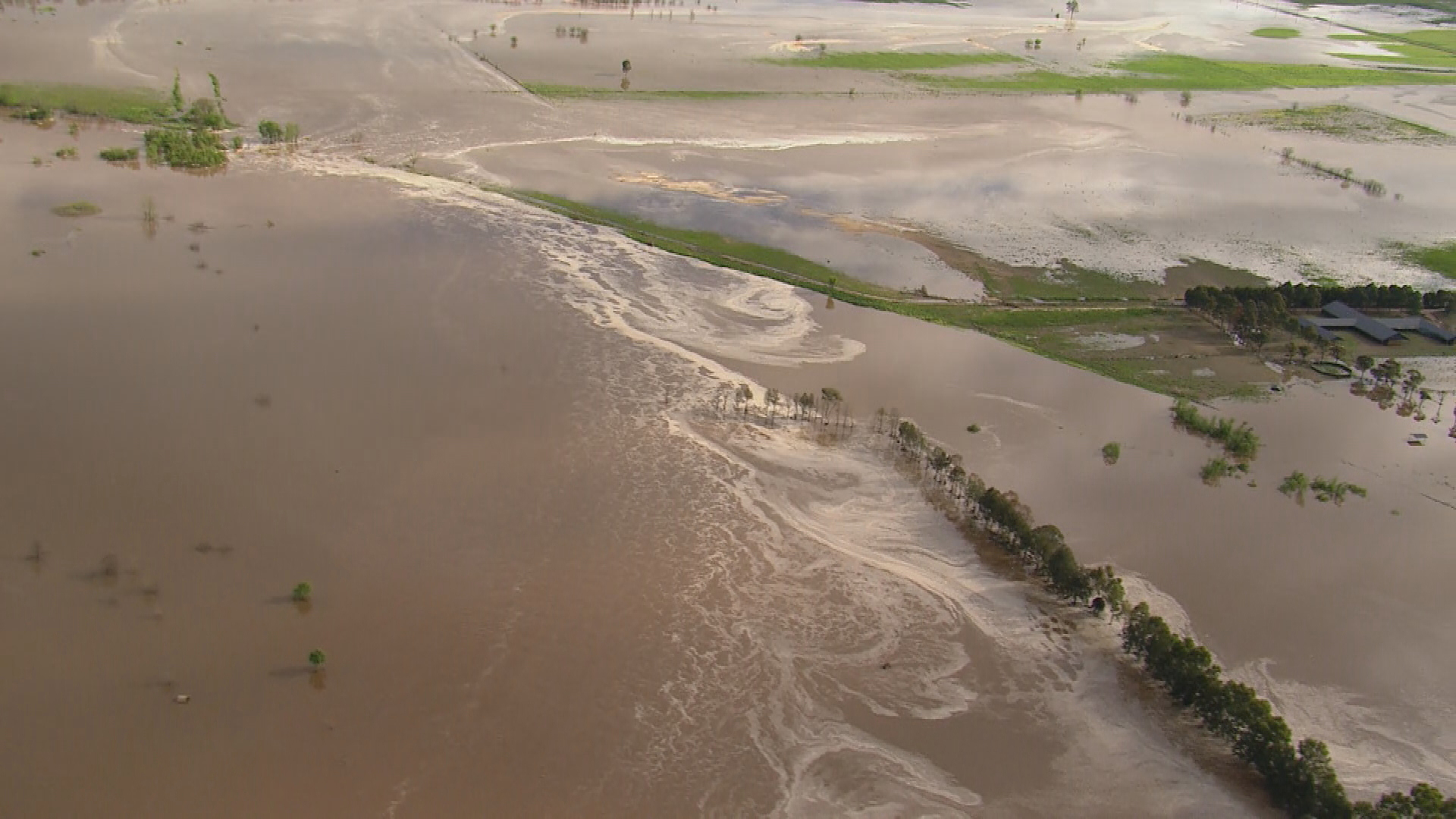
Flood waters swirl around farmland in Sydney's north west.

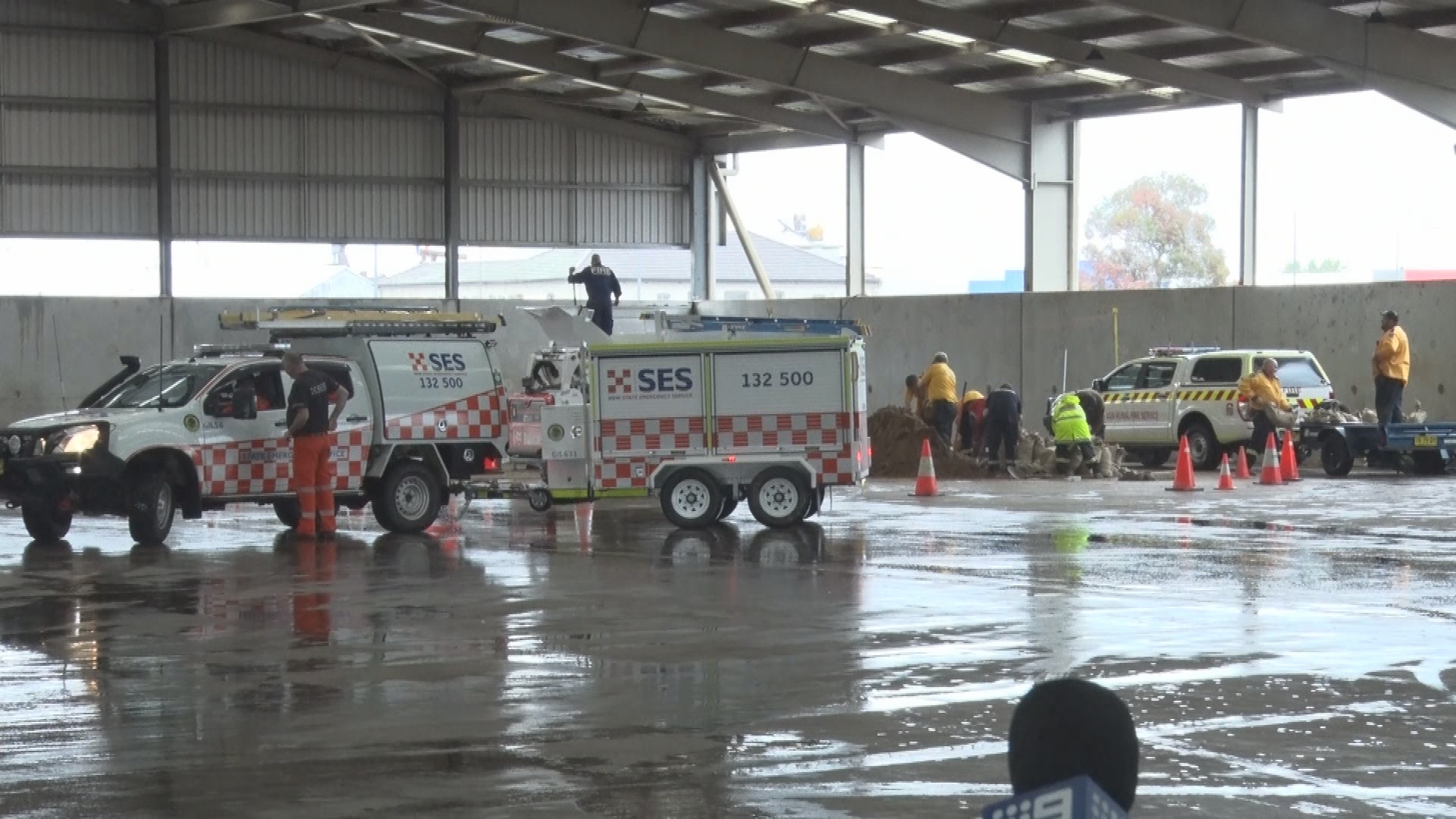
The NSW State Emergency Service (SES) has issued 94 warnings issues across the state, with the commissioner Carlene York warning residents to evacuate early and take extra precautions.

Jane Golding from the Bureau of Meteorology said up to 100mm of rain fell along some parts of the NSW coast over the past 24 hours, while up to 50mm fell across western and central western slopes. 

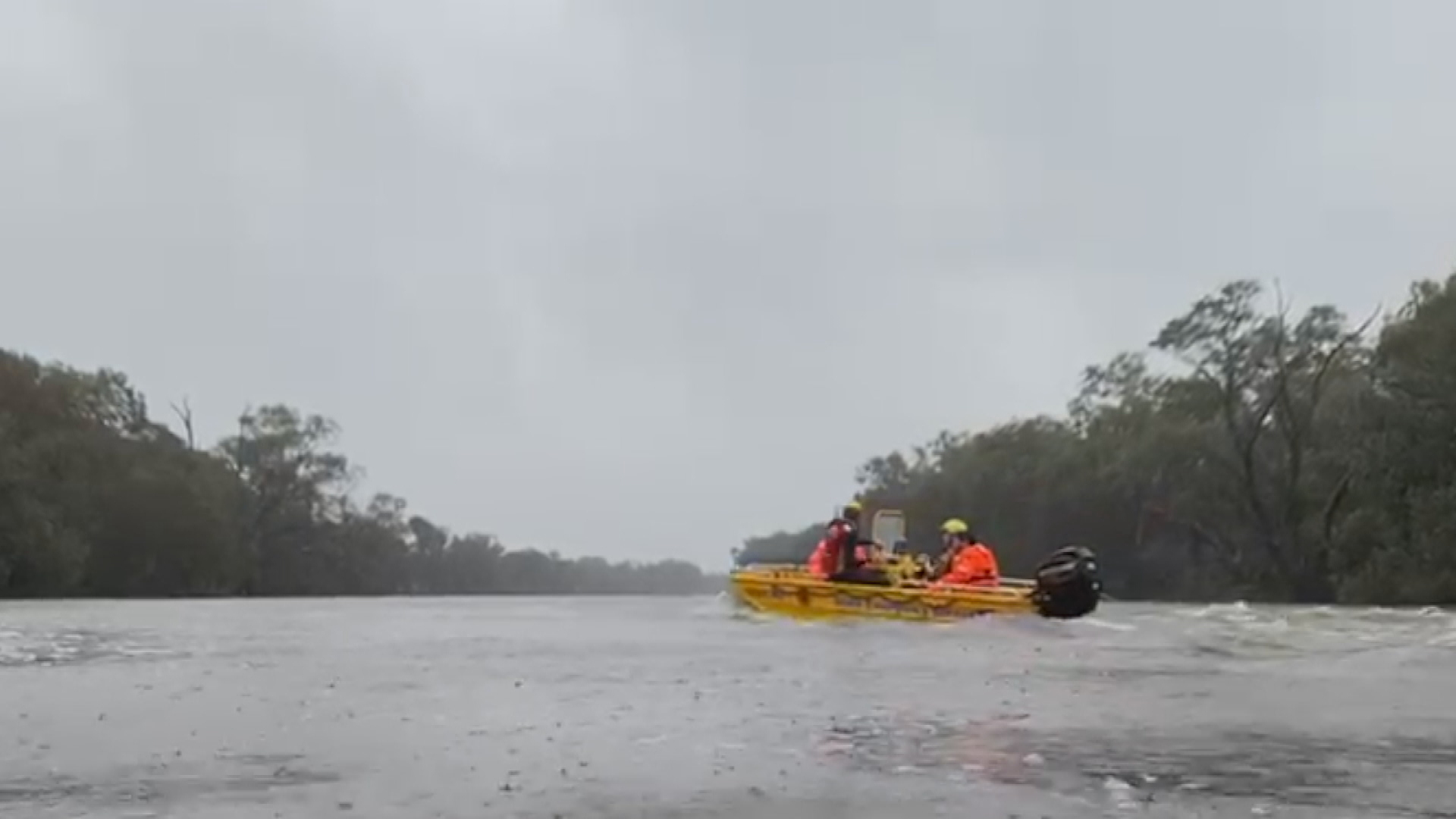
Overnight, the SES responded to 343 requests for assistance, 21 of those being flood rescues.

Severe weather warnings relating to strong winds are no longer in place for the Illawarra, Metropolitan and Hunter districts, with conditions easing as the low pressure system moves offshore.

Evacuation orders issued

Heavy rainfall leading to flash flooding is no longer expected, however there are multiple flood warnings for much of the state, including emergency warnings for Oura Beach Camping near Wagga and Western Plains Tourist Park at Dubbo.

At Gronos Point, north of Sydney, the SES are directing people who live on along Gronos Farm Road and Manns Road, to evacuate immediately due to flooding.

There are fresh evacuation orders north west of Sydney.

Residents near the intersection of Sackville Road and Tizzana Road, as well as those living in some properties on West Portland Road in Sackville have been advised to leave before 11.45 pm tonight.

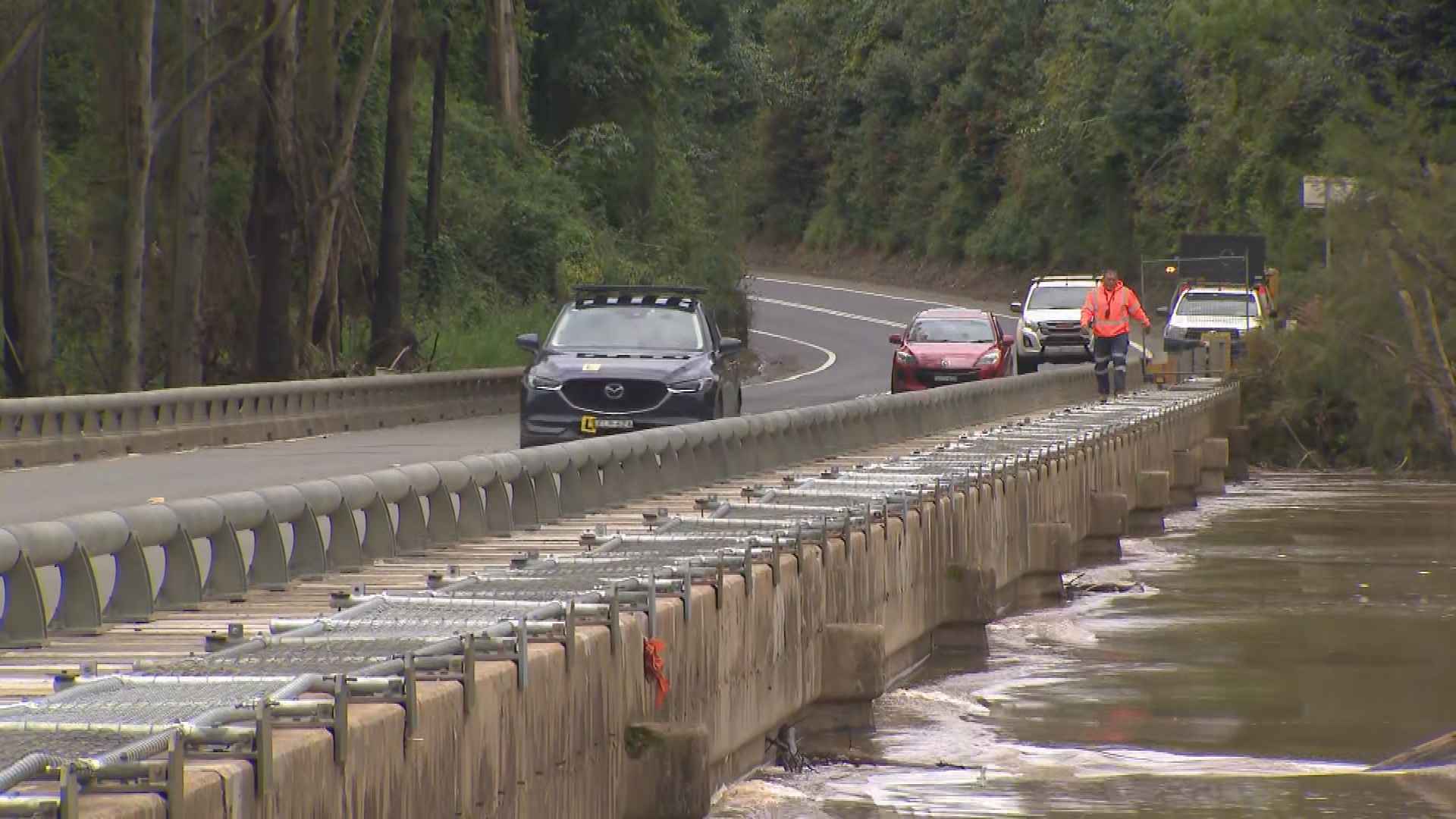
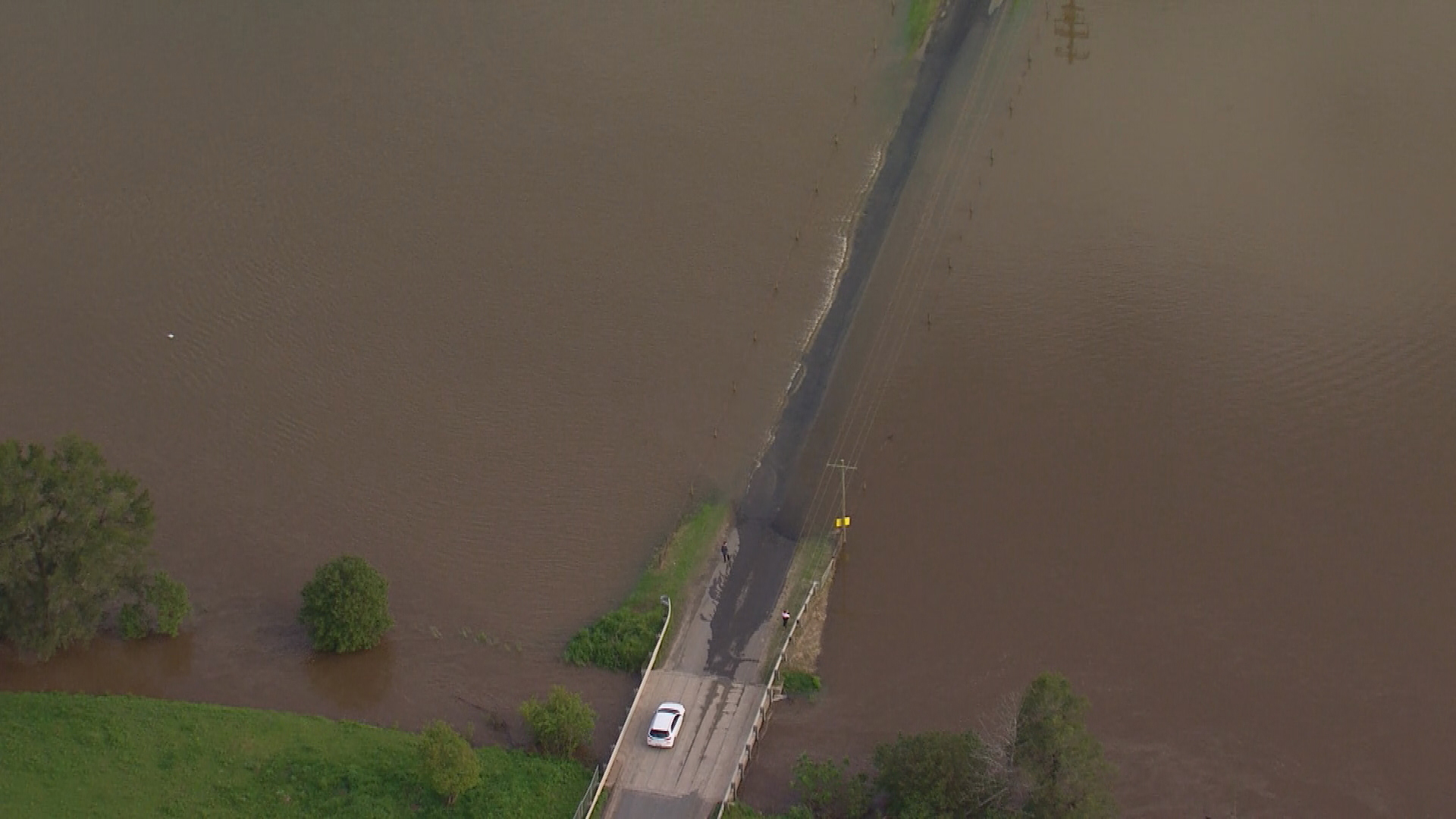
Water under the Richmond Bridge, north west of Sydney, is rising.

Meanwhile, some residents of properties in Lower Portland east of the Hawkesbury River on River Road have been told to evacuate by 5pm tonight.

An evacuation order for before 7pm tonight is in place for some properties in Cumberland Reach on Laws Farm Road, Lower Portland, also in the Hawkesbury.

Four SES evacuation centres have been set up – in North Richmond, Richmond, Dubbo and Castle Hill.

Due to the widespread rain, multiple inland and coastal rivers are forecast to reach major or near major flood levels over the coming days.

A bridge on the edge of Sydney goes underwater.

They include the Warren on the Macquarie River, Nanami, Cottons Weir, Jemalong, Euabalong, Forbes on the Lachlan River, Gundagai on the Murrumbidgee River, Weilmoringle on the Culgoa River and Tilpa on the Darling River.

Some catchments east of the Divide are experiencing new flooding from this event, including the Hawkesbury and Nepean.

Along the Hawkesbury River, minor flooding is occurring at Penrith, North Richmond and Windsor.

Moderate flooding is possible at North Richmond from midday Sunday and at Windsor from late Sunday afternoon.

Minor flooding may occur at Sackville and Lower Portland from late Sunday onwards.

People in the Western Plains Tourist Park were asked to evacuate just before 2am "because inundation by floodwater is imminent" and an evacuation centre was set up at Dubbo Showground.

There is also a hazardous surf warning for the Macquarie Coast, Hunter Coast, Sydney Coast and Illawarra Coast.

Emergency services are also warning all people travelling to Bathurst for the Bathurst 1000 to allow for extra travel time.

It comes as September rainfall for the state was 126 per cent above the 1961–1990 average, which is fifth highest September rainfall on record.

Flood waters to hang around 'for months' 

Cooke said the dangerous conditions continued in the state and some communities were likely to be affected by flood waters for some time to come.

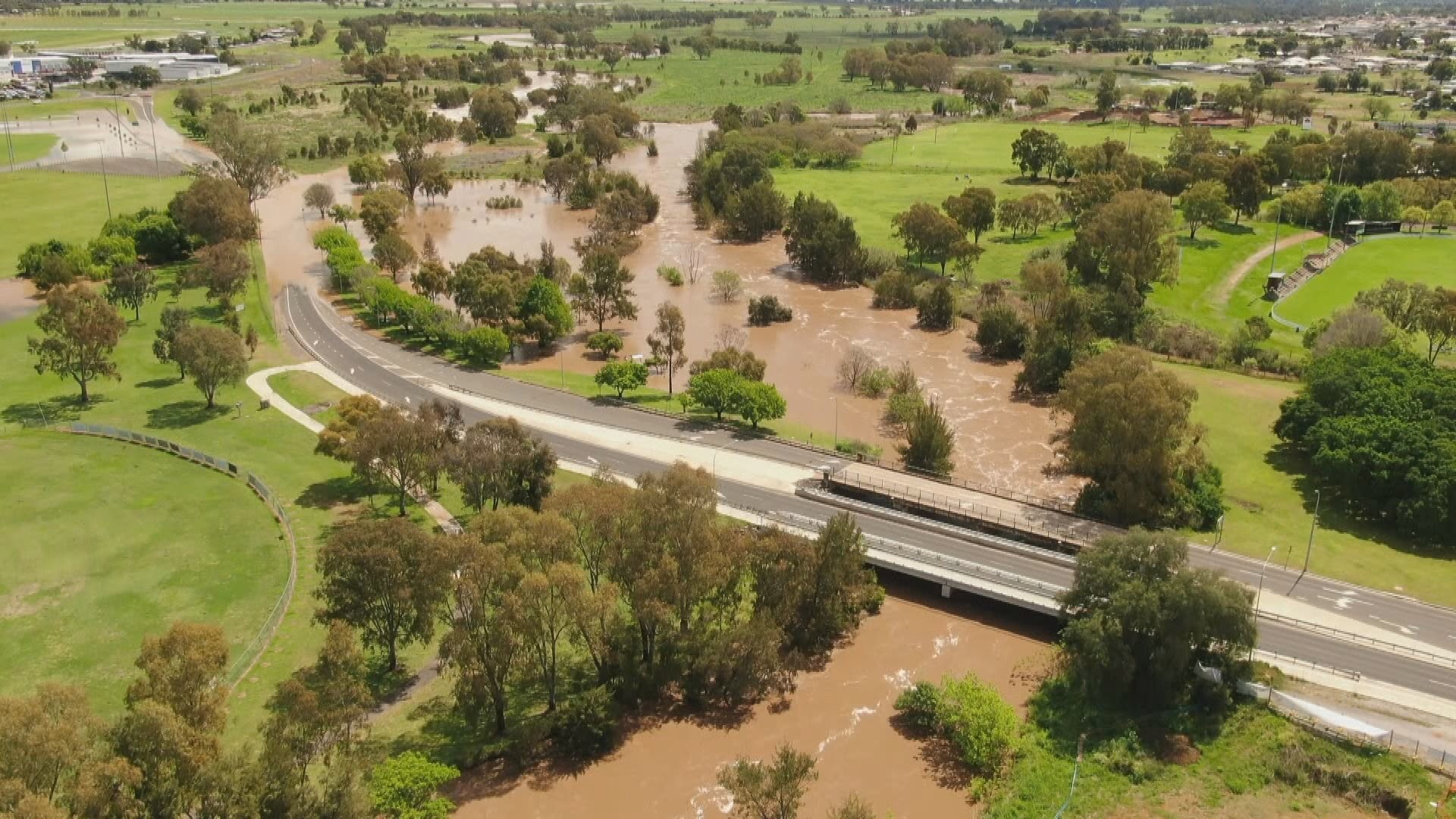
Floods in Tamworth in regional NSW.Water rises around Gronos Farm Road in Wilberforce on the plains of the Hawkesbury, north west of Sydney.

"We have also got dangerous surf and damaging wind, potentially bringing trees down and completely saturated landscape, creating the risk of landslips at this time, Cooke said. 

"We know that for inland New South Wales, the flood waters will continue to be a problem for communities not just for the weeks ahead but for months."

Murder charge after 23-year-old killed in alleged hit-and-run

A man has been charged with murder after a 23-year-old man was killed in an alleged hit-and-run collision on Victoria's Mornington Peninsula.

The 23-year-old was with friends when he was hit by a white SUV about 11pm last night on Cool Store Road in Hastings.

Neighbours watched as his friends tried desperately to save him. 

READ MORE: Cheap public transport fares under Victorian opposition pledge ahead of state election

A community on Victoria's Mornington Peninsula has been left grief stricken after a young man was killed in an alleged hit-and-run collision.The 23-year-old was with friends when he was hit by a car around 11pm on Cool Store Road in Hastings on Saturday night.A man has been charged with murder after a 23-year old man was killed in an alleged hit-and-run collision on Victoria's Mornington Peninsula.

A 34-year old man from the town was charged with murder over his death, Victoria Police said.

"I feel for the family. It's a terrible thing to happen," one neighbour said.

Police said they were establishing the exact circumstances around the collision.

Why is North Korea firing so many missiles?

Analysis: Tensions are running high in the Korean Peninsula, as the United States and its allies respond to North Korea's flurry of recent missile tests, including one that flew over neighbouring Japan without warning.

North Korea has fired eight missiles in the past two weeks – a prolific number, even in a year that has seen the highest number of launches since leader Kim Jong-un took power in 2011.

The aggressive acceleration in weapons testing has sparked alarm in the region, with the US, South Korea and Japan responding with missile launches and joint military exercises this week. The US has also redeployed an aircraft carrier into waters near the peninsula, a move South Korean authorities called "very unusual."
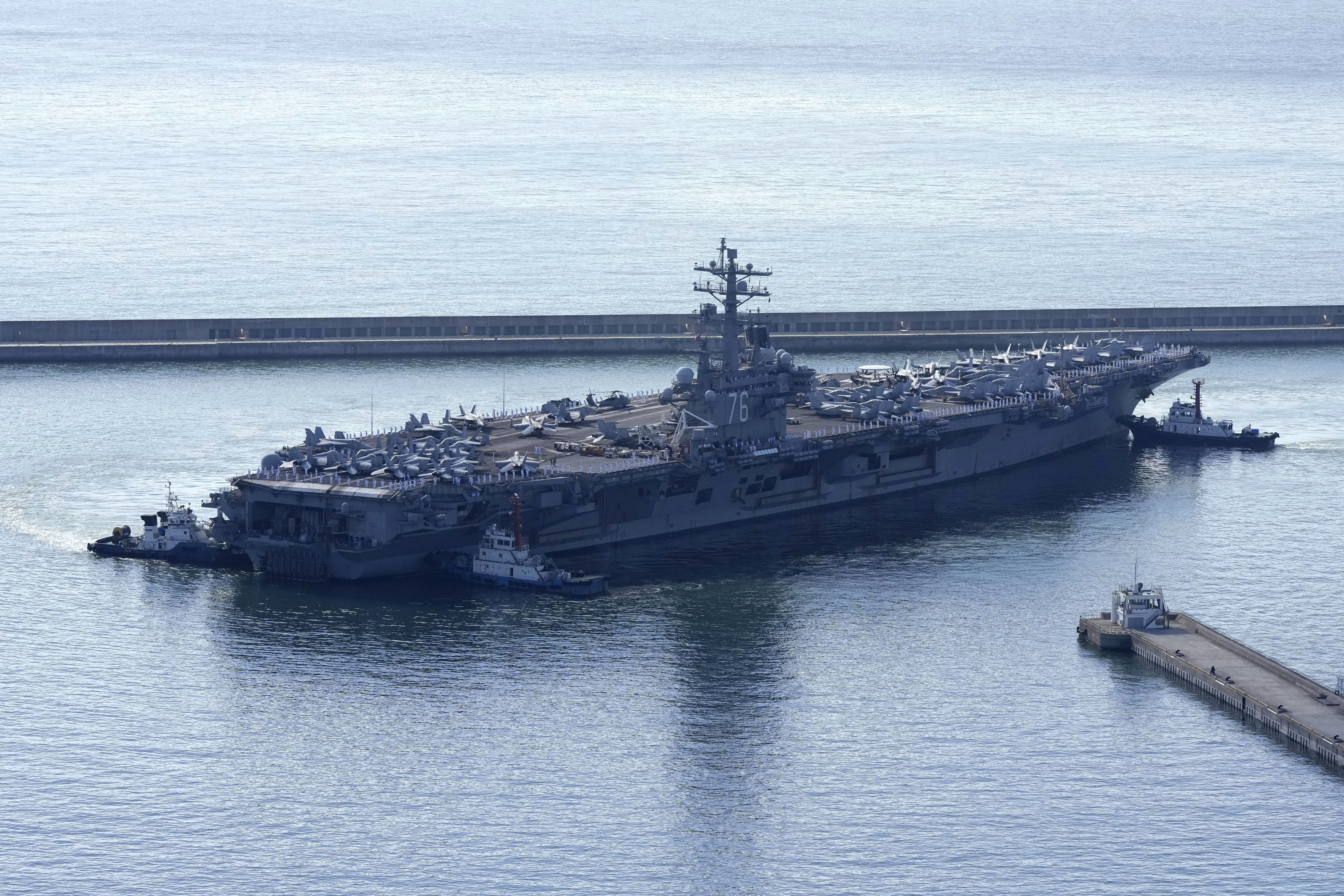
International leaders are now watching for signs of a further escalation such as a potential nuclear test, which would be the hermit nation's first in nearly five years – a move that would present US President Joe Biden with a new potential foreign policy crisis.

Here's what you need to know about North Korea's rush toward nuclear weapons and intercontinental missiles, why they're ramping up now and what, if anything, the US can do to counter Kim Jong Un.

First, some context

The testing itself isn't new. North Korea's weapons development program has been ongoing for years.

Tensions reached near-crisis levels in 2017 when North Korea launched 23 missiles throughout the year, including two over Japan, as well as conducting a nuclear test. The tests showcased weapons with enough power to put most of the world in range, including the country's first intercontinental ballistic missile (ICBM).
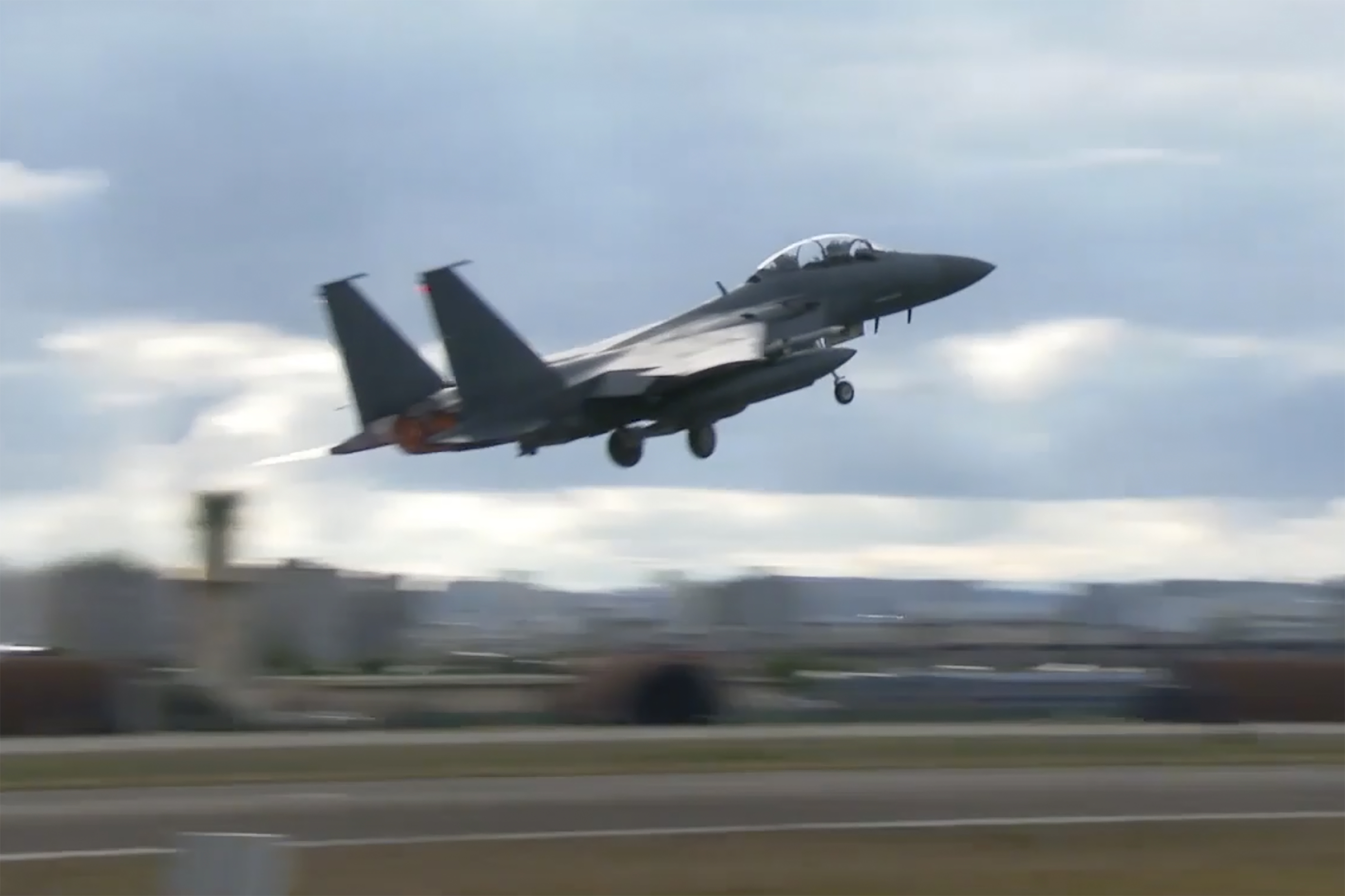
Relations thawed in 2018, when then-US President Donald Trump held a landmark summit with Kim. The two leaders "fell in love," Trump said; in return, Kim praised their "special" relationship. North Korea pledged to freeze missile launches and appeared to destroy several facilities at the nuclear test site, while the US suspended large-scale military exercises with South Korea and other regional allies.

But the talks ultimately fell apart, and hopes for a deal that would see the North curtail its nuclear ambitions dwindled by the end of Trump's term.

Then the Covid-19 pandemic hit, pushing North Korea further into isolation. The already-impoverished country sealed its borders entirely, with foreign diplomats and aid workers fleeing en masse. During this time, the number of missile launches also remained low — just four in 2020 and eight in 2021.

So why are they ramping up now?

Experts say there are a few reasons North Korea is accelerating its testing so rapidly now.

First, it could simply be the right time after the events of the last few years, with Kim declaring victory against Covid in August, and a new US administration in place that has focused on shows of unity with South Korea.

"They've been unable to test for quite a few years due to political considerations, so I'd expect North Korean engineers and generals to be very eager to make sure their toys are going to work well," said Andrei Lankov, a professor at South Korea's Kookmin University.
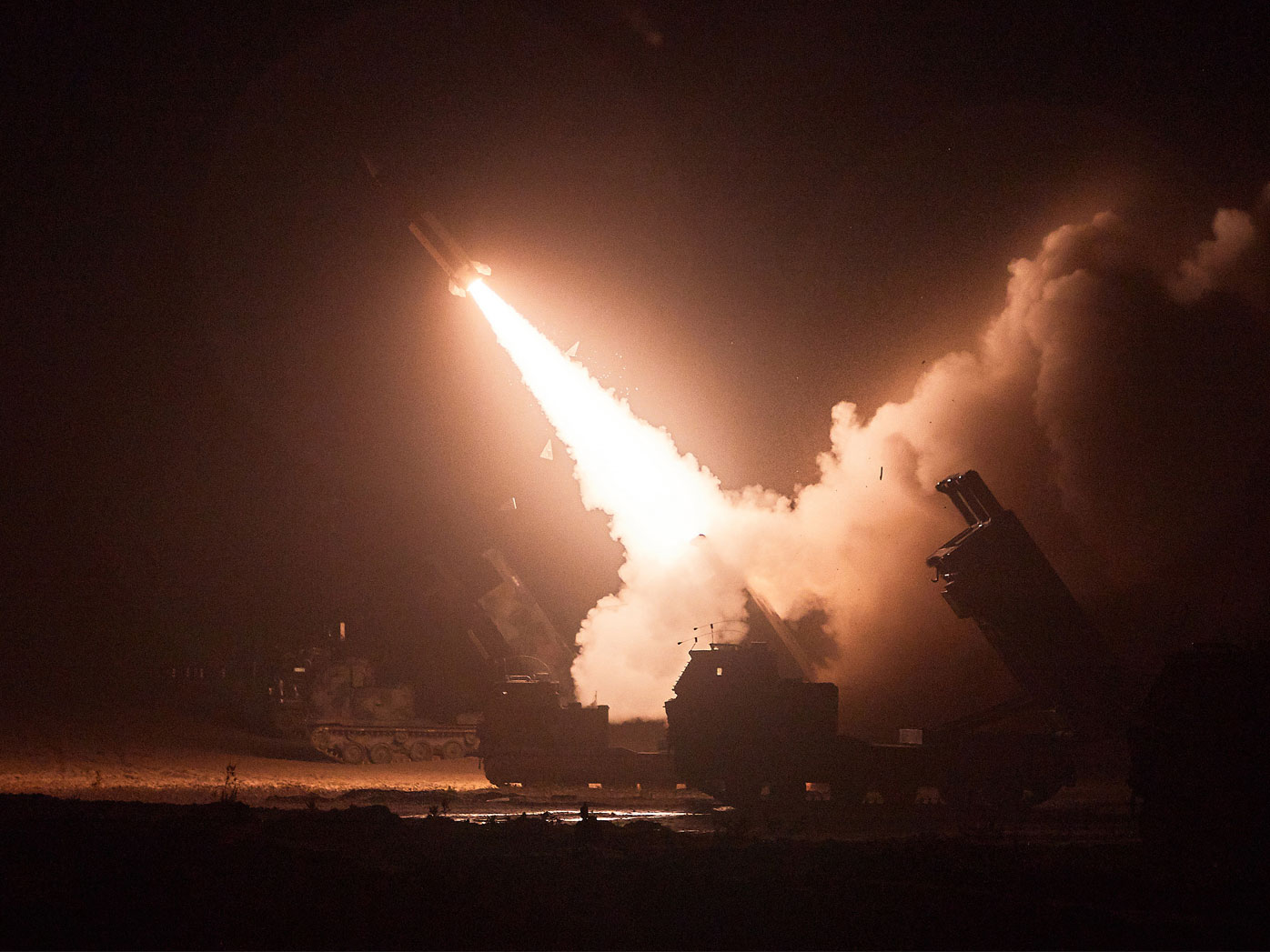
A missile is fired during a joint training between the United States and South Korea on June 6, 2022

Jeffrey Lewis, a weapons expert and professor at the Middlebury Institute of International Studies, said it's also normal for North Korea to pause testing during the stormy summer and resume once weather improved in the fall.

But, several experts said, Kim could also be sending a message by deliberately showcasing North Korea's arsenal during a period of heightened global conflict.

"They want to remind the world that they should not be ignored, that they exist and their engineers are working around the clock to develop both nuclear weapons and delivery systems," said Lankov.

Carl Schuster, a former director of operations at the US Pacific Command's Joint Intelligence Centre in Hawaii, echoed this sentiment. Kim "launches missiles to generate attention towards himself, but also to create pressure for Japan and the United States to engage him," he said.
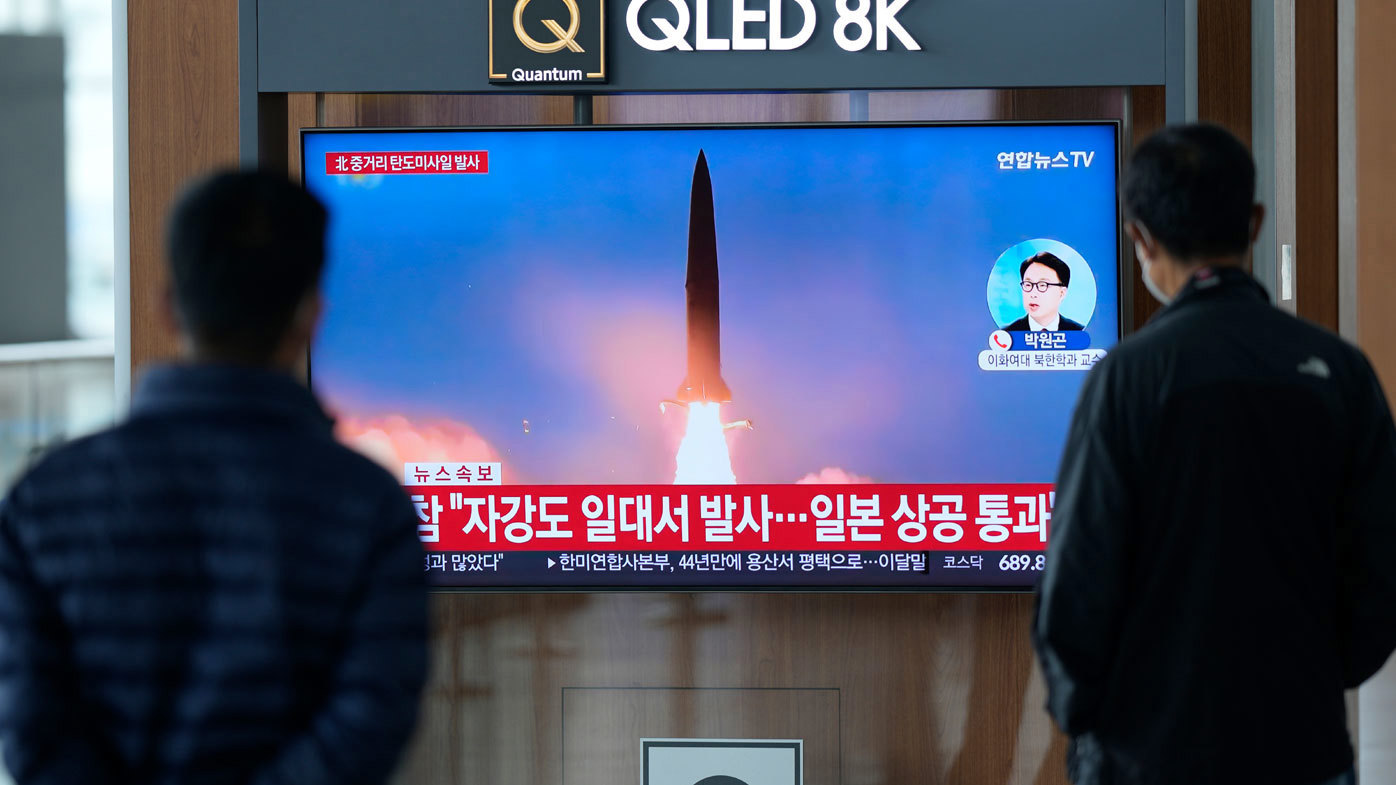
North Korea fired a short-range ballistic missile on Sunday toward its eastern seas, extending a provocative streak in weapons testing

He added that North Korea might also feel emboldened to act now while the West is distracted with the war in Ukraine.

"(The missile tests) started in January, which is about the time we were beginning to report on what Russian President Vladimir Putin was doing opposite Ukraine," said Schuster. "Kim Jong Un is doing what he thinks he can get away with — he's not expecting any kind of strong US reaction."

Lankov said that Russia's invasion of Ukraine may have also boosted Kim's confidence because "it demonstrated that if you have nuclear weapons, you can have almost impunity. And if you don't have nuclear weapons, you're in trouble."

What can the US and its allies do to stop North Korea?

Despite the US and its allies' quick military response this past week, experts say there's little they can do to stop or prepare for North Korea's weapons tests.

"The Americans sent the Ronald Reagan aircraft carrier. South Koreans are launching these missiles, which are not necessarily working well," said Lankov, referring to a South Korean missile on Wednesday that crashed right after launch. "What is the impact of all these American aircraft carriers cruising around Korea? Pretty much nothing."

Though these shows of force might serve to deter North Korea from "starting a war" – which likely isn't Kim's plan, anyway — it does little to prevent further weapons development or missile testing," he said.

"It'll probably make some people in the US and (South Korea) a bit happier, but it'll have zero impact on North Korea's behavior and decision making."

A lack of hard intelligence also means the US is largely left in the dark when it comes to Kim's plans.

The North lacks the widespread use of technology that not only facilitates economic and societal advances, but also provides critical windows and opportunities to glean information for the intelligence services of the US and its allies.

"Since so much of what North Korea does is driven by the leader himself, you really have to get inside his head, and that's a hard intelligence problem," said Chris Johnstone, a senior adviser at the Center for Strategic and International Studies.

And on the international stage, the US' efforts to punish North Korea have faltered due to pushback from Moscow and Beijing.

In May, Russia and China vetoed a US-drafted UN resolution to strengthen sanctions on North Korea for its weapons testing — the first time either country had blocked a sanction vote against the North since 2006.

What is North Korea trying to achieve?

Kim has spearheaded an aggressive weapons development program that far outstripped efforts by his father and grandfather, both former North Korean leaders – and experts say the country's nuclear program is at the heart of Kim's ambitions.

In September, North Korea passed a law declaring itself a nuclear weapons state, with Kim vowing to "never give up" nuclear weapons.

The law also demonstrated North Korea's hopes of strengthening its ties with China and Russia, said Yang Moo-jin, a professor at the University of North Korean Studies in Seoul.
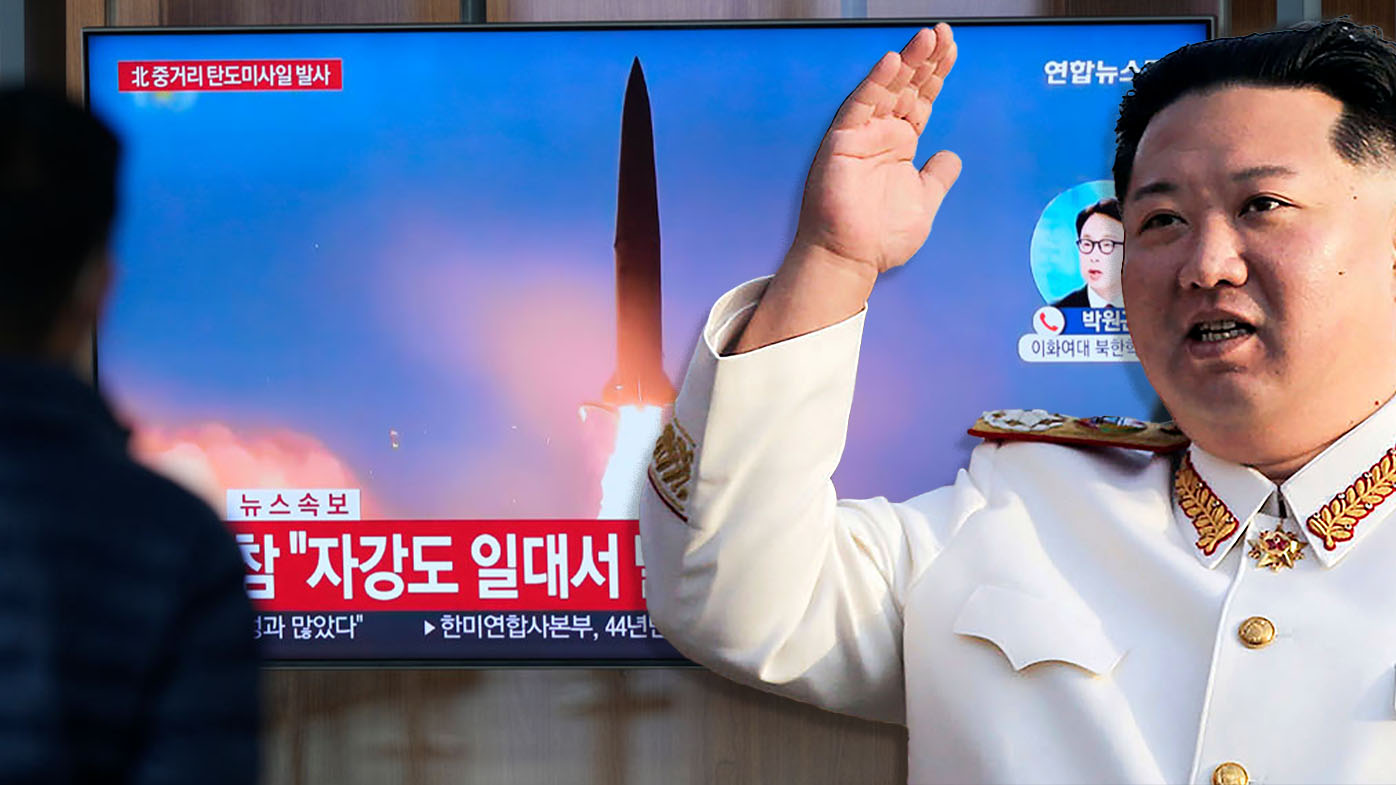
After China and Russia's open opposition to new sanctions against North Korea, Kim "knows he has their backing," said Schuster.

He added that Kim's weapons testing serves a dual purpose: apart from making a statement to the international community, it also boosts his own image domestically and cements the regime's power.

"It's a very paranoid regime — (Kim) is as worried about the people under him as he is worried about regime change from the outside," said Schuster. With the tests, Kim, is telling his own senior people, "We can deal with whatever the threat the West, the US and South Korea can come up with," he said.

However, in terms of wider public perception, KCNA, North Korea's state-run media, has made no mention of missile launches for months – since its last report of a launch in March.

Lewis, the expert at the Middlebury Institute, added that North Korea will likely continue developing weapons such as ICBMs and submarine-launched ballistic missile until "they get to a point where they're satisfied with that – then I think they'll probably express an interest in talking again."

Is a nuclear test coming?

The concern in the short-term is whether North Korea will launch a nuclear test, which Lewis said could come "anytime".

However, Schuster and Lankov both said that given the friendly relationship between North Korea and China, Kim might wait until after China holds its high-profile Communist Party Congress later this month – if it happens at all.

The meeting of the party elite is the most significant event on the Chinese political calendar – especially so this year, with Chinese leader Xi Jinping expected to be appointed to a third term in power, further cementing his status as the most powerful Chinese leader in decades.

Kim "depends too much on Chinese aid to keep his country afloat," meaning he can't afford to "do anything to detract from the Party Congress," said Schuster. "So although China can't dictate to him what he must do … he will not cause them problems."

After October, however, the runway is clear for any more significant weapons tests, said Lankov.

South Korean and US officials have been warning since May that North Korea may be preparing for a nuclear test, with satellite imagery showing activity at its underground nuclear test site.