Public Interest Journalism funded through NZ On Air When Ngahiwi Tomoana, along with other claimant whānau, took over the Wai 262 claim from Māori legal academic guru Moana Jackson, he had no idea this piece of legal Māori…
Tag Archives: oceania
Nine new community cases of monkeypox
The Ministry of Health has today confirmed nine new community cases of monkeypox, bringing the total confirmed cases to 20.Seven of the new cases are in Tāmaki Makaurau and two are in the Wellington region.The Health Ministry…
As light rain falls and doves fly, Bali bombing victims remembered
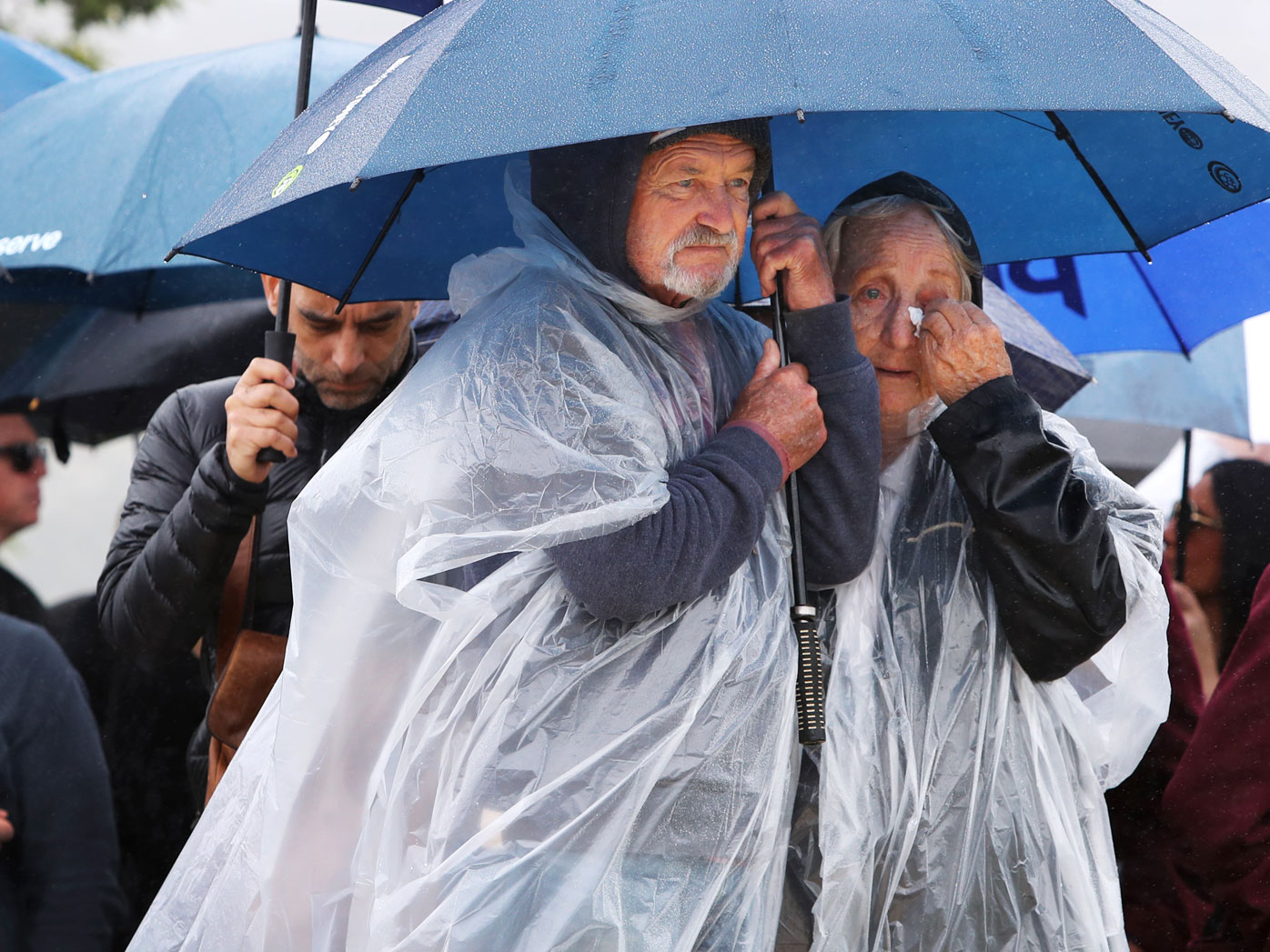
Several hundred make the walk up a winding footpath to a picturesque headland at the northern end of Coogee beach in Sydney.
There are mothers, fathers, wives and husbands, family, friends and team mates, and also strangers who just want to remember the 88 Australians senselessly killed in the Bali bombings, 20 years ago today.
With light rain falling from overcast skies, they meet at Dolphins Point, renamed in the aftermath of the bombings to commemorate the six members of the Coogee Dolphins rugby league club who died in the twin blasts.
READ MORE: Australian survivors, rescuers reflect on Bali Bombings 20 years on
It's a spectacular location, with commanding views out to the Pacific and down to Coogee's golden sands below.
Dean Hardman flew in today on a 5am flight from Brisbane to be there.
This 20-year milestone gives the day a slightly different feel, Hardman says.
He should know.
Every year, on October 12, he comes to Dolphins Point to mourn the death of his friend Shane Foley.
Foley was only 34 and he never made it home from Bali.
"It's making me thinking of how hard it was, 20 years ago," Hardman says.
Kurt Bahram from Maroubra, a few kilometres down the coast, tells a similar story.
He's there to honour old school friend Tom Singer, who at 17 was taken way too soon.
There's a tight-knit fabric to these coastal hamlets in Sydney's east, and Bahram has other connections which also bring him here.
"There's a few girls I know from Malabar whose mums got killed," he says.
It's a reminder of how interconnected we all are.
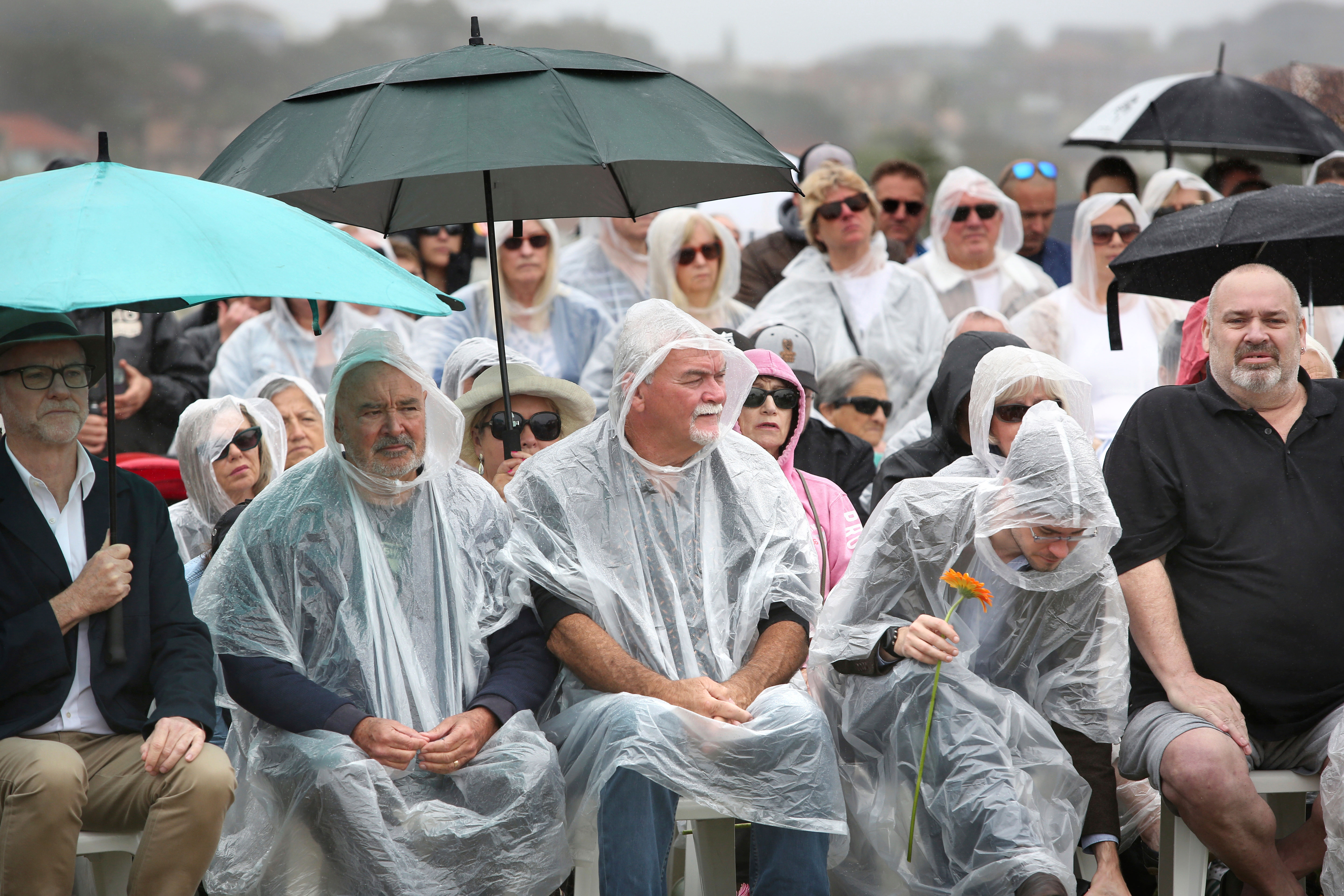
Young and old, they wander up the hill for a ceremony which lasts 90 minutes.
READ MORE: Man dies in floodwaters as towns warned of 72 hours of isolation
Mums and dads push babies in prams, a new generation who its hoped in the future will continue to mark this day and the 43 victims from New South Wales.
There's a police presence, albeit light, and officers dressed in formal wear also mill around.
It's clear there's a strong and loyal attendance from the Coogee Dolphins club.
Some proudly wear their club polos.
Many people hold a single, striking gerbera flower – coloured orange, red or yellow.
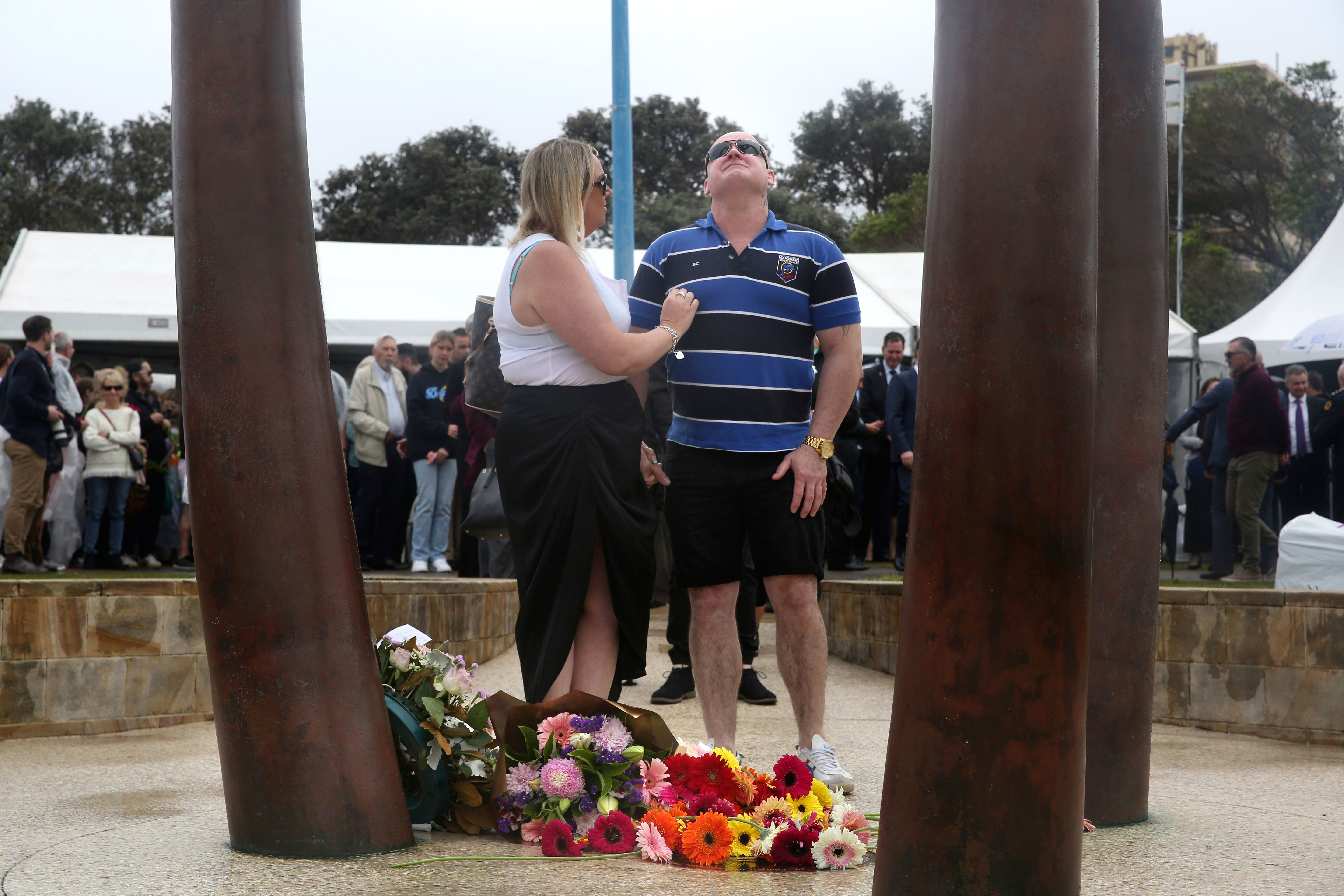
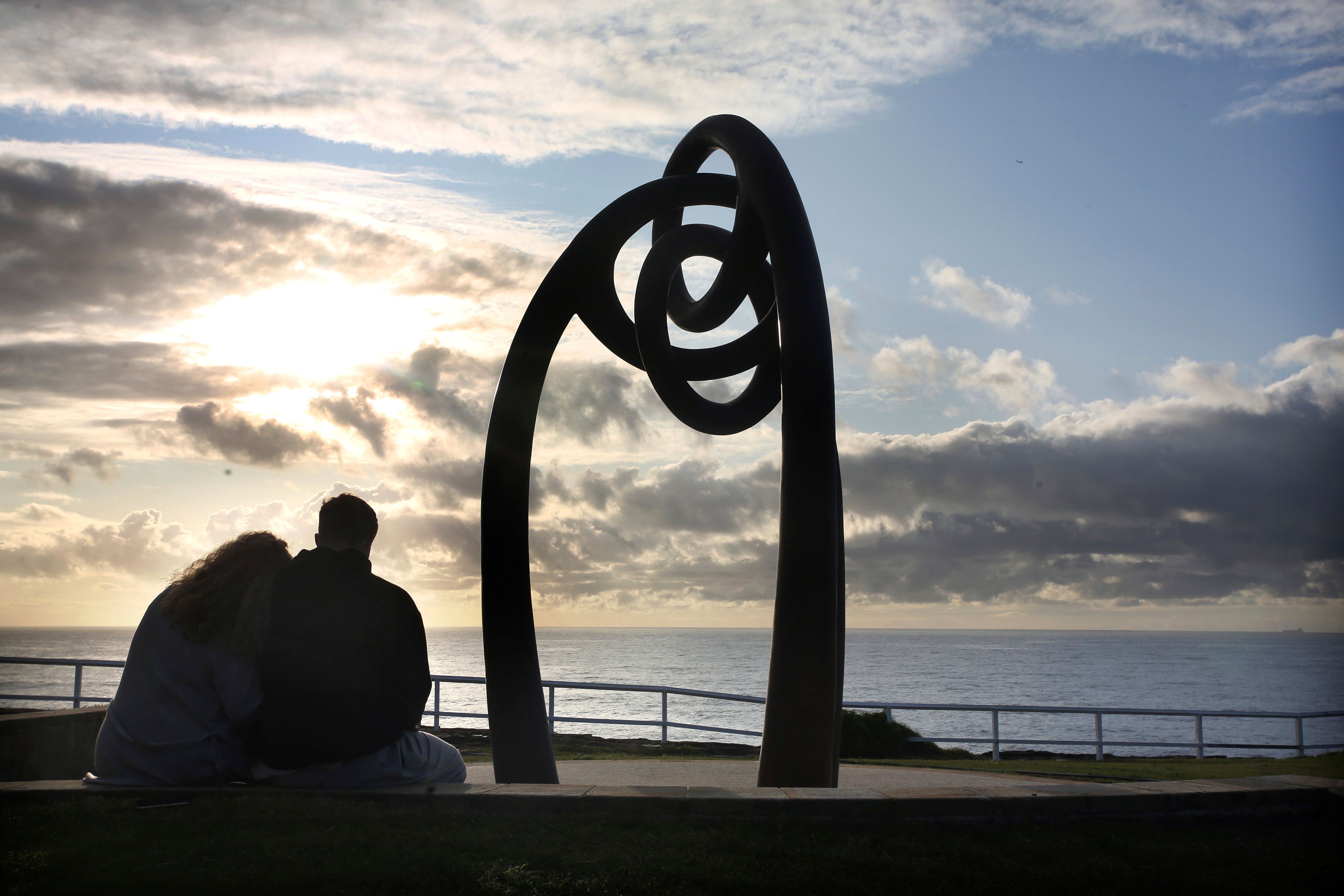
Later, the flowers will be laid inside a towering bronze sculpture on the point which twists up into the sky.
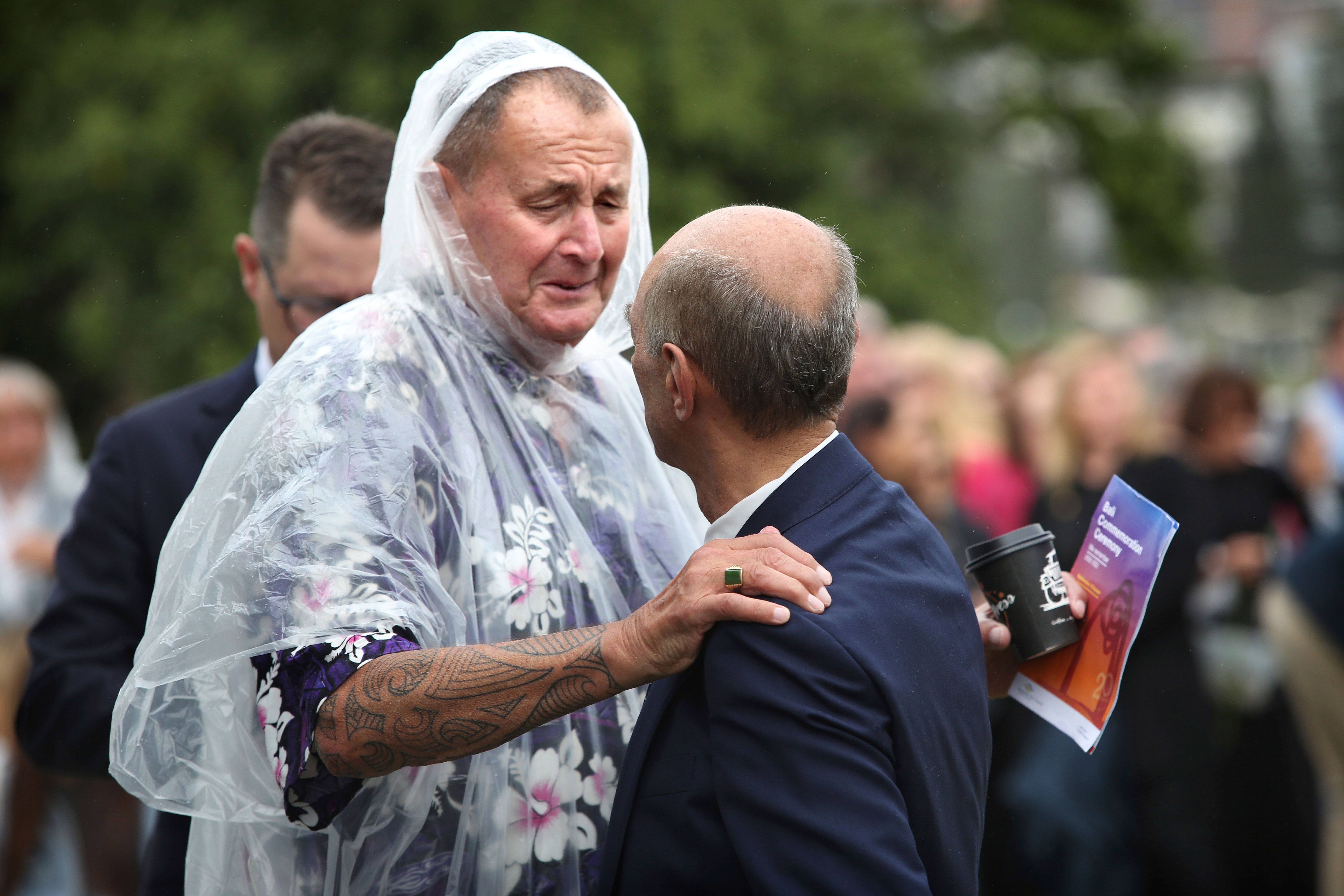
Before the ceremony starts, old friends reunite and embrace.
Faces light up as people recognise one another.
It might have been one year, for some longer.
READ MORE: Five minutes of evil: How Bali bombings horror unfolded
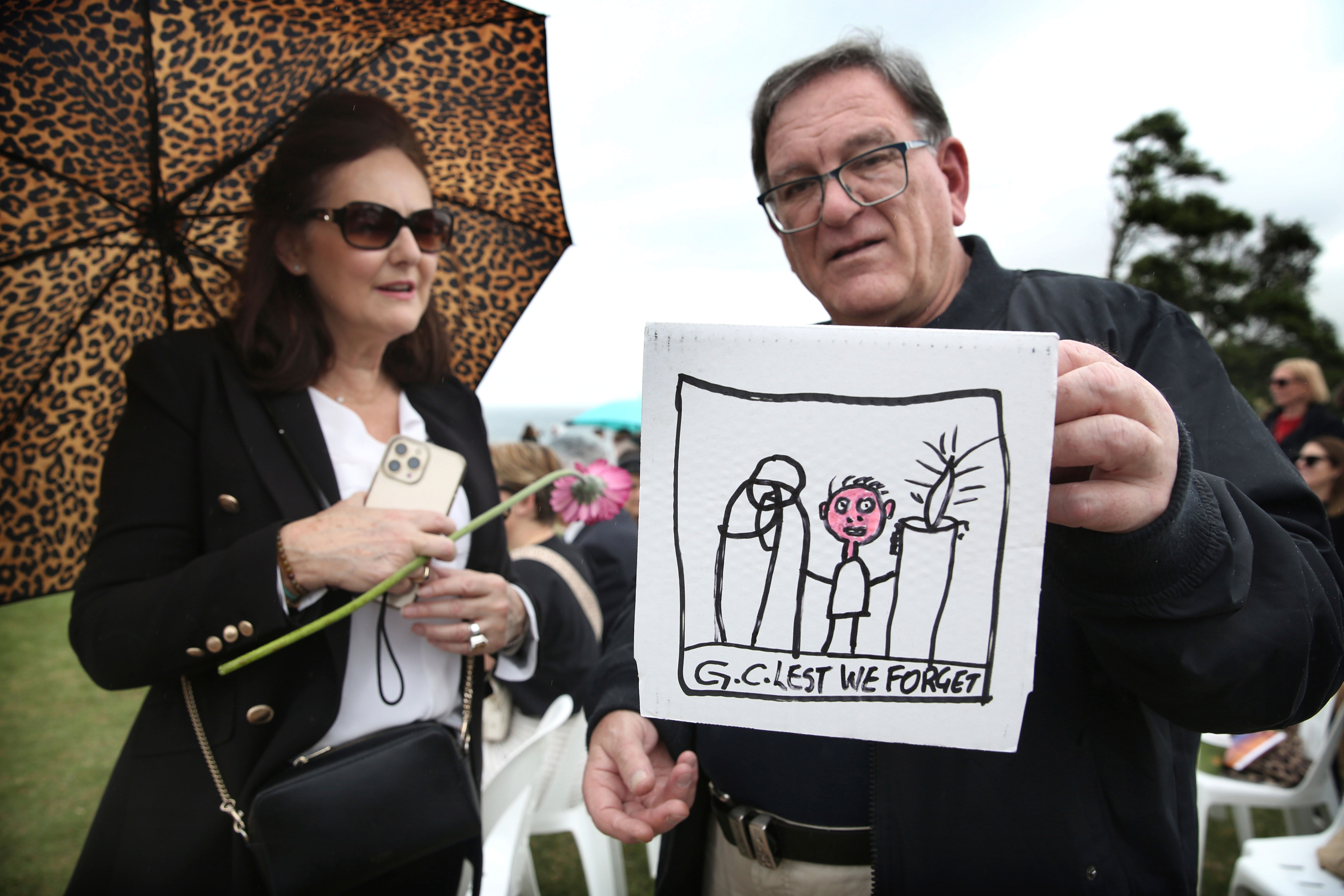
Powderfinger's These Days plays discreetly on a speaker system; people talk about catching up later for a quiet beer at iconic pubs around the beach.
Amongst the sadness, the sense of coming together is strong. A worker on-site whispers to her colleague there's a lot more people today than other years.
Local, state and federal politicians show up.
Prime Minister Anthony Albanese and NSW Premier Dominic Perrottet give brief speeches.
Albanese talks about that horrible night in Kuta, where "a sudden terrible light was followed by a sudden terrible darkness".
Opposition leader Peter Dutton doesn't make a speech, but he's there in solidarity, sat next to Albanese and Perrottet.
Representatives from the Indonesian consulate sit one row back.
The morning gets emotional when some surviving family members get up to speak.
There's still a rawness to their stories, their reality.
They share memories of searching for missing loved ones, and the dreaded call home to reveal that the situation looks bleak.
But there is also hope and learning in the words of those who have lost.
A mother describes how she manages unimaginable grief.
It's the simple things, she says, like warm hugs, walking her dog, sewing, singing and swimming.
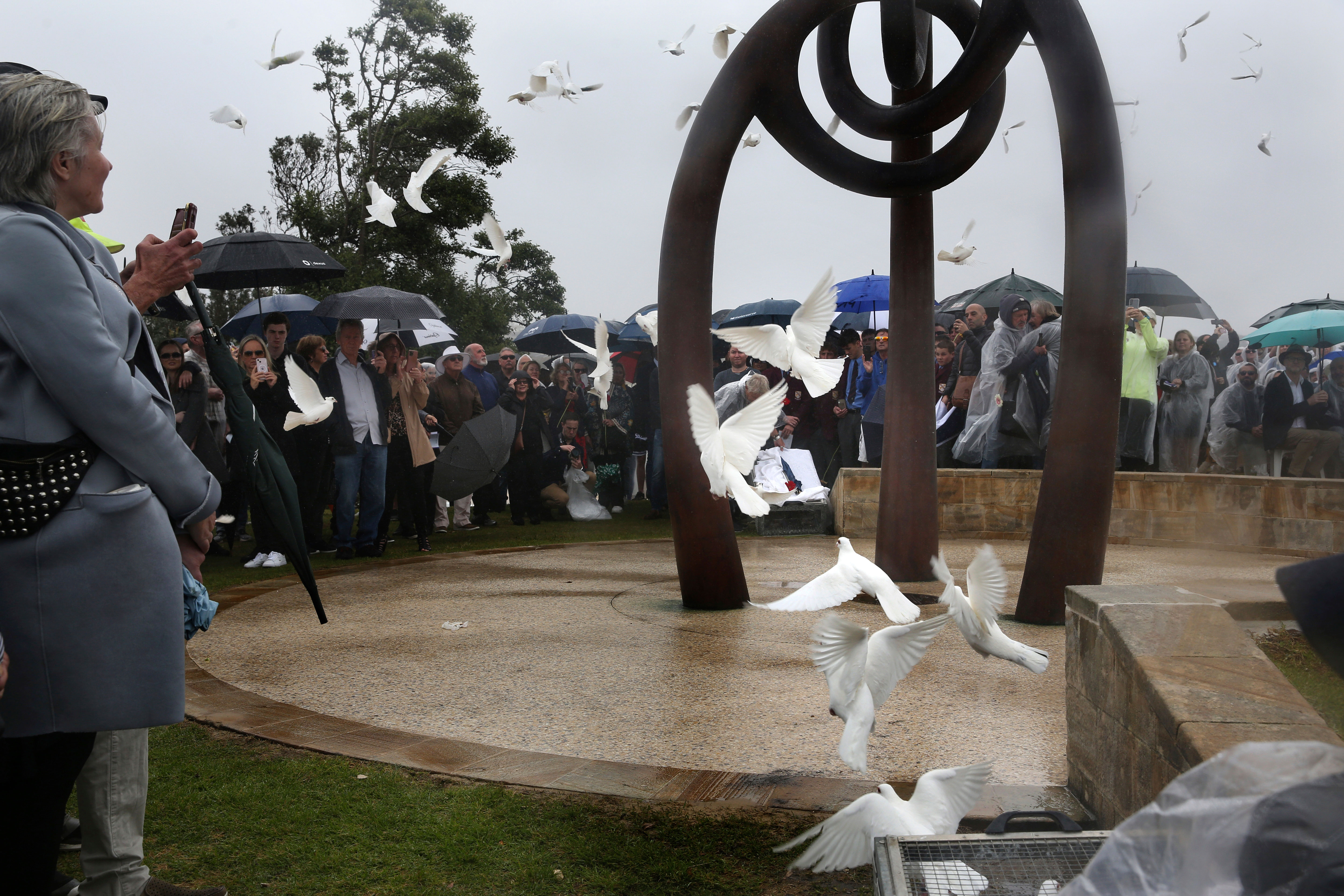
Near the end, the names of those killed are solemnly read out.
When that's done, there is a one-minute silence. Some cry quietly.
The flapping wings of 88 white doves, who soar into grey skies, breaks the silence.
Then, perhaps, the most intimate moments of the morning.
People line up to lay their single gerbera flower under the bronze sculpture.
Flower laid, there's a pause.
Some look to the sky, others reach out to touch or hold the sculpture.
Sometimes there are tears and hugs underneath the winding bronze sculpture, which represents three linked figures; family, friends and community.
Entwined, the figures support and protect each other.
On its own, each figure would topple. Together, they are strong.
Government immigration announcement sees skilled migrant, parent categories reopen
The Government is opening up two more categories for migrants to become residents as it seeks to reconnect with the world after the pandemic and fill major workforce shortages. Immigration Minister Michael Wood has announced today…
Experts sound alarm over native animals as flooding crisis endures
Wildlife rescuers are urging motorists in flood-affected areas to take care on the roads as displaced, disoriented native animals flee their homes.
It comes as vision, shot last week, shows a wombat desperately trying to dig its way into a flooded burrow, as a monster storm system bore down on NSW.
This week Victoria and Tasmania are in the firing line as yet another low pressure system looms.
WIRES said burrowing animals such as wombats, snakes and echidnas are amongst the worst affected when the heavens open.
READ MORE: Survivors, rescuers and victims' loved ones reflect on Bali Bombings
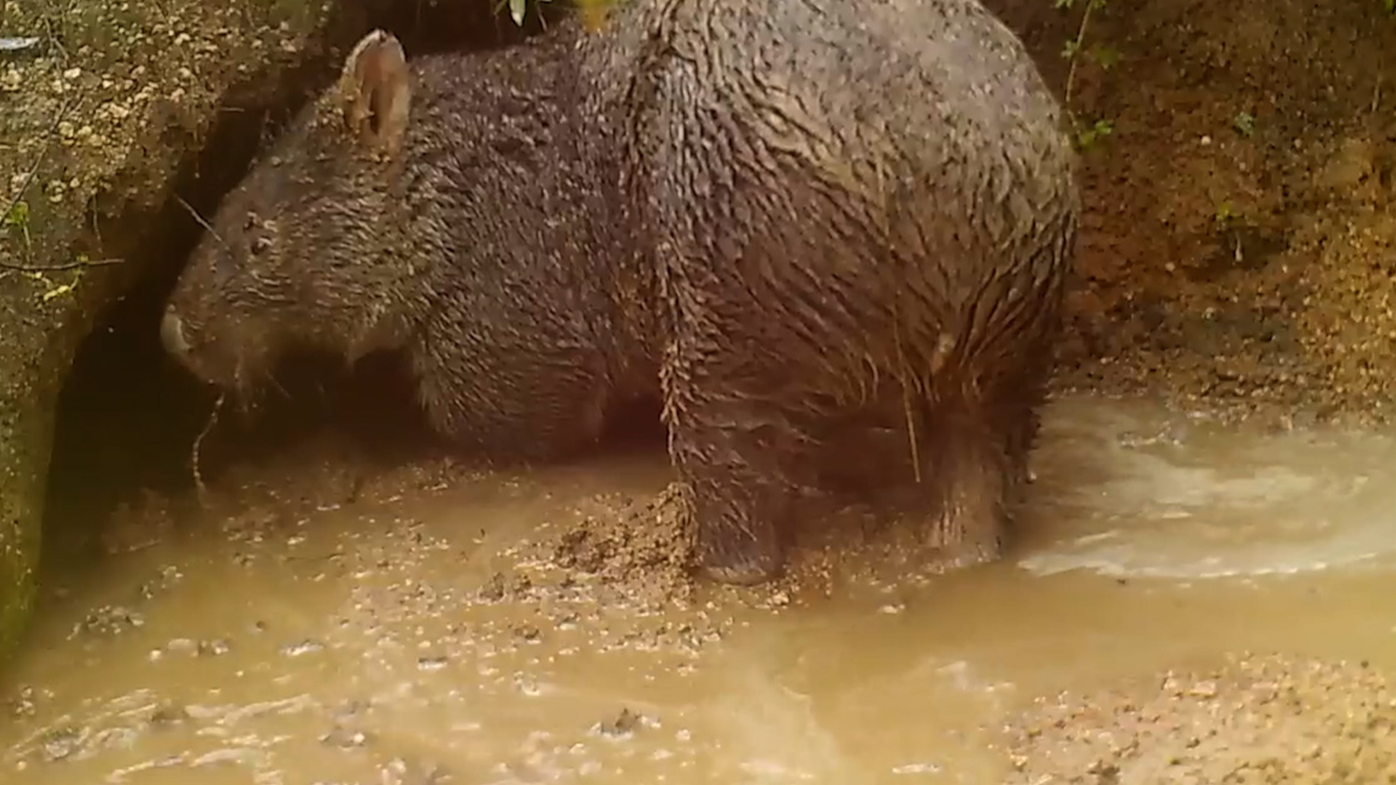
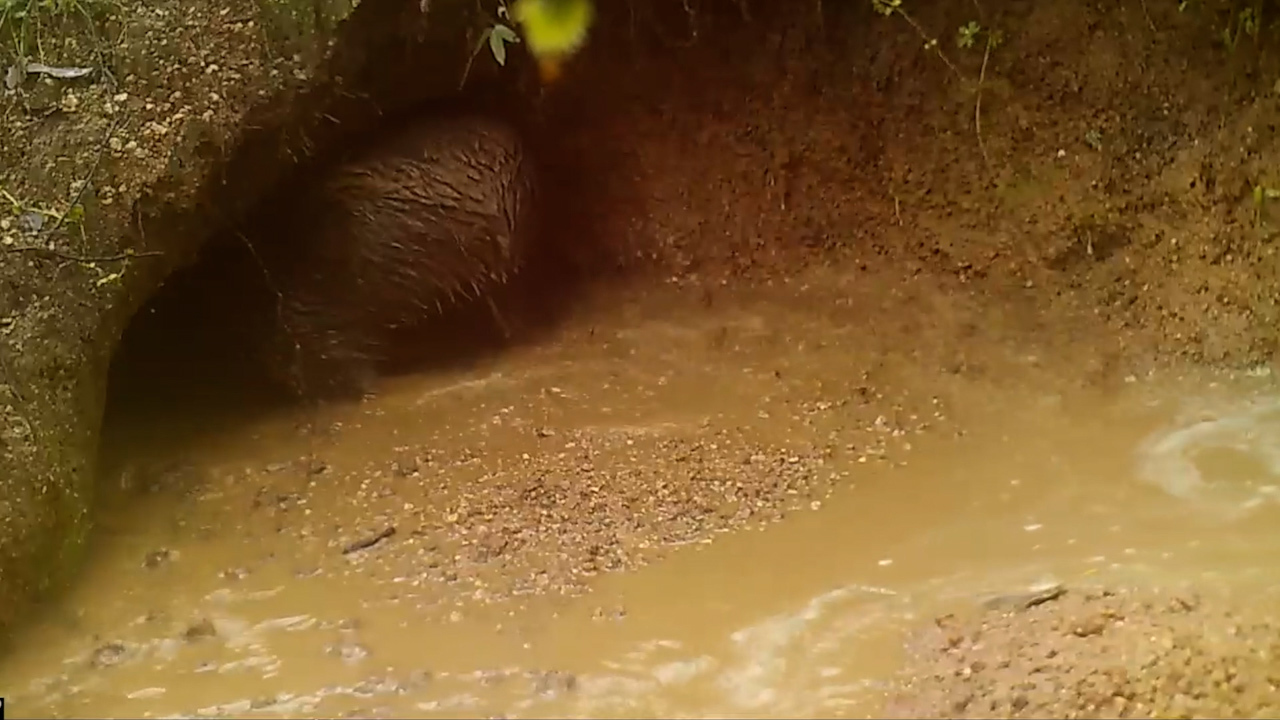
"(They) become disoriented when seeking higher ground and so very susceptible to car strikes along with other marsupials and reptiles escaping rising flood waters," a spokesperson said.
"WIRES asks motorists to please be extra careful about wildlife on the roads in flood areas and between dusk and dawn when nocturnal native wildlife is most active."
The wildlife rescue organization added that it's impossible to estimate how many native animals have died or been displaced by the floods as the wet weather has not let up for months.
But one species in particular is having an extremely rough go of it.
A fatal combination of diseases such as mange, floods, habitat loss, and the Black Summer bushfires have taken a toll on wombat numbers nationwide.
READ MORE: Man dies in floodwaters as towns warned of 72 hours of isolation
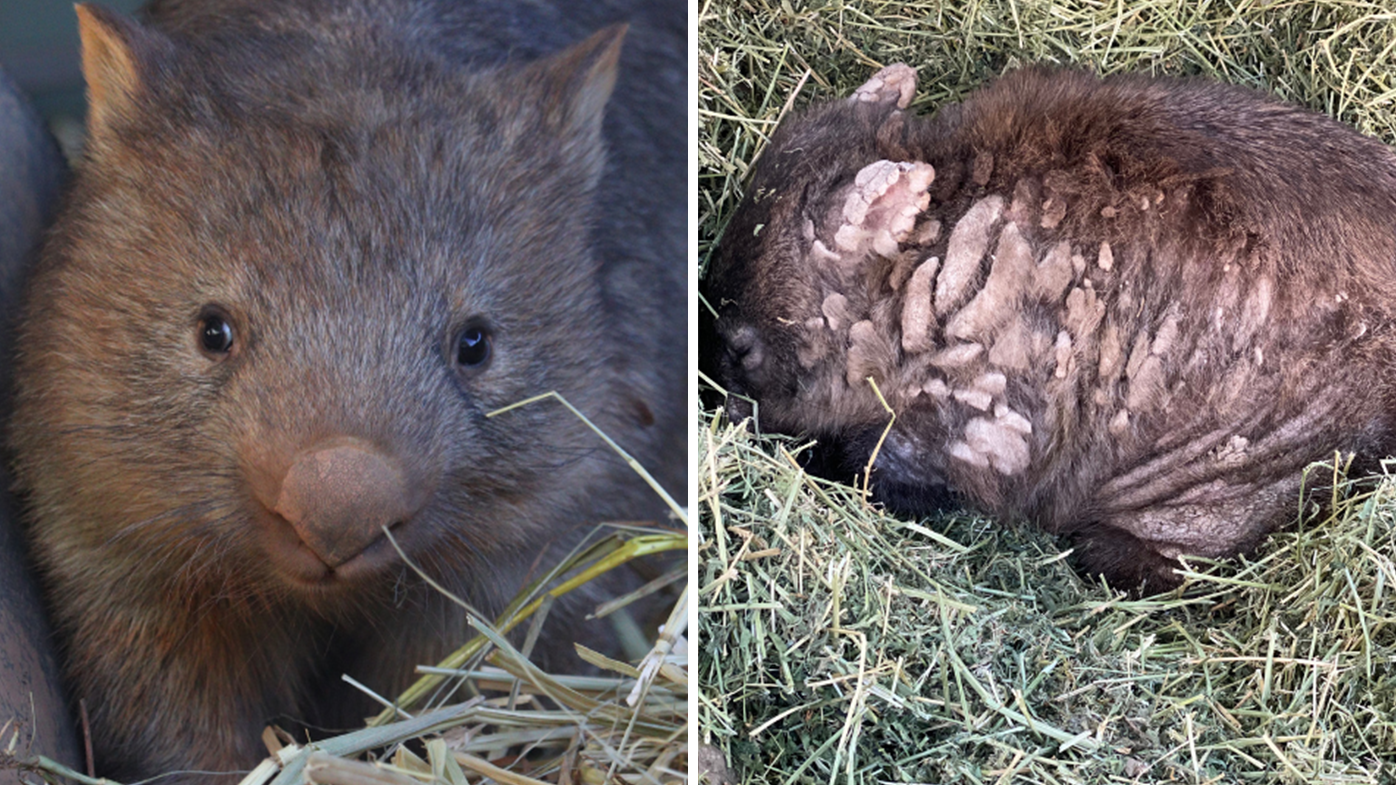
The appeal to motorists comes as WIRES attempts to tackle the spread of the deadly disease mange, which is believed to affect 90 per cent of the population.
This highly contagious skin condition is caused by mites and causes itchy sores over a wombat's body, leading to fur loss and eventual blindness.
"Those suffering from more severe cases of mange may often be seen out during the day due to crusty skin around the eyes impairing their vision," a spokesperson explained, adding this leads to more encounters along roadways.
There are two ways to treat the disease, the first sees a topical treatment directly poured onto a wombat. The second involves placing specially designed treatment releasing devices over burrows and tracks.
Australia has three species of wombat and WIRES claims all are "disappearing".
READ MORE: Five minutes of evil: How Bali bombings horror unfolded
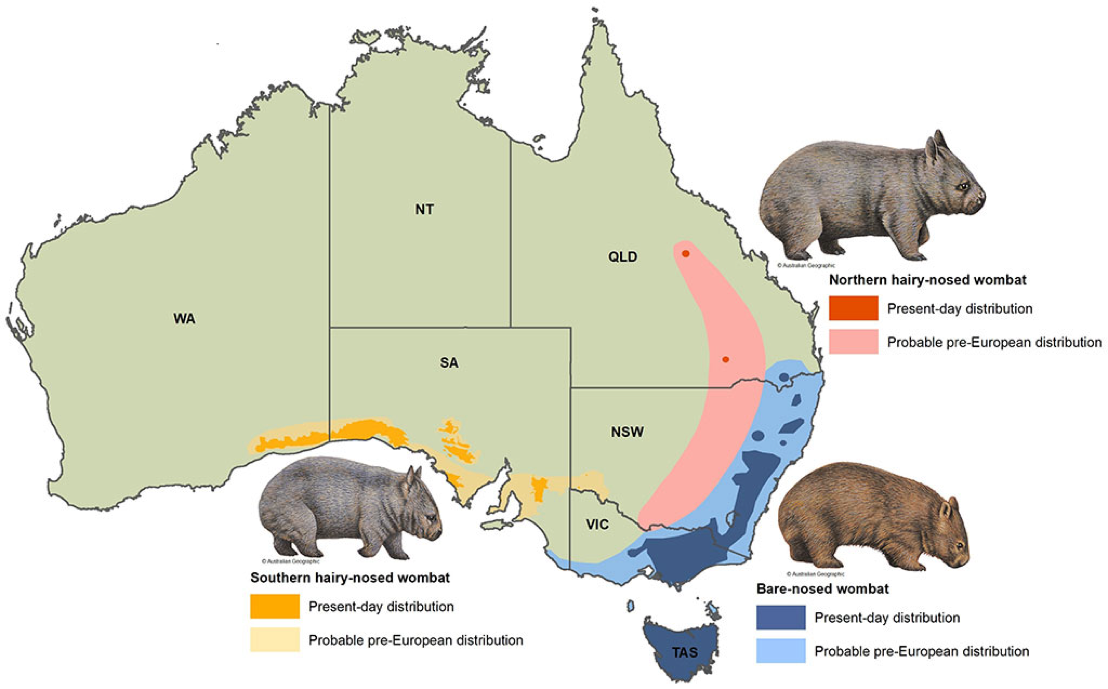
The rarest, the Northern Hairy-nosed wombat, is deemed Critically Endangered by the International Union for the Conservation of Nature (IUCN) red-list of Threatened Species.
It is presumed extinct in NSW.
READ MORE: Actress Angela Lansbury dies aged 96
The Southern Hairy-nosed wombat is endangered in NSW and as such is deemed Near Threatened.
And the Bare-nosed wombat, also known as the Common wombat, is becoming less common due to habitat shrinkage.
'It didn't divide us': PM commemorates Bali bombings
Prime Minister Anthony Albanese has paid tribute to the victims of the Bali bombings on the 20th anniversary of the incomprehensible terror attack, saying its impact is still felt just as deeply as it was two decades ago.
On October 12, 2002, Australia suffered its largest loss of life from a single terrorist attack when two bombs went off in the party district of Kuta in Bali.
There were 202 people killed, including 88 Australians.
READ MORE: Australian survivors, rescuers and victims' loved ones reflect on Bali Bombings 20 years on

Speaking to Today from a memorial service at Coogee in Sydney's east, Albanese said it was a solemn day for Australia.
While the bombings shocked and devastated the nation, ultimately the Jemaah Islamiyah terrorists – who aimed to pit peoples and nations against each other – did not win, Albanese said.
"It didn't divide the country, it united the country," Albanese said.
"And today we, again, take this commemoration to offer our condolences to once again unite against terror and to pay our respect to the victims of it."
Australia lost some of its innocence as a result of the bombings and it would forever change how we perceived the world.
READ MORE: 'Harrowing': Aussie football club which lost seven players in the Bali bombing

"The impact is just as deep today as it was 20 years ago," he said.
"It made us much more conscious about the fact that we need to be vigilant against those who would cause us harm and attack our way of life.
"It was a tragic and devastating reminder that innocent people could be victims to this obscene ideology."
The location of the attack, one of the most popular tourist destinations for Australians, made it all the more shocking, the prime minister said.
"It occurred in a holiday destination. It wasn't a war zone. And the fact that it was planned so meticulously I think is something that is still shocking today that people could sit down and plan to cause such devastation."
READ MORE: A plot to inflict as much pain and catastrophe as possible
Like many of other members of parliament, Albanese said he and his office spent the aftermath of the attack fielding calls from family members desperately seeking information about their loved ones in Bali.
Albanese paid tribute to the men and women, as well as the medical fraternity, who courageously stepped up to help.
"Australians are resilient people and today is a commemoration and also a reminder of the strength that we showed in the days and months afterwards," Albanese said.
"The extraordinary heroism of people in the medical fraternity in Darwin, in Perth, doing those skin grafts on to the burn victims of these bombings.
"The people who ran towards danger to try to assist those who'd been impacted by this horrific act, the incredible acts of bravery and the fact that Australia and Indonesia came together and, indeed, the whole world came together to condemn this."
READ MORE: Jemaah Islamiyah gathering strength 20 years after Bali bombings
'Harrowing': Aussie football club which lost seven in Bali bombings
Perth's Kingsley Football club will forever be linked to the Bali Bombings – where seven of their players lost their lives on an end-of-season trip.
The Kats held a special 'tribute match' last week- inviting back former players, families, and friends – to mark 20 years since the terror attack.
A total of 202 people were killed, including 16 from West Australia.
You won't see the number seven at the club as it was retired after the players were killed.
BALI BOMBINGS TIMELINE: A plot to inflict as much pain and catastrophe as possible

They were inside the Sari Club when the second bomb went off.
Brad McIlroy was the youngest survivor. He was 19 at the time.
"It was all pretty harrowing, we were lucky to be over there as a group that we could lean on each other," he said.
READ MORE: Australian survivors, rescuers and victims' loved ones reflect on Bali Bombings 20 years on

"I don't know how I would have handled it, I wouldn't have been able to handle it if i was on my own.
"It became our identity for a long time it and it was hard to shake."
A week later Kingsley's home ground is where Perth went to grieve.
McIlroy addressed the crowd of thousands.
He reflected on the "incredible," event, which was broadcast around the world.
READ MORE: Jemaah Islamiyah gathering strength 20 years after Bali bombings

Fundraising later helped build the memorial clubrooms, where the seven who lost their lives are immortalised on the wall, alongside two of the survivors who have since passed away.
One photo shows Phil Britton, the team's gutsy ruck rover and the moment he escaped the inferno by climbing the Sari Club's back wall.
When the image was published, he was still listed as missing, but he survived.
McIlroy said Britton was recognised by his Nana.


"That was Phil's last opportunity to get out with his life," he said.
Every new batch of juniors are told about Kingsley's history, and how 20 players and officials travelled to Bali, and 13 came home.
It has also impressed upon young men to deal with their issues by talking and leaning on each other.
Survivors, rescuers and families reflect on Bali Bombings 20 years on
On October 12, 2002, three bombs were detonated in two busy nightspots in Bali, killing 202 people, 88 of whom were Australian. It was the single largest loss of Australian life due to an act of terror.
There were tales of great heroism and remarkable acts of courage as Australians converged in Indonesia to help the injured, investigate the attack and remember those lost.
From heartwrenching survival stories to life-saving medical innovations, here's how those involved are looking back 20 years after the Bali Bombings, as told to 9News, 60 Minutes and A Current Affair.
READ MORE: How Bali Bombings police operation has prevented more attacks
BALI BOMBINGS TIMELINE: A plot to inflict as much pain and catastrophe as possible

Survivors
'The start of the rest of my life'
Therese Fox bravely fought through devastating burns to 85 per cent of her body, hundreds of skin grafts, life-threatening infections and agonising physiotherapy.
It took nearly a year in hospital but she defied the expectations of doctors and herself to survive, only to be confronted with unrelenting survivor's guilt.
Two decades on, she is still haunted by the loss of her good friend Bronwyn Cartwright and dozens of others.
"I could go through my burns a hundred times over. The guilt of survival is the hardest thing to live with," Fox said, before breaking down in the face of the overwhelming emotion of her first return to Bali.
Read Therese Fox's story here

Survivor speaks for first time about attack that killed her mother
Ashleigh Airlie was just 14 when her mother, Gayle, was killed in the terror attack.
Four other mums were holidaying with their teenage daughters but the teens survived thanks to being at the back of the Sari Club, where the second bomb went off.
It was just two days before Ashleigh's 15th birthday when the car bomb detonated outside, burying her under the collapsing roof and leaving her grasping for strangers' legs to make it out to the street.
"When I think about it, that's the last place I had a good time with my mum," Ashleigh, now 34, told 9News.
"It was the last place we had fun and she was having the time of her life."
Read Ashleigh Airlie's story here

How a bedside interview made Peter the face of tragedy
A hospital bedside TV interview turned Peter Hughes into the face of the tragedy for many but left him feeling "a little bit embarrassed about it all".
"I was dying at the time and I knew that," he said, describing the interview as a chance to show his son Leigh that he was ok, even though he knew he wasn't.
"I was just hanging on back then."
Swollen and barely able to breathe from his burns, Hughes seemed unconcerned by his injuries. Four days later he slipped into a coma with burns to more than half his body.
Two decades on, his skin grafts still niggle and the mental demons come and go but he returns to Bali several times a year.

Survivor gave himself last rites as ruins smouldered around him
Andrew Csabi, critically injured and close to death, gave himself the last rites as he lay on the street outside the smouldering ruins of the Sari Club.
"I looked down, I said, 'my leg's blown off' and I couldn't believe it," he said.
"I laid there quietly and I issued myself last rights."
Read Andrew Csabi's story here
Nicole and Natalie's remarkable friendship and bravery
Nicole McLean and Natalie Goold were just 23 when the bombs went off. McLean lost her right arm and suffered horrific leg injuries and Goold fought so heroically to save her friend's life that she became one of only four people awarded the Star of Courage medal in the Bali honours list.
"She was just a force to be reckoned with. She knew where we had to go, where we had to be, and she wasn't leaving my side," McLean said.
"She was ripping people's t-shirts off them and shoving them in my leg to stop the blood."
Read Nicole and Natalie's story here

Rescuers
AFP officer recounts horrific aftermath
Australian Federal Police commander Glen McEwen remembers the lines of cars. The smoke, the fire, and the skeletons.
He was in Bali on another mission when he was called to the bombings, to the chaos and heartbreak of ground zero.
"I just can't even explain how a skeleton would remain, with no skin on it, still holding on the steering wheel with smoke coming from its head, considering the blast," he said.
Then came the conversations with the families. The unthinkable admission authorities could not be certain the body in front of them had once been their loved one.
"It was a makeshift morgue. There was still people being found, but there was a number of body bags, and members of the public, family, opening the body bags trying to identify their loved ones," McEwen said.
"And unfortunately, there were some bodies initially released that didn't belong to that particular family."
Watch Glen McEwen's story here
Saving lives on a fire station floor
Australian Air Force doctor Squadron Leader Steve Cook was told his mission would be relatively simple.
He boarded a Hercules C130 from Darwin expecting to retrieve five people injured by a gas cylinder explosion but arrived at Denpasar Airport to pure chaos.
He set up a makeshift hospital under a hangar on the tarmac, operating on the fire station floor.
"It was just crazy. You open up the back of the utility and there's this badly burned patient with shrapnel injuries, and they had almost no treatment,' Cook said.
"I just thought, 'oh my God, what is happening here?'"
Survivor's heartwarming reunion with medic who saved her life
Cook knew one of his first patients was "tantalisingly" close to home when he had to give her the bad news.
Nicole McLean had survived the horror of the Sari Club and made it onto an RAAF jet that could get her back to Australia within hours.
Cook was relieved to see she wasn't burned but then noticed her arm didn't have a pulse. It was turning black and swelling, and Cook worried she would die of infection or toxins spreading throughout her body if he didn't operate right there on the tarmac.
"I had to say to her 'look, you've gotta actually, we've gotta take you off and gotta operate on you, otherwise, you're gonna lose your arm, or you might die'," Cook recounted, as the pair reunited for the first time in nearly 20 years.
"And you think even to a hardened soldier, that would be a difficult conversation. And I'm looking at a 20-year-old woman on holidays in Bali."
See the story of Cook and Nicole McLean's reunion here
Victims' loved ones
Grieving parents' mission to honour dead sons
Fathers David Dunn and Robert Lewis made a mercy dash to Bali from Ulladulla on the NSW south coast, hoping to find their holidaying sons.
Eventually, the bodies of Craig Dunn and Danny Lewis were found.
To honour their memories, the two families raised money to build the Dunn Lewis Memorial Youth Centre in the small fishing town.
"We've got on with life, but it still hurts every day," Lewis said.
"It's still raw, as raw as can be. I think about it all the time. What could have been. Danno would've been a great dad."
See David and Robert's story here

The footy club that lost seven lives on end-of-year trip
It was meant to be a party, an end-of-season footy trip for the young men of Perth's Kingsley Football Club.
Instead, the trip will be forever membered for the carnage it caused: seven young footballers' lives snatched away as they revelled at the Sari Club.
Twenty years later, beyond the mental and physical scars, what's left is a tribute to those players: memorial clubrooms, a tribute match, and No.7 guernsey never to be worn again.
Brad McIlroy, the youngest survivor, was just 19 at the time.
"It was all pretty harrowing, we were lucky to be over there as a group that we could lean on each other," he said.
"I don't know how I would have handled it, I wouldn't have been able to handle it if I was on my own.
"It became our identity for a long time it and it was hard to shake."
Read the Kingsley Football Club's story here
Telling the story
"Connecting with people is what I love most about my job," said 9News' Sydney 6pm presenter, Peter Overton.
"Whether it's the audience when I'm broadcasting the six o'clock news or sitting down in front of someone to interview them for 60 Minutes …
"Twenty years ago, I met and interviewed Bali bombing survivors Nicole McLean, Natalie Goold, Peter Hughes and Andrew Csabi.
"They'd only just survived the horrifying terrorist attack so their injuries and stories of fear and resilience were raw and emotional.
"During those interviews we all became friends. I first saw Peter with burns to 55 per cent of his body just four days after the bombings. He was wrapped in gauze, lying in a coma in Royal Adelaide Hospital. His burns surgeon, Dr John Greenwood, held grave concerns for the Perth roof tiler.
"Months later when I first got to speak to him, he knew it was a miracle he survived.
"I met Nicole, Natalie and Andrew when, along with Peter, we went back to Bali six months after the attack. Their injuries were painfully obvious.
"By then, Nicole had undergone a full amputation of her right arm and Andy had lost his left leg to just above the knee and half his right foot.
"During that trip, I only started to understand the struggle Natalie suffered trying to save the life of her best friend, Nicole. And it was the first time I witnessed the deep friendship between Andy and his mates who were also in the Sari Club that night, Glen Forster and Glen Cosman."
Read Peter Overton's reflections here

Leading the nation
John Howard was prime minister on the day of the Bali bombings and has recalled the moment he found out about the "brutal, unjustified murder".
"I sensed from the very beginning it would be a high death toll," he said.
"The last thing somebody wants is a prime minister who can't control his emotions. But the last thing they want is a prime minister who doesn't have any emotions and you've got to mix the two," he said.
"The other thing that went through my mind is, 'what could I say to the parents, the girlfriends, boyfriends, husbands, wives, parents?' What could I say?"
He also recalled questioning his own adequacy at expressing the feeling of grief as Australia's prime minister.
"I did my best; I'm sure it wasn't adequate. It never is in those circumstances," he said.
Read John Howard's reflections here

Bali bombings: A plot to inflict as much catastrophe as possible
On October 12, 2002, two bombings at a popular tourist spot in Kuta, Bali killed 202 people, including 88 Australians.
That incomprehensible night, when a massive second van bomb eviscerated a large section of a commercial and residential neighbourhood in Kuta, remains the biggest terrorist attack launched against Australian citizens.
Masterminded by South East Asian militant network Jemaah Islamiyah (JI), the devastating attack was carried out by two suicide bombers, acting on the careful instructions of a wider group of plotters and bomb makers.
READ MORE: Australian survivors, rescuers and victims' loved ones reflect on Bali Bombings 20 years on


One man wore an explosive vest and walked into Paddy's Bar, blowing up himself and others, while the other drove a white Mitsubishi van laden with more than 1000kgs of powerful explosives and parked it up outside the nearby Sari Club, where JI knew it would cause catastrophic casualties.
The timeline below maps out how the deadly terror attack was plotted and launched.
Some time in early 2002
It's believed a secret meeting of JI operatives took place in a hotel room somewhere in southern Thailand.
Inside that room, according to a BBC investigation, the broad strokes of an attack were planned.
It is thought the terror group decided on a new strategy, to focus on attacking soft targets, like nightclubs frequented by tourists, instead of high security foreign embassies.
No soft targets are confirmed in the meeting.
READ MORE: Jemaah Islamiyah gathering strength 20 years after Bali bombings
August 2002
A group of JI-affiliated plotters meet at the house of Ali Imron, who was later jailed for life for his part in the attacks.
Also at the home in Solo, Central Java is the key figure of Imam Samudra, who declares Bali should be the target for a bombing attack.
Imron said Bali was chosen because it was popular with tourists from the US and other Western countries.
According to Imron, Samudra told the meeting that an attack on Bali would be part of a jihad, or holy war, against the Americans after their invasion of Afghanistan.
READ MORE: 'Harrowing' – Aussie football club which lost seven players in the Bali bombing


Months leading into October 12
A Muslim preacher called Mukhlas, who also went by the name Ali Ghufron, is the operational chief of JI in Southeast Asia.
Given responsibility to co-ordinate the attacks, Mukhlas assembles a small team, approves targets and secures financing.
He recruits his younger brothers, Amrozi and Ali Imron, who play key roles in the attack.
Amrozi and Ali Imron help build and transport the bombs used in the attacks.
Two other men, Azahari Husin and Dulmatin, were suspected of building and triggering the bombs and were killed during subsequent police raids.
It's thought Mukhlas and Samudra meet several times in western Java during August and September.
Plans are discussed and refined.
The bombings are originally planned for September 11, to mark the first anniversary of al-Qaeda's attack on the Twin Towers.
But the dates are pushed back, because the bombs are not ready in time.


October 12, 2002
Three of the group go together to purchase a brand new Yamaha motorbike, and Imron uses the bike to plant a small bomb outside the US Consulate in Denpasar.
Later, Imron hands over the Yamaha to a terrorist named Idris, with the pair planning to reconnect on it later that night.
Imron now gets behind the wheel of a white Mitsubishi L300 van and drives two suicide bombers in to the nightclub district in Kuta.
The back of the van is loaded with 12 plastic filing cabinets filled with explosives; a mixture of potassium chlorate, aluminium powder, sulfur mixture with a TNT booster.
Imron parks the van near the Sari Club, which is packed with tourists.
He instructs one suicide bomber to put on his vest. He tells the other to arm the vehicle bomb.

11pm
The first bomber heads for Paddy's Pub and Imron exits the van, leaving the second bomber to drive a short distance to right outside the Sari Club.
Idris pick up Imron on the Yamaha and they head for Denpasar.
11.05pm
The suicide bomber in Paddy's Pub explodes his vest, sending injured and panicked people running outside into the street.
20 seconds later
Timed to hit as many innocent people fleeing Paddy's as possible, the van bomb explodes.
The 1020kg of deadly explosives creates a huge, high-temperature blast, similar to a thermobaric explosive.
The blasts kill 202 people and injures 209 others.
Damage to the surrounding areas is immense, destroying buildings and shattering windows several blocks away.
The van bomb explosion leaves a one-metre-deep crater.

25 seconds later
From the Yamaha motorcycle, Idris dials the number of the Nokia to detonate the bomb at the US Consulate.
One person suffers minor injuries, and there is limited damage to property.
Far away from grisly scenes in Kuta, Imron and Idris ditch the Yamaha at a mosque, where it is later noticed by the temple's caretaker.
October 13
An investigation swings into action, involving Australian Federal Police.
Australian officers and experts are deployed to help Indonesian police find the bombers, identify victims and return bodies to their families.
The ill-equipped local Sanglah Hospital can't manage the overwhelming emergency, particularly burn victims.
Australian authorities send five refrigeration units to Bali because local morgues cannot cope with the situation.
An evacuation of the burned and injured begins, with many flown to hospitals in Darwin and Perth on RAAF Hercules aircraft.
November 5
Indonesian police arrest the first suspect, Amrozi.
They seize his mobile phone, which proves a vital piece of evidence.
Chemical ingredients for bombs and other important forensic evidence linking him to the attacks are also found in his workshop.
In 2003 he is found guilty and is sentenced to death.
During his trial, he is dubbed the "smiling bomber" for his expressions in court.
November 21
Police arrest the alleged chief planner of the bombings, Imam Samudra.
In 2003 he is found guilty of masterminding the attacks and is sentenced to death.
December 4
Mukhlas is arrested in central Java.
In 2003, he is sentenced to death.
August 11, 2003
Encep Nurjaman, better known as Hambali, is detained in Thailand after a joint operation by Thai police and the CIA.
Trained in Afghanistan in the 1990s, Hambali is linked to the Bali bombings.
The US whisk him off to their anti-terror base in Guantanamo Bay, where he has been detained for the past 16 years.
October 24, 2008
Bali officials announce Samudra, Amrozi and Mukhlas will be executed by firing squad in November.
November 9, 2008
All three are shot dead.
March 2011
After years on the run, and with a $US1 million bounty on his head, Bali bombing suspect Umar Patek is finally arrested in Pakistan.
Patek is captured in Abbottabad, the same city where al-Qaeda leader Osama bin Laden had been hiding out before he was found and killed by US Navy SEALs.
Convicted of assembling explosives used in the Bali bombings, Patek is spared death but given a 20-year sentence.

December 2020
After eluding capture for 18 years, Aris Sumarsono, better known as Zulkarnae, is arrested in Sumatra.
Police and prosecutors claim Zulkarnaen is the former military commander of JI.
A panel of judges hand down a 15-year sentence.
August 2022
Reports suggest Patek could be released from prison early, after serving just half his two-decade sentence.
King Charles III's coronation date confirmed
King Charles III will be crowned on May 6 next year, Buckingham Palace has announced.
The Archbishop of Canterbury Justin Welby will conduct the ceremony at Westminster Abbey in London.
The palace said the Saturday coronation would also crown the Queen Consort, Camilla.
READ MORE: Robodebt reviews wiped for almost 200,000 Australians

"The coronation will reflect the monarch's role today and look towards the future, while being rooted in longstanding traditions and pageantry," the palace said, in a statement released this morning.
The reigning archbishop has traditionally, with a few exceptions, overseen the tradition-heavy coronation at the abbey for more than 900 years.
The first monarch crowned there was William the Conqueror, and Charles will be the 40th.
At the climax of the Anglican ceremony, Welby will place the solid gold St Edward's Crown, dating from 1661, on the monarch's head.
READ MORE: Mum takes aim at Queensland teen murderers in heartbreaking victim impact statement
The ceremony is expected to hue closely to tradition while including a few nods to more modern times.
Charles is expected to sign a proclamation declaring the coronation date at a Privy Council meeting later this year.
The long wait between accession to the throne and coronation is not unusual.
Queen Elizabeth II succeeded to the throne in February 1952, but was not crowned until June 1953.