A chronically ill man who visited the emergency department six times with a sore toe ended up having his lower leg amputated after his ingrown nail turned gangrenous.The man, referred to as ‘Mr A’ in a Health and Disability Commission…
Tag Archives: oceania
Watch: Jacinda Ardern fronts post-Cabinet press conference, Govt releases Healthy Homes report
Fewer people are ending up in hospital thanks to a housing programme designed to turn around the country’s world-leading rates of respiratory illnesses, a report has found.The Health Housing Initiatives target low-income households…
New Plymouth family in six-year battle to save home
By Robin Martin for RNZ A New Plymouth mayoral candidate is calling on the local council to honour a commitment it gave to help a family caught in a six-year wrangle with a property developer.Victoria and Tim Coleman say the…
Kiwi child star-turned-501 who had turned life around killed in alleged West Auckland hit-and-run
A promising child actor from West Auckland turned 501 deportee was the man killed in an alleged hit-and-run in Henderson on Friday night.Lionel Allan, 39, is being remembered as a devoted family man who had worked hard to turn his…
Doorbell camera films helicopter crashing into California yard
A neighbour's doorbell security camera has captured the moment a helicopter spun out of control and crashed in the front yard of a home in central California, hurting a pilot and passenger.
The helicopter clipped the edge of the house and sheared off the top of a palm tree before crashing and coming to rest on its side in southeast Fresno around 10am Saturday, said police Lt. Charlie Chamalbide.
Two men aboard, the 47-year-old pilot and a 33-year-old passenger, were hospitalised with minor injuries, Chamalbide said. Nobody on the ground was hurt.
READ MORE: House prices keep falling as borrowers brace for next rate hike
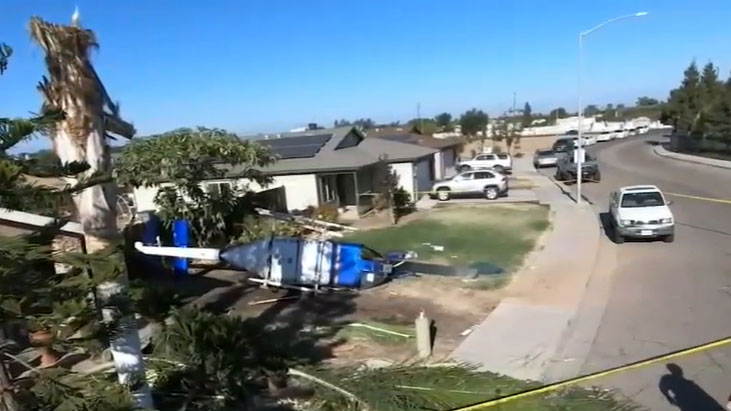
The aircraft was a surveying helicopter on a test run, the lieutenant said.
He did not have information about who owned it or who the occupants were working for.
“They heard a pop and then they started losing altitude — that’s as far as we know,” Chamalbide told reporters.
READ MORE: Man accused of killing 22 older women goes on trial again

Neicy Miramontes told the Fresno Bee that her 9-year-old son, Ezekiel Carranco, was walking to a friend’s house when he saw the helicopter in trouble.
“All of a sudden he looks up and sees the helicopter spinning and after that he heard a loud boom,” she said.
The National Transportation Safety Board is investigating the accident.
Huge avalanche hits base camp in Himalayas
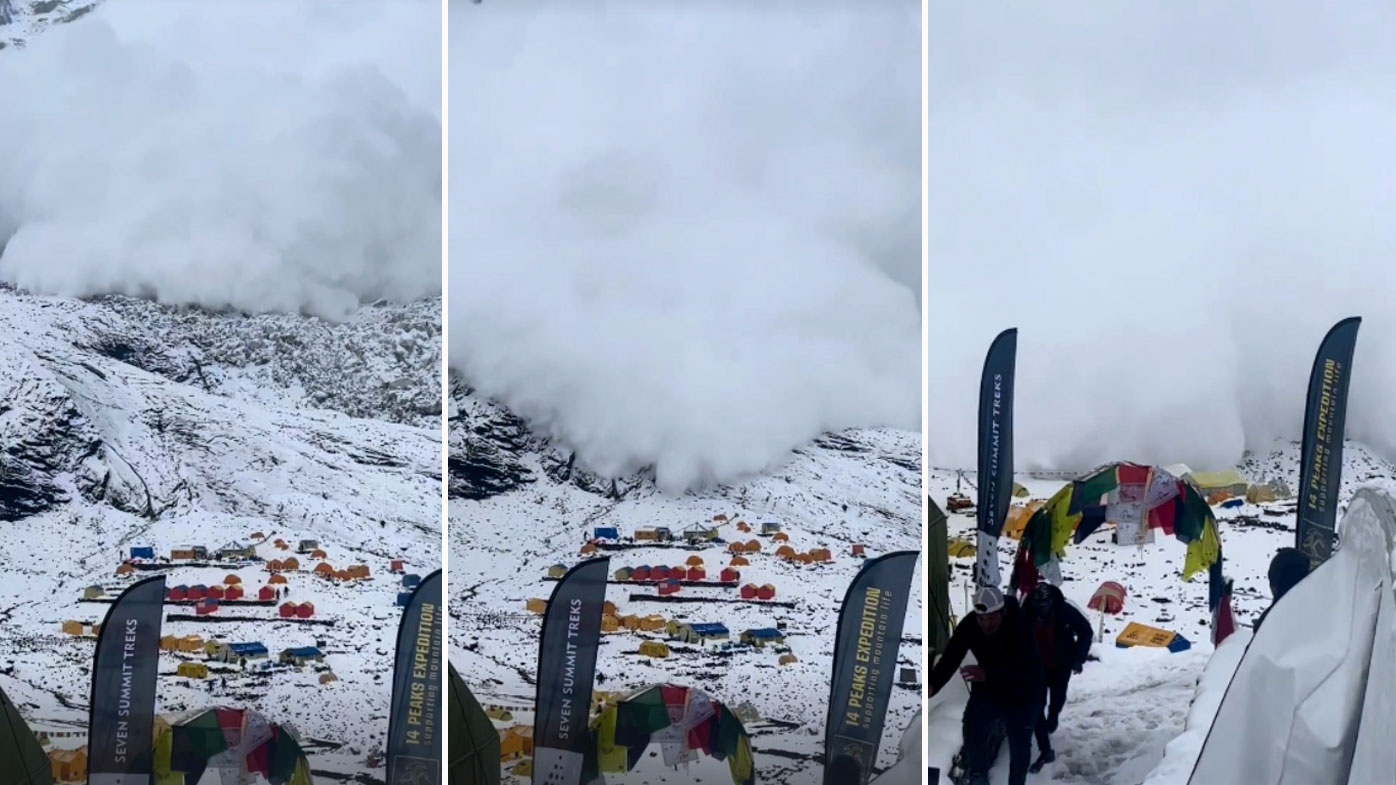
A major avalanche has steamrolled base camp at Manaslu, taking out dozens of climbers' tents on the world's eighth-highest mountain.
Dramatic footage captured by Tashi-Lakpa Sherpa showed the large avalanche rumbling down the 8163-metre Himalayan peak and hitting a hopelessly exposed base camp.
No fatalities or injuries have been confirmed.
READ MORE: House prices keep falling as borrowers brace for next rate hike
Mountaineers, Sherpa and workers are seen scrambling for safety in the footage, and voices can be heard frantically urging people to "get inside".
Tashi told 9news.com.au via message the avalanche hit at 9:37 am today (local time).
Writing in a post on Instagram, Tashi said the avalanche destroyed around six camps and more than 30 tents.
Manaslu, regarded as the world's fifth most dangerous mountain, had been hit by heavy snowfall recently, he wrote.
Last week an avalanche which struck above Camp III, killed one guide and injured 13 climbers who had been heading for the summit.
Manaslu claimed another life last week, too.
Renowned US extreme skier Hilaree Nelson was attempting to ski down from the summit when she fell off the mountain.
Jiban Ghimire Ghimire of Shangri-La Treks told Everest Chronicle Nelson, 49, lost an edge a few metres below the summit.
READ MORE: How a record number of people suddenly climbed 'savage mountain'

READ MORE: Famous wood cabin falls off mountain in Alps
Nelson fell off the vertical side of the peak, he said, while estimating it could have been a 3000-metre freefall.
Rescuers searching by helicopter located Nelson's body on Wednesday after failing to find her on Tuesday and Monday, when bad weather hampered their search.
Hundreds of climbers and local Sherpas are attempting to reach the summit during Nepal's autumn climbing season.
Inside the Russian torture sites in Ukraine
The first time the Russian soldiers caught him, they tossed him bound and blindfolded into a trench covered with wooden boards for days on end.
Then they beat him, over and over: legs, arms, a hammer to the knees, all accompanied by furious diatribes against Ukraine.
Before they let him go, they took away his passport and Ukrainian military ID — all he had to prove his existence — and made sure he knew exactly how worthless his life was.
READ MORE: House prices keep falling as borrowers brace for next rate hike
“No one needs you,” the commander taunted.
“We can shoot you any time, bury you a half-metre underground and that’s it.”
The brutal encounter at the end of March was just the start.
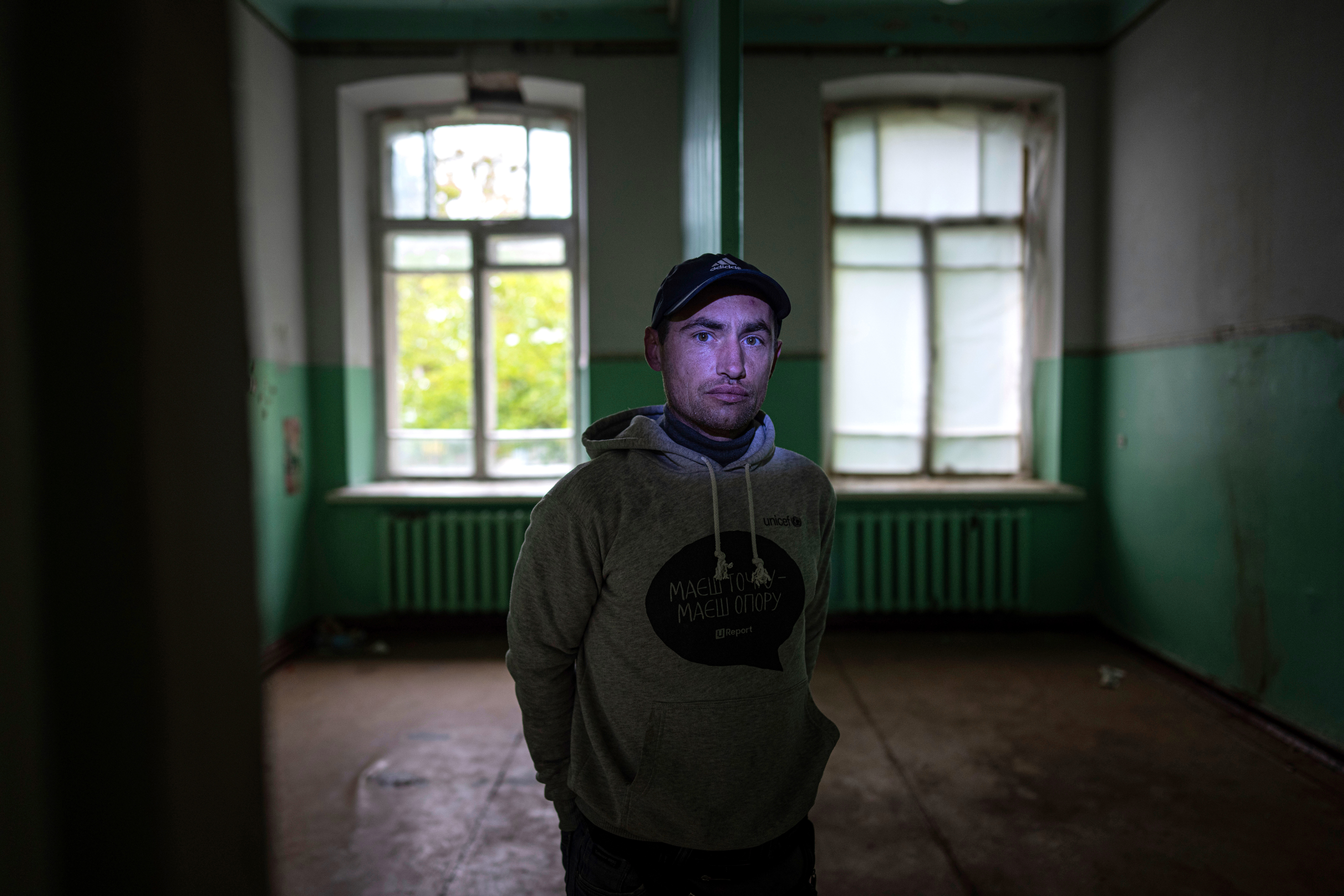
Andriy Kotsar would be captured and tortured twice more by Russian forces in Izium, and the pain would be even worse.
Russian torture in Izium was arbitrary, widespread and absolutely routine for both civilians and soldiers throughout the city, an Associated Press investigation has found.
While torture was also evident in Bucha, that devastated Kyiv suburb was only occupied for a month.
Izium served as a hub for Russian soldiers for nearly seven months, during which they established torture sites everywhere.
Based on accounts of survivors and police, AP journalists located 10 torture sites in the town and gained access to five of them.
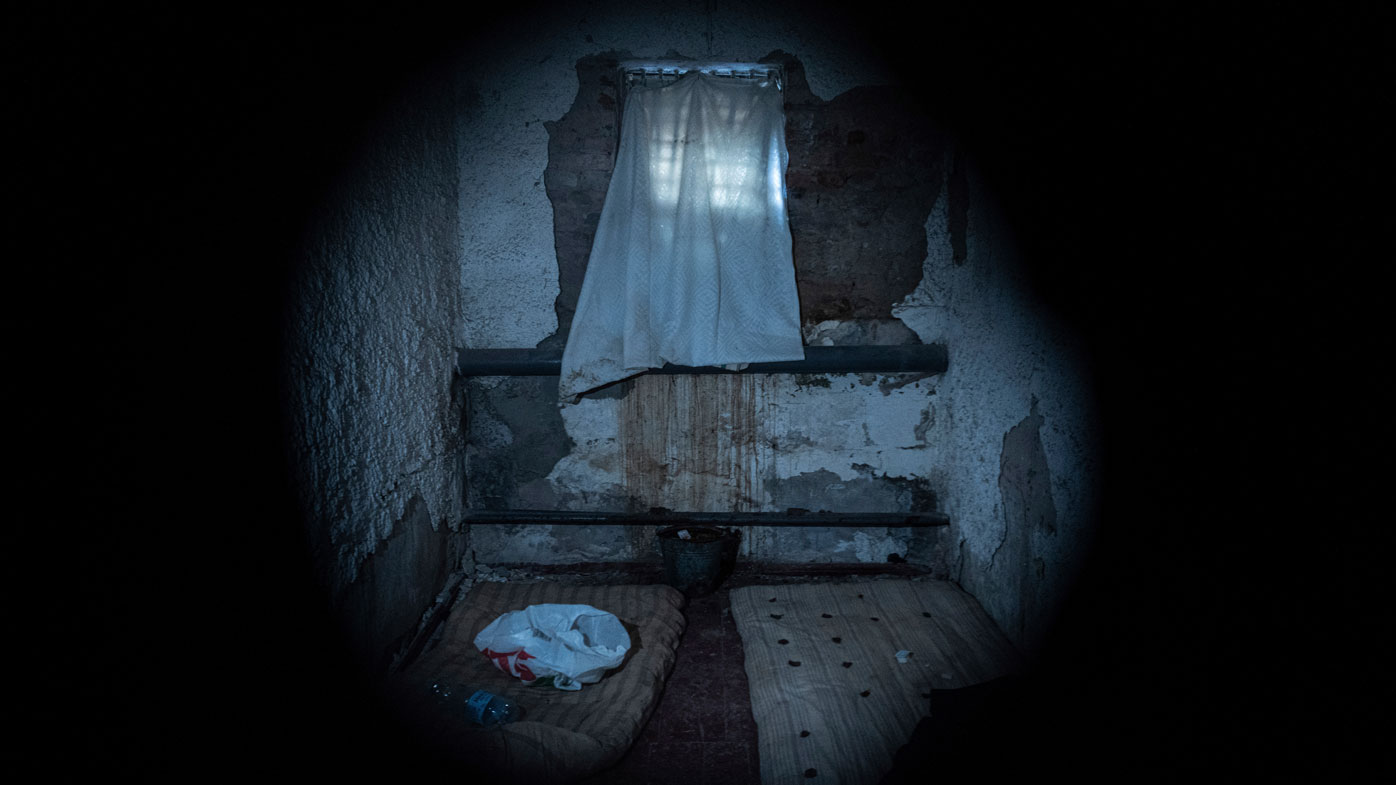
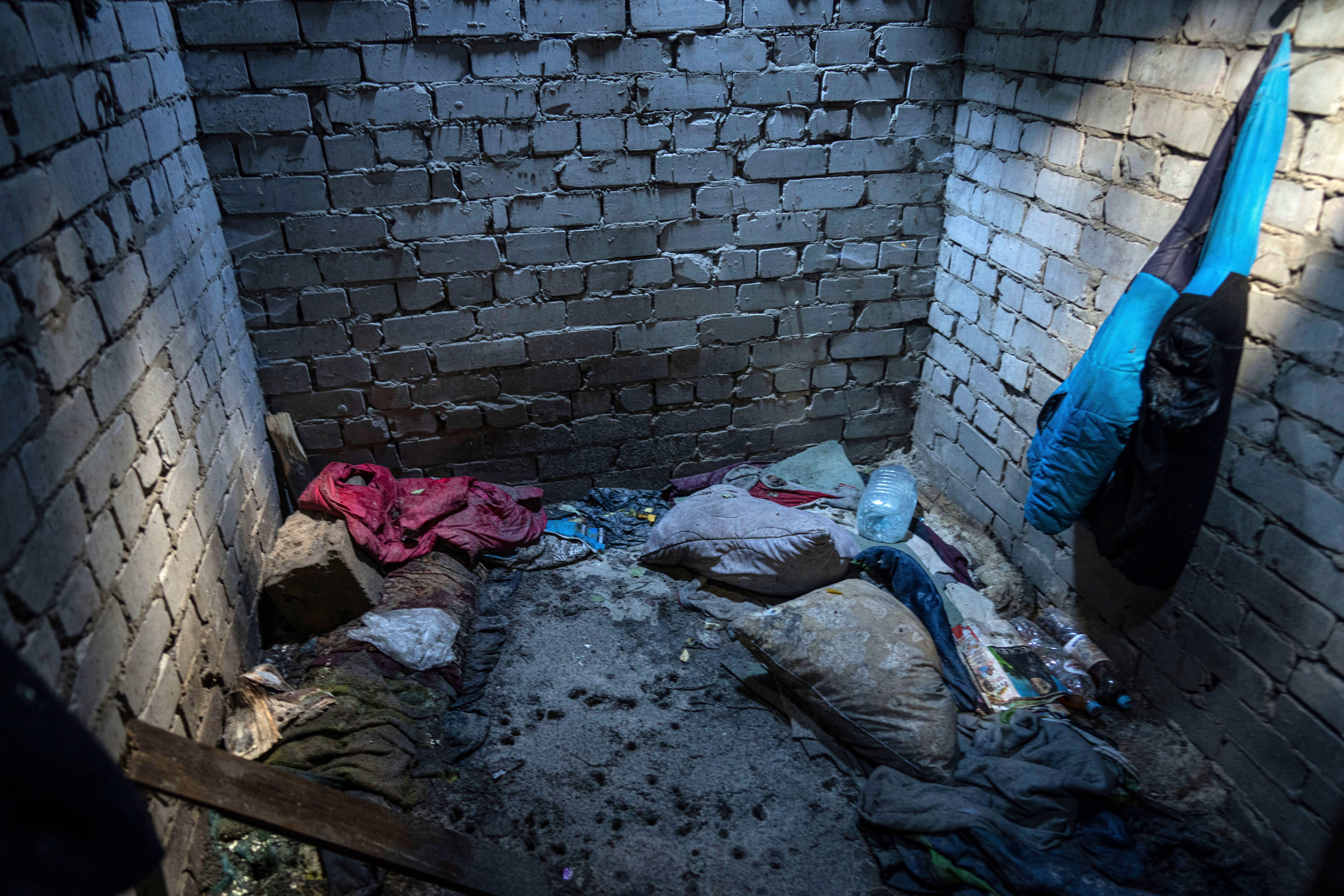
They included a deep sunless pit in a residential compound with dates carved in the brick wall, a clammy underground jail that reeked of urine and rotting food, a medical clinic, a police station and a kindergarten.
The AP spoke to 15 survivors of Russian torture in the Kharkiv region, as well as two families whose loved ones disappeared into Russian hands.
Two of the men were taken repeatedly and abused.
One battered, unconscious Ukrainian soldier was displayed to his wife to force her to provide information she simply didn't have.
The AP also confirmed eight men were killed under torture in Russian custody, according to survivors and families.
All but one were civilians.
READ MORE: Man accused of killing 22 older women goes on trial again
READ MORE: Stomach-turning find in can of peaches from Coles
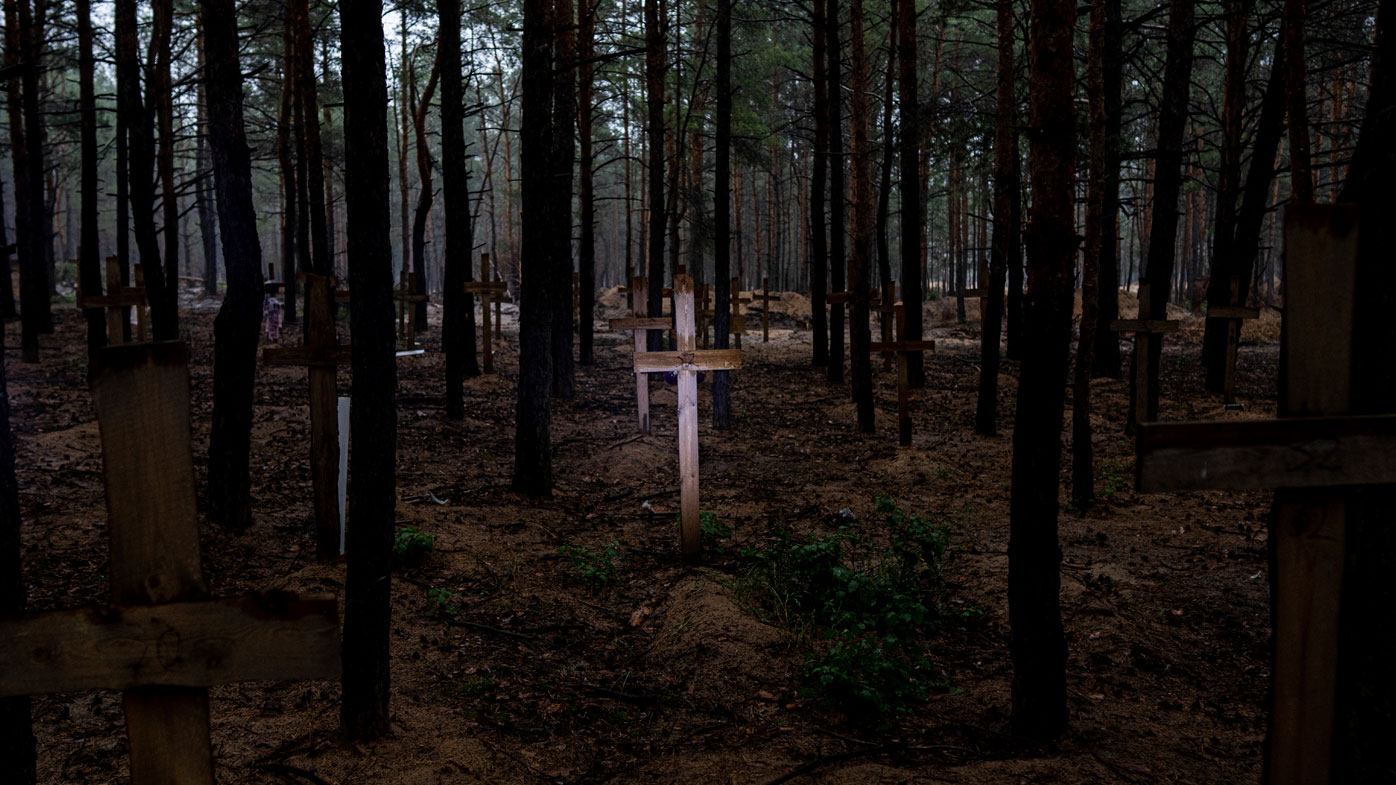
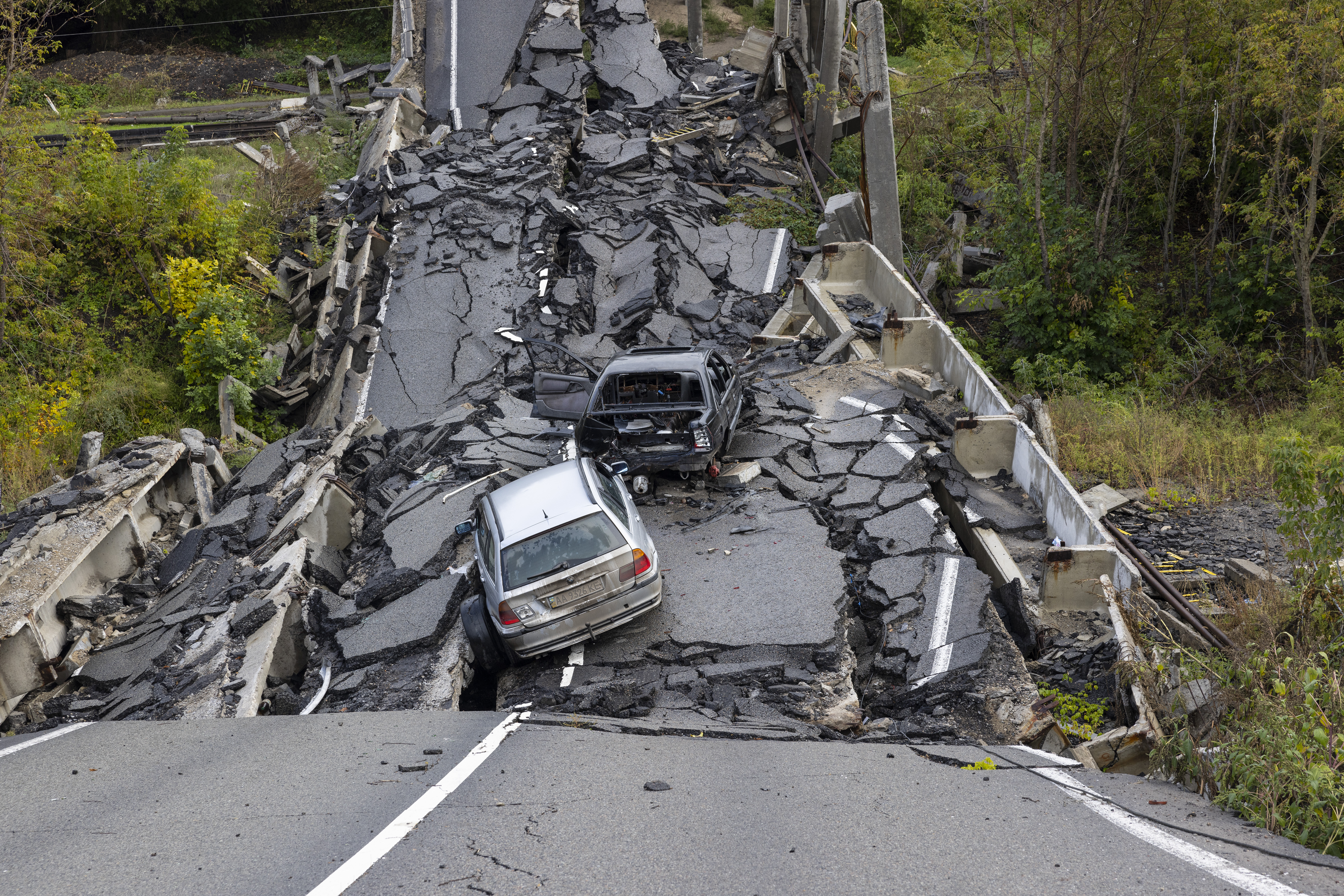
At a mass grave site created by the Russians and discovered in the woods of Izium, at least 30 of the 447 bodies recently excavated bore visible marks of torture — bound hands, close gunshot wounds, knife wounds and broken limbs, according to the Kharkiv regional prosecutor’s office.
Those injuries corresponded to the descriptions of the pain inflicted upon the survivors.
AP journalists also saw bodies with bound wrists at the mass grave.
Amid the trees were hundreds of simple wooden crosses, most marked only with numbers.
One said it contained the bodies of 17 Ukrainian soldiers.
At least two more mass graves have been found in the town, all heavily mined, authorities said.
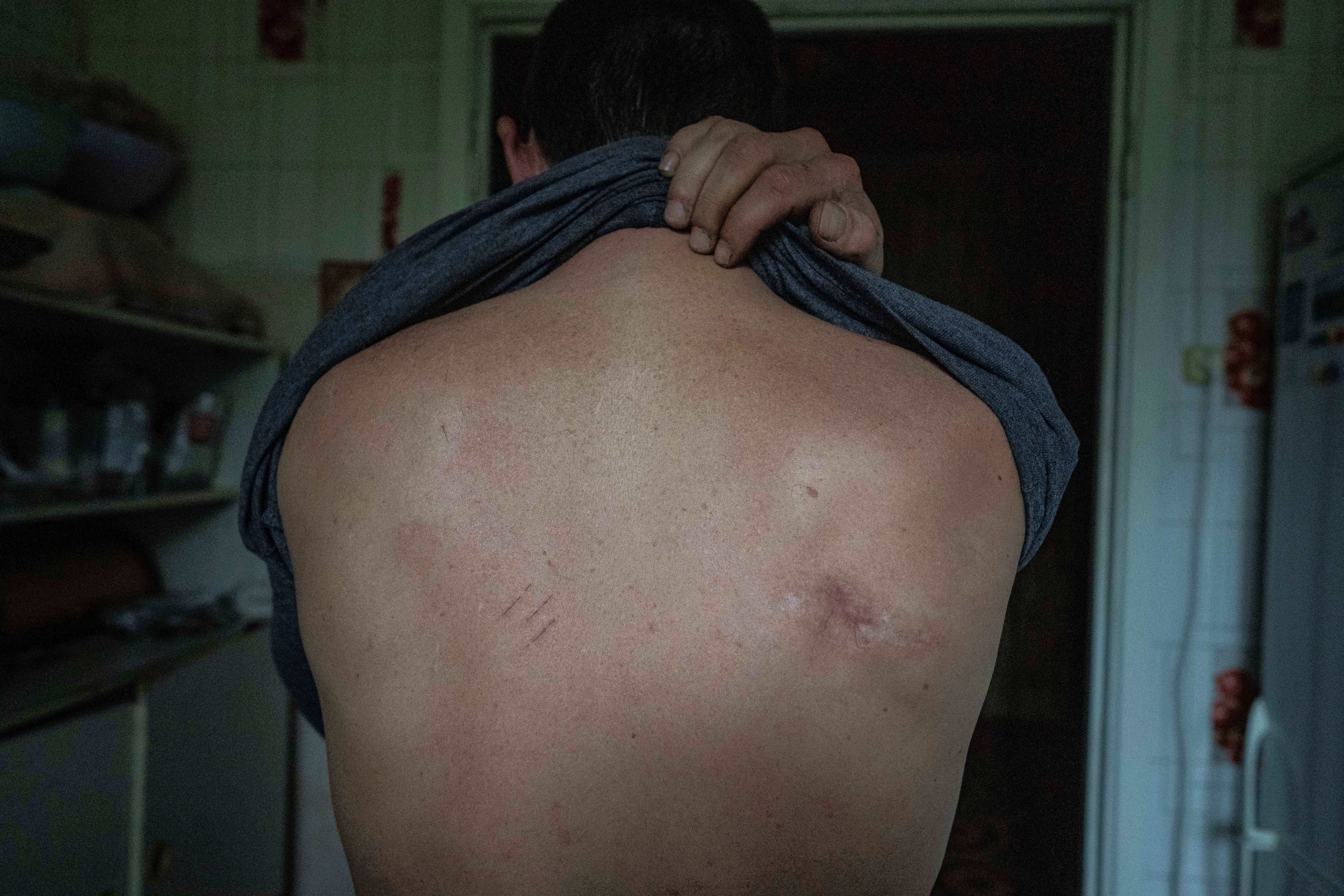
A physician who treated hundreds of Izium’s injured during the Russian occupation said people regularly arrived at his emergency room with injuries consistent with torture, including gunshots to their hands and feet, broken bones and severe bruising, and burns.
None would explain their wounds, he said.
“Even if people came to the hospital, silence was the norm,” Dr Yuriy Kuznetsov said.
He added that one soldier came in for treatment for hand injuries, clearly from being cuffed, but the man refused to say what happened.
Men with links to Ukrainian forces were singled out repeatedly for torture, but any adult man risked getting caught up.
Matilda Bogner, the head of the UN human rights mission in Ukraine, told the AP they had documented “widespread practices of torture or ill-treatment of civilian detainees” by Russian forces and affiliates.
Torture of soldiers was also systemic, she said.
Torture in any form during an armed conflict is a war crime under the Geneva Conventions, whether of prisoners of war or civilians.
“It serves three purposes,” Rachel Denber of Human Rights Watch said.
“Torture came with questions to coerce information, but it is also to punish and to sow fear. It is to send a chilling message to everyone else.”
READ MORE: Optus sends confusing text to customers after cyber attack
No safe haven
AP journalists found Kotsar, 26, hiding in a monastery in Izium, his blond hair tied back neatly in the Orthodox fashion and his beard curling beneath his chin.
He had no way to safely contact his loved ones, who thought he was dead.
Back in March, after his first round of torture, Kotsar fled to the gold-domed Pishchanskyi church.
Russian soldiers were everywhere, and nowhere in Izium was safe.
Hiding amid the icons, Kotsar listened to the rumble of Russian armoured vehicles outside and contemplated suicide.
He had been a soldier for just under a month and had no idea if anyone in his little unit had survived the Russian onslaught.
When he emerged from the church a few days later, a Russian patrol caught him.
They kept him a week.
His captors’ idea of a joke was to shave his legs with a knife, and then debate aloud whether to slice off the limb entirely.
“They took, I don’t know what exactly, some iron, maybe glass rods, and burned the skin little by little,” he said.
He knew nothing that could help them.
So they set him free again, and again he sought refuge with the monks.
He had nowhere else to go.
By then, the church and monastery compound had become a shelter for around 100 people, including 40 children.
Kotsar took up a version of the monastic life, living with the black-robed brothers, helping them care for the refugees and spending his free hours standing before the gilt icons in contemplation.
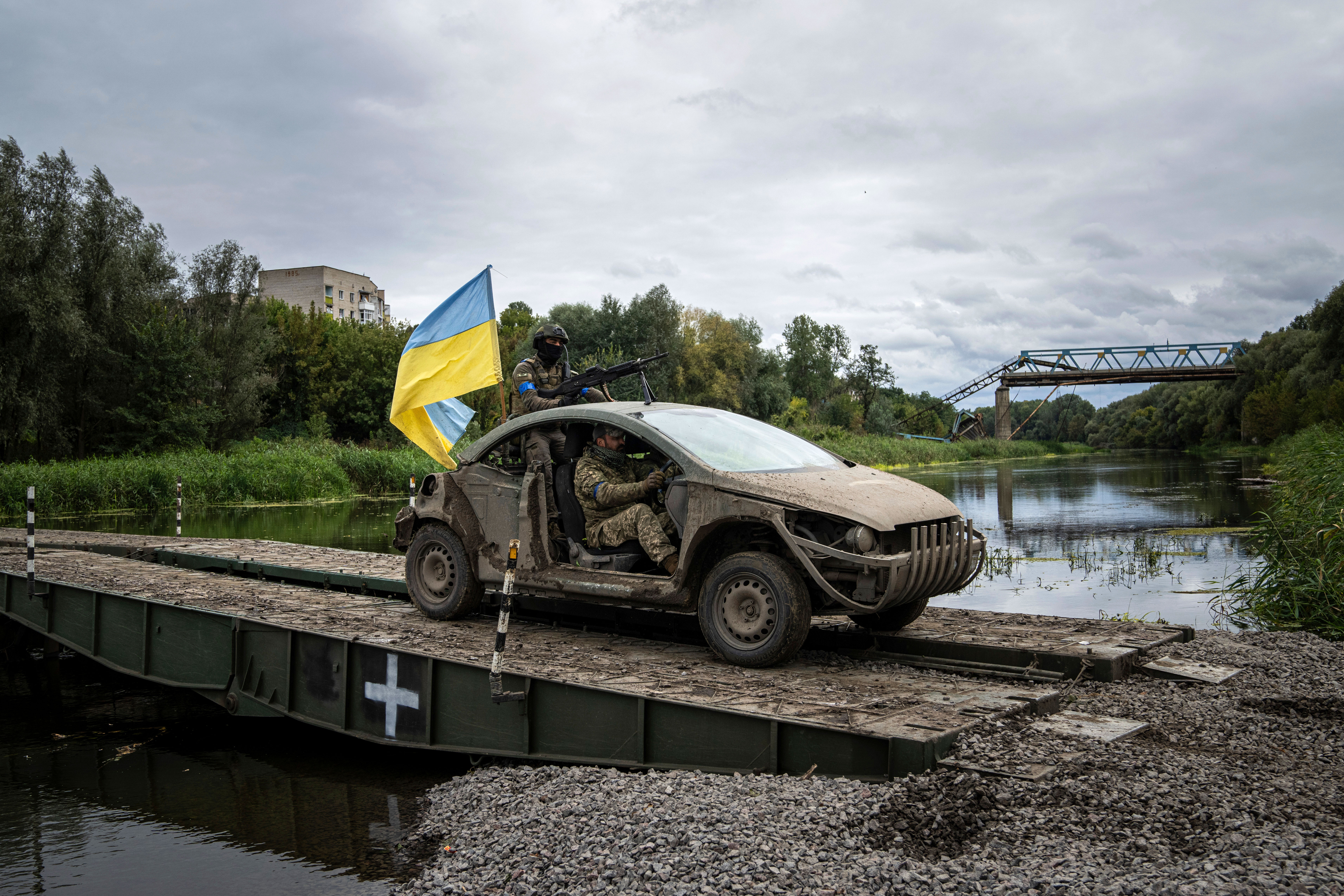
In the meantime, Izium was transforming into a Russian logistical hub.
The town was swarming with troops, and its electricity, gas, water and phone networks were severed.
Izium was effectively cut off from the rest of Ukraine.
Screams in the night
It was also in the spring that the Russians first sought out Mykola Mosyakyn, driving down the rutted dirt roads until they reached the Ukrainian soldier’s fenced cottage.
Mosyakyn, 38, had enlisted after the war began, though not in the same unit as Kotsar.
They tossed him into a pit with standing water, handcuffed him and hung him by the restraints until his skin went numb.
They waited in vain for him to talk, and tried again.
“They beat me with sticks. They hit me with their hands, they kicked me, they put out cigarettes on me, they pressed matches on me,” he recounted.
“They said, ‘Dance,’ but I did not dance. So they shot my feet."
After three days they dropped him near the hospital with the command: “Tell them you had an accident.”
At least two other men from Mosyakyn’s neighbourhood, a father and son who are both civilians, were taken at the same time.
The father speaks about his two weeks in the basement cell in a whisper, staring at the ground.
His adult son refuses to speak about it at all.
That family, along with another man who was also tortured in the basement cell on Izium’s east bank, spoke on condition of anonymity.
They are terrified the Russians will return.
Mosyakyn was captured again by a different Russian unit just a few days later.
This time, he found himself in School No. 2, subject to routine beatings along with other Ukrainians.
AP journalists found a discarded Ukrainian soldier’s jacket in the same blue cell he described in detail.
The school also served as a base and field hospital for Russian soldiers, and at least two Ukrainian civilians held there died.
But the soldiers again freed Mosyakyn.
To this day, he doesn’t know why.
Nor does he understand why they’d release him just to recapture him a few days later and haul him to a crowded garage of a medical clinic near the railroad tracks.
More than a dozen other Ukrainians were jailed with him, soldiers and civilians.
Two garages were for men, one for women and a bigger one — the only one with a window — for Russian soldiers.
Women were held in the garage closest to the soldiers’ quarters.
Their screams came at night, according to Mosyakyn and Kotsar, who were both held at the clinic at different times.
Ukrainian intelligence officials said the women were raped regularly.
For the men, Room 6 was for electrocution.
Room 9 was for waterboarding, Mosyakyn said.
He described how they covered his face with a cloth bag and poured water from a kettle onto him to mimic the sensation of drowning.
They also hooked up his toes to electricity and shocked him with electrodes on his ears.
It was here that Mosyakyn watched Russian soldiers drag out the lifeless bodies of two civilians they’d tortured to death, both from Izium’s Gonkharovka neighbourhood.
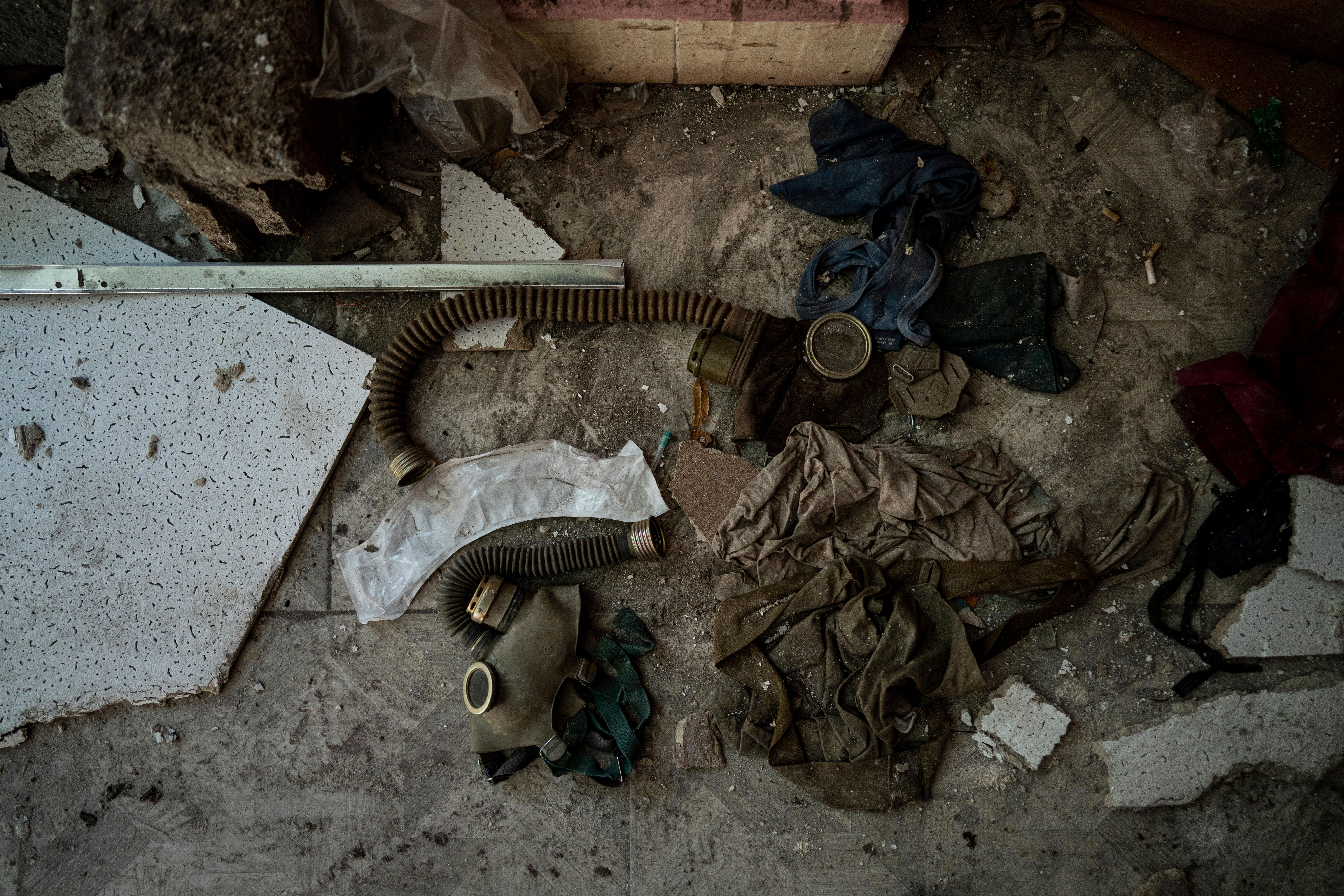
Kotsar was taken to the clinic in July and received a slightly different treatment, involving a Soviet-era gas mask and electrodes on his legs.
AP journalists also found gas masks at two schools.
By the time Kotsar arrived, people had already been there for 12 to 16 days.
They told him arms and legs were broken, and people had been taken out to be shot.
He vowed that if he survived, he would never allow himself to be captured again.
They released him after a couple of weeks.
He craved familiar faces and people who meant him no harm. He returned to the monks.
“When I came out, everything was green. It was very, very strange, because there had been absolutely no colour,” he said.
“Everything was wonderful, so vivid.”
Shallow grave
In mid-August, the bodies of three men were found in a shallow forested pit on the town’s outskirts.
Ivan Shabelnyk left home with a friend on March 23 to collect pine cones so the family could light the samovar and have tea.
They never came back.
Another man taken with them reluctantly told Shabelnyk’s family about the torture they’d all endured together, first in the basement of a nearby house and then in School No. 2.
Then he left town.
Their bodies were found in mid-August, in the last days of the occupation, by a man scavenging for firewood.
He followed the smell of death to a shallow grave in the forest.
Shabelnyk’s hands were shot, his ribs broken, his face unrecognisable.
They identified him by the jacket he wore, from the local grain factory where he worked.
His grieving mother showed the AP a photo.
“He kept this photo with him, of us together when he was a small boy,” Ludmila Shabelnyk, in tears, said.
“Why did they destroy people like him? I don’t understand. Why has this happened to our country?”
His sister, Olha Zaparozhchenko, walked with journalists through the cemetery and looked at his grave.
“They tortured civilians at will, like bullies,” she said.
“I have only one word: genocide.”
The Kharkiv region’s chief prosecutor, Oleksandr Filchakov, told the AP it was too soon to determine how many people were tortured in Izium, but said it easily numbered into the dozens.
“Every day, many people call us with information, people who were in the occupied territories,” he said.
“Every day, relatives come to us and say their friends, their family, were tortured by Russian soldiers.”
Missing no more
After his final escape, Kotsar hid in the monastery for more than a month.
Without documents and a phone connection to prove his identity, he was too afraid to leave.
Kotsar’s family had no idea what happened to him.
They had simply reported him missing, like so many other Ukrainian soldiers caught on the wrong side of the frontline.
He spoke with effort to AP journalists, and at one point asked them to turn off the camera so he could compose himself.
The AP contacted the Commissioner for Issues of Missing Persons Under Special Circumstances, which confirmed the missing person report and his identity through a photo on file.
Then Kotsar’s own unit, which had left Izium in disarray, returned and tracked him down.
Kotsar doesn't know what comes next.
Ukrainian officials are still in the process of restoring his identity documents, and without them he can’t go anywhere.
He would like psychological treatment to deal with the trauma from repeated torture, and for now he’s staying with the monks.
“If it weren’t for them, I probably wouldn’t have survived at all,” he said.
“They saved me.”
Kotsar’s first call was to the sister of his best friend — the only person in his entire circle of loved ones he was certain was in a safe place.
He grinned as the connection went through.
“Tell him I’m alive,” he said.
“Tell him I’m alive and in one piece.”
Costco chaos: Commercial oven triggers fire alarm at Westgate mega store, hundreds evacuated
Emergency services rushed to Auckland’s new mega retail store this afternoon after a fire alarm activation forced hundreds of people to evacuate. Fire and Emergency shift manager Simon Lyford told the Herald it was a false alarm.”There…
$170 too steep a price to listen to failure of a prime minister
OPINION: Please, cut through the theatrical roadshow, the fawning feminists, and the rewriting of history: Julia Gillard was not a victim, she was a failure.
This week, the former prime minister heads into her bizarre national show-biz tour.
Now, any sensible person should pay good money not to be locked into a room listening to a former politician justify themselves.
READ MORE: Australia targets 'separatists' in new Russia sanctions

But no, these shows are sold out.
For $170, you can hear her celebrate the approaching 10th anniversary of her misogyny speech.
Presumably, she won't be tearing strips off herself.
If the words of her supporters are any indication, the argument will be that this speech was a defining moment, a powerful stand against sexist abuse and mistreatment of women in politics.
And it is true, it has resounded, with more than five million YouTube views.
Also true, this speech was politically clever.
But it looked strategic, more about politics than principle.
And it lifted her popularity rating.
But it was a diversion.
The feminist PM was locked into a piece of staggering hypocrisy, defending a seedy speaker who likened women to seafood.
But he suited her numbers game.
He resigned a few days later.
Second, her government was dying, and this helped to paint her as the young female victim of the evil Murdoch empire, ageing shock jocks, and anybody male and critical.
The aim, and in many ways it succeeded, was to make it impossible for critics to judge her government harshly without being labelled a misogynist.
Julia Gillard has every right to go on the road like some type of revitalised juggler.
She has, after all, been quietly dignified since leaving.
Her audiences have every right to applaud as she blinds them (presumably) with self-congratulation and spin.
https://twitter.com/JuliaGillard/status/1546748605624913920
But have a think about it.
It's true, Gillard suffered unacceptable and vile criticism based on her gender.
Who really cared how she looked from behind or what she wore?
"Ditch the witch" was garbage.
But that type of thing didn't destroy her.
Many male politicians have copped more nasty personal abuse about their height, lack of hair, or social views.
It does not excuse sexism at any level against any person but still, to many on the left, the new social failing is to be white, male, middle-aged and wear a suit.
Julia Gillard failed because she lost confidence, lost focus, lost direction and lost the trust of both her party and the Australian people.
Yes, she had a tough time.
She lasted almost precisely three years, having rolled Kevin Rudd in June 2010, before his first term finished.
She formed a minority government after the 2010 election and that was tough.
Trying to negotiate with Greens must be like herding stoned cats.
She did some good things: the NDIS, improvements to equal pay, and her economic management was not disastrous.
READ MORE: Optus 'not cooperating' with government over data breach
But there were strange decisions too, particularly from a woman who has become a feminist icon.
She undermined single parenting payments, which arguably led to worsened poverty for tens of thousands of struggling women.
She did not have a cohesive women's policy.
The broken carbon tax promise is legendary, and for heaven's sake she voted against gay marriage. Now, she champions equality!
At her sideshow this week, Gillard will probably argue political necessity.
But that doesn't remove the reality that she was judged as a political beast, not a female political beast.
And judged she was.
She oversaw Labor's worst polling figures in 40 years.
At one stage, only 27 per cent of the electorate supported the ALP.
Was that really because of her chromosomes?
Labor was headed for oblivion and she knew it. Rudd and his mates were plotting.
She lost focus, lost her way, and found it politically helpful to blame men and sexism.
From my position as an interviewer and commentator, I watched her turn from a competent, strong, powerful and determined leader to an indecisive, stumbling mess.
She began as an excellent, down-to-earth communicator to whom people could relate.
She developed into a confused waffler, frightened of saying something lest she say something.
READ MORE: Thousands of vulnerable Aussies missing out on 'life-changing' support

Perhaps it was the atrocious polls.
Perhaps it was the army of advisers telling her how to do it.
Perhaps it was Rudd wafting in the background like the grim reaper, albeit with a larger scythe.
But she was rattled and too rattled to lead effectively.
Then she threw the switch to gender wars.
A personal example of the change: one Friday, before she was PM, we had a stand-up shouting debate on radio about a matter of policy.
It was strong but not personally abusive on either side.
Blood was spilled, more mine than hers. She was good.
The next day I saw her at the Formula 1 grand prix, walking towards me in a corridor with her partner.
"Oops," thought I. This could be trouble.
But she greeted me like a mate.
We had a laugh about the strength of the debate and agreed to do it again.
It had been good, grassroots political disagreement.
She loved it and she handled it superbly. That was the old Julia.
Then she became PM and struggled.
During the 2010 election campaign, she promised to become "the real Julia".
It insulted every voter who had thought she was already real, not a pretender.
It promised a political role player, not an authentic leader.
It suggested she had been elected party leader through some type of marketing trick.
READ MORE: Army officers appear on Burkina Faso TV, declare new coup

She was losing the trust of the public and the party.
So, increasingly, she played the victim.
The misogyny speech was only part of it. She struggled on for nine months after that.
Behind the scenes, she seemed to be crafting the role of a female leader wronged by sexism because it suited the political need.
She told commentators privately their criticism was only harsh because she was female.
"You would never treat a male prime minister that way," she told one.
That approach is sad and unfair. It is sad because she did have ability and because it is always sad to see a capable person lose confidence.
It is unfair because it was not the fault of the few sexist idiots that she shed public trust. This was on her head.
In the end, she arguably demeaned women as much as did the idiots.
She demeaned them by suggesting they should get preferential treatment because of their gender.
Women are better than that. Everybody is better than that.
Many people go through life believing their path to "greatness" has been hampered by one issue or another.
That's life. If you're a real leader, get on with it.
Neil Mitchell broadcasts 8.30am to midday, weekdays on 3AW.
More than Indonesia football fans 170 dead after stampede
Panic at an Indonesian soccer match on Saturday left 174 dead, most of whom were trampled to death after police fired tear gas to dispel riots, making it one of the deadliest sports events in the world.
Riots broke out after the game ended on Saturday evening with host Arema FC of East Java's Malang city losing to Persebaya of Surabaya 3-2.
Disappointed after their team's loss, thousands of supporters of Arema, known as "Aremania", reacted by throwing bottles and other objects at players and soccer officials.
ans flooded the Kanjuruhan Stadium pitch in protest and demanded that Arema management explain why, after 23 years of undefeated home games, this match ended in a loss, witnesses said.
READ MORE: US mounts largest rescue mission in history in hurricane's wake
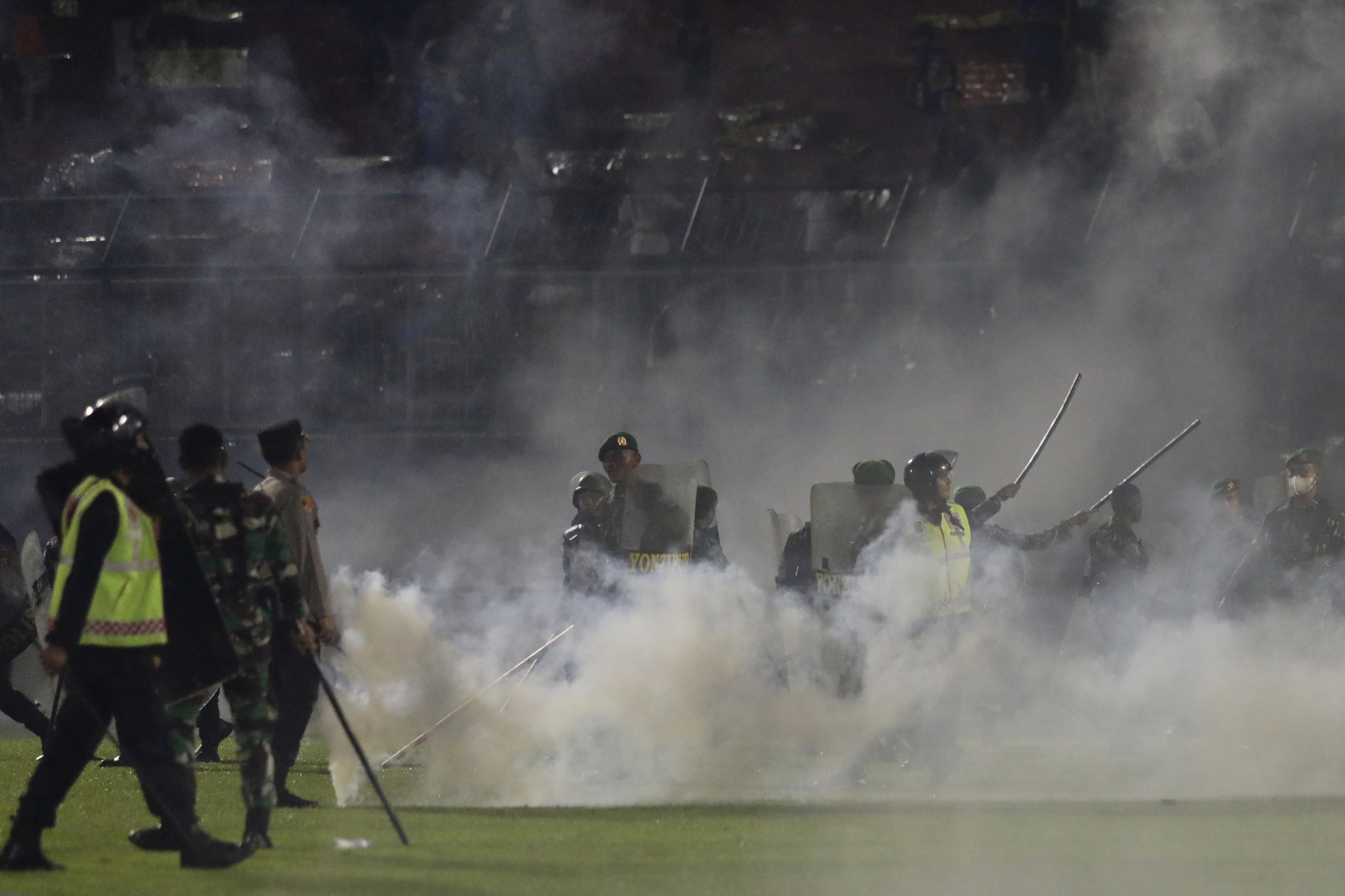
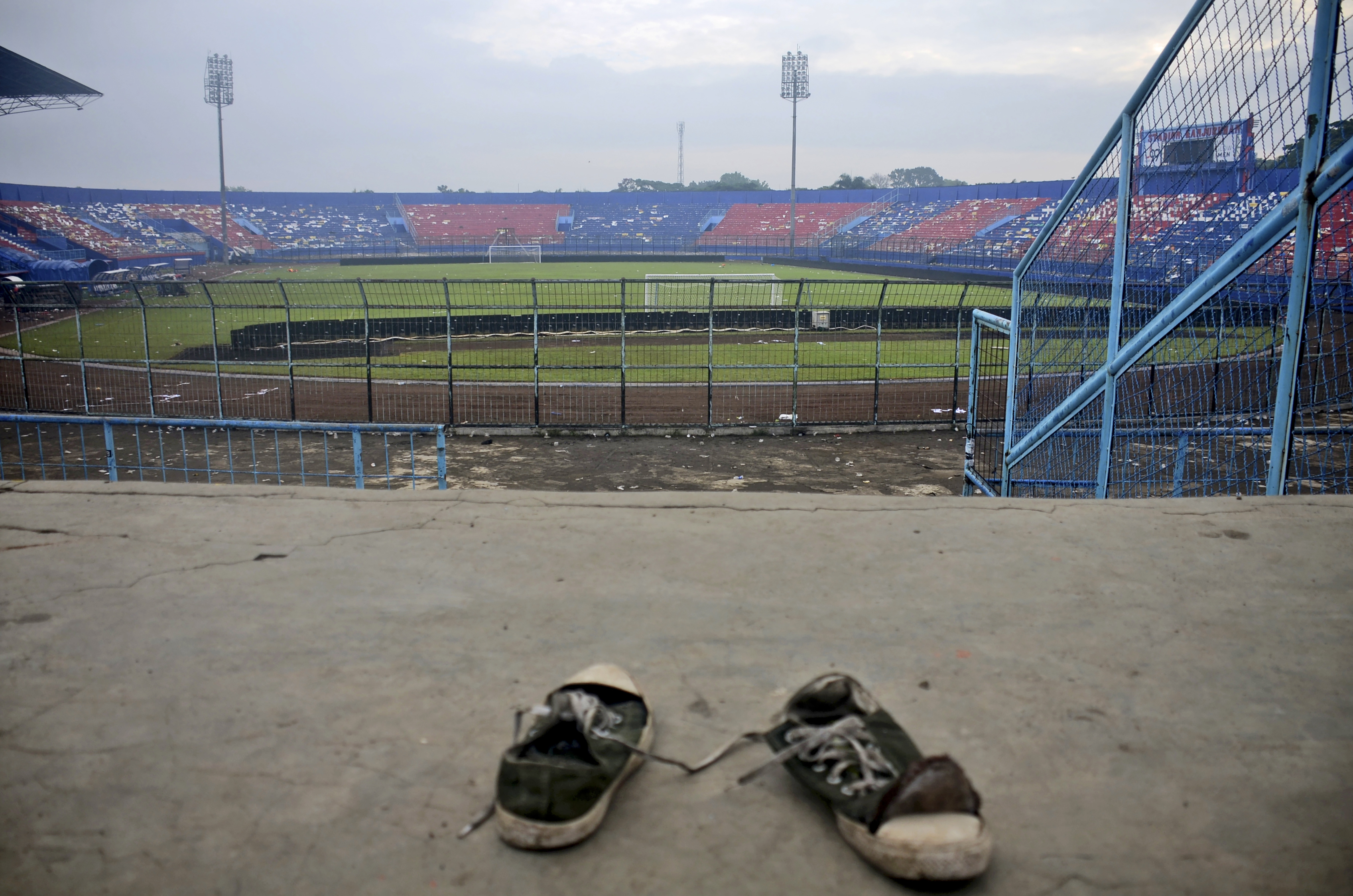
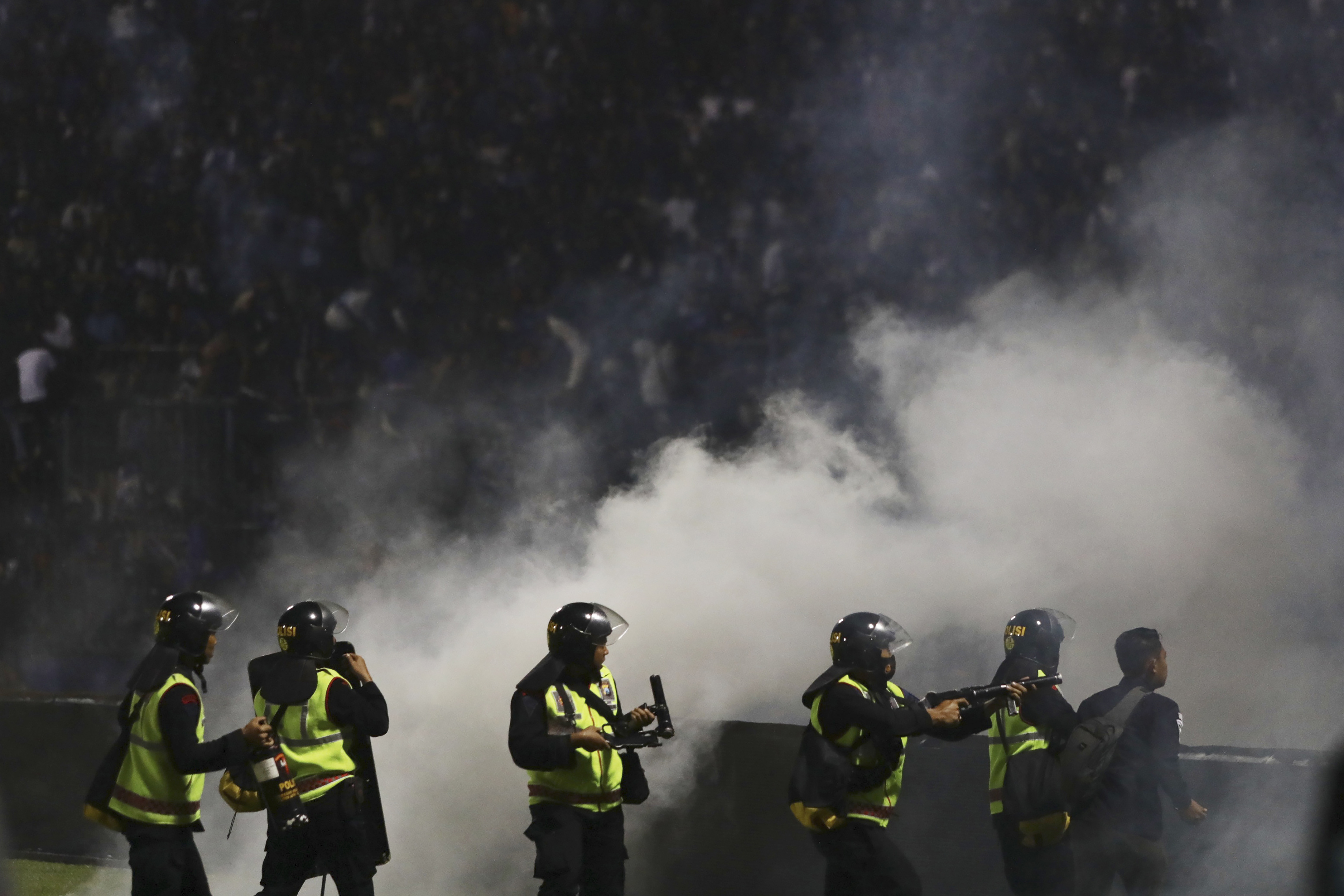
The rioting spread outside the stadium where at least five police vehicles were toppled and set ablaze amid the chaos. Riot police responded by firing tear gas, including toward the stadium's stands, causing panic among the crowd. Tear gas is banned at soccer stadiums by FIFA.
Some suffocated and others were trampled as hundreds of people ran to the exit in an effort to avoid the tear gas. In the chaos, 34 died at the stadium, including two officers, and some reports include children among the casualties.
"We have already done a preventive action before finally firing the tear gas as (fans) began to attack the police, acting anarchically and burning vehicles," said East Java Police chief Nico Afinta in a news conference early Sunday.
More than 300 were rushed to nearby hospitals to treat injuries but many died on the way and during a treatment, Afinta said.
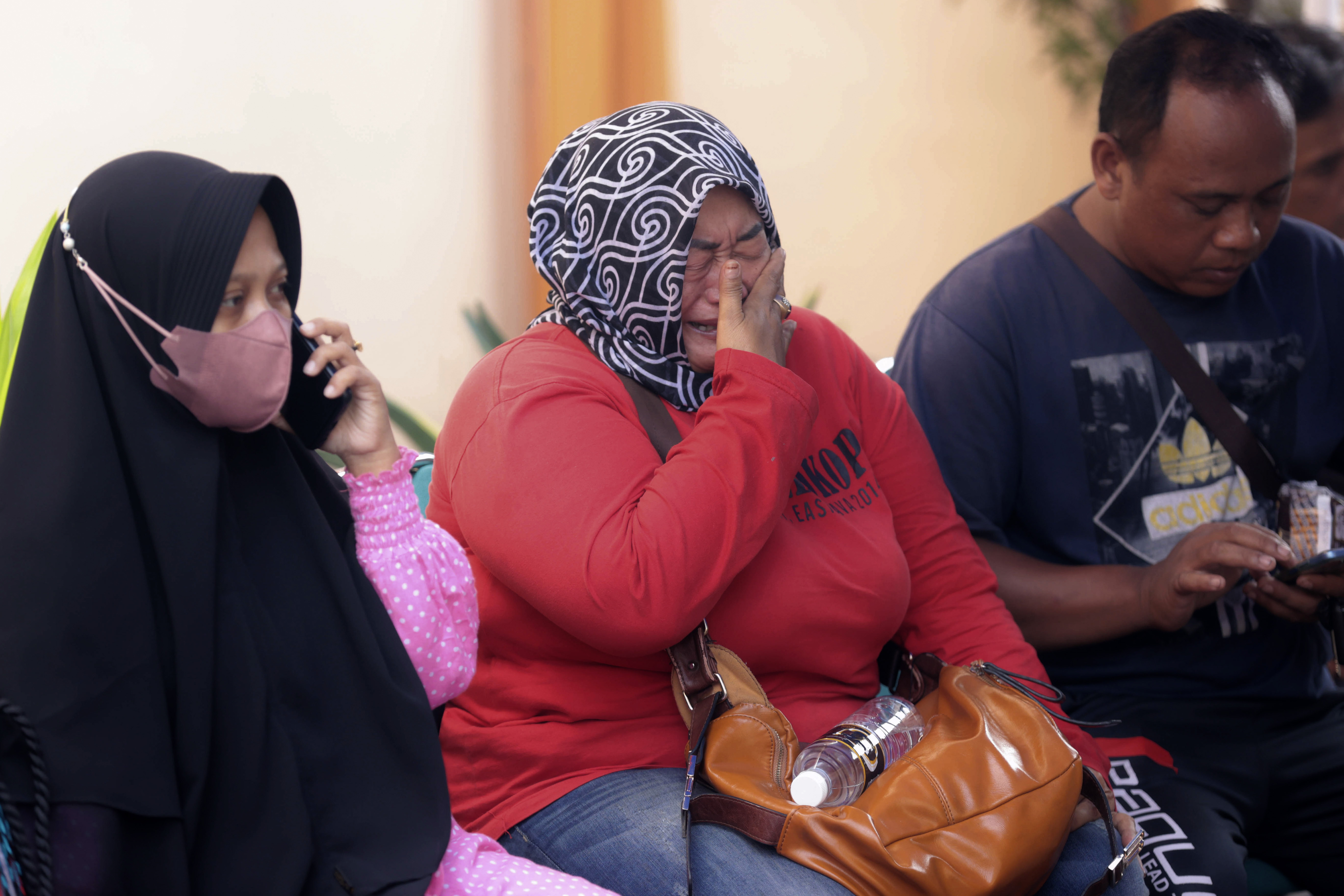
He said the death toll is likely to increase because many of the approximately 180 injured who are receiving intensive treatments at various hospitals were deteriorating.
Indonesia's soccer association, known as PSSI, has suspended the premier soccer league Liga 1 indefinitely in light of the tragedy and banned Arema from hosting soccer matches for the remainder of the season.
Television reports showed police and rescuers evacuating the injured and carrying the dead to ambulances.
Grieving relatives waited for information about their loved ones at Malang's Saiful Anwar General Hospital. Others tried to identify the bodies laid at a morgue.
Indonesia's president Joko Widodo expressed his deep condolences for the dead in televised remarks Sunday.
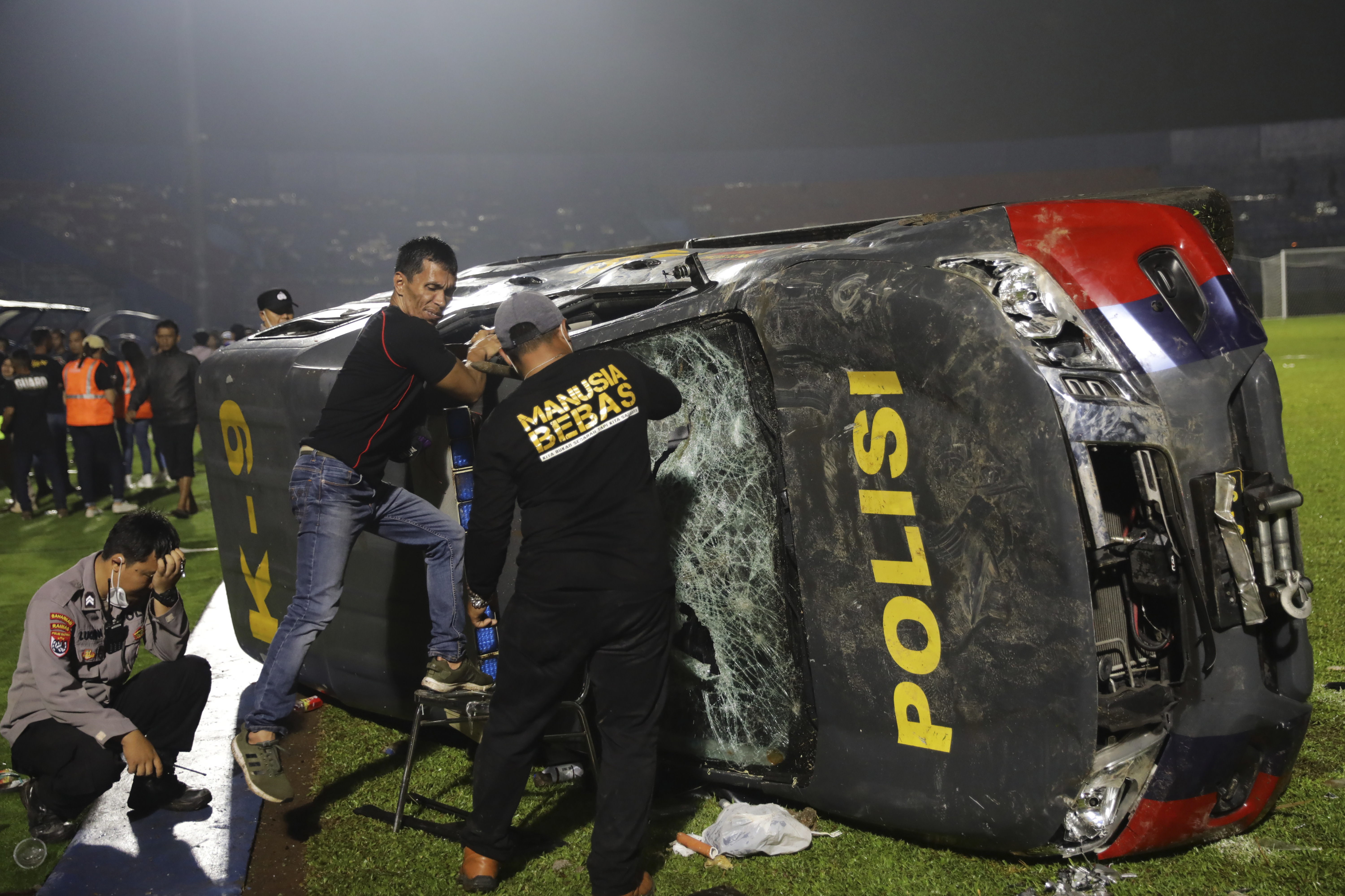
"I deeply regret this tragedy and I hope this is the last soccer tragedy in this country, don't let another human tragedy like this happen in the future," Widodo said. "We must continue to maintain sportsmanship, humanity and a sense of brotherhood of the Indonesian nation."
He ordered the Youth and Sports minister, the National Police chief and the PSSI chair to conduct a thorough evaluation of the country's soccer match and its security procedure.
He also ordered PSSI to temporarily suspend Liga 1 until it could be evaluated and security procedures improved.
Youth and Sports Minister Zainudin Amali also expressed his regret that "this tragedy happened when we were preparing for soccer game activities, both national and international level."
Indonesia is due to host the 2023 FIFA U-20 World Cup from May 20 to June 11, with 24 participating teams. As the host, the country automatically qualifies for the cup.
"Unfortunately, this incident has certainly injured our soccer image," Amali said.
Ferli Hidayat, local police chief of Malang, said there were some 42,000 spectators at the game Saturday, all of whom were Aremanias because the organizer had banned Persebaya fans from entering the stadium in an effort to avoid brawls.
The restriction was imposed after clashes between supporters of the two rival soccer teams in East Java's Blitar stadium in February 2020 caused a total of 250 million rupiah ($25,500) in material losses. Brawls were reported outside the stadium during and after the semifinal round match of the East Java Governor's Cup, which ended with Persebaya beating Arema 4-2.
Despite Indonesia's lack of international accolades in the sport, hooliganism is rife in the soccer-obsessed country where fanaticism often ends in violence, as in the 2018 death of a Persija Jakarta supporter who was killed by a mob of hardcore fans of rival club Persib Bandung in 2018.
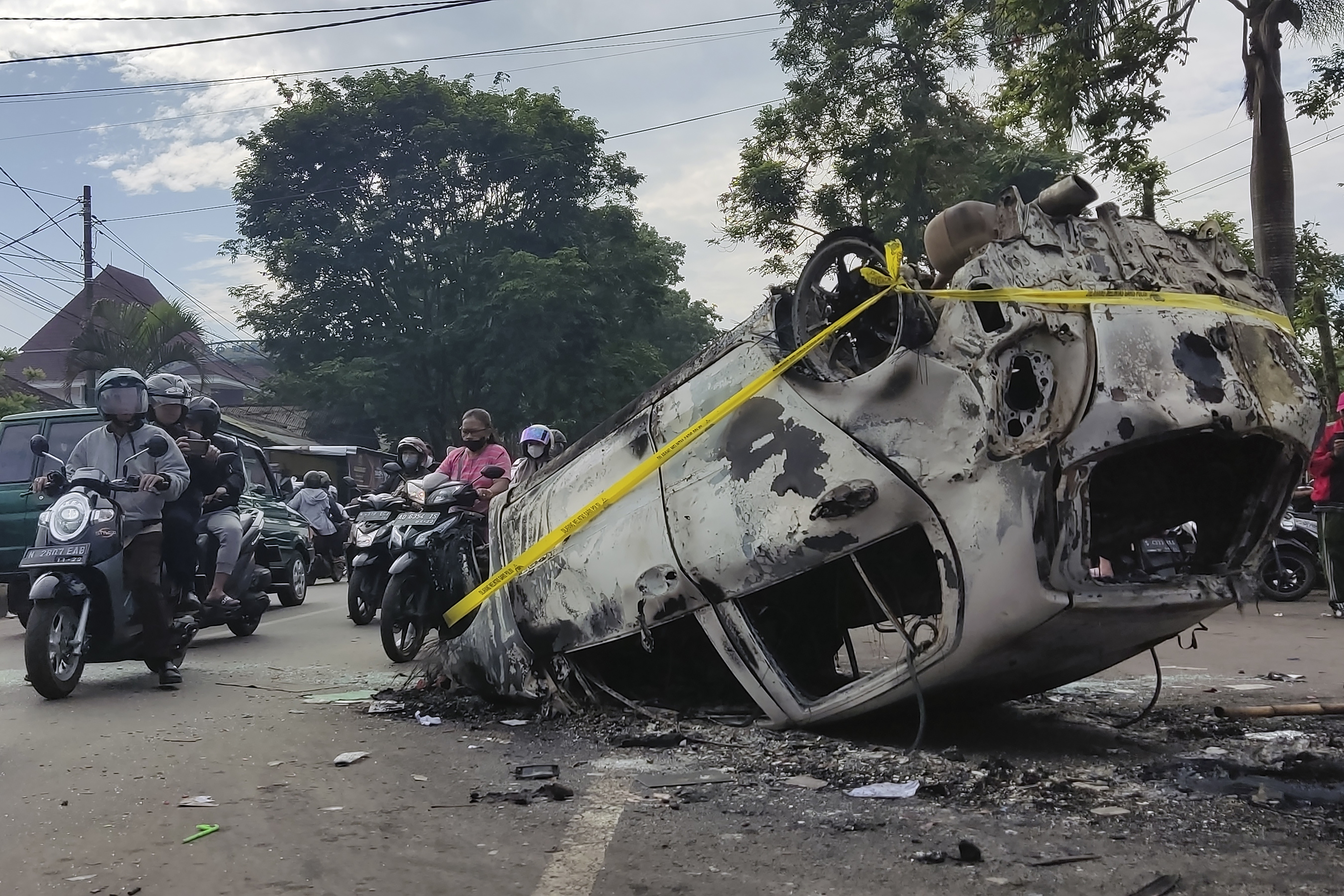
Saturday's game is already among the world's worst crowd disasters, including the 1996 World Cup qualifier between Guatemala and Costa Rica in Guatemala City where over 80 died and over 100 more were injured. In April 2001, more than 40 people are crushed to death during a soccer match at Ellis Park in Johannesburg, South Africa.