Hundreds are again queuing in the rain to get into the country’s newest big box retailer.Costco opened its first New Zealand store at Westgate in West Auckland on Wednesday, and Kiwis have been lining up each day since to buy the…
Tag Archives: oceania
What happens next to dead Tasmanian whales 'a true marvel of nature'
Australians watched in horror last week as 230 pilot whales became stranded at a beach near Macquarie Harbour on Tasmania's west coast.
Some whales were saved, but the vast majority died, which left a big problem: what to do with all the rotting whale carcasses?
Authorities decided to tow the dead animals out to sea, hoping they'll eventually sink to the seafloor.
READ MORE: Queen Elizabeth's cause of death revealed
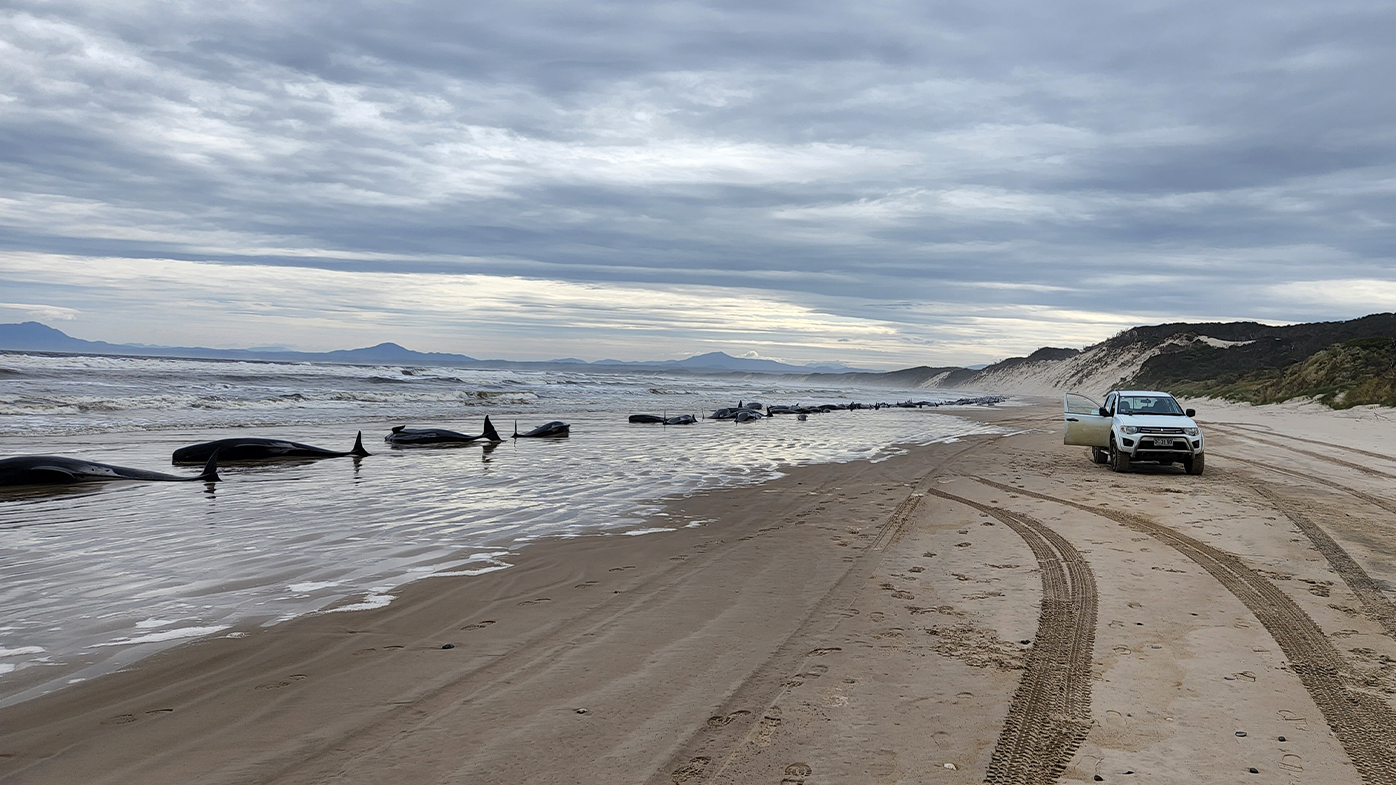
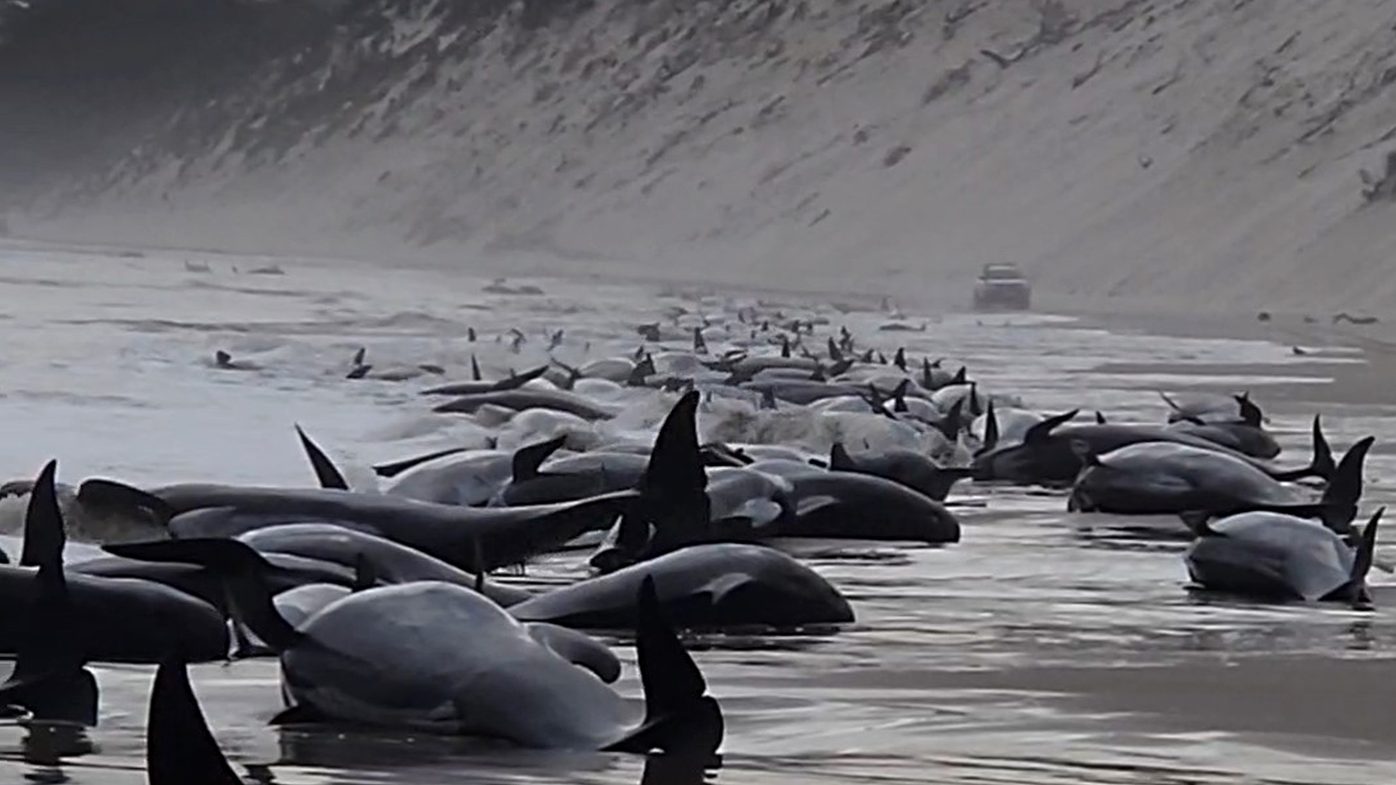
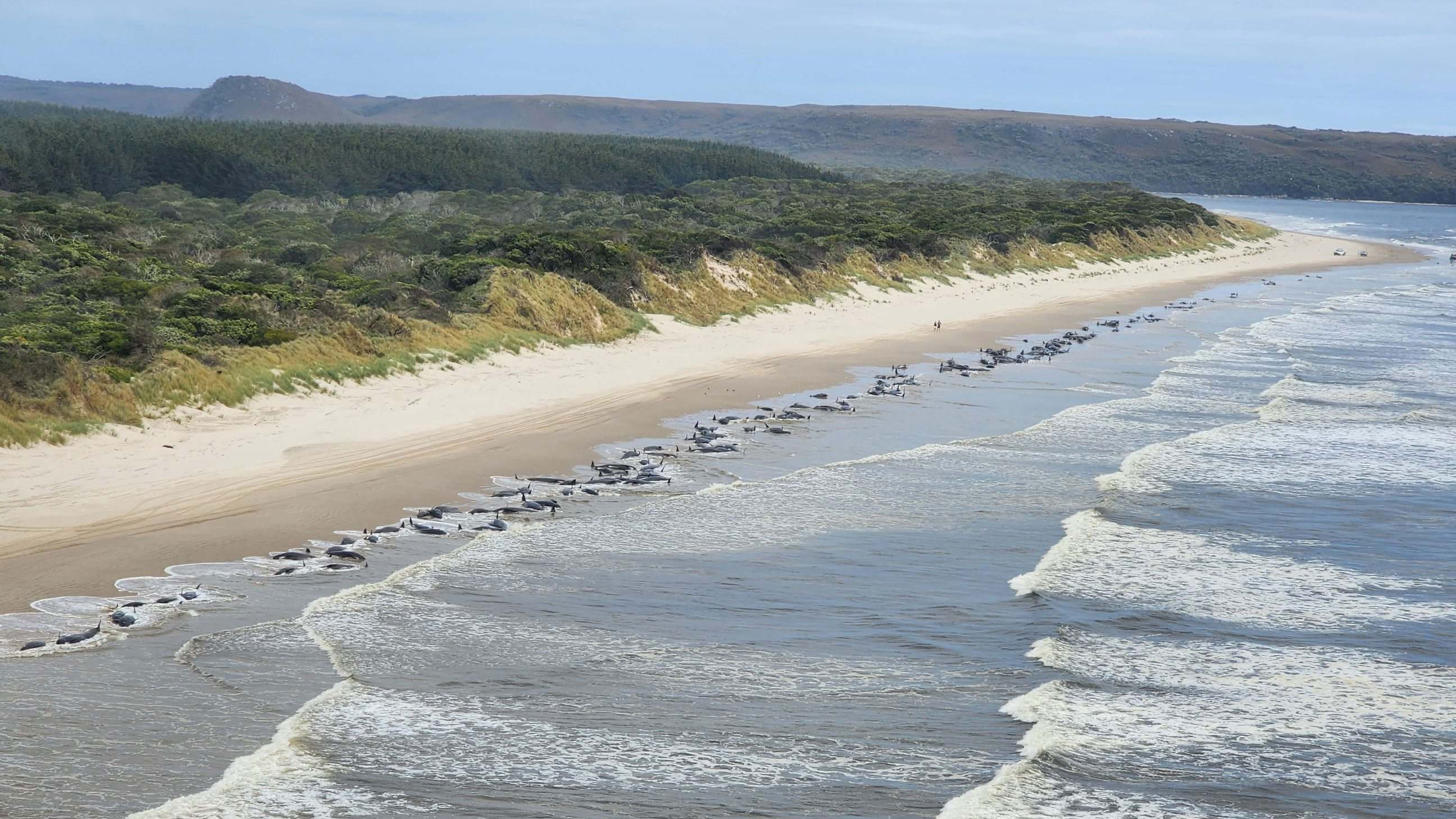
Such mass whale strandings are sad to witness.
But in this case, the aftermath presents a fascinating opportunity for scientific discovery.
As the dead whales decompose, an astonishing and rare chain of events is likely to flow through the marine ecosystem – ultimately leading to an explosion of activity and new life.
A 600-tonne problem
Mass whale strandings happen fairly regularly – especially in Tasmania – yet no one really knows why.
Days before this latest incident, 14 sperm whales became stranded off King Island, north-west of Tasmania.
READ MORE: The four scams Optus customers need to watch out for
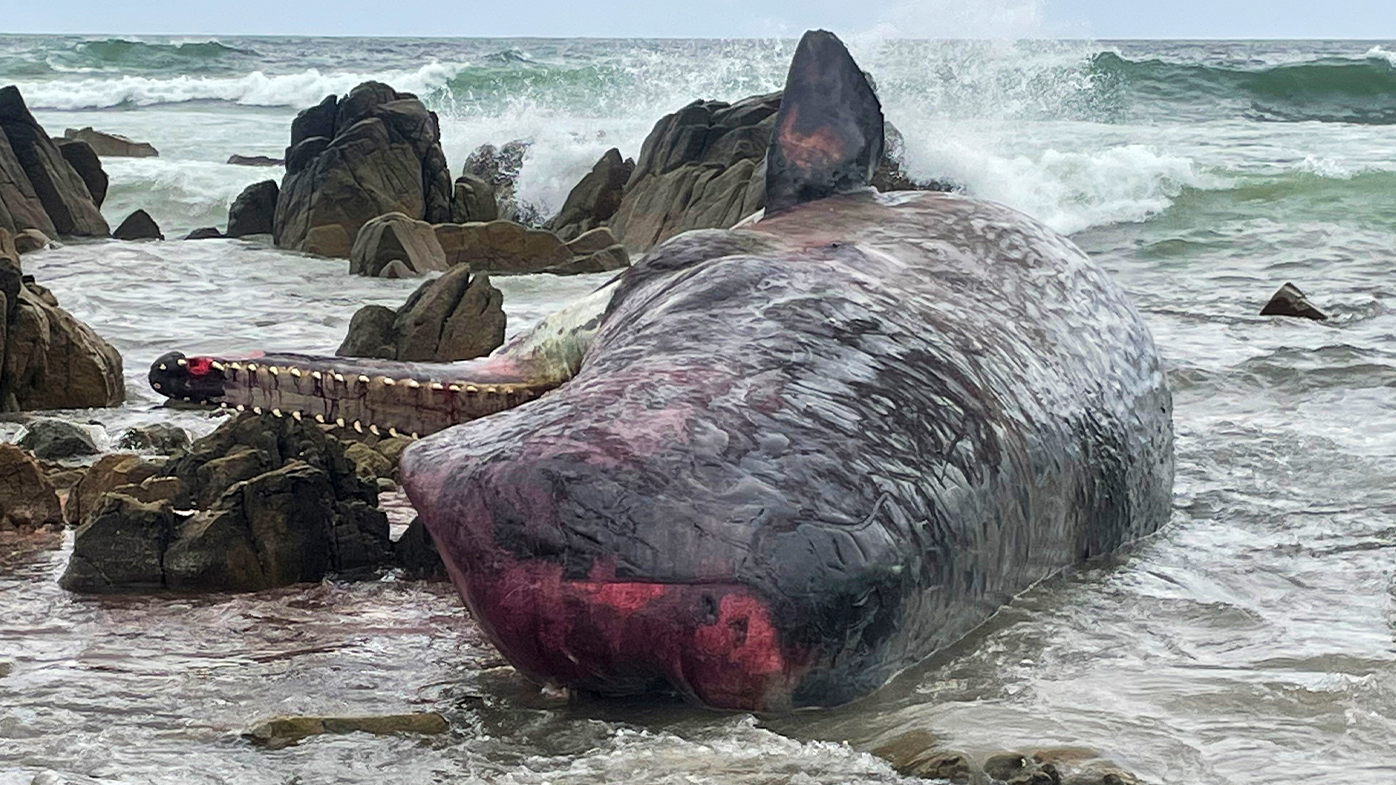
And in 2020, about 470 pilot whales became stranded at Macquarie Harbour.
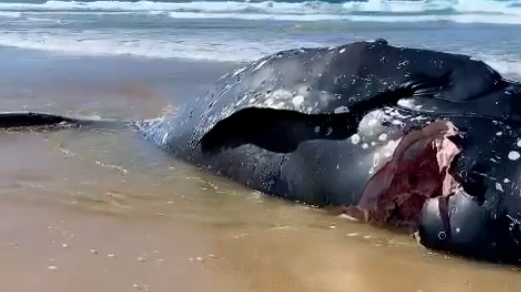
While many were pulled out to sea, some of those carcasses washed up and were left to rot on the beach – an entirely natural process.
However, pilot whales are big animals.
READ MORE: Biden warns of 'substantial loss of life' after Hurricane Ian
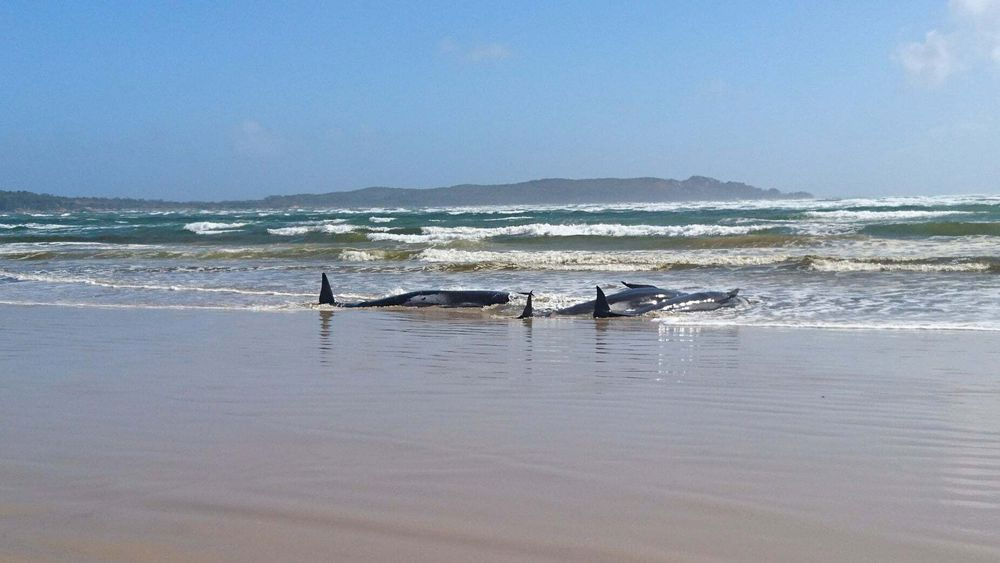
Males weigh up to 2300kg, which means they take a long time to decompose.
The smell of two tonnes of rotting whale blubber soon becomes unbearable, so carcasses are frequently buried.
This time around, authorities decided to tow the dead animals out to sea.
It was reported local salmon farm workers took almost 11 hours to dispose of 204 dead whales with a combined weight of between 500 and 600 tonnes.
They were tied to a 400 metre-long rope and towed by boats for 40 kilometres, before being dropped into deep water in the Indian Ocean.
Some carcasses may wash back to shore, but most are likely to disperse with the tides and currents.
Shark bait? Probably not
The big question is: what happens to all that whale mass dumped at sea?
Initially, a dead whale tends to float to the surface as it begins to decompose and its innards expand with gas.
As this happens, ocean scavengers such as sharks and seabirds are likely to feast on the remains.
READ MORE: Suspect arrested over death of Aussie personal trainer
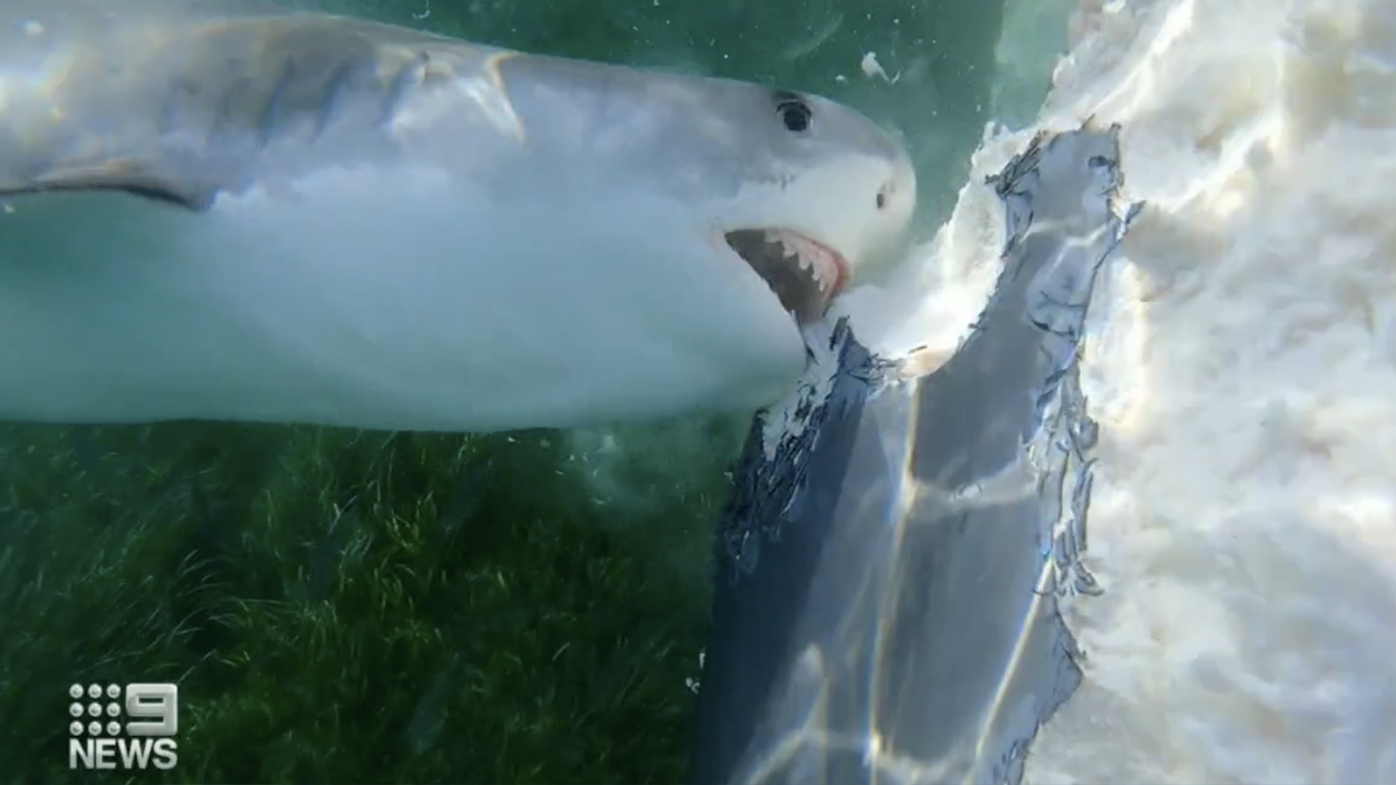
Some people can be concerned that whale carcasses attract sharks that might pose a risk to humans.
Granted, encounters between sharks and humans, are on the rise in Australia and elsewhere. But they're still very rare.
A report to the Western Australian government in 2012 found whale carcasses were a risk factors associated with shark attacks, and said caution should be exercised near a dead whale in the water.
But the same report noted that of 26 shark attacks investigated, the highest number occurred more than a kilometre offshore.
While there is no doubt sharks are attracted to dead whales, the data is not clear on whether a whale carcass leads directly to an increase in shark attacks on people.
Research has shown the likelihood of whale carcasses washing towards shore, where shark scavenging can be observed, is low.
So as long as the carcass is taken far from shore and people keep their distance from it, the threat to humans from shark encounters appears to be exceedingly low.
From death comes new life
Inevitably, the whale carcass will start to sink.
Most life in the ocean is found fairly close to the sea surface, so if the water is relatively shallow much of what's left of the carcass will be quickly eaten by scavengers once it reaches the sea floor.
But these carcasses have been disposed of in deep water.
The deep ocean can be a barren place, where rich food sources are rare.
So the appearance of a single whale carcass can supercharge an entire ecosystem.
New life and activity can erupt around the dead animal in very little time.
This process is known as "whale fall" and has been studied by scientists, sometimes using remotely operated vehicles.
On the seafloor of the North Pacific, whale fall has been found to support the survival of at least 12,490 organisms of 43 species.
Deep sea sharks will make the most of the carcass.
A host of other animals including hagfish, octopus, crabs, lobsters, worms and sea cucumbers will join in too.
All the while, bacteria work away quietly in the background.
According to Britain's Natural History Museum, a single whale can provide animals with food for up to two years during the scavenging stage.
Other animals and bacteria survive off the chemicals produced from the rotting carcass.
These organisms, known as "chemotrophs" were thought to be unique to underwater volcanic vents, where they use hydrogen sulphide as the principal energy source.
Research has shown a similar suite of animals recruit around dead and decaying whales – generating a completely independent ecosystem based on a gas that smells like rotten eggs.
Only a few organisms can break down the bones that remain, in a process that might take up to ten years.
So take a moment to consider the effect of 204 whale falls in a small part of the ocean off Tasmania.
Right now, they are probably generating interconnected marine metropolises, the likes of which are rarely seen.
This story originally appeared on The Conversation and is republished here with permission.
Trump threatens Mitch McConnell, makes racial slur against his wife
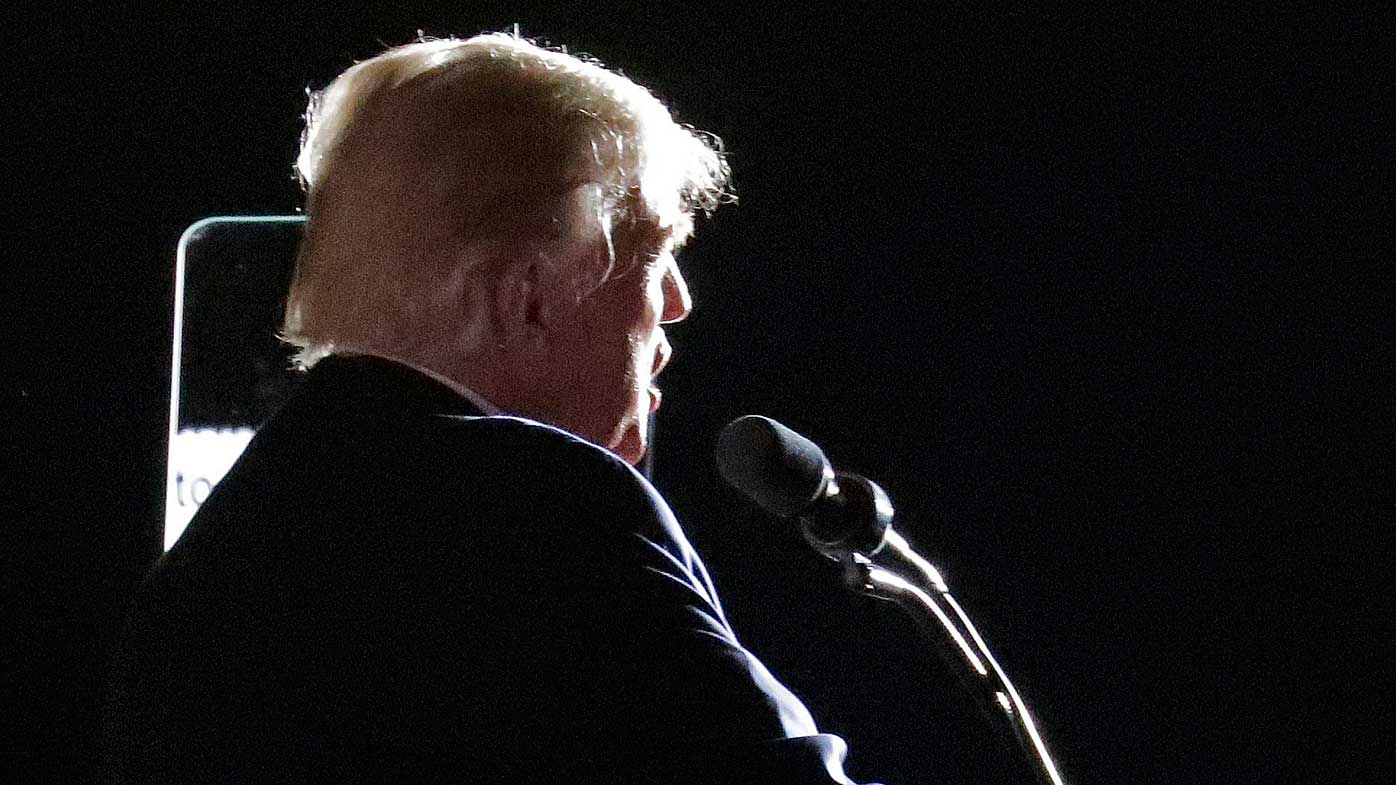
Donald Trump has appeared to threaten the highest ranking member of his own party in Washington, and made a racial slur against his wife.
In a message posted on his social media platform, Trump railed against Republican Senate Minority Leader Mitch McConnell.
"Is McConnell approving all of these trillions of dollars worth of Democrat sponsored bills, without even the slightest bit of negotiation, because he hates Donald J Trump, and he knows I am strongly opposed to them," Trump wrote.
READ MORE: Files in Trump's desk, storage clearly marked 'top secret': DOJ
"Or is he doing it because he believes in the fake and highly destructive Green New Deal, and is willing to take the country down with him?
"In any case, either reason is unacceptable."
Trump then levelled what appeared to be a veiled threat against McConnell.
"He has a DEATH WISH," Trump wrote.
"Must immediately seek help and advise (sic) from his China loving wife, Coco Chow!"
McConnell's wife is Elaine Chao, who served as the Secretary of Transportation in the Trump cabinet for four years.
READ MORE: Trump fraud lawsuit goes to judge who held him in contempt

She resigned in protest the day after the Capitol was stormed by insurrectionists.
Chao was born in Taiwan but moved to America when she was eight years old.
MSNBC host and political commentator Chris Hayes soon weighed in on Twitter.
"Kinda seems like the ex-president just posted a death threat aimed at Mitch McConnell," Hayes wrote.
Trump's rant came after a bipartisan bill passed the Senate to keep the government open.
The continuing resolution was passed in lieu of a budget, by a 72 to 25 margin.
READ MORE: How Trump's terrible endorsements could sink his own party

Joe Biden signed the resolution soon after.
Republicans and Democrats are tied 50-50 in the Senate, with Vice President Kamala Harris serving as the tiebreaker.
McConnell would become majority leader if the Republicans are able to pick up just one seat in the November midterm elections.
'This is not bye-bye to COVID-19'
Experts are warning the lifting of mandatory COVID-19 isolation requirements in less than two weeks is not the end of the pandemic.
Victoria's Australian Medical Association President Dr Roderick McRae said the federal government's decision to lift the isolation requirements will result in an increased risk of illness and death from the virus.
However, he said it is not yet clear how much the risk will rise.
EXPLAINED: Australia to end mandatory COVID-19 isolation periods on October 14
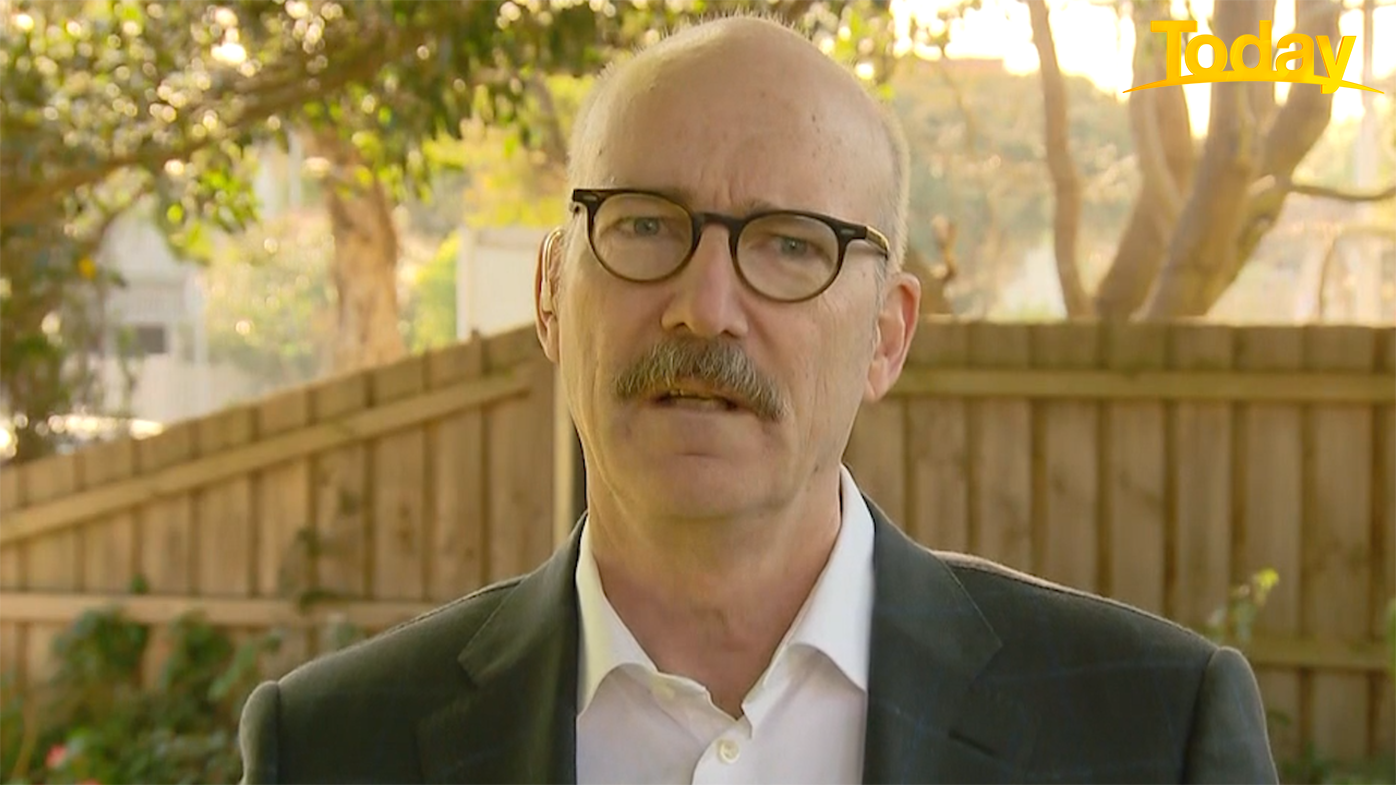
McRae added the lifting of restrictions will inevitably see a rise in infections however many Australians have already been "cheating around the margins" by not reporting or isolating when they are infected.
He said the lifting of restrictions was an extension of what Australians were already doing.
"What we have seen is a mixture of politics and public health trying to find a pragmatic outcome," he said.
"We need to work sensibly."
McRae said the lifting of mandatory restrictions is not the end of the pandemic.
"This is not bye-bye to COVID-19. It is a very unhelpful sort of statement. This is lifting mandatory requirements," he said.
"We want all respiratory illnesses to be treated the same so that if anybody has any symptoms, they stay home."
READ MORE: Man injured during alleged drive-by shooting on Gold Coast
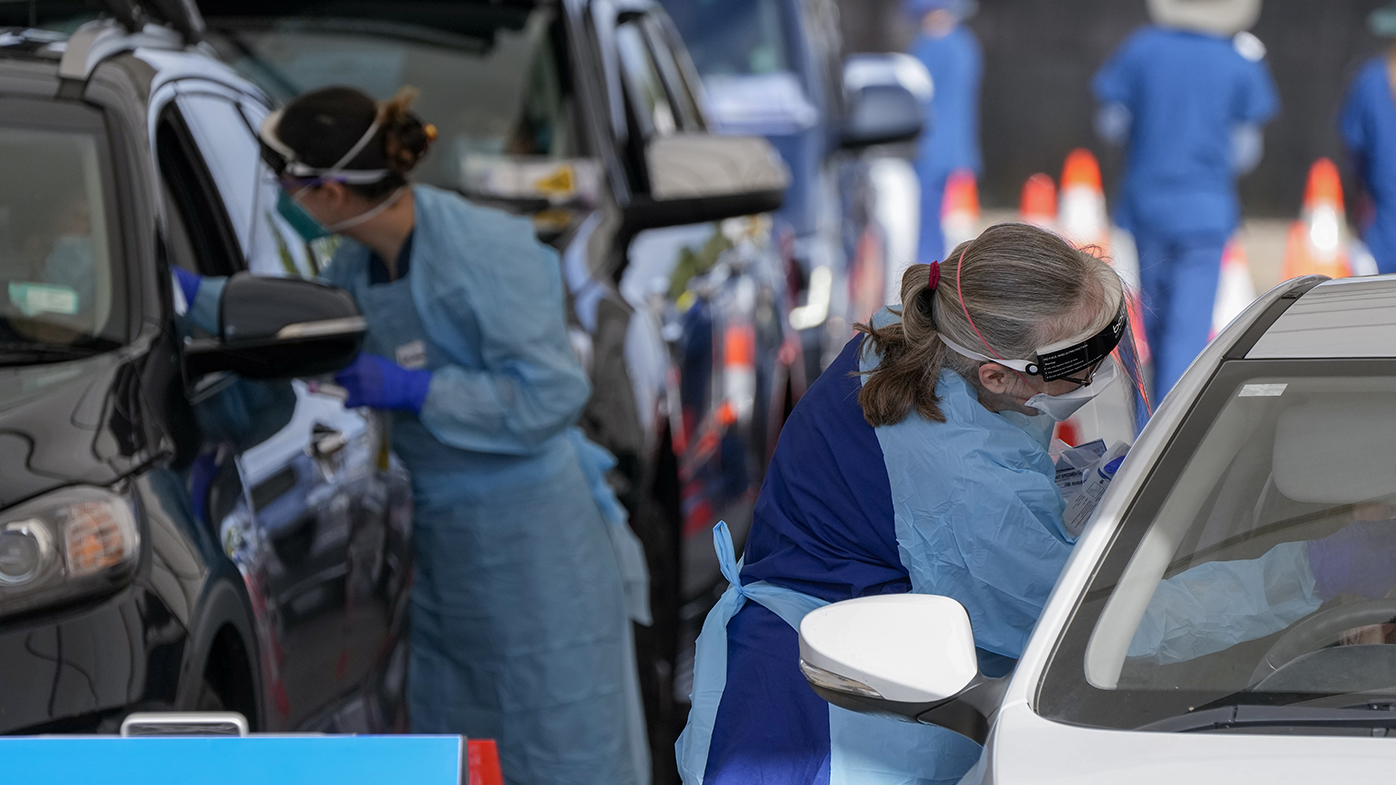
The Chief Medical Officer has already warned restrictions could be re-implemented if another dangerous variant evolves but McRae said they should also be re-instated if there is a high uptick in severe illness and strain on hospitals.
Prime Minister Anthony Albanese announced yesterday following a meeting of national cabinet the mandatory restrictions would be lifted from October 14.
The move comes as a relief for business owners that have been struggling with staff shortages.
It is also expected to free up some money in government budgets because it will no longer be funding pandemic leave payments for casual workers.
Local Focus: Primary painters muck in for mural
Western Rotorua’s tamariki are growing up and “growing” the community with their art.Sport Bay of Plenty and Rotorua Lakes Council have brought together students from Western Heights and Aorangi Primary Schools to create a mural…
Auckland mayoral race: Candidate Wayne Brown attacks NZ Herald journalist Simon Wilson
Auckland mayoral candidate Wayne Brown has said the first thing he’d do in the top job is glue pictures of a New Zealand Herald journalist to urinals so people could “pee on him”.Brown made the comment about Simon Wilson, whom he…
High-needs homeless moved from controversial Fenton St hotel in Rotorua
Most of the people staying at a controversial hotel used for high-needs homeless on Rotorua’s Fenton St have been moved to other housing.Twenty-eight of the 41 people who were staying at the Four Canoes Hotel have been moved, the…
Popular Aldi chips recalled over presence of plastic
A popular Aldi snack has been taken off the shelves amid concerns of potential contamination.

Aldi's Sprinters Crinkle Cut Multi Pack Chips have been recalled due to the potential presence of plastic pieces.
The chips have been for sale at all Aldi stores.
READ MORE: Putin illegally annexes Ukrainian regions
"Food products containing plastic pieces may cause injury if consumed," the NSW Food Authority said.
The NSW Food Authority said the chips being recalled have the best before date of January 1 2023.
Any customers who have bought these chips are urged to not eat them and return them to Aldi for a full refund.
Hurricane Ian lashes South Carolina as Florida surveys devastation
A revived Hurricane Ian made landfall on coastal South Carolina on Friday, threatening the historic city of Charleston with severe flooding after the deadly storm caused catastrophic damage in Florida and trapped thousands in their homes.
Ian's centre came ashore near Georgetown with much weaker winds than when it crossed Florida's Gulf Coast on Wednesday as one of the strongest storms to ever hit the US.
Sheets of rain whipped trees and power lines and left many areas on Charleston's downtown peninsula under water. Sections of piers at North Myrtle Beach and Pawleys Island collapsed into the churning waves and washed away.
READ MORE: Ukraine submitting 'accelerated' application to join NATO
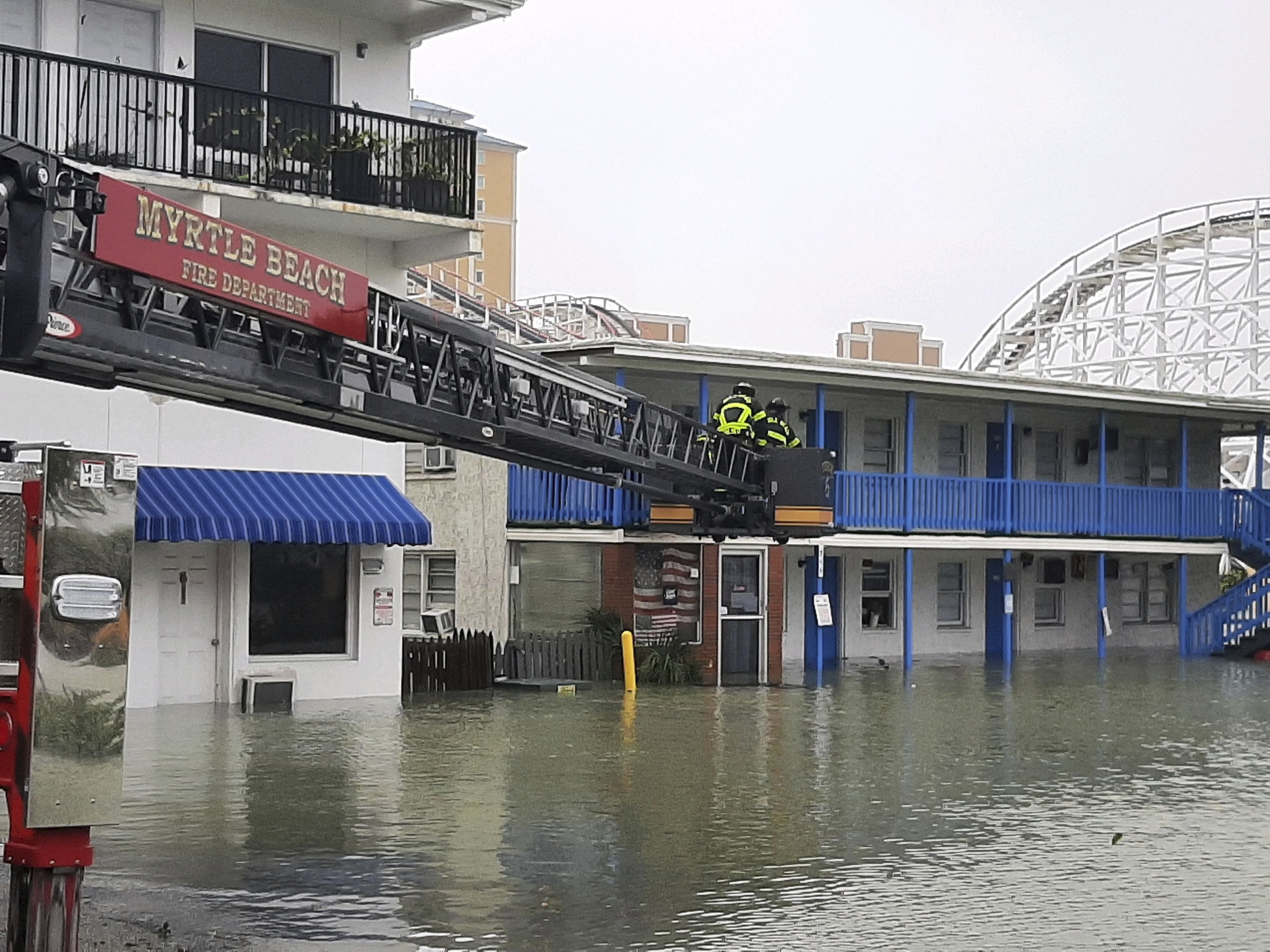
"This is a dangerous storm that will bring high winds and a lot of water," South Carolina Gov. Henry McMaster tweeted.
"Be smart, make good decisions, check on your loved ones, and stay safe."
READ MORE: Putin illegally annexes Ukrainian regions as part of Russia
A hurricane warning has been issued from the Savannah River at the Georgia-South Carolina state line to Cape Fear, North Carolina. Considerable flooding is possible from seawater and rain, especially in parts of coastal South Carolina, where storm surge up to 200 centimetres of rain could hit, forecasters say.
And a tornado watch covering nearly five million people is in effect until 10 pm ET (12pm Saturday AEST) for parts of the Carolinas and Virginia, including Myrtle Beach, Wilmington, Norfolk and Virginia Beach, according to the Storm Prediction Centre.
More than 211,000 power outages were reported in South Carolina, as well as more than 82,000 in North Carolina, by 3.50 pm ET (5.50 am Saturday AEST), according to PowerOutage.us.
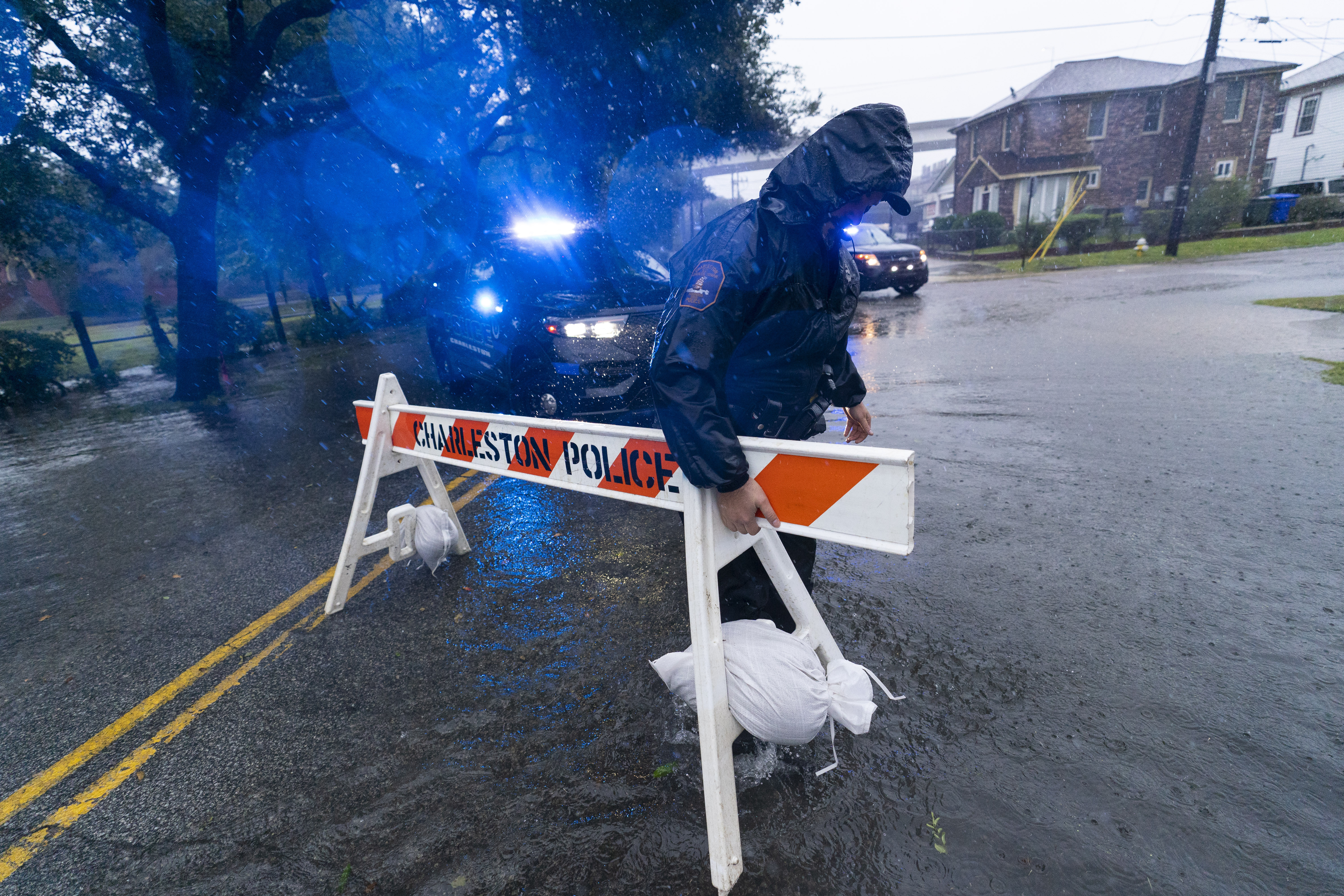
In South Carolina, Charleston International Airport's airfield closed Friday because of high winds, the airport said. And Myrtle Beach residents are urged to stay inside during the storm, Mayor Brenda Bethune told CNN.
"It's a pretty scary sight," Bethune said of Hurricane Ian.
"I'm seeing way too many cars passing by. And I think people just don't realize how dangerous it is to be out in these types of conditions. We've seen so many people's cars get stuck and emergency personnel has to go out and rescue people."
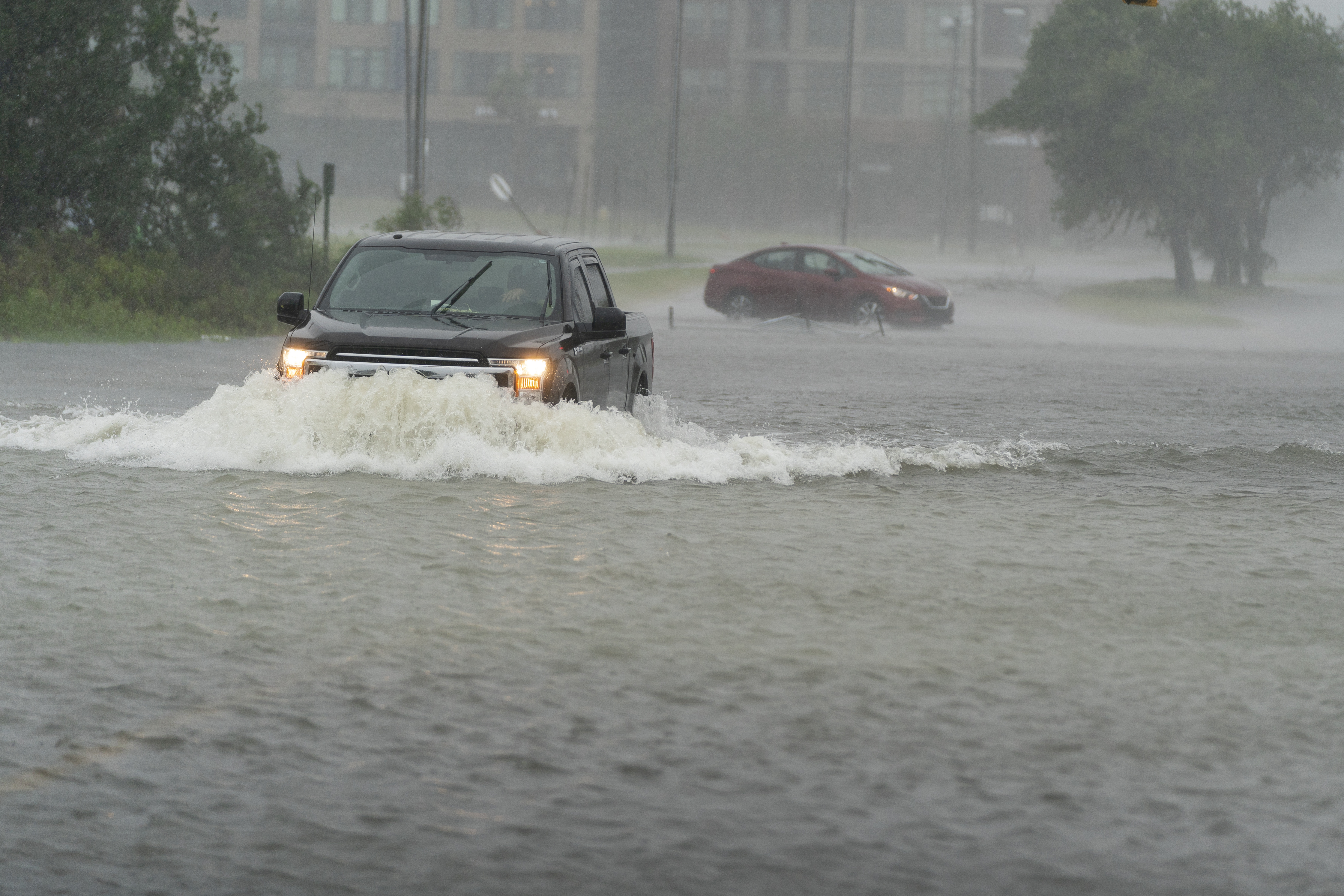
As Ian moved away from Florida, governors in South Carolina, North Carolina, Georgia and Virginia declared emergencies.
In North Carolina, Governor Roy Cooper urged residents to prepare for torrents of rain, high winds and potential power outages.
The storm likely will have left behind lasting changes to Atlantic landscapes. Coastlines along Georgia and South Carolina may sustain significant alterations because the powerful waves and storm surges brought by Ian could inundate coastal sand dunes, according to the US Geological Survey.
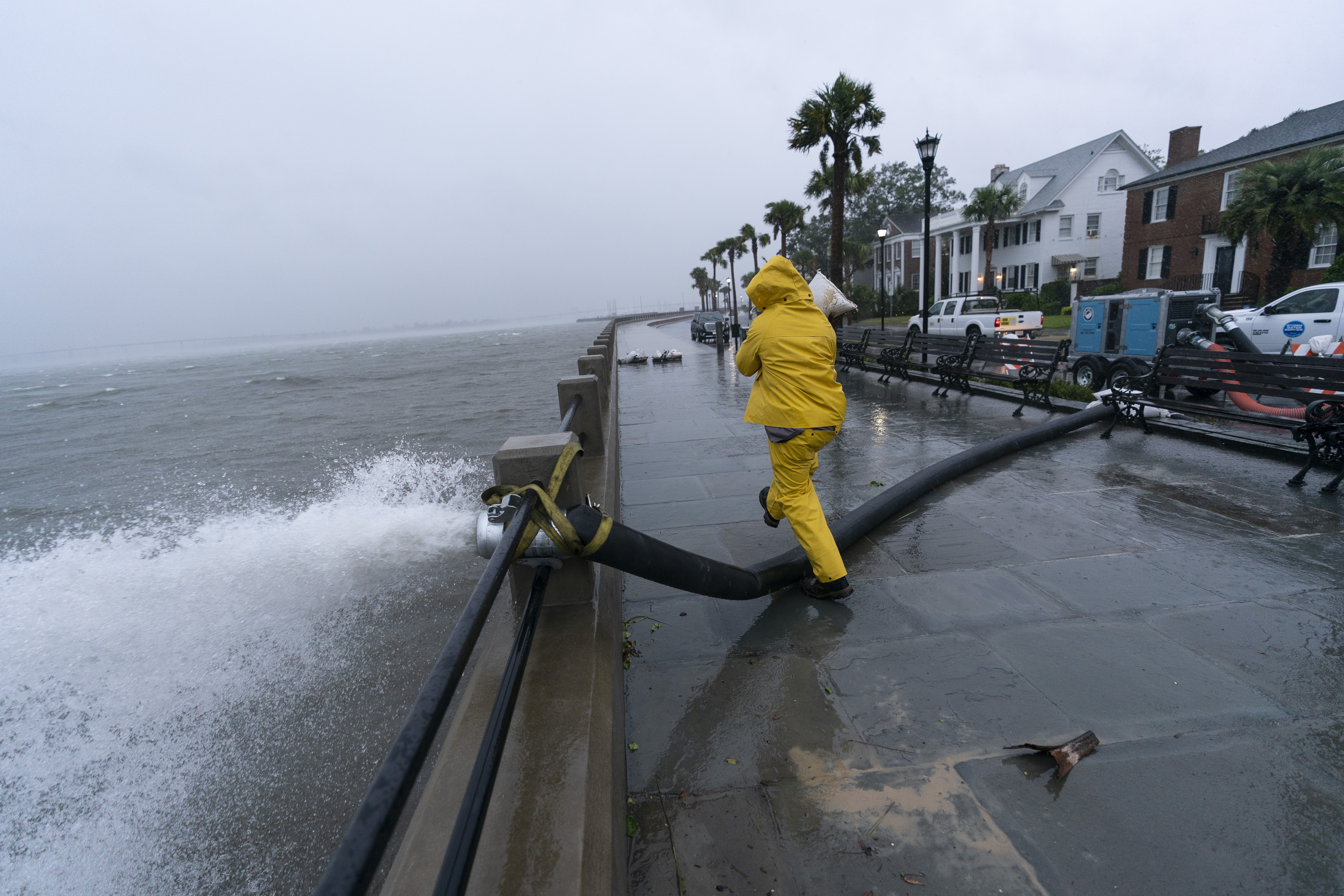
In addition to flooding communities behind the dunes, the storm may push sand back and deposit it inland, which could "reduce the height of protective sand dunes, alter beach profiles and leave areas behind the dunes more vulnerable to future storms," the agency said.
Florida left with swath of destruction
Meanwhile, Florida confronts the dizzying destruction Ian wrought through much of the peninsula Wednesday and Thursday after it smashed into the southwest coast as a Category 4 storm and ploughed through central and northeastern areas.
At least 25 deaths have been reported in the state. Homes on the coast were washed out to sea, buildings were smashed throughout the state, and floodwater ruined homes and businesses and trapped residents, even inland in places like the Orlando area.
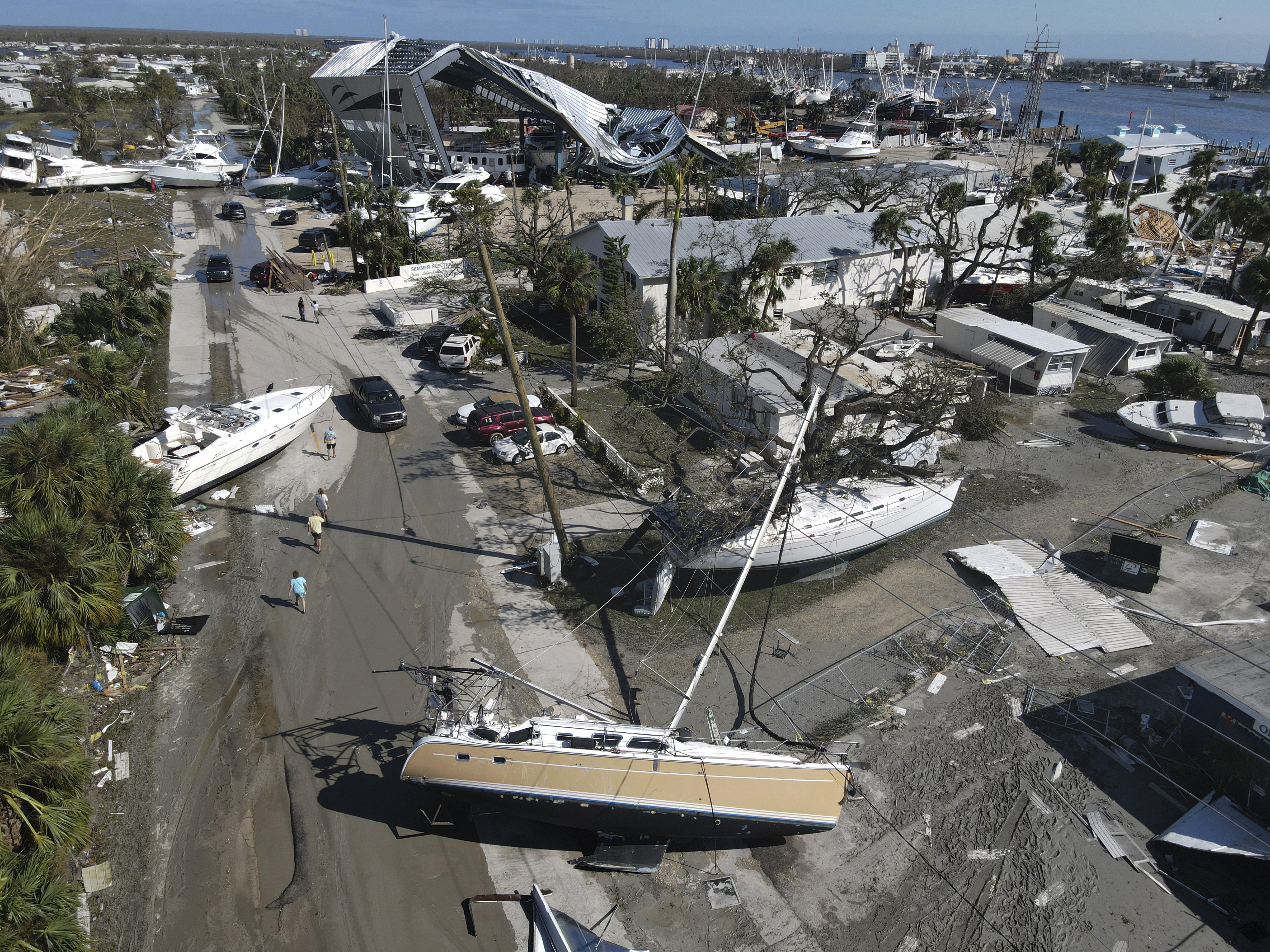
Roger Desjarlais, manager of Lee County, which encompasses Fort Myers, told CNN Friday that it isn't an overstatement to say that Hurricane Ian decimated parts of the area and "there has to be many fatalities."
"It looked as though someone had just dropped from the sky picked up hotels and buildings and took them away. So much so that in many places there wasn't even debris," Desjarlais said. "We also know that not as many people evacuated from those islands as we had hoped for. We know there has to be many fatalities yet to be accounted for."
Rescue crews piloted boats and waded through riverine streets Thursday to save thousands of people trapped amid flooded homes and buildings shattered by the hurricane.
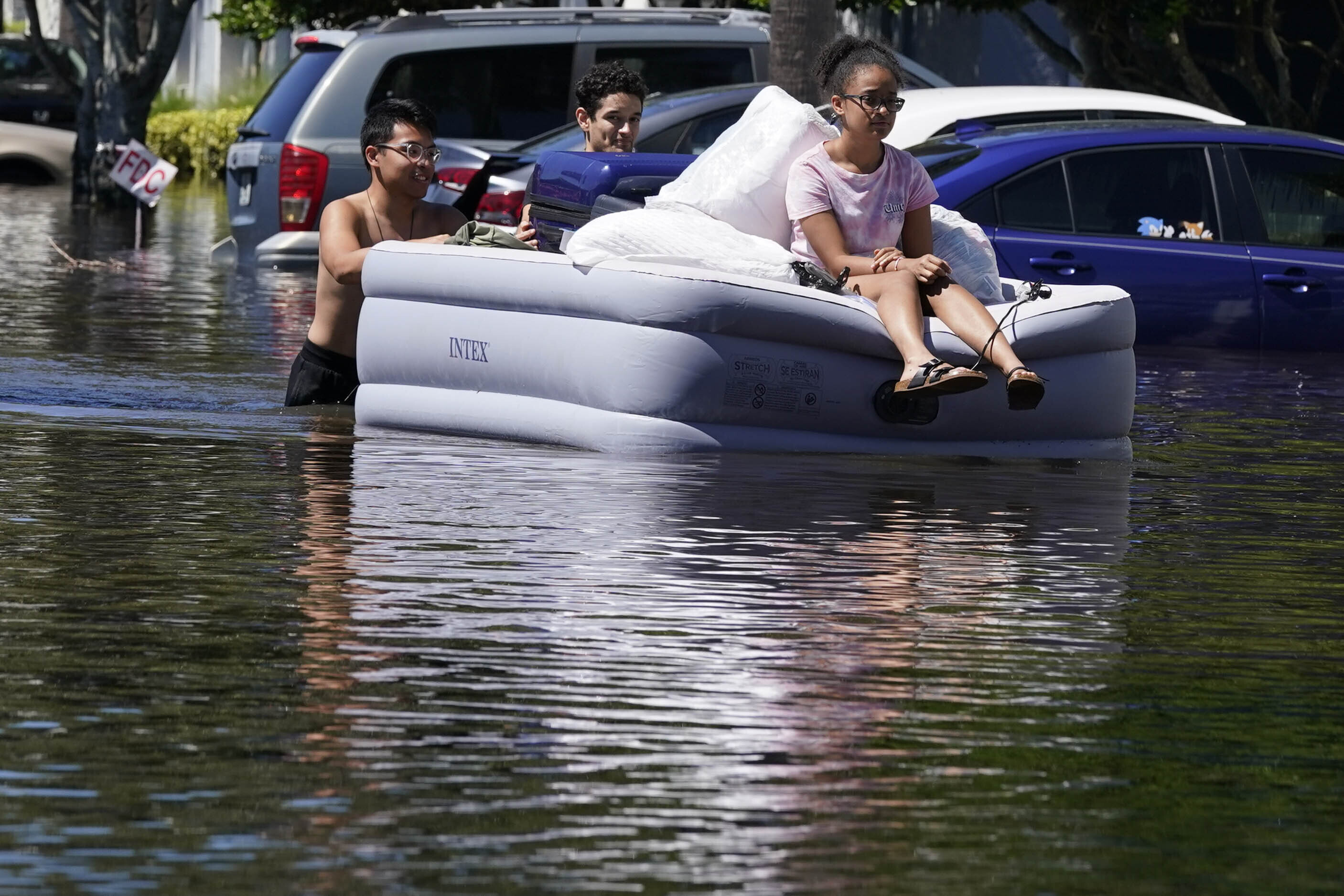
Florida Gov. Ron DeSantis said Friday that rescue crews had gone door-to-door to over 3,000 homes in the hardest-hit areas.
"There's really been a Herculean effort," he said during a news conference in Tallahassee.
And now, the storm's aftermath poses new, deadly dangers of its own. Some standing water is electrified, officials warned, while maneuvering through debris-strewn buildings and streets – many without working traffic signals – risks injury. Lack of air conditioning can lead to heat illness, and improper generator use can cause carbon monoxide poisoning.
Those killed in Florida included a 67-year-old man who was waiting to be rescued and fell into rising water inside his New Smyrna Beach home late Thursday, the Volusia County Sheriff's Office said. Patrol vehicles had been unable to reach him because roads were flooded.
At least three people were reported killed in Cuba after the hurricane struck there on Tuesday.
In the Fort Myers area, businesses near the beach were completely razed, leaving twisted debris. Broken docks floated at odd angles beside damaged boats. Fires smouldered on lots where houses once stood.
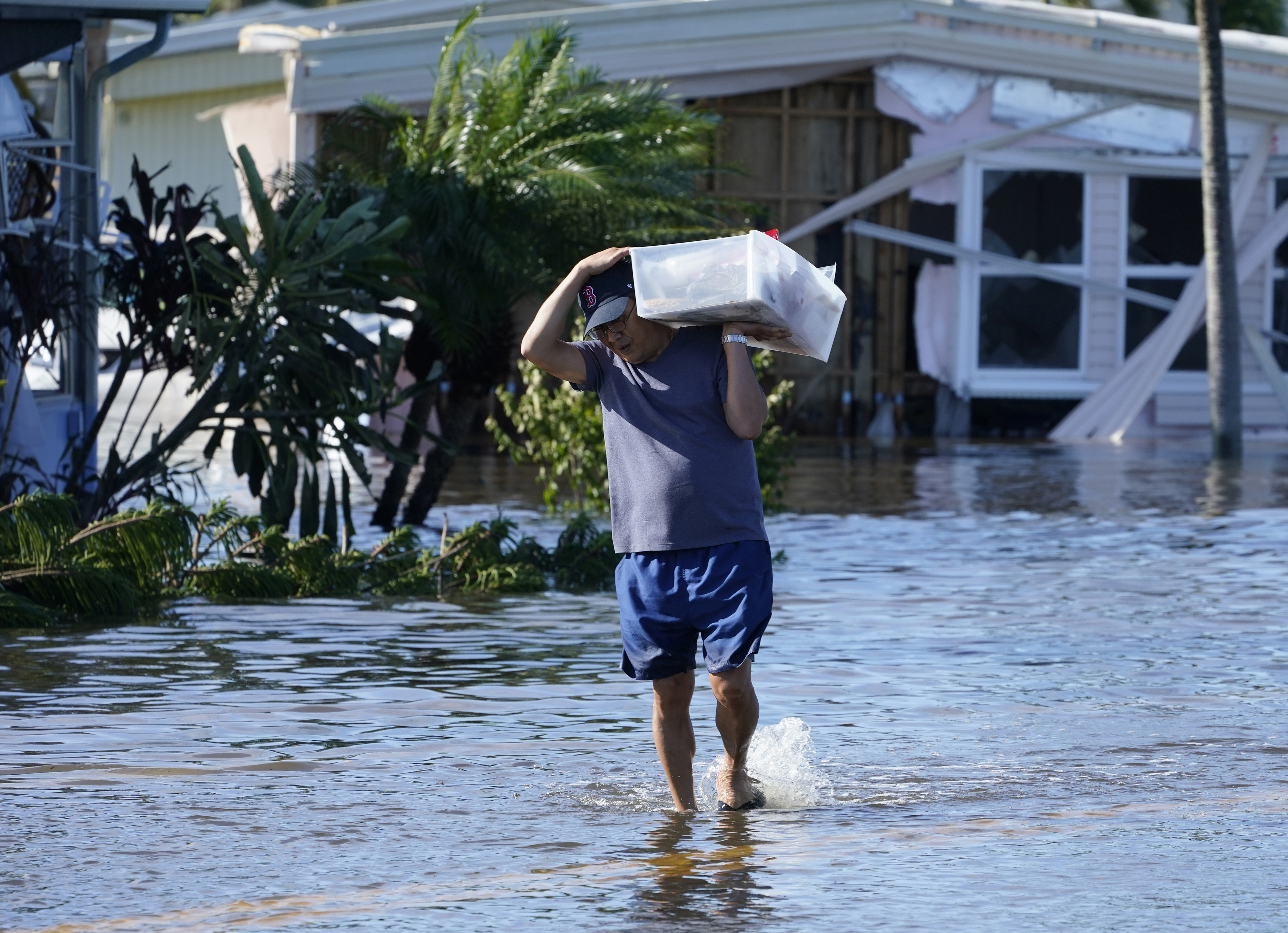
"I don't know how anyone could have survived in there," William Goodison said amid the wreckage of a mobile home park in Fort Myers Beach where he'd lived for 11 years. Goodison said he was alive only because he rode out the storm at his son's house inland.
The hurricane tore through the park of about 60 homes, leaving many destroyed or mangled beyond repair, including Goodison's single-wide home. Wading through waist-deep water, Goodison and his son wheeled two trash cans containing what little he could salvage — a portable air conditioner, some tools and a baseball bat.
The road into Fort Myers was littered with broken trees, boat trailers and other debris. Cars were abandoned in the road, having stalled when the storm surge flooded their engines.
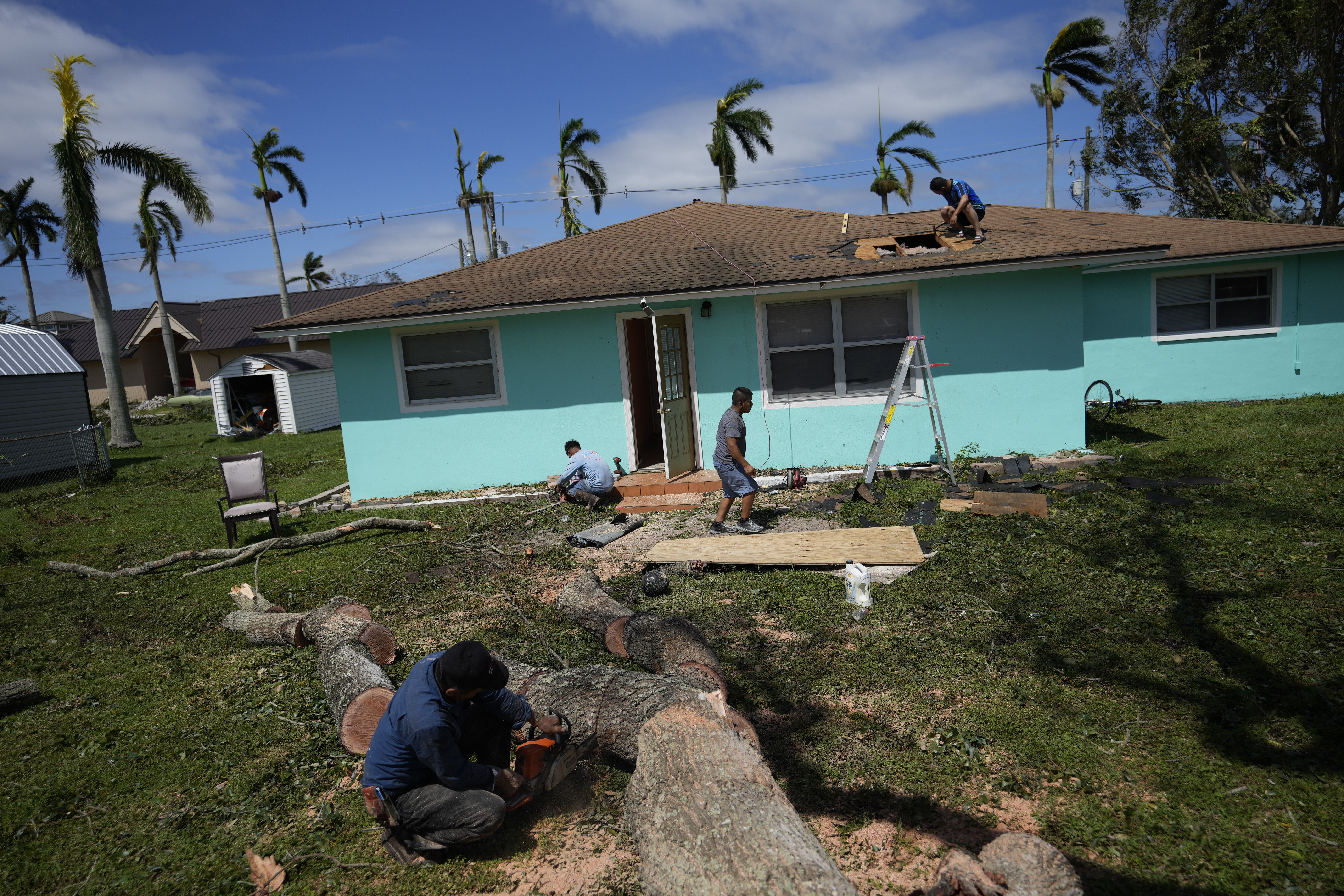
Emergency crews sawed through toppled trees to reach stranded people. Many in the hardest-hit areas were unable to call for help because of electrical and cellular outages.
A helicopter flight over Fort Myers Beach shows utter devastation: empty or debris-littered lots where homes and businesses used to be and boats tossed into mangroves.
"You're talking about no structure left. … You're talking about homes that were thrown into the bay. This is a long-term fix, and it's life-changing," Lee County Sheriff Carmine Marceno said.
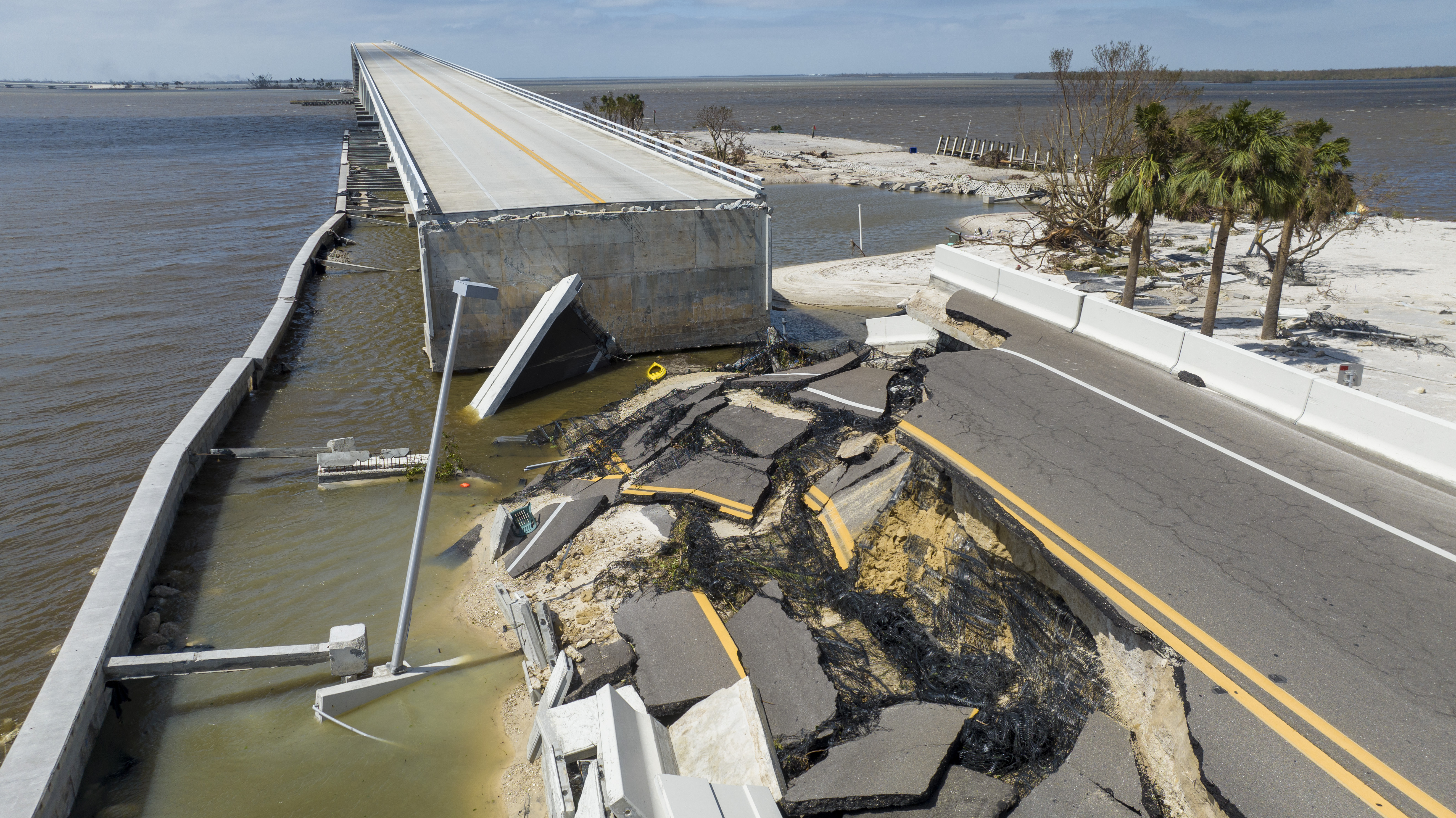
A chunk of the Sanibel Causeway fell into the sea, cutting off access to the barrier island where 6,300 people live.
Record flooding was recorded across central and northern Florida, including at least three rivers that hit all-time flood records
Hours after weakening to a tropical storm while crossing the Florida peninsula, Ian regained strength Thursday evening over the Atlantic.
The National Hurricane Center predicted it would hit South Carolina as a Category 1 hurricane Friday, still much weaker than the Category 4 hurricane it was on Wednesday.
National Guard troops were being positioned in South Carolina to help with the aftermath, including any water rescues. And in Washington, President Joe Biden approved an emergency declaration for the state, a needed step to speed federal assist for recovery once Ian passes.
Watch: Truck ignites in blazing fire on Transmission Gully motorway
Video footage has captured a truck trailer burning in a huge orange fireball on a motorway north of Wellington.A fire truck can be seen racing up to the scene on Transmission Gully as a person in a car passing in the opposite direction…