Tag Archives: oceania

Chinese rover reveals possible ancient flooding on Mars

Chinese scientists have released a new radar image from the Zhurong (red star) Mars rover, which reveals sediment that suggests there was flooding on the planet millions of years ago. 

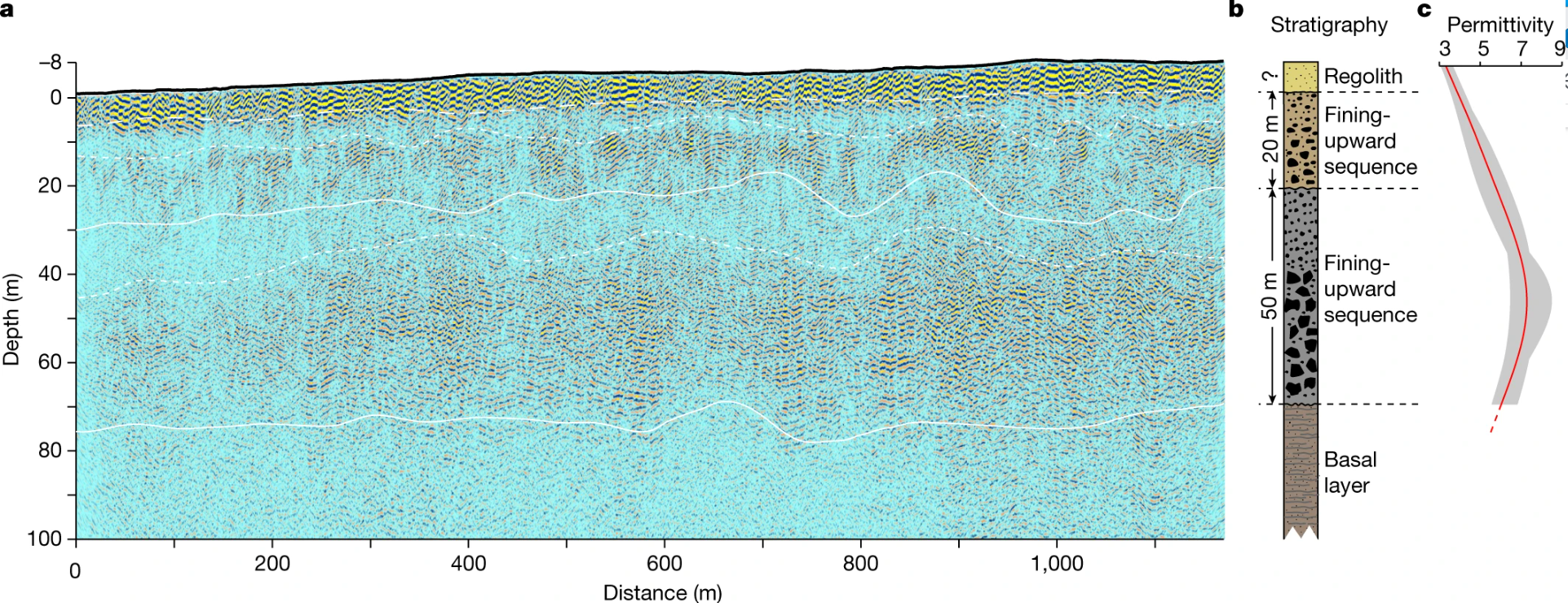
Scientific Journal Nature published the image and research, which provides new insights into the surface structure of the Utopia Planitia basin, the largest recognized impact basin on Mars and in the Solar System with an estimated diameter of 3,300 kilometres. 

The world has not seen any new ground-based data from the Utopia impact crater on Mars for over 45 years, since the United States of America's Viking 2 rover mission of 1975. 

READ MORE: Anonymous hacker behind Optus breach surfaces with $1 million threat

Researcher Ling Chen and colleagues from the Chinese Academy of Sciences presented the image, which was collected by the rover more than a kilometre from its original landing site.

The Zhurong rover discovered that the Utopia basin is segmented into multiple sub-surface layers approximately 70 metres thick in total.

Alternative models are being investigated, but research reveals that the layered structure may indicate that the basin experienced episodic flooding during the late Hesperian to Amazonian period. 

READ MORE: Russian military recruiter shot amid fear of Ukraine call-up

The solar-powered rover, tasked to collect information on the climate conditions and magnetic fields of Mars, successfully landed in 2021 as part of China's first mission to the red planet. 

On the top surface of the basin lies a layer of regolith, a blanket of loose rock and dust less than 10 metres thick. 

This new image brings more evidence to the investigation of an ancient ocean on Mars, which is suggested to have dissolved into the rocks and crust of the planet over the years. 

READ MORE: NASA spacecraft crashes into asteroid in world-first defence test

Wild pigs menacing dogs, goats in New Zealand city

Images in this story may distress some readers.

An explosion in wild pig numbers in New Zealand has seen them spotted in suburban Wellington backyards and killing baby goats on nearby lifestyle blocks.

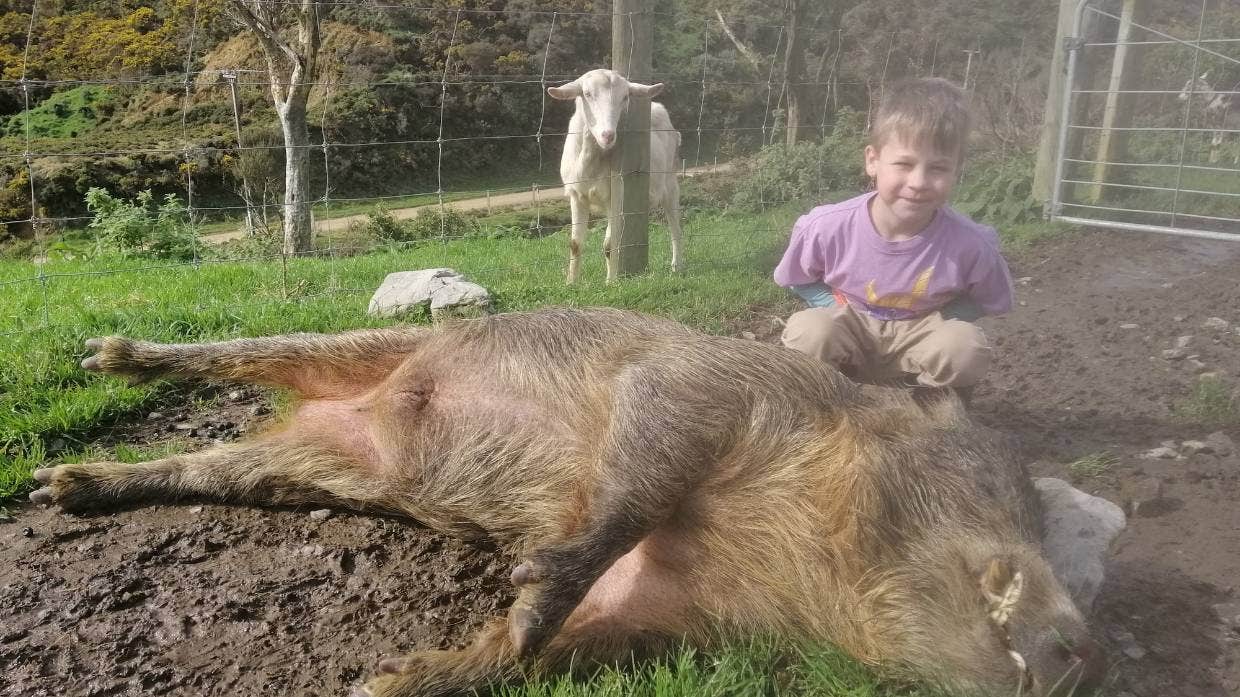
Naomi Steenkamp, who raises goats on property behind the Brooklyn wind turbine, said the increasing numbers of wild pigs this year meant they were ending up on popular walking tracks above Aro Valley, backyards in parts of western Brooklyn, and were regularly spotted at the southern landfill.

"I don't think people realise how big they are," she said after her husband shot and killed one that she thought weighed 120kg over the weekend.

READ MORE: Anonymous hacker behind Optus breach surfaces with $1 million threat

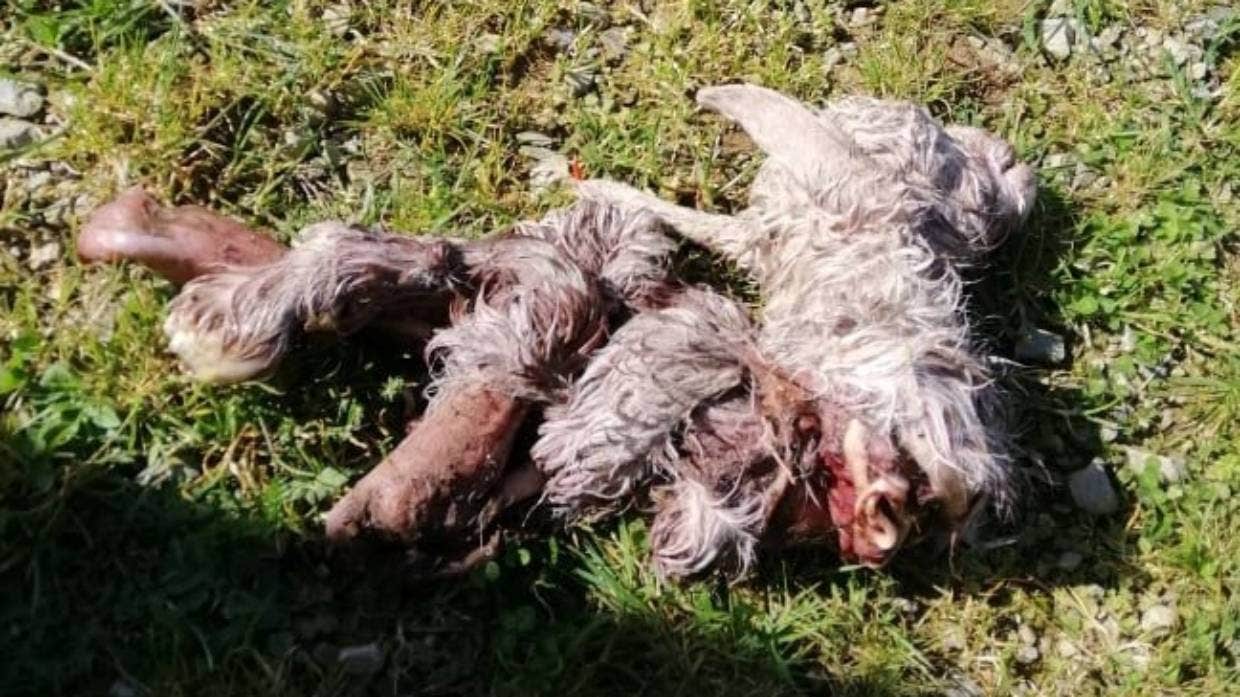
Her own kid goats had been "eaten alive" by the wild pigs.

She did not know for sure why the pig numbers had suddenly exploded, but it had been suggested that a ban on hunting during the COVID-19 lockdowns had allowed numbers to increase.

The Wellington City Council had been proactive in controlling pig numbers but the area seemed to be an "isolated pocket" of problem pigs, she said.

Council spokesperson Richard MacLean confirmed the council was aware of the problem and had a professional hunter chasing pigs, goats, and deer between Brooklyn, Karori, and the south coast.

READ MORE: Ten-day warning for country as 'series of weather systems loom'

But the council was challenged as some of the land was privately owned and not all allowed hunters or hunting dogs on their land.

"If the Council had its way, then we'd get rid of all of these feral animals – but the terrain and the combination of land ownership is making it a tough task … we've certainly had calls over the years when the pigs start ripping up vegetable gardens in lawns in Brooklyn and Karori," MacLean said.

In August, a Brooklyn resident around the Ashton Fitchett Drive area, posted on Facebook about a pig run-in at dusk.

READ MORE: Russian military recruiter shot amid fear of Ukraine call-up

"The dog was outside and started barking and howling, so I went to see why," she said.

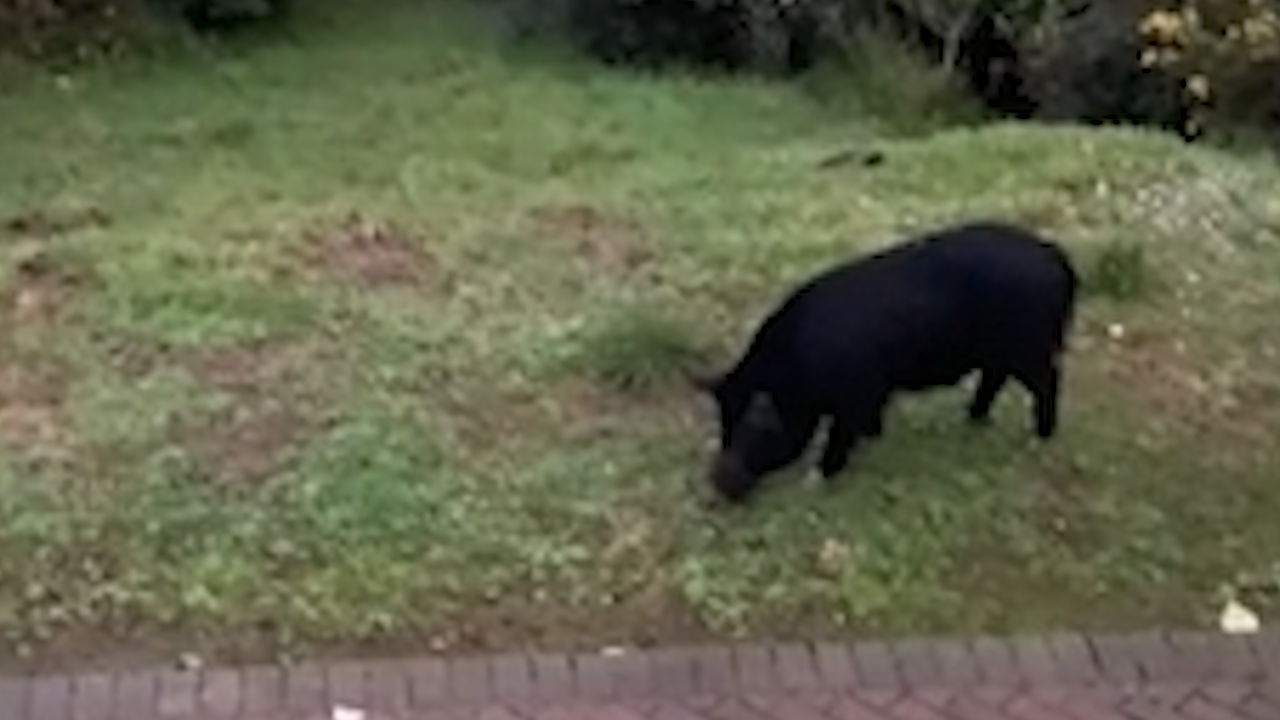
"I opened the window and there was an enormous black pig facing up to the dog. Fortunately it ran off when I opened the window."

New Zealand Pighunting Association President Warren Petersen confirmed that first COVID-19 lockdown meant hunters could not get out and pig numbers grew.

READ MORE: Melbourne woman fighting for life after hit by roller coaster

"I was getting phone calls from all over the North Island about the pig explosion," he said.

Petersen, who farms in north Taranaki, said pigs would target newborn goats and lambs.

"They skin them out – you get the skin with the legs and nothing else."

They were not generally a risk to people but could pose a danger if cornered.

This story originally appeared on Stuff and is republished here with permission.

NASA spacecraft crashes into asteroid in world-first defence test

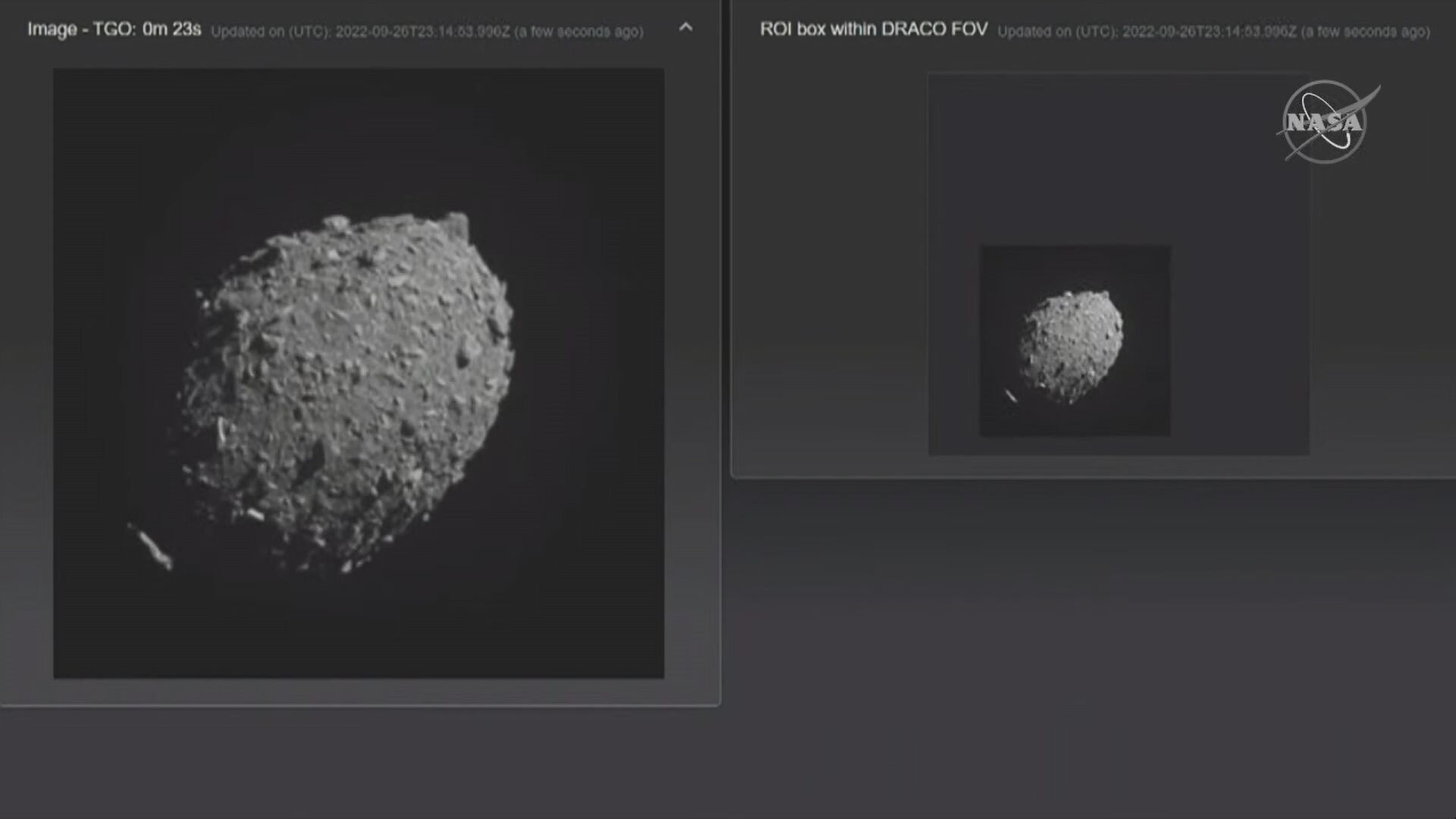
Humanity has carried out a world-first planetary defence test, crashing a rocket into an asteroid spinning through space.

At about 9.15am AEST, the NASA DART rocket made contact with Dimorphos, a moonlet of the larger asteroid Didymos, at about 22,500km/h.

NASA crew monitoring the operation (from Earth, if it needs to be said) cheered as the signal from the rocket was lost at the moment of impact.

Although Dimorphos is not on a collision course with Earth – and is far too small to pose an extinction-level threat – the DART test is expected to provide invaluable data about altering the course of celestial bodies.

NASA will measure how much the asteroid's course was altered by, over the coming weeks.

Scientists expected the impact to carve out a crater, hurl streams of rocks and dirt into space and, most importantly, alter the asteroid’s orbit.

READ MORE: Defence tactics to stop hazardous asteroids hitting Earth

The Double Asteroid Redirection Test (DART) will help determine if intentionally crashing a spacecraft into an asteroid is an effective way to change its course.

The $325 million mission is the first attempt to shift the position of an asteroid or any other natural object in space.

“No, this is not a movie plot,” NASA Administrator Bill Nelson tweeted earlier in the day. ”We’ve all seen it on movies like ‘Armageddon,’ but the real-life stakes are high,” he said in a prerecorded video.

READ MORE: Ten-day warning for country as 'series of weather systems loom'

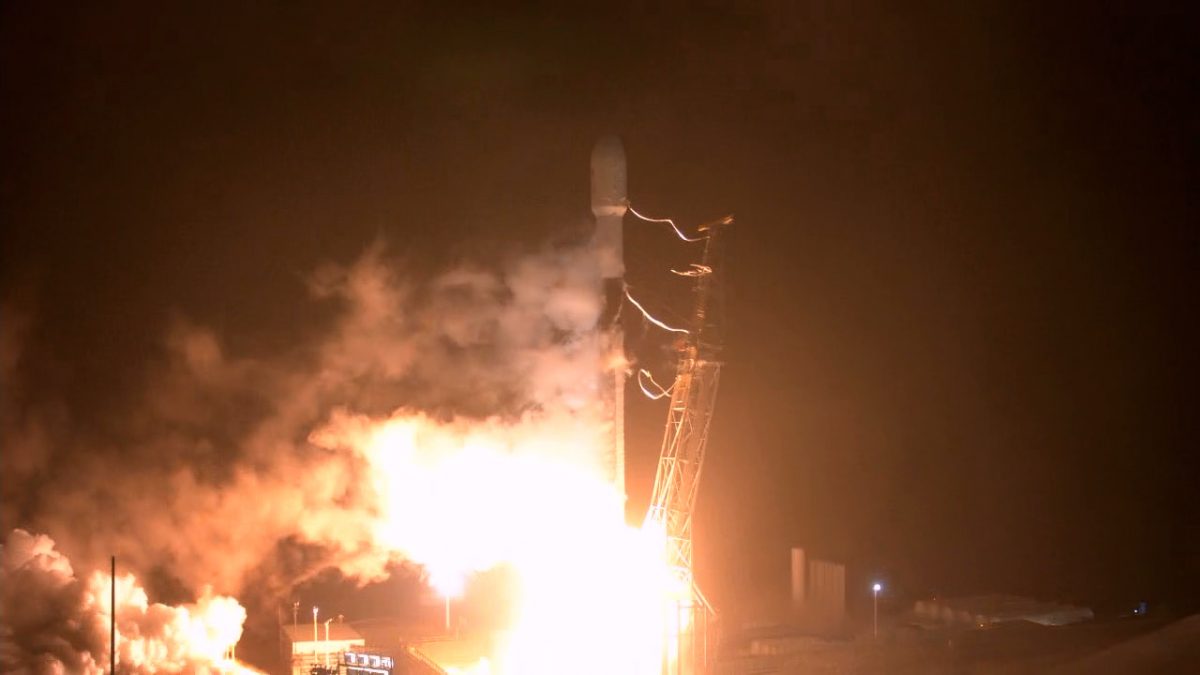
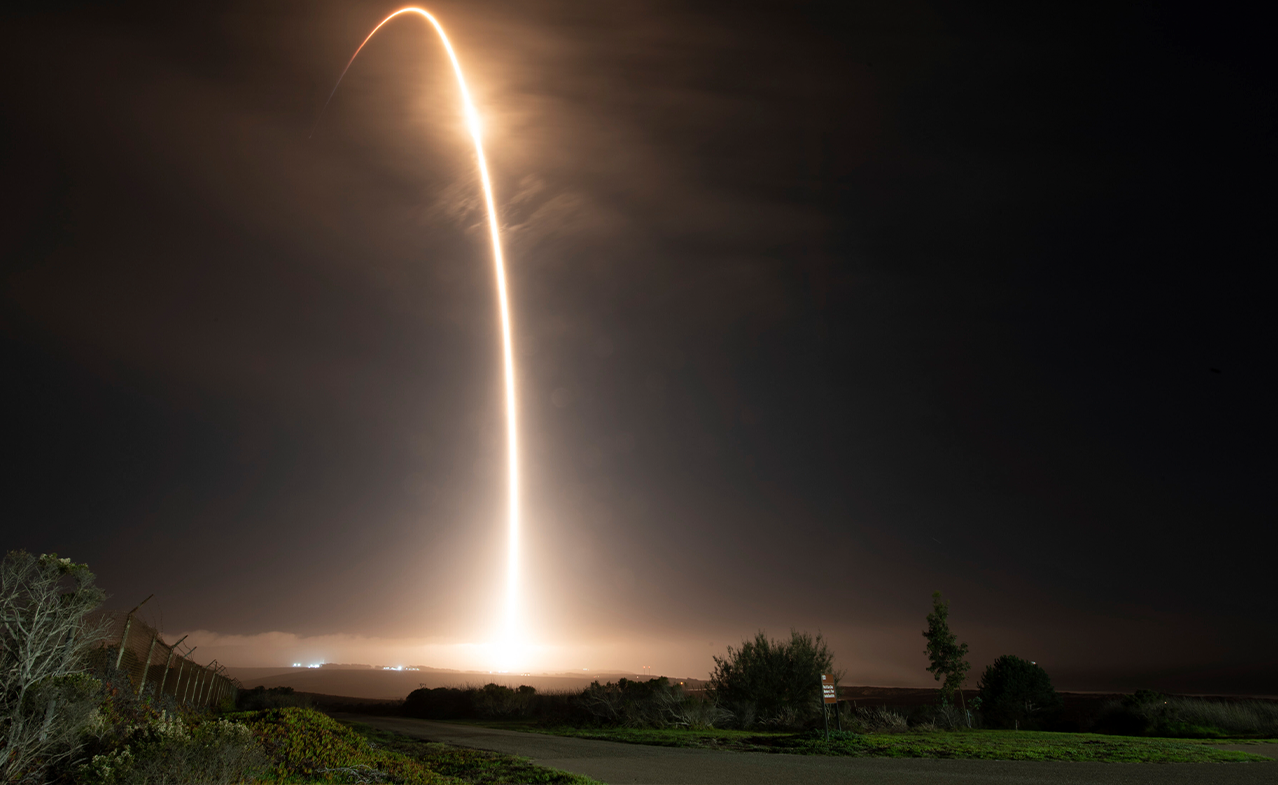
The SpaceX Falcon 9 rocket launches with the Double Asteroid Redirection Test, or DART, spacecraft onboard, Tuesday, Nov. 23, 2021, from Space Launch Complex 4E at Vandenberg Space Force Base in California.

Launched last November, the vending machine-size DART– short for Double Asteroid Redirection Test – navigated to its target using new technology developed by Johns Hopkins University’s Applied Physics Laboratory, the spacecraft builder and mission manager.

A mini satellite followed a few minutes behind to take photos of the impact.

The Italian Cubesat was released from DART two weeks ago.

Scientists insisted DART would not shatter Dimorphos. The spacecraft packed a scant 570 kilograms, compared with the asteroid’s five billion kilograms.

But that should be plenty to shrink its 11-hour, 55-minute orbit around Didymos.

READ MORE: Russian military recruiter shot amid war call-up fear

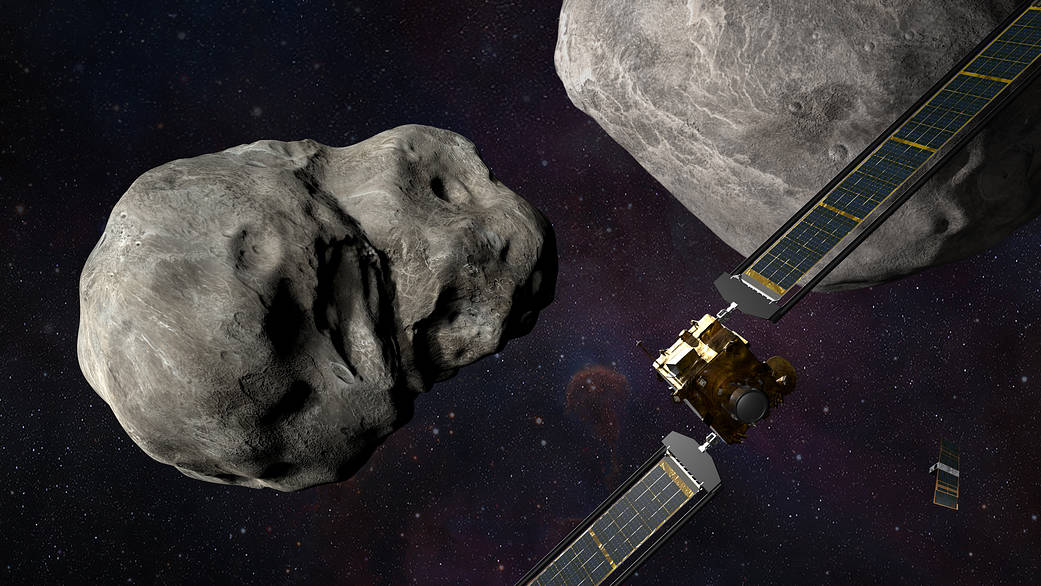
This illustration made available by Johns Hopkins APL and NASA depicts NASA's DART probe, upper right, on course to impact the asteroid Dimorphos, left, which orbits Didymos.

The impact should pare 10 minutes off that, but telescopes will need anywhere from a few days to nearly a month to verify the new orbit.

The anticipated orbital shift of 1 per cent might not sound like much, scientists noted. But they stressed it would amount to a significant change over years.

Planetary defence experts prefer nudging a threatening asteroid or comet out of the way, given enough lead time, rather than blowing it up and creating multiple pieces that could rain down on Earth.

Multiple impactors might be needed for big space rocks or a combination of impactors and so-called gravity tractors, not-yet-invented devices that would use their own gravity to pull an asteroid into a safer orbit.

“The dinosaurs didn’t have a space program to help them know what was coming, but we do,” NASA’s senior climate adviser Katherine Calvin said, referring to the mass extinction 66 million years ago believed to have been caused by a major asteroid impact, volcanic eruptions or both.

The non-profit B612 Foundation, dedicated to protecting Earth from asteroid strikes, has been pushing for impact tests like DART since its founding by astronauts and physicists 20 years ago.

Monday’s dramatic action aside, the world must do a better job of identifying the countless space rocks lurking out there, warned the foundation’s executive director, Ed Lu, a former astronaut.

Significantly less than half of the estimated 25,000 near-Earth objects in the deadly 140-metre range have been discovered, according to NASA.

And fewer than 1 per cent of the millions of smaller asteroids, capable of widespread injuries, are known.

The Vera Rubin Observatory, nearing completion in Chile by the National Science Foundation and US Energy Department, promises to revolutionise the field of asteroid discovery, Lu noted.

Finding and tracking asteroids, “That’s still the name of the game here. That’s the thing that has to happen in order to protect the Earth,” he said.

'Trust your gut': Mum's warning after son's turned eye raises alarm bells

A New South Wales mother is urging parents to trust their instincts after her son was initially turned away from hospital with symptoms caused by an aggressive and undiagnosed brain tumour.

It was earlier this month when Naomi Jepson first noticed something was amiss with her six-and-a-half-year-old son, Oliver.

"Ollie was watching TV on the sofa, and he was covering one eye," Jepson said.

"I turned the TV off and I said, 'What's going on? Are you okay?'"

READ MORE: Australia's economic growth forecast slashed amid global tensions
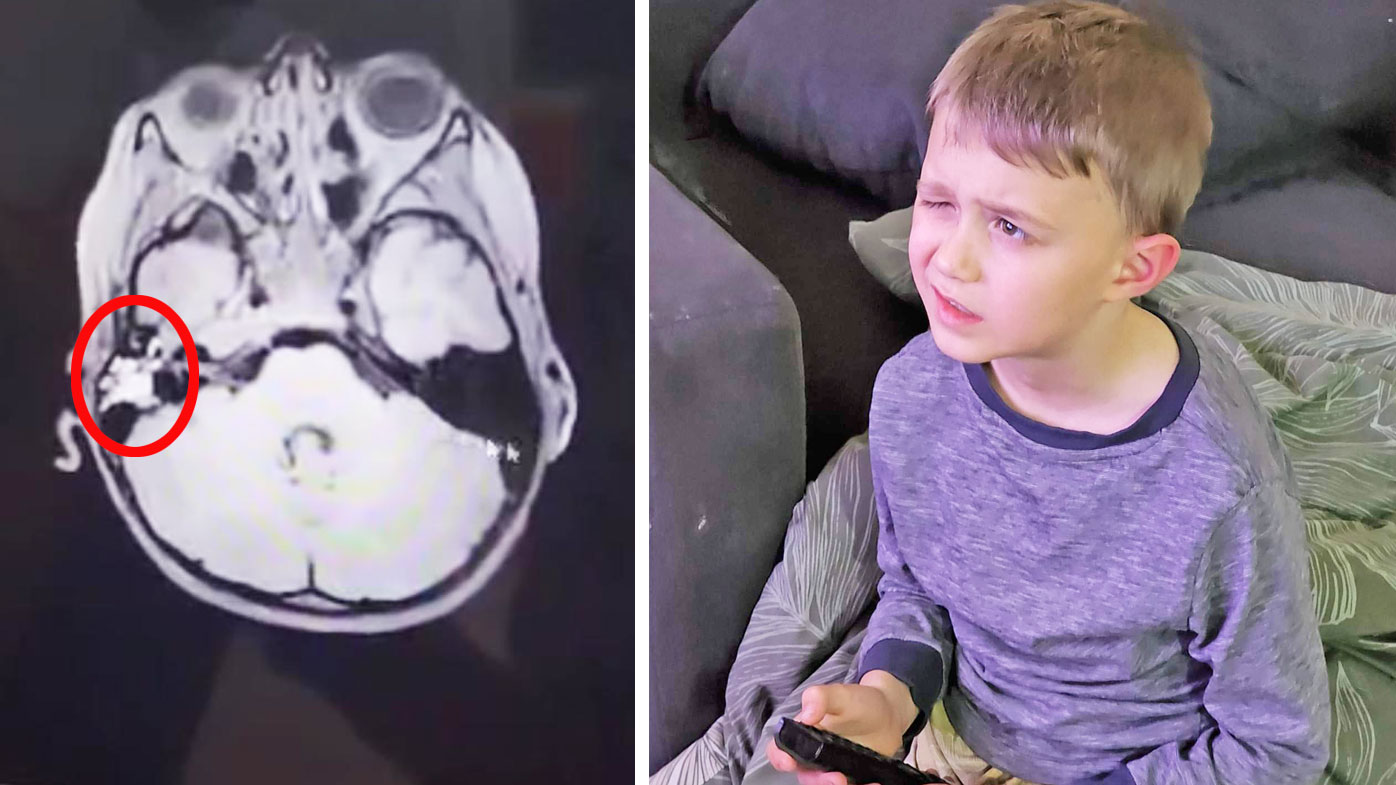
Oliver Jepson pictured left, was diagnosed with a rare brain cancer, pictured right is the moment his mother first noticed something was wrong.

Oliver told his mum he had double vision, which made her concerned enough to put him and his two younger sisters, aged four and one, into the car and drive to an optometrist.

However, the optometrist did not have any available appointments until a week later.

Jepson and the three kids were due to leave for a family holiday in Lismore the next day.

There, they would meet dad Nathan, who had been working away from home for several months as a camera operator for NBN.

Jepson decided to go ahead with the trip, but halfway through the 10-hour drive from home on the NSW Central Coast, she saw something that made her very worried. 

"I looked in the rearview mirror and I noticed that Ollie's eye had turned slightly inwards," she said.

READ MORE: The robodebt royal commission kicks off today – here's what to expect
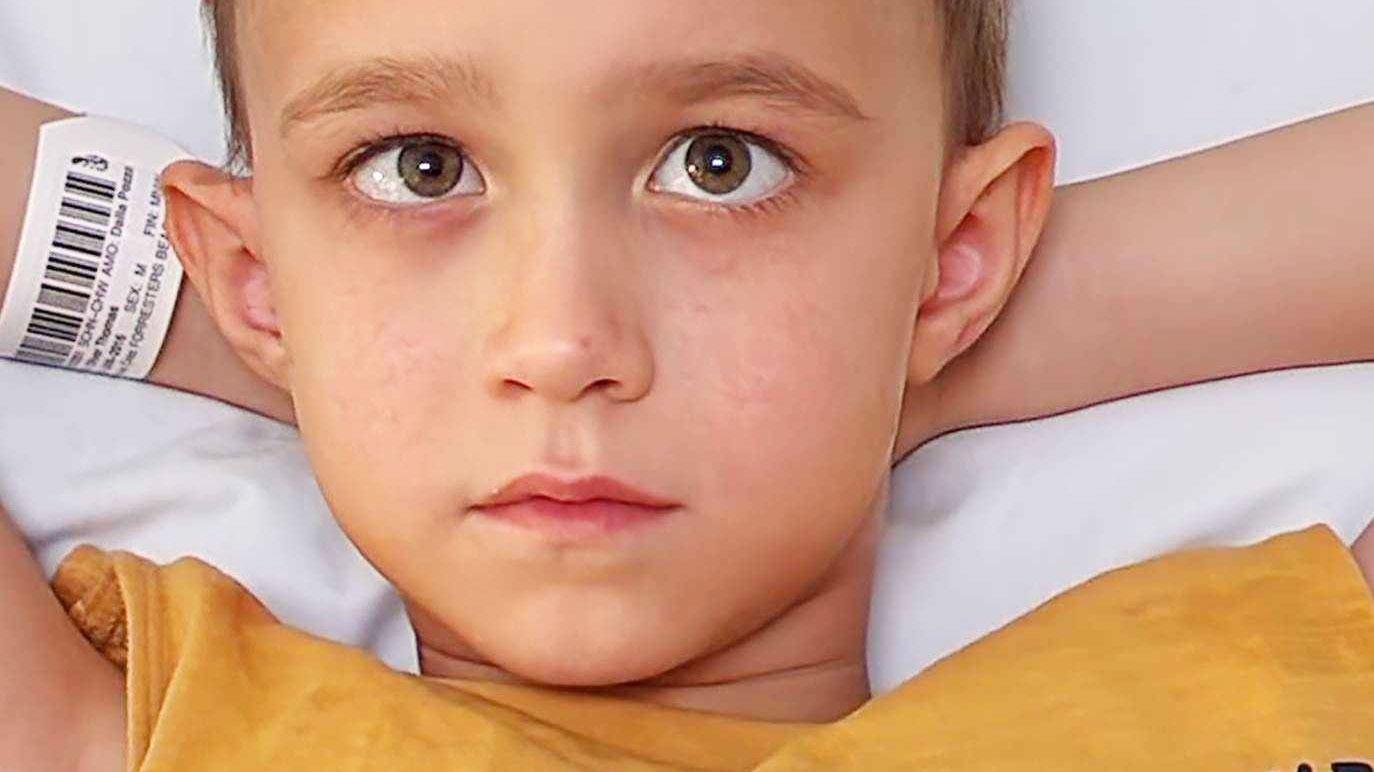
Oliver's right eye turned inward as a result of a brain tumour.

On the advice of her mum, Jepson called the national medical hotline, Healthdirect.

"They said I should get him straight to emergency to be checked over because it could be neurological," Jepson said.

As soon as they arrived in Lismore, Jepson took Oliver to the public hospital's emergency department, where they waited three-and-a-half hours without being seen.

"The nurse that night was beautiful, she said, 'You need to be seen by someone', but Ollie and I were just struggling to stay awake.

"So we went home and we came back first thing in the morning."

When they arrived the next morning, Jepson said she was greeted by a different staff member who told her they were likely to be waiting all day to be seen by a doctor.

"She said that it wasn't an emergency and she suggested that we go to a GP instead.

"I told her that we've been advised to come here by the (phone) healthline and she said, 'You're just going to be waiting all day.'"
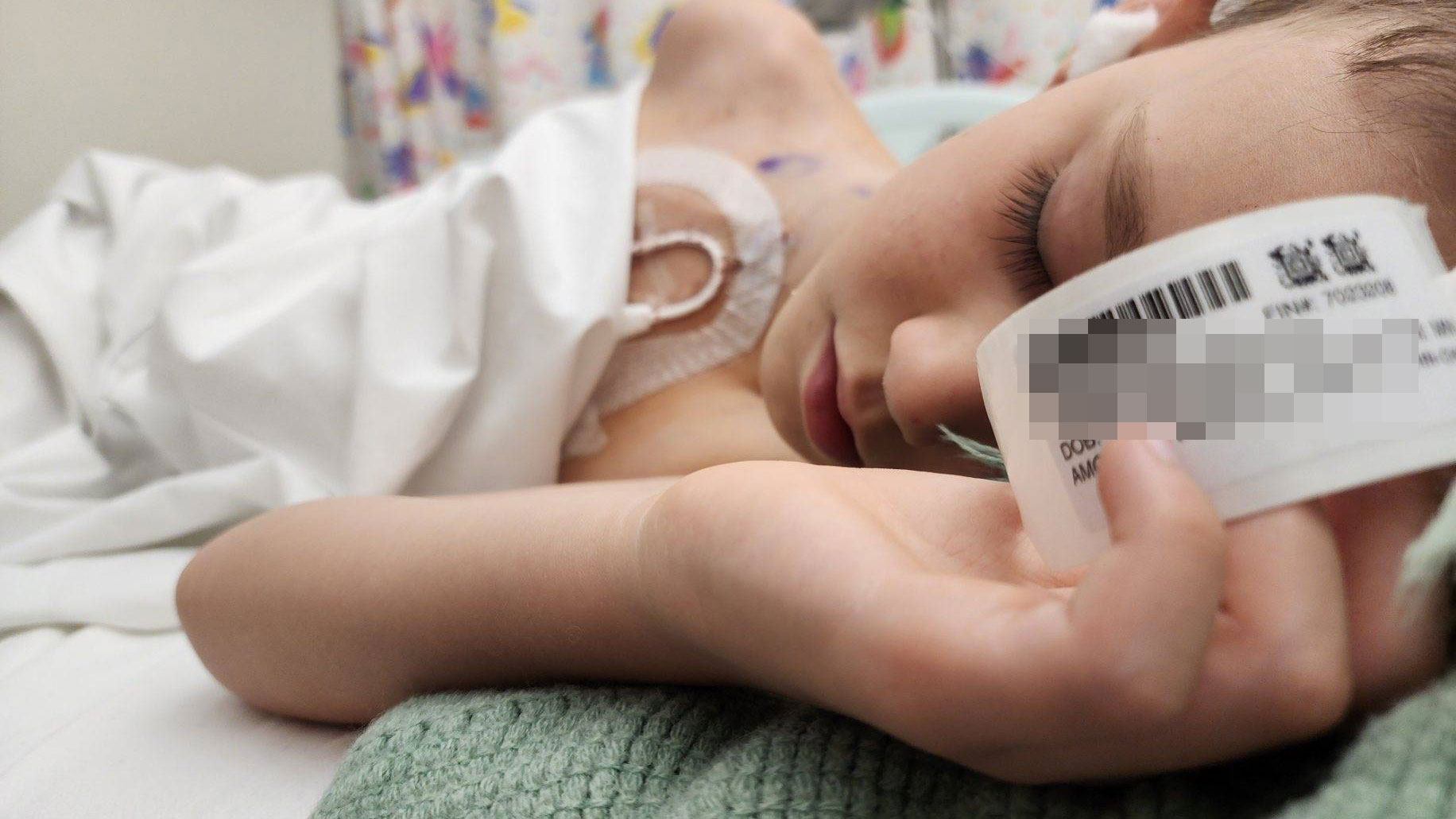
Oliver started chemotherapy this week, with the treatment expected to take 12-18 months.

Frustrated and worried, as Oliver's eye was still turned inwards, Jepson said she rang a local optometrist who agreed to see her son immediately as an emergency appointment.

"She did all the tests and said there was absolutely nothing wrong with Ollie's vision. But she said we needed to get straight back to emergency so they could check if it was neurological," Jepson said.

Armed with a referral from the optometrist, Jepson again took Oliver back to the emergency department.

A CT scan left doctors there puzzled.
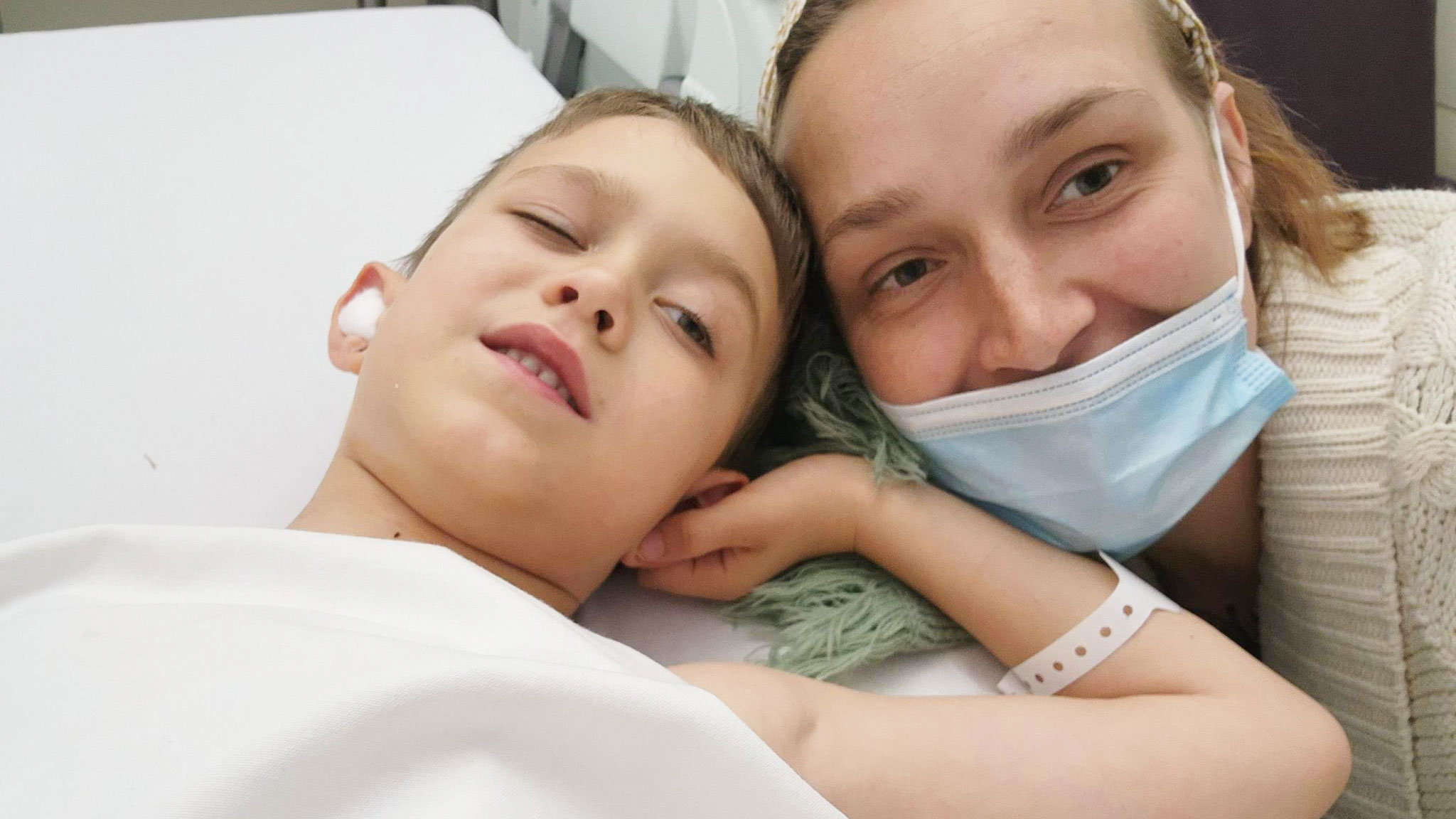
Oliver Jepson, pictured in hospital with his mother Naomi.

"The main doctor that was in charge said that he and his team had been scratching their heads all afternoon as to what it could be and that he hadn't seen anything like it in his whole 20 years of working there," Jepson said.

"Which was scary, but I was glad that so many people were taking it seriously."

A few days later, an MRI scan revealed devastating news.

"The MRI showed that there was a big lump in the cavity near Ollie's ear. They told us it was a tumour, I've got no words for how we felt," Jepson said.
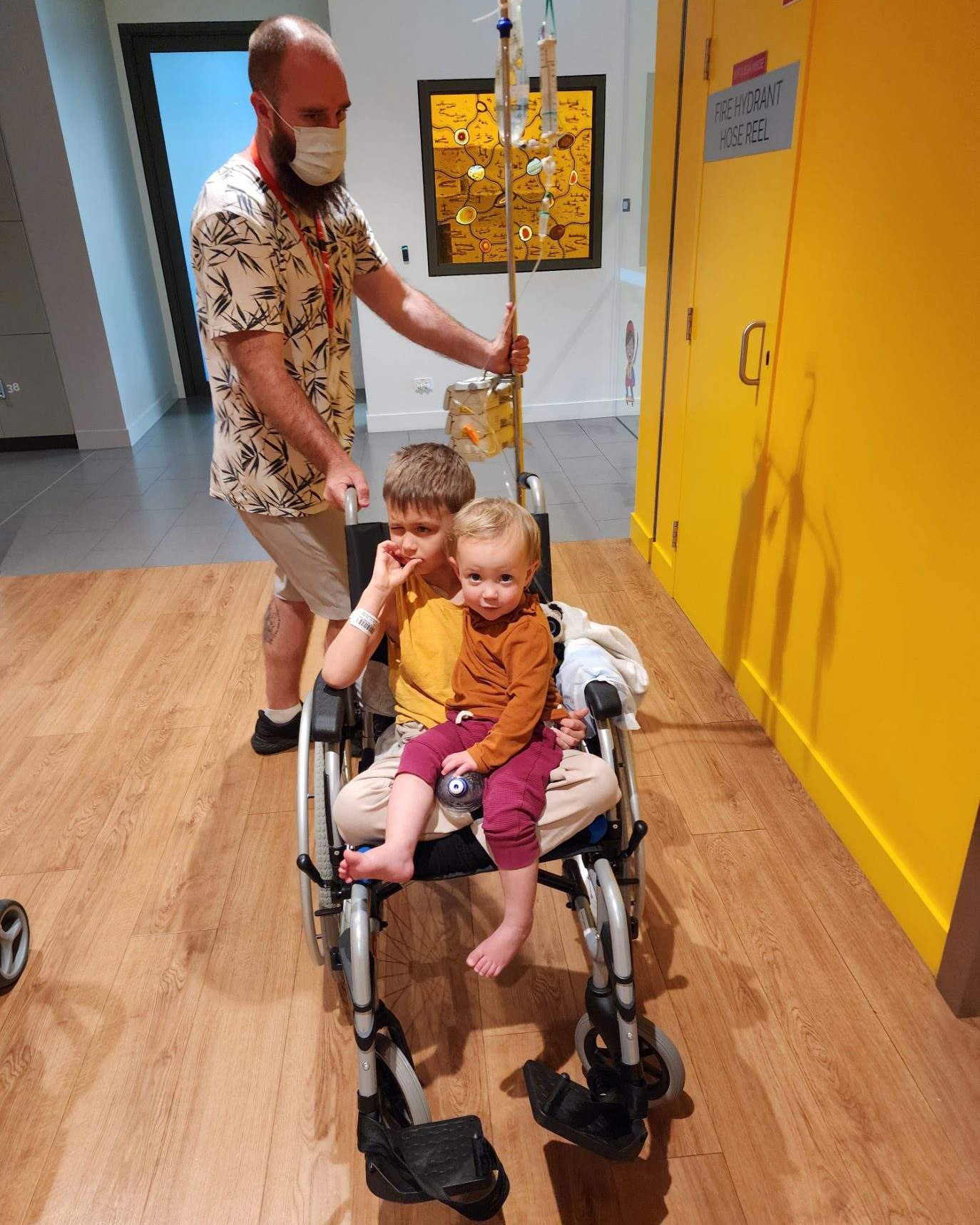
Oliver with his sister and dad, Nathan, in hospital.

Oliver was airlifted from Lismore down to Sydney where doctors at the Westmead Children's Hospital diagnosed him with rhabdomyosarcoma, a rare brain cancer that forms in soft tissue.

The tumour's position in Oliver's brain means it is inoperable.

This week, Oliver began what is expected to be 12-18 months of chemotherapy, which will then be followed by radiation.

"The doctor said the tumour has only been there for three months … and that he has about an 80 per cent chance of survival, but they won't know if they've cured it for at least one to two years," Jepson said.

"I feel terrified and helpless, wondering what on earth the next 12 to 24 months is going to bring."

Jepson said her husband was not working at the moment so they could take turns being in hospital by Oliver's bedside and looking after their daughters.

Despite being so unwell, Jepson said Oliver had been extraordinarily brave.

"He's really been enjoying the one-on-one time with my husband and I and he's getting to play his (Nintendo) Switch and his puzzles – he has been in such high spirits."
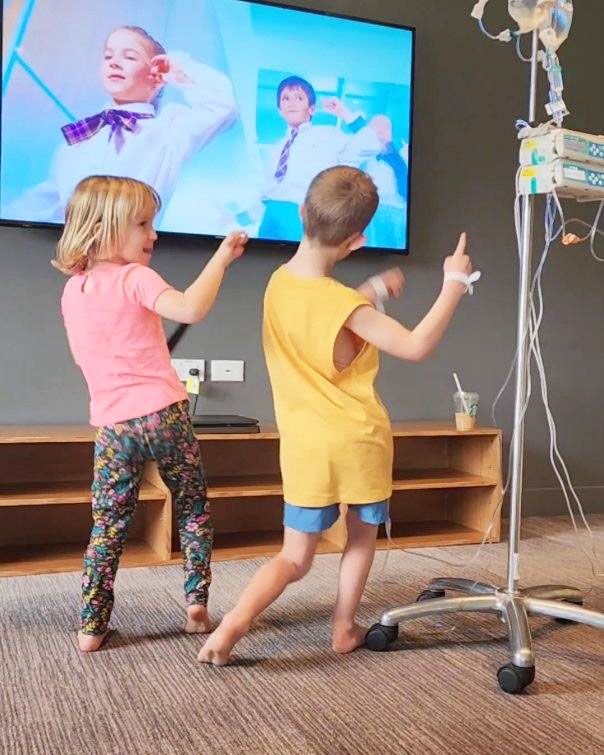
Oliver remained in "high spirits" his mother said. He is pictured here dancing with his sister in hospital.

Friends and relatives have rallied around the family, starting an online fundraiser which has so far raised almost $19,000 to help with their medical and living costs.

"The support has meant so much to us, I've got goosebumps just thinking about it and we are so thankful," she said.

Jepson said her sister had flown over from Perth to help, and the money raised by the fundraiser meant her husband would not be forced to go back to work immediately.

While the family is currently staying at Ronald McDonald House, Jepson said it was likely they would need to rent somewhere in Sydney while Oliver underwent his treatment.

Jepson said was also grateful for the advice she received when she called the Healthdirect phone line.

"Having that advice gave me the confidence to stand my ground. I hate to think what would have happened if I had waited a week to see a GP."

Oliver's story showed how important it was for parents to follow their instincts, she said. 

"Trust your gut, you know your kids best at the end of the day."

Contact reporter Emily McPherson at em********@******om.au.

Man shoots Russian military recruiter amid fear of being called to war

A young man shot a Russian military officer at close range at an enlistment office on Monday, in an unusually bold attack reflecting resistance to the Russian leadership's efforts to mobilise hundreds of thousands of men to wage war on Ukraine.

The shooting comes after scattered arson attacks on enlistment offices and protests in Russian cities against the call-up that have resulted in at least 2000 arrests. Russia is seeking to bolster its military as its Ukraine offensive has bogged down and sapped its forces.

In the attack in the Siberian city of Ust-Ilimsk, 25-year-old local resident Ruslan Zinin walked into the enlistment office saying "no one will go to fight" and "we will all go home now", according to local media reports.

READ MORE: Russian school shooter identified as death toll climbs

Zinin was arrested and officials vowed tough punishment. Local authorities said the military commandant was in intensive care, without elaborating. A witness quoted by local news site said Zinin was in a room of people called up to fight. Troops from his region were scheduled to head to military bases on Tuesday.

Concerns are growing that Russia may seek to escalate the conflict — including potentially using nuclear weapons — once it completes what Ukraine and the West see as illegal referendums in parts of Ukraine under its control.

The voting, in which residents are asked whether they want their regions to become part of Russia, began last week and ends Tuesday, in conditions that are anything but free or fair.

Thousands of residents had already fled the regions amid months of incessant fighting, and images shared by those who remained have showed armed Russian troops going door-to-door to pressure Ukrainians into casting a ballot.

"Every night and day there is inevitable shelling in the Donbas, under the roar of which people are forced to vote for Russian 'peace'," Donetsk regional governor Pavlo Kirilenko said Monday.

READ MORE: Putin's mobilisation off to chaotic start

Russia is widely expected to declare the results in its favour, a step that could see Moscow annex the territory and give it the pretext to defend it as its own territory under the Russian nuclear umbrella.

Kremlin spokesman Dmitry Peskov said on Monday that no date has been set for recognising the regions as part of Russia, but it could be a question of days.

Jake Sullivan, the US national security adviser, said Russia would pay a high, if unspecified, price if it made good on veiled threats to use nuclear weapons in the conflict.

"If Russia crosses this line, there will be catastrophic consequences for Russia. The United States will respond decisively," he told NBC's Meet the Press on Sunday.

On Monday, Russian Vladimir Putin and Belarusian counterpart Alexander Lukashenko held an unannounced meeting in the southern Russian city of Sochi and said they were ready to cooperate with the West — "if they treat us with respect", Putin said.

Turkish Foreign Minister Mevlut Cavusoglu said Monday that Putin had told Turkey's president during their meeting in Uzbekistan last week that Moscow was ready to resume negotiations with Ukraine but had "new conditions" for a cease-fire. The minister didn't elaborate on the conditions.

READ MORE: Russia warned of 'catastrophic' consequences if it uses nuclear weapons

The Kremlin last week announced a partial mobilisation — its first since World War II — to add at least 300,000 troops to its force in Ukraine. The move, a sharp shift from Putin's previous efforts to portray the war as a limited military operation that wouldn't interfere with most Russians' lives, proved unpopular at home.

Thousands of men of fighting age flocked to airports and Russia's land border crossings in an effort to avoid being called up. Protests erupted in various parts of the country, and Russian media reported an increasing number of arson attacks on military enlistment offices, including one that hit the southern city of Uryupinsk on Monday.

Meanwhile, the first batches of Russian troops mobilised by Moscow have begun to arrive at military bases, the British military said Monday. In an online intelligence briefing, the British Defence Ministry said tens of thousands had been called up so far.

Under normal circumstances, two battalions deploy while a third remains behind to train. But in the Ukraine war, even the third battalion is deploying, weakening that training, the British Defence Ministry said.

Ukrainian President Volodymyr Zelenskyy said in a Facebook post Monday that the Ukrainian military is pushing efforts to take back "the entire territory of Ukraine", and has drawn up plans to counter "new types of weapons" used by Russia, without elaborating.

An overnight drone strike near the Ukrainian port of Odesa sparked a massive fire and explosion, the military said Monday. It was the latest in a series of drone attacks on the key southern city in recent days, and hit a military installation and detonated ammunition when it struck. Firefighters struggled to contain the blaze, and civilians nearby were evacuated, the Ukrainian military's southern command said.

New Russian shelling struck the area around the Zaporozhzhia nuclear power plant, according to Zelenskyy's office. Cities near the station were fired on nine times in recent hours by rocket launchers and heavy artillery.

In the town of Izium in eastern Ukraine, which Russian forces left earlier this month after a Ukrainian counteroffensive, Margaryta Tkachenko is still reeling from the battle that destroyed her home and left her family close to starvation.

With no gas, electricity, running water or internet, she said, "I can't predict what will happen next. Winter is the most frightening. We have no wood. How will we heat?"

Six dead, 20 wounded in school shooting in Russia

A gunman has killed six people and wounded 20 others in a school in central Russia, local police said.

Governor of the Udmurtia region, Alexander Brechalov, said in a video statement tonight that the unidentified shooter got into a school in Izhevsk, the region's capital, killed a guard and some of the children there.

"There are victims among the children, there are wounded too," Brechalov said.

READ MORE: Russia warned of 'catastrophic' consequences if it uses nuclear weapons

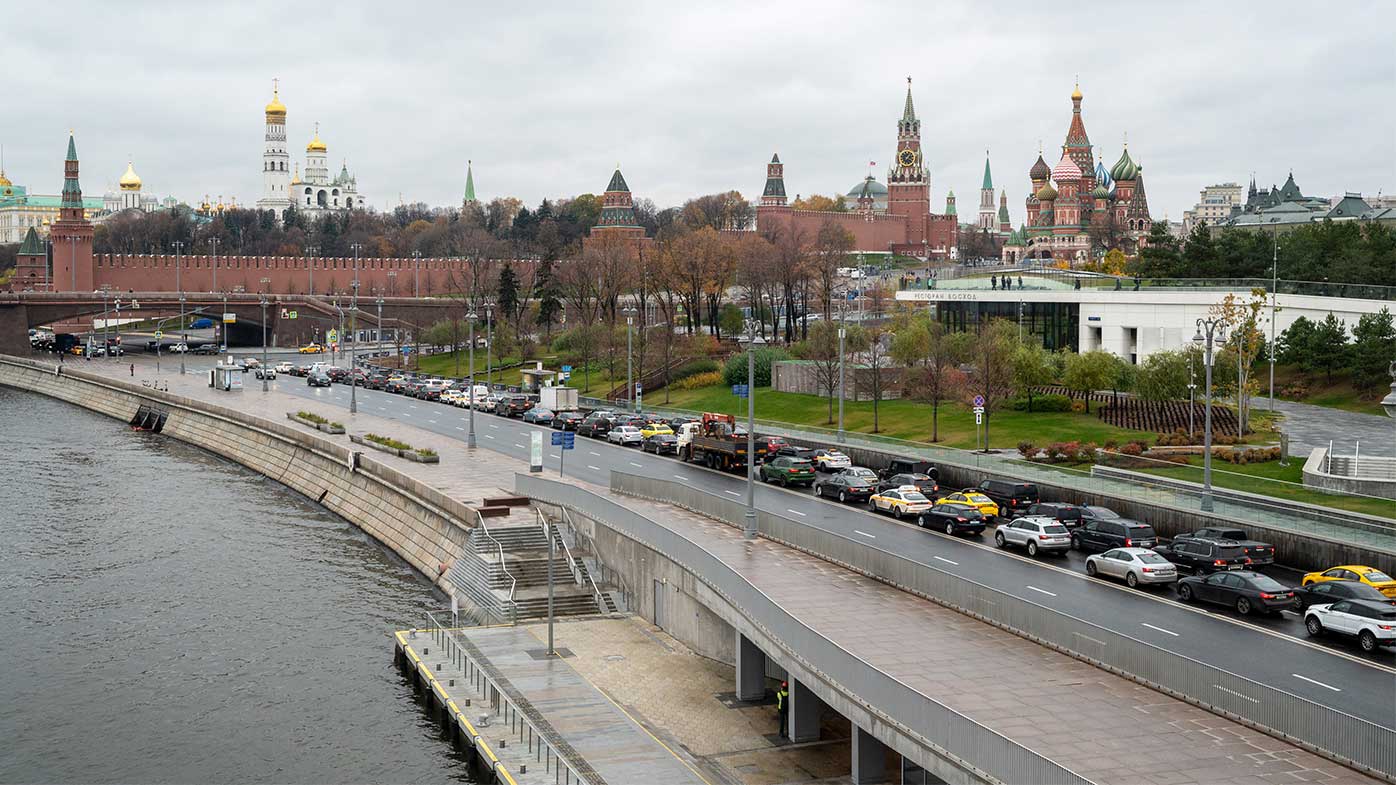
1. Moscow

The school educated children between grades 1 and 11.

According to the governor and local police, the gunman shot himself. The school has been evacuated and area around it has been fenced off, the official said.

No details about the gunman or his motives have been released.

Izhevsk, a city of 640,000, is located west of the Ural mountains in central Russia, about 960 kilometres east of Moscow.

'I'm hanging from a tree': Base jumper stuck after dangerous mishap

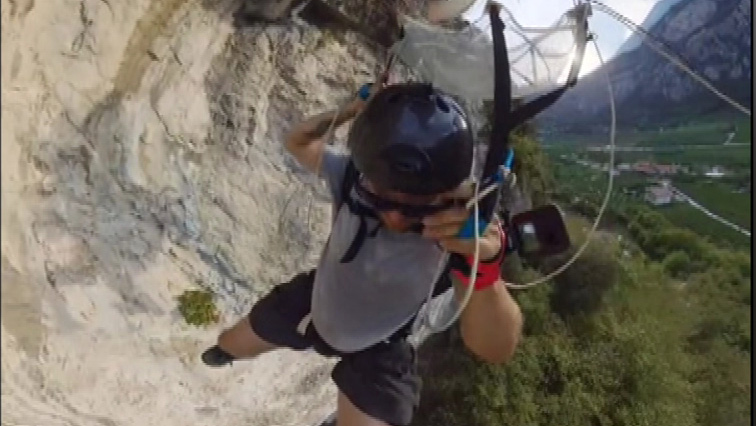
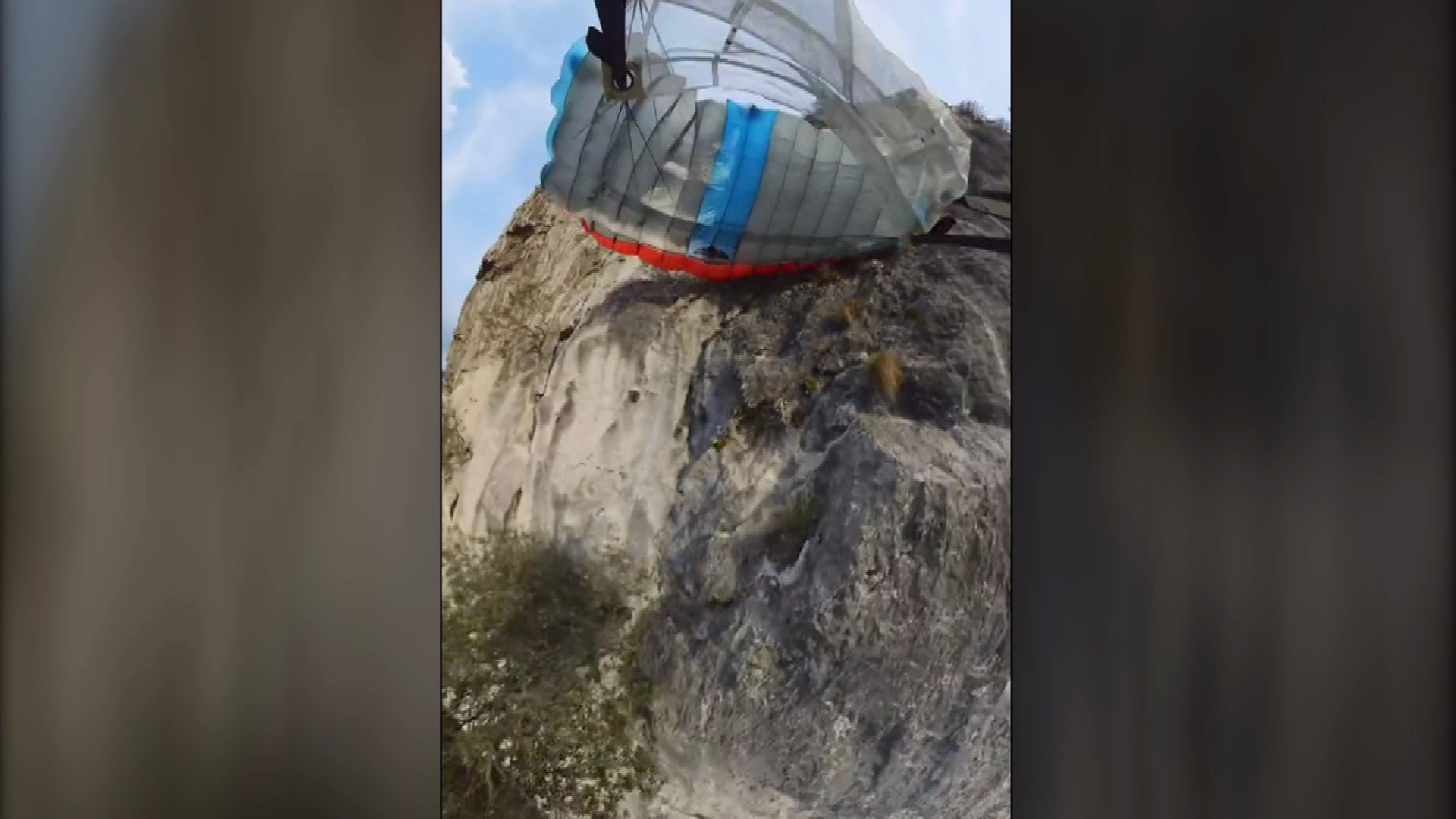
An Australian base jumper spent hours dangling from a cliff-side tree after getting caught in a rogue gust of wind.

Rory Allen has shared a video of his brush with death after being pulled toward the rock face after hurling himself off a cliff in the adrenaline inducing sport.

Allen was left dangling for more than two hours and ended up sustaining a broken foot.

READ MORE: Phone data reveals Melissa Caddick's searches ahead of raid

An Australian base jumper has shared footage of the life-threatening moment he gets stuck in a tree.

"OK this is f—ing scary," he said in the video posted to TikTok.

An Australian base jumper has shared footage of the life-threatening moment he gets stuck in a tree.

"I'm hanging from a tree in a base jumping harness.

"Its just got windy…. if the tree breaks or my canopy breaks, I'm going to break my back and some legs."

He managed to avoid suspension trauma, where blood gets trapped, by taking turns to "release each leg and wiggle" his feet.

Allen is now trying to raise money for the rescuers who came to his aid.

The dare devil said he will be "back at it" within weeks.

READ MORE: Aussie couple film 'lucky' encounter with pod of killer whales off NSW

READ MORE: Russian nuclear threat risks 'catastrophic' gamble

Caddick investigator denies feeling responsible for her death

An investigator from the corporate watchdog has denied feeling responsible for Melissa Caddick's suspected death after it was suggested to her by the fraudster's brother.

Isabella Allen from the Australian Securities and Investments Commission said Adam Grimley asked her the loaded question in June 2021.

"How do you feel being responsible for Melissa's death?" Grimley told Allen, she said on Monday in the NSW Coroner's Court.

READ MORE: Melissa Caddick's sprawling Dover Heights mansion listed for sale

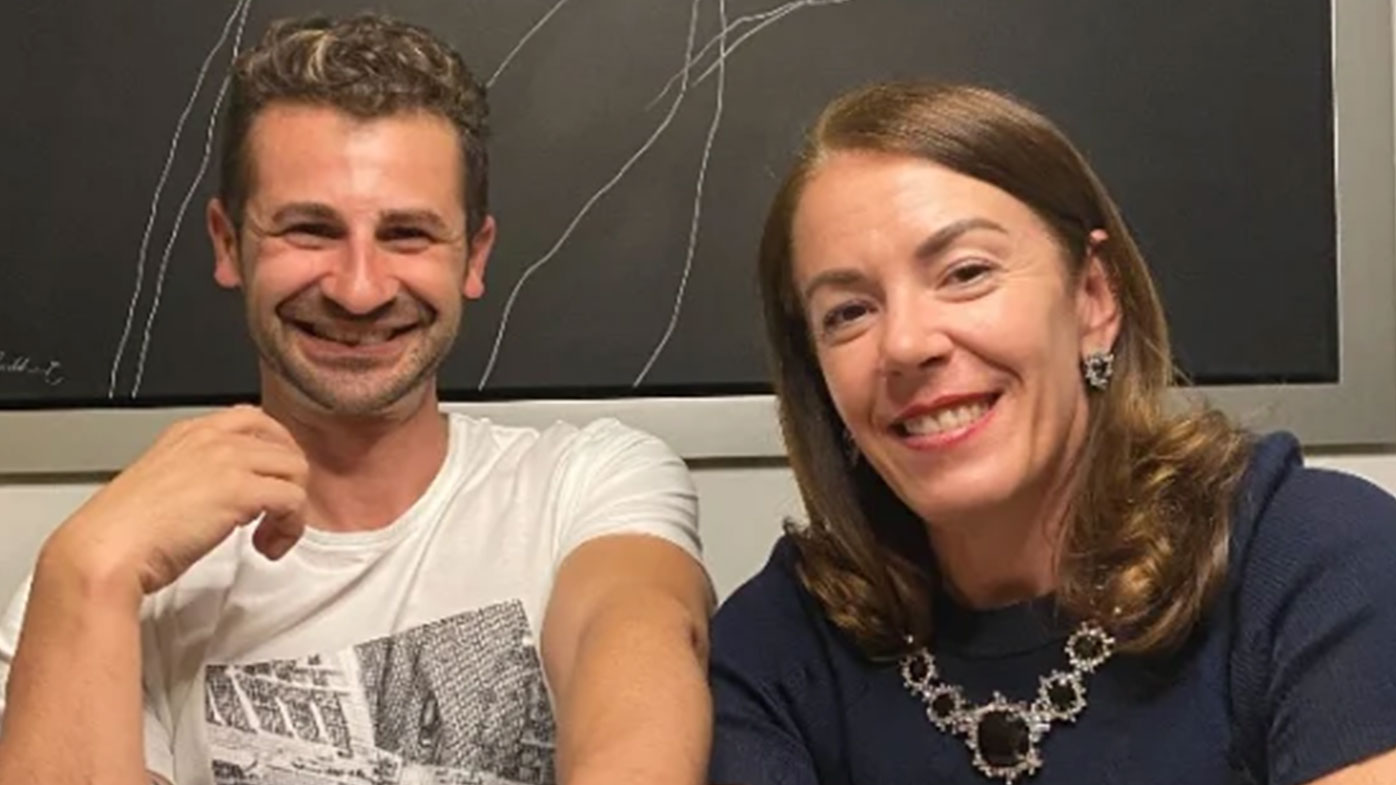
Anthony Koletti and Melissa Caddick.

"Do you feel responsible for her death?" her lawyer John Sutton asked.

"No, I was doing my job," Allen said.

She also denied the accusation that ASIC officers were "parading" around the expensive luxury items they were seizing from Caddick on November 11, 2020.

Nor did she see anyone putting on Caddick's clothing or hanging jewellery around their neck, "giggling and laughing".

The last verified sighting of Caddick was filmed when ASIC and the Australian Federal Police raided her mansion that day.

Caddick's husband, Anthony Koletti, has since made several complaints to police about Allen's behaviour during the raid.

And Caddick's mother Barbara Grimley holds ASIC responsible for her daughter's suspected death, saying she was highly distressed during the raid and was not allowed any food or water.

Allen described "as fantasy" the suggestion she was to blame for the current situation.

READ MORE: Police probe data on Caddick's phone

https://twitter.com/tiffgenders/status/1574242291132211200

The AFP's Constable Amelia Griffen shadowed Caddick for the majority of the 12-hour search and confirmed she made herself a protein smoothie in the morning.

"I recall having a conversation with her that she was free to roam around the premises if she wished to do so," Griffen said.

Allen also confirmed during the raid Caddick was observed filing her nails "from time to time," and taking a nap in the afternoon.

She did not appear anxious at all and only showed emotion, a "look of horror," when her wedding rings "clanged" as they were put into a ziplock bag, she said.

Allen led the formal investigation into the conwoman's Ponzi scheme operated under her fake company Maliver, from September 8, 2020.

About August 2020 one of her investors, Dominique Ogilvie, had a chance encounter with Jennifer Porter, whose Australian Financial Services Licence Caddick was illegally using as her own.

ASIC conducted a telephone interview with Ogilvie about the investigation on September 14.

"We said if (Ogilvie) were to run into Caddick or have subsequent phone calls or speak to her, she could speak to her freely but keep the contents of our conversation confidential," Allen said.

READ MORE: Melissa Caddick inquest hears husband 'too busy' to speak to police

Data obtained from Caddick's mobile phone indicated her searching for shredding services that evening, and a day later booked the services of Shred-X.

Allen said following the extensive search warrant her team looked closely at some of the evidence shredded.

She determined it was not the result of Caddick being "tipped off by anyone".

Meanwhile, her luxurious five-bedroom, four-bathroom eastern suburbs home has come on the market, boasting uninterrupted and expansive views of Sydney Harbour and a "stunning pool", which receivers hope will fetch at least $10 million.

Koletti reported the 49-year-old as missing some 30 hours after he says she walked out of their home for the last time on November 12 about 5.30am to "go for a jog".

In February 2021, Caddick's decomposing foot encased in an Asics shoe washed ashore at Bournda Beach on the NSW south coast, about 400km south of Sydney.

She preyed on mostly friends and family, and stole up to $30 million between 2013 and 2020, counsel assisting Jason Downing SC earlier told the court.

The inquest before Deputy State Coroner Elizabeth Ryan continues.

Cancer patient among Victorians to pay for item they've not received

A Koo Wee Rup cancer patient is among dozens of Victorians fighting to get their money back from an outdoor awning company that they say has failed to deliver.

Amy Horan bought an outdoor spa to help ease her pain from her terminal cancer care.

"I have very bad neuropathy and things because of treatments.. obviously my body's not great," the mum said.

READ MORE: Witnesses say woman fell nine metres after being hit by rollercoaster

She also paid $9500 for a motorised awning to go over the spa.

But the awning has not arrived, months after it was due to be delivered by company Shade Solutions.

"We were told in February it would be in the coming days… then they said they didn't have it in stock… then it's been back and forth for months," Horan said.

Consumer Affairs Victoria issued an online warning about Shade Solutions in recent weeks, saying it has received dozens of similar complaints saying the company has accepted payment and failed to provide goods and services.

The state's Consumer Affairs Minister, Melissa Horne, has said "Consumer Affairs Victoria takes this sort of action very seriously indeed".

9News has contacted Shade Solutions for comment.

Consumer expert Gerard Brody, who is CEO of the Consumer Action Law Centre, has said the case is a reminder "people should do their research… before they sign any sort of contract".