The principal of a small Otago school saw a doctor because he was feeling unwell, then died less than three weeks later.After about three years at Macraes Moonlight School, principal Robin Siataga died on September 11.The school…
Tag Archives: oceania
Wairoa police raid homes in Raupunga, find drugs and firearms
Wairoa police have made two arrests after finding drugs, firearms, and stolen property in a raid on homes in Raupunga on Friday.Police said in a statement they had obtained search warrants for properties in Raupunga while seeking…
New York probe found potential crimes. Why isn't Donald Trump in cuffs?
New York’s attorney general says her three-year investigation of former President Donald Trump uncovered potential crimes in the way he ran his real estate empire, including allegations of bank and insurance fraud.
So why isn’t Trump being prosecuted?
Attorney General Letitia James didn’t seek to slap handcuffs on the Republican this week, as some of his critics hoped. Instead, she announced a civil lawsuit seeking $377 million and his permanent banishment from doing business in the state.
READ MORE: Judges call out Donald Trump's declassification claims

Like many things involving the law and Trump, the reasons James, a Democrat, opted for a lawsuit rather than a prosecution are complicated.
For one, even if she did want to prosecute Trump, she doesn’t have jurisdiction under state law to bring a criminal case against him or any of the lawsuit's other defendants, including the Trump Organisation and his three eldest children, Donald Jr., Ivanka and Eric Trump.
In New York, the state attorney general’s office is only allowed to prosecute a limited range of offences on its own, like bid rigging and payroll violations.
Otherwise, the office must partner with a county district attorney on a prosecution — as James' office did with the Manhattan district attorney's office in a case against Trump's long-time finance chief — or obtain what’s known as a criminal referral from the governor or a state agency that has jurisdiction over the alleged wrongdoing.
Even then, mounting a criminal fraud case is far more challenging than a civil lawsuit.
READ MORE: New York attorney general files civil fraud lawsuit against Trump

In a criminal case, prosecutors would have to prove beyond a reasonable doubt that Trump intended to commit a crime. In the lawsuit — if it goes to trial — jurors would only need to be persuaded it was more likely than not that wrongdoing occurred.
Filing a civil lawsuit while letting others sort out potential criminal violations is a sound strategy, legal experts said, allowing James to seek remedies other than prison time.
It allows the attorney general to avoid the kind of internal debate about criminal charges that fractured the Manhattan district attorney's parallel investigation into Trump earlier this year.
No former US president has ever been charged with a crime.
The prospect of Trump, 76, behind bars as a result of a criminal prosecution could give juries pause, make judges more careful and make winning more difficult, said University of Richmond law professor Carl Tobias.
“Even for Trump, people don’t like him, but do they want to put him away?” Tobias said.
“What would it take? What kind of punishment would be appropriate? So it’s just all around more difficult.”
READ MORE: QAnon celebrates as Trump shares conspiracy meme

A civil case, given its lower burden of proof standard, is “a lot easier to assemble … and probably win," Tobias said.
Trump, a Republican who's laying the groundwork for another presidential run in 2024, has derided James as “a fraud who campaigned on a ‘get Trump’ platform'.”
In an interview on Wednesday night with Fox News Channel’s Sean Hannity, Trump suggested that his company had protected itself against possible fraud allegations by warning banks and potential business partners not to trust the information in its financial disclosures.
“We have a disclaimer right on the front,” Trump said.
"'You’re at your own risk.’ … ‘Be careful because it may not be accurate. It may be way off.’ … ‘Get your own people. Use your own appraisers. Use your own lawyers. Don’t rely on us.’”
James said at a news conference on Wednesday that her office was referring its findings to the US attorney’s office in Manhattan and the Internal Revenue Service, and would share evidence of possible state law violations with the Manhattan district attorney’s office, if requested.
The US attorney’s office in Manhattan said it was aware of James’ referral of potential criminal violations, but otherwise declined comment.
The Internal Revenue Service’s criminal investigation division said it “doesn’t confirm the existence of investigations until court documents are publicly available”.
READ MORE: Melania hammered Donald Trump over COVID-19

Manhattan District Attorney Alvin Bragg said his probe of Trump was “active and ongoing”.
The former prosecutor who had been leading Bragg's investigation, Mark Pomerantz, resigned in February because he felt the office should be moving more quickly to bring criminal charges against Trump.
In a resignation letter, Pomerantz wrote that he believes the former president is “guilty of numerous felony violations."
He said he had told Bragg there was “evidence sufficient to establish Mr Trump’s guilt beyond a reasonable doubt” of many of the same allegations that now appear in James' lawsuit — including that Trump falsified financial statements to secure loans and burnish his image as a wealthy businessman.
If there’s no settlement agreement, James' lawsuit against Trump could take years to play out and might not be resolved before the 2024 presidential election.
A fraud lawsuit James filed against the National Rifle Association recently entered its third year, slowed by legal wrangling and the powerful gun advocacy group’s attempts to get the case thrown out. No trial date has been set.
READ MORE: Files in Trump's desk, storage clearly marked 'top secret': DOJ

Drawn out legal proceedings could hurt Trump's business by making lenders and potential partners reluctant to cut deals. But, if history is any guide, it’s not likely to be a crushing blow. Against the odds, and despite no shortage of legal battles in recent years, the company has been able to get new loans and raise money.
In February, the Trump Organisation got a $150 million from a California bank to refinance commercial and retail space in its Trump Tower headquarters. That deal was struck just three days after Trump’s long-time accountants, Mazurs, disavowed a decade of financial statements it had helped prepare — a serious blow to his business reputation.
That big loan also came after the Trump Organisation had already been indicted on fraud charges by the Manhattan district attorney’s office for allegedly helping executives evade taxes. That case is scheduled to go to trial next month.
Another recent victory for Trump as his legal troubles mount: Selling his Washington D.C. hotel for $565 million, far more than expected.
Several lending experts said the new loan show why much of Trump’s business is insulated from his political and legal storms: What matters most in real estate is the cash thrown off by rent and the collateral of the buildings — not the reputation of the owner.
Fearless pilot takes off, flies and lands without looking out the cockpit once
To show how flying could be achieved by looking at plane instruments alone, Jimmy Doolittle took off, flew and landed a plane without being able to see outside the cockpit on September 24, 1929.
'Accessible housing nearly impossible' to find across Australia
Amy Marks had to wait for hours on the floor of her "inaccessible" Melbourne apartment after she fell while reaching for a glass.
Marks lives with cerebral palsy and is one of many Australians with a disability who are unable to find accessible housing in Australia's intensifying rental crisis.
She told 9news.com.au she had to settle with an inappropriate home or face being forced into a retirement home at the age of 26.
Marks can't reach her kitchen cabinets and has to keep her plates on the floor. Even getting an Uber has become a nightmare as there's no accessible parking nearby.
READ MORE:

Do you have a story? Contact the reporter on
Change to come
Peak bodies, including the Summer Foundation, have petitioned state governments to ensure newly-built homes meet mandatory accessibility standards, by adopting an opt-in section of the National Construction Code (NCC).
Building ministers met last month and voted to adopt the changes from October 2022, with a 12-month transition period.
The code means newly built homes will include features like step free entry, step free showers, ground level accessible toilets, structural reinforcements to support grab rail installation in bathrooms and doorways, along with transitional spaces to allow ease of movement.
"We called on all government's to make a decision in the building ministers meeting to increase the number of accessible houses in the community," Naughtin said.
While other states, including Victoria, have adopted the opt-in section of the code, New South Wales, Western Australia and South Australia said they will opt out.
The Mint and Note Printing Australia make billions for Australia – but it could be at risk
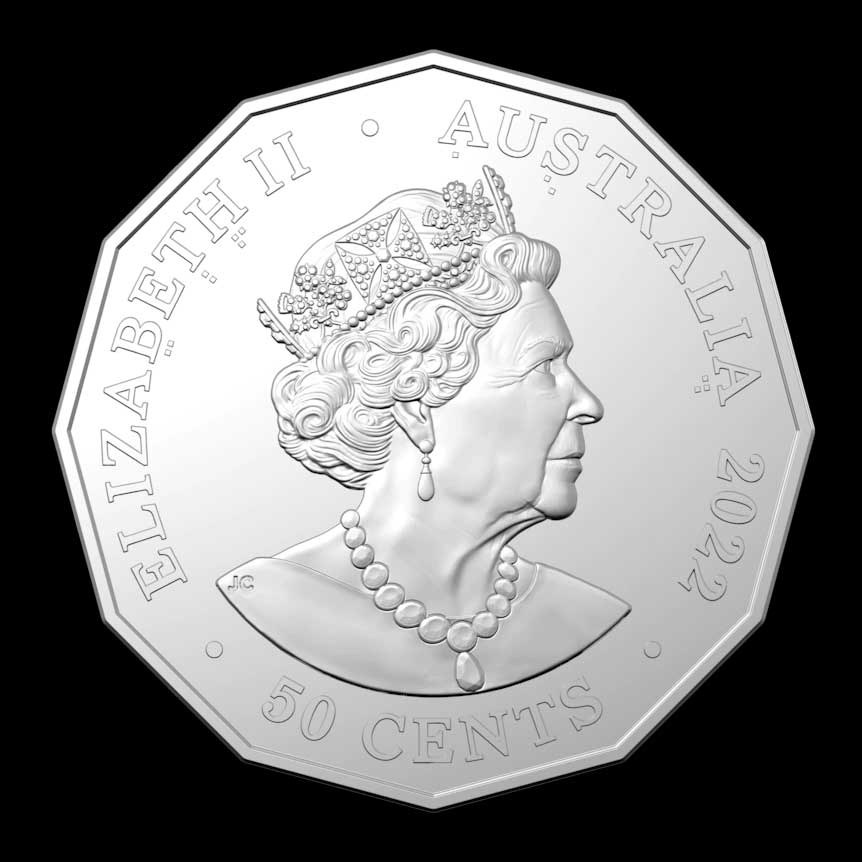
Briefly, in the days after the death of the queen, we were afforded a glimpse into the machine that makes Australia's money.
Assistant Treasury Minister Andrew Leigh turned up at the Royal Australian Mint to explain the process by which a portrait of the King Charles will replace the portrait of the queen on the heads-side of coins minted from 2023.
"For the avoidance of doubt, for any conspiracy theorists out there, all coins bearing the face of Queen Elizabeth II will remain legal tender," he said.
The Mint makes an extraordinary 120 million to 140 million coins per year (even more, as much as 175 million when Australians stocked up on cash during the first year of COVID), and it is a money-making operation in more ways than one.
READ MORE: How the Queen's death will change Aussie currency
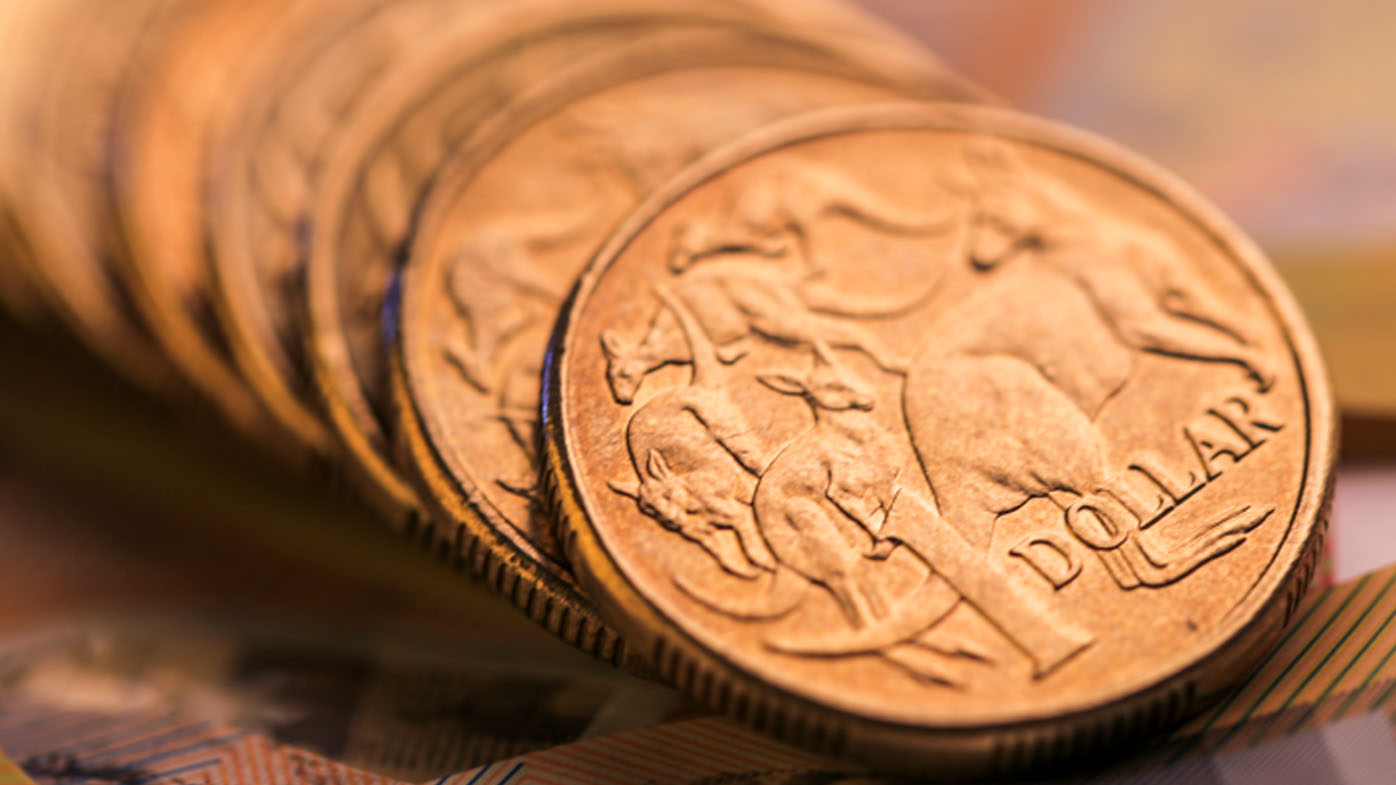
It costs 20 cents to make a $2 coin
Usually it costs the Mint far less to make each coin than each one becomes worth the moment it is sold to a bank.
Before metal prices climbed, it cost the mint about 20 cents to make a $2 coin, and about 15 cents to make a 50 cent coin.
The profit – the huge mark-up – goes straight to the Commonwealth budget as non-taxation revenue, tens of millions of dollars per year.
It's called "seigniorage", an ancient French word that refers to the profit only a seignior (feudal lord) can make from the exclusive right to mint coins.
This financial year the government expects $59 million, next year $67 million.
That the government can keep making money from seigniorage appears to defy common sense.
Surely we've got just about all the coins we need. Merely replacing coins as they get worn out doesn't earn seigniorage.
READ MORE: The Aussie coins that are skyrocketing in price after Queen's death
But a previous head of the Mint, Ross MacDiarmid, let the cat out of the bag in 2014 when he told a Senate committee this.
"Most of the coins that we provide are against coins that disappear down the back of chairs, down the back of car seats, into rubbish dumps and, in come cases, are taken overseas."
When asked whether he was seriously suggesting a hundred million or so coins per year disappear, MacDiarmid replied he was.
This means the government makes tens of millions per year replacing – at a huge mark-up – things we have lost.
And it's just the beginning.
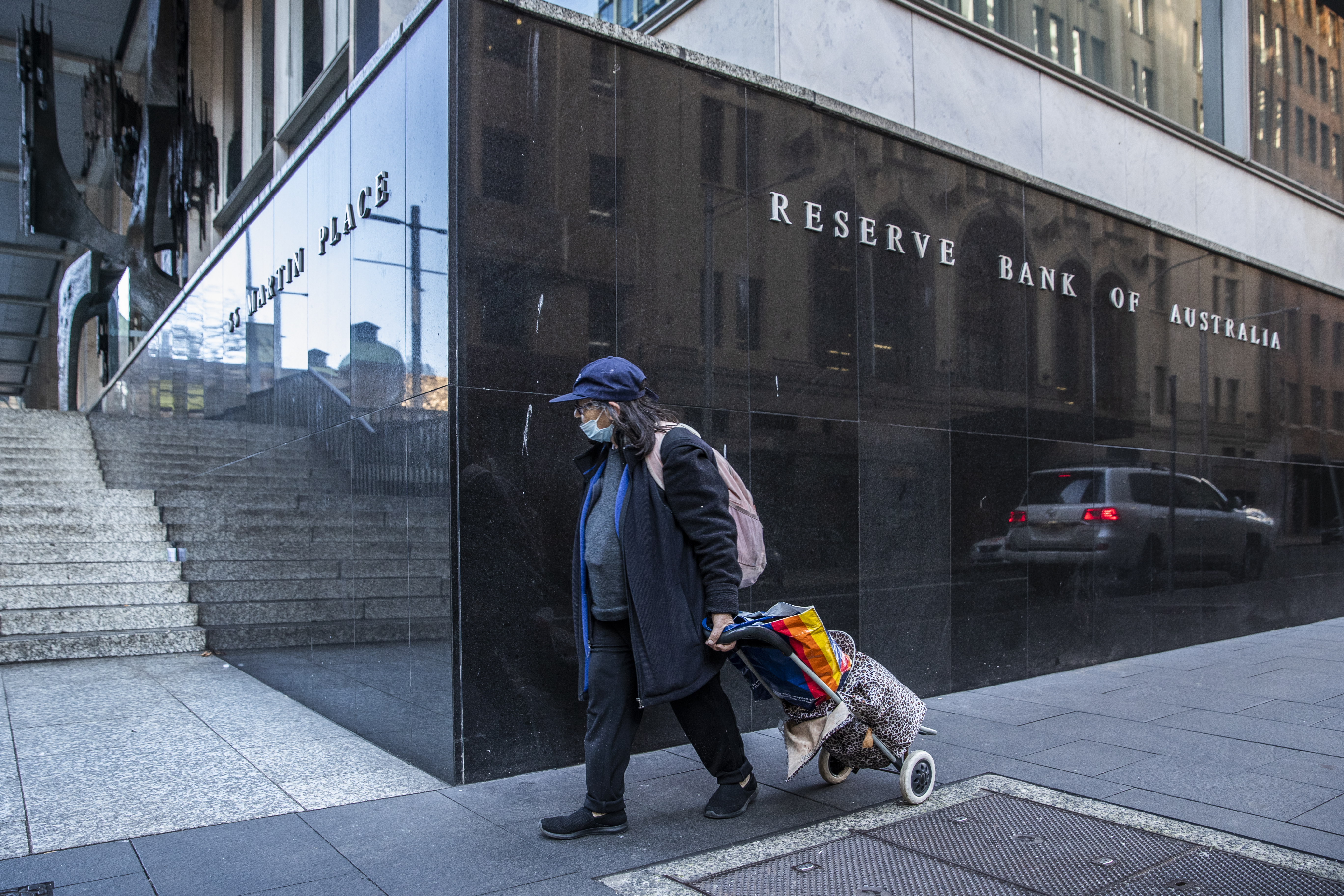
The $5, $10, $20, $50 and $100 notes made by Note Printing Australia for the Reserve Bank have an astronomical mark-up.
It costs 32 cents to make a $100 note
In 2020-21, Note Printing Australia delivered 234 million notes to the bank for a fee of $74 million, suggesting they cost about 32 cents each to make.
Most were $50 and $100 notes, sold to private banks for $50 and $100 each.
That profit is accounted for differently to the profit for coins, and is hard to find.
One estimate, in an international study of 90 countries at the end of the 1990s, found Australia's income from seigniorage of notes and coins to be low compared to other countries at 2.6 per cent of government spending.
READ MORE: A look back on the Queen's visits to Australia
And 2.6 per cent is an enormous amount.
These days that'd be $16.3 billion, which is about what we spend on the Pharmaceutical Benefits Scheme.
Potential billions of dollars of profit
The Reserve Bank measures seigniorage differently, using a formula that can produce odd results because it depends on the rate of interest.
Before COVID, its view was that it only made about $1 billion per year from seigniorage, a figure it doesn't usually calculate and doesn't report to the government.
A simpler calculation would take the $6.8 billion of extra notes the bank supplied in 2020-21, deduct the $74 million it cost to print the notes and about as much again for the payments it makes to commercial banks to encourage them to hold sufficient stocks and return worn notes and come up with $6.6 billion.
A year earlier, as we stocked up on cash as COVID took hold, the bank would have made $10 billion.
An end to easy money?
The profits from printing notes don't flow directly to the budget, except in part via Reserve Bank dividends, but they help by keeping the bank self-funding.
Profits from notes and coins are under threat. For the Reserve Bank it's the threat of us one day wanting less cash – although for the moment, while we are using less cash in transactions, we are holding on to more for safekeeping than ever.
READ MORE: Phone call shows startlingly clever tactics used by 'Westpac' scammer
For the Mint, it's the reality that we are using less cash. In 2020-21 it produced $82.2 billion worth of new coins, down from $114 billion a decade earlier.
Its other threat is the soaring price of metal. Mint chief executive Leigh Gordon revealed last week it was costing north of 12 cents to make each five-cent piece.
Earlier this year, after nickel prices soared in the wake of Russia's invasion of Ukraine, he said even 20 cent coins were about to lose money.
Cheaper coins to the rescue?
Nickel prices have since come down, and one of the oddities of pricing is that it costs far less to make the largely copper and aluminium $1 and $2 coins (about eight cents each) than it does the nickel-heavy 10 and 20 cent coins (14-28 cents), but the Mint is preparing.
READ MORE: The rare Aussie $2 coins now worth hundreds
In 2016, the Mint developed a proposal to cheapen the metal content of its five, ten and 20 cent coins and shrink the size of its 50 cent coins, which it says was favourably received by retailers and banks who wanted coins that weighed less.
The idea was submitted to the Treasury, but "not progressed".
In the meantime it has partnered with Woolworths to produce limited edition "Olympic" and "Wiggles" coins that are delivered as change through cash registers rather than through banks, for which it charges a touch over $2.
There's a lot that can be done, and every time there's a crisis, we seem to rediscover cash. But eventually the money-making machine will stop.
This article is republished from The Conversation under a Creative Commons license. Read the original article.
Jacinda Ardern: New Zealand's 'strong and firm' stance on nuclear weapons more important than ever
Prime Minister Jacinda Ardern says New Zealand has an important role to play in continuing international efforts toward nuclear non-proliferation.Ardern held a media briefing after delivering her speech at the United Nations General…
Photojournalism images up for auction garner attention from Kiingitanga and corporates
By Robin Martin of RNZ Heavyweight bidders have been manoeuvring behind the scenes ahead of this afternoon’s charity auction of more than 100 examples of New Zealand’s finest photojournalism.Major corporates and even representatives…
Sex workers paying thousands in fines, bonds to be able to perform: 'I was now losing money'
By Rayssa Almeida of RNZ Sex workers say they are having to “pay to work” as strip clubs all over New Zealand ask for bonds and deduct fines from their wages.Engaged in strip clubs as contractors instead of employees, the performers…
Black Power kidnapping case: Woman sentenced to home detention in Rotorua emergency housing accommodation
A woman involved in a drug debt revenge kidnapping plot and brutal beating will serve seven months’ home detention in emergency housing.Kristina Reid has been on electronically-monitored bail for the past 13 months at the Rotorua…