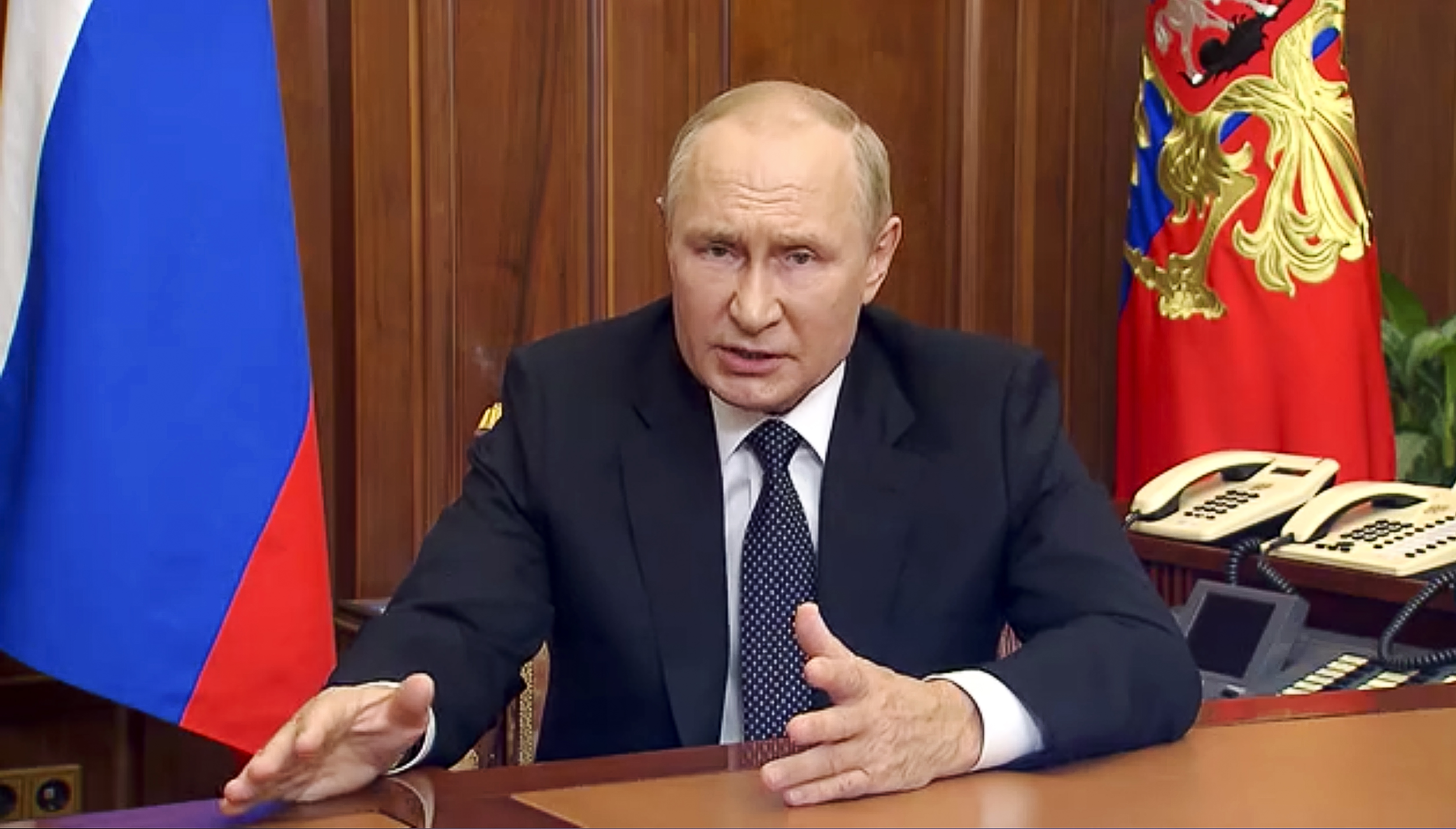
In a speech as menacing as his declaration of a "special military operation" against Ukraine in February, President Vladimir Putin has declared a partial mobilisation of Russian citizens to help wage a stuttering military campaign.
Seven months on, Putin's language was, if anything, even darker than in the early hours of February 24. Then, he warned the West that Russia would respond immediately to those who stood in its way, with consequences that "will be such as you have never seen in your entire history".
In his latest address, he put flesh on the bones of that threat.
"The territorial integrity of our homeland, our independence and freedom will be ensured, I will emphasize this again, with all the means at our disposal," he said.
READ MORE: Russian conscripts would be 'cannon fodder', expert says

"And those who try to blackmail us with nuclear weapons should know that the prevailing winds can turn in their direction."
The Russian leader has dramatically raised the stakes – just as Russia embarks on a rushed process to expand what constitutes that "homeland," through hastily organised referenda in occupied territories that are intended to absorb parts of Ukraine into Russia itself: Donetsk, Luhansk, much of Kherson and Zaporizhzhia.
The announcement of those referenda on Tuesday was both sudden and synchronised. The idea that they could be organised within days in areas where hostilities continue is, on the face of it, absurd, especially as some officials in these areas had proposed delaying votes on joining Russia until security conditions improve.
Equally absurd is the notion that joining Russia came spontaneously from the territories themselves.
READ MORE: Hundreds arrested as Russians protest Putin's mobilisation order
But that's not the point. Matthew Schmidt, associate professor of national security and political science at the University of New Haven, says Putin is using the referenda call to justify mobilisation.
Putin has two audiences in mind. Anatol Lieven, director of the Eurasia Program at the Quincy Institute, says he wants "to persuade the US and/or Europeans to get serious about negotiating a compromise settlement to end the war by showing that otherwise, Russia will take radically escalatory steps which will not only force the West to escalate in turn, but will also rule out any possible peace for a long time to come."
Alexander Baunov at the Carnegie Endowment puts it bluntly. In a series of tweets before Putin's speech, he wrote that the message to Ukraine's allies is this: "You chose to fight us in Ukraine, now try to fight us in Russia itself, or, to be precise, what we call Russia".
Schmidt says Putin's main audience is the home front. He is trying to regain the initiative and stiffen the morale of the Russian public. He may also be hoping for a bounce in his popularity akin to the widespread public support for Russia's annexation of Crimea in 2014.
"Mobilisation isn't a military decision, so much as a way to try to control the narrative about the war that he realizes he's losing," he told CNN.
Against the backdrop of bad news seeping home from the front lines, Schmidt notes: "The morale of the public is the morale of the army".
"Putin has to say that greater Russia is under attack. He has a really hard time selling that; it puts his leadership under a lot of strain," Schmidt adds.
Baunov believes the objective is to turn Russia's invasion of a neighbouring country into a defensive war, a distinction that would "make the conflict more legitimate in the eyes of ordinary Russians, leaving the Kremlin free to make whatever decisions and take whatever measures it deems necessary".
But mobilisation is a huge risk, says Schmidt. It takes time: training, equipping, organising – and it does nothing to improve Russia's greatest deficiencies.
READ MORE: Flights out of Russia surge to $13K amid exodus

Big challenges for Russian recruits
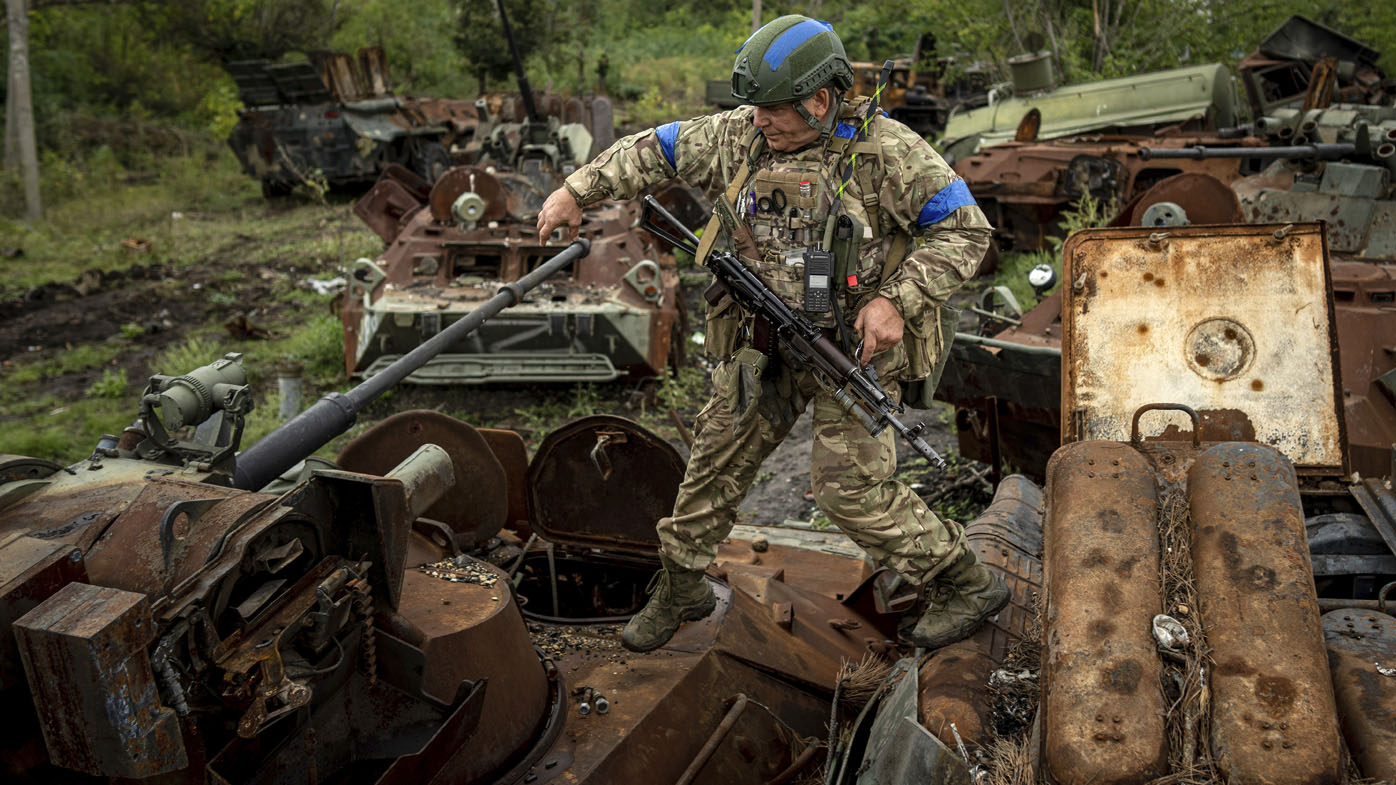
Moscow faces the same enormous logistical hurdles that have blighted the past six months of war. Its forces have experienced such losses of materiel that the Russian Defence Ministry, according to US officials, has turned to North Korea for munitions. Its latest setback in Ukraine's northeastern Kharkiv region has left some of its elite tank units severely depleted.
The "partial mobilisation" announced by Putin also appears to lean on parts of the Russian population that would already have experienced significant pressure to sign up for Russia's faltering war effort.
Defence Minister Sergei Shoigu said that some 300,000 reservists would be available.
"These are not some people who have never heard of the army," Shoigu said.
"These are those who have served, have a military registration specialty, have had military experience."
The mobilisation is limited, perhaps so as not to alienate public opinion, perhaps to leave room for further moves down the road.
READ MORE: Russia 'shamelessly violated' UN Charter, Biden says
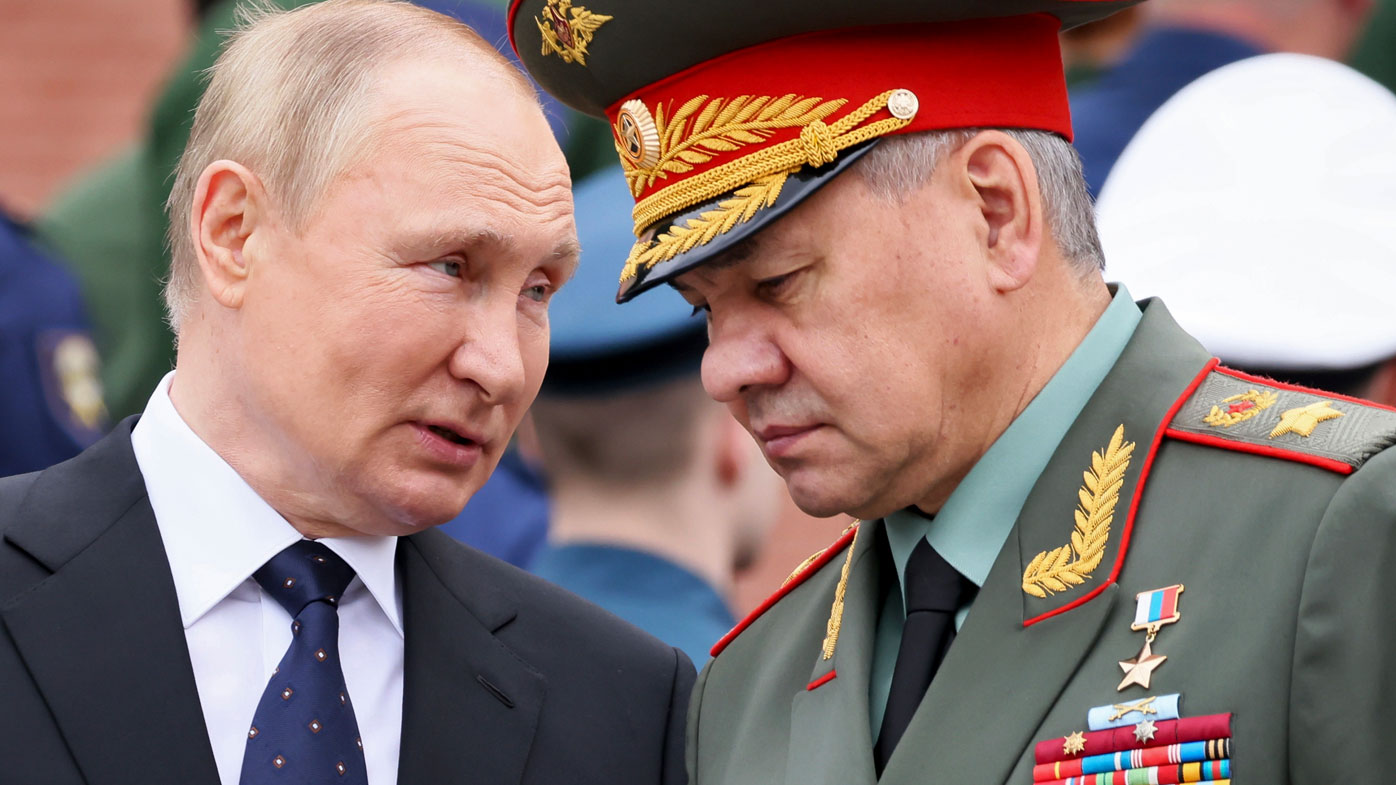
Shoigu claimed: "Those who have served and have a military specialty are almost 25 million".
Both Putin and Shoigu spoke specifically about a call-up of reserves, but the decree itself does not apply solely to this group. It allows the "call up [of] citizens of the Russian Federation for military service by mobilisation into the Armed Forces of the Russian Federation."
But Russia's reliance on Chechen units, volunteer battalions, militia from Luhansk and Donetsk and even convicts recruited by the private military contractor Wagner belies the claim that there is a ready supply of veterans to head to the frontline.
Mobilisation "won't provide the trained young officers who can lead assault operations against an army that has been fighting for more than 3000 days," Schmidt told CNN, referring to Ukraine's conflict with Russian-backed separatists in the Donbas region since 2014, nor change a culture that has struggled against Ukrainian adaptability.
Going nuclear
Putin could not have raised the stakes in more searing fashion with his direct reference to nuclear weapons, but observers are not convinced he would, or even could, follow through with such a threat, despite his insistence that he is not bluffing.
In June 2020, he signed a decree updating Russia's nuclear doctrine that requires quoting in full.
"The Russian Federation retains the right to use nuclear weapons in response to the use of nuclear weapons and other types of weapons of mass destruction against it and/or its allies…"
But that sentence ends with an unusual statement: "… and also in the case of aggression against the Russian Federation with the use of conventional weapons, when the very existence of the state is put under threat."
Lieven, of the Quincy Institute, says it is impossible to say whether Putin would countenance the use of tactical nuclear weapons, but it "seems doubtful that Russia would use these unless Crimea itself were in danger of falling".
So far, Lieven told CNN, "Putin's strategies have overwhelmingly failed, both in terms of military progress on the ground and economic pressure on the West to seek compromise with Russia".
But, he says, "Russia retains the means of serious escalation short of nuclear weapons – notably, the destruction of Ukrainian infrastructure and the killing of the Ukrainian leadership".
READ MORE: Four Ukrainian regions schedule votes this week to join Russia

Schmidt also believes there is little risk that Putin would turn to tactical nuclear weapons, "because that will bring in NATO for real and he would lose the Russian military, the source of his power".
And while Putin was specific to say the partial mobilisation would be used to defend newly occupied areas, he did not choose to extend his nuclear threat to the same broadened idea of what Russia might consider its territory in the future.
But the very mention of those nuclear weapons is obviously designed to complicate the enemy's calculations.
To some observers, the formal absorption of parts of Ukraine into the Russian Federation risks making any negotiated end to the Ukraine conflict – however distant that may already seem – near impossible.
Former Russian President Dmitry Medvedev said on Tuesday that once the republics were integrated into the Russian Federation, "not one future leader of Russia, not one official, will be able to reverse these decisions".
However, Schmidt points out that Medvedev is a surrogate, not the fount of authority – and that both sides have staked out maximalist positions that could eventually be adapted or traded through negotiation. Such a moment, however, seems more distant than ever.
As yet, of course, the Russian government has not said that it will officially recognise the referendum results. But it would be extraordinary if a process apparently synchronised and organised in Moscow was to be rejected in Moscow. The referendum organised in Crimea in 2014 was ratified by Russian lawmakers within a week.
Whether on the timing of the offensive against Ukraine (and indeed whether there would be one at all), its ultimate objectives, the use of natural gas and oil as a political weapon, even the potential use of nuclear weapons to protect the homeland, Putin has always been guided by a desire to keep his adversaries off-balance.
This latest gambit is true to form. It likely dashes any slim hope that this war will be over any time soon, but it also demonstrates that Putin's options are narrowing in the face of military shortcomings that defy any quick solution.
As knowledge of the magnitude of losses mounts, he has to match it with an equal magnitude of action.