Tag Archives: oceania

What does Putin's 'partial' mobilisation mean for Ukraine war?

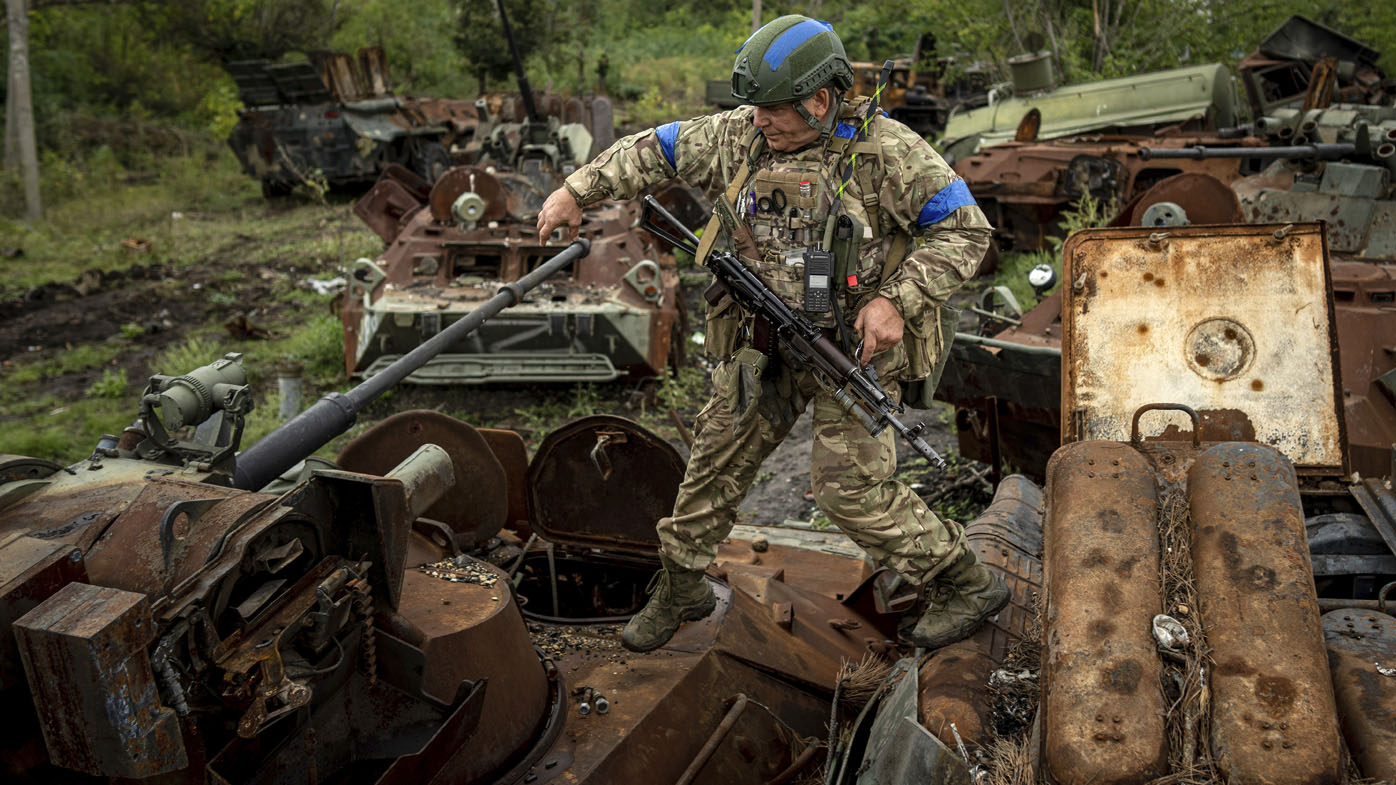
Russian President Vladimir Putin has declared a partial mobilisation of the country's citizens to help bolster a stuttering military campaign in Ukraine.

But one security expert has described the new wave of Russian conscripts as just extra "cannon fodder' for a war machine already suffering major defeats by Ukraine.

Putin announced a partial mobilisation of reservists that could raise available troop numbers by up to 300,000 and delivered a thinly-veiled threat of Moscow's willingness to use nuclear weapons.

READ MORE: Russian conscripts would be 'cannon fodder', expert says

Putin's seven-minute address was also broadcast as Russia prepares to hold referendums in Ukrainian regions it now occupies, including areas taken over by Moscow-backed separatist forces after fighting broke out in 2014.

Here's a look at what it means for Russia and how it could impact the six-month old war.

Who are the Russians affected by the mobilisation?

The "partial mobilisation" announced by Putin also appears to lean on parts of the Russian population that would already have experienced significant pressure to sign up for Russia's faltering war effort.

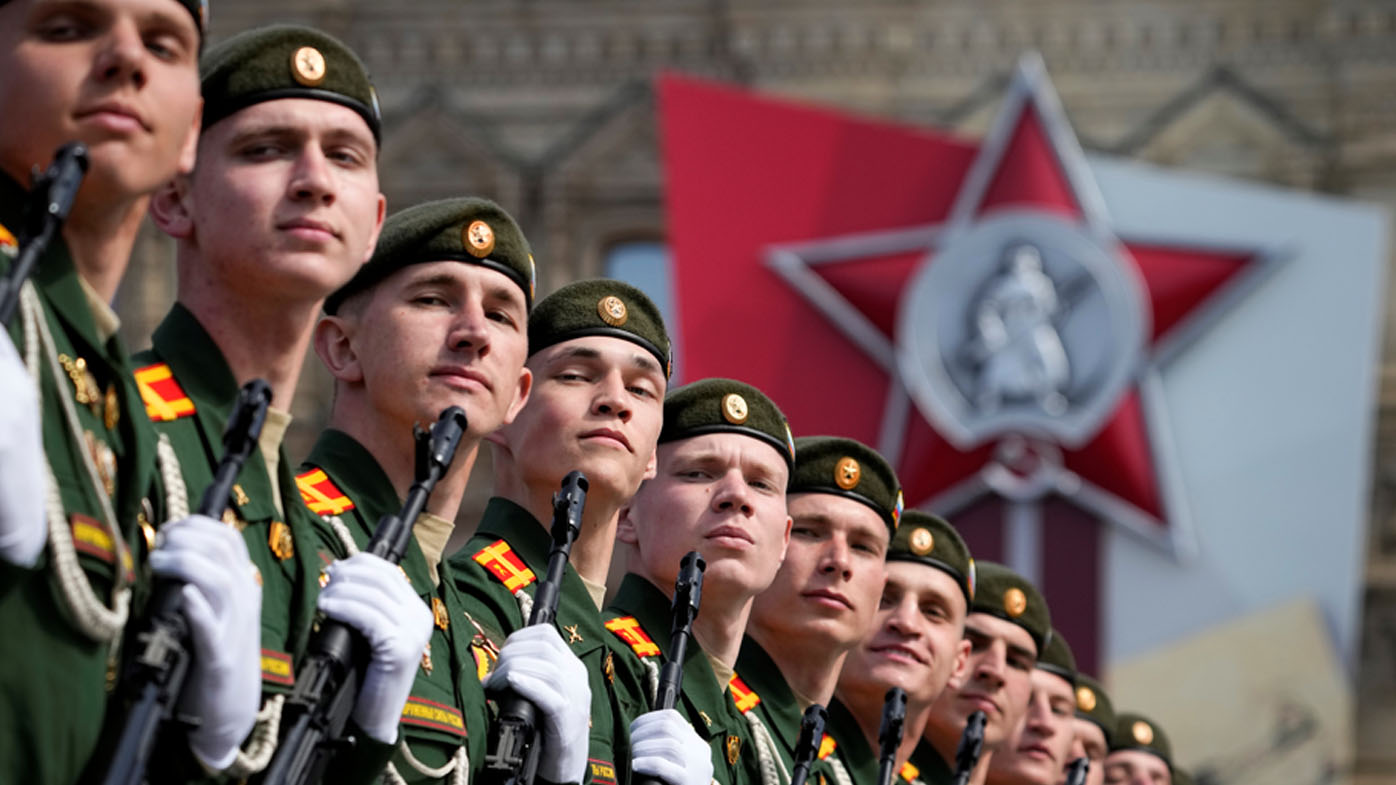
Defence Minister Sergei Shoigu said on state television that some 300,000 reservists would be available.

"These are not some people who have never heard of the army," he said.

"These are those who have served, have a military registration specialty, have had military experience."

The military is looking for reservists who have done specialist jobs in the army in the past, such as tank drivers, sappers and snipers.

The mobilisation is limited, perhaps so as not to alienate public opinion and perhaps to leave room for further moves down the road.

Shoigu claims that "those who have served and have a military specialty are almost 25 million".

The Russian armed forces have suffered devastating losses since the war began in February, with US figures putting deaths and casualties at 75,000.

READ MORE: Hundreds arrested as Russians protest Putin's mobilisation order
What impact on the war will extra recruits have?

International security expert Professor John Blaxland told Today this morning the mobilisation is in fact a "double edged sword" for the Russian leader.

"He has been effectively promising for the last seven months that this special military operation could be done with the professional military and he didn't have to draw on this," Blaxland said.

"This is politically toxic for Vladimir Putin but it also panders to the nationalist war-mongers. What could go wrong?"

He also questioned the war-readiness of the reservists.

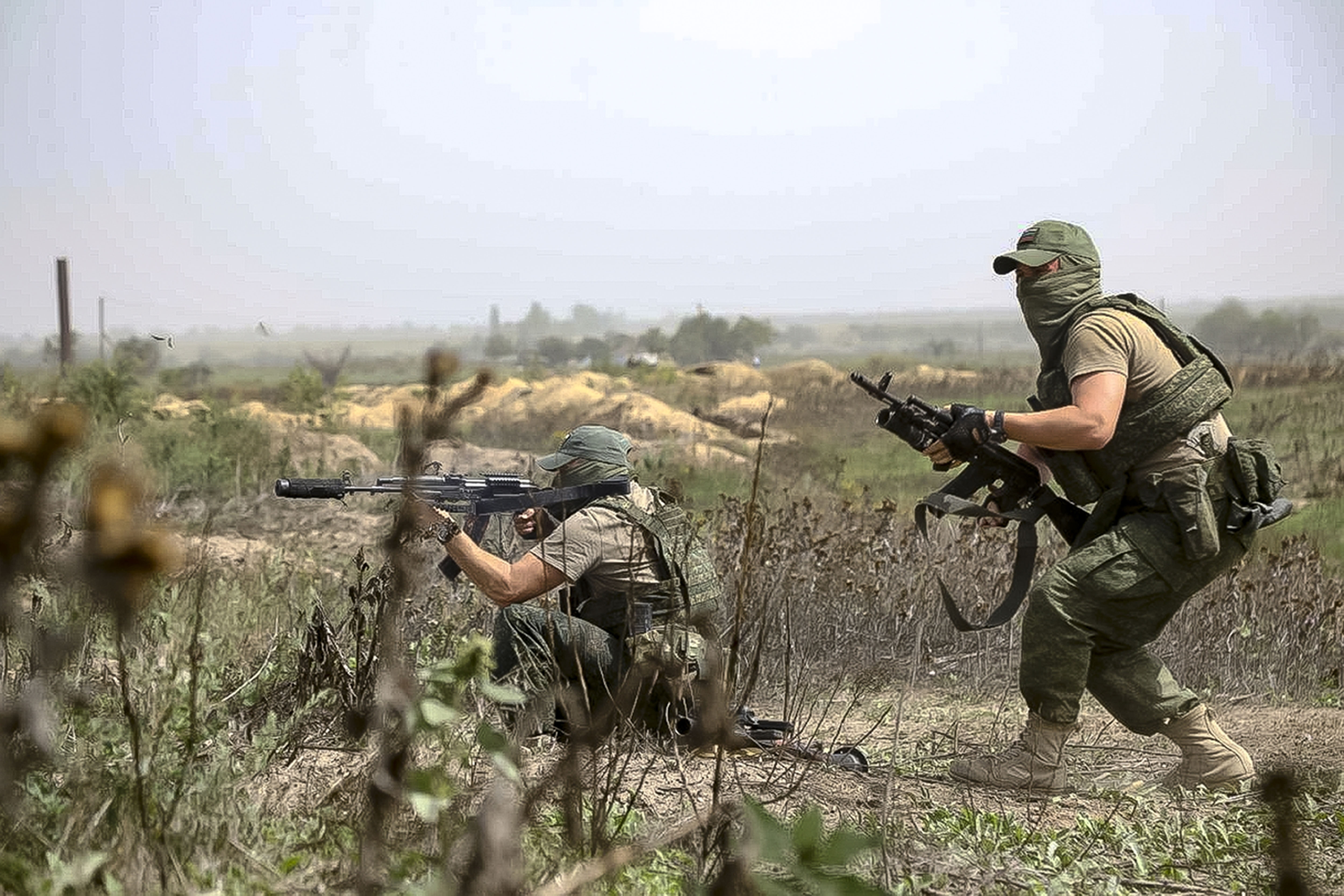
"These are people who are unfit, untrained. They might have done some basic training a long time ago, but essentially we are talking about cannon fodder."

Blaxland said both Putin's renewed rhetoric about nuclear weapons, and the West's condemnation, would not likely have a major effect on the conflict compared to support on the ground.

READ MORE: Russians rush for flights out amid partial reservist call-up
What is the reaction in Russia?

Hundreds of people have been arrested as anti-war protests sweep Russia following the mobilisation order.

Anti-war protests were held in 37 Russian cities on Wednesday, including St Petersburg and Moscow, according to the monitoring group OVD-Info, which said more than 800 protesters were arrested.

Russian political analyst Dmitry Oreshkin argued that Putin's mobilisation will make the Russian military's failings in the war more personal to many Russians.

"Until recently (Russians participated) with pleasure, sitting on their couches, (watching) TV. And now the war has come into their home," he told the AP.

"People will evade this mobilization in every possible way, bribe their way out of this mobilisation, leave the country."

And large numbers of Russians rushed to book one-way tickets out of the country while they still could on Wednesday.

Flights filled up quickly and the prices of tickets for remaining connections sky-rocketed, apparently driven by fears that Russia's borders could soon close or of a broader call-up that might send many Russian men of fighting age to the war's front lines.

What does Ukraine think?

Ukrainian President Volodymyr Zelenskyy said his country remains committed to recapturing all of its sovereign territory, describing Putin's remarks as demonstration of Russia's battlefield setbacks.

"We will act in accordance with our plans, step by step. I am certain we will liberate our territory," Zelenskyy said in a TV interview with the German newspaper Bild.

A spokesperson for Zelenskyy called the Russian mobilisation a "big tragedy" for the Russian people.

They said conscripts sent to the front line in Ukraine would face a similar fate as the ill-prepared Russian forces who were repelled in their attack on Kyiv in the first days of the war.
How is Australia and the rest of the world responding?

Foreign Minister Penny Wong issued a blunt condemnation of Putin's overnight address to his country.

She said Putin's allusions to using nuclear weapons were "unthinkable" and irresponsible".

"His claims of defending Russia's territorial integrity are untrue," Wong said from a United Nations meeting in New York.

"No sham referendum will make them true.

"Russia alone is responsible for this illegal and immoral war."

US President Joe Biden said that Moscow's aggression should be met with continued resolve by Western nations to support Ukraine.

"We will stand in solidarity against Russia's aggression. Period," he said, denouncing Moscow's plans to hold "sham" referendums in Ukraine as well as Putin's "overt nuclear threats against Europe."

NATO Secretary General Jens Stoltenberg echoed Biden's theme. "This is a further escalation in Putin's war. The international community must condemn this blatant violation of international law and step up support for Ukraine," Stoltenberg said in a tweet.

China has urged Russia and Ukraine to hold a ceasefire after Putin announced the mobilisation.

"We call on the relevant parties to realise a ceasefire through dialogue and consultation, and find a solution that accommodates the legitimate security concerns of all parties as soon as possible," a Chinese foreign ministry spokesman told a regular briefing on Wednesday.

– Reported with Associated Press, CNN


How US battle against inflation could see Australia caught in recession

Australia could be facing the prospect of getting caught in a global recession after the US Federal Reserve increased its cash rate by 0.75 per cent.

Motley Fool chief investment officer Scott Phillips said the US cash rate would likely be "very close" to 4.5 per cent by the end of the year, in a bid to tackle soaring inflation.

"Basically the real fear in the US is this may well cause a recession, and the US Fed says they will do whatever it takes," Phillips told Today.

READ MORE: How Australia will mark the National Day of Mourning

Fears of a recession have led to a drop in crude oil prices.

"They are not stopping until they fix inflation. What that means is if the US goes into recession, they are the world's largest consumer economy, and that is bad news for the rest of the world, including Australia.

"I don't want to scare people but forewarned is forearmed."

Phillips said rates would probably continue to rise in Australia, and urged people to prepare for it ahead of the fact.

"The RBA wants us to stop spending, we can choose to do that or they can make us do that. This is not great for businesses," he said.

READ MORE: 'Dangerous' rain band sweeping over Australia captured from above

"They want inflation to come down and we only do that by putting the purse away."

He offered some tips for average households too – "do the boring stuff".

"Get ahead of on your mortgage. Make sure you can accommodate those higher rates when they come, because they will come, and if you can't act now, get yourself ready for what is going to come," he said.

"The best idea is to start paying those higher rates now. Pay as if rates have already gone up.

"They will tell you whether you can do it. It also means you can make some sacrifices now and that makes the pain less painful when it finally happens."

READ MORE: Russia 'shamelessly violated' UN Charter, Biden says

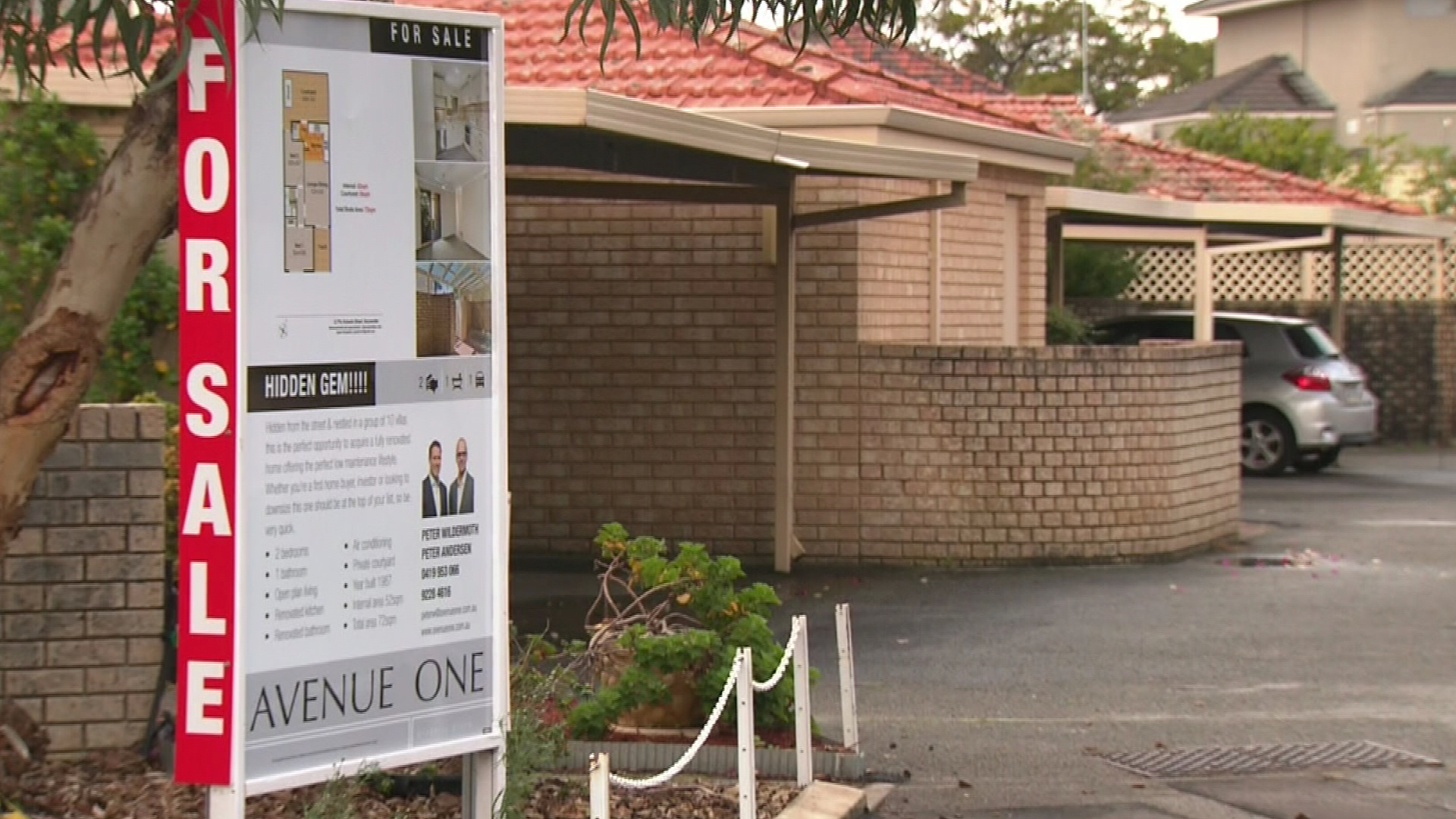
For sale sign at house

America's historic move

Today's decision marks the Fed's toughest policy move since the 1980s to fight inflation. It will also likely cause economic pain for millions of American businesses and households by pushing up the cost of borrowing for things like homes, cars, and credit cards.

Federal Reserve Chairman Jerome Powell acknowledged the economic pain this rapid tightening regime may cause.

"No one knows whether this process will lead to a recession or, if so, how significant that recession would be," Powell said in a press conference following the central bank's policy announcement, which came after a two-day monetary policymaking meeting.

The Fed's updated Summary of Economic Projections, released Wednesday, reflects that pain. The quarterly report showed a less optimistic outlook for economic growth and the labor market, with the median unemployment rate inching up to 4.4 per cent in 2023, higher than the 3.9 per cent Fed officials projected in June and substantially higher than the current rate of 3.7 per cent.

US gross domestic product, the main measure of economic output, was revised down to 0.2 per cent from 1.7 per cent in June. That's well below analysts' estimates – Bank of America economists had estimated that GDP would be revised to 0.7 per cent.

Inflation projections also grew. Core Personal Consumption Expenditures, the Fed's favoured measure of rising prices, is projected to hit 4.5 per cent this year and 3.1 per cent in 2023, the Fed's SEP showed. That's up from June projections of 4.3 per cent and 2.7 per cent, respectively.

John Farnham transferred to cancer rehab facility

John Farnham's family says the music legend is "progressing well" and doctors are pleased with his recovery after undergoing surgery for mouth cancer.

It was announced the singer had been diagnosed with a cancerous mouth tumor last month.

He was rushed into a marathon surgery that ran from 8am-7.30pm, that the singer recovered well from.

READ MORE: Putin orders partial military call-up and says he won't 'bluff' on nukes

In a statement released today, the Farnham family revealed doctors are pleased with the 73-year-old's progress.

"John's recovery from last month's surgery for mouth cancer is progressing well," a statement said.

"His medical team are very pleased with his progress over the past month.

"He was moved from ICU and into a general ward a couple of weeks ago. That in itself was terrific progress."

READ MORE: 'Dangerous' rain band sweeping over Australia captured from above

John Farnham

The family went on to reveal Farnham was this week transferred into a rehabilitation facility.

"Each of these steps means things are moving in the right direction and for that we are enormously thankful," they said, before thanking the medical professionals involved with the singer's care.

"Our family is so very grateful to all the remarkable teams of Victorian medical professionals who have taken such good care of John.

"These outcomes are a credit to their dedication, skills and compassion."

READ MORE: Police release CCTV after mother 'was left in pool of blood'

John Farnham signing 'You're the Voice' (Countdown/ABC)

Farnham has been a mainstay of Australian entertainment since he was billed as teen idol "Johnny Farnham" in the late 1960s.

The 73-year-old's 1986 album Whispering Jack, featuring the single You're The Voice, remains the second-highest selling album in Australia, behind only Meat Loaf's Bat Out Of Hell (1977).

He has received 19 ARIA awards, and was named an Officer of the Order of Australia in 1996, and Australian of the Year in 1987.

Hundreds arrested as Russians protest Putin's mobilisation order

Hundreds of people have been arrested as anti-war protests sweep Russia following President Vladimir Putin's announcement of a partial mobilisation to escalate the invasion of Ukraine.

Despite Russia's harsh laws against criticising the military and the war, more than 800 people were arrested in protests in 37 Russian cities, including Moscow and St Petersburg, according to the independent Russian human rights group OVD-Info.

An Associated Press crew in Moscow witnessed at least a dozen arrests in the first 15 minutes of a protest in the capital.

READ MORE: Russians rush for flights out amid partial reservist call-up

Asked whether protesting would help, one Muscovite who declined to give their name said: "It won't help, but it's my civic duty to express my stance. No to war!"

"Thousands of Russian men — our fathers, brothers and husbands — will be thrown into the meat grinder of the war. What will they be dying for? What will mothers and children be crying for?" the Vesna opposition movement said, calling for protests.

As protest calls circulated online, the Moscow prosecutor's office warned that organising or participating in such actions could lead to up to 15 years in prison.

READ MORE: Trump and kids accused of massive fraud by NY attorney general

Authorities issued similar warnings ahead of other protests recently. Wednesday's were the first nationwide antiwar protests since the war began in late February.

The state communication watchdog Roskomnadzor also warned media that access to their websites would be blocked for transmitting "false information" about the mobilisation.

It was unclear exactly what that meant.

Putin's mobilisation gambit has a strong element of risk. It could backfire by making the war unpopular at home and hurting his own standing. It also concedes Russia's underlying military shortcomings.

A Ukraine counteroffensive this month seized the military initiative from Russia and captured large areas in Ukraine that the Russians once held.

READ MORE: Russia 'shamelessly violated' UN Charter in Ukraine, Biden says

In a statement to The Associated Press, Ukrainian presidential spokesman Sergii Nikiforov said conscripts sent to Ukraine would face the same fate as ill-prepared Russian forces who unsuccessfully tried to take Kyiv early in the war.

"This is a recognition of the incapacity of the Russian professional army, which has failed in all its tasks," Nikiforov said.

The Russian mobilisation is unlikely to produce any consequences on the battlefield for months because of a lack of training facilities and equipment.

Russian political analyst Dmitry Oreshkin said it seemed "an act of desperation."

He predicted that Russians will resist the mobilization through "passive sabotage."

"People will evade this mobilization in every possible way, bribe their way out of this mobilization, leave the country," Oreshkin told the AP.

He described the announcement as "a huge personal blow to Russian citizens, who until recently (took part in the hostilities) with pleasure, sitting on their couches, (watching) TV. And now the war has come into their home."

Passenger punch-up on Brisbane bus turns into brawl

A violent brawl on a Brisbane bus has shocked onlookers and prompted calls for improved safety measures for drivers.

The fight is the latest in the series of incidents concerning the Rail, Tram and Bus Union.

Footage of the fight shows passengers throwing punches and yelling before a bus driver intervenes.

READ MORE: The rare Aussie $2 coins now worth hundreds

CCTV has shown passengers throwing punches inside a Brisbane City Council bus.

Onlookers then see a baby strapped to the chest of a woman being hit.

One of the passengers heard the baby cry, got up and told the group to "let her go".

The baby was uninjured but the driver pushed and shoved.

The union said drivers see incidents such as this far too often.

"They're sick and tired of violence they're seeing on a daily basis," RTBU secretary Peter Allen said.

READ MORE: Coles offloads 710 Coles Express petrol stations in $300 million sale

RBTU assistant state secretary Tom Brown said drivers "are afraid to drive the 100 route".

According to drivers, there are three dangerous bus routes – the 110, the 330 and the 100.

Bus drivers said the most dangerous line is the 100 through Forest Lake, Rocklea, Annerley and into town.

The latest incident unfolded on the 100 outside the Princess Alexandra Hospital.

RBTU assistant state secretary Tom Brown said drivers "are afraid to drive the 100 route".

"No wonder, trouble flares up there constantly," he said.

The transport union has called on Brisbane City Council to act.

However council said bus safety is the responsibility of the state government.

The statement government said bus safety was a shared responsibility.

What will be open on the National Day of Mourning in NSW?

September 22 has been declared a National Day of Mourning following Queen Elizabeth's death which means not everything will be open. 

The national public holiday has been part of federal government protocol planning for decades but it caught businesses by surprise as many retailers and service providers will have to close their doors.

Here is what we know will be open and closed tomorrow in New South Wales.

READ MORE: The rare Aussie $2 coins now worth hundreds

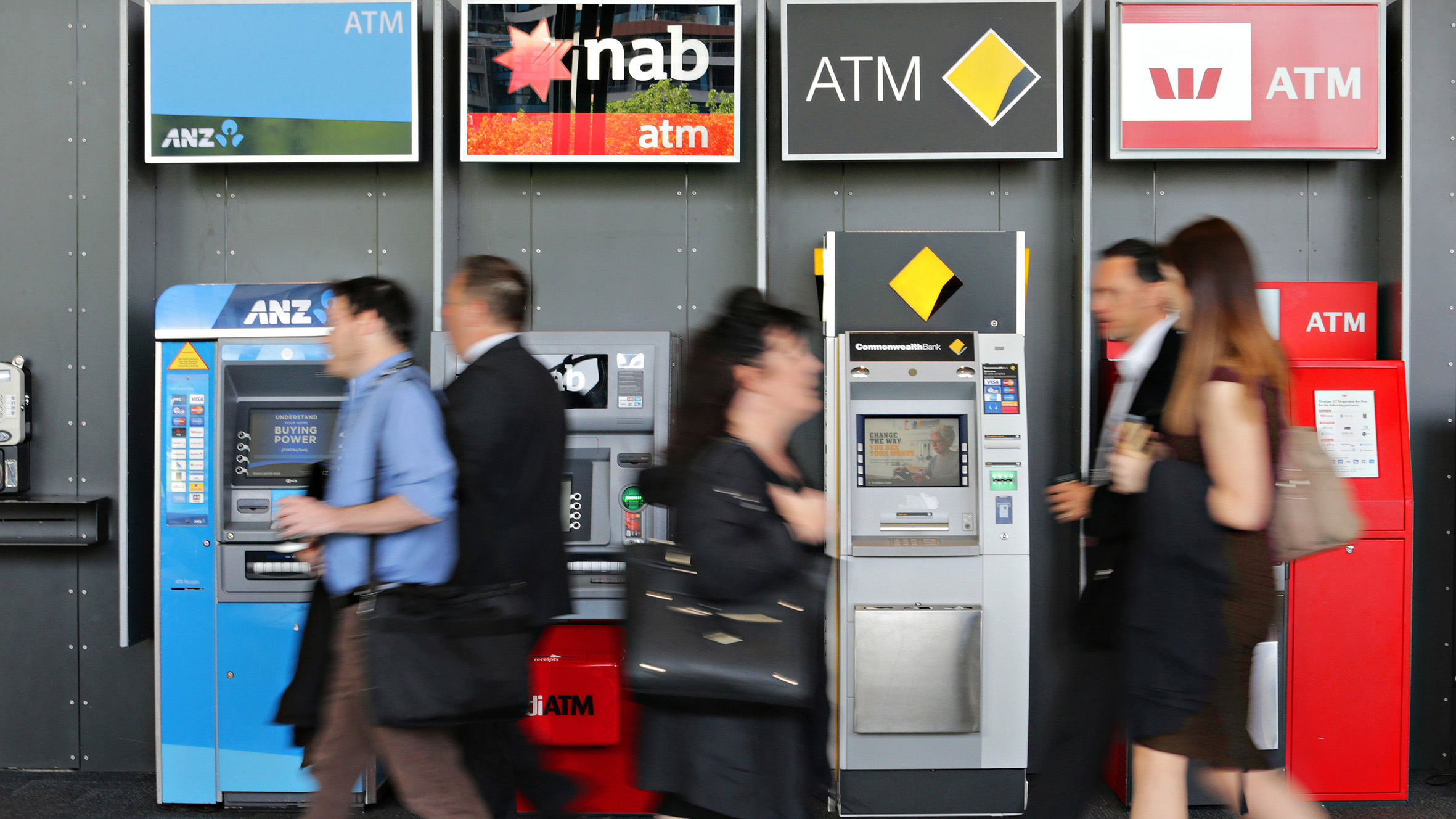
Generic 'Big Four Banks' - ANZ Bank, Commonwealth Bank, NAB Bank and Commonwealth Bank.

All Australia Post offices will be closed as well as Service NSW branches. 

Banks, including the big four Commonwealth, Westpac, NAB, ANZ, among others will be shut all day. 

But supermarkets like Coles and Woolworths as well as Kmart and Bunnings will open for their usual hours. 

Some stores which normally have extended trading hours on a Thursday may make changes including opening later or closing earlier. 

READ MORE: Coles offloads 710 Coles Express petrol stations in $300 million sale

Grocery shopping

For anyone looking to spend the day out and about, cinemas, Taronga Zoo and the NSW Art Gallery will all remain open. 

Restaurants, retailers, pubs and bottle shops are all allowed to stay open.

However many will have to weigh up the decision to open with the requirement to pay staff public holiday penalty rates.