Tag Archives: oceania

Australian's 'eureka' discovery in remote jungle cave

The "eureka moment" for Australian archaeologist Dr Tim Maloney came as he hunched over the skeletal remains of a Stone Age hunter-gatherer who lived 31,000 years ago.

It had been backbreaking, painstaking work, sweeping away a quarter-teaspoon of soil at a time to expose an immaculately preserved skeleton.

The body had been buried about one-metre-deep inside an extremely remote limestone cave in the east of Borneo, only accessible by boat at certain times of the year.
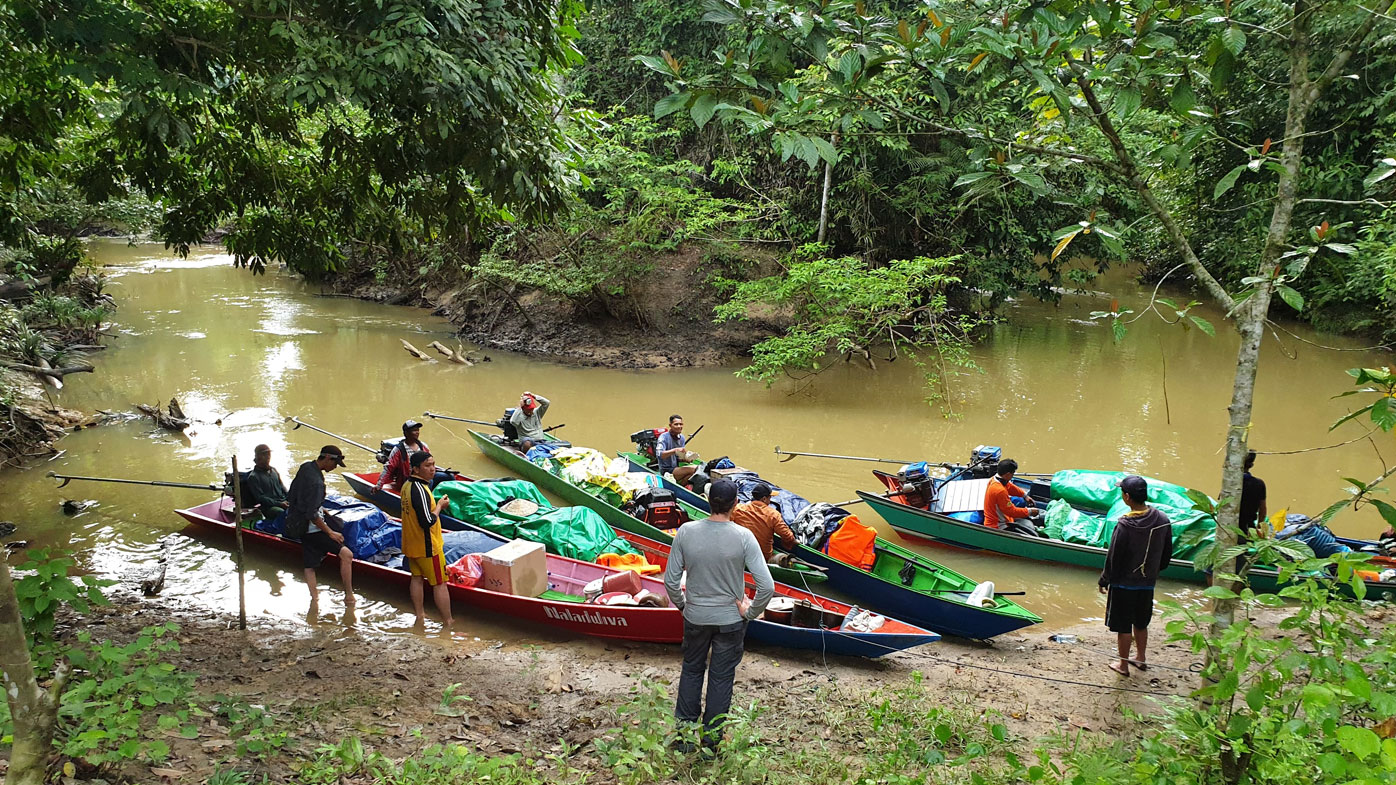
The archaeological team docks at a bank on the Marang River.

But what the small team of archaeologists stumbled on was the find of a lifetime.

It made every meticulous stroke, and the days-long journey upriver into deep rainforest in the East Kalimantan region, worthwhile beyond their wildest dreams.

Lying inside the grave they were clearing was a skeleton where the young buried person's legs had been placed in a unique, resting flex position.

All the bones of the right leg, down to each of their five toes, was in perfect condition.

And so was the left, except for one glaring exception.

"I'll never forget the moments of brushing away at that area and thinking something is very exceptional and unusual here," Maloney exclusively told 9news.com.au.

"The left foot was completely absent.

"It was just an absolute perplexing, exciting mystery."

Paleo-pathological experts later reached an extraordinary conclusion to explain the missing foot, and the unusual distal bony growths on the remaining shin bones.

"It was deliberately amputated," Maloney said.

"So that was essentially the eureka moment."
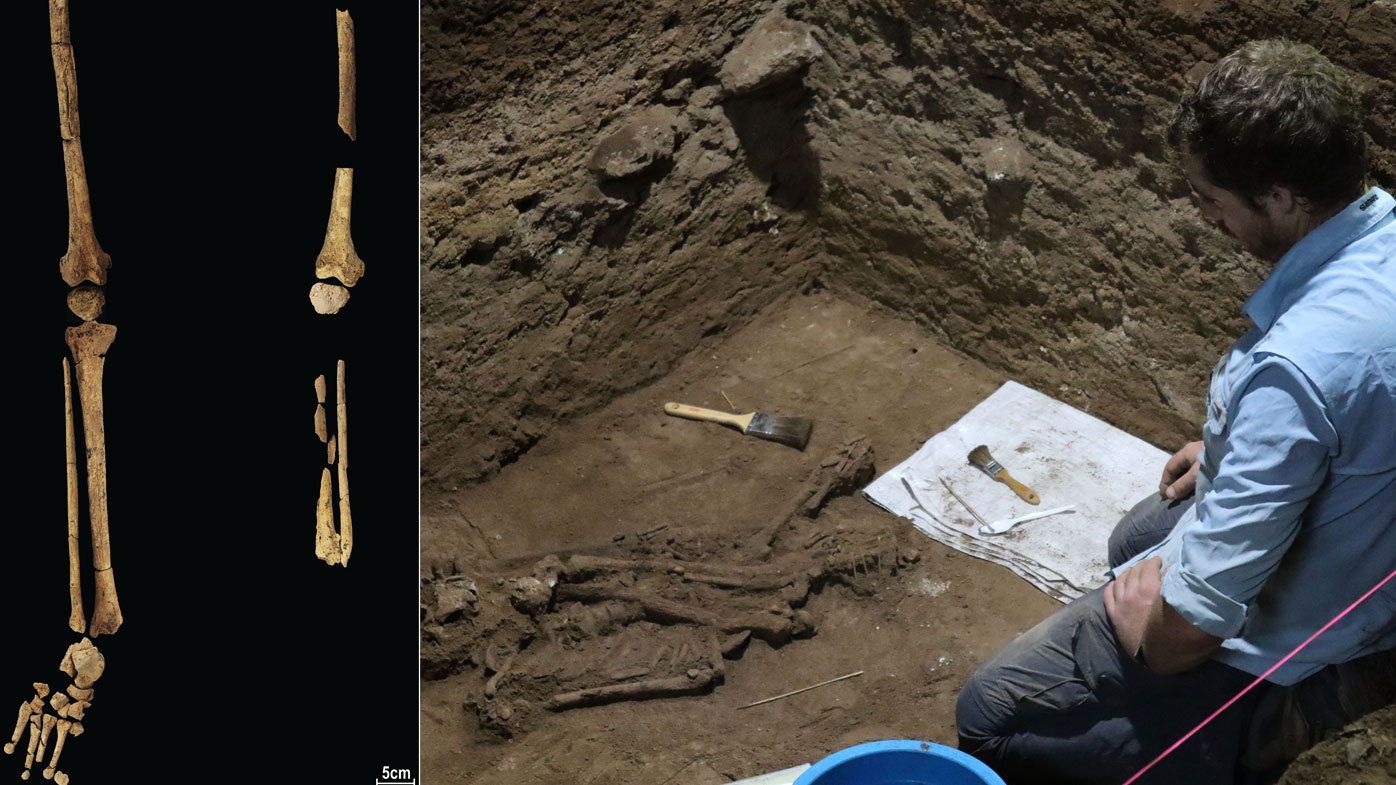
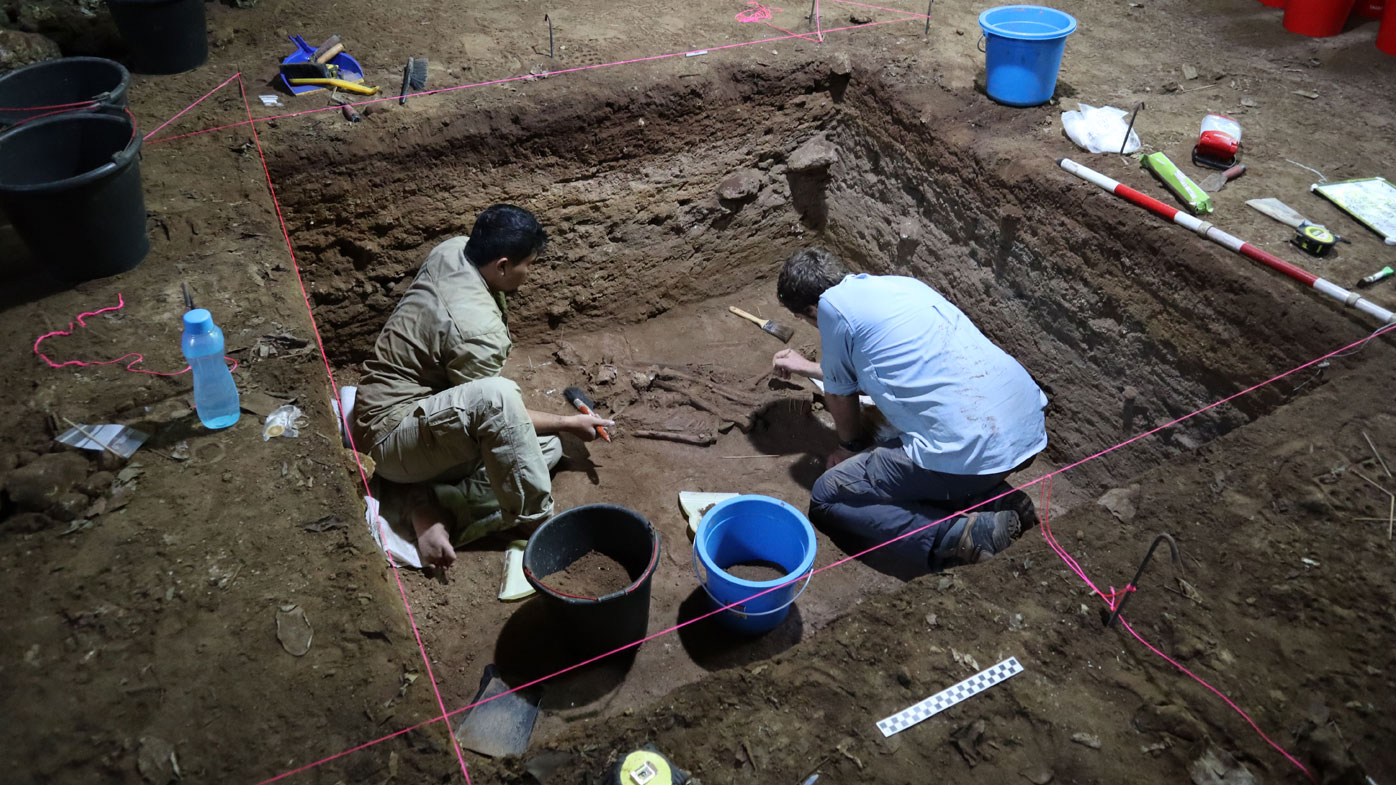
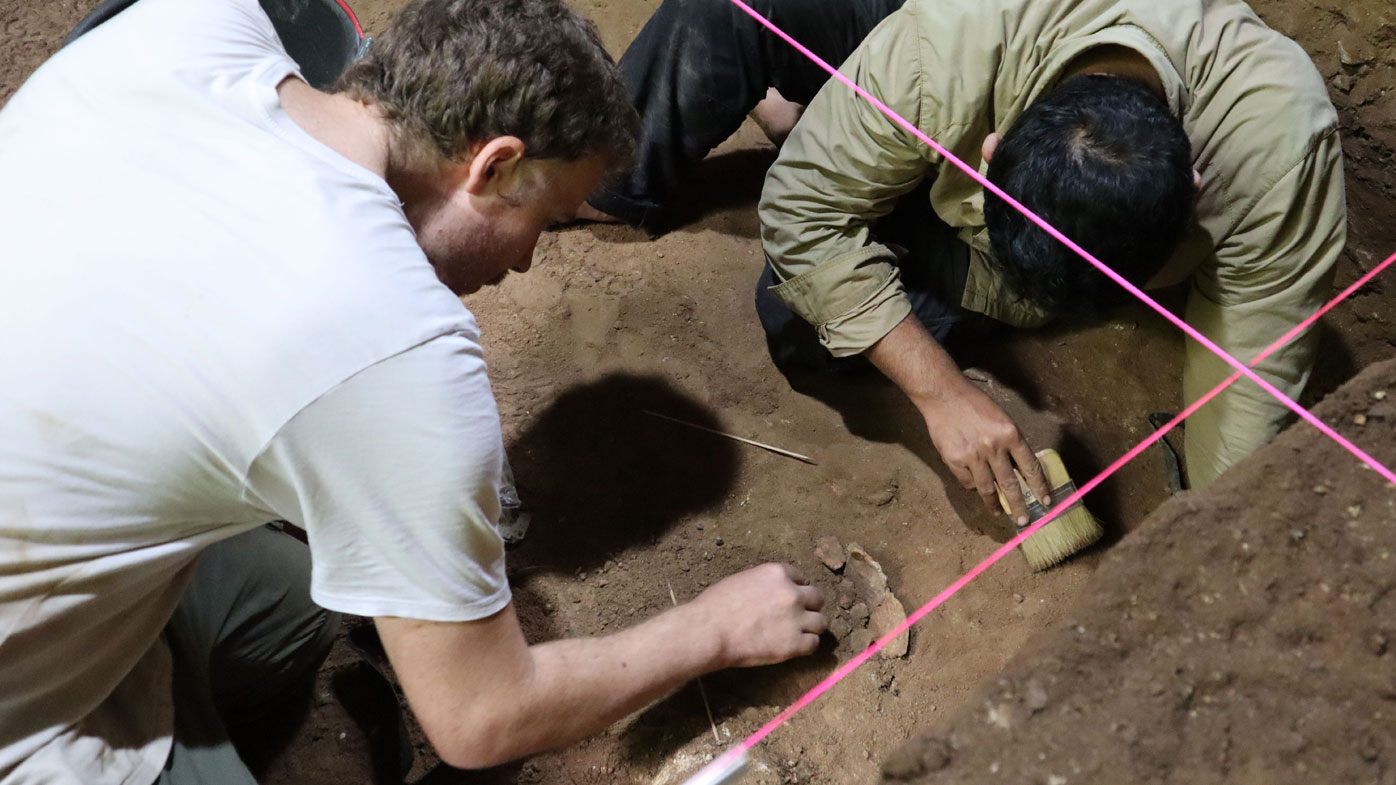
Dr Tim Maloney takes in the discovery of the ancient skeletal remains.Andika Priyatno from Balai Pelestarian Cagar Budaya and Dr Tim Maloney from Griffith University carefully excavate the remains.

It was evidence, Maloney said, of advanced Stone Age surgery, and it completely turned any assumed knowledge of ancient surgical procedures on its head.

"It changes the known history of human medicine," he said.

The findings, published today in Nature, suggested advanced surgical procedures were happening in tropical Asia tens of thousands of years earlier than previously recorded.

Before the Borneo cave find, the oldest known complex operation happened to a Neolithic farmer from France about 7000 years ago, whose left forearm had been surgically removed and then partially healed.

The surgeon who conducted the Borneo amputation, 31,000 years ago in the Upper Paleolithic period, must have had detailed knowledge of limb anatomy and surgical hygiene, and considerable technical skill, researchers said.

Before modern clinical developments, such as antiseptics, most people undergoing amputation surgery died from blood loss, shock or infection.

Regular amputation success was only achieved by medieval surgeons in Europe around the turn of the last century.

Based on trauma patterns on the bones found by Maloney, the study concluded the lower left leg had been amputated, probably when the person who researchers anointed TB1, was a child, aged in their pre or early teens.

Researchers couldn't determine the sex of TB1, but believed they survived the surgery and lived for another six-nine years, likely dying in their early 20s.
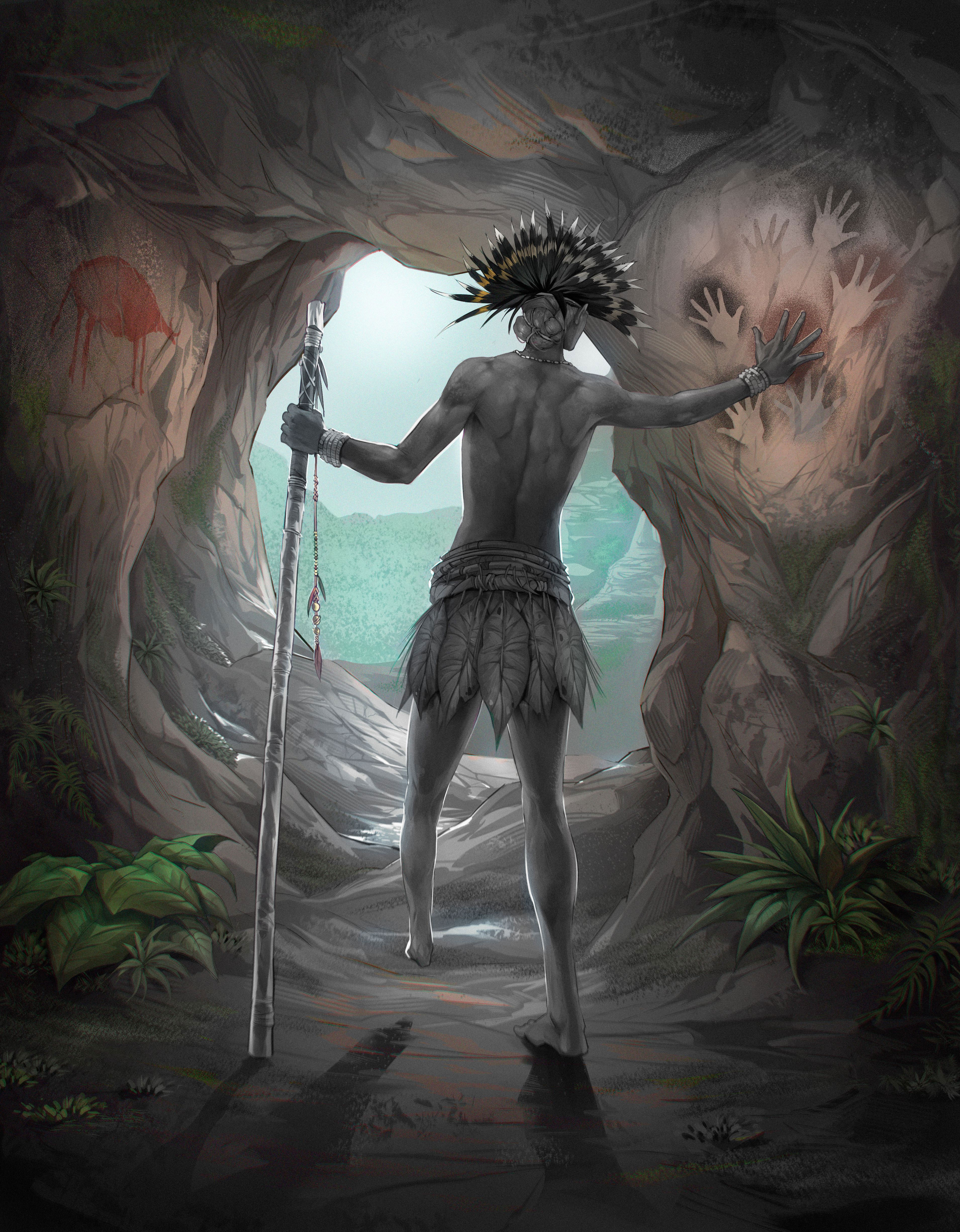
An artist's impression of TB1

It was remarkable, Maloney said, that TB1 made it through surgery and went on to live for years in the mountainous, rainforest terrain; it showed a high degree of post-op care.

He said there was a "compelling case" that antiseptic and pain medications had been used by the surgeon, who likely operated with a very sharp lithic edged rock to cut the limb off.

The surrounding rainforest is "home to some of the highest biodiversity on planet Earth," Maloney said, "a great many of which have medicinal properties".

The team began to excitedly speculate as soon as they saw a foot was missing.

While continuing to carefully excavate the skeleton, recording, photographing and laser-scanning the remains, an animal attack and other theories were discussed.

"It's an area which is home to sun bears, crocodiles and anacondas," Maloney said.

"And there's a long list of potential causes of injury in this mountainous rainforest area that we were all speculating on at the time."

But amputation also got discussed, he said.

"Oh, that'll be outrageous if it was that, that'll change the course of known human medicine," is how Maloney remembered the conversation going.

"And that's exactly what it was, and represents."

READ MORE: Ancient tooth could help solve human evolution's biggest mystery
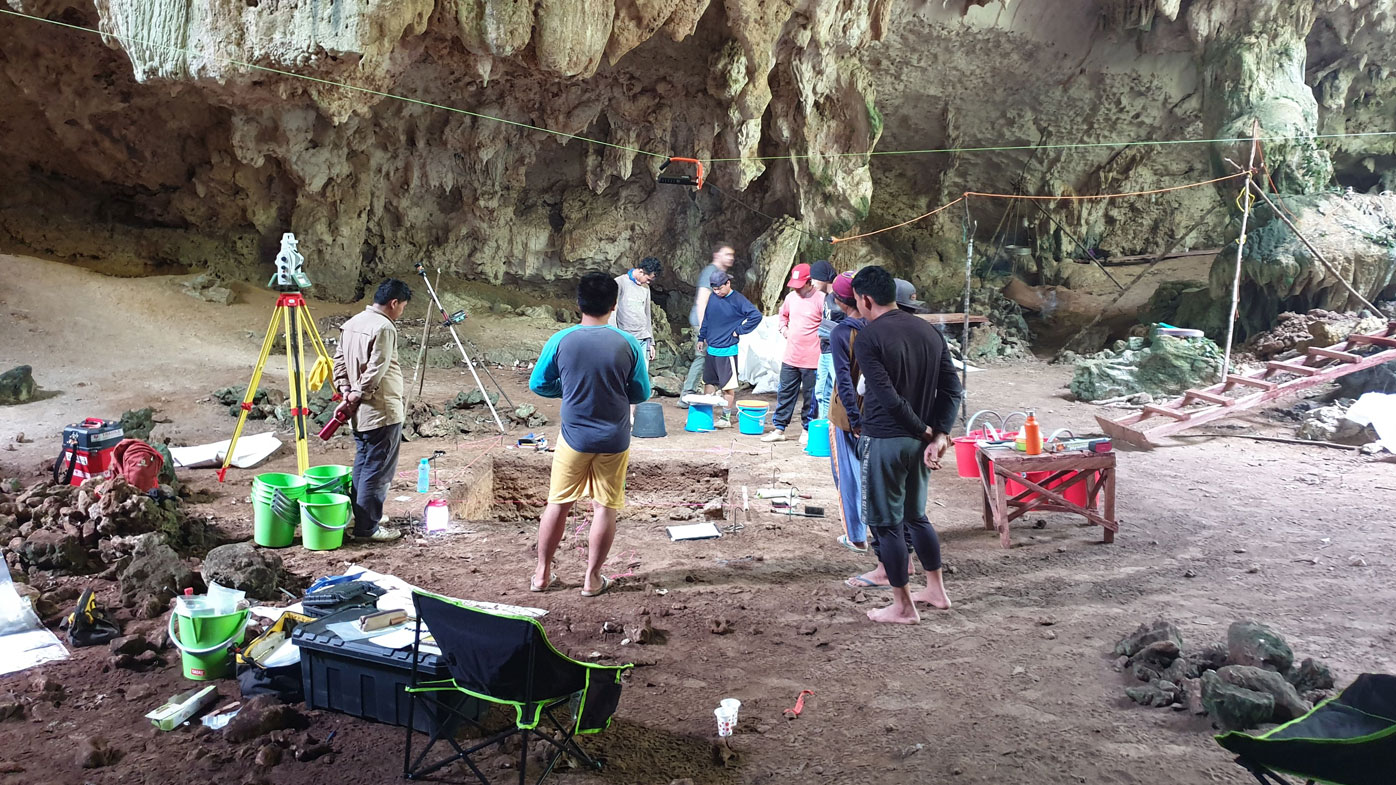
Australian and Indonesian archaeologists inside the Borneo cave.Andika Priyatno from Balai Pelestarian Cagar Budaya and Dr Tim Maloney from Griffith University excavate the remains.

READ MORE: How a record number of people suddenly climbed the 'savage mountain'

Later in a lab, scientists concluded trauma patterns on the left leg were similar to "a large metal blade or mechanical processes" found in modern amputations.

Blunt force trauma from an accident or animal attack typically caused crushing factures, a feature which was "absent" from TB1's left leg bone, the study said.

Instead, tell-tale bony growths showed signs of post-operative healing, researchers said.

There was also no evidence of infection in the limb, further pointing to antiseptic aftercare and ruling out the probability of an animal attack, such as a crocodile bite.

Researchers are still trying to ascertain exactly what kind of surgical tool was used to amputate the foot, but Maloney concedes it's unlikely they will ever know for sure.

Sharpened bamboo and marine shells were considered, but the study settled on flaked metamorphic stone, which has extremely sharp lithic edges and is found in abundance in the area, as the most likely tool.

Even today a small number of surgeons still use obsidian blades – a type of volcanic glass which has a cutting edge many times finer than even the best steel scalpels.

"Stone Age surgery is in fact very much alive and well," Maloney said.

He described the discovery as a "dream" and "the crème de la crème of finds".

Led by Griffith University's Maloney, Dr India Dilkes-Hall from University of Western Australia and Indonesian archaeologist Andika Priyatno, the team camped inside Liang Tebo for several weeks in February 2020, when they found and excavated Tebo1.

READ MORE: Stonehenge's hidden purpose revealed, professor claims
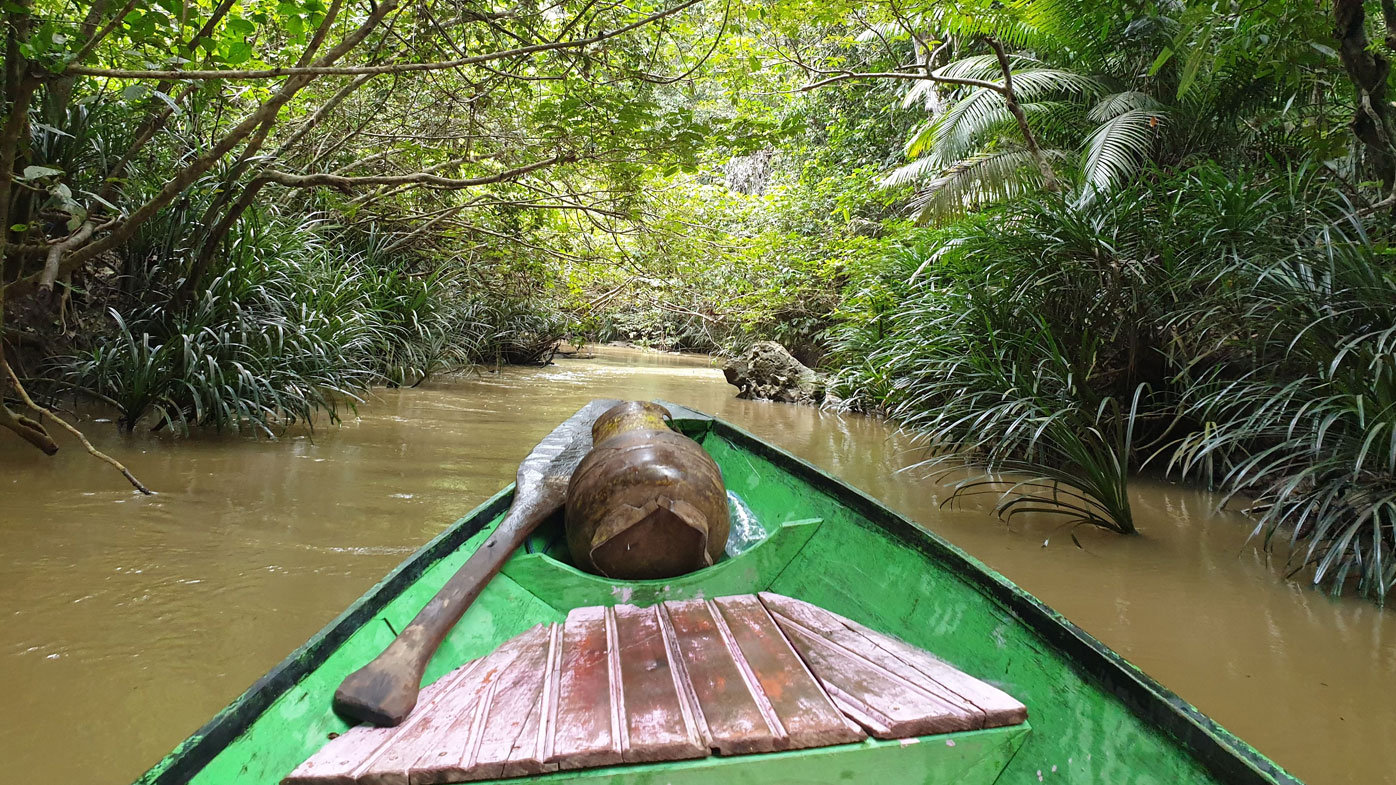
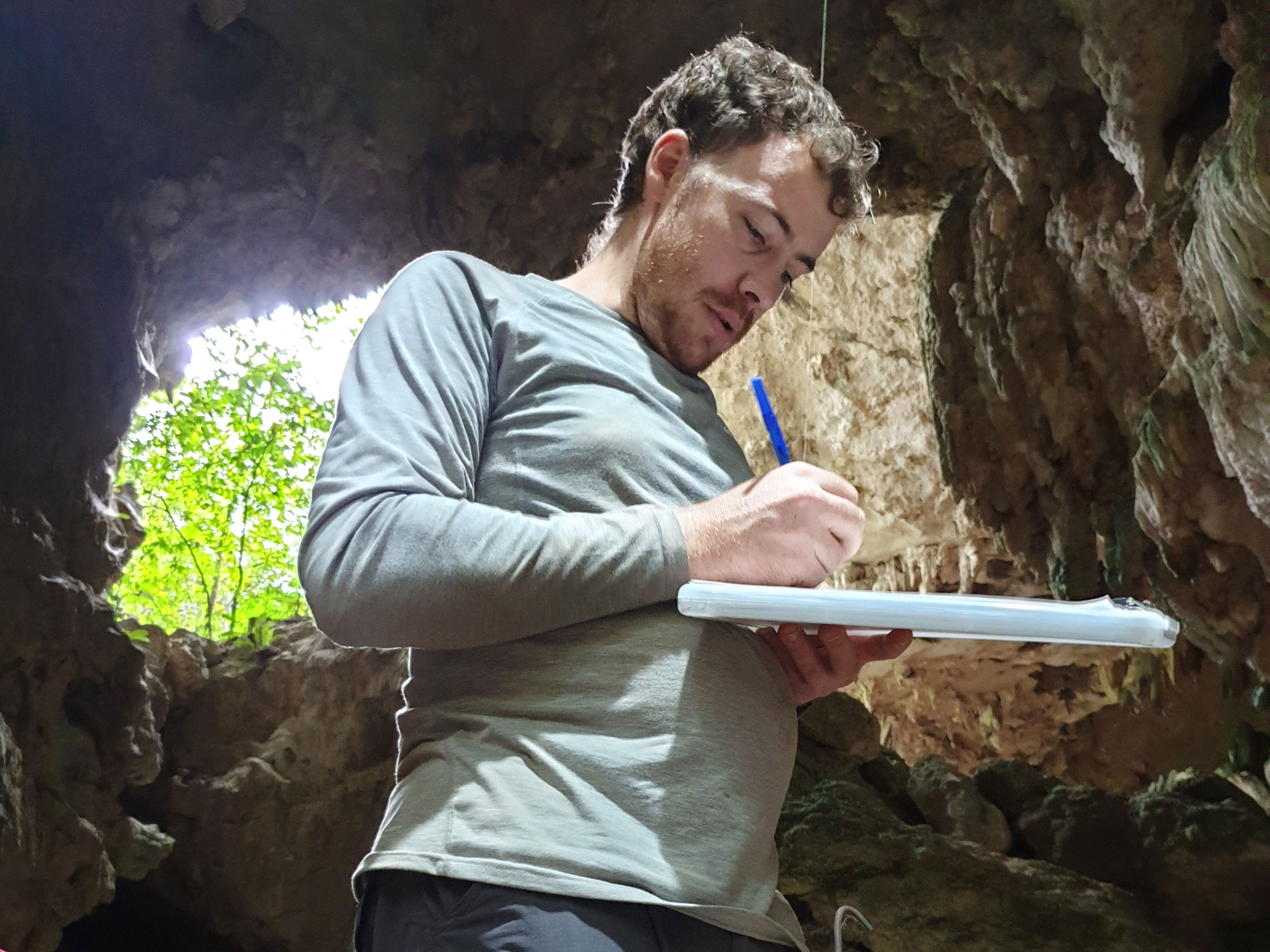
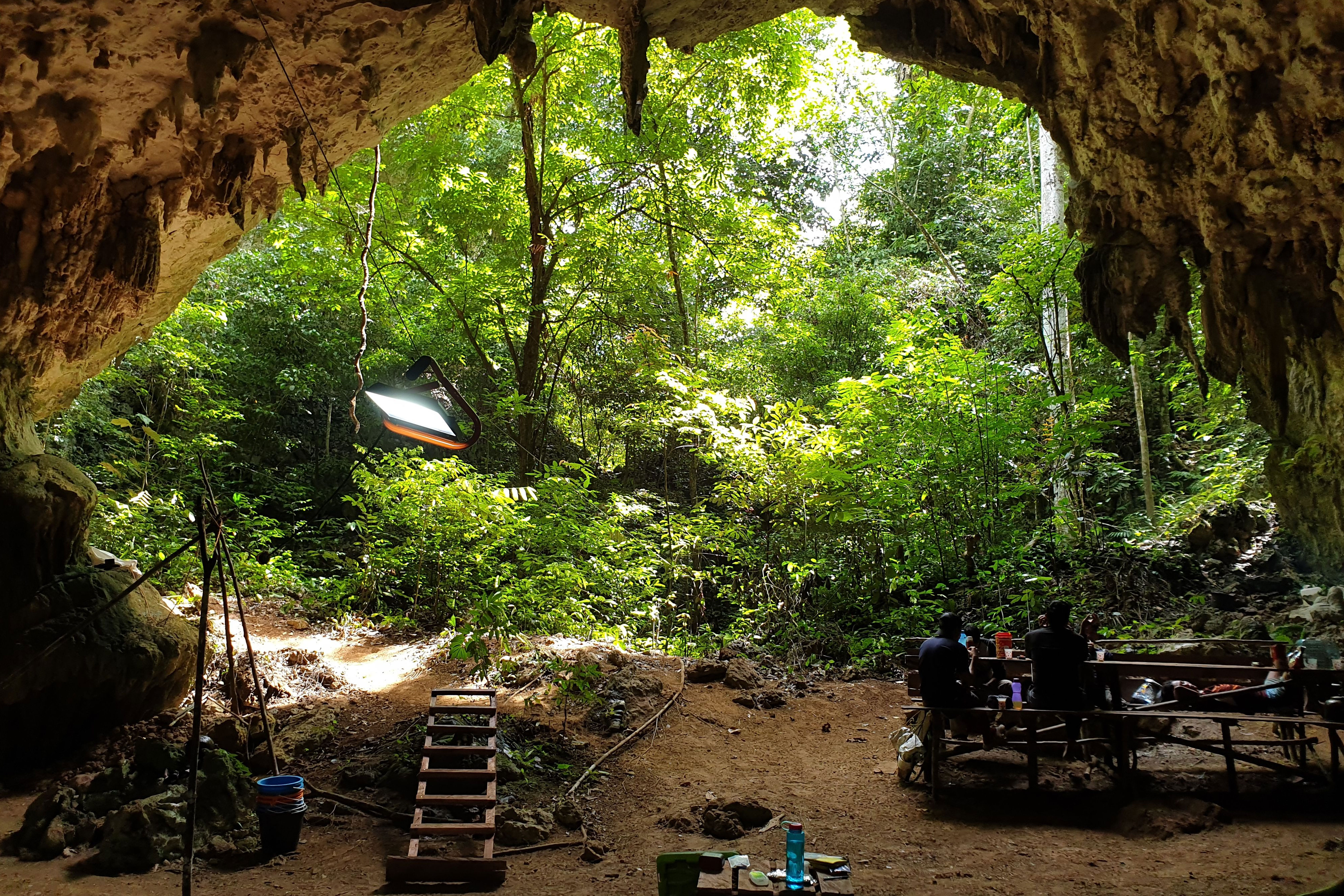
A boat journeys towards Liang Tebo cave in East Kalimantan.Griffith University archaeologist Dr Tim Maloney documents progress of the excavation.The entrance to  Liang Tebo cave in Borneo

READ MORE: Famous wood cabin falls off mountain in Alps

They had been drawn there after remarkable cave art, dating back at least 40,000 years, was discovered on the rock walls, several years earlier.

That art, described by Maloney as "very compelling and captivating", was a clue that the cave could be holding something very special.

When TB1 died, Borneo was part of the Eurasian supercontinent Sunda.

That eastern edge of Sunda was the closest coastline for the movement of people towards Australia and the archipelago of the tropics.

So remote is the cave, the team had no idea a strange virus called COVID-19 was beginning to sweep the globe while they were uncovering TB1.

They completed the excavation "before a frantic evacuation", Maloney said, where the team made it back to their homes in Jakarta, Brisbane and Perth just 24 hours before international borders closed.
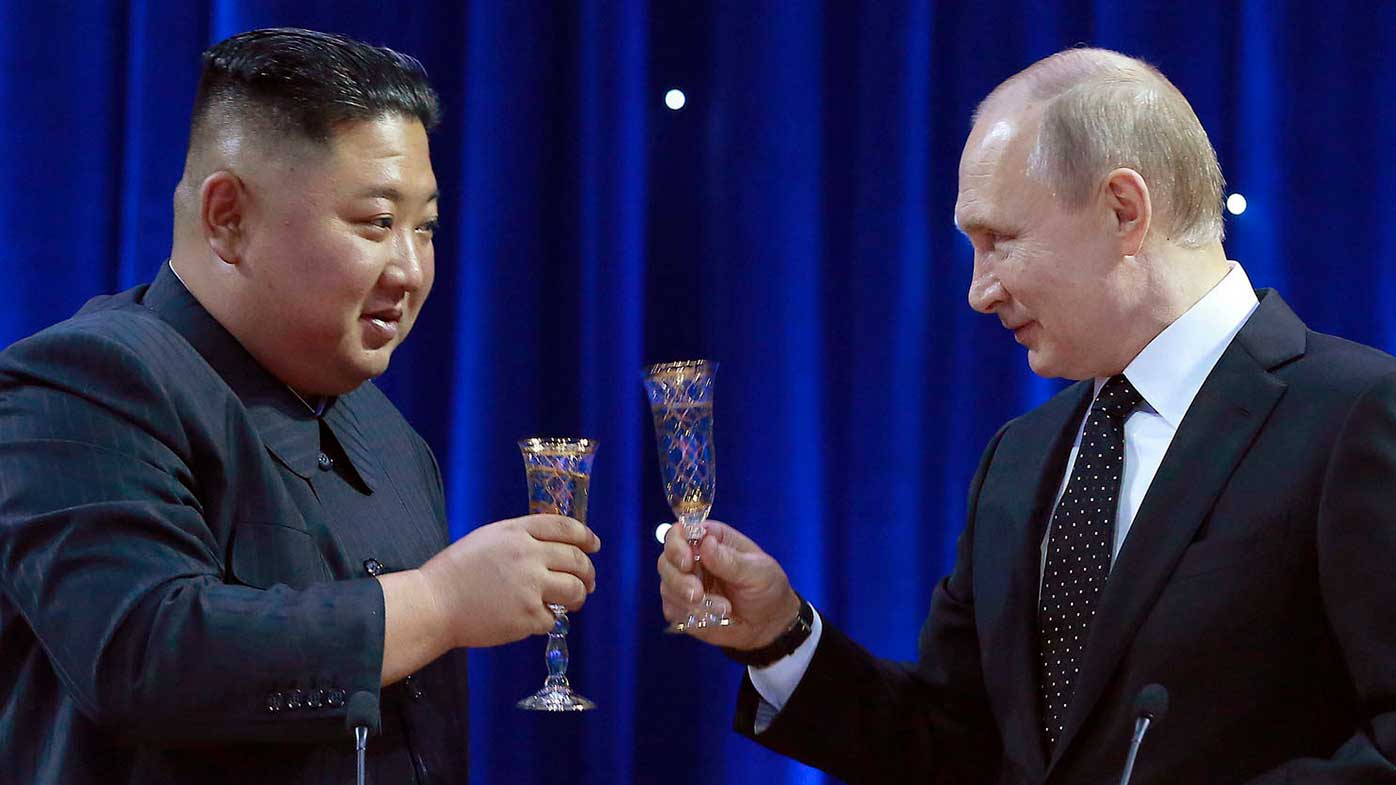
What help are North Korean weapons to Russia?

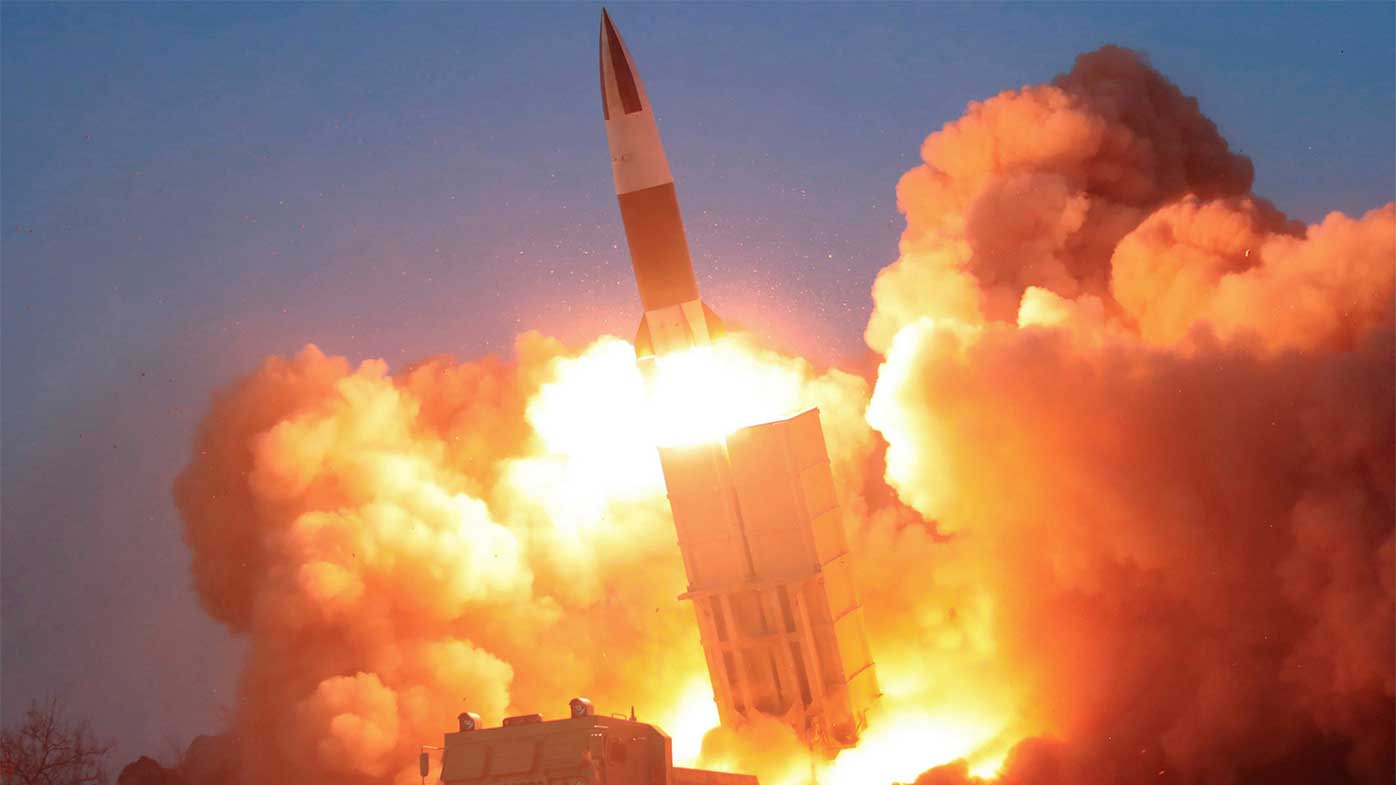
North Korea is apparently moving to sell millions of rockets and artillery shells — many of them likely from its old stock — to its Cold War ally Russia.

Russia has called a US intelligence report on the purchasing plan "fake". But US officials say it shows Russia's desperation with the war in Ukraine and that Moscow could buy additional military hardware from North Korea.

The ammunitions North Korea reportedly intends to sell to Moscow are likely copies of Soviet-era weapons that can fit Russian launchers. But there are still questions over the quality of the supplies and how much they could actually help the Russian military.

READ MORE: Buxton crash driver charged with five counts of dangerous driving causing death

Vladimir Putin is turning to Kim Jong-un to help Russia's serious shortage of munitions.

What exactly will North Korea Supply to Russia?

Slapped by international sanctions and export controls, Russia in August bought Iranian-made drones that US officials said had technical problems.

For Russia, North Korea is likely another good option for its ammunitions supply, because the North keeps a significant stockpile of shells, many of them copies of Soviet-era ones.

North Korea "may represent the single biggest source of compatible legacy artillery ammunition outside of Russia, including domestic production facilities to further supplies," said Joseph Dempsey, research associate for defense and military analysis at the International Institute for Strategic Studies.

Lee Illwoo, an expert with the Korea Defence Network in South Korea, said both North and South Korea — split along the world's most heavily fortified border for more than 70 years — keep tens of millions of artillery shells each.

READ MORE: All of the photos from the 2022 Midwinter Ball in Canberra

North Korean rockets are being sold to Russia.

North Korea will likely sell older shells that it wants to replace with newer ones for multiple rocket launch systems or sophisticated missiles in its front-line army bases, he said.

North Korea's greater reliance on nuclear weapons and guided missiles may also remove the need for many of its older, unguided artillery shells that once played a prominent role, said Ankit Panda, an expert with the Carnegie Endowment for International Peace.

But Bruce Bennett, a senior security expert at the California-based Rand Corporation, said most of the artillery rounds to be sent to Russia are likely to be ammunition for small arms, such as AK-47 rifles or machine guns.

"It's not millions of artillery shells and rockets – that's more than the likely consumption. It could be millions of small arms rounds," Bennett said.

READ MORE: Imposter doctor at New Zealand hospital caught out by colleague, documents show

How good are North Korean weapons?

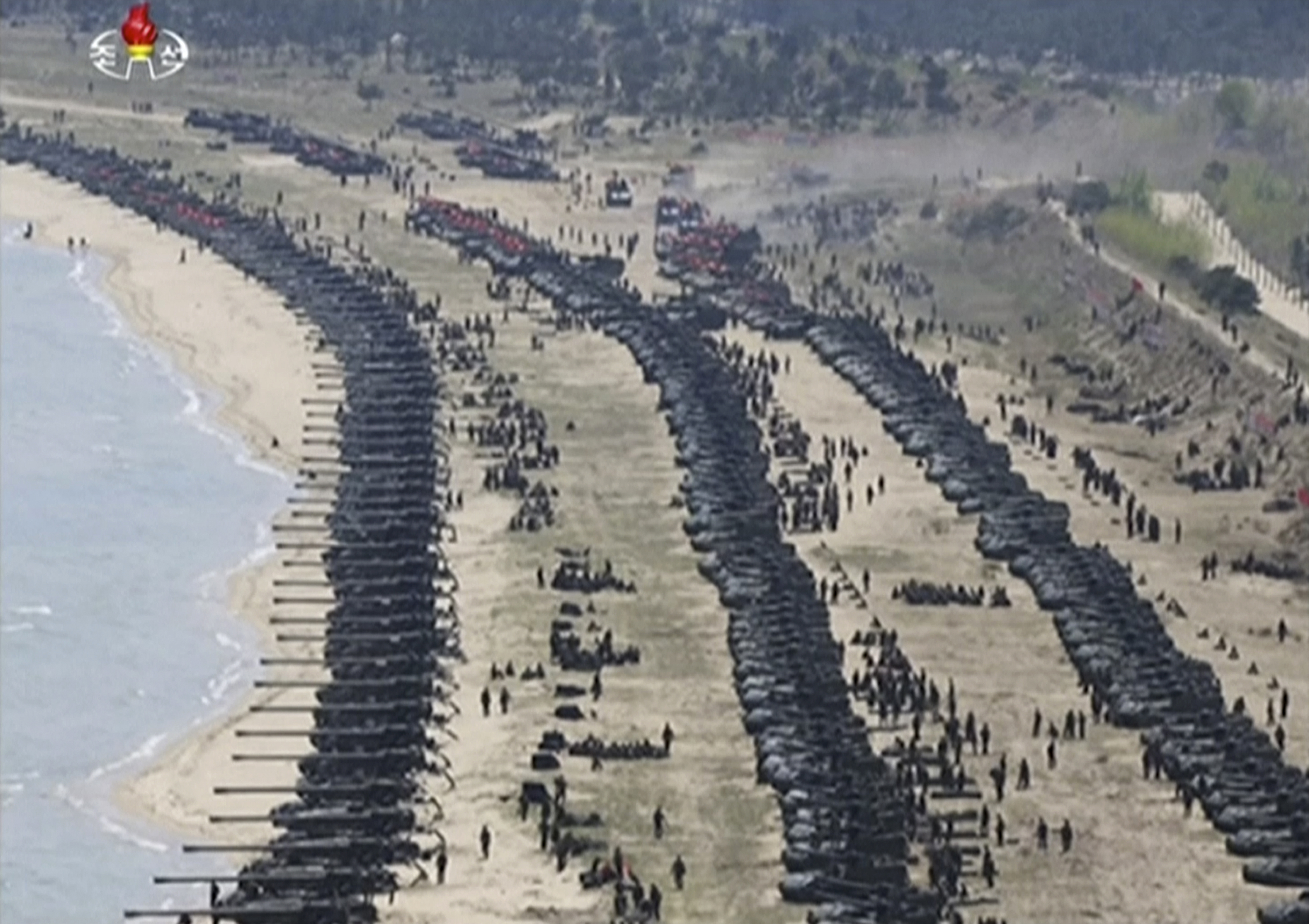
According to an IISS assessment, North Korea has an estimated 20,000 artillery pieces including multiple rocket launchers in service, a number that Dempsey described as "significantly more than any other country in the world".

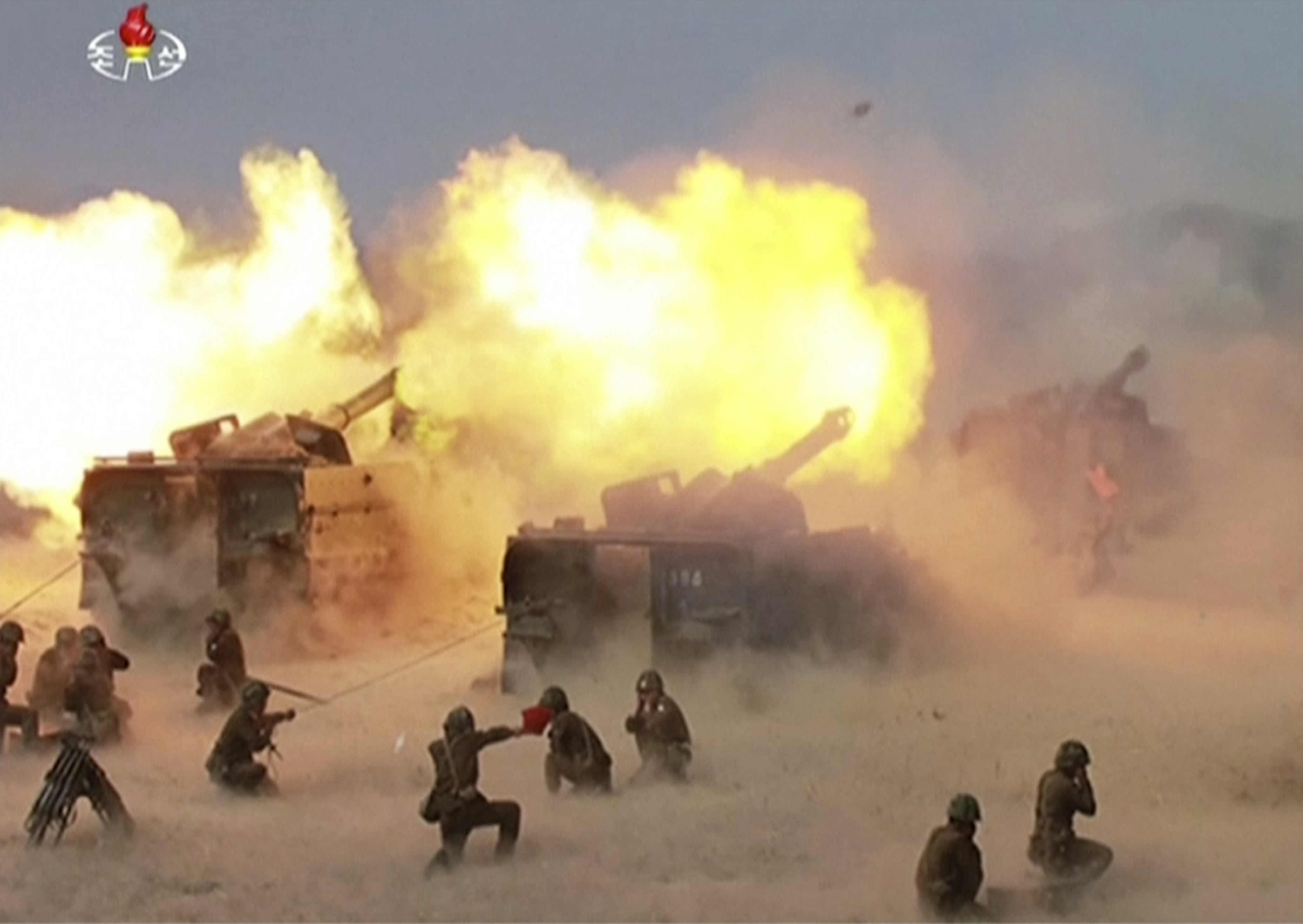
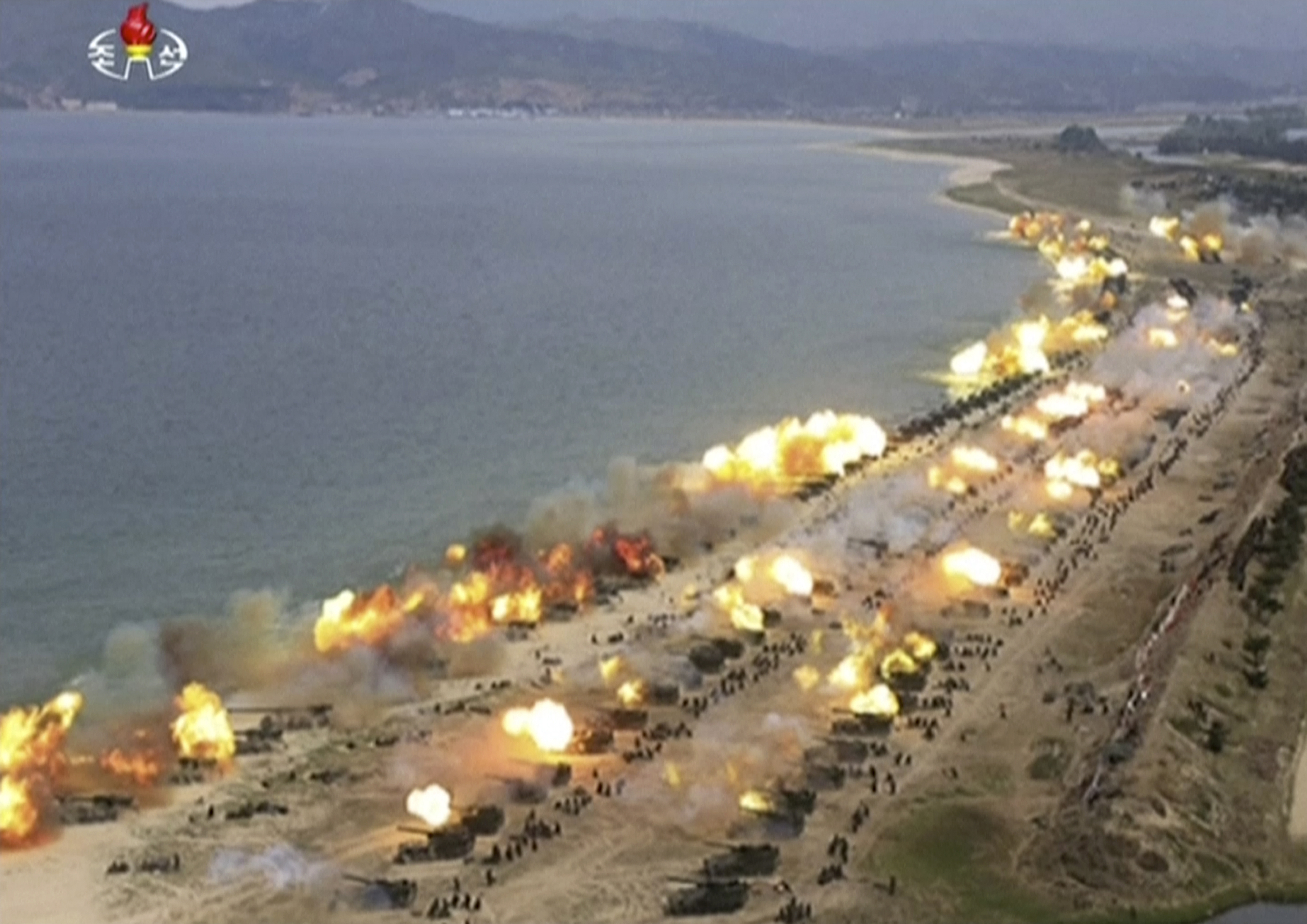
North Korea's state media have called its artillery guns "the first arm of the People's Army and the most powerful arm in the world" that can reduce enemy position into "a sea of flames".

But its old artillery systems, whose ammunitions will likely be supplied to Russia, have a reputation for poor accuracy.

During North Korea's artillery bombardment of South Korea's front-line Yeonpyeong Island in 2010 that killed four people, Bennett said that only 80 of the 300-400 weapons North Korea should have fired likely hit their target.

In his assessment, Lee said about half of the North Korean shells launched ended up falling into waters before reaching the island.

READ MORE: Rebels motorcycle gang member Shane Smith killed in crash

"That is miserable artillery performance. The Russians may experience the same thing, which will not make them very happy," Bennett said.

Observers doubt the usefulness of North Korean ammunition for the Russian campaign in Ukraine, which they say has depleted the military. There have been photos of barrel-busted Russian guns on social media.

It's unclear how serious Russian shortage of ammunitions is. In July, a senior US defence official told reporters that Russia was launching tens of thousands of artillery rounds each day and couldn't keep it up forever.

"While substantial stockpiles likely still exist, they may be increasingly infringing on those reserved for the contingency of a wider future conflict," Dempsey said.

READ MORE: Xi Jinping's secret hopes for first international trip since COVID-19 outbreak

No North Korean missiles expected

It's unlikely for North Korea to provide Russia with ballistic missiles that it views as crucial in its military strategies toward Washington and Seoul, said Yang Uk, an analyst at Seoul's Asan Institute for Policy Studies.

And if North Korea decides to supply missiles to Russia, it would need to send their launch platforms as well because Russia doesn't have launchers for the North's Scuds and other missiles.

North Korea has developed a highly manoeuvrable, nuclear-cable ballistic missile that was likely modelled on Russia's Iskander. But the two missiles are of different sizes, according to Shin Jongwoo, a military expert at the Seoul-based Korea Defence and Security Forum.

There would be a number of items that North Korea could provide to Russia, given that the two countries share weapons systems going back to Soviet times.

But the type of ammunitions North Korea would provide to Russia "are likely to be old and somewhere close to expiring," said Moon Seong Mook, an analyst at South Korea's Korea Research Institute for National Strategy.

READ MORE: Why Australia needs to prepare for nuclear attack

What could North Korea get in return?

In return for weapons, North Korea will likely want food, fuel and other materials from Russia because the North finds it difficult to buy such goods from abroad under UN sanctions imposed over its nuclear program.

Panda said North Korea is likely benefiting in the form of cash transfers from Russia, or perhaps greater Russian leniency in not enforcing other sanctions on Pyongyang, including the transfer of materials necessary for the growth of North Korea's missile programs.

According to Bennett, North Korea would be willing to be compensated with fuel.

For its more advanced arms, it could seek advanced weapons technologies from Russia, possibly including those it needs for its expected nuclear test, the first of its kind in five years, he said.

From non-verbal to one of the state's best students in just 18 months

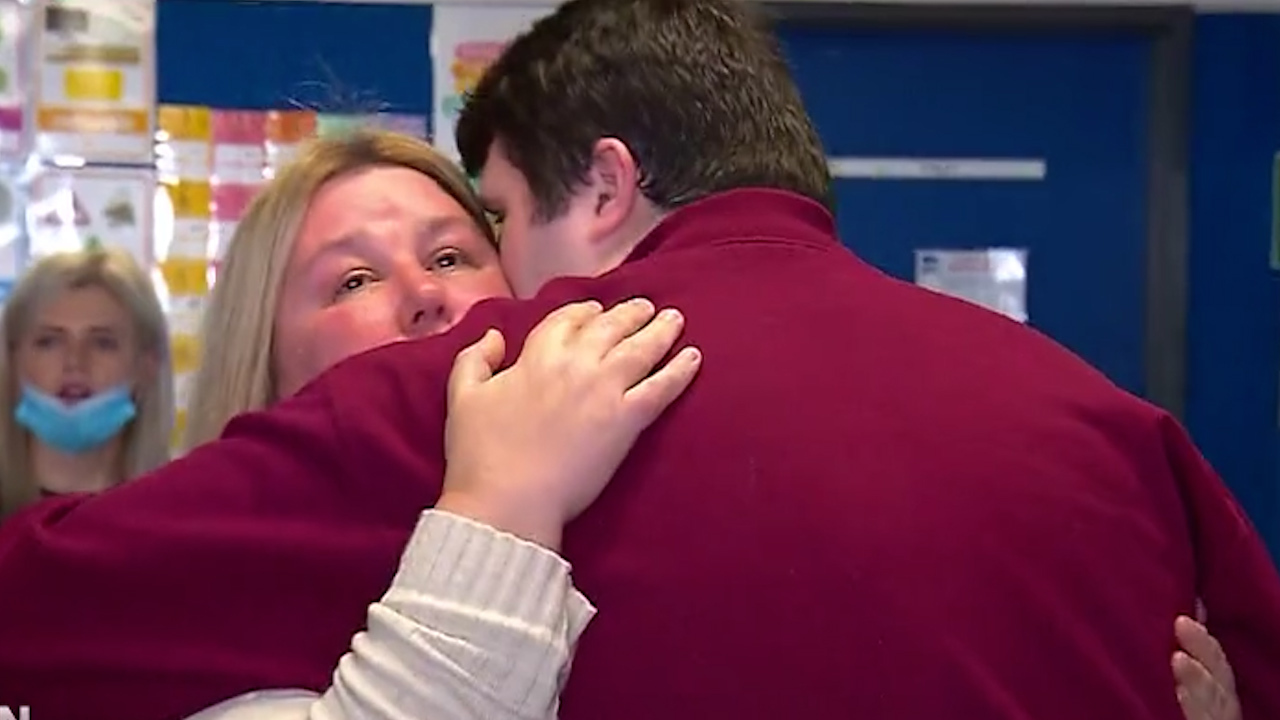
A New South Wales student who was once unable to communicate has earned a prestigious education award.

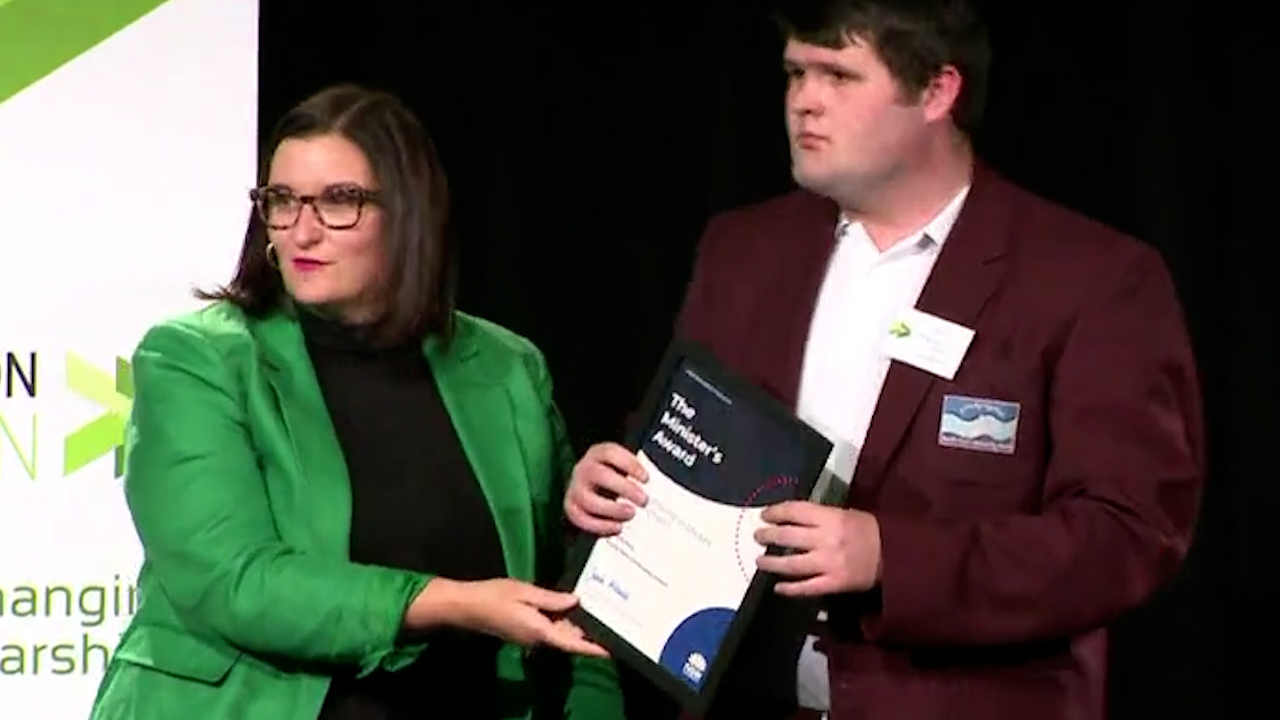
Charles Mury was among an elite group of 40 selected to receive a minister's award for excellence, open to students across the state's public education system.

Education Minister Sarah Mitchell said Charles was the first ever recipient on the autism spectrum.

READ MORE: Family 'heartbroken' as fate of missing jogger revealed

The Newcastle student was among an elite group of 40 selected to receive the top honour in the New South Wales education system.

He was diagnosed with autism before he turned three and years of therapy followed.

At 16, Charles he was regarded as having the academic ability of a kindergarten student.

"The level of communication was highly limited, only some gestures of what he wanted and what he needed," father Chris Mury said.

Charles' mother, Melanie, said process had been "glacial" before her son had a breakthrough 18 months ago, which experts said was triggered by the emotion of his grandmother's funeral.

"We had a very long meltdown and in desperation I said to him 'help us help you'," Melanie said.

"(I gave him) pen, paper, and we had our very first conversation."

From that point on, Charles' words and ideas have flowed and flourished, with the help of his teachers at Metford's Hunter River Community School.

READ MORE: Meeting between Albanese and China president 'on the cards'

Charlie's mother Melanie said her son had a breakthrough 18 months ago.

Now at the age of 18, Charles has finally found his voice with the help of a computer.

"Communication has changed my life for the best. It has saved my life," he told NBN News.

"All people with autism are smart and deserve respect even if they cannot communicate."

Charles is now excelling in languages, along with mathematics, biology and agriculture.

He scored 100 per cent in the preliminary extension one maths course.

"It was just by a matter of chance we asked him 'can you do maths?'" Chris laughed.

"And then he suddenly exploded — yes he can do maths."

His teachers said it served as a lesson for all educators to never underestimate anyone.

"Just because we aren't getting student feedback doesn't mean they're not taking it in, we should never make assumptions," teacher Tracey Rapson said.

Charles will sit his HSC exams next term.

While most students have had years to prepare, Charles has had just 18 months.

After year 12, the student hopes to study maths at university and move into the disability advocacy space.

Community shattered as five teens killed in 'horror' NSW crash

Five teenagers who were killed when a ute crashed south-west of Sydney have been remembered as supportive and loyal friends.

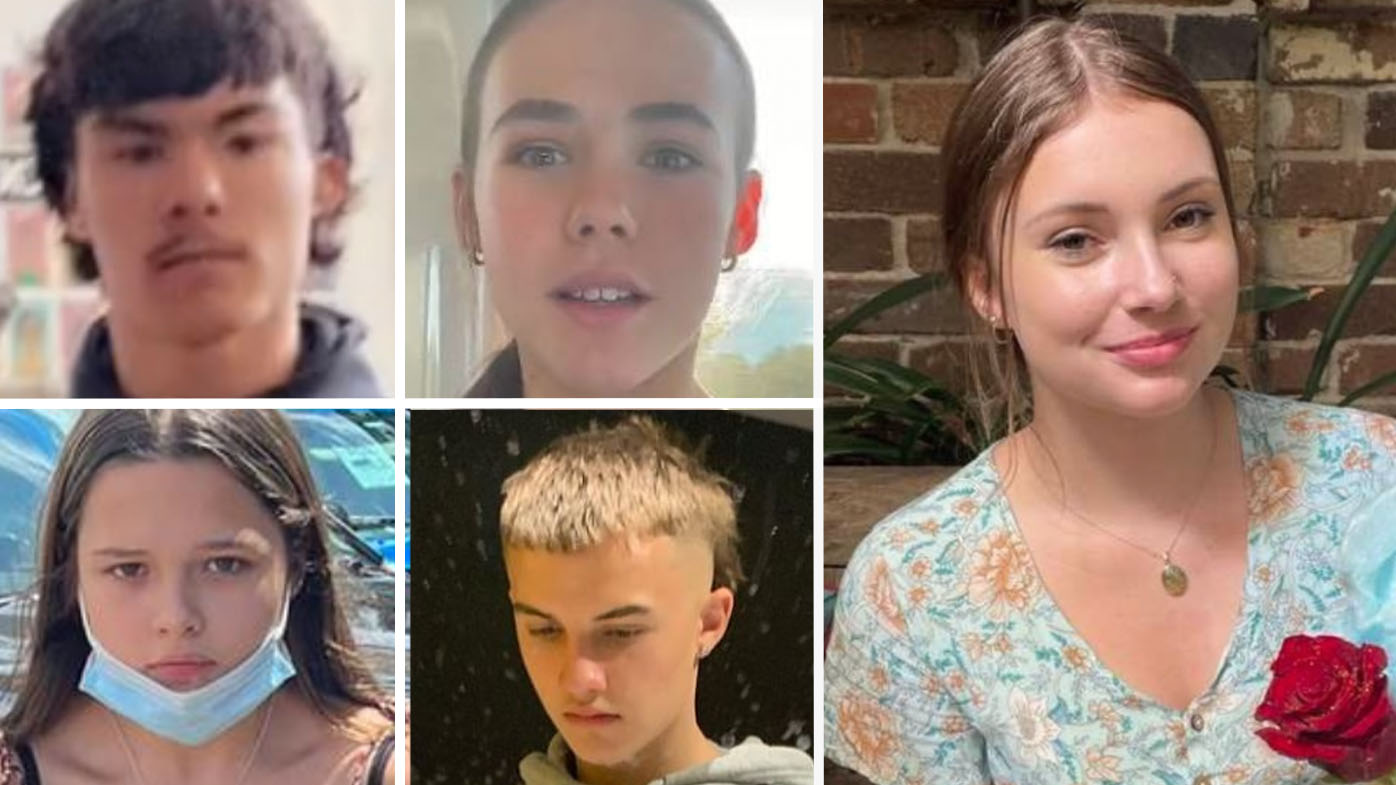
Summer Williams, Lily Van De Putte, Gabriella McLennan, Antonio Desisto and Tyrese Bechard were travelling in a Nissan Navara when the vehicle crashed about 7.50pm yesterday in Buxton.

All five died at the scene, leaving a community shattered. 

READ MORE: Family 'heartbroken' as fate of missing jogger revealed

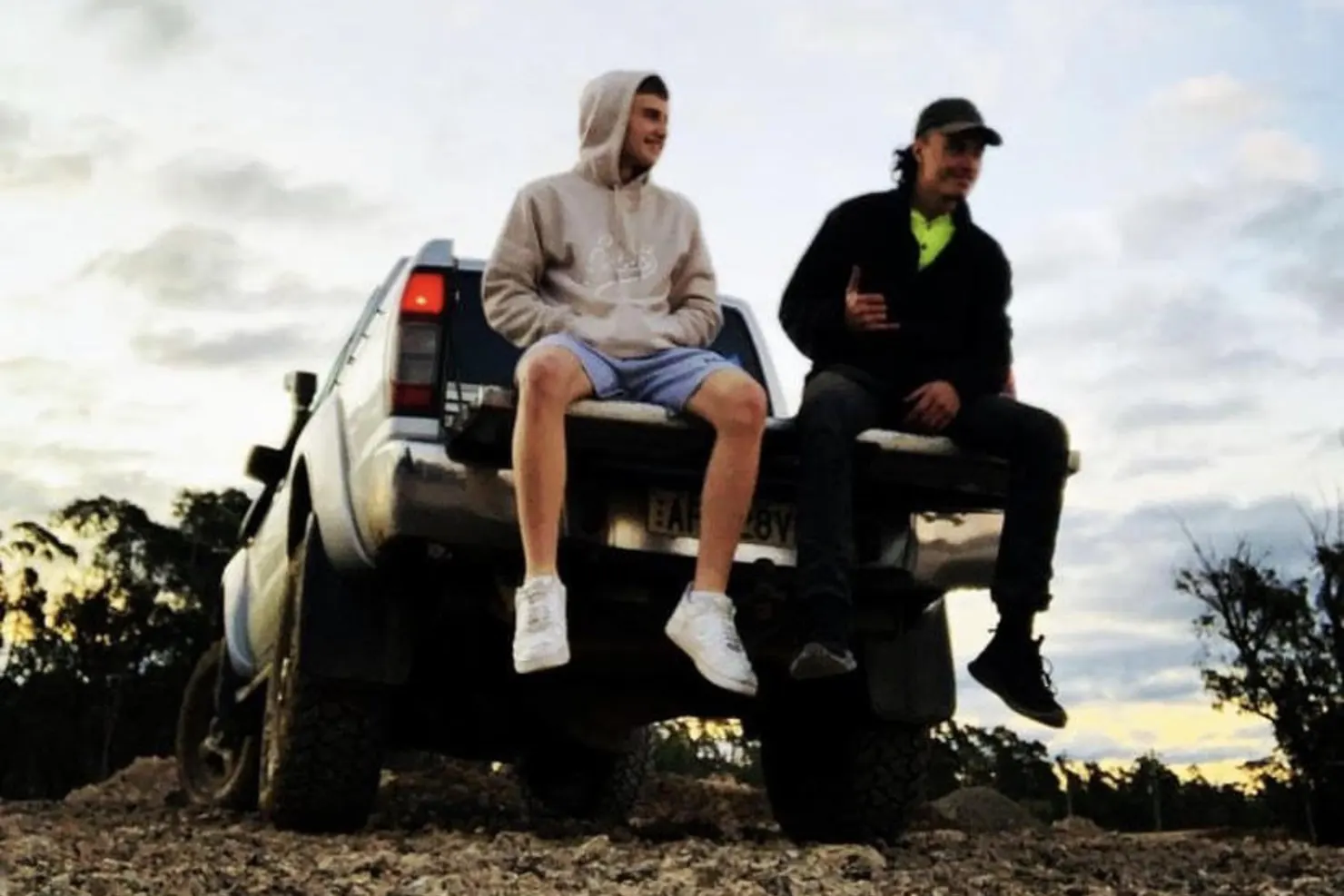
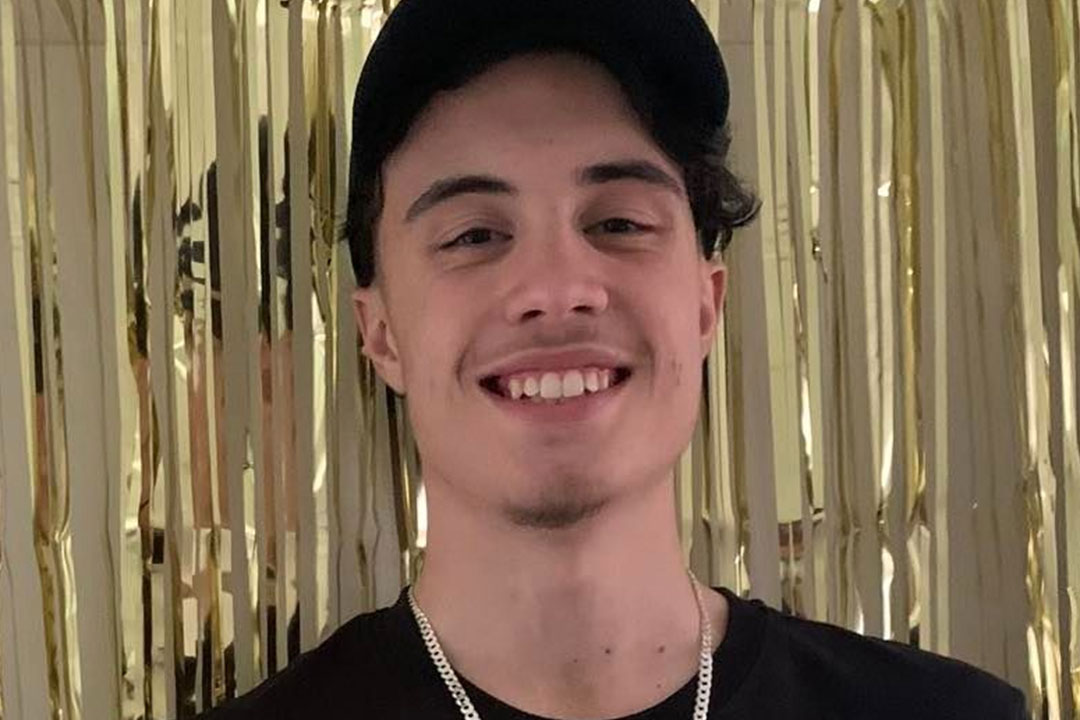
Tyrell Edwards the driver and survivor (right) with friend Antonio Desisto who was killed in the Buxton crash.

Tyrell Edwards, the 18-year-old driver on his green P-plates, escaped life-threatening injuries.

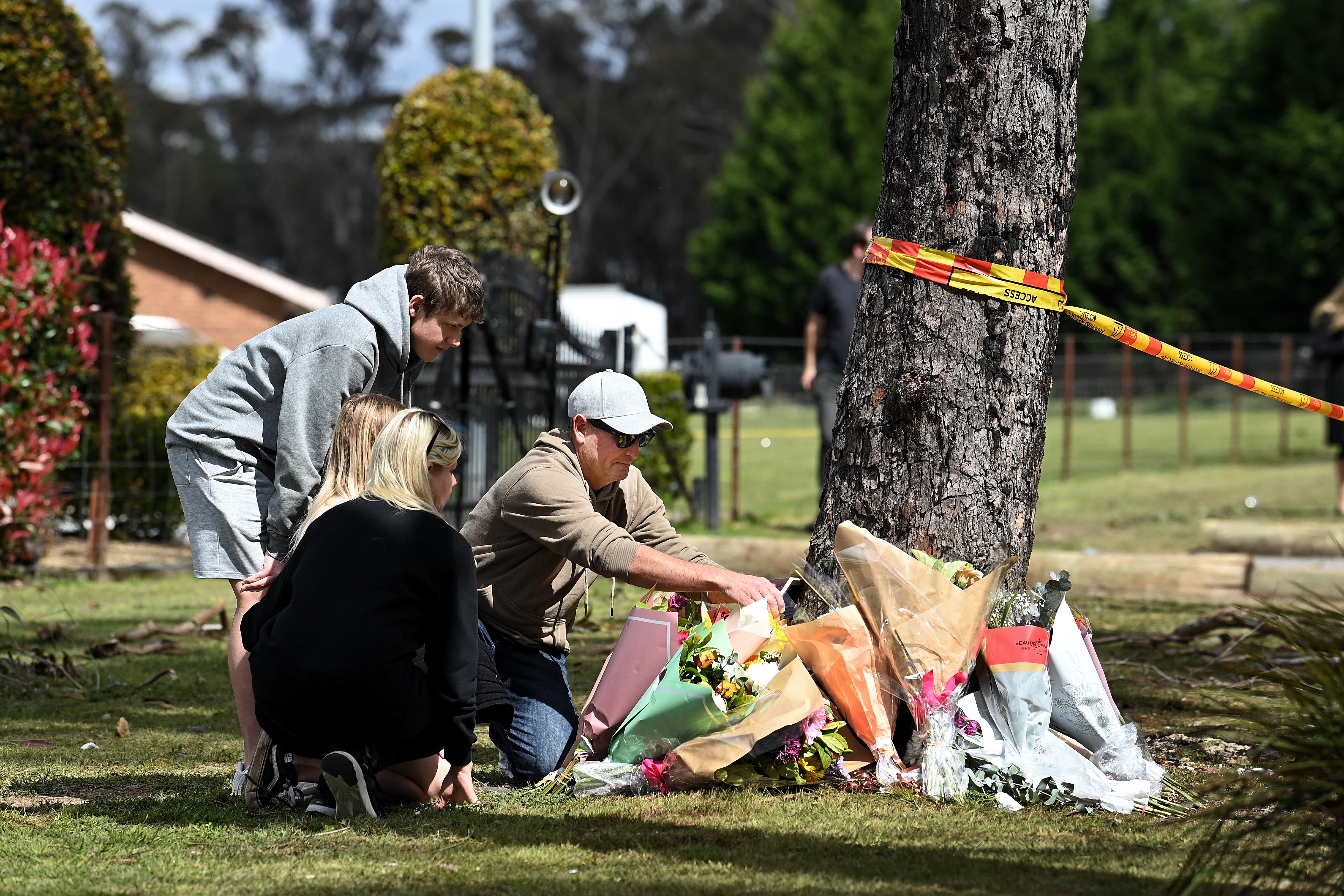
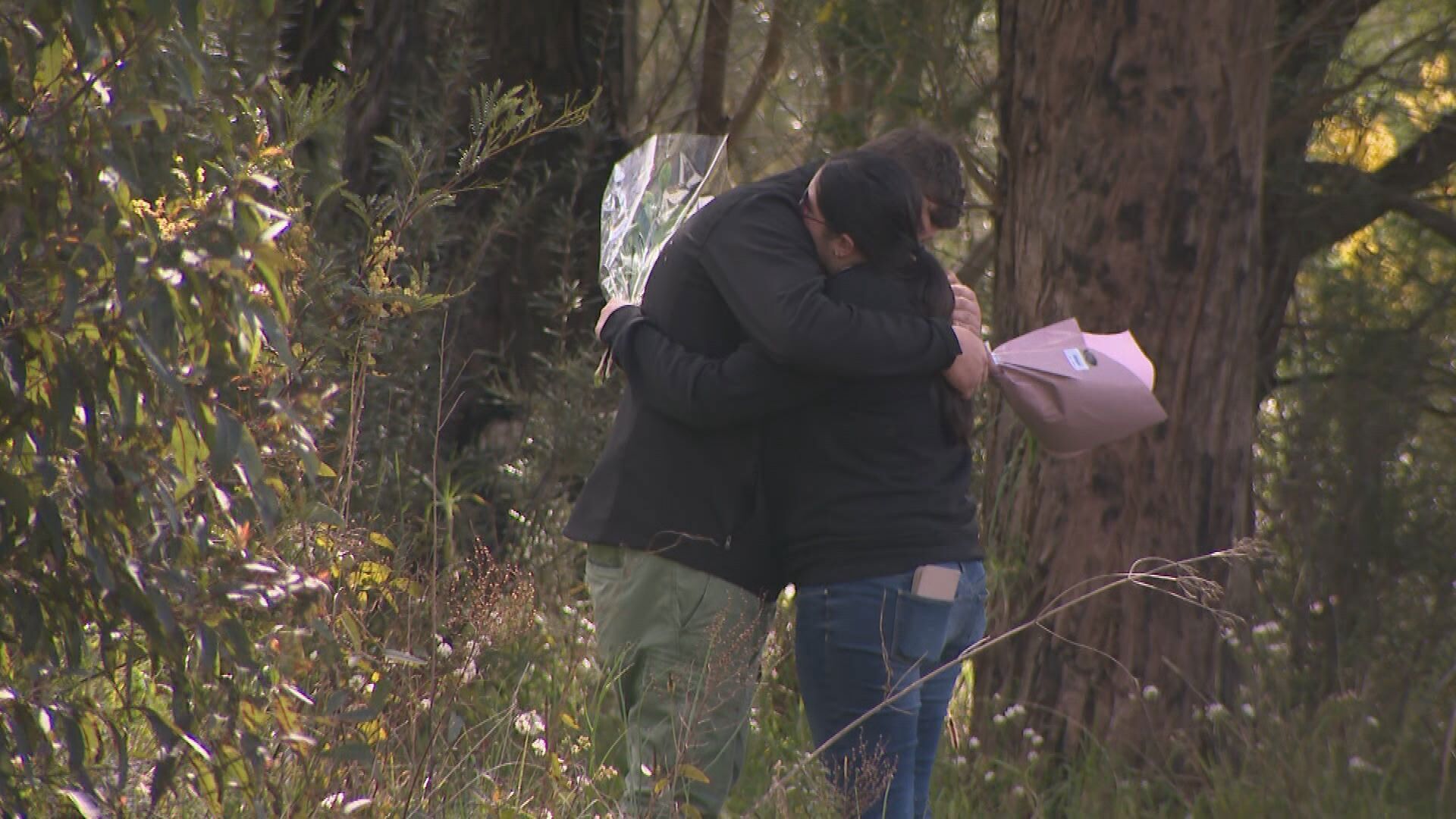
Family, friends and devastated locals flocked to the scene of the crash as shock over the loss of life reverberates through the community. 

Friend Elli Mount was overwhelmed with grief over the loss of Lilly and Gabriella, who she said had contacted her before the tragedy.

"They texted me last night asking if I wanted to hang out with them," Mount said.

"I could have got mum to pick them up and could've prevented it.

READ MORE: Driver in Buxton crash arrested, being interviewed by police

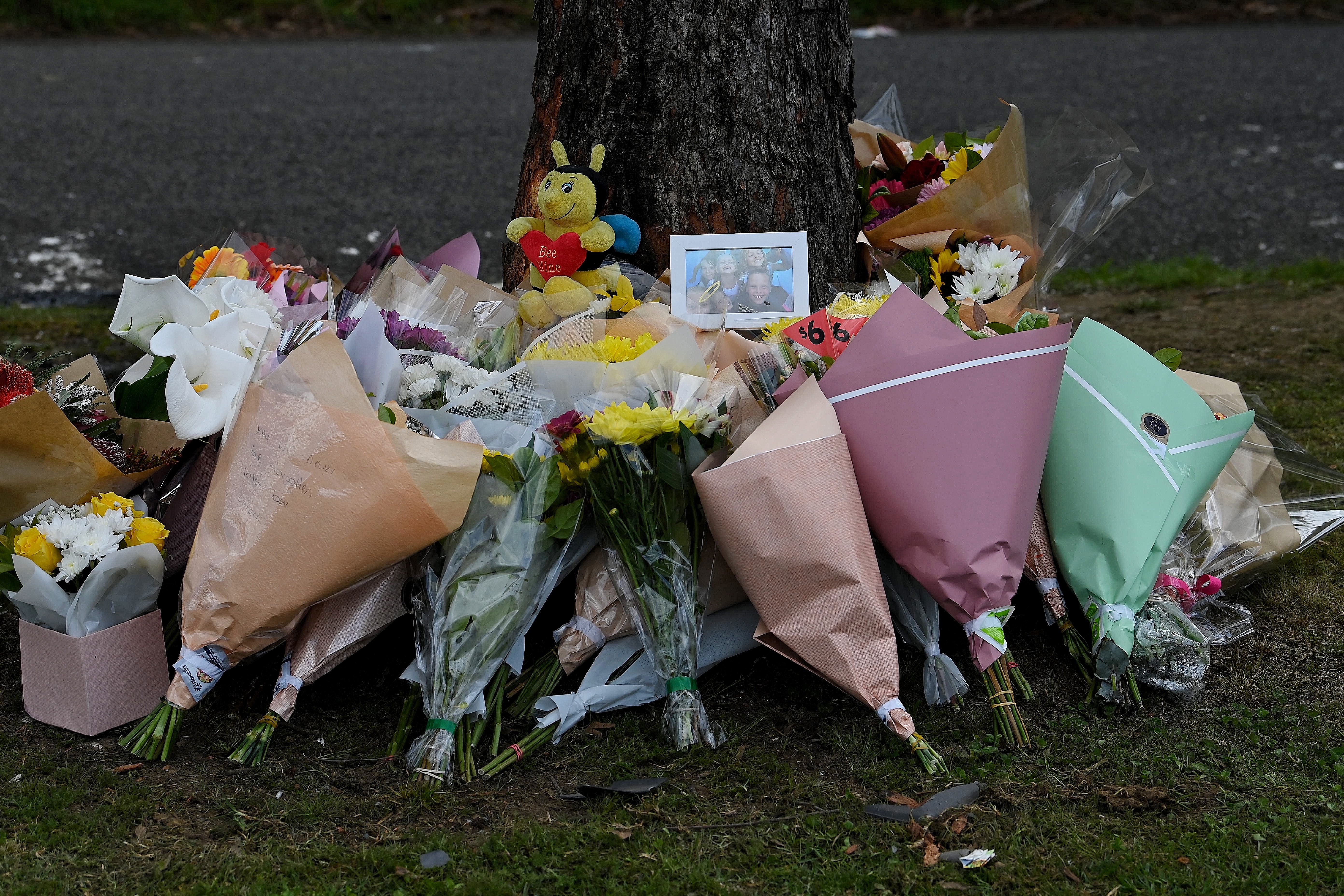
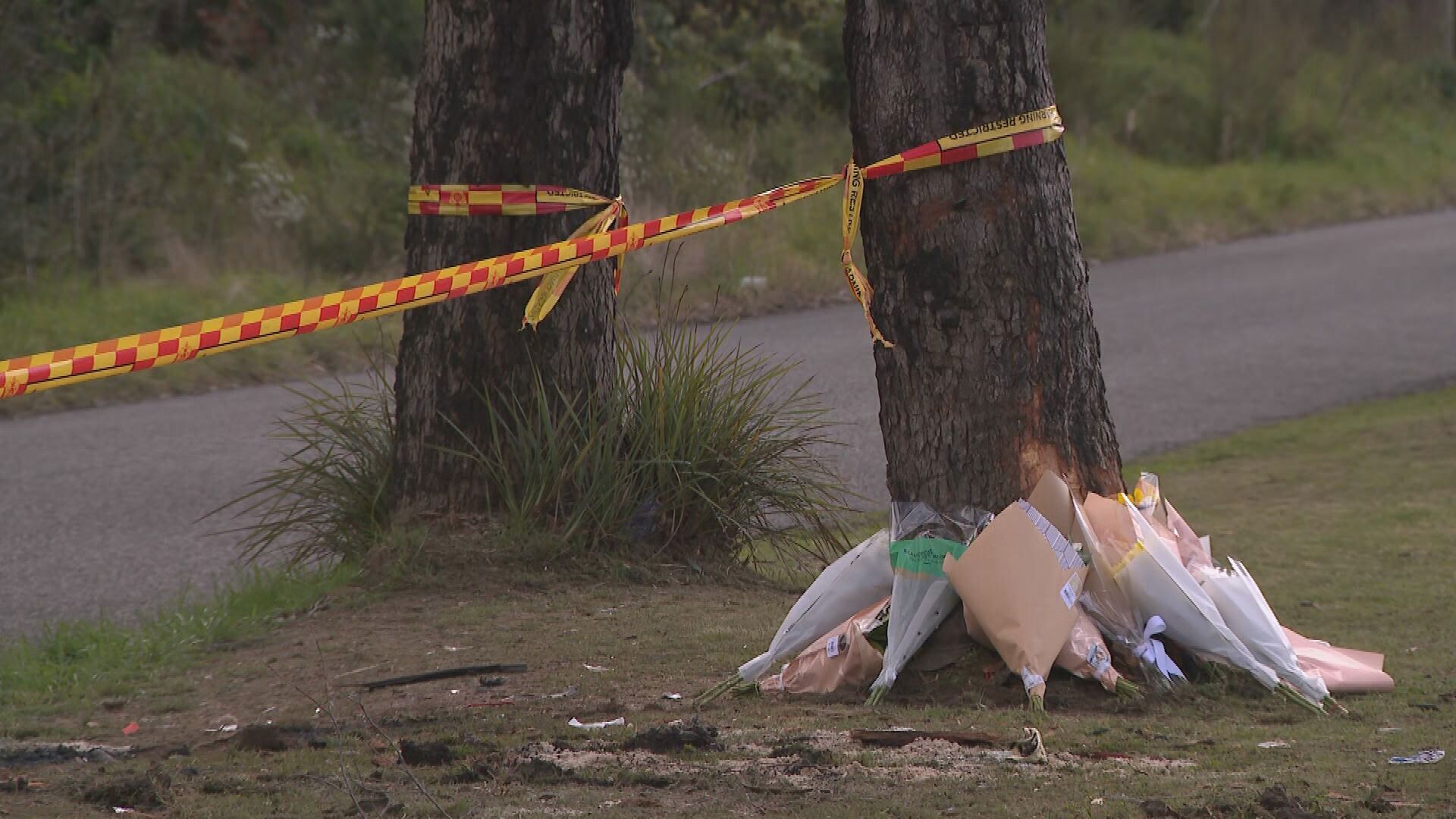
Ellie Mount a close friend of two of the female victims near where 5 people were killed in a motor vehicle accident last night on East Parade in Buxton, NSW. 7th September, 2022. Photo: Kate GeraghtyA framed photo with a halo above a girls head is placed at the base of a tree where 5 people were killed in a motor vehicle accident last night on East Parade in Buxton, NSW. 7th September, 2022. Photo: Kate Geraghty

"They invited me to hang out, I told them I couldn't stay out late.

"I just feel like I can't wake up."

Mount spoke of their supportive nature and talent on the soccer field. 

"Gabby and Lily were very close, and no matter what happened they were always there for me," she said.

"Gabby was an amazing goalie and Lily was the best defender I have ever seen," she said.

"It's going to be upsetting when they get their trophies for soccer and their parents have to go up and get them."

A family place a framed photo at the base of a tree where 5 people were killed in a motor vehicle accident last night on East Parade in Buxton, NSW. 7th September, 2022. Photo: Kate Geraghty

Jai Gordon was friends with Tyrese and lamented the life the teenager could have lived.

"He wanted to do so much with his life, he was really into weightlifting," Gordon said.

Summer's friends have also remembered her as a "sister".

"One of them was like a little sister to me," Jamarley Frail said.

"It was heartbreaking."

"Still finding it hard to believe it," friend Blaise Cox said.

"[Summer] was my best friend and she was like an older sister to me."

Driver stable but 'going through hell'

Edwards was arrested at the scene and taken to Liverpool Hospital for mandatory testing on a spinal board.

He has since returned home from hospital and is yet to be interviewed by police.

Edwards returned a negative test result for alcohol.

Lily's father John Van de Putte told the ABC he doesn't "hold any grudges against the driver because he is going through hell".

The six teenagers all attended Picton High School together and were in a car registered as a four-seater, police said.

Inspector Jason Hogan said speed may have been a "factor in the crash.

'Tight-knit' community mourns 'devastating loss'

Students and staff at Picton High School are reeling, with extra support being provided by the education department.

"This support will continue for days to come. For as long as students need it, we will supply it," principal Warren Parkes said.

"I want to praise all our students who are clearly in pain trying to deal with matters that adults would have trouble managing.

"They have been and continue to be, a credit to you and our community."

Premier Dominic Perrottet went to the school to pay tribute.

Wollondilly Shire mayor Matt Gould said the accident is "absolutely devastating" and that words can't describe the distress the community is feeling.

"To have such a horrendous loss of life and loss of young people, you can't even put it into words," he said.

There is only one public high school in the area and Gould said this means "everybody knows everybody". 

"There are a lot of people in Wollondilly who are in a lot of pain today and are really suffering," he said.

Wollondilly MP Nathaniel Smith offered his prayers and support to the families of the victims and the entire community.

He urged the community to reach out for help and not to suffer in silence.

Driver in Buxton crash out of hospital, being interviewed by police

The driver in a crash that killed five teenagers in a town southwest of Sydney last night has now been arrested.

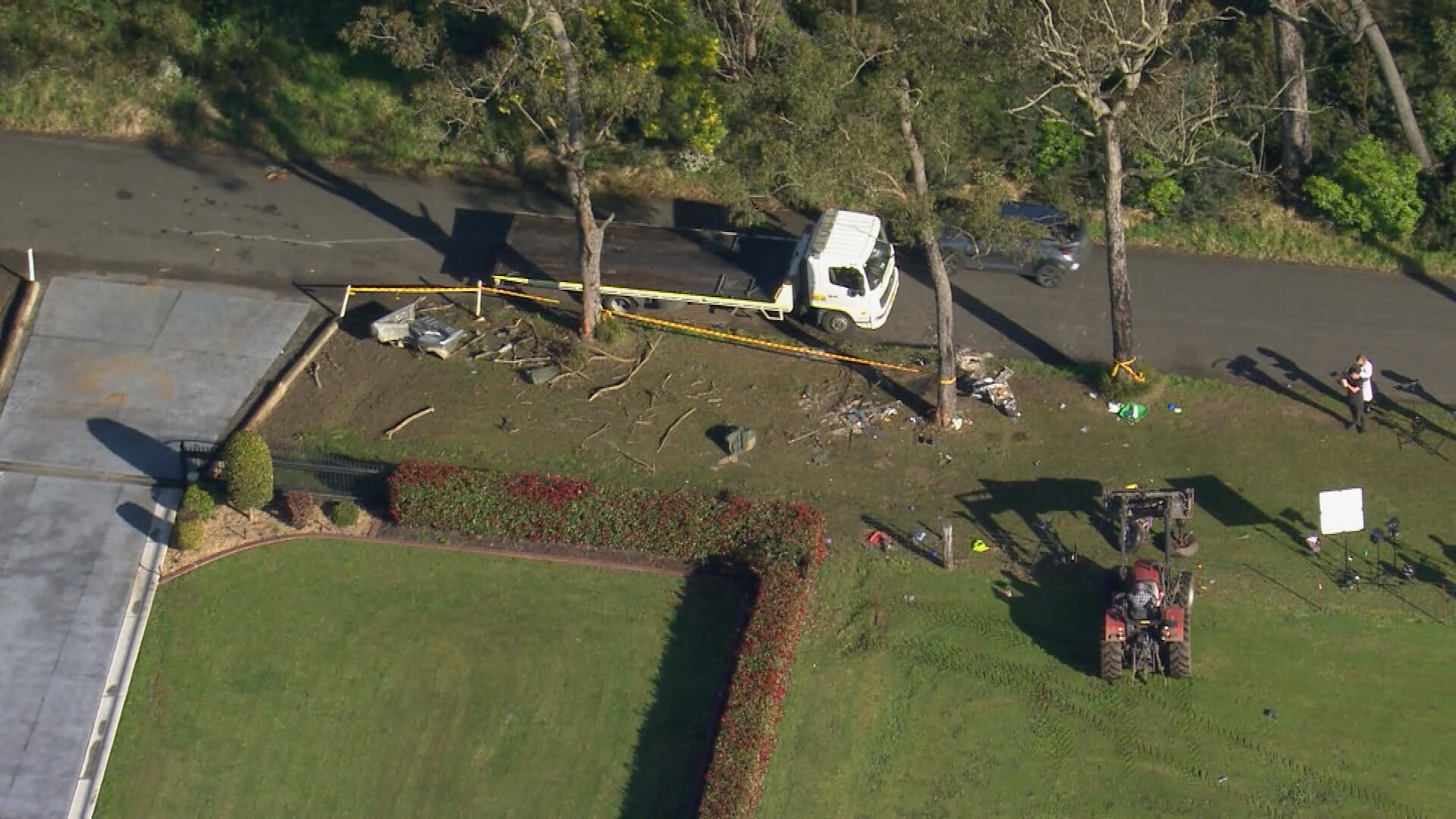
Tyrell Edwards, 18, was behind the wheel when his ute went off the road and crashed into a tree about 7.50pm yesterday in Buxton.

All five passengers, friends and students from Picton High, were killed.

READ MORE: Five teens killed in 'horror' NSW crash remembered

Tyrell Edwards the driver and survivor (right) with friend Antonio Desisto who was killed in the Buxton crash.

Edwards suffered non-life-threatening injuries and was taken to Liverpool Hospital.

He has since left hospital and was arrested in Bargo this afternoon.

He "is assisting police with their inquiries" at Narellan Police Station.

NSW Police Detective Acting Inspector Jason Hogan said Edwards had returned a negative alcohol breath-test at the scene, but results for his mandatory tests were still incoming.

The Nissan Navara being driven by the green P-plater had only enough seats for four people.

"Obviously, having six people in a four-seater vehicle is inherently dangerous and it should not be done," Hogan said.

The five teens killed have been identified as Summer Williams, Lily Van De Putte, Gabriella McLennan, Antonio Desisto and Tyrese Bechard.

READ MORE: Family 'heartbroken' as fate of missing jogger revealed

Tyrell Edwards was behind the wheel in a crash that killed five of his friends.