Tag Archives: oceania

Father faces Queensland court over child's murder

A five-year-old boy likely suffered abuse over a long period before he died from his injuries in a north Queensland hospital, police say.

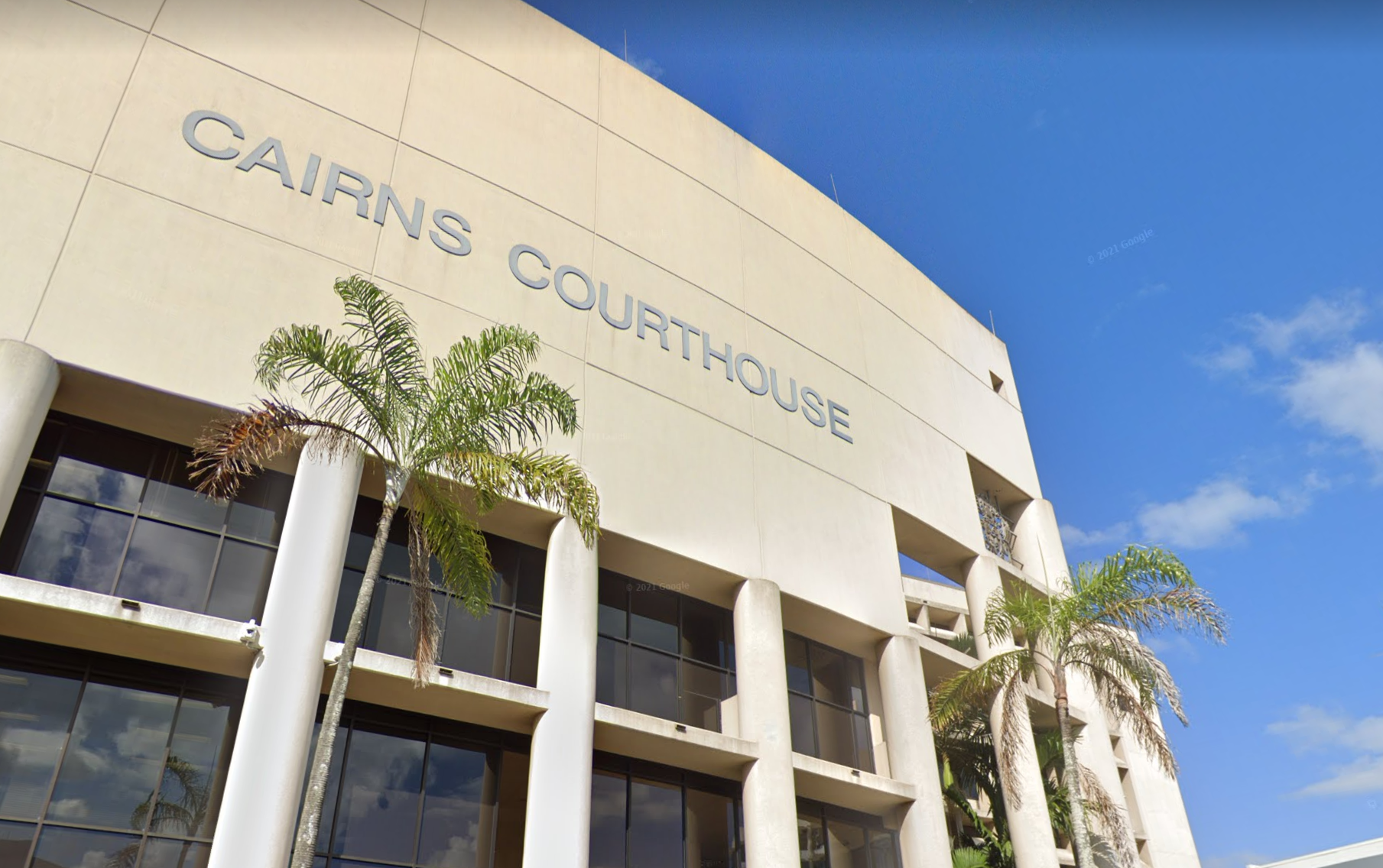
The boy's 24-year-old father, Jason Ross Allan Fourmile, has been charged with murder and had his matter mentioned in Cairns Magistrate Court on Wednesday where he was remanded in custody.

READ MORE: Black ice closes major roads as snow falls on south-east

The child was first taken to Yarrabah Hospital with life-threatening injuries on Tuesday, August 16, before being flown to Townsville Hospital in a critical condition.

He died on Monday.

Police allege there's evidence suggesting the boy sustained assaults over an extended period of time, and the injuries that caused his death occurred close to August 16.

READ MORE: John Farnham in ICU, cancer removed from mouth

"Our message to the community would be that if you know people are suffering from domestic violence, or you are aware that there is excessive use of force being exerted on children for disciplinary purposes or otherwise, then it's incumbent upon everyone to protect that child," Detective Inspector Kevin Goan said on Wednesday.

The boy's father has also been charged with grievous bodily harm, torture, assault occasioning bodily harm whilst armed and assault occasioning bodily harm.

He is next due to appear in Yarrabah Magistrates Court on September 7.

Are these Australia's top five 'most trusted' brands?

Retail outlets have maintained dominance when it comes to Australia's "most trusted" brands, data analysis of more than 21,000 people revealed.

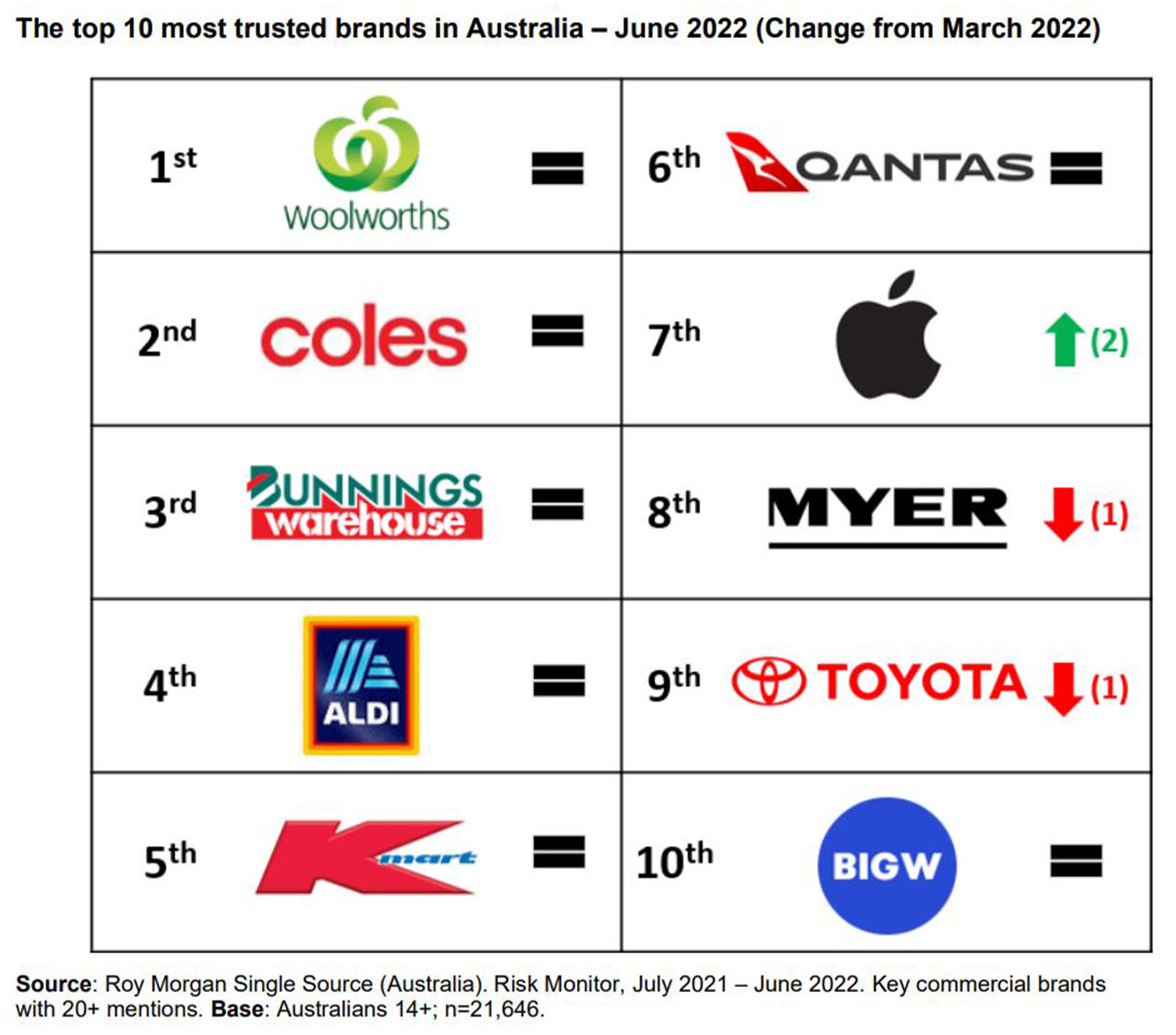
Roy Morgan researchers have identified Woolworths, Coles, Bunnings Warehouse, ALDI and Kmart as the top five trusted brands – rankings which remain unchanged for three straight quarters.

The Top 20 list has seen a shake-up since last quarter, with Apple moving up two places to the seventh-most trusted brand, after Qantas at an unchanged ranking of sixth place.

READ MORE: Black ice closes major roads as snow falls on south-east

Roy Morgan data scientists analysed nominations from more than 21,000 Australians to identify the nation's 20 most trusted brands, and 20 most distrusted brands.

Samsung and ABC each moved up two places on the most trusted top 20 ranks, to 13th and 15th respectively, while JB HI-FI improved by one place to 17th. Wesfarmers entered the top 20 for the first time.

Roy Morgan CEO Michele Levine said big retailers maintain the top rankings even as inflation soared to an annual rate of 6.1 per cent to June this year – the highest for over 20 years.

READ MORE: Russian paratrooper condemns his country's war

Woolworths rolls out quick delivery service via app

The rising inflation prompted the Reserve Bank of Australia to begin an interest rate increasing cycle – the first since 2010 and the fastest for nearly 30 years.

Levine said Qantas managed to hold onto sixth place but in light of recent challenges believes next quarter could reveal a different result.

"Qantas CEO Alan Joyce issued a public apology to customers this week for flight cancellations, delays and luggage mishandling in recent months – the impact of these actions will be captured in next quarter's results."

Australia's top 20 most distrusted brands were also unveiled in the analysis, with BP entering the top 20 list alongside News Corp, Rio Tinto, Nestle, McDonald's, Optus and AGL.

Uber experienced rising distrust rankings during the year ending June 2022.

Roy Morgan are yet to reveal the entire Top 20 most trusted list.

The startling compensation paid out by our big banks

Billions of dollars in compensation has been paid or offered to customers that were subject to "financial-related misconduct" by their banks, ASIC have revealed in their annual end-of-financial-year review.

Westpac, NAB, AMP, ANZ, Macquarie and the Commonwealth bank examined their remediation programs as a result of two major reviews by ASIC.

As a result the six banks have already paid, or offered to pay, their customers a total of $3.6 billion as at June 30, 2022, after charging them "fees for no service misconduct or non-compliant advice".

READ MORE: Black ice closes major roads as snow falls on south-east

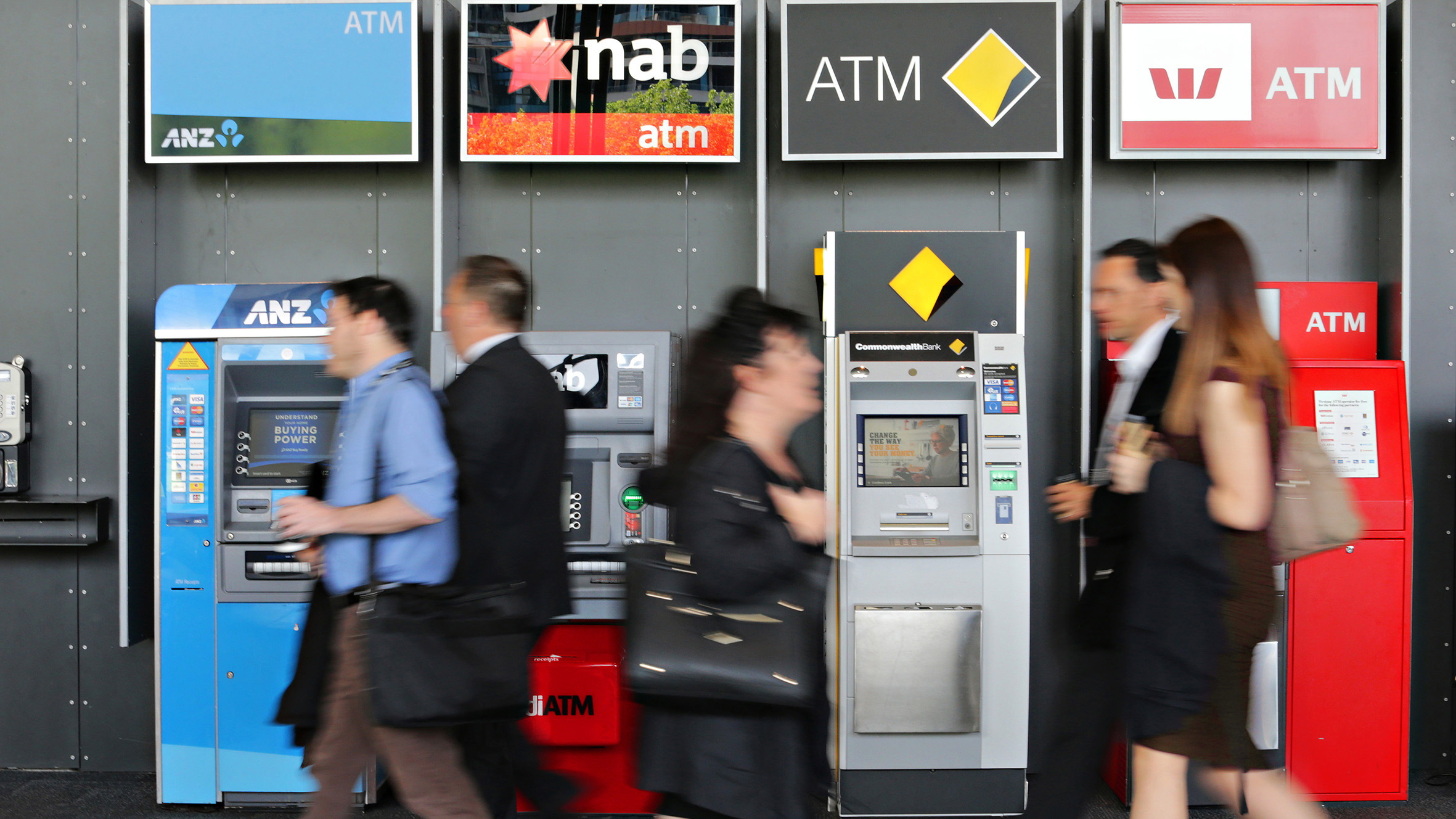
Generic 'Big Four Banks' - ANZ Bank, Commonwealth Bank, NAB Bank and Commonwealth Bank.

People who suffered a loss or damage as a result of these charges, made between January 1, 2009, and June 30 2015, could be eligible for compensation.

It comes after two major ASIC reviews, in 2016 and 2017, which examined the handling of "non-compliant advice" by financial advisors and investigated the extent to which customers were paying for services that the banks and institutions failed to provide.

From this, the financial watchdog was able to determine that there were "systemic failures", and the six banks took part in "remediation programs" to ensure affected customers were compensated correctly.

NAB owed customers the largest amount, and have offered to reimburse over $1.2 billion to about 775,00 people.

READ MORE: John Farnham in ICU, cancer removed from mouth

The second highest amount was Westpac with just over $1 billion owing to 120,000 people. AMP will pay $600 million to 335,000 customers.

Commonwealth bank has paid or offered to pay $300 million to 145,000 customers; ANZ owed $262 million to 70,000 customers and Macquarie's reimbursement total was about $5 million to 1000 customers.

ASIC said it continues to monitor the "ongoing implementation of the institutions' customer review and remediation programs" following the report.

Individuals who were impacted by the "systemic failures", should have been or will be contacted by their bank to discuss the compensations available.

However, if they feel that they may have been missed, they can contact their bank directly to discuss their eligibility.

US military wants to expand missile defences on Guam

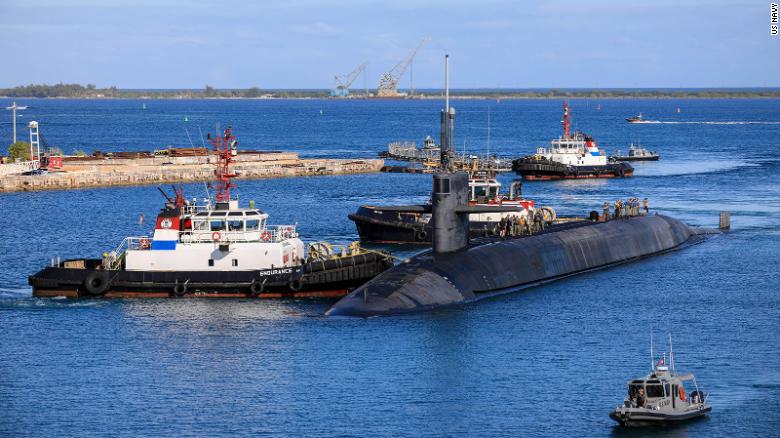
The strategically-vital US island of Guam is set for a major boost to its missile defences amid rising tensions in the Asia Pacific region.

New defence capabilities on the island will be needed to combat an "evolved" threat of advanced weapons from China and North Korea, a top US commander said.

The head of the US Missile Defence Agency (MDA), Vice Admiral Jon Hill, told US journal Defense News, they included hypersonic weapons, ballistic and cruise missiles as well as potential space systems.

READ MORE: Any war in South China Sea 'threatens 90 per cent of Australia's fuel imports

He said the MDA was still finalising the new military technology needed on Guam – including radar sensors, interceptor weapons and command and control systems.

But he said the US military was aiming to install new defences by 2026 and they would provide comprehensive coverage.

"So you can think of a number of radars that ensure we meet the requirement, which is persistent 360-degree coverage, right, because of the evolved threat."

Guam lies 3000km south-east of Shanghai in China and is the closest US military base to the Chinese mainland.

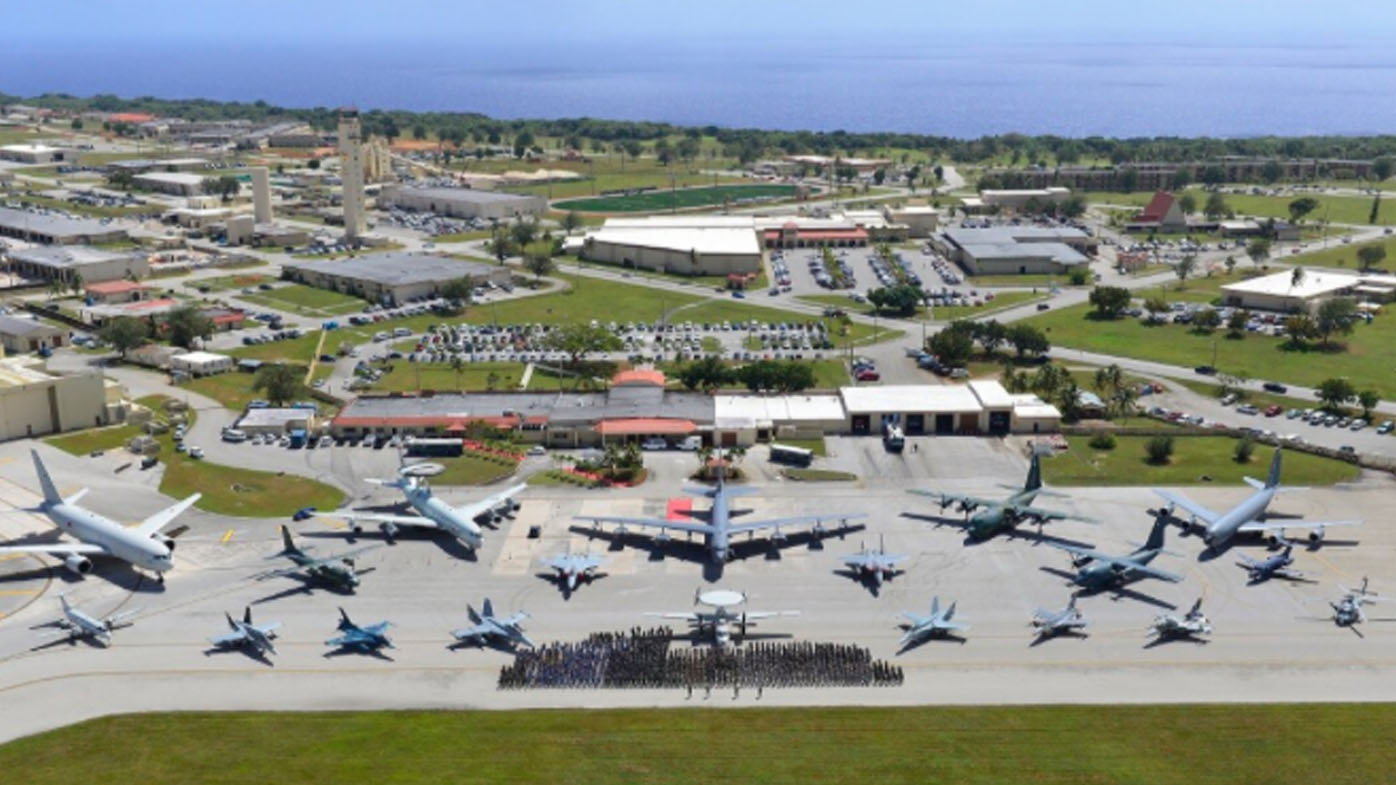
There are two major bases on Guam: Andersen Air Force Base in the north and Naval Base Guam in the south.

Altogether, 7000 US military personnel are stationed on Guam.

The small but strategically important island has been the subject of past threats by foreign powers.

READ MORE: John Farnham in ICU, cancer removed from mouth

North Korea in January announced it test-launched an intermediate-range ballistic missile capable of reaching Guam.

The Hwasong-12 missile is a nuclear-capable ground-to-ground weapon with a maximum range of 4500km when it's fired on a standard trajectory.

In August 2017, at the height of tensions with the then-Trump administration, North Korea threatened to make "an enveloping fire" near Guam with missiles.

And in 2019, the Chinese military tested a ballistic missile, known as the "Guam killer" because it can target US military bases on the island.

The powerful DF-26 anti-ship ballistic missile has a range of 4500km and is capable of carrying nuclear and conventional warheads.

– Reported with Associated Press

Tradie's Facebook page under siege by hackers

Queenslander Michael Meyrick has spent the past five years working to build up his roof and home exterior cleaning business.

He says he quickly found Facebook to be the best place to pick up new local clients. 

Meyrick would post paid ads, spruik his services on Facebook groups and regularly send potential clients to his business page, which has 900 followers. There, they could check out his reviews and before-and-after photos showing his work.

READ MORE: John Farnham in ICU, cancer removed from mouth
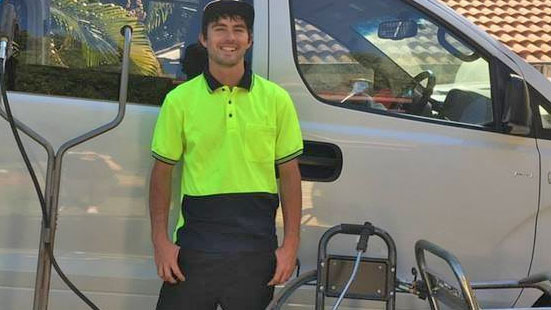
Michael Meyrick has been left reeling with the impact Facebook hackers have had on his roof and house cleaning business.

"I tried other marketing avenues like SEO and Google, but I really 'leaned in' to Facebook; I kind of perfected it," he said.

It's a strategy Meyrick now regrets.

These days, any clients who visit Meyrick's business Facebook page are likely to be left bewildered.

Instead of photos showing neat, freshly-cleaned roofs, there is a deluge of ads in Vietnamese on the page, all selling – somewhat bizarrely – nose hair trimmers.

The profile photo of Meyrick's business page even shows a photo of a man using one of the metal nose hair trimmers.

READ MORE: Russian paratrooper condemns his country's war

The profile picture for Michael Meyrick's business page is now an ad for a nose hair trimming tool.

None of these ads or photos have come from Meyrick, who no longer has access to his own business's page after hackers infiltrated it just over a month ago.

Meyrick said the nightmare began when he woke up one morning in July to see a bank of notifications over email from Facebook, beginning at 3am.

Within the space of 10 minutes, the hackers had infiltrated both his personal and business Facebook accounts.

The hackers appear to have used a well-known technique, previously reported on by 9news.com.au, which involves posting child sexual exploitation material on the compromised Facebook user's personal page. 

This triggers an alert for Facebook, which sends a notification to the user that they have violated the social media giant's "community standards" and have been banned.

The Facebook user then no longer has access to their personal account, clearing the way for the hackers to make themselves admins on the user's business page.

In Meyrick's case, the hackers' target appears to have been the credit card linked to his business account, which they promptly used to buy $50, and then an extra $350 worth of Facebook ads.
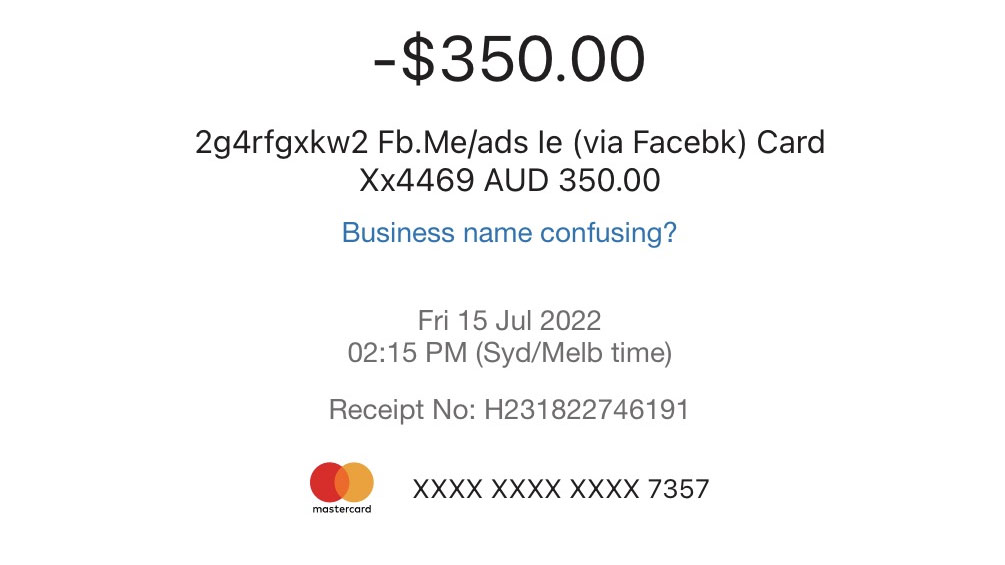
Hackers made two purchases for Facebook ads on Meyrick's business credit card before he cancelled it.

Meyrick said at first he was confused about what had happened, especially when he got a notification from Facebook saying he had posted child exploitation material.

"I was thinking, 'What the hell?'" he said.

"My first thought was maybe Facebook had seen a photo of my baby daughter and thought there was nudity, if she was showing a bit of skin.

"But a couple of days later, when the credit card charges came up, I realised someone had gone and accessed my account. 

"That's when it snowballed from there."

About a month after the Facebook ads were charged to Meyrick's credit card, the first nose hair trimming ads started appearing on his business page.  
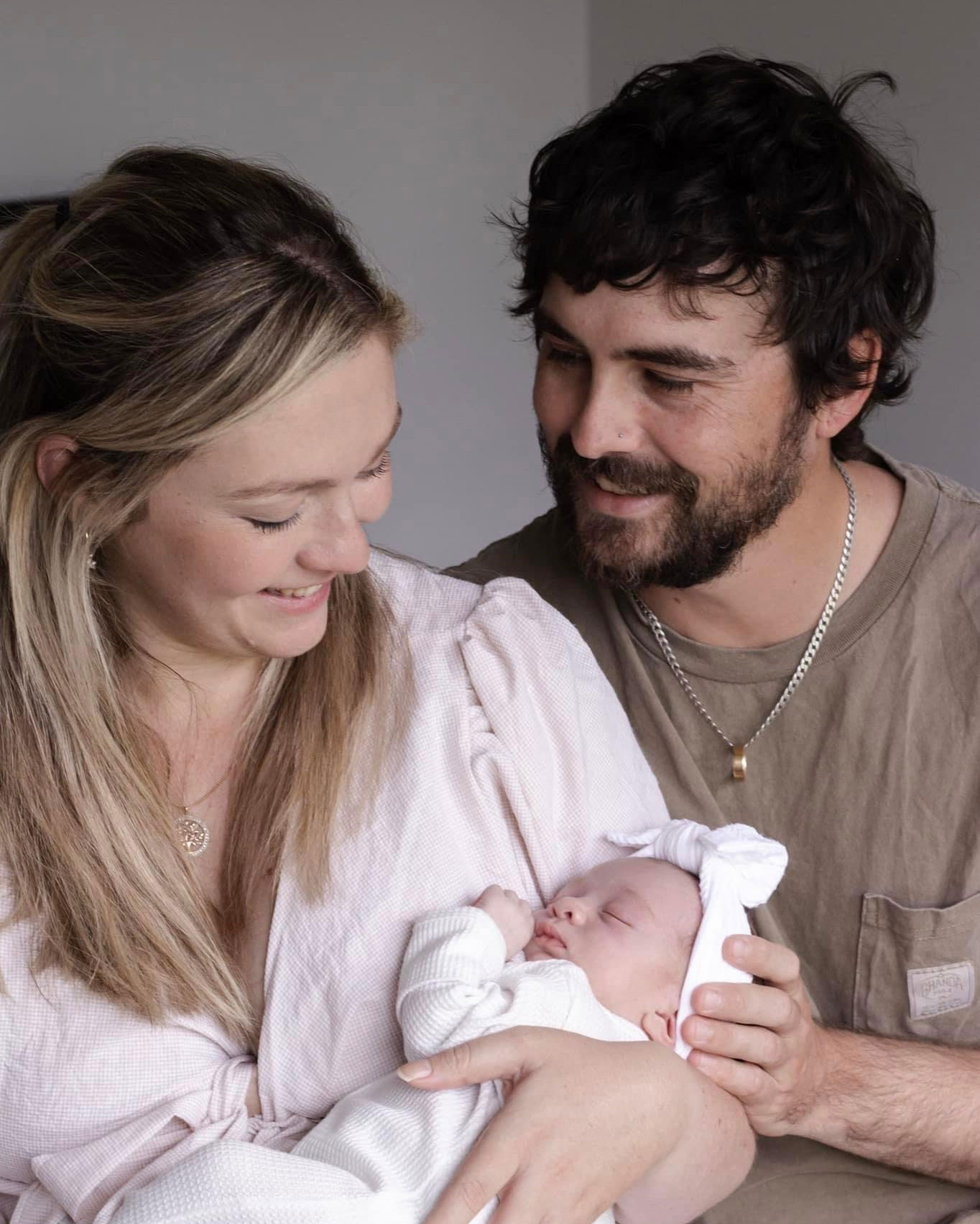
Meyrick, who has a six-month-old daughter, said losing control of his business's Facebook account had put his family under a lot of financial stress.

"It is embarrassing and infuriating all at once," Meyrick said, adding he had been unable to get any help from Meta, the owner of Facebook, after filling out numerous online forms to notify the company of the hack.

"The fact that it is so blatant and I still can't get Facebook to do anything, it's just crazy," Meyrick said.

With between 60 and 80 per cent of his business revenue coming from Facebook, Meyrick said he was left feeling suddenly anxious about his finances.

"It's been a huge stress on the family.

"It is always there in my mind, how much is this going to affect my business?"

Meyrick said he believed Meta should offer support over hacking issues for business owners who spent money on the platform and were more like customers than users.

"I can understand Facebook not providing chat support for every single person, but I think when you are using them as a business and spending money on ads you should have some sort of way to communicate with them," he said.

After being contacted by 9news.com.au, a spokesperson for Meta said the company was investigating Meyrick's hacking case.

The fraudulent ad charges on his account had now been reversed, the spokesperson said.

"We're committed to safeguarding the integrity of our services, and work hard to protect our community from fake accounts and other inauthentic behaviour," the spokesperson said.

"We use a combination of automated systems and people to help review content flagged by our community.

"We are committed to continuing to invest in AI to improve accuracy and strengthen our review and appeal systems."

Contact reporter Emily McPherson at ********@******om.au/” target=”” >em********@******om.au.