Tag Archives: oceania

Albanese to investigate claims of Morrison's secret portfolios

Anthony Albanese says he is investigating how Scott Morrison was able to take on extra portfolios in secret during his time as prime minister.

It comes as Australia's Governor-General David Hurley confirmed he had appointed Morrison to "administer portfolios other than the Department of the Prime Minister and Cabinet". 

Albanese said he had sought advice from the Department of Prime Minister and Cabinet following a News Corp report that Morrison was sworn in as the second resources minister in December last year without the knowledge of some of his cabinet.

Former deputy prime minister Barnaby Joyce told News Corp that Morrison used his ministerial powers to stop controversial gas projects slated for the NSW coast, which teal independent candidates – an increasing election threat – opposed.

The report follows a new book, Plagued, by Simon Benson and Geoff Chambers, which claims Morrison also swore himself into the health and finance portfolios.

READ MORE: 'Calculation and brutality' behind double Sydney murder, says ex cop

Scott Morrison ordered the announcement of a people-smuggling vessel interception mid-operation.

"This is extraordinary and unprecedented," Albanese said.

"Australians knew during the election campaign that I was running a shadow ministry. 

"What they didn't know was that Scott Morrison was running a shadow government, a shadow government that was operating in the shadows." 

Albanese said he had spoken with the Secretary of the Department of Prime Minister and Cabinet, who would be seeking advice from the Solicitor General, among others, on the legality of Morrison's extra portfolios.

"I'll be getting a full briefing this afternoon," Albanese said.

READ MORE: Couple used 'simple maths' to win $39 million in Lotto

Barnaby Joyce has served as the 17th deputy prime minister of Australia under Malcolm Turnbull from 2016 to 2018 and Scott Morrison from 2021 to 2022.

"We all know that Scott Morrison had trouble doing the job that he had. Perhaps it was because he was doing so many different jobs that we didn't know that he had." 

Albanese said Australians deserved an explanation as to what had occurred.

"This isn't some local footy club. This is a Government of Australia, where the people of Australia were kept in the dark as to what the ministerial arrangements were.

"It's completely unacceptable."

READ MORE: Man charged following Canberra Airport shooting

Anthony Albanese addresses the media about claims Scott Morrison held secret additional portfolios during his time as prime minister.

In a statement released today, Hurley said Morrison's appointments were consistent with the constitution.

"It is not uncommon for ministers to be appointed to administer departments other than their portfolio responsibility," Hurley said.

"These appointments do not require a swearing-in ceremony – the governor-general signs an administrative instrument on the advice of the prime minister.

"Questions around appointments of this nature are a matter for the government of the day and the Department of the Prime Minister and Cabinet. 

"Similarly, the decision whether to publicise appointments to administer additional portfolios is a matter for the government of the day."

Earlier this morning, David Littleproud, who replaced Joyce as the Nationals leader ABC's RN Breakfast program he did not know about Morrison's extra ministerial roles.

"That's pretty ordinary, as far as I'm concerned. If you have a cabinet government, you trust your cabinet," Littleproud said.

"You create that environment in the cabinet room to have those discussions. 

"If you don't think a minister's suitable to do that, that's a discussion with the minister [and you] probably ask him or her to remove themselves."

READ MORE: Trump lawyer claimed no classified material was at Mar-a-Lago in signed letter to Justice Department

Porter defamation documents to remain sealed until 2052

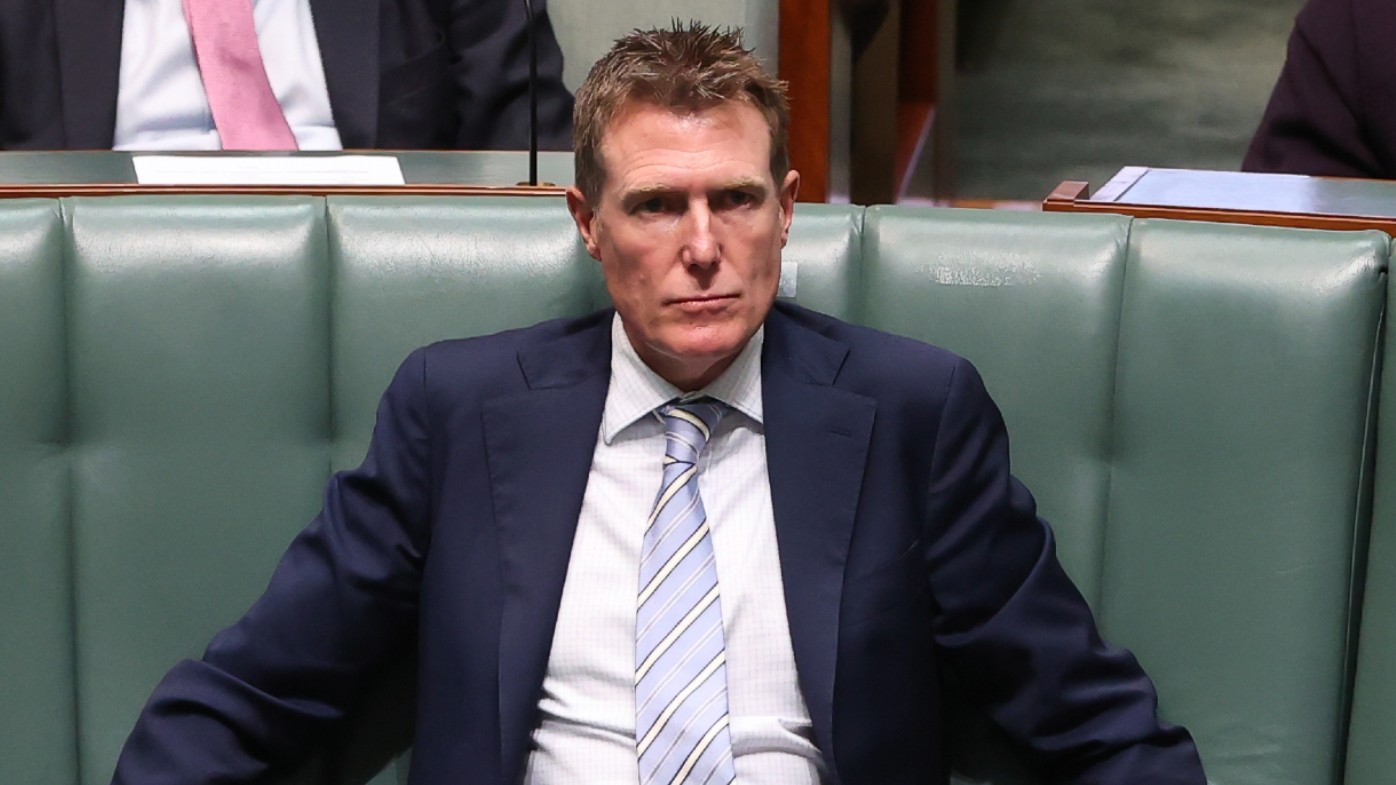
Decades-long secrecy orders have been made over files related to former senior Morrison government minister Christian Porter's now-settled defamation case against the ABC.

Porter launched defamation proceedings against the ABC over a November 2020 Four Corners program entitled "Inside the Canberra Bubble" containing the historical rape allegations, despite not being named within the broadcast.

The former MP denied the allegations.

READ MORE: Police 'throw out rulebook' as two women 'assassinated' in Sydney

Christian Porter discontinued his defamation case against the ABC last month.

That legal action, settled outside the Federal Court in May 2021, sprouted a protracted battle over a judge's ruling that disqualified prominent silk Sue Chrysanthou SC from representing Porter.

The final chapter in the legal saga closed on Monday with the former MP agreeing to pay substantial legal costs after failing to overturn the disqualification order.

After ruling on costs, the Full Court of the Federal Court ordered the unredacted versions of certain exhibits remain secret for at least a decade.

One document tendered in the legal battle was ordered to remain suppressed until 2052.

READ MORE: Man charged over Canberra airport check-in area shooting

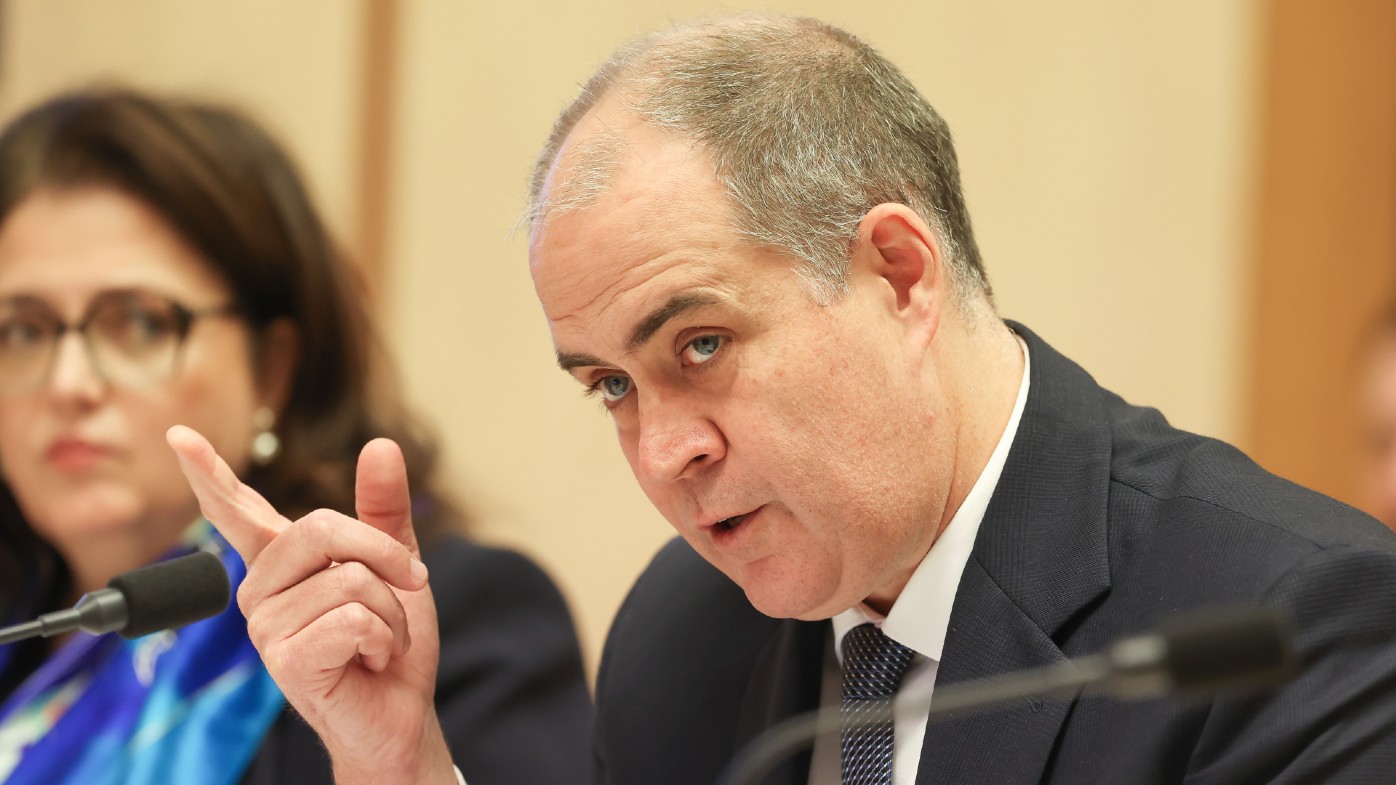
ABC Managing Director David Anderson has revealed the court battle with Christian Porter cost the broadcaster $780,000.

Mr Porter had appealed the disqualification of Chrysanthou and about $500,000 in potential costs after losing a legal battle against the friend of a woman who alleged he raped her in 1988.

That friend, Jo Dyer, consulted with Chrysanthou about a potential defamation claim against News Corp for an article in The Australian in November 2020, providing confidential information that was potentially relevant to Porter's lawsuit against the ABC, Justice Tom Thawley found in May last year.

On appeal, Porter argued Dyer hadn't provided confidential information to Chrysanthou and disputed the information could potentially be misused in his defamation lawsuit.

READ MORE: Man arrested after mum's body found in bush

But the Full Court found there was a chance the leading barrister may have received material outside of what Porter could obtain through his case against the ABC, even if Chrysanthou had since forgotten that information.

"It is no answer that Ms Chrysanthou had forgotten things: one cannot exclude the possibility that recollection can be triggered or of subconscious derivative use," Justice Michael Lee wrote in July.

"Although Ms Chrysanthou was mistaken in the judgment she formed (to represent Mr Porter), no finding was made by the primary judge that her view was not formed in good faith."

Chrysanthou also lost an appeal against Dyer over her disqualification, with the court on Monday ordering each side pay their own costs.

READ MORE: Albanese to investigate claims of Morrison's secret portfolios

Experts predict megaflood will swallow California in next 100 years

Many Californians fear the "Big One," but it might not be what you think.

It's not an earthquake. And it isn't the mega drought. It's actually the exact opposite.

A megaflood.

A new study by Science Advances shows climate change has already doubled the chances of a disastrous flood happening in California in the next four decades. And experts say it would be unlike anything anyone alive today has ever experienced.

READ MORE: Police 'throw out rulebook' as two women 'assassinated' in Sydney
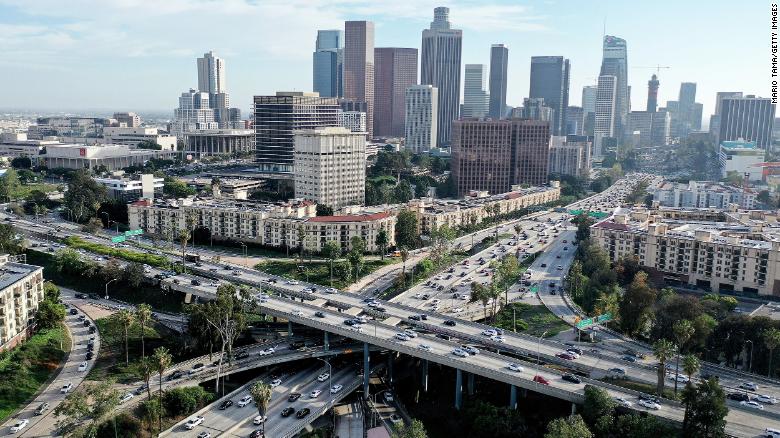
Los Angeles and Orange counties could be devastated by a megaflood within the century.

Daniel Swain, a climate scientist with UCLA and a researcher involved in the study, describes a megaflood as, "a very severe flood event across a broad region that has the potential to bring catastrophic impacts to society in the areas affected." He said a megaflood is similar to the 1000-year flash flood events seen this summer in the St. Louis area and Kentucky, but across a much wider area, such as the entire state of California.

These massive floods, which experts say would turn California's lowlands into a "vast inland sea," might have previously happened once in a lifetime in the state. But experts say climate change is increasing the likelihood of these catastrophic disasters, causing them to occur more like every 25 to 50 years.

Climate change supercharges heavy rain events, making flash floods occur more regularly, as has been noted several times this summer in Eastern Kentucky, St. Louis, and even in California's Death Valley National Park.

California is prone to these floods from atmospheric rivers naturally, and major floods from them have happened before – but climate change is upping the ante, and millions of people could be impacted.

The study said atmospheric rivers could become consecutive for weeks on end, like seen in this animation. Xingying Huang, one of the authors of the study, made this loop, which illustrates the water vapour transportation and potential precipitation accumulation at selected time slices during the 30-day scenario.

READ MORE: Man charged over Canberra airport check-in area shooting
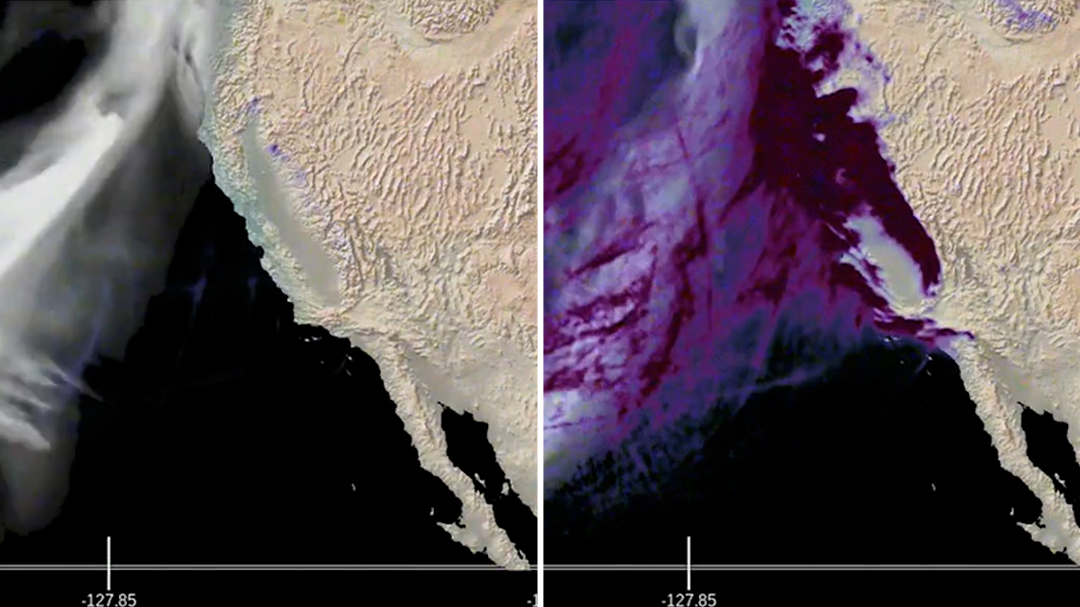
Water vapor transportation and accumulation during 1 month scenario

The area with the most destruction would be the Central Valley of California, including Sacramento, Fresno and Bakersfield, the study's authors project. The Central Valley, roughly the size of Vermont and Massachusetts combined, produces a quarter of the nation's food supply, according to the US Geological Survey.

A flood with the size to fill this valley has the potential to be the most expensive geophysical disaster to date, costing upwards of $1 trillion in losses and devastating the state's lowland areas, including Los Angeles and Orange counties, according to the study.

That would be more five times the cost of Hurricane Katrina, the current costliest disaster in US history.

READ MORE: Europe's drought could signal the death of river cruising
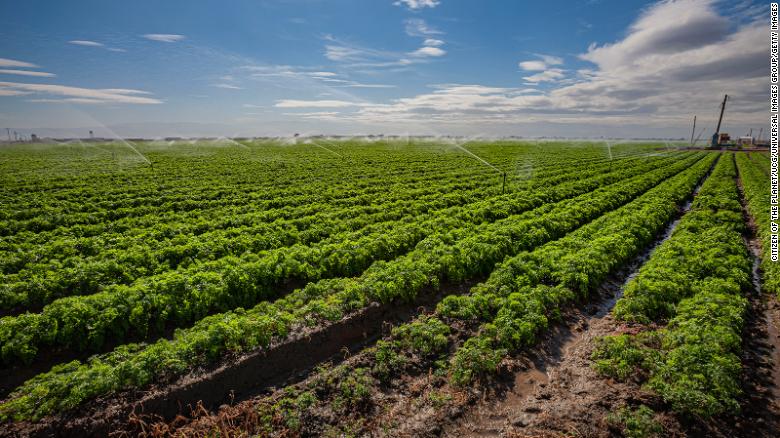
California's Central Valley, which produces one-fourth of the nation's food, will be ravaged by a megaflood.

"Such a flood event in modern California would likely exceed the damages from a large magnitude earthquake by a considerable margin," the study showed.

This study is the first phase of a three-part series studying the effects of a future megaflood event in California. The next two phases are expected to be released in two to three years.

"Ultimately, one of our goals is not just to understand these events scientifically, but it's also to help California prepare for them," Swain said. "It's a question of when rather than if (the megaflood) occurs."

It's happened before. It will happen again, but worse, warns scientists

Over 150 years ago, a strong series of atmospheric rivers drenched the Golden State, causing one of the most exceptional floods in history following a dry spell that had left the West parched for decades.

Communities were demolished in minutes.

It was the winter of 1861-1862 and a historic megaflood transformed the San Joaquin and Sacramento valleys into a "temporary but vast inland sea," according to the study. Some areas had up to 30 feet of water for weeks, obliterating infrastructure, farmland, and towns.

READ MORE: Retired couple reveal 'trick' to win $39 million
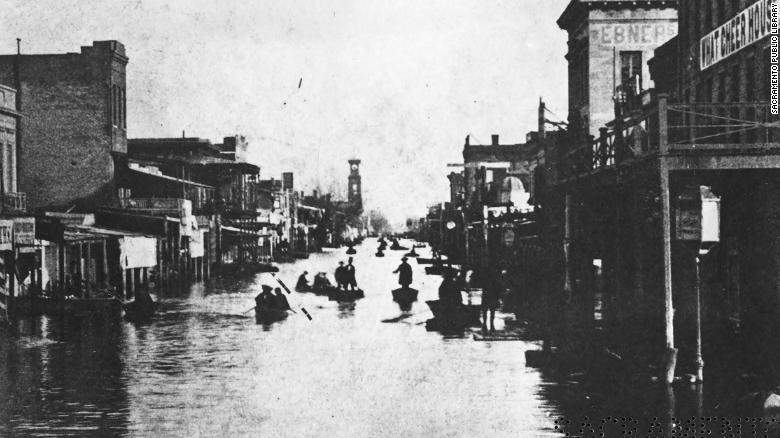
This 1861 photograph shows flooding in Sacramento.

Sacramento, the new state capital at the time, was under ten feet of debris-filled water for months.

The catastrophe began in December 1861, when nearly 4.5 metres of snow fell in the Sierra Nevada. Repetitive atmospheric rivers dropped warm rain for 43 days thereafter, dumping water down the mountainous slopes and into the valleys.

Four thousand people lost their lives, one-third of the state's property was destroyed, a quarter of California's cattle population drowned or starved, and one in eight homes were a complete loss by floodwaters.

In addition, one-fourth of California's economy was obliterated, resulting in a state-wide bankruptcy.

Swain warns a megaflood like this will happen again, but worse and more frequent.

"We find that climate change has already increased the risk of a (1862) megaflood scenario in California, but that future climate warming will likely bring about even sharper risk increases," the study warns.

Many of today's major cities with millions of residents are built directly on top of the ancient flood deposits, Swain added, putting far more people in harm's way.

About 500,000 people lived in California in 1862. Now, the state's population is over 39 million.

"When this (flood) occurs again, the consequences would be wildly different than they were back in the 1860s," Swain said.

Climate change increases the amount of rain the atmosphere can hold and causes more water in the air to fall as rain, which can lead to immediate flooding. Both are and will continue to occur in California.

The new study shows a rapid increase in the likelihood of week-long, recurring strong-to-extreme atmospheric rivers during the cool season. An atmospheric river is a long, narrow region of heavy moisture in the atmosphere that can transport moisture thousands of kilometres, like a fire hose in the sky. They usually bring beneficial rainfall to drought-prone regions like California but could quickly become hazardous with a warming climate.

Historically these winter atmospheric rivers dump feet of snow in the Sierra Nevada, but as climate warms, more of the snow will fall as rain. Instead of melting slowly over time, it all runs off, piles up, and floods immediately.

With a neighbor like the Pacific Ocean, California has "an infinite reservoir of water vapour offshore," Swain added.

California's mountainous terrain and wildfire risk make it especially vulnerable to flooding. Lingering burn scars from wildfires can create a steep, slick surface for water and debris to flow off. With wildfires becoming larger and burning more area thanks to climate change, more areas are susceptible to these debris flows.

Although models show this megaflood is inevitable, experts say there are ways to mitigate excessive loss.

"I think the extent of (megaflood) losses can be significantly reduced by doing certain sorts of things to revamp our flood management and our water management systems and our disaster preparedness," Swain said.

Huang, a project scientist at the National Center for Atmospheric Research and a researcher involved in the study, said everyone can make a small effort in combating climate change.

"If we work together to decrease future emissions, we can also reduce the risk of extreme events," Huang said.