Test your brains with the Herald’s afternoon quiz. Be sure to check back on nzherald.co.nz for the morning quiz tomorrow. To challenge yourself with more quizzes, CLICK HERE.
Tag Archives: oceania
Mayoral contest website antics: Efeso Collins and Craig Lord online address links to adversary Leo Molloy
Website addresses carrying the name Efeso Collins and Craig Lord are linking directly to Auckland mayoralty rival Leo Molloy. The Efesocollins.co.nz address, and the Craiglord.co.nz address sends users to Leo Molloy’s official website,…
Former TV reporter jailed for causing friend's death in high-speed crash
A former television reporter who caused the death of his friend in a drunken high-speed crash in Melbourne has been jailed.
Trent Evans, 45, wiped back tears as he was sentenced to seven years and 10 months' jail before Victoria's County Court this morning.
The former Channel 7 journalist had previously admitted to causing the death of his friend Rex Willox in February 2021, pleaded guilty to culpable driving causing death before the court a fortnight ago.
READ MORE: Man killed after 'street fight' in regional Victorian town

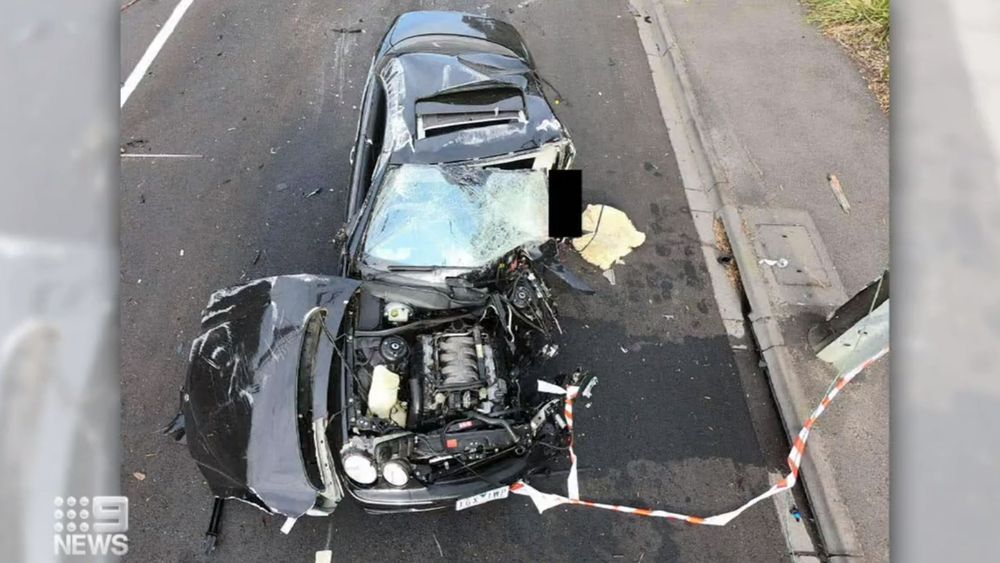
Evans was double the legal blood alcohol limit when he lost control of Willox's Mercedes in the suburb of Burnley in inner Melbourne, while Willox was in the front passenger seat.
Evans was trying to make a right hand turn and the car slammed into a power pole, causing it to roll over.
Evans has claimed that before the crash Willox was egging him on to go faster, with the car reaching speeds of 112km/h in a 60km/h zone on Barkly Street.
A passer-by rushed to help Willox after the crash, but he died at the scene from his injuries.
Evans recorded a blood-alcohol reading of 0.1.
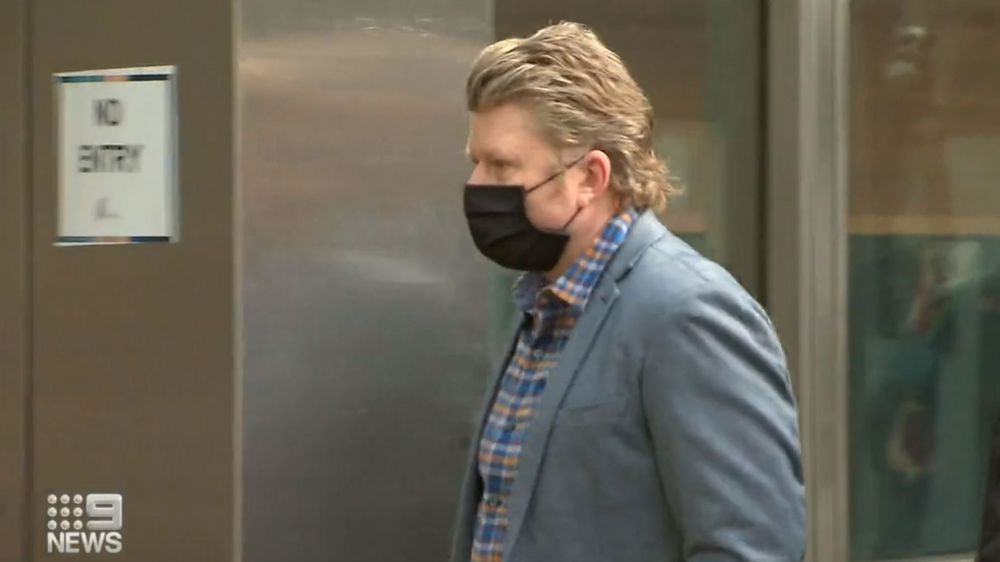
Judge Gregory Lyon said the seriousness of Evans' offending was "very great indeed".
"As a consequence of your level of intoxication, you were incapable of exercising proper control over the car that you were driving," he told the court.
"The speed at which you drove and the alcohol in your system at the time you drove each constitute very serious breaches of the criminal law in their own right."
The court heard Evans has been left with a personality disorder and PTSD from the crash.
He has written to Willox's family to express his remorse, saying he would never forgive himself for their permanent loss and grief.
Evans' life descended into chaos after he suffered from a mental health breakdown in 2016 while working as a television news journalist and producer in Queensland, the court previously heard.
He began to have difficulty with his speech, became paranoid and was treated in hospital for two weeks.
He returned to Victoria and tried to continue working as a journalist, but could not cope with the demands of the job.
By 2018, Evans was homeless and dependent on drugs, living in boarding houses and sleeping in shelters where he became the victim of assaults.
He has a criminal history that included previous speeding infringements and drink-driving offences dating back to 2005.
Evans was handed a non-parole period of five years and two months' jail, while his licence was disqualified for four years.
He has already served 18 days.
– Reported with AAP
Kokoda Track 80 years on: The savage battle on Australia's doorstep
On July 21, 1942, Australian soldiers began fighting a bloody World War II battle.
Relief at the pump: Lowest average fuel prices across New Zealand
Petrol prices have plunged across the country with prices some of the lowest seen since April.On Thursday, price tracking site Gaspy showed New Zealand’s average fuel price for a litre of unleaded 91 petrol was $2.84 and Diesel,…
John MacDonald: At last, a cap on water bottling madness
OPINION: How nuts was it that two water bottling companies were able to access some old industrial land north of Christchurch, and use the age-old water consents that went with the properties to take billions of litres of aquifer…
Wellington weather: Wild waves smash ferry during sailing
An Interislander ferry was hammered by waves this morning as it navigated the Cook Strait before sailings were canned for the rest of the day. A person onboard the Interislander captured part of the dramatic journey. Video footage…
Revealed: Inside story of mystery police motorcade circling Auckland
A motorcade fit for the highest ranking foreign dignitary has been snaking around the Super City on Thursday – and it’s left Aucklanders baffled.The procession features a police motorbike at its head, along with BMWs resembling…
Woman twice legal limit kills friend in car crash, avoids prison
“You’re f***ing joking,” the partner of a woman killed by her drink-driving friend yelled as the woman was today sentenced to home detention.Holley Levorsen-Persson killed her friend Deborah Neilsen when she crashed into a tree…
What is foot and mouth disease and can humans get it?
Foot and mouth disease (FMD) threatens to decimate Australia's livestock industry, and biosecurity measures have been ramped up following the detection of the virus in Indonesia.
Viral fragments were found in Chinese pork products within a Melbourne supermarket this week, prompting a grim warning from farmers.
While Australia is still disease-free, the federal government estimates a major outbreak could cost upwards of $80 billion and last for months, if not years.
Here, we answer what we know about the devastating virus.
READ MORE: Barnaby Joyce slams government's handling of foot and mouth disease
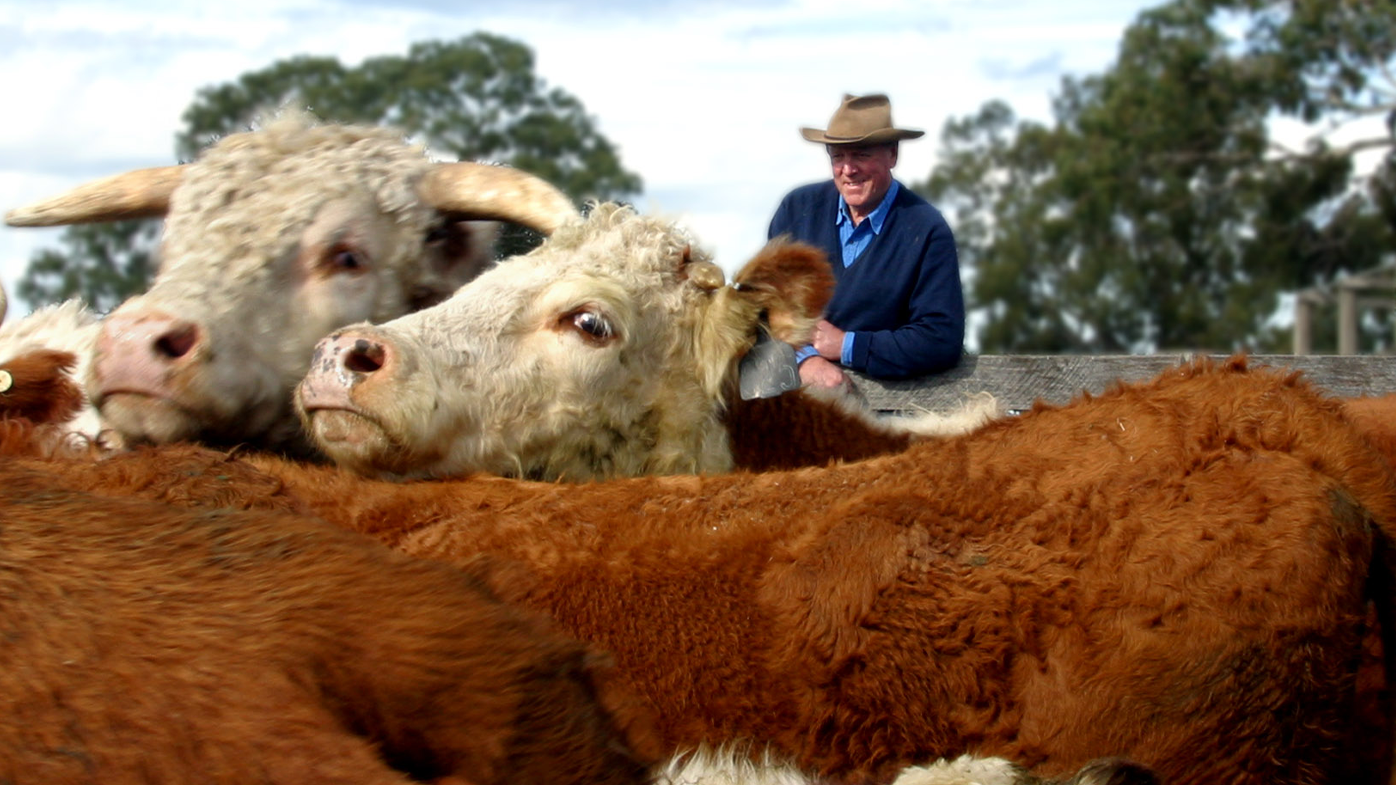
What is foot and mouth disease?
FMD is a virus that affects hooved animals, including livestock such as cattle, sheep, goats and pigs.
EXPLAINED: What is 'Centaurus', the Omicron sub-variant causing concern
Can humans get foot and mouth disease?
Humans can get FMD but cases are very rare "and do not result in serious disease," the Department of Agriculture, Fisheries and Forestry (DAFF) says.
As well as the livestock listed above, the federal government says buffalo, camels and deer can contract the virus.
What are foot and mouth disease symptoms in animals?
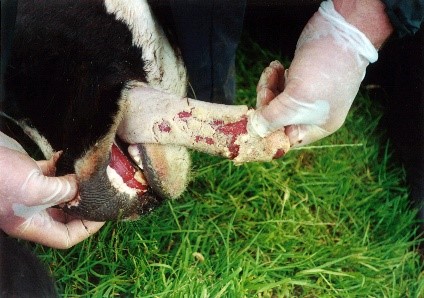
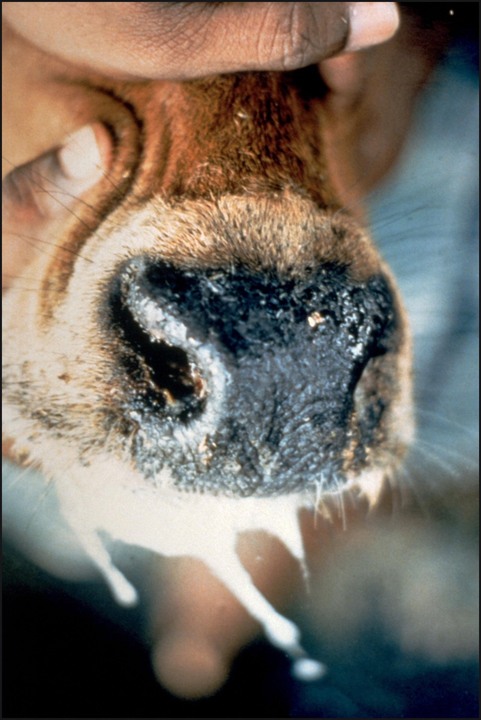
The disease can cause lameness in animals and difficultly eating and drinking.
Signs of FMD include:
- Blisters in and around the mouth area
- Drooling
- Limping animals
If any of these symptoms are detected, owners are urged to contact a local veterinarian or the Emergency Animal Disease Watch Hotline on 1800 675 888.
Is foot and mouth disease contagious?
Yes, the disease is highly contagious.
What's more, it has multiple means of transmission, Australia's Chief Veterinary Officer Dr Mark Schipp says.
"It is spread through food, through the air, and through contact with other animals," he said.
READ MORE: What is Marburg virus?
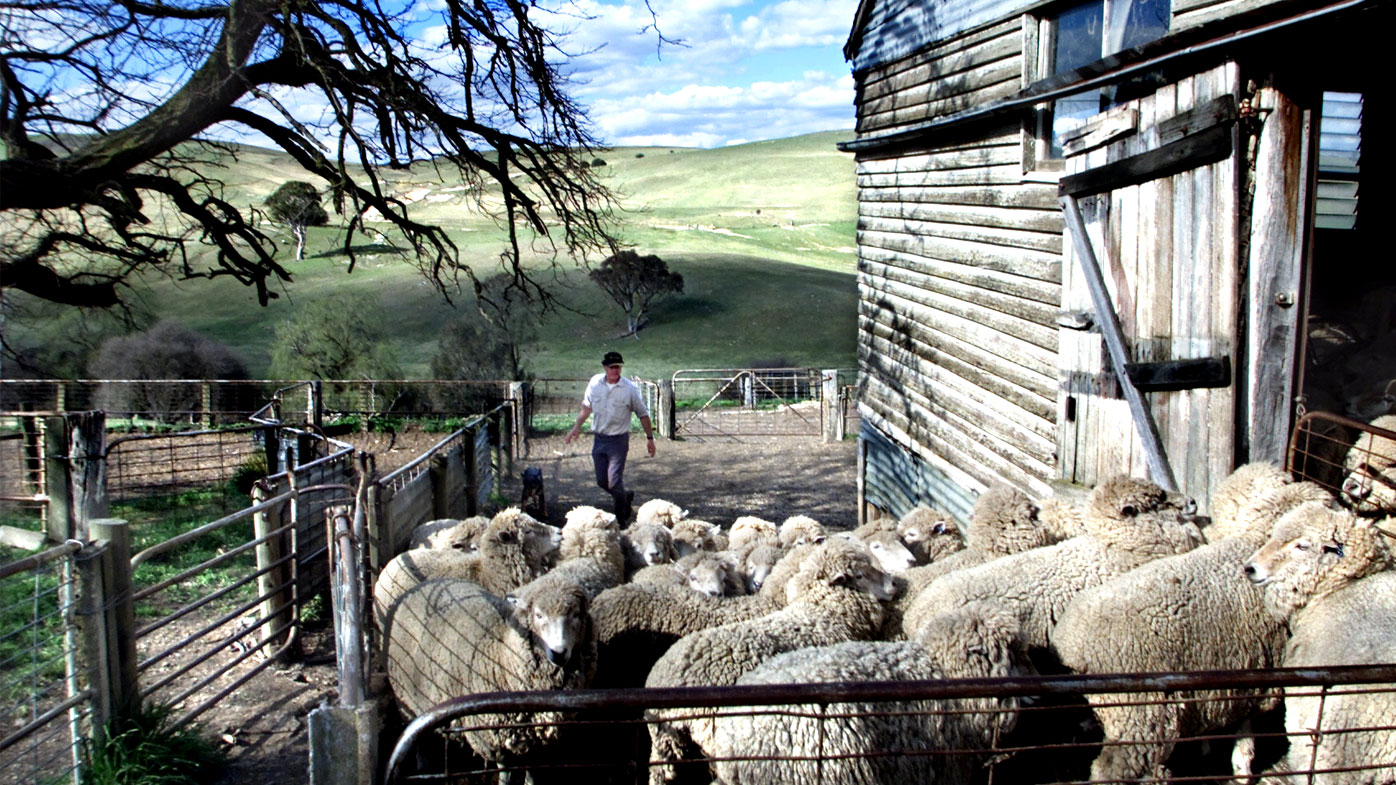
DAFF says FMD is most commonly spread through the movement of infected animals.
"FMD virus can also be spread on wool, hair, grass or straw; by the wind; or by mud or manure sticking to footwear, clothing, livestock equipment or vehicle tyres," it writes.
"Pigs are regarded as 'amplifying hosts' because they can excrete very large quantities of the virus in their exhaled breath.
"The virus can also be excreted by animals for up to four days before clinical signs appear."
Can humans pass foot and mouth disease to animals?
Humans can be a source of infection for hooved animals.
"(They) can carry the virus in their nose for up to 24 hours," DAFF says.
Contaminated equipment and clothing can also spread the virus to animals.
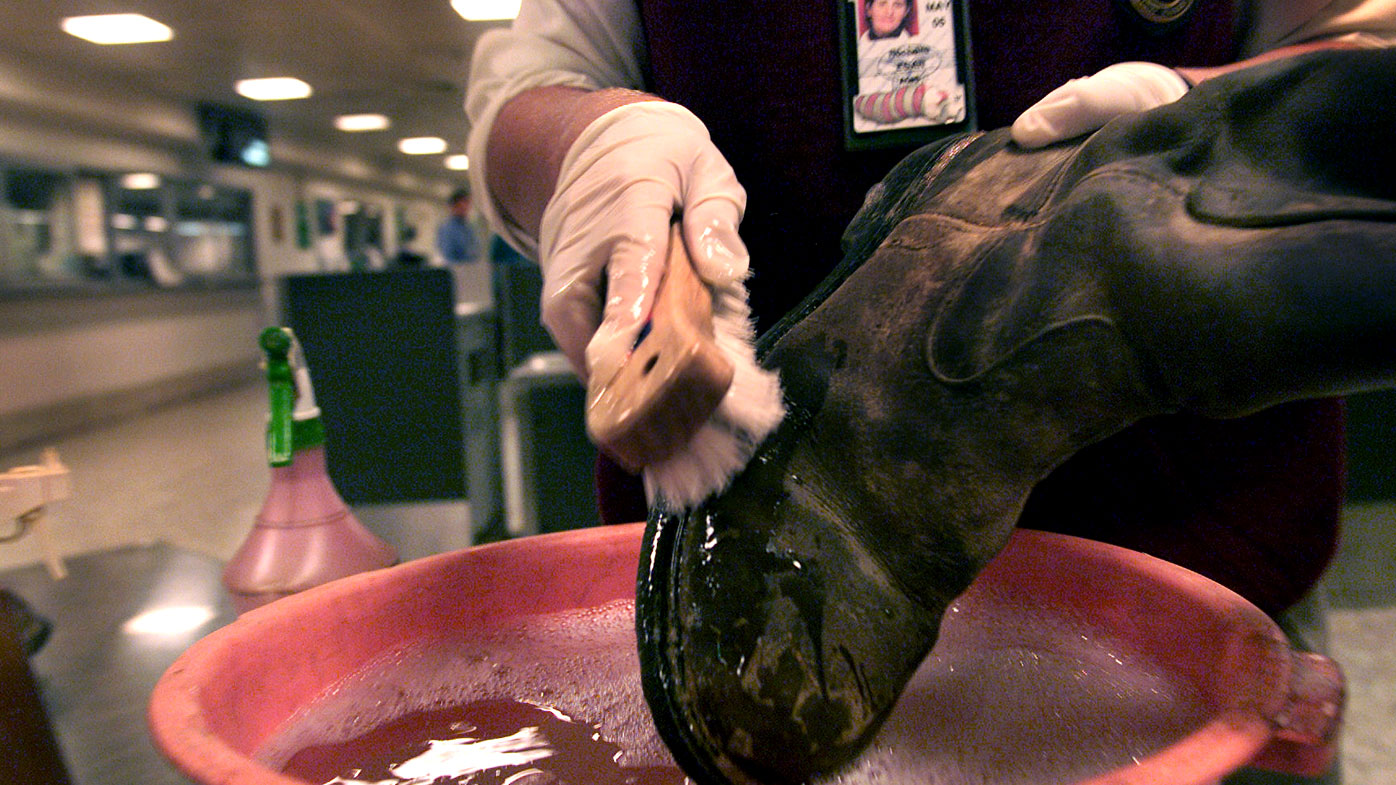
That's why sanitation floor mats have been introduced at international airports for travellers arriving from Indonesia.
"Anyone returning to Australia after visiting a farm or interacting with livestock abroad should declare this upon their return," DAFF said in a recent statement.
"Steps can be taken to remove the risk of transmission through contaminated clothing or dirty shoes."
What happens if animals get infected with foot and mouth?
FMD is particularly dangerous for younger animals, and can lead to significant production losses.
It's not generally lethal to adult animals.
However, infected animals would be humanely destroyed to prevent further spread.
This was seen in the United Kingdom in 2001.
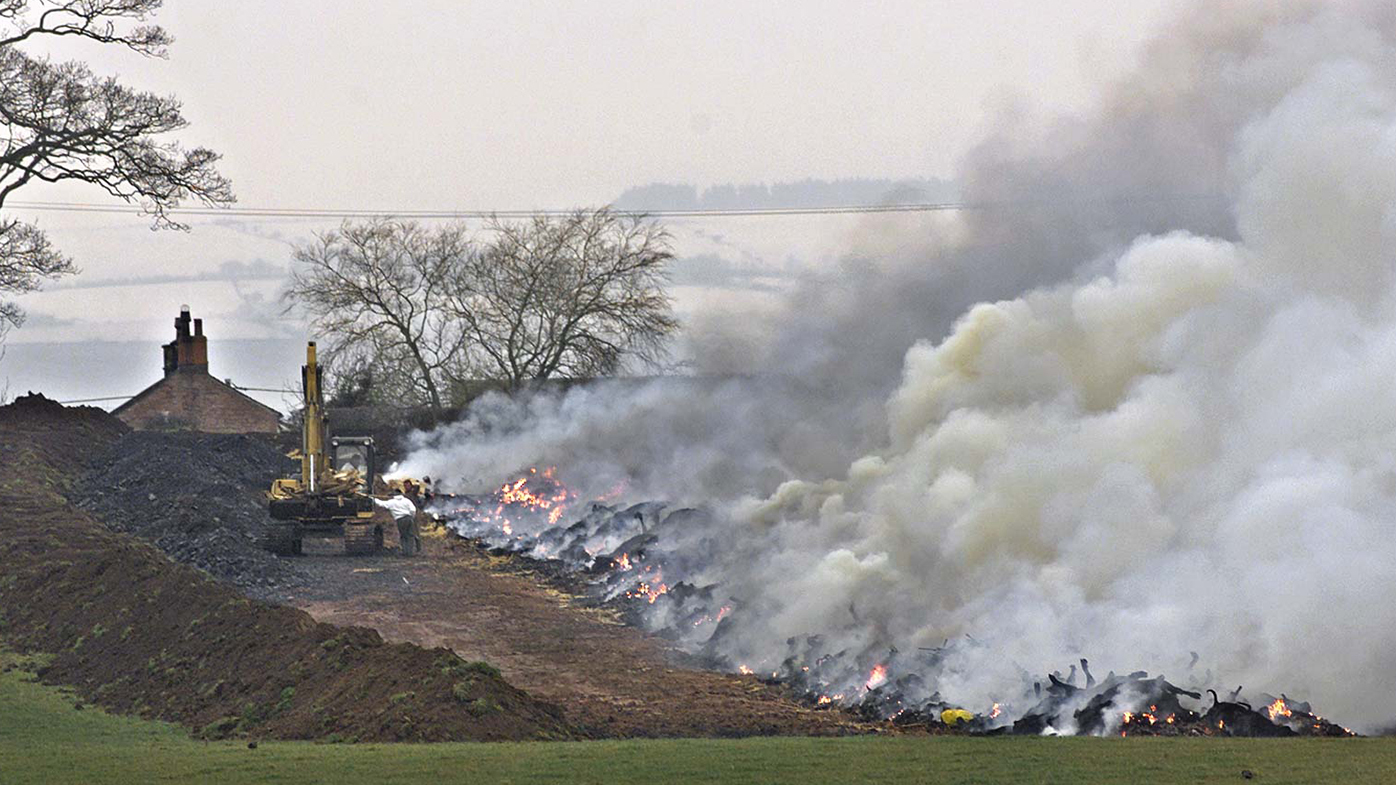
During a widespread outbreak, more than six million cows and sheep were killed in a bid to stem the spread.
This proved expensive, with losses estimated to have cost $13 billion.
In Australia, an extensive outbreak could cost as much as $80 billion over 10 years.
"It would have a devastating impact," Schipp says.
"If it were to arrive in Australia we would lose the majority of our market access for animal products, and animals themselves.
"All of the beef, lamb, wool, dairy products we export; 70 per cent of our production here in Australia, would not be able to be exported."