Tag Archives: oceania

Major airport in Florida to be renamed for Donald Trump

When Donald Trump lands in Florida for his almost weekly trips to his country club Mar-a-Lago, he'll be seeing his name even more than usual.

Because Palm Beach International Airport will soon be renamed after the sitting president.

Legislation to rename the airport was signed by Florida Governor Ron DeSantis.

READ MORE: Donald Trump to put his name on all US paper money

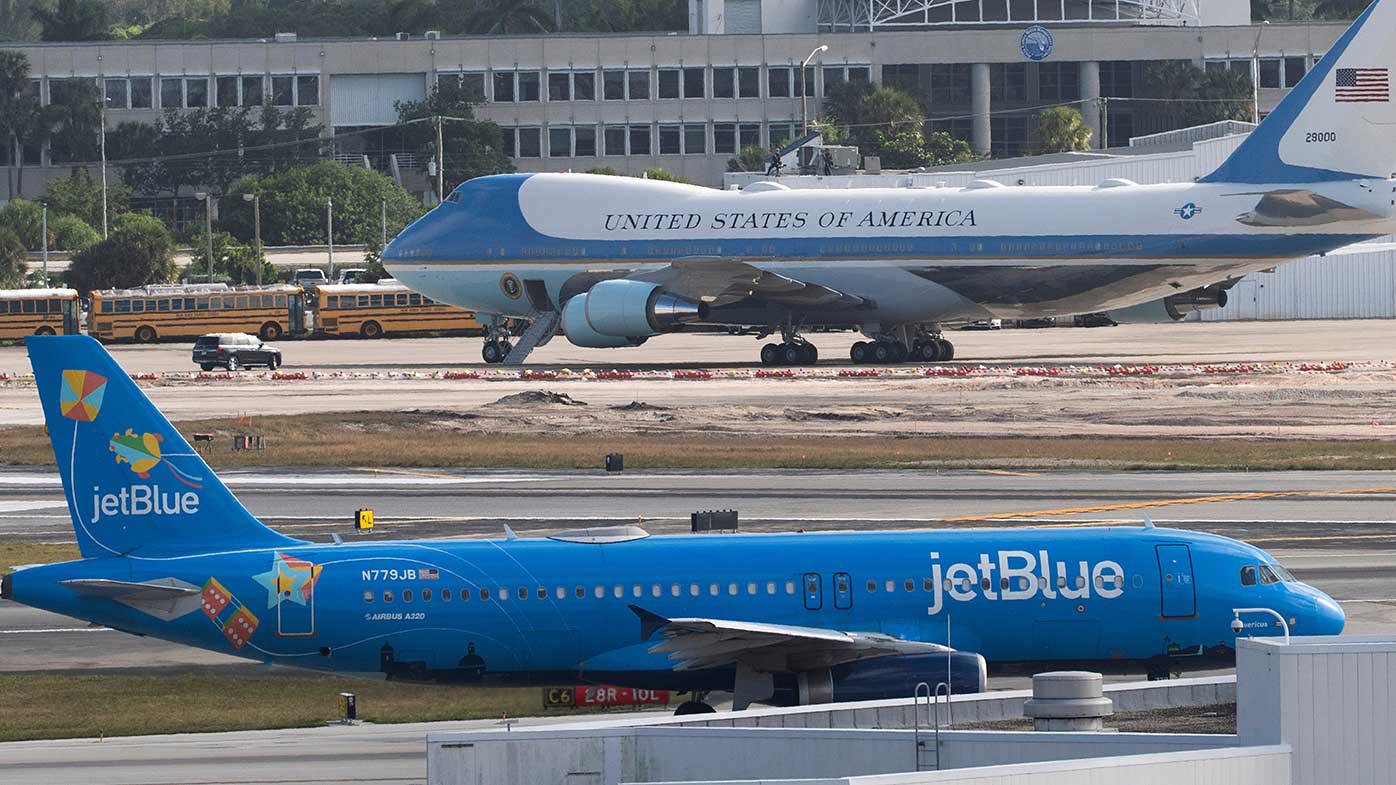
Palm Beach International Airport will be renamed after Donald Trump.

The change will kick in on July 1.

When the president arrives in Florida to spend time at Mar-a-Lago, he lands at Palm Beach International Airport.

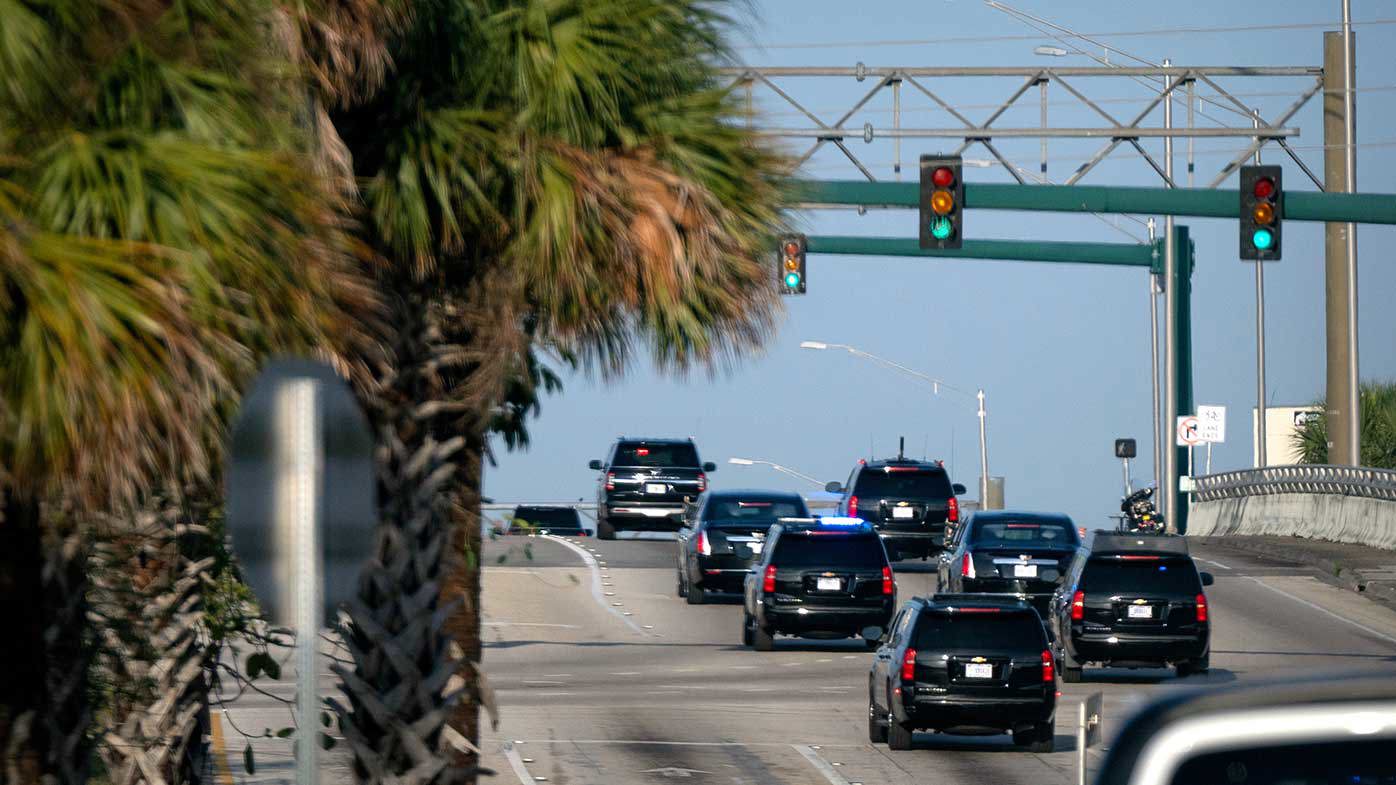
From there it is a short drive down President Donald J Trump Boulevard to his club.

Trump and the airport have an ignominious history. In 2015 he filed a $US100 million lawsuit to limit planes flying over his club.

When he became president he dropped the lawsuit and instituted a no-fly zone over the area.

Palm Beach is at the northern end of the long narrow metropolitan area that runs down to Miami. 

READ MORE: Trump on shaky ground after Democrats win Mar-a-Lago seat

The Federal Aviation Administration will also need to sign off on the name change, but there is nothing to suggest it will stand in the way.

While it is not uncommon for airports to be named after US presidents, it usually happens long after they have left office.

Wichita named its airport after hometown hero Dwight Eisenhower four years after his death. 

Gerald Ford and George HW Bush both had airports named after them long after they left office.

Had Hillary Clinton had won in 2016, she would enter office with an airport already named after her.

READ MORE: $800m in trades before Trump announcement 'is treason'

Donald Trump has been to Mar-a-Lago 28 times in the last 15 months.

Four years earlier, the airport in Little Rock, Arkansas, was renamed Bill and Hillary Clinton Airport.

It is typical for presidents to resist things being named after them while they are in office.

In 1974, Congress passed a bill to rename a federal courthouse in Ford's home town after the sitting president.

Ford vetoed the bill.

"I know of no Federal office buildings that have been named for a President while still in office," Ford wrote in a memo.

"This legislation might begin a precedent I believe it best not to establish."

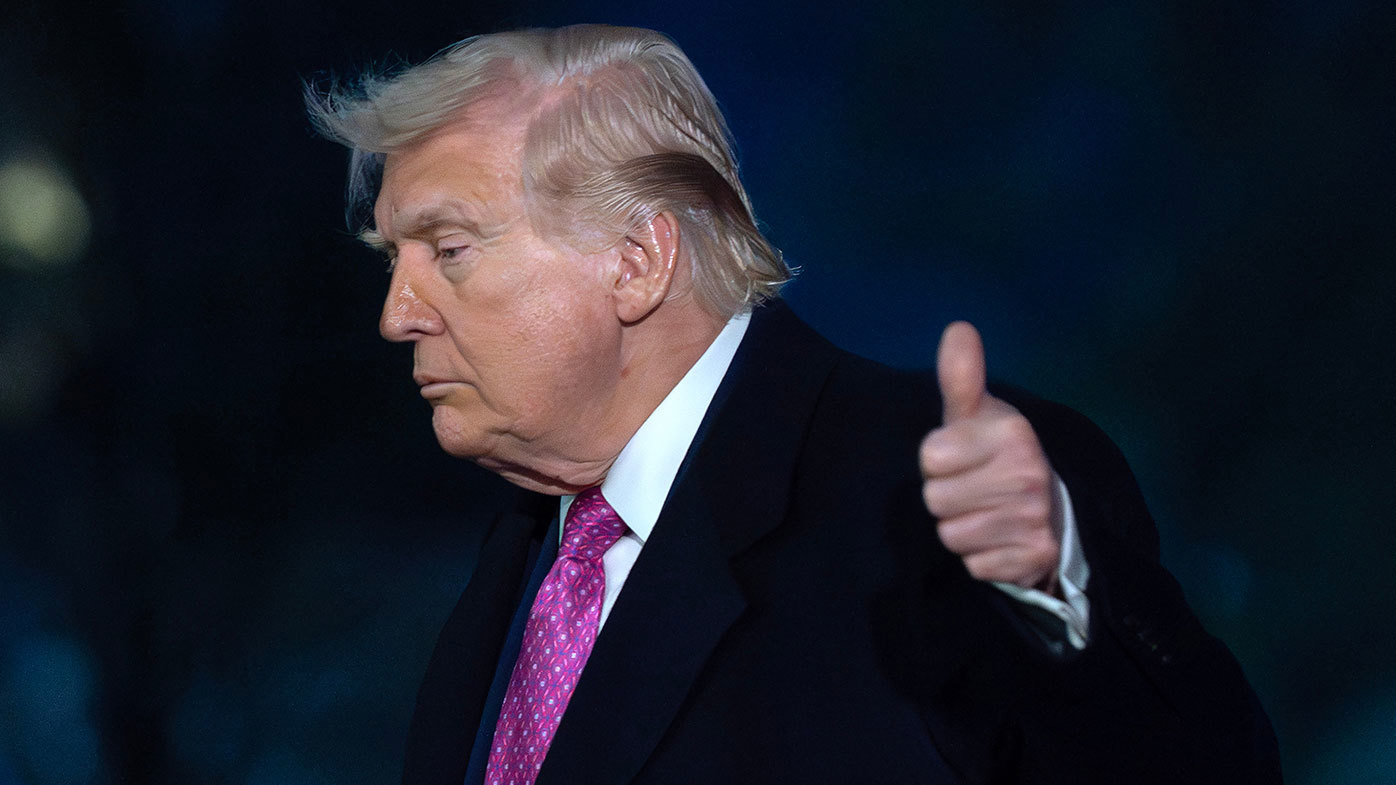
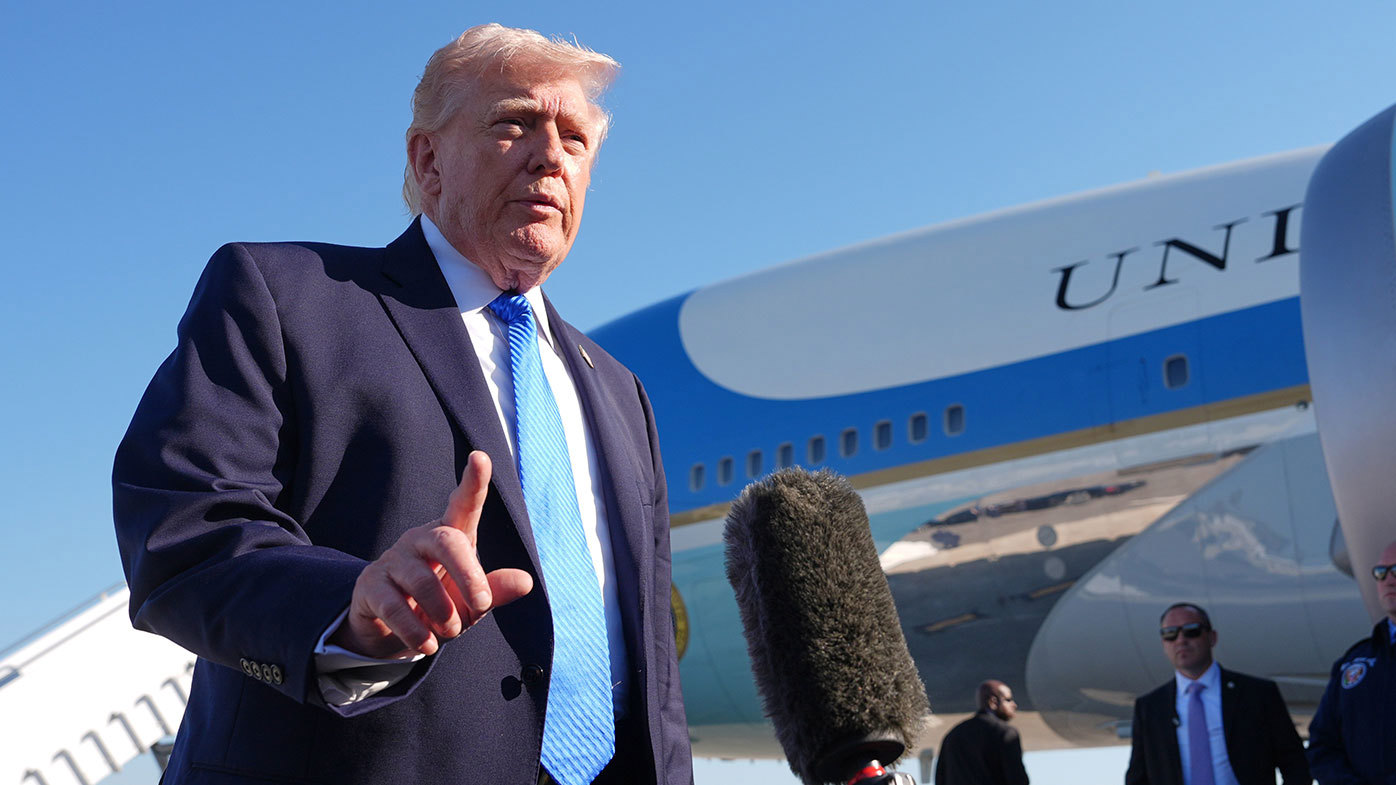
Donald Trump speaks to reporters on the tarmac at Palm Beach International Airport.

READ MORE: It takes two to TACO: Why Trump can't end war with Iran by himself

NEVER MISS A STORY: Get your breaking news and exclusive stories first by following us across all platforms.


50 years of Apple – A timeline of innovation

April the first might be thought of for its practical jokes, but the creation of a now $3.5 trillion company 50 years ago in a Californian garage is no joke.

It was on this day that Steve Jobs and Steve Wozniak incorporated Apple Computer Inc.

While it's going strong today, that success was never a sure thing.

READ MORE: Apple almost went broke – now it's celebrating 50 years
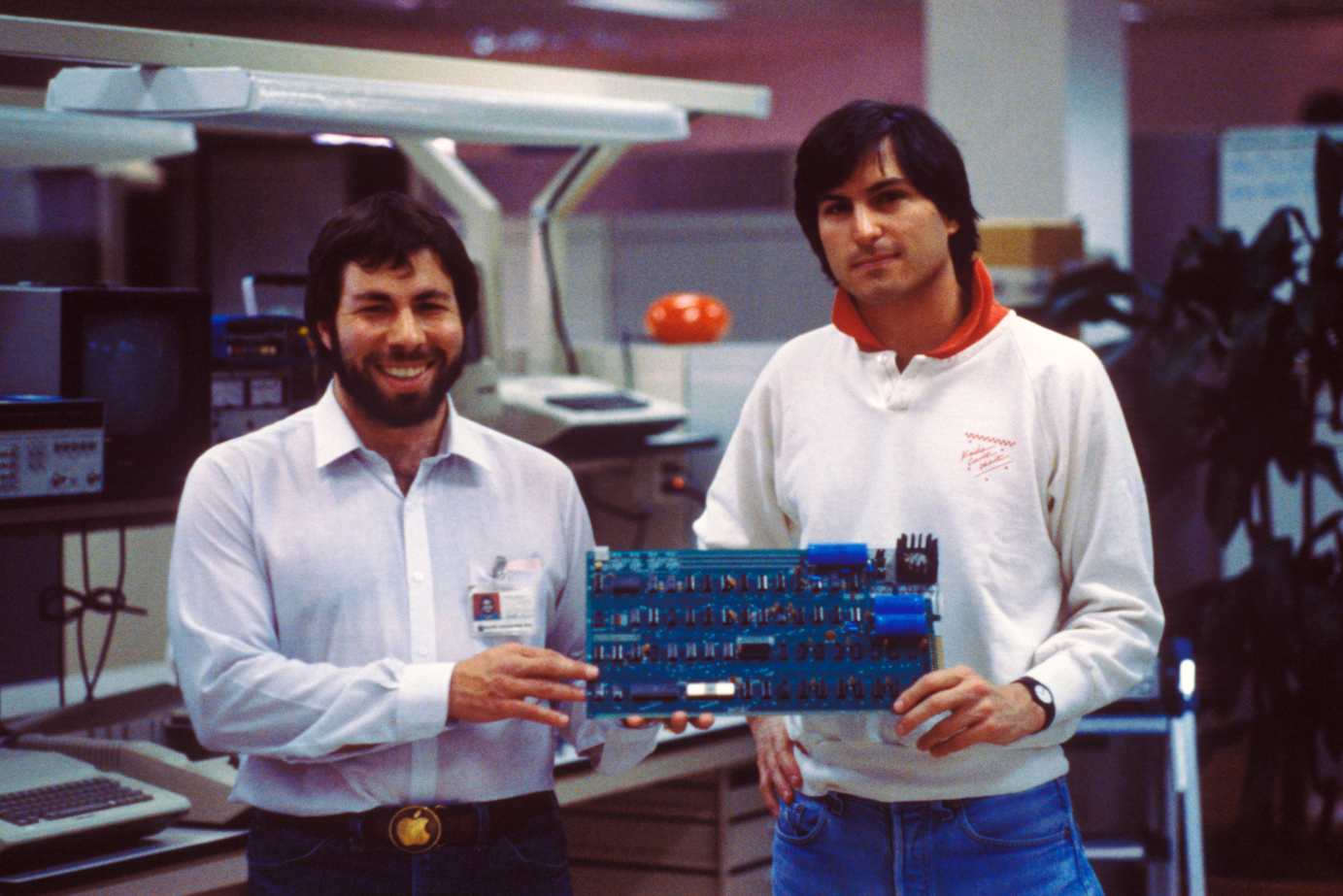
It was on this day that Steve Jobs and Steve Wozniak incorporated Apple Computer Inc.

1976 – the Apple I

Created as a hand-assembled circuit board computer, the first Apple Computer was a favourite with hobbyists with its simple design and ability to be expanded as the user wanted.
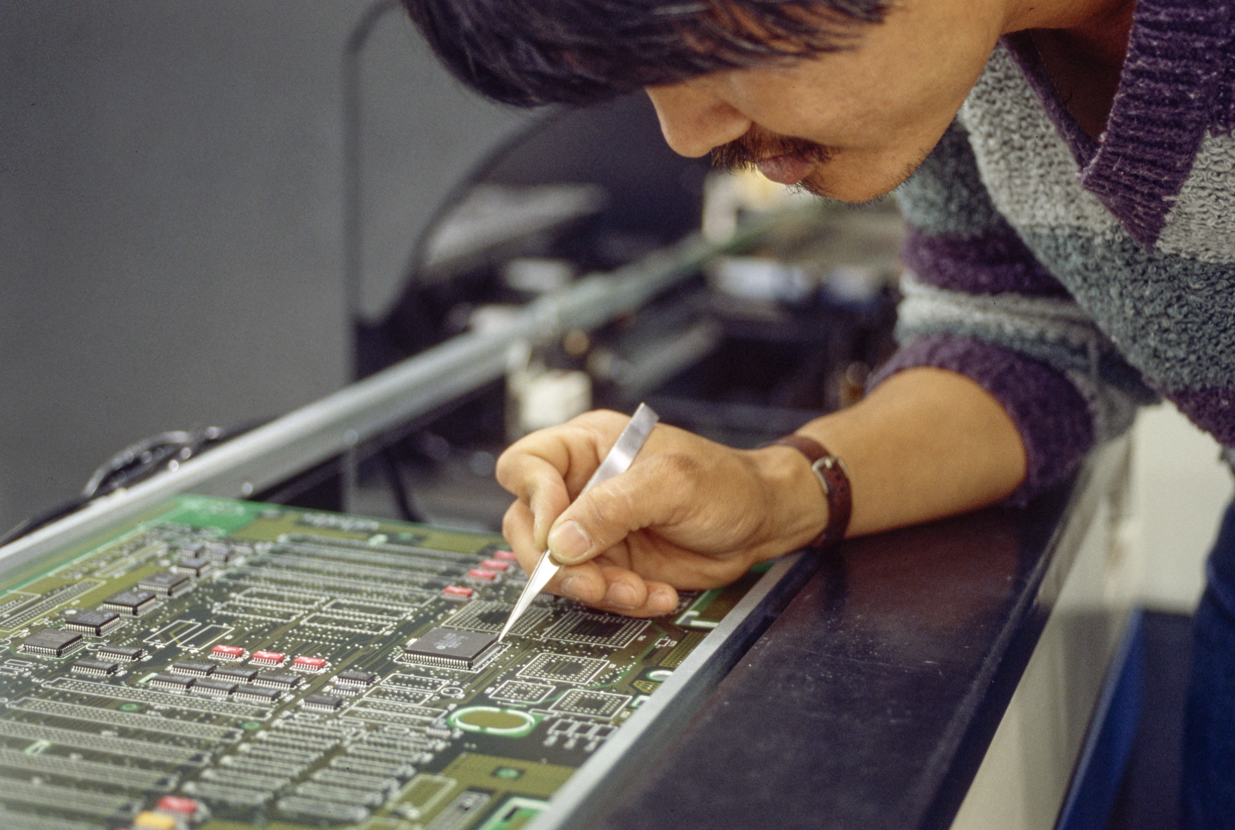
The first Apple Computer was a favourite with hobbyists with its simple design and ability to be expanded as the user wanted.

1977 – The Apple II – The company's bread and butter

Vastly more professional, the Apple II was the first fully assembled computer to bring colour graphics and easy-to-use software into the home, as well as becoming a staple in schools and smaller businesses.

Until the Apple II computers were entirely niche or seen only in large businesses.

This was effectively the start of the personal computer revolution, sparking a competitive race for the personal computer from IBM and a software war with Microsoft.

READ MORE: Sydney Opera House sails light up to mark 50 Years of Apple
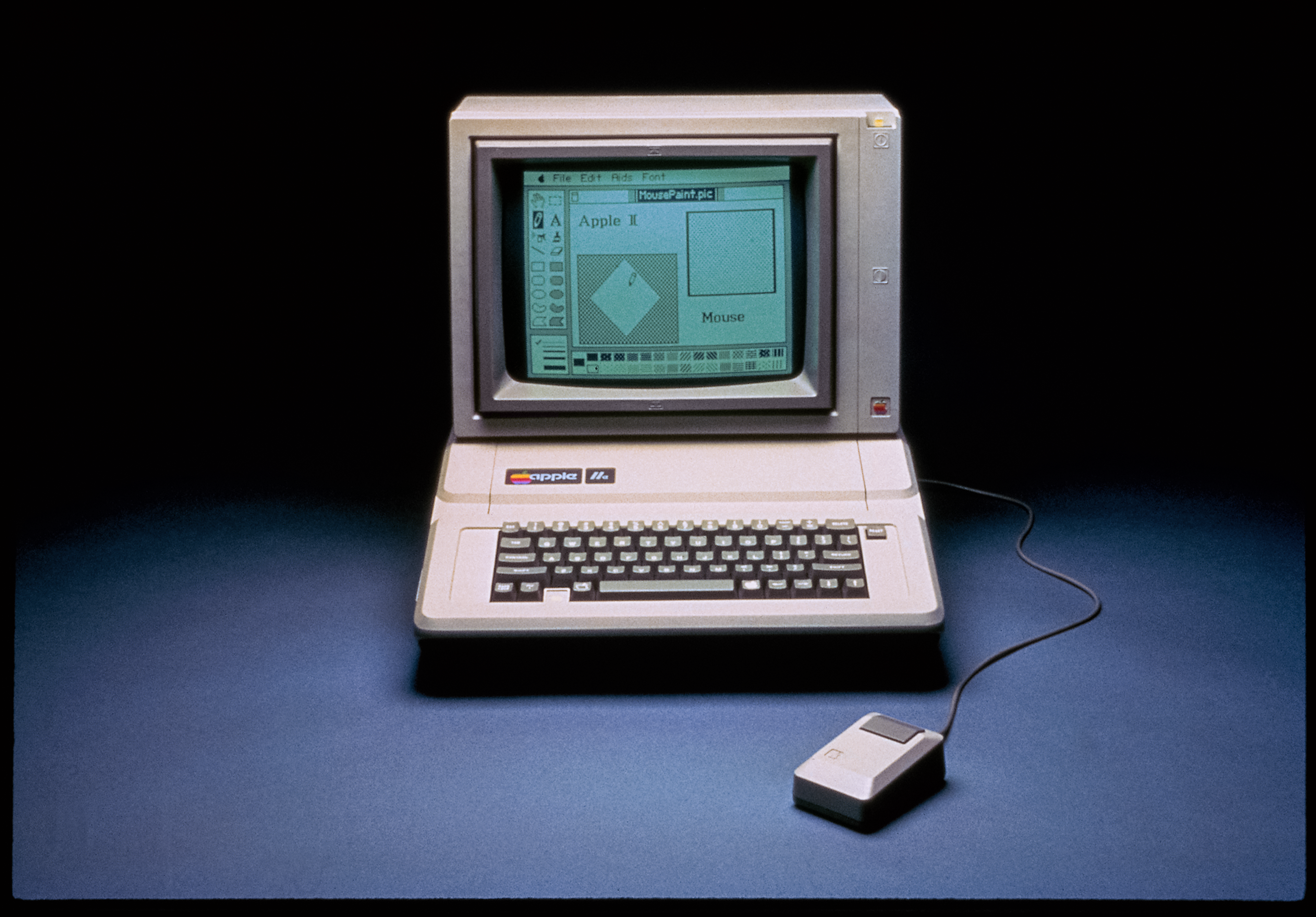
Vastly more professional, the Apple II was the first fully assembled computer to bring colour graphics and easy-to-use software into the home, as well as becoming a staple in schools and smaller businesses. Until the Apple II computers were entirely niche or seen only in large businesses.

1984 – The Macintosh

The Apple II, then follow-ups through the IIe and more, became the base for the business of Apple, making Steve Jobs one of the richest men in the world.

But Jobs had other things on his mind.

The Macintosh would bring a revolution once again, the simple idea of "point and click" with a mouse and a graphical user interface.
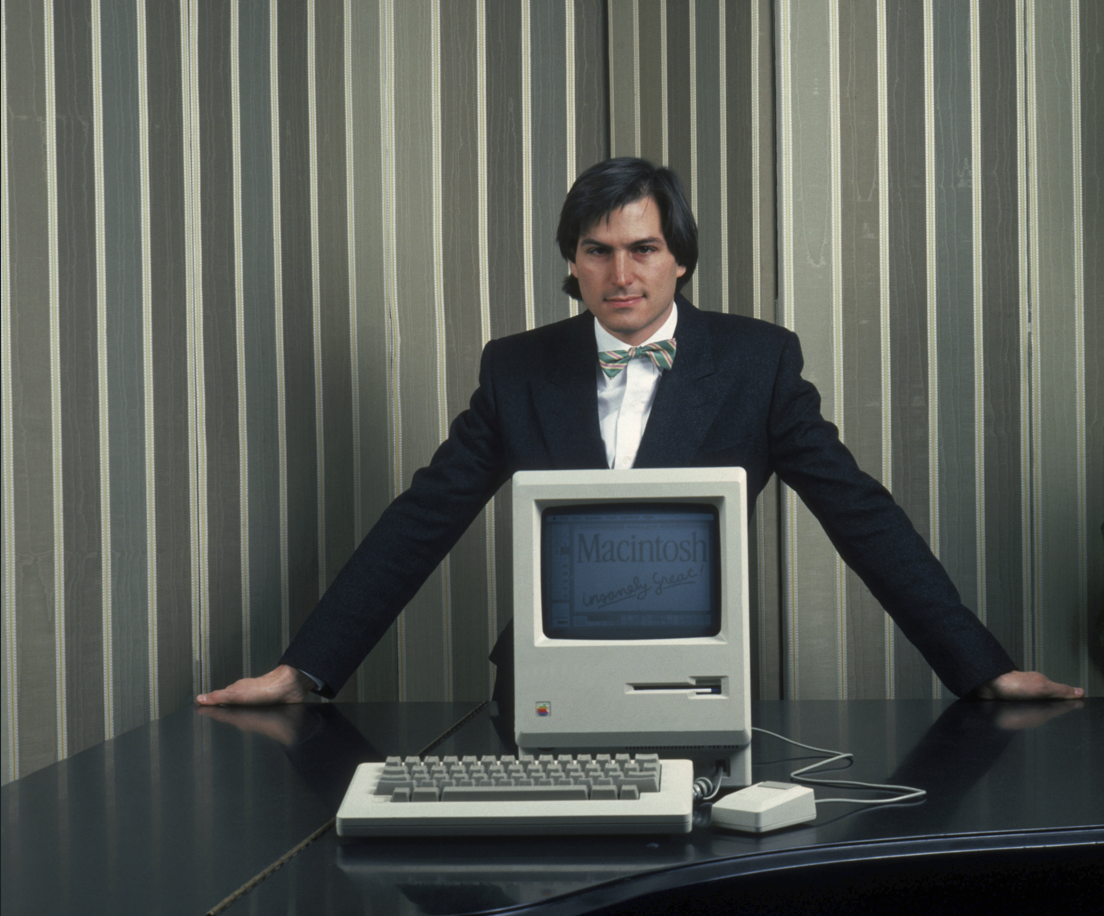
The Apple II, then follow-ups through the IIe and more, became the base for the business of Apple, making Steve Jobs one of the richest men in the world. But Jobs had other things on his mind. The Macintosh would bring a revolution once again, the simple idea of "point and click" with a mouse and a graphical user interface.

No complex coding, no type to play; this was a whole new way of operating a computer – something that lives long today and inspired the Microsoft "Windows" operating system.

Behind the Macintosh was a fundamental belief in using computers to inspire creativity and connection.

The company's famous "1984" Super Bowl ad teased the product before its launch.

READ MORE: Aussies heading to the USA set for high-speed Wi-Fi in a travel revolution
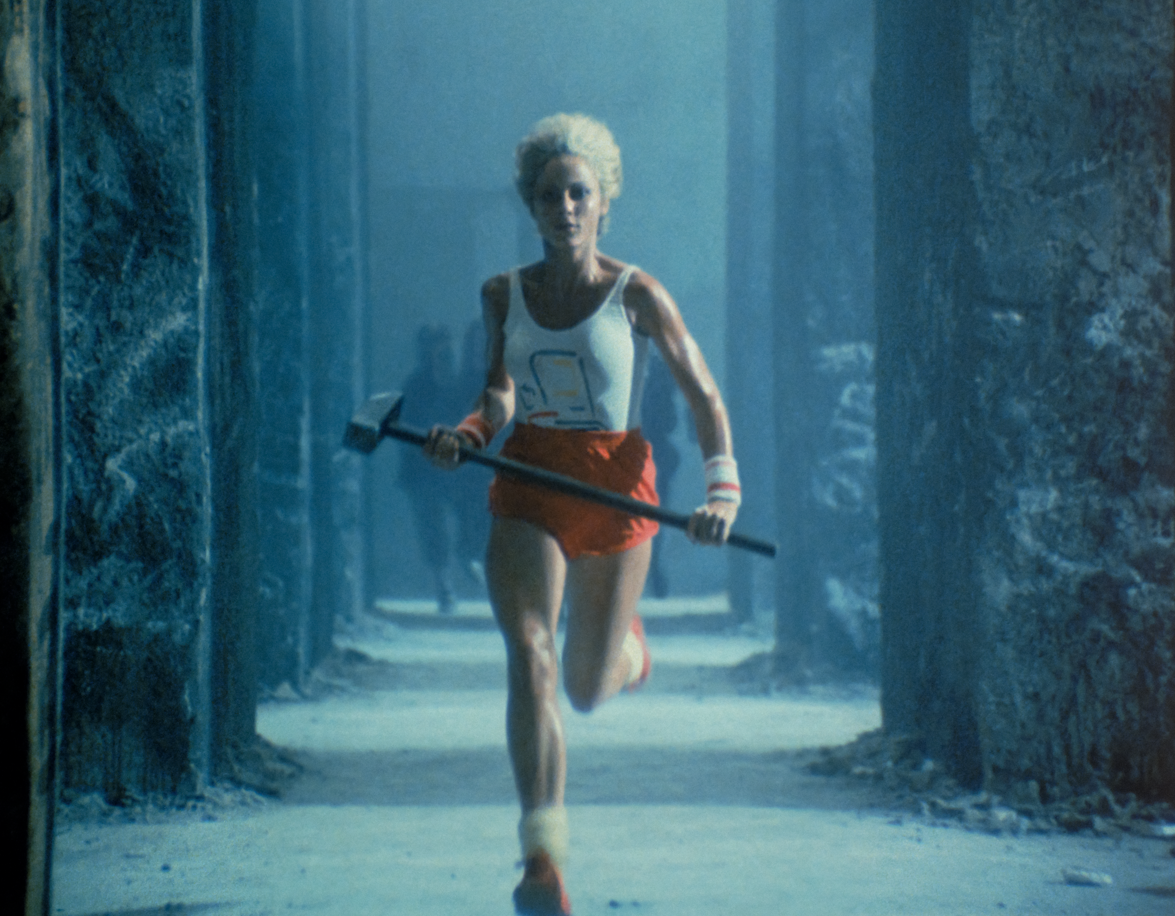
Apple. The company's famous "1984" Super Bowl ad teased the product before its launch.

1985 – Apple without Steve Jobs

Despite being a revolution, the Macintosh was hard to sell due to its price tag, add to that a battle between Jobs and then CEO John Sculley and the board; Jobs eventually resigned and created his own new computer brand, NeXT.

1990 – Low Cost Demand

Revenue came when the company introduced lower-cost Macintosh versions, as well as the intrusion of the PowerBook laptop.

Despite their increase in sales, the company faced far more market competition and attempted to experiment with a range of new products from digital cameras, audio products, and even an early tablet called the Newton.

The demise of the company continued until a return to its origins.
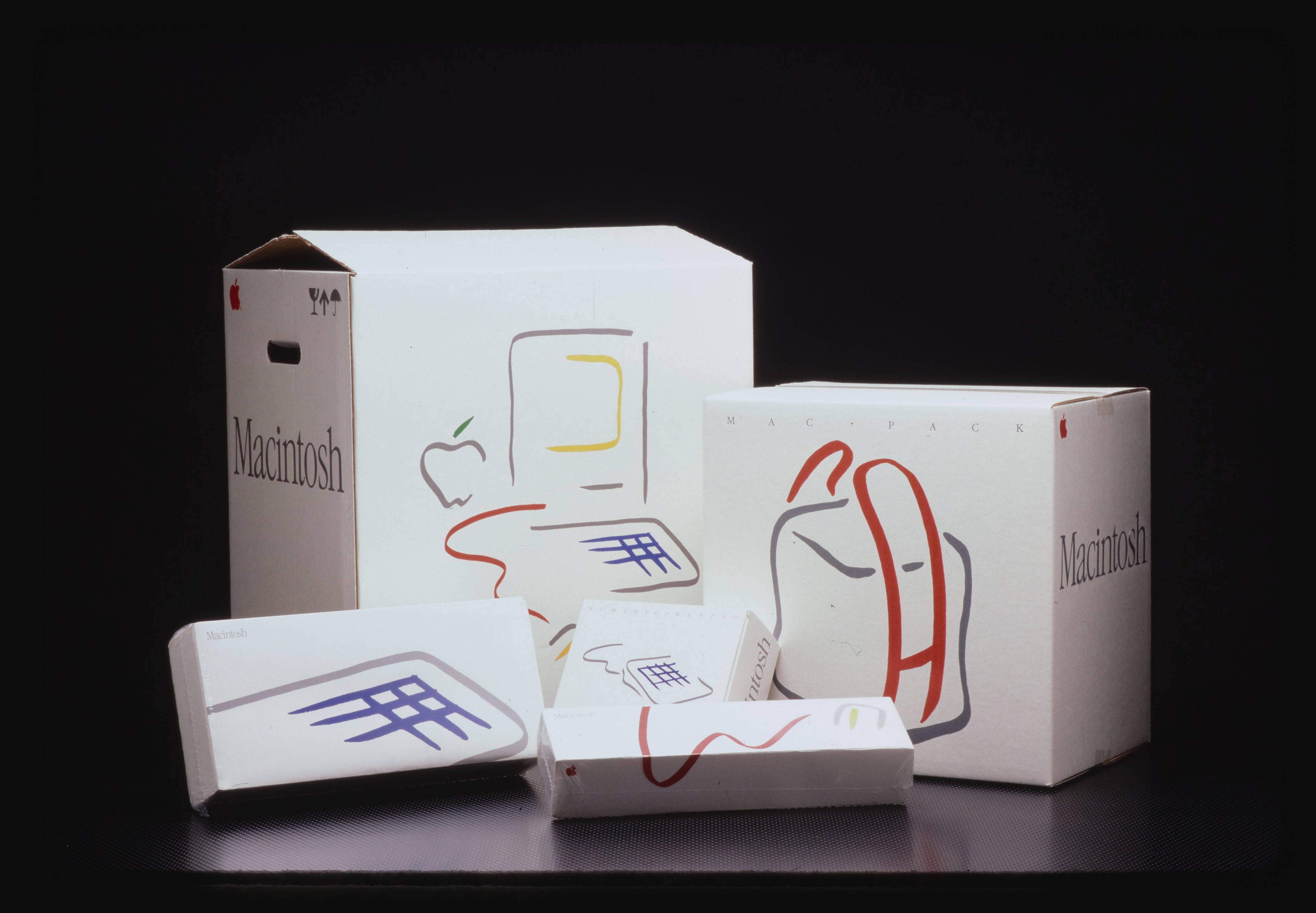
The MacIntosh inspired the Microsoft "Windows" operating system.

1997 – Steve Jobs is back

Jobs had a vision; he used that to rekindle innovation, and the business turnaround from this point is nothing short of remarkable.

1998 – The iMac

What looked like a computer monitor was something very different.

An all-in-one computer with translucent backing made in a range of colours, including the original "Bondi Blue", said to have been named for the colour of the water at Sydney's Bondi Beach.

READ MORE: Apple's latest iPhone is designed for those clinging onto older phones
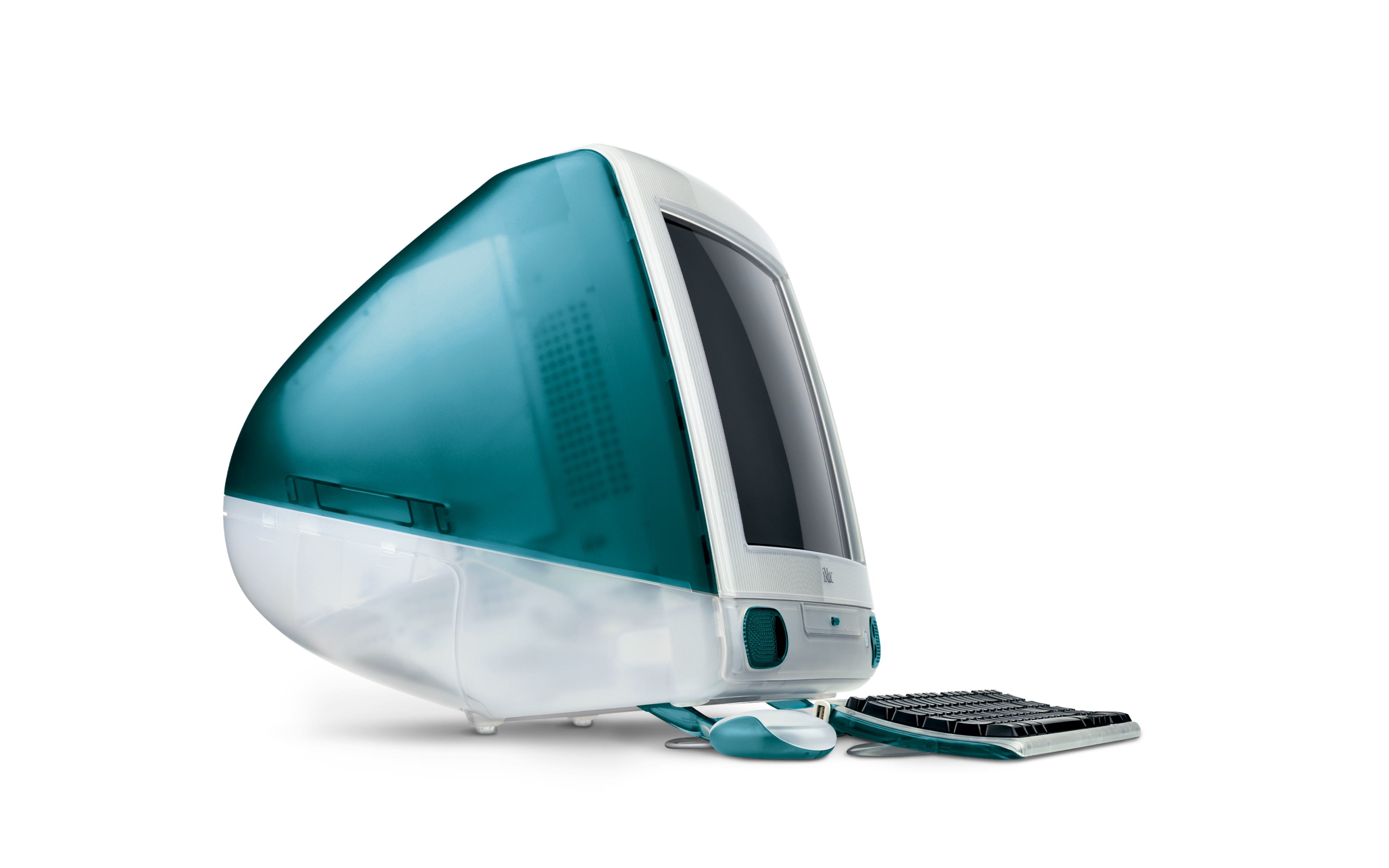
The original "Bondi Blue" iMac.

Vastly different to the beige computers from every other company, the iMac was easy to use and "quick to get online."

It also ditched the floppy drive and relied on USB connections.

The iMac evolved over many generations and still exists today as a thin, all-in-one computer in a range of colours, a clear nod to the original.

2001 – More than Computers – the iPod

Portable music players existed already.

We called them MP3 players.

But the iPod changed how it was done, both in design and user interface.

Advertised to the masses as a way to carry "1000 songs in your pocket," the iPod did to music players what the Macintosh did to computers, making them easy to use and accessible.

The iPod changed how portable music players were done, both in design and user interface.

2003 – Changing the Music Industry with iTunes

For the first two years of the iPod, customers used iTunes to "rip" their own CD collection into digital form and play it on the go.

But then, the iTunes Music Store made it possible to buy songs and albums online, legally.

In a time of Napster and illegal music downloads, this helped the music industry find a new path forward in the digital age.

Of course, over time, that also led to streaming music on Spotify, which Apple countered with Apple Music.

READ MORE: Apple offers up one of its cheapest products in years
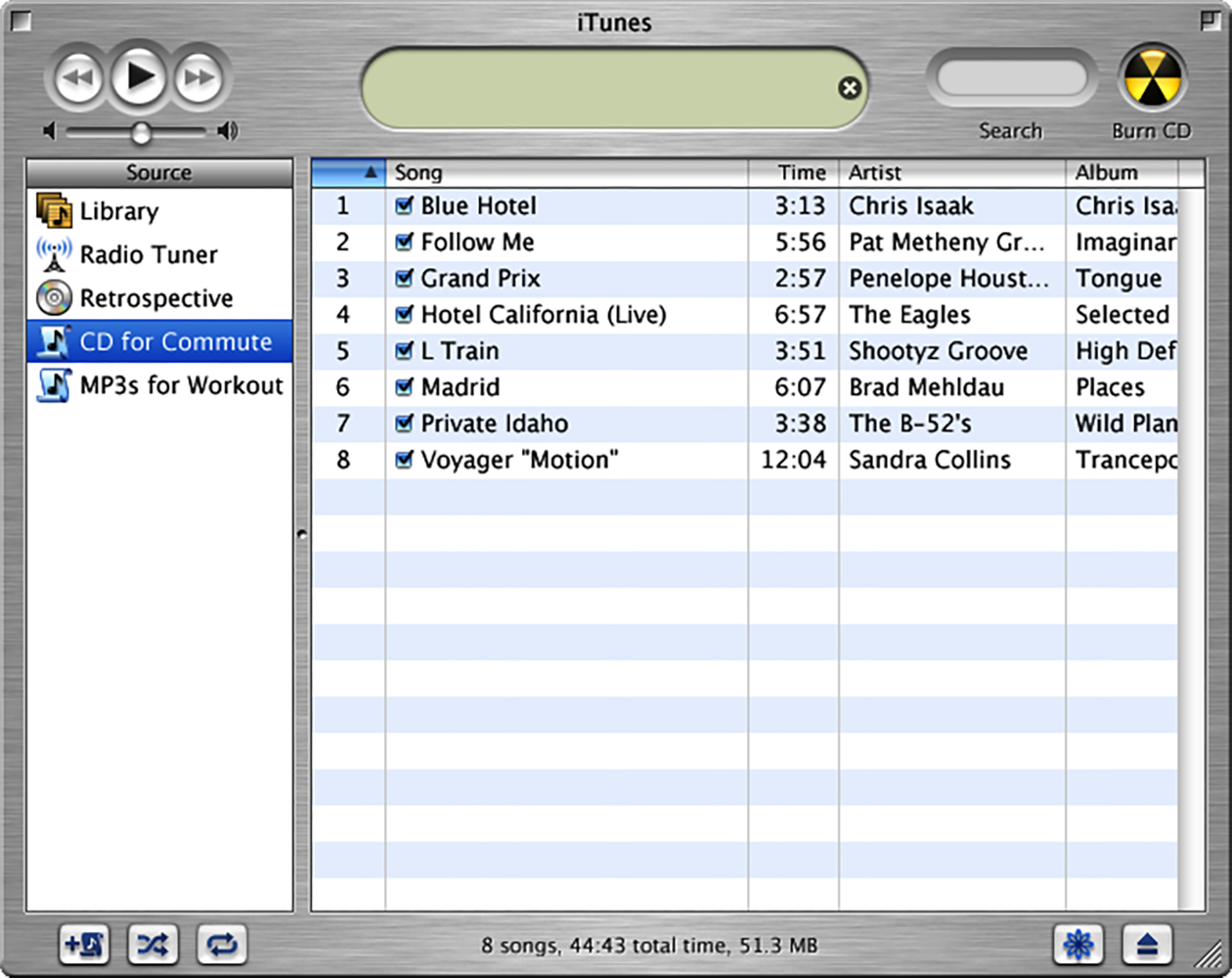
The iTunes Music Store made it possible to buy songs and albums online legally.

2007 – Crushing BlackBerry with the iPhone

Anyone close to tech will never forget the phrase "An iPod, a Phone, an Internet Communicator" as Steve Jobs introduced the first iPhone.

Things we take for granted today, like pinching the screen to zoom in and out, swiping up and down, or just having the whole world at our fingertips, began this.

This began the demise of the then-popular BlackBerry, which was the first true smartphone, but they were unable to compete with Apple's full-screen display.
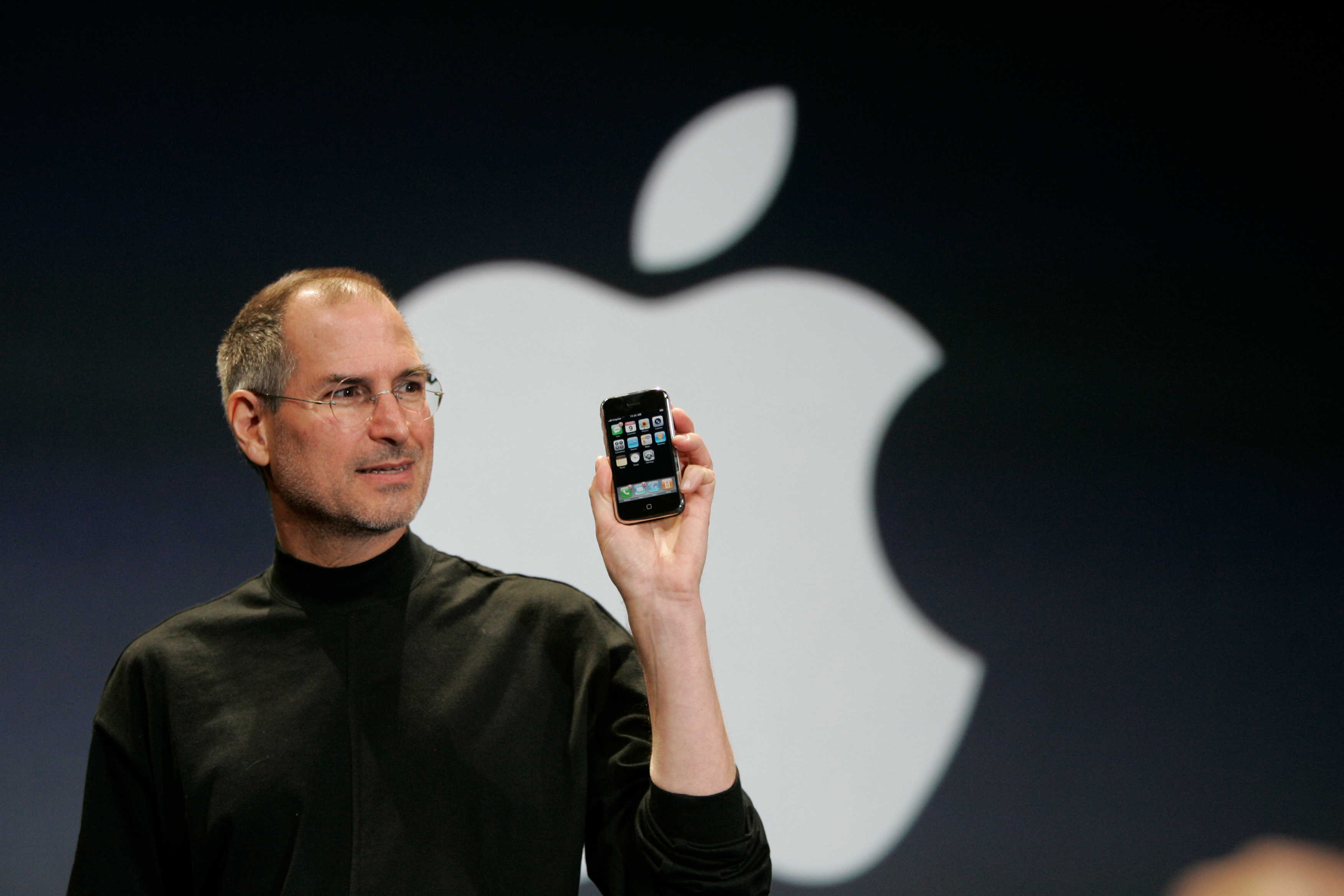
Steve Jobs introduces the first iPhone.

2008 – The App Store

The true power of the Apple iPhone and subsequent new products is the software, and much of that is not the brainchild of Apple, but instead, independent developers all around the world.

Apps have been created that no one would have ever dreamt of, even Steve Jobs.

We now order food and cars to pick us up on our phone, people meet the love of their lives on apps, and apps are used to create wonderful images and content too.

The multi-billion-dollar economy that was created as a result of the App Store simply didn't exist beforehand.

READ MORE: Australian technology companies making it big on the world stage
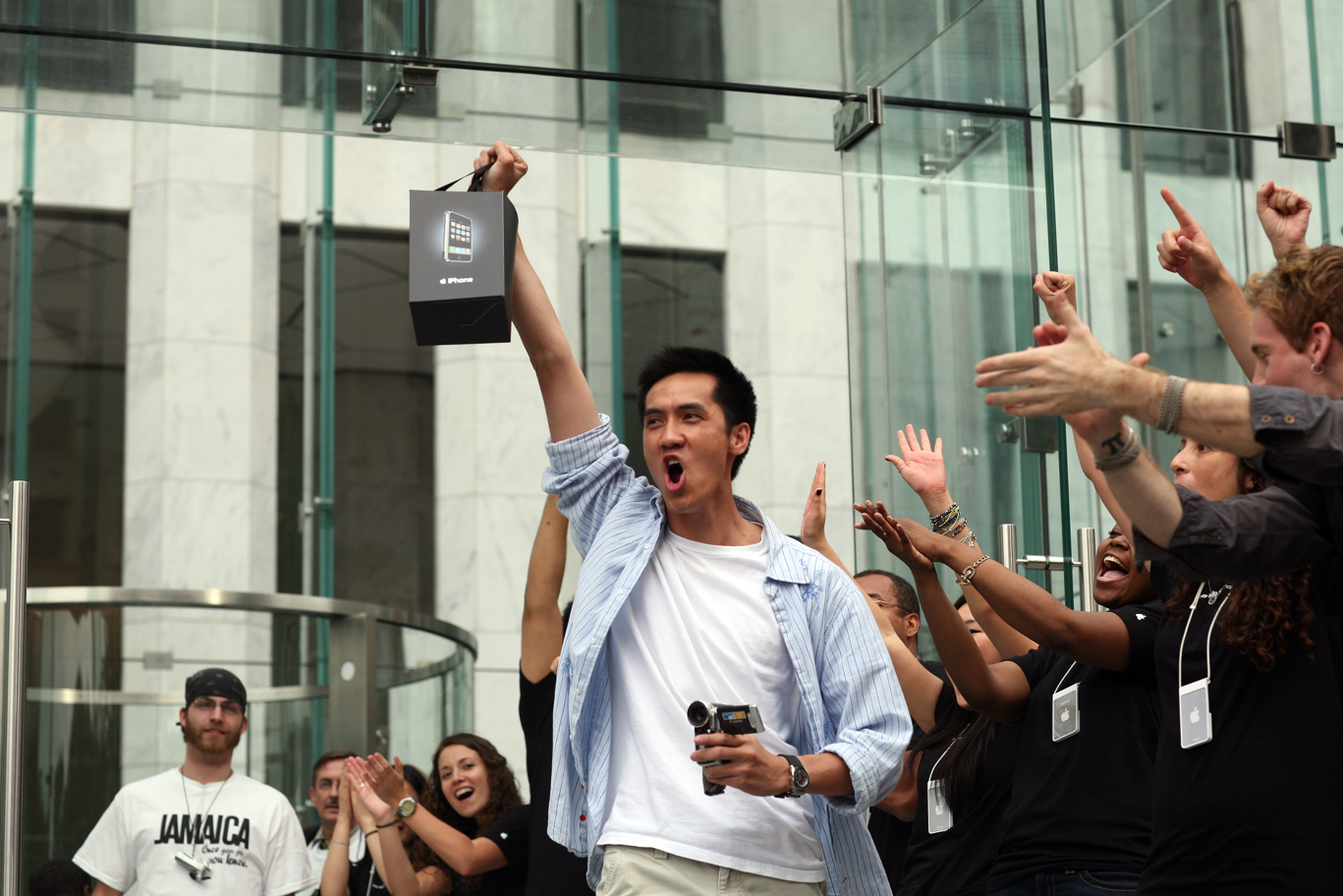
Apple iPhones have become a popular option with tech consumers.

2010 – The iPad

Taking that touch-screen to a new level, the iPad brought computing to a new level of portability.

Empowered by that same App Store which drove the iPhone, the iPad replaced laptops for some, and became a new way to consume content across millions of homes.

It's even used by pilots replacing thick and heavy books in the cockpit.
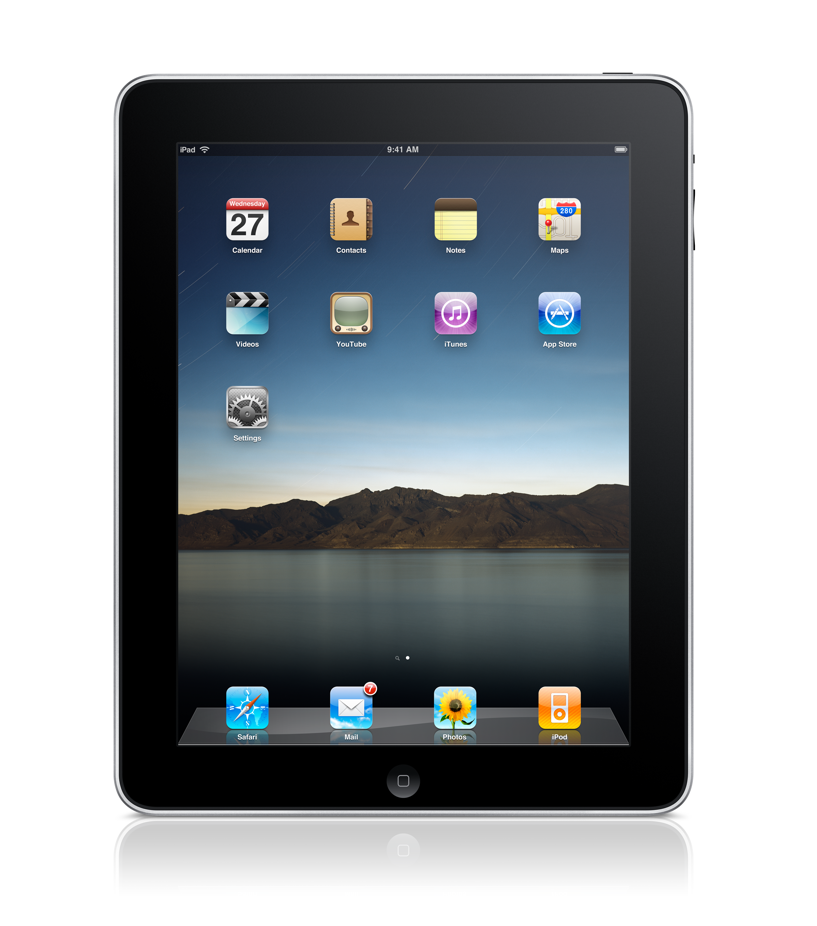
The iPad brought computing to a new level of portability.

2011 – The end of a legacy

Steve Jobs battled a rare form of pancreatic cancer for some time, before losing that battle in 2011.

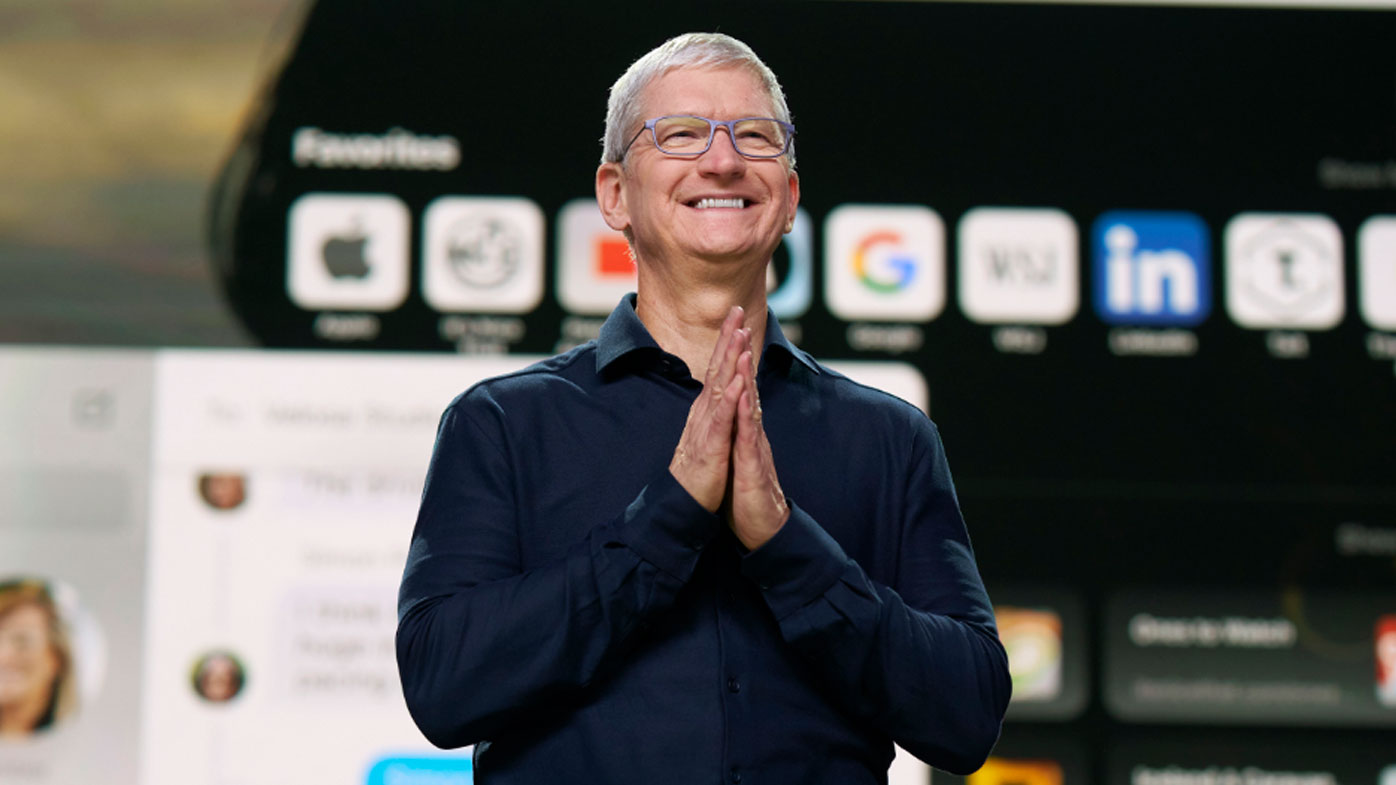
He chose Tim Cook to take over as CEO, and Cook continues in that role today.

At the heart of almost every decision that's made at Apple has Steve Job's legacy at its core, something the company and its leadership is never ashamed to admit.

READ MORE: Apple Watch can now detect major stroke, heart attack factor
2014 – Tap your phone to pay

Apple Pay was a slow launch for the company, battling banks here in Australia and stubborn retailers in the US.

But today, it's inspired a simple new generation of payments.

Now available on iPhone and Apple Watch wherever you go, and even on Macs and iPads for online payments, it's a secure new way to process payments.
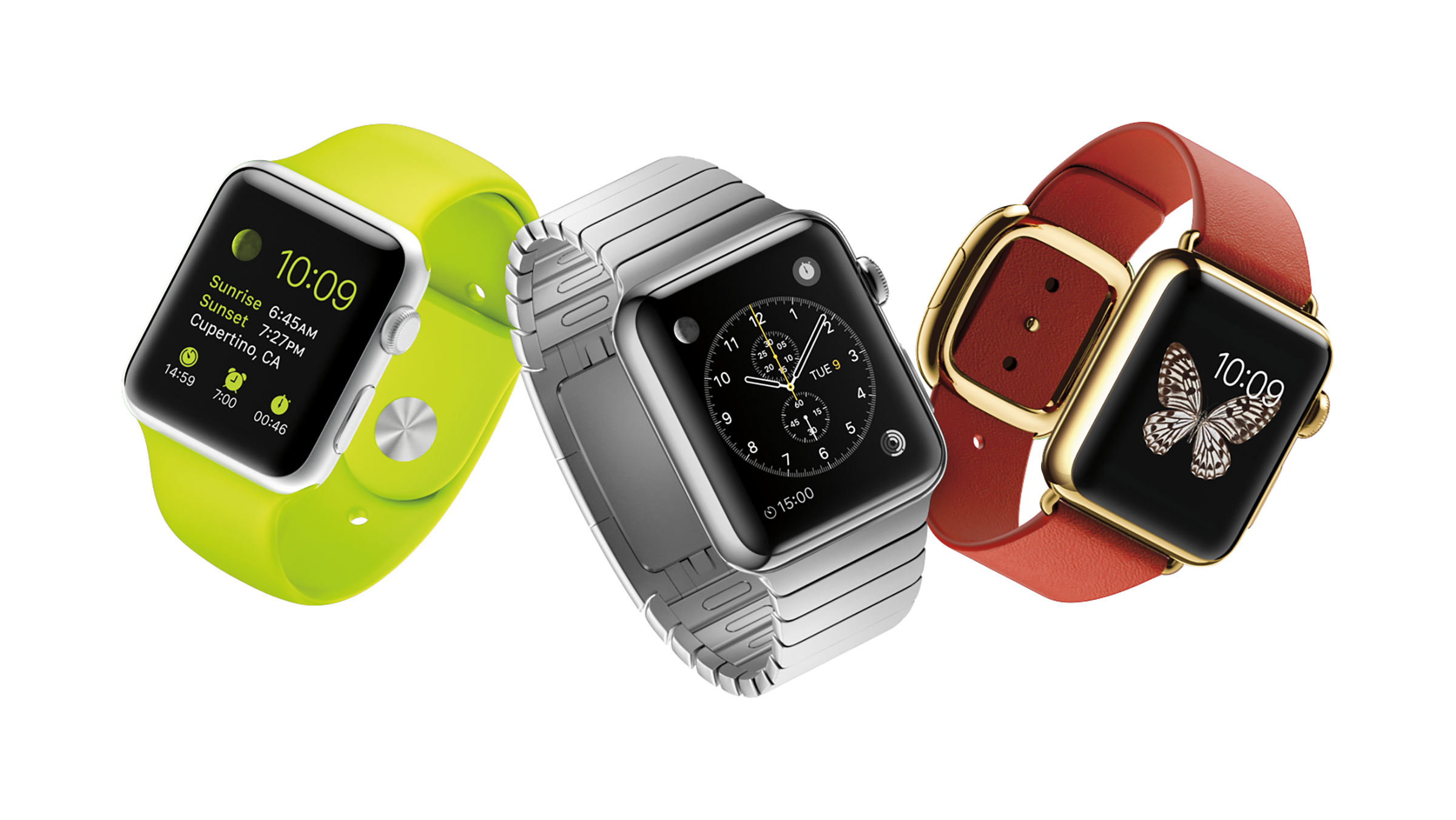
The Apple Watch was introduced in 2014.

It was also 2014 when the Apple Watch was introduced, bringing a new level of fitness tracking and notification access to users.

That device today does so much more, from SOS emergency alerts to high-level health monitoring, including a medically certified ECG.

2016 – Cutting the cord

Bluetooth headphones are the norm today, but 10 years ago, Apple's first version drew attention for its design and ease of connectivity.

Today, they have some of the best noise cancellation on the market and can be used to perform live translations and even act as Hearing-Aids.

2020 – Apple Silicon?

Many wouldn't know what Apple Silicon is – but most of us know what Intel is.

In 2020, Apple began to phase out the use of Intel processors in their computers in favour of chips they designed and manufactured themselves.

Today, that gives them some of the most efficient and high-performance computers on the market, desktop and portable.

2024 – Apple Vision Pro

A device you wear on your head, blocking out the world around you to see a whole new world of computing.

Apple calls it spatial computing.

I've described it to Apple's CEO as the most remarkable new technology I've ever seen, but I don't know what we need it for.

Still in search of a use, it's likely this is a precursor to Apple's likely move into wearable computing, such as sunglasses, as several other companies have done, but only time will tell.

READ MORE: Plan to power every Australian's Apple device with green energy

Apple Vision Pro

2026 and Beyond

Imagine earning $100 billion annually without selling a product? That's the revenue Apple makes from Services.

Services refer to subscriptions to Apple Music, Apple TV, and sales on the App Store.

This is also the year Apple went low cost with their Mac computers for the first time – the MacBook Neo is a remarkable product at a low $899 price that is already proving successful for Apple.

At the same time, Apple appears to be lagging behind in the "AI Revolution".

Their Apple Intelligence offers a secure way to perform basic tasks but does not compete with the Google, OpenAI, or Microsoft offerings.

Whether that's a good or bad thing for their long-term business, we'll not know for a while.

What we do know is that as a $3.5 trillion dollar business, they are here for the long term and maintain a strong, even enviable level of desirability in the market across all their products.

NEVER MISS A STORY: Get your breaking news and exclusive stories first by following us across all platforms.
Don’t be fooled by claims of new road rules today

Australians will be forgiven for wondering what's happening with the age pension, road rules and superannuation today after a fresh bout of misinformation was spread by what appear to be AI-based websites.

Multiple websites claimed an age pension "update" was scheduled for April 1.

Other sites claimed new rules for superannuation and drivers aged over 65 would also be coming into effect today.

READ MORE: How to Choose 9News as your preferred source in Google's Top Stories

Screenshots of what appear to be AI-based websites making false claims about changes coming on April 1.

The claims were often accompanied by AI-generated images and misleading articles that appeared to be written with the use of AI.

And this isn't the first time misinformation spread on AI-based websites have fooled Australians.

Health insurance premiums increased today, and many Australian households will be already feeling the full effects of the RBA's latest rate hike this month.

But nothing will happen to the age pension, which was last adjusted on March 20.

The government hiked the age pension last month to reflect cost-of-living pressures.

READ MORE: How can Aussie travellers get to Europe now major Middle East airports are shut?

Cost of living is Aussies' main concern

It also increased deeming rates on March 20, which affected age pension recipients.

The lower deeming rate rose from 0.75 per cent to 1.25 per cent for financial assets under $64,200 for singles and $106,200 for couples combined.

The upper rate rose from 2.75 per cent to 3.25 per cent for assets over those amounts.

Increased deeming rates may result in a lower age pension for some Australians, as they will affect income tests.

But all of these changes have already come into effect, and no additional updates are planned for April 1.

There are also no new road or licensing rules coming into effect today for drivers over the age of 65.

READ MORE: The 39km-wide stretch of water threatening to throw the global economy into turmoil

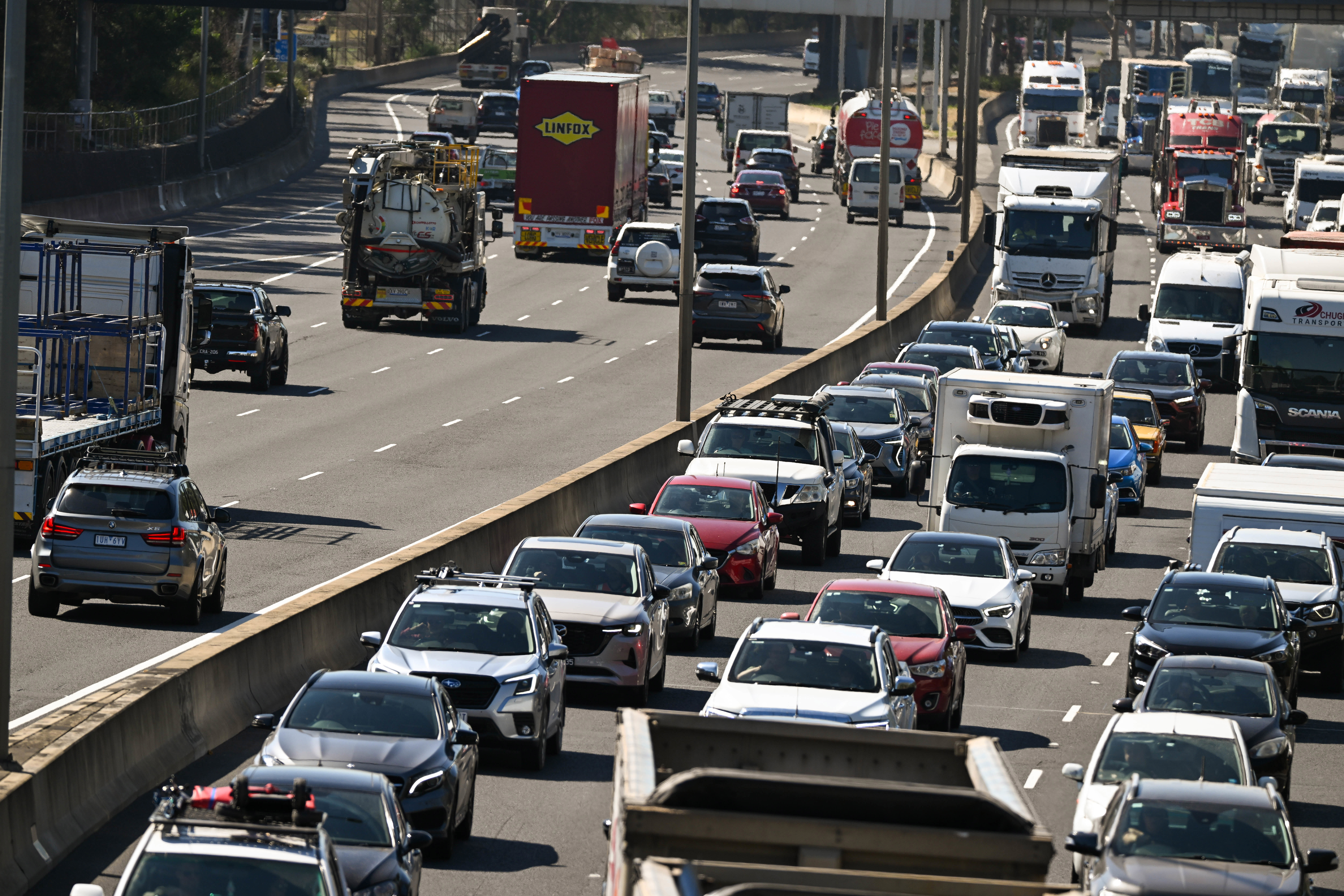
Cars and trucks, inbound traffic on the Monash freeway M1. 7th March 2025,

Changes are on the horizon for superannuation with the introduction of Payday Super, but that won't come into effect until July 1.

Last year, some Aussies were tricked by similar AI-based websites that spread wild claims about road rules that didn't exist.

For example, one of the rumours spread was that a new law would ban drivers over the age of 60 from being on the road between the hours of 10pm and 5am.

Sites generating fake infringements, fine amounts and demerit point penalties gained traction on social media, sparking panic among some drivers.

Transport authorities eventually issued statements to disprove the claims.

NEVER MISS A STORY: Get your breaking news and exclusive stories first by following us across all platforms.
Find inside three-billion-year-old rocks could be sign of life on Mars

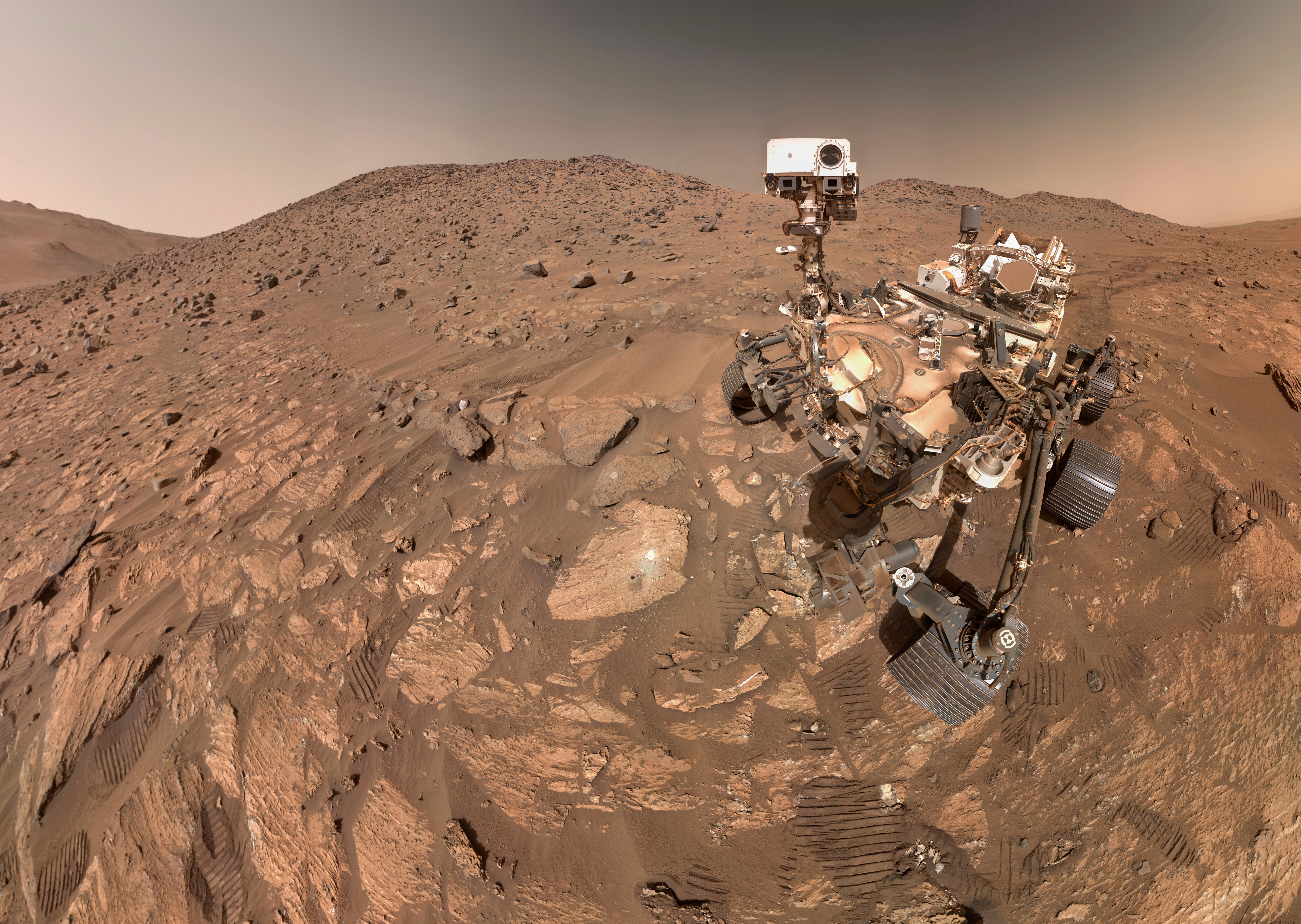
A tiny find inside some three-billion-year-old rocks by NASA's Perseverance rover is adding to a growing body of evidence that life once existed on Mars.

The Perseverance rover made its way through Neretva Vallis – an ancient river channel that once carried water into a lake in a Martian crater – in 2024.

The rockbed is believed to be more than three billion years old.

MONEY: RBA to end credit card surcharges as cash usage dwindles

Using laser, infrared and X-ray technologies, Perseverance examined 126 sedimentary rocks and eight rock surfaces on Neretva Vallis.

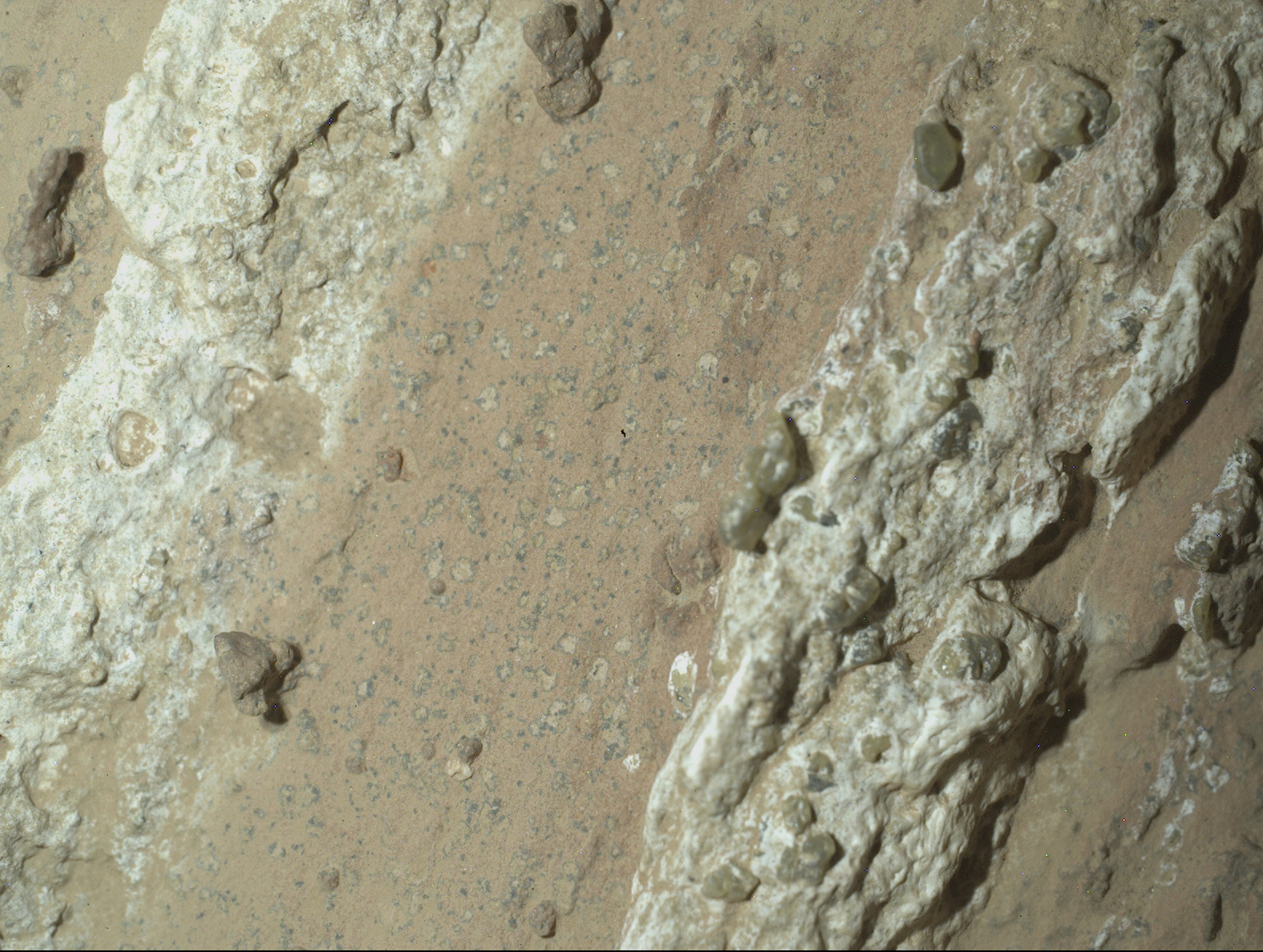
A team of researchers led by Henry Manelski from Purdue University in the United States say among the discoveries was a large number of nickel-rich rocks with a similar chemical composition and shape of the iron sulfide arrangements to pyrite – sedimentary rocks found on Earth.

This is significant because previous research has found that pyrite is primarily formed by chemical reactions from living microbes.

Even if the nickel-rich rocks were not produced by microbial lifeforms, it is another point of evidence suggesting that Mars was once conducive to life.

Nickel is an essential component of enzymes in many ancient lifeforms, including archaea and bacterial species.

The find adds to a growing body of evidence that life could have once existed on the Martian planet.

It's not the first discovery that Perseverance has made on the topic.

In 2024, the rover discovered rocky "leopard spots" in the Jezero crater, indicative of ancient microbial chemical reactions.

READ MORE: Why thousands of Aussies plan to cancel their health insurance tomorrow

NASA's acting administrator Sean Duffy called that find "the closest we have ever come to discovering life on Mars".

"The identification of a potential biosignature on the Red Planet is a groundbreaking discovery, and one that will advance our understanding of Mars," he said at the time.

The new findings were published in the journal Nature Communications today.

NEVER MISS A STORY: Get your breaking news and exclusive stories first by following us across all platforms.

‘Just a rip-off’: Servo forced to sell $4 diesel thanks to typo

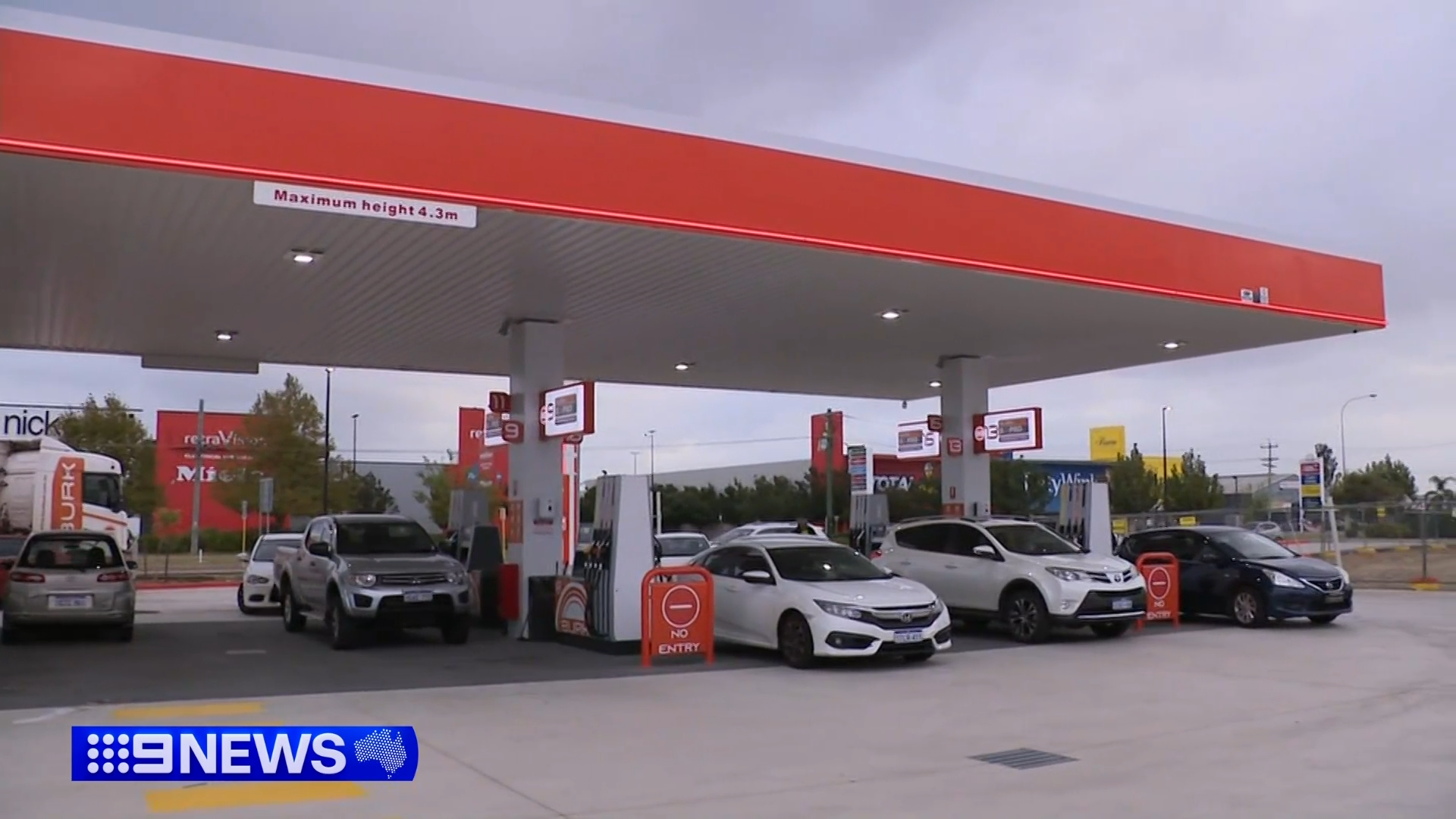
A petrol station in Perth's south-east has been forced to sell Western Australia's most expensive diesel because of a mistake that could not be rectified.

Independent fuel retailer Burk is now demanding an immediate change to FuelWatch, the state's fuel-monitoring platform

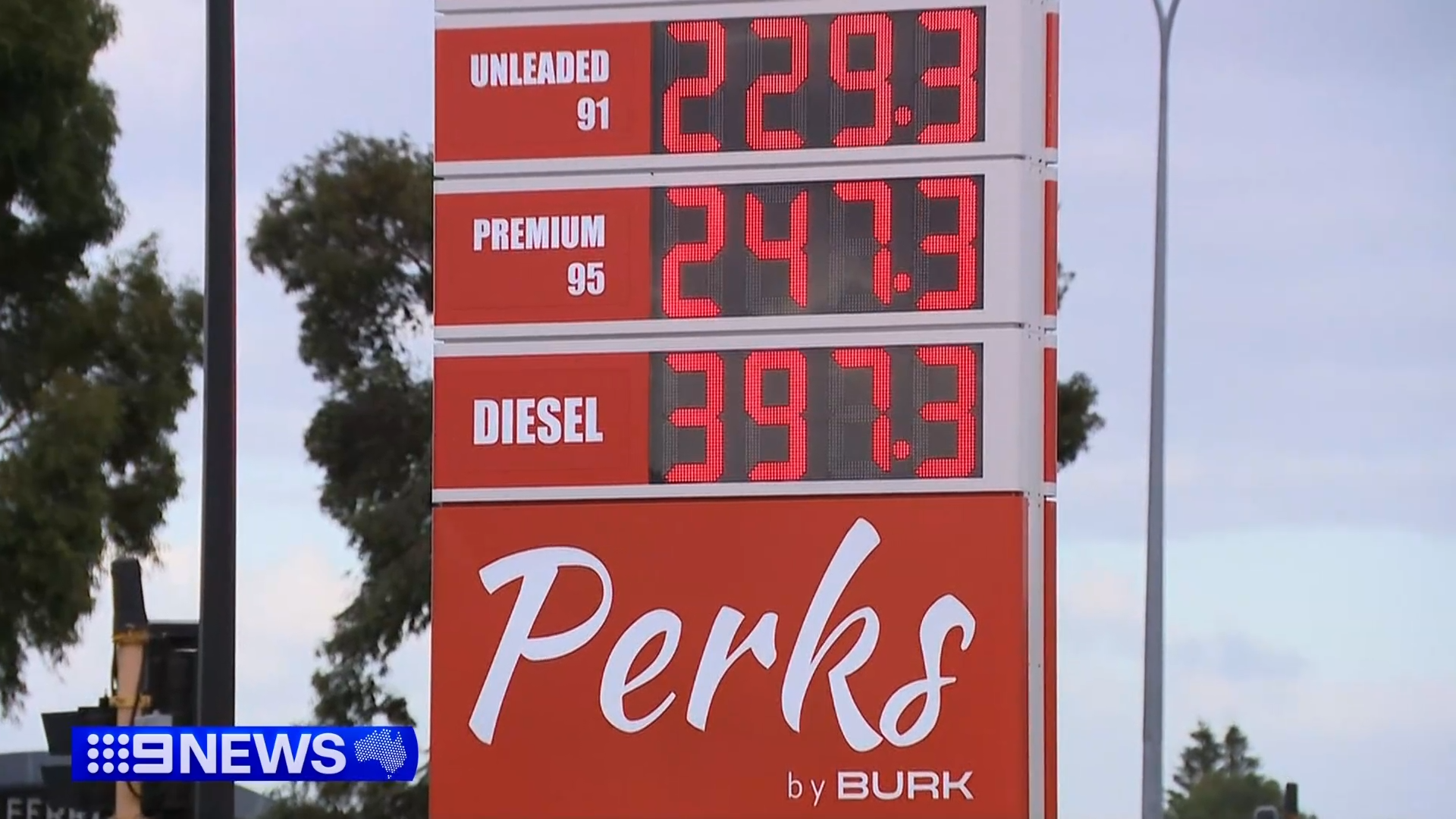
The retailer in Cannington was forced to sell diesel for almost $4 a litre today after accidentally entering the new price with a costly error.

READ MORE: Father and son embrace in hospital following Sydney daylight stabbing

Burk Cannington

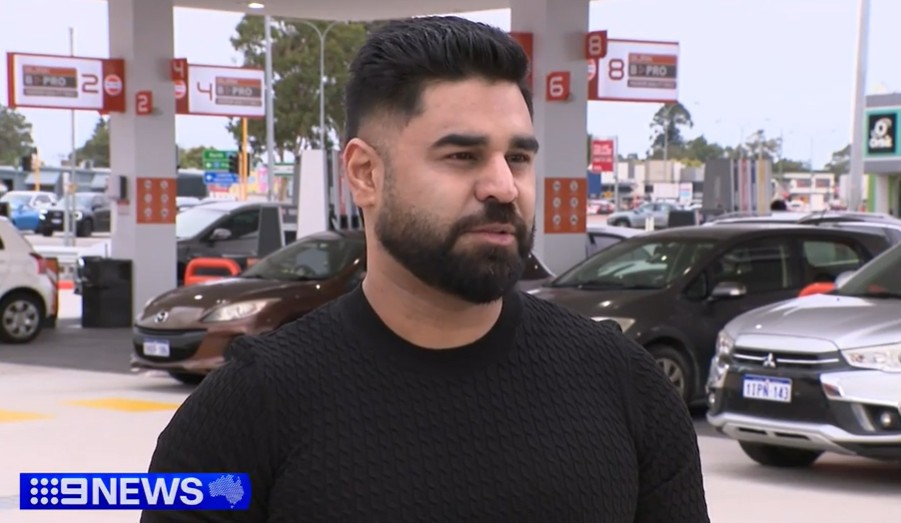
"We won't sell it at that, it's just a rip-off," Burk managing director Umar Farooq told 9News.

The service station tried to sell the cheapest diesel in the state but instead, a typo made it the most expensive, at $3.97 per litre.

"We tried to rectify it with FuelWatch, multiple calls, multiple emails but we were just told, 'You can't sell it at the price other than what's been reported'," Farooq said.

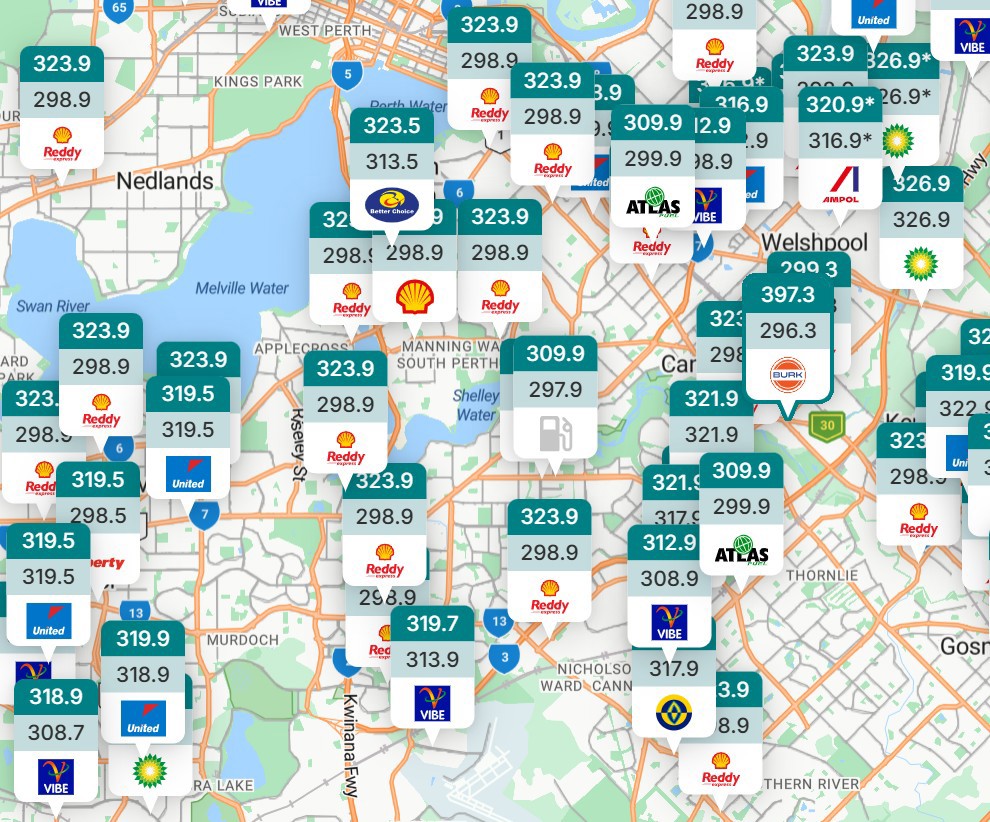
Petrol companies must report prices to FuelWatch by 2pm every day, something which is required by law to be locked in for 24 hours.

READ MORE: As fuel excise set to be halved, when will fuel prices in Australia go down?

Burk Managing Director Umar Farooq

"That means it's almost like a reverse auction," Consumer Protection Commissioner Trish Blake told 9News.

"They have to tell us what their best price is without knowing what their competitors are doing."

But Burk is now pleading for common sense when it comes to genuine errors.

Burk Cannington

"This is a very unfortunate case," Deputy Premier Rita Saffioti said.

"Happy to take it up with the relevant ministers."

In the meantime, the independent retailer found its own workaround by offering a discount on diesel to customers: simply smile for $1.04 per litre off the advertised price.

FuelWatch website

Across 17 stations, it's the first mistake for Burk in six years.

As for the employee responsible, Farooq said, "she's going to be really fine".

"She's going to say with us for very long I reckon," he added.

NEVER MISS A STORY: Get your breaking news and exclusive stories first by following us across all platforms.
Police tracked car’s repeated trips before fatal shootout that killed Dezi Freeman

Police were led to double police killer Dezi Freeman by tracking a car which made repeated trips between Porepunkah and the Thologolong property where the fugitive was killed in a tense shootout, 9News has been told.

9News understands police received a tip-off to an individual close to Dezi Freeman who repeatedly made the near-200km journey from Porepunkah to the town near the Victoria-NSW border.

Detectives used traffic cameras to track the vehicle completing the trip several times, which led them to Freeman's hideout.

READ MORE: Dezi Freeman's final moments and the dramatic police operation that brought him down

Thologolong property where Dezi Freeman was killed.

While the search for Freeman himself has come to a close, police are now turning their attention to his associates.

Anyone who may have helped harbour Freeman, or transported him from Porepunkah to Thologolong, could face up to 20 years in prison.

"We're going to track backwards, work backwards from yesterday and find out to work out who did assist him and those people, when identified, will be held to account," Victoria Police Chief Commissioner Mike Bush said.

One neighbour said she does not believe the owner of the Thologolong property would have been connected to Freeman.

He is not suspected of any involvement and nine.com.au does not suggest he is involved in any way.

"I don't think so. He's a quiet guy, he makes fertiliser with fish, that what he likes to do, no I don't think so," the neighbour said of the owner.

"I think I met him once, he's a good friend of my husband."

READ MORE: The timeline of events that led to cop-killer Dezi Freeman's death

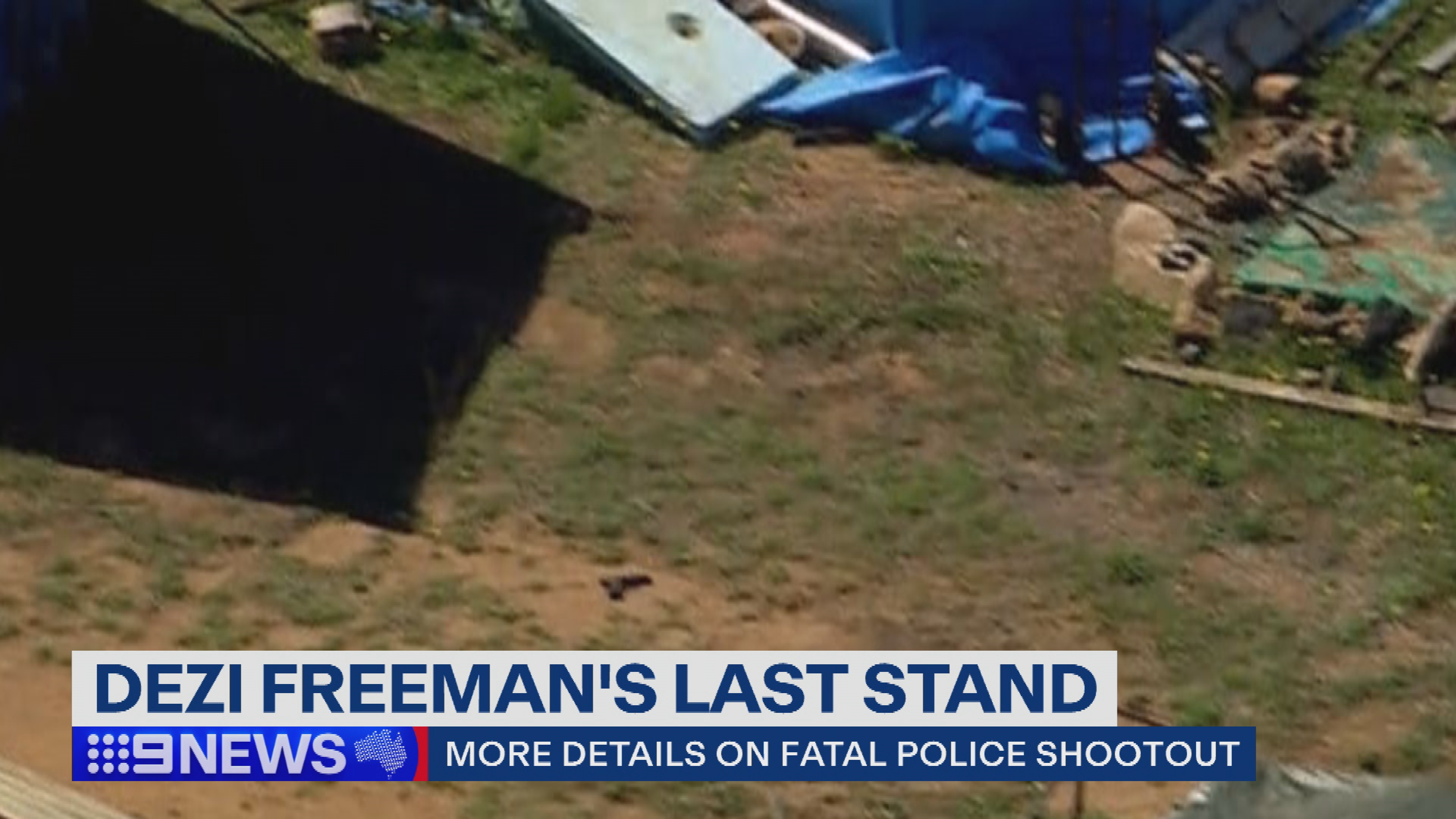
A shot of the gun, understood to be stolen from one of the officers he killed in Porepunkah last year, at the property where Freeman was shot dead yesterday.

The owner has been living in eastern Tasmania since December and is battling a serious illness, The Age reports.

He has called a police station to make himself available whenever Victorian officers are ready to interview him, an anonymous friend told The Age.

The Age also reports the gate to the property had been left unlocked since January to allow the fire department access.

Police are expected to remain on scene for several days, combing across the property for traces of other people who may have been there recently.

Freemans body has been taken to Melbourne to be examined by the state coroner, who will hold independent review into his death.

Prime Minister Anthony Albanese today said the sovereign citizen movement has been a major concern for Australia's intelligence services.

"The mentality of the sovereign citizens, the head of ASIO has made very clear, warning about what this ideology represents," Albanese said.

READ MORE: Vaping likely causes cancer, landmark Australian study finds

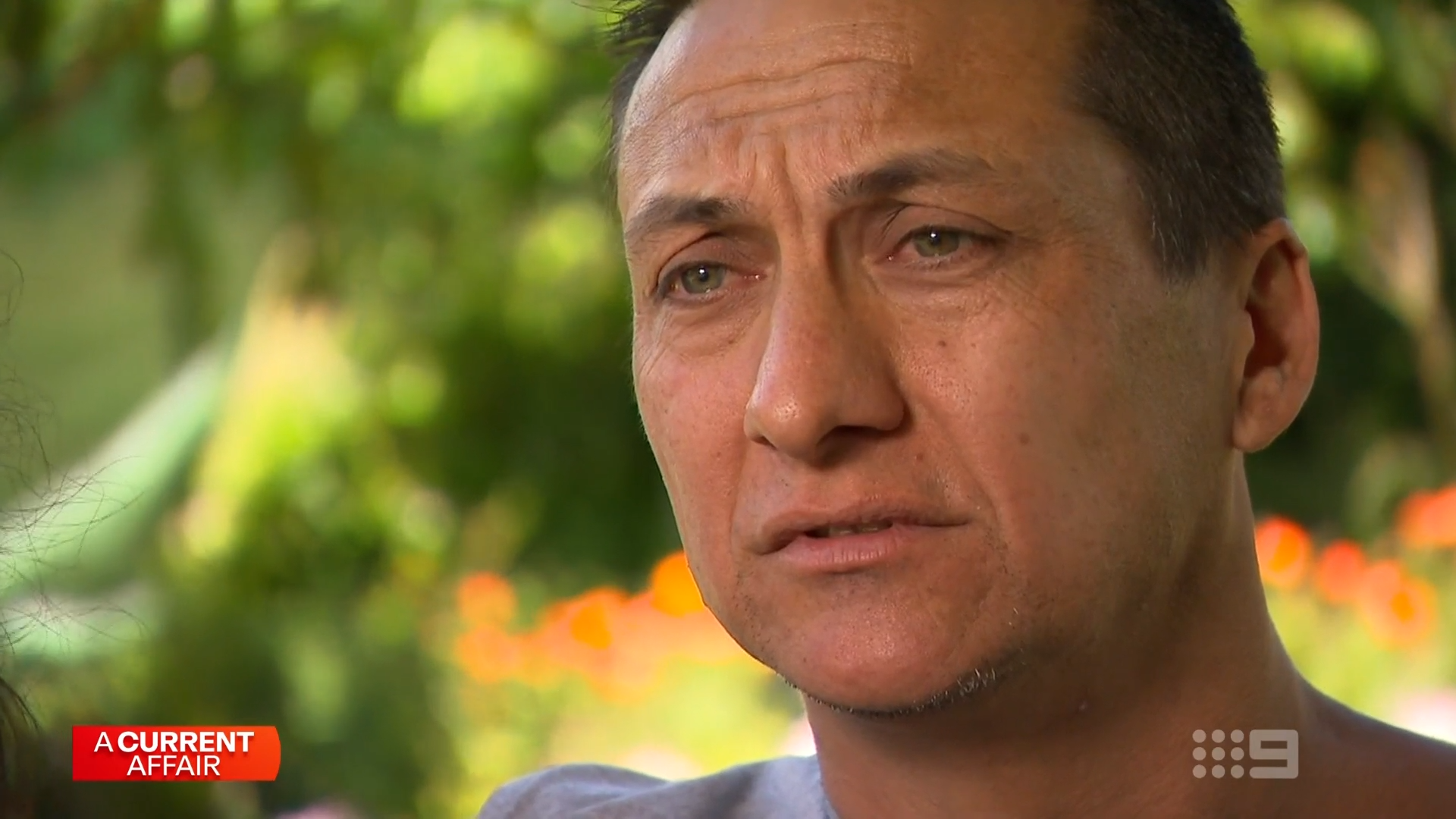
Dezi Freeman appeared on the show in 2018 alongside his wife Marli and two young sons over claims they were being harassed and intimidated by their neighbours.

"They don't respect any processes, they regard the police and government and our entire society as not being legitimate."

Freeman's former friend Ray Kompe, who distanced himself from the 56-year-old father because of his extremist views, said there a small portion of the local Porepunkah community is mourning Freeman.

"I've got good friends and some of them had sympathy for him and of course there's other ones who didn't, Kompe said.

"With his sovereign citizen push, I dare say he felt an affinity for them and they felt an affinity for him."

Kompe claims his relationship with Freeman deteriorated when the self-described sovereign citizen started showing him graphic combat videos.

"I said 'listen, I know that exists but why watch it?' And he said 'because it's the reality of life'," Kompe said.

"That's why I just decided it might be best if we terminate our friendship."

NEVER MISS A STORY: Get your breaking news and exclusive stories first by following us across all platforms.
It takes two to TACO: Why Trump can’t end war with Iran by himself

In the past few weeks, just about every positive swing on the markets has stemmed from Donald Trump flagging a possible end to his war with Iran.

But every time the US president suggested there were peace talks going on with Iran's leaders, Tehran has contradicted him.

As market analysts are now beginning to note, it takes two to TACO.

READ MORE: Donald Trump to put his name on all US paper money

Donald Trump has repeatedly floated the idea of ending the war in Iran.

On tariffs, government shutdowns and threats against Greenland, Canada or Panama, Trump has a history of backing down in the face of strong opposition or an economic slump.

It is why Wall Street has coined the phrase Trump Always Chickens Out (TACO).

But it's not so simple dealing with Iran.

Early today the president said the US had been in communications with Iran's parliamentary speaker Mohammad Baghar Ghalibaf.

"The United States of America is in serious discussions with A NEW, AND MORE REASONABLE, REGIME to end our military operations in Iran," Trump wrote on Truth Social.

READ MORE: Trump on shaky ground after Democrats win Mar-a-Lago seat

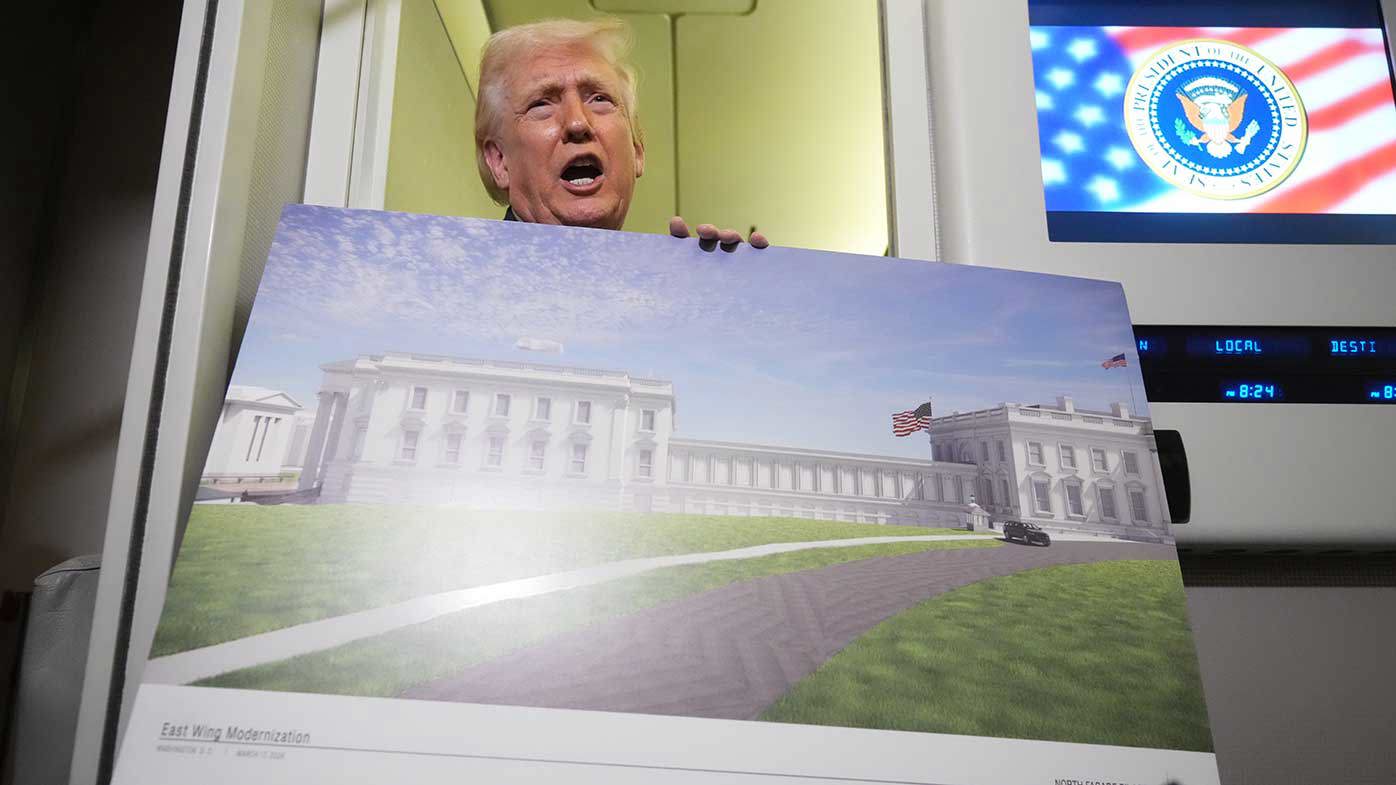
Donald Trump shows off plans for his new White House ballroom while on Air Force One.

But Ghalibaf swiftly knocked back the claims.

"The enemy promotes its desires as news while threatening our nation at same time. Big Mistake," he said.

"God willing, the people of Iran, under the leadership of the Supreme Leader, will make the enemy regret the aggression and reclaim their rights."

Ghalibaf suggested investors assume the opposite of what Trump has said is the truth.

"Basically, it's a reverse indicator," he said.

"Do the opposite: If they pump it, short it. If they dump it, go long."

Wall Street didn't take Ghalibaf's advice overnight. After Trump's comments, the Dow Jones jumped.

READ MORE: $800m in trades before Trump announcement 'is treason'

Iran has shown no sign of backing down in its attacks against the US and its allies.

In anticipation of a major TACO move from the president, Deutsche Bank has constructed a "stress index" to predict when investors should get in.

"If the index rises, the probability of a strategic adjustment by the government increases," Deutsche Bank's Maximilian Uleer said.

"If all four 'pain points' deteriorate simultaneously, the motivation for an adjustment becomes very strong."

But even if Trump wants out of the war with Iran, it won't immediately mean peace in the region.

This morning an oil tanker was struck off the coast of the United Arab Emirates, presumably by the Iranian military.

READ MORE: Trump compares Iran attack to Pearl Harbor in front of Japan's PM

Stranded tankers sit anchored in Muscat, Oman, unable to pass through the Strait of Hormuz.

Meanwhile, an Iranian parliamentary panel has approved a move to establish an effective toll booth in the Strait of Hormuz.

If codified in Iranian law, all tankers passing through the strait will need to pay a substantial fee.

About 20 per cent of the world's oil passes through the narrow body of water in the Persian Gulf.

NEVER MISS A STORY: Get your breaking news and exclusive stories first by following us across all platforms.
Viral arrest immortalised in National Film and Sound Archive

Ladies and gentlemen, this is iconic Australiana, manifest.

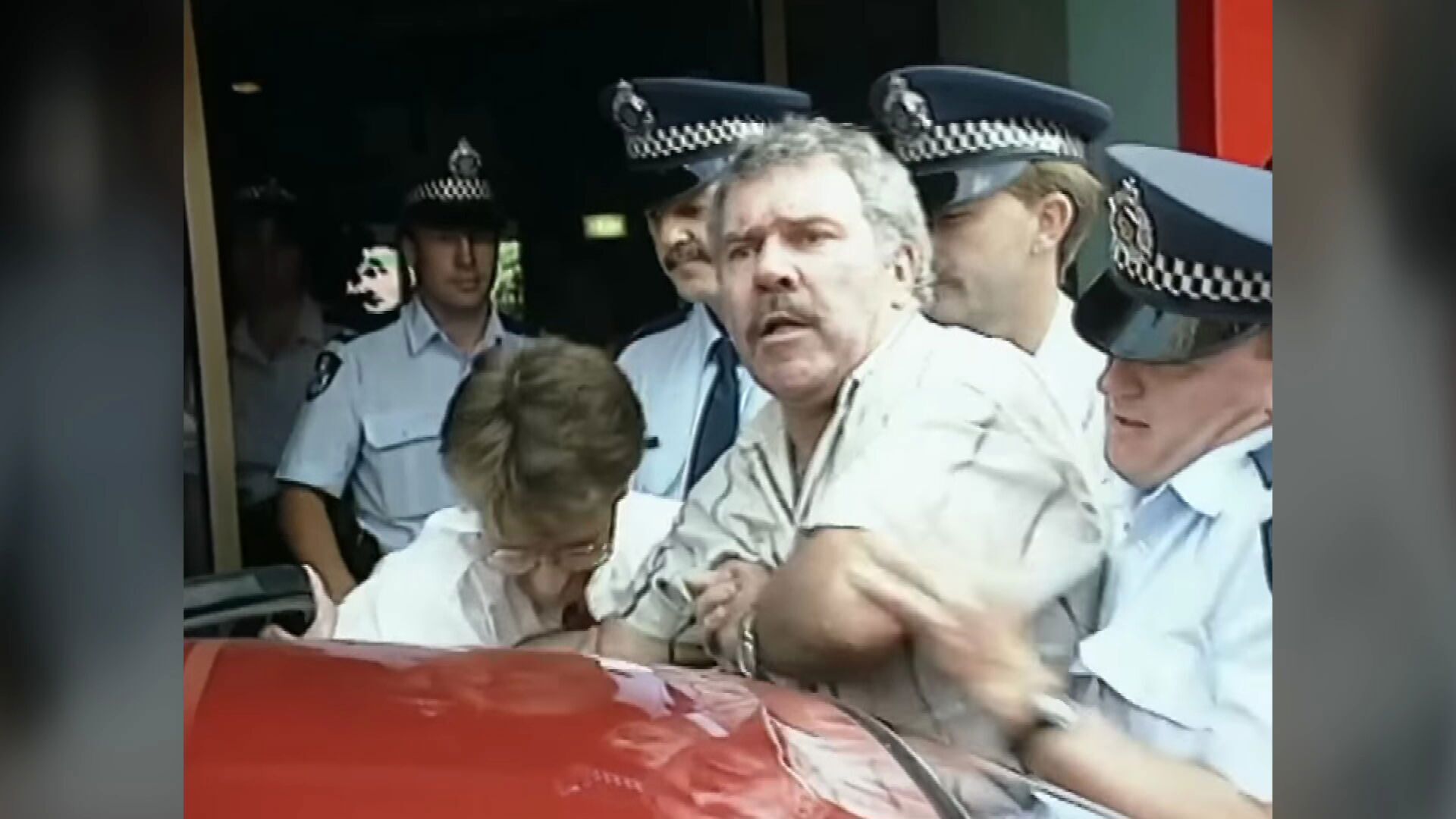
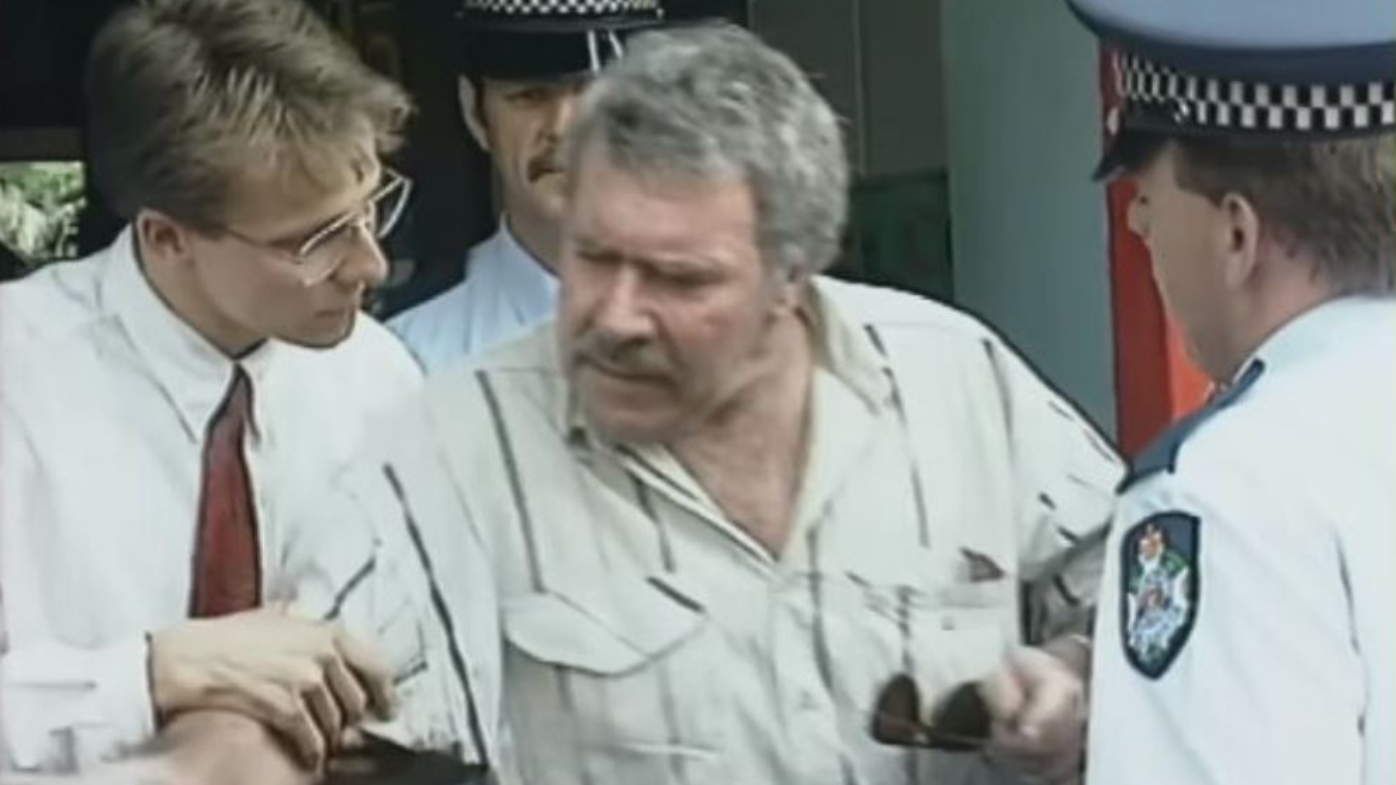
A 1991 arrest outside a restaurant in Brisbane's Chinatown, which nearly 20 years later became one of the world's first viral video memes, has officially become one of the Sounds of Australia.

On the afternoon of August 11 that year, reporters received a tip police were about to make a major arrest at the China Sea restaurant in Fortitude Valley.

LIVE UPDATES: Trump threatens to wipe out critical island, UN calls emergency meeting

As originally reported by Seven, police expected to find one of Australia's most wanted men dining there.

What they found instead was Jack Karlson.

It's never quite been clear why Karlson, a bit-part actor who had done time behind bars, was subjected to a police arrest outside the restaurant.

FUEL CRISIS: When will Australia's petrol prices go down after fuel excise halved?

Succulent Chinese Meal man arrested Jack Karlson

But his outraged response ultimately made him a legend.

"I'm under what?" he asked the officers, before struggling against their attempts to cuff him and force him into a car.

In a ringing baritone, Karlson declared to the crowd, "This… is… democracy manifest".

MONEY: RBA to end credit card surcharges as cash usage dwindles

Stoll Watt and Jack Karlson Succulent Chinese Meal man

He also taunted the arresting officers, remarking to one: "Ah yes – I see you know your judo well".

And it's also hard to forget his furious bellow: "Take your hand off my penis!"

But perhaps what sealed Karlson's immortality came when he asked – perhaps rhetorically, "What is the charge? Eating a meal? A succulent Chinese meal?"

READ MORE: Why thousands of Aussies plan to cancel their health insurance tomorrow

Missy Higgins

The original footage was uploaded to the then-nascent video sharing site YouTube by Nine presentation co-ordinator and tape operator Russell Furman found, who found the tapes in 2009.

Seen and shared on the same site by US content creator Ray William Johnson in 2013, the video exploded, being viewed millions of times all over the world.

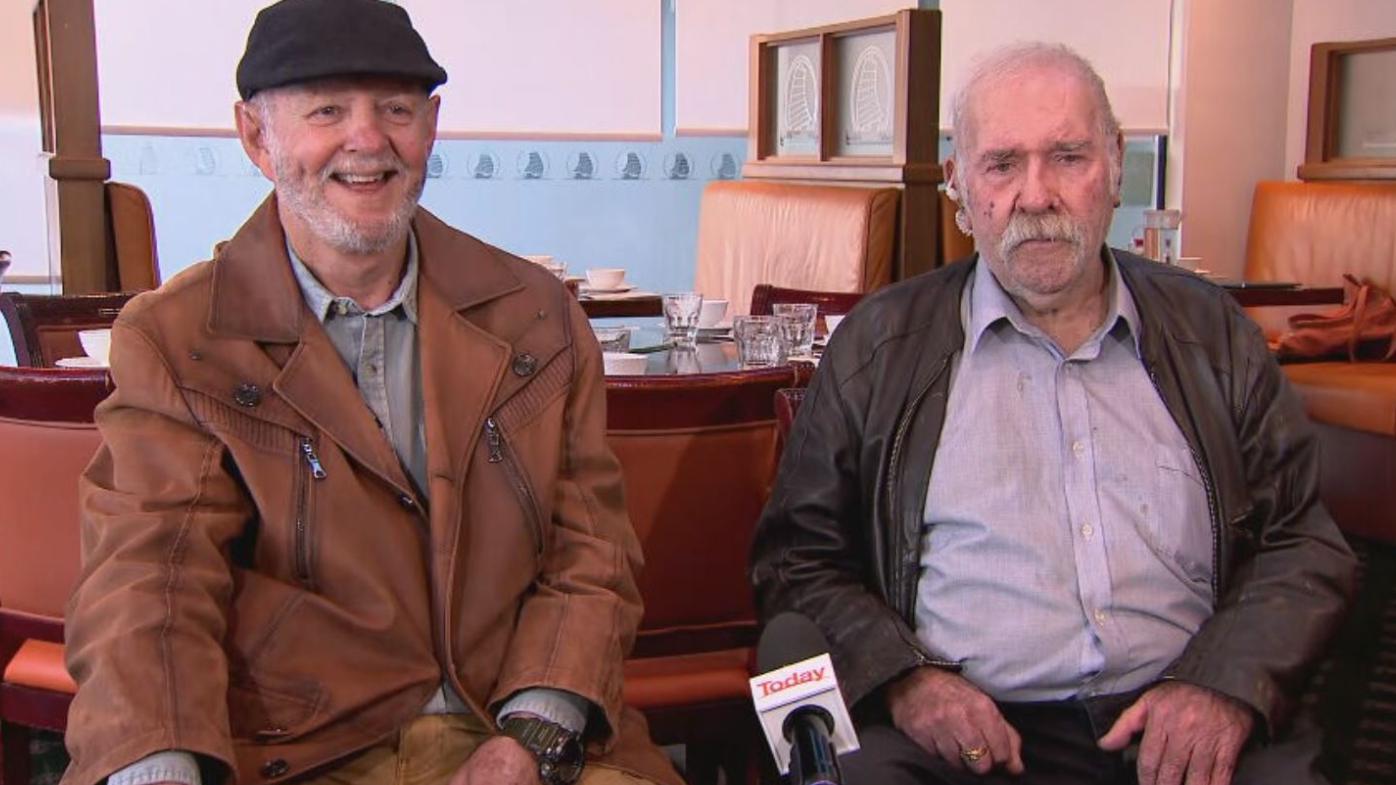
Karlson, who died in 2024, also returned to the limelight, conducting multiple interviews on the subject, and admitting he wasn't sure what prompted the famous outburst.

READ MORE: Jackie 'O' files $82 million lawsuit after radio contract torn up

Now, the original Seven news broadcast has been named one of nine Sounds of Australia for 2026 by the National Film and Sound Archive.

Others included Scar by Missy Higgins, Rosie Batty's Australian of the Year acceptance speech, the Reading Writing Hotline jingle, and the sound of a PB/5 pedestrian crossing button.

You can find all of them – and the stories behind them – at the NFSA website.

NEVER MISS A STORY: Get your breaking news and exclusive stories first by following us across all platforms.
Three cars destroyed after suspected arson attack at Sydney Tesla dealership

Police are combing through CCTV as they work to determine who set three Teslas alight at a dealership in Sydney's west, damaging the rest of the showroom.

The fire was originally thought to have started due to a battery explosion, but it was quickly ruled an arson attack after jerrycan lids were discovered near the Parramatta dealership.

Three cars were destroyed, and a showroom was badly damaged, but there were no injuries.

LIVE UPDATES: Trump threatens to wipe out critical island, UN calls emergency meeting

petrol has been used to torch three electric cars in Parramatta in a suspected arson attackpetrol has been used to torch three electric cars in Parramatta in a suspected arson attack

"We dispatched a pretty heavy weight of attack on this fire, it did extend into the ceiling space, but we were able to quickly contain the fire to the area of origin," Aaron Ross from Fire Rescue NSW said.

"It is quite obvious and just taking a quick look there that these fires have started at the front of some of these vehicles."

Authorities are in the process of reviewing CCTV footage from nearby streets as they try to determine who was responsible and the motive.

NEVER MISS A STORY: Get your breaking news and exclusive stories first by following us across all platforms.