Tag Archives: oceania

The 'forgotten people' waiting half a century to get their Australian visa

After a decade of living in Cairns, Nicole thinks of Australia as her home. 

However, it might not be until 2068 that she can officially call it that.

By that time, Nicole – who is now 29 years old – will be well into her pensioner years at 75.

Four years ago, Nicole, a South African national, made a desperate move, applying for the only visa that would allow her to stay in the country with her father and the rest of her family – the remaining relative visa. 

READ MORE: Extra school year planned for millions of Aussie children
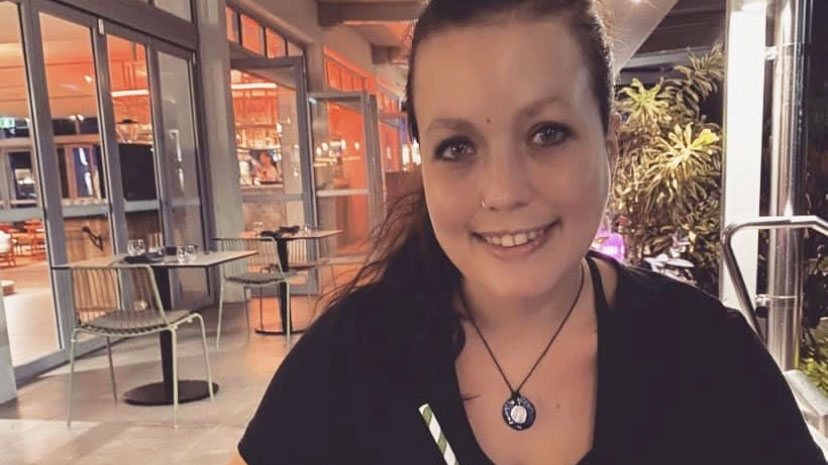
Nicole has lived in Australia since 2012 but is facing a 50-year wait for permanent residency.

The visa has the longest waiting time of any Australian visa. Current official estimates by the Department of Home Affairs put the processing time at 50 years.

Other visas with waiting times that have skyrocketed over the last decade include the parent visa (30 years), orphan visa (6.3 years) and carer visa (4.5 years).

Nicole told 9news.com.au she was met with disbelief whenever she told anyone about the enormous waiting time for her visa. 

"Every time I tell someone they don't believe me and I have to say, 'no, it's real'," she said.

Nicole's mother died when she was very young, and she spent most of her time growing up in England with her father and his side of the family.

She has no brothers or sisters, and over time, most of the relatives she was close to moved to Australia, including her father who came on a sponsored skilled visa.
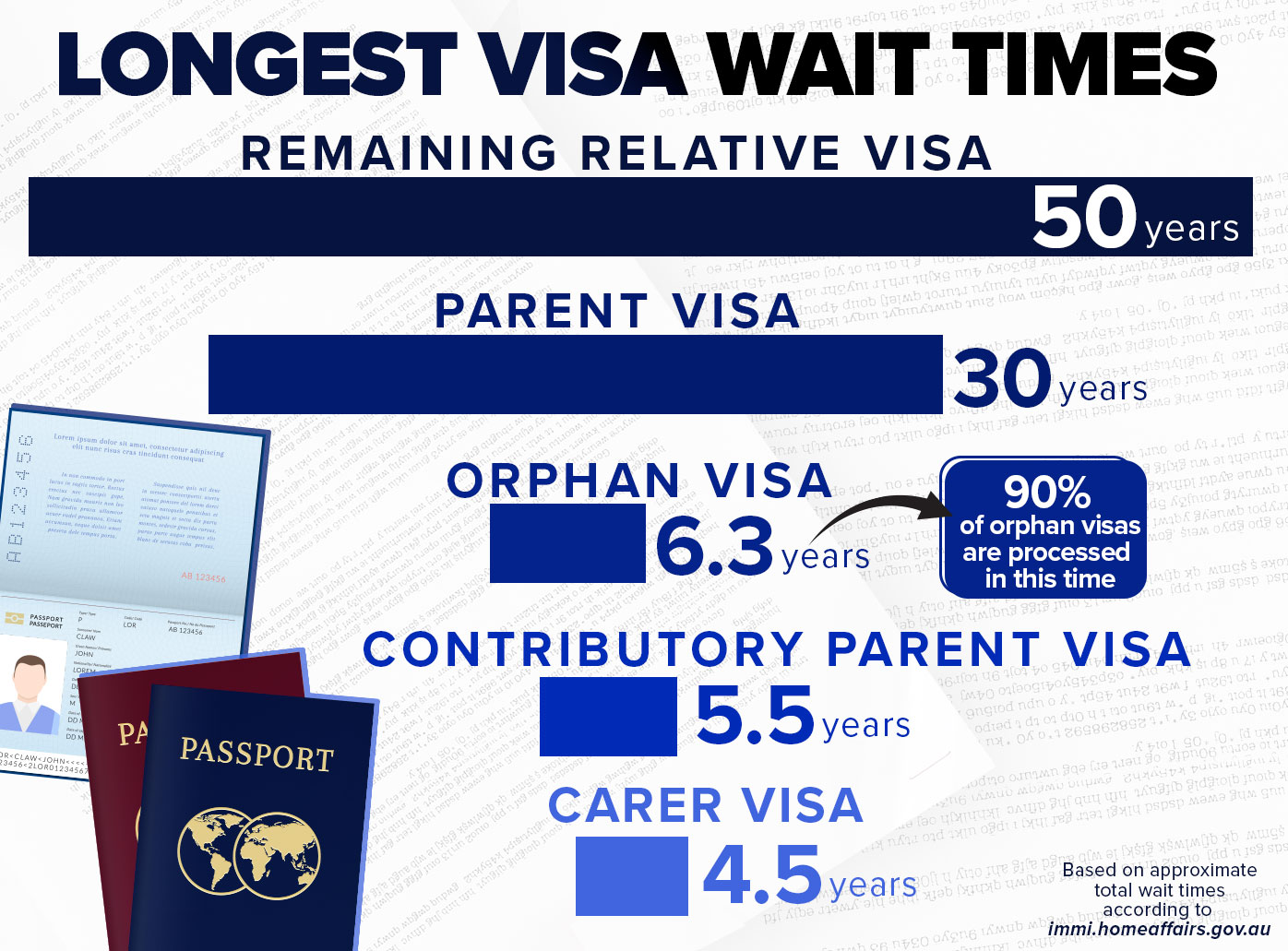
There are many visas with lengthening wait times, but the remaining relative visa takes the longest to process at approximately 50 years.

Nicole moved to Australia in 2012, first staying on a working holiday visa, then changing to a student visa when she began to study nursing.

However, at the same time, Nicole's health began to deteriorate.

"I was having a lot of health issues, I kept winding up in hospital, which was affecting my study," she said.

Unable to continue with her course, Nicole was facing deportation.

She saw a migration agent who advised her the only option of staying in the country was to apply for the remaining relative visa.

"She said she would never normally advise anybody to go on this visa, because of the wait time, but she said in your case it's better to apply for this visa and remain here legally, with your family. 

"At the time, I was very sick and my dad was looking after me.

"I didn't have another choice. My only other option was to go to a country where I didn't have anybody and I didn't know anyone and I had nowhere to live."

READ MORE: World's largest central bank makes biggest rate hike in 28 years

Nicole has remained in Australia on a bridging visa ever since, but says the uncertainty of her visa status has cast a pall over her life. 

Nicole's father, as well as her aunts, uncles and cousins, live in Australia.

"It causes a lot of anxiety, you can't really plan your future because you never know what's going to happen," she said.

Applicants for the remaining relative visa are eligible for Medicare, while working rights can vary depending on the previous visa they held.

Nicole is only able to work 40 hours a fortnight, and travel outside Australia requires a secondary bridging visa.

Her visa situation also means she must pay full student fees for TAFE and university courses.

"I was hoping to go back to study nursing this year at TAFE, but it's very expensive, about $22,000," she said.

Nicole said she hoped the new Labor federal government would address the waiting times for her type of visa.

"I want them to have some empathy. The caps and the queues are just insane. We feel like we're being punished, it's not fair," she said. 

"All my family lives here, we've proven that to the government, what else can we do?"

Labor's Immigration Minister Andrew Giles declined to comment specifically on the remaining relative visa wait times but said tackling the visa backlog left by the Coalition government was being looked at as a "matter of urgency".

"In terms of the extraordinary delays we've seen in visa processing, this is a real priority for me and an Albanese Labor government," Giles said.

"Whether it relates to humanitarian, family reunion, or skilled visas, we need to do much better."

'It's not Australian'

Mateja Rautner is a former lecturer in Migration Law at the Australian National University and the current director and principal migration agent at Migration Plus.

Rautner said she often referred to migrants who waited decades while applying for a remaining relative visa, or a parent visa, as "the forgotten people".

In the overwhelming majority of cases, the applicants had compelling reasons they needed to move to, or remain, in Australia, she said.

"When you look at Nicole, for example, she wants to be a nurse. She wants to study and settle here," Rautner said.

"She's a young lady, and she's just lingering here, waiting forever. It's just really very, unfortunate and unfair. It's not Australian."

Rautner said the problems with the waiting list stemmed from the tiny amount of places allocated to several low priority subclasses within the family visa stream.

"For the last financial year it was 500 places and this financial year it is the same," she said.

"And this is not only covering the remaining relative visa, it's all kinds of family visas. So the queue is getting longer and longer. 

"I think it was 10 years, and then suddenly it was 30 years, and now we're looking at 50 years.

"The government needs to clear this backlog and then decide what they want to do.

"If this is a legitimate pathway that should stay, then they should allocate some proper numbers to these places."

'We hold a lot of hope'

Sara Passarini is another young woman who has been waiting years to be granted a remaining relative visa.

The 20-year-old from Italy has lived in Perth for more than half of her life, since she was nine years old.
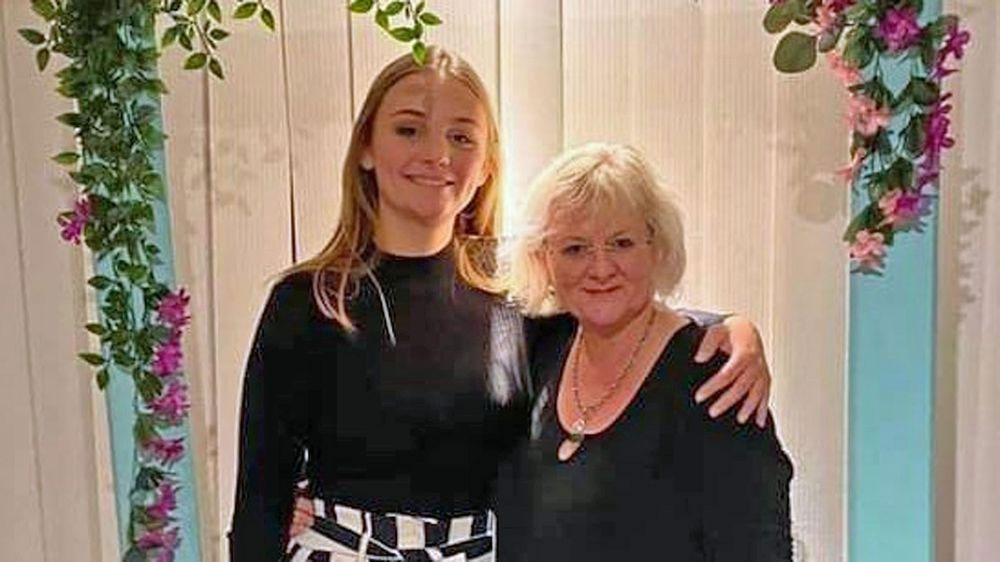
Sara Passarini came to Australia with her mum 11 years ago. They have been waiting to hear about their remaining relative visa applications for years.

Passarini first shared her story with 9news.com.au almost two years ago.

Her family underwent years of financial hardship in order to scrape together the $63,000 needed to pay for Passarini to complete her schooling in Australia while on her bridging visa.

After finishing Year 12, Passarini said she had high hopes of studying at university but had been forced to pursue an alternate career path because of the huge fees that would involve.

"At the moment I'm working 30 hours a week in retail, and I'm studying at TAFE, because that's the only place I can study," she said. 

"I'm studying to be a paralegal and hopefully I can get into law."
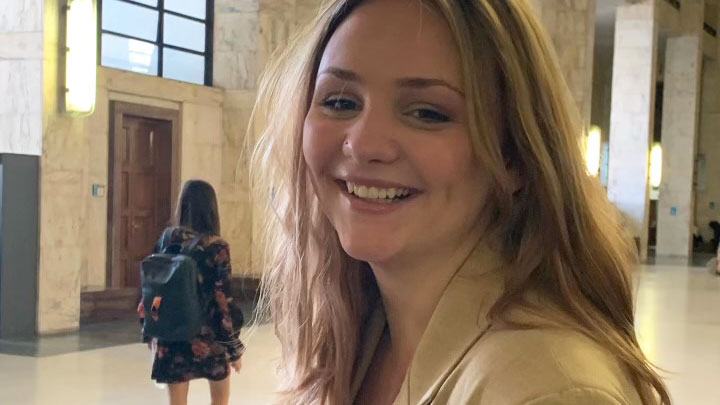
After finishing school in Australia, Sara Passarini has been unable to study at university because she cannot afford to pay the full fees.

Passarini said she planned to apply for a skilled visa, which requires four years of work experience, once she graduated. 

A petition started by Passarini in 2020 about her visa situation collected more than 18,000 signatures.

Passarini said thinking about the obstacles standing in her way used to upset her a lot, but she had tried to make peace with it.

"It is what it is. I'm very lucky and I'm very grateful to be here in this country, but I do hope this new government really does something," she said.

"We hold a lot of hope, those of us on this visa, but we'll see what they do."

Contact reporter Emily McPherson at em********@******om.au.

Leaders pledge arms and EU path for Ukraine in Kyiv visit

The leaders of four European Union nations visited Ukraine on Thursday, vowing to back Kyiv's bid to become an official candidate to join the bloc in a high-profile show of support for the country fending off a Russian invasion.

French President Emmanuel Macron also promised Ukraine six more powerful truck-mounted artillery guns, the latest in a new round of Western arms pledges for Ukraine as the war grinds on in the eastern Donbas region.

The leaders "are doing everything so that Ukraine alone can decide its fate," Macron said at a news conference.

READ MORE: Russia bans more than 100 Australians over Ukraine invasion sanctions

In the face of Kyiv's fears that Western resolve to help it could wane, the visit by Macron and the leaders of Germany, Italy and Romania carried heavy symbolic weight. The three Western European powers have faced criticism for continuing to engage with Russian President Vladimir Putin — and failing to provide Ukraine with the scale of weaponry that it has said is necessary to fend off the Russians. Romania's president also made the journey.

After arriving in Kyiv to the sound of air raid sirens, the leaders headed to Irpin, a suburb of the capital that was the scene of intense fighting early in the war and where many civilians were killed. They decried the destruction there.

While shocking images of such devastation have rallied Western support, officials in Ukraine have expressed fears that "war fatigue" could eventually erode that — particularly as rising prices and upcoming elections in the United States are increasingly dominating people's concerns.

The US and its European allies have given billions of dollars in weaponry to Ukraine, and Germany and the US recently announced new arms shipments. Such arms have been key to the country's surprising success in preventing the Russians from taking the capital, but officials in Kyiv have said much more will be needed if they are to drive Moscow's forces out.

Many in Ukraine hoped that the leaders' visit could mark a turning point by opening the way to significant new arms supplies and it also comes as EU leaders prepare to make a decision next week on Ukraine's request to become a candidate for membership in the bloc.

READ MORE: World's largest central bank makes biggest rate hike in 28 years

European allies have sent increasingly muscular weapons and rallied around Ukraine more than many expected, approving wave after wave of unprecedented sanctions against Russia that are badly squeezing Europe's economy.

But Ukrainians say more is still needed as Russian forces pressing their offensive in the eastern Donbas region, slowly but steadily gaining ground on the badly outmanned and outgunned Ukrainian forces.

While hopes were high for the visit, there was also skepticism.

Gov. Serhiy Haidai of Luhansk, which is also part of the Donbas, said the visit would not yield progress if the leaders ask Ukraine to sign a peace treaty with Russia that involves giving up territory.

"I am sure that our president, Volodymyr Zelenskyy, is not going to make concessions and trade our territories. If someone wants to stop Russia by giving them territories, Germany has Bavaria, Italy has Tuscany, the French can concede Provence, for instance," he said.

"Today it will be one territory, tomorrow another one, the day after tomorrow another," he said.

While visiting Irpin, German Chancellor Olaf Scholz observed that officials must keep the horrible scenes destruction in mind in all their decisions.

READ MORE: Medieval tombstones could reveal surprise origin of Black Death

"Innocent civilians have been hit, houses have been destroyed; a whole town has been destroyed in which there was no military infrastructure at all," Scholz said. "And that says a great deal about the brutality of the Russian war of aggression, which is simply out for destruction and conquest. We must bear that in mind in everything that we decide."

Italian Premier Mario Draghi said during the tour of Irpin that Ukraine's backers will rebuild "everything" with European help.

"They destroyed the nurseries, the playgrounds, and everything will be rebuilt," Draghi said.

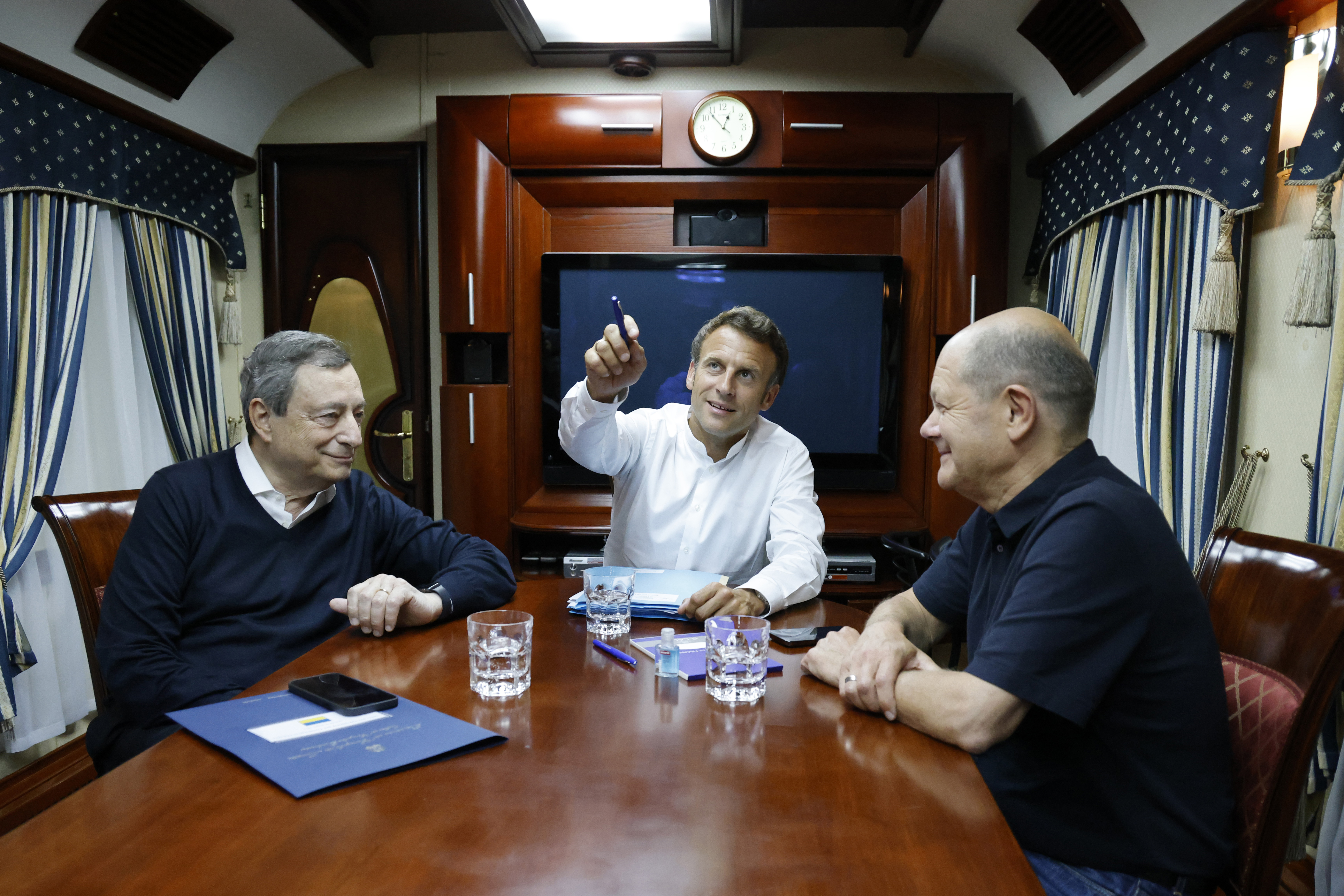
Macron, Scholz and Draghi, representing the three largest economies in the European Union, traveled to Kyiv together on a special overnight train provided by the Ukrainian authorities. They have been criticised for not visiting Kyiv sooner. A number of other European leaders have already made the long trip overland to show solidarity with a nation under attack, even in times when the fighting raged closer to the capital than it does now.

President Klaus Iohannis of Romania — which borders Ukraine and has been a key destination for Ukrainian refugees — arrived on a separate train.

After viewing Irpin, he wrote on Twitter that there are "no words to describe the unimaginable human tragedy and horrible destruction" and called for "all Russian perpetrators to be held responsible by the international criminal justice" system.

Several air raid sirens rang out while the European leaders were in their hotel preparing for the rest of their visit, and Kyiv authorities urged people to seek shelter. Such alerts are a frequent occurrence.

In Ukraine, Macron responded to criticism of France's response, including his recent comment that Russia shouldn't be "humiliated," which deeply angered Ukrainians. He insisted that "France has been at Ukraine's side since the first day."

French President Emmanuel Macron, center, German Chancellor Olaf Scholz, right, and Italian Prime Minister Mario Draghi travel on board a train bound to Kyiv.

His office also released a list of the dates of all his conversations with Zelenskyy. They have spoken by phone on 23 occasions since the war began; and Macron spoke with Putin 11 times, including three times with Scholz.

Scholz had long resisted traveling to Kyiv, saying he didn't want to "join the queue of people who do a quick in-out for a photo opportunity." Instead, Scholz said a trip should focus on doing "concrete things."

Germany on Wednesday announced that it will provide Ukraine with three multiple launch rocket systems of the kind that Kyiv has said it urgently needs.

Tamara Malko, a resident of the Donetsk region that is part of the Donbas, said Macron and Scholz had been "very cold" toward Ukrainians so far, and hoped for a change.

https://twitter.com/KlausIohannis/status/1537334098955538432

"We want peace very much … and have high hopes for Macron and Scholz," she said. "We want them to see and understand our pain."

Whale escapes after getting tangled in shark net, returns to calf

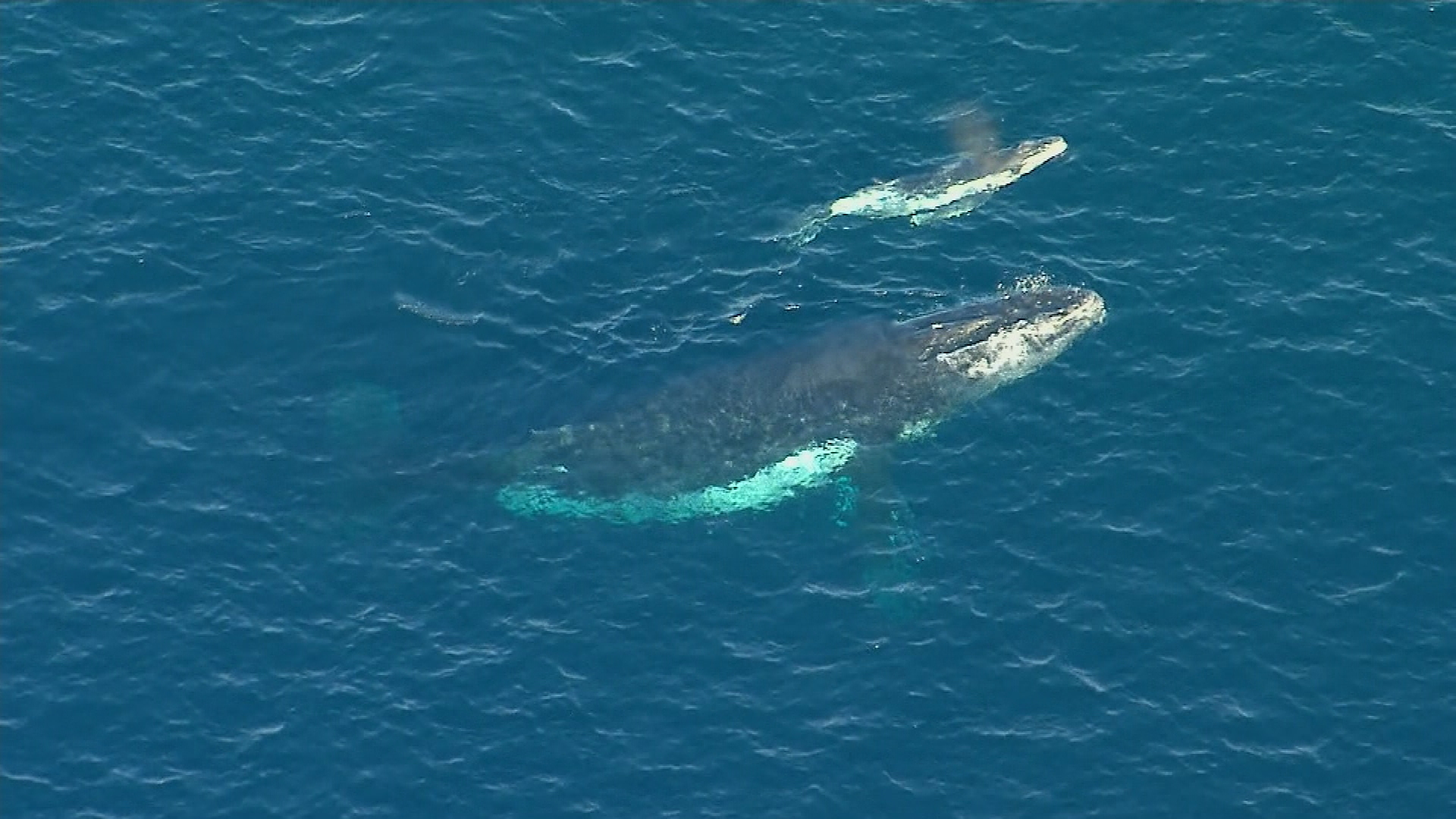
A humpback whale who became trapped in a shark net off the Gold Coast this morning has been freed, returning to her calf.

The mother had been swimming off the coast of Surfers Paradise when she became entangled in the net.

The mum was stuck for an hour while her baby waited for her nearby.

READ MORE: Extra school year planned for millions of Aussie children

A humpback whale who became trapped in a shark net off the Gold Coast this morning has been freed, returning to her calf.

An arborist on top of the Jewel Tower, an apartment building in Surfers Paradise, spotted the distressed pair.

Sea World rescue crews were called to assist with disentangling the whale but the mum was able to free herself before they arrived.

READ MORE: World's largest central bank makes biggest rate hike in 28 years

She's the second humpback whale to become entangled off the coastal city this month.

Another young humpback became trapped in fishing nets and needed to be cut free by marine rescue specialists in early June.

Locals are renewing calls to remove shark nets from Australian beaches due to their threat to marine life.

READ MORE: Medieval tombstones could reveal surprise origin of Black Death

Kevin Spacey granted bail by UK court on sex assault claims

Kevin Spacey intends to prove he is innocent of sexual offences, his lawyer said on Thursday, as the Oscar-winning actor appeared in a London court to face charges of offences against three men.

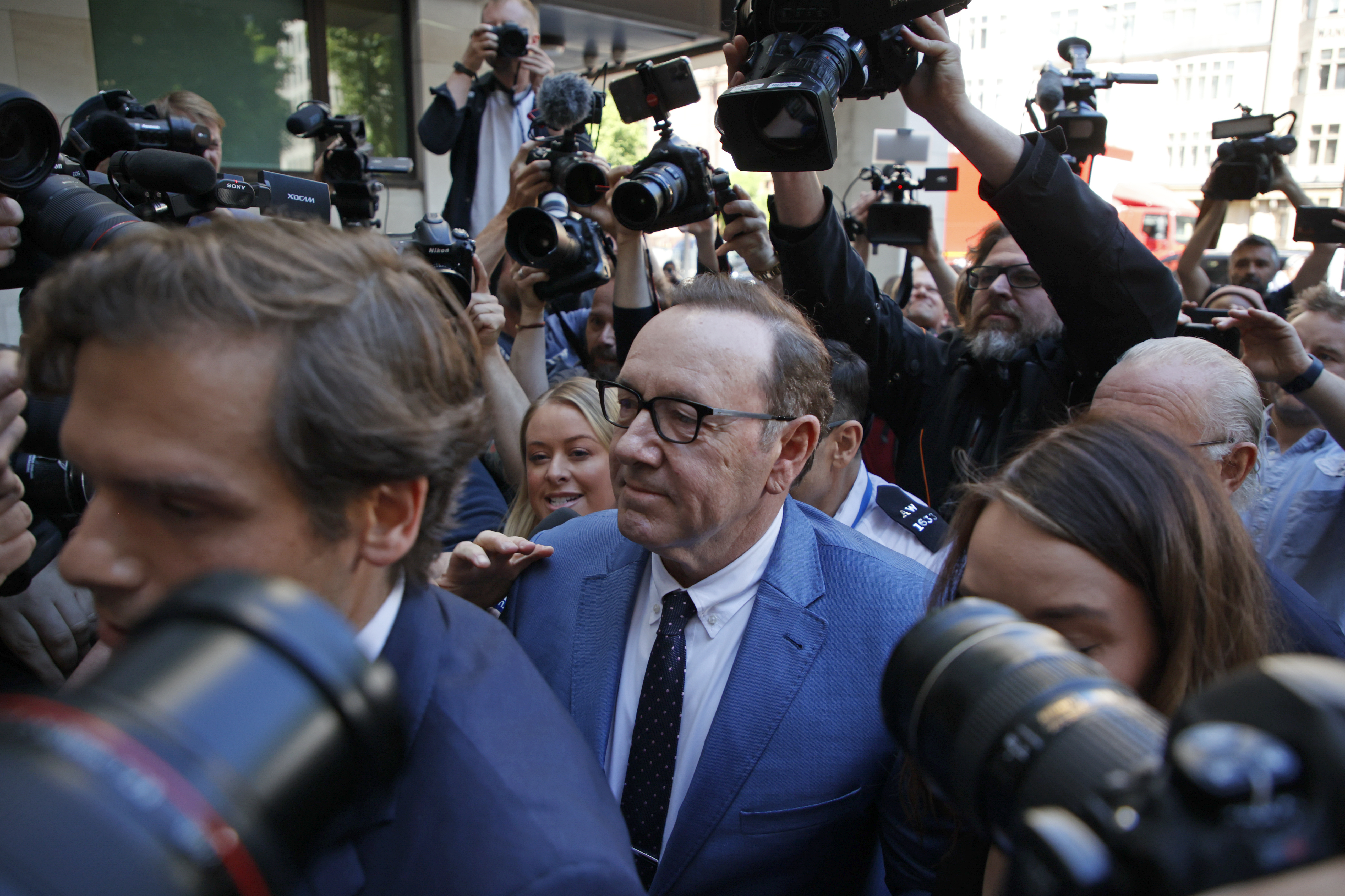
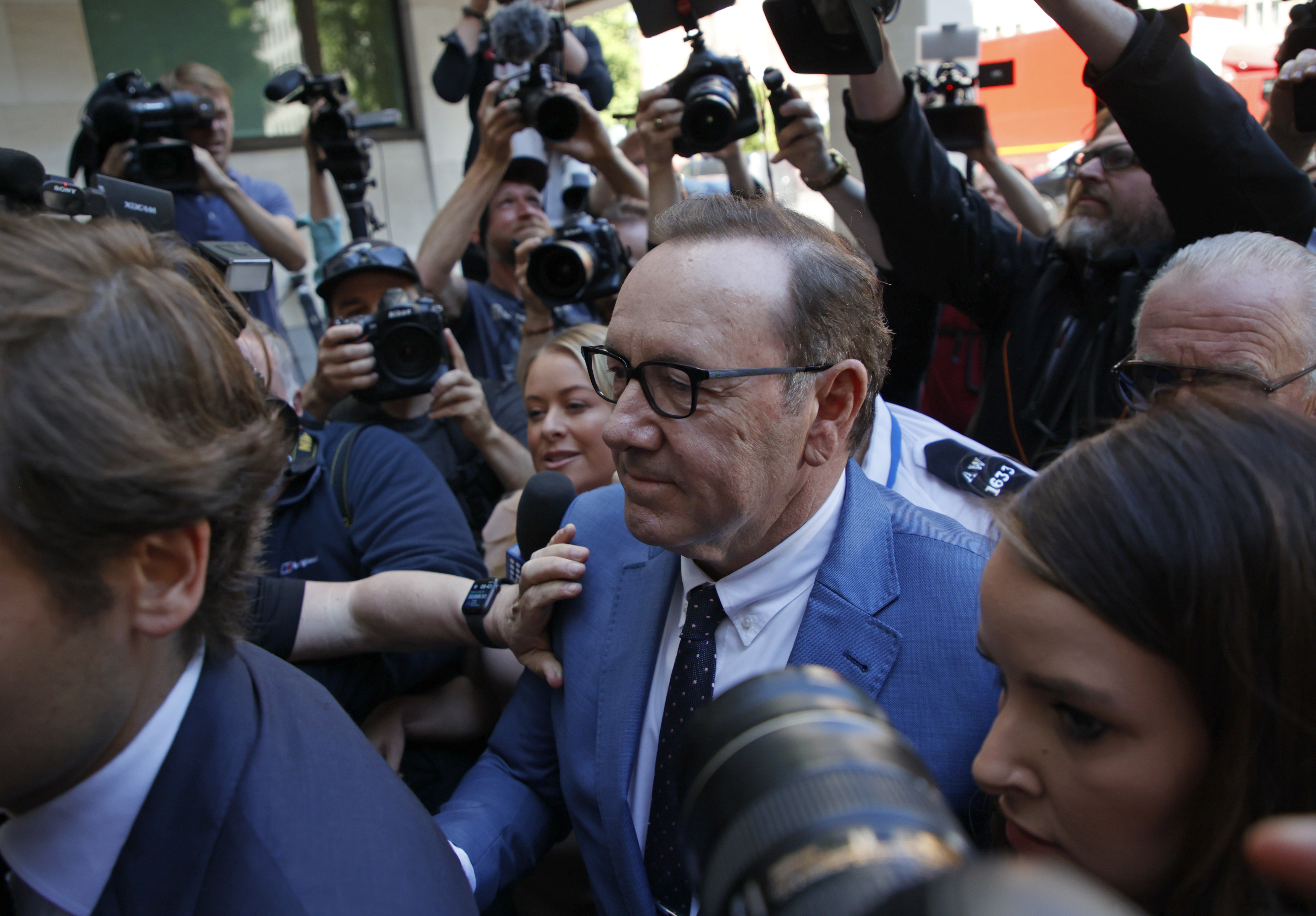
Photographers and television camera crews thronged Spacey, 62, as he arrived at London's Westminster Magistrates Court for the preliminary hearing.

Spacey sat in the glass-fronted dock during the half-hour hearing, standing to give his full name – Kevin Spacey Fowler – as well as his birthdate and a London address.

READ MORE: Trump 'detached from reality' over election

He was not asked to enter a formal plea, but his attorney said he denied the allegations.

Deputy Chief Magistrate Tan Ikram granted Spacey unconditional bail until his next appearance, a plea hearing scheduled for July 14.

The former House of Cards star is accused of four counts of sexual assault and one count of causing a person to engage in penetrative sexual activity without consent.

READ MORE: The COVID-19 work expenses Aussies may be able to claim

The alleged incidents took place in London between March 2005 and August 2008, and one in western England in April 2013. The victims are now in their 30s and 40s.

In a statement issued last month, Spacey said he would go to court to face the charges and was confident he would "prove my innocence".

Spacey was questioned by British police in 2019 about claims by several men that he had assaulted them. The two-time Academy Award winner ran London's Old Vic theatre between 2004 and 2015.

Spacey won a best supporting actor Academy Award for the 1995 film The Usual Suspects and a lead actor Oscar for the 1999 movie American Beauty.

But his celebrated career came to an abrupt halt in 2017 when actor Anthony Rapp accused the star of assaulting him at a party in the 1980s, when Rapp was a teenager. Spacey denies the allegations.

TGA raises alarm after software errors detected in insulin pump

Australians with diabetes are being asked to check their insulin pumps after errors were detected in one model's software.

Errors affecting battery life and insulin delivery have been detected in the t:slim X2 insulin pumps from Australasian Medical and Scientific (AMSL), the Therapeutic Goods Administration (TGA) said in a product defect correction.

Anyone who uses this insulin pump with software versions 6.4.1 or earlier has been urged to get in contact as soon as possible by emailing di******@******om.au or calling 1300 851 056 to arrange an update of the pump's software.

READ MORE: Extra school year planned for millions of Aussie children

Errors affecting battery life and insulin delivery have been detected in the t:slim X2 insulin pumps from Australasian Medical and Scientific (AMSL), the Therapeutic Goods Administration said.

The company said insulin pumps running on software versions above 6.4.1 are not affected.

Those using the pumps can check which version of the software they have by selecting: Options → My Pump → Pump Info on the home screen.

Users should then scroll through the pump Info screen using the up/down arrows and find the software version number.

"You can continue using your t:slim X2 pump as described in the device user guide, but you should have an alternative means of insulin therapy available in case the problem cannot be immediately resolved," the TGA said.

READ MORE: World's largest central bank makes biggest rate hike in 28 years

"If unsure about which alternative insulin therapy is right for you or the amount of insulin to inject, contact your doctor or diabetes care specialist."

The TGA said if insulin delivery is stopped, this could result in hyperglycaemia.

"In severe cases of hyperglycaemia, the user may experience diabetic ketoacidosis and may require hospitalisation or intervention from a medical professional," the department said.

"The sponsor has received several complaints and adverse event notifications linked to these three problems since 2018."

Visit the TGA website for full details about the product defect correction.

COVID-19 inquiry urged to act now to save hundreds of lives

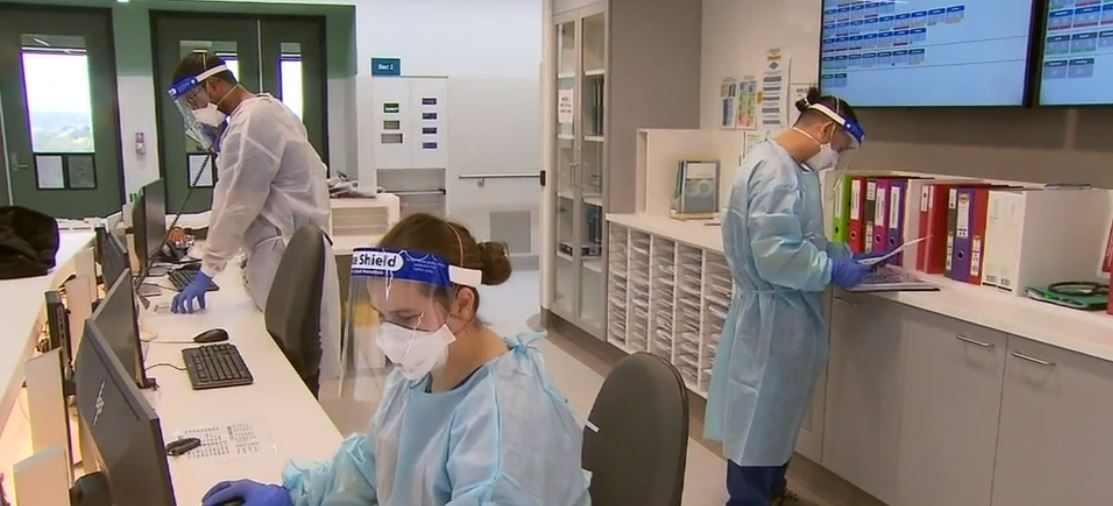
Hundreds of lives could be saved if more was done right now to limit the spread of COVID-19, a Victorian parliamentary inquiry has been told.

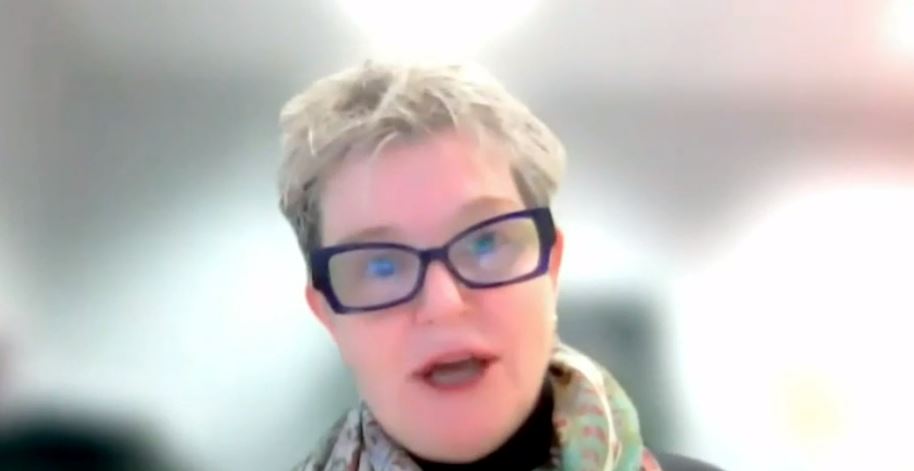
Today the committee heard from epidemiologist Margaret Hellard from the Burnet Institute, who warned Australia was likely to surpass 10,000 COVID-19-related deaths this year.

"That's my view and that's way too high," she said.

READ MORE: City of Melbourne CEO paid more than Victorian premier after hefty pay rise

"That is far higher, people need to understand, than the standard deaths we would have had related to flu, in any bad year."

Since Monday, there have been 55 deaths reported in Victoria.

Infectious diseases specialists such as Epidemiologist Nancy Baxter told the inquiry that political expediency is trumping public health.

"Nobody at the top wants to be seen in a mask," she said.

"They want the pandemic to be over.

"At least having an honest conversation that we may need to bring something like masks back, would at least prepare people, so if we do have to, it's not some shock for them."

READ MORE: Children who are smacked nearly twice as likely to develop mental health disorders later in life, new research finds

Hellard said Australia could avoid thousands of COVID-19 infections if the public took measures to reduce the spread of the virus.

"It's not just an all-or-nothing approach, I don't think our control is as good as it could be," she said.

"This notion that, 'oh, they would get sick and die anyway', that's not the case.

"We're coming into waves, you can do simple combinations of things that can reduce transmission and save lives."

Smacked children twice as likely to develop mental health disorders

Children who are smacked repeatedly by their parents are nearly twice as likely to develop anxiety and depression later in life, a new study has revealed.

The study from the Australian Catholic University also revealed six in ten children have been smacked repeatedly by their parents.

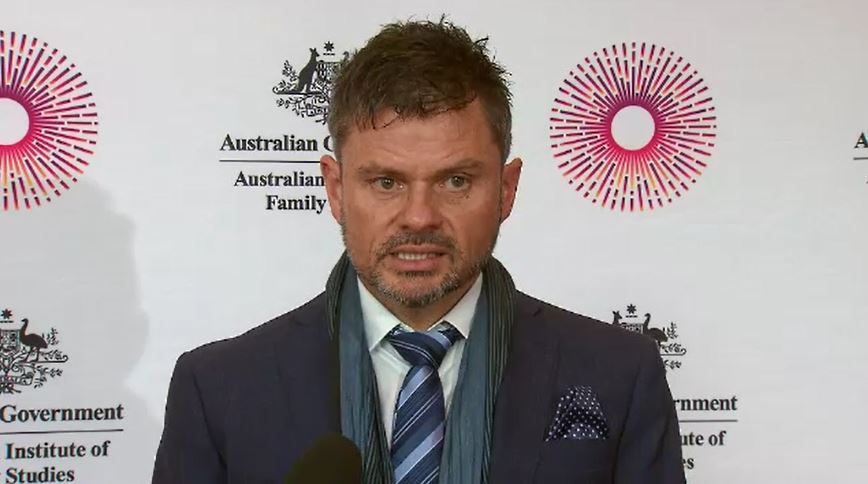
Lead researcher Professor Daryl Higgins said the finds were concerning. 

READ MORE: City of Melbourne CEO paid more than Victorian premier after hefty pay rise

"Corporal punishment (smacking) has negative effects on mental health and part of the reason is because corporal punishment tends to go alongside experiences of child abuse and neglect," he said.

Higgins said they found 61 per cent of 18 to 24-year-olds experienced corporal punishment as children four or more times.

"61 per cent of young people is a very large proportion," he said. 

READ MORE: Victoria and NSW plan new free year of schooling for young children

The study also took into account other harmful behaviours in the home, including abuse.

"It's really important to take into account the broader environment that children grow up in," Higgins said.

The study also found girls who had experienced corporal punishment at least four times were 1.8 times more likely to have a major depressive disorder later in their lifetime, and 2.1 times as likely to experience anxiety.

"If you want to reduce population-level anxiety for women and men, don't hit them as children," Higgins said.

"There is a very real connection between corporal punishment and current and lifelong experience of mental ill-health."