Tag Archives: oceania

Notorious paedophile set for release despite prosecutors' efforts

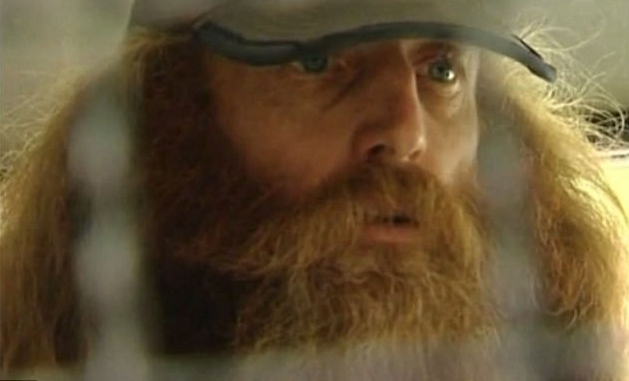
One of Perth's most notorious paedophiles will walk free from prison within weeks, despite still believing his sexual interest in children is "natural".

Bradley Pen Dragon, 62, has spent half his life behind bars for depraved and violent crimes across Australia and overseas.

He spent 13 years in a Thai prison for raping young girls in the 1990s before being deported.

Bradley Pen Dragon was jailed for at least four yeasr after re-offending just two days after getting out of prison.

Since relocating to Perth, Dragon has repeatedly been caught viewing child abuse material at internet cafes.

His most recent offence happened in 2017, just two days after finishing a five-year sentence for holding a mother at knifepoint in front of her baby.

Dragon was due to be released from prison in December, but state prosecutors applied to have him declared a "high risk serious offender", which enable the courts to keep a criminal locked up indefinitely if they are deemed an "unacceptable risk to the community".

A judge instead decided to release the paedophile on a 10-year supervision order, noting his "unmet treatment needs" would be better addressed in the community.

Dragon will be subject to 62 strict conditions, including electronic monitoring and anti-libidinal treatment.

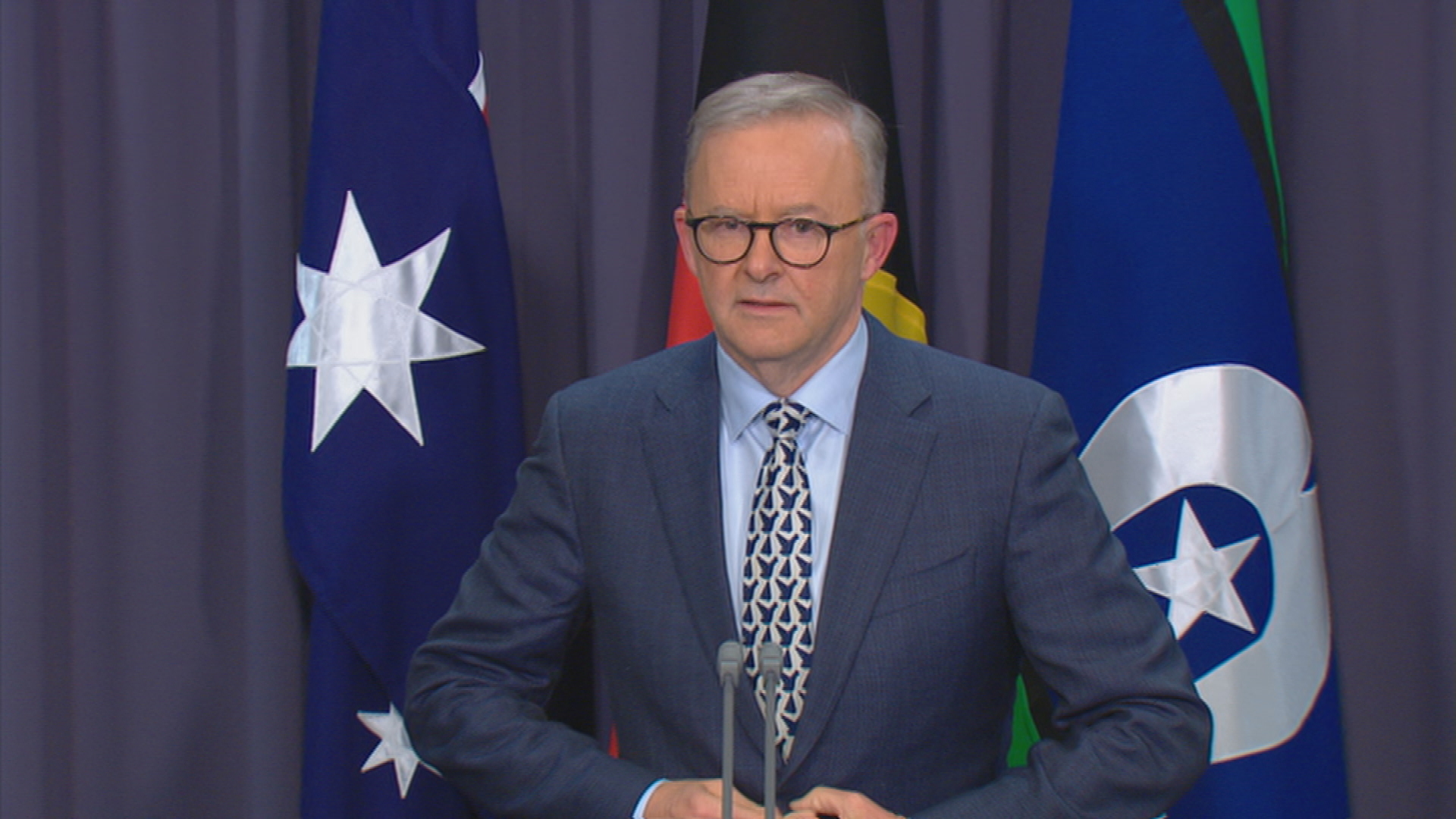
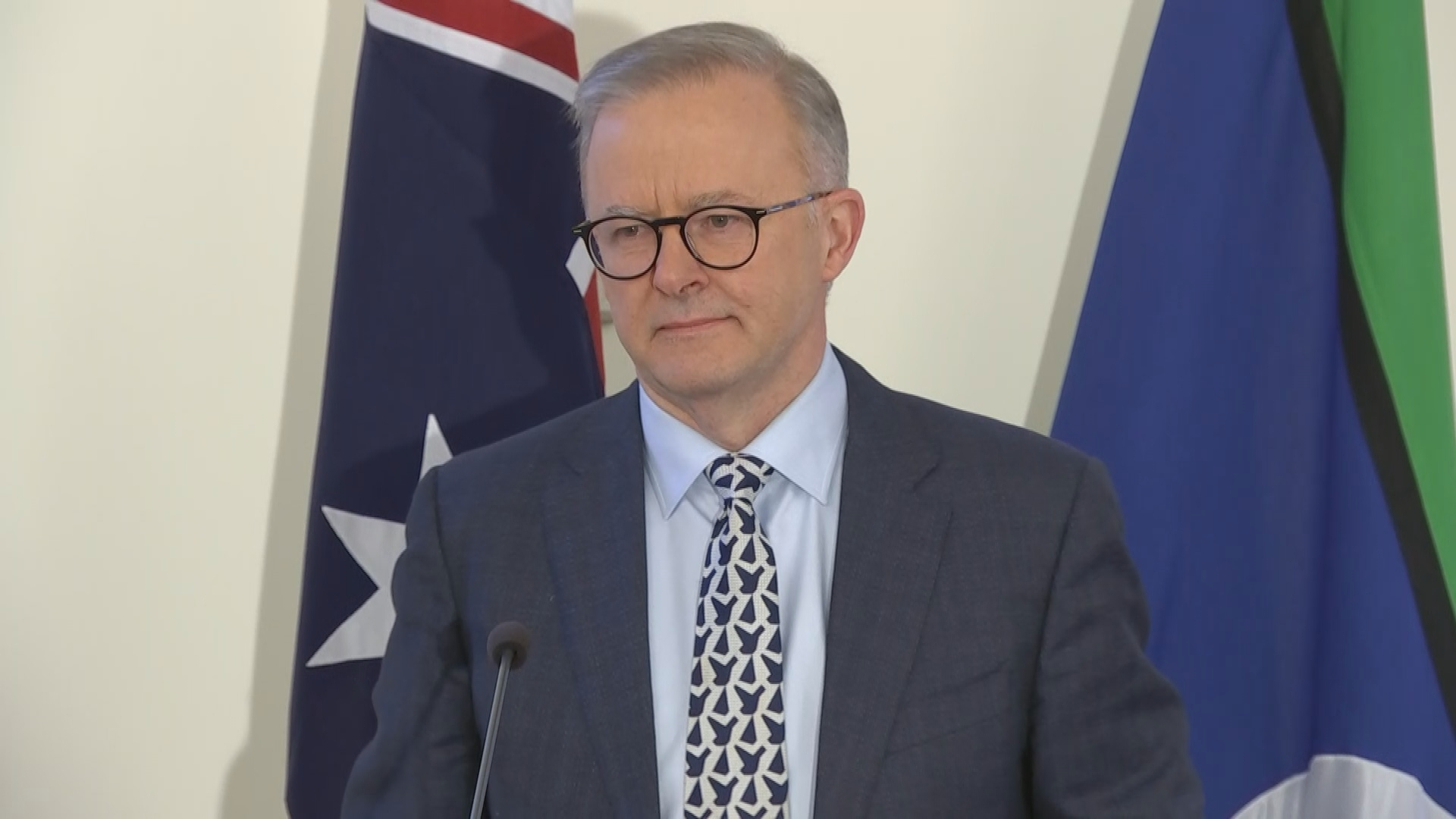
Prime Minister Anthony Albanese unveils his new cabinet

Prime Minister Anthony Albanese has revealed who will be a part of his new cabinet.

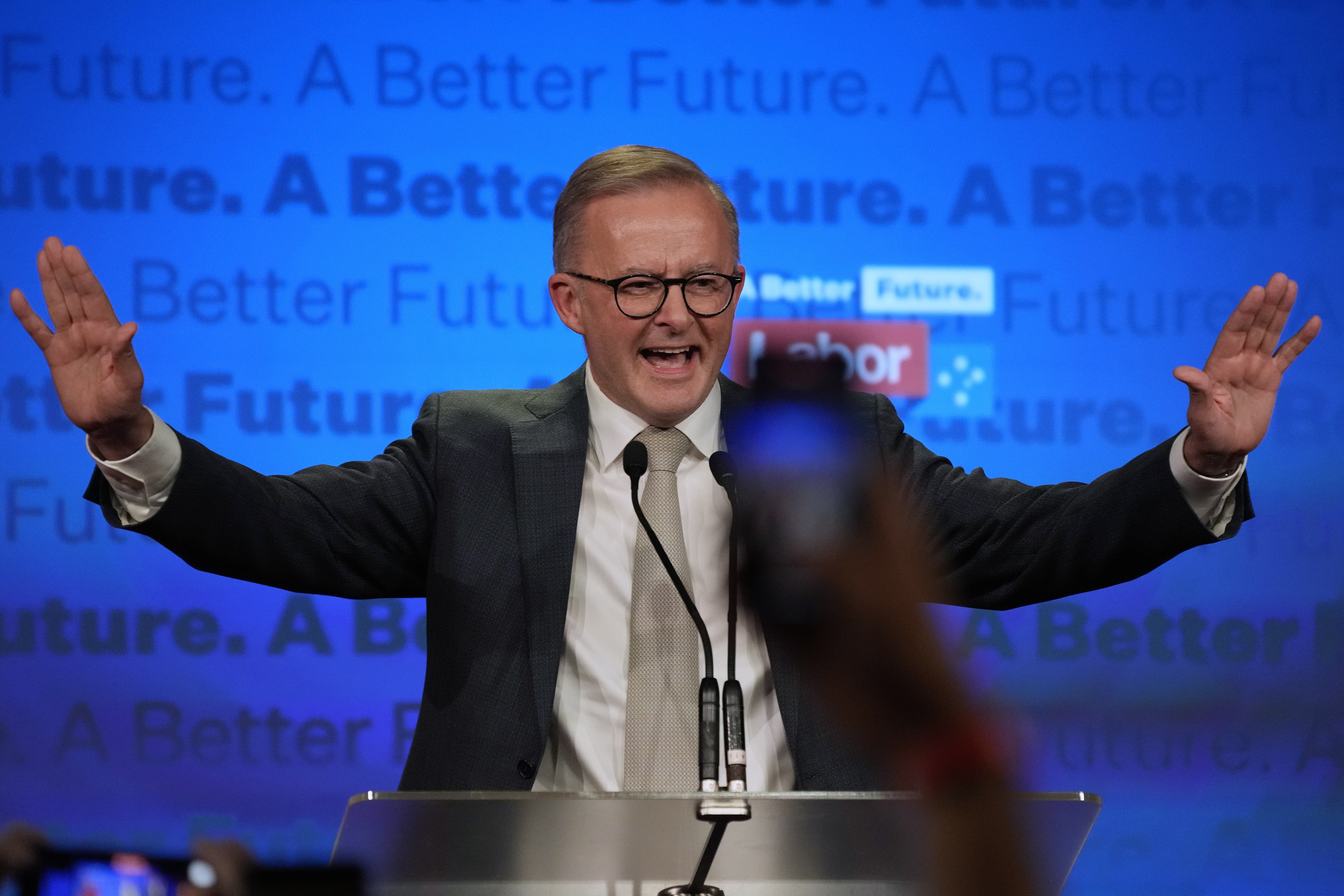
The announcement comes after Labor claimed its 77th seat to form a majority government.

The new appointments, who will be sworn in on Wednesday morning, include 10 women in the cabinet.

READ MORE: Nearly 100km/hr winds batter NSW as another polar blast set to hit

Prime Minister Anthony Albanese has revealed who will be a part of his new cabinet.

"This is an exciting team, it's a team which is overflowing with talent, with people who are absolutely committed to making a difference as ministers and assistant ministers in my government," he said.

"This is the largest number of women who have ever served in an Australian cabinet, with 10 women in the cabinet.

"In addition to that, in terms of the ministry, there are 13 women in the ministry and 19 frontbenchers.

"A record number in all three categories for women's representation in cabinet, in ministry and in front bench positions."

Who are the ministers?

Albanese announced Richard Marles would be deputy prime minister and the minister for defence.

Penny Wong will be the senate leader and the minister for foreign affairs.

Don Farrell will be the deputy senate leader, the minister for trade and tourism and the special minister of state.

Dr Jim Chalmers will be the treasurer, while Senator Katy Gallagher will be the minister for finance, minister for the public service and the minister for women.

Tony Burke will be the leader of the house as well as the minister for employment and workplace relations and the minister for arts.

Mark Butler will be the deputy leader of the house and minister for health and aged care.

Chris Bowen will be the minister for climate change and energy.

Tanya Plibersek will be the minister for the environment and water.

Catherine King will be the minister for infrastructure, transport, regional development and local government.

Linda Burney will be the minister for Indigenous Australians.

Amanda Rishworth will be the minister for social services, while Bill Shorten will be the minister for the National Disability Insurance Scheme and government services.

Mark Dreyfus will be the Attorney-General as well as the cabinet secretary.

Brendan O'Connor will be the minister for skills and training, while Jasion Claire will be the minister for education.

Julie Collins will be the minister for housing, minister for homelessness and minister for small business.

Michelle Rowland will be the minister for communications and Madeleine King will be the minister for resources and northern Australia.

Murray Watt will enter the cabinet as the minister for agriculture, fisheries and foresty as well as the minister for emergency management.

Ed Husic will be the minister for industry and science, while Clare O'Neill will enter the cabinet as the minister for home affairs and the minister for cyber security.

Albanese pledges anti-corruption commission legislation by year's end

Earlier on Tuesday, Albanese pledged to introduce legislation for a federal anti-corruption commission this year.

Speaking to the Labor caucus for the first time since becoming Prime Minister, he also promised a budget in October.

"We will show that we're an inclusive and mature country by recognising the privilege that we have of sharing this great island continent of ours, this great multicultural nation, with the oldest continuous civilisation on the planet and recognising that in our constitution with an enshrined Voice to Parliament," he said on Tuesday.

READ MORE: Dutton says major parties lost voter trust

Prime Minister Anthony Albanese says he has a "responsibility" to deliver on issues such as cost of living, climate change and a federal anti-corruption commission.

His address showed little change from his campaign rhetoric.

"More secure work, taking pressure off the cost of living. Cheaper childcare," he said.

"We will strengthen Medicare. We will fix aged care. We will make sure that we make more things here in Australia and become a more resilient economy with advanced manufacturing.

"We will end the climate wars."

The crowd of Labor MPs and senators cheered when Albanese said the party would be governing with a majority.

The party got over the line with 76 seats yesterday when the seat of Macnamara was affirmed a Labor win.

READ MORE: New Nationals leader won't 'lurch left or right'

Scientists getting closer to mastering nuclear fusion

From a small hill in the southern French region of Provence, you can see two suns.

One has been blazing for four-and-a-half billion years and is setting. The other is being built by thousands of human minds and hands, and is, far more slowly, rising.

The last of the real sun's evening rays cast a magical glow over the other – an enormous construction site that could solve the biggest existential crisis in human history.

READ MORE: Polar blast and damaging winds set to continue for days
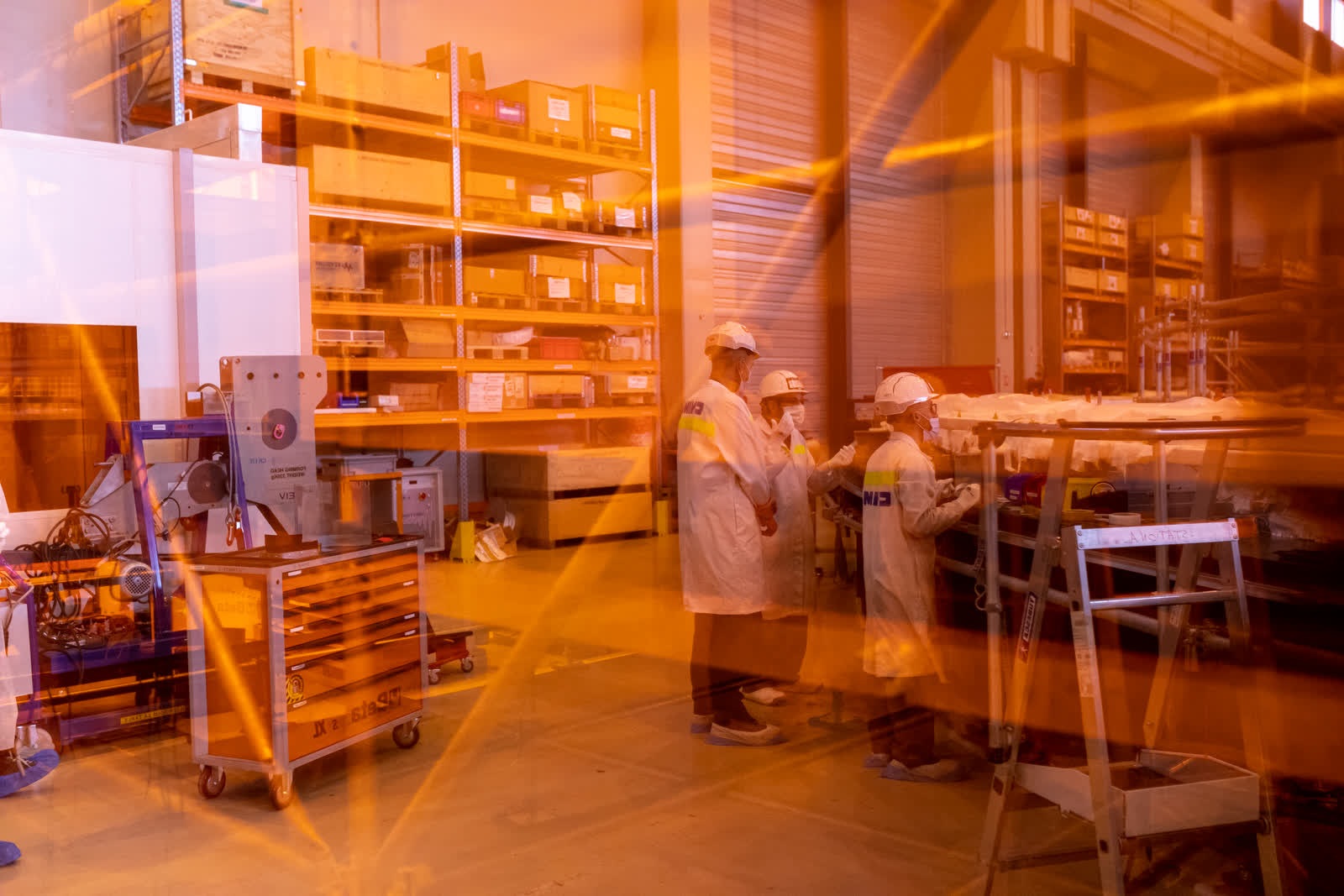
Workers inspecting superconductors at ITER.

It is here, in the tiny commune of Saint-Paul-lez-Durance, that 35 countries have come together to try and master nuclear fusion, a process that occurs naturally in the sun and all stars, but is painfully difficult to replicate on Earth.

Fusion promises a virtually limitless form of energy that, unlike fossil fuels, emits zero greenhouse gases and, unlike the nuclear fission power used today, produces no long-life radioactive waste.

Mastering it could literally save humanity from climate change, a crisis of our own making.

If it is mastered, fusion energy will undoubtedly power much of the world. Just 1 gram of fuel as input can create the equivalent of eight tons of oil in fusion power. That's an astonishing yield of eight million to one.

Atomic experts rarely like to estimate when fusion energy may be widely available, often joking that, no matter when you ask, it's always 30 years away.

But for the first time in history, that may actually be true.

In February, scientists in the English village of Culham, near Oxford, announced a major breakthrough: they generated and sustained a record 59 megajoules of fusion energy for five seconds in a giant donut-shaped machine called a tokamak.

READ MORE: First cruise in more than two years to leave Sydney
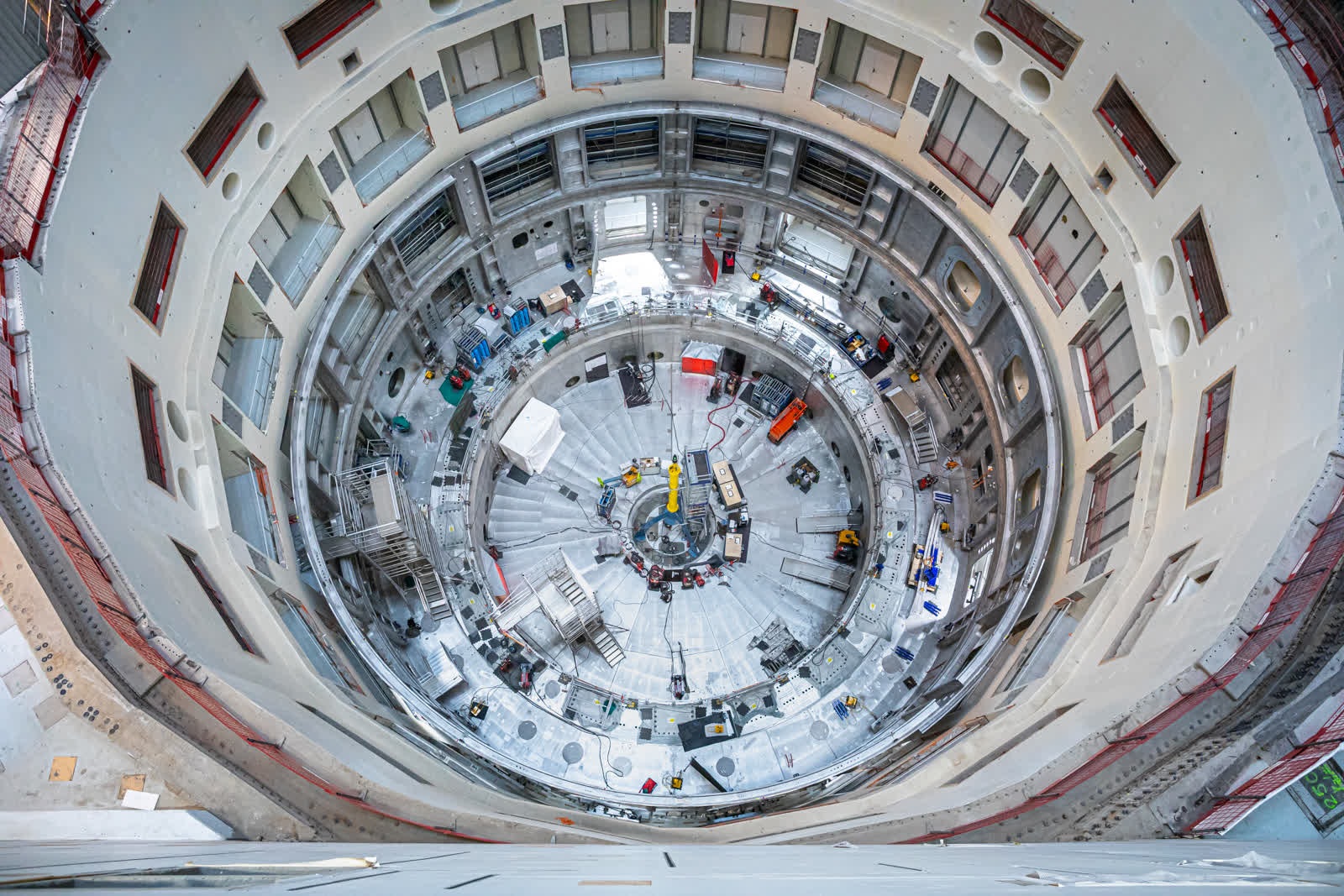
A view from the top of the tokamak chamber. The tokamak will ultimately weigh 23,000 tons, the combined weight of three Eiffel Towers.

It was only enough to power one house for a day, and more energy went into the process than came out of it. Yet it was a truly historic moment. It proved that nuclear fusion was indeed possible to sustain on Earth.

This was excellent news for the project in France, the International Thermonuclear Experimental Reactor, better known as ITER. Its main objective is to prove fusion can be utilised commercially. If it can, the world will have no use for fossil fuels like coal, oil and gas, the main drivers of the human-made climate crisis.

There has been a huge sense of momentum at ITER since the success in the UK, but the people working on the project are also undergoing a major change. Their director general, Bernard Bigot, died from illness on May 14 after leading ITER for seven years.

Before his death, Bigot shared his infectious optimism for fusion energy from his sunny office, which overlooked the shell of ITER's own tokamak, a sci-fi like structure still under construction.

"Energy is life," Bigot said.

"Biologically, socially, economically."

When the Earth was populated by less than a billion people, there were enough renewable sources to meet demand, Bigot said.

"Not anymore. Not since the Industrial Revolution and the following population explosion. So we embraced fossil fuels and did a lot of harm to our environment. And here we are now, 8 billion strong and in the middle of a drastic climate crisis," he said.

"There is no alternative but to wean ourselves off our current main power source," he said.

"And the best option seems to be the one the universe has been utilising for billions of years."

READ MORE: EU leaders agree on partial embargo on Russian oil
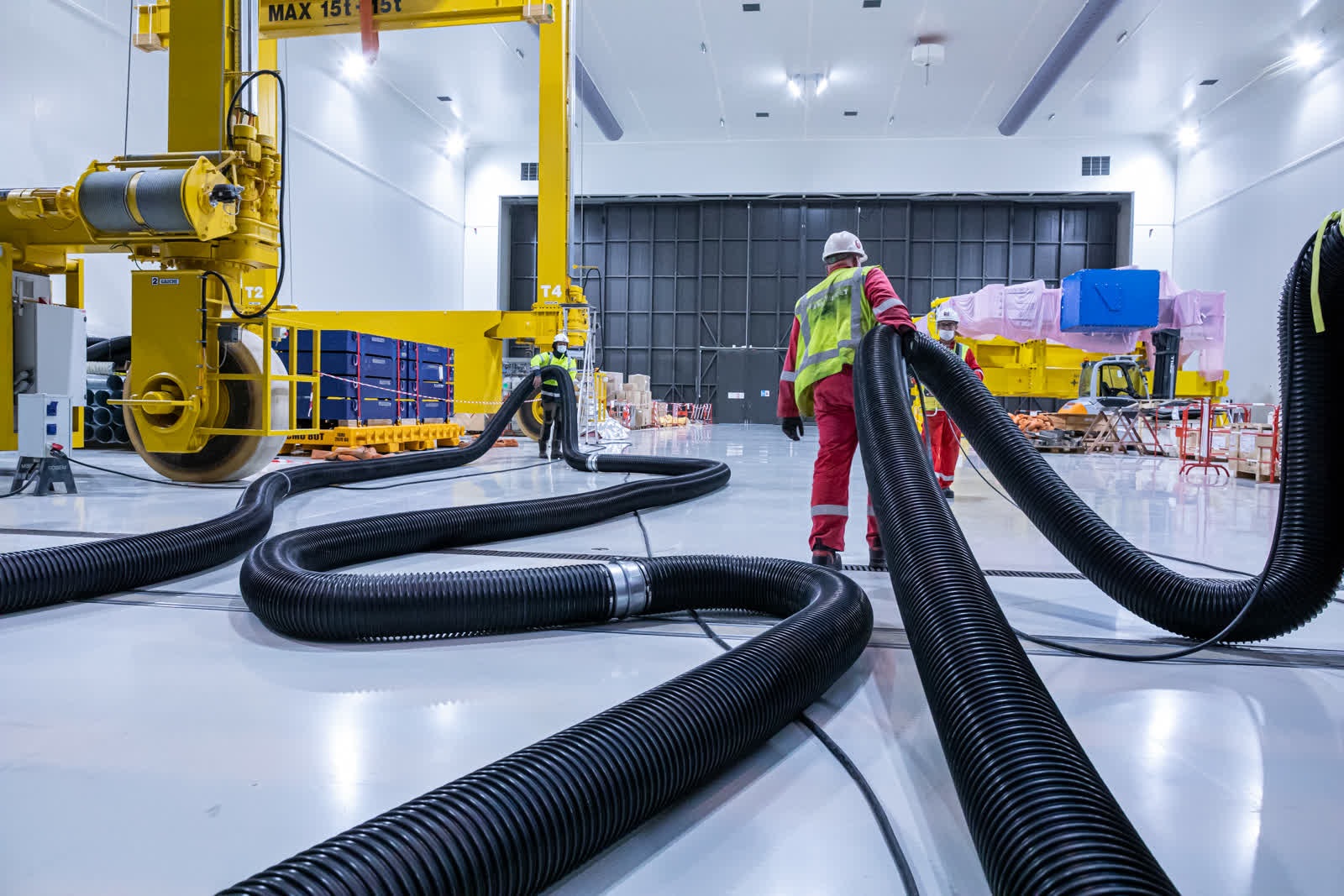
Workers carry exhaust pipes away from the assembly hall. These pipes are used to expel exhaust from trucks that deliver the large components to the clean facility.

Mimicking the sun

Fusion energy is created by forcing together two particles that, by nature, repel. After a small amount of fuel is injected into the tokamak, giant magnets are activated to create a plasma, the fourth state of matter, which is a bit like a gas or soup that is electrically charged.

By raising temperatures inside the tokamak to unfathomably high levels, the particles from the fuel are forced to fuse into one. The process creates helium and neutrons, which are lighter in mass than the parts they were originally made of.

The missing mass converts to an enormous amount of energy. The neutrons, which are able to escape the plasma, then hit a "blanket" lining the walls of the tokamak, and their kinetic energy transfers as heat. That heat can be used to warm water, create steam and turn turbines to generate power.

This all requires the tokamak to contain serious heat. The plasma needs to reach at least 150 million degrees Celsius, 10 times hotter than the core of the sun.

It begs the question: How can anything on Earth hold such high temperatures?

It's one of many hurdles that generations of fusion energy seekers have managed to overcome. Scientists and engineers designed giant magnets to create a strong magnetic field to keep the heat bottled up. Anything else would simply melt.

READ MORE: Man fights kangaroo for six minutes in Victoria
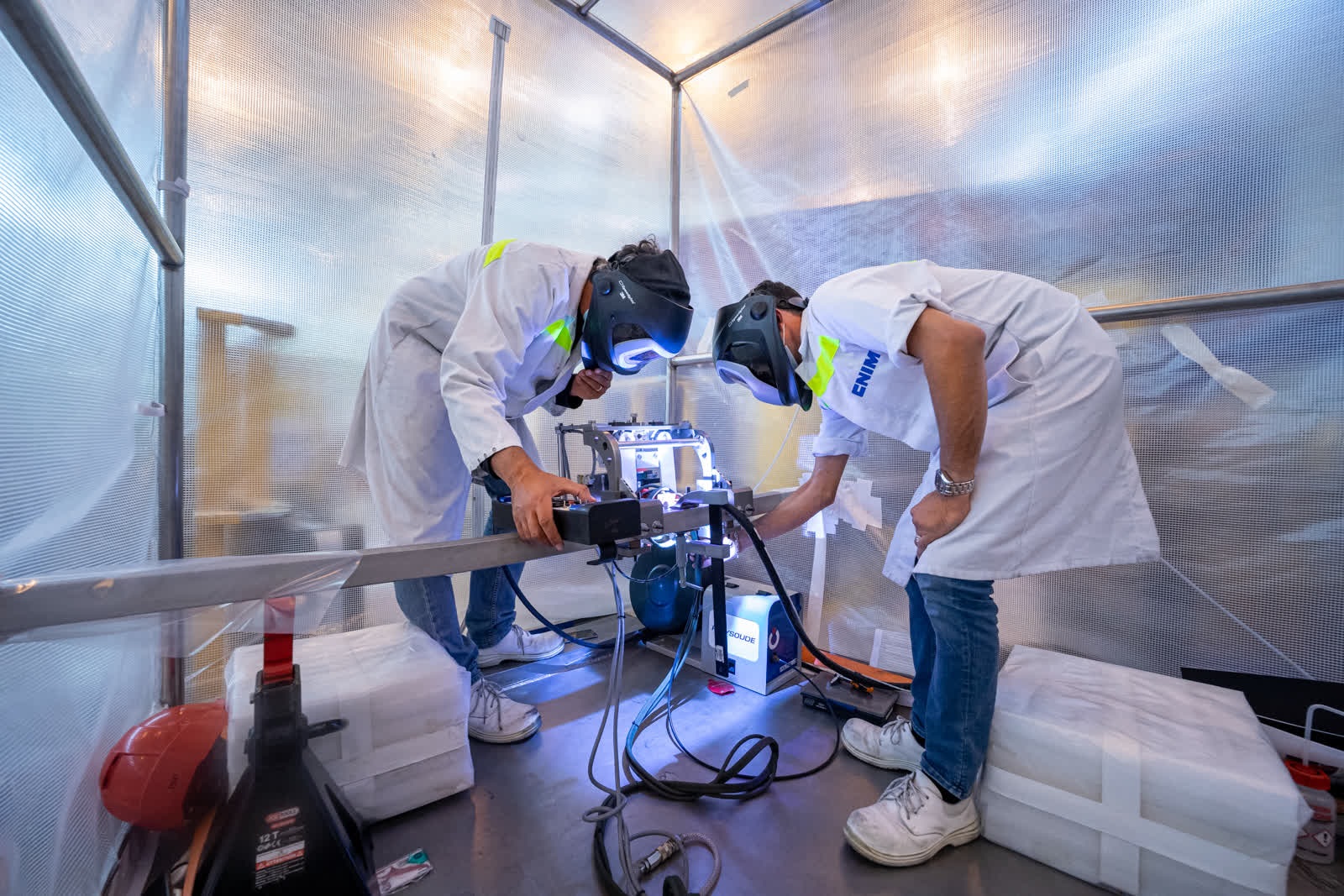
Workers preforming precision welding on superconductors during construction at ITER.

What those working on fusion have been trying to do inside their machines is essentially replicate the sun. The sun is a perpetual fusion factory, made up of a gigantic burning ball of plasma. It fuses several hundred tons of hydrogen into helium each second.

Plasma is the stuff 99.9 per cent of the universe is made of, including the stars, our sun and all interstellar matter. Down here on Earth, for instance, it's used in televisions and neon lights, and we can see it in lightning and the aurora.

As awesome as that all sounds, generating fusion energy in itself isn't actually the hard part, several experts at ITER said.

Humanity has been pulling off nuclear fusion reaction ever since the invention of the H-bomb, after all. The main challenge is sustaining it. The tokamak in the UK, called the Joint European Torus, or JET, held fusion energy for five seconds, but that's simply the longest that machine will go for. Its magnets were made of copper and were built in the 1970s. Any more than five seconds under such heat would cause them to melt.

ITER uses newer magnets that can last much longer, and the project aims to produce a 10-fold return on energy, generating 500 megawatts from an input of 50 megawatts.

READ MORE: Flu shots to be free in Victoria in June as flu cases soar
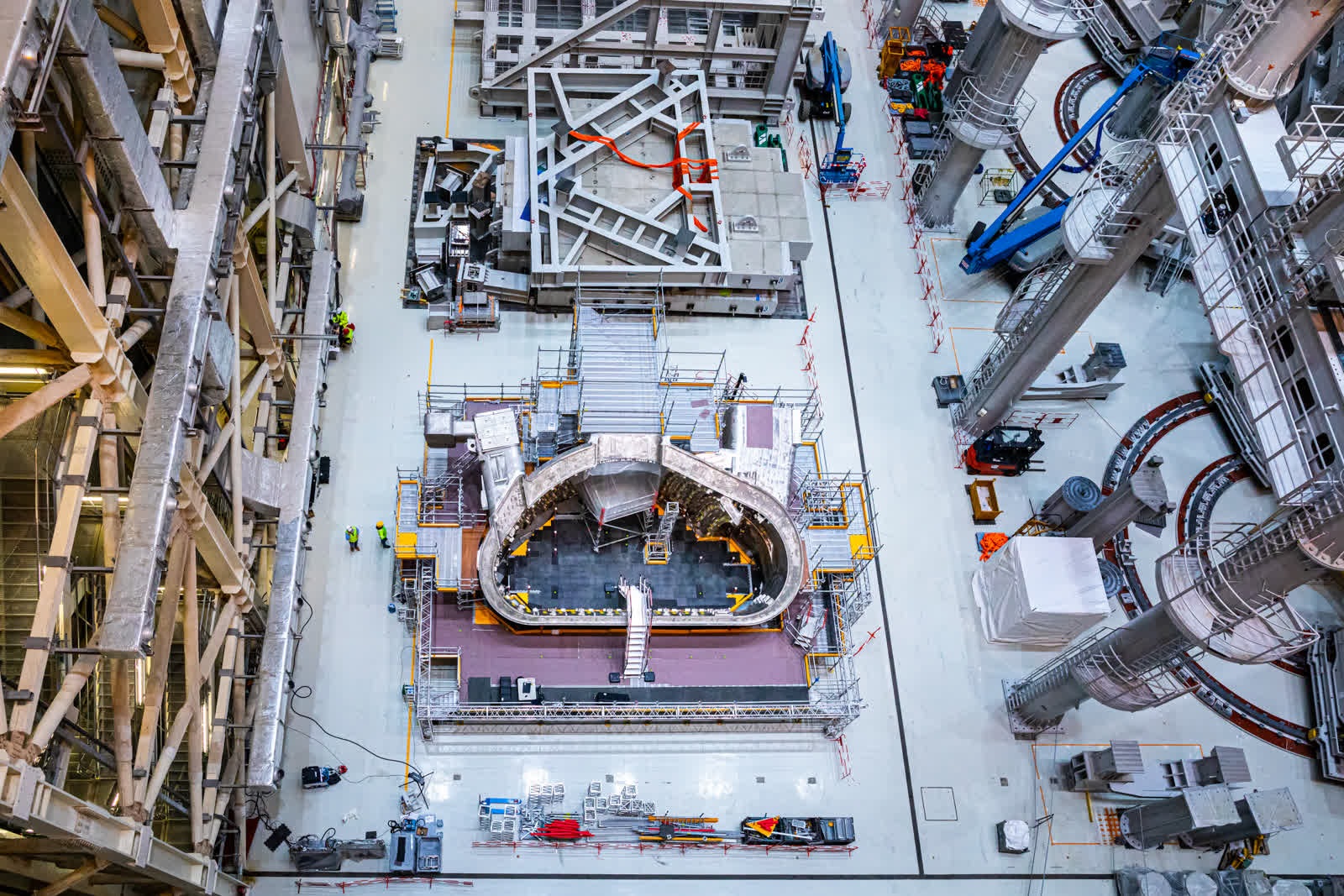
One of nine sectors of the vacuum vessel at ITER, which will soon be hoisted onto giant cranes for assembly.

But ITER's goal isn't to actually use the energy for power but to prove that it can sustain fusion energy for much longer than JET was able to. Success here will mean commercial-scale machines can start generating fusion in the future.

While the sun fuses hydrogen atoms to create helium, the JET project used two hydrogen isotopes called deuterium and tritium, which ITER will also use. These isotopes behave almost identically to hydrogen, in terms of their chemical makeup and reactions.

Both deuterium and tritium are found in nature. Deuterium is abundant in both fresh and saltwater – the deuterium from just 500ml of water, with a little tritium, could power a house for a year. Tritium is rare, but it can be synthetically produced.

At the moment, only 20kgs of it exist in the world, and demand amounts to no more than 400g per year. But at a yield of eight million to one, only tiny amounts of both elements are required to generate a lot of fusion energy.

Tritium is an exceptionally pricey substance: a single gram is currently worth around $30,000. Should nuclear fusion take off, demand will go through the roof, presenting the world's fusion masters with yet another challenge.

A 10 million-part project

From afar, ITER looks like a project ready to go. From up close, it's clear it's still a ways off.

READ MORE: Labor to form majority government with victory in 76th seat
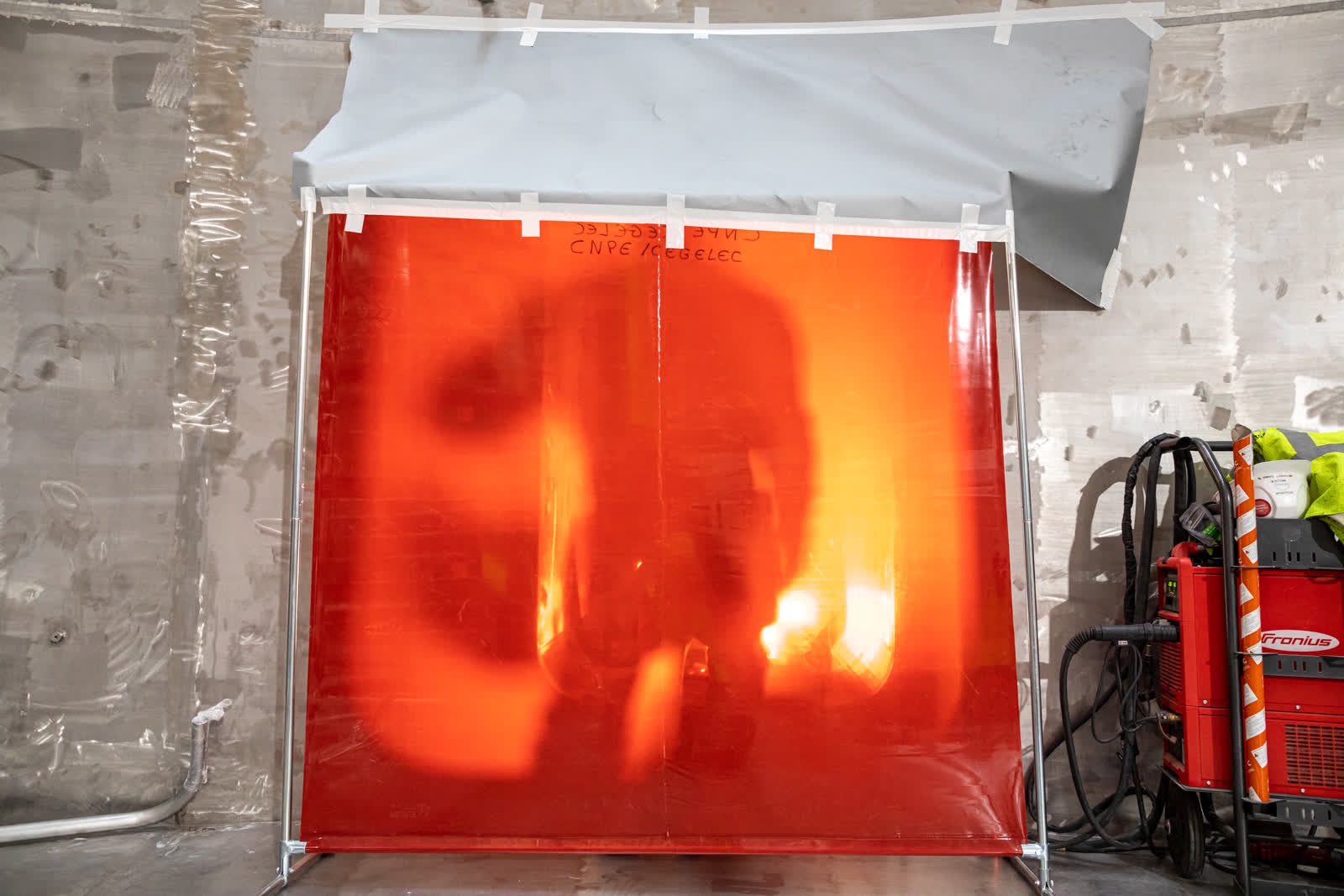
A welder stands behind a protective shield at the lowest level of the ITER cryostat base.

The construction across 39 building sites is incredibly complex. The main worksite is a markedly sterile environment, where tremendous components are being put into place with the help of 750-ton cranes. Workers have already put together the shell of the tokamak, but they are still awaiting some parts, including a giant magnet from Russia that will sit at the top of the machine.

The dimensions are mind-blowing. The tokamak will ultimately weigh 23,000 tons. That's the combined weight of three Eiffel towers. It will comprise a million components, further differing into no fewer than 10 million smaller parts.

This powerful behemoth will be surrounded by some of the largest magnets ever created. Their staggering size – some of them have diameters of up to 24 meters – means they are are too large to transport and must be assembled on site in a giant hall.

Given the huge number of parts involved, there's simply no room for error.

Even the digital design of this enormous machine sits across 3D computer files that take up more than two terabytes of drive space. That's the same amount of space you could save more than 160 million one-page Word documents on.

READ MORE: Supermarkets in school to help train real-life skills
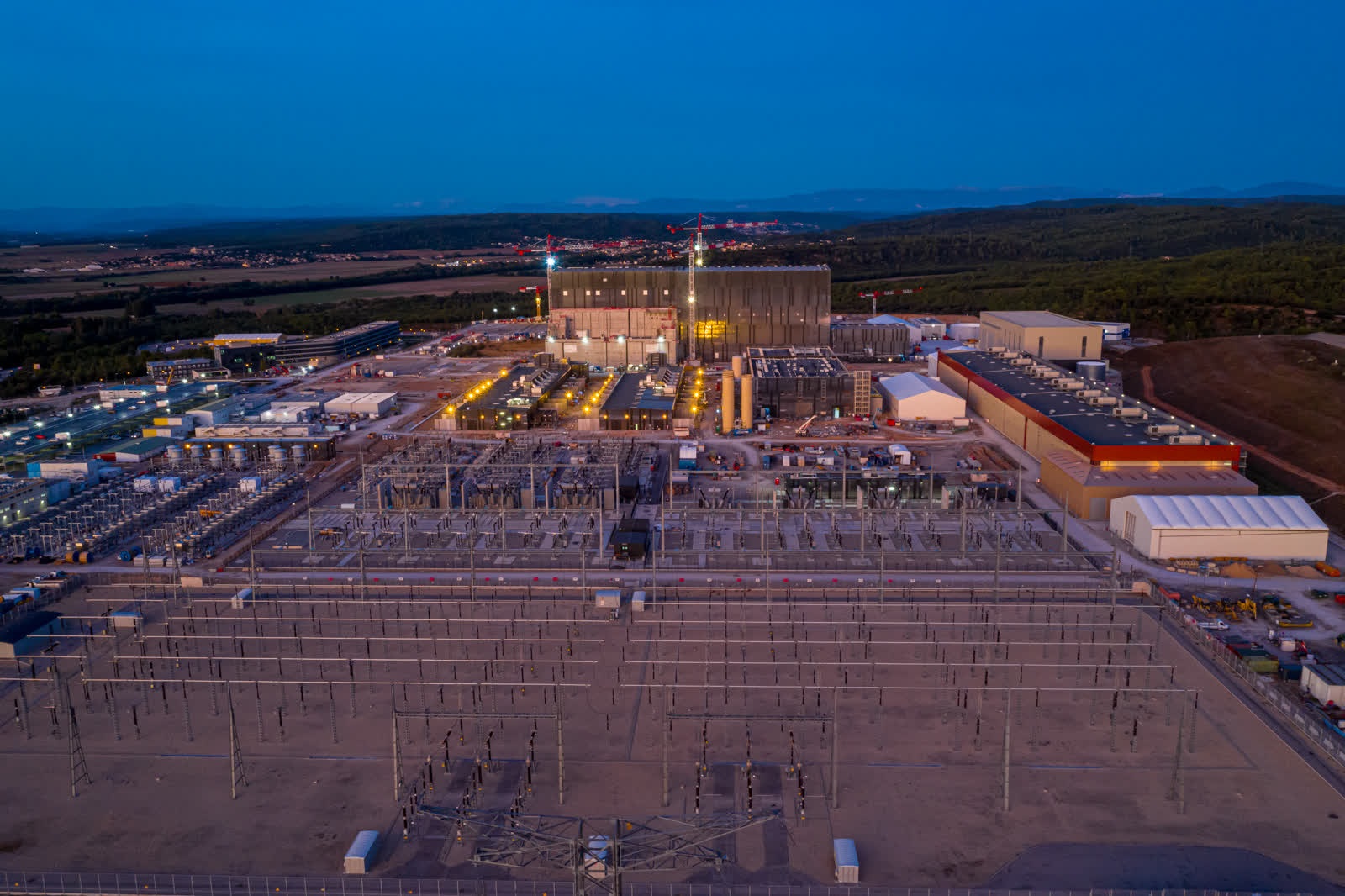
Dusk falls over the ITER complex in Saint-Paul-lez-Durance, France.

Time is running out

The scale and ambition of the ITER project may seem enormous, but it is, at the very least, a proportional response to the mess humans have made of the planet. Since 1973, global energy usage has more than doubled. By the end of the century, it might actually triple.

Seventy percent of all carbon dioxide emissions into the atmosphere are created through humans' energy consumption. And 80 per cent of all the energy we consume is derived from fossil fuels.

Now, the Earth is barrelling toward levels of warming that translate into more frequent and deadly heat waves, famine-inducing droughts, wildfires, floods and rising sea levels. The impacts of the climate crisis are getting harder and harder to reverse as entire ecosystems reach tipping points and more human lives are put on the line.

The world is now scrambling to rapidly decarbonise and speed up its transition from planet-baking fossil fuels to renewable energy like solar, wind and hydro power. Some countries are banking on nuclear fission energy, which is low-carbon but comes with a small, but not negligible, risk of disaster, storage problems for radioactive waste and a high cost.

READ MORE: Sixth case of Legionnaires' disease reported in Sydney
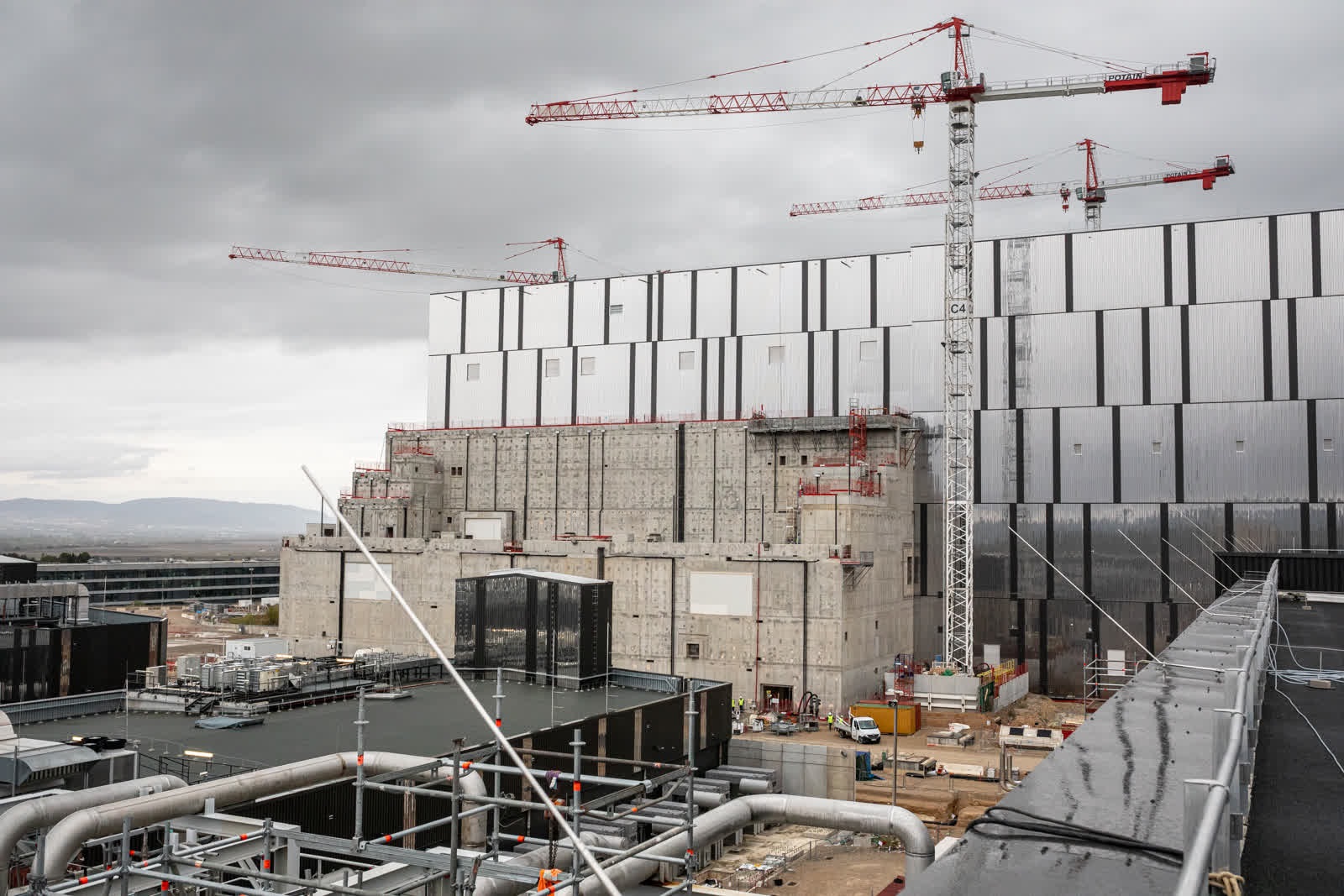
The black platform in the lower part of the frame is the tokamak complex, a 400,000-ton edifice that brings together the tokamak, diagnostics and tritium buildings.

But there are serious questions about whether the world can make this green transition fast enough to avert catastrophic climate change.

That's where fusion could be an 11th-hour hero, if the world masters it in time.

When the late physicist Stephen Hawking was asked by Time in 2010 which scientific discovery he would like to see in his lifetime, he pointed to exactly this process.

"I would like nuclear fusion to become a practical power source," he said.

"It would provide an inexhaustible supply of energy, without pollution or global warming."
Speeding driver caught after uploading video online in Melbourne

A 33-year-old man is expected to be charged on summons after he uploaded a number of videos of himself driving at speed around Melbourne's eastern suburbs.

In one particular video, the man was seen allegedly travelling 118km/h, more than twice the speed limit along Yarra Boulevard in Kew, in Melbourne east.

Community members and road users have labelled the behaviour as "brazen" and "dangerous".

READ MORE: Ombudsman criticises environmental watchdog over West Gate Tunnel toxic soil dumping in Melbourne

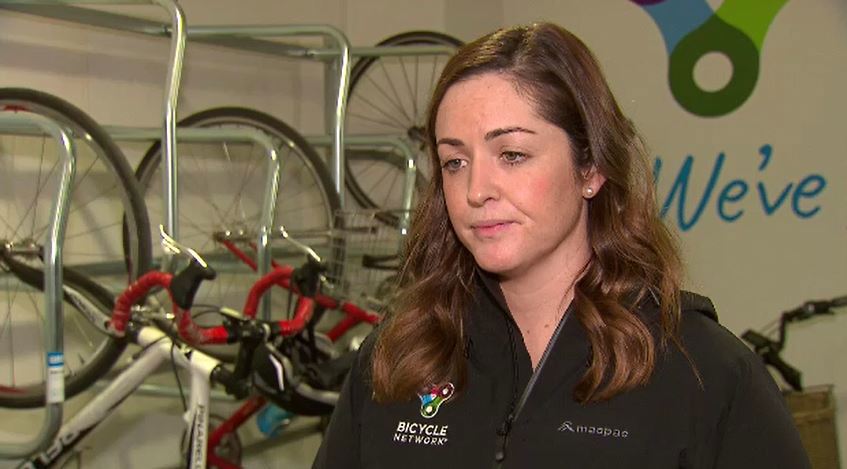
Bicycle Network general manager of events Rebecca Lane said the actions of the driver were irresponsible.

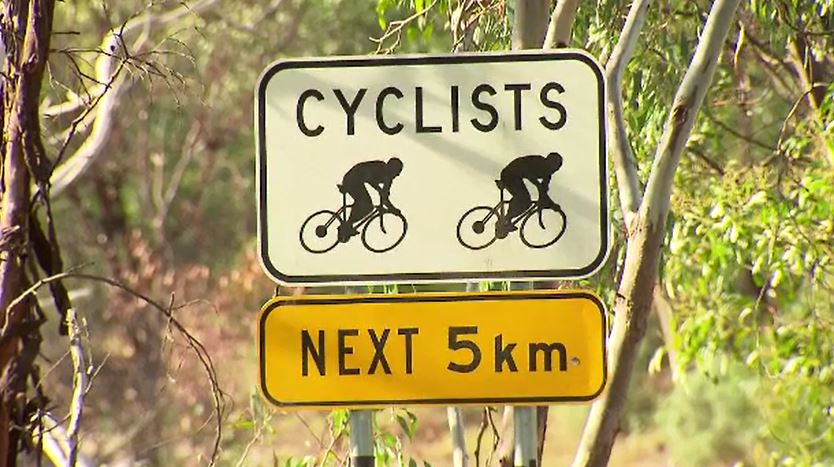
She said the area was a popular destination for cyclists.

"We were incredibly shocked to see this behaviors on an iconic bike riding route," she said.

"It's dangerous to see a car being driven at that speed when there are riders on the road, they are the most vulnerable road users.

"You've got kids going to school, got people commuting and it's terrible behavior to see on our roads, not the place for a car like that."

READ MORE: Pilot accused of murdering Victorian missing campers appears in court

Lane said more needed to be done to protect cyclists on the roads.

"The council are planning a number of modifications to reduce the hoon behaviour in this region and those modifications can't come quick enough," she said.

"It's a huge barrier for riders and there is a concern that there are risk to riders on the road."

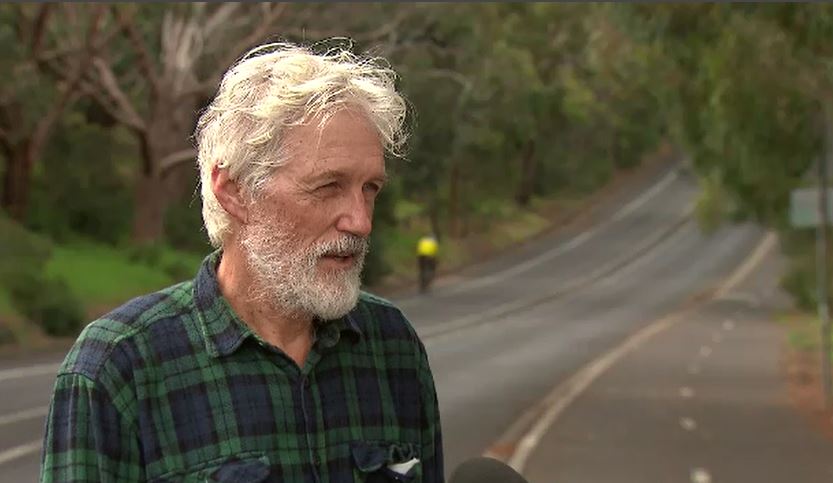
Melbourne Bicycle User Group spokesman Nicholas Dow said it was frustrating to hear of the person's reckless behaviour.

"They're putting themselves and everybody in danger at that sort of speed," he said.

"I think there's quite a bit of hoon driving on the boulevard.

"It's just constructed to attract that sort of driving."

READ MORE: Flu shots to be free in Victoria in June as flu cases soar

Victoria Police say they are aware of a video circulating on social media showing apparent high-risk driving behaviour.

The videos are no longer publicly available online and some accounts have been deactivated.

The man is expected to be charged on summons for excessive speed, driving at a speed which is dangerous and driving in a manner which is dangerous, following several alleged high-risk driving incidents on Yarra Boulevard in Kew.

He will appear at a magistrates court at a later date.

Long waits to renew passport as Aussies look to head overseas

Australians looking to head overseas have been hit with major delays and queues as the passport office is inundated with applications.

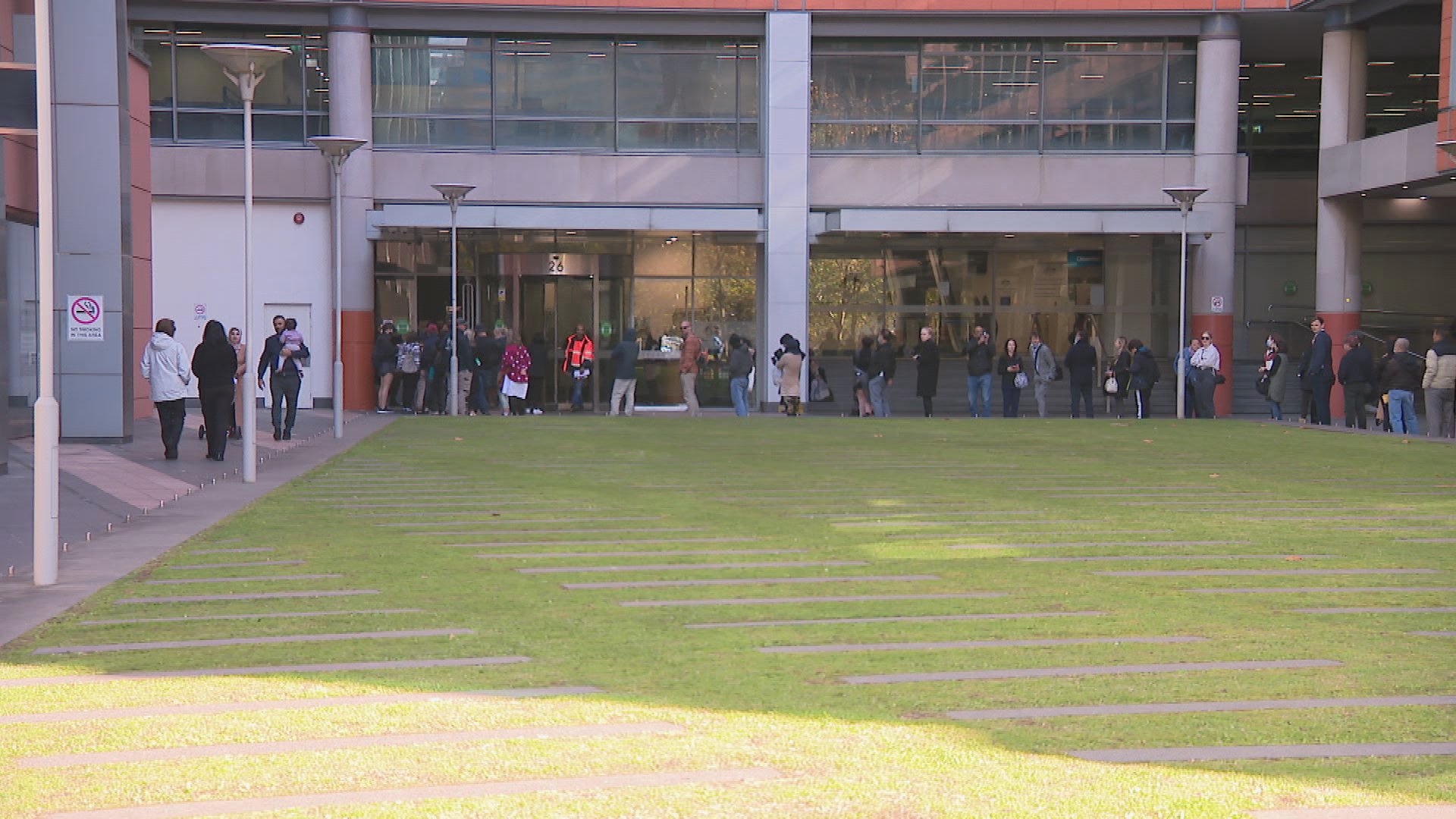
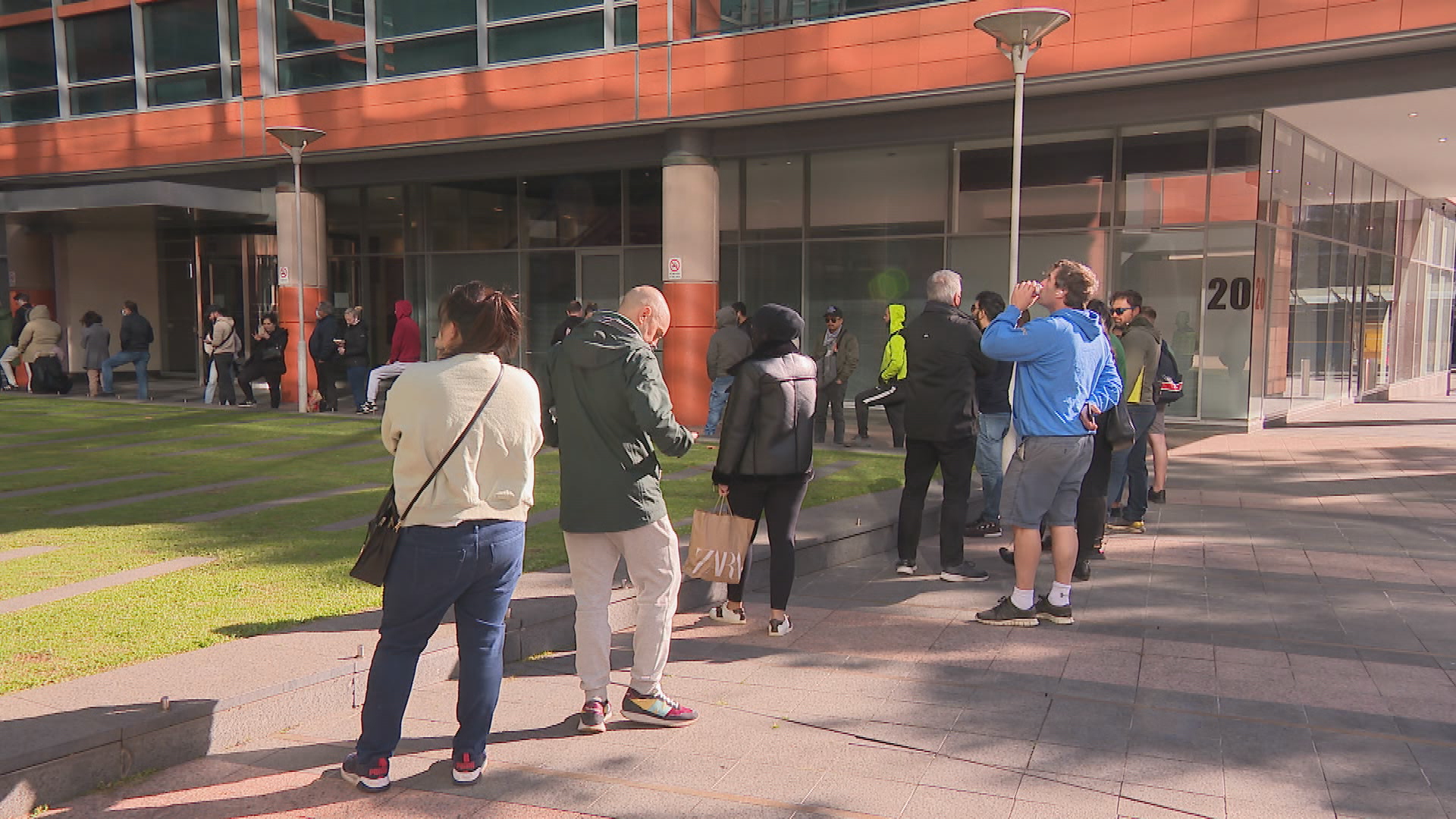
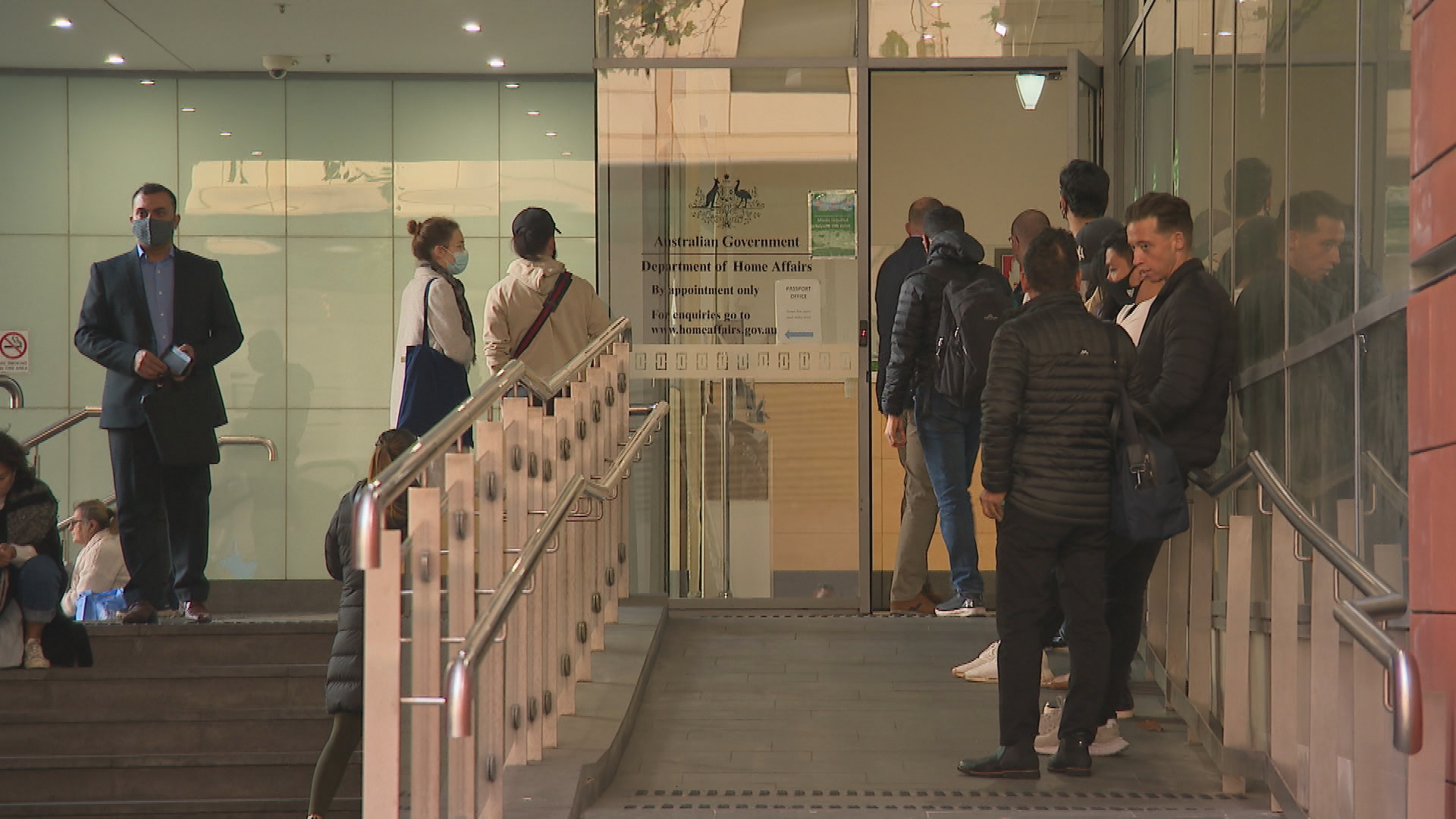
Some people waited in queues at Sydney Passport Office today for more than four hours as they seek to renew their passports.

Joel Green is booked on a flight to Singapore on Sunday and he lined up for five hours at the office today only to be told to come back tomorrow.

READ MORE: Sydney couple duped out of $5000 over a seven-hour call

Long queues at Sydney Passport Office as Australians look to travel overseas.

"They only have one person at the counter, I've been lining up since 10am," Green said.

"I made sure to get the lady at the counter's phone number so I could call her personally, make sure I get it by Thursday, otherwise, I'm out of money."

Anas Shoushary is travelling to Jordan and paid for priority processing for his passport renewal but still waited four and a half hours to pick it up.

"I expected it to be one hour, half an hour leave quickly but everyone complaining," Shoushary said.

READ MORE: What happened after Australian woman Briggite set Everest record

Long queues at Sydney Passport Office as Australians look to travel overseas.

Over the past few years of the pandemic, around 1.4 million passports expired and now people are looking to escape the Australian winter.

There is at least a four-week long backlog at the Australian Passport office.

In the first three months of this year, 400,000 passports were issued which is more than double the same time last year. 

READ MORE: Aussies warned of severe weather as polar blast hits state

Long queues at Sydney Passport Office as Australians look to travel overseas.

The Department of Foreign Affairs is recommending travellers allow at least six weeks to renew a passport.

However, some passport applicants have told 9News they've been waiting close to three months.

It's understood new passport applications and children's passports will take even longer to process.

Major Sydney road projects delayed indefinitely

The New South Wales government has indefinitely delayed some of Sydney's major infrastructure projects due to surging construction costs and labour shortages.

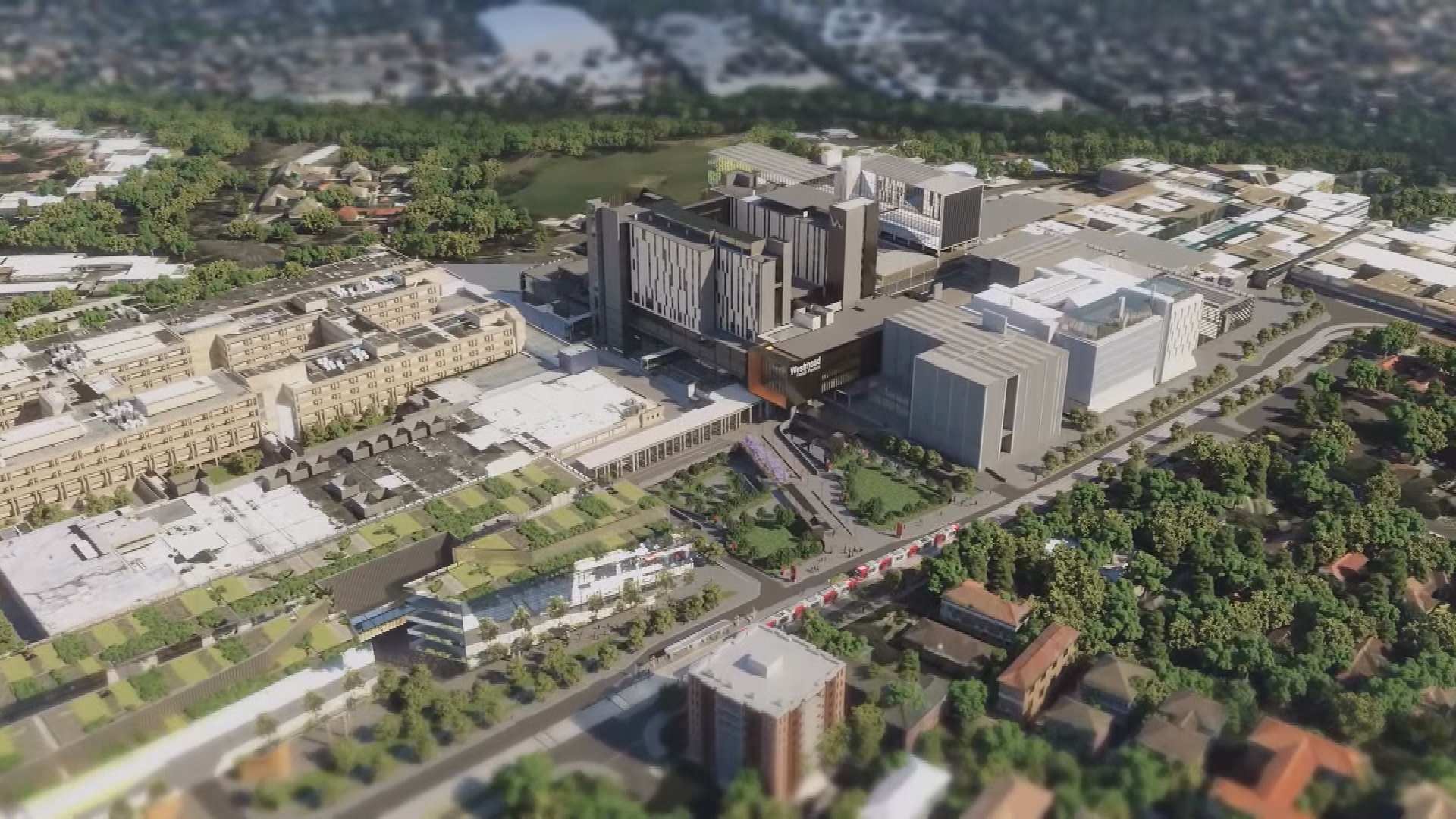
Projects like the Northern Beaches Tunnel and the Parramatta Light Rail have been put on hold by Infrastructure NSW.

These projects accumulatively cost taxpayers around $100 million.

READ MORE: Sydney couple duped out of $5000 over a seven-hour call

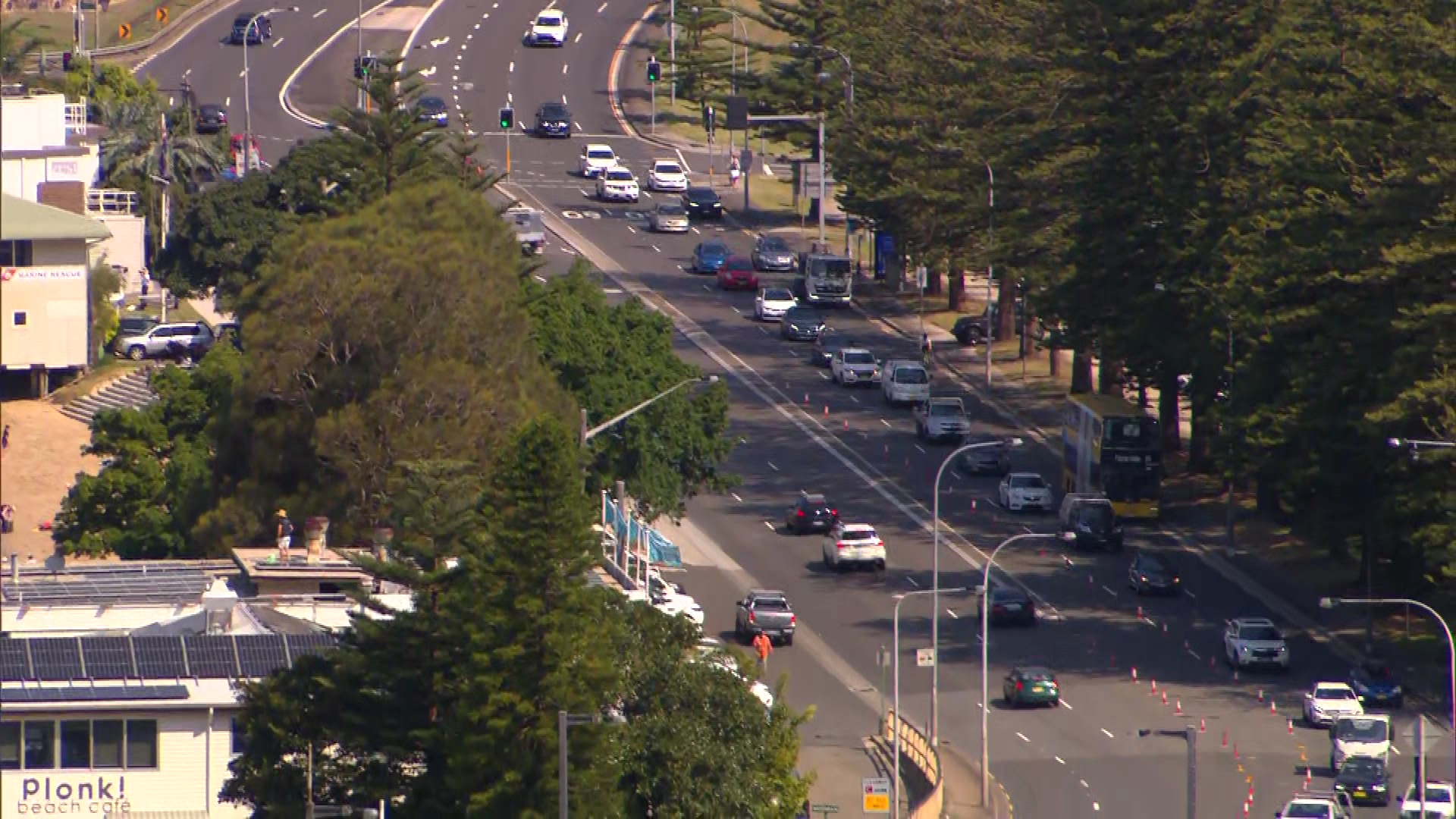
The Northern Beaches Tunnel has been delayed indefinitely.

"What we have recommended is the government take a little time because the construction industry is at capacity," Graham Bradley from Infrastructure NSW said.

Government officials like Transport Minister David Elliott have defended the decision to delay the projects.

"The government is not walking away from any of these projects – what we have to recalibrate is the time frame," he said.

However, the opposition leader believes these projects will not be delays but instead cancelled.

"It means a cancellation as far as they're concerned… this is an old trick being used by governments," Chris Minns said.

READ MORE: Aussies warned of severe weather as polar blast hits state

The NSW government has put major infrastructure projects on hold.

The projects, which were in their infancy, have caused chaos for Sydneysiders who either had their homes acquired or moved to an area to access the transport options.

Residents in Balgowlah Street were pushed out of their homes after it was acquired by the government to make way for the Northern Beaches Tunnel.

"You feel like your home is being ripped from under you and you cant do anything about it," Nerissa Levy a former Balgowlah local said.

"Ultimately people need to be able to plan their lives."

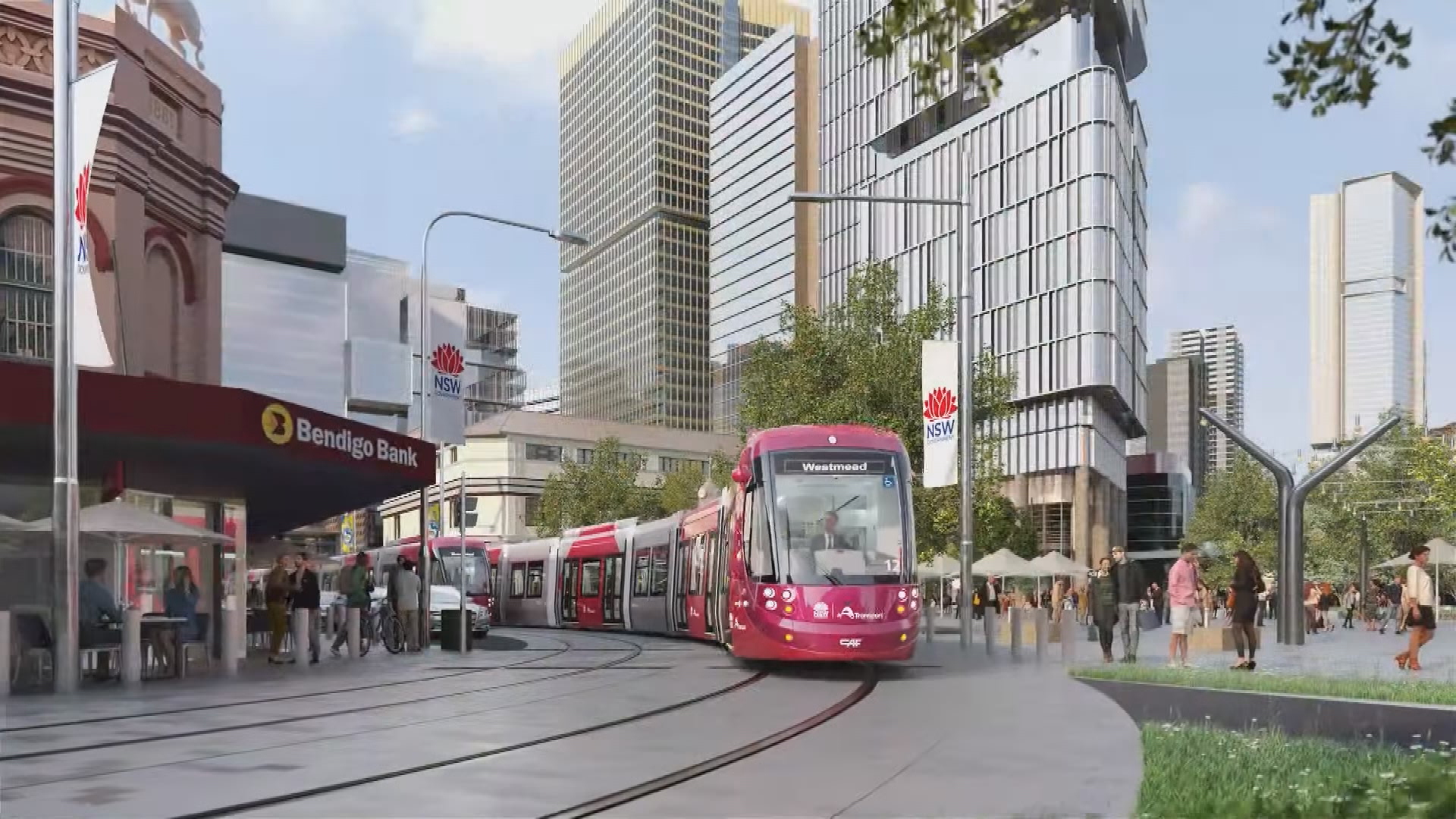
Thousands of people also moved to Wentworth Point where the Parramatta Light Rail was set to link Parramatta to Olympic Park.

"Places around Olympic Park, high density neighbourhoods they were designed to accommodate public transport," David Borger from Business Western Sydney said.

It is unknown when the projects are set to restart.

READ MORE: What happened after Australian woman Briggite set Everest record

The Parramatta Light Rail has been delayed indefinitely.

Meanwhile, there is a proposal to remove the Cahill Expressway which connects Sydney's CBD to the Warringah Freeway.

Sydney Lord Mayor Clover Moore wants the expressway to be torn down once the Western Harbour Tunnel is completed.