Test your brains with the Herald’s afternoon quiz. Be sure to check back on nzherald.co.nz for the morning quiz tomorrow. To challenge yourself with more quizzes, CLICK HERE.
Tag Archives: oceania
Principal condemns attack on Havelock student and wants violent video taken down
A school principal has condemned a violent attack on a student that was filmed, showing the repeated punching and kicking of a Year 12 girl.Havelock North High School principal Greg Fenton told parents in an email he was saddened…
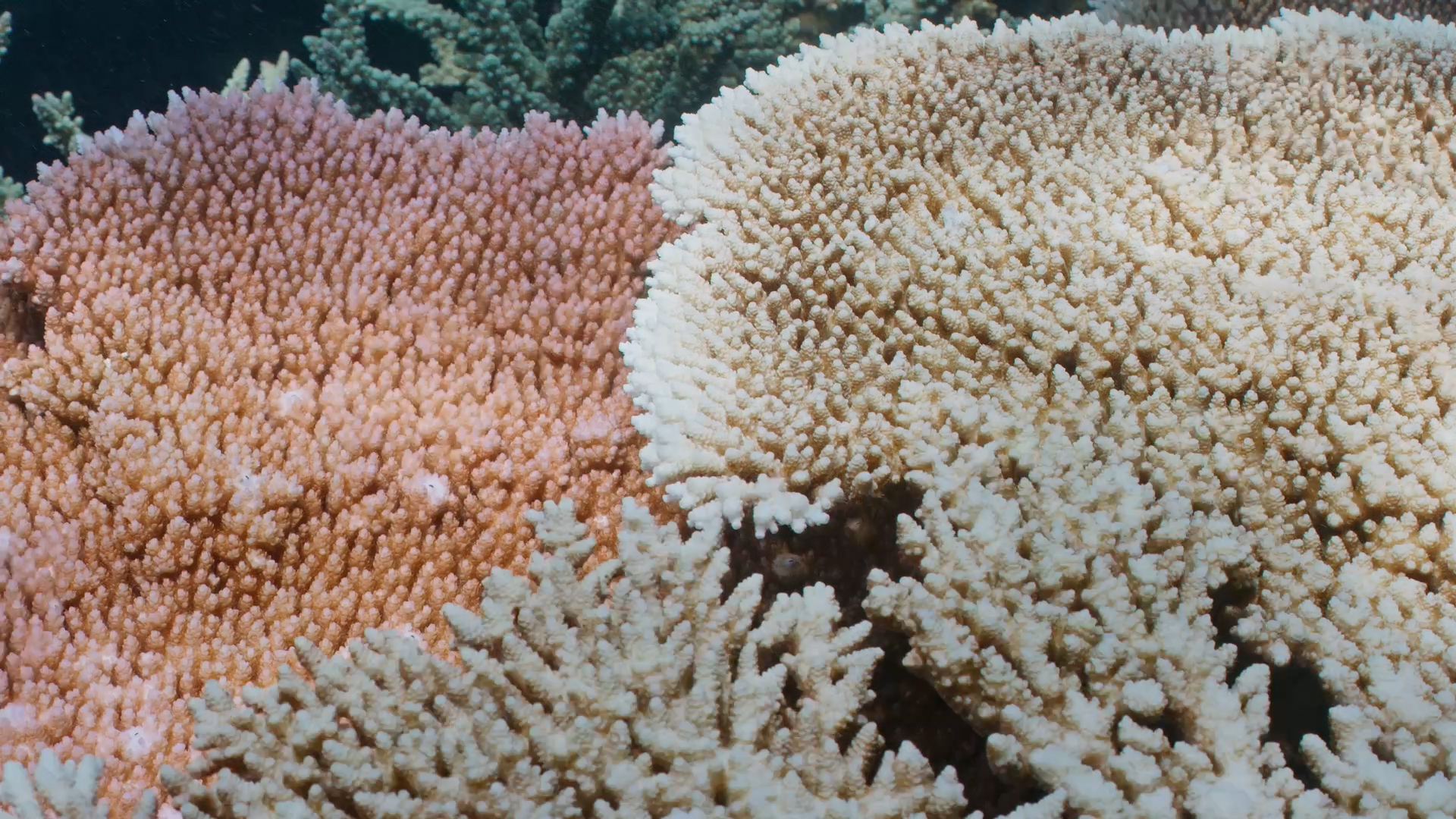
Don't be fooled by the bright coral colours — there's a seriously worrying sign in this picture
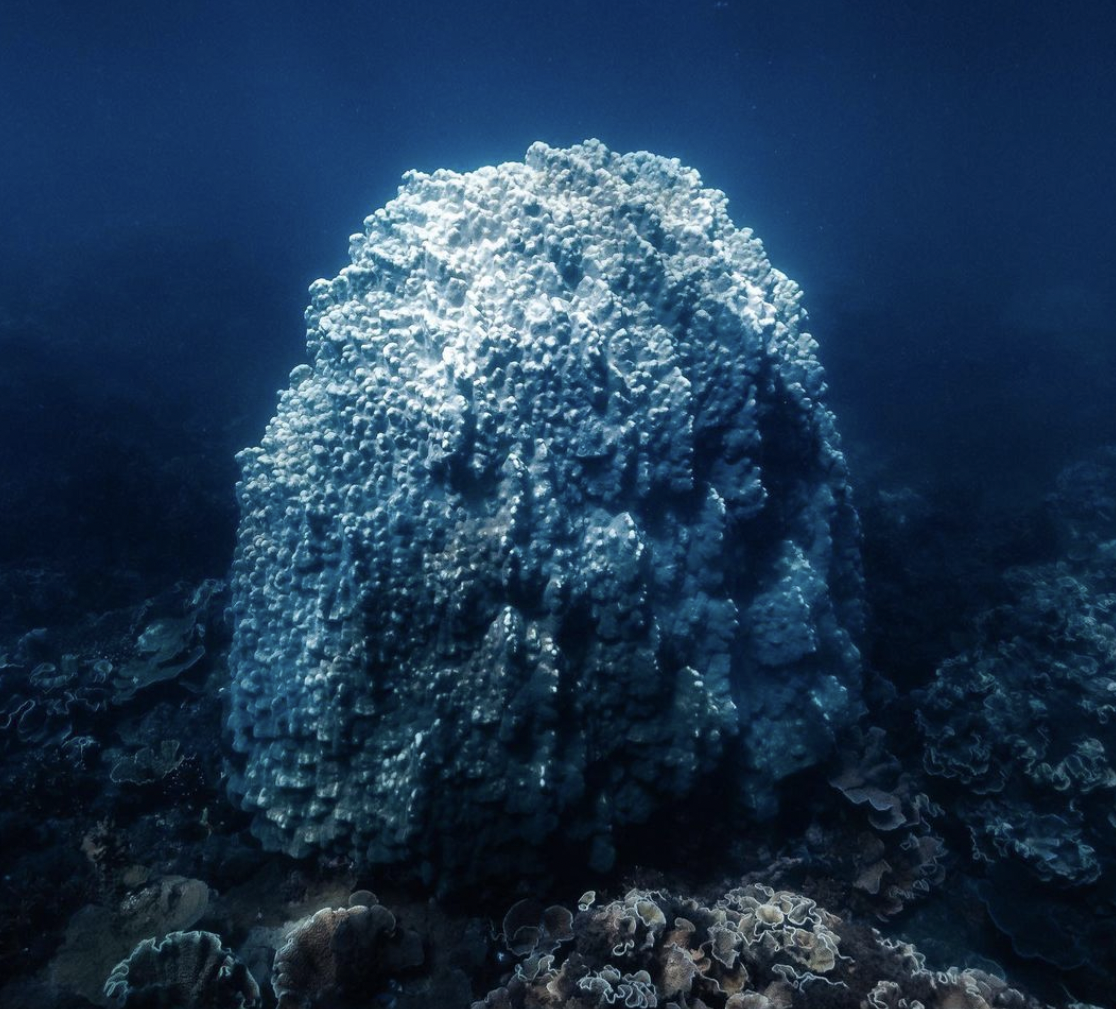
A little-known symptom of coral heat stress has been flagged, following confirmation the Great Barrier Reef is suffering from yet another mass bleaching event.
Stark white coral is usually associated with bleaching, however corals under heat stress can actually turn vibrant shades before the algae (zooxanthellae) living within coral tissue are expelled.
Videoographers Woody and Harriet Spark shared footage to their Instagram showing John Brewer Reef, off Townsville in Queensland, in 2020 and 2022.
READ MORE: Chinese military set to be based on Australia's doorstep

In the earlier footage the reef appears grey and brown, while the 2022 footage shows a kalediescope of colours — a sign of coral distress.
"In a desperate bid to protect themselves from ocean heatwaves, some corals 'glow' in fluorescent colours like neon pink, purple, yellow and blue," the Sparks, who have documented bleaching for The Climate Council and marineconservation.au, said.
"Like the way we use sunscreen, corals can use fluorescent pigments to try and shield themselves from excessive UV light.
"It looks stunning, but this is a clear sign that the coral is stressed."
The Sparks said the corals have a chance of surviving should water temperatures drop.
If it doesn't the coral will eventually bleach.
A study published in 2020 also found "colourful bleaching" is indicative of heat or nutrient stress.
READ MORE: Dangerous winds wreaks havoc as NSW flood clean-up begins

The study found it "is a recurring phenomenon in reef regions around the globe" and a response to either heat or nutrient stress.
The Great Barrier Reef Marine Park Authority (GBRMPA) confirmed a "widespread" bleaching event was underway earlier this month.
The reefs of Townsville in Far North Queensland are the worst-hit.
This is the sixth mass bleaching event the reef has faced, with subsequent events occurring 1998, 2002, 2016, 2017, 2020.
The latest event has sparked significant concerns for tourism operators, who have already been hard-hit by the pandemic border closures.
It's estimated Great Barrier Reef tourism employs more than 64,000 people full-time and contributes $5.2 billion annually to the Australian economy.
Climate change is the main driver of bleaching events, GBRMPA said.
READ MORE: Once COVID-19 success stories – now seeing massive outbreaks
Augustine Crosbie, PhD candidate at the ARC Centre of Excellence for Coral Reef Studies first flagged concerns about the reef in January 2022, when he reporting early signs of bleaching amid a prolonged marine heatwave.
"Currently there are only early signs of stress, however this is happening much earlier into summer than during past bleaching events," he told 9News at the time.
Auckland Transport staffer parks on footpath to collect takeaways, police called
An Auckland Transport employee has come up with a novel way of getting round the lack of kerbside parking in the CBD – mount the footpath and narrowly miss a pedestrian in the process.As colleagues were putting the finishing touches…
Most drivers, commuters used Transmission Gully highway road when it opened, data shows
Data shows 85 per cent of southbound morning commuters made the switch to using Transmission Gully when the road opened yesterday . Waka Kotahi NZ Transport Agency has reported a noticeable reduction in congestion after the first…
State Highway 2 in Lower Hutt clear after three-vehicle crash
State Highway 2 in Lower Hutt has now been cleared after a three-vehicle crash was blocking the southbound lane.Emergency services responded to the crash, which was near the Kennedy Good Bridge.Police said there were no reports…
Nelson's long-awaited pride crossing proposal revoked due to accessibility concerns
A year since it was first raised by Nelson City Council, the proposal for a pride crossing has been revoked due to accessibility concerns, instead, city centre bike sheds will be decorated in support of the region’s LGBTQIA+ community.The…
World Nature Photo Award winners crowned for 2021
Stealthy predators of the Antarctic, stoic foxes of the Artic and peaceful frogs, are just some of the stunning scenes included in the annual photography competition this year.
What Chinese military base in Solomon Islands means for Australia
Australia is facing a major defence shake-up if China manages to base warships in the Solomon Islands.
Security experts and Australian Defence Force senior commanders flagged an overhaul in military operations after the Solomon Islands initialled a security agreement with China.
The deal opens the way for the superpower to base military forces on the Pacific nation less than 2000 kilometres from Australia's coastline.
READ MORE: Asian countries once COVID-19 success stories seeing massive outbreaks

Defence analyst Malcolm Davis said if Chinese naval forces are based in the Solomon Islands, Australia will have to respond with a "fundamental change" in its military operations.
It would involve switching the focus from the traditional "sea-air gap" to the north and north-west of Australia, Dr Davis, of the Australian Strategic Policy Institute, said.
"We now have to think more about defending the east coast … there will likely be more focus on better surveillance by naval, space and air assets to monitor Chinese activities," he said.
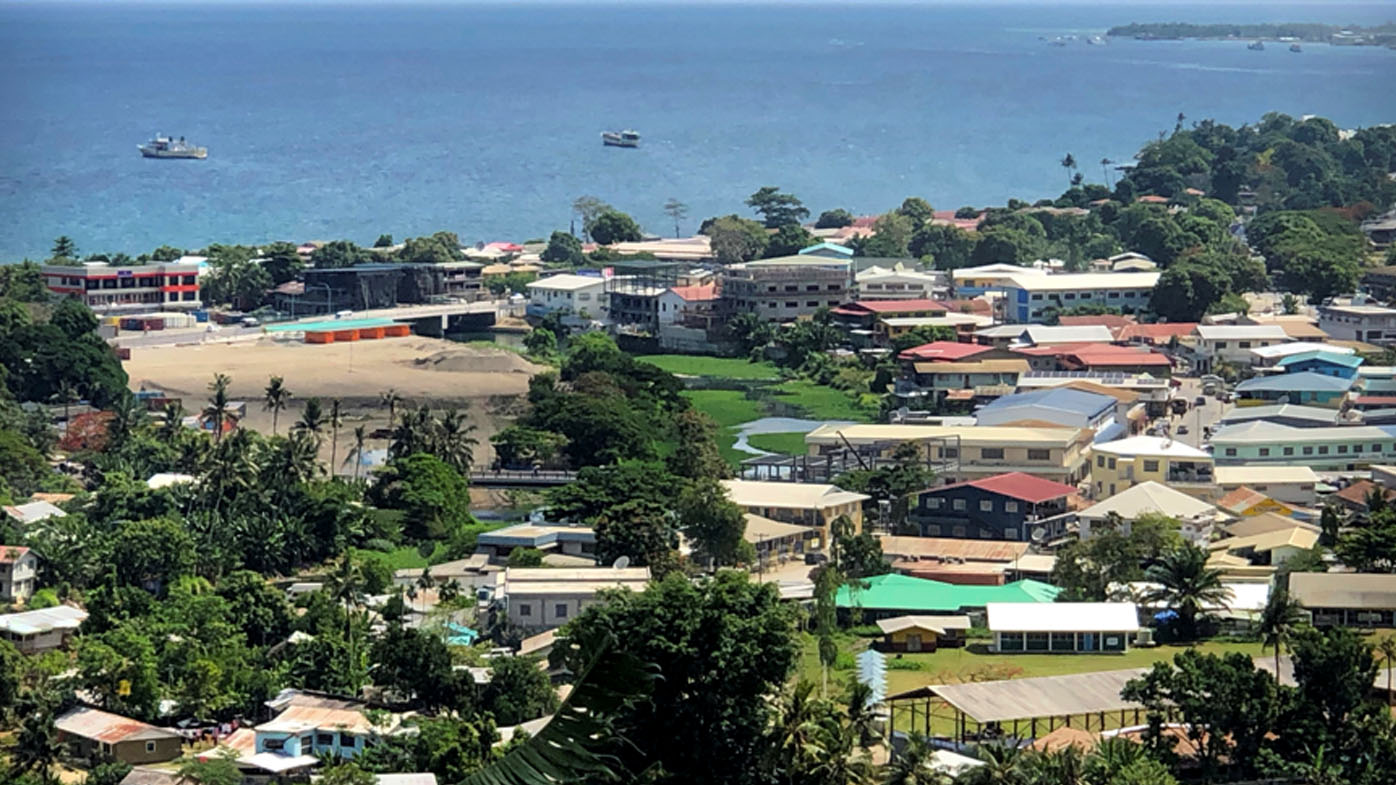
From an advance military base in the Solomon Islands capital Honiara, China would be better able to exert influence on other Pacific island states.
Dr Davis said after the May federal election, the incoming government should review military capabilities on the eastern seaboard to keep pace with the changing security environment.
READ MORE: Dangerous winds to wreak havoc across Sydney as NSW flood clean-up begins

And a top ADF commander said an increased Chinese presence in the Pacific would mean an overhaul of day-to-day operations.
Lieutenant-General Greg Bilton, ADF Chief of Joint Operations, was speaking during a visit to the Australian Signals Directorate in Canberra yesterday.
"It does change the calculus if Chinese navy vessels are operating from the Solomon Islands," General Bilton said.
He said if Chinese forces are based there, ADF operations would have to adapt to new security challenges.
"They're in much closer proximity to the Australian mainland, obviously, and that would change the way that we would undertake day-to-day operations particularly in the air and at sea.
"We would change our patrolling patterns and our maritime awareness activities."
READ MORE: Chinese military base in Solomon Islands 'a red line for Australia'
Diplomatic snub for Australia
After details of the deal were finalised by officials yesterday, Solomon Islands Foreign Minister Jeremiah Manele and his Chinese counterpart Wang Yi will now formally sign the agreement.
Signing the deal will be a rejection of pressure by the Australian and New Zealand governments who opposed it.
The Solomon Islands government said in a statement that officials have "initialled elements of a bilateral security cooperation framework" with Beijing.
It added the Pacific nation would continue to work with all partners including Australia "in providing a safe and secure nation where all people are able to co-exist peacefully".
Under the draft agreement, leaked last week on social media, Chinese naval ships and other military forces will be permitted to be based in the Solomon Islands to protect Chinese projects and citizens there.
The Pacific nation's closer relations with China come after rioting erupted in the capital Honiara last November.
Australia and other neighbouring countries sent police and military personnel there to restore order.
Woman who lost sight in her 20s says being blind isn't a barrier
When hairdresser Brittnee Watson first noticed a black "blob" across her vision, she thought it was stray mascara which had dropped into her eye.
"I scrubbed my face for half an hour and I couldn't get rid of it," the 28-year-old said.
Ms Watson, from Melbourne, rushed to an optician.
READ MORE: What we know about the BA.2 'stealth' Omicron variant

However, the medic wasn't welcoming.
Ms Watson has type one diabetes – which can lead to vision loss.
According to the Australian Bureau of Statistics, one in 20 Australians had diabetes in data recorded between 2020 and 2021.
Type two was the most common, representing 85.5 per cent of all cases, followed by Type one with 11 per cent.
Ms Watson admitted she hadn't been taking care of her health as she should have.
The doctor sent her away.
"He said, 'I'm not going to waste my time until you start looking after your diabetes,'" she said.
She went to hospital where doctors and nurses were kinder.
They told her she had macular degeneration – which usually affects older people – and diabetic retinopathy.
"Macular degeneration is the deterioration of the central vision, so this is very prominent in anybody over the age of 80," she said.
"Diabetic retinopathy is when the blood vessels that form behind your eye because there's not enough blood flow burst."
And while Ms Watson was given treatment, her sight couldn't be saved.
Just a few months later, on Australia Day 2017, she woke up with no sight at all.
She was just 22.
READ MORE: Stage-four breast cancer survivor broke down in tears at budget news

"It was a lot faster than what they thought," she said.
The rapid deterioration meant she he had to stop driving, move home, and give up her job in a salon.
She admits she "locked herself in the house" for a week.
However, while that was tough, Ms Watson told 9news.com.au her life is now entirely positive.
She said losing her vision made her learn to look after her health and give up her previously wild lifestyle.
Thanks to Vision Australian, she's learned to use the array of equipment now available to help people with vision loss.
She has seeing eye dog, Kuma, a job working for an allied health service and has bought an apartment with her partner, Paul.
READ MORE: 'Thousands of lives will be lost': Disappointment at budget cancer snub
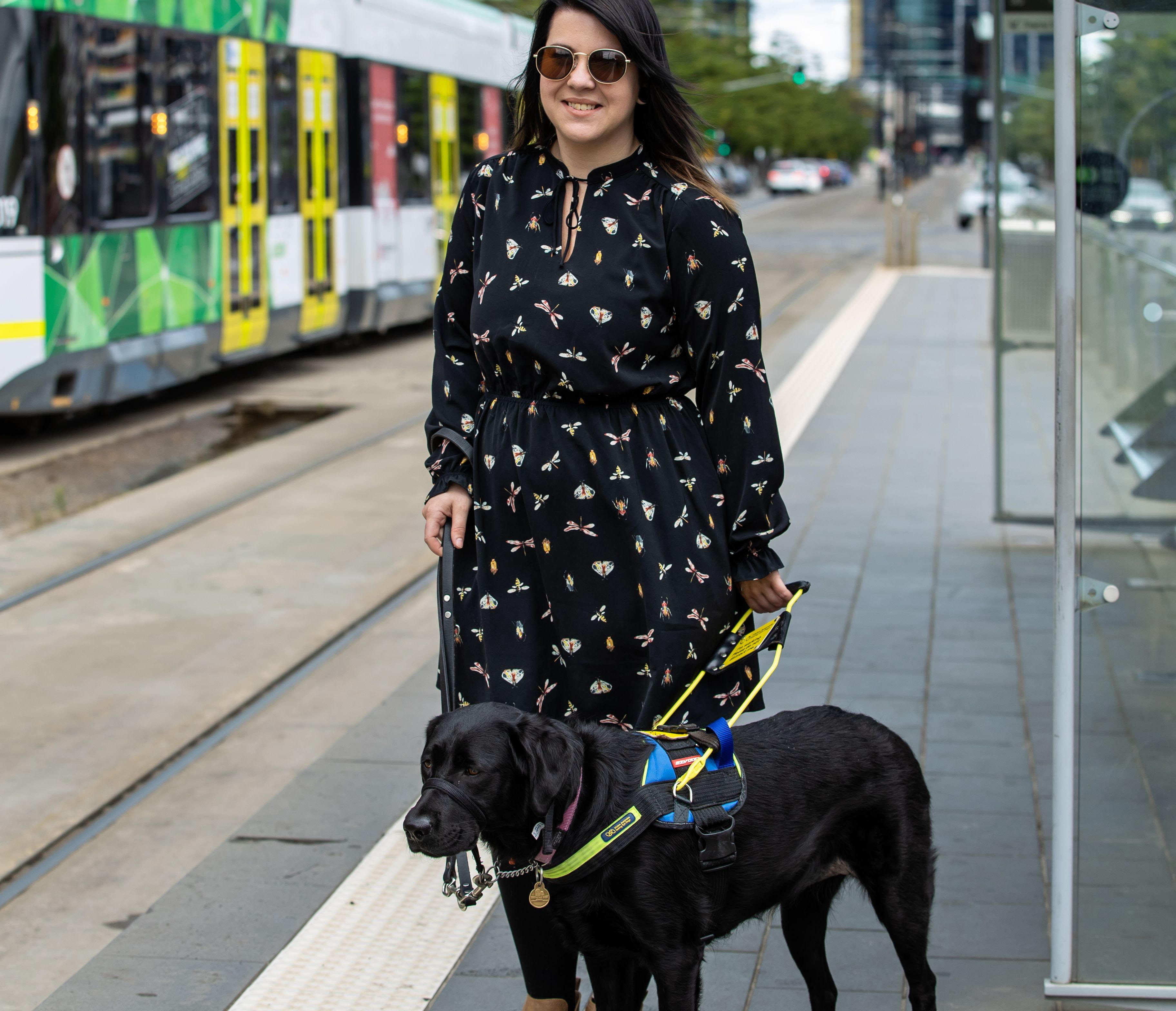
She does most of the things other people her age do, such as catching up with friends and visiting cafes – with the help of Kuma and Google Maps on her phone.
She also hopes to start playing blind Australian Rules football too.
"For me, it's so easy to look at the downsides, but if you push through and look at the positives, vision loss isn't a barrier, it's a speed hump," she said.
Now, Vision Australia has launched a campaign to show people living with blindness or low vision doesn't have to be a barrier to full and active life.
The organisation says studies have shown the number of Aussies with no or low vision will reach more than 500,000 by 2030.
Currently 131,000 Aussies are partially or fully blind, according to the Australian Institute of Health and Welfare.

Karen Knight, general manager of client services for Vision Australia, helps people cope with losing their sight.
"We connect them with other people going through similar experiences to hep them recognise there is plenty more fulfilling life ahead," Ms Knight said.
"The biggest far is of their isolation, that they won't be able to do the things that they could before.
"People really do fear loneliness and can be lonely, until they learn the skills from our mobility instructors."
Contact journalist Sarah Swain: ss****@******om.au