A man says he was left psychologically scarred after serving as a Dutch intelligence officer in his former homeland.The mental strain ultimately led to his outburst at Rotorua Police Station on March 10, 2020, where the 40-year-old…
Tag Archives: oceania
Police arrest nine in Wairoa meth operation
Police have arrested a further nine people in relation to an ongoing investigation into the sale and supply of methamphetamine in Wairoa.Detective Inspector Dave de Lange, Eastern District Acting Field Crime Manager said the Eastern…
Robotexts leaving Australians 'under attack all the time'
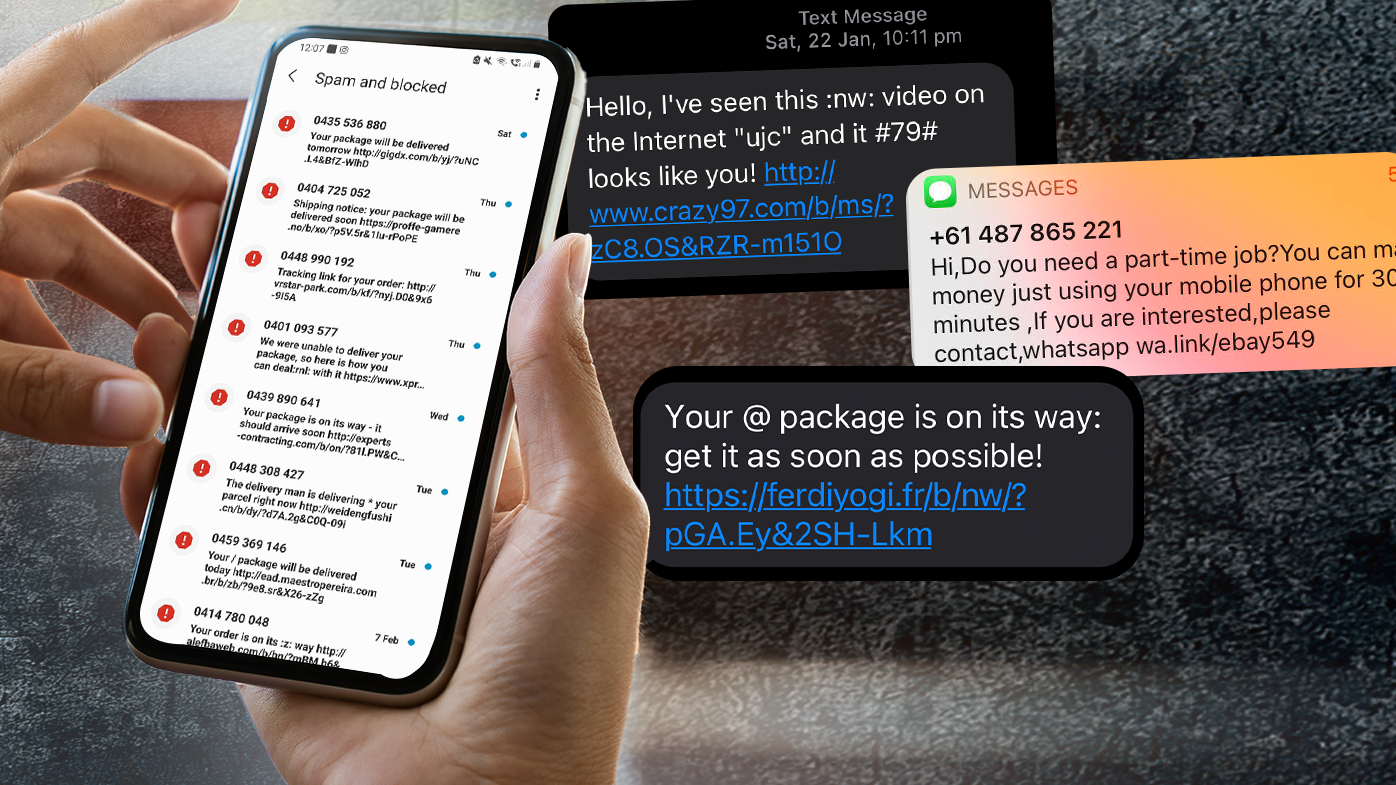
Australians are being put at risk of serious financial loss through annoying scam messages, with some now receiving up to four robotexts in the span of an hour.
It can feel like there is no way to combat the anonymous messages, which tempt you to click a link that can dupe you out of money and private information, or give scammers access to your phone.
They are showing no sign of slowing down either, with the Australian Competition and Consumer Commission (ACCC) Scamwatch department already experiencing a 106 per cent increase in SMS scam reports this year alone.
READ MORE: Victorian woman fleeced $10,000 from 'harrowing' phone scam
READ MORE: If your password is on this list, you're in trouble
"In January we received 8454 reports to Scamwatch about scam SMS with $1.4 million lost," an ACCC spokesperson said.
"In 2021 Scamwatch received over 67,000 scam reports where contact was by SMS with $10 million lost."
Similarly, Telstra received 11,100 SMS scam reports from customers last year – compared to just 50 reports in 2020.
"Australia and its people are now under cyber attack all the time," Telstra CEO Andy Penn has said.
"SMS scammers and other cyber criminals are not going to stop."
April Glover, from Sydney, receives on average one to two scam texts each day.
"It's been pretty constant ever since July last year," she said.
READ MORE: Sydney family conned out of $1 million after falling victim to email scam

READ MORE: Millions of Aussies get scam text as cybercriminals pounce
"They are really frustrating. As someone who online shops a lot, I've almost been fooled once or twice with the 'Your package didn't arrive' messages, because sometimes the text sounds legitimate for a second, especially the package ones."
Kate Modrusan in Melbourne also gets multiple scam texts weekly, as well as scam calls and emails.
"It's so frustrating and they're getting more sophisticated," she said.
"I almost clicked a link the other day but I Googled it first."
Belinda, also from Sydney, said she has received in excess of 30 'robotexts' a week and in once instance received four back-to-back within an hour.
"I don't just receive texts about postages – I get them from people claiming they have a video of me, which can catch you off guard," she said.
"I always block the numbers but they come from a new one every time which starts to get irritating. I am happy to have my spam inbox full of junk but having a direct line to your phone means there's way less peace."
So how can you protect yourself against scam texts? And are phone companies and the government taking any action against the malicious messages?
Can you stop yourself receiving scam texts?
Unless the scam text comes from a number which you have previously blocked, you cannot stop the texts arriving, but you can get your phone to filter messages so you are more likely to spot a scam.
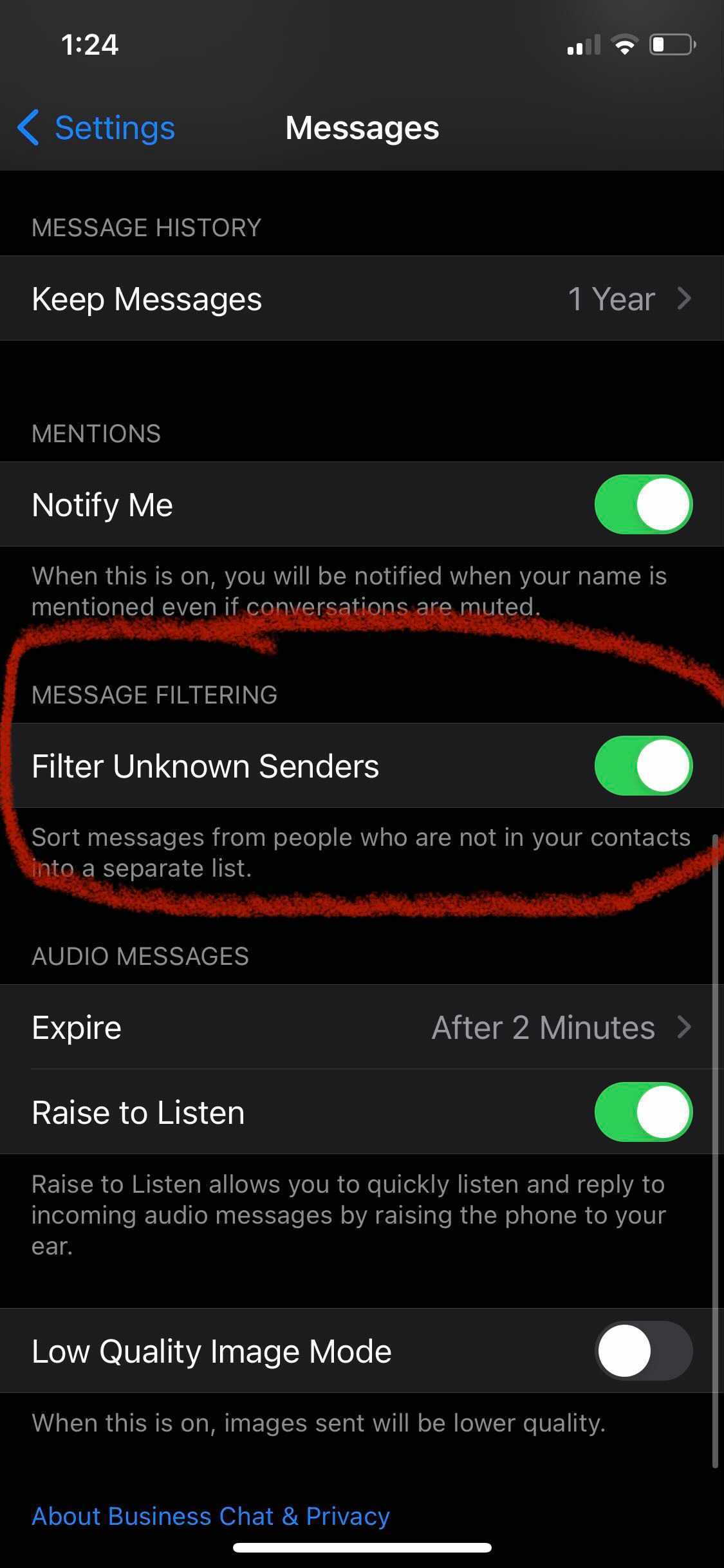
iPhone users can turn on message filtering by going into their settings, then to the 'Messages' section, then turning on the dial that says 'Filter Unknown Senders'.
The setting will mean texts from people not saved as contacts, or from number who do not appear to be legitimate senders, will be sent to a separate folder in the message app.
Many Android phones have the filter setting automatically turned on.
If it is not turned on, you can go to into settings and into the 'Spam Protection' section, and turning on 'Enable Spam Protection'.
This method is helpful but not foolproof, so always have a skeptical eye when receiving unexpected messages.
Are phone companies taking action against robotexts?
Telstra and Optus have both expressed their frustrating with scam texts, and have tried to mitigate the risky situations customers have been put in by the cyber criminals.
But Telstra has committed to being more proactive against robotexts, with a plan to stop them from reaching your phones.
Telstra announced in November that it is developing technology to automatically detect and block scam tests as they travel across the network.
The technology involves automatic scanning of messages to find suspicious patterns and characteristics along with other data that indicate the message is malicious.
A pilot of the technology is being run inside Telstra at the moment, with its CEO stating intentions to roll out the technology across the network this year.
READ MORE: Security expert warns hackers can access your devices without a link

Have you got a story? Contact Serena at Se************@******om.au
However, Mr Penn was warned it "will not be a fool proof solution to scam".
"Malicious actors will continue to find new methods to attempt to scam Australians," he said.
"We all need to remain alert to the possibility that when we receive an unexpected message it may not be genuine."
Optus blocked nearly 30 million text messages relating to the Flubot scam alone last year and contacted thousands of customers impacted by the scam to help them mitigate its effects.
The company's Vice President of Regulatory and Public Affairs Andrew Sheridan has said, "There is no place in Australia for these fraudsters."
What is the government doing about scam texts?
New laws that amended Australia's regulations in the Telecommunications (Interception and Access) Act to allow phone companies to identify and block malicious texts were introduced in December last year.
Communications body Communications Alliance has since been working to update Australia's Reducing Scam Calls Code to include obligations for companies to reduce scam texts.
It also is introducing obligations for companies to cancel phone services where an Australian phone number is being used for scams.
How do you identify scam texts and why are there more of them?
The Australian Communications and Media Authority has warned people to beware of any texts or calls received from a contact you do not know.
Many texts come from random phone numbers or unknown company names.
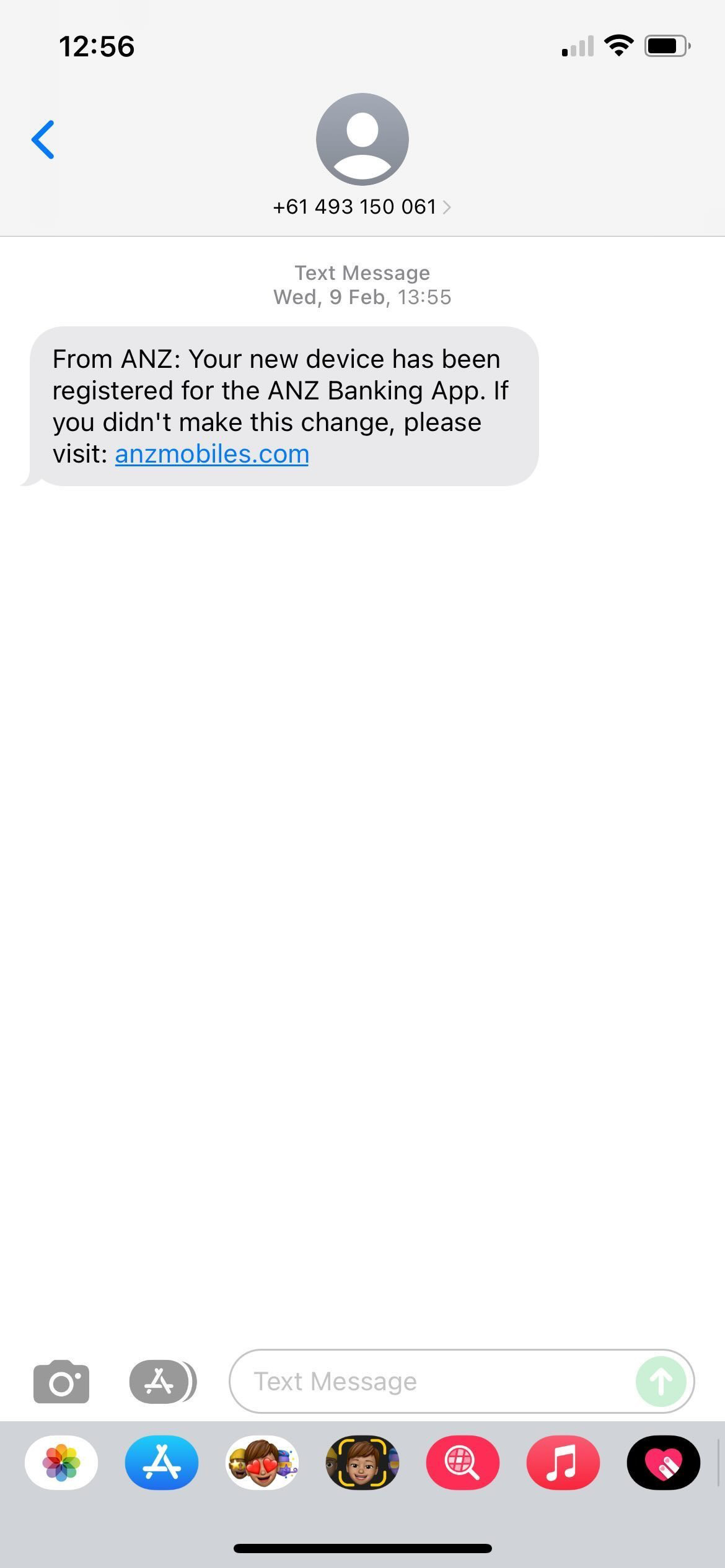
A tell tale sign of a scam is spelling or grammatical errors, as well as an unofficial-looking link, such as 'http://client.10dia.ru/b/tw/?7.erewr.9'.
READ MORE: Pensioner feels 'like a wrung-out dishrag' after falling victim to scam
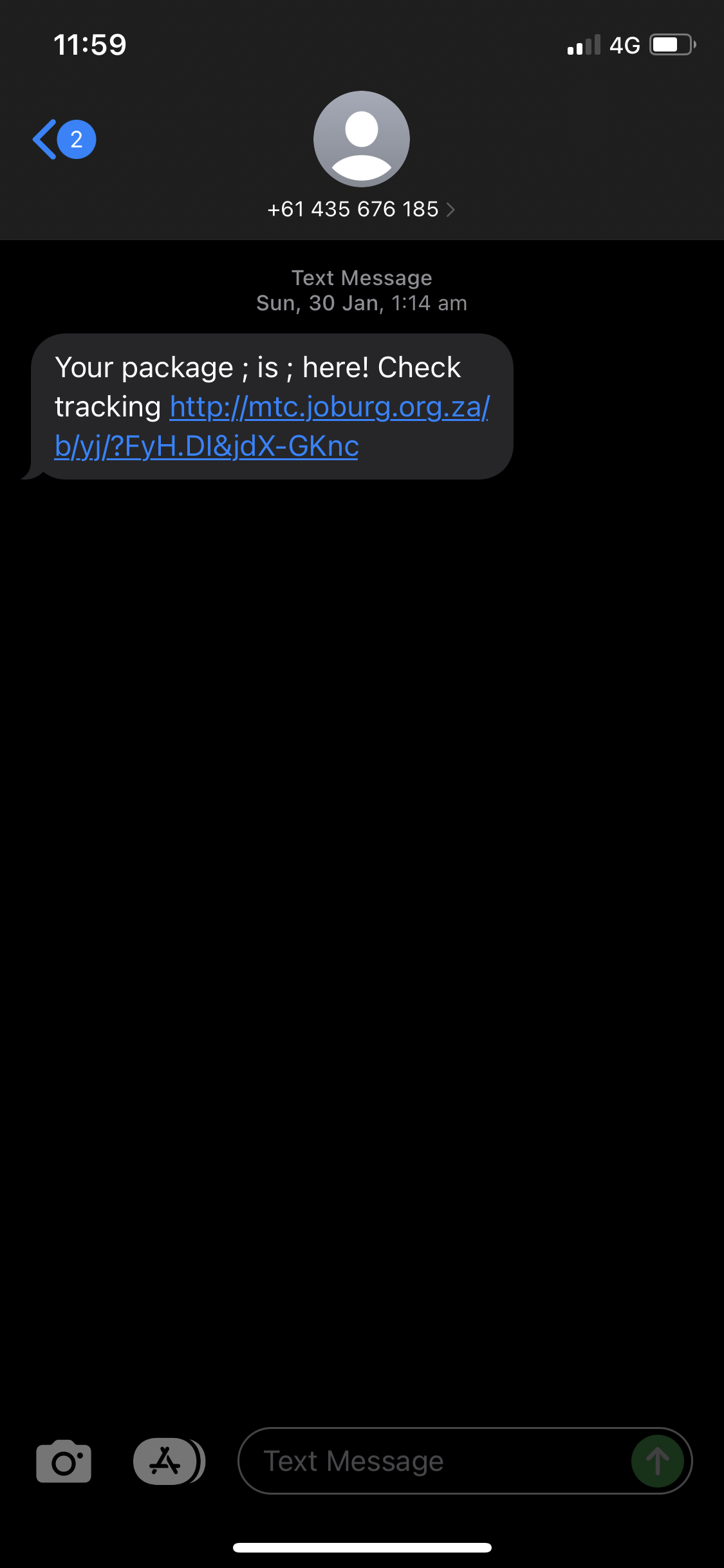
Scam texts come in all different forms but almost always ask the recipient to take action, which often involves clicking on a link.
A common scam circulating in Australia is fake delivery notification texts being sent out, with scammers preying on the rise of online shopping before Christmas and after COVID-19.
Scam texts are sent automatically and in bulk often to randomly chosen or automatically generated numbers.
The reason instances of Aussies receiving robotexts are increasing is being put down to scammers getting access to smarter, more evolved technology.
An example of this is a cybercrime campaign known as Flubot.
It installs a virus on the phone of someone who clicks on a spam text and gives the scammers access to the their contacts, who will then be on the next list of victims.
What should you do when you receive scam texts?
The ACCC advises people to remember the 3Ds when they suspect they have received a scam text: Do not click, Do not download, and Delete.
You should never click on the links in the text messages or hand over money or information.
The messages should be deleted immediately and you can block the number the message came from.
"If you think your smartphone has been infected, change your banking password or email password through a computer device immediately," an ACCC spokesperson has advised.
"If you have encountered a scam, tell your friends and family. They can offer support and you can help protect them from scams."
The ACCC also advises people who fear their personal information has been taken to contact IDCARE on 1800 595 160.
Scams can also be reported to ACCC's ScamWatch.
Covid 19: Omicron's 'cousin' B.A2 swiftly on the rise in NZ
An emergent Omicron subtype appears to be swiftly rising in New Zealand – yet scientists don’t expect BA.2 to eclipse its cousin as it has overseas, but spread Covid-19 alongside it.As of Tuesday, the original type BA.1 accounted…
'Mafia': Couple attack Auckland Council for seeking $20,000 in court costs after dispute
It sought $20,000 in costs after an Environment Court case, but Auckland Council was left chasing the money when important paperwork relating to a long-running and bitter dispute was lost.The court has now apologised to the council…
Covid 19 Omicron outbreak: Protesters' anti-media views a concern, experts say
By Tim Brown of RNZ The anti-mandate protests in Wellington and around the country have contained a strong anti-media sentiment.Reporters have been abused and threatened.And one far-right activist has gone a step further and,…
Woman asleep at wheel on Northland highway with 2kg of meth ingredient in car
A driver asleep in her car on the side of a Northland highway, headlights on and engine still running, was carrying two kilograms of an ingredient used to cook meth, authorities say. Karla Anne Puddick, 39, pleaded guilty in Whangarei…
Grace Tame's new campaign for law reform for child sex abuse victims
Former Australian of the Year Grace Tame has launched a new campaign to remove the word "relationship" from crimes relating to child sex abuse.
The 27-year-old is fundraising for the "Stop Gaslighting Survivors" campaign through the Grace Tame Foundation, in her latest fight for law reform.
Ms Tame was groomed and repeatedly sexually assaulted by a paedophile teacher, but for years Tasmania's gag laws meant she was unable to speak out, while her abuser bragged on Facebook.
READ MORE: Diving instructor killed in Sydney shark attack remembered

"The man who abused me was convicted of 'maintaining a sexual relationship with a person under the age of 17," she said in her recent Press Club address.
"In other jurisdictions this exact same offence was called 'the persistent sexual abuse of a child'.
"The former implies consent, while the latter reflects the gravity and the truth of an unlawful criminal act committed against an innocent, vulnerable child-victim," she said earlier this month.
READ MORE: PM denies sanctioning 'threatening' phone call to Grace Tame

Now Ms Tame is pushing to change the offence to "persistent sexual abuse of a child" across the country.
The aim of "Stop Gaslighting Survivors" is to "ensure that every state and territory adopts the best practice model by totally removing all language which sanitises the sexual abuse of children", according to the fundraising page.
READ MORE: Who is Grace Tame, 2021 Australian of the Year?
The campaign was launched just over a week ago, and at the time of publishing had surpassed its $50,000 target.
"Donations will be used to help the Grace Tame Foundation continue its vital work of lobbying for structural reform," according to the page.
This follows on from the #LetHerSpeak campaign, created and run by survivor advocate Nina Funnell, which saw an overhaul of gag-laws in Tasmania, the Northern Territory and Victoria in 2020.
Weather: Storm alert – Weekend gales, rain, Wellington gets wet Saturday night
A fast-moving storm system with heavy rain and gales is set to hit the capital for the second weekend running.MetService has issued a swathe of watches and warnings across the South Island and bottom of North Island ahead of the…
Covid 19 Omicron protest: Courts disrupted, trials on hold as protesters hold up justice
The anti-mandate protest at Parliament is stalling scores of court cases – including one trial involving sex charges.Around 2000 people are remanded behind bars awaiting their day in court, among them a man awaiting a week-long…