Tag Archives: oceania

US President personally sanctions Putin and foreign minister

The US President has announced he will personally sanction the Russian president amid a cascade of condemnation from the highest levels over Moscow's invasion of Ukraine.

The Biden administration announced Friday that it will move to freeze the assets of President Vladimir Putin and Foreign Minister Sergey Lavrov, following the European Union (EU) and Britain indirectly sanctioning top Russian leadership.

The Treasury Department announced the sanctions shortly after the EU said it had also approved an asset freeze against Mr Putin and Mr Lavrov as part of a broader package of sanctions against Russia for the invasion of Ukraine.

LIVE UPDATES: Russian forces approach Ukraine's capital
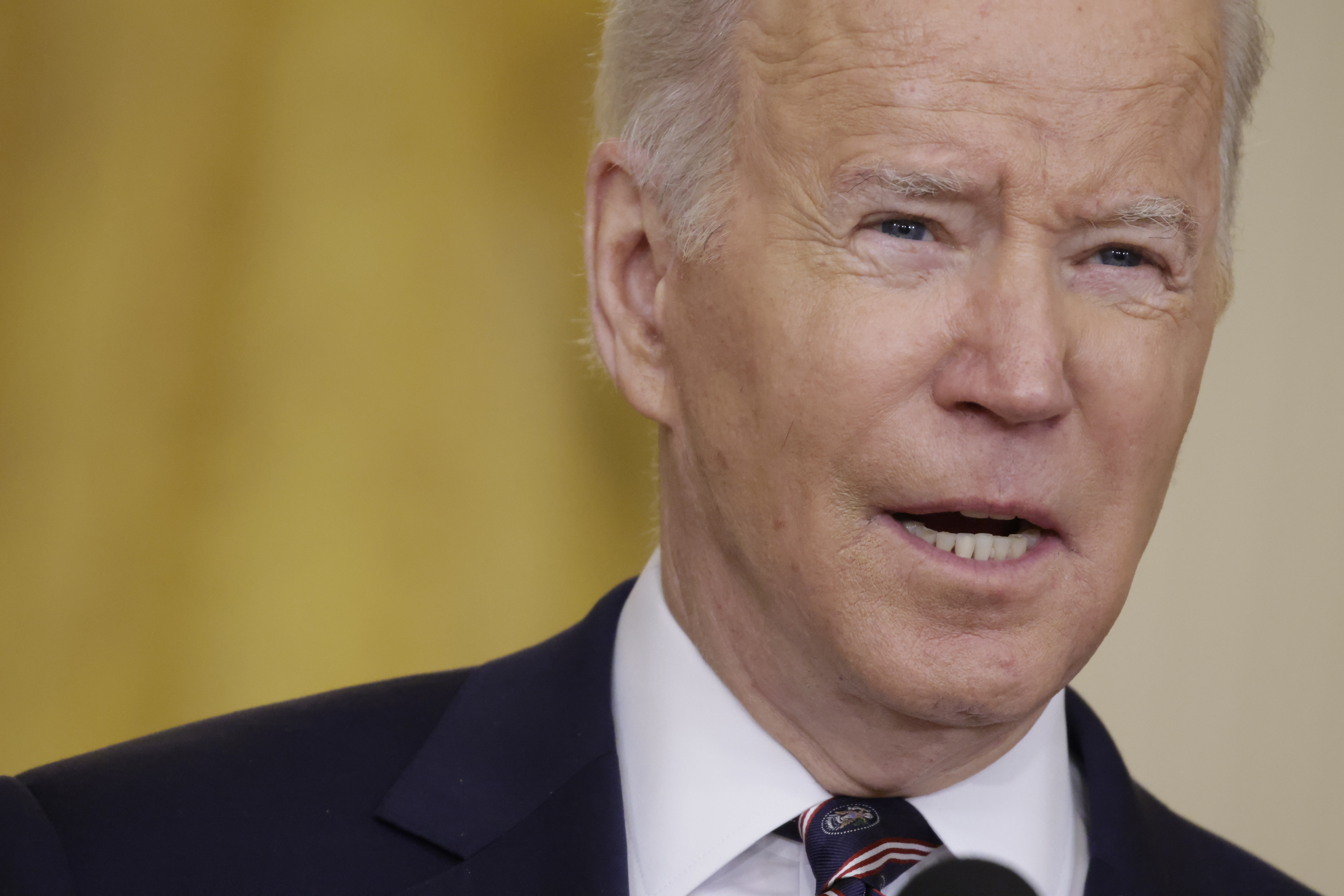
U.S. President Joe Biden speaks on Russia and Ukraine in the East Room of the White House in Washington, D.C., U.S., on Tuesday, Feb. 22, 2022. Biden is addressing the situation in Ukraine, with the U.S. expected to announce new sanctions after the European Union and the U.K. set out an initial set of penalties targeting Moscow. Photographer: Samuel Corum/Bloomberg

British Prime Minister Boris Johnson also told NATO leaders during a call Friday that Britain would move to impose sanctions against Mr Putin and Mr Lavrov.

It wasn't immediately clear how impactful an asset freeze would be on Mr Putin or Mr Lavrov, but the direct action targeting the Russian president was meant to be seen as a warning to Mr Putin that he could emerge as an international pariah if he doesn't end the invasion of Ukraine.

It comes after the EU's unanimous decision to sanction Mr Putin, which was part of a broader sanctions package, indicated that Western powers are moving toward unprecedented measures to try to force Putin to stop the brutal invasion of Russia's neighbour and from unleashing a major war in Europe.

Latvian Foreign Minister Edgars Rinkevics tweeted that the 27-nation bloc's foreign ministers adopted the sanctions package and "the asset freeze includes President of Russia and its Foreign Minister."

READ MORE: Morrison slams China's stance over Ukraine invasion
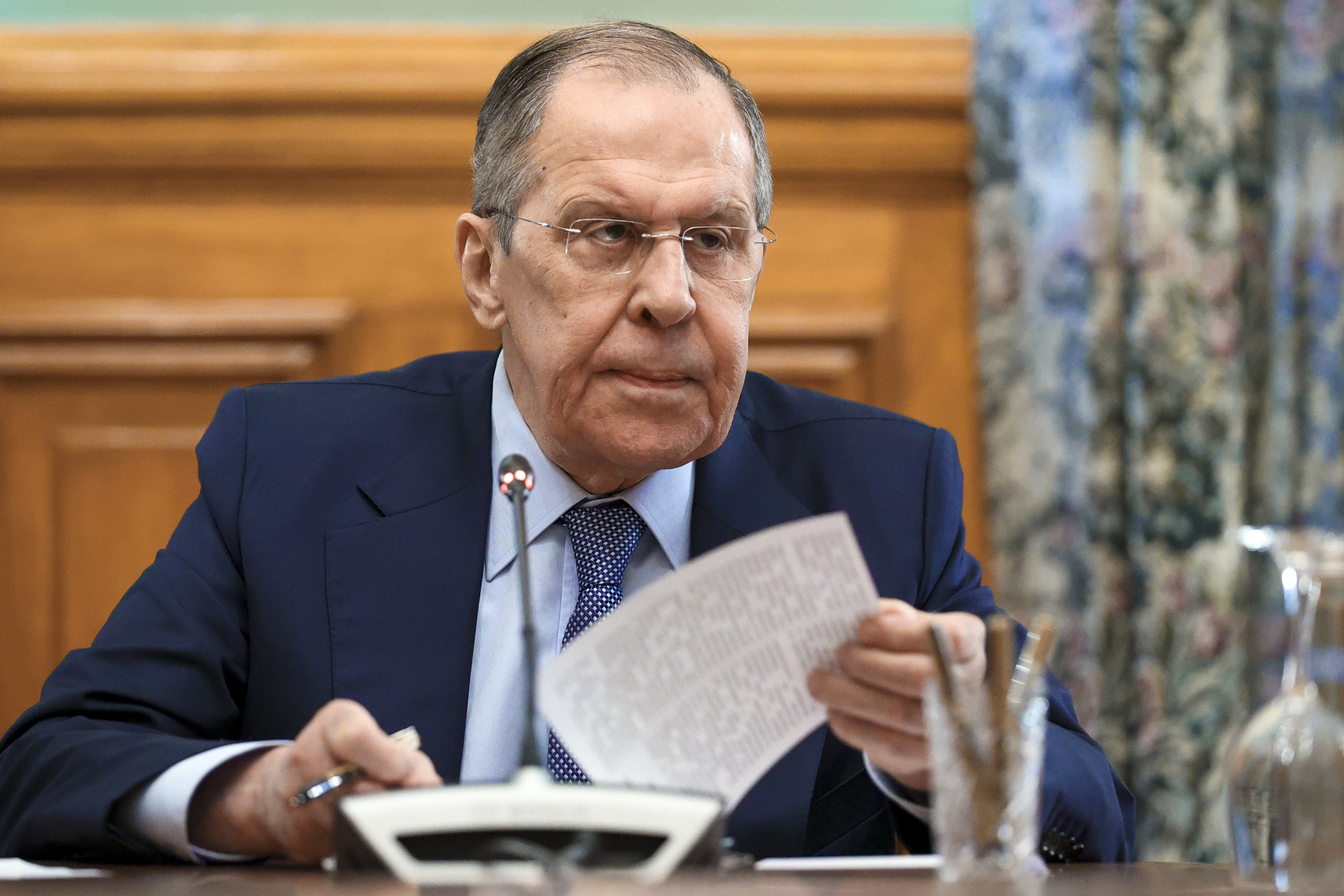
Russian Foreign Minister Sergey Lavrov speaks during a meeting with top envoys from the separatist regions in eastern Ukraine, Vladislav Deinego of the Luhansk People's Republic and Sergei Peresada, of the Donetsk People's Republic (DPR), in Moscow, Russia, Friday, Feb. 25, 2022

Austrian Foreign Minister Alexander Schallenberg said the move would be "a unique step in history toward a nuclear power, a country that has a permanent seat on the Security Council, but also shows … how united we are."

It was unclear what the practical impact on the two men would be and how important their assets in the EU were.

The UK has also confirmed fresh sanctions on Putin, with Boris Johnson tweeting he "urged NATO leaders to take immediate action against SWIFT to inflict maximum pain."

An equally big move would be to ban Putin and Lavrov from EU travel.

But overnight, EU leaders made it clear that would be off the table for now, if only since it might complicate diplomatic moves once all sides get around the negotiating table.
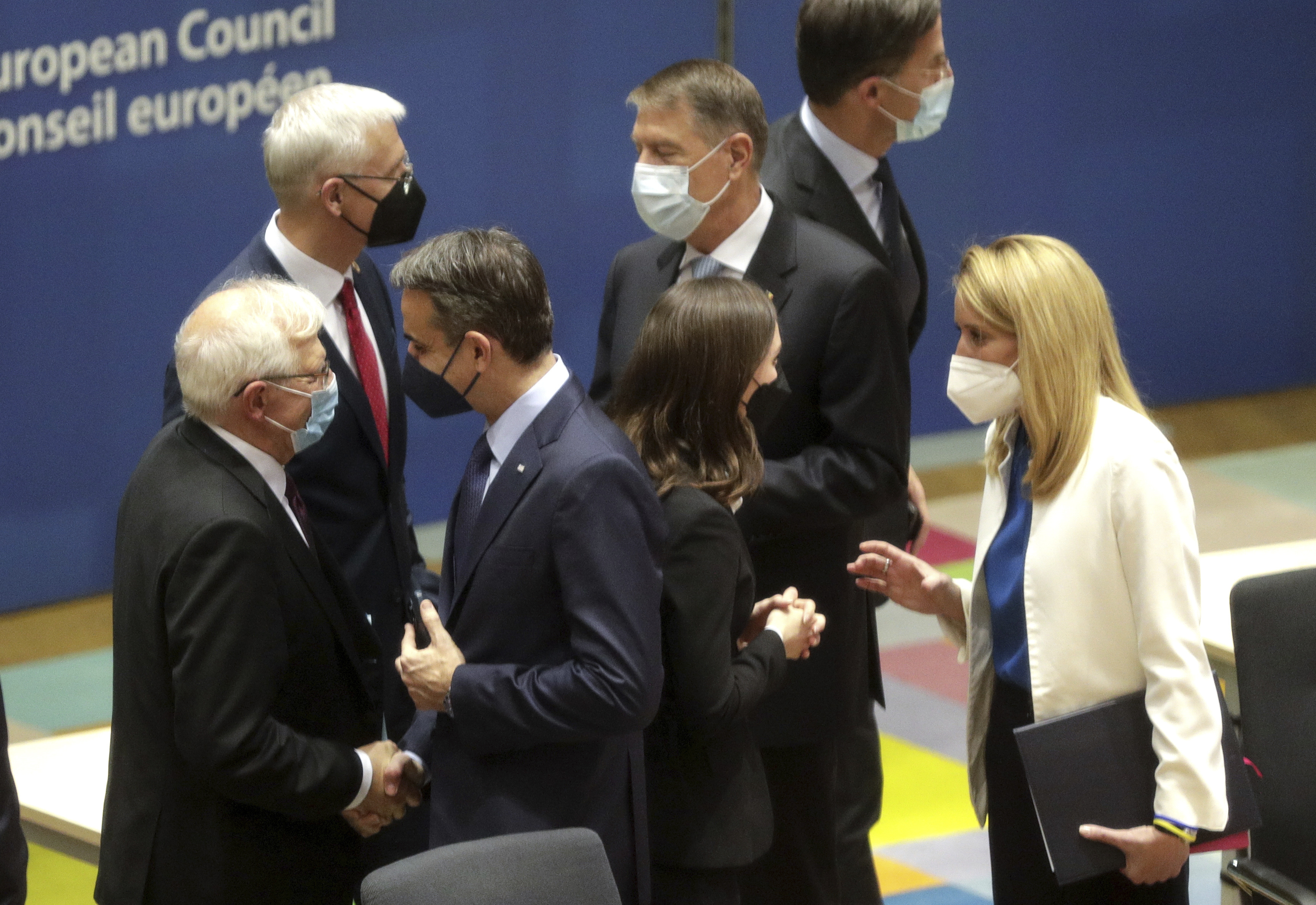
(L-R) European Union foreign policy chief Josep Borrell, Latvia's Prime Minister Krisjanis Karins, Greek Prime Minister Kyriakos Mitsotakis, Finland's Prime Minister Sanna Marin, Romania's President Klaus Werner Ioannis and Dutch Prime Minister Mark Rutte during a round table meeting at an extraordinary EU summit on Ukraine at the European Council building in Brussels, Thursday, Feb 24, 2022.https://twitter.com/edgarsrinkevics/status/1497248238646304795?ref_src=twsrc%5Etfw

EU ministers have said that even further sanctions were still possible, including booting Russia off SWIFT, the dominant system for global financial transactions.

"The debate about SWIFT is not off the table, it will continue," Luxembourg Foreign Minister Jean Asselborn said.

Admonishing Russia further, the Council of Europe suspended Russia from the continent's foremost human rights organisation. The 47-nation council said Russia remained a member and continued to be bound by the relevant human rights conventions.

Undeterred in the game of punitive sanctions, Russia started its own tit-for-tat measures, banning British flights to and over its territory in retaliation to a similar UK ban on Aeroflot flights.

https://twitter.com/BorisJohnson/status/1497277786704199690https://twitter.com/Arlietas/status/1497268345653104644?ref_src=twsrc%5Etfw

READ MORE: 'It's not a game': Australian photojournalist witnesses Ukraine invasion

Russian authorities also announced the "partial restriction" of access to Facebook after the social media network limited the accounts of several Kremlin-backed media.

Russian state communications watchdog Roskomnadzor said it demanded that Facebook lift the restrictions it placed Thursday on state news agency RIA Novosti, state TV channel Zvezda, and pro-Kremlin news sites Lenta.Ru and Gazeta.Ru.

As Russian bombs and troops pounded Ukraine during the invasion's first full day, world leaders began to fine-tune a response meant to punish the Russian economy and its leaders, including President Putin's inner circle.
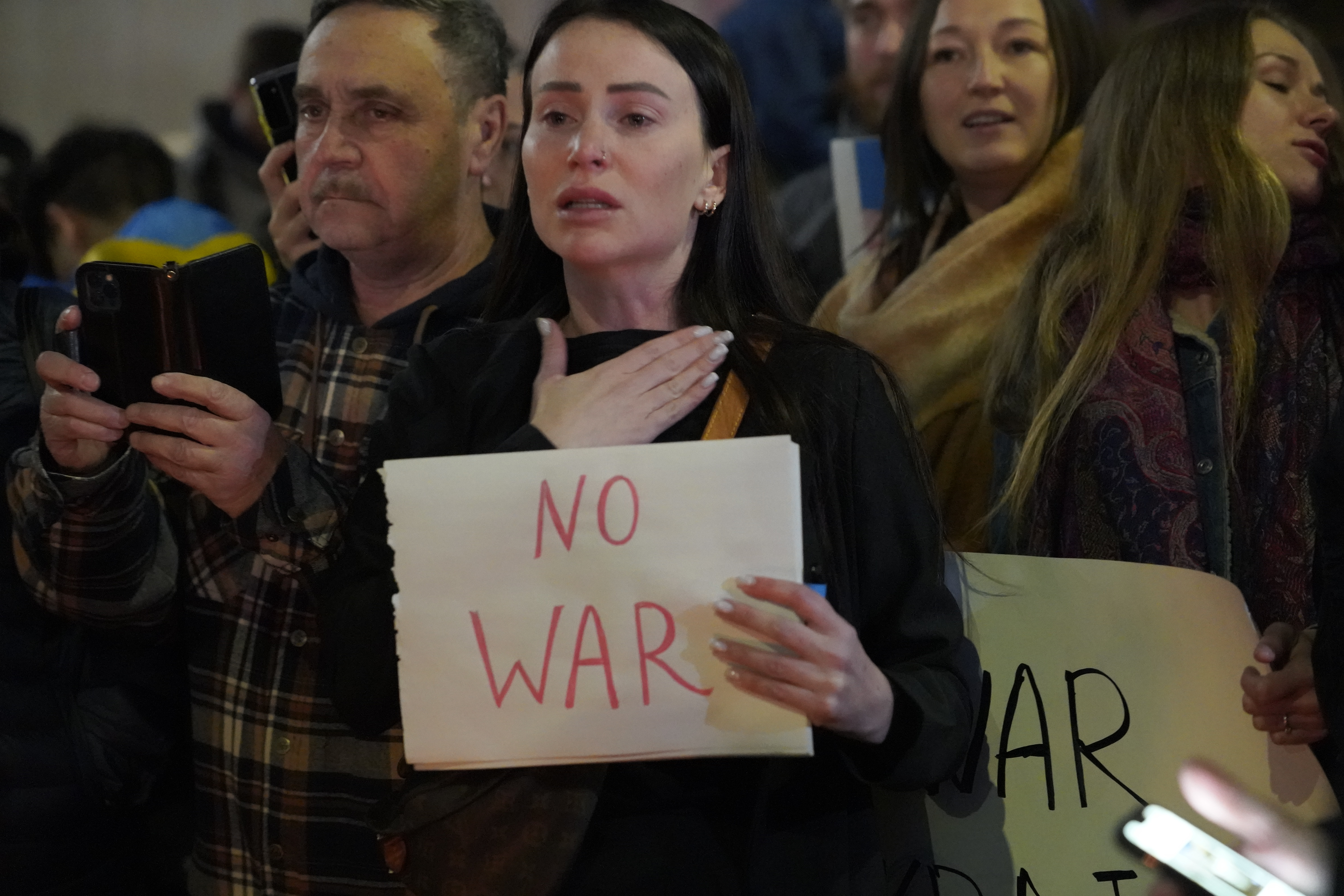
People protest the Russian invasion of Ukraine at a demonstration in the Studio City neighbourhood of Los Angeles, Thursday, Feb. 24, 2022.

While there's an acute awareness that a military intervention is unlikely, for now, the strength, unity and speed of the financial sanctions — with the striking exception of China, a strong Russian supporter — signal a growing global determination to make Moscow reconsider its attack.

French Finance minister Bruno Le Maire said Friday that France and its European allies are determined to inflict great damage on Russian economy and punish Russia for the "foolish decisions of Vladimir Putin" with "massive and immediate sanctions."

"We want to isolate Russia financially," Le Maire said. "We want to cut all ties between Russia and the global financial system. We will dry up the financing of the Russian economy."

France and its allies have decided to further sanction individuals, as well as impose penalties targeting finance, energy and other sectors, French President Emmanuel Macron said Friday. The legal texts for the sanctions will be finalised and submitted for approval to EU foreign ministers later on Friday.
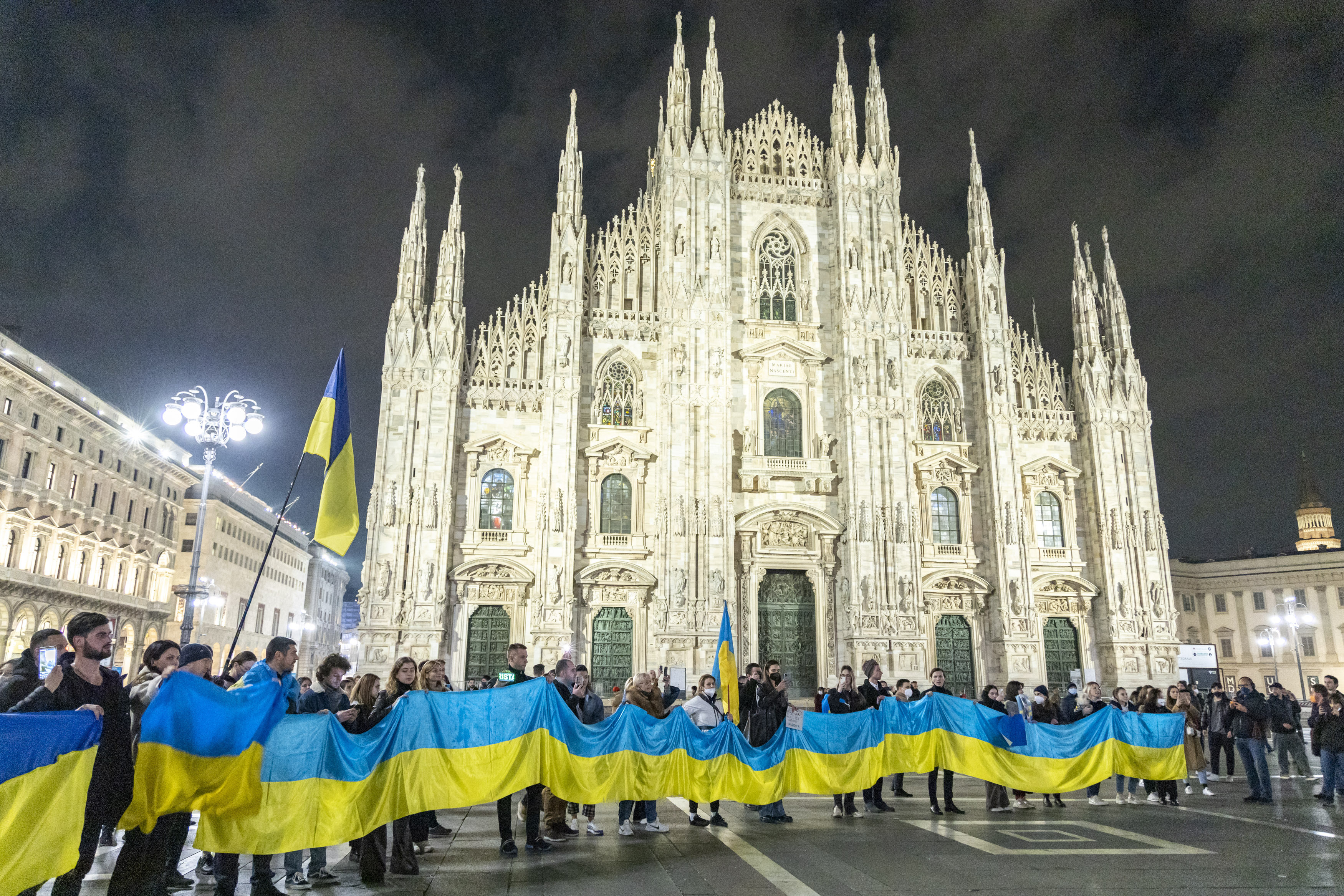
People hold a large flag of Ukraine in Duomo Square, Milan, Italy, Thursday Feb. 24, 2022.

Macron also said that the EU has decided on economic aid for Ukraine in the "unprecedented" amount of €1.5 billion ($2.3b).

Russia's civil aviation authority has banned UK flights to and over Russia in retaliation to the British ban on Aeroflot flights. Rosaviatsiya said that all flights by UK carriers to Russia as well as transit flights are banned starting Friday.

It said the measure was taken in response to the "unfriendly decisions" by the British authorities who banned flights to the UK by the Russian flag carrier Aeroflot as part of sanctions over Russia's invasion of Ukraine.

Countries in Asia and the Pacific have joined the United States, the 27-nation European Union and others in the West in piling on punitive measures against Russian banks and leading companies. The nations have also set up export controls aimed at starving Russia's industries and military of semiconductors and other high-tech products.
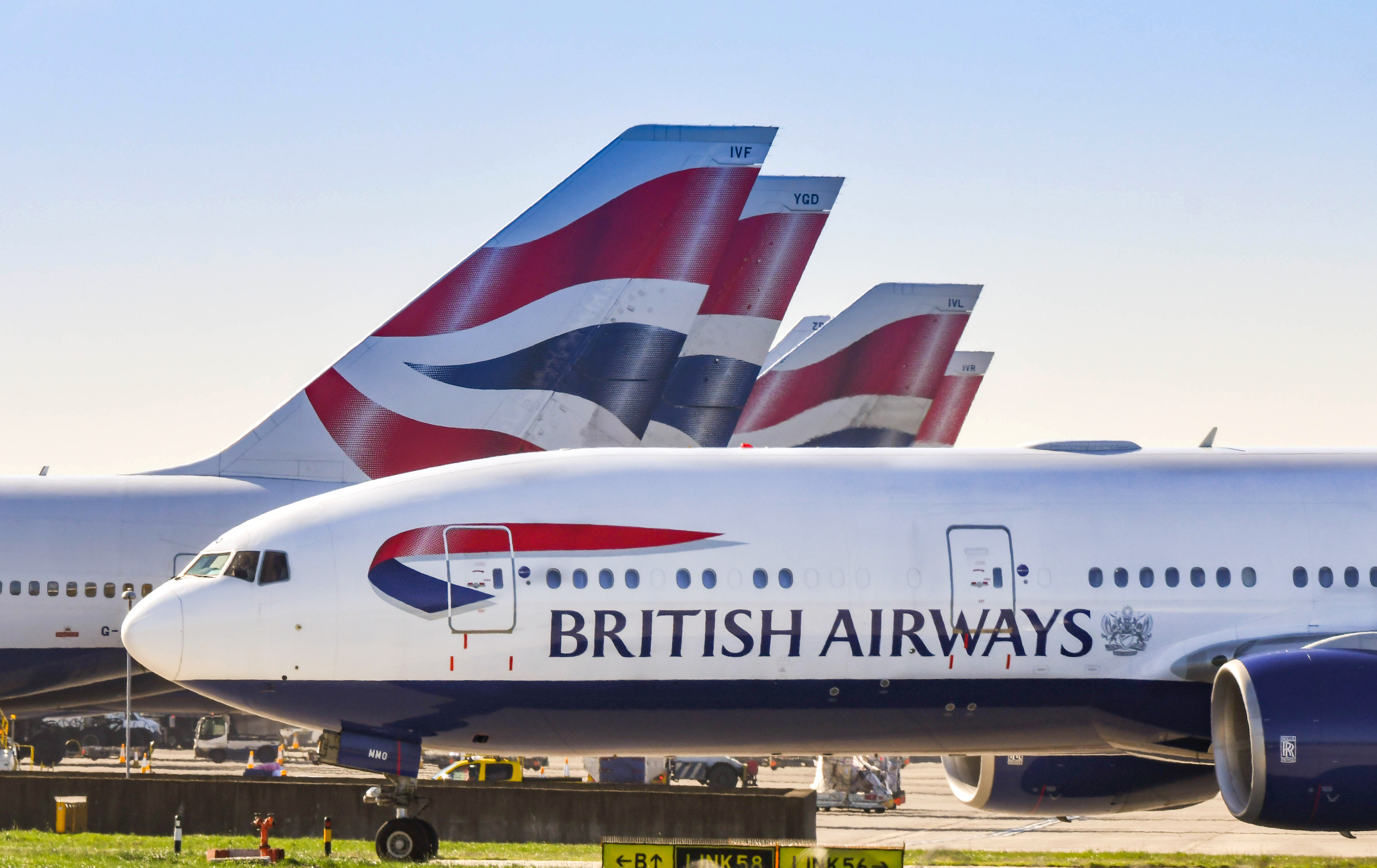
Boeing 777 long haul airliner operated by British Airways taxiing for take off at London Heathrow Airport past tail fins of the company's other aircraft.

READ MORE: The economic impacts of Russia invading Ukraine on Australia

"Japan must clearly show its position that we will never tolerate any attempt to change the status quo by force," Prime Minister Fumio Kishida told reporters Friday while announcing new punitive measures that included freezing the visas and assets of Russian groups, banks and individuals, and the suspension of shipments of semiconductors and other restricted goods to Russian military-linked organisations.

READ MORE: The economic impacts of Russia invading Ukraine on Australia
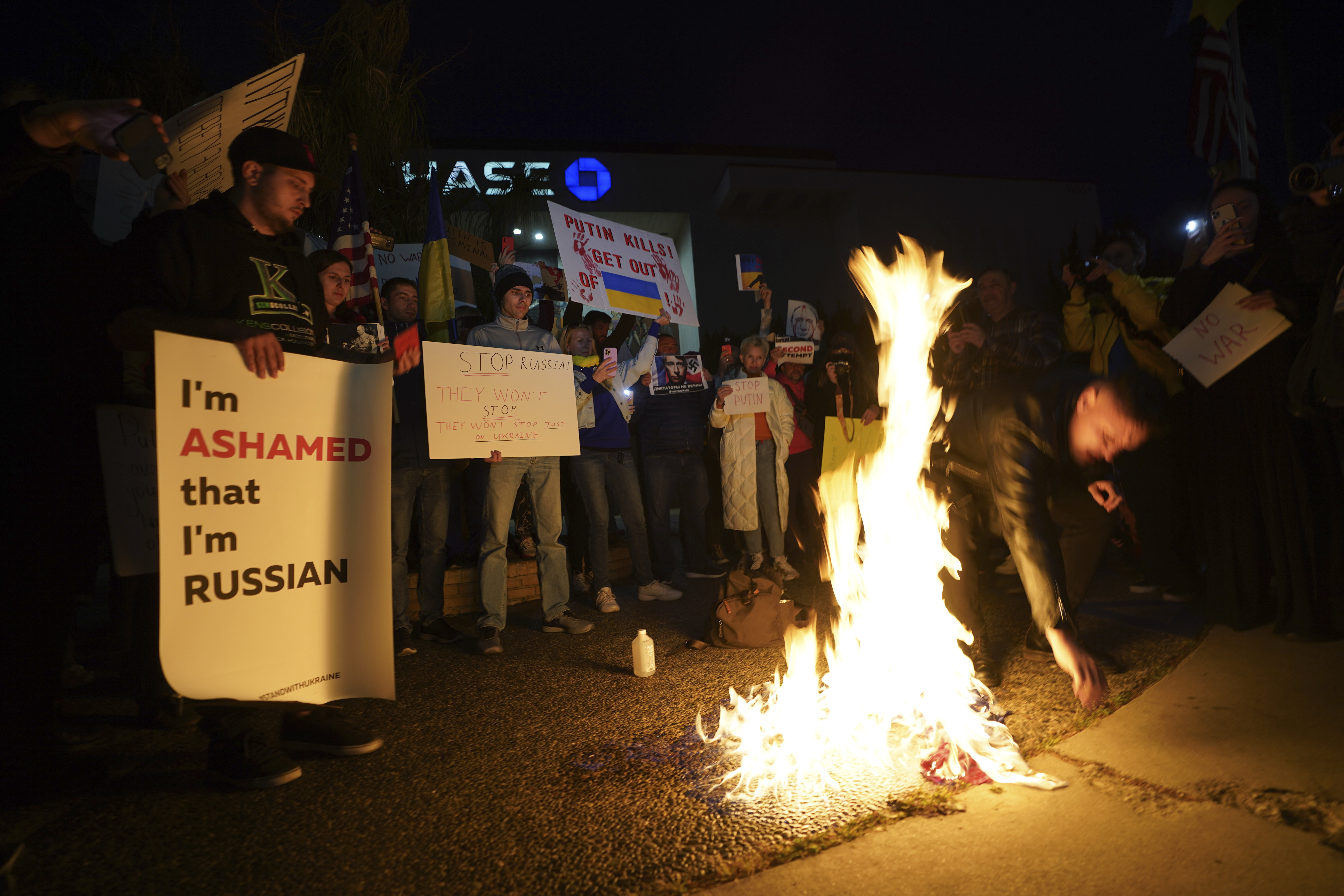
A Russian citizen burns a Russian flag as people protest the Russian invasion of Ukraine at a demonstration in the Studio City neighbourhood of Los Angeles, Thursday, Feb. 24, 2022

"Russia's invasion of Ukraine is an extremely grave development that affects the international order, not only for Europe but also for Asia," Kishida said.
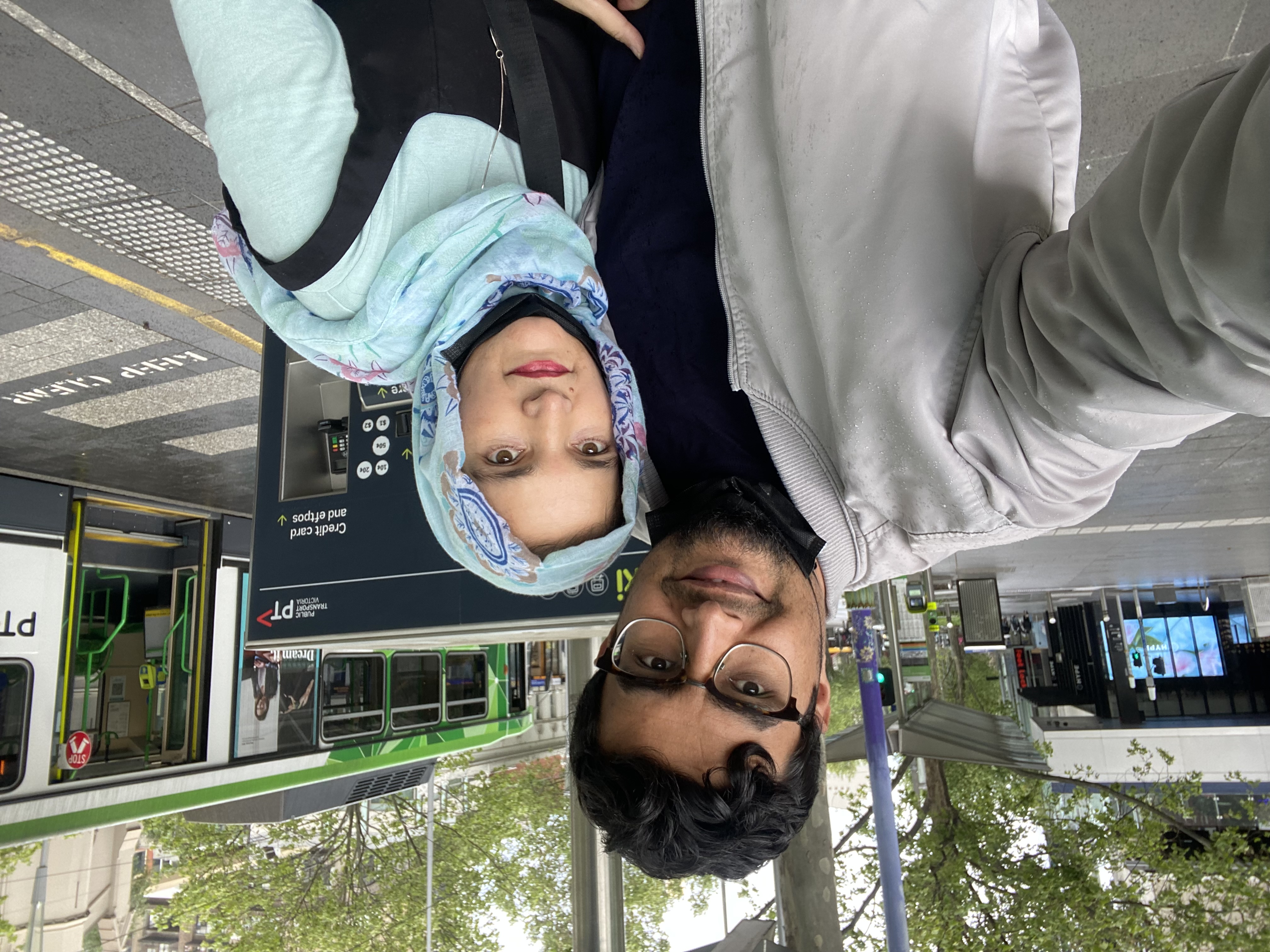
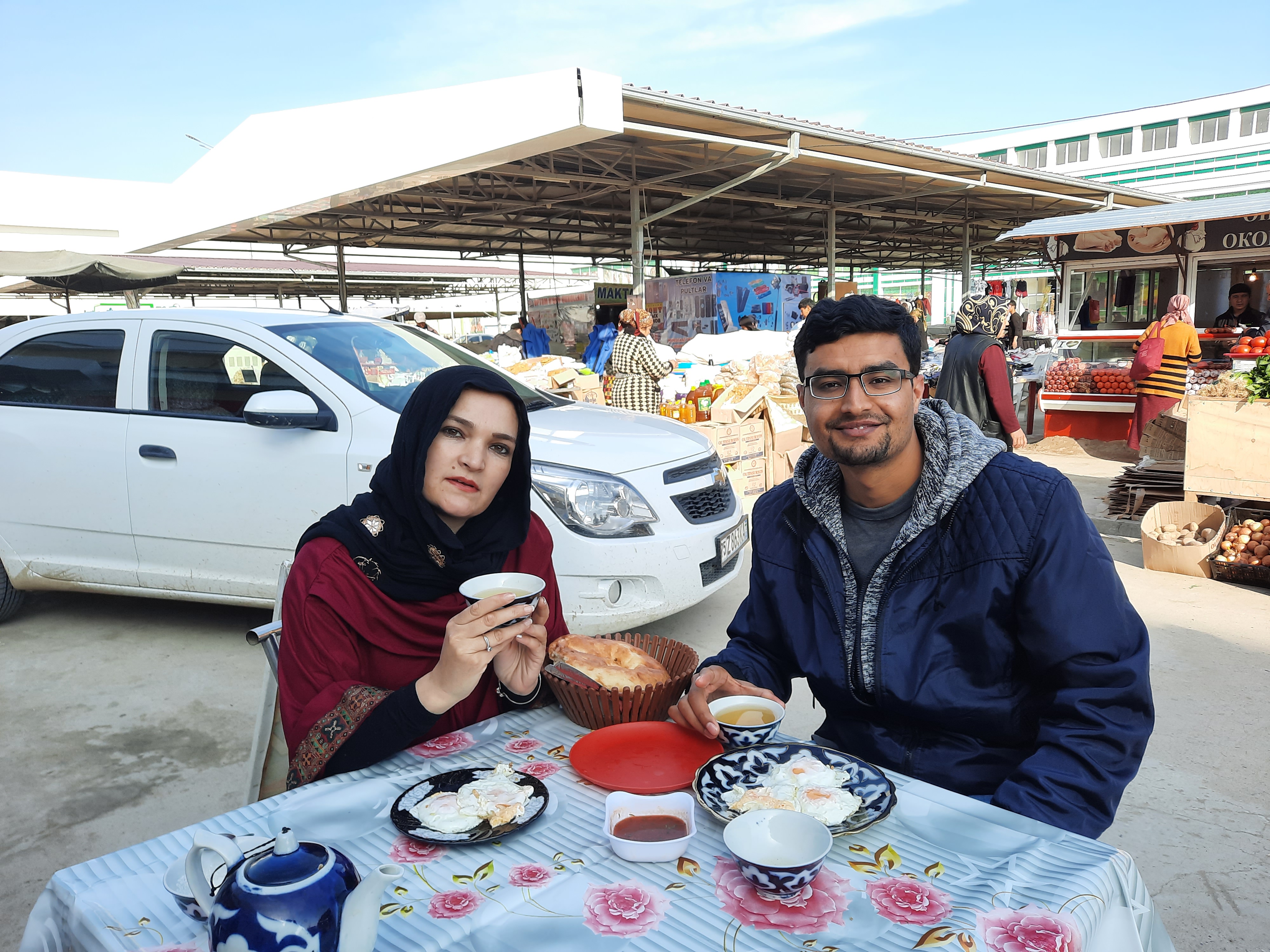
How two refugees escaped Afghanistan on Australia's evacuation flights

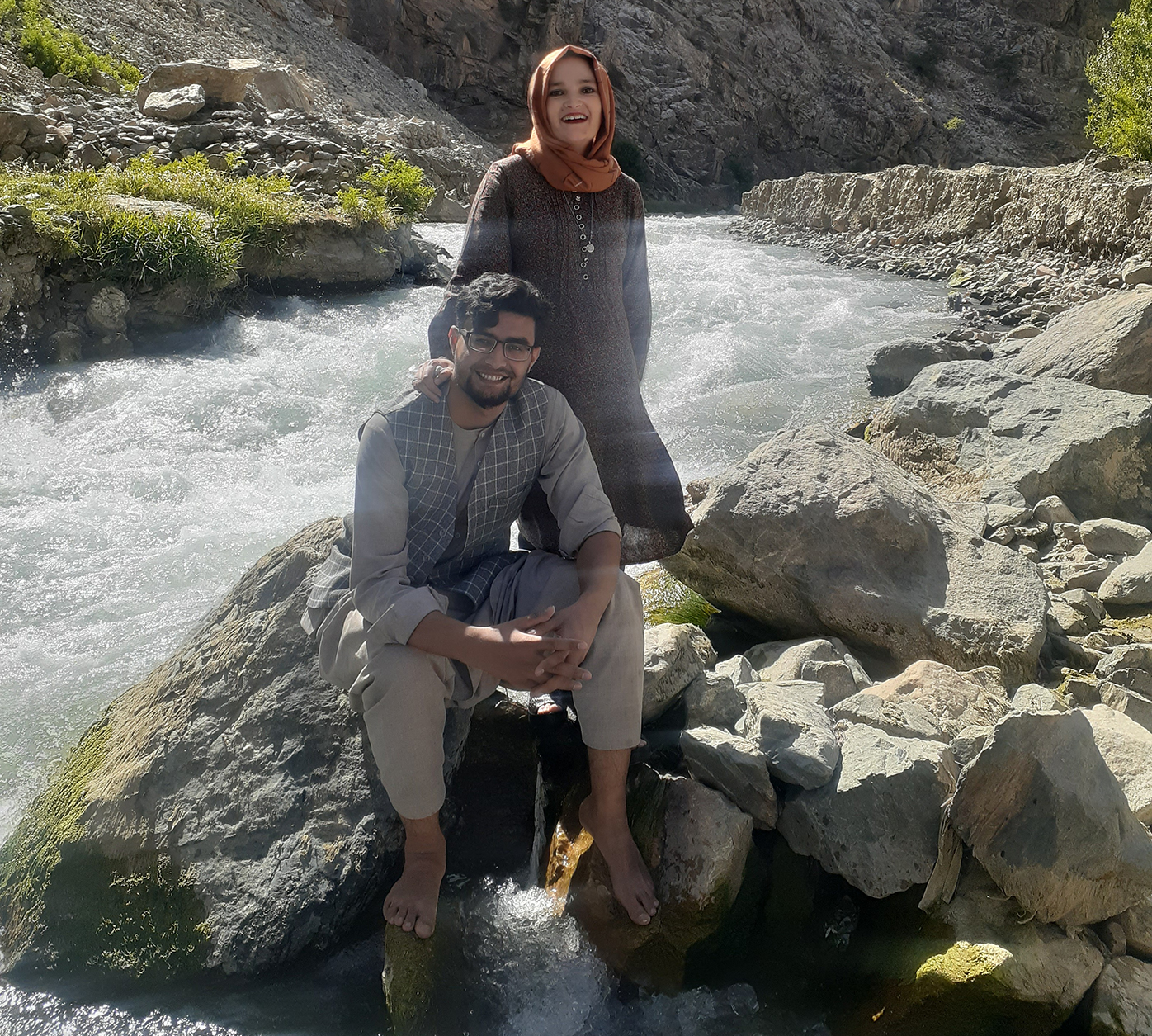
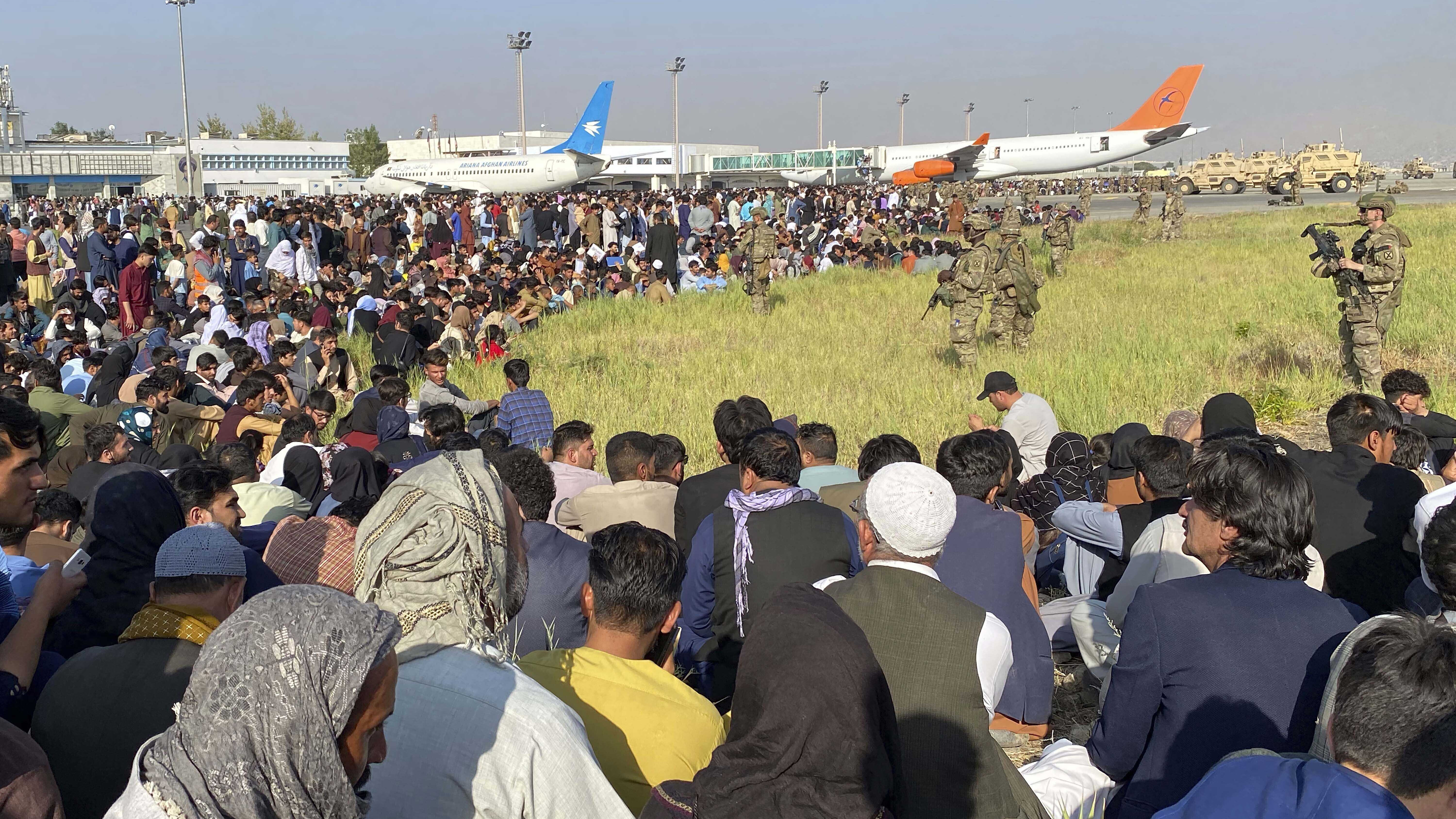
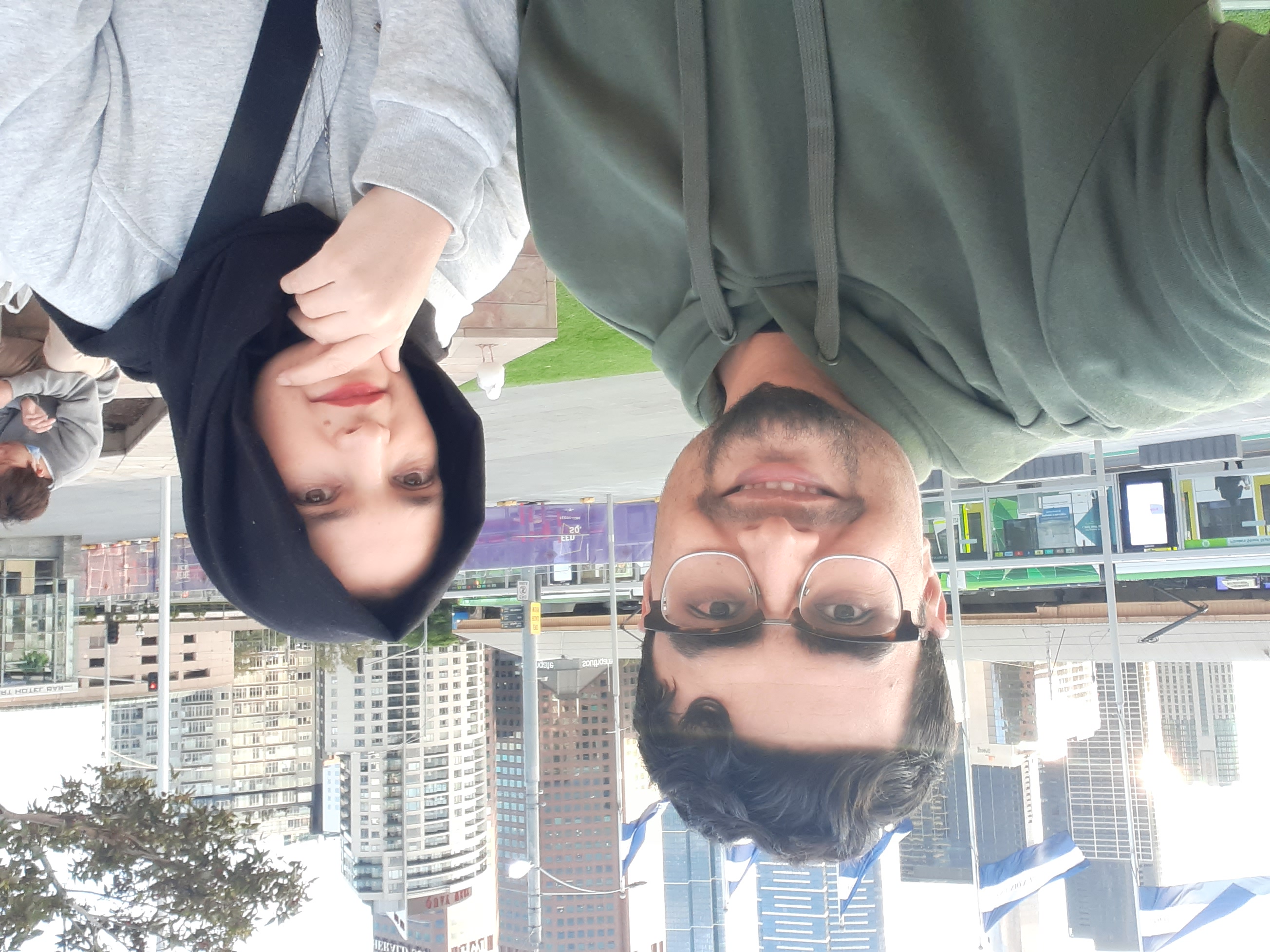
It's been six months since Khalida Dawran and Reza Ranjbar were at Kabul's Hamid Karzai International Airport, fighting for their lives in deadly chaos, to secure a seat on an evacuation flight.

"We could see people being shot, being lashed. Myself, I was lashed by the Taliban and I was beaten by guns in a harsh way," Mr Ranjbar said.

"It was very difficult, it was emotionally hard and physically hard in every sense."

READ MORE: Baby lost in chaos of Afghanistan airlift is found and returned to family

On August 15, 2021, the Taliban returned to power after 20 years by seizing control of Afghanistan's capital of Kabul.

It sparked a race for the US and other western countries to complete a massive evacuation of their citizens and Afghan allies.

Ms Dawran and Mr Ranjbar are now happily living in Footscray in Melbourne's inner-west, but they hold grave concerns for those who didn't manage to flee and are still hiding from the Taliban.

Khalida and Reza's story

Before the fall of the Afghan government, Ms Dawran says she lived "a normal, happy and calm life" in the city.

She had a job working with an international organisation in peace negotiations, but as a human rights defender and a women's rights activist, Ms Dawran was at risk under the Taliban rule.

READ MORE: Pregnant New Zealand journalist in Afghanistan can go home

Mr Ranjbar first entered Australia in 2018 on a work visa as an engineer.

At the end of 2019, he went back to Kabul for a holiday, with plans to return the following year on a student visa but was not allowed back into the country due to COVID-19.

The Taliban had already killed three of their family members, who worked in security forces for the former government.

They were both aware the situation in Afghanistan was getting worse after US President Joe Biden announced the withdrawal of all troops in April.

It was "very difficult" for the couple to secure all of their important documents in the months leading up to the takeover, as they had to compete with tens of thousands of other residents to get their files.

The couple said Kabul changed overnight as the Taliban stormed to power.

The morning the Taliban took control of Kabul, Ms Dawran and Mr Ranjbar looked outside of their apartment window in shock at the "radical change" that had occurred in the capital city overnight.

"It was as if we slept for a decade or something and when we woke we saw all these changes," Mr Ranjbar said.

Normally the busy city would be filled with people going about their everyday lives, with loud music and police patrolling.

Instead the streets were bare and the music was replaced with sounds of gunfire.

"We could see from our window that no one was going anywhere."

The evacuation

After the Taliban took control, Ms Dawran and Mr Ranjbar stayed inside their apartment, listening to gunfire and explosions all day and night.

"One day, we didn't have water to drink but we didn't dare go outside to get the water because it was not safe," Mr Ranjbar said.

As Mr Ranjbar was an Australian student visa holder, he received an email three days after the takeover from the Department of Foreign Affairs and Trade (DFAT), which allowed him to board an evacuation flight to Australia.

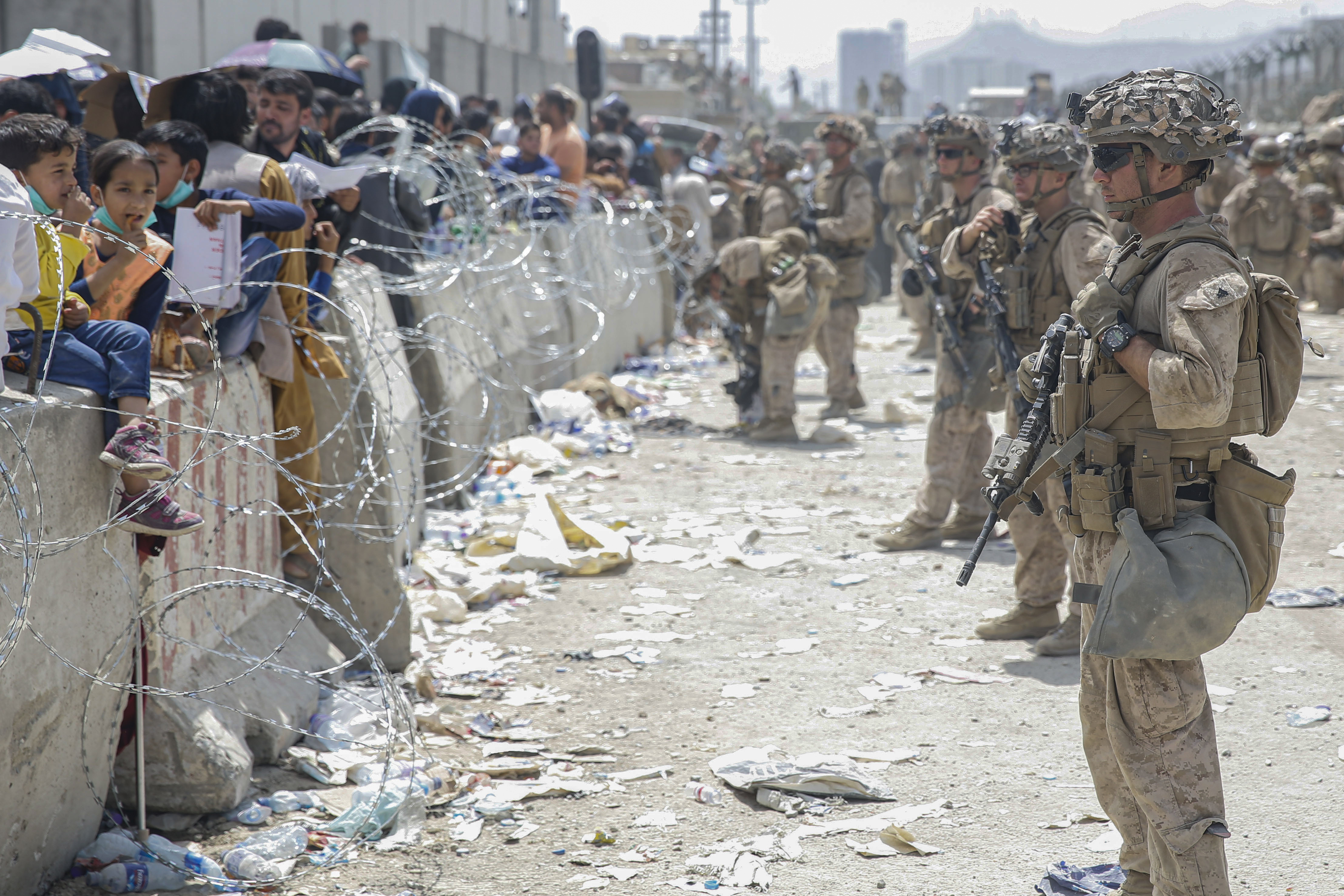
US soldiers stand guard along the perimeter at the international airport in Kabul, Afghanistan on August 16.

Ms Dawran was also allowed to enter Australia on an emergency visa, due to her marriage to Mr Ranjbar and the threat to her safety due to her work.

"They (DFAT) really cared about the residents who were stuck there… They saved my life," he said.

The chaos unfolding at Kabul's airport meant getting on a flight would be an extremely dangerous task.

"Once we received the news from Australia, we had to make the tough decision to go out," Mr Ranjbar said.

"Either way, our lives were at risk. We said it is better if we take action.

"No one could enter, the Taliban had a lot of checkpoints, every 500 metres.

"They were hitting people with their guns, with lashes, anything."

READ MORE: Aussie skateboarder transforms the lives of Afghan girls

The couple spent two days and nights walking around the "chaotic crowds", trying to find a way in.

Eventually they found an ex-airport employee who was "very strong" and helped them push to the front.

He also knew where they could access the Australian gate and safely delivered them to the Australian Defence Force.

"We could reach the Australian soldiers who were outside in charge of checking the documents. The soldier's name was Taylor, when I saw him, he was very nice," Mr Ranjbar said.

"It was like we were already in Melbourne because it was safe, there was a wall outside and there were no Taliban or other people, just the Australian citizens."

They had to spend another three nights sleeping on sand inside the airport, while Ms Dawran's emergency visa was processed.

"We didn't have any food or water. Sometimes the officials would give us a bottle of their own water," Mr Ranjbar said.

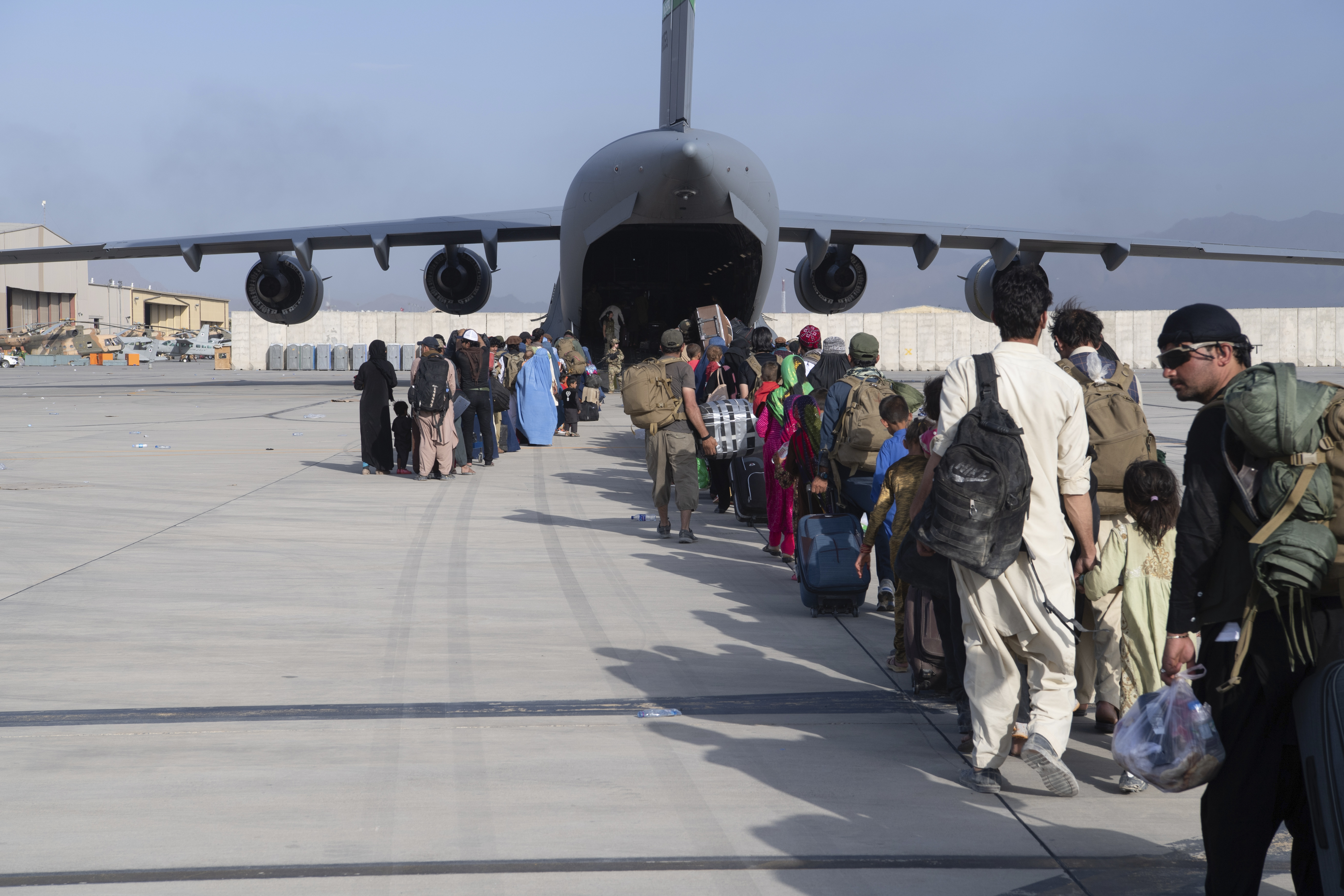
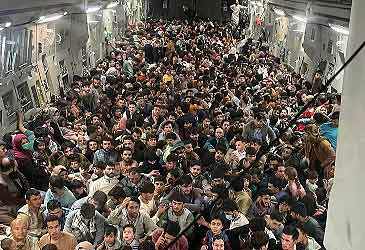
US Air Force Reach 871 Kabul evacuees (DefenseOne)

The couple made it on an evacuation flight to Dubai just days before at least 183 people were killed in suicide bombings outside the airport on August 26.

They spent two weeks in a refugee camp in Dubai and then two weeks in hotel quarantine in Sydney before arriving in their home city of Melbourne.

"As soon as we could sleep, we would dream of the chaos we went through, for at least one month."

Refugee support

Since arriving in Melbourne in September, Ms Dawran gained employment working in a school as an interpreter to help other Afghan children and Mr Ranjbar got a job in an engineering company.

"I think we are really lucky that we found a chance to come to Australia, in particular to Melbourne," Ms Dawran said.

The couple say they are now "very happy here" and are thankful for all of their warm and welcoming Australian friends.

"I really found each single Australian very friendly, supportive and kind."

They both started working extra jobs on the weekends to help families in "extreme need" back in Afghanistan as many people are still hiding from the Taliban and cannot work to pay for basic essentials.

"They didn't even have food to feed their children two times a day," Mr Ranjbar said.

"People who are ill, who need medication and don't have support, many people loose their lives from that."

A fundraising page has been set up by the couple, with a goal of raising $100,000.

So far, they've raised nearly $7000.

"We can assure it (donations) will go to the most needy people and not a cent will be wasted."

'That is actually somewhere I used to live'

A TV reporter whose family home had been destroyed by Russian bombs overnight in Kyiv, spoke of her shock at the images.

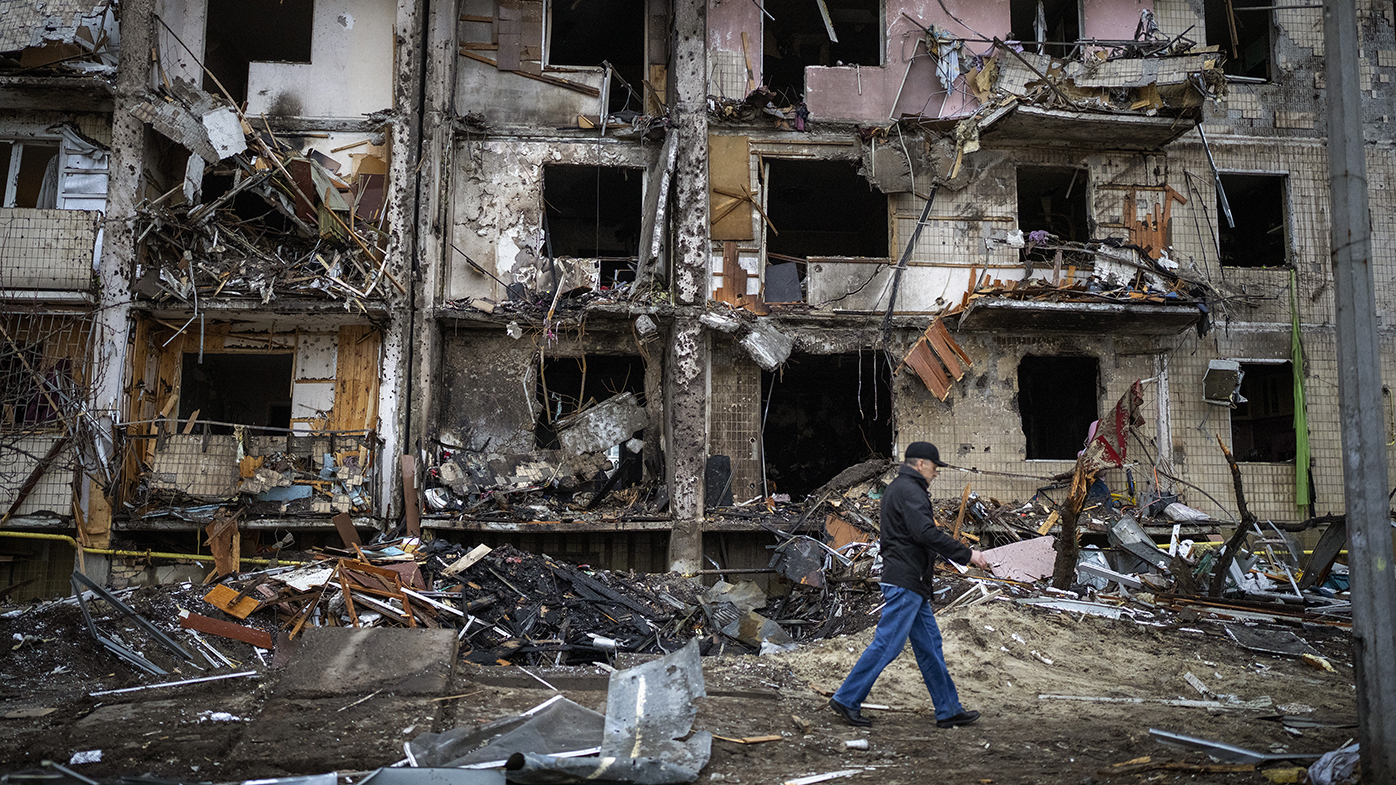
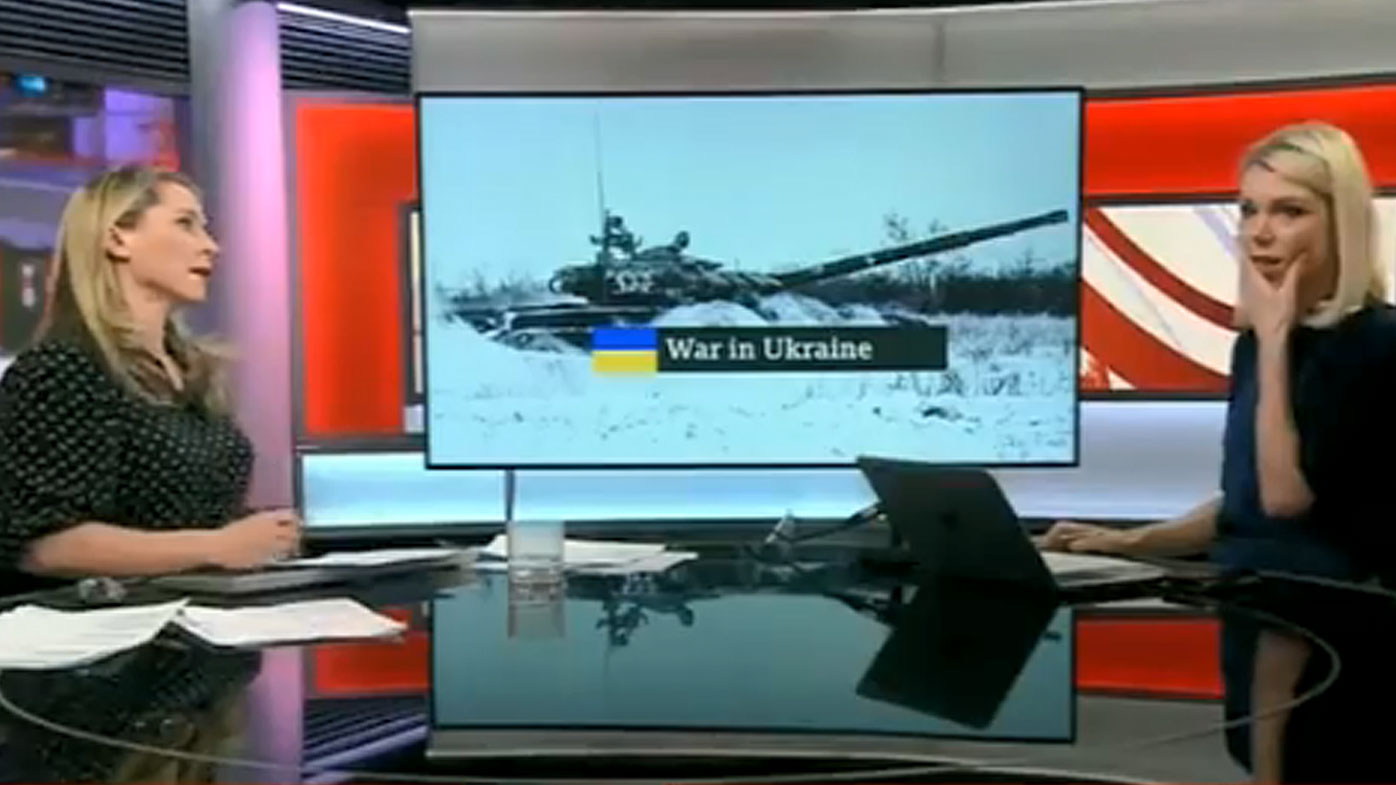
Journalist Olga Malchevska couldn't hide her emotion as she saw pictures of her family's apartment building completely wrecked while live on BBC World News.

Ms Malchevska was being interviewed by Karin Giannone in the UK, about Ukraine.

READ MORE: Russia presses invasion to outskirts of Ukrainian capital

"When we agreed yesterday to come to the studio in the morning, I could not have imagined that at 3am London time I would find out that my home is bombed," Ms Malchevska, said, indicating she knew of the incident before appearing on-air.

Images of destroyed apartment buildings were shown during the broadcast on Friday morning (Friday night AEDT) – and Ms Malchevska revealed one was her family home.

"That footage that everybody saw is literally my home," she said.

Speaking of her disbelief, Ms Malchevska explained: "I just can't link in my head that what I'm seeing is actually somewhere I used to live."

BBC reporter Olga Malchevska (right) and anchor Karin Giannone (left) in a UK studio

Ms Malchevska said she used to live on the sixth floor of the 10 story apartment block, which had been turned to rubble.

She said she'd only just heard from her mother, who had been hiding in the basement.

She said other people had evacuated to a school.

"Lucky she was not in the building," Ms Malchevska said.
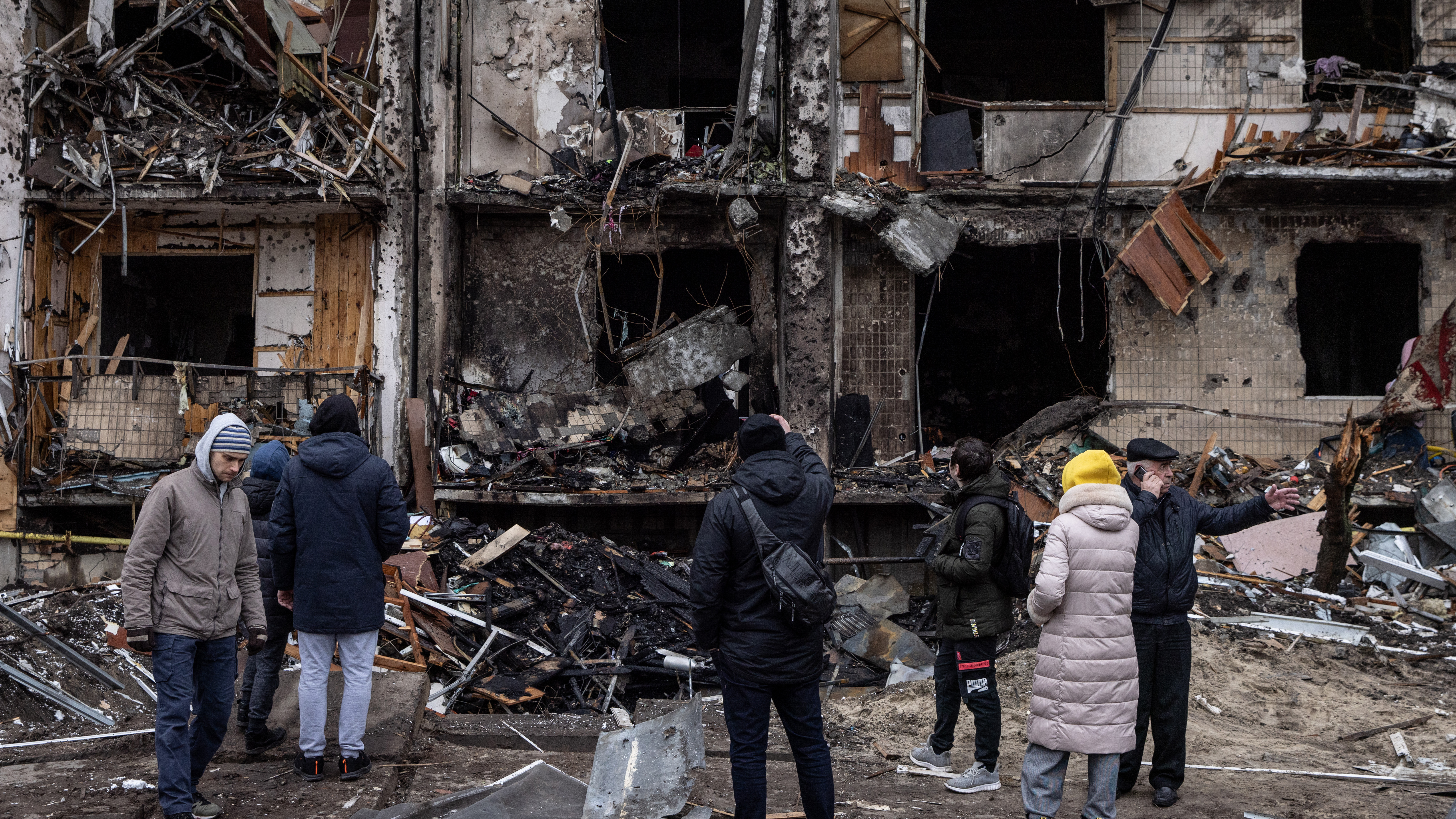
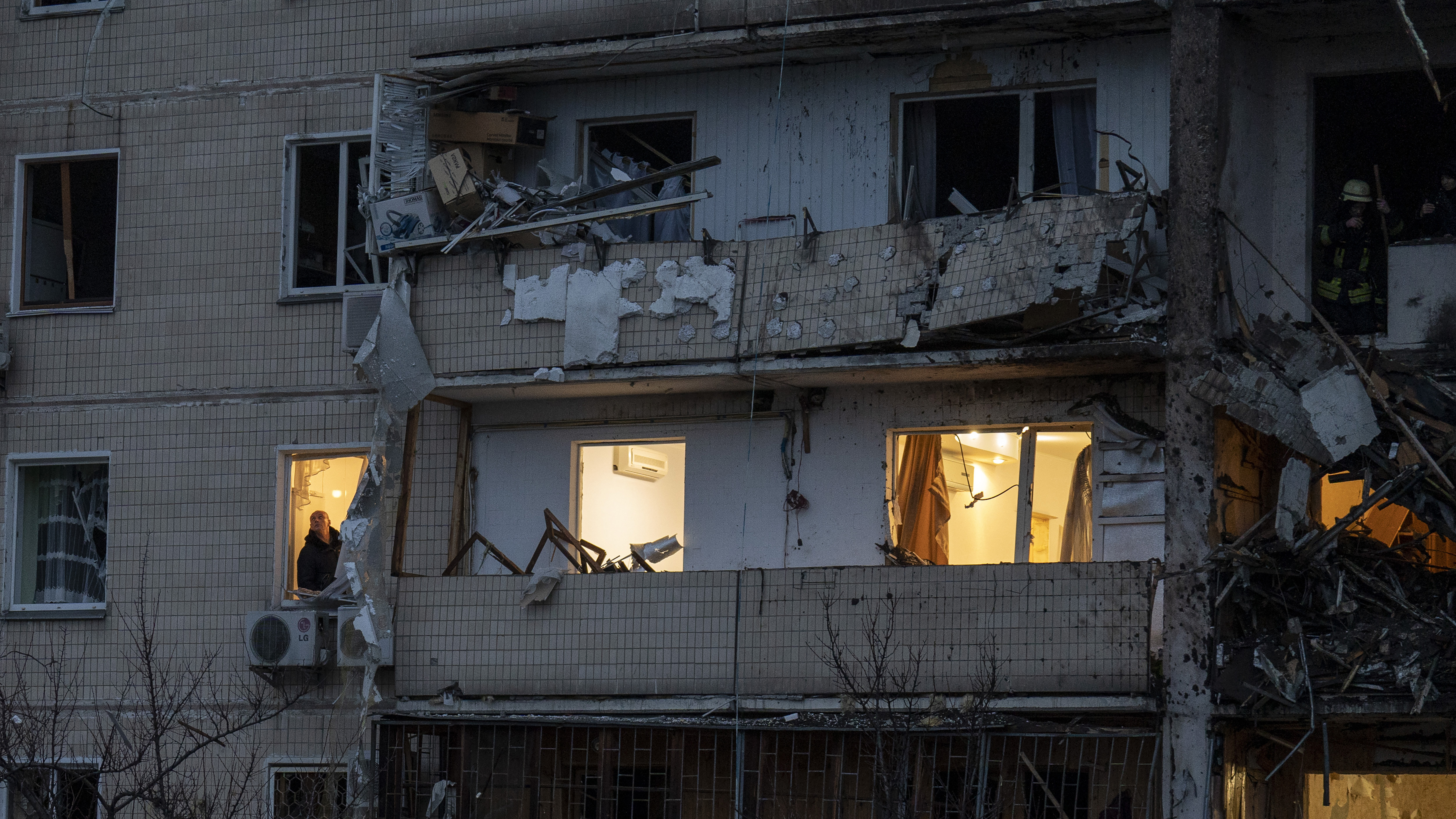
Ms MalchevskaPeople look at a damaged residential block hit by an early morning missile strike  in Kyiv.

"Thanks God my family is safe."

Presenter, Ms Giannone said Ms Malchevska could end the interview if she wanted to.

"Olga, I don't want you to be forced to talk about something that is obviously so sudden and so traumatic, this is unimaginable for all of us," she said.
The presenter later tweeted about the extraordinary on-air moment.

"We did not know until that moment it was her actual building that had been hit," she said.
https://twitter.com/KarinBBC/status/1497162333289914368?ref_src=twsrc%5Etfw

"Thankfully Olga's family is safe."

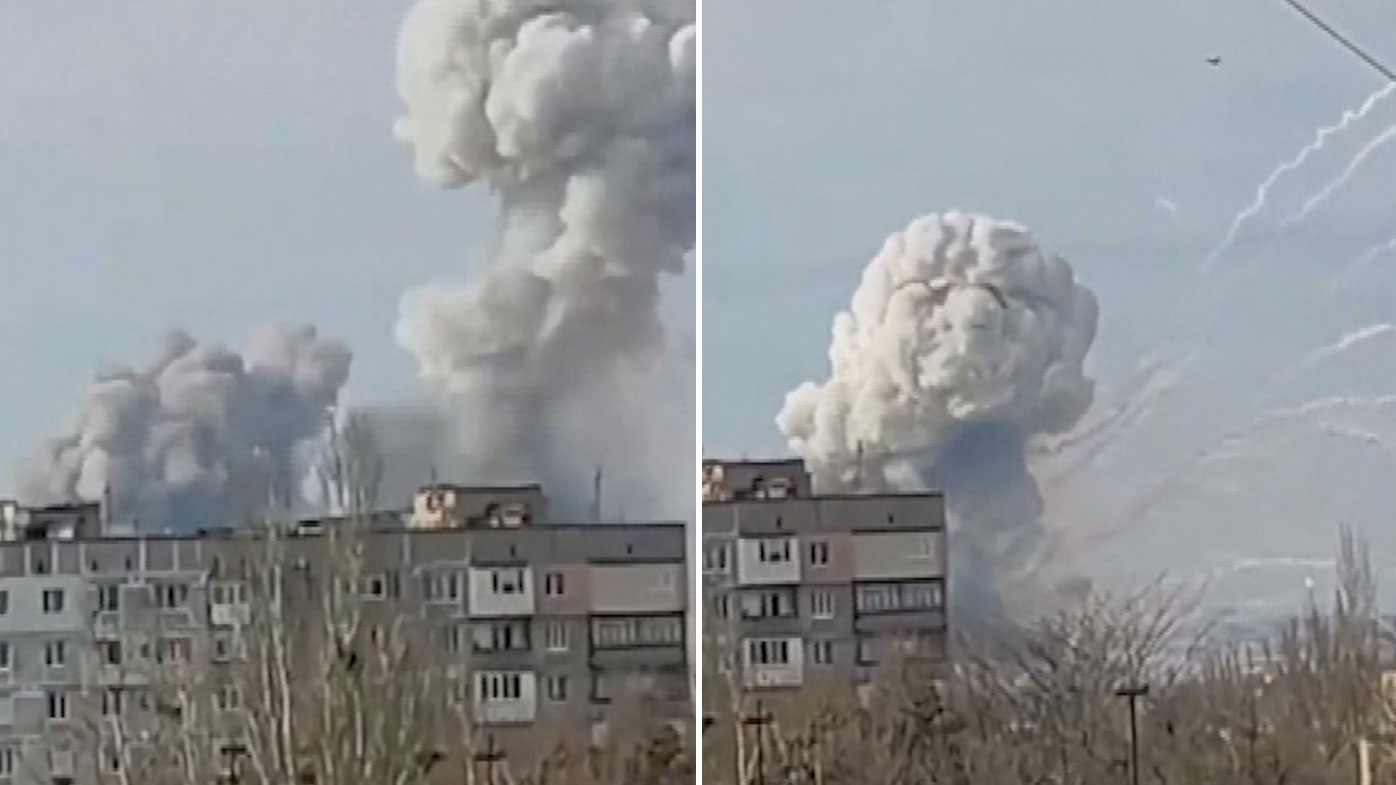
The building was bombed in pre-dawn airstrikes on the Ukrainian capital by Russian forces as they pressed their invasion to the outskirts of the city.

Two large blasts were heard in the early hours of the morning in Kyiv and air raid sirens sounded for several minutes in the nation's capital and Lviv.

How Ukraine and Russia's militaries compare

Heavily armed Russian troops are pushing rapidly towards Ukraine's capital of Kyiv, and US officials are warning the city could fall within days.

The military capabilities of these two nations are so imbalanced that Ukraine's defiant president, Volodymyr Zelenskyy, implored his Western allies overnight to do more than impose sanctions to get Russian troops off Ukrainian soil.

Here's how the two country's military capabilities stack up.

LIVE UPDATES: Putin's message to Ukrainian troops

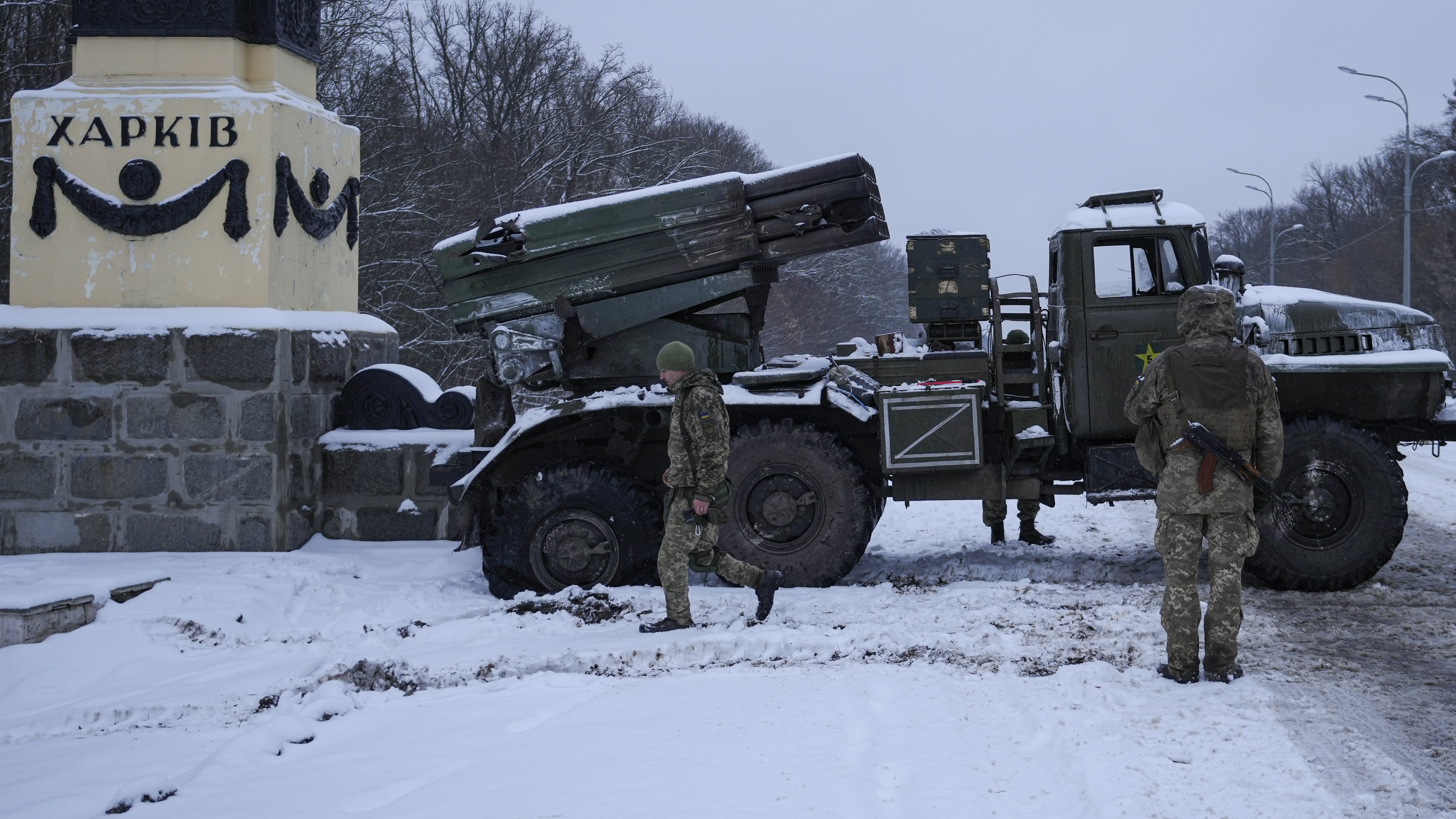
Ukrainian servicemen walk by a deactivated Russian military multiple rocket launcher on the outskirts of Kharkiv, Ukraine.

Defence spending

Just a look at the amount of money the two nations spend on defence gives an indication of the gap between the two.

Ukraine spent $6.5 billion in 2021, just over a tenth of nuclear-armed Russia's $63.5 billion, according to "The Military Balance" report by the International Institute for Strategic Studies (IISS), published last week.

While the Russian government launched a drive in 2008 to modernise its military, after a brief war with Georgia laid bare equipment shortfalls, Ukraine's weapons are still largely from the Soviet era.

In its ambitions to join NATO, however, Ukraine has reorganised the structure of its armed forces, and has plans to re-equip its air force with Western combat aircraft by the mid-2030s.

It also plans to improve its naval capability.

READ MORE: Ukraine's capital under threat as Russia presses invasion

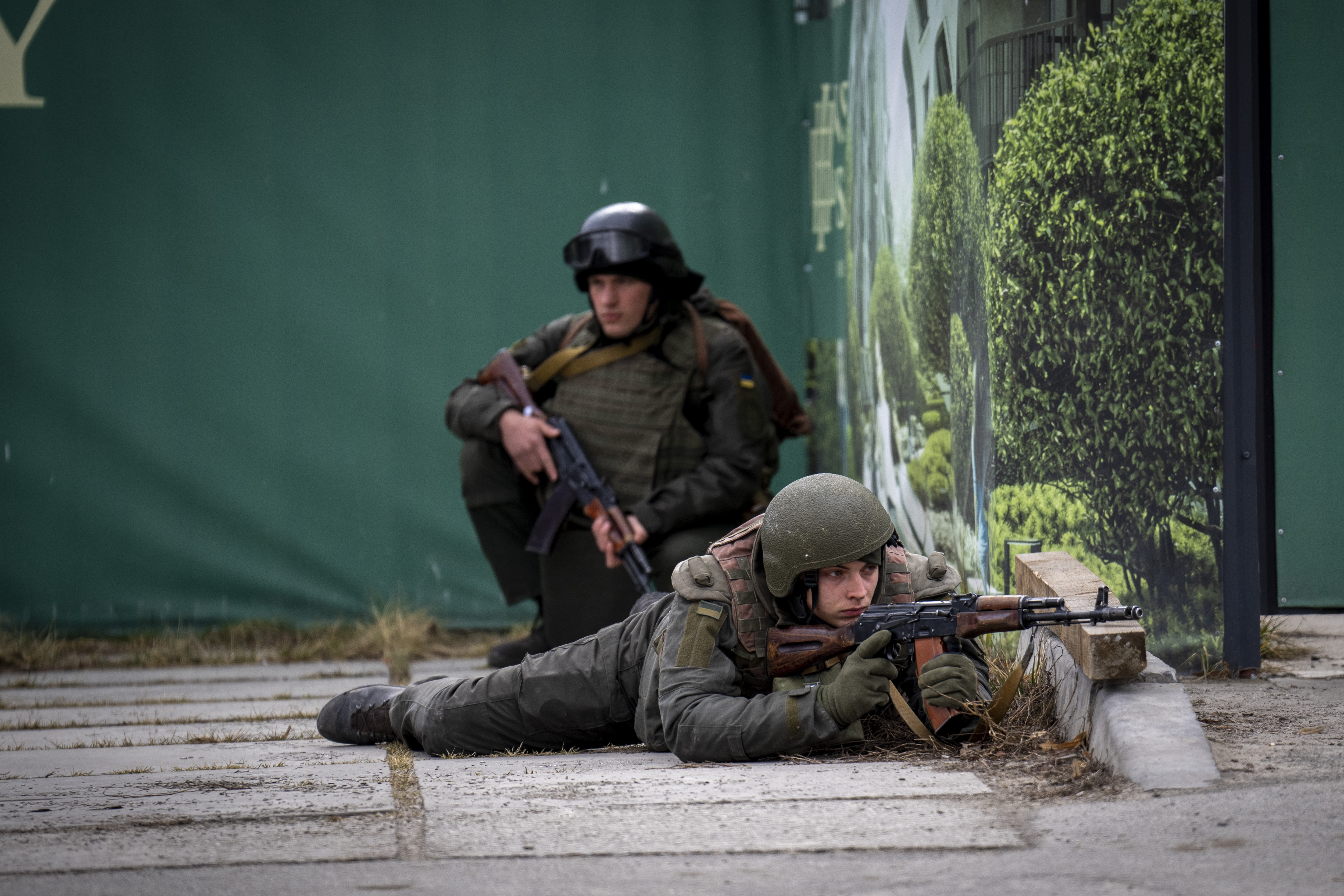
Ukrainian soldiers take positions in downtown Kyiv, Ukraine, Friday, Feb. 25, 2022.

Manpower

Where Russia has 900,000 active personnel in its armed forces, and two million in reserve, Ukraine has 196,000 and 900,000 reservists.

Ukraine on Wednesday began conscripting reservists aged 18 to 60, according to IISS.

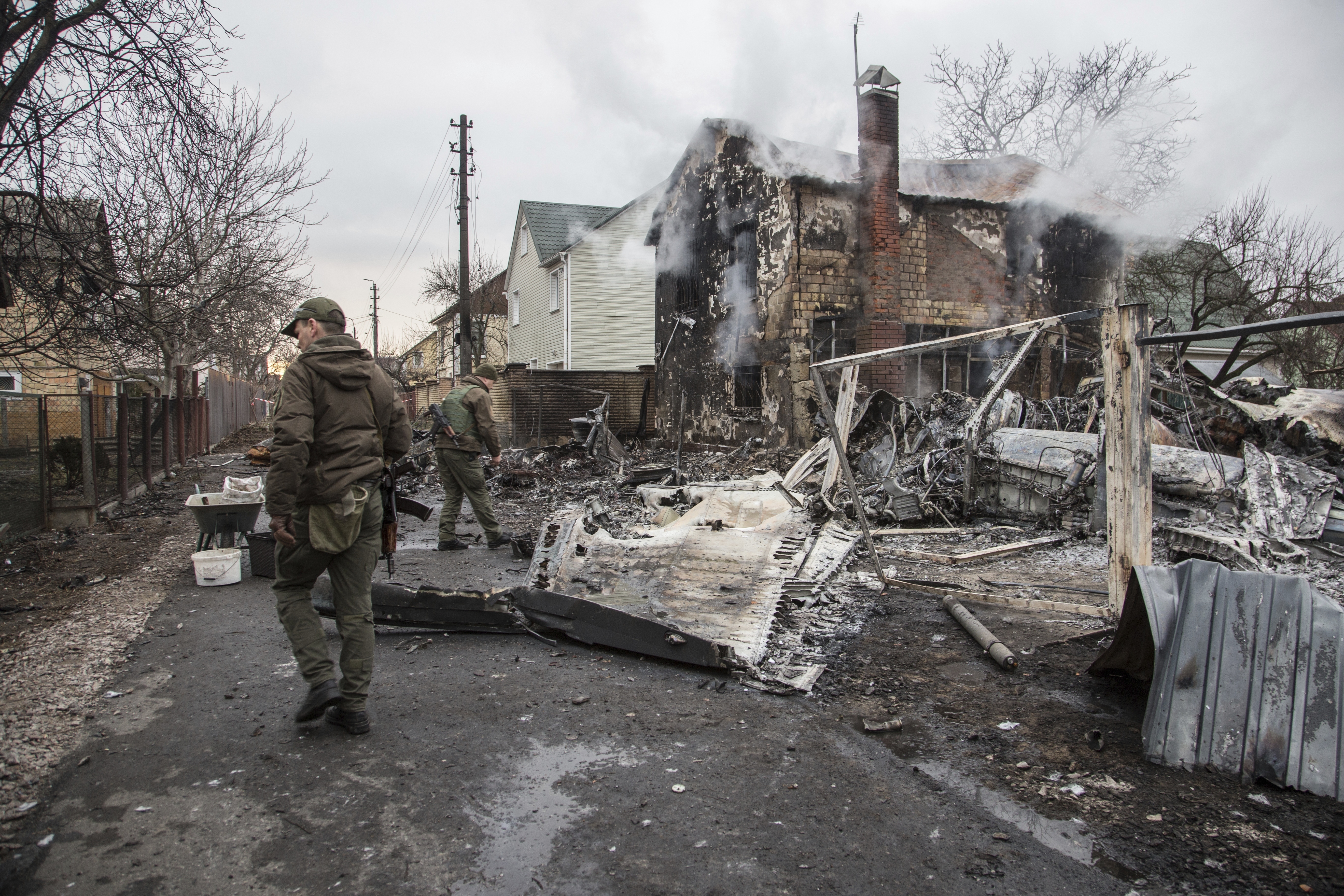
Ukrainian servicemen walk at fragments of a downed aircraft seen in in Kyiv, Ukraine, Friday, Feb. 25, 2022.

In land forces alone, Russia has a twofold advantage, with 280,000 troops to Ukraine's 125,600.

And its air force is nearly five times as strong, with 165,00 to Ukraine's 35,000.

READ MORE: World leaders fine-tune punitive measures against Russia

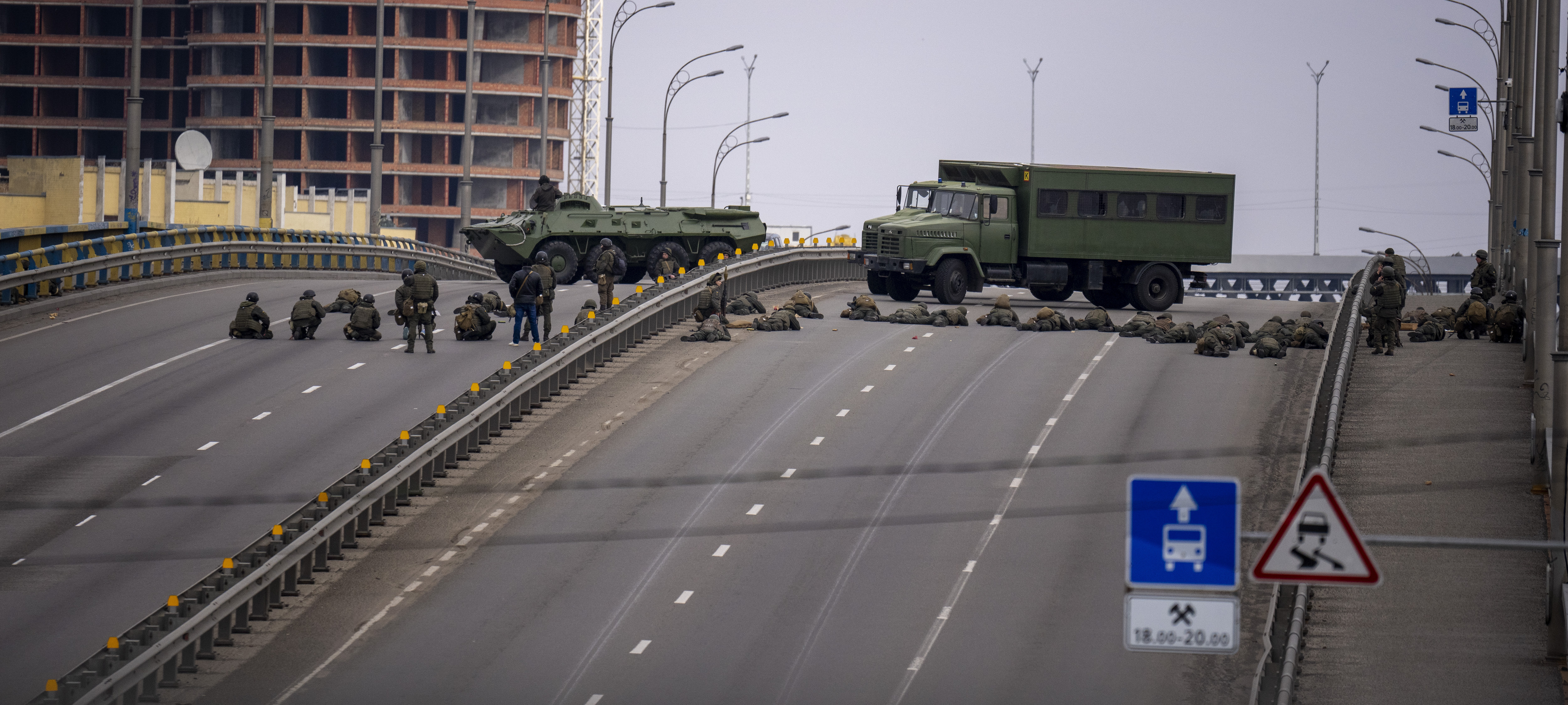
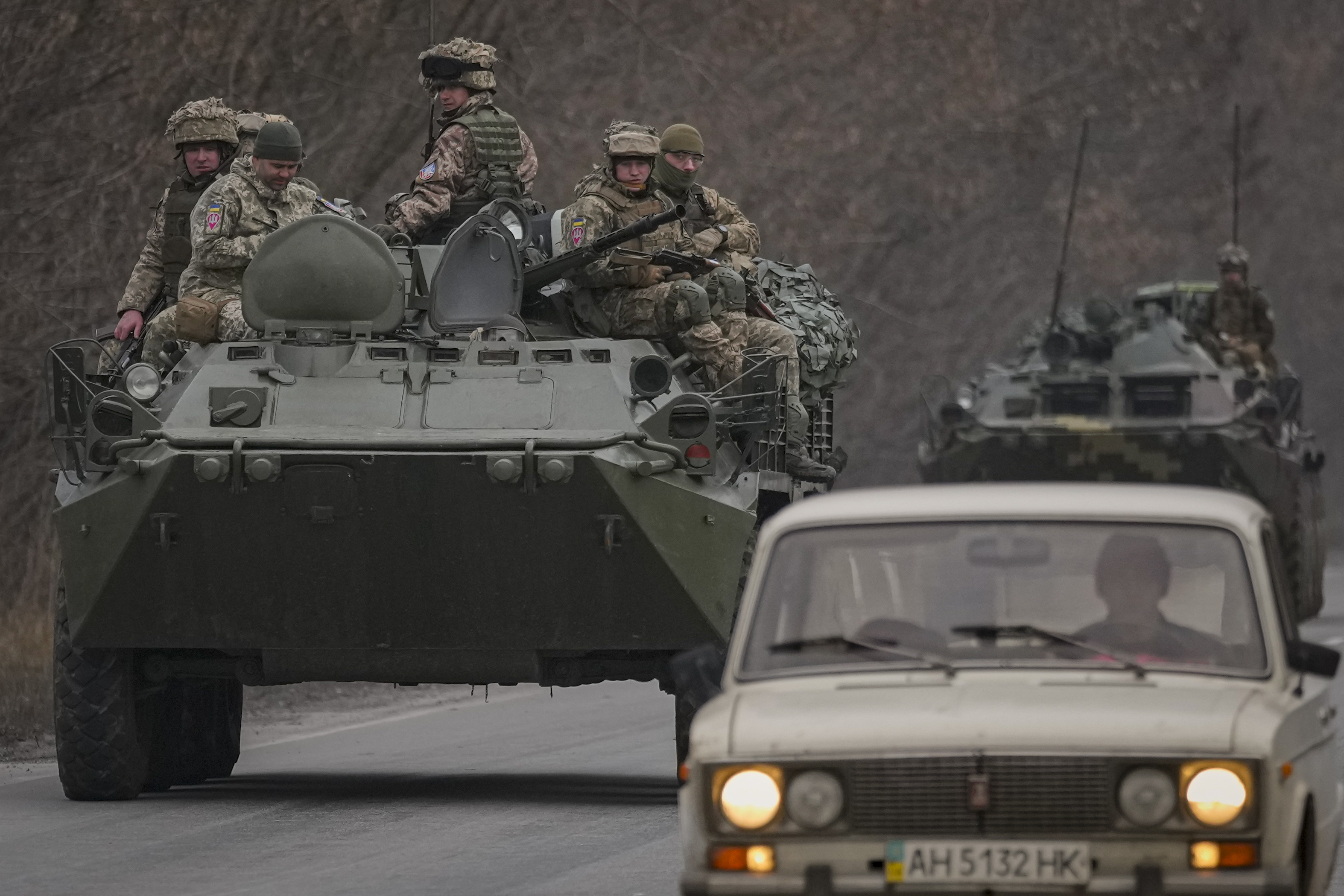
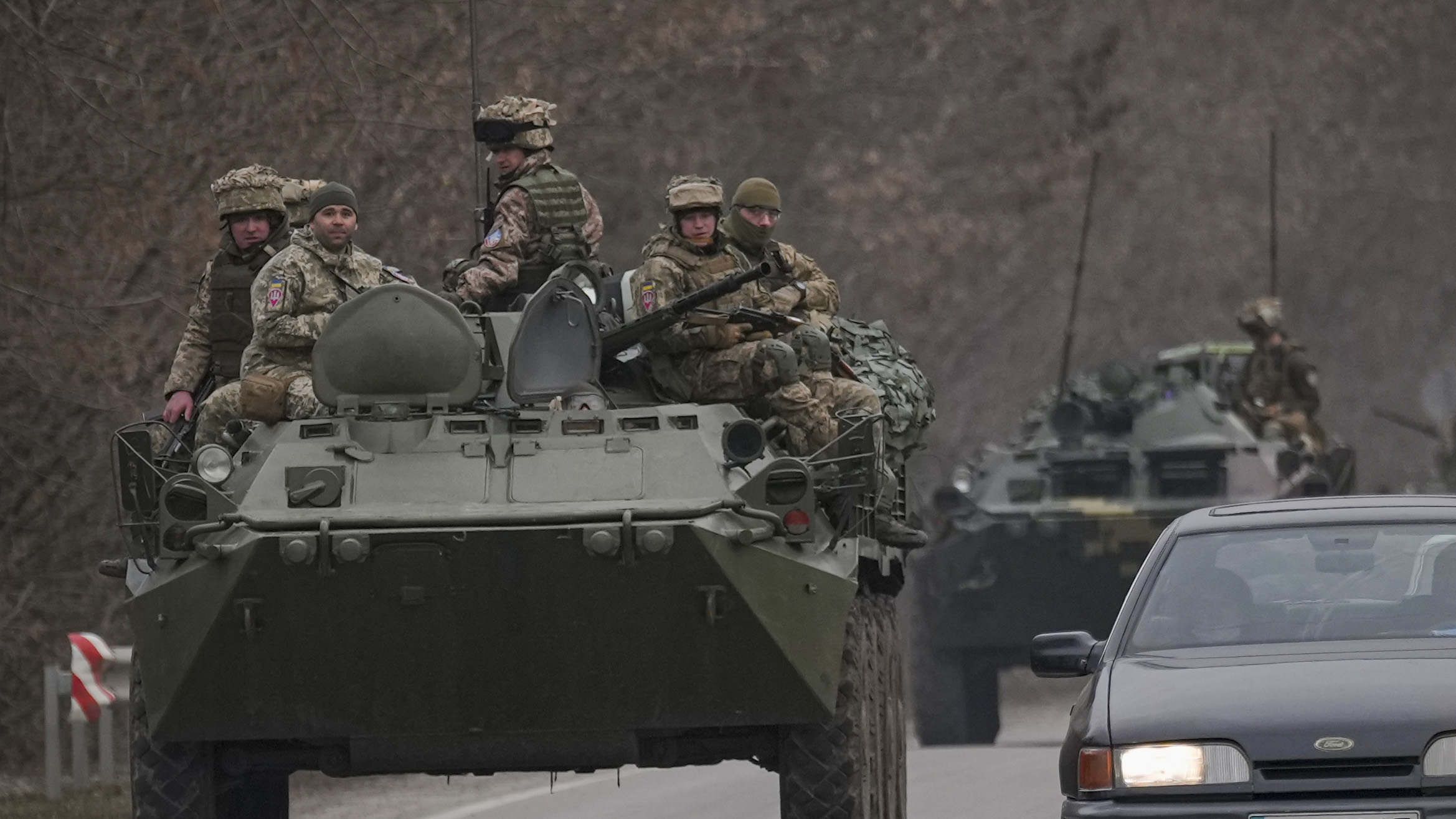
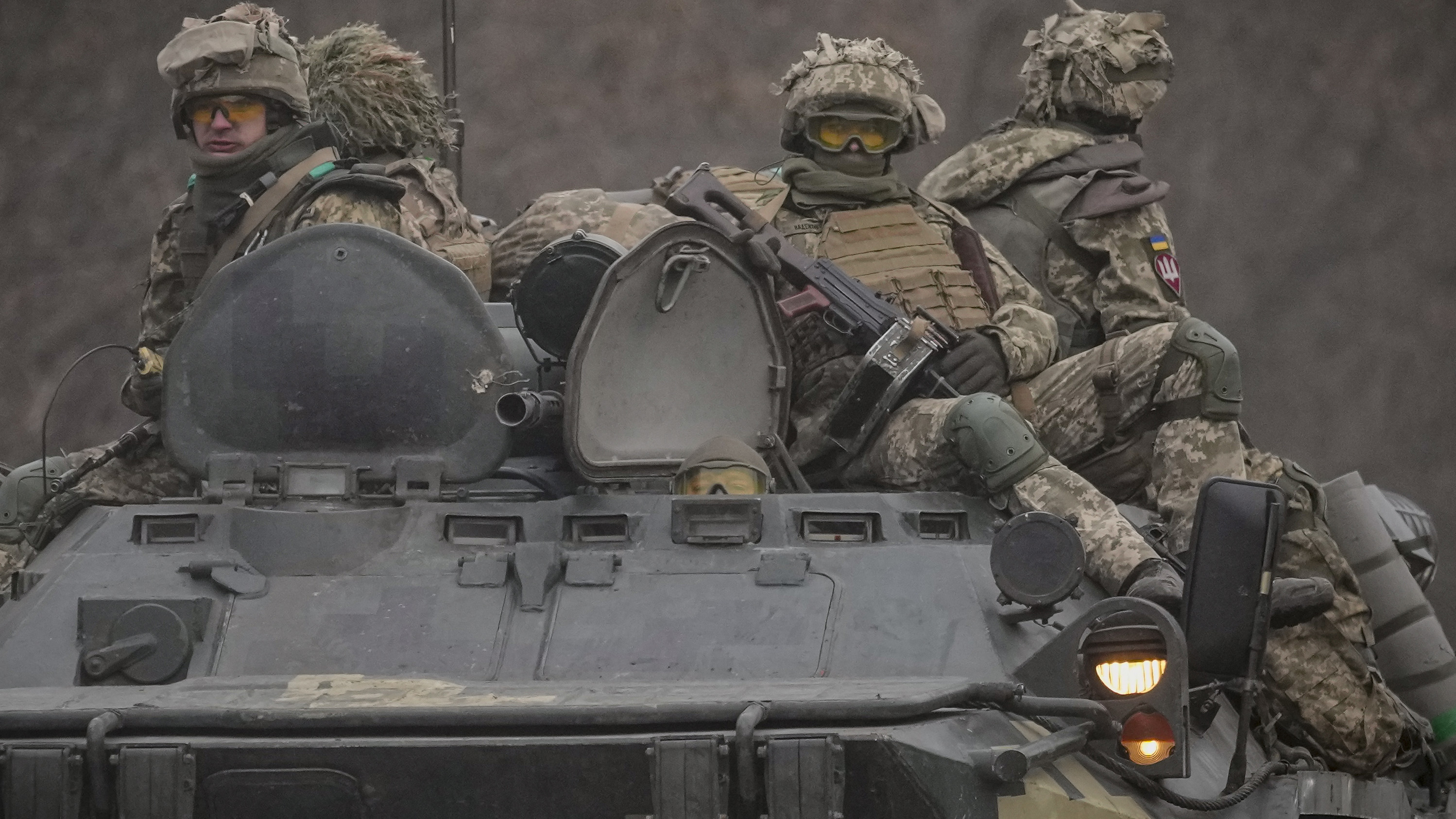
Ukrainian soldiers take position on a bridge inside the city of Kyiv, Ukraine, Friday, Feb. 25, 2022.Ukrainian servicemen sit atop armored personnel carriers driving on a road in the Donetsk region, eastern Ukraine, Thursday, Feb. 24, 2022.

But in terms of how many troops are in this particular operation, Yohann Michel, a research analyst who worked on the IISS report, said Russia had an estimated 200,000 personnel in and around Ukraine.

"That's including around 60 battle groups," Mr Michel said.
The situation is evolving rapidly and that number could change, but it's very large, and that's important. It's one of the largest in eastern Europe that we've seen in years – in my lifetime."

"Ukrainian numbers are more difficult because everything they have is now mobilised and they have called in reservists."

Weaponry and vehicles

There is a lot to compare here – attack aircraft, armoured vehicles, surface-to-air missiles, but in general, Russia simply has more of everything.

Russia has more than 15,857 armoured fighting vehicles, for example, to Ukraine's 3,309.

It has more than 10 times the aircraft – 1,391 to Ukraine's 128, and 821 helicopters to Ukraine's 55, if you include Navy aircraft.

And where Russia has 49 submarines, Ukraine has none, according to IISS.

"There are big difference between the two forces – Russia has a much more capable air domain, its air defences are stronger," Mr Michel said.
"There is a huge difference on helicopters and planes available at every level – from transport aircraft to fighter aircraft to attack helicopters."

READ MORE: Soldiers' defiant last words as Russian warship targets Snake Island

Combat will

Ukrainian forces have, however, launched some successful counterattacks.

Mr Michel noted that the sheer combat will among Ukrainian troops to fight has been the armed forces' greatest strength.

"I'm really surprised at what I'm seeing. The fact that Ukrainian fighter jets are still flying, they actually took off is impressive."

If Russia takes the capital soon, it will be difficult for Ukraine to fight back.

But if it is unsuccessful, the conflict could become protracted.
That's the scenario where Ukraine's will may prove a powerful weapon, Mr Michel said.
READ MORE: Putin waves nuclear sword in confrontation with the West

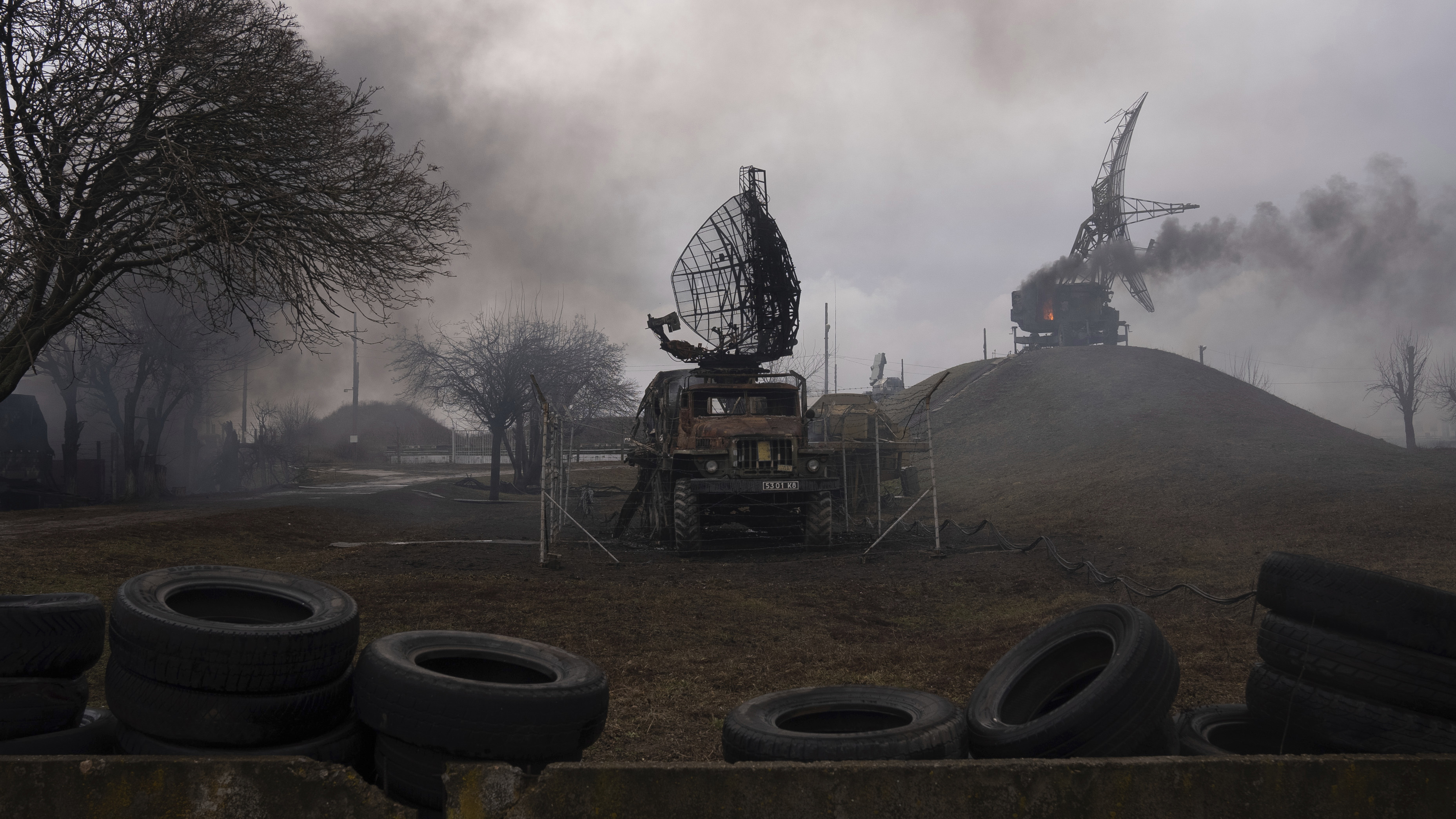
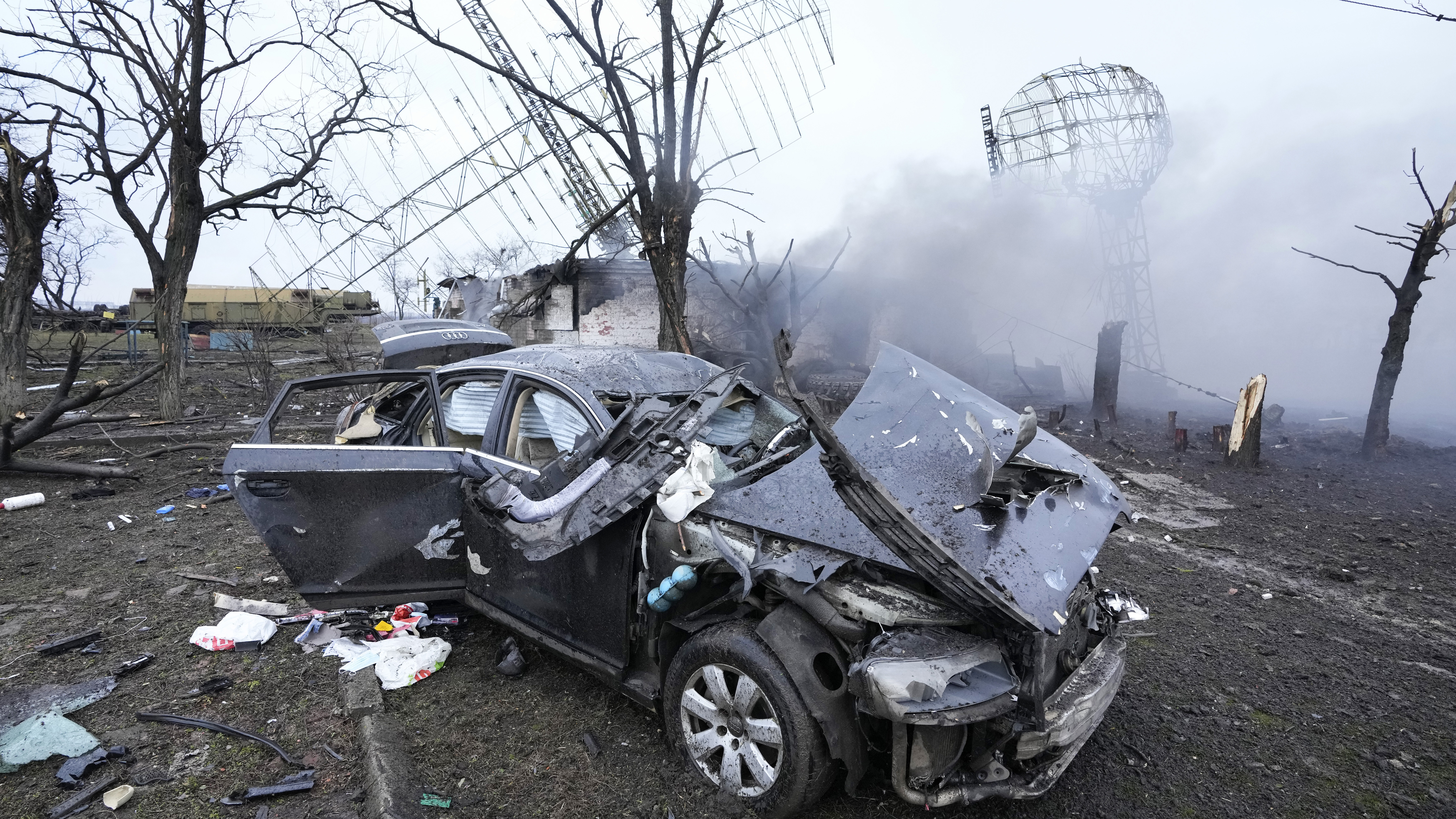
Ukrainian military track burns at an air defence base in the aftermath of an apparent Russian strike in Mariupol, Ukraine.

Modernisation

But with fighting going on across the country, the number and quality of armoury is a major factor.

Nick Reynolds, a Research Analyst for Land Warfare at the Royal United Services Institute, said that Ukraine's air force was now largely knocked out.

"There have been serious issues with modernisation due to Ukraine's economic problems since 2014, so the military lacks modern air defence and artillery, particularly counter-battery artillery radar and other surveillance equipment to detect enemy artillery and at least stand some chance of suppressing it with their own," Mr Reynolds said.

"These capabilities are critical for Ukraine's army to be able to manoeuvre and resupply itself."

Soldiers' defiant last words as Russian warship targets tiny Island

A Ukrainian soldier on a tiny island in the Black Sea didn't hold back when threatened with bombing by a Russian warship as Moscow continued its assault on Ukrainian territory.

According to a purported audio exchange, as the Russians approached Snake Island, also known as Zmiinyi Island, the Russian officer says: "This is a military warship. This is a Russian military warship.

"I suggest you lay down your weapons and surrender to avoid bloodshed and needless casualties. Otherwise, you will be bombed."

READ MORE: Russia presses invasion to outskirts of Ukrainian capital

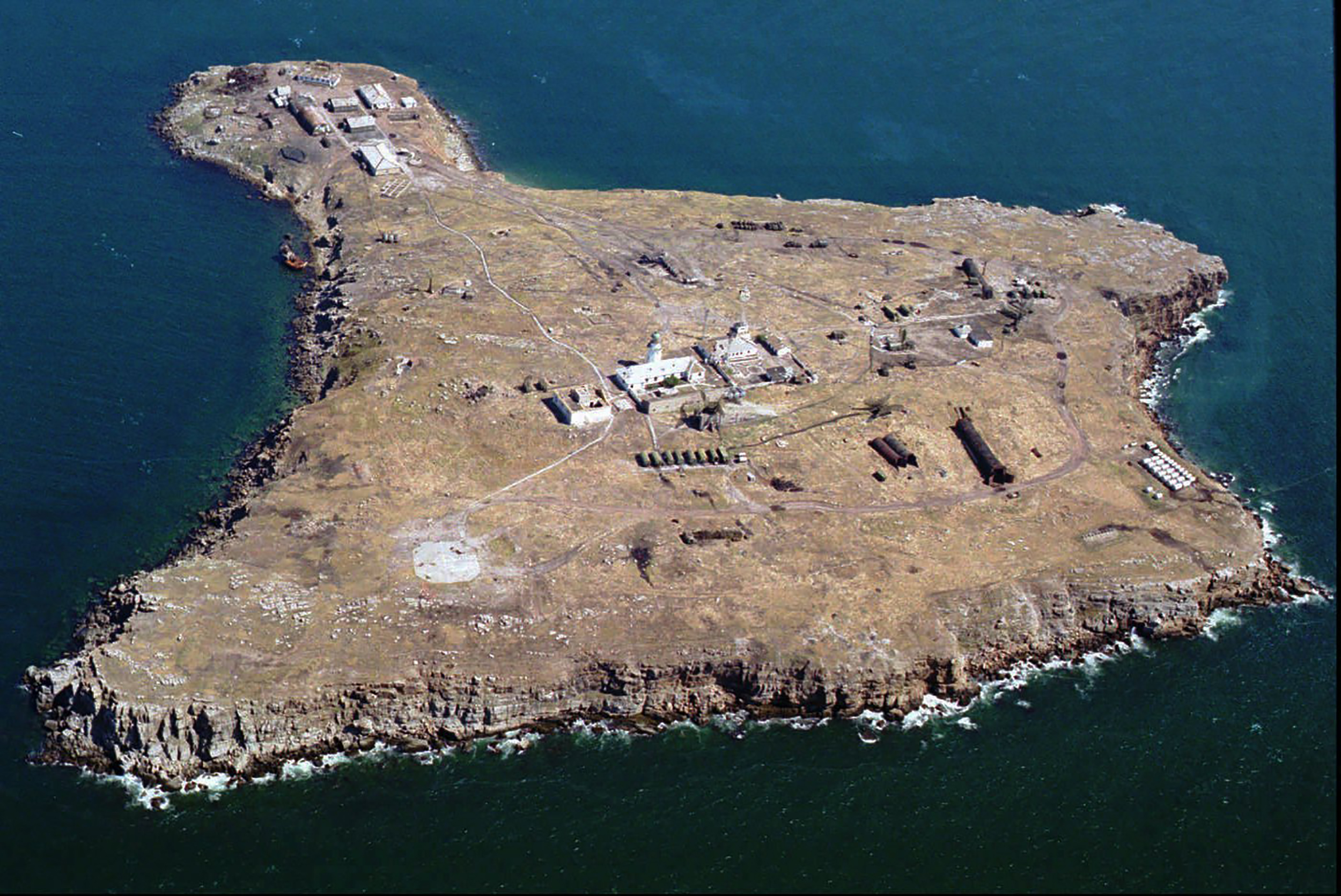
Undated aerial view of Ukraine's Island of Serpents in the Black Sea, 140 km west of Odessa.

A Ukrainian soldier responds: "Russian warship, go f— yourself."

Those were the final known words heard from the island.

All 13 Ukrainian defenders were killed in a Russian bombardment Thursday, Ukrainian President Volodymyr Zelensky said.

READ MORE: World leaders fine-tune punitive measures against Russia

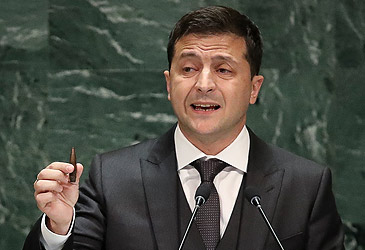
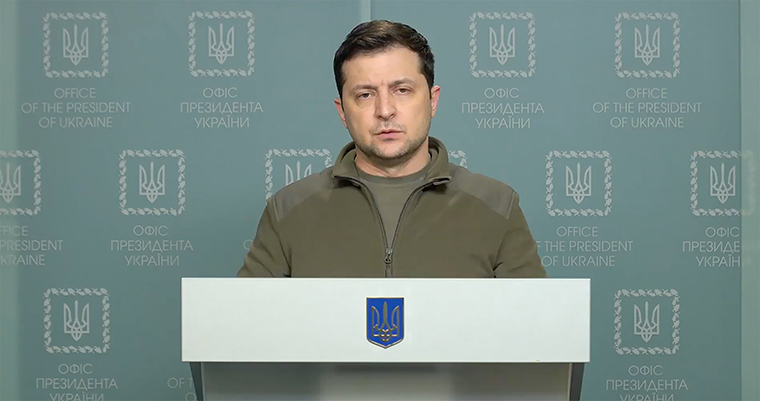
"All border guards died heroically but did not give up. They will be awarded the title of Hero of Ukraine posthumously," Zelensky said.

Ukrainian President Volodymyr Zelensky (Getty)

Snake Island sits about 48 kilometres off the southern tip of the Ukrainian mainland in the northwestern Black Sea.

It's about 300 kilometres west of Crimea, the Ukrainian territory that Russia annexed in 2014.

Though it is only about 18 hectares in size, a report last year from the non-partisan Atlantic Council think tank called it "key to Ukraine's maritime territorial claims" in the Black Sea.

Highlighting its strategic importance, Zelensky chose it last year as the spot for an interview with Ukrainian media in advance of a summit to try to reverse Russia's annexation of Crimea, the Atlantic Council report said.

Zelensky words to interviewers that day proved prophetic.

"This island, like the rest of our territory, is Ukrainian land, and we will defend it with all our might," he said.

'I don't want to die': Ukrainians' fear as invasion closes in

Yurii Zhyhanov woke before dawn to his mother's screaming and found himself covered in dust.

On the second day of Russia's invasion, shelling on the outskirts of Ukraine's capital, Kyiv, struck their residential building.

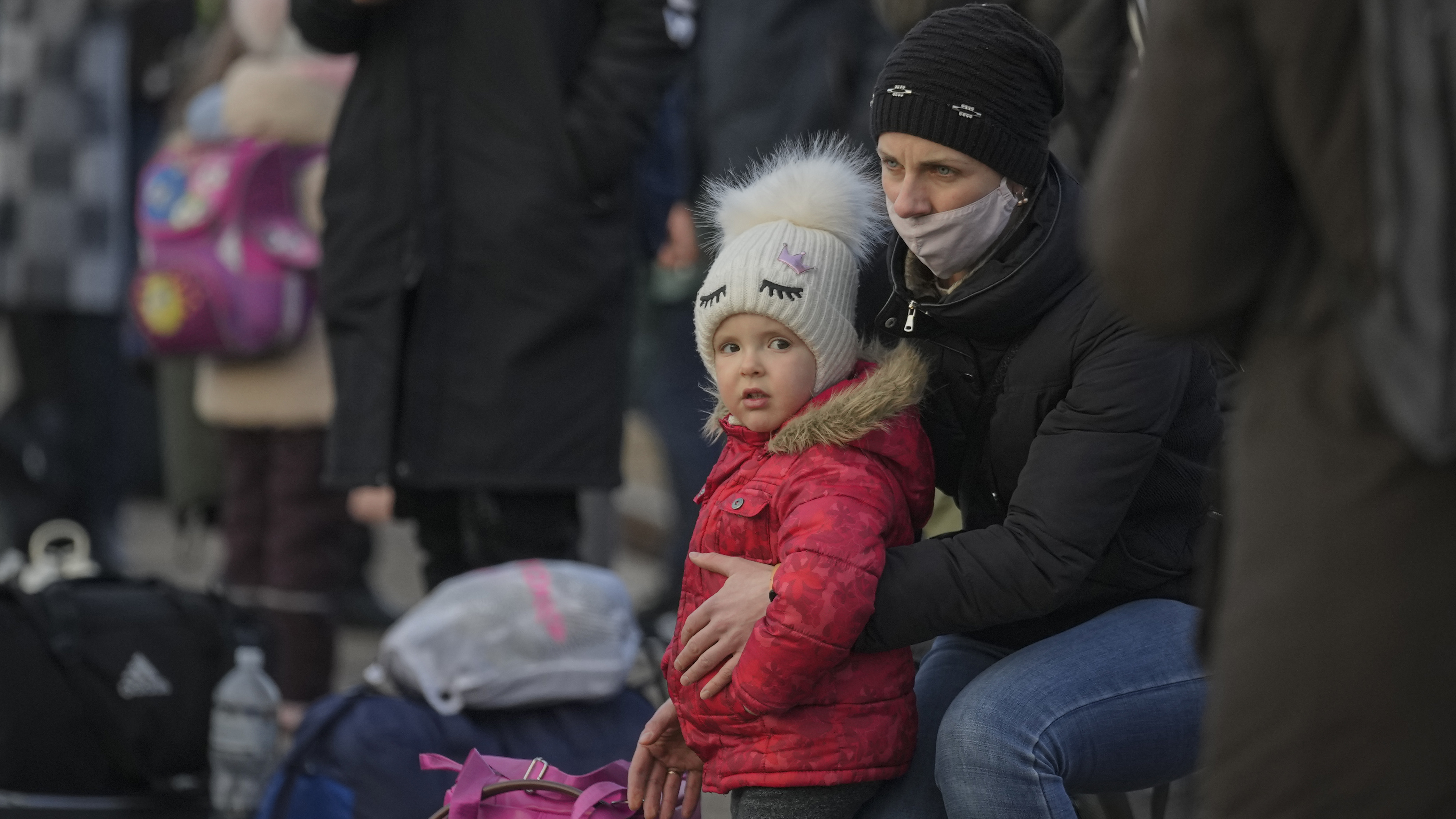
Many civilians, horrified to find their lives at risk, started to flee during the attack's first hours.

LIVE UPDATES: Ukraine says missiles struck Kyiv

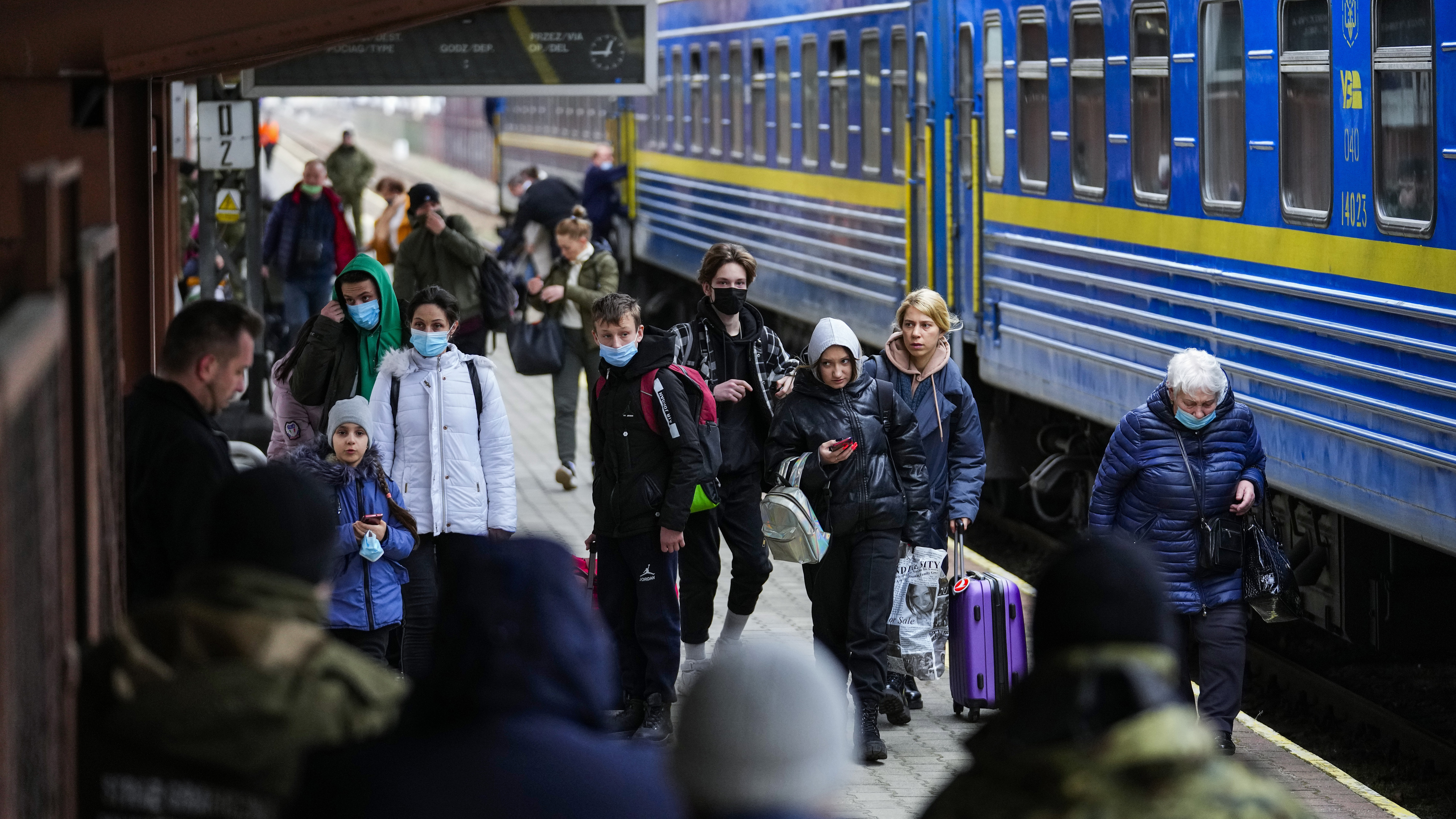
People fleeing the conflict from neighboring Ukraine arrive to Przemysl train station in Przemysl, Poland.

Amid the smoke and the screeching of car alarms on Friday, Zhyhanov and his family packed and joined them.

"What are you doing? What is this?" he said, addressing Russia and gesturing to the damaged building behind him.

"If you want to attack military personnel, attack military personnel. This is all I can say."

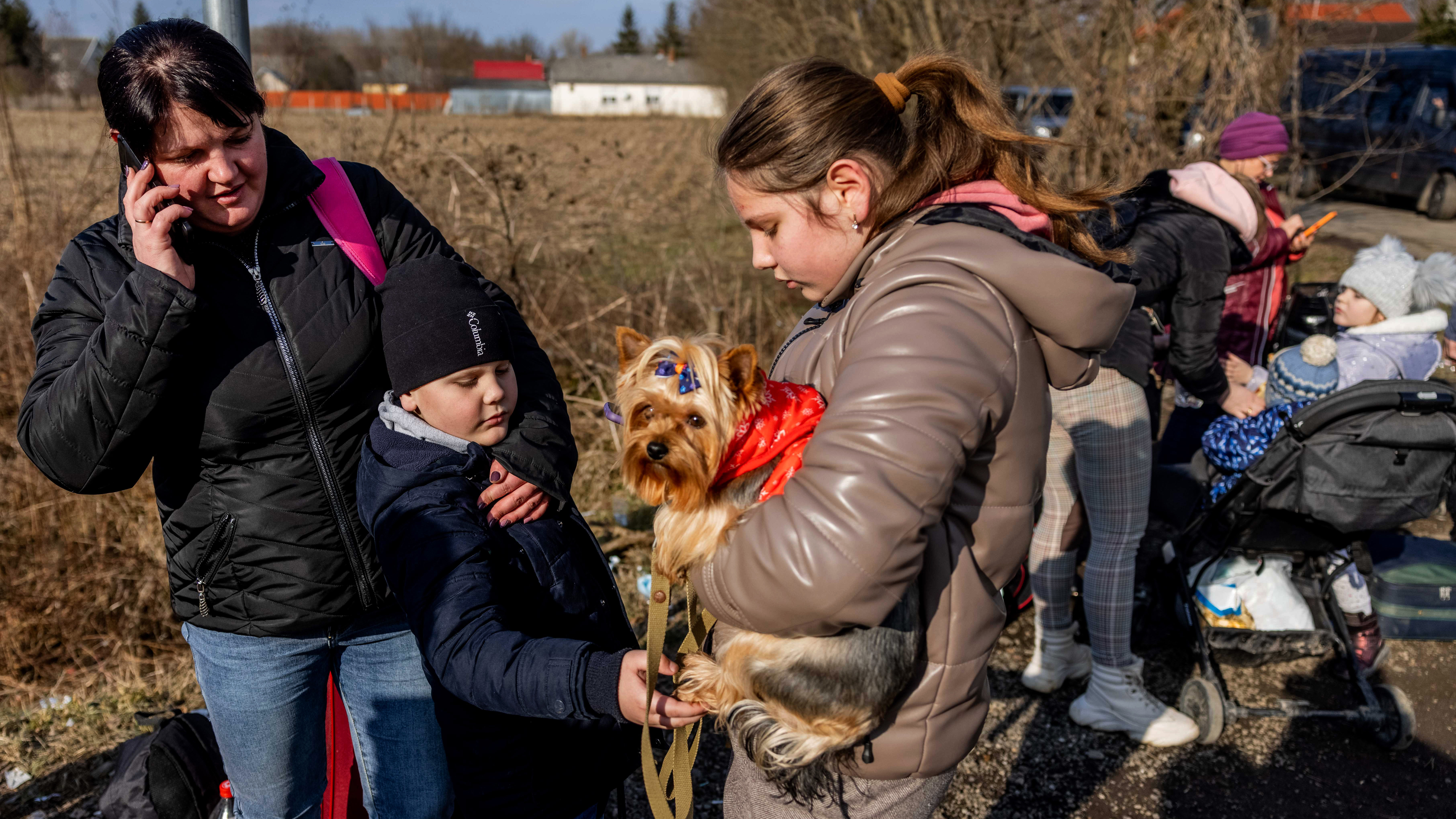
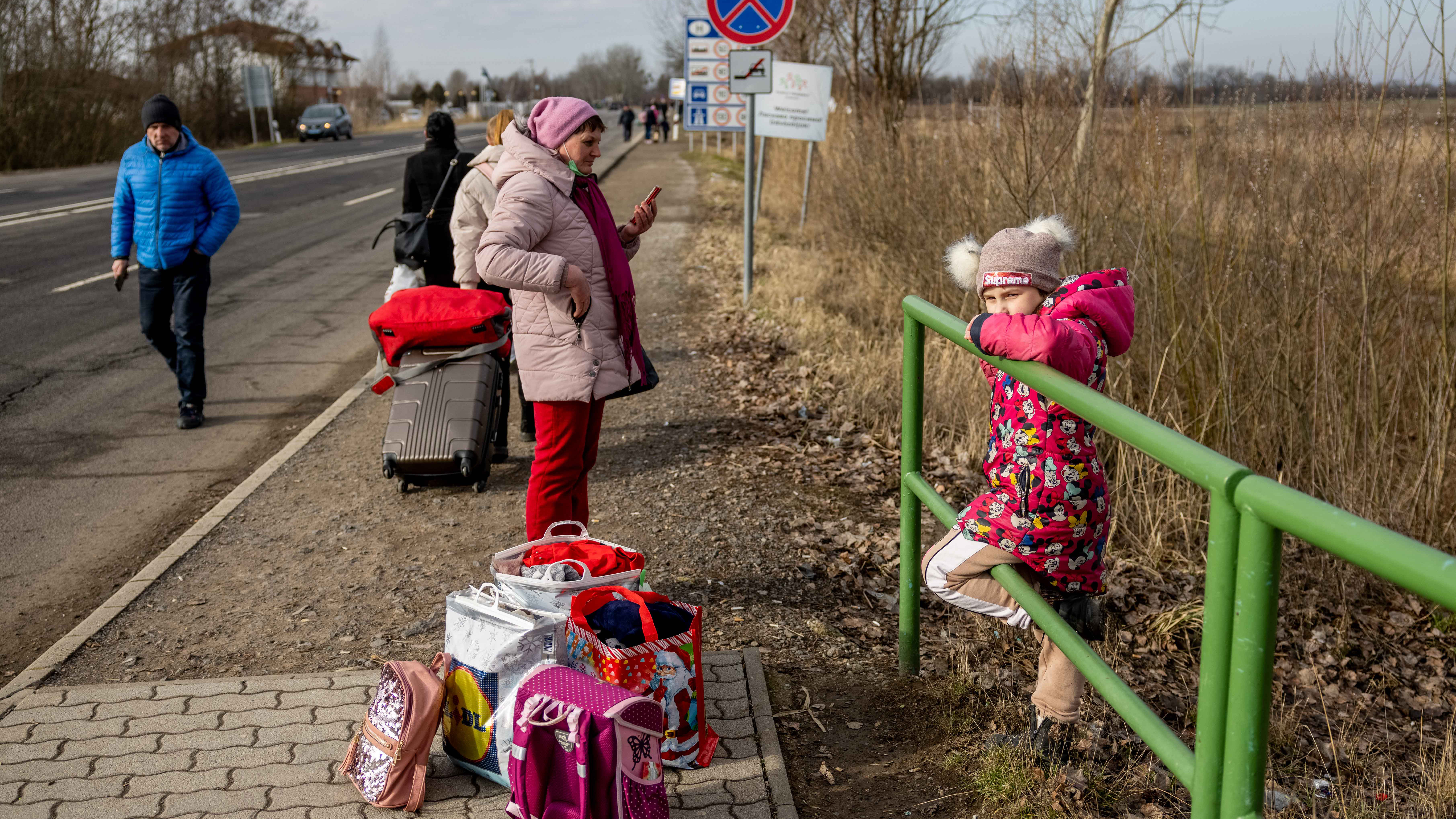
People wait with their belongings at the Tiszabecs-Tiszaujlak border crossing in Tiszabecs, Hungary.

His weariness and shock reflected that of his country as people climbed out of bomb shelters, basements and subways to face another day of upheaval.

Those who didn't wake to explosions were roused by air raid sirens.

Then came the news that Russian forces had advanced to the capital's outskirts.

Russia has said it is not targeting cities, but the fighting seemed far too close.

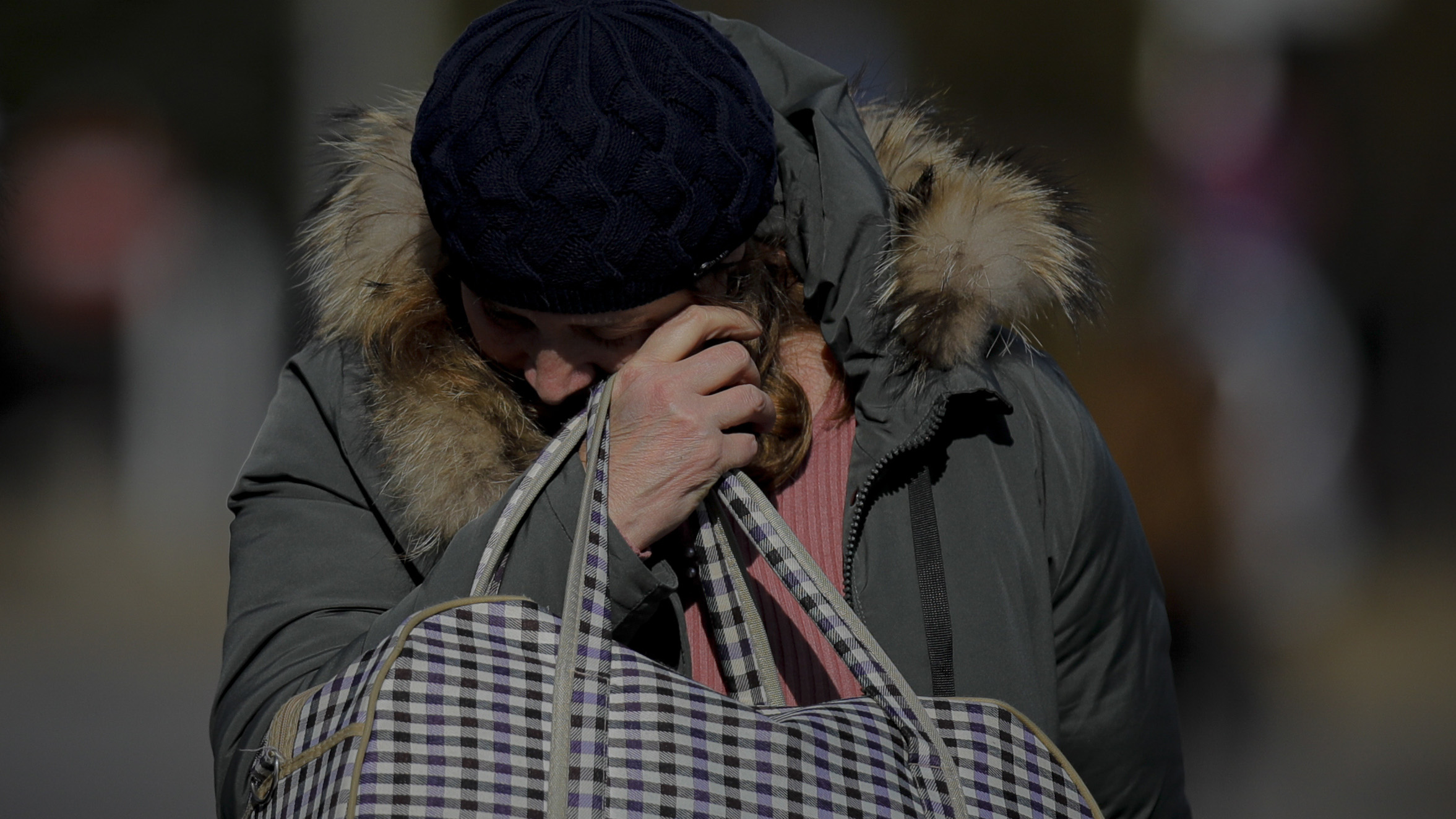
A woman wipes away tears after she crossed the border from Ukraine at the Romanian-Ukrainian border, in Siret, Romania.

The body of a dead soldier lay near a Kyiv underpass.

Elsewhere, fragments of a downed aircraft smoked in a residential area.

Black plastic was draped over body parts found amid the brick homes.

READ MORE: Russia presses invasion to outskirts of Ukrainian capital

People flee from Ukraine at the Hungarian-Ukrainian border, in Lonya, Hungary.

Armoured personnel carriers drove down the city's streets.

Soldiers on empty bridges established defensive positions.

Residents stood uneasily in doorways of apartment buildings, watching.

Outside a monastery, a woman lifted her hands toward a mural of saints and appeared to pray.

A man inspects the damage at a building following a rocket attack on the city of Kyiv.

In the port city of Mariupol, a young girl named Vlada wished for the assault to stop.

"I don't want to die," she said. "I want all of this to end as soon as possible."

Uncertainty compounded the fear.

On a street in the Obolon district, Associated Press journalists saw a military truck disabled, its tires deflated.

Women push baby strollers after crossing the border from Ukraine at the Romanian-Ukrainian border, in Siret, Romania.

The truck had no apparent insignia, and it was not clear if it was a vehicle that Ukraine's general staff claimed had been stolen by Russian forces aiming to disguise themselves as local ones.

Ukrainians picked through the damage left by shelling. And some mourned.

In the city of Horlivka, in the territory held by pro-Russian rebels, a body covered with a blanket lay outside a house that had been hit.

A man standing nearby spoke on the phone.

People look at a damaged residential block hit by an early morning missile strike  in Kyiv.

READ MORE: 'I'm terrified': Ukrainians in Australia shocked by Russian invasion

"Yes, Mum's gone, that's all," he said. "That's it, Mum's gone."

The UN human rights office said it was receiving increasing reports of civilian casualties, with at least 25 deaths verified, mostly from shelling and airstrikes.

"The figures, we fear, could be much higher," agency spokeswoman Ravina Shamdasani said.

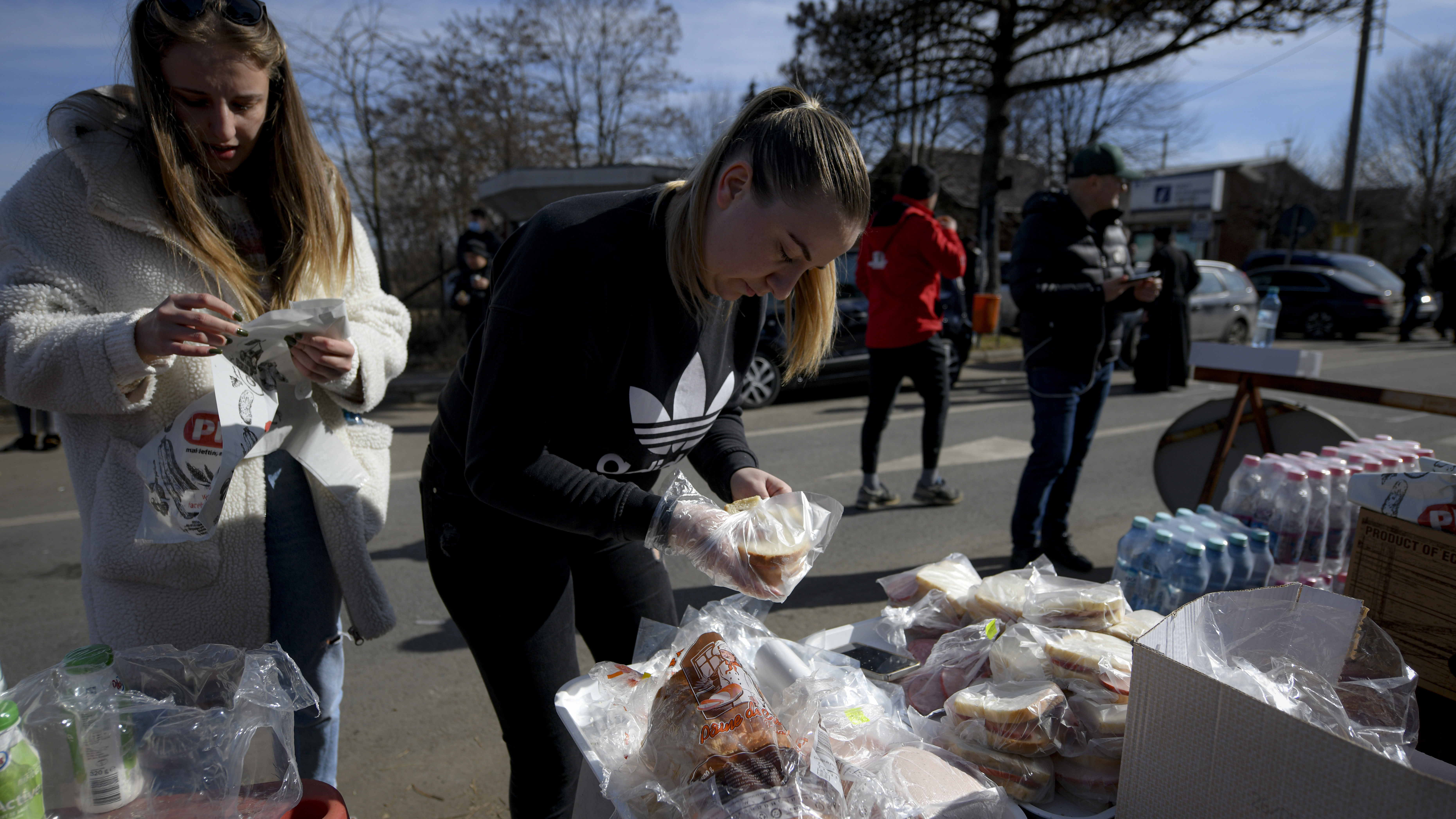
Volunteers prepare sandwiches for refugees crossing the border from Ukraine at the Romanian-Ukrainian border, in Siret, Romania.

The urge to run away grew.

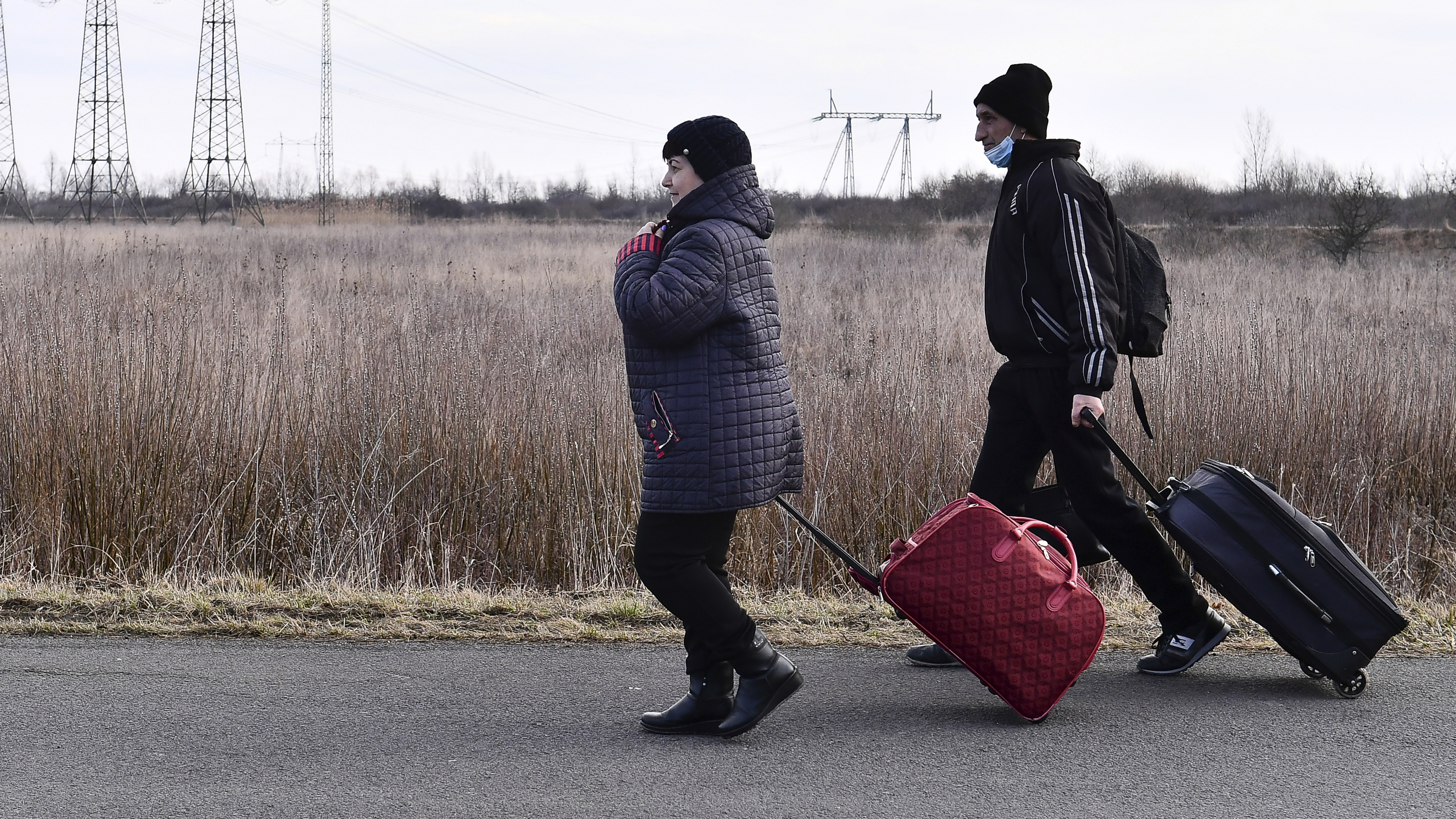
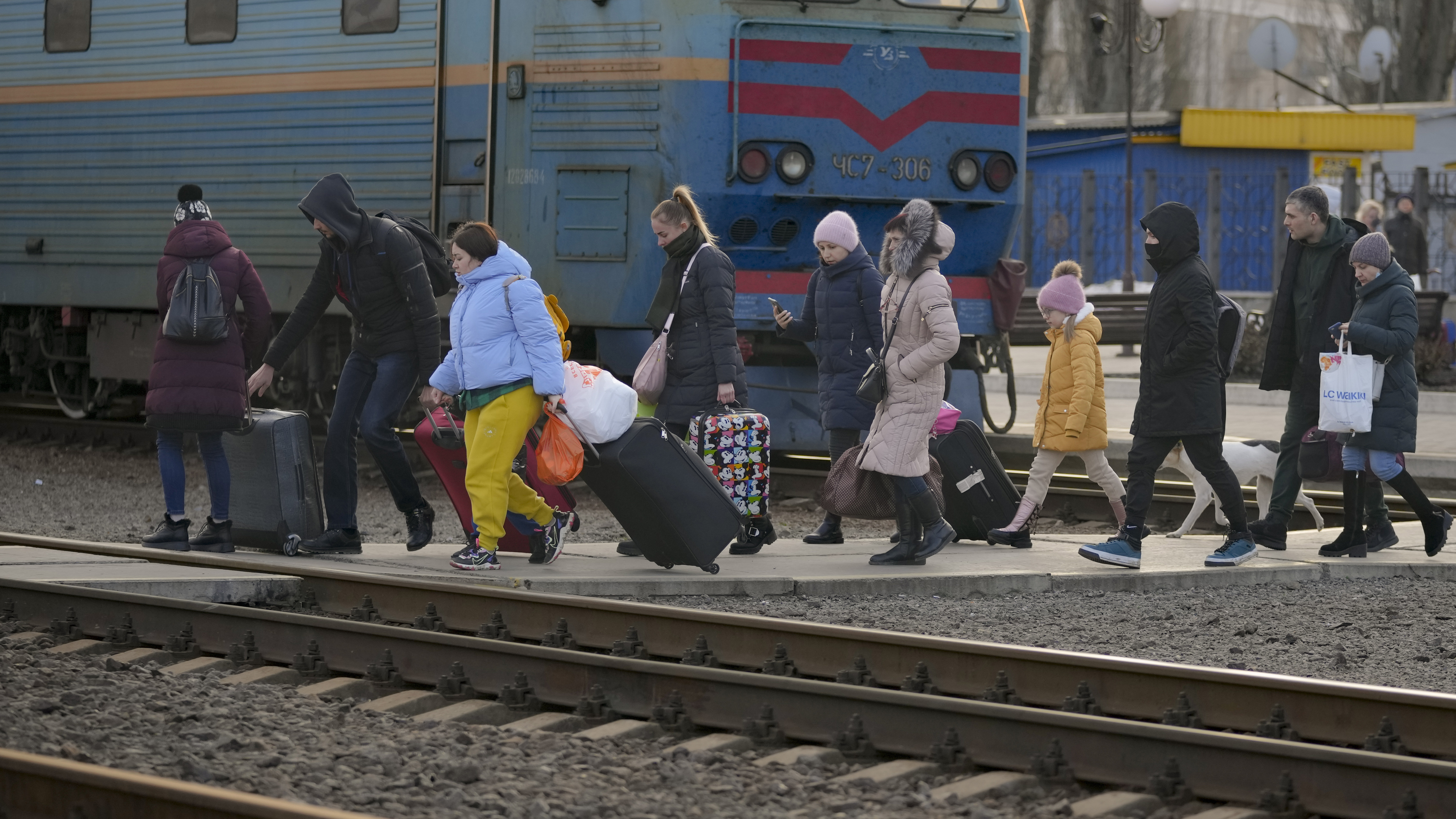
Some civilians approached borders on foot, wheeling luggage behind them.

"It's unfortunate that we got here in our old age, facing a war," said Marika Sipos, who had left her home in Koson.

She wiped her eyes.

At a train station just across the border in Poland, hundreds of people from Ukraine sought shelter.

Some curled up on cots, trying to sleep.

A woman stroked the hair of a young girl.

One of those at the station was Andry Borysov, who said he had heard the rush of something flying overhead and then an explosion as he hurried to catch a train out of Kyiv.

READ MORE: Australian parents struggling to reach their surrogate baby born in Ukraine

READ MORE: Morrison slams China's stance over Ukraine invasion

"It was an unmistakable sound," he said.

Some hesitated to leave, even as they stood on railway platforms.

In Kostiantynivka, a government-controlled area in the separatist-held Donetsk People's Republic, a woman who gave only her first name, Yelena, appeared undecided.

People wait with their belongings at the Astely-Beregsurany border crossing  in Beregsurany, Hungary.

"It's 50-50 on whether it is worth leaving or not," she said.

"But it wouldn't hurt to leave for a couple days, for a weekend."

Others leaving Ukraine knew it might take much longer before they could return home.

Nine News reporters honoured at Walkley Awards

Nine News has been recognised for its outstanding journalism after landing a host of top honours at the prestigious Walkley Awards.

Christine Ahern was honoured for her reporting for A Current Affair and the Today show on the COVID-19 crisis at the Epping Gardens Aged Care home with the Walkley for Television/Video Current Affairs Short.

And, in the category for Television/Video News Reporting, Peter Fegan and Rebeka Powell's report into 'The Investigation of Andrew Laming' for Nine News was also recognised. All three finalists in this category were Nine News reporters, with Amelia Adams recognised for her coverage of the Capitol attacks and Tim Arvier nominated for his reporting of ambulance delays in Queensland.

https://twitter.com/walkleys/status/1497163456491159555

Nick McKenzie and Joel Tozer won two awards, Television Current Affairs Long and Investigative Journalism, for their coverage of 'Nazis Next Door', which featured on 60 Minutes, as well as in The Age and The Sydney Morning Herald.

Nine newspapers also picked up top honours. Kate McClymont took the Print/Text News Report for her Sydney Morning Herald Investigation into the disappearance of Melissa Caddick and the AFR took the Audio award for their podcast The Sure Thing, by Angus Grigg and Lap Phan. And The Sydney Morning Herald's Brook Mitchell was recognised for his coverage of the Sydney anti-lockdown protests with the award for News Photography.

Samantha Maiden of news.com.au won the top award of the night, The Gold Walkley, for Open Secret: The Brittany Higgins story.

The Award for Outstanding Contribution to Journalism went to George Negus, a founding presenter of Nine's 60 Minutes and ABC's Foreign Correspondent.

Mr Negus, who has been living in a Sydney nursing home since late last year after being diagnosed with dementia, was lauded for both his skill as a television reporter and writer.

"I had admired George Negus as an insightful, determined, clever and witty journalist before it was my privilege to become his book publisher in 2001," said Shona Martyn, a former publishing director of HarperCollins Australia. 

"As a journalist and writer, George Negus has been able to distill the most complicated issues into the equivalent of a fireside chat. The sales of his books, which became bestsellers, prompted the adoration of the crowds who came to see him at writers' festivals and in bookshops. What a legend. And what a contribution to Australian journalism," Ms Martyn added.

FULL LIST OF WINNERS

PRINT/TEXT NEWS REPORT

  • Kate McClymont, The Sydney Morning Herald, "The Lady Vanishes: Melissa Caddick and the missing millions"

PUBLIC SERVICE JOURNALISM

INNOVATION

  • Kylie Boltin, Ella Rubeli, Ravi Vasavan and Emma Anderson, SBS, "Ravi and Emma"

HEADLINE, CAPTION OR HOOK

  • Duska Sulicich, The Age, "Michael rolled, the vote assured, Hallelujah!", "It's all a bit cray-cray" and "The Art of the Steal"

FEATURE WRITING LONG (OVER 4000 WORDS)

FEATURE WRITING SHORT (UNDER 4000 WORDS)

COVERAGE OF INDIGENOUS AFFAIRS

COVERAGE OF COMMUNITY OR REGIONAL AFFAIRS

CARTOON

  • David Pope, The Canberra Times, "Rollout de Vax"

SPORTS JOURNALISM

SPORT PHOTOGRAPHY

  • Alex Coppel, Herald Sun, The Daily Telegraph, The Courier-Mail and The Advertiser, "The Games that Had to Happen"

RADIO/AUDIO NEWS AND CURRENT AFFAIRS

RADIO/AUDIO FEATURE

  • Angus Grigg and Lap Phan, The Australian Financial Review, "The Sure Thing"

PRODUCTION

SCOOP OF THE YEAR

  • Ellen Whinnett, The Daily Telegraph, Herald Sun, The Advertiser and The Courier-Mail, "The AN0M Files"

COVERAGE OF A MAJOR NEWS EVENT OR ISSUE

NEWS PHOTOGRAPHY

  • Brook Mitchell, The Sydney Morning Herald, "Sydney Anti-Lockdown Protest"

BUSINESS JOURNALISM

FEATURE/PHOTOGRAPHIC ESSAY

  • Dean Sewell, The Sun-Herald, "Of Mice and Men"

TELEVISION/VIDEO: CAMERAWORK

TELEVISION/VIDEO NEWS REPORTING

  • Peter Fegan and Rebeka Powell, Nine News 6pm, Nine, "The Investigation of Andrew Laming"

TELEVISION/VIDEO CURRENT AFFAIRS SHORT (LESS THAN 20 MINUTES)

TELEVISION/VIDEO CURRENT AFFAIRS LONG (MORE THAN 20 MINUTES)

INVESTIGATIVE JOURNALISM

COMMENTARY, ANALYSIS, OPINION AND CRITIQUE

WALKLEY DOCUMENTARY AWARD

WALKLEY BOOK AWARD

  • Kate Holden, The Winter Road, Black Inc.

NIKON-WALKLEY PRESS PHOTOGRAPHER OF THE YEAR

  • Alex Coppel, Herald Sun, The Daily Telegraph and The Courier-Mail

OUTSTANDING CONTRIBUTION TO JOURNALISM

  • George Negus

GOLD WALKLEY

  • Samantha Maidennews.com.au, "Open secret: The Brittany Higgins story"

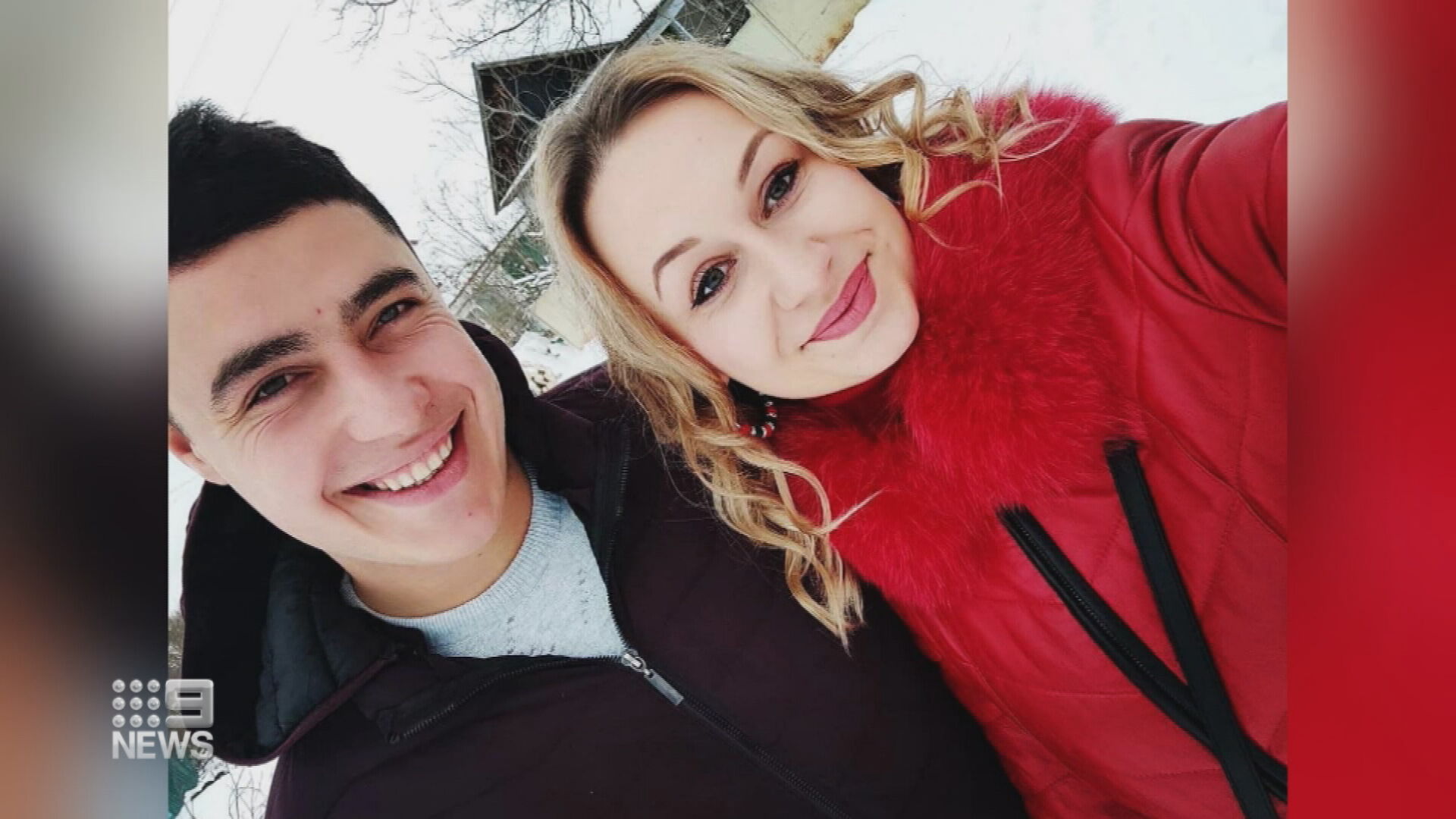
'I just want to cry': Adelaide woman living a nightmare in Ukraine

Adelaide woman Daniella Nykytyuk is living a nightmare.

The 21-year-old is 350 kilometres west of Ukraine's capital Kyiv.

"It is really terrifying, we are not sure what's going to happen in the next hour or even minute," she said.

READ MORE: Aussie parents struggling to reach their baby born by surrogate in Ukraine

Ms Nykytyuk got engaged just two weeks ago to her fiancé Sasha, who has now volunteered to fight.

"It's usually after 12am that we've been hearing loud bombing noises, shootings, yesterday during the day we saw planes flying above us."

Ms Nykytyuk got engaged just two weeks ago to her fiancé Sasha, who has now volunteered to fight.

"I'm honestly so, so proud of him but every time I think about it I just want to cry," she said.

The situation is a world away from her family in the Adelaide suburbs of Woodville West and Findon, where she went to school.

READ MORE: 'It's not a game': Australian photojournalist witnesses in Ukraine invasion

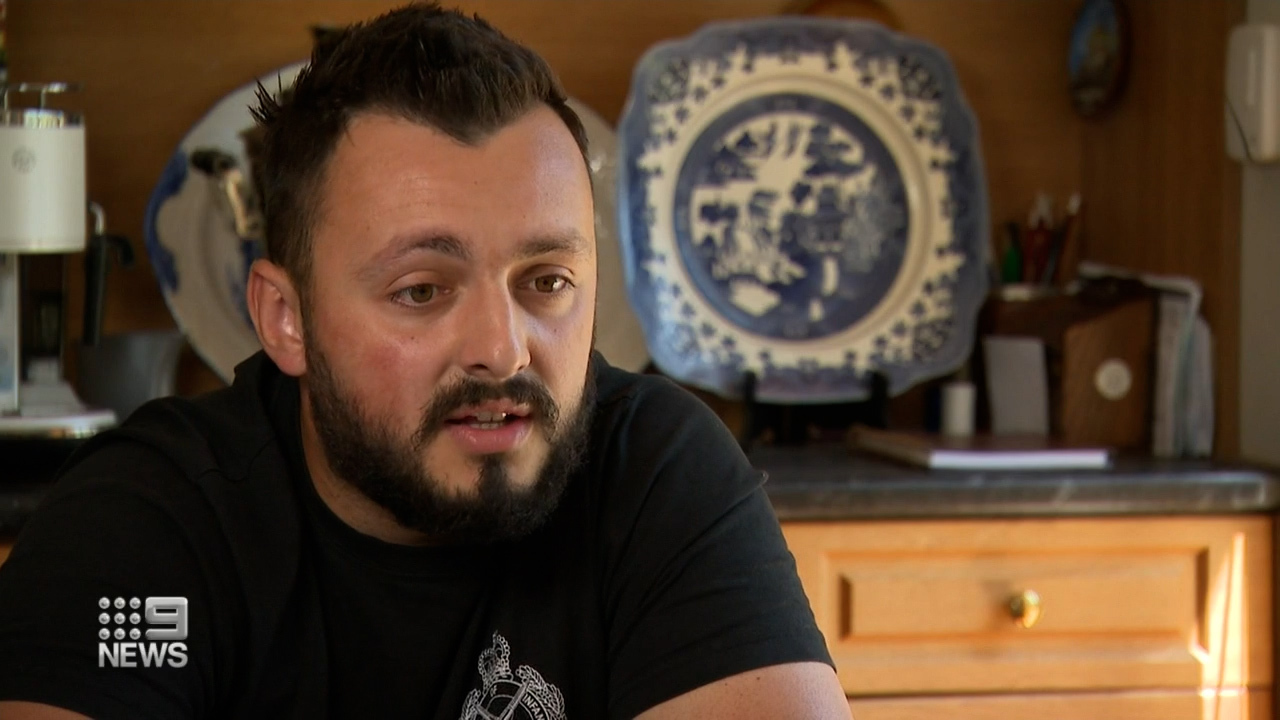
For Marko Kvasniuk, a resident of the Adelaide suburb of Wynn Vale, his fiance Tetiana is in western Ukraine.

"Now we're thinking about how to survive, we can't take any money out, we can't buy any food products, there's no petrol left, no money left at the ATMs," she said.

For Marko Kvasniuk, a resident of the Adelaide suburb of Wynn Vale, his fiance Tetiana is in western Ukraine.

"I'm trying to help her get over the border into Hungary, Poland or Slovakia," Mr Kvasniuk said.

She has decided to leave but the path out isn't clear.

"After she's out in another country then we can worry about everything else but that's kind of the priority now," Mr Kvasniuk said.

Watch the full report in the video above.

'Second morning of the all-out war': Missiles, debris rain down on Kyiv

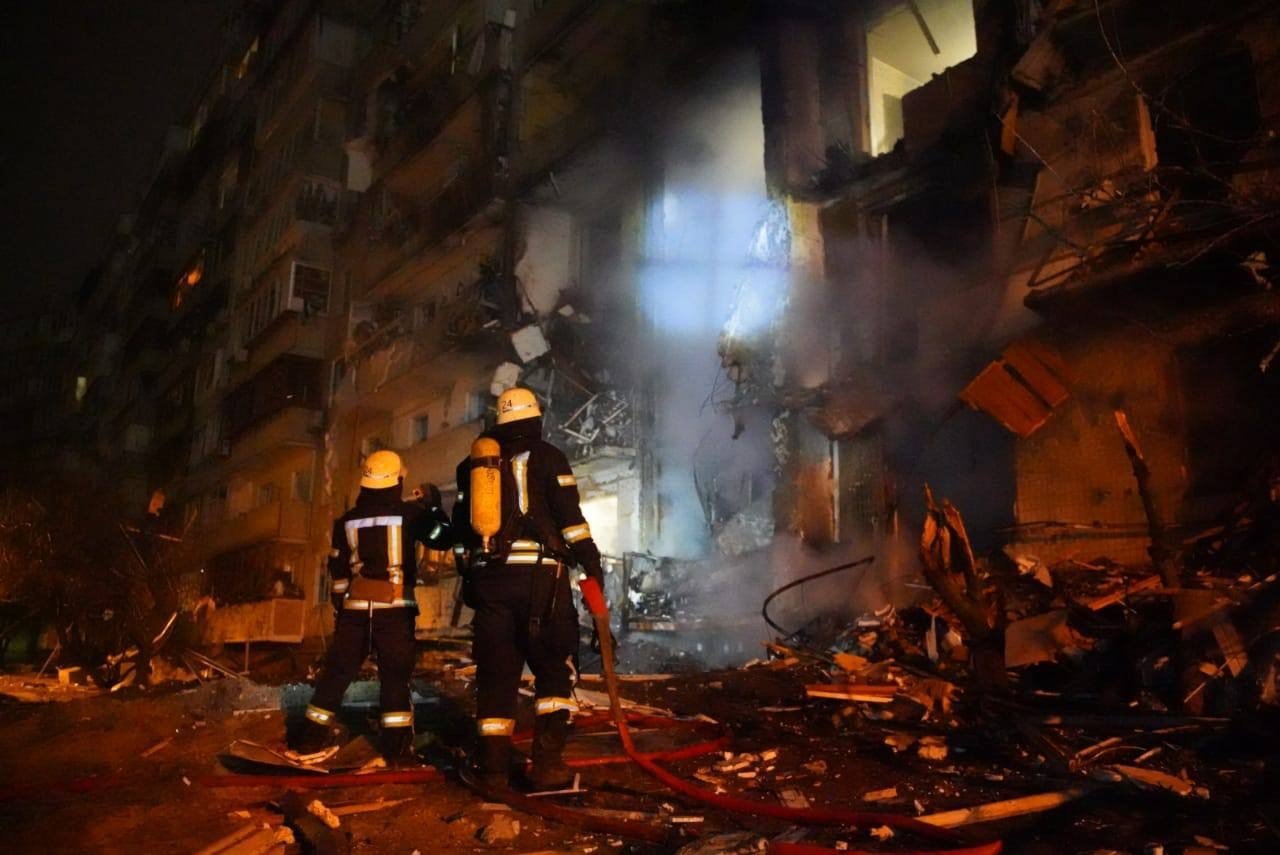
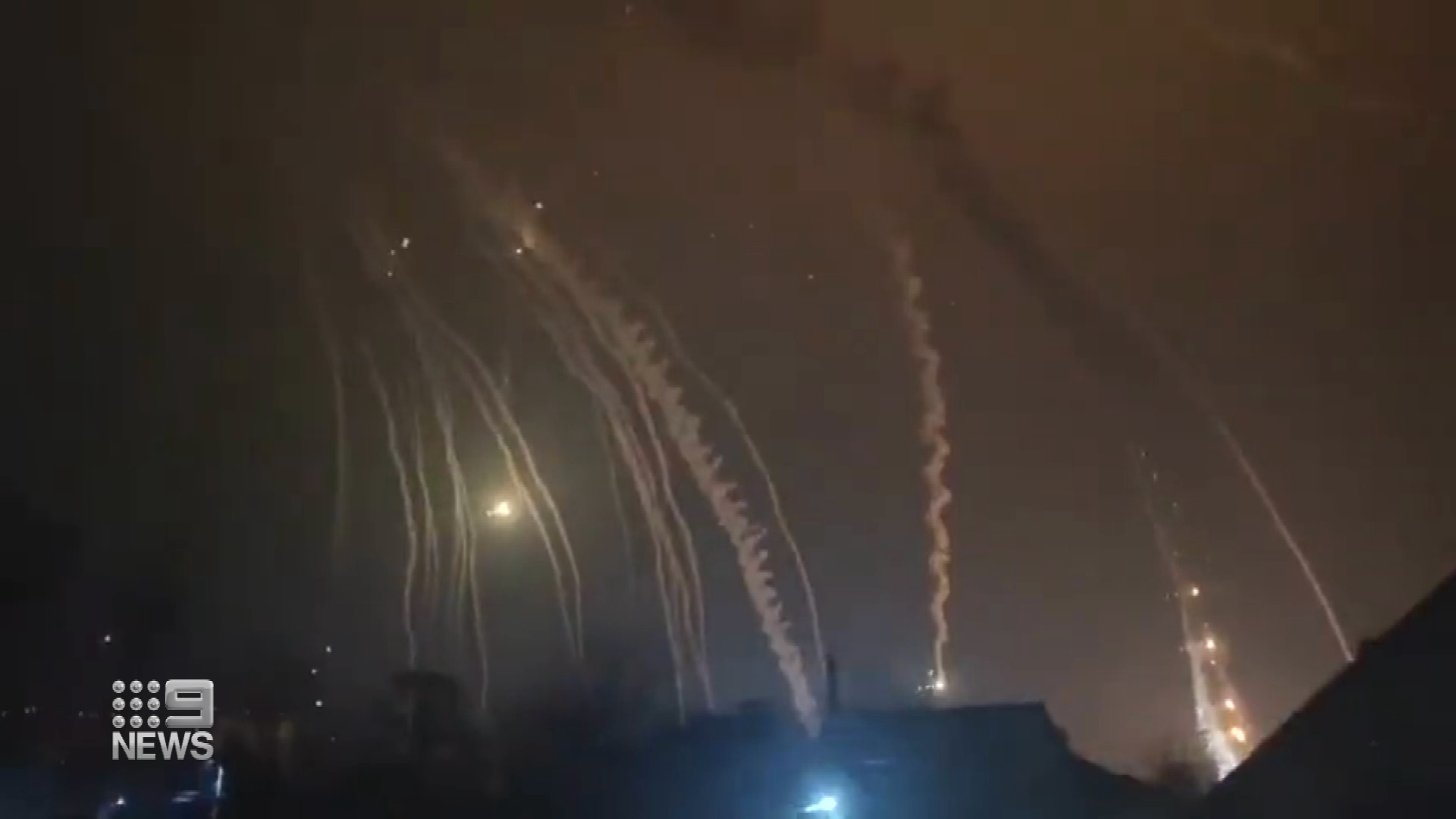
Air raid sirens are being sounded while explosions were heard before dawn in Kyiv as Ukrainians wake to a new day of Russian attacks.

Ukrainian President Volodymyr Zelenskyy has confirmed pre-dawn missile strikes took place just before 4am (local time) today.

In a video address to the nation, he said Russia had targeted both military and civilian sites.

LIVE UPDATES: Russian forces just kilometres from Kyiv

UKRAINE: APARTMENT BUILDING ON FIRE IN KYIV

"Russia will have to talk to us sooner or later about how to end hostilities and stop this invasion," he said.

Meanwhile, the adviser to the Head of the Ministry of Internal Affairs of Ukraine Anton Gerashchenko confirmed the strikes were "cruise or ballistic missiles".

A CNN team on the ground reported hearing two large blasts in central Kyiv and a third loud explosion in the distance.

CNN reporters also said air raid sirens have sounded for several minutes in the nation's capital and Lviv.

9News reporter Carrie Greenbank confirmed she had heard more explosions while live on air.

"We're also hearing the sound of low-flying military jets, we've actually heard of lot of that heading across Kyiv," Greenbank said.

Ukrainian Forces say they have shut down a Russian aircraft flying over Kyiv.

Greenbank also reported Ukrainian forces had claimed to have shot down a Russian aircraft.

She said the forces said the aircraft had been flying over Kyiv and later crashed into a nine-story apartment building.

Greenbank spoke of how she and the team sheltered in a bunker overnight due to the threat of missiles.

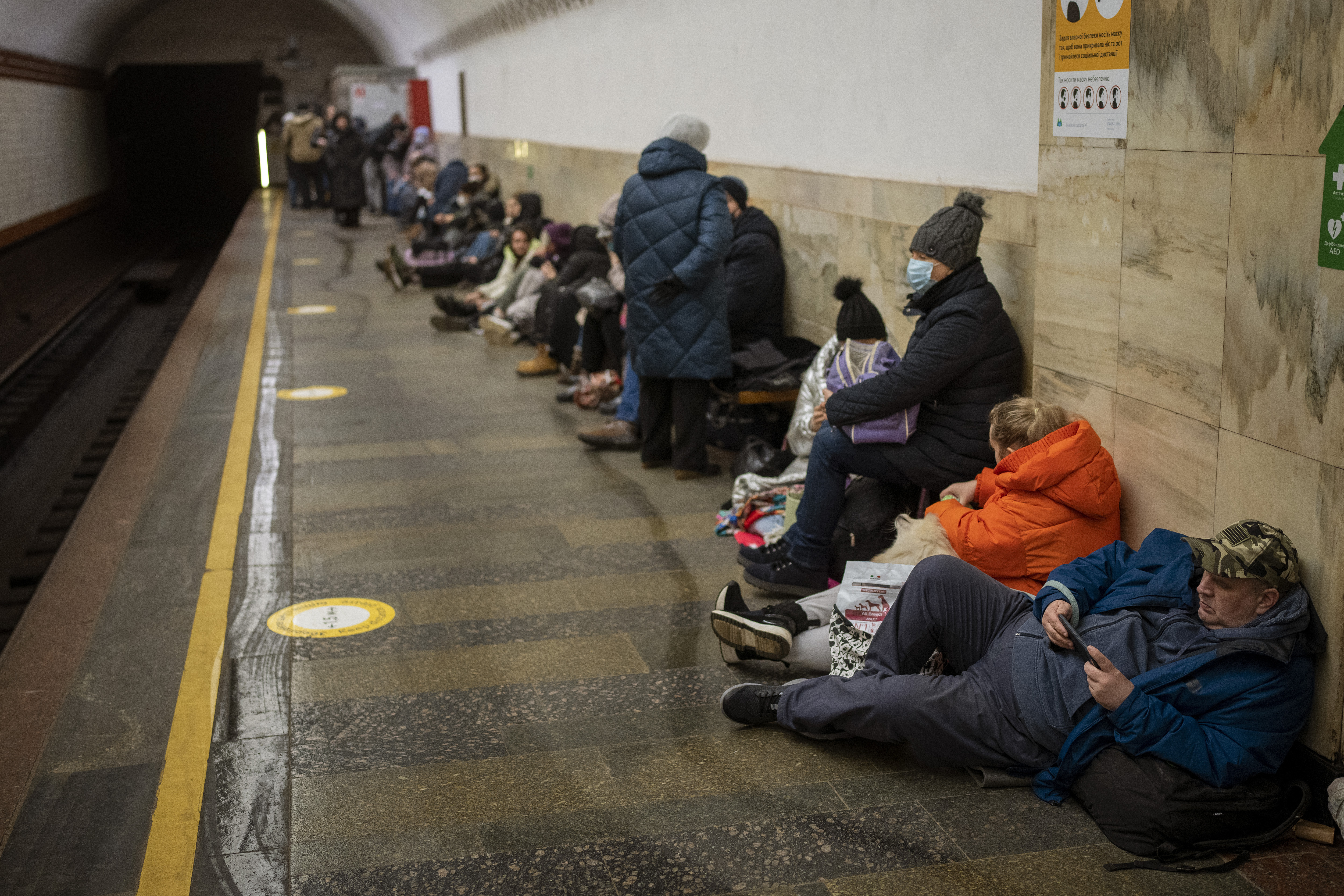
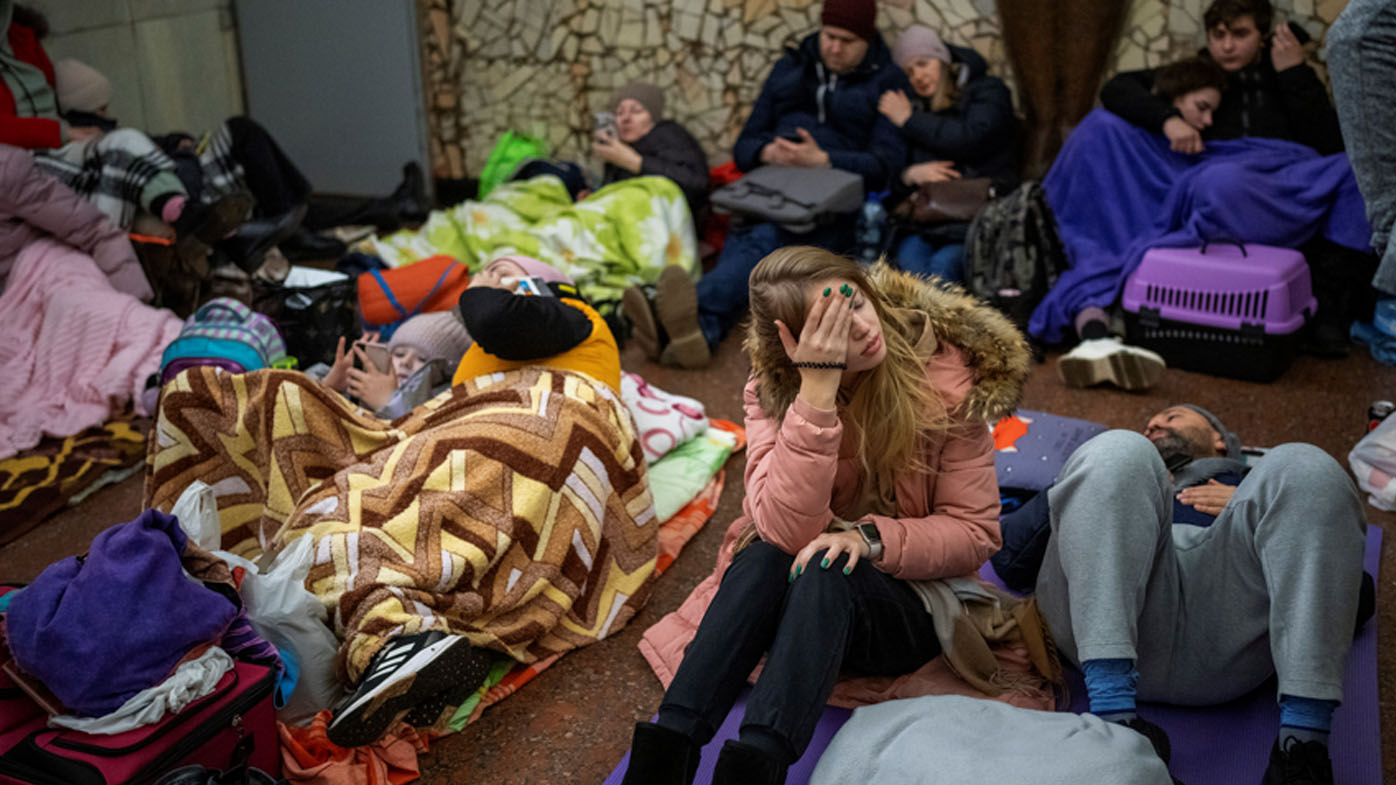
People lie in the Kyiv subway, using it as a bomb shelter in Kyiv, Ukraine, Thursday, Feb. 24, 2022.

"We were sheltering in a bunker as well because at about 1.30am in the morning we got a warning that this central part of Kyiv might face missile strikes," Greenbank said.

Greenbank added she and the team are "on edge".

"We are taking as many precautions as we can in this situation," she said.

"If we have to leave quickly, we will."

A child with people waiting for a Kyiv bound train gather on the platform in Kramatorsk, the Donetsk region, eastern Ukraine.People walk to a platform in Kramatorsk, the Donetsk region, eastern Ukraine, with luggage.

Mr Zelenskyy said the government had information that "subversive groups" were encroaching on the city, and US Secretary of State Antony Blinken said Kyiv "could well be under siege" in what US officials believe is a brazen attempt by Russian President Vladimir Putin to dismantle the government and replace it with his own regime.

US Defence Secretary Lloyd Austin told lawmakers on a phone call that Russian mechanised forces that entered from Belarus were about 32 kilometres from Kyiv, according to a person familiar with the call, AP reported.

Explosions seen in Ukraine as Russia continues to invade.

The Ukrainian military is reporting significant fighting north-west of the nation's capital as Russian forces apparently try to advance on Kyiv from the north.

The military said today a bridge across a river had been destroyed in the area of Ivankiv, about 60 kilometres north-west of Kyiv.

"The hardest day will be today. The enemy's plan is to break through with tank columns from the side of Ivankiv and Chernihiv to Kyiv. Russian tanks burn perfectly when hit by our ATGMs (anti-tank guided missiles)," Mr Gerashchenko said on Telegram.

Ukrainian and US officials said Russian forces were attacking from the east toward Kharkiv, Ukraine's second-largest city; from the southern region of Crimea, which Russia annexed in 2014; and from Belarus to the north.

Ukraine's President slams allies for 'looking on from a distance'

Mr Zelenskyy has made a video address as Ukrainians wake to another day of Russia's invasion.

He has urged resistance to the Russian invasion and criticised Ukraine's allies for the second time in just a few hours.

"This morning, we are defending our country alone," he said in a Facebook video post.

"Just like yesterday, the most powerful country in the world looked on from a distance.

"Russia was hit with sanctions yesterday, but these are not enough to get these foreign troops off our soil.

"Only through solidarity and determination can this be achieved."

Mr Zelenskyy added it was the "second morning of the all-out war".

Ukrainian President Volodymyr Zelenskyy speaks in a Facebook video on February 25.

Full military mobilisation ordered

Mr Zelenskyy has ordered a full military mobilisation to challenge the Russian invasion.

He issued a decree saying the mobilisation would last 90 days.

He ordered the military's General Staff to determine the number of those liable for service and reservists as well as the order of the call-up.

Mr Zelenskyy also said 137 civilians and military personnel have been killed so far in the Russian invasion of his country.

He called them "heroes" in a video address in which he also says hundreds more have been wounded.

Mr Zelenskyy gave his Cabinet the job of allocating funds to pay for the mobilisation.

In a video statement just released, Mr Zelenskyy also said there are enemy sabotage groups in Kyiv, and that he has been identified as Russia's top target.

"According to our information, the enemy marked me as target number one, my family as target number two," Mr Zelenskyy said.

"They want to destroy Ukraine politically by destroying the head of state. We have information that enemy sabotage groups have entered Kyiv."

READ MORE: World expresses outrage, plans stronger Russia sanctions

Damaged radar, a vehicle and equipment are seen at a Ukrainian military facility outside Mariupol, Ukraine.Ukrainian servicemen sit atop armored personnel carriers driving on a road in the Donetsk region.

Males banned from leaving Ukraine

Male Ukrainian citizens aged between 18 and 60 have been prohibited from leaving the country while martial law is in place.

In a statement posted on Facebook, the State Border Guard Service of Ukraine said "departure from Ukraine is restricted" temporarily.

"It is forbidden to travel outside the borders of Ukraine [for] citizens of Ukraine, male gender between 18 to 60 years old," the statement said.

It comes after Russia launched a wide-ranging attack on Ukraine on Thursday (Friday morning AEDT), hitting cities and bases with airstrikes or shelling, as civilians piled into trains and cars to flee.

Speaking live on Ukraine's 1+1 TV channel, Ukraine's Minister of Healthcare Viktor Lyashko said hospitals and medical workers had also come under fire – including in Avdiivka and Vuhledar in Donetsk – with casualties reported among medical workers.

Ukrainian military track burns at an air defence base in the aftermath of an apparent Russian strike in Mariupol, Ukraine.

Ukraine's government pleaded for help as it said Russian tanks and troops rolled across the border in a "full-scale war" that could rewrite the geopolitical order.

Mr Putin ignored global condemnation and cascading new sanctions as he unleashed Moscow's most aggressive action since the 1979 Soviet invasion of Afghanistan, and chillingly referred to his country's nuclear arsenal.

He threatened any foreign country trying to interfere with "consequences you have never seen."

'A path of evil': Russia attacks on multiple fronts

Ukrainian officials said their forces were battling Russians on a series of fronts.

"Russia has embarked on a path of evil, but Ukraine is defending itself and won't give up its freedom," Mr Zelenskyy tweeted.

Later, he offered Russia an end to the hostilities.

"It wasn't Ukraine that chose the path of war, but Ukraine is offering to go back to the path of peace," he said.

He said the Russian airborne unit at an airport outside the capital of Kyiv was being destroyed.

The Ukrainian leader said many Russian warplanes and armoured vehicles across the country were destroyed but didn't give numbers.

He also said an unidentified number of Russian troops were taken prisoners.

READ MORE: Russia begins full-scale military invasion of Ukraine

https://twitter.com/ZelenskyyUa/status/1496787304811315202?ref_src=twsrc%5Etfw

Mr Zelenskyy, who earlier cut diplomatic ties with Moscow and declared martial law, described Russian forces advancing on multiple fronts, including a "difficult situation" developing in Kharkiv, Ukraine's second-largest city, just over 20km away from the eastern border with Russia, and Russian troops slowly advancing from the north on the city of Chernihiv.

He appealed to global leaders, saying that "if you don't help us now, if you fail to offer a powerful assistance to Ukraine, tomorrow the war will knock on your door."

Mr Zelenskyy said Russian forces were trying to seize the Chernobyl nuclear plant, site of the world's worst nuclear disaster, and Ukrainian forces were battling other troops outside Kyiv for control of a strategic airport.

Large explosions were heard in the capital and in other cities yesterday, and people massed in train stations and took to roads, as the government said the former Soviet republic was seeing a long-anticipated invasion from the east, north and south.

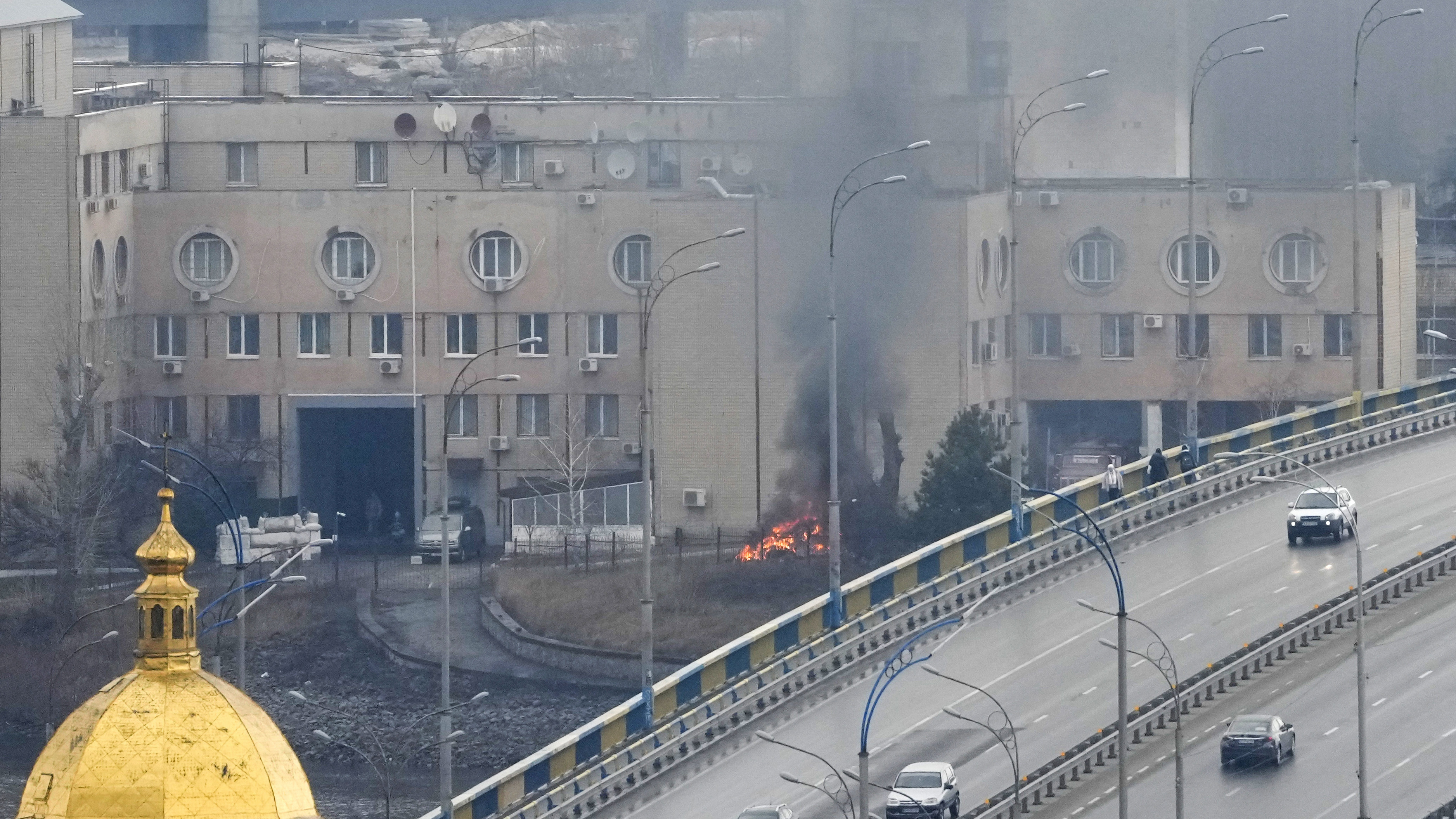
Smoke rise from an air defence base in the aftermath of an apparent Russian strike in Mariupol, Ukraine.Smoke and flame rise near a military building after an apparent Russian strike in Kyiv, Ukraine.

US deploys aid to Ukraine

The US Agency for International Development (USAID) has deployed a disaster assistance team to Ukraine in response to Russia's invasion.

The Disaster Assistance Response Team (DART), which contains 17 disaster experts, will be deployed to Ukraine from Poland to lead the US's humanitarian response to the war.

In a statement, USAID said 2.9 million people in Ukraine needed urgent humanitarian assistance before Russia's invasion was launched yesterday, and that 1.5 million had already been displaced due to fighting around separatist regions in the country's east.

Other countries react to the conflict in Ukraine

The chief of the NATO alliance said the "brutal act of war" shattered peace in Europe, joining a chorus of world leaders who decried the attack, which could cause massive casualties, topple Ukraine's democratically elected government and upend the post-Cold War security order.

The conflict was already shaking global financial markets: Stocks plunged and oil prices soared amid concerns that heating bills and food prices would skyrocket.

Condemnation rained down not only from the US and Europe, but from South Korea, Australia and beyond — and many governments readied new sanctions.

READ MORE: Biden condemns 'Russia's unprovoked and unjustified attack' on Ukraine

A Russian Ka-52 helicopter gunship is seen in the field after a forced landing outside Kyiv, Ukraine.Residents seeking to leave the capital are stuck in traffic on a highway in Kyiv, Ukraine.

As the first major world leader to make a big move, UK Prime Minister Boris Johnson announced a freeze on the assets of all large Russian banks and plans to bar Russian companies and the Kremlin from raising money on British markets.

Britain will also ban the export to Russia of a wide range of high-tech products, including semiconductors, and prohibit the nation's flagship airline, Aeroflot, from landing at British airports.

Even friendly leaders like Hungary's Viktor Orban sought to distance themselves from Putin.

While some nervous Europeans speculated about a possible new world war, the US and its NATO partners have so far shown no indication they would join in a war against Russia.

READ MORE: Moment CNN reporter hears loud explosions in Ukraine while live on air

Ukrainian servicemen sit atop armored personnel carriers driving on a road in the Donetsk region, eastern Ukraine.

READ MORE: UN chief urges Putin to 'give peace a chance' in Ukraine

They instead mobilised troops and equipment around Ukraine's western flank — as Ukraine pleaded for defence assistance and help protecting its airspace.

In Washington, President Joe Biden convened a meeting of the National Security Council on Ukraine as the US prepares new sanctions.

Biden administration officials have signalled that two of the measures they were considering most strongly include hitting Russia's biggest banks and slapping on new export controls meant to starve Russia's industries and military of US semiconductors and other high-tech components.