Tag Archives: oceania

Young men overrepresented in Australia's coastal drowning toll

Young men have been overrepresented in Australia's coastal drowning death toll, with surf lifesavers pleading for them to take their safety seriously.

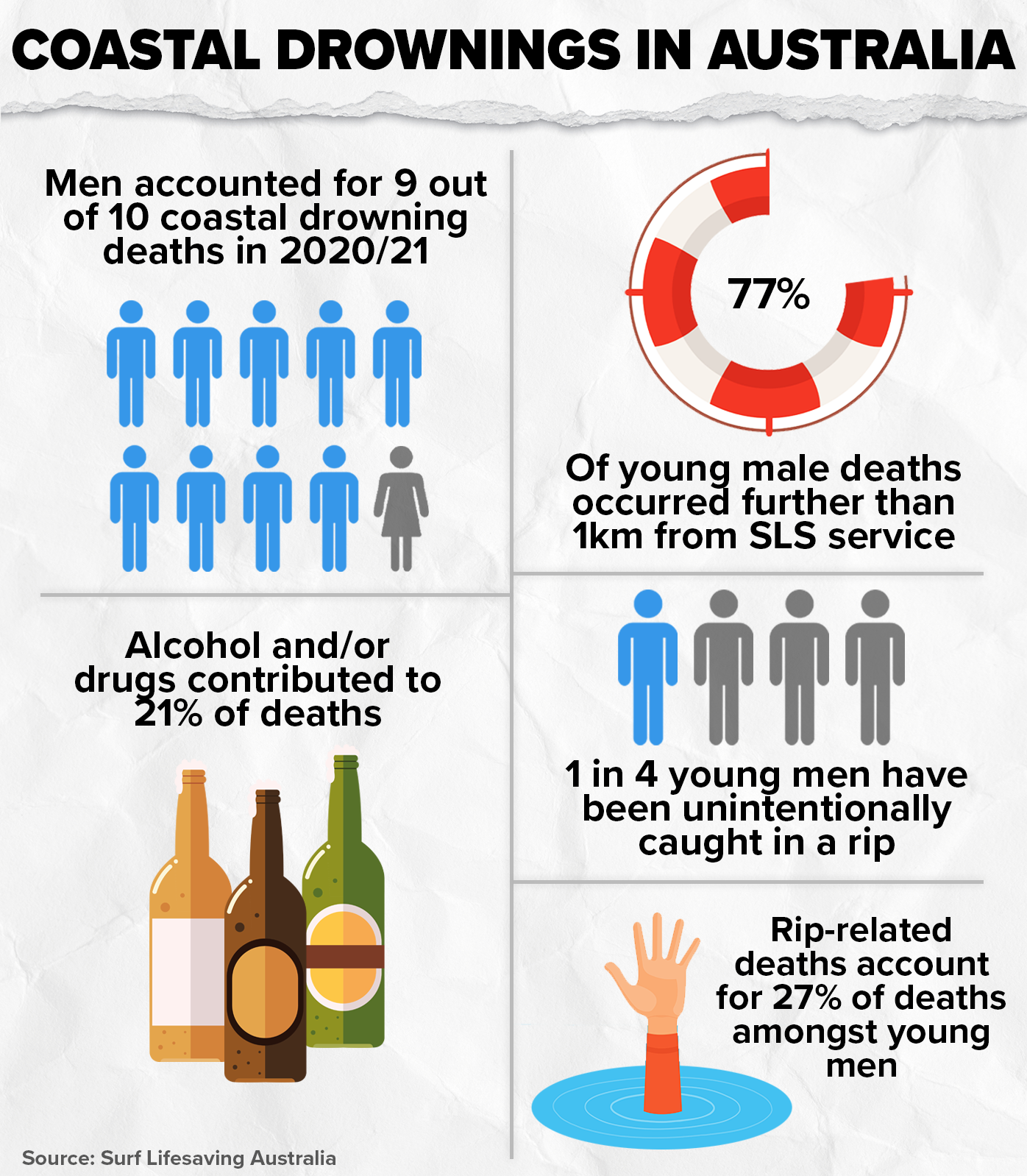
A new report from Surf Life Saving Australia (SLSA) revealed young men accounted for nine out of 10 coastal drowning deaths in 2020-21, with men aged between 15 and 39 most overrepresented in coastal injury and fatalities.

The warning comes as the summer coastal drowning death toll continues to rise above both the 10-year average and the fatalities recorded over the 2020-21 summer period.

LIVE UPDATES: Moderna to be available for kids aged six to 11 from tomorrow

SLSA general manager of coastal safety Shane Daw said 41 coastal drownings had been recorded this summer — between December 1 and January 31 — with 10 being men aged between 15 and 39.

"On average, young men account for a third of fatal incidents recorded along our coast, with the vast majority due to drowning," he said.

"Such a premature loss of life represents a significant cost to society, with both social and economic contributions cut short."

According to the SLSA Coastal Safety Brief, 53 young men die on our coast each year on average, with three out of four due to drowning.

Since 2011, 525 young men have died on Australia's coastline, which equates to a $6.9 billion economic loss to society.

The reasons behind the fatalities include greater coastal visitation and activity participation, as well as inflated confidence levels that do not reflect actual abilities, and social determinants such as peer pressure.

READ MORE: $1m reward to help solve cold case murder of Melbourne mum

Australia drowning news Surf Life Saving Australia government calls airline water safety videos

Nearly half of coastal deaths happened on a weekend, with the primary activity at the time being swimming and wading.

"In fact, the mortality risk is 2.2 times greater on the weekend for this demographic," Mr Daw said.

Research showed one in four young men have been unintentionally caught in a rip, but only 40 per cent always look for the presence of rip currents before entering the water.

Almost half of young male swimmers are not able to swim 50 metres in the ocean without touching the bottom and one in 10 are unable to swim or float at all.

"Alarmingly, we continue to see young men choosing to swim at unpatrolled locations, away from surf lifesavers and lifeguards," Mr Daw said.

"They continue to overestimate their ability, take unnecessary risks, and not look for the presence of rips before entering the water.

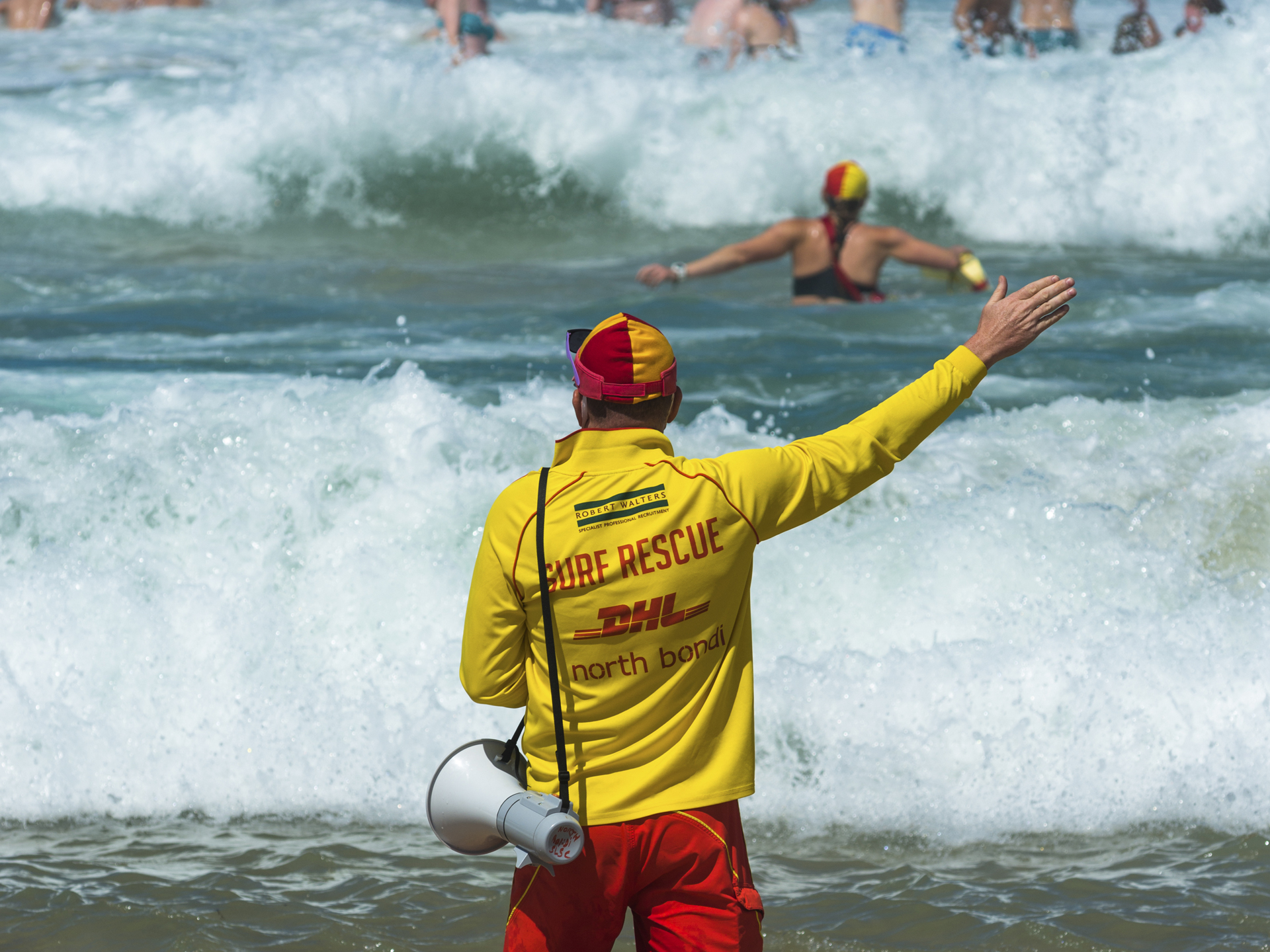
"Our message remains simple, where possible keep safe by swimming at a patrolled beach, between the red and yellow flags."

All the ways Russian invasion could hit world economy and your wallet

If Russia invades Ukraine, the financial shockwaves will reverberate far and wide and inevitably be felt in Australia.

Global stock markets could be in for a rough ride and any Russian invasion of Ukraine could disrupt supplies of oil.

Today oil nudged US $100 a barrel of Brent Crude, a level not seen for seven years, and there are fears oil could quickly jump to $120 if Russia moves in with a full-blown invasion.

READ MORE: Ukraine digs in for war with superpower Russia

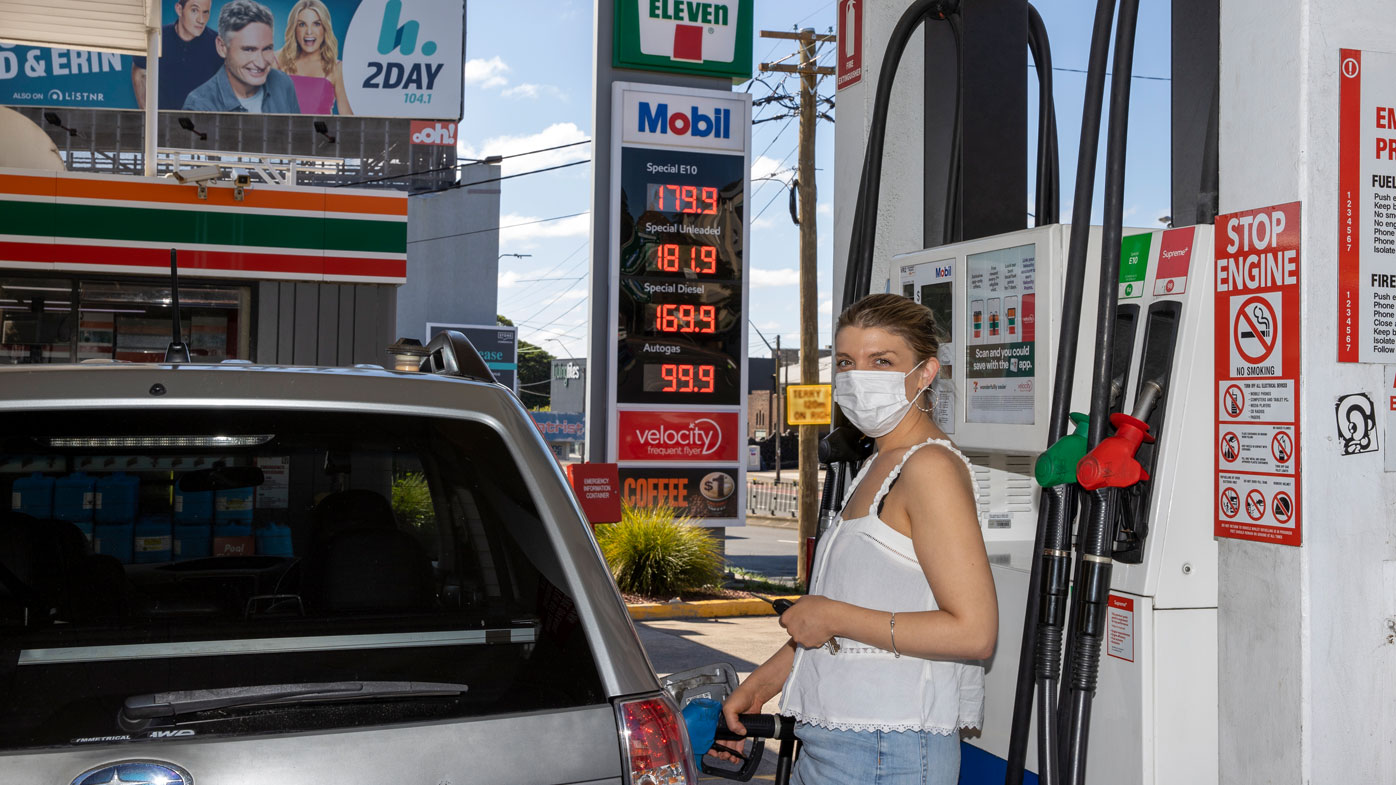
Petrol prices in Australia are at their highest in 14 years, with more sharp rises predicted if Russia invades Ukraine.

We take a look at the financial impact of a Russian invasion, what could happen and why.

More pain at the pump

Oil prices have jumped in recent weeks to levels unseen since 2014 in part because an invasion of Ukraine could derail Russian energy supply.

Stating the obvious, this is bad news. Oil price increases generally trigger rises in inflation and reduces economic growth.

Russia is an energy superpower, producing 9.7 million barrels per day last year, according to Rystad Energy.

That is second only to the United States and amounts to more oil than Iraq and Canada produced — combined.

Global supply is already failing to keep up with demand.

There are three prime concerns: War could damage oil infrastructure, sanctions on Russia could affect global supply and Moscow could weaponise it oil exports.

EXPLAINED: Why Russia-backed rebels are a thorn in Ukraine's side

Investment bank JPMorgan warned that if any Russian oil flows are disrupted by the crisis, oil prices could "easily" jump to $120 a barrel.

In the unlikely event Russian oil exports are halved, crude would surge to $150 a barrel, they added.

For Aussie homes, it comes down to this. Another pop in oil prices would lift prices at the pump across Australia, where we're already paying prices not seen for 14 years.

READ MORE: US sanctions against Russian banks and oligarchs

Trickle down effect

Higher energy prices will make it more expensive to fly.

And road transportation and other supply line costs for businesses will also inevitably track up.

Businesses would most likely pass along at least some of these higher costs to consumers in the form of price hikes.

This will almost certainly include food and other sectors.

Russian wheat farmers will have their exports cut, because of sanctions.

Wheat, corn and precious metals

Beyond energy, other commodities may experience price volatility.

Russia is a major producer of metals, including aluminium and palladium.

It is also the world's biggest exporter of wheat.

Ukraine is a significant exporter of both wheat and corn and sends more than 40 per cent of its wheat and corn exports to the Middle East or Africa.

So disruption will have far ranging consequences in those regions.

Stocks on Wall Street slid the day after Russia ordered troops into Ukraine's east.

Market turbulence

Any escalation will spook global markets.

Investors detest uncertainty, so a full-blown invasion of Ukraine may trigger a knee-jerk stock selloff as investors confront the possibility of an oil shock, higher inflation and a confusing sanctions regime.

A prolonged market downturn would wipe out wealth in the stock market and retirement accounts.

Market instability will likely dent business and consumer confidence.

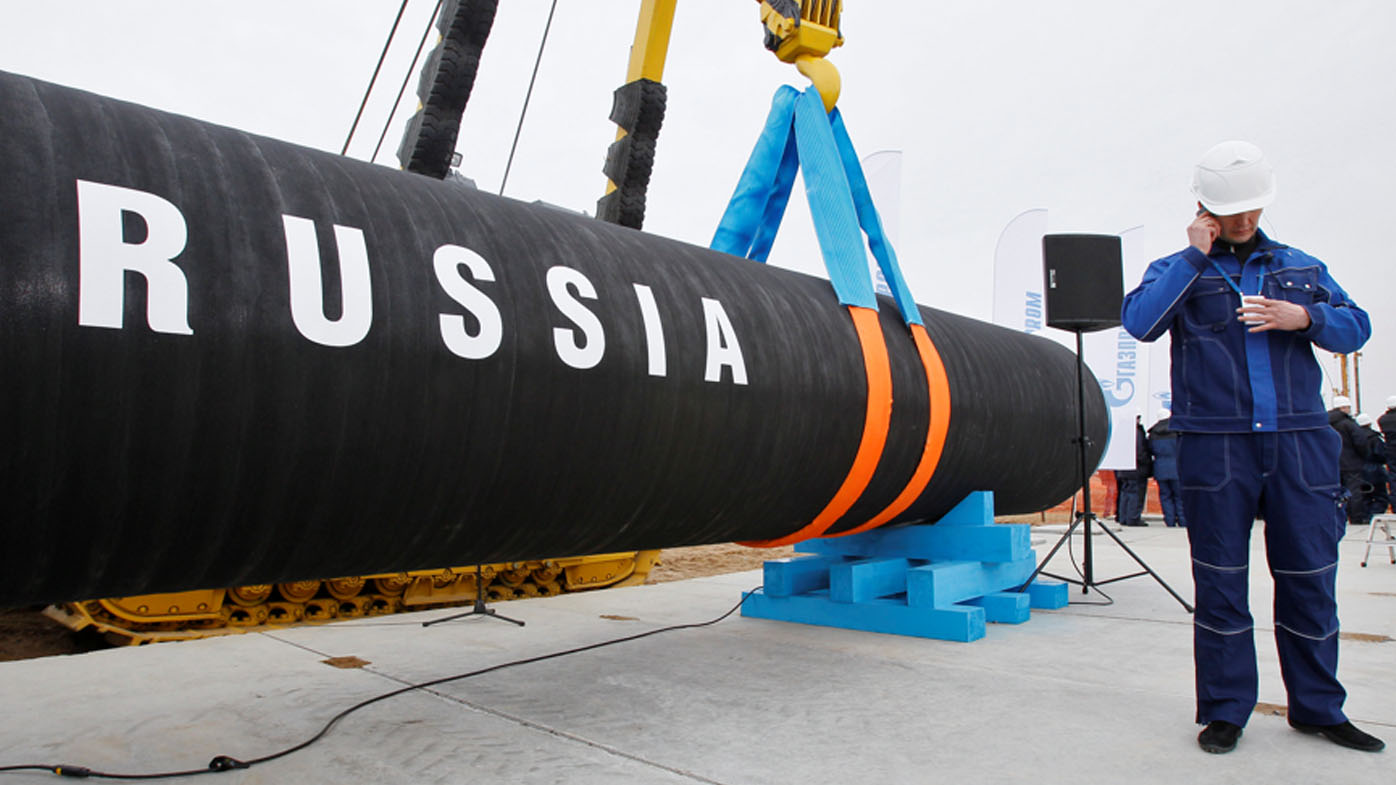
READ MORE: What is Nord Stream 2 pipeline, and why does it make the US anxious?

Cyberattacks on utilities, private businesses

Now sanctions have been imposed against Russian banks and oligarchs, Moscow could lash out against the West with cyberattacks.

The hacking of the Colonial Pipeline last year showed just how disruptive that can be, shutting down one of the most important pipelines in America and sparking panic at gas stations across the southeast.

Last year's cyber attack on global meat processing company JBS Foods caused similar pain, including major supply line disruptions as far away as Australia.

Russian hackers have form for attacking huge electrical grids.

READ MORE: States bracing for more rain as two potential cyclones form off coast

With agencies

'Exceedingly rare' fossil of giant flying reptile discovered

Winged reptiles known as pterosaurs — plane-size creatures that swooped through the skies as dinosaurs walked the Earth — were the first vertebrate animals to evolve powered flight.

A spectacular three-dimensional fossil of one previously unknown pterosaur has been discovered on the shore of the Isle of Skye, off the west coast of Scotland.

With a wingspan of more than 2.5 metres, it's the biggest pterosaur ever discovered from the Jurassic period and last flapped its wings 170 million years ago.

Its sharp teeth, which would have snapped up fish, still retain their shiny enamel.

READ MORE: Biden hits Russia with sanctions for 'beginning invasion'

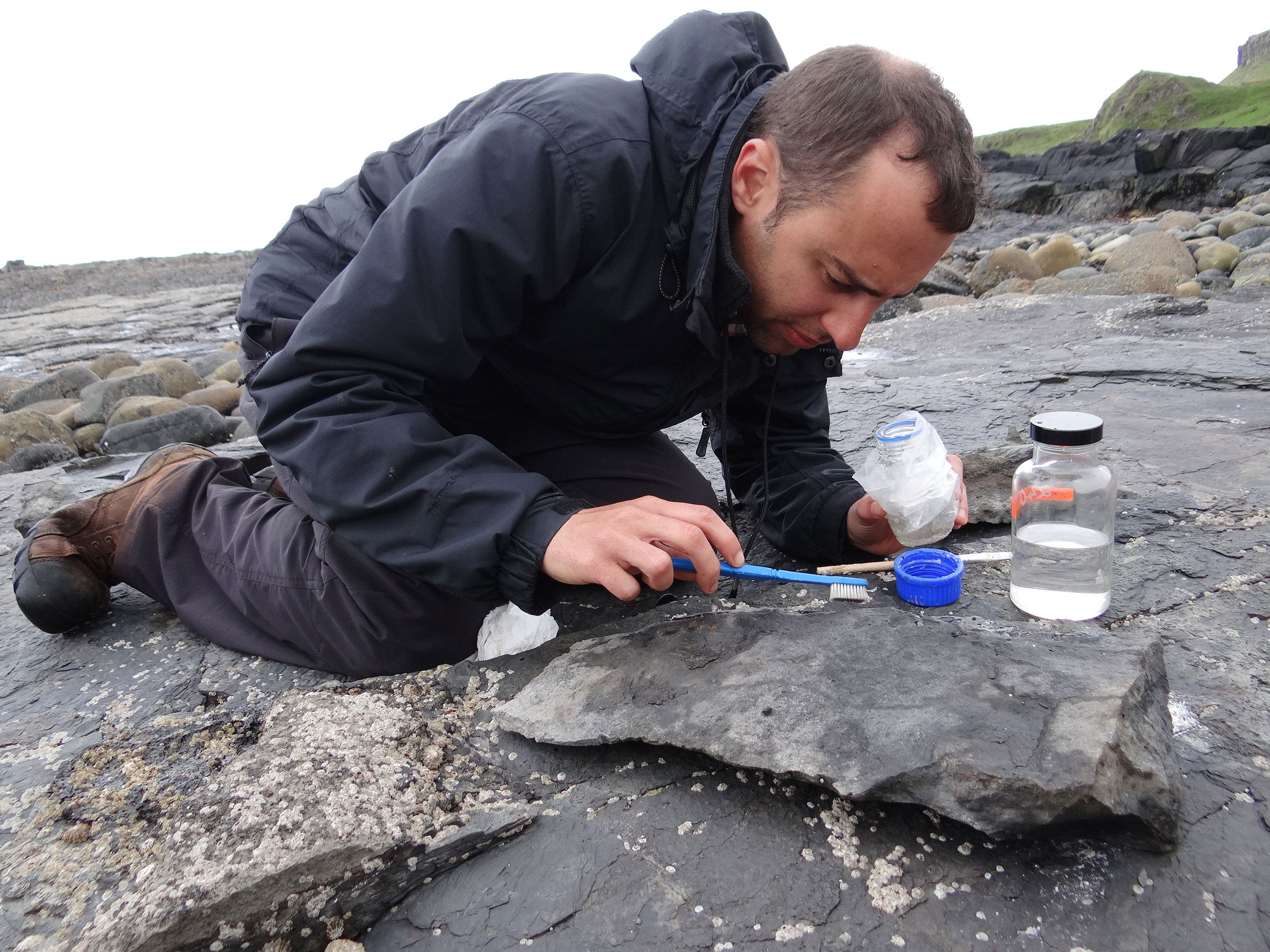
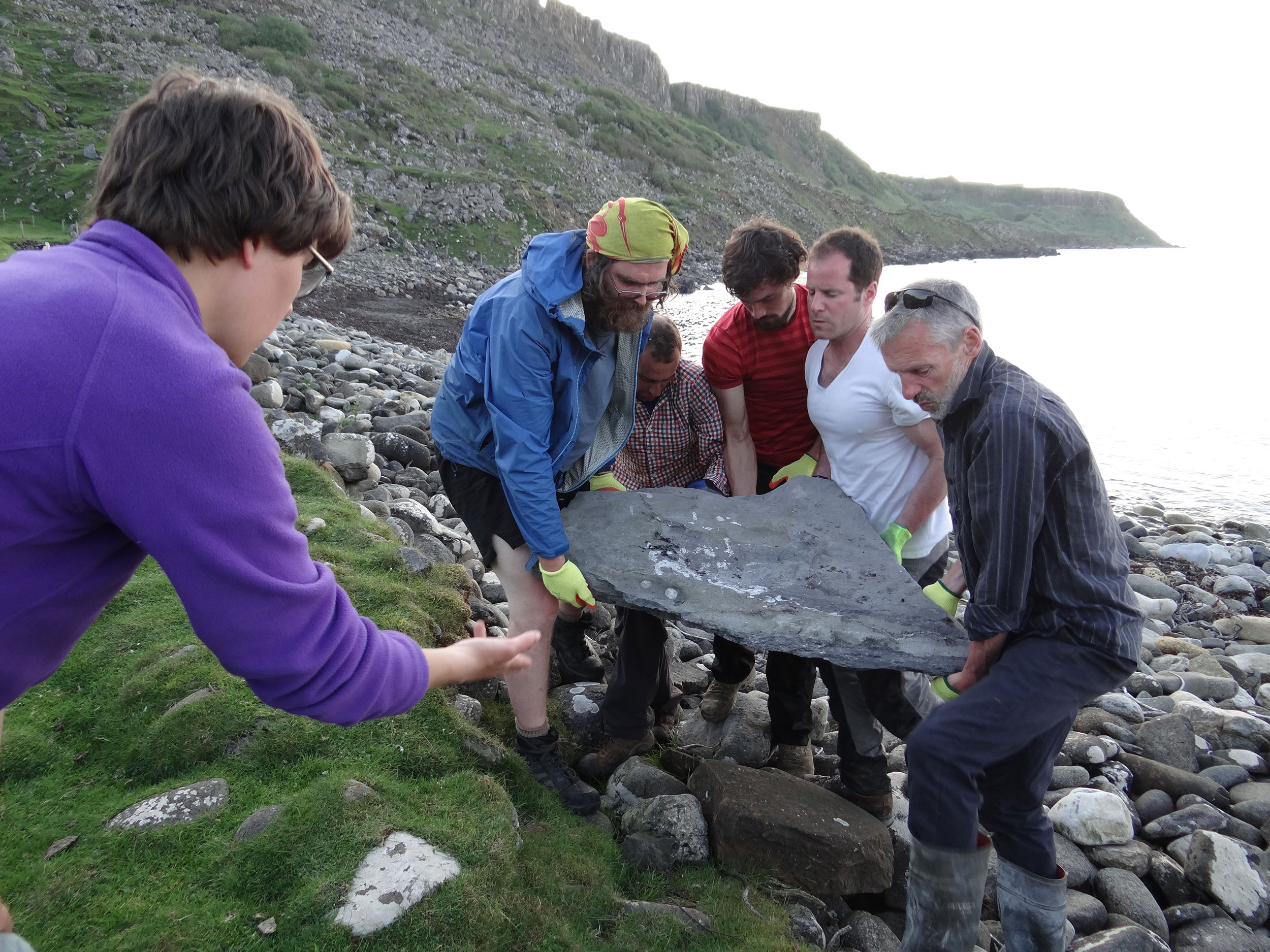
The pterosaur fossil is the biggest known from the Jurassic period, said Steve Brusatte, University of Edinburgh professor of palaeontology and evolution.Researchers remove the unusually well-preserved skeleton of a previously unknown pterosaur, discovered on the Isle of Skye, off the west coast of Scotland.

In the Cretaceous period, immediately before the asteroid strike that wiped out the dinosaurs 66 million years ago, pterosaurs like Quetzalcoatlus reached the size of fighter jets, with a 12-metre wingspan.

However, this fossil discovery confirms pterosaurs, sometimes popularly known as pterodactyls, were already very large much earlier in their evolutionary history.

EXPLAINED: Why Russia-backed rebels are a thorn in Ukraine's side

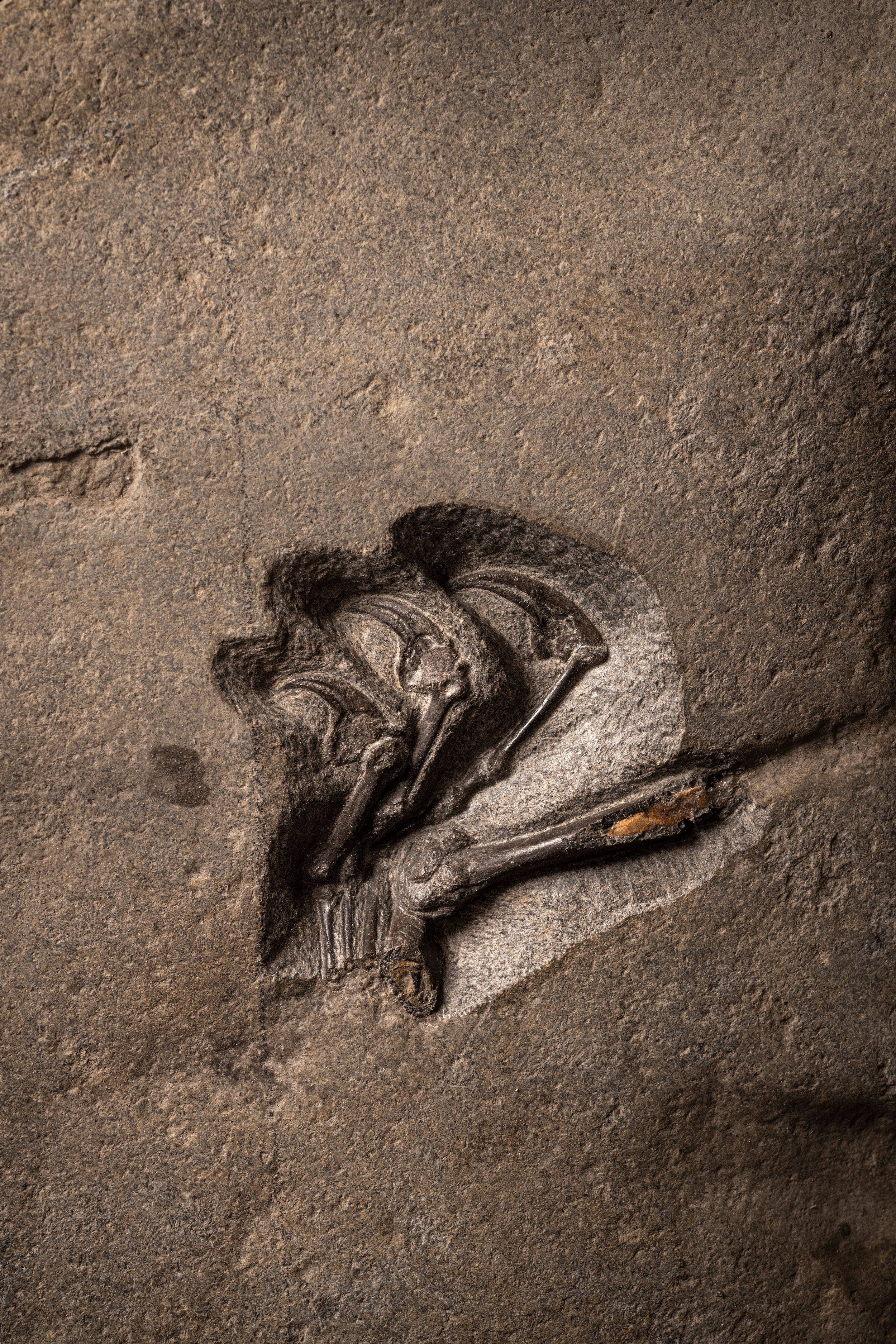
A close-up of the pterosaur's claw is shown.

"Pterosaurs preserved in such quality are exceedingly rare and are usually reserved to select rock formations in Brazil and China. And yet, an enormous superbly preserved pterosaur emerged from a tidal platform in Scotland," said Natalia Jagielska, a doctoral student at the University of Edinburgh.

She was the lead author of a paper on the fossil that was published on Tuesday in the journal Current Biology.

The fossil was discovered during a field trip in 2017, after a University of Edinburgh doctoral student, Amelia Penny, spotted its jaw protruding from the rock at an area of Skye known in Gaelic as Rubha nam Brathairean, or Brothers' Point.

READ MORE: States bracing for more rain as two potential cyclones form off coast

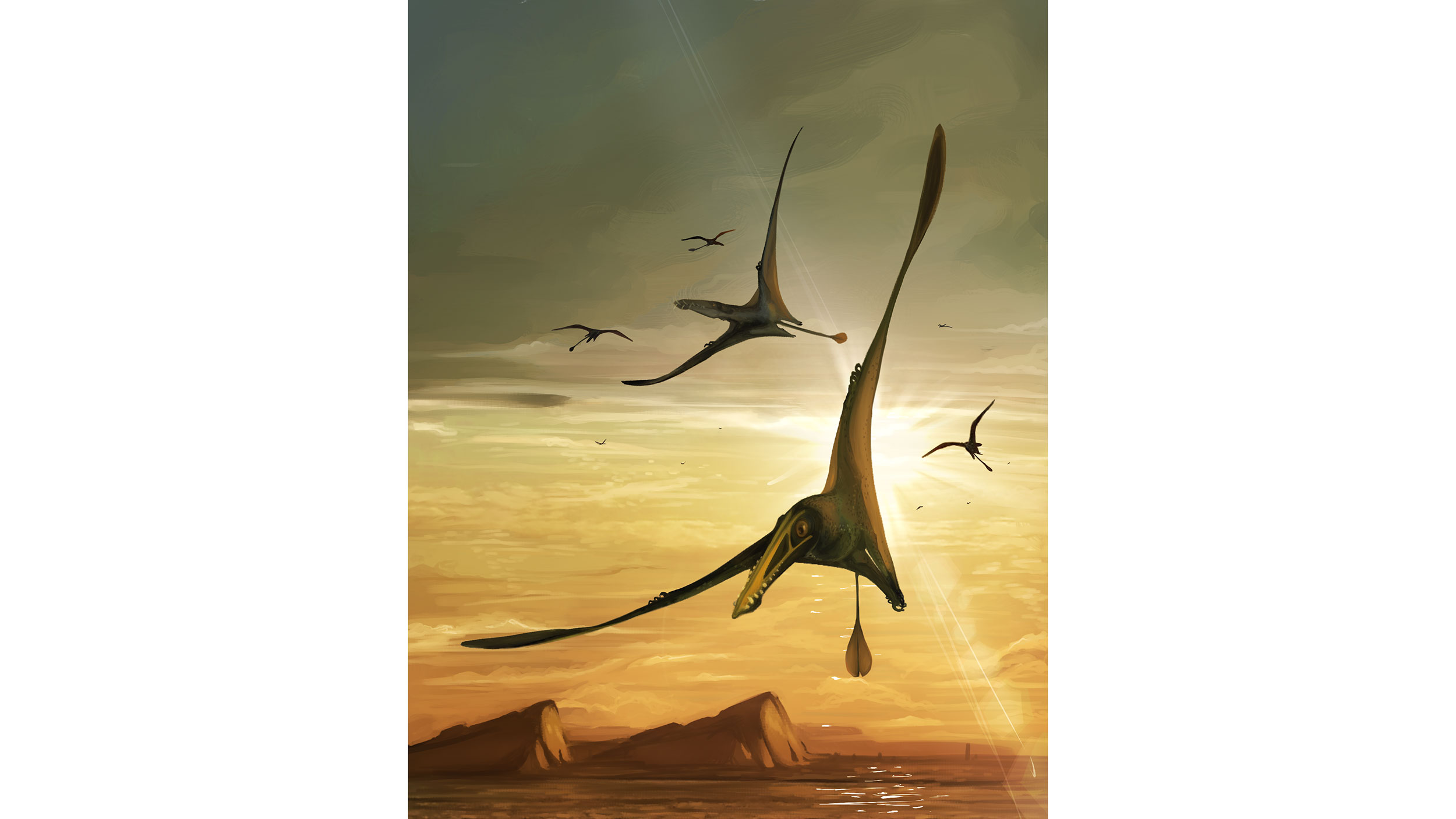
An illustration depicts the pterosaur, which had a wingspan of more than 2.5 metres.

The pterosaur has been given the Gaelic name Dearc sgiathanach (pronounced jark ski-an-ach), which translates to "winged reptile".

"This is a superlative Scottish fossil. The preservation is amazing, far beyond any pterosaur ever found in Scotland and probably the best British skeleton found since the days of Mary Anning in the early 1800s," said Steve Brusatte, professor and Personal Chair of Palaeontology and Evolution in the School of GeoSciences at the University of Edinburgh.

"Dearc is the biggest pterosaur we know from the Jurassic period, and that tells us that pterosaurs got larger much earlier than we thought, long before the Cretaceous period when they were competing with birds, and that's hugely significant.

Anning, an unsung pioneer of paleontology, discovered the three-metre-long Plesiosaurus in Dorset, southern England, in 1823.

The incredible fossil, the first of the species to be found intact with its snakelike neck, wowed the world, setting in motion a dinomania that gripped Victorian England and continues to this day.

A number of astounding discoveries have been made in this area of Skye in recent years, including the footprints of Stegosaurus and other dinosaurs.

Paleontologists believe it was once a subtropical lagoon and home to a thriving community of dinosaurs.

Ms Jagielska will continue to study the skeleton to understand how the ancient creature lived and flew.

"To achieve flight, pterosaurs had hollow bones with thin bone walls, making their remains incredibly fragile and unfit to (preserve) for millions of years," she said.

"And yet our skeleton, 160 million years on since its death, remains in almost pristine condition, articulated and almost complete … as if he were alive mere weeks ago."

'Fight for every inch of our land': Ukraine braced for all-out war

If Russia invades, Ukraine will not back down.

Ukrainian Foreign Minister Dmytro Kuleba made that very clear in a just-finished briefing in Washington.

He said Ukraine has two plans: diplomacy, and if that fails, to fight to the end.

"Plan A is to utilise every tool of diplomacy to deter Russia and prevent further escalation," Mr Kuleba said.

READ MORE: Joe Biden unveils US sanctions against Russia
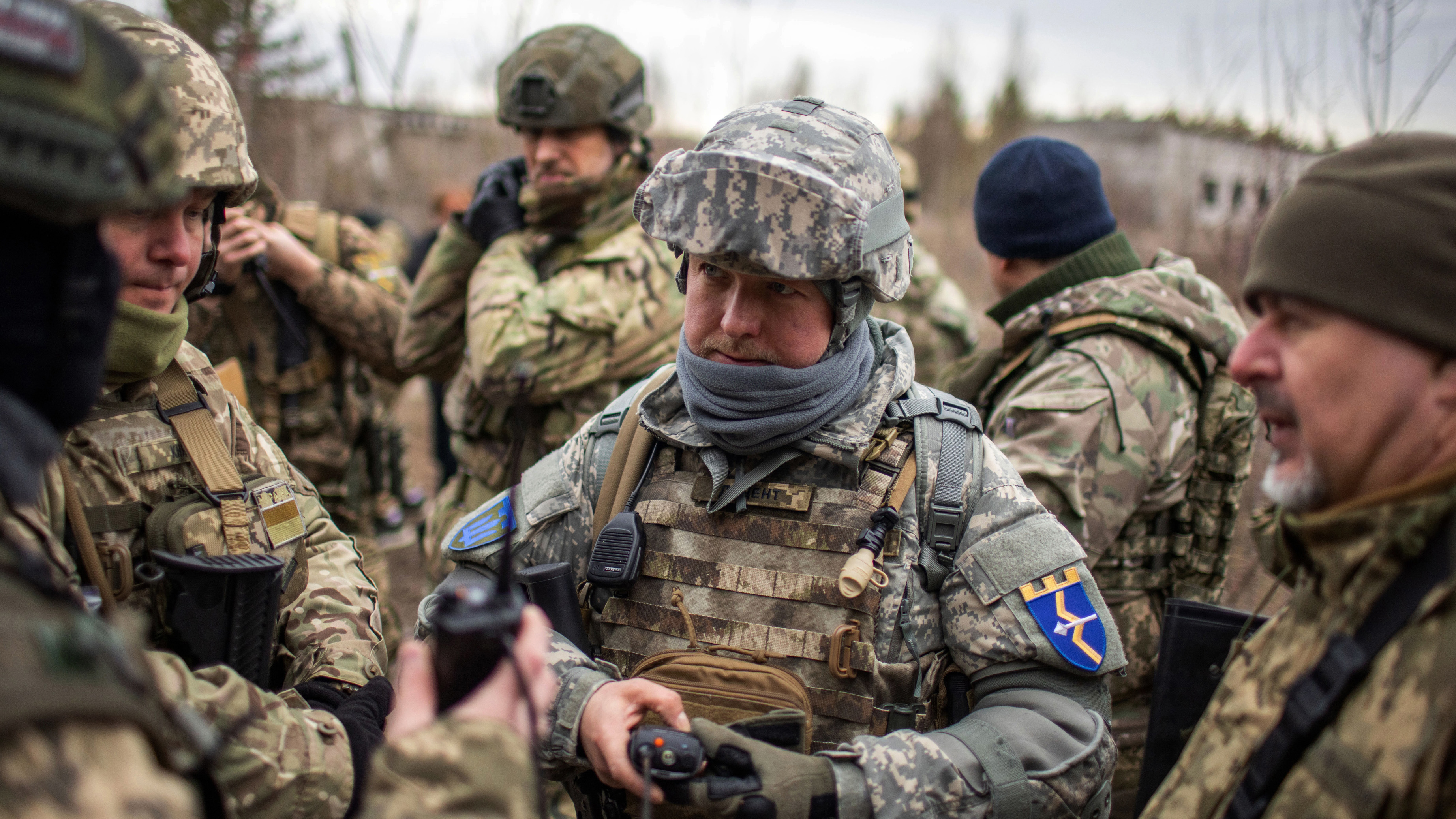
Members of Ukraine's Territorial Defense Forces during training at a former asphalt factory on the outskirts of Kyiv, Ukraine.

"And if that fails, plan B is to fight for every inch of our land, in every city and every village – to fight until we win, of course," he said.

Ukraine will not be evacuating its people from eastern Ukraine, where Russian troops have been ordered in, he said.

At 8:30am AEST, the Ukrainian president declared he is activating some reservists, but that he was not yet ordering full mobilisation despite the growing Russian threat.

The East-West faceoff over Ukraine escalated dramatically today, with Russian lawmakers authorising President Vladimir Putin to use military force outside his country and President Joe Biden and European leaders responding by slapping sanctions on Russian oligarchs and banks.

Both leaders signalled that an even bigger confrontation could lie ahead.

Mr Putin has yet to unleash the force of the 150,000 troops massed on three sides of Ukraine, while Mr Biden held back on the toughest sanctions that could cause economic turmoil for Russia but said they would go ahead if there is further aggression.
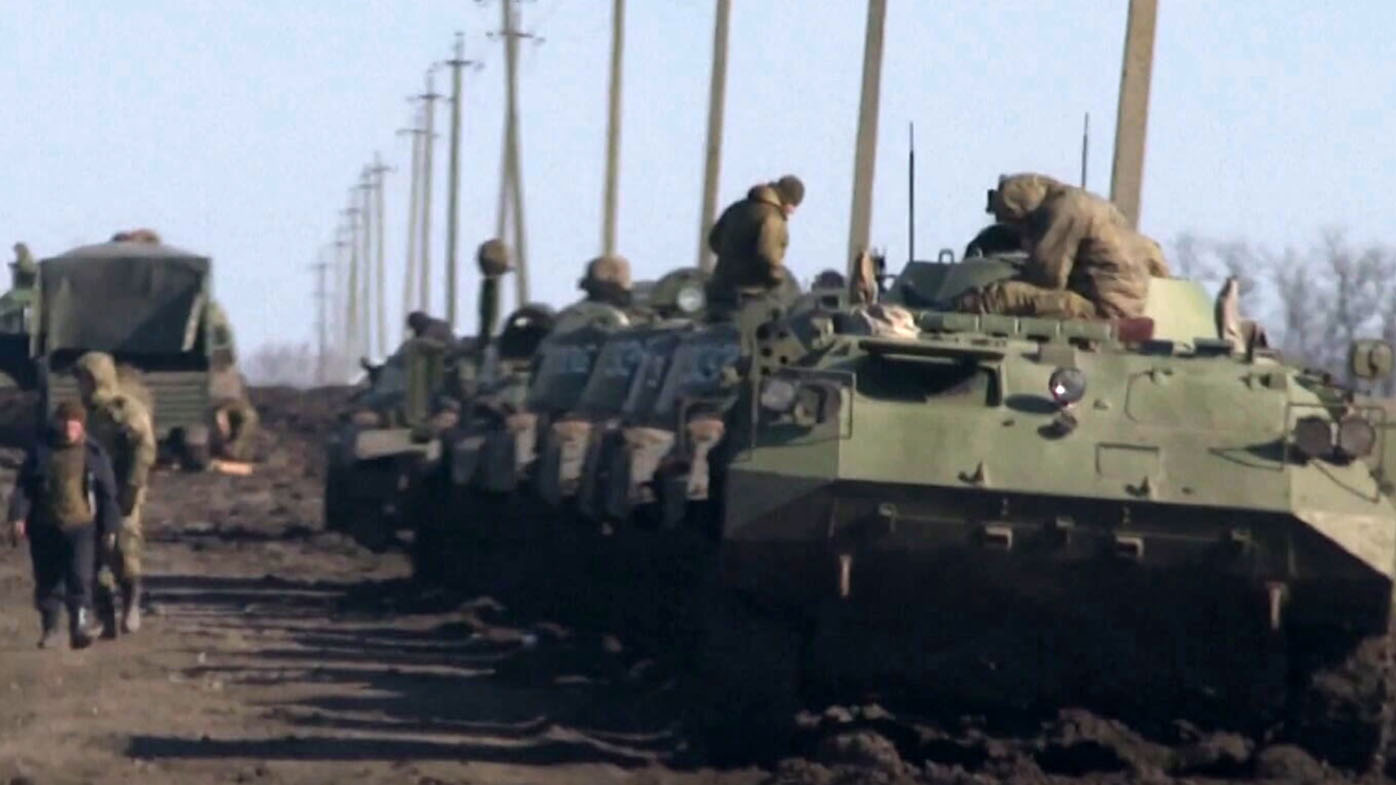
READ MORE: US demands Putin pull back as Russia flexes military

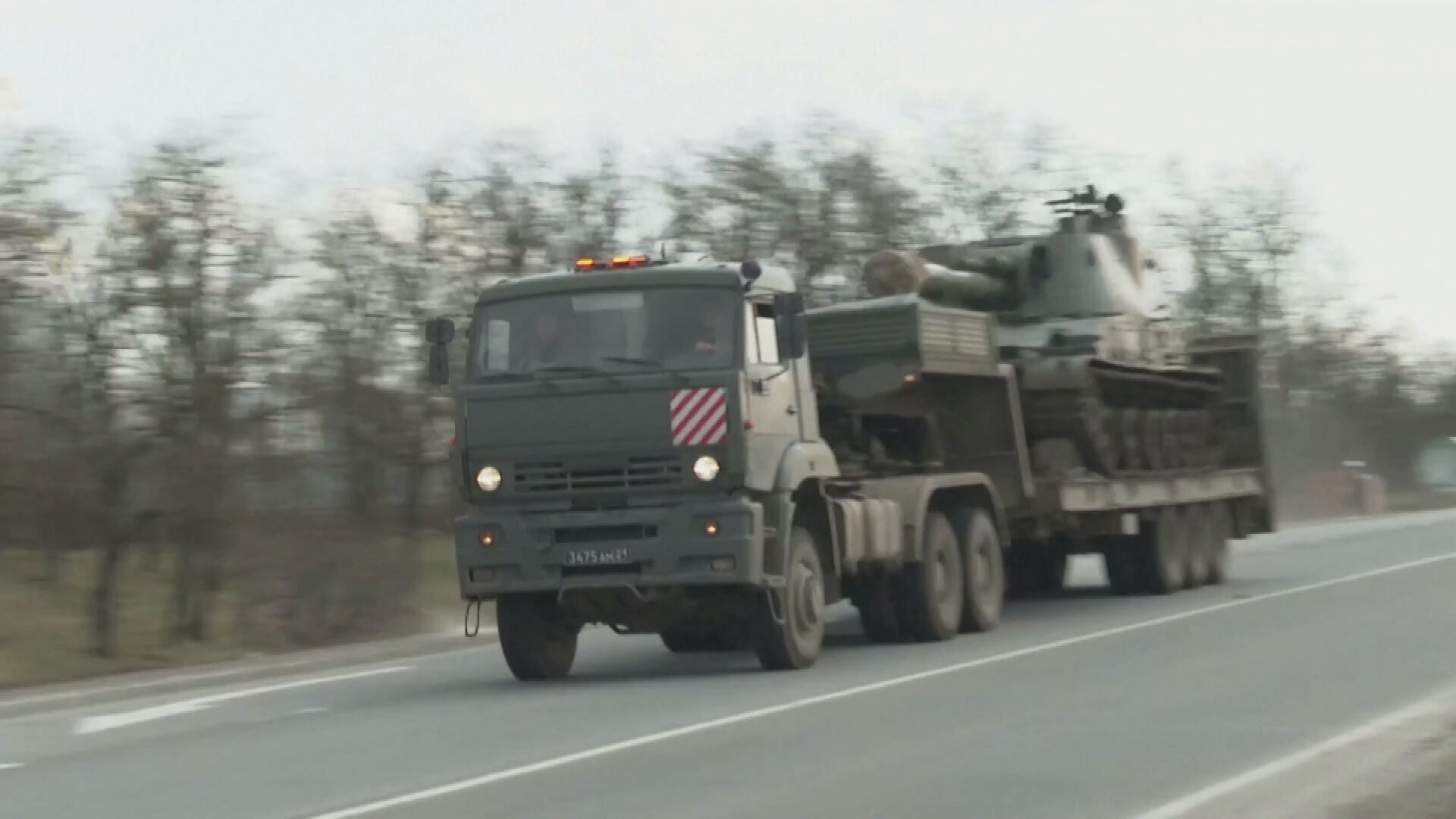
The measures, accompanied by the repositioning of additional US troops to the Baltic nations on NATO's eastern flank bordering Russia, came as Russian troops rolled into rebel-held areas in eastern Ukraine after Mr Putin said he was recognising the independence of the separatist region in defiance of US and European demands.

The US is sending about 800 infantry troops and 40 attack aircraft from other locations within Europe, and F-35 strike fighters and AH-64 Apache attack helicopters will shift their locations, according to a defence official.
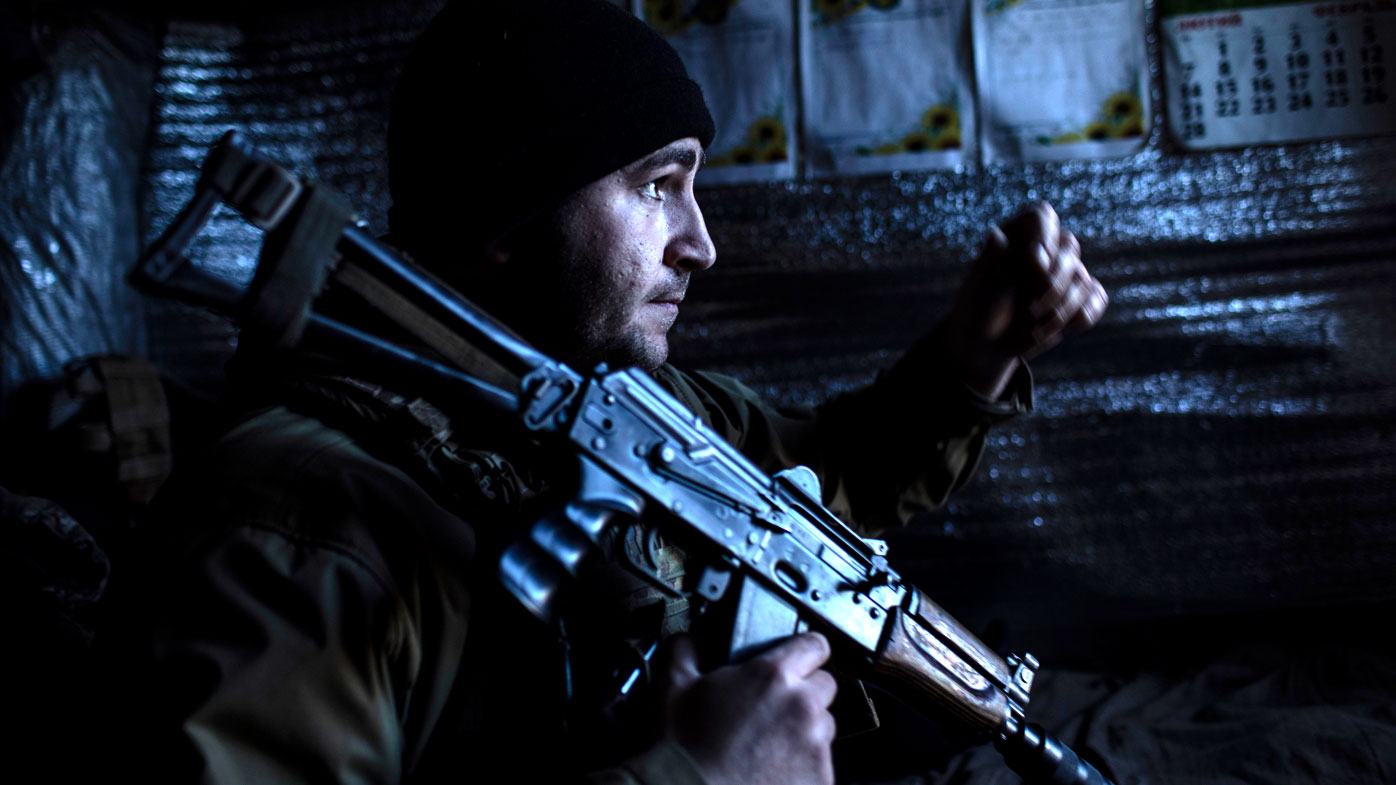
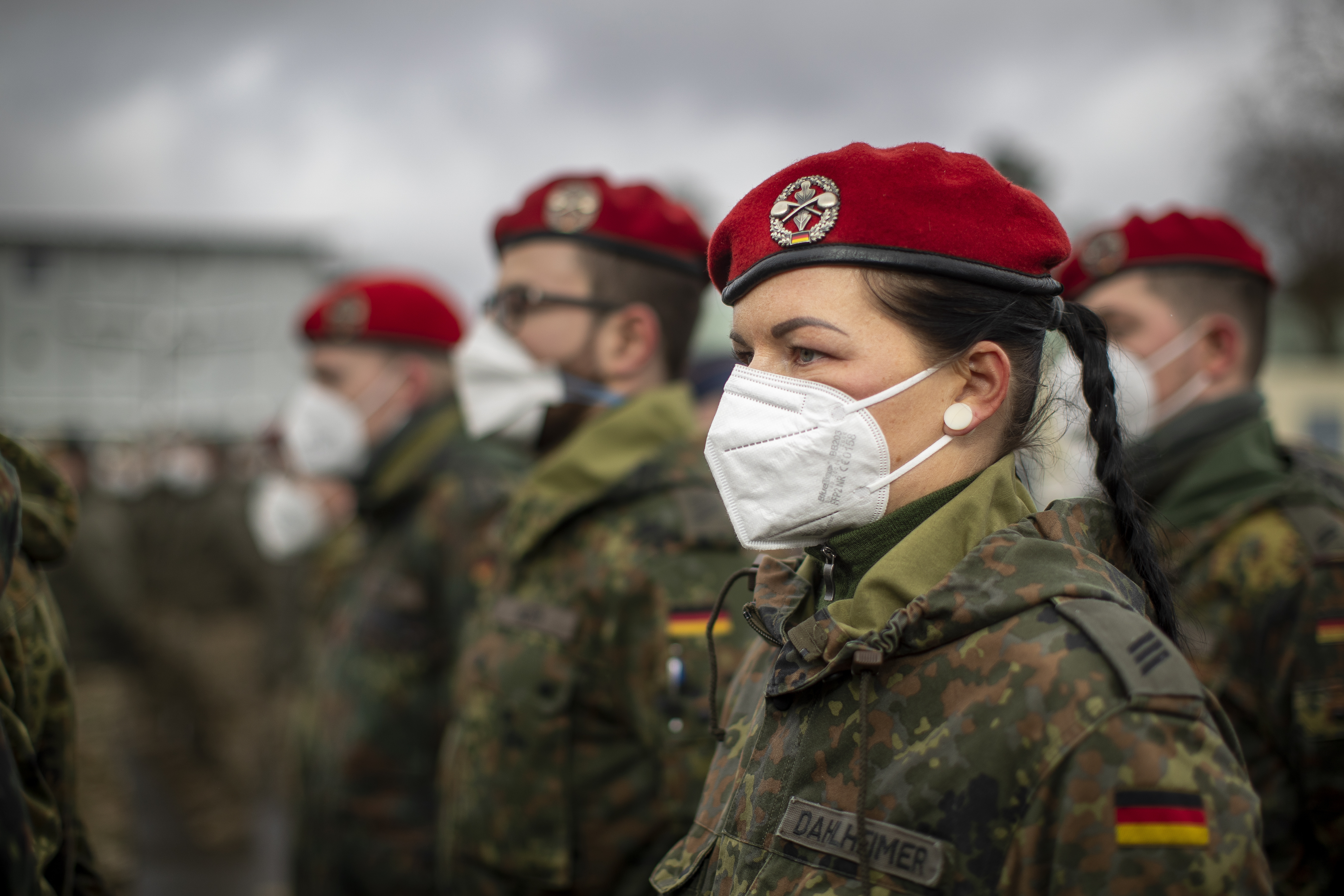
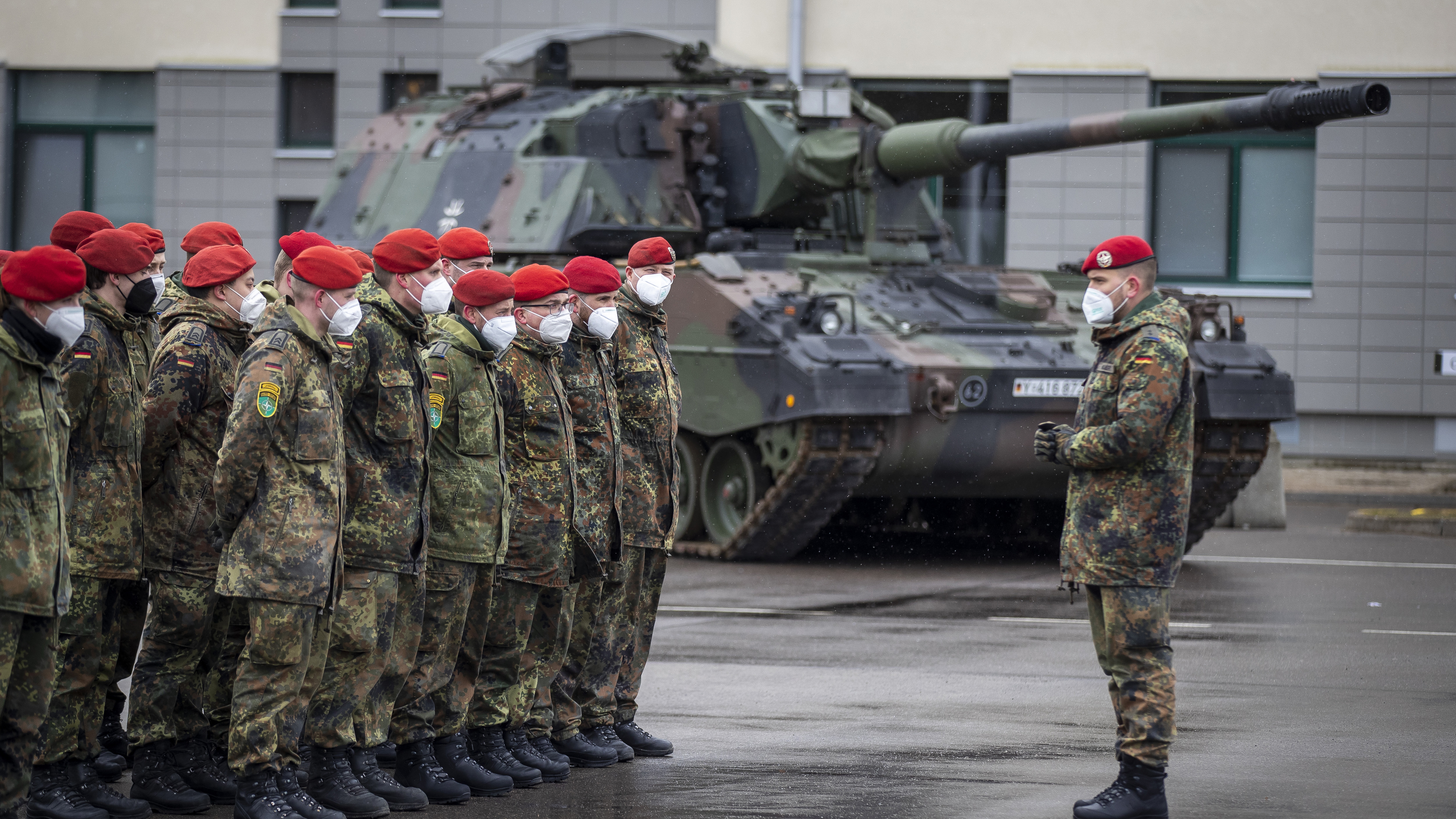
It is unclear if Russian troop movements marked the beginning of an invasion of Ukraine that Western leaders have warned about for weeks.German Bundeswehr soldiers of the NATO enhanced forward presence battalion waits to greet German Defense Minister Christine Lambrecht upon his arrival at the Rukla military base some 100 kms (62.12 miles) west of the capital Vilnius, Lithuania, Tuesday, Feb. 22, 2022. Germany is sending additional troops to Lithuania in response to Russia's military build-up on the border with Ukraine and the worsening security situation in the Baltic states. (AP Photo/Mindaugas Kulbis)

Overnight Russian forces entered rebel-held areas.

Russia had moved "from covert attempts to destabilise Ukraine to overt military action," NATO Secretary General Jens Stoltenberg said.

Mr Stoltenberg called the move a "serious escalation by Russia and a flagrant violation of international law".

He added that there's "every indication" Russia continues to plan for a full-scale attack on Ukraine.

UN want conflict solved without 'further bloodshed'

United Nations Secretary-General Antonio Guterres called for an immediate ceasefire and "reestablishment of the rule of law" after further military action from Russia.

"When troops of one country enter the territory of another country without its consent, they are not impartial peacekeepers," Mr Guterres said today from New York.

"They are not peacekeepers at all.

"We need restraint and reason. We need de-escalation now. I urge all to refrain from actions and statements that would take this dangerous situation over the brink."

Mr Guterres said diplomacy was required to avoid "further bloodshed".

"It is high time to return to the path of dialogue and negotiations," he said.
Women show posters in support of the Ukraine as they attends a demonstration along the street near the Russian embassy to protest against the escalation of the tension between Russia and Ukraine in Berlin, Germany, Tuesday, Feb. 22, 2022. (AP Photo/Markus Schreiber)

US Secretary of State Antony Blinken this morning announced he had called off his meeting with Russian Foreign Minister Sergey Lavrov.

The leaders were set to meet Thursday.

"Now that we see the invasion is beginning and Russia has made clear its wholesale rejection of diplomacy, it does not make sense to go forward with that meeting at this time.

"I consulted with our allies and partners. All agree."

US levels sanctions on Russian banks and oligarchs

The US has moved to cut off Russia's government from Western finance, sanctioning two of its banks and blocking it from trading in its debt on American and European markets.

They included hitting civilian leaders in Russia's leadership hierarchy and two Russian banks considered especially close to the Kremlin and Russia's military, with more than $110 billion in assets.

That includes freezing all of those bank's assets under US jurisdictions.

Mr Biden held back some of the broadest and toughest of the financial penalties contemplated by the US, including sanctions that would reinforce the hold that Germany put on any startup of the Nord Stream 2 pipeline; an export ban that would deny Russia US high-tech for its industries and military; and sweeping bans that could cripple Russia's ability to do business with the rest of the world.

NATO on high alert
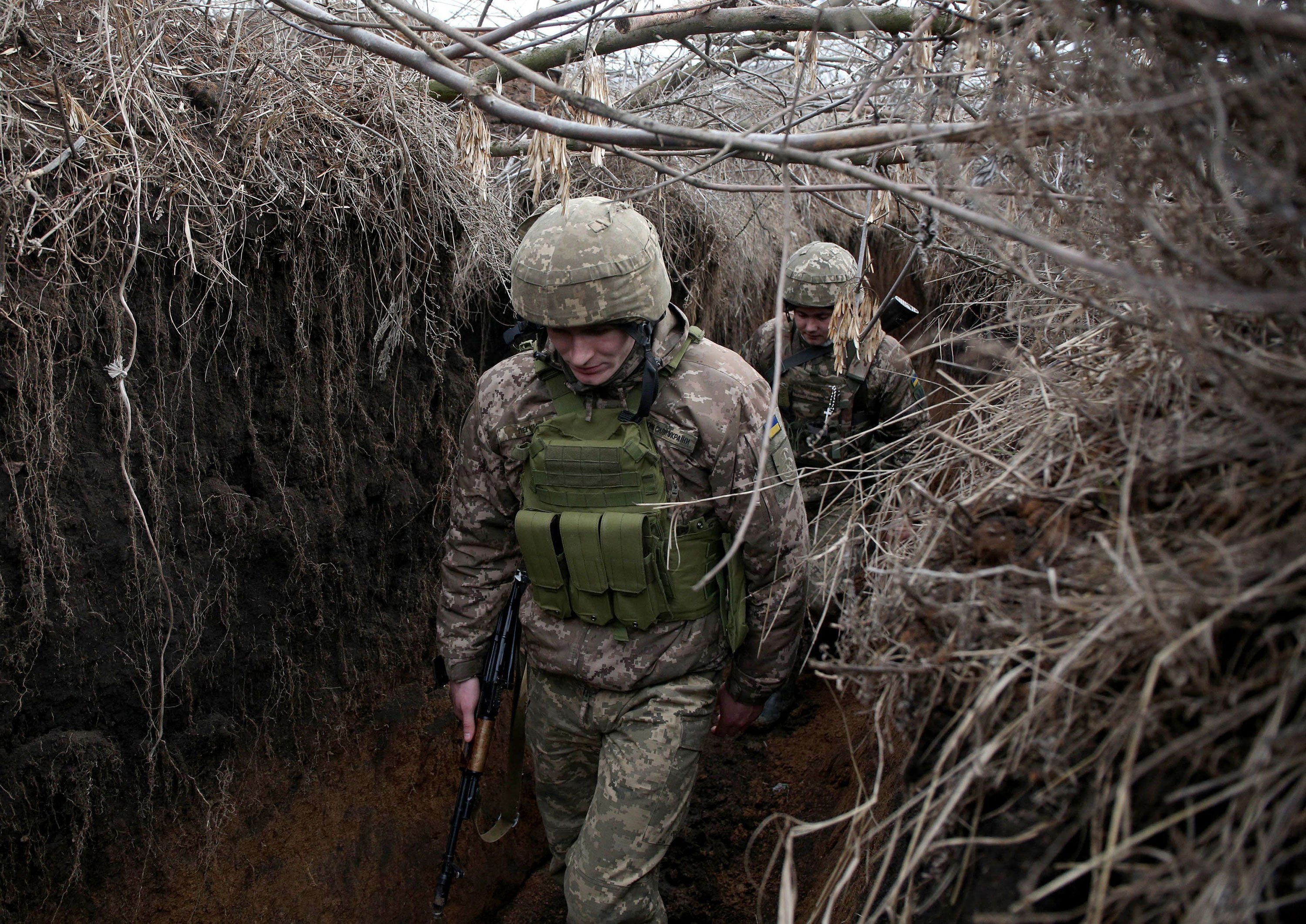
NATO allies have more than 100 warplanes on high alert and more than 120 warships ready at sea from the Arctic Circle to the Mediterranean Sea.

The White House has begun referring to Russian troop deployments in eastern Ukraine as an "invasion" after initially hesitating to use the term — a red line that President Joe Biden has said would result in the US levying severe sanctions against Moscow.

The White House decided to begin referring to Russia's actions as an "invasion" because of the situation on the ground, according to a US official who spoke on the condition of anonymity to discuss internal deliberations.

US-led sanctions were followed by many Western allies.

The UK government slapped sanctions on five Russian banks and three Russian billionaires.

And Germany has stopped the progression of the controversial Nord Stream 2 pipeline following Moscow's actions in eastern Ukraine.

Moscow demands NATO roll back
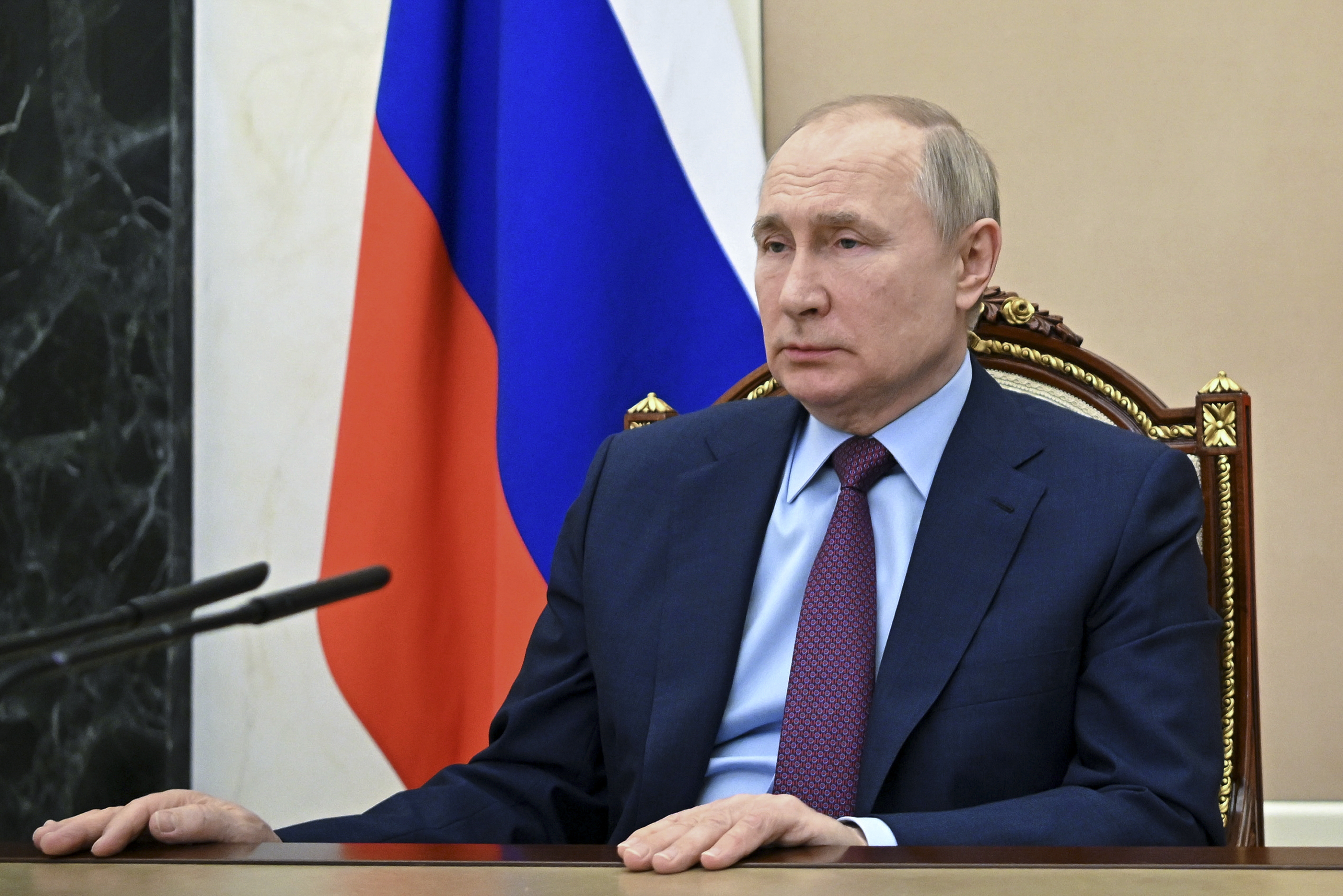
READ MORE: What is Nord Stream 2 pipeline, and why does it make the US anxious?

Meanwhile President Putin called for international recognition of Crimea as part of Russia, an end to Ukraine's NATO membership bid and a halt to weapons shipments there.

Mr Putin claimed that Russia's 2014 annexation of Ukraine's Crimean Peninsula should be internationally recognised as a legitimate reflection of the local population's choice, likening it to a vote for Kosovo independence.

The annexation has been widely condemned by Western powers as a breach of international law.

To end the current crisis, he also called for the renunciation of Ukraine's NATO bid, saying it should assume a "neutral status," and said that the West should stop sending weapons there.

Russia said it wants Western guarantees that NATO won't allow Ukraine and other former Soviet countries to join as members.

Moscow has also demanded the alliance halt weapons deployments to Ukraine and roll back its forces from Eastern Europe — demands flatly rejected by the West.

An invasion or not an invasion?
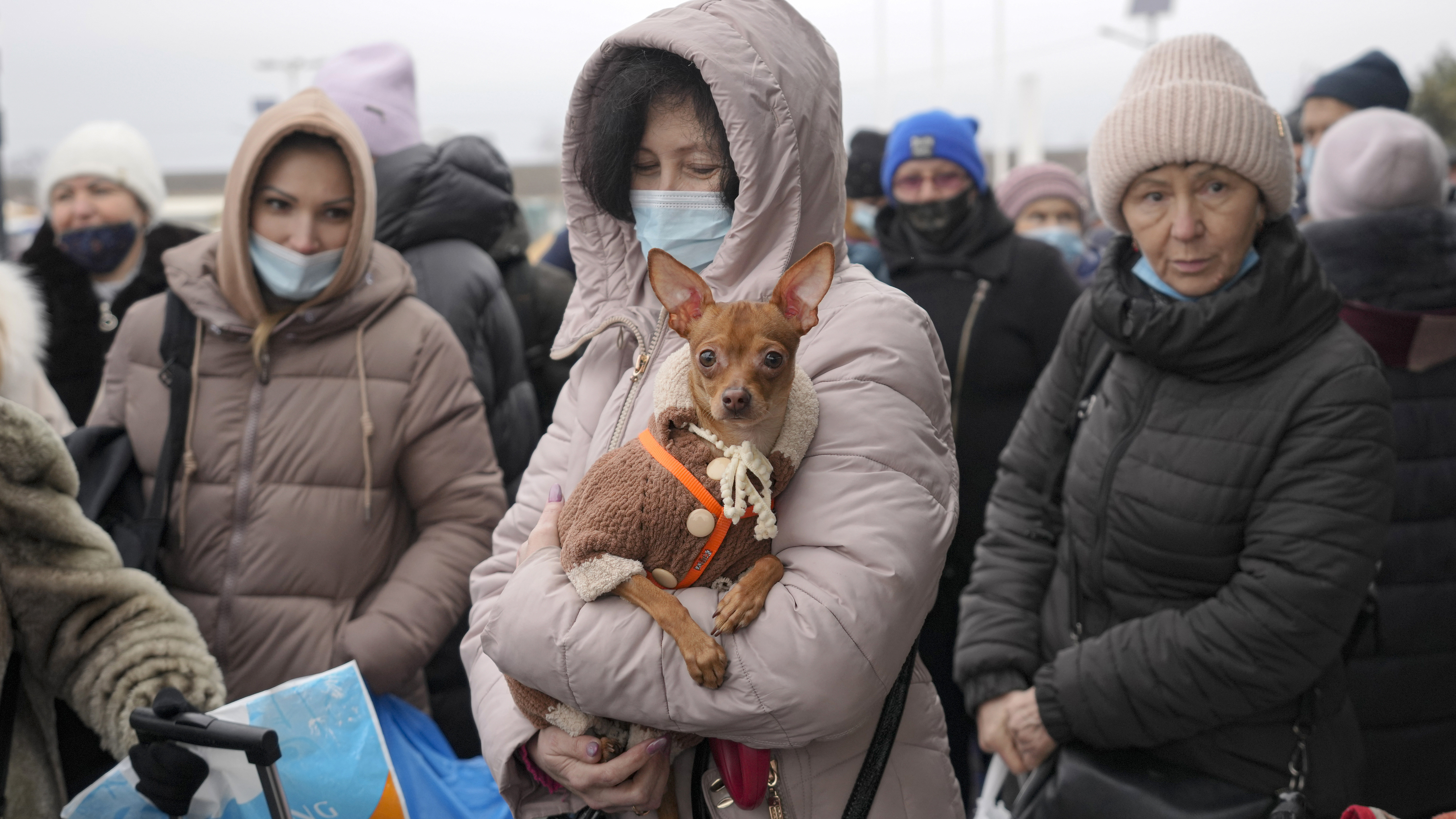
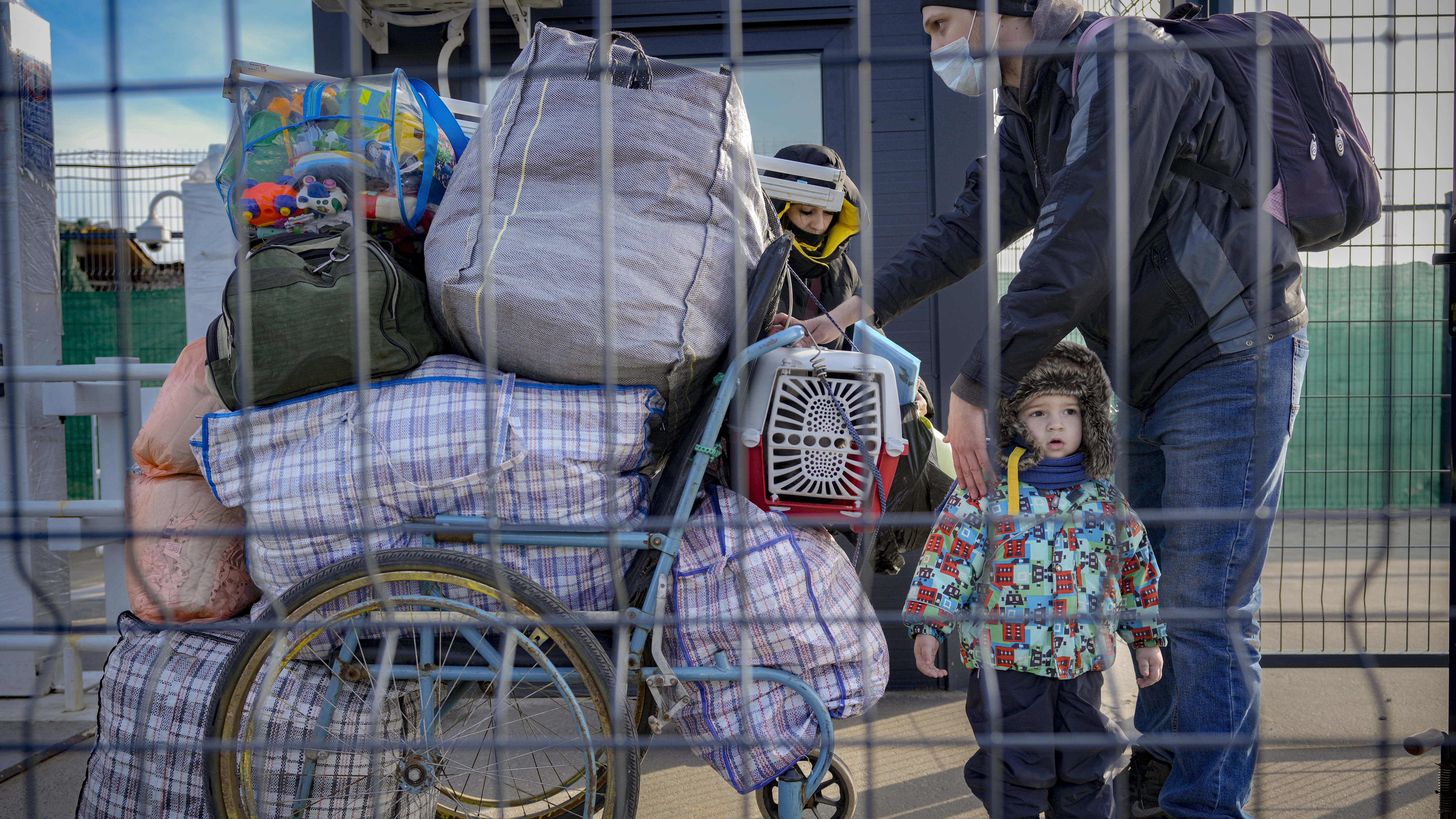
A woman holds her dog as she waits with others to cross from Ukrainian government controlled areas to pro-Russian separatists' controlled territory in Stanytsia Luhanska, the only crossing point open daily, in the Luhansk region, eastern Ukraine.A family crosses from pro-Russian separatists controlled territory to Ukrainian government controlled areas in Stanytsia Luhanska.

For weeks, Western powers have been bracing for an invasion as Russia massed an estimated 150,000 troops on three sides of neighbouring Ukraine.

They warned an attack would cause massive casualties, energy shortages in Europe and economic chaos around the globe — and promised swift and severe sanctions if it materialised.

Western leaders have long warned Moscow would look for cover to invade — and just such a pretext appeared to come on Monday, when Mr Putin recognised as independent two separatist regions in eastern Ukraine, where government troops have fought Russia-backed rebels in a conflict that has killed over 14,000 people.

Condemnation from around the world was quick. Ukrainian President Volodymyr Zelenskyy said he would consider breaking diplomatic ties with Russia and Kyiv recalled its ambassador in Moscow.

But confusion over what exactly was happening in eastern Ukraine threatened to hobble a Western response.

While the US clearly called it an invasion, some other allies hedged.

"Russian troops have entered in Donbas," the name for the area where the two separatist regions are located, EU foreign policy chief Josep Borrell said in Paris.

"We consider Donbas part of Ukraine."

But in a distinction that could complicate a European and Western response, he added: "I wouldn't say that (it is) a fully fledged invasion, but Russian troops are on Ukrainian soil."

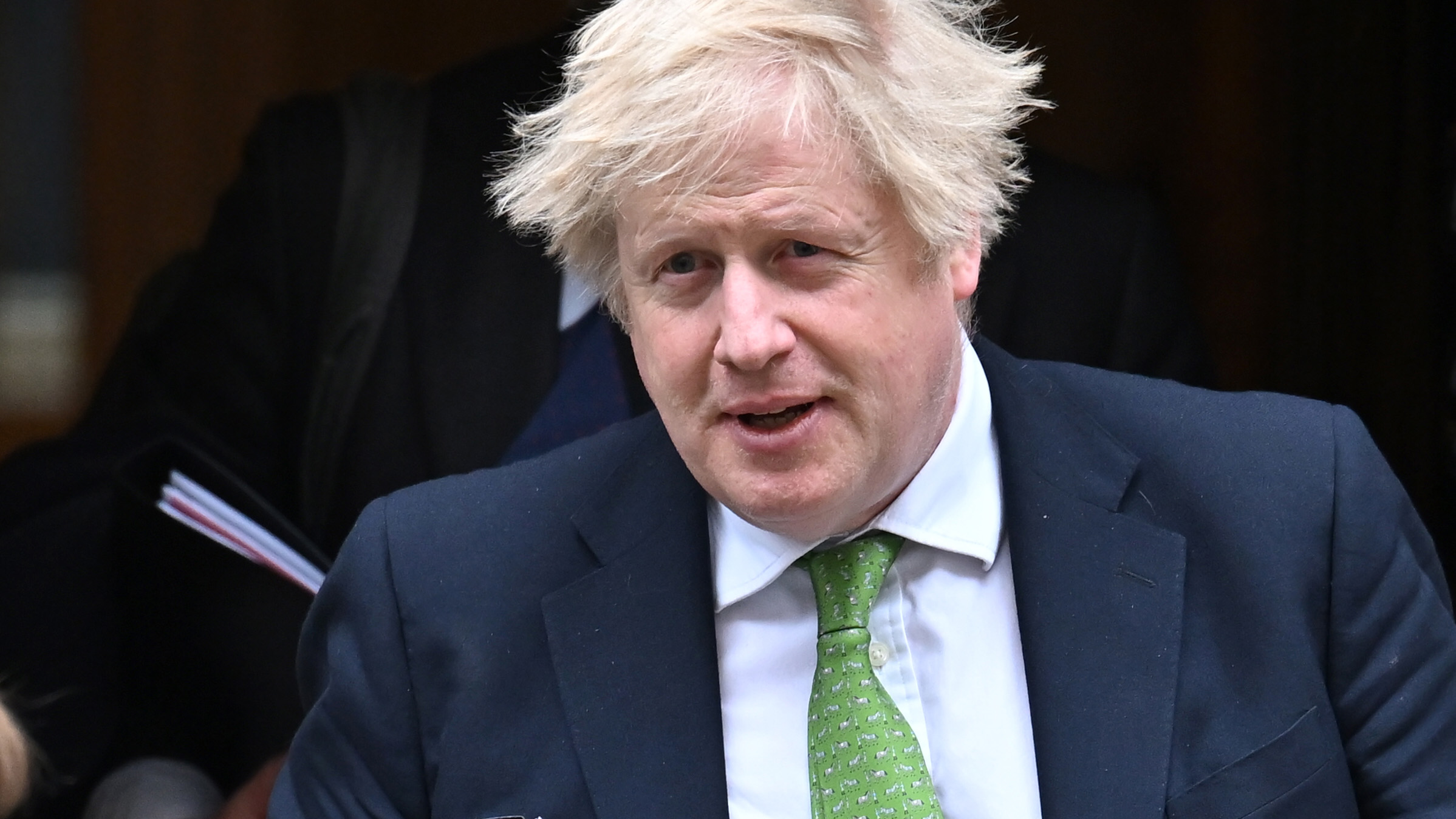
British Prime Minister Boris Johnson also said the UK would slap sanctions on five Russian banks and three wealthy individuals.

Mr Johnson said Russian tanks and armoured personnel carriers have been spotted in the separatist Ukrainian regions recognised as independent by President Putin.

He said that amounts to "a renewed invasion" of Ukraine.

'Russian troops are on Ukrainian soil'
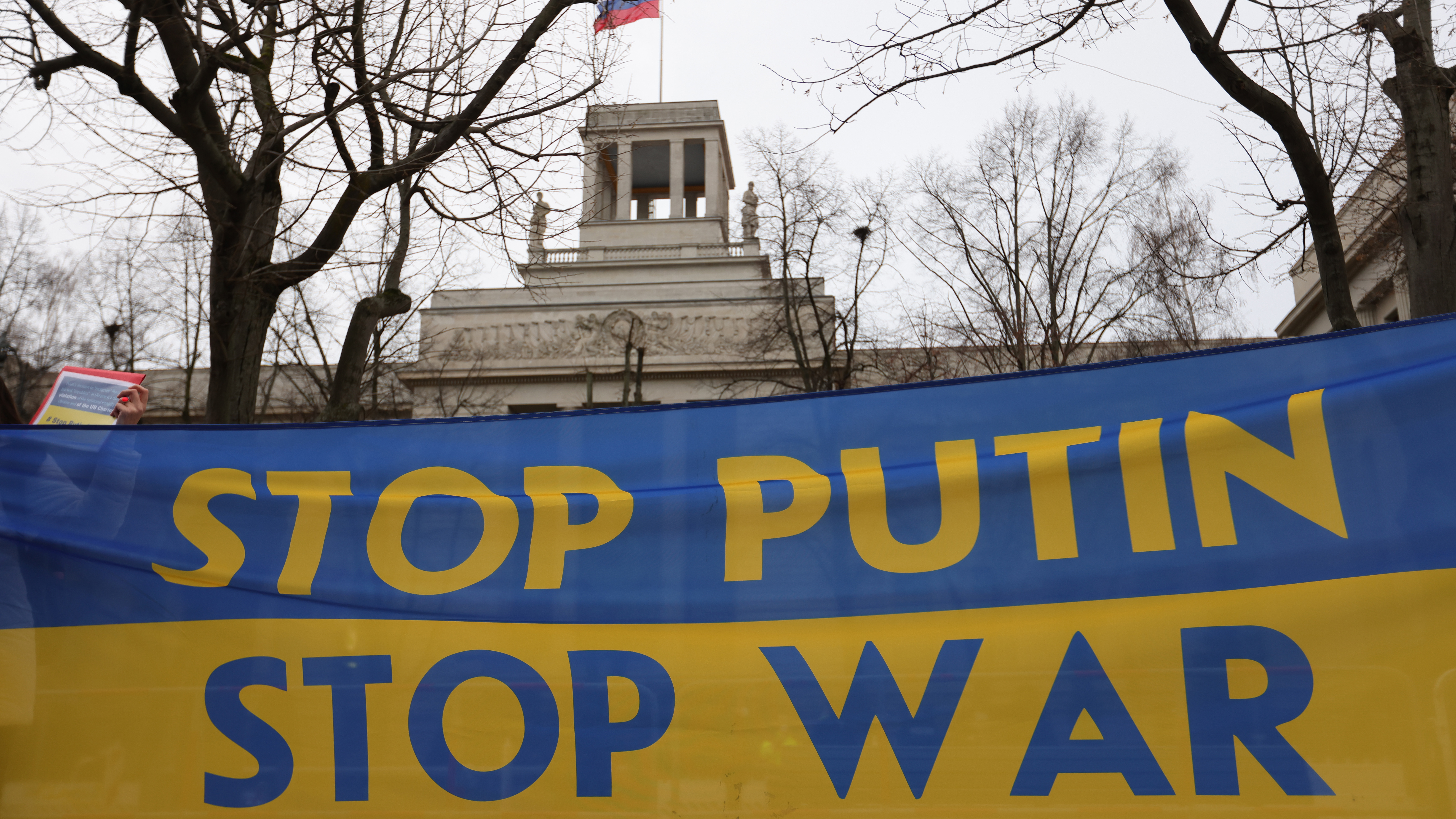
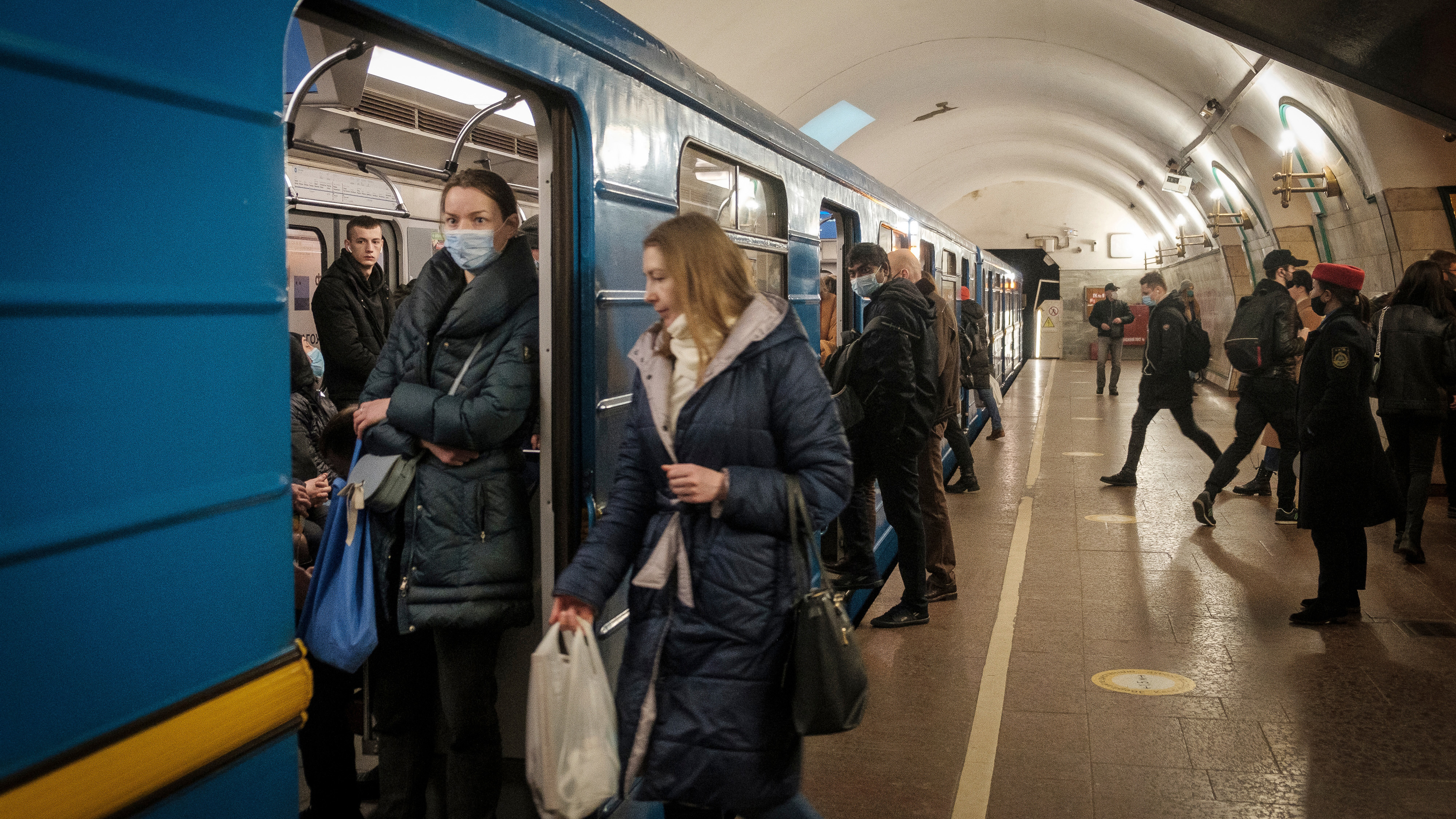
Protesters hold a banner reading stop Putin stop war in Berlin, Germany. Passengers board a train at a Kyiv Metro station in Kyiv, Ukraine.

Nord Stream 2 pipeline suspended

The Russian moves also pushed Germany to suspend the certification process for Nord Stream 2 pipeline that was to bring natural gas from Russia.

The pipeline was built to help Germany meet its energy needs, particularly as it switches off its last three nuclear power plants and phases out the use of coal, and it has resisted calls by the US and others to halt the project.
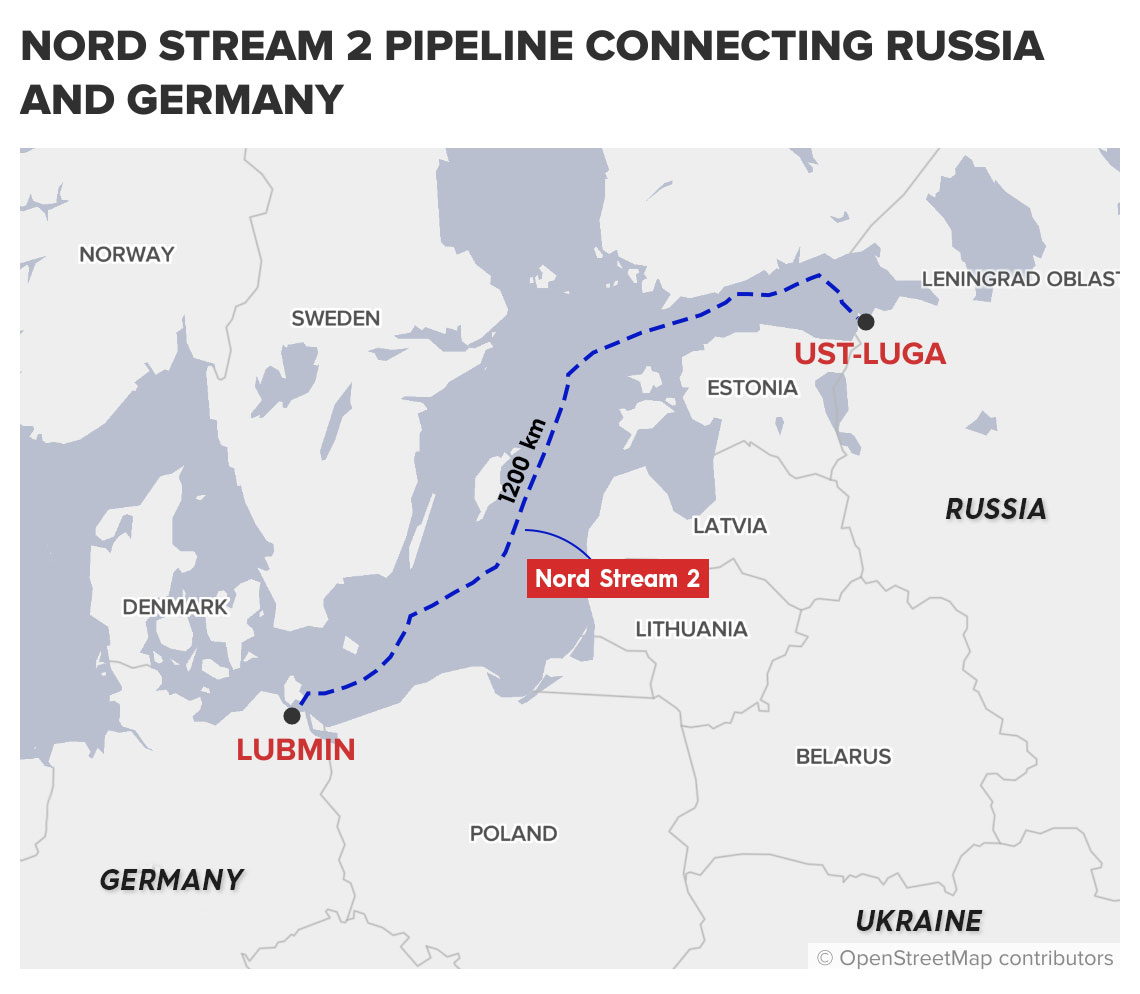
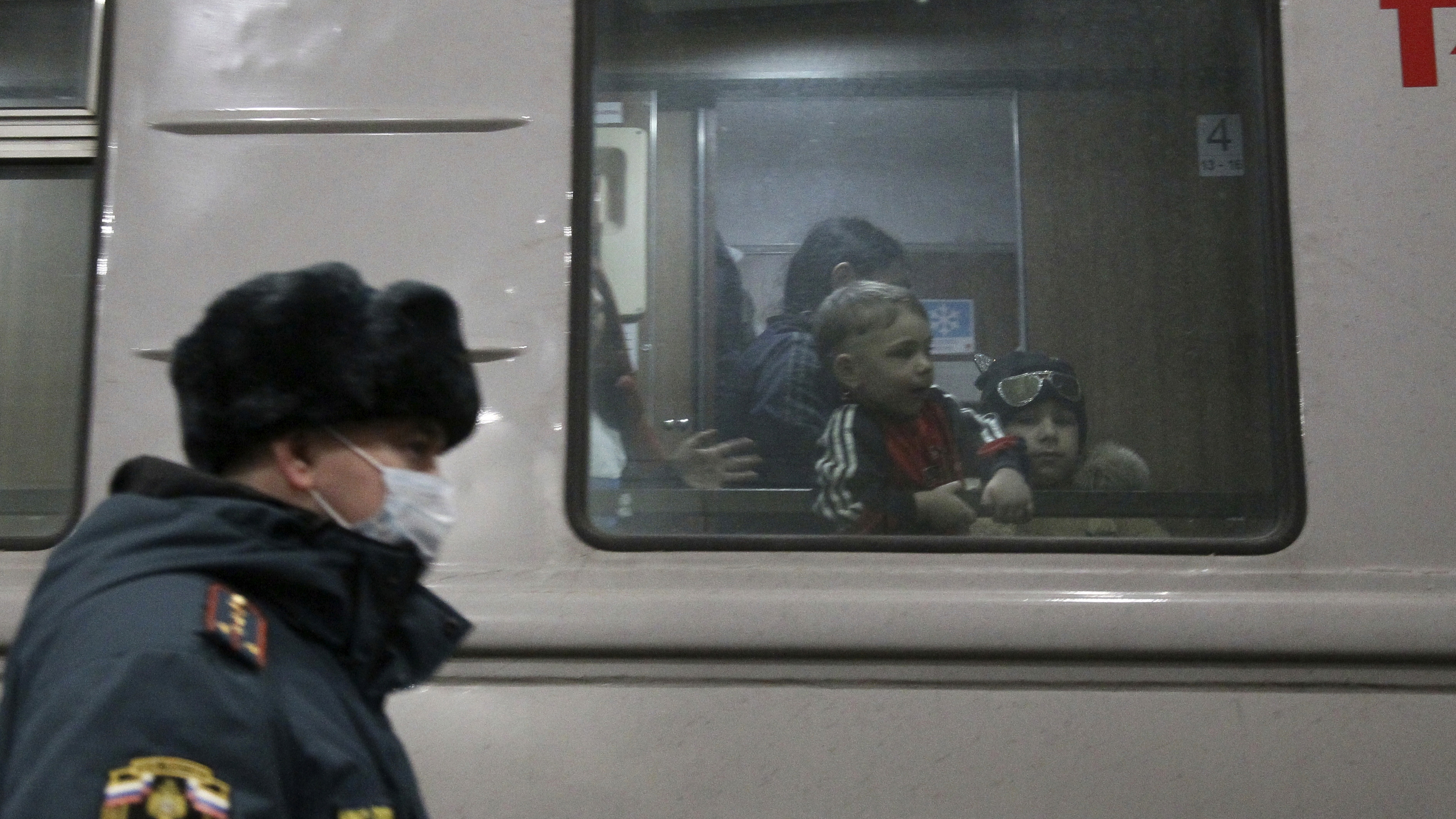
Nord Stream 2 in an undersea 1200km-long natural gas pipeline under the Baltic Sea, which runs from Russia to Germany's Baltic coast.Children evacuated from the Donetsk region, the territory controlled by a pro-Russia separatist governments in eastern Ukraine, are seen through a train window as they wait to be taken to temporary housing, at the railway station in Nizhny Novgorod, Russia.German Bundeswehr soldiers of the NATO enhanced forward presence battalion waits to greet German Defense Minister Christine Lambrecht upon her arrival at the Rukla military base 100 kms (62.12 miles) west of the capital Vilnius, Lithuania.

READ MORE: 'Anxiety is rising': Aussie mum, son stranded in Ukraine

Even as alarm spread across the globe, Zelenskyy, the Ukrainian president, sought to project calm, telling the country in an address overnight: "We are not afraid of anyone or anything. We don't owe anyone anything. And we won't give anything to anyone."

With agencies
States bracing for more rain as two potential cyclones form off coast

Two states on the east coast are in the grips of a major deluge, with warnings more rain and life-threatening flash flooding is on the way.

Meanwhile, modelling suggests two possible cyclones could be forming in the nation's far north.

Meteorologist Jonathan How from the Bureau of Meteorology (BoM) said Sydney's rain will last for the next eight to ten days.

READ MORE: Lawmakers give Putin permission to use force outside Russia

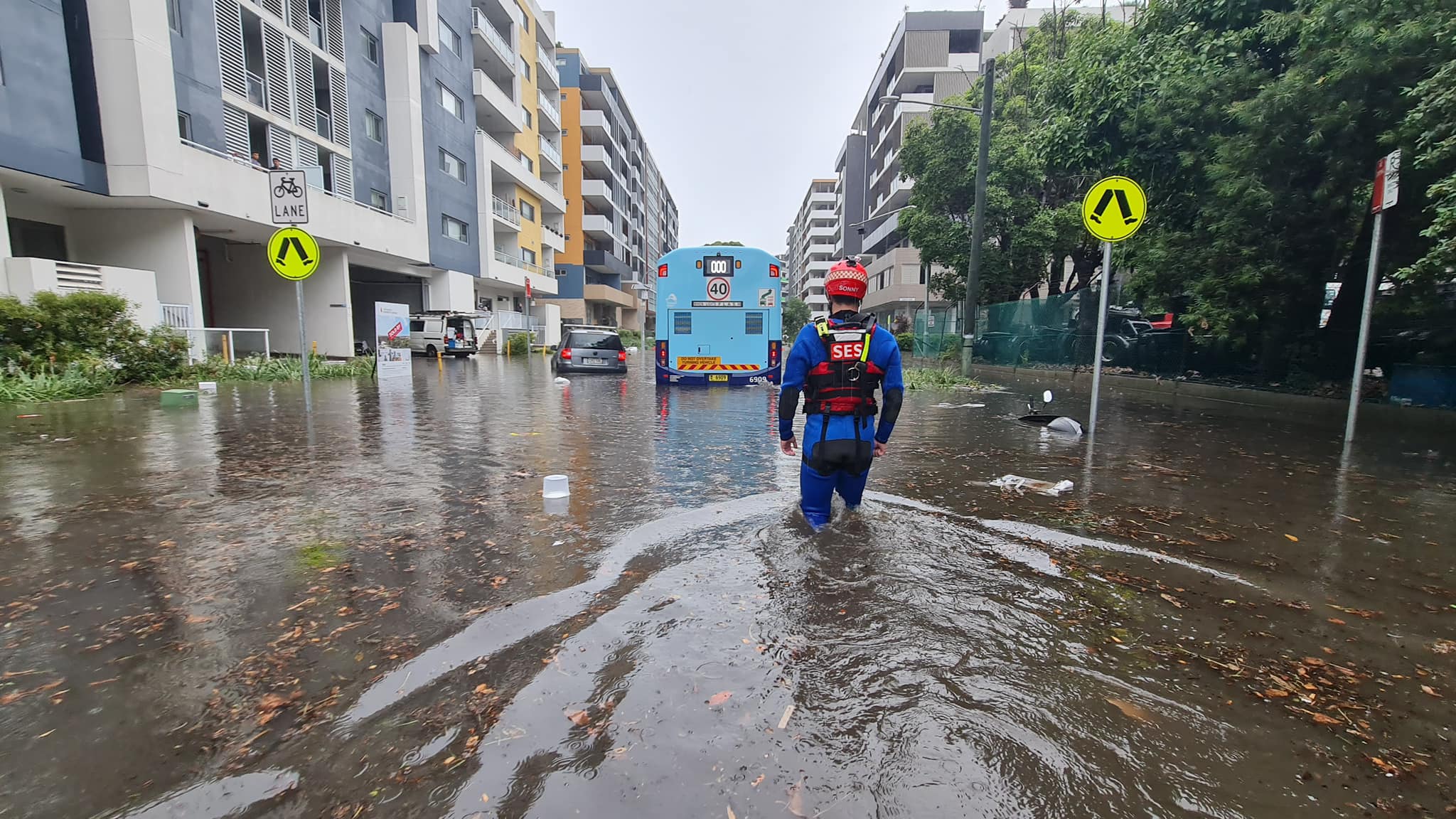
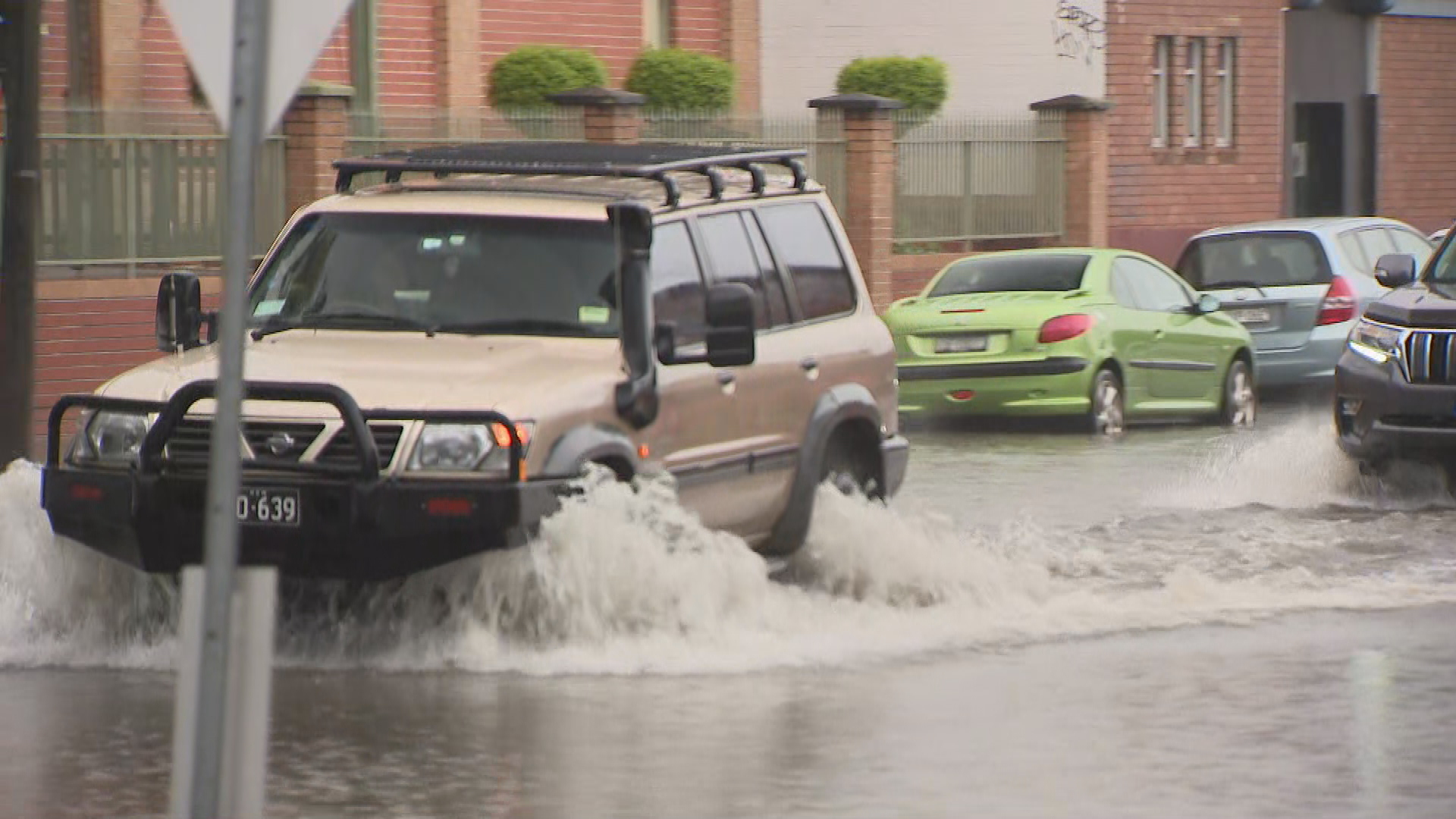
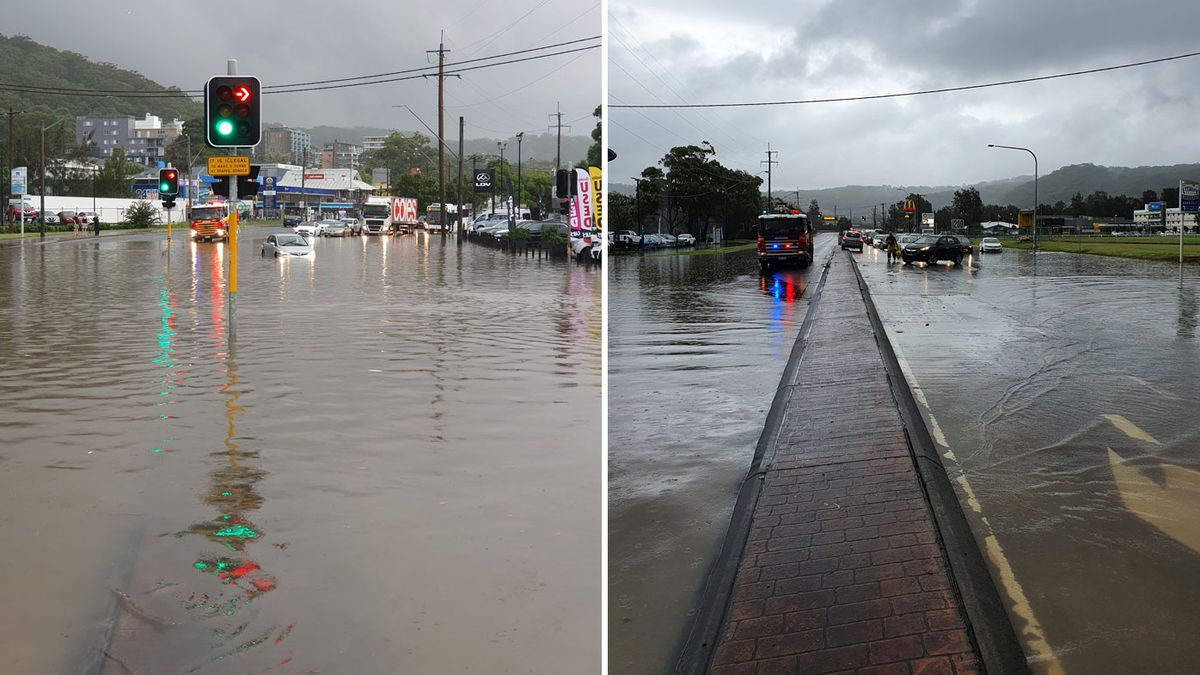
Roads have flooded in Marrickville.

"We are likely to see showers continue into the weekend with another 10 to 20mm over the next few days but for those across Sydney we're expecting showers to continue all the way into late next week," Mr How said.

"So another eight to 10 days of quite showery, cool conditions.

"Thankfully, over the next few days the rain won't be quite as heavy but the ground is so saturated so take care in low-lying areas."

Streets across Sydney have been inundated by floodwaters as many of the city's suburbs recorded their wettest day in almost a year.

A "metre of rain" could fall on parts of south-east Queensland, Mr How predicted.

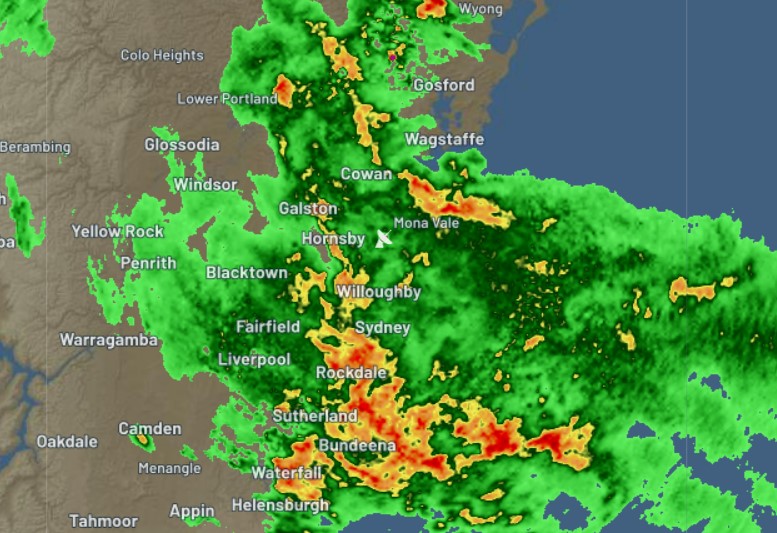
The warnings come after parts of Sydney and the Central Coast received more than a months worth of rain in two hours yesterday.

Mr How called the rain "torrential".

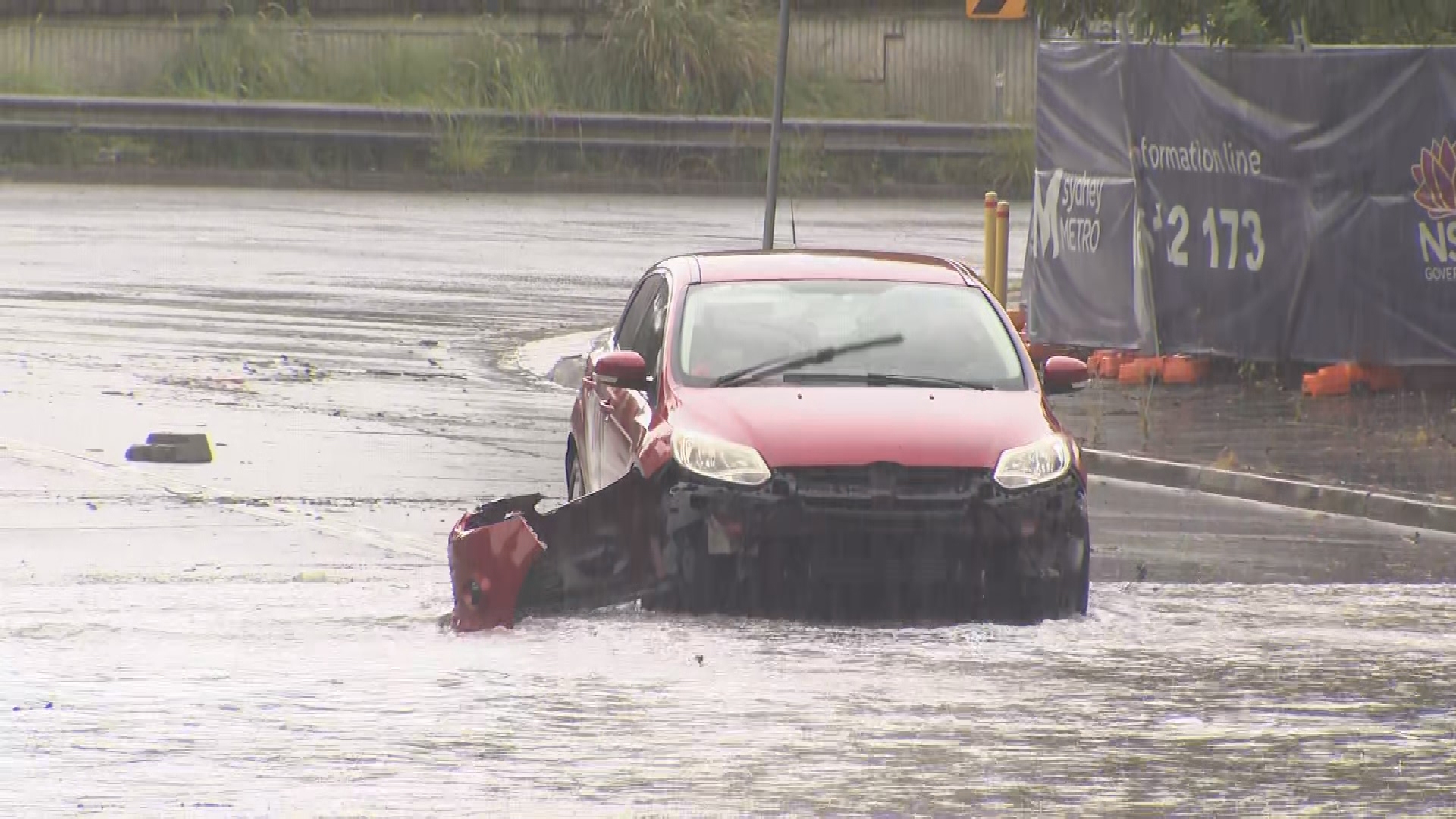
Inner-city streets turned into rivers when a storm cell hit around midday, trapping cars and forcing the closure of some train lines.

The State Emergency Service (SES) has received 632 calls for help.

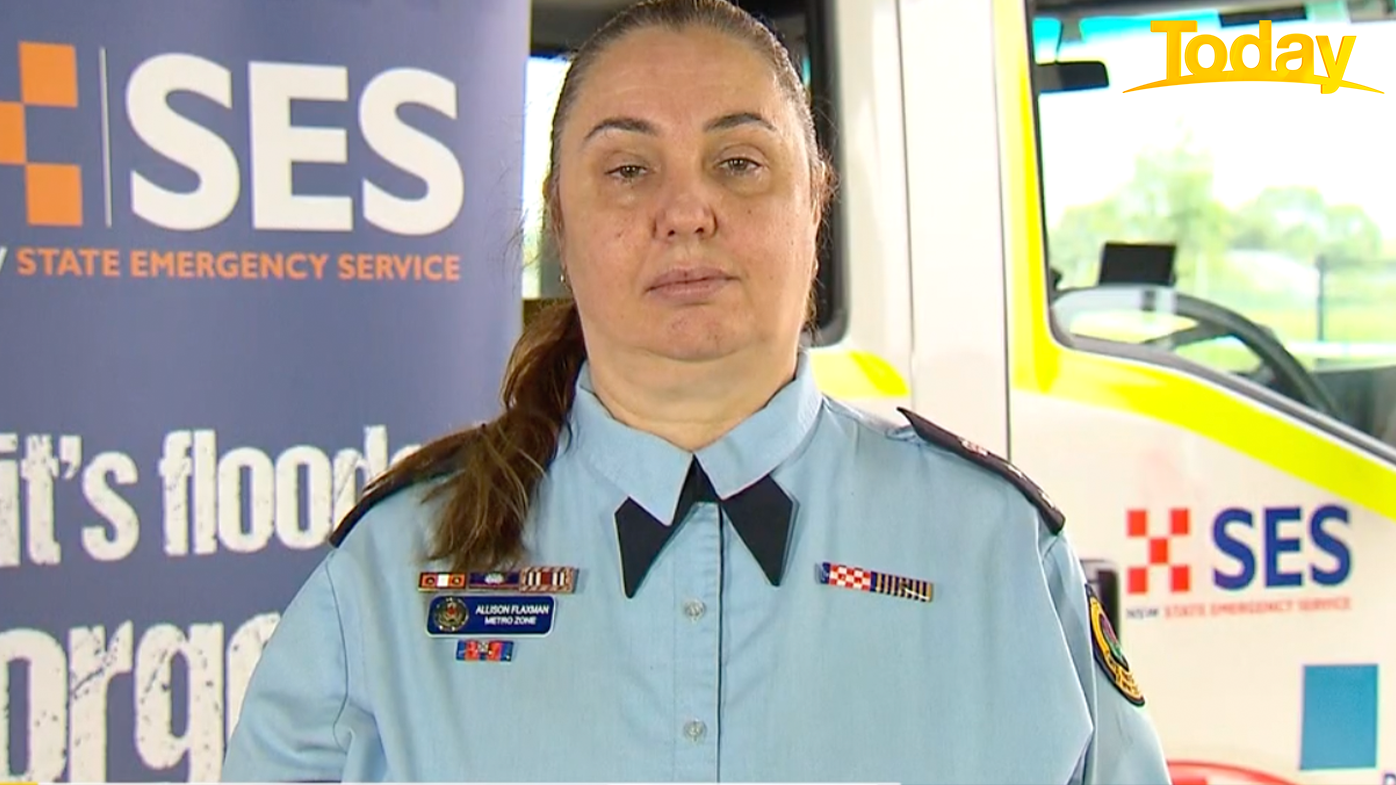
Allison Flaxman, Deputy Zone Commander at NSW SES, has urged people not to drive through floodwaters.

"We are doing a lot of jobs around leaking roofs, around rescuing people that have driven into floodwaters and trees that have come down in the wind," Ms Flaxman said.

The NSW SES has issued a warning about the dangers of floodwaters as wet weather continues across the state.

"Please just drive to the conditions of the road. Obviously, if you come across a road that is flooded, please stop. Turn around and find an alternative route.

"Our volunteers are out there trying to rescue as many people as we can. We don't want to put their lives … at risk."

Weatherzone said more than 110mm of rain fell at Marrickville since 9am, including 98mm in just two hours in the afternoon.

In Sydney's west, more than 87mm of rain fell at Toongabbie.

READ MORE: Reward for information on missing Belgian backpacker Theo Hayez

The storm hit around midday, bring a months worth of rain in two hours to some areas.

The Central Coast was also hard hit.

The Central Coast Highway was closed in both directions at West Gosford, prompting warnings for people to avoid the area.

The Central Coast Highway in Gosford is closed after flash flooding.

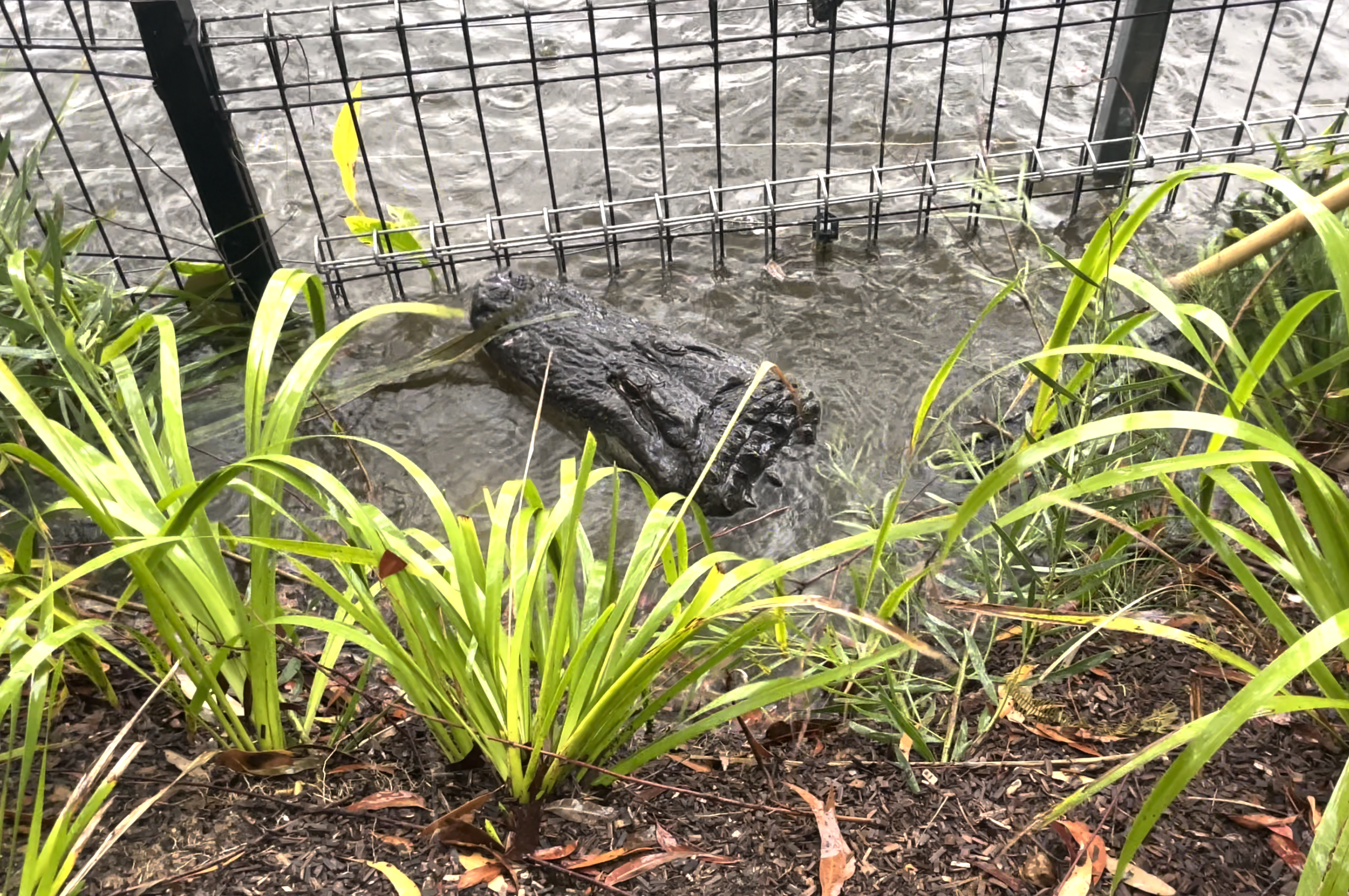
Rising waters forced the rescue of a large American alligator at the Australian Reptile Park yesterday after it swam over its enclosure.

Zookeepers had the delicate task of relocating the animal after it became stuck between fences.

READ MORE: Fresh calls for Queensland to reconsider daylight saving

A massive American Alligator was relocated by Keepers at the Australian Reptile Park this morning after rapidly rising water levels allowed him to swim over an internal boundary fence, causing him to be stuck between fences.

A separate weather system is causing chaos across south-east Queensland.

Parts of the Sunshine Coast recorded 300mm in just three hours overnight.

The wet weather will hit Brisbane and the Gold Coast this afternoon, with warnings of life-threatening flash flooding.

https://twitter.com/BOM_Qld/status/1495954879004696591

Multiple flood warnings are currently in place for the state, with two severe storm warnings also issued.

Areas in the firing line include the Southeast Coast and parts of Wide Bay and Burnett Forecast Districts — as well as parts of Central Highlands and Coalfields, Central West, Maranoa and Warrego and Darling Downs and Granite Belt Forecast Districts.

"Heavy, locally intense rainfall, which may lead to flash flooding is occurring north of Brisbane and across the Sunshine Coast and southern Wide Bay," the BoM said.

"Heavy to intense rainfall is forecast to extend to areas east of about Maryborough, Toowoomba, Boonah and the Gold Coast early Wednesday morning. Six-hourly rainfall totals between 100mm to 200mm are likely, with 250mm to 350mm possible."

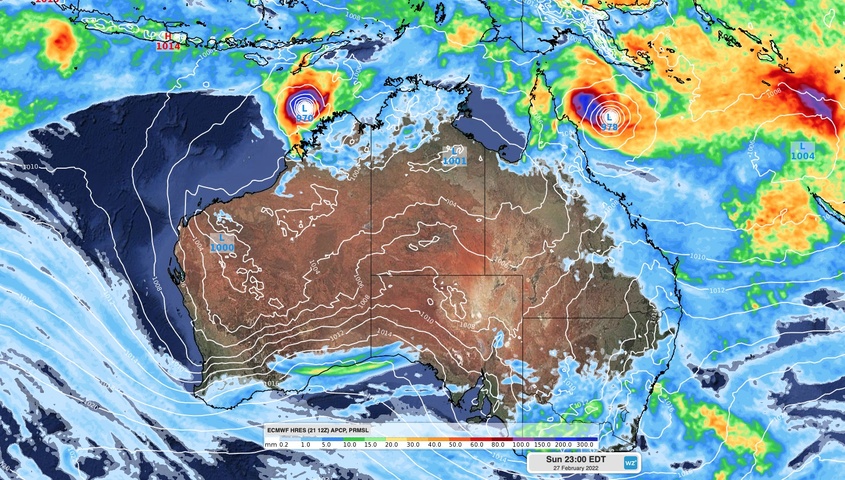
Weatherzone has also warned that two tropical cyclones could potentially form over northern Australia later this week.

ECMWF mean sea level pressure (MSLP) and 24-hour rainfall forecast at 11pm AEDT Sunday, February 27, showing low pressure systems or cyclones to the northwest and northeast of Australia.

"A number of forecast models suggest that two tropical lows may develop near northern Australia later this week, one to the north of WA and the other somewhere around the Gulf of Carpentaria or northern Coral Sea," Weatherzone said.

"At this stage, it is too early to know exactly where, when and how much these low pressure systems will develop.

"However, there is enough model agreement to suggest that the two low pressure systems may move into environments that are favourable for tropical cyclone development near Australia, most likely towards the end of this week or early next week."

Here's how the weather is looking around the nation's capitals today.

Brisbane

It will be a wet and stormy day in Brisbane, where the mercury is tipped to reach 24C.

There's a chance of showers, and the chance of a thunderstorm in the west from late this morning.

Sydney

Heavy rain is easing today in Sydney, with the city tipped to reach 28C.

There's still a very high chance of showers, and the chance of a thunderstorm.

Melbourne

It will be a sunny, hot and humid day in Melbourne, with a maximum of 32C forecast.

There's a slight chance of a shower and the chance of a thunderstorm during this afternoon and early evening, most likely about the outer western suburbs and eastern hills.

Canberra

A shower or two could hit the nation's capital today, with the BoM forecasting a medium chance of rain.

This is "most likely during this afternoon and early evening".

There's also a chance of a thunderstorm.

Temperatures will range between 14-26C.

Hobart

It will be a hot, partly cloudy day in Hobart, with temperatures reaching 28C.

Adelaide

The mercury will climb to 32C in Adelaide, which has a clear and hot day in store.

Darwin

A maximum of 31C will be felt in tropical Darwin.

There's a high chance of showers, most likely from the late morning, and the chance of a thunderstorm.

Perth

Perth's run of hot weather continues, with a 35C day forecast.

It will be a sunny, clear day.

Joe Biden announces new US sanctions against Russia

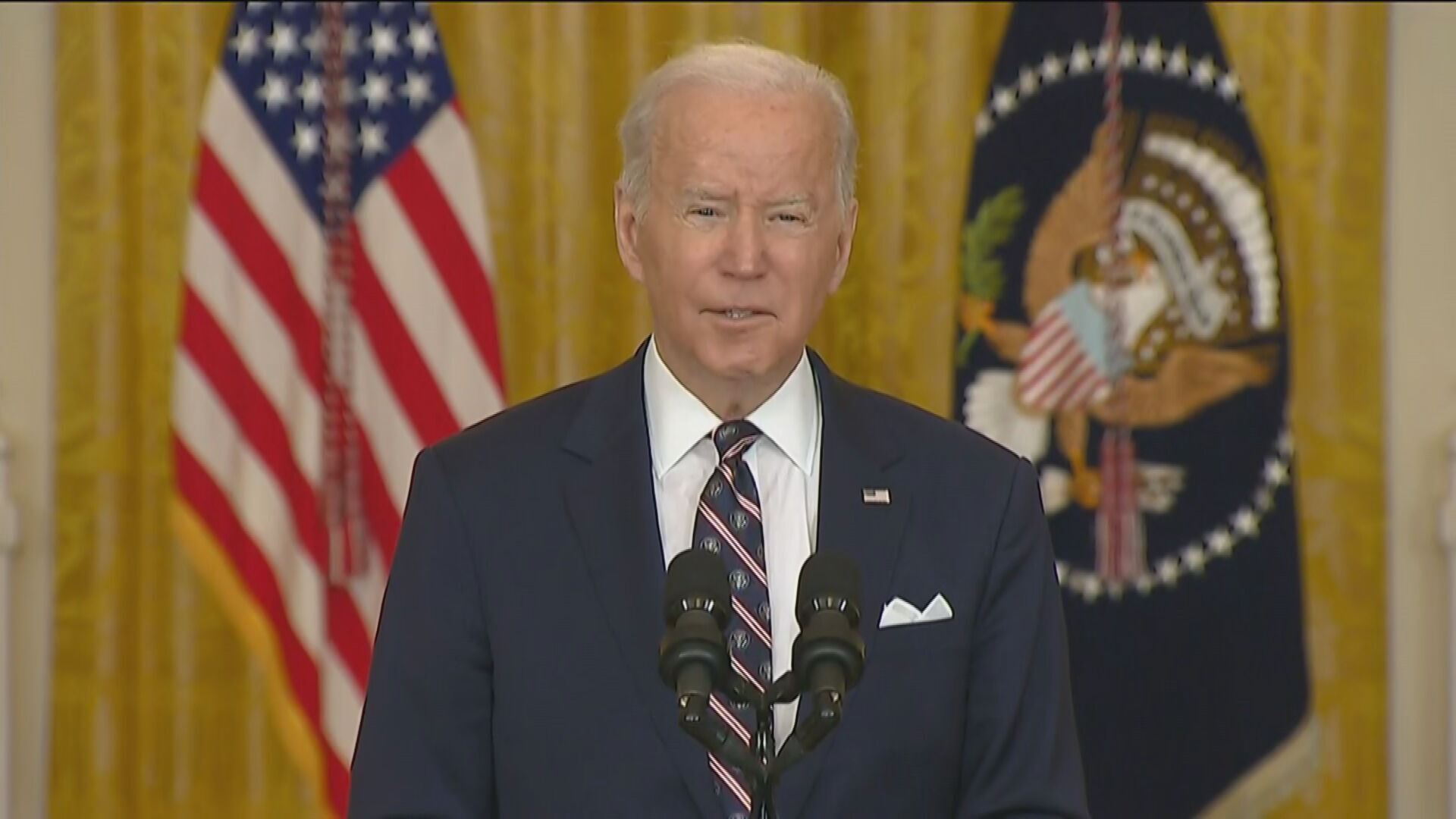
US President Joe Biden has announced he was ordering heavy financial sanctions against Russian banks and oligarchs, declaring that Moscow had flagrantly violated international law in what he called the "beginning of a Russian invasion of Ukraine".

"None of us will be fooled" by Russian President Vladimir Putin's claims about Ukraine, the US President said.

"Who in the Lord's name does Putin think he is to declare new countries? This is a flagrant violation of international law."

And he said more sanctions could be on the way if Mr Putin proceeds further.

Mr Biden said he was also moving additional US troops to the Baltic states on NATO's eastern flank bordering Russia.

LIVE UPDATES: Russian troops enter rebel-held areas of Ukraine

Mr Biden joined the 27 European Union members who unanimously agreed on Tuesday to levy their own initial set of sanctions targeting Russian officials over their actions in Ukraine.

Mr Biden announced the US would impose sanctions against Russian financial institutions, which he said could be ratcheted up.

"I'm going to begin to impose sanctions in response, far beyond the steps we and our allies and partners implemented in 2014. If Russia goes further with this invasion we stand prepared to go further as with sanctions," Mr Biden said.

The US President said new economic sanctions would target two major Russian financial institutions.

"We're implementing full blockage sanctions on two large Russian financial institutions – VEB and their military bank.

"We are implementing sanctions on Russian sovereign debt. That means we have cut off Russia's government from Western financing. It can no longer raise money from the West and cannot trade in its new debt on our markets or European markets either."

Mr Biden said US sanctions would target Russia's elites and their family members.

READ MORE: Ukraine activates reserve forces as Russian troops move into rebel-controlled areas

He also pledged to work with Germany to stop the building of the controversial Nord Stream 2 gas pipeline from Russia.

"Because of Russia's actions we've worked with Germany to ensure that Nord Stream 2 will not, as I promised, will not move forward."

READ MORE: Call for Australia to join economic sanctions on Russia

Nord Stream 2 in an undersea 1200km-long natural gas pipeline under the Baltic Sea, which runs from Russia to Germany's Baltic coast.

Mr Biden pledged his administration was using "every tool at our disposal" to limit the effect of sanctions against Russia on domestic gas prices, acknowledging that Americans will likely see rising prices at the pump in the coming months.

"As I said last week, defending freedom will have costs, for us as well and here at home," Mr Biden said.

"We need to be honest about that. But as we do this, I'm going to take robust action to make sure the pain of our sanctions is targeted at the Russian economy, not ours."

UK sanctions to hit banks, individuals

UK Prime Minister Boris Johnson earlier unveiled the "first tranche" of British sanctions on Russia, condemning Mr Putin's Ukraine aggression and saying Europe must "brace ourselves" for his next steps.

READ MORE: Reward of $500k offered for information on missing Belgian backpacker

British Prime Minister Boris Johnson has announced sanctions against Russia.

Mr Johnson told British MPs that people "will struggle to understand or to contemplate how, in the year 2022, a national leader might calmly and deliberately plot the destruction of a peaceful neighbour."

"Yet the evidence of his own words suggest that is exactly what President Putin is doing," he said.

The UK will sanction five Russian banks and three "very high net worth" individuals, Mr Johnson said in Parliament.

EXPLAINED: Why Russia-backed rebels are a thorn in Ukraine's side

Shark bite victim rescued by US Coast Guard helicopter

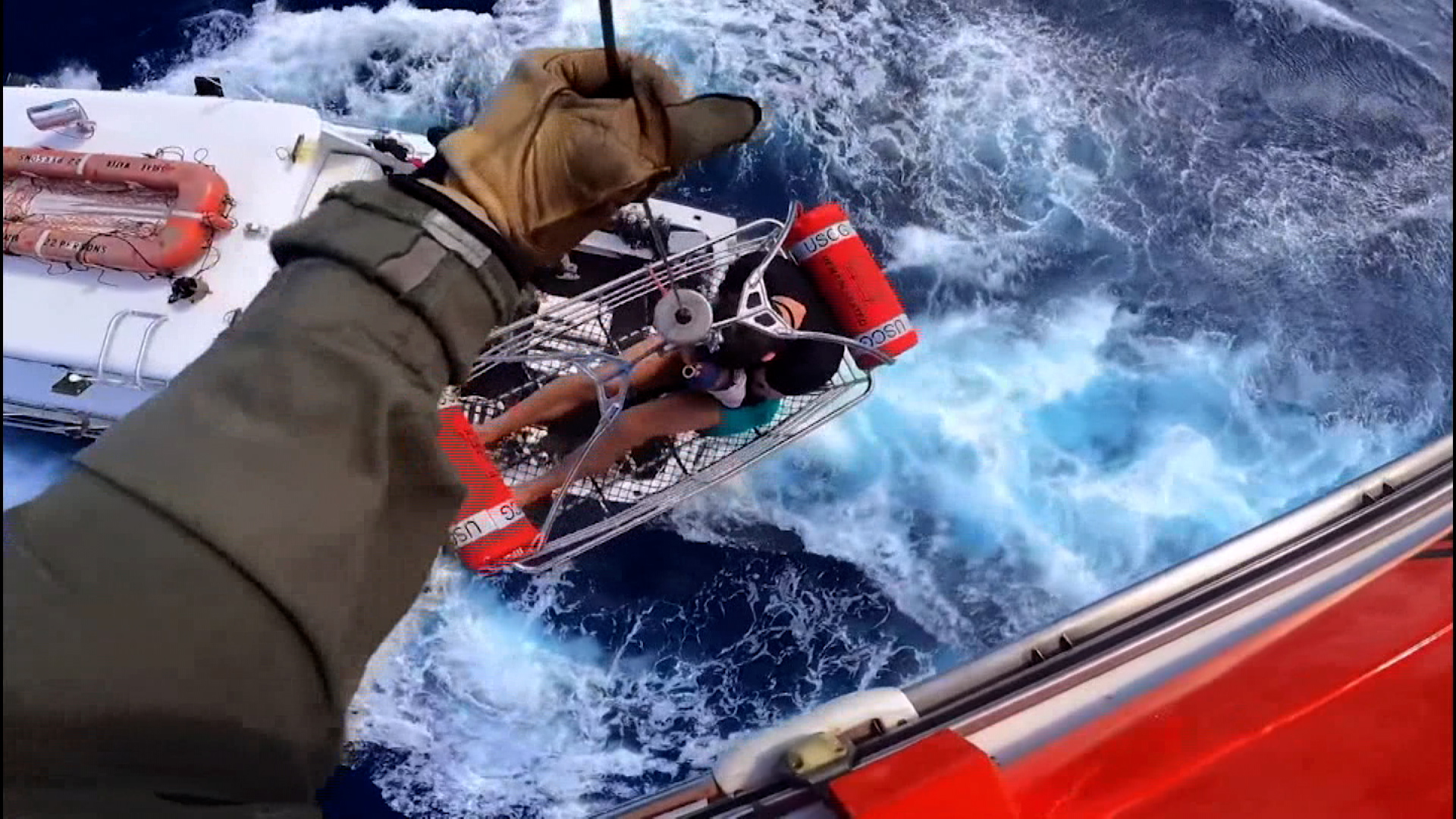
A man who was bitten by a shark while fishing near Bimini, Bahamas, was rescued via helicopter, the US Coast Guard said.

Coast Guard Sector Miami watchstanders received word midday Monday the 51-year-old was bitten while aboard a vessel and a tourniquet was applied to the man's arm to prevent further blood loss, USCG said.

READ MORE: Russian troops move into rebel-controlled areas of Ukraine

A Coast Guard Air Station Miami MH-65 Dolphin helicopter and crew hoisted a man bitten by a shark and transferred him to Jackson Memorial Hospital.

After officials determined the man required a medical evacuation, a Coast Guard Air Station Miami MH-65 Dolphin helicopter and crew arrived at the scene, hoisted the man and transported him to a hospital in Miami, the news release said.

The man is reportedly in stable condition.

READ MORE: Sydney teenager hooks massive 2.8m bull shark

"This was the best possible outcome to a truly terrifying situation," said Sean Connett, command duty officer at Coast Guard District Seven.

"This individual was fortunate a fellow crew member was able to render aid prior to the Coast Guard's arrival which allowed for a quick extraction from the vessel."

Hong Kong orders mandatory COVID-19 tests for all residents

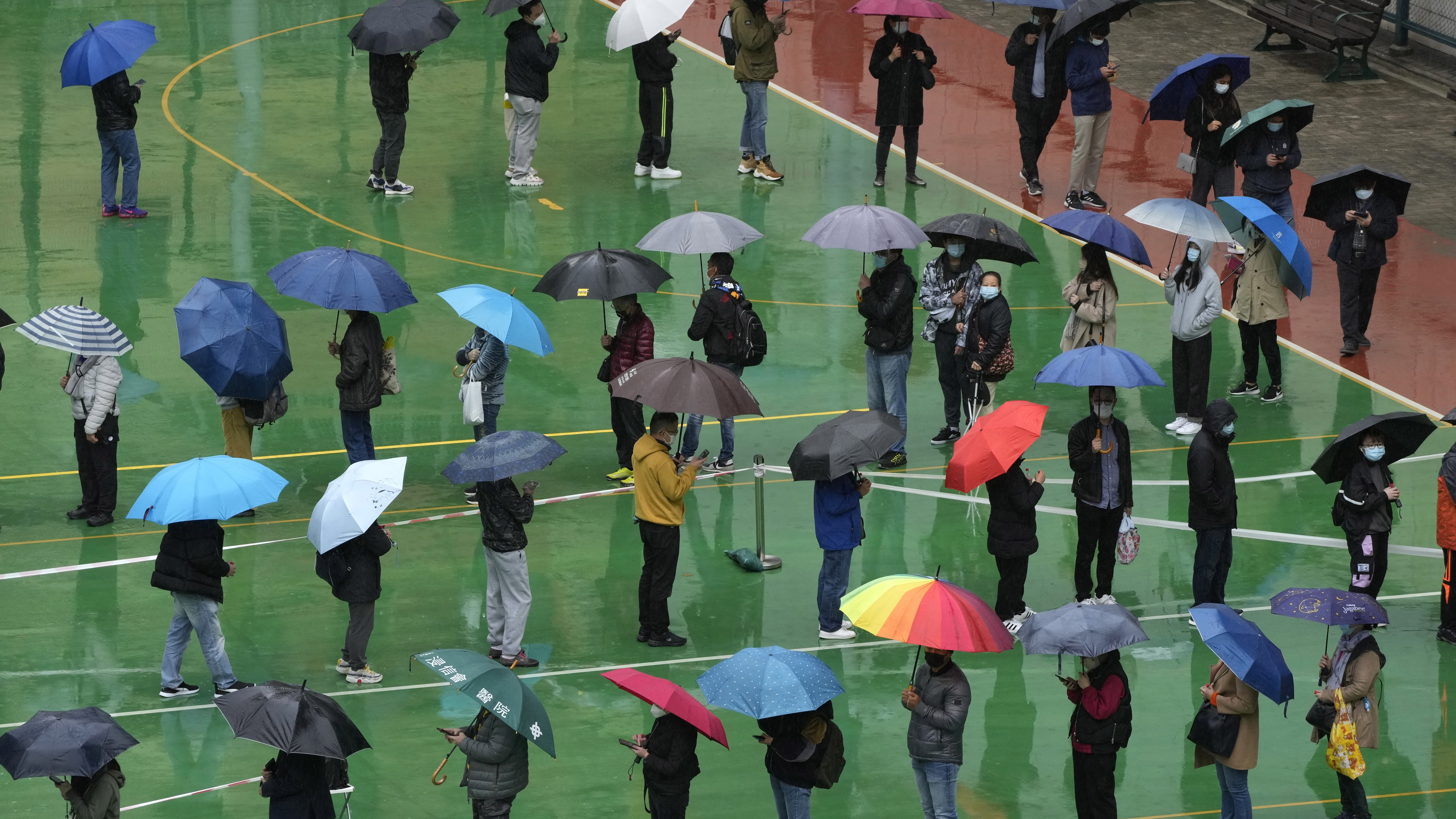
Hong Kong will test its entire population of 7.5 million people for COVID-19 in March, the city's leader says, as it grapples with its worst outbreak driven by the omicron variant.

The population will be tested three times in March, Hong Kong Chief Executive Carrie Lam said.

She said testing capacity will be boosted to 1 million a day or more.

READ MORE: Queen still has mild COVID-19 symptoms, cancels online meetings

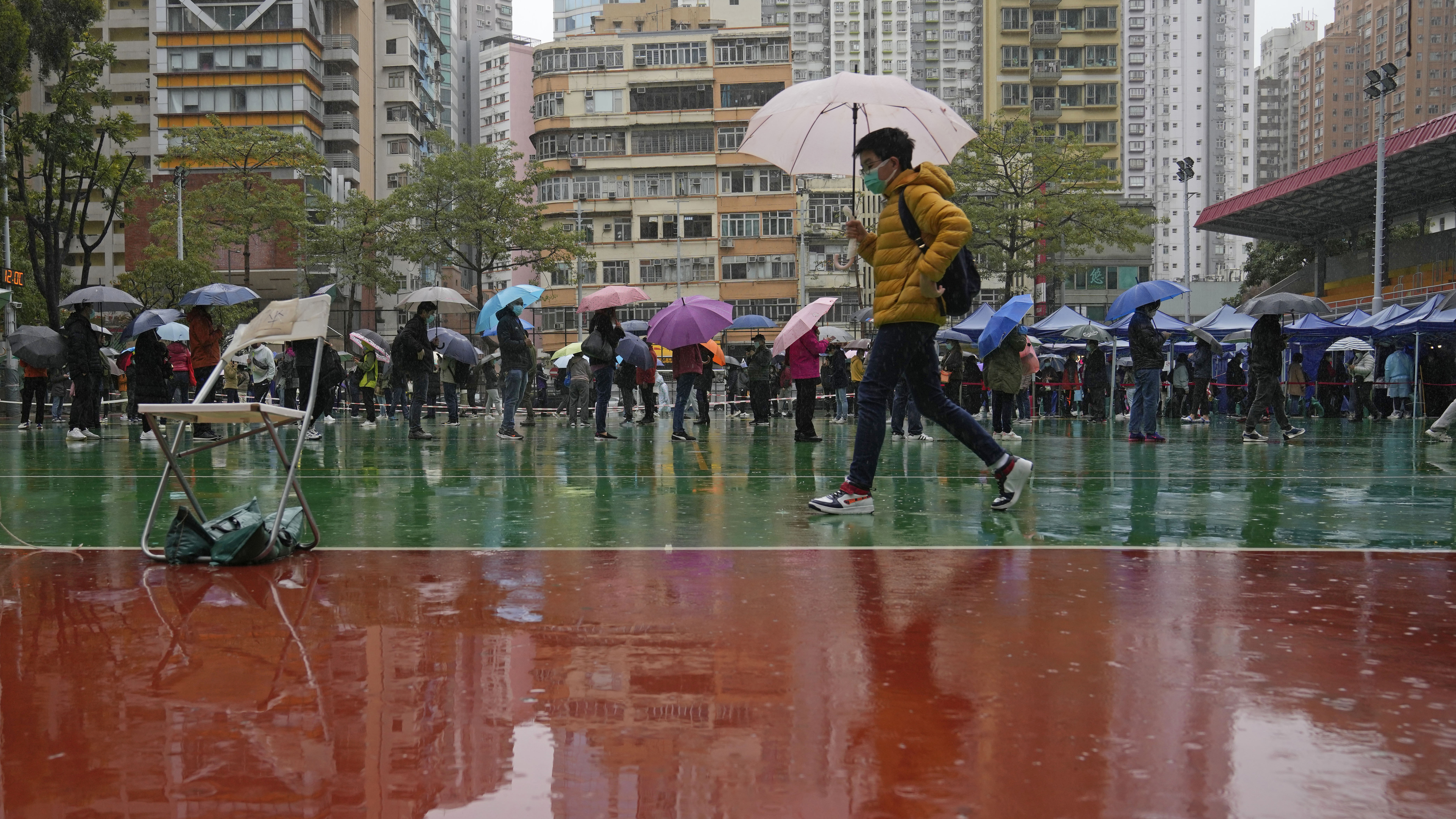
Residents line up to get tested for the coronavirus at a temporary testing centre despite the rain in Hong Kong.

"Since we have a population of some 7 million people, testing will take about seven days," she said.

Hong Kong has reported about 5000 new daily infections since February 15, with the cases threatening to overwhelm its healthcare system.

Since the current surge began at the beginning of the year, the city has recorded nearly 54,000 cases and 145 deaths.

The order for citywide testing comes after mainland Chinese authorities dispatched epidemiologists, health workers and other medical resources last week to help contain the outbreak in the semi-autonomous Chinese city.

Hong Kong has largely aligned itself with mainland China's "zero-COVID-19" policy, which aims to totally stamp out outbreaks, even as many other countries are shifting their approach to living with the virus.

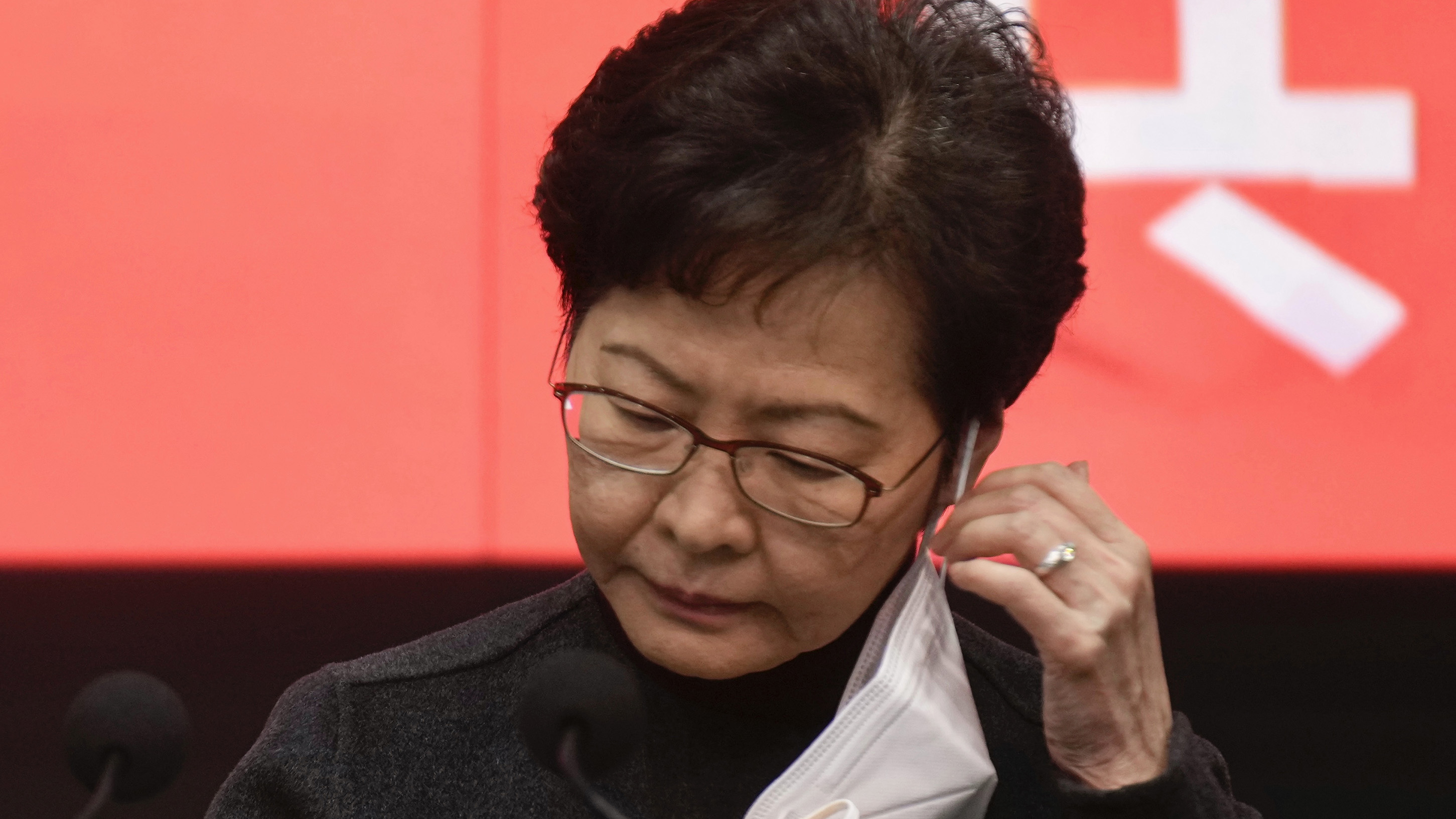
Hong Kong Chief Executive Carrie Lam takes off her face mask before a press conference in Hong Kong.

Lockdowns of entire cities have been imposed in a number of areas of the mainland, but Lam said no such measure is currently being considered in Hong Kong because it is "not realistic."

READ MORE: Queensland to scrap most COVID-19 mask rules, density limits

She also denied that the central Chinese government is giving instructions to Hong Kong on how to handle the epidemic.

"I reiterate that the central government never issued any instructions on our anti-epidemic work," she said.

"The central government will offer support as needed or upon our request, but of course we will always exchange our views."

The "zero-COVID" strategy means that Hong Kong authorities often take measures such as locking down residential estates for mass testing when positive cases are detected, imposing strict quarantine requirements on travellers and ordering the shuttering of businesses.

Health officials said last week that hospitals were already at 90 per cent of capacity and isolation facilities were full.

READ MORE: COVID-19 costs Coles more than $150 million in six months

Hong Kong will test its entire population for COVID-19 in March.

People who test positive for the virus in Hong Kong must either be admitted to a hospital or a quarantine facility.

Ms Lam acknowledged on Tuesday that the city's isolation facilities are "severely inadequate" and that it is "working very hard with the full support of the central authorities" to build more.

Current social-distancing measures, such as a ban on dining at restaurants after 6pm and the closure of businesses such as gyms and bars, will be extended until April 20.

"This is not good news to the sectors affected, but really at this stage of the pandemic we have no choice but to take these measures," Lam said.

She said the city hopes to boost its vaccination rate to 90 per cent by early March.

Other measures announced on Tuesday include ending the school year early and moving the normal July-August summer holidays forward to March and April so that schools can be turned into facilities for testing, isolation and vaccination.

READ MORE: Isolation could be eased for household contacts in major rule shake-up

Flight bans from countries classified as high risk, including Australia, Canada, India, Nepal, Pakistan, the Philippines, Britain and the US, will be extended to April 20.