Tag Archives: oceania

What happens when you test positive in 'zero-COVID' Hong Kong

Darryl Chan tested positive for COVID-19 when he landed in Hong Kong last month. More than two weeks later — and despite never showing any symptoms — he remains isolated in a hospital bed with no sign of being allowed to leave.

"I think the worst part is not knowing when I'll be able to get out," he said.

"You're almost feeling you are back at school, with controlled wake-up and bedtime, (and) not being able to control what you can eat."

Hong Kong, along with mainland China, is one of the few places in the world still pursuing a zero-COVID policy.

READ MORE: Hong Kong bans flights from Australia, imposes other restrictions
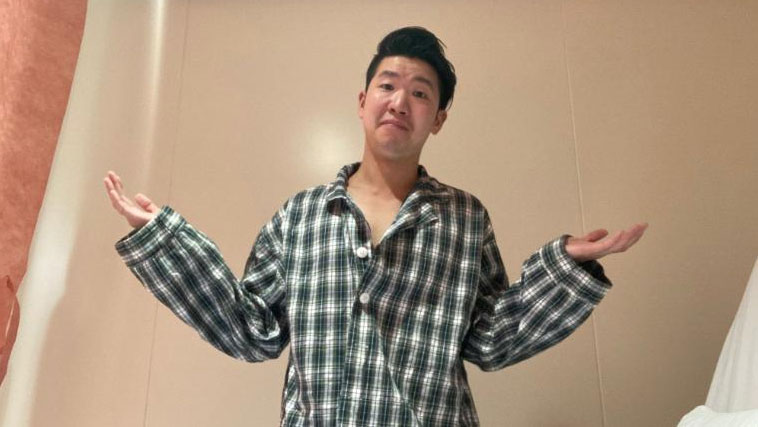
Darryl Chan has no idea when he will be allowed to leave the hospital after testing positive for COVID-19 in Hong Kong.

The city's priority is reopening borders with the mainland, not the rest of the world, Hong Kong authorities have said.

That means most non-residents are banned from entering, while almost all overseas arrivals must undergo 21 days of quarantine — even if they are fully vaccinated.

Hong Kong deems travellers from the United Kingdom as a high-risk for the Omicron variant, subject to its most stringent quarantine and testing measures — which include spending the first four days at a government camp.

On December 19, Mr Chan flew to Hong Kong from London to start a new job.

Mr Chan said he was fully vaccinated with a booster shot and had tested negative for COVID-19 several times before his flight. He was mentally prepared for quarantine, but not for what happened next, he said.
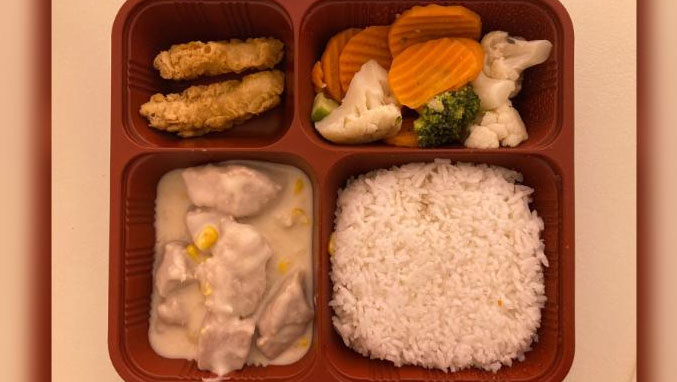
A Hong Kong hospital meal for those confined after testing positive for COVID-19.

On arrival in Hong Kong, Mr Chan took a mandatory COVID-19 test and waited hours at the airport. His result was determined "preliminary positive", meaning he was required to take another test. He was then moved to a cordoned-off area with a makeshift bed.

"It was definitely a bit of a shell shock," Mr Chan said.

"Having done so many tests in the week leading up to my flight, and all of them came back negative … I didn't ever think that I'll actually test positive on arrival."

Some 13 hours after his plane landed, Mr Chan was taken by ambulance to a nearby hospital for further testing.

He was later confirmed to have the Omicron variant, though he remained asymptomatic.

"(I had) that feeling of dread, where you sort of go, 'Oh, God, what's going to happen now?'" he said.

"I definitely felt quite trapped … you can't just say, 'I'm going to get back on a flight and go somewhere else.'

"You really are just trapped there, so that was quite a scary feeling."

It's not just travellers who face indefinite hospitalisation when they test positive for COVID-19 in Hong Kong.

In recent days, Hong Kong has identified a number of Omicron cases in a cluster linked to aircrew — breaking a nearly three-month streak of no locally transmitted COVID-19 infections. Those confirmed infected have also been sent to the hospital.

Meanwhile, hundreds of people, including more than 20 restaurant staff deemed close contacts of the positive cases, have been sent to the government camp for 21 days of isolation and extensive testing.

Any positive results would mean a transfer to hospital.
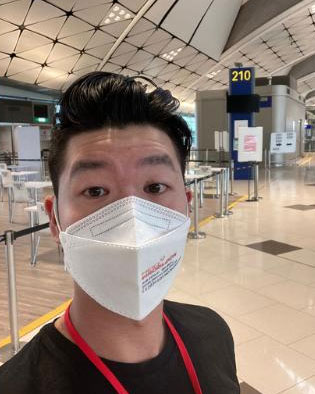
Traveller Darryl Chan waits for his coronavirus test results at Hong Kong airport on December 19, 2021.

Anyone who attended the same premises as the positive cases at roughly the same time in recent days has also been ordered to take a test, while several residential buildings linked to the cluster have been temporarily locked down for mass testing.

As fears of local Omicron transmission grow, Hong Kong leader Carrie Lam said Tuesday that resumption of normal travel between the city and mainland China will "have to wait for another while".

Just before the cluster emerged, Ms Lam reaffirmed Hong Kong's zero-COVID stance.

"Hong Kong has been taking very stringent measures to guard against importation of cases with a view to maintaining zero local infection," she said in a December 28 statement.

"In the face of the fierce onslaught of Omicron, we need to be even more vigilant."

Stuck in the hospital

According to Hong Kong authorities, the minimum isolation period for anyone who tests positive for COVID-19 — even if they are asymptomatic — is nearly a month.

They must stay in the hospital for at least 10 days and are not allowed to leave until they test negative twice in succession — however long it takes.

But even testing negative twice doesn't mean you can go home. After that, those under confinement orders are transferred to an isolation facility for a further 14 days.

Upon arriving at the hospital, Mr Chan was placed in an isolation ward with two other travellers who tested positive, also with Omicron.

He is confined to his room for 24 hours a day with no fresh air or outdoor exercise.

His day follows a routine set by the hospital. At 8am, he is woken by a jingle on the public address system and an announcement reminding him to take his own vitals.
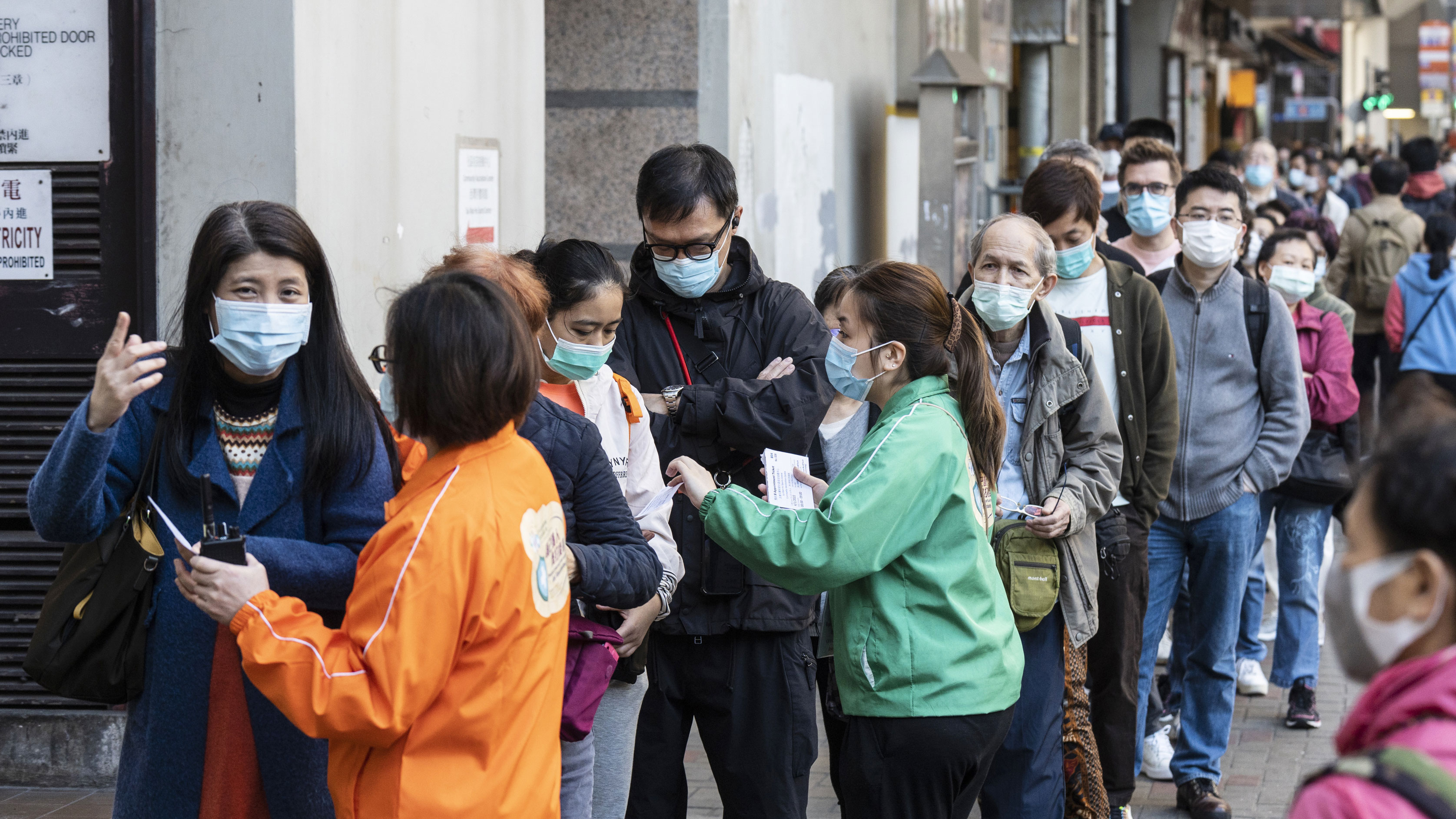
Members of the public wait in line outside a community vaccination centre in Hong Kong.

He receives meals provided by the hospital at fixed times. In the meantime, he spends his day connecting with family and friends on social media and watching Netflix.

"I'd say probably early or mid-afternoon were the hardest time of the day," he said.

"In the morning, you check your emails or social media. But by the time lunch rocks around, that's when you go, 'I don't really know what I'm going to do.'"

While he said his doctors have been professional, they are unable to tell him when he can be discharged.

"It's all dependent on when I stop testing positive, and then they start the final countdown from that point," he said.

Mental toll of isolation

Since the start of the pandemic, Hong Kong has confirmed more than 12,600 cases and 213 deaths, according to government figures — far fewer than many cities of comparative size elsewhere in the world.

But while its zero-COVID approach has shielded residents from rising hospitalisations, the city has struggled with vaccine hesitancy — despite free shots being available to residents over the age of three.

To date, under 70 per cent of Hong Kong's 7.5 million population has taken two full doses.

Uptake has been particularly low among the elderly, a group considered most at risk of hospitalisation and death from COVID-19.

Instead, Hong Kong has relied on limiting group gatherings, mandatory masks in public, tracking, tracing, testing and confining close contacts and suspected cases — plus its tough border and quarantine measures.

In a statement on December 29, the Hong Kong government reiterated its stringent measures are here to stay — including its own large-scale quarantine facility.

"Recently, the global epidemic situation has worsened considerably due to the Omicron variant," the statement said.

"The Government has to stay vigilant to prevent a fifth wave epidemic or outbreak in the community. After reviewing the situation holistically and prudently, the Government deems it necessary to reserve all rooms at the PBQC [Penny's Bay Quarantine Centre] for meeting the quarantine purpose."

Despite the city's success in keeping COVID-19 at bay, experts say long quarantine periods often come at a cost to the mental health of those confined.

"In general, there is increased sense of isolation, anxiety, and in some severe cases, even post-traumatic stress," said Dr Elisabeth Wong, a psychiatrist and clinical adviser to Hong Kong-based mental health charity, Mind HK.

However, there are tips to maintain good mental health, she added.

"There are some tricks you can do, like making sure you schedule your day quite clearly," Dr Wong said.

"So you have rest times and work times … and, as much as you can, incorporate some kind of exercise within the day."

Rather than seeing quarantine as a punishment, she said, people going through the experience may also view it as an act of altruism.

"You're doing something good for the society," she added.

But as his indefinite isolation period grows longer, Mr Chan said he is worried about his mental health.

"I'm trying to rationalise it, I think just going through the processes knowing that there are certain things you can and can't change … the only thing that I can change is how I approach it and what I do with my time," he said.

"The best part of it, I guess, is being able to see things in a different perspective," he added.

"(I am) trying to turn it into something useful, something interesting to hopefully one day look back on and remember that time when I sat in a hospital room for X number of days."
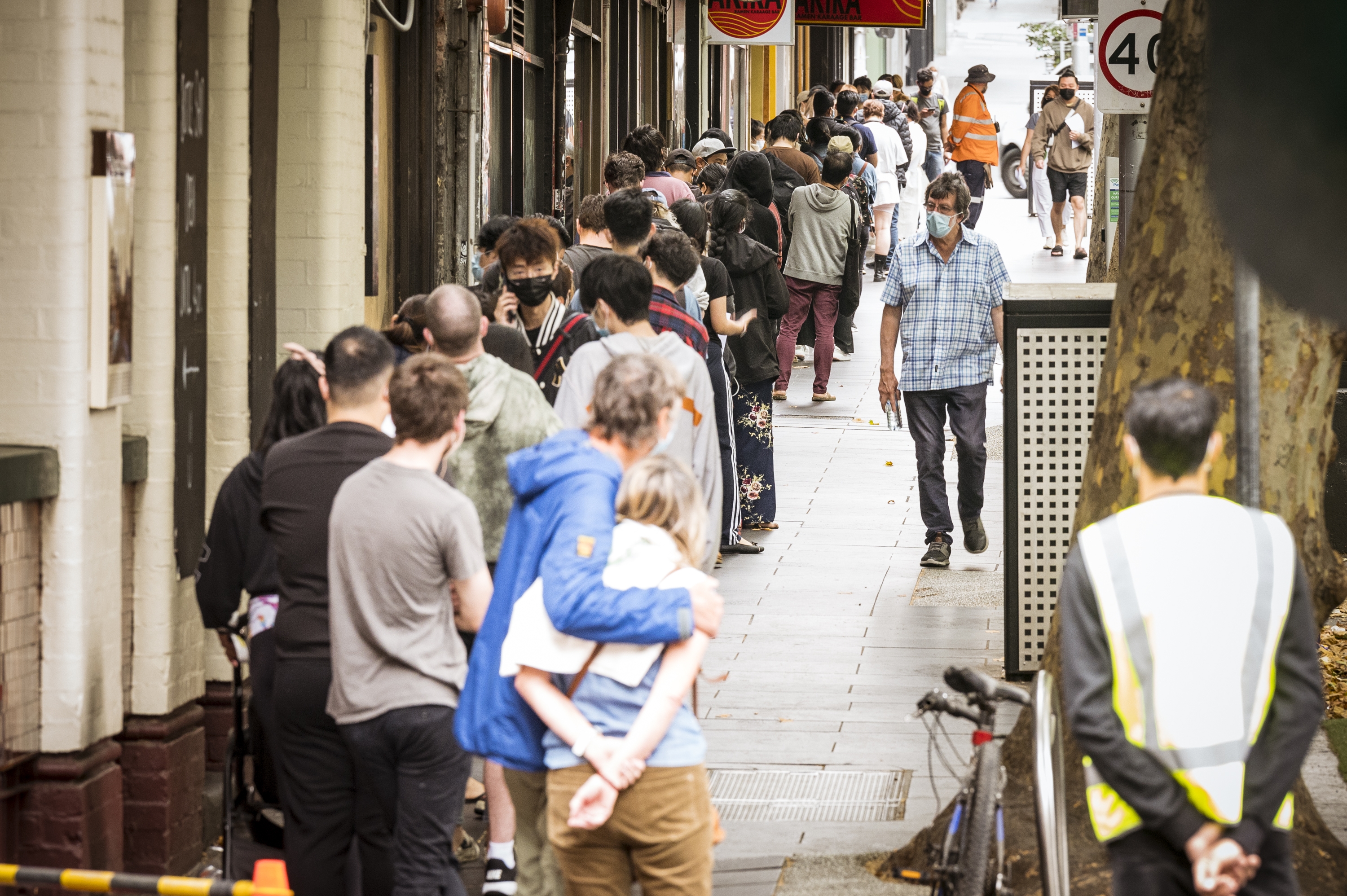
Density rules return as Victorian COVID-19 cases top 20,000

Density restrictions are set to return to indoor venues in Victoria after the state recorded 21,997 new COVID-19 cases today, as well as a further six deaths.

The return of restrictions comes as the government has announced financial support will be available to people who test positive on a rapid antigen test, following yesterday's announcement that elective surgery has been scaled back to help the healthcare system tackle COVID-19 patients.

Victorian Health Minister Martin Foley has announced a density limit of one person per two square metres will return to indoor entertainment and hospitality venues in Victoria.

READ MORE: Sydney suburbs with the most COVID cases revealed

https://twitter.com/VicGovDH/status/1478848832897097729

Indoor seated cinemas and theatres, where people are seated and masked, will be exempt from the limit.

"We think this is a sensible change, particularly in the face of the continued huge growth in transmission, particularly amongst young people," Mr Foley said.

"Yesterday's formal figures, 40 per cent of those cases where people in their 20s and every indication is it's overwhelmingly from hospitality and related environments."

Mr Foley said authorities were also strongly recommending businesses and their patrons avoid indoor dancefloors and opt for seated service.

Victorians are also being advised to work and study from home where possible.

Change to way Victoria tackles COVID-19 testing

Victoria Health Minister Martin Foley said about a third of Victorians getting a PCR test were testing positive to COVID-19.

Melbourne COVID coronavirus

"What is clear is that we are in a new phase of this pandemic, and a new phase of how we need to respond."

Mr Foley said rapid antigen tests had to be central to the new way of responding to ease pressure on the PCR testing system.

He said at least 700,000 of the 44 million rapid antigen tests ordered by the Victorian government would be arriving in the next day or so.

He said he would be signing new pandemic orders, which will come into effect at 11.59pm, that recognise people with a rapid antigen test as a "probable case".

"Essentially they will have precisely the same obligations and the same rights as someone, whether it be for clinical support, financial support, from both the state or the Commonwealth, a whole range of other opportunities to be part of that primary healthcare response to keep them safe as they work through their infectivity.

"Essentially this new category based on the rapid antigen test will be the same in the system as if you were diagnosed through a PCR test."

READ MORE: Expert labels Queensland quarantine policy a 'contradiction'

Hospitalisations of people with COVID-19 in Victoria have risen to 631.

There are 51 people in intensive care, with 22 on ventilators.

From today, category two and three elective surgeries will be halted in public and private hospitals in the state.

Emergency surgery, however, will still go ahead.

NSW today also recorded another high case tally of more than 34,000.

Victoria recorded 17,636 new COVID-19 cases yesterday, and a further 11 deaths.

Acting Premier Jacinta Allan thanked the almost 60,000 Victorians who had been tested for COVID-19 in the past day.

"We know that these are trying and difficult times to go out and get tested," she said.

Ms Allan announced parents will be able to book in young children to get a COVID-19 vaccination from 1pm on Wednesday, both online or via the phone hotline.

"From next week, children aged five to 11 become eligible for the COVID-19 vaccine," she said.

Royal Children's Hospital Chief of Medicine Associate Professor Tom Connell has said COVID-19 is not necessarily mild in children, as is commonly believed.

He urged parents to get their kids vaccinated.

"We all want what's best for our children," he said.

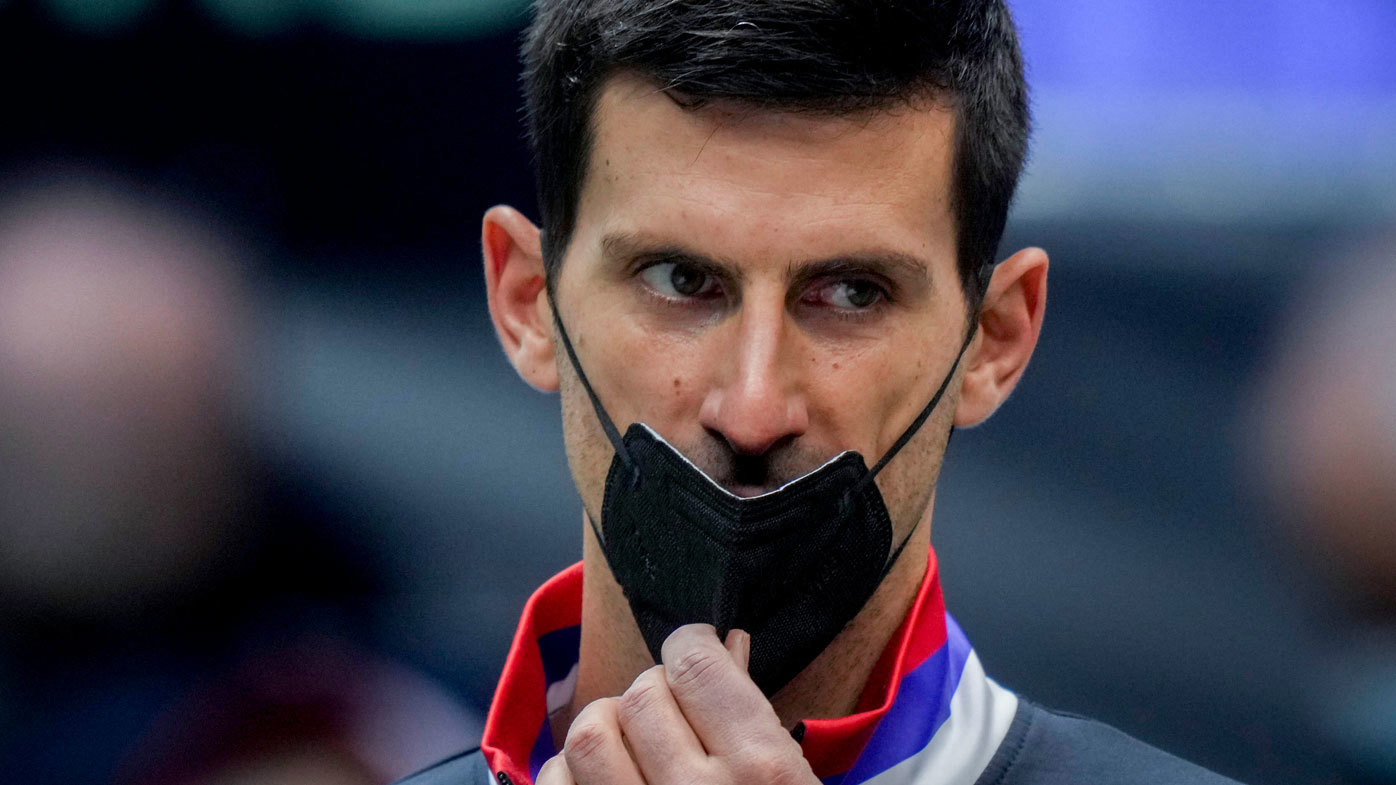
READ MORE: Djokovic caught in visa bungle on landing in Melbourne

'What a Djok': How world reacted to Djokovic visa cancellation

Australia's stunning last-minute cancellation of Novak Djokovic's visa quickly made world headlines this morning, with many stories reflecting on "a spiralling outcry" over the world number one's now rejected medical exemption to enter the country.

NBC in the US captured the general tone of stories, with the headline: "Tennis star Djokovic denied entry into Australia, visa cancelled amid vaccine exemption furore."

Headliners at The Washington Post went for "Novak Djokovic ordered to leave Australia despite receiving vaccination exemption to compete in Australian Open", while UK tabloid The Daily Express explained how "Novak Djokovic backed by 'whole of Serbia' as president blasts Australia for 'harassment.'"

LIVE UPDATES: Huge fines announced for rapid antigen test price gougers

Serbia's Novak Djokovic will be deported from Australia, unless a court overturns a decision to cancel his entry visa.

READ MORE: Djokovic detained at Melbourne airport, visa cancelled 

"What a Djok" a headline on British tabloid The Sun screamed, before detailing the Serb's impending deportation. Meanwhile, fellow tabloid The Daily Mirror reflected on a "nine-hour visa stand-off" at the airport.

"The chain of events represented a startling turnabout for Djokovic," The New York Times wrote, "who in a little more than 24 hours went from receiving special, last-minute permission to enter Australia, to boarding an intercontinental flight, to essentially being told by the prime minister of Australia that he was not welcome in the country".

The BBC tapped into the political element of the Djokovic story.

"Many Australians had previously accused the government of allowing the rich and famous to do as they please while ordinary people remained separated from sick and dying loved ones," it said.

READ MORE: Why are so many vaccinated people getting COVID-19 lately?

The Financial Times continued in a similar vein, writing: "Local media have dubbed Djokovic 'Novax' and made comparisons with the restrictions placed on the England and Australian cricket players competing in this summer's Ashes series in Australia."

ESPN said Djokovic's revelation on social media that he was heading to Australia had sparked debate and plenty of headlines, "with critics questioning what grounds he could have for the exemption and backers arguing he has a right to privacy and freedom of choice."

Daily Mail columnist Janet Street-Porter was cutting in her assessment of the situation.

Her latest thoughts on Djokovic's attempt to enter Australia was headlined: "Unless the Australian government wants to lose all respect from its long-suffering people it needs to show Novaxx the Covid diva the door."

Reflecting on rapid antigen test shortages and challenges to access PCR testing, Street-Porter said it was "no wonder long suffering Aussies are fed up to the back teeth", and then pointed out "a bunch of foreign celebs and film stars had managed to gain entry to Australia many months earlier- including Rita Ora, Matt Damon, Idris Elba, Zac Efron, Ed Sheeran, Tom Hanks and Julia Roberts".

READ MORE: Deadly brown snake leaves behind 'rare' gift for snake catcher

The 20-time grand slam champion from Serbia travelled to Melbourne after receiving a medical exemption, but was stopped at the airport by Australian Border Force agents.

USA Today said "Djokovic has become a flashpoint for criticism because of the perception that he was receiving special treatment", adding that "according to the ATP, 95 of the top 100 players in the rankings were vaccinated."

The Guardian said Djokovic is due to be flown out of Melbourne today "amid a spiralling outcry over a controversial 'medical exemption' agreed by the tournament's organisers."

The doctors solving Australia's most baffling medical mysteries

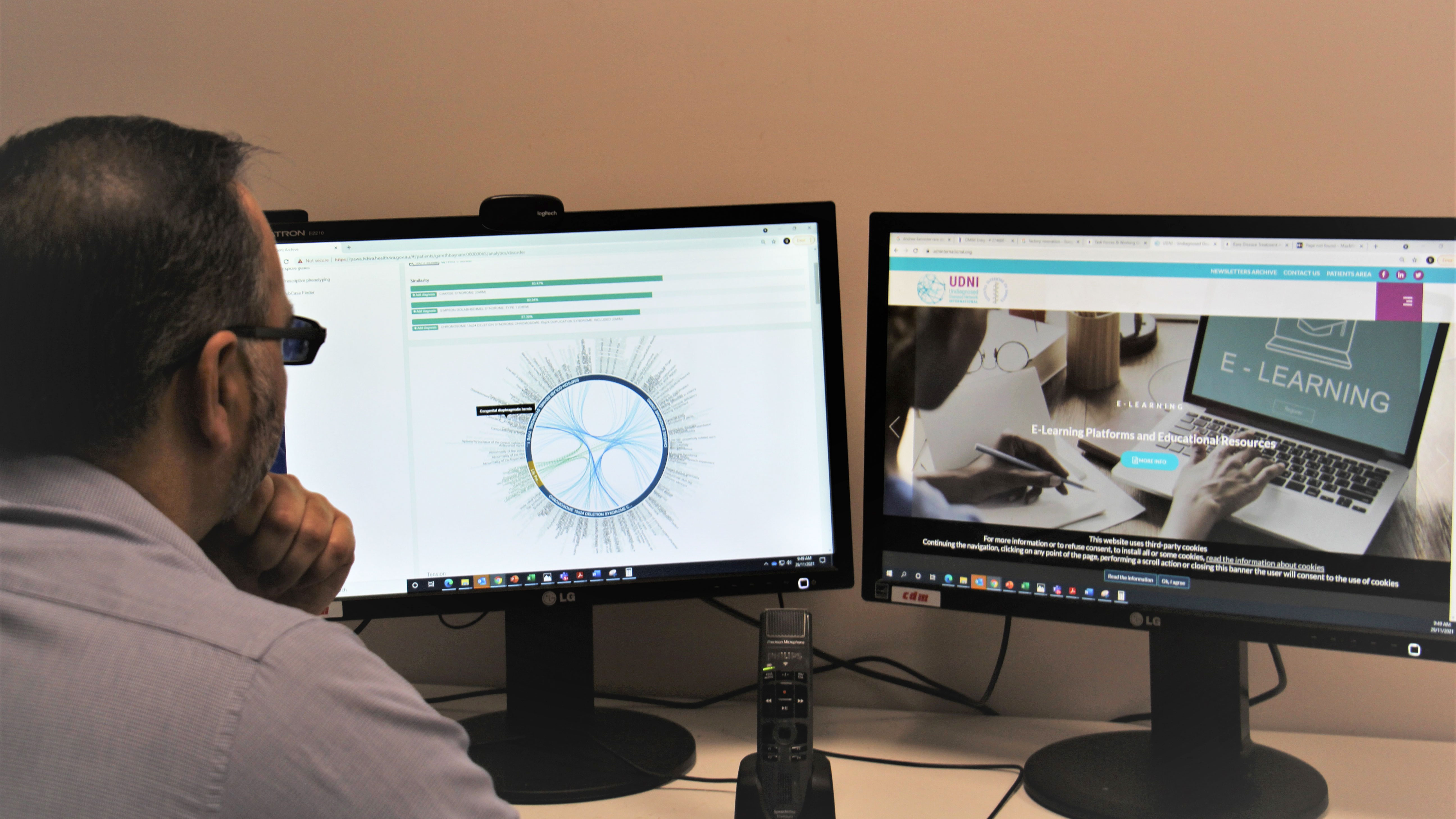
Despite what the name would suggest, rare diseases are not rare at all, in fact they are "extraordinarily common", clinical geneticist Dr Gareth Bayman says.

There are two million Australians living with a "rare disease", making the term a gigantic misnomer.

In Western Australia alone, there are 63,000 children with a rare disease, a number that would fill Optus Stadium to capacity.

But despite the large numbers of people with a rare disease, getting a diagnosis for these complex, elusive illnesses can often be devastatingly hard.

Children, who are disproportionately affected by rare diseases, can be bounced around from specialist to specialist for years with getting any answers.

This is where Dr Bayman, and the Undiagnosed Diseases Program he heads up at the King Edward Memorial Hospital, comes in.

For the past five years the program has been working to crack some of the state's most unsolvable medical mysteries.

READ MORE: Trisha becomes first Aussie diagnosed with rare disease

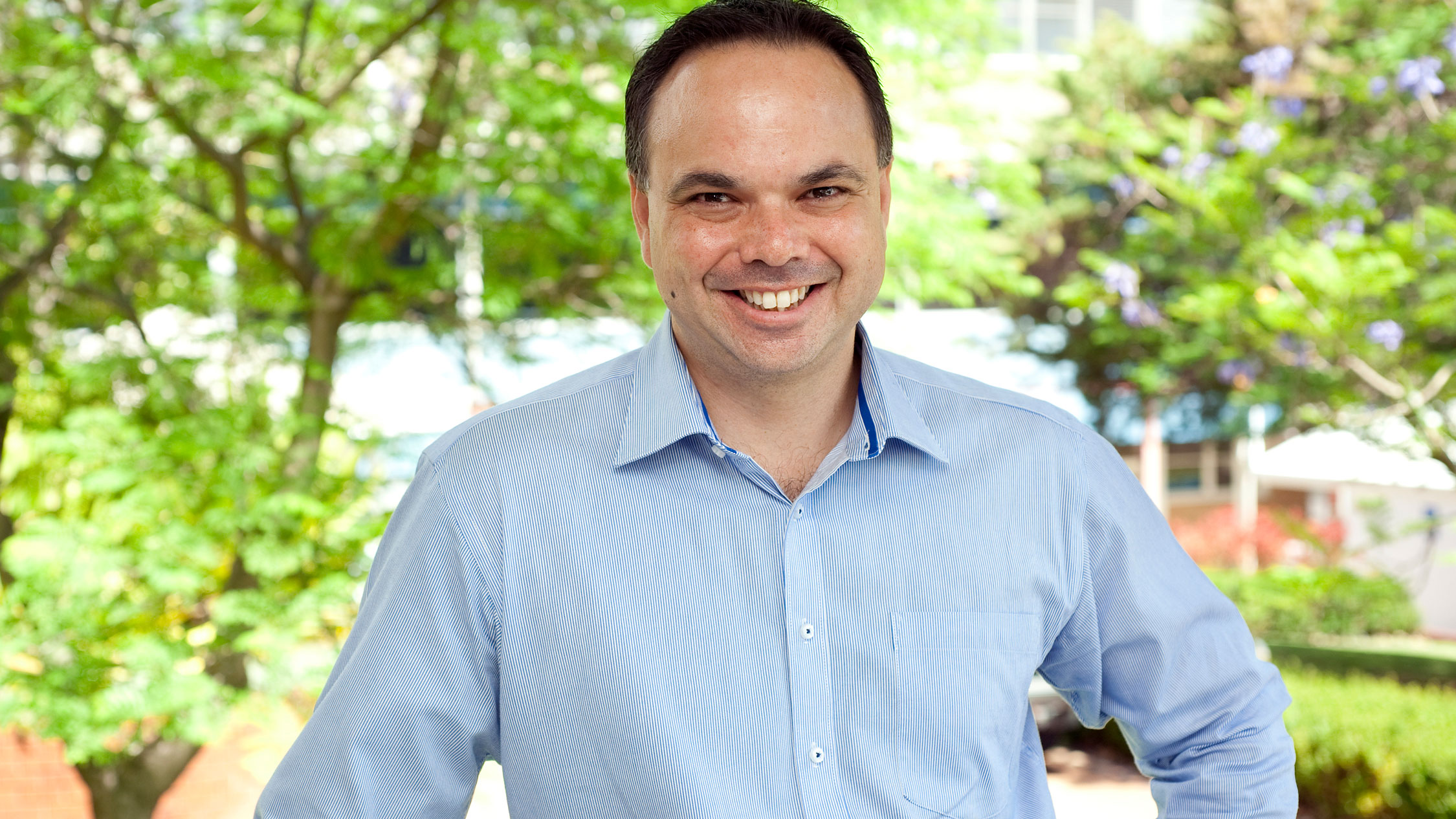
Clinical geneticist Dr Gareth Bayman is the director of Western Australia's Undiagnosed Diseases program.

The program focusses on children and adolescents transitioning to the adult hospital system, and often takes on the "hardest of the hard" cases yet to be cracked.

"From the start they've been the most challenging cases," Dr Bayman said.

"We have focussed on children who have often had the most torturous journeys and who were just sort of revolving around the hospital seeing lots of different specialists and still not having an answer."

When it began in 2016, the Western Australian program was the first of its kind in Australia. Now, there are undiagnosed diseases programs in NSW, Victoria and Tasmania.

Together, they form Australia's Undiagnosed Diseases Network.

There have been 60 patients who have participated in WA's Undiagnosed Diseases Program since 2016.

Together, its team of 40 specialists have managed to make a diagnosis for 55 per cent of the patients involved.

Although his team was always aiming to solve every case, Dr Bayman said the results had exceeded everyone's initial expectations.

"When we started, we thought we might get an answer for a quarter of the cases," he said.

"Because these are children that have seen lots of people and had lots of tests already. In a way you are dealing with the hardest of the hard."

For patients, having a diagnosis – a name for their illness – could be life changing, Dr Bayman said.

"I think there is enormous power in a diagnosis," he said.

"Often the most important things is removing isolation.

"If you don't have a name for your disease, how do you discuss it with your family, your friends in school? How do you connect to others in a similar situation?"

Having a diagnosis also opened up more treatment options and could help better guide medical care for a patient, he said.

New technology aids quest for answers

Over the years, new technologies had been added to the team's diagnostic arsenal, Dr Bayman said.

"When we first started doing things, we had genome sequencing, and since then we've added epigenetic testing.

The Undiagnosed Diseases Program brings together a team of 40 specialists from multiple hospitals in WA.

"On top of that, we now have access to further metabolic studies and things like proteomics, so it's a whole range of new technologies that we really focus down to each individual child and their families.

"I guess the bottom line is, we're blending the latest technologies together to get an answer.

"I think that's really exciting because it's sort of cutting-edge science meets leading edge medicine."

International collaboration

The Western Australia Undiagnosed Diseases Program also works closely with an international network of 100 undiagnosed diseases centres scattered across the globe.

In one case, Dr Bayman's team worked with their counterparts in Japan to help solve the case of an Australian girl with an extremely rare illness.

The collaboration led to a new process being developed which allows data to be shared while preserving patient confidentiality. The process is now used in many countries.

"Often, necessity is the mother of invention," Dr Bayman said.

"When you're dealing with really severe conditions, you have to find ways and do things differently.

"You end up creating solutions that can be used far outside of the program itself."

The same could be said for the huge potential medical breakthroughs in rare diseases have to help the rest of the population, he added.

"Some doctors call rare diseases 'fundamental diseases'. The reason they do that is because recurrently we make a discovery in rare diseases that helps everybody else.

"They are so fundamental to the understanding of medicine and how we diagnose, treat and cure diseases."

Contact reporter Emily McPherson at em********@******om.au.