Fewer than 20 abandoned vehicles remained on Interstate 95 in eastern Virginia in the US on Tuesday evening local time after a severe winter storm left many motorists stranded for hours overnight on Monday.
"There are no people stranded," the Virginia Department of Transportation office in Fredericksburg tweeted at 5.15pm.
After the remaining cars and trucks are towed away, the department's plough trains will remove snow and ice from the travel lanes.
LIVE UPDATES: Alarming spike as calls grow for free RAT tests
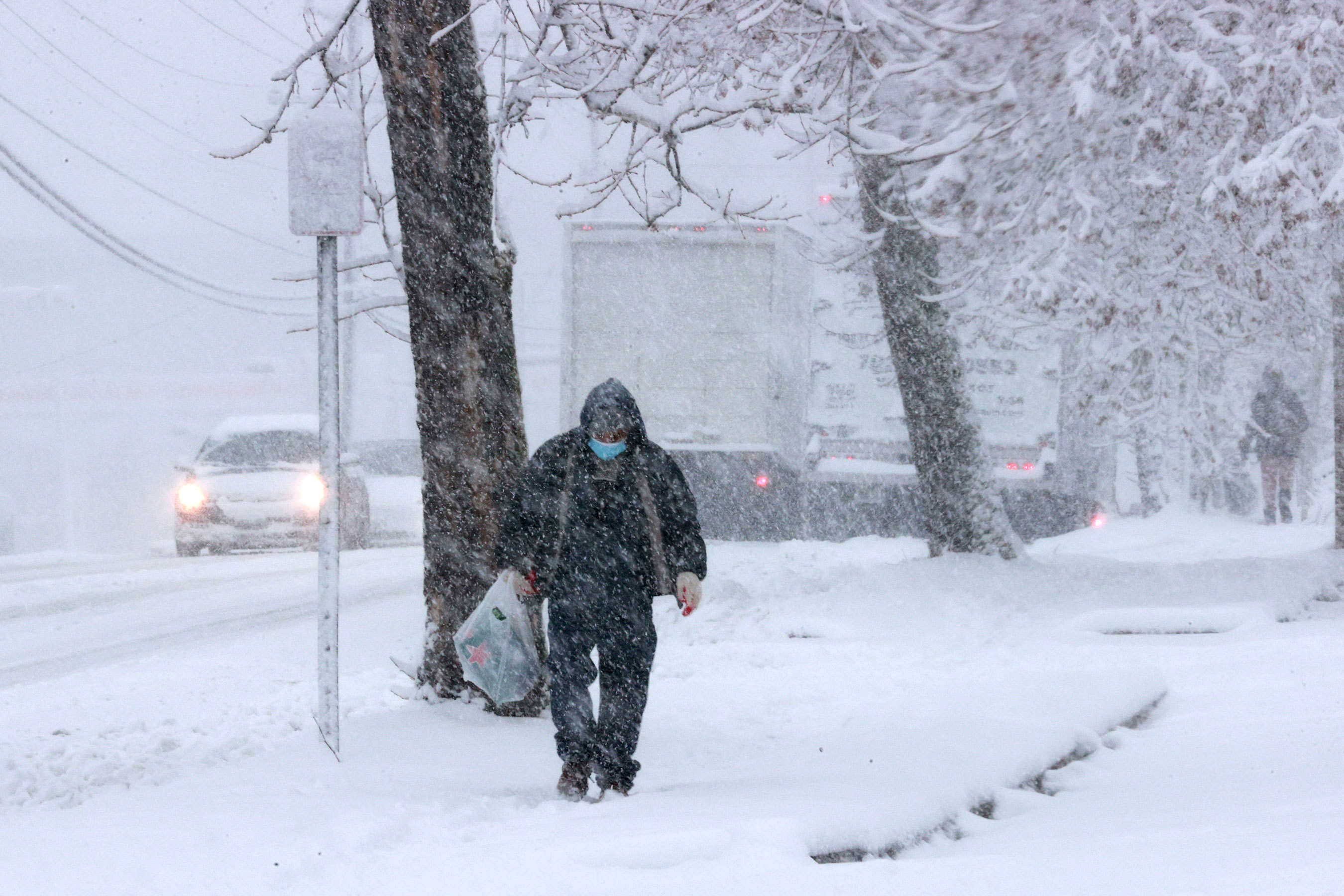
For some drivers, the ordeal began on Monday and lasted more than a dozen hours.
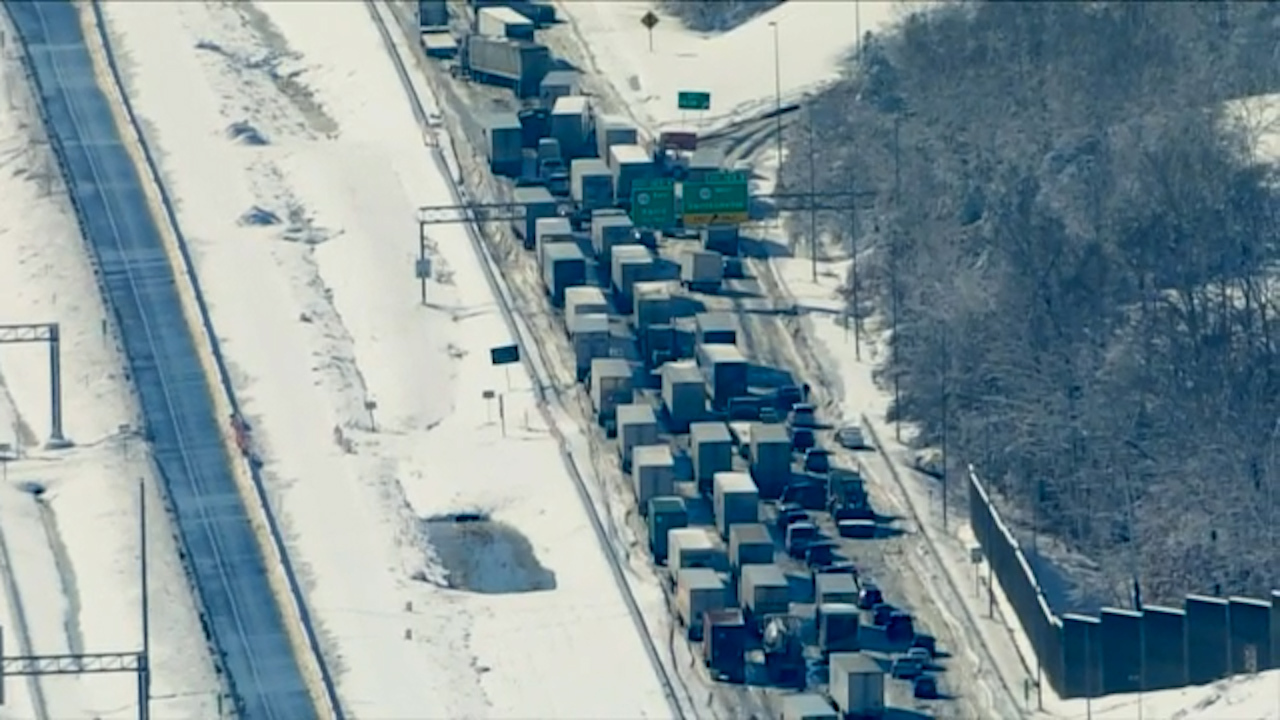
Motorists were stuck on portions of a 50-mile (80km) stretch of I-95 in the Fredericksburg area, between Richmond and Washington, DC, partly because of disabled trucks blocking the way in snowy and icy conditions, the department said.
The interstate, a major East Coast artery, should be able to reopen in time for Wednesday morning's rush hour, said Marcie Parker, a district engineer with the state transportation department.
Drivers described turning their engines on for a time to heat up, turning them off to conserve fuel, and sharing food and supplies with one another as crews tried to clear trucks blocking the way after they were unable to continue in ice and snow.
Jim DeFede, a journalist who was driving home to Miami after a holiday visit with family in New York, told CNN's Jake Tapper that once he stopped, he was stuck for 18 hours.
He said he watched others who got out of their cars slip and slide on the ice and he stayed put thinking there was no way emergency responders would get there if he fell and was hurt.
READ MORE: When will Australia reach the peak of Omicron cases?
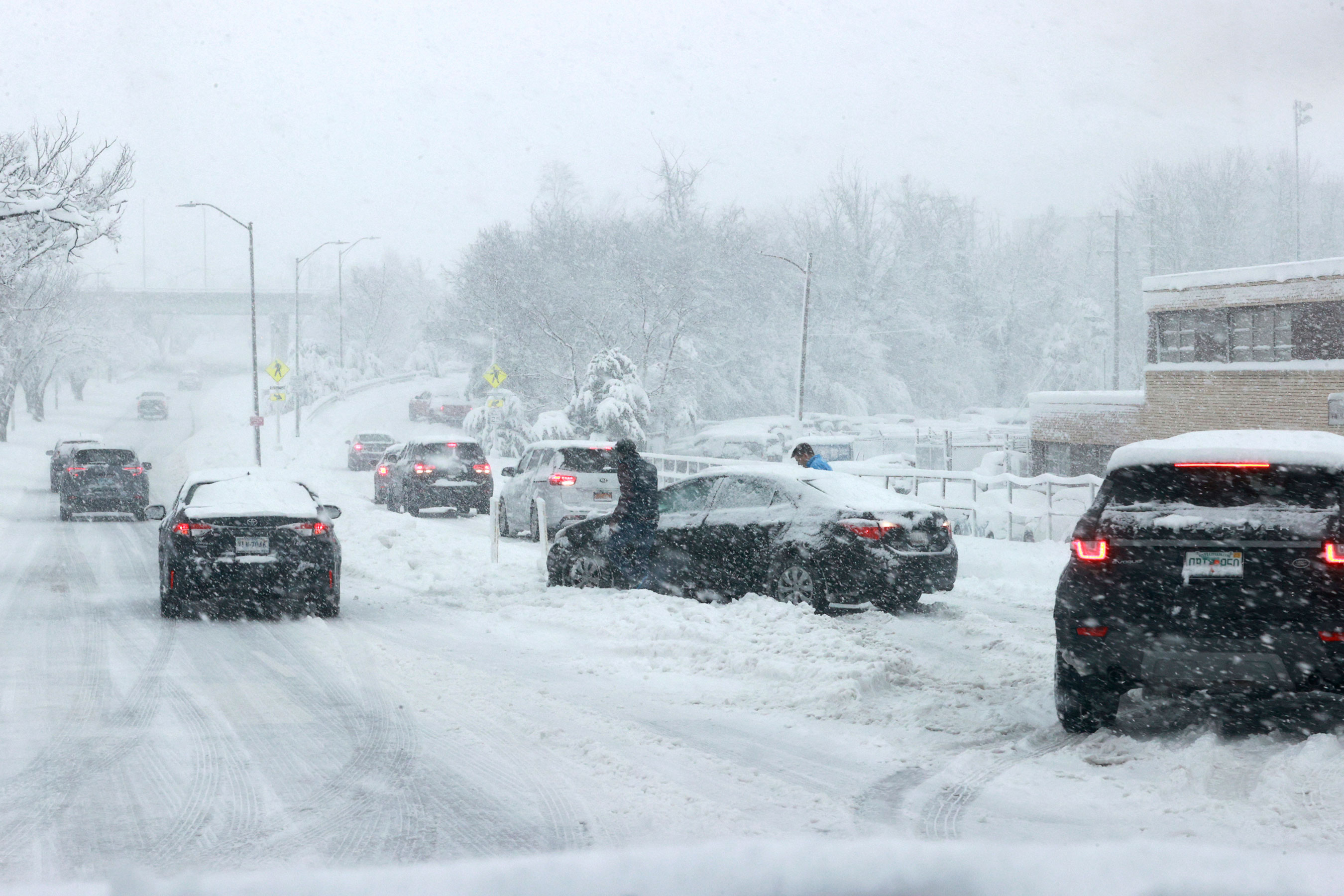
He said he had heard reports there were no deaths or injuries.
"That's great. But that's just — that's just dumb luck at this point," he said.
"This could have been a lot more serious."
He said one trucker was handing out bottles of water and one bread delivery truck opened its doors and people handed out loaves.
Mr DeFede finally got moving but was sent north, in the direction he had come from until, after two hours, he got off the interstate and found a place to stay.
By 11am Tuesday, Susan Phalen was able to finally start driving her car again on northbound I-95 after being stuck just south of Stafford for nearly 15 hours.
READ MORE: Food shortage in China's locked-down city of 13m
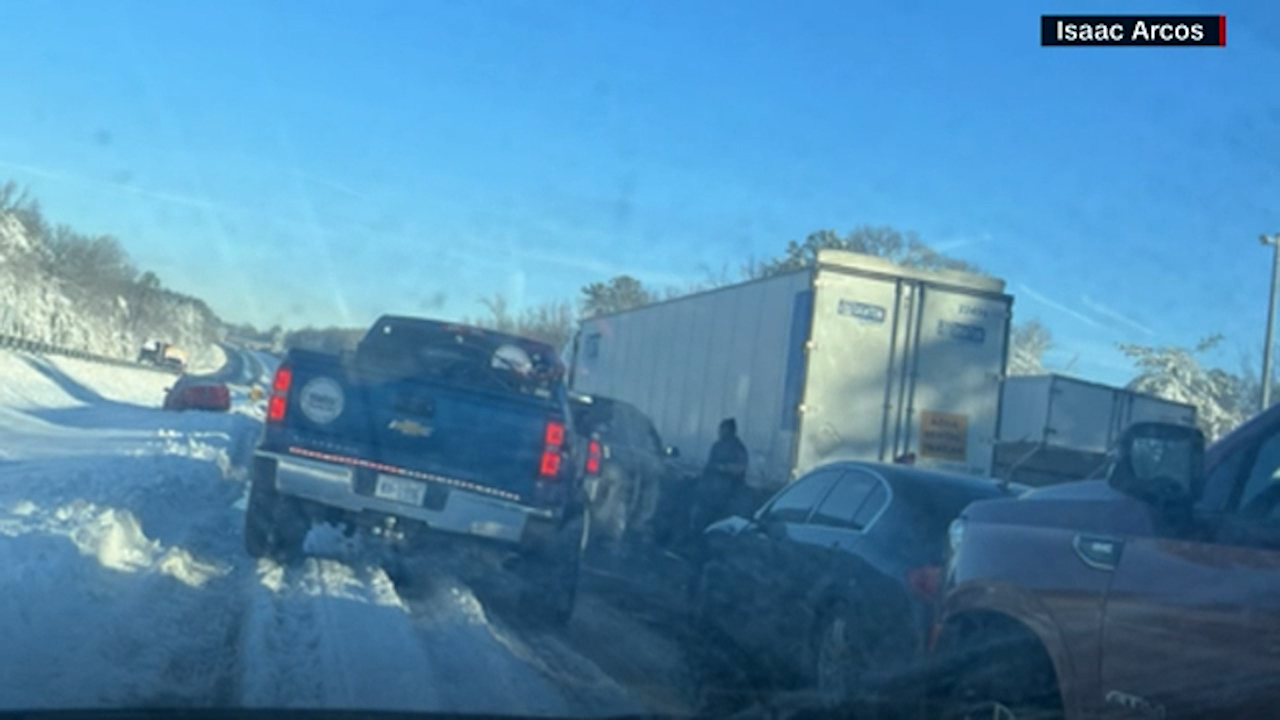
"I could have walked home faster than this, pretty much," Ms Phalen told CNN by phone.
But the southbound traffic she was passing still was stuck – "It's semi truck after semi truck after semi truck … not even rolling an inch," she said.
Among those stranded in the area was US Senator and former vice presidential candidate Tim Kaine, who said he was still stuck in traffic at 8.30am Tuesday — 19 hours after starting his drive.
The Virginia Democrat did not specify what road he was on at the time, but a second tweet indicated that at least part of the time — for hours — he was stopped on I-95. A family that had departed Florida was walking outside "in the middle of the night handing out oranges" to him and other trapped motorists, he wrote.
"I started my normal two-hour drive to DC at 1pm yesterday. Nineteen hours later, I'm still not near the Capitol," Senator Kaine tweeted, posting a picture from behind a windshield, showing three trucks ahead.
Senator Kaine eventually reached the US Capitol, telling CNN: "You have to figure out the strategy, and it's like, turn on the heater full blast, heat the car up, turn it off and then try to catch some sleep. In about 20 or 30 minutes it gets so cold in the car, then you have to do it again."
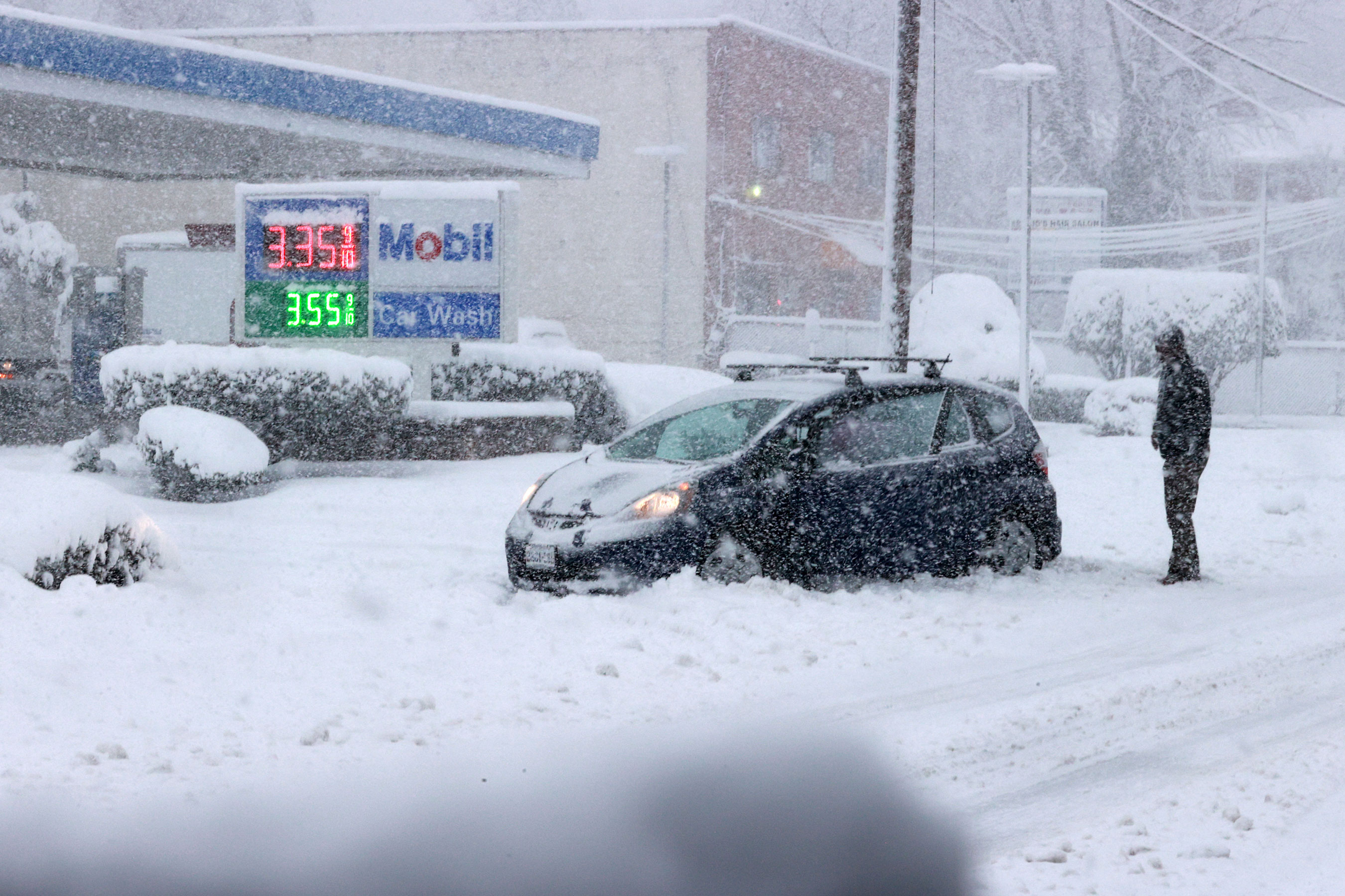
Motorists expressed frustration on social media as they sat in vehicles on I-95, unable to move and worried about below-freezing overnight and morning temperatures after a storm that dropped more than a foot of snow in the Fredericksburg area and left more than 400,000 customers in the mid-Atlantic and Southeast without power.
Also trapped on I-95 overnight was Jennifer Travis, who with her husband and 12-year-old daughter were driving a rental car back to their Virginia home from Florida — because their return flight had been cancelled twice.
They were stuck on I-95 for hours early Tuesday — with enough fuel for heat, but with no water or food. By 10am, the family had been able to take an exit — but now was driving a road that hadn't been ploughed.
Many secondary roads in the region were blocked by downed trees or wintry conditions, authorities said, so even those able to get off I-95 have faced difficult travels.
"Trees are down, cars are just everywhere. … It's treacherous," Ms Travis told CNN by phone.
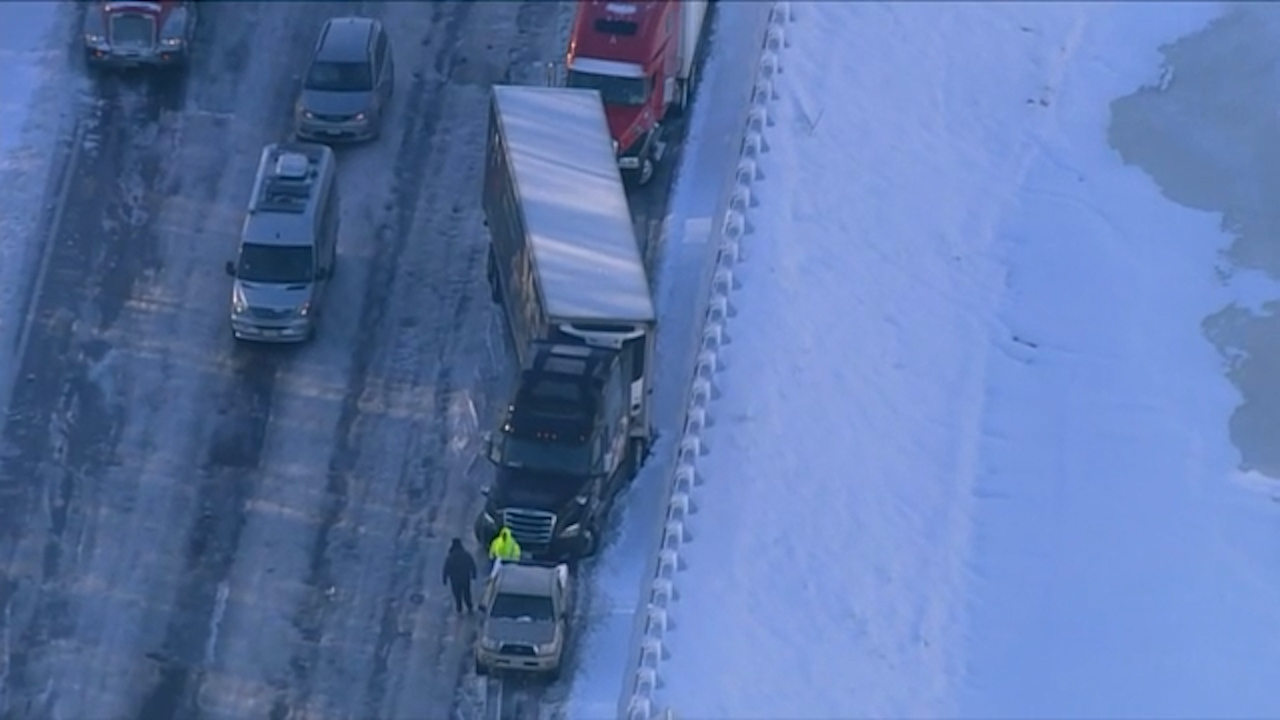
Aerial video from CNN affiliate WJLA showed numerous vehicles stationary on four lanes of I-95 in Caroline County, south of Fredericksburg. A few people, including children, were standing outside cars. One man was walking his dog on a leash.
Ms Phalen — who had been stuck north of Fredericksburg — said she left her Fredericksburg home around 8pm Monday for a trip to Alexandria, which she'd expected to last just an hour.
She left Fredericksburg, she said, because her home lost power, and she also lost cell phone service there.
"Because I didn't have cell phone or internet connection at the house in Fredericksburg, I wasn't able to see this nightmare I was walking into until I was smack dab in the middle of it, and then it was too late," Ms Phalen said.
She said she started with a full tank of gas and was able to keep her car running for heat. Temperatures in the area dipped overnight.
Authorities closed that 50-mile stretch — between exit 104 near Ruther Glen and exit 152 near Dumfries — so workers could remove stopped trucks and treat the road for snow and icing, VDOT said.
More than a foot of snow
The Fredericksburg area received at least 14 inches of snow from the storm, according to the National Weather Service in the Baltimore/Washington area.
"We know people have been stopped for extraordinary time periods leading up to these closure areas, but we are clearing trucks one by one to break through this blockage, and we will get to each driver and restore traffic flow," Kelly Hannon, spokesperson for the VDOT Fredericksburg District, told CNN early Tuesday.
A trucker, Jean-Carlo Gachet, was stuck for hours on I-95 near Dale City from about 1am Tuesday, he said.
He had food, water and a microwave, so he shared a heated breakfast with a man and his mother in a vehicle in front of him, he said.
"Easily the longest traffic jam I've been in," said Mr Gachet, who said he'd left Rhode Island around 5pm Monday and was trying to get to Georgia.

CNN en Español correspondent Gustavo Valdés was among those stuck in traffic. He said when he stopped for fuel around 6pm, his GPS said he was two hours from Washington. By 1am Tuesday, he still hadn't arrived.
Valdés said he exited the highway near Quantico, Virginia, but the side roads were also jammed. Route 1A, which runs parallel to I-95 in the area, was blocked by jackknifed trucks, which were preventing snow ploughs from getting through.
Valdés said he considered pulling to the side of the road to spend the night in his car because he couldn't find an available hotel room, but traffic had started moving again.
Some four-wheel-drive vehicles helped create new paths through the snow for other vehicles to follow, he said.
While traffic was snarled on the interstate, drivers were also urged to stay off local roadways as dozens of traffic signals were out of service due to power outages, officials said.
More than 270,000 customers were in the dark Tuesday afternoon from Georgia to Maryland, with nearly 235,000 outages reported in Virginia alone, according to PowerOutage.US.
Federal offices in Washington open with delay
Further north on I-95, federal government offices in Washington, DC, opened with a three-hour delay on Tuesday after being shuttered on Monday due to the weather. The district recorded 8.5 inches (21.6cm) of snow Monday, the heaviest one-day snow total since January 2016, CNN meteorologist Brandon Miller said. Capitol Heights, Maryland, recorded 11.5 inches (25.2cm) of snow and Baltimore/Washington International Airport reported 6.7 inches (17cm).
It could take several weeks for all that snow to melt, CNN meteorologist Pedram Javaheri said, explaining that the white layer of snow cover reflects sunlight, essentially acting as a coolant that prevents the ground surface from warming enough to melt it.
On average, it takes about three days of temperatures above 50F (10C) for about two to four inches (5-10cm) of snow to melt, Javaheri said, and the Washington area is forecast to stay below that mark through at least the end of the week.
Three killed when SUV collided with snow plough
Three deaths were reported in Maryland after an SUV with four occupants collided with a snow plough, according to Shiera Goff, spokesperson for the Montgomery County Police Department. Two women and one man were pronounced dead at the scene, Ms Goff said, and a fourth victim, a man, was taken to an area hospital where he is in critical condition.
The investigation into the cause of the collision is ongoing, Ms Goff said.
In the Southeast, two children were killed by falling trees Monday morning, officials said.
In Georgia, a five-year-old boy in the Atlanta area died when a tree fell on his home during gusting winds, DeKalb County Fire Rescue spokesman Captain Jaeson Daniels told CNN affiliate WSB. The boy's mother was safely rescued, the outlet reported.
The ground in the area was saturated by recent rainfall, Captain Daniels told WSB. The weather service in Atlanta warned of possible wind gusts from 40 to 50 mph (64-80km/hr) Monday morning.
And in Tennessee, a seven-year-old girl died early on Monday when a tree fell on her home in the Knoxville area, the Blount County Sheriff's Office told CNN affiliate WVLT.
"There are trees down all over the county, particularly here in Townsend, because we are right at the foothills of the Great Smoky National Park," BCSO Public Information Officer Marian O'Briant told WVLT.
"There are a lot of trees; it was kind of a wet heavy snow, so trees are still falling right now."
CNN has reached out to DeKalb County Fire Rescue and the Blount County Sheriff's Office.