Tag Archives: oceania

Stark warning from man whose skin cancer spread to brain

Almost 90,000 fewer skin lesions have been removed across Australia during the course of the pandemic, prompting fears many people with cancer are going undiagnosed.

The number of skin lesions removed, for both suspected and confirmed cancers, has dropped dramatically in all Australian states and territories – except for ACT and Tasmania.

From January to September 2021, about 30,000 fewer skin lesions were removed across Australia compared to the same period in 2019, Medicare data provided by Pathology Awareness Australia to 9news.com.au shows.

READ MORE: Alcohol can cause skin to burn faster, may increase melanoma risk

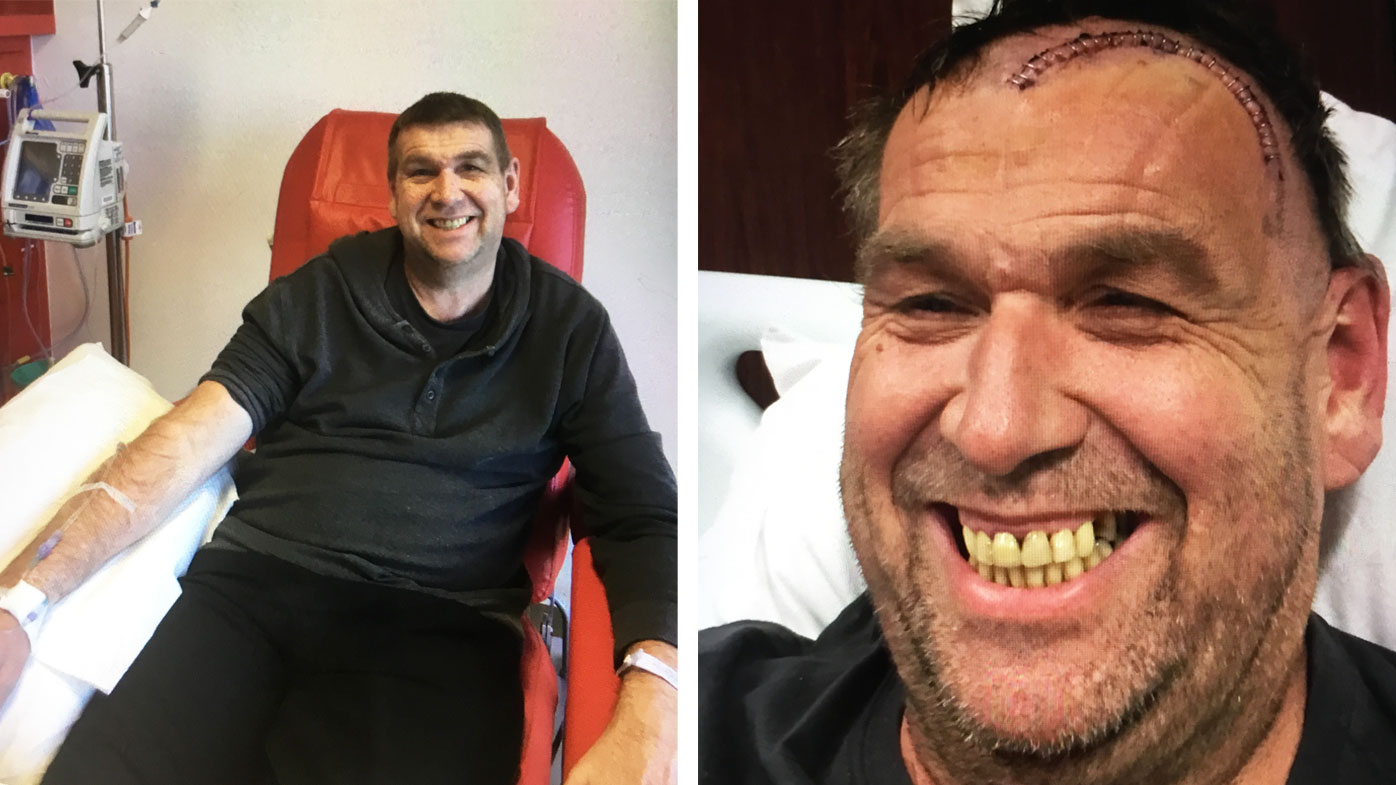
Steve Solomon pictured before and after his initial brain surgery to remove a tennis-ball sized tumour.

During the same months in 2020, there were 59,000 fewer skin lesions removed.

The most affected place was the Northern Territory with removal of lesions down seven per cent in 2020, and 17 per cent in 2021.

New South Wales had seven per cent fewer lesions excised in 2020 and six per cent fewer in 2021.

Excisions in the most locked down state, Victoria, were down 10 per cent in 2020, but started to catch up in 2021, being one per cent over 2019 numbers.

South Australia also had fewer lesions removed; eight per cent fewer in 2020 and three per cent fewer in 2021.

Pathologists say the figures point to a much larger number of skin checks being missed, given many check-ups don't lead to the removal of a lesion.

Brisbane histiopathologist Nick Musgrave said the statistics were a big concern.

"The data is unequivocal. It's a real concern that there have been fewer skin samples referred for pathology testing as a result of the pandemic," Dr Musgrove said.

"Delayed diagnosis could see patients requiring more invasive treatment or having serious complications including spread of the disease.

"It's a mistake to think of skin cancers as being fairly innocuous."

'There was a tennis ball-sized melanoma'

Steve Solomon knows all to well how dangerous skin cancers are after being diagnosed with terminal melanoma in 2016.

The 61-year-old from Melbourne has beaten the odds to survive, but not before having five brain surgeries to remove cancerous growths.

Mr Solomon's skin cancer journey started at the age of 40 when his wife noticed a lump on his scalp in 2000.

It turned out to be a melanoma, giving the father-of-three a shock.

The skin cancer was removed successfully and Mr Solomon kept up with regular skin cancer checks.

There was no sign of anything untoward for the next 16 years.

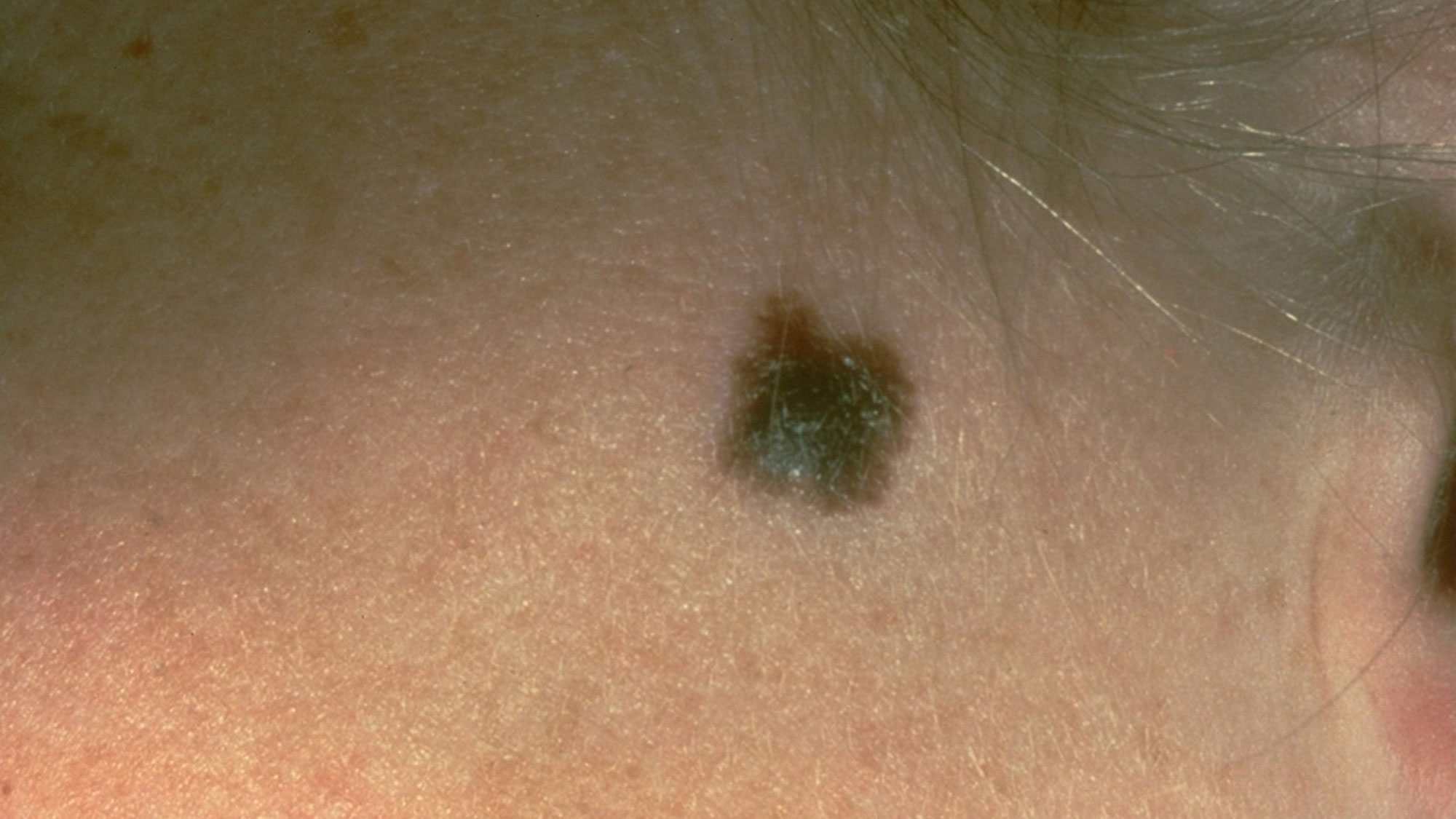
This photo, provided by the American Academy of Dermatology, shows a typical presentation of a suspicious mole that eventually was diagnosed as melanoma.

Then, in 2016, Mr Solomon said his wife became concerned something was wrong.

"My wife noticed that I was doing things out of the ordinary," Mr Solomon said.

READ MORE: How the COVID-19 pandemic has impacted cancer diagnosis, treatment in Australia

"One time, I went down to the bank to and came home without getting any money out, I had completely forgotten what I had gone for," Mr Solomon said.

Mr Solomon's wife became so concerned about his behaviour that she took him to the emergency department at their local hospital.

"They did some scans which showed there was a tennis ball-sized melanoma in my brain and one the same size in my lung," he said.

"I was told that I had stage-four metastatic melanoma and to get my affairs in order.

"I was put in an ambulance and had brain surgery the next morning."

Mr Solomon has been undergoing immunotherapy treatment and, for the past two years, no cancerous growths have appeared in his brain.

The medication is also keeping the melanoma in Mr Solomon's lung from growing.

Mr Solomon said it was important people did not put off getting regular skin cancer checks.

"The quicker doctors catch it, the quicker they can do something about it," he said.

"These days, they have mole mapping where they can pick up straight away if anything changes shape or colour and it's all pretty painless."

While science had come up with many incredible advancements that helped save his life, missing a skin cancer check-up could still mean the difference between life and death, he said.

"If you get there too late, it doesn't matter what (treatments) they have."

Contact reporter Emily McPherson at em********@******om.au.

Perfectly preserved baby dinosaur discovered curled up inside its egg

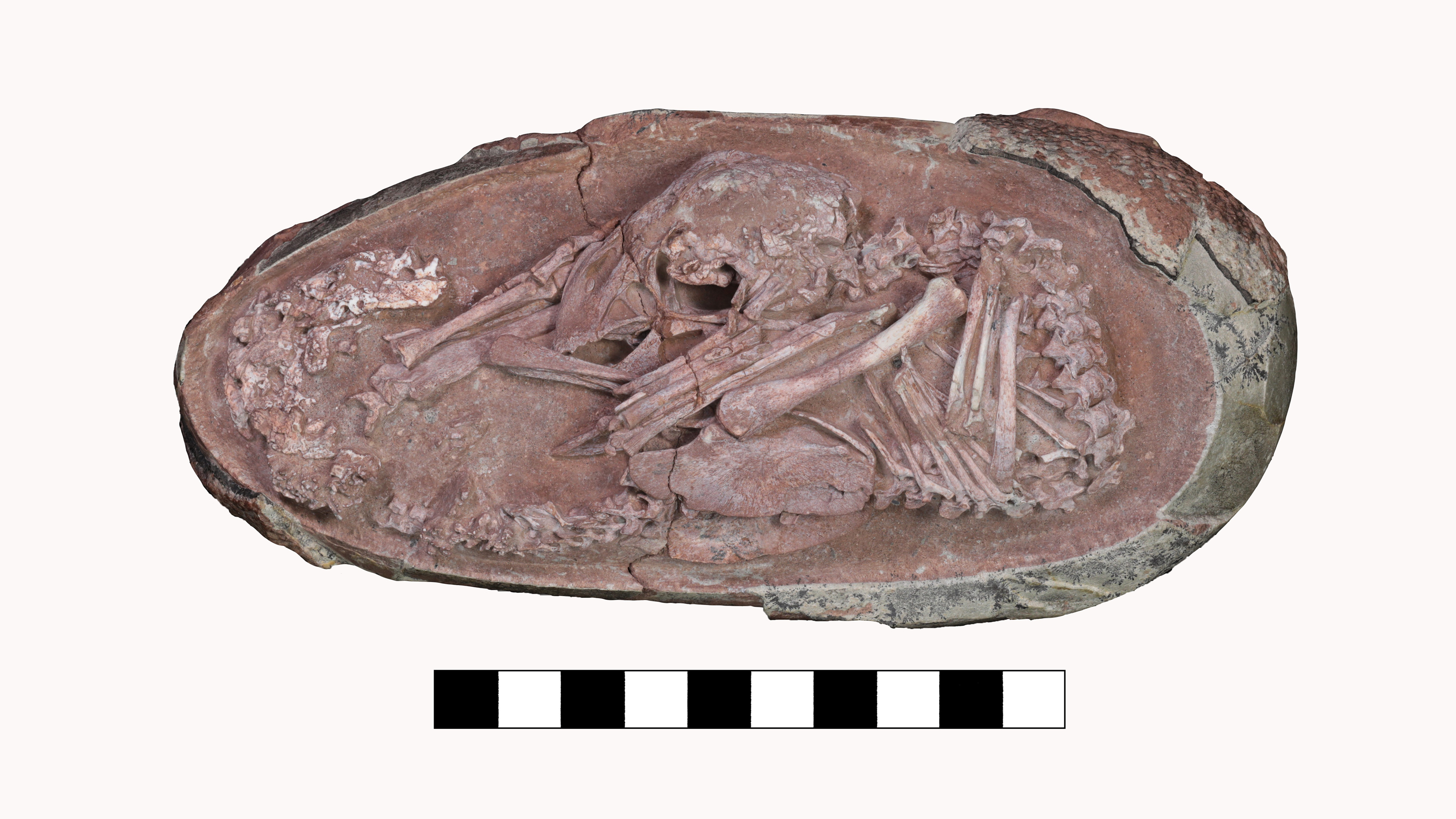
An unprecedented fossil of a baby dinosaur curled up perfectly inside its egg is shedding more light on the links between dinosaurs and birds.

The 70-million-year-old fossil preserves the embryonic skeleton of an oviraptorid dinosaur, which has been nicknamed Baby Yingliang after the name of the Chinese museum which houses the fossil.

Baby dinosaur bones are small and fragile and are only very rarely preserved as fossils, making this a very lucky find, said Darla Zelenitsky, an associate professor in the department of geoscience at the University of Calgary in Canada.

READ MORE: NSW COVID-19 cases surge to record numbers

Embryonic dinosaur bones are small and fragile and are only very rarely preserved as fossils making this a very rare find.

"It is an amazing specimen … I have been working on dinosaur eggs for 25 years and have yet to see anything like it," said Ms Zelenitsky, a co-author of the research that published in the journal iScience on Tuesday.

"Up until now, little has been known of what was going on inside a dinosaur's egg prior to hatching, as there are so few embryonic skeletons, particularly those that are complete and preserved in a life pose," she said in an email.

The egg is around 17 centimetres long and the dinosaur was estimated to be 27 centimetres long from head to tail. The researchers believe as an adult, had it lived, it would have been about two to three meters long.

READ MORE: Vague text message leads to rescue of abducted US teen

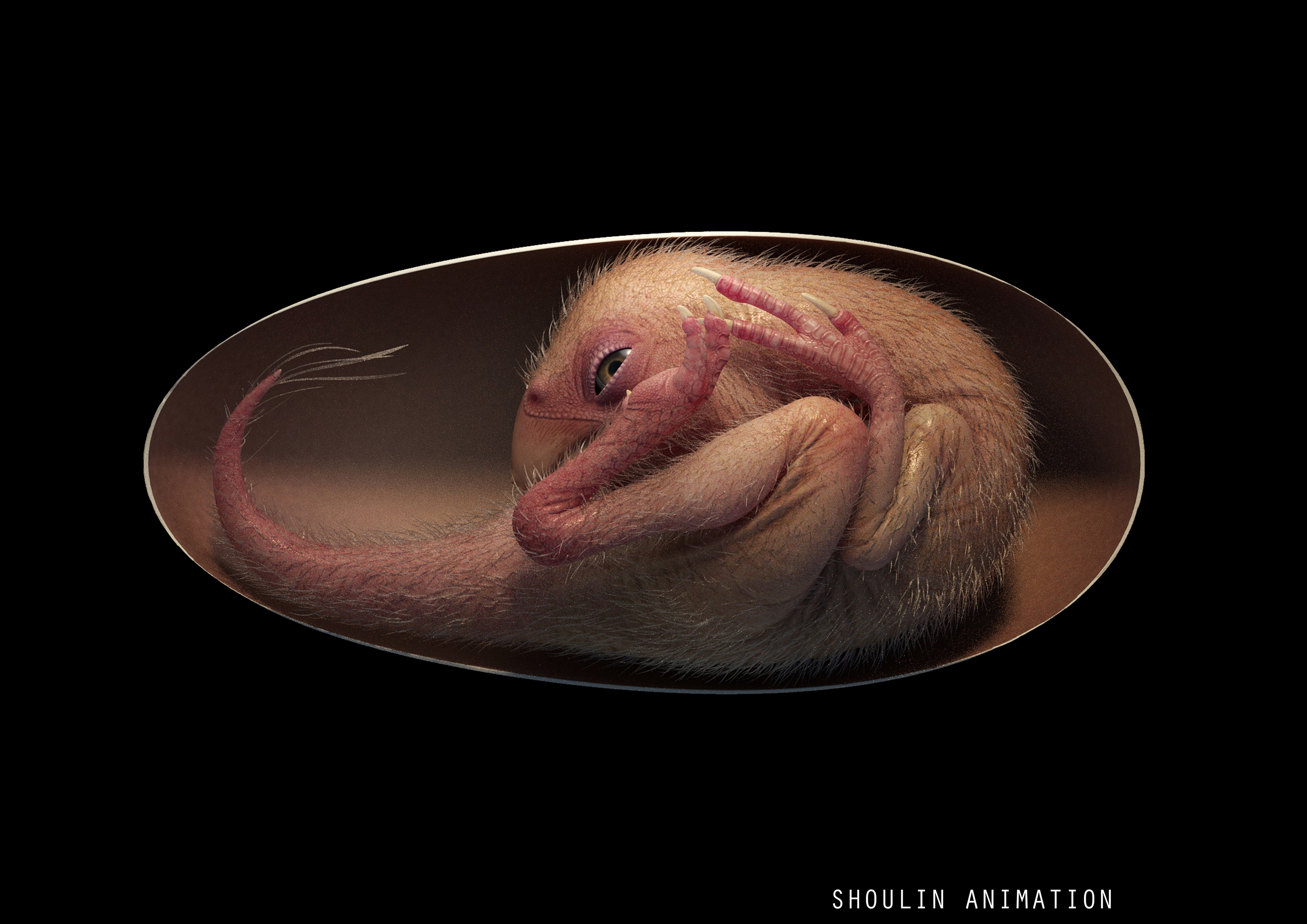
A reconstruction of a soon-to-hatch baby dinosaur based on the fossil.

The researchers from China, the UK and Canada studied the positions of Baby Yingliang and other previously found oviraptorid embryos. They concluded that the dinosaurs were moving and changing poses before hatching in a way similar to baby birds.

In modern birds, such movements are associated with a behaviour called tucking, which is controlled by the central nervous system and is critical for hatching success.

"Most known non-avian dinosaur embryos are incomplete with skeletons disarticulated (bones separated at the joints)," said Waisum Ma, the lead author of the study and a researcher at the University of Birmingham, UK, in a statement.

"We were surprised to see this embryo beautifully preserved inside a dinosaur egg, lying in a bird-like posture. This posture had not been recognised in non-avian dinosaurs before."

READ MORE: Colossal winged reptile is largest known flying animal ever to live

All birds directly evolved from a group of two-legged dinosaurs known as theropods, whose members include the towering Tyrannosaurus rex and the smaller velociraptors.

The pre-hatching behaviour isn't the only behaviour modern birds inherited from their dinosaur ancestors. The same kind of dinosaurs are also known to have sat on top of their eggs to incubate them in a way similar to birds, Ms Zelenitsky said.

The fossil was found in China's Jiangxi province and acquired in 2000 by Liang Liu, a director of a Chinese stone company called Yingliang Group. It ended up in storage, largely forgotten until about 10 years later, when museum staff sorted through the boxes and unearthed the fossil during the construction of Yingliang Stone Nature History Museum. The museum is subsidised by the company.

How children were used in a 48-hour deadly rampage for gold

The men were shot as they slept outside, having spent their days underground, choking in the Sahel dust, digging and panning for gold.

They were killed by children – some apparently as young as 12 – and men who had arrived on dozens of motorbikes, egged on in their murderous spree by women who knew the village well, according to witnesses.

The local militia had left. The army came to the rescue for a matter of hours in the morning, but then left before dusk, letting the attackers return the following night to burn the village down and most likely steal what gold it had.

In the end, somewhere between 170 and 200 people died, according to estimates by a local police source and other officials, and it still remains unclear who the killers were.

The massacre in Solhan, northern Burkina Faso, took place over two nights of extraordinary brutality in June 2021. The killings soon faded from international headlines, absorbed into the rhythms of persistent violence in the Sahel region, an arid stretch of land sandwiched by the Sahara Desert and the African savannah, and wracked by the climate emergency.

In the lawless and remote communities of the Sahel, jihadists increasingly hold sway. Yet one likely culprit in this incident, al Qaeda's local affiliate JNIM, condemned the attack's brutality.

READ MORE: Rapid home tests could be made free, PM indicates
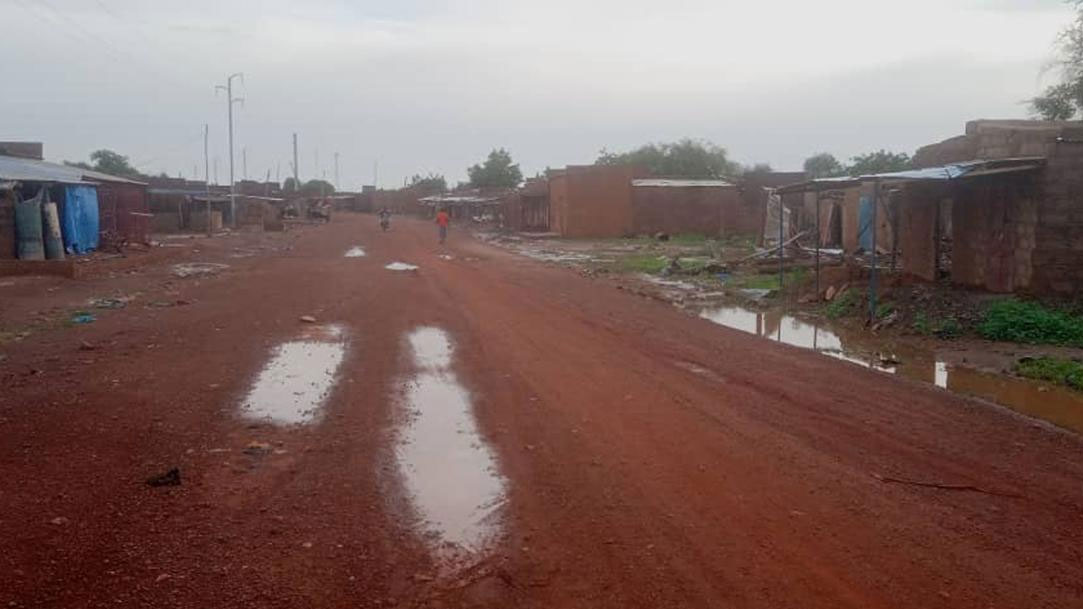
The road leading into Solhan. The attackers arrived on motorbikes, according to eyewitnesses.

And the other main suspect, ISIS, chose to blame it on al Qaeda, according to an ISIS-affiliated newspaper.

Dozens of interviews by CNN with survivors, local witnesses and Burkina Faso officials paint the most complete and disturbing narrative yet of a rampage perpetrated over 48 hours, partially by children, that the US-backed and trained Burkina Faso military was powerless to stop.

Yet few officials or witnesses agree on a coherent and consistent motive for the attack. Were the child attackers sent for Solhan's gold, as currency for their Islamist masters?

Was it a punishment killing ordered by jihadists against villagers loyal to the government?

The story of Solhan is a notable mark in the patina of brutality spreading across the Sahel. The intervention – and now ongoing drawdown – of the French military, the arrival of European Union forces, and the Pentagon's sustained support mean billions have been spent in attempts to bolster the local security forces.

Yet violence has spiralled instead, particularly in Burkina Faso over recent years. The crisis in some of sub-Saharan Africa's poorest states presents an imminent threat to Europe's security, and by extension the United States, analysts say, in providing a secure and spacious breeding ground for terror networks.

US officials have described the "wildfire of terrorism" in the Sahel, with al Qaeda and ISIS "on the march" in West Africa, aiming to "carve out a new caliphate".

READ MORE: Mystery disease kills nearly 100 in South Sudan

"Illicit gold has emerged as a key source of funding for jihadist groups, who have been seizing so-called "informal mines" – small-scale mining sites which rely largely on physical labor and basic technology to extract precious metals and minerals – in Burkina Faso, Mali and Niger since 2016, according to a Crisis Group report from 2019.

Bachir Ismael Ouédraogo, Burkina Faso's minister of energy and mines, told CNN the country lost 20 tons of gold through informal mining and exports every year, worth roughly $1 billion on the open market.

Ouédraogo describes it as a "war economy", a system that uses well-coordinated routes across the African continent. "The gold you end up buying is financing terrorism, and affecting our families here," he added.

The first night: Massacre

Trapped in the arid plains around 400 kilometres northeast of the capital Ouagadougou, Solhan's gold is the village's only asset, and its curse.

Satellite images of the village show the damage that informal mining has done to the terracotta soil – the charred grey tailings and spoil from the intense activity of men who spend so many hours digging underground that they must sleep outdoors to recover.

A local government-backed militia called the VDP (a French acronym meaning Volunteers for the Defense of the Country) provides some security.

Yet on the night of June 4, Solhan was left mostly defenseless.

More than 100 jihadists, on dozens of tricycles and motorbikes, had been spotted 20 kilometres from Solhan that afternoon, according to Boureima Ly, the emir of the local region of Yagha.
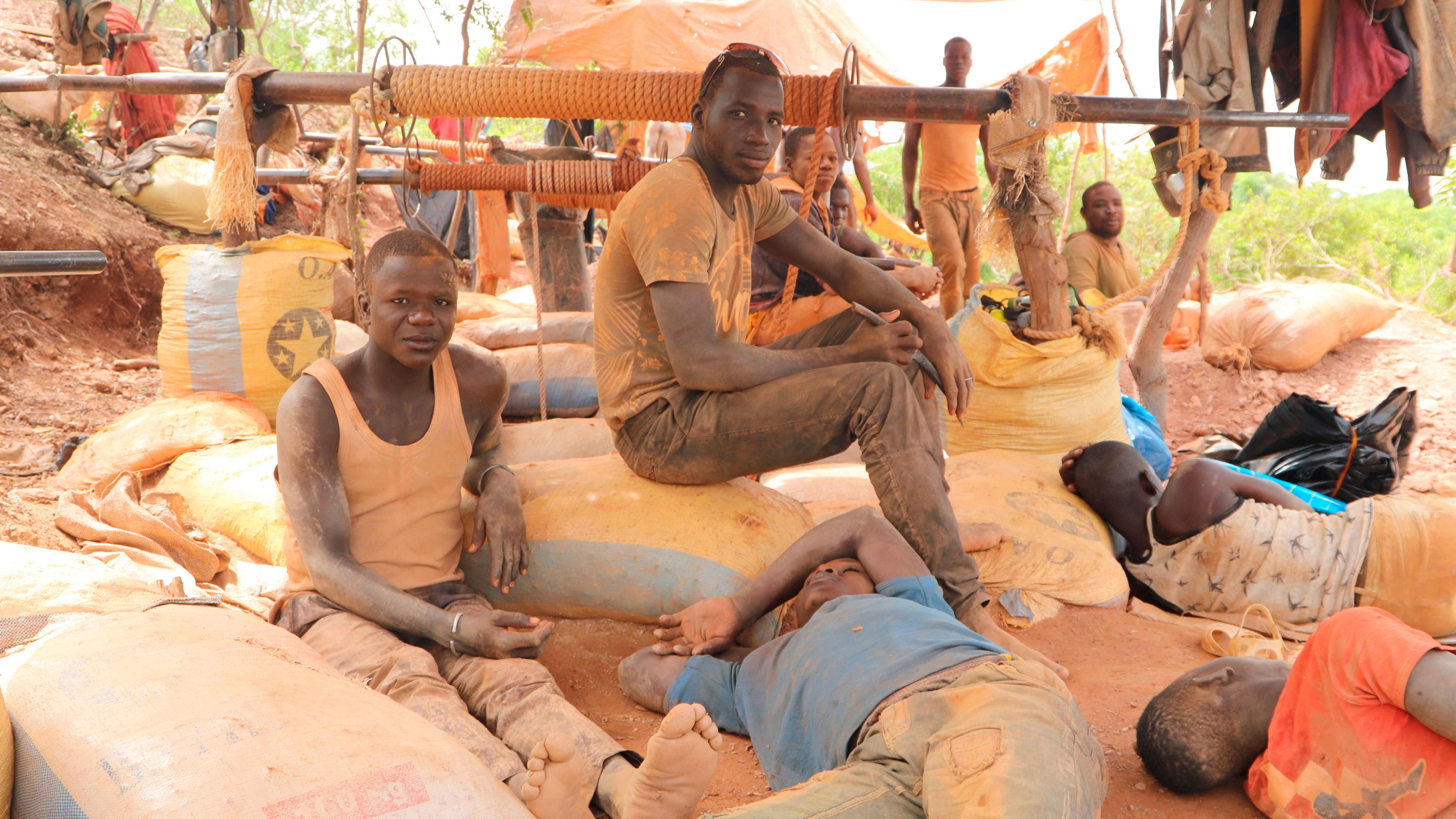
Gold miners take a break near Hounde, some 100kms northeast of Burkina Faso's town of Bobo-Dioulasso.

The army was warned of a possible attack, but it was unclear if it would target Solhan or nearby Sebba -according to Aly Bokoum, an activist with the Sahel Regional Youth Council in Burkina Faso – so the local unit chose to stay in Sebba, where it is based. The VDP in Solhan also contacted the army about the threat but were told to leave the village, according to Bokoum.

CNN has made multiple attempts to contact Burkina Faso's army for comment.

Gold appeared to set the attackers' priorities. Mines at Mousiga, a tiny settlement to Solhan's east, were hit first, according to a mining official and a miner who were present. Many of the survivors, witnesses and officials requested anonymity for their safety.

"Their faces were hidden with scarves," the miner said of the assailants. "There were many of them on bikes and they started shooting. I started running for my life – for 30 kilometres, all night, to safety."

This miner said he did not see children among this group and two other officials denied the involvement of children at the Mousiga mines.

The distant gunfire from Mousiga was misinterpreted by the Solhan miners, who "thought it was the army coming" on a routine patrol and so "stayed next to their wells", said the mining official.

The attackers then hit a VDP base on the road into the village, before moving on to their main target.

On entering Solhan, the convoy of children, women and likely some men split. One group turned left towards the mines. Another drove calmly into the centre of the village.

The first shots in Solhan, heard by witnesses at 2.08 a.m., were at the mines, the police source said. "The gold-diggers were first … ambushed … killed at random," he said, while describing the typical night-time scene.

"Most of the [miners] sleep outside, on site. They can't sleep indoors, and they don't go home either. Usually only a few of them get into the well late at night, and most come out because of the heat.

"One miner said some victims were shot dead as they slept outside and others were slaughtered as they worked, trapped underground. "All [the attackers] found outside were people sleeping," he said.

"That's what made it possible for them to massacre them like that.

"Another miner said: "People started coming out of the pits and running … running for our lives." He added that others hid inside the 30-foot-deep wells.

We saw the light from the bullets all over the place. It was only God who saved us, otherwise they were going to exterminate us all.

A survivor of the attack

The mining official described how a large gun was positioned beneath a nearby tree for use in the attack.

"Many ran away, but when you run, you're going to be seen and they shoot," he said, adding that some miners survived by hiding in the pits until 8am.

"The first person who went down to the site [the following day] called me, and said the bodies were lying like fish," the official said.

Several witnesses and officials told CNN that the attackers had in-depth knowledge of Solhan's layout.

"These are people who take the time to study their target," confirmed the police source, who said witnesses mentioned distinctly hearing women's voices among the attackers. "They indicated to 'go to into this guy's house, do this and that,' and told children to 'go here and there,' that they couldn't let one person leave," the source said.

Local activist Abdou Hoeffi, from the human rights group Burkina Faso Movement for Human and People's Rights (MBDHP), said the women played a cheerleading role with the child assailants, with shouts of, "You are a good shooter! You go!"

One witness, who said his parents were killed in the attack, told CNN in Solhan, "They came with women and little children holding guns. Francois, a shopkeeper, he was taken away, my friend. If it was a man, they killed him – a boy, they kidnapped him.

"A little one like that," he said, gesturing the embrace of an infant in his arms, "who was breastfeeding [was taken away]. His mother lost her mind."

One Solhan woman, her bright blue dress glistening as she sifted grains through a sieve, described surviving the night: "They destroyed everything … I fled into my house with my child on my back … I couldn't sleep all night.

We saw the light from the bullets all over the place … It was only God who saved us, otherwise they were going to exterminate us all."

Another witness said he and his wife were in bed with their 5-day-old baby when they heard the gunfire. "Three terrorists passed by my house, in front of me, talking. They did not stop. I could see the bullets raining down everywhere in the night."

The witness, a former security guard for the local cellphone antenna, said the attackers disabled the phone mast that night and removed its battery, cutting the village off from the outside world and a chance of help.

The attackers left at dawn, and the same witness said that the villagers started to venture outside again by 5 a.m. "I couldn't count the number of corpses that were on the side of the road," he recalled. "Everywhere you go, there are bodies lying around.

"The mine was also an apocalyptic scene. "We found that everyone died at the well. I made up to eight trips with a motorcycle cab to carry corpses," said another survivor." The mining official added that "everyone was loaded on and off the motorbikes like bags of grain."

Then the army finally arrived. One miner told CNN the attackers depended on the military's slow reaction when launching their assault.

"This is Burkina Faso. There is no fast response," the miner said. "If they knew that in 30 or 40 minutes the army would come, they wouldn't [attack]. But they took all their time.

"When the military did arrive, there was little to do but bury the dead, he said.

"They dug a big hole. There was no other solution."
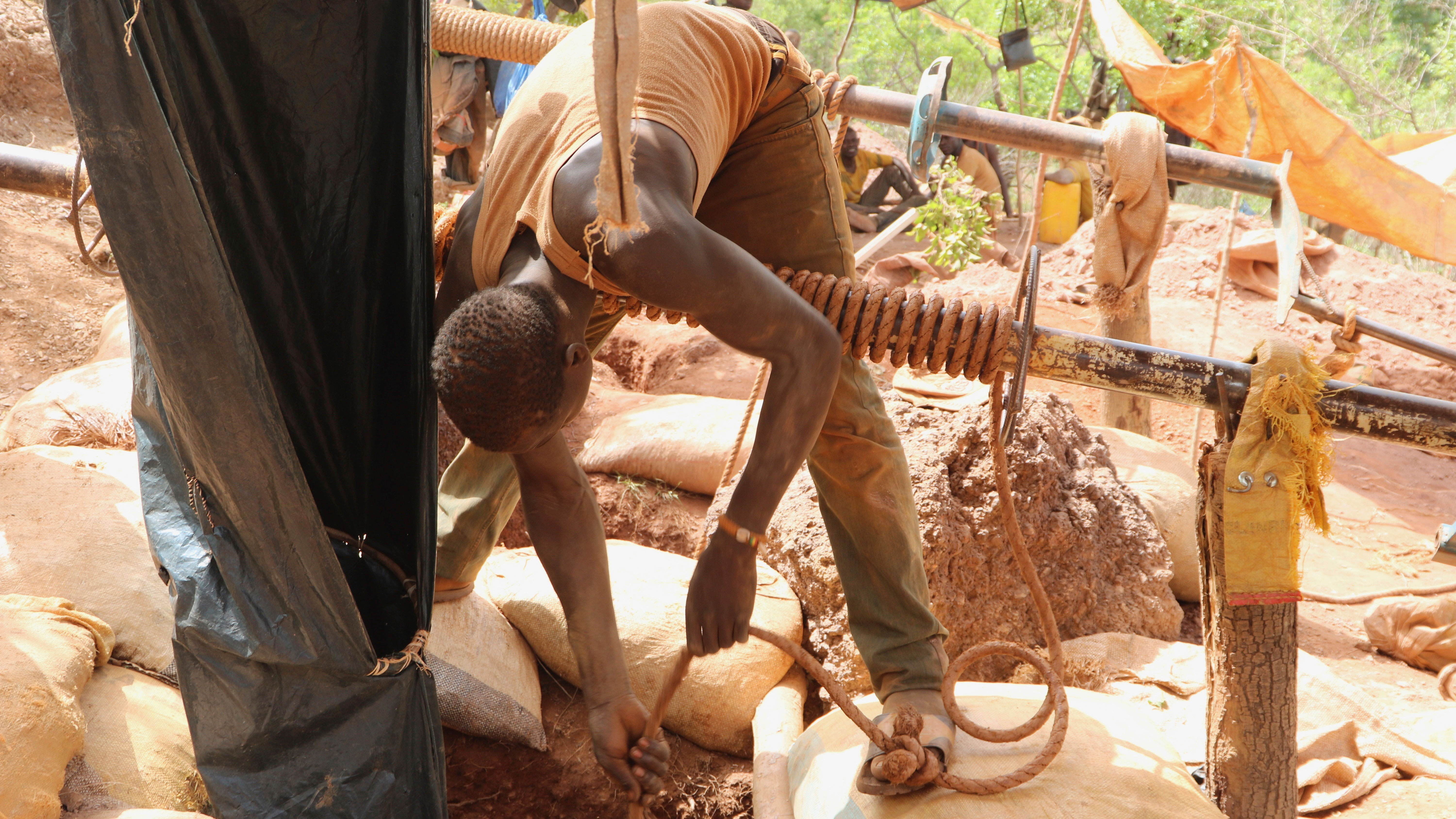
A gold miner pulls a rope from a mining shaft near Hounde, some 100kms northeast of Burkina Faso's town of Bobo-Dioulasso.

The ex-phone antenna guard said the security forces asked villagers "to go back home and lock the door, and to not hide any terrorists."

Two officials said the militants' convoy did not really leave at first light but instead relocated to a hideout in the brush, and waited. The mining official specified a remote border area where he believed they had hidden.

The police source said it was not clear if they met leaders there for further instructions, or just waited for the cover of night.

Some of the villagers who remained in Solhan tried to flee, said the police source. "They didn't know if it was over or not," he said.

The hospital in the nearest city, Dori, was "overwhelmed," he said. But it was unclear if the attackers were finished with Solhan. At dusk, the answer came.

The second night: Destruction

"I heard the sound of their motorcycles and said, 'Ah, they are [here] again,'" one witness said. "I went back to my yard, turned off the lights in my house, took my mat, took my blanket." He said he left for another village – travelling on foot with a group of Solhan's children, elderly residents and pregnant women.

But the convoy's focus was different this time: They wanted to eradicate or loot all that remained. "They started to burn. They entered the houses," said one survivor.

"At the stores, they took clothes, drinks, money, put them in their vehicles."

"They came back, they found four motorcycles at our place," another survivor said.

"They burned everything. They burned all our houses, until even the sheet metal was gone. They took rice, sugar, oil and boxes of other things."

Showing a cameraman around what remained of his home, the survivor gestured to the devastation – the walls black with soot, apart from a patch where the TV was fixed before it too was looted.

"The grenade went through the wall and went to the other side," he said, pointing at a missing patch of plaster. "The whole roof is gone.

"The mining official said 80 sheep were also slaughtered in the violence.

Young men who survived the onslaught sought medication for the psychological trauma in nearby Dori, he added.

"They were given pills or injections, because they say they couldn't close their eyes, because they could still see the dead bodies."

Video filmed in July shows the charred village clinic – the hospital beds and consultation room beyond use.

Shops and homes were incinerated, and rows of buildings left collapsed or with only their metal gates remaining. Motorcycles were torched.

Even the mining machinery used to break rocks was half-smashed, yet in the video some of it still hummed around the mines that remained functioning.

Shell casings still lay on the ground. The scale of destruction – fuelled, it seemed, by something more nihilistic than just looting – surprised some officials.

Since June, officials, experts and survivors have been seeking to understand more about the massacre.

The government, facing protests in Dori over its inaction and security failings, blamed jihadists. Government spokesperson Ousseni Tamboura told Radio France Internationale that two suspects had been detained before the attack and the arrests had led officials to link it to a little-known group called Mujahed al Qaeda, which is connected to the al Qaeda affiliate JNIM.

Tamboura said gold was also a motivating factor. In the immediate aftermath, the government fired some security personnel and declared three days of national mourning. Tamboura told CNN in November the government believes al Qaeda affiliate JNIM was behind the massacre.

He put the death toll at 132, which includes attackers killed in the incident, and fatalities from a neighbouring attack.

Tamboura declined to comment on the army's absence in Solhan that night, and said that the Burkina Faso military followed all protocols set between them and the US as a condition for aid.

The spokesman added that the jihadi groups were fueled by hunger to control resources, not by ideology.

A French military intelligence official, who didn't want to be named discussing sensitive information, agreed that jihadists were likely responsible, saying the massacre was likely committed by a group "in the process of being formed", linked to JNIM.

The official said attacks against the general population, as indiscriminate as those on Solhan, were more the hallmark of ISIS, however.
Two funerals and a wedding on Zoom for woman stuck in UK

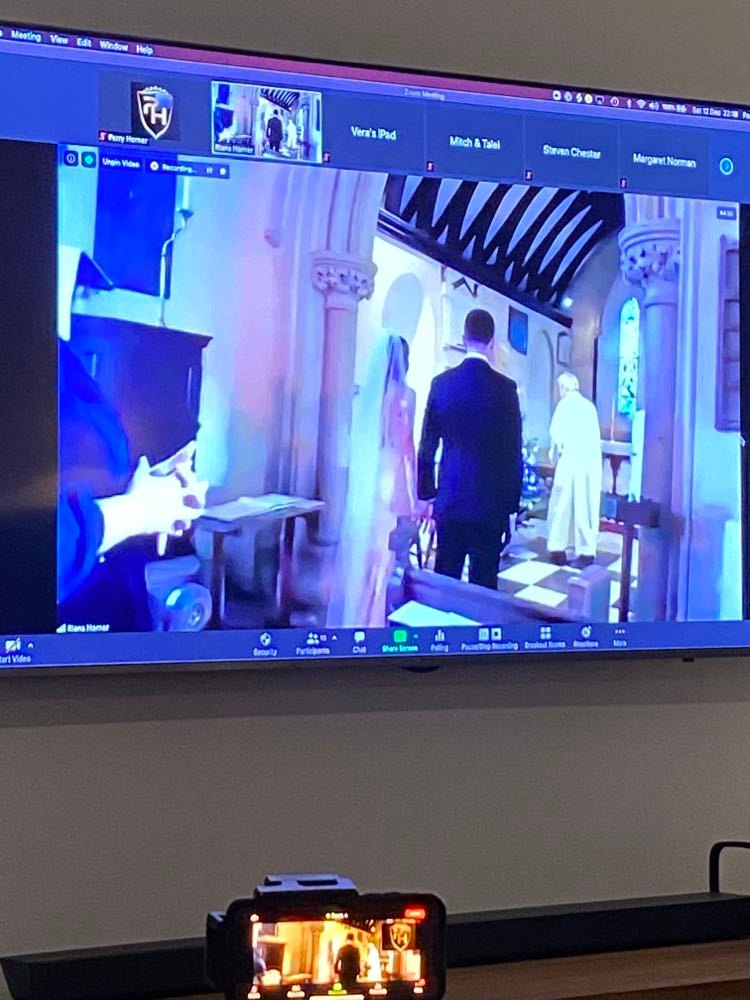
Robbed of a special moment, left in a kind of grieving purgatory that makes it hard to move on, these are the feelings that bubble up while forced to watch some of life's most important moments via Zoom.

Lisa-Rae Horner sat through two webcam funerals and a wedding in the past year and has been left struggling to process all three as she approaches her second coronavirus Christmas.

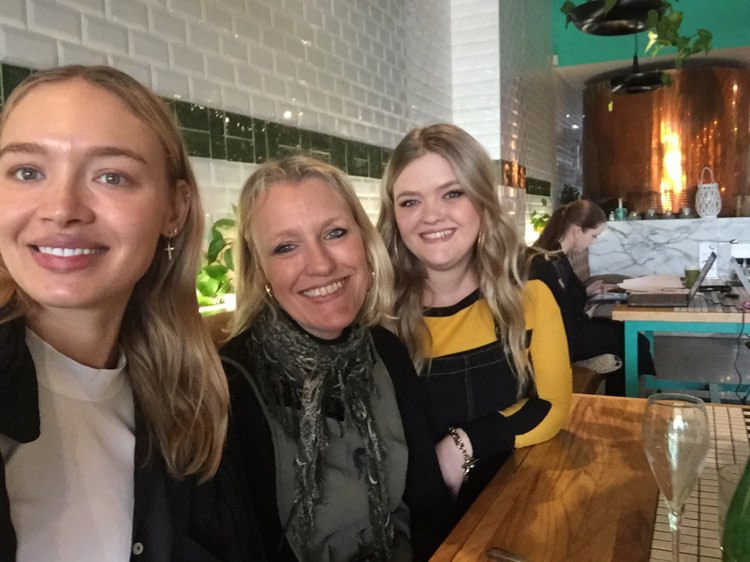
Her mother-in-law died of COVID-19 in April, her best friend in Brisbane — "my rock" — died later this year, her middle daughter was married last December and the Brisbane-based pilates instructor was on the wrong side of the world for all three.

READ MORE: New Omicron warning as worrying modelling released

Now, after five months away from home, the 43-year-old is torn between the excitement of her first England Christmas in nine years and nerves over what's to follow: a pre-dawn Boxing Day flight from London to Sydney and a mismatched connection to Brisbane that risks keeping her and husband Perry away from their dogs for another two weeks.

Australia's borders are open, but getting home is still an impossibility for many.

Mr and Mrs Horner chose to spend Christmas in the UK after a three-month trip blew out to five months while waiting for Queensland to allow home quarantine instead of hotel quarantine and won't be able to see their third daughter back in Australia until the new year.

But they're just two of many Aussies missing out on Christmas down under or making hard choices around where to be and how to manage tricky borders, costs and logistics.

Mr and Mrs Horner chose to spend Christmas in the UK after waiting for hotel quarantine to become home quarantine but won't be able to see their third daughter back in Australia until the new year, are just two of many Aussies missing out on Christmas down under or making hard choices around where to be and how to manage tricky borders, costs and logistics.

Their plan for Christmas is to "try to have a really chill day" in Essex with her mum, two of three daughters — one of whom, model Roxy Horner, caught COVID-19 and developed type-one diabetes this year — and a turkey dinner with Yorkshire puddings and all the trimmings.

READ MORE: 'I've lost a part of me': Man, 20 dies from meningococcal

But the England-born Australian citizen knows the stress of getting back into Queensland starting home quarantine will rear its head.

For one, she's still figuring out how exactly they'll make it to Brisbane to start their two-week home quarantine.

Queensland demands all overseas arrivals transiting through other states stay in the airport between international and domestic flights but the Horners' plane arrives too late.

Even with the added stress, at least this is an important moment shared in real life, not via a phone screen or projector set up on the wall.

"I think for the funerals, it (Zoom) did dull emotions, but a feeling of missing out on sharing the memories, also it has made it very hard to accept it's happened," Mrs Horner told 9News.com.au.

"The wedding I think we feel robbed of a very special moment."

Instead of the big wedding Riana Rae and Cameron Brown had hoped for, bringing together family from both sides of the world, they stood almost alone in December last year.

Just the adoring couple, two guests, a priest and the all-important video link to the dozens left out due to distance, illness or the UK's strict coronavirus restrictions at the time.

The ceremony had already been cancelled once before, Mrs Horner explains, but they pulled the trigger once they realised how long it would be before the Australian side would be able to make an appearance.

READ MORE: Putin bristles over Russia's 'most serious challenge'

Mr Horner should get the chance to walk his daughter down the aisle in a second ceremony next year but his wife said many of the Australian guests are still very reluctant to travel, so "it won't be the same".

Through a cruel twist of fate, the pilates instructor also missed the death and funeral of her best friend in Brisbane, after she had finally made it back to the UK to visit family in July.

"Since we were six, we went to school together over here, and she emigrated 15 years ago, and we emigrated nine years ago and we ended up in the same place," she said.

"So she's been my rock since I've been over there."

With all the tragedy, the year and a half since the Horners last saw each other had felt particularly long for family used to reunions every year, if not every couple of months.

"It's been absolutely awful," she said.

"And the fact that when my mother in law died, and then my daughter got COVID and then got this diabetes (type) one, we couldn't even book a flight.

"It was really scary."

After a "really tough year", Mrs Horner said it's harder than ever to face Queensland's border restrictions.

"They made it so hard for us to come over here and see our family when we needed to, and they're making it so hard to get back,' she said.

"And there's no need for it. There's absolutely no need for it."

Twenty leeches used to help save 12-year-old's finger

Twenty tiny leeches have been used to help treat an injured schoolgirl's finger.

Perth youngster Rylee Ellis nearly lost her finger earlier this year during a boating accident while fishing with her family in Port Kennedy.

"I saw the boat drifting a bit and I put my finger in to pull it and it got caught between the rope and the pole and it tore off," Rylee said.

READ MORE: Omicron cases could hit 200,000 a day across Australia

Leeches are sometimes used in surgeries where blood is getting into the part but not coming out.

When Rylee held up her hand her family saw that her finger was dangling off to the side.

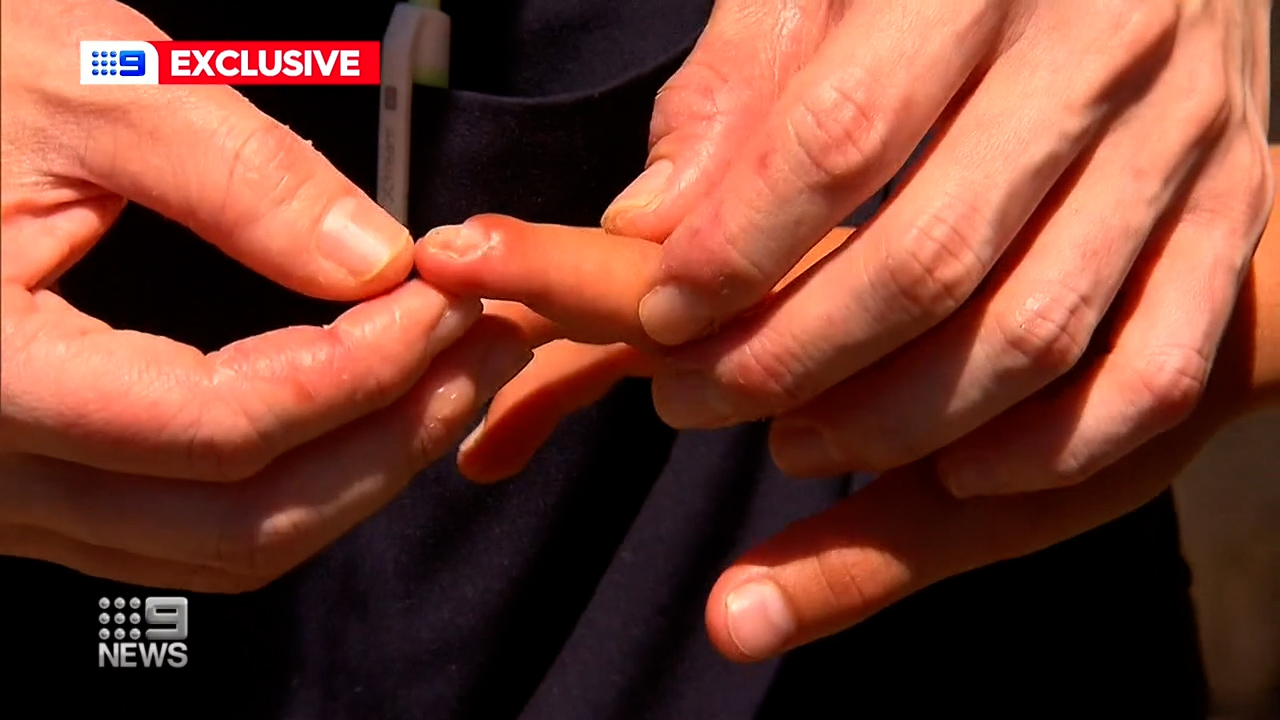
The 12-year-old was rushed to hospital and spent four hours undergoing surgery to save her digit.

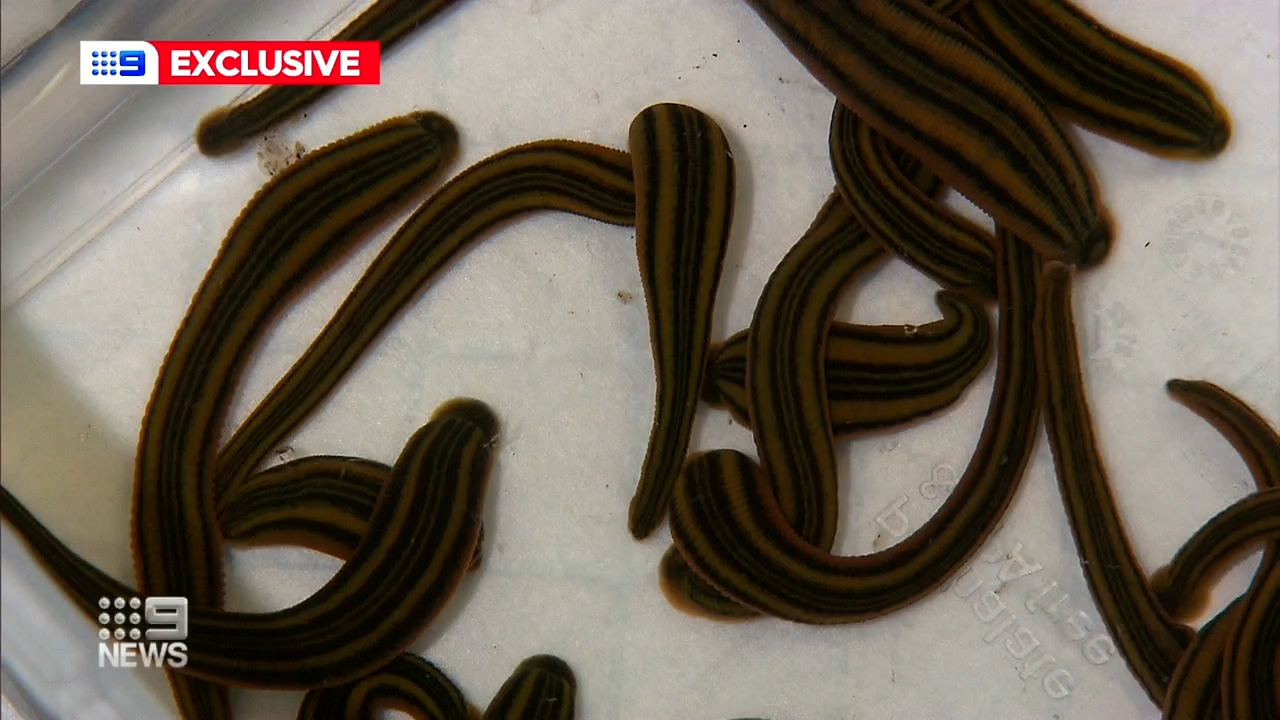
Twenty tiny leeches were then used to complete the treatment.

"It's very rare that we have to use leeches, but we use it in surgeries where blood is getting into the part but not coming out," Fiona Stanley Hospital plastic surgeon Dr Sharon Chu said.

The leeches can only be used on one patient at a time.

READ MORE: World's richest man Elon Musk to face $15.5 billion tax bill

Twenty tiny leeches were then used to complete the treatment.

They attach themselves and draw blood, which releases proteins and peptides that thins blood and prevents clotting.

This improves circulation and prevents tissue death.

Rylee had the leech treatment for eight days and has made a full recovery.

"It's like a little snail going over you. It's slimy and wet and weird," Rylee said

Leeches have been used in medicine for centuries as a natural blood thinner.

But supplies to hospitals, such as Fiona Stanley, have been limited due to COVID-19.

Queensland beach shack sells for $5.4 million

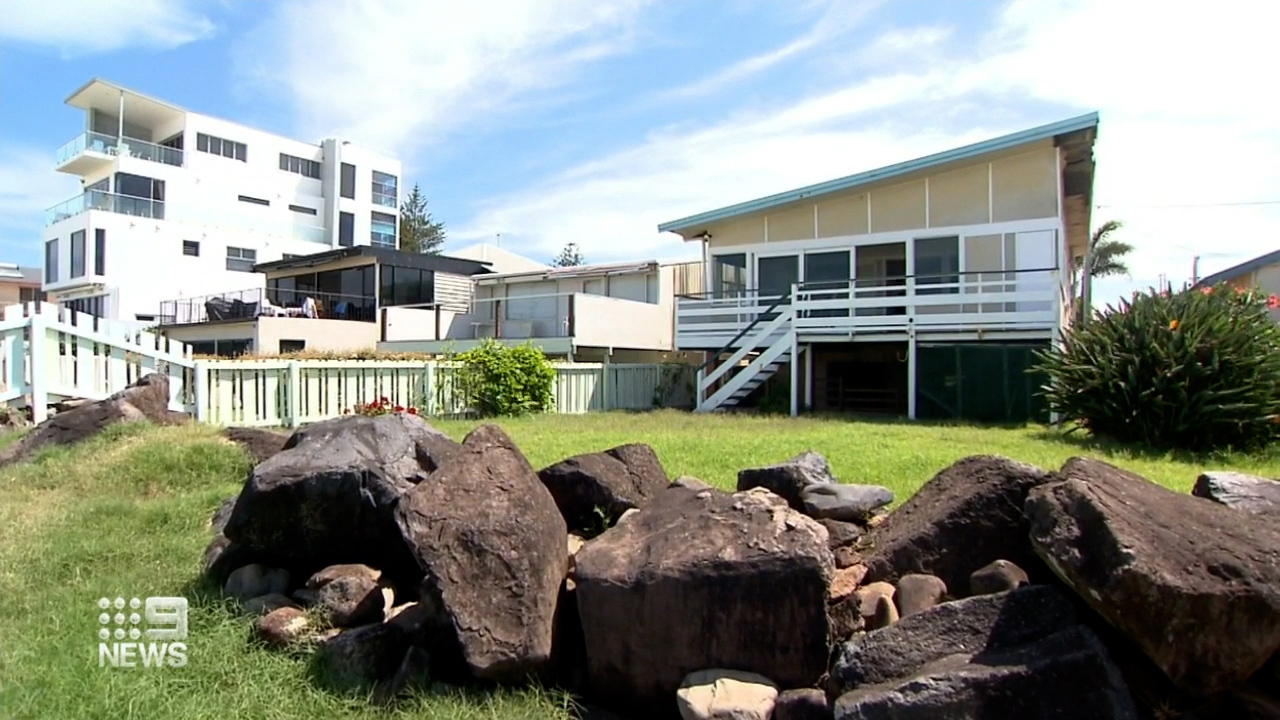
A Queensland beach shack from the 1950s has sold on the Gold Coast for $5.4 million.

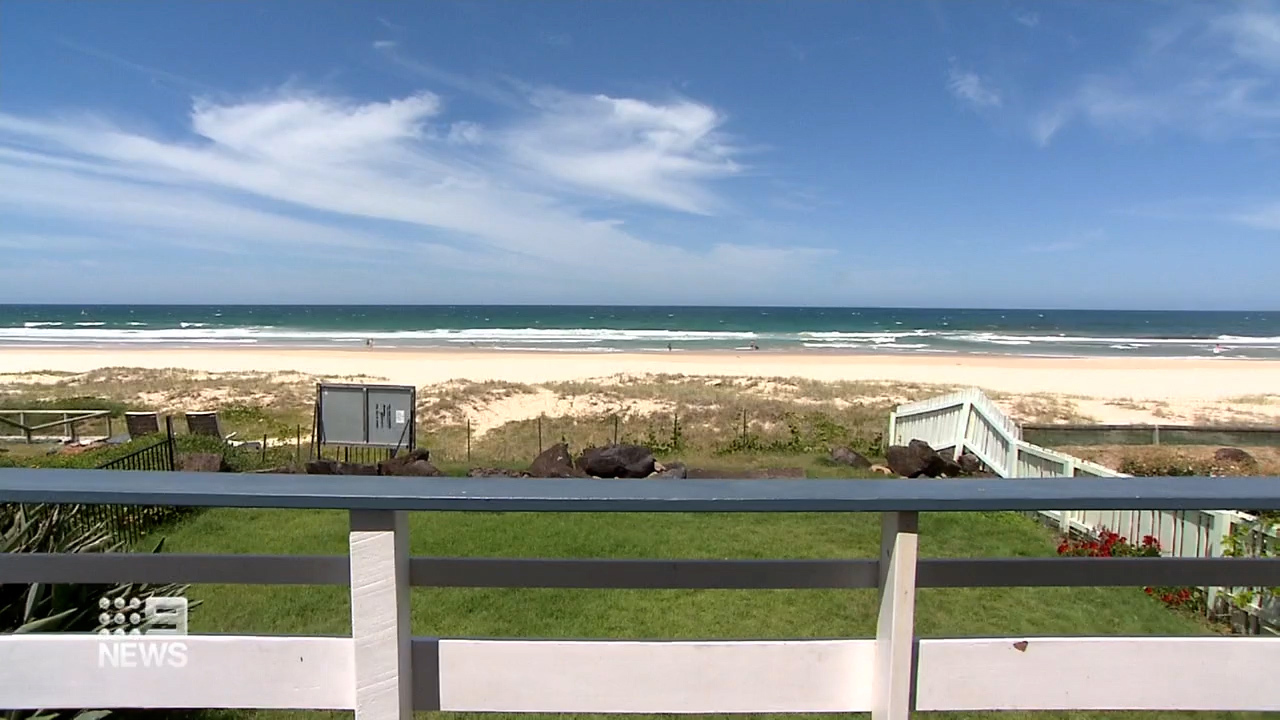
Despite needing some repairs, the 413 square metre Palm Beach home backs right onto the sand, boasting incredible beach views.

"Absolute beach front, Palm Beach, you can't beat it," Kollosche real estate agent James Roberts said.

READ MORE: No excuse for any rapid antigen test shortage, supplier claims

The Palm Beach home backs right onto the sand, boasting incredible beach views.

More than 200 enquiries were made for the shack during what's been a booming time for Queensland's property market.

The lucky buyer, amid interstate and international competition, was a Sunshine State local.

"Six registered bidders, really strong for a property of this calibre," Mr Roberts said.

"It's a really good barometer to show where the market is at at the moment and expecting this momentum to carry through to next year."

READ MORE: How to have a COVID-safe Christmas

A Queensland beach shack from the 1950s has sold on the Gold Coast for $5.4 million.

The beach shack had been in the family since 1958 when the "Sunlit Land" of the Gold Coast was first touted as the east coast's up and coming tourism destination.

Despite its eye-watering price, the weathered fibro home will soon receive a contemporary upgrade.

"New owners have got plans to demolish and build their new family dream home," Mr Roberts said.

Queensland mum who lost family in plane crash shares heartbreak

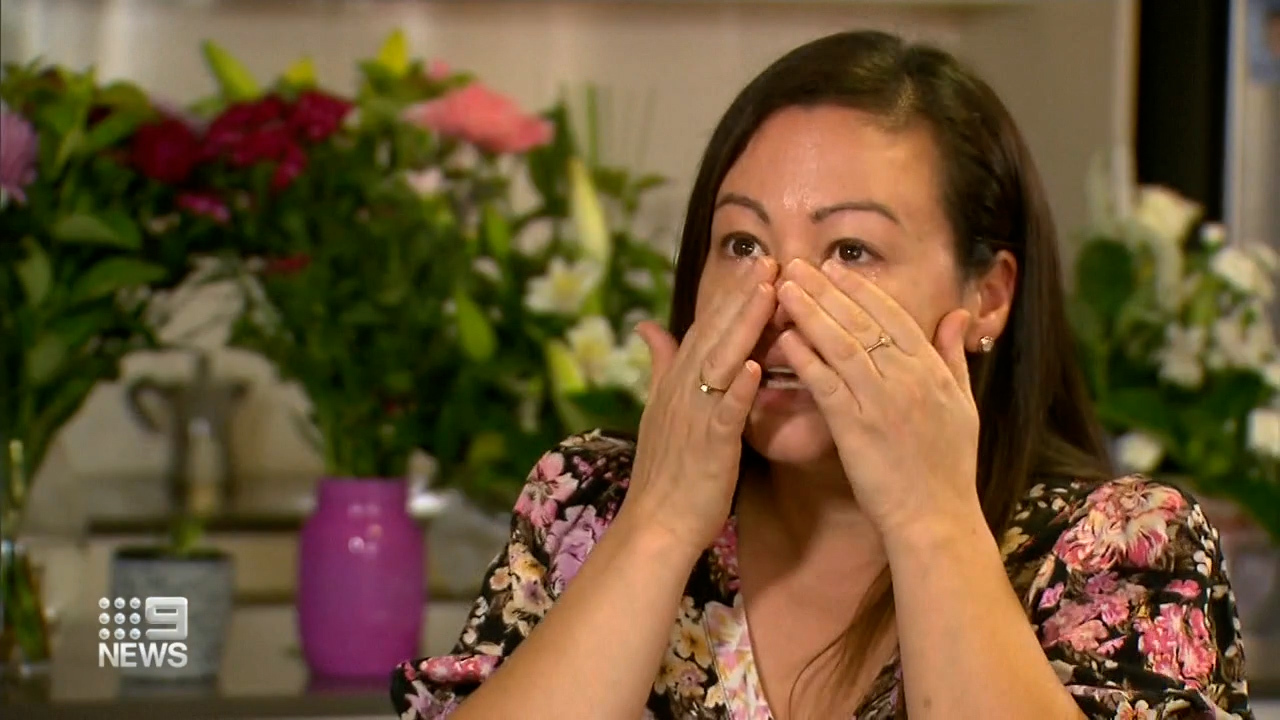
Catherine Di Blasio had been Christmas shopping for her two kids and was waiting for them to come home when she answered the door to three detectives on Sunday afternoon.

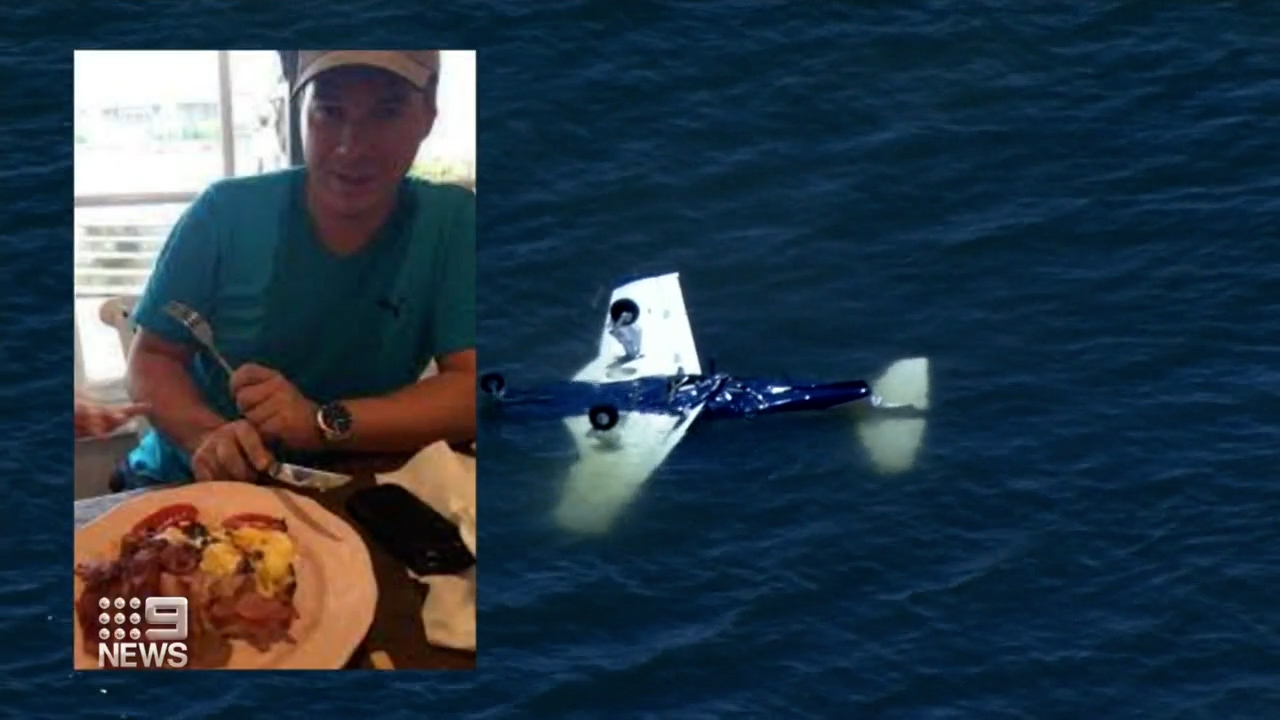
Her daughter and son had been taking a ride in a four-seater plane with their dad when it fell from the sky shortly after take off, landing in the ocean north of Brisbane.

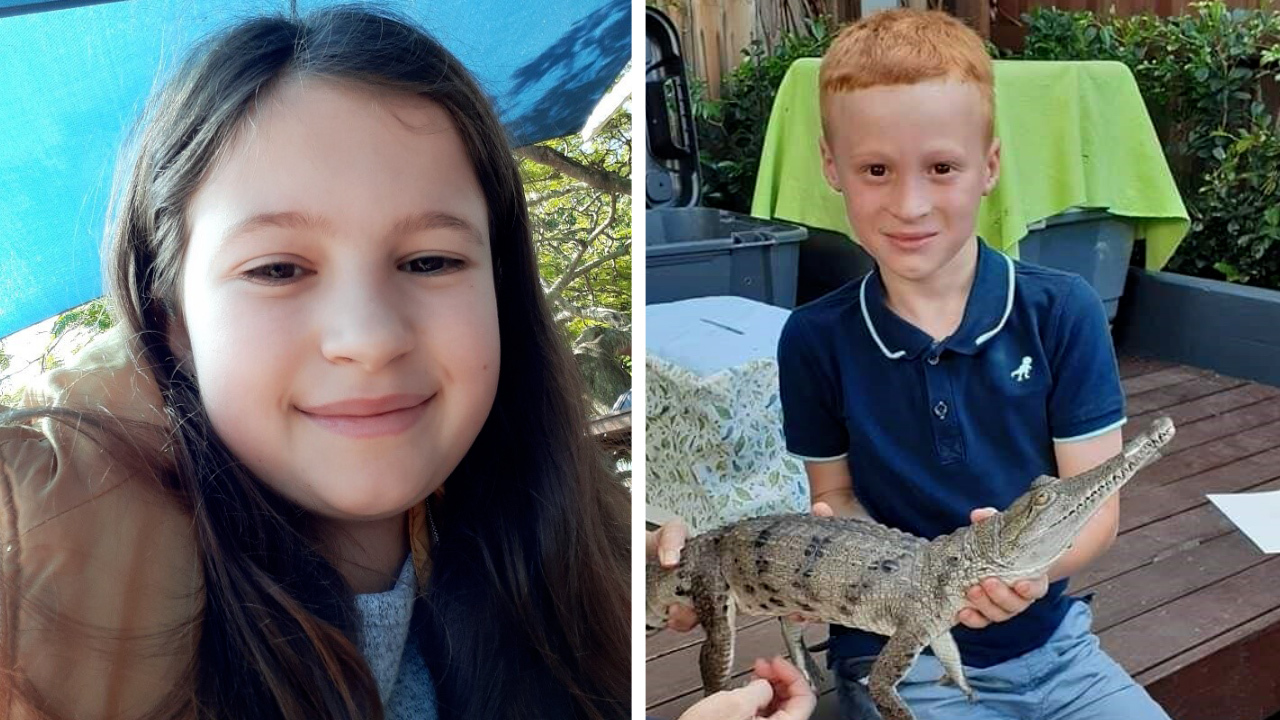
All four passengers — father Cris Mocanu, 41; Lucas, 9; Lavinia, 10; and pilot Roy Watterson, 67 — died in the crash at Redcliffe.

READ MORE: Almost 50 test positive for COVID-19 on world's biggest cruise ship

"I finally heard the doorbell ringing around four, and I just buzzed because I thought 'oh finally. The kids are here," Ms Di Blasio said.

Instead, she was met by police officers, who relayed the devastating news.

"When they walked in the first detective introduced himself as child protection services and my heart just sank. I knew it wasn't going to be good news," Ms Di Blasio said.

"For about 15 minutes I had no reaction I just couldn't believe it, I was obviously in shock and in denial."

READ MORE: States to push PM on earlier boosters at National Cabinet

She said the accident and the loss of her family still didn't feel real.

"I don't know how you move forward. Obviously I've never been in this position but when you say bye to them that morning, gave them a kiss, said 'I love you', you never think that will be the last time you see them," she said.

"I still can't believe it myself. It still feels like a dream and I'll wake up tomorrow and just wish it was all over. It just feels unreal at the moment."

Mr Watterson, an experienced pilot, had taken his colleague Mr Mocanu and the kids on the weekend trip when the engine stalled, causing the plane to land in the water shortly after take off.

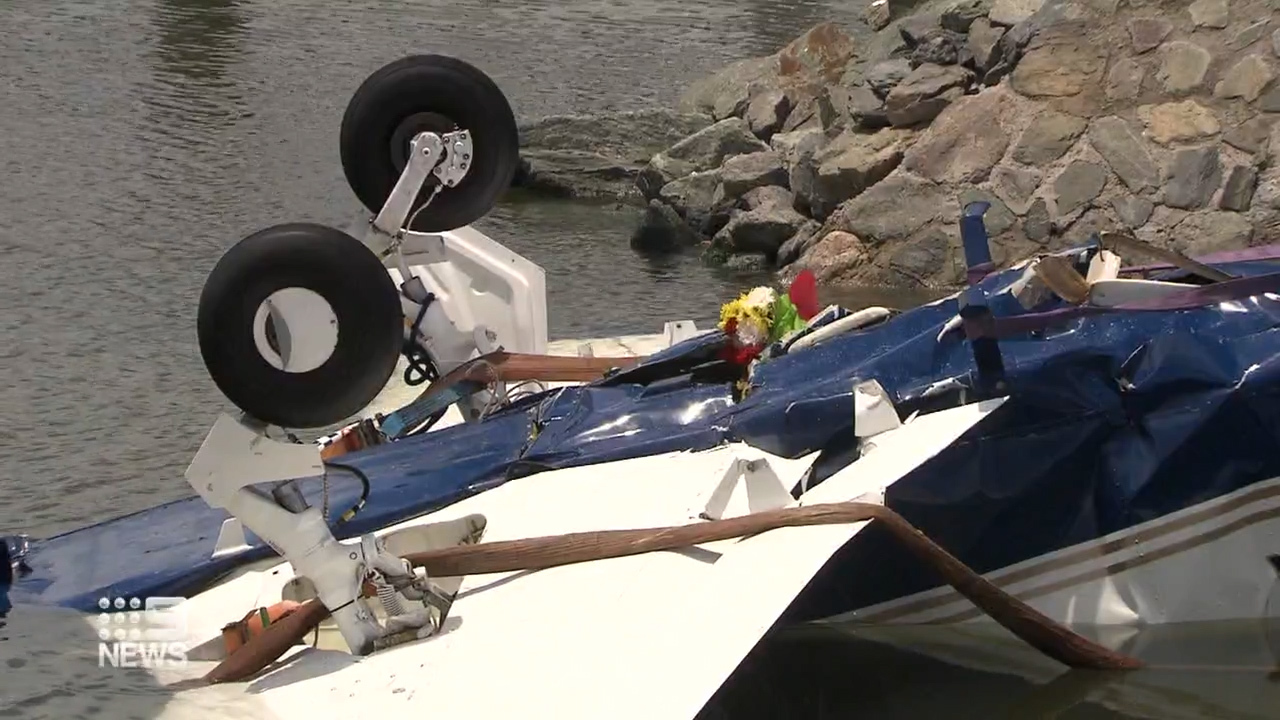
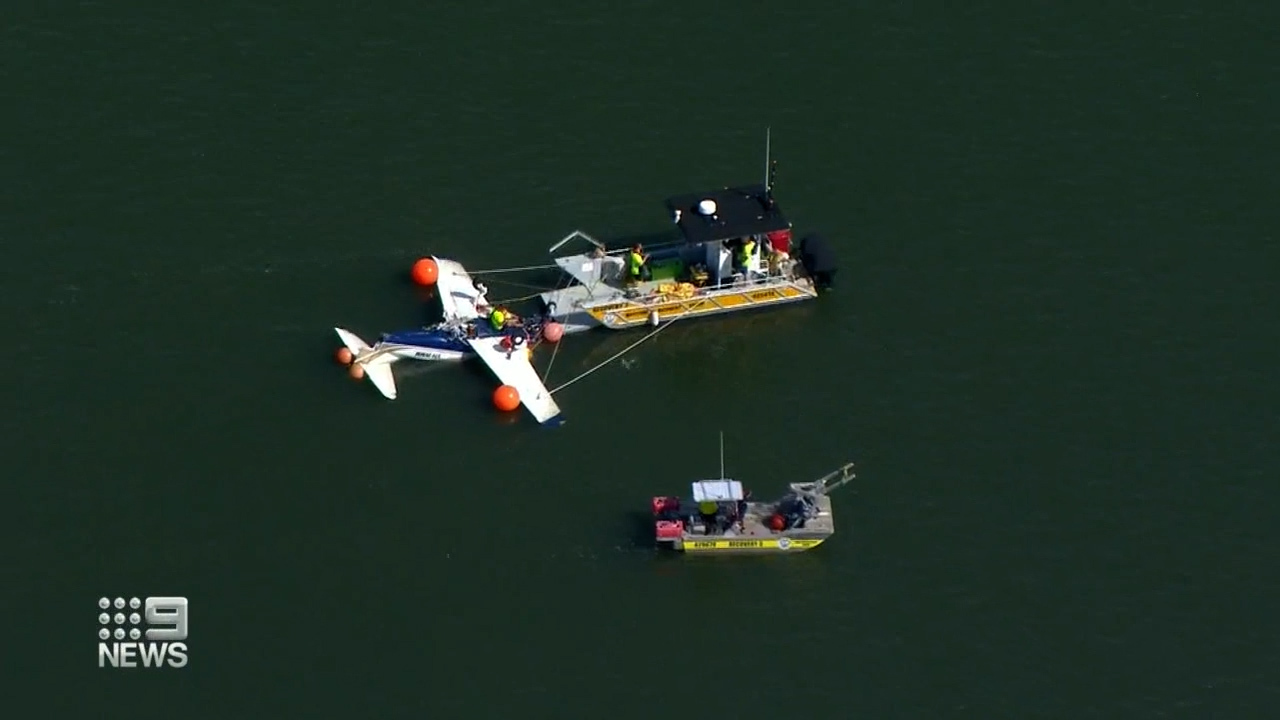
The wreckage has since been pulled from nearby mudflats by a specialist retrieval team and sent to Canberra for examination.

Police and aviation specialists are working to find what exactly went wrong.

READ MORE: With Christmas in the balance, nations eye UK Omicron surge

Ms Di Blasio said the flight had been a surprise for the kids, for her son's birthday.

"They were really excited. They didn't know where they were going but their dad had said it was a surprise for them," she said.

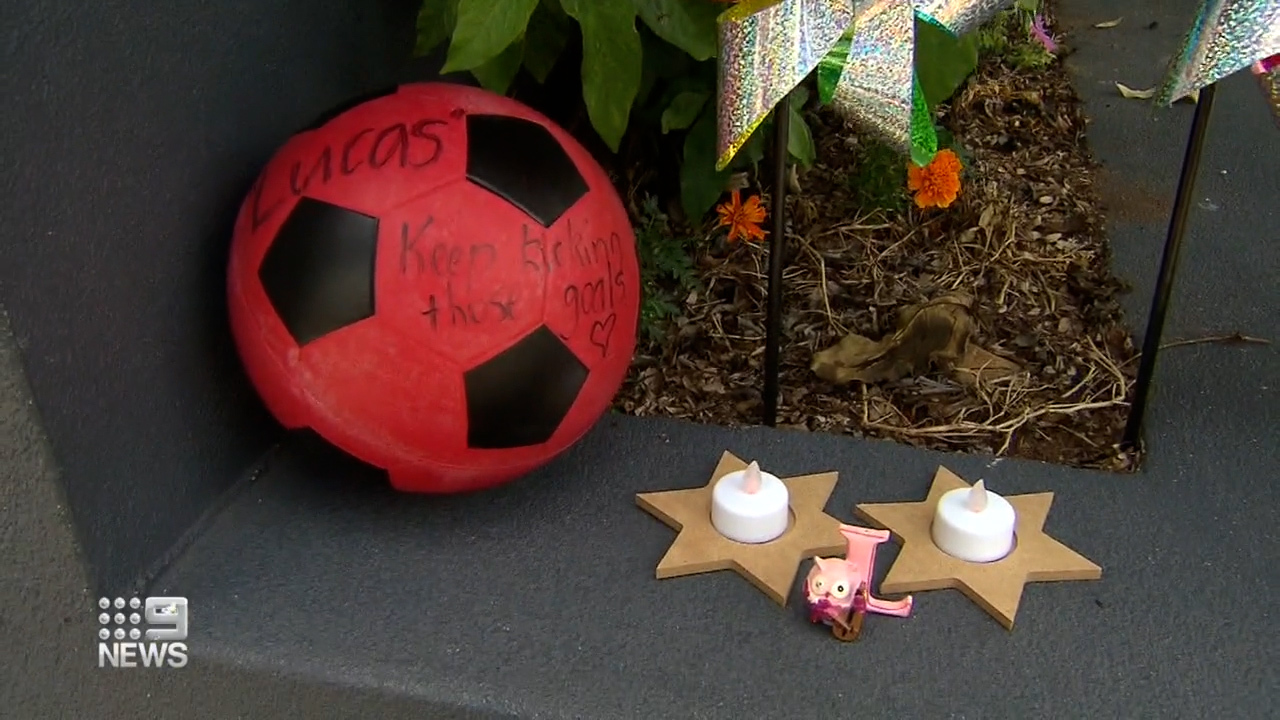
She described her son, who loved soccer as "very caring, very energetic, competitive with his mates".

"My daughter Lavinia, she was very funny , everyone would always say 'Lavvy, I've never seen such a funny little girl'," Ms Di Blasio said.

"She was very caring, always made sure she looked after me."

Ms Di Blasio said she's touched by the tributes flowing in for her and her family.

"It's been really overwhelming, I'm really touched by the number of people that have reached out and contacted me in the last two days," she said.

"At the moment I'm just taking it one day at a time just trying to be strong and have lovely support with me."

Inquest into crash that killed Jessica Falkholt and family concludes

Nearly four years after a deadly Boxing Day car crash, the inquest into the accident that killed Jessica Falkholt, her parents and little sister has concluded.

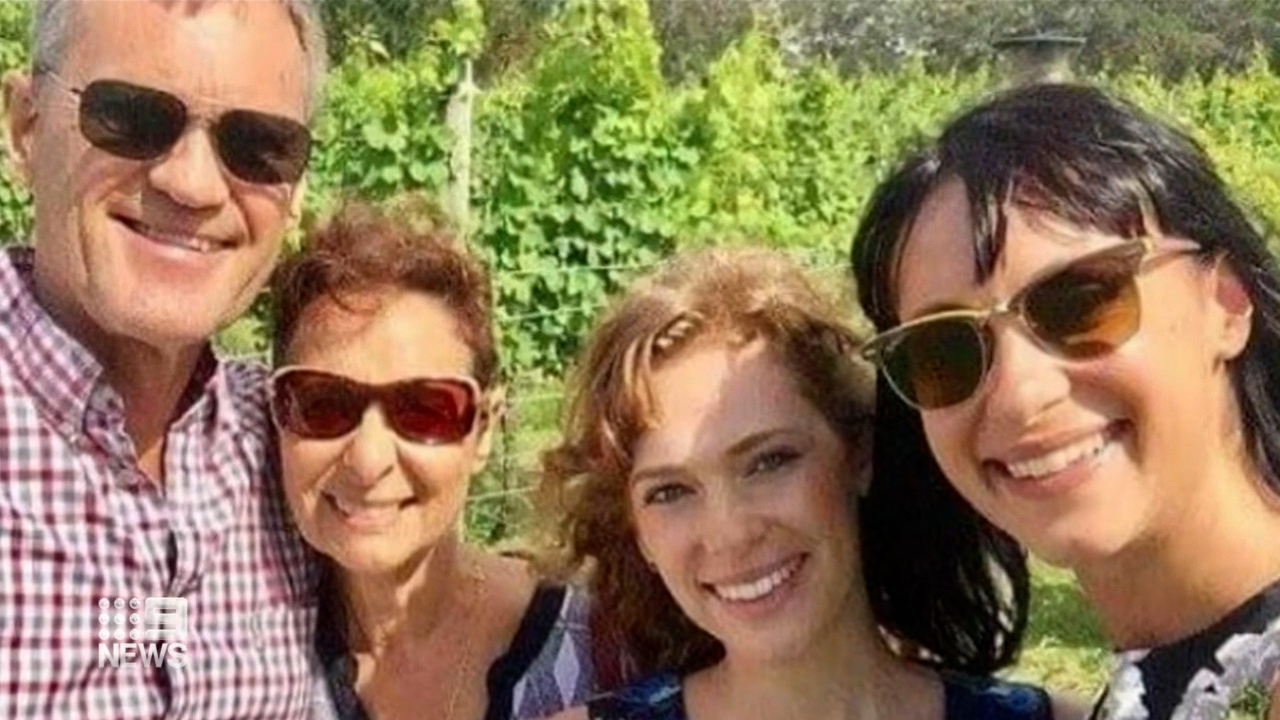
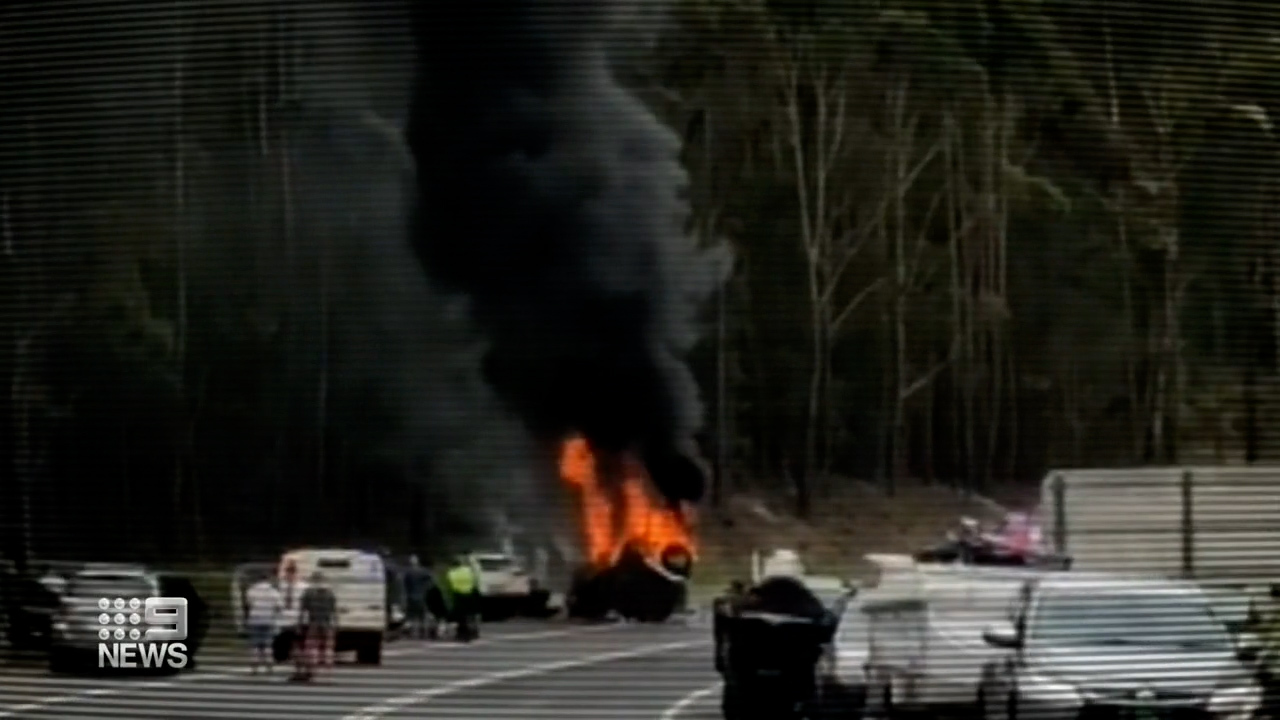
Jessica, an aspiring actor who had appeared on Home and Away, father Lars, mother Vivian and sister Annabelle died in 2017 when a drug-affected driver drove onto the wrong side of the Princes Highway.

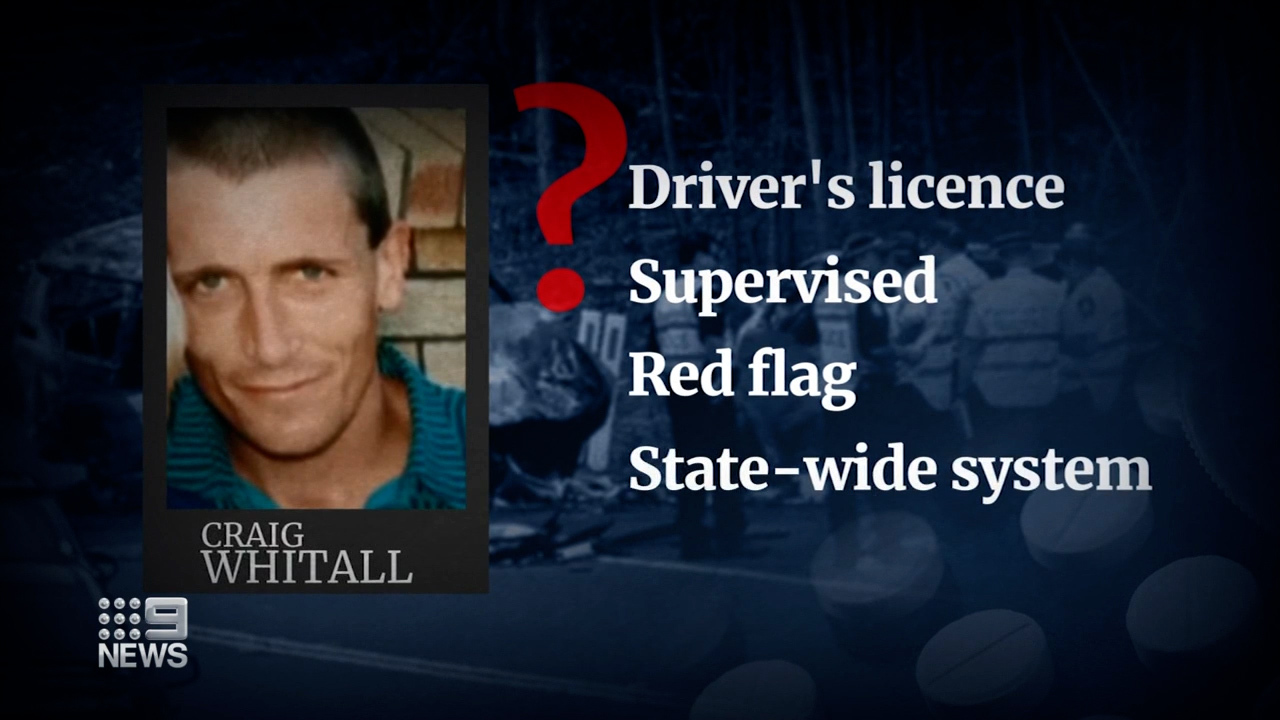
Crag Whitall, who was drug dependant and a serial traffic offender, slammed into the family's car killing them in a fiery crash.

READ MORE: No changes to NSW restrictions despite massive surge in COVID-19 cases

Nearly four years after a deadly Boxing Day car crash, the inquest into the accident that killed Jessica Falkholt, her parents and little sister has concluded.

In the hours before he had lied to staff at Shoalhaven Hospital about running out of methadone to get extra Valium.

His history of doctor shopping only became clear during the inquest, which heard those who treated the 50-year-old were not aware of prescribing by others.

Vivian's brother Paul Ponticello listened to four days of harrowing evidence, hoping it would lead to change.

Nearly four years after a deadly Boxing Day car crash, the inquest into the accident that killed Jessica Falkholt, her parents and little sister has concluded.

Among the questions raised were should Whittall have been given a driver's license while on the methadone program; should he have been supervised while dosing; and why didn't hospital staff place a red flag against his name on the state-wide system.

But in the end, there were no formal recommendations made, and the coroner found it was a series of unfortunate events and the only person who knew the extent of the drug abuse was Whitall himself.

The Falkholts paid the ultimate price of that and Christmas is now the hardest time of year for their relatives.

READ MORE: How to have a COVID-safe Christmas

Nearly four years after a deadly Boxing Day car crash, the inquest into the accident that killed Jessica Falkholt, her parents and little sister has concluded.

Jessica Falkholt was just a short way into fulfilling her dreams of becoming an actress, and her sister Annabelle, just 21 at the time of the crash is remembered as a nurturing soul who loved to laugh.

Lars and Vivian are remembered by loved ones as soul mates whose lives revolved around their daughters.