Tag Archives: oceania

Thousands protest upcoming lockdown in Vienna

Thousands of protesters gathered in Vienna on Saturday after the Austrian government announced a nationwide lockdown to contain the quickly rising coronavirus infections in the country.

The far-right opposition Freedom Party was among those who have called for the protest and vowed to combat the new restrictions.

Demonstrations against virus measures were also expected in other European countries including Switzerland, Croatia and Italy.

READ MORE: Rioting erupts in Netherlands over COVID-19 restrictions

People take part in a demonstration against the country's coronavirus restrictions in Vienna, Austria

On Friday night, Dutch police opened fire on protesters and seven people were injured in rioting that erupted in downtown Rotterdam around a demonstration against COVID-19 restrictions.

The Austrian lockdown will start early Monday and initially will last for 10 days, and will then be reevaluated. At the most it will last 20 days. Most stores will close, and cultural events will be cancelled. People will be able to leave their homes only for certain specific reasons, including buying groceries, going to the doctor or exercising.

READ MORE: EU says new COVID-19 pill can be taken in emergencies

The Austrian government also said that starting February 1, the country will make vaccinations mandatory.

As the march kicked off on Vienna's Heldenplatz, thousands of protesters gathered on the massive square. About 1300 police officers were on duty. They used loudspeakers to tell protesters masks were required, but most didn't wear them.
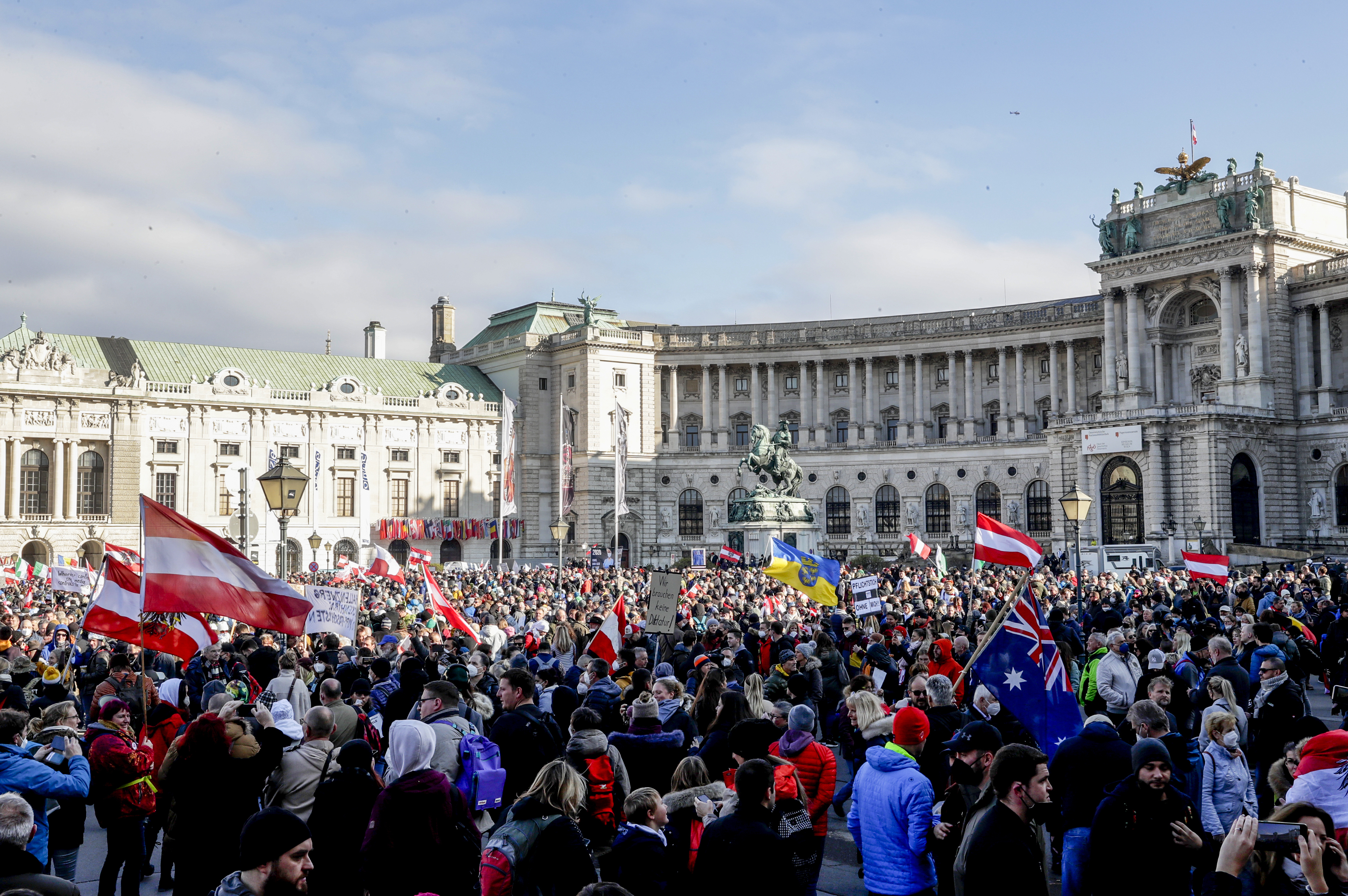
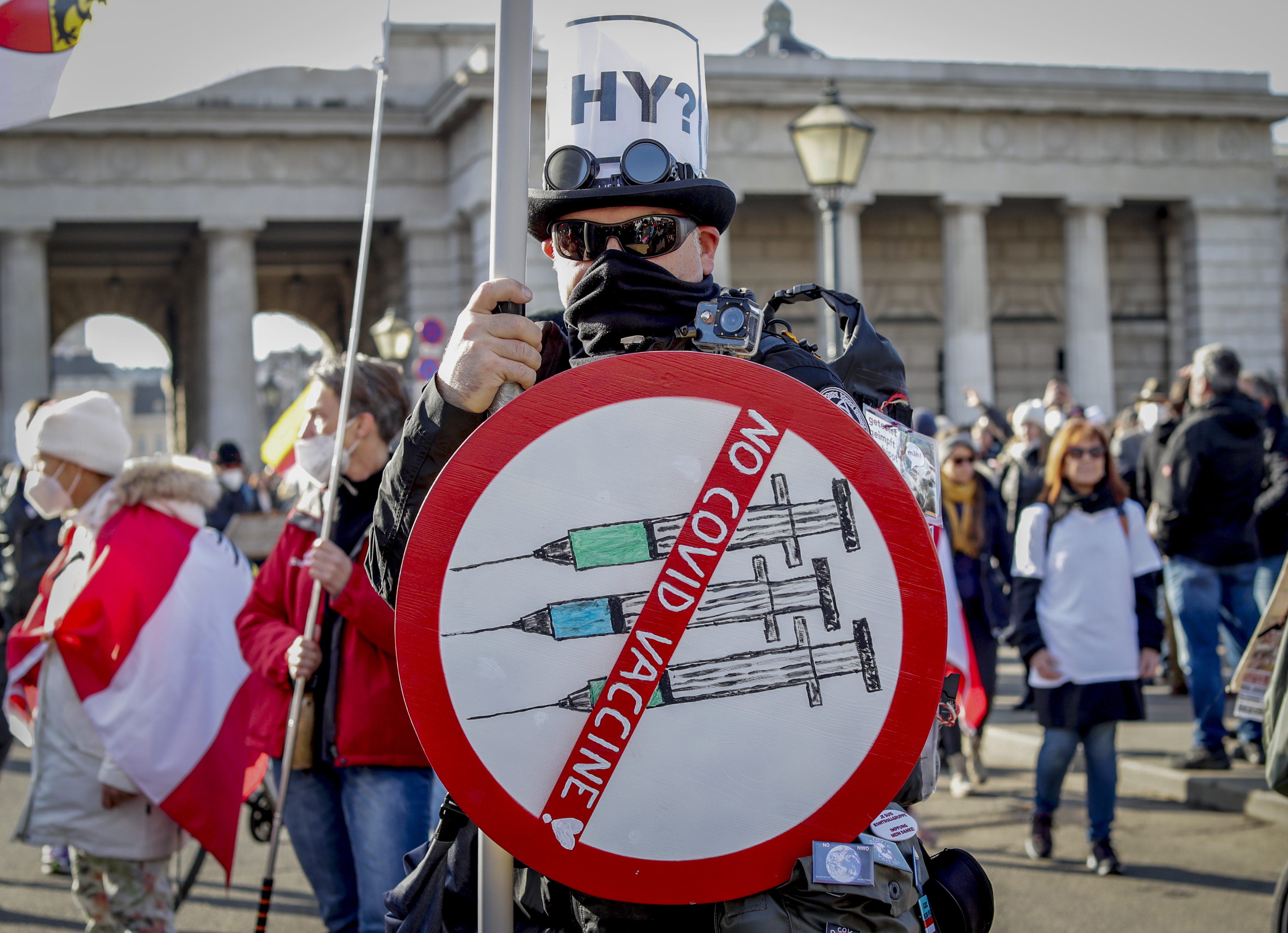
People take part in a demonstration against the country's coronavirus restrictions in Vienna, AustriaPeople take part in a demonstration against the country's coronavirus restrictions in Vienna, Austria

Chanting "resistance!" and blowing whistles, protesters began to move slowly down the city's inner ring road. Many waved Austrian flags and carried signs mocking government leaders like Chancellor Alexander Schallenberg and Health Minister Wolfgang Mueckstein.

Some wore doctor's scrubs; others donned tinfoil hats. Most of the signs focused on the newly announced vaccine mandate: "My Body, My Choice," read one. "We're Standing Up for Our Kids!" said another.

Freedom Party leader Herbert Kickl, who announced earlier this week that he had tested positive for COVID-19 and had to stay in isolation at home, made an appearance via video. He denounced what he called "totalitarian" measures from a government "that believes it should think and decide for us."

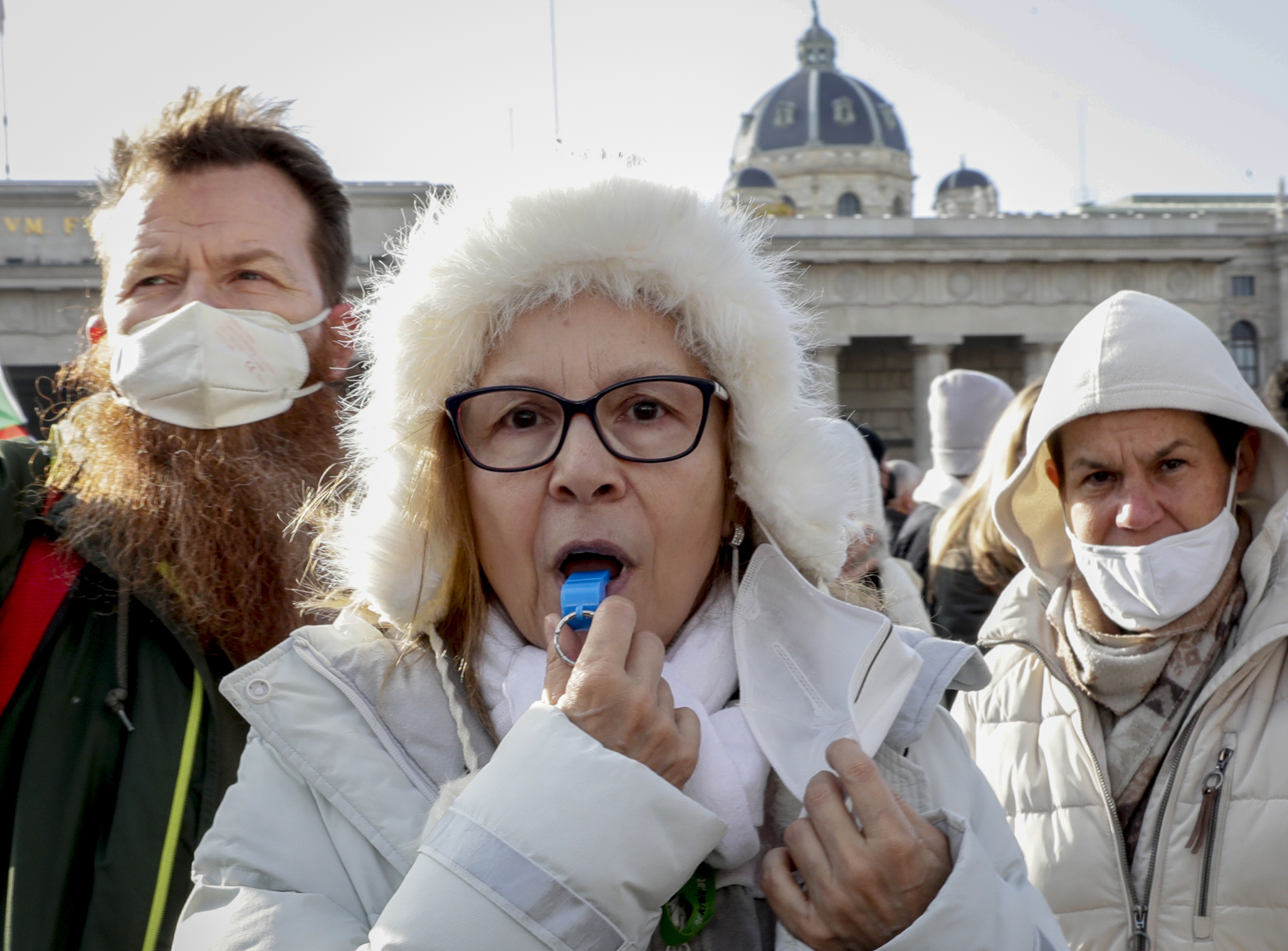
People take part in a demonstration against the country's coronavirus restrictions in Vienna, AustriaPeople take part in a demonstration against the country's coronavirus restrictions in Vienna, Austria

Vaccinations in Austria have plateaued at one of the lowest rates in Western Europe and hospitals in heavily hit states have warned that their intensive care units are reaching capacity. Average daily deaths have tripled in recent weeks.

Not quite 66% of Austria's 8.9 million people are fully vaccinated, according to government figures.

Austrian Chancellor Schallenberg apologized to all vaccinated people on Friday night saying it wasn't fair they had to suffer under the renewed lockdown restrictions when they had done everything to help contain the virus.

"I'm sorry to take this drastic step," he said on public broadcaster ORF.
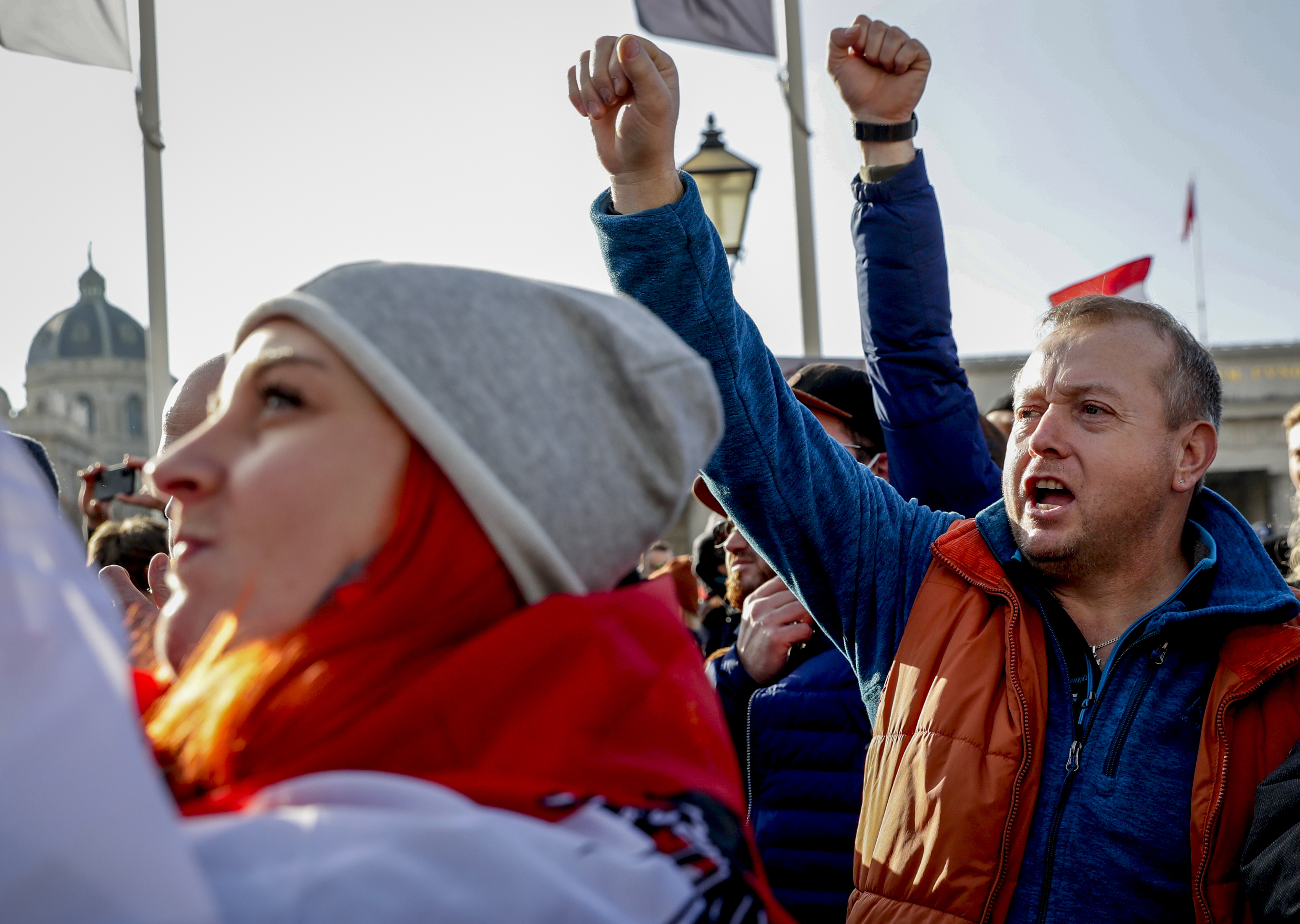
People take part in a demonstration against the country's coronavirus restrictions in Vienna, Austria

In France, Interior Minister Gerald Darmanin on Saturday condemned incidents in the Caribbean island of Guadeloupe, one of France's overseas territories, where violent demonstrations broke out this week over COVID-19 restrictions. Darmanin said 29 people had been detained by police overnight. Authorities announced on Friday a decision to send 200 additional police officers on the island and a nightly curfew from 6 p.m. to 5 a.m. to be imposed until Tuesday.

Protesters have staged road blockades and set street equipment and cars on fire. They denounce the COVID-19 health pass that is required to access restaurants and cafes, cultural venues, sport arenas and long-distance travel. They also protest mandatory vaccination for health care workers.

The pass shows that people are fully vaccinated, have had a recent negative test of proof of a recent COVID-19 recovery.
Child under ten becomes youngest Australian to die with COVID-19

A child under ten, with pre-existing medical conditions, has become the youngest person in Australia to die from COVID-19.

They are one of Victoria's five confirmed COVID-19 deaths recorded in the 24 hours to Saturday.

"The child aged under 10 years, who died with COVID-19, also had other serious comorbidities," the Victorian Health Department said in a statement.

READ MORE: What the most in-demand jobs in Australia are right now

https://twitter.com/VicGovDH/status/1461835941350285319

The state recorded a slight drop in cases with 1166 new infections reported in the past 24 hours, bringing the number of currently active cases in Victoria to 9581.

Victoria has almost reached 90 per cent of residents aged over 12 being fully vaccinated.

There are 312 people in hospital and 55 in intensive care.

The slight drop in cases comes as the state recorded 1273 infections yesterday.

READ MORE: Sydney petrol prices reach record-high and expected to continue climbing

New South Wales has recorded a drop in COVID-19 cases today, reporting only 182 new infections in the past 24 hours.

No deaths were reported overnight.

The drop in cases comes as the state recorded 216 infections yesterday.

READ MORE: Police uncover possible clue in the search for William Tyrrell

https://twitter.com/NSWHealth/status/1461816591595757587

There are currently 191 people in hospital and 28 in intensive care.

It comes as the state has almost reached 95 per cent of residents over the age of 16 being fully vaccinated.

More than 80 per cent of 12 to 15-year-olds in NSW are also fully vaccinated.

Fisherman's catch forces closure of two beaches

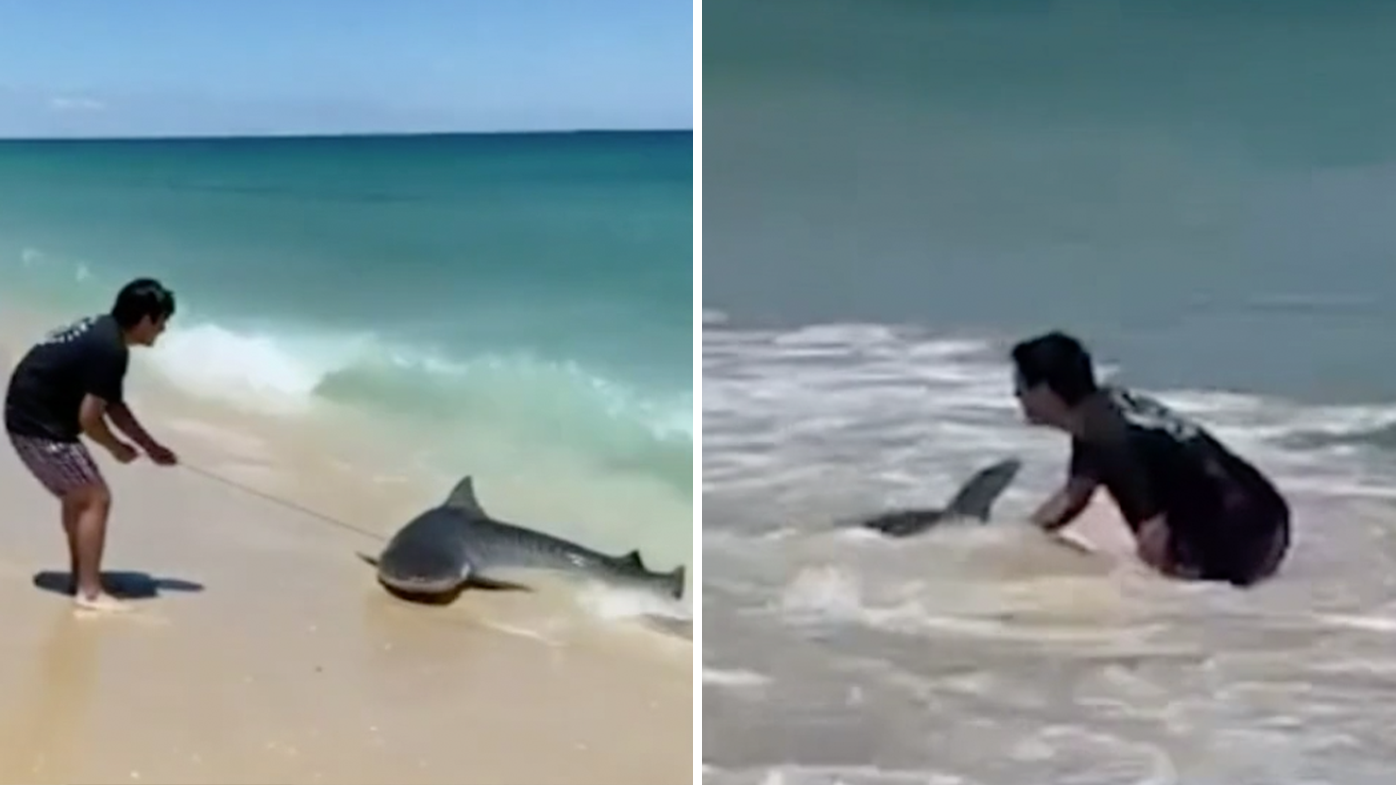
A fisherman's unexpected catch forced the closure of two Perth beaches on Saturday.

Swanbourne and North Cottesloe beached were closed after a fisherman caught a large tiger shark before midday.

Video sent into 9News shows the fisherman alongside the catch, almost the length of him.

READ MORE: Hundreds of sharks filmed in shallows of US beach

The tiger shark was quickly released back into the water.

The shark was released back to the ocean shortly after its capture, which prompted the initial closures.

However, the beaches were then re-opened an hour later.

Manhunt underway for suspected Adelaide arsonist after CBD fire

A manhunt is underway for a suspected arsonist who allegedly lit a destructive blaze in Adelaide's CBD overnight.

South Australian Police have seized CCTV vision from nearby residents after several heritage-listed terraces on Sanders Place were destroyed.

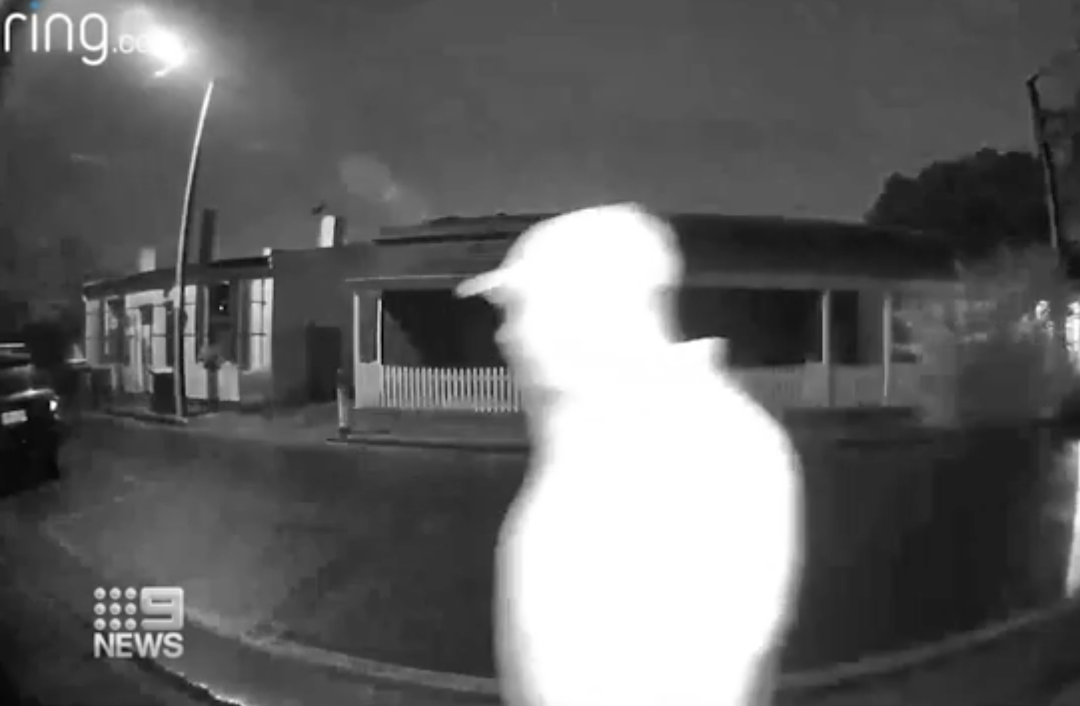
In the black and white video, an unknown man is shown walking towards the end of the cul-de-sac. Moments later, he's shown walking in the opposite direction.

READ MORE: Crowds descend on Australian capitals for pandemic protests

South Australian Police have seized CCTV vision from nearby residents.

Residents said there was a commotion on the street moments before the blaze took hold.

"(There was) a lot of yelling, smashing, a loud 'Oi'," Charlotte Djukanovic told 9News.

"I thought it was a fight across the road and then our house just filled with smoke."

The fire is estimated to have caused $200,000 in damage.

It took firefighters almost an hour to bring the blaze under control.

Police are now investigating the fire as an act of arson.

"It's been determined as deliberate, but it's a SAPOL investigation so that's as much as I can say about that," South Australian Metropolitan Fire Service (MFS) Fire Investigation officer Tom Loftus said.

The MFS said the estimated cost of the damage caused is around $200,000.

'World-first': How a tiny, rice-sized device transformed a woman's life

Just taking a stroll with her dad used to be breathtaking for Melbourne woman Monique Neu.

For more than a decade, the 25-year-old had suffered from a weak heart muscle, which impaired the organ's ability to pump blood through her body.

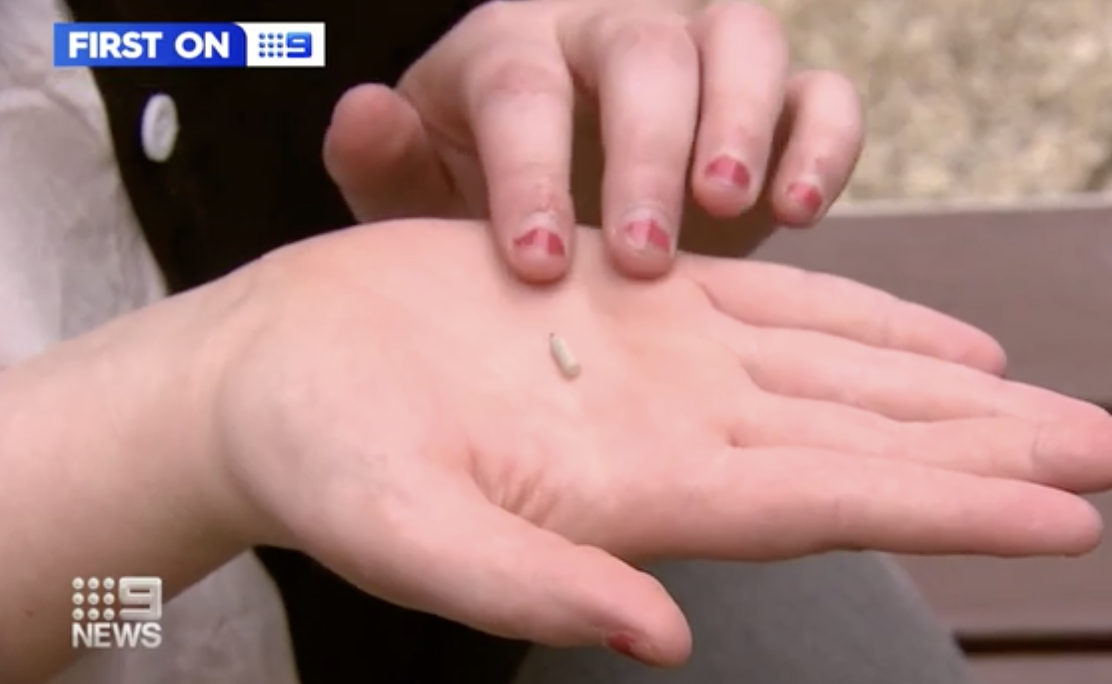
But Monash Health cardiologist Jeffrey Alison and a device the size of a small grain of rice have transformed Ms Neu's life.

READ MORE: Australia within touching distance of next major vaccine milestone

Monique Neu said she would struggle to perform the most simple tasks.

"I live in a dead-end street with two massive hills on both sides and I couldn't even walk up half the hill without running out of breath," Ms Neu told 9News.

"Now I can walk up to the hill to the shops and back and I'm completely fine."

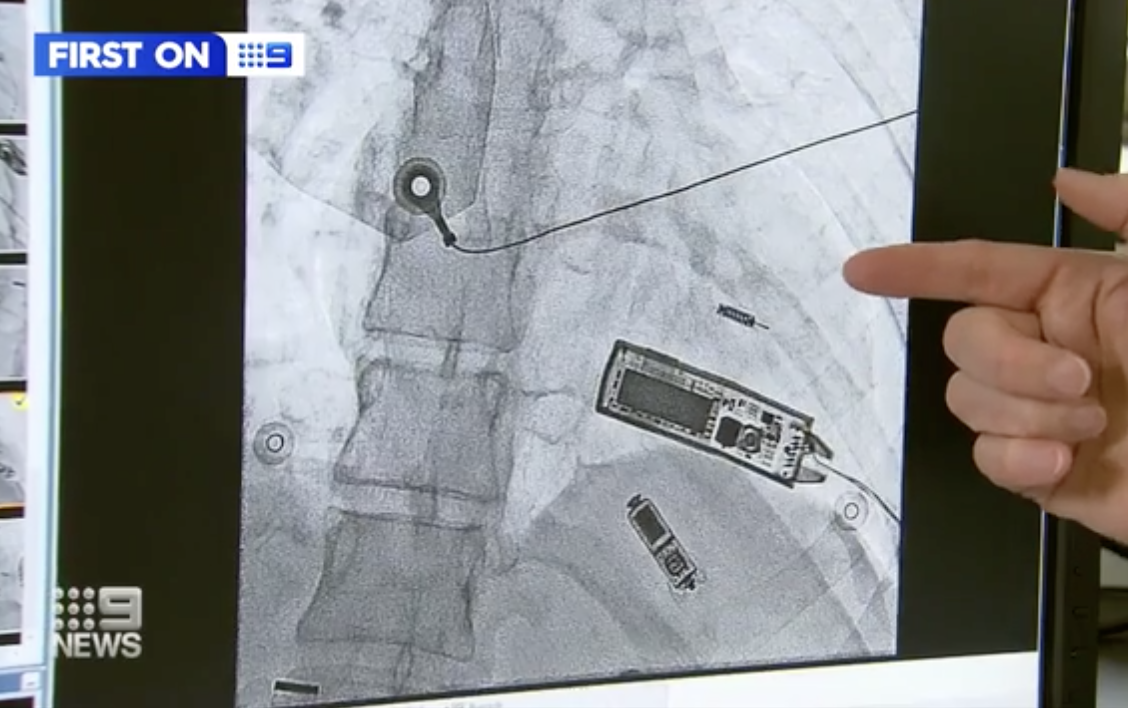
In what's believed to be a world-first operation, Ms Neu had the lead-less tiny electrode and a wireless pacemaker implanted on either side of her heart.

READ MORE: Huge crowds descend on Australian capitals for pandemic protests

This lead-less tiny electrode was placed inside Ms Neu's body.It was paired with a wireless pacemaker, with each device going on opposing sides of her heart.

The devices are produced by med-tech company EBR Systems, which is focused on removing the wires that have been standard in most pacemakers.

Fewer leads mean the implants will last longer inside the body.

Dr Alison said Ms Nue has made a resounding recovery after the operation.

Ms Neu's recovery has been astounding.

"She's had a had fantastic response. Pump performance has improved by around about 60 per cent," he said.

"She's now working full time and she's now doing everything comfortably without any problems.

"This is a system that can be in place indefinitely."

Scientists mystified, wary, as Africa avoids COVID-19 disaster

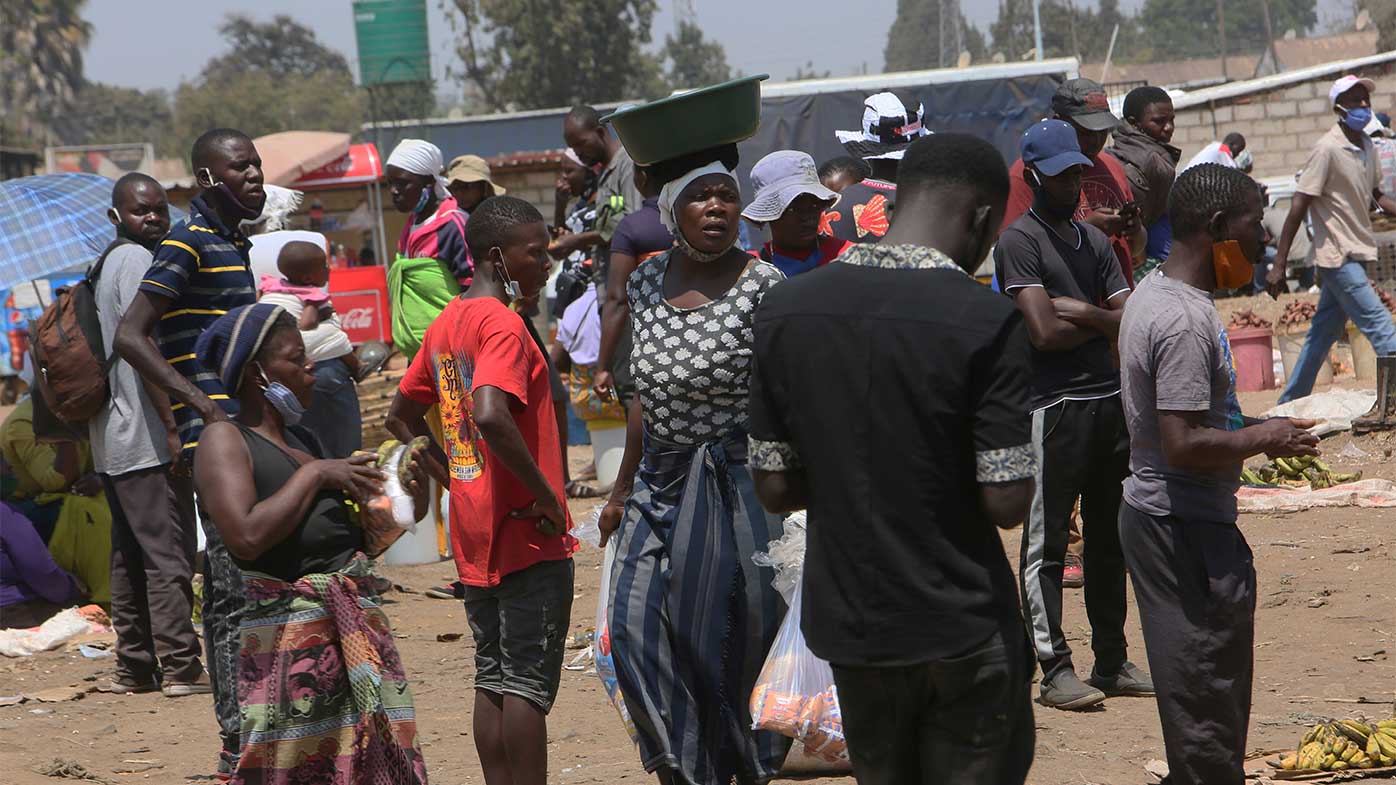
At a busy market in a poor township outside Harare this week, Nyasha Ndou kept his mask in his pocket, as hundreds of other people, mostly unmasked, jostled to buy and sell fruit and vegetables displayed on wooden tables and plastic sheets.

As in much of Zimbabwe, here COVID-19 is quickly being relegated to the past, as political rallies, concerts and home gatherings have returned.

“COVID-19 is gone, when did you last hear of anyone who has died of COVID-19?” Mr Ndou said.

“The mask is to protect my pocket. The police demand bribes so I lose money if I don’t move around with a mask.”

READ MORE: NSW, Victoria record drop in COVID-19 cases

People are seen at a busy market in a poor township on the outskirts of the capital Harare in Zimbabwe.

Earlier this week, Zimbabwe recorded just 33 new COVID-19 cases and zero deaths, in line with a recent fall in the disease across the continent, where World Health Organisation data shows infections have been dropping since July.

When COVID-19 first emerged last year, health officials feared the pandemic would sweep across Africa, killing millions. Although it’s still unclear what the virus’s ultimate toll will be, that catastrophic scenario has yet to materialise in Zimbabwe or much of the continent.

Scientists emphasise obtaining accurate COVID-19 data, particularly in African countries with patchy surveillance, is extremely difficult, and warn declining infection trends could easily be reversed.

But there is something “mysterious” going on in Africa that is puzzling scientists, said Wafaa El-Sadr, chair of global health at Columbia University.

“Africa doesn’t have the vaccines and the resources to fight COVID-19 that they have in Europe and the U.S, but somehow they seem to be doing better,” she said.

READ MORE: Queensland PCR test requirement under review

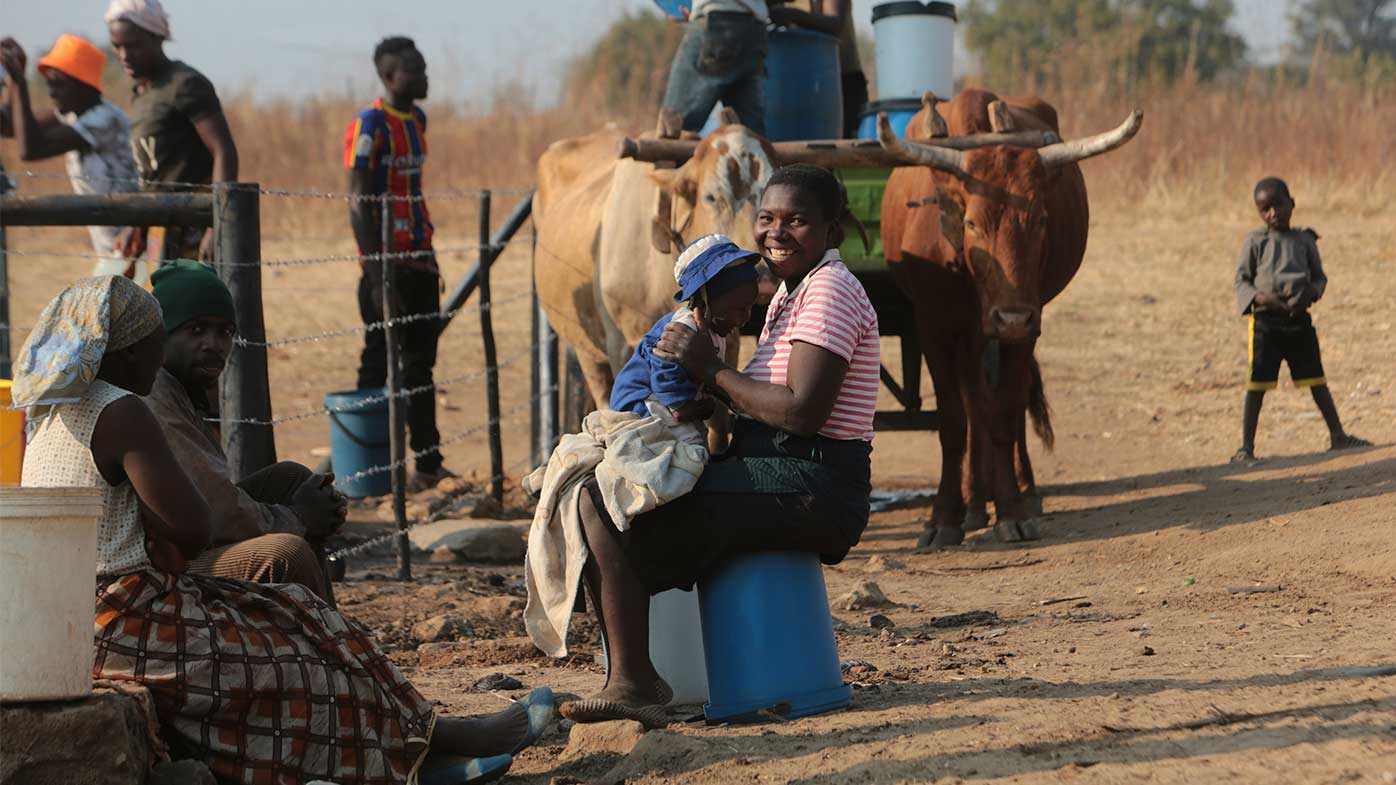
When the coronavirus first emerged last year, health officials feared the pandemic would sweep across Africa, killing millions.

Fewer than 6 per cent of people in Africa are vaccinated. For months, the WHO has described Africa as “one of the least affected regions in the world” in its weekly pandemic reports.

Some researchers say the continent’s younger population — the average age is 20 versus about 43 in Western Europe — in addition to their lower rates of urbanisation and tendency to spend time outdoors, may have spared it the more lethal effects of the virus so far. Several studies are probing whether there might be other explanations, including genetic reasons or past infection with parasitic diseases.

On Friday, researchers working in Uganda said they found COVID-19 patients with high rates of exposure to malaria were less likely to suffer severe disease or death than people with little history of the disease.

“We went into this project thinking we would see a higher rate of negative outcomes in people with a history of malaria infections because that’s what was seen in patients co-infected with malaria and Ebola,” said Jane Achan, a senior research advisor at the Malaria Consortium and a co-author of the study.

“We were actually quite surprised to see the opposite — that malaria may have a protective effect.”

READ MORE: WHO urges vaccine uptake amid growing COVID-19 crisis in Europe

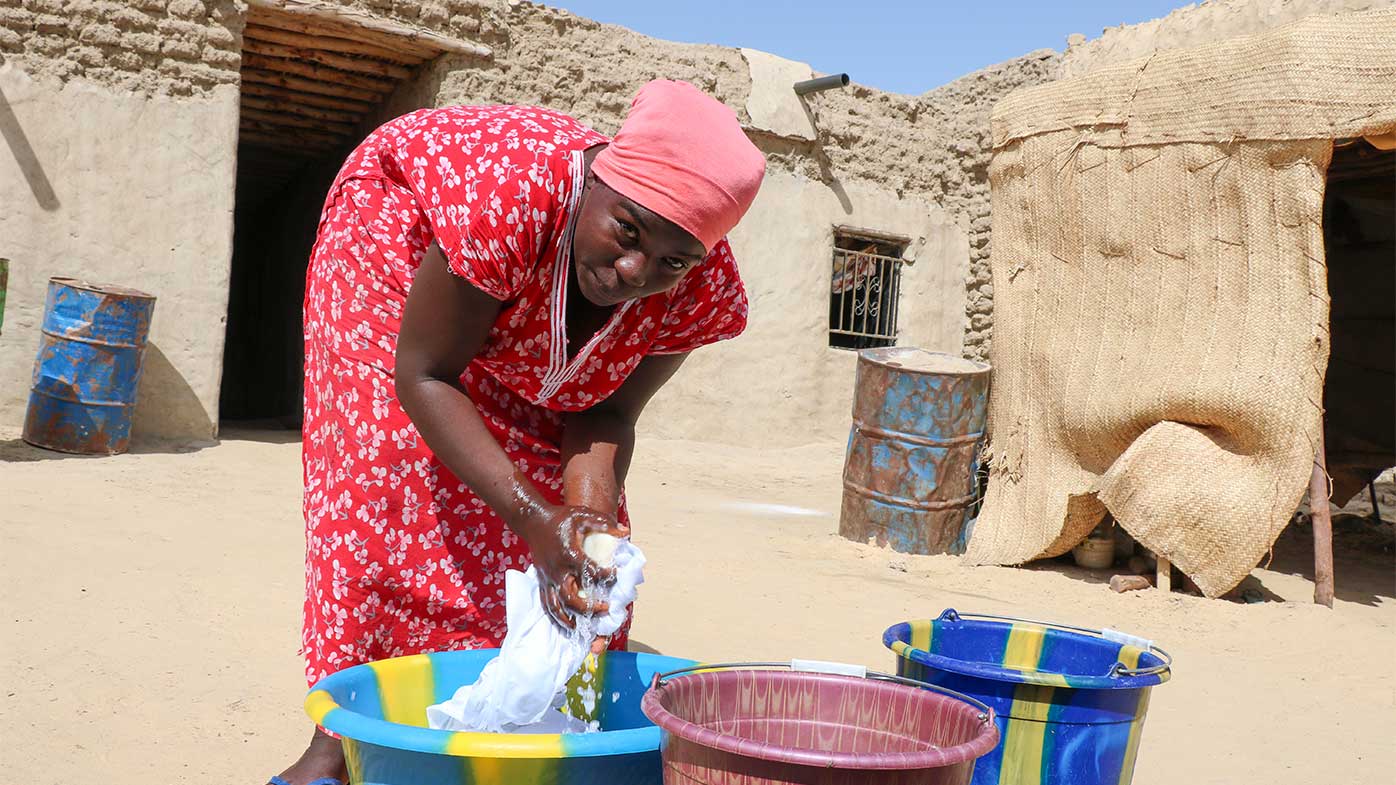
The nation of Mali shut its borders down before a single case was reported in the country.

Achan said this may suggest past infection with malaria could “blunt” the tendency of people’s immune systems to go into overdrive when they are infected with COVID-19. The research was presented Friday at a meeting of the American Society of Tropical Medicine and Hygiene.

Christian Happi, director of the African Center of Excellence for Genomics of Infectious Diseases at Redeemer’s University in Nigeria, said authorities are used to curbing outbreaks even without vaccines and credited the extensive networks of community health workers.

“It’s not always about how much money you have or how sophisticated your hospitals are,” he said.

Devi Sridhar, chair of global public health at the University of Edinburgh, said African leaders haven’t gotten the credit they deserve for acting quickly, citing Mali’s decision to close its borders before COVID-19 even arrived.

“I think there’s a different cultural approach in Africa, where these countries have approached COVID with a sense of humility because they’ve experienced things like Ebola, polio and malaria,” Sridhar said.

In past months, COVID-19 has pummeled South Africa and is estimated to have killed more than 89,000 people there, by far the most deaths on the continent. But for now, African authorities, while acknowledging that there could be gaps, are not reporting huge numbers of unexpected fatalities that might be COVID-related.

WHO data shows deaths in Africa make up just 3 per cent of the global total. In comparison, deaths in the Americas and Europe account for 46 per cent and 29 per cent.

READ MORE: Austria to enter lockdown, bring in mandatory vaccinations

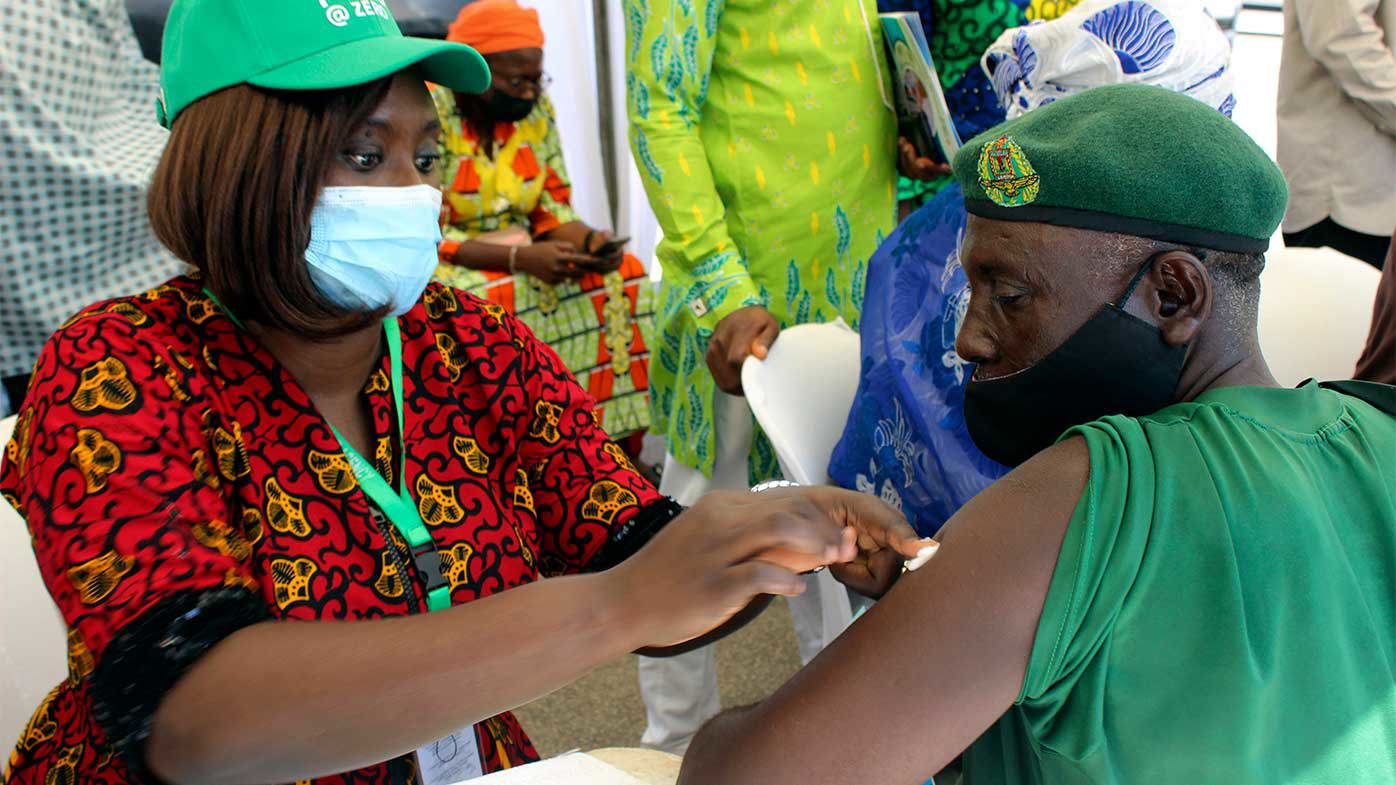
Nigeria has launched a mass rollout of COVID-19 vaccines as it aims to protect its population of more than 200 million amid an infection surge in a third wave of the pandemic.

In Nigeria, Africa’s most populous country, the government has recorded nearly 3000 deaths so far among its 200 million population. The U.S. records that many deaths every two or three days.

The low numbers have Nigerians like Opemipo Are, a 23-year-old in Abuja, feeling relieved.

“They said there will be dead bodies on the streets and all that, but nothing like that happened,” she said.

On Friday, Nigerian authorities began a campaign to significantly expand the West African nation’s COVID-19 immunisation. Officials are aiming to inoculate half the population before February, a target they think will help them achieve herd immunity.

Oyewale Tomori, a Nigerian virologist who sits on several WHO advisory groups, suggested Africa might not even need as many vaccines as the West. It’s an idea that, while controversial, he says is being seriously discussed among African scientists — and is reminiscent of the proposal British officials made last March to let COVID-19 freely infect the population to build up immunity.

That doesn’t mean, however, that vaccines aren’t needed in Africa.

“We need to be vaccinating all out to prepare for the next wave,” Salim Abdool Karim, an epidemiologist at South Africa’s University of KwaZulu-Natal, who previously advised the South African government on COVID-19, said.

“Looking at what’s happening in Europe, the likelihood of more cases spilling over here is very high.”

Afghanistan

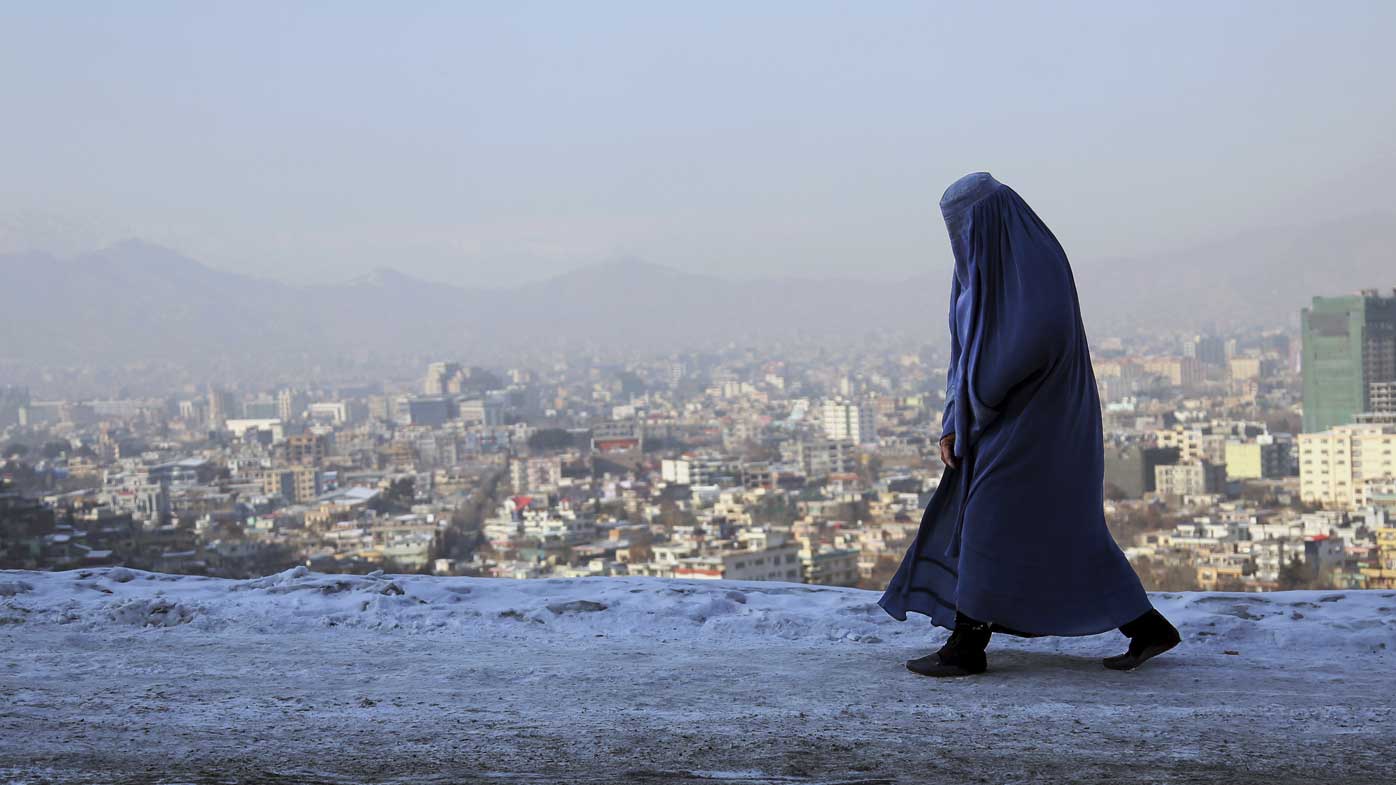
The impact of COVID-19 has also been relatively muted beyond Africa in poor countries like Afghanistan, where experts predicted outbreaks amid ongoing conflict would prove disastrous.

Hashmat Arifi, a 23-year-old student in Kabul, said he hadn’t seen anyone wearing a mask in months, including at a recent wedding he attended alongside hundreds of guests. In his university classes, more than 20 students routinely sit unmasked in close quarters.

“I haven’t seen any cases of corona lately,” Arifi said.

So far, Afghanistan has recorded about 7,200 deaths among its 39 million people, although little testing was done amid the conflict and the actual numbers of cases and deaths are unknown.

Back in Zimbabwe, doctors were grateful for the respite from COVID-19 — but feared it was only temporary.

“People should remain very vigilant,” warned Dr Johannes Marisa, president of the Medical and Dental Private Practitioners of Zimbabwe Association.

He fears another COVID-19 wave would hit Zimbabwe next month.

“Complacency is what is going to destroy us because we may be caught unaware.”